I’ve become a Taj Mahal fan in the past few years, as I was previously unfamiliar with him, except for his name. Also, with THAT title, I don’t care who it was by, I would have to listen to it. Sometimes I know the names of artists, but when I see the passion of other bloggers toward them, I want to check these artists out. It’s not always what stats or facts the blogger writes or comments; it’s the enthusiasm you can tell they have for the performer. It makes you think…hmmm…I’m really missing something here!
His real name is Henry Saint Clair Fredericks Jr., and he was born in Harlem in 1942 and grew up in a musical home. His father was a jazz arranger, and his mother sang gospel, which gave him early exposure to American roots music. After moving to California in the early 1960s, he became part of the rising folk and blues scene, mixing country blues with elements of jazz, Caribbean music, and R&B.
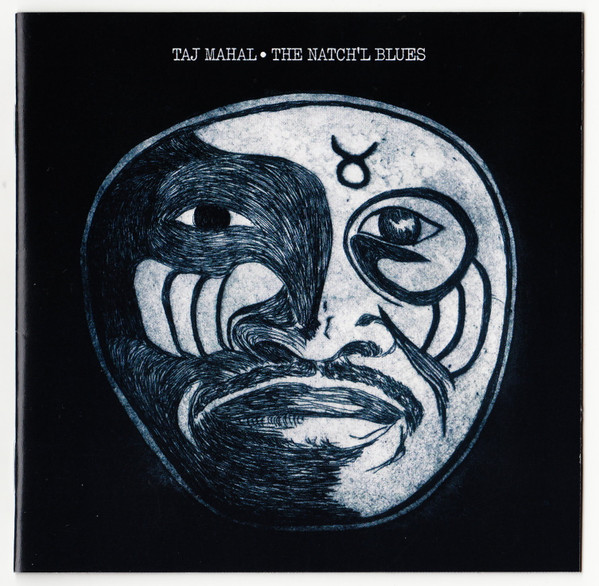
His first major break came with his self-titled debut in 1968, followed closely by The Natch’l Blues. These records helped reintroduce older blues styles to a younger rock audience without changing their original feel. Instead of copying one tradition, Taj Mahal connected Delta blues, jug band music, rural folk, and modern sounds into a single sound that felt natural and current.
The song has since become a blues standard, and it earned that spot. I first heard it in The Blues Brothers movie. Mahal has said the song was built from older blues travel songs that talked about trains, leaving town, and getting left behind. Taj Mahal pulled those themes together and shaped them into something new, keeping the story simple and the rhythm moving.
This was on his second album, The Natch’l Blues, released in 1968. On lead guitar, we have Jesse Ed Davis, Gary Gilmore on Bass, Chuck Blackwell on drums, Earl Palmer on drums, and on piano, none other than Al Kooper. Kooper pops up everywhere in the history of blues, rock, and pop.
The band played mostly live in the room, locking into a steady groove before adding small fills. Guitar and piano stayed in short phrases, never stepping over the vocal.
Taj Mahal – She Caught the Katy (And Left Me a Mule to Ride)
She caught the Katy and left me a mule to ride She caught the Katy and left me a mule to ride Well, my baby caught the Katy She left me a mule to ride The train pulled out and I swung on behind I’m crazy ’bout her That hard-headed woman of mine
Man, my baby long Great, God, she mighty, she tall You know my baby long Great God, she mighty, my baby tall Well, you know my baby, she long My baby, she tall She sleep with her head in the kitchen And her big feet’s out in the hall And I’m still crazy about her That hard-headed woman of mine
I love my baby She’s so fine I wish she’d come to save me sometime ‘Cause she don’t believe I love her Look what a hole I’m in And she don’t believe I’m singin’ What look what a shape I’m in
She caught the Katy and left me a mule to ride She caught the Katy and left me a mule to ride Well, my baby caught the Katy Left me a mule to ride The train pulled out and I swung on behind Well, I’m crazy ’bout her That hard-headed woman Hard-headed woman of mine
I’ve seen the man live 8 times and this song…I saw him play one time. Whenever you see Bob Dylan you usually get a variety of songs. He is not an oldies show…he will throw in some but he doesn’t do a Vegas Greatest Hits show.
I don’t post many Dylan songs…not because I’m not a huge fan…like I said I’ve seen the man 8 times. If I get a chance, I’ll see him 8 more times. When you post a Dylan song you almost feel the urge to do an interpretation of the song…I have no interest in doing that. It would lead me down too many roads. Some people are good at that though…I’m not.
Dylan was growing frustrated with the recording in New York so producer Bob Johnston mentioned Nashville. Dylan’s manager at the time, Albert Grossman, told Johnston if he ever mentioned Nashville again that he would fire him. Didn’t work…Dylan ended up recording Blonde On Blonde in Nashville. He would also go to record more here as well.
This song was one of my many favorites of this album. Dylan is still going in 2024, but this was his peak for me. In the mid-60s, Dylan was on fire, cranking out songs that blurred the lines between folk, rock, blues, and poetry. Dylan later described the sound of Blonde on Blonde as “that thin, wild mercury sound”—a phrase as cryptic as Bob can be. What does that mean exactly? No one knows for sure, but the music does have a thin sound… almost surreal quality to it.
In Al Kooper’s book, he talked about some of the stories that Johnston shared making the album. Kooper said that Bob Johnston shared one of the wilder stories from those sessions, one that captures the vibe of those late-night Nashville nights. He recounted an incident involving a blind keyboard player nicknamed Pig (Hargus “Pig” Robbins), who played on the album.
Pig was hanging out with some drunk friends one night when he suddenly declared, “I wanna drive. You so-and-so’s move over and let me navigate this Cadillac!” And because this was Nashville in the 60s, and because his buddies were drunker than Pig, they actually pulled over and let him behind the wheel.
Now, picture this… A blind man is driving a car down the highway, while a bunch of rowdy passengers coach him from the front seat: “A little to the left … good … now a little to the right … speed up a bit…” And for a few glorious moments, they were pulling it off until the red-and-blue lights of the Tennessee Highway Patrol appeared in the rearview. They panicked and had Pig pull over, but what happened next? Johnston said people were laughing too hard by then to care how it ended.
Bob released 5 singles from this double album. He had two top 10 hits, two top 40 hits out of it. This was the end of an era for Bob. After this album, he had a motorcycle accident and he changed his songwriting style. He followed this album with John Wesley Harding and Nashville Skyline which was nothing like his earlier music.
The musicians on this album included Robbie Roberston, Al Kooper, Rick Danko, Kenny Buttrey, Charlie McCoy, and Charlie McCoy. After this, his songs became a little less wordy and chaotic and became more structured.
I checked on “Pig” for information about the blind session man. It looks like Pig drove a lot when given a chance. Walter Haynes was a Nashville studio session man and he told this story. “Pig and I have worked together many times in the studio, he has played on many sessions that I produced. He has a most remarkable ear and you only have to run a song once and he’s ready to do it. As you know, Pig is blind and one day I was walking behind Columbia Records and I saw pig driving a car down the alley, of course someone was sitting beside him telling him which way to turn the wheel, what a guy!”
Al Kooper: The credits are vague on the Blonde on Blonde album. Maybe I can fill in a few holes for the reader. Joe South is playing bass on “Visions of Johanna.” He has a very special style of playing bass, sort of hillbilly funk. His unique guitar style is most discernible in the mix on “Memphis Blues Again.” He and I have some nice organ-guitar trade-offs in that on
Stuck Inside Mobile With These Memphis Blues Again
Oh, the ragman draws circles Up and down the block I’d ask him what the matter was But I know that he don’t talk And the ladies treat me kindly And they furnish me with tape But deep inside my heart I know I can’t escape Oh, Mama, can this really be the end To be stuck inside of Mobile with the Memphis blues again
Well, Shakespeare, he’s in the alley With his pointed shoes and his bells Speaking to some French girl Who says she knows me well And I would send a message To find out if she’s talked But the post office has been stolen And the mailbox is locked Oh, Mama, can this really be the end To be stuck inside of Mobile With the Memphis blues again
Mona tried to tell me To stay away from the train line She said that all the railroad men Just drink up your blood like wine An’ I said, “Oh, I didn’t know that But then again, there’s only one I’ve met An’ he just smoked my eyelids An’ punched my cigarette” Oh, Mama, can this really be the end To be stuck inside of Mobile With the Memphis blues again
Grandpa died last week And now he’s buried in the rocks But everybody still talks about how Badly they were shocked But me, I expected it to happen I knew he’d lost control When I speed built a fire on Main Street And shot it full of holes Oh, Mama, can this really be the end To be stuck inside of Mobile With the Memphis blues again
Now the senator came down here Showing ev’ryone his gun Handing out free tickets To the wedding of his son An’ me, I nearly got busted An’ wouldn’t it be my luck To get caught without a ticket And be discovered beneath a truck Oh, Mama, is this really be the end To be stuck inside of Mobile With the Memphis blues again
Now the tea preacher looked so baffled When I asked him why he dressed With twenty pounds of headlines Stapled to his chest But he cursed me when I proved it to him Then I whispered and said, “Not even you can hide You see, you’re just like me I hope you’re satisfied” Oh, Mama, can this really be the end To be stuck inside of Mobile With the Memphis blues again
Now the rainman gave me two cures Then he said, “Jump right in” The one was Texas medicine The other was just railroad gin An’ like a fool I mixed them An’ it strangled up my mind An’ now people just get uglier An’ I have no sense of time Oh, Mama, can this really be the end To be stuck inside of Mobile With the Memphis blues again
And when Ruthie says come see her In her honky-tonk lagoon Where I can watch her waltz for free ‘neath her Panamanian moon An’ I say, “Aw come on now You know you knew about my debutante” An’ she says, “Your debutante just knows what you need But I know what you want” Oh, Mama, can this really be the end To be stuck inside of Mobile With the Memphis blues again
Now the bricks lay on Grand Street Where the neon madmen climb They all fall there so perfectly It all seems so well timed An’ here I sit so patiently Waiting to find out what price You have to pay to get out of Going through all these things twice Oh, Mama, can this really be the end To be stuck inside of Mobile With the Memphis blues again
Ronnie Van Zant: “I confess, those songs are there to cause some controversy. I like looking for trouble. I mean, I always dug Neil Young and we’ve been friends ever since the song came out. It was just there to provoke a little excitement. Ya gotta catch the audience off guard to keep ’em listening.”
I was never going to post this song because it is one of the most overplayed songs in rock history. I still like Ed King’s opening riff…it’s so crisp and clear. The Turn It Up phrase was a mistake. Van Zant was telling the engineer to turn up the volume in his headphones…they liked it so they kept it.
While writing this post I listened to the song around 5 times in headphones. I noticed things that I’ve overlooked through the years just because I was so familiar with it. The song has some great hooks, riffs, and piano fills. Forget the lyrics…the music for this song is full of catchy runs. I heard things I never heard before…I now know why it was a hit.
In a rehearsal for the first album Gary Rossington was playing around with the simple D-C-G chord structure and Ed King added the main intro. They knew they had something special and it was written in a few minutes. After writing this Van Zant said, “this is our Rambling Man” in reference to the Allman Brothers’ rare hit single. The song ended up on the second album (Second Helping) and became a breakout hit for the band.
The song peaked at #8 on the Billboard 100, #6 in Canada, and #31 in the UK in 1974. The band was very popular in the UK.
There’s absolutely zero doubt Sweet Home Alabama was a revenge song—a rebuttal to Neil Young’s Alabama and Southern Man…for the sweeping generalization of all southerners as bigots past and at that time present by Neil. Neil even admits this now.
Neil Young: “My own song ‘Alabama’ richly deserved the shot Lynyrd Skynyrd gave me with their great record. I don’t like my words when I listen to it. They are accusatory and condescending, not fully thought out, and too easy to misconstrue.”
There is also an easter egg in the song. After Van Zant sings “Well I heard Mr. Young sing about her” you can hear what sounds like Neil Young singing Southern Man out of the left speaker…it’s Al Kooper the producer imitating Young. You need headphones to hear it.
This song did not start any bad feelings between the two singers in fact it drew them closer. Neil was a fan of Van Zant and Van Zant was a fan of Neil and wore his shirt many times. Neil Young sent Ronnie Van Zant the song Powderfinger for the band to record but the plane crash put an end to that. Young performed Sweet Home Alabama one time only at a benefit less than a month after the plane crash as a tribute to them.
Just as Bruce Springsteen’s Born In The USA was misinterpreted, this song was also. The line about George Wallace has drawn controversy… In Birmingham they love the governor (Boo, Boo, Boo). Some ignored the boo’s, and at first thought, they endorsed the guy.
Ronnie Van Zant: “Wallace and I have very little in common, I don’t like what he says about black people.”
In the Watergate lyrics, it’s been said that Van Zant was saying the north made mistakes also. The Swamper’s lyrics are about the Muscle Shoals recording band with Jimmy Johnson.
The backup singers were Merry Clayton and Clydie King. Merry Clayton was on Gimme Shelter and amazingly enough…Southern Man by Neil Young.
Ronnie Van Zant: “We thought Neil was shooting all the ducks in order to kill one or two. We’re southern rebels, but more than that, we know the difference between right and wrong.”
Sweet Home Alabama
Big wheels keep on turning
Carrying me home to see my kin
Singing songs about the southland
I miss Alabamy once again
And I think it’s a sin, yes
Well I heard Mr. Young sing about her
Well I heard old Neil put her down
Well I hope Neil Young will remember
A southern man don’t need him around anyhow
Sweet home Alabama
Where the skies are so blue
Sweet Home Alabama
Lord, I’m coming home to you
In Birmingham they love the governor (boo, boo, boo)
Now we all did what we could do
Now Watergate does not bother me
Does your conscience bother you?
Tell the truth
Sweet home Alabama
Where the skies are so blue
Sweet Home Alabama
Lord, I’m coming home to you
Here I come Alabama
Now Muscle Shoals has got the Swampers
And they’ve been known to pick a song or two
Lord they get me off so much
They pick me up when I’m feeling blue
Now how about you?
Sweet home Alabama
Where the skies are so blue
Sweet Home Alabama
Lord, I’m coming home to you
Sweet home Alabama (Oh sweet home baby)
Where the skies are so blue
Sweet Home Alabama (Lordy)
Lord, I’m coming home to you
Yea, yea
I don’t review many albums…because frankly I’m not great at it and there are other sites that do it much better…but I wanted to give this one a try.
Looking back on this album…it was one of the greatest debut rock albums of all time. The track listing
I Ain’t the One Tuesday’s Gone Gimme Three Steps Simple Man
Things Goin’ On
Mississippi Kid
Poison Whiskey Free Bird
That is four classic rock songs on their debut album! It’s great if you can luck out with one good song on your first two albums. There is not a weak song on here. They had been playing around 7 or so years by this time… around Jacksonville and Atlanta. They did not improvise like other bands…they played for the song and the song only.
Al Kooper discovered them in a rough club called Funochio’s in Atlanta Georgia. He ended up signing them on MCA’s Sounds of the South label and produced this album. They were called the American Rolling Stones and their concerts backed that claim up.
It was idiotic but they were compared to the Allman Brothers…who had nothing in common except both were from the south. The Allmans were a very versatile blues/jazz/rock jam band and Lynryd Skynryd was a southern rock band that was influenced by British rock and blues… the closer comparison would have been Paul Rodgers’s band Free. One listen to I Ain’t The One will verify that.
I Ain’t The One – One of my favorite songs on the album. It does remind me of the band Free with Paul Kossoff’s guitar sound. A rocker…
Tuesday’s Gone – A simple epic song that is structured beautifully. One of their best slower songs.
Gimmer Three Steps – A song that has been played and played on the radio but a rocker about getting out of Dodge really quick.
Simple Man – The song is simple and effective… now it’s been in numerous commercials. It’s the third most streaming song from LS just behind Free Bird and Sweet Home Alabama.
Free Bird – The signature song of their career. It usually ends up in the top 3 of the best rock songs. Both Stairway to Heaven and this one build up into a never to be forgotten ending. This one ended each of their shows with an incredible high. When they played this at Knebworth no other band could touch it.
They only released 5 albums in their career before the crash. Of those 5 albums, 3 were great and 2 were really good.
Robert Christgau…the crusty rock critic loved this band and album: Lacking both hippie roots and virtuosos, post-Allmanites like ZZ Top, Marshall Tucker, and Wet Willie become transcendently boring except when they get off a good song. But in this staunchly untranscendent band, lack of virtuosos is a virtue, because it inspires good songs, songs that often debunk good-old-boy shibboleths. Examples: “Poison Whiskey,” “Mississippi Kid,” and “Gimme Three Steps,” when Ronnie Van Zant, instead of outwitting the dumb redneck the way onetime Dylan sideman Charlie Daniels does in “Uneasy Rider,” just hightails it out of there. Savvy production from onetime Dylan sideman Al Kooper.A
I remember this song most in Goodfellas in the scene where Henry is doing cocaine, then walking out the door, placing guns in the car trunk while a helicopter circles above. The song has a Stones feel to it. It would have not have been out of place on one of their albums.
The song was released in 1971 on his album Nilsson Schmilsson. It also contained the Badfinger cover Without You and Coconut. Jump into the Fire peaked at#27 in the Billboard 100 and #16 in Canada. This song was more rock than he usually released. From the man who wrote Coconut, Me and My Arrow, and the Puppy Song… this was a departure.
Harry’s voice was one of a kind. That is said a lot about singers but with Nilsson it was true. Just one listen to how he reimaged Without You tells you all you need to know. He was also a great songwriter on top of that. This song was the follow up to Without You.
The song featured Chris Spedding’s driving guitar, Jim Keltner’s drums and a cool bass solo by Herbie Flowers. The bass alone on the track is worth the price of admission.
In 1968 John Lennon and Paul McCartney were asked who their favorite American group was…they said “Nilsson.” John Lennon would later produce Nilsson’s 1974 album Pussy Cats.
Harry Nilsson: “I’ve had a lot of publicity out of the fact that the Beatles liked my album Pandemonium Shadow Show, and named me as their favorite singer. But I didn’t really like that. Obviously I was very pleased and very flattered – and now I’ve got to know John and Paul quite well, and we get on well together. They’re both very gentle people. But I wasn’t keen on getting all that publicity because of them. It made me feel that I was riding on someone else’s back – in other words it was because of them that I was being talked about, and not because of me. But I think the whole thing was blown up a bit out of proportion by the Press.”
Al Kooper:“I went to visit him at his home in L.A. That first day we smoked a lot of pot and just laughed. Then we went swimming in his pool, with our clothes on, for what was the first and only ‘Brian Jones Memorial Swim Party.’ Later on, we sat down at his piano and traded songs. His voice and songs were fantastic, some of the greatest I’d ever heard.”
He never performed before a live audience during his entire recording career. Shortly before his death, however, he did join Ringo Starr on stage one night during the ex-Beatle’s tour.
Here is the Goodfellas scene where Jump Into The Fire goes into a Stones song
“Jump Into The Fire”
You can climb a mountain You can swim the sea You can jump into the fire But you’ll never be free
You can shake me up Or I can break you down Whoa-o-o-o-, whoa-o-o-o-
We can make each other happy [4X] [Repeat entire 3 times more] You can jump into the fire [4X]
This is an autobiography of Al Kooper. Al has worked with many people in the music industry. He was a songwriter, musician, producer, A&R man and everything in between.
His book is well written and Al uses humor all the way through.
A few of his career highlights are helping to form Blood, Sweat, and Tears, playing the organ on “Like a Rolling Stone” (although he didn’t know how to really play organ), organized the Super Sessions with Stephen Stills and Mike Bloomfield, found and signed a band while in Atlanta named Lynyrd Skynyrd. While in Atlanta he started a record label called “Sounds of the South” in conjunction with MCA records.
He goes over working with Lynyrd Skynyrd and how their first three albums were recorded and why they parted company. Another band that he signed was Mose Jones who was going to be his Beatles type group to counterpoint the Lynyrd Skynyrd Stones sound for his label. Mose Jones ended up being ignored my MCA.
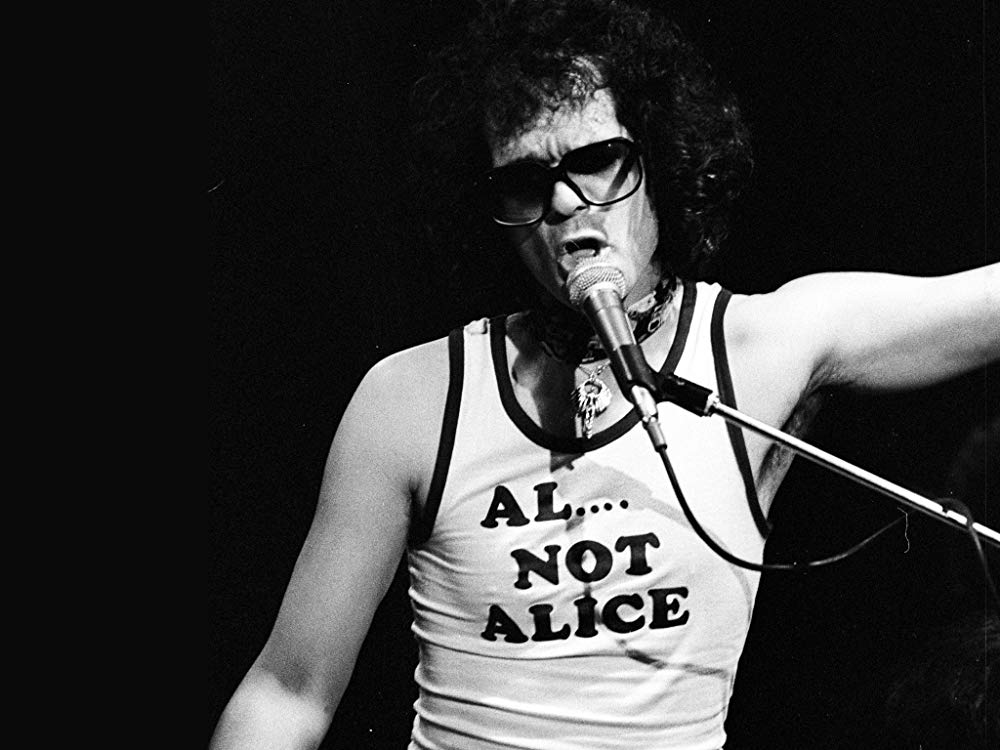
There is so much musical history this man was involved in…he makes light of getting called Alice Cooper on many occasions.
In Al Kooper’s words
Let’s clear the air.
This is not a book by or about Vincent Furnier (né Alice Cooper.) It is a book by and about Al Kooper. If you don’t know who Al Kooper is, that’s fine. But don’t let that stop you from perusing these eye-opening accounts of encounters with Bob Dylan, Jimi Hendrix, Gene Pitney, The Royal Teens, Bill Graham, Quincy Jones, Blood, Sweat & Tears, Mike Bloomfield, The Rolling Stones, Lynyrd Skynyrd, George Harrison, Miles Davis, The Tubes, Nils Lofgren, Stevie Ray Vaughan, and all the other wonderful people I’ve been fortunate enough to cross paths with over the last forty years.
What was really interesting to me is he shared the same manager (Stan Polley) as Badfinger and was able to get out of his clutches with at least some of his money intact. I picked the book up cheap and I really have enjoyed it. I would recommend this to music fans. Many funny stories and he is such a talented musician.
Another quote from Kooper on the Like A Rolling Stone Session… Tom Wilson was the producer who knew Kooper didn’t normally play the organ.
Thirty seconds into the second verse of the playback, Dylan motioned toward Tom Wilson. “Turn the organ up,” he ordered. “Hey, man,” Tom said, “that cat’s not an organ player.” Thanks, Tom. But Dylan wasn’t buying it: “Hey, now don’t tell me who’s an organ player and who’s not. Just turn the organ up.” He actually liked what he heard!
Al Kooper and Bob Dylan
George Harrison, Ringo Starr, Barbara Bach, and Al Kooper
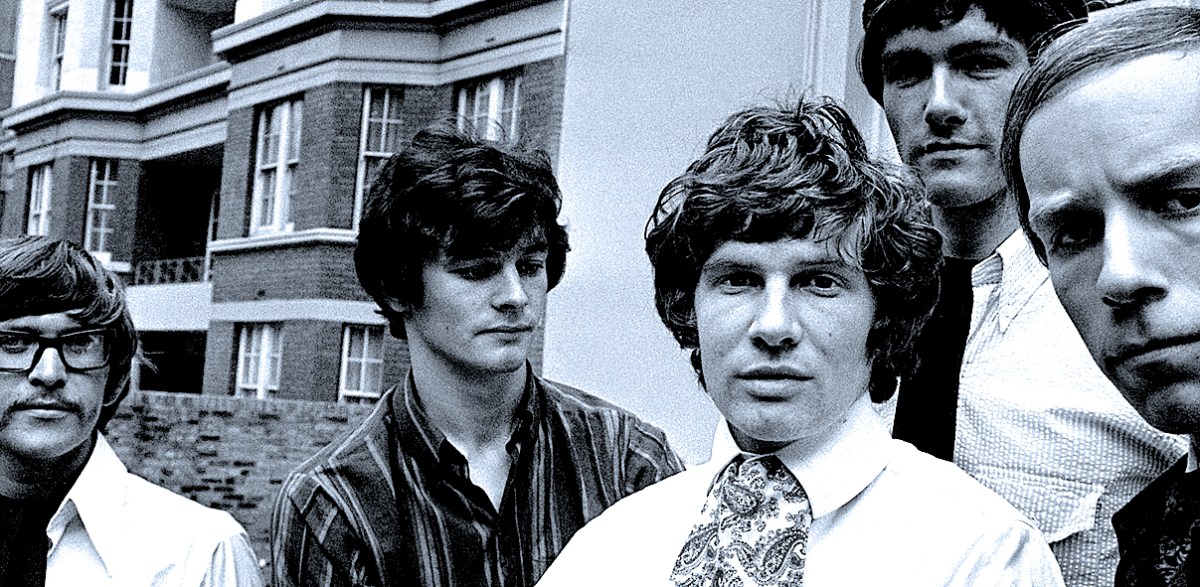
Since the first time I heard this band, I loved their sound. I liked their hits but a few years ago I bought their album Odessey and Oracle and was blown away. The Beatles were big fans of them in the sixties.
They formed in 1961 by Rod Argent and Colin Blunstone. The hit big in 1964 with singles She’s Not There that went to #2 in American and the follow up Tell Her No that went to #6 on the charts. After that, they released some more singles but nothing hit.
They went into Abbey Road studio right after The Beatles recorded the Sgt Pepper album. When recording the album they even used The Beatle’s Mellotron they left there. They recorded it in Abbey Road and some in Olympic Studio in London.
By the time the album came out they had already broken up. In 1968 CBS records were not going to release it in America at all but a young A&R man at the time named Al Kooper who worked for CBS told Clive Davis (President of CBS Records) that there were hit singles on the album. The album was released and the single “Time of Season” went to number 1 on the Cash Box Top 100 and number 3 in US Billboard Hot 100…
The album contains much more than that though. Personally, I think “Care of Cell 44” is one of the best pop songs I’ve heard. It’s as if mid-60s Paul McCartney and Brian Wilson had a baby…and Care Of Cell 44 is it.
A Rose for Emily is another good pop song. “This Will Be Our Year” is another one. This album is one of my favorite pop albums of all time. The songs have well-crafted melodies and the sound is wonderful. Time of Season is a classic and has a mood, unlike any other song.
Colin Blunstone has a unique voice all his own. He did have a few solo hits in the UK charts during the 1970s.
Rod Argent went on to form the band Argent… they had a hit with “Hold Your Head Up” and “God Gave Rock and Roll to You” later covered by Petra and KISS with modified lyrics.
The Zombies regrouped in the 90s and are still touring. Get a good pair of headphones and listen to Care of Cell 44.
From the Al Kooper book, Backstage Passes… Talking about Odessey and Oracle
I made an appointment with Clive Davis and put the album on his desk. “I really think we should purchase the master rights to this album for the U.S.,” I aggressively suggested. He took one look at the cover and replied, “We already own this album. I was just about to sign off on our option to release it domestically.” Now, it got good to me— “I think that would be a huge mistake Clive. Why there’s at least two hit singles here.” He told me he would sleep on it and thanked me for bringing it to his attention. Two weeks later I got an interoffice memo saying they were gonna put it out, with instructions to rewrite the liner notes and pick a single. Cautiously, Clive released it on a little subsidiary label CBS had called Date Records, in case I turned out to be wrong. But my lucky streak was goin’ strong and that is how the single “Time of the Season” by The Zombies came to be number one. The album Oddesey [sic] and Oracle had been out quite awhile in England. (In fact, the band had already broken up and metamorphosed into a new band called Argent that CBS had signed before “Time” was released.) A buncha Zombies crossed the ocean to take photos and get gold records. No one at CBS thanked me for this; I received no gold record or cash recompense. But The Zombies, who knew what really happened, made sure to come to my office and thank me profusely. That was worth it all to me at that time.




 .
.
 PowerPop... An Eclectic Collection of Pop Culture