The song peaked at #30 at 1991 in the Billboard 100. The song was on their debut album Shake Your Money Maker that peaked at #4 in 1991. I really liked this band when they came out. They had a sound like the Stones and Faces of the early 70s.
I heard so many different origins of this song
Chris Robinson, wrote this song with his bandmate/brother Rich, said: “‘She Talks to Angels’ is a funny song in that so many people resonate with it. The dark details like drugs and things like that would be a part of growing up and being in this world, but when I wrote that song I had no idea – I hadn’t done any of those things. I hadn’t lived that – everything was in my imagination.”
From Songfacts
During VH1’s The Black Crowes Storytellers, filmed at The Bottom Line in New York City on August 27, 1996, lead singer Chris Robinson explained that this song is not about “one” person, but rather a “hot dog” (as he put it) of people that they knew from the Atlanta club scene in their early days. “Not all the best parts” explained Chris, “or the best parts for you.” Chris says that there was always a girl in the club scene back then with really dark makeup (like Siouxsie And The Banshees), and after thinking about her one day, he scribbled the lyric “she paints her eyes as black as night.” He then went on to write an entire biography (completely made up, by the way) about her in the form of the song that then became “She Talks to Angels.” >>
The Christian band Third Day has a song about the Black Crowes that references this song and others. It’s called “Black Bird” and imitates their style. The song says that Third Day really likes The Black Crowes music but that they essentially need Jesus in their lives. There is a lyric in “Black Bird” that says “You say to talk to angels, well I say it’s such a lie.”
She Talks To Angels
She never mentions the word addiction In certain company. Yes, she’ll tell you she’s an orphan After you meet her family.
She paints her eyes as black as night now. Pulls those shades down tight. Yeah, she gives me a smile when the pain comes. The pain gonna make everything alright.
Says she talks to angels. They call her out by her name. Oh yeah, she talks to angels. Says they call her out by her name.
She keeps a lock of hair in her pocket. She wears a cross around her neck. Yes the hair is from a little boy, And the cross from someone she has not met, well, not yet
Says she talks to angels. Says they all know her name. Oh yeah, she talks to angels. Says they call her out by her name.
She don’t know no lover, None that I ever seen. Yeah, to her that ain’t nothing But to me it means, means everything.
She paints her eyes as black as night now. Pulls those shades down tight. Oh yeah there’s a smile when the pain comes. Pain’s gonna make everything alright, alright yeah
Says she talks to angels. Says they call her out by her name. Oh yeah, angels Call her out by her name Oh angel, They call her out by her name Oh she talks to angels, They call her out, yeah yeah Call her out, Don’t you know that they call her out by her name
This is based on a song called C’mon, God, and buy me a Mercedes Benz by the Los Angeles beat poet Michael McClure. Joplin saw McClure perform it, and on August 8, 1970, she reworked it into her own song, which she performed about an hour later.
This was a fun song off of Janis’s last album Pearl. The song did not chart as a single but the album peaked at #1 in 1971 after Janis died.
Janis Joplin never got a Mercedes Benz, but she did have a 1965 Porsche that was painted to become a piece of hippie art.
A lot of song facts for such a short song.
From Songfacts
As recounted in the Patti Smith memoir Just Kids, before her show at the Capitol Theatre in Port Chester, New York, she went to a nearby bar (likely Vahsen’s, later renamed Little Dick’s) with her good friend, the songwriter Bob Neuwirth, and two more recent acquaintances, the actors Rip Torn and Geraldine Page. Joplin started reciting the line, “Oh, Lord won’t you buy me a Mercedes Benz” – the first line of McClure’s song. The four started banging beer mugs on the table to form a rhythm, and Neuwirth wrote down lyrics he and Joplin came up with on a napkin. They finished the song, and Janis performed it at the show, introducing it by saying, “I just wrote this at the bar on the corner. I’m going to do it Acapulco.”
That show was recorded and widely bootlegged, as it was her penultimate performance and the debut of “Mercedes Benz.” Joplin played her last concert on August 12 at Harvard Stadium and died on October 4.
The song is a social commentary on how many people relate happiness and self-worth with money and material possessions. Sung a capella in a blues style, Joplin was poking fun at the mindset that luxury goods will make everything better.
Janis Joplin is from Port Arthur, Texas, a small city close to the Gulf of Mexico near the Louisiana border. In the second verse, the line “Dialing for Dollars is trying to find me” refers to a segment the local NBC station ran called “Dialing for Dollars.” The station would announce a password on the air, then call a local phone number at random later on. If whoever answered knew the password, that person would win a cash prize. Variations of “Dialing for Dollars” ran in many cities throughout the United States and Canada in the ’60s and early ’70s.
This song spoke to the shift in the counterculture, as some of the impoverished musicians speaking out against the system were now very rich. As Barney Hoskyns, who wrote about Joplin and the song in his book Small Town Talk: Bob Dylan, The Band, Van Morrison, Janis Joplin, Jimi Hendrix and Friends in the Wild Years of Woodstock told us, “Rock was now big business, and a lot of money was flooding into the pockets of people who never expected to make it. This set up a mixture of expectation and guilt – they were acquiring a taste for the finer things but knew that a good hippie shouldn’t be materialistic. By the early ’70s it had all changed, and rock stars were the new Yuppies.”
Joplin recorded this song at Sunset Sound studios in Los Angeles on October 1, 1970 with producer Paul Rothchild, famous for his work with The Doors. It ended up being her last recording session, as she died three days later (she also recorded a version of “Happy Trails” as a 30th birthday present for John Lennon” in this session).
The Pearl album was just about finished when Joplin died. Rothchild included her raw take of “Mercedes Benz” on the album, leaving it a capella. A quip Joplin made before her vocal take – “I’d like to do a song of great social and political import” – was included as an introduction. In its unadorned state, the song showcased Joplin’s humor and raw vocal talent.
In the mid-’90s, Mercedes used this in commercials for their cars. It was one of the great misappropriations of a song in a commercial, as Joplin’s song was meant to convey the message that owning a luxury automobile does not make you a better person. Joplin’s estate – sister Laura and brother Michael – allowed Mercedes to use it.
There are three credited songwriters on this track: Joplin, Michael McClure, and Bob Neuwirth. McClure says he never earned a cent from his poetry, but “Mercedes Benz” paid for his house in the Butters Canyon section of Oakland, California.
In an interview published in hE@D Magazine, Michael McClure said that Joplin called him before recording the song to get his permission. She sang him the song, then he sang her his original version, and they both liked their own renditions better. “Then she asked me if she could sing it, and I agreed,” McClure said. “I had no idea that her songs were worth so much money.”
The soul singer Bobby Womack claimed credit for inspiring this song. According to Womack, Joplin got the idea for the song after riding in his new Mercedes 600. Womack was having success as a songwriter, and Joplin commissioned him to write a song for her Pearl album, which turned out to be “Trust Me.” She recorded that one (which also appears on the Pearl album), and asked for another.
As recounted in his Womack’s book Midnight Mover, he took her for a ride, and she was impressed with the new car. After a few blocks, she started singing: “Lord, won’t you buy me a Mercedez Benz…”
When they returned to the studio, the band had gone home, but Joplin put down the vocal track.
This took place on October 1, 1970. As Womack told it, Joplin got a phone call, which he presumed was her drug dealer. She asked him to leave, they hugged goodbye, and Joplin was found dead three days later.
Mercedes Benz
Oh Lord, won’t you buy me a Mercedes Benz? My friends all drive Porsches, I must make amends. Worked hard all my lifetime, no help from my friends, So Lord, won’t you buy me a Mercedes Benz?
Oh Lord, won’t you buy me a color TV? Dialing For Dollars is trying to find me. I wait for delivery each day until three, So oh Lord, won’t you buy me a color TV?
Oh Lord, won’t you buy me a night on the town? I’m counting on you, Lord, please don’t let me down. Prove that you love me and buy the next round, Oh Lord, won’t you buy me a night on the town?
Everybody! Oh Lord, won’t you buy me a Mercedes Benz? My friends all drive Porsches, I must make amends, Worked hard all my lifetime, no help from my friends, So oh Lord, won’t you buy me a Mercedes Benz?
I always liked this song. Billy Joel was inspired by the suite of songs on Abbey Road. It was never released as a single but has remained one of Joel’s best known songs. The song was on the album The Stranger which peaked at #2 in 1978.
The restaurant which inspired this song, since closed, was the Fontana di Trevi at 151 West 57th Street in New York City, right across from Carnegie Hall. Joel talked about the restaurant: “It was for the opera crowd, but the Italian food was really good. They didn’t really know who I was, which was fine with me, but sometimes you would have a hard time getting a table. Well, I went there when the tickets had gone on sale for my dates at Carnegie Hall, and the owner looks at me and he goes (in an Italian accent), ‘Heyyy, you’re that guy!’ And from then on, I was always able to get a good spot.”
From Songfacts
This song is about people who peaked too early: the popular jocks in class who went nowhere in life. Like most of Joel’s songs, he composed the music first, which in this case was inspired by The Beatles, specifically the suite of songs on their Abbey Road album where a few unfinished tunes were put together to create one coherent piece.
On an A&E special, Joel said he came up with the “Bottle of white bottle of red” line while he was dining at a restaurant and a waiter actually came up to him and said, “Bottle of white… bottle of red… perhaps a bottle of rosé instead?”
The “Things are okay with me these days…” part was an old piece of music he had written a long time before The Stranger album – he just changed the words around to update them. The third part of the song is an old song he had written called “The Ballad of Brenda and Eddie.”
Many towns on Joel’s stomping grounds of Long Island have a spot or field surrounded by trees called “The village green,” similar to the one he sings about here. Joel was in a gang (not a very rough one) in Levittown, Long Island called “The Parkway Green Gang.”
Joel outlined to USA Today how the Beatles inspired this song: “I had always admired the B-side of Abbey Road, which was essentially a bunch of songs strung together by (producer) George Martin. What happened was The Beatles didn’t have completely finished songs or wholly fleshed-out ideas, and George said, ‘What have you got?’ John said, ‘Well I got this,’ and Paul said, ‘I got that.’ They all sat around and went, ‘Hmm, we can put this together and that’ll fit in there.’ And that’s pretty much what I did.”
In a 2017 appearance on The Late Show with Stephen Colbert, Joel ranked this #1 on his list of the top Billy Joel songs. He has also cited “New York State Of Mind” as his favorite.
After adding Mike DelGuidice to his touring band in 2013, Joel began leading into this song in concerts with DelGuidice singing Puccini’s “Nessun Dorma.” DelGuidice formed a popular Billy Joel tribute band called Big Shot, which get the attention of the real deal, who offered him a gig.
Scenes From An Italian Restaurant
A bottle of white, a bottle of red Perhaps a bottle of rose instead We’ll get a table near the street In our old familiar place You and I,face to face
A bottle of red, a bottle of white It all depends upon your appetite I’ll meet you any time you want In our Italian Restaurant.
Things are okay with me these days Got a good job, got a good office Got a new wife, got a new life And the family’s fine We lost touch long ago You lost weight I did not know You could ever look so good after So much time.
I remember those days hanging out At the village green Engineer boots, leather jackets And tight blue jeans Drop a dime in the box play the Song about New Orleans Cold beer, hot lights My sweet romantic teenage nights
Brenda and Eddie were the Popular steadys And the king and the queen Of the prom Riding around with the car top Down and the radio on. Nobody looked any finer Or was more of a hit at the Parkway Diner We never knew we could want more Than that out of life Surely Brenda and Eddie would Always know how to survive.
Brenda and Eddy were still going Steady in the summer of ’75 When they decided the marriage would Be at the end of July Everyone said they were crazy “Brenda you know you’re much too lazy Eddie could never afford to live that Kind of life.” But there we were wavin’ Brenda and Eddie goodbye.
They got an apartment with deep Pile carpet And a couple of paintings from Sears A big waterbed that they bought With the bread They had saved for a couple Of years They started to fight when the Money got tight And they just didn’t count on The tears.
They lived for a while in a Very nice style But it’s always the same in the end They got a divorce as a matter Of course And they parted the closest Of friends Then the king and the queen went Back to the green But you can never go back There again.
Brenda and Eddie had had it Already by the summer of ’75 From the high to the low to The end of the show For the rest of their lives They couldn’t go back to The greasers The best they could do was Pick up the pieces We always knew they would both Find a way to get by That’s all I heard about Brenda and Eddie Can’t tell you more than I Told you already And here we are wavin’ Brenda And Eddie goodbye.
A bottle of red, a bottle of white Whatever kind of mood you’re in tonight I’ll meet you anytime you want In our Italian Restaurant.
This song was not a big hit but it was one of my favorites off of his “comeback” album Cloud Nine in the 1980s. The song is pure George. He always valued his privacy and in this song, he made it clear he detested gossip in any way.
“Devil’s Radio” was inspired by a church billboard Harrison had seen that stated “Gossip: The Devil’s Radio…Don’t Be a Broadcaster.” The song did peak at #4 in Billboard Mainstream Chart Rock charts. The Cloud Nine album peaked at #8 in the Billboard Album Charts.
Even when George was young he didn’t like people knowing his business. As his mom would recall, “George was always against nosy mothers, and he used to hate all the neighbors who stood around gossiping.”
Devil’s Radio
Gossip, gossip Gossip, gossip
I heard it in the night Words that thoughtless speak Like vultures swooping down below On the devil’s radio
I hear it through the day Airwaves gettin’ filled With gossip broadcast to and fro On the devil’s radio
Oh yeah, gossip Gossip, oh yeah
He’s in the clubs and bars And never turns it down Talking about what he don’t know On the devil’s radio
He’s in your TV set Won’t give it a rest That soul betraying so and so The devil’s radio
It’s white and black like industrial waste Pollution of the highest degree You wonder why I don’t hang out much I wonder how you can’t see
He’s in the films and songs And on all your magazines It’s everywhere that you may go The devil’s radio
Oh yeah, gossip Gossip, oh yeah
Runs thick and fast, no one really sees Quite what bad it can do As it shapes you into something cold Like an Eskimo igloo
It’s all across our lives Like a weed it’s spread ’till nothing else has space to grow The devil’s radio
Can creep up in the dark Make us hide behind shades And buzzing like a dynamo The devil’s radio
oh yeah (Gossip) gossip, (gossip) gossip Oh yeah, gossip I heard you on the secret wireless Gossip, oh yeah You know the devil’s radio, child Gossip, gossip Gossip, gossip
This is when I learned… if it sounds too good to be true…it is.
This story is so embarrassing I cringe when I think about it. I told a friend I was going to make a post about it and he asked me…are you really going to tell people you were that stupid for a day? It’s not what you think by the title. I’m not a naive person…in fact, I can be cynical at times but… this incident was undoubtedly the most naive moment in my life. Things started to happen and before I knew it…it was out of control. This, unfortunately, is not a made up story. I was raised right and if I would have practiced what I was taught…none of this would have happened…but it was a valuable lesson…
When I was 18 I was working in Nashville on Murfreesboro Road at a company that sold printers and copiers. I was making a grand total of 3.25 an hour. I would go to lunch and stop at a gas station somedays to get a paper. I met this guy there and he said he had a VCR he wanted to sell for 60 dollars. I’d seen him there before there…He seemed a bit shady…back in 1985 a VCR for 60 bucks was a great price. I wasn’t thinking morals at that time, like if it was stolen or whatever.
Stupid me… I said sure I would love to buy it…he said to follow him to a house so I did and we went in and I gave him the money…I know I know…but I did. There were a few people there but he went into another room and came out. He then said the VCR was somewhere else…after that, he asked if I could take him to a place a few miles away because his car was acting up. Bells were going off in my head at this point but… I was thinking of that VCR…so I said sure let’s go. Out comes a young woman in spandex and she went with us. I dropped the two of them off at some kind of business. A few minutes later, out they come and now there was an extra woman in spandex plus this guy. He wanted me to drop them off somewhere else to get the VCR since it had been “moved”…
By this time I was angry, embarrassed and I knew I had been not only had…but had good…and was thinking of a way out…I was scared of the cops stopping me with this crew in my car. I told him I wanted the money back and he admitted he had to give it to someone from the first house but the “girls” were going to make the money back so I would have it. I then took the trio to a destination and I said the hell with this when thoughts of shootings and cops flashed in my head…I dropped them off and they told me to wait and I took off.
A month or so later I went back to the gas station and there he was… I saw him there and I yelled at him “Hey want to buy a VCR for 60 bucks?” as I was walking toward him…he jumped in a car and took off and I never saw him again.
60 dollars for a life lesson is not bad.
I later saved up (what a concept!)…and bought a VCR for around $150…well add the 60 I lost and that would be $210.
My friends have never let me live this down…which if it would have happened to them I would not have either.
Pouring Water on a Drowning Man charted at #85 in the Billboard 100 and #23 in the R&B Chart in 1966. This song is so easy to listen to. Great guitar sound and Carr’s voice is wonderful. The small intro is worth it. He lived in Memphis and was called “the world’s greatest Soul Singer” but he had a bipolar disorder and that made it hard for him to tour because of the depression.
At one time he was mentioned along with Otis Redding and they had the same manager for a while. The guy had a great voice.
He toured Japan in1979 and stood motionless at the microphone as though in a hypnotic trance on many dates. He returned to Memphis, where he lived with his sister (in between institutionalizations), and spent much of the ’80s barely conscious of the world around him.
He did improve with medicine and in the 90s he did make an album, Take Me to the Limit and in 94 he released another album Soul Survivor. Soon after he died of lung cancer in 2001.
Pouring Water On A Drowning Man
You push me when I’m falling and you kick me when I’m down I guess I missed my calling ’cause I should have been a clown How much more, how much more could I stand When you’re pouring water on a drowning man, I like that
Put me on the right track And then you let me down You stab me in the back, yes you do baby Every time I turn around, oh
Criticize my loving Won’t you try, just try to understand You’re pouring water, I got to tell you about it, on a drowning man
You’re pouring water on a drowning man You treat me like the fool that I am You brag that I like everything you do You put salt in my wounds it’s sad but it’s true
You warm me with your kissin’ then you leave me in the cold How can I know your wishes, when you tell me, when I’ve never been told, alright I cry in mercy baby, just try to understand You’re pouring water, I got to tell you about it, on a drowning man, yeah
You’re pouring water, ha ha, you see I’m a drowning man Oh I got tears in my eyes, I’m a drowning man Don’t me drown, oh baby, I’m a drowning man Don’t let me drown
It is not the more cowbell song but I like it. I never owned a Blue Oyster Cult album in my life and probably never will but I liked a couple of their popular songs. The song peaked at #40 in the Billboard 100 in 1981. This would be their last Top 40 hit but it was a #1 hit on Billboard’s Mainstream Rock chart.
Lead guitarist Don “Buck Dharma” Roeser wrote this with Richard Meltzer, a rock writer who often contributed lyrics to the band. Dharma initially planned to release this song on his solo album, Flat Out, but was later convinced to include it on Blue Öyster Cult’s Fire Of Unknown Origin.” Dharma sang lead, as he did on many of BÖC’s songs.
Band manager Sandy Pearlman, claimed that the name came to him when he saw Blue Point oysters on a menu.
From Songfacts
When Richard Meltzer wrote the lyrics, he titled the song “Burn Out The Night,” a reference to an evening of rock and roll. Blue Öyster Cult had a “band house” where their band members and associates (including their manager, Sandy Pearlman would bring in song ideas and lyrics.
Joe Bouchard, who was their bass player at the time, told the metal magazine Chips & Beer that he and Buck Dharma came across Meltzer’s lyrics at the same time, and each wrote their own song around it. Dharma’s version, with the title changed to “Burnin’ For You,” was the one that got recorded.
Along with Black Sabbath, Blue Öyster Cult was one of the first heavy metal bands. They issued their first album in 1972 and grew a modest following before scoring a hit with “(Don’t Fear) The Reaper” (also written by Buck Dharma) from their 1976 album Agents of Fortune, which hit #12 and became embedded on rock playlists.
In the book MTV Ruled the World – The Early Years of Music Video, frontman Eric Bloom tells the story of the “Burnin’ For You” video: “We went out to California, and our management found a video company, and we did two videos in 24 hours – ‘Burnin’ For You’ and ‘Joan Crawford.’ MTV wouldn’t show the ‘Joan Crawford’ video, because there was something about it that was too racy for them. But ‘Burnin’ For You’ got a ton of airplay on MTV in 1981 and 1982.”
Bloom continues: “We made it in the storm drains of LA. If anyone has seen the movie about giant ants, called Them!, with James Whitmore, it was filmed in the same place.” Later he adds: “We thought the car on fire was very Hollywood, very cool. They had to have a Hollywood film/pyro guy there, who was licensed to burn s–t up. He had propane tanks, and he had to have a hunk of car to burn.”
These videos were directed by Richard Casey, who directed the 1985 movie Horror House on Highway Five.
Burnin For You
Home in the valley Home in the city Home isn’t pretty Ain’t no home for me
Home in the darkness Home on the highway Home isn’t my way Home will never be
Burn out the day Burn out the night I can’t see no reason to put up a fight I’m living for giving the devil his due
And I’m burning, I’m burning, I’m burning for you I’m burning, I’m burning, I’m burning for you
Time is the essence Time is the season Time ain’t no reason Got no time to slow
Time everlasting Time to play b-sides Time ain’t on my side Time I’ll never know
Burn out the day Burn out the night I’m not the one to tell you what’s wrong or what’s right I’ve seen signs of what (freezing their eyes) went through
Well I’m burning, I’m burning, I’m burning for you I’m burning, I’m burning, I’m burning for you
Burn out the day Burn out the night I can’t see no reason to put up a fight I’m living for giving the devil his due
And I’m burning, I’m burning, I’m burning for you I’m burning, I’m burning, I’m burning for you
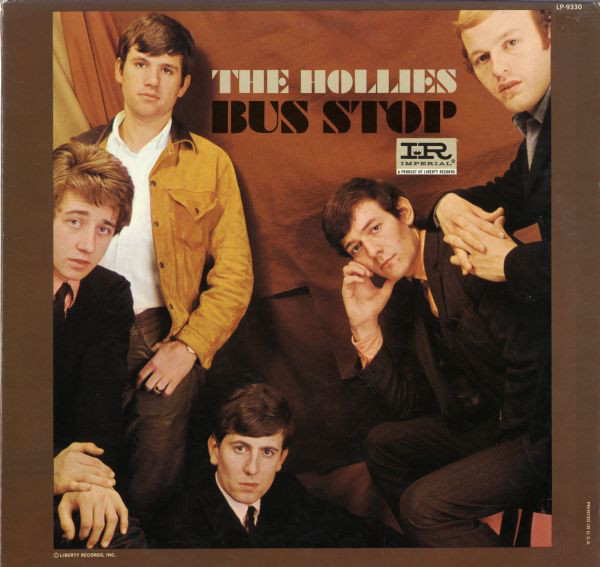
Graham Nash wanted to change the direction of the Hollies and write songs that were more in vogue around this time instead of the simple pop songs they were writing. The song only made it to #18 in the UK charts and it was considered a failure compared to their earlier releases although it was praised by the critics. I think it is inventive and fits in really well with the times.
Nash wrote it after he got back from America on a tour. This was not the rest of the band’s favorite song by any means and they wrote a simple…very simple pop song to follow this song called Jennifer Eccles that of course went to #7 in the UK charts which a disheartened Nash hated and he left for greener pastures with Crosby, Stills, Nash, and Young. I can’t blame him for not liking Jennifer Eccles…it was a weak song.
The song only made it to #51 in the Billboard 100 in 1967. Maybe the change of direction didn’t sit too well with the public. It’s one of my favorites by the Hollies.
Graham said: “My world was turning to sh*t at that point. I was on top of the world, we had 16 or 17 top ten hits, but I was feeling shitty. We made a great record of that song but it only got into the top 30, and the Hollies were always expecting their songs to go into the top 10. So they started to not trust me and not record my songs, ‘’Marrakesh Express’’ being one of them. So I wasn’t feeling that great about my life. It was all turning to sh*t, it wasn’t turning to gold, it was turning to rust.”
Personally, I like the song better than Marrakesh Express.
King Midas In Reverse
If you could only see me. And know exactly were I am. You wouldn’t want to be me, Oh I can assure you of that.
I’m not the guy to run with, Cause I’ll pull you off the line. I’ll break you and destroy you Give time.
He’s King Midas with a curse. He’s king Midas in Reverse. He’s King Midas with a curse. He’s King Midas in Reverse.
It’s plain to see it’s hopeless, Goin’ on the way we are. So even though I loose you, You’ll be better off by far.
He’s not the man to hold your trust, Everything he touches turns to dust in his hands. Nothing he can do is right, he’d even like to sleep at night, but he can’t.
All he touches turns to dust All he touches turns to dust All he touches turns to dust All he touches turns to dust
I wish someone would find me, And help me gain control. Before I loose my reason, And my soul
He’s King Midas with a curse. He’s King Midas in reverse. He’s King Midas with a curse. He’s king Midas in Reverse.
He’s King Midas with a curse (all he touches turns to dust) He’s Kind Midas in Reverse. (all he touches turns to dust) He’s King Midas with a curse, (all he touches turns to dust) He’s King Midas in Reverse
A bit different of a song for Led Zeppelin. This was on their great Physical Graffiti album…which was to me their last great album. This song peaked at #38 in the Billboard 100 in 1975. Led Zeppelin really was not a singles band but they did have 10 songs in the top 100 and 1 top ten song.
Led Zeppelin wasn’t a funk band but on this track they had something going. John Paul Jones played clavinet on this song that is just outstanding. Jones was the utility player for the band and probably the most underrated member.
The guitar had a great sound…Jimmy Page: It’s sort of backward echo and wah-wah. I don’t know how responsible I was for new sounds because there were so many good things happening around that point, around the release of the first Zeppelin album, like Hendrix and Clapton.
From Songfacts
The lyrics were based on Robert Johnson’s 1936 “Terraplane Blues.” A Terraplane is a classic car, and the song uses car parts as metaphors for sex: “pump your gas,” “rev all night,” etc.
This evolved out of a jam session. It became a concert favorite and a popular song on rock radio. When Led Zeppelin played it live, they would often jam on it, extending it with guitar and keyboard solos.
This is one of Robert Plant’s favorite Zeppelin songs. He sang it on his 1988 Now and Zen tour.
Led Zeppelin performed this at Carmen Plant’s 21st birthday party in 1989 with Jason Bonham on drums. Carmen is Robert’s daughter.
The “Talkin ’bout love” part was most likely nicked from the song “Love” by Curtis Knight and Jimi Hendrix.
Led Zeppelin did not release any singles in the UK until 1997 when “Whole Lotta Love” was released 18 years after it was written. In 1975, Zeppelin’s Swan Song label sent 5000 pressings of “Trampled Underfoot” to UK record stores as incentive to stock the Physical Graffiti album. These were labeled “Special Limited Edition” and became collectors’ items.
At Earls Court in 1975, Robert Plant introduced the song like this: “If you like the motor cars and the parts of the human body, then sometimes… you can get trrrrrampled under foot!”
“Trampled Underfoot” was probably named after the bassline being a repetitive boom, played with a Moog pedal.
Trampled Under Foot
Greasy slicked-down body, Groovy leather trim I like the way you hug the road, Mama it ain’t no sin Talkin’ ’bout love, Talkin’ ’bout love, Talkin’ ’bout Ooh, trouble-free transmission, helps your oil’s flow Mama, let me pump your gas, mama, let me do it all Talkin’ ’bout love, huh, Talkin’ ’bout love, ooh, Talkin’ ’bout Take that heavy metal underneath your hood Baby, I could work all night, leave a big pile of tubes Talkin’ ’bout lo-ove, Talkin’ ’bout lo-ove, Talkin’ ’bout Automobile club-covered, really built in style Special is tradition, mama, let me feast my eyes Talkin’ ’bout love, Talkin’ ’bout love, Talkin’ ’bout Factory air-conditioned, wind begins to rise Guaranteed to run for hours, mama, and brand-new tires Talkin’ ’bout love, Talkin’ ’bout love, Talkin’ ’bout Groovin’ on the freeway, blazes on the road From now on my gasoline is even gonna conk your hair Talkin’ ’bout love, Talkin’ ’bout love, Talkin’ ’bout I can’t stop talkin’ about, I can’t stop talkin’ about Ooh, yeah-yeah, yes, ah, drive on Ooh, yeah-yeah-yeah-yeah-yes, I’m comin’ through Come to me for service every hundred miles Baby, let me check your valves, fix your overdrive Talkin’ ’bout love, Talkin’ ’bout love, Talkin’ ’bout Ooh, yes, fully automatic, comes in any size Makes me wonder what I did, before I got synchronized Talkin’ ’bout lo-ove, Talkin’ ’bout love, Talkin’ ’bout Ooh, feather-light suspension, coils just couldn’t hold I’m so glad I took a look inside your showroom doors Talkin’ ’bout love, Talkin’ ’bout lo-oo-oh-ove, Talkin’ ’bout Oh yeah, oh yeah, Oh, I can’t stop talkin’ about love I can’t stop talkin’ about love Ooh, let me go in down, go in down, go in down, go in down, go in down, yes, I can’t stop talkin’ about I can’t stop talkin’ about lo-oh’, baby I can’t stop talkin’ about love, or my baby I can’t stop talkin’ about love, my baby, uh, my baby, my baby, yeah, Unnh, push, push, push it, push, push Ounheahhonhouh
Hanspostcard recommended Last Train to Memphis and this sequel Careless Love The Unmaking of Elvis Presley… and both are excellent recommendations for anyone who wants to learn about Elvis. This one begins where the other left off with Elvis going to Germany in the Army and ends…at the end.
Guralnick covers everything here. Elvis’s gradual distaste of the movies he was making, the great comeback special, Las Vegas, the Richard Milhous Nixon meeting, two concert documentaries, recording good music again, Aloha from Hawaii, the freefall, and then death. In between these events, we see the girls, his buddies the Memphis Mafia, the drugs, the paranoia, his search for something more, and his huge generosity.
I always wondered why he didn’t try to blend in a little more and not be so noticeable…but he loved so much being Elvis Presley. Once he was in a restaurant and no one was noticing him…he walked by a couple of women near the bathroom and gave them a smile just so they knew. He also loved making people happy by being over-generous. If you were in the right place at the right time you could end up with a car or a diamond ring.
He was raised well by his parents and seemed like a good person. He could show flashes of anger at people around, have jealousy, even a Christ complex at times, unpredictable and living in denial about his drug problem. In other words…he was human and that is what I like about the book. It’s not elevating him too high nor turning him into a parody of himself.
The book also goes into his manager “Colonel” Tom Parker who at one point was getting 50 percent of what Elvis was earning. He could have done much better than Parker but Elvis was loyal and in some ways insecure. If you want to know about Elvis…get Last Train to Memphis and this one…Careless Love.
It was 46 years ago today that the first cell phone call was made…so when you see people walking down the street like zombies with their eyes on their phone…you know the beginning.
On April 3, 1973, the first cell phone call was made by Motorola engineer Martin Cooper from Sixth Avenue in New York while walking between 53rd and 54th streets.
Martin used a 2 1/2-pound prototype to his ear and called a rival, Joel Engel of Bell Laboratories at AT&T, to declare that his Motorola team had devised a functional portable phone. “There was silence at the other end of the line,” Cooper recalled to Bloomberg in 2015. “To this day, Joel doesn’t remember that call, and I’m not sure I blame him.”
Martin Cooper…wonder if he is about to text after the call?
This was his biggest charting hit. It peaked at #3 in the Billboard 100 in 1976. It’s groove song I’ve always liked…very smooth and catchy.
Scaggs wrote this song with the keyboard player David Paich, who would later form the band Toto and write many of their hits. “Lowdown” was the first song that Scaggs and Paich wrote together…it was Silk Degrees producer Joe Wissert who put them together.
Boz Scaggs said: “We took off for a weekend to this getaway outside of LA where there was a piano and stayed up all night banging around ideas. We hit on ‘Lowdown,’ and then we brought it back to the band and recorded it. We were just thrilled with that one. That was the first song that we attempted, and it had a magic to it.”
From Songfacts
This was the second single released from Silk Degrees. The first was “It’s Over,” which charted at a modest #38 in May 1976. Scaggs had little name recognition at the time, and sales were stagnant for the album until an R&B radio station in Cleveland started playing “Lowdown.” Other stations followed suit, and it quickly became clear that the song had crossover appeal and hit potential. Scaggs’ label, CBS, released it as a single and it climbed to #3 on the Hot 100 in October, spurring sales of the album along the way.
The song is about a girl who doesn’t appreciate what her man gives her. The “dirty lowdown” is the honest truth – what Scaggs is encouraging this poor sap to face.
The word “Lowdown” was popular slang meaning a summary of what’s going on for real. The first Hot 100 entry with the term in the title came in 1969 with the instrumental “Lowdown Popcorn” by James Brown (#41, 1969). Next came Chicago’s song “Lowdown” (#35, 1971).
Along with keyboard player David Paich, two other future Toto members also played on this track: drummer Jeff Porcaro and bass player David Hungate. The Silk Degrees marked the first time that Scaggs used these studio pros, and it was also his first album produced by Joe Wissert, who was a staff producer at Columbia Records who had previously worked with Earth, Wind & Fire.
The crew for the album found just the right sound, a Disco-blend that could play in dance clubs and pool halls. Scaggs credits Wissert for giving him and the other musicians plenty of freedom in the studio, resulting in one of the most successful albums of the ’70s – Silk Degrees went on to sell over five million copies.
This won the Grammy for Best R&B Song of 1976, making Scaggs the first white artist to win the award (Leo Sayer was the second, taking the trophy the next year for “You Make Me Feel Like Dancing.”)
The producers of Saturday Night Fever asked to use this in their movie, but Scaggs’ manager turned them down and instead used it in the movie Looking For Mr. Goodbar. Not a good move – Saturday Night Fever became one of the best-selling soundtracks of all time.
Lowdown
Baby’s into running around Hanging with the crowd Putting your business in the street Talking out loud Saying you bought her this and that And how much you done spent I swear she must believe it’s all heaven sent
Hey boy you better bring the chick around To the sad, sad truth the dirty lowdown
(Ooh I wonder, wonder, wonder, wonder who) Taught her how to talk like that (Ooh I wonder, wonder, wonder, wonder who) Gave her that big idea
Nothin’ you can’t handle Nothin’ you ain’t got Put your money on the table And drive it off the lot Turn on that old love light And turn a “maybe” to a “yes” Same old schoolboy game got you into this mess
Hey son, better get back on to town Face the sad old truth, the dirty lowdown
(Ooh I wonder, wonder, wonder, wonder who) Put those ideas in your head (Ooh I wonder, wonder, wonder, wonder who)
Yeah
Come on back down, little son Dig the low, low, low, low, lowdown!
You ain’t got to be so bad, got to be so cold This dog eat dog existence sure is getting old Got to have a Jones for this Jones for that This runnin’ with the Joneses, boy, just ain’t where it’s at, no, no
You gonna come back around To the sad, sad truth, the dirty lowdown
(Ooh I wonder, wonder, wonder, wonder who) Got you thinking like that, boy (Ooh I wonder, wonder, wonder, wonder who)
I wonder, wonder, wonder, wonder who Said I wonder, wonder, wonder, I wonder who Oh, look out for that lowdown (ohh, I wonder, wonder, wonder, wonder who) That dirty, dirty, dirty, dirty lowdown
Ooh I wonder, wonder, wonder, wonder who Ooh I wonder, wonder, wonder, wonder who
Got you thinkin’ like that Got you thinkin’ just like that (Ooh I wonder, wonder, wonder, wonder who) Lookin’ that girl in the face is so sad I’m ashamed of you
The song was written by Jakob Dylan, and produced by T-Bone Burnett. It was released in November 1996 as the second single from the band’s 1996 album, Bringing Down the Horse. This one really got my attention when it came out. Well written and performed song. The Wallflowers song I heard first a few years before was Asleep At The Wheel. Off of their first album. This one got plenty of airplay.
The song is notable for being the first song to reach No. 1 on all three of Billboard‘s rock airplay charts – Alternative Songs, Mainstream Rock Songs, and Adult Alternative Songs. The song did not make the Billboard 100 though.
Really Good RS 2000 article about Jakob Dylan and the Wallflowers…by David Fricke
Jakob Dylan: “I tend to write with a lot of metaphors and images, so people take them literally. The song’s meaning is all in the first verse. It’s about the death of ideas. The first verse says, ‘The death of the long broken arm of human law.’ At times, it seems like there should be a code among human beings that is about respect and appreciation. I wasn’t feeling like there was much support outside the group putting together the record. In the chorus, it says, ‘C’mon try a little.’ I didn’t need everything to get through, I could still get through – meaning ‘one headlight.” >>
This song wasn’t released as a single in America, so it was not eligible for the Hot 100 (Billboard changed this rule a few years later). It did, however, make #2 on the Airplay chart.
One Headlight
So long ago, I don’t remember when That’s when they say I lost my only friend Well they said she died easy of a broken heart disease As I listened through the cemetery trees
I seen the sun comin’ up at the funeral at dawn The long broken arm of human law Now it always seemed such a waste, she always had a pretty face So I wondered how she hung around this place
Hey, come on try a little Nothing is forever There’s got to be something better than In the middle But me and Cinderella We put it all together We can drive it home With one headlight
She said it’s cold It feels like Independence Day And I can’t break away from this parade But there’s got to be an opening Somewhere here in front of me Through this maze of ugliness and greed And I seen the sun up ahead at the county line bridge Sayin’ all there’s good and nothingness is dead We’ll run until she’s out of breath She ran until there’s nothin’ left She hit the end, it’s just her window ledge
Hey, come on try a little Nothing is forever There’s got to be something better than In the middle But me and Cinderella We put it all together We can drive it home With one headlight
Well this place is old It feels just like a beat up truck I turn the engine, but the engine doesn’t turn Well it smells of cheap wine, cigarettes This place is always such a mess Sometimes I think I’d like to watch it burn I’m so alone and I feel just like somebody else Man, I ain’t changed, but I know I ain’t the same But somewhere here in between the city walls of dyin’ dreams I think of death, it must be killin’ me
Hey, hey hey come on try a little Nothing is forever There’s got to be something better than In the middle But me and Cinderella We put it all together We can drive it home With one headlight
This song has been played a bunch on the radio but Joe Walsh’s intro doesn’t get old to me. The song peaked at #59 in the Billboard 100 in 1971.
The James Gang is best known for their guitarist, Joe Walsh, whose playing on this track helped establish him as a superstar guitarist. Walsh joined the Cleveland-based group in 1969 after making a name for himself as one of the top guitarists in Ohio. He replaced Glenn Schwartz in the band, who Walsh considers a mentor. They were a 5-piece when Walsh joined but was down to three when they released their second album James Gang Rides Again.
From Songfacts
With just three members, it meant Walsh had to play both rhythm and lead guitar parts, and also sing (he got a lot more help when he joined the Eagles in 1975). It was quite a learning experience for Walsh, who left the James Gang in 1971 after recording three studio albums with the group.
It was the producer Bill Szymczyk who signed the James Gang to ABC Records after seeing them perform at a show in Ohio. Szymczyk produced the band and began a long association with Joe Walsh, producing his solo albums and most of the Eagles output in the ’70s.
Walsh wrote this song with his bandmates, drummer Jim Fox and bass player Dale Peters. The song is about a girlfriend whose wild ways the singer just can’t tame (the female equivalent of Joe Walsh’s character in his solo hit “Life’s Been Good”). There isn’t much in the way of lyrics, as the song is mostly a showcase for Walsh’s guitar work. He explained in the book The Guitar Greats, “I came up with the basic guitar lick, and the words never really impressed me intellectually, but they seemed to fit somehow. It was a really good example of how we put things together, bearing in mind that it was a three-piece group, and I don’t think that there was any overdubbing. The only thing we really added was the percussion middle part, which the three of us actually played, putting some parts on top of the drums, but that’s the three-piece James Gang, and that’s the energy and kind of the symmetry we were all about.”
The first James Gang album (Yer’ Album, 1969) contained the track “Funk #48,” which according to producer Bill Szymczyk, got its title “out of thin air.” When they came up with what would become “Funk #49,” they were once again faced with no logical title based on the lyrics, and followed the sequence. There was a “Funk 50,” but not until Joe Walsh released it on his 2012 album Analog Man after being asked to rework “Funk #49” for the ESPN show Sunday NFL Countdown.
“Funk #49” became a staple of Album Oriented Rock and Classic Rock radio, but it wasn’t the biggest chart hit for the James Gang – that would be “Walk Away,” which made #51 in 1971 and was later reworked for Walsh’s 1976 solo album You Can’t Argue with a Sick Mind. “Funk #49” is one of Joe Walsh’s most popular songs, and by the mid-’70s he admitted that he couldn’t stand playing it anymore, but did so because fans loved it.
Funk #49
Uh, sleep all day, out all night, I know where you’re going. I don’t that’s a-acting right, You don’t think it’s showing. A-jumpin’ up, fallin’ down, Don’t misunderstand me. You don’t think that I know your plan, What you try’n to hand me?
Out all night, sleep all day, I know what you’re doing. If you’re gonna a-act that way, Think there’s trouble brewing.
This song was the first single off of the album Mott. The album peaked at #35 in Billboard album charts in 1973. The single did not chart in the US but did peak at #10 in the UK. The song was based on a real event about gear being lost during overseas tours. ‘All the Way From Memphis’ chronicles an incident in which Mick Ralphs’ guitar was shipped to a different state than the one in which the band was playing.
Martin Scorsese used this song as the opening song in “Alice Doesn’t Live Here Anymore.”
From Songfacts
The single “All The Way From Memphis” was released in September 1973, and like the B-side, “Ballad Of Mott,” (the extended version) appears on the Mott album. Considered one of Ian Hunter’s finest efforts, it was inspired by events leading up to the final date of their US tour, which is detailed in the band’s official biography by Campbell Devine. When they flew down to Memphis, Mick Ralphs decided to travel by road with Verden Allen. The other members of the band went by plane, but the airline lost Mick’s guitar. When they arrived, the road crew had disappeared with Ralphs and Allen, ticket sales were very grim, and Ralphs’ hotel room was robbed, but then they received a message to say that ticket sales were rising rapidly.
The concert, three days before Christmas at Ellis Auditorium, was “an incredible triumph wrenched from the jaws of disaster.” They were supported by Joe Walsh, who returned to jam with them. Hunter wrote the song on the day of the concert and dedicated it to two of their crew, Lee Childers and Tony Zanetta. And Memphis, Tennessee.
All The Way From Memphis
Forgot my six-string razor hit the sky Half way to Memphis ‘fore I realized Well I rang the information my axe was cold They said she rides the train to oreoles
Now it’s a mighty long way down the dusty trail And the sun burns hot on the cold steel rails ‘n I look like a bum ‘n I crawl like a snail All the way from Memphis
Well I got to oreoles y’know it took a month And there was my guitar, electric junk. Some spade said rock ‘n’ rollers, you’re all the same. Man that’s your instrument. I felt so ashamed.
Now it’s a mighty long way down rock ‘n’ roll Through the Bradford cities and the oreoles ‘n you look like a star but you’re still on the dole All the way from Memphis
Yeah it’s a mighty long way down rock ‘n’ roll From the Liverpool docks to the Hollywood bowl ‘n you climb up the mountains ‘n you fall down the holes All the way from Memphis
Yeah it’s a mighty long way down rock ‘n’ roll As your name gets hot so your heart grows cold ‘n you gotta stay young man, you can never be old All the way from Memphis
Yeah it’s a mighty long way down rock ‘n’ roll Through the Bradford cities and the oreoles ‘n you look like a star but you’re really out on parole! All the way from Memphis