Beatles – Rain

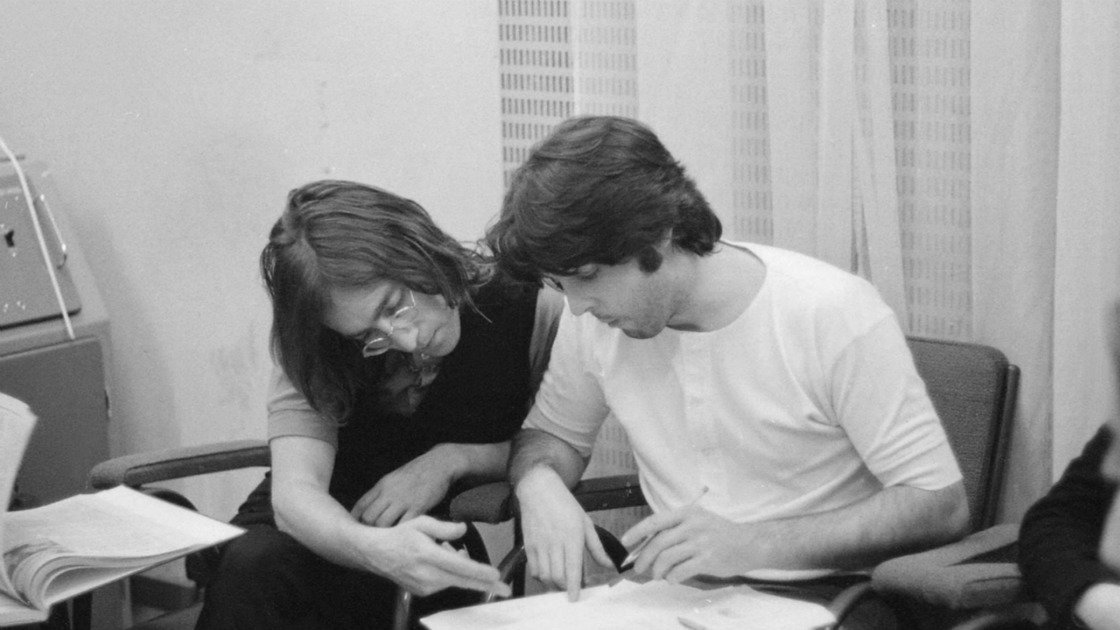
This song would make my personal top ten of Beatle songs… Rain was the B side to Paperback Writer. Personally, I like this song better. First off the sound was different compared to previous songs…the bass comes through like never before and Ringo’s drumming complimented the bass so well.

They experimented with a new way of recording bass.  This technique involved “using a loudspeaker as a microphone,” explains engineer Geoff Emerick.  “We positioned it directly in front of the bass speaker and the moving diaphragm of the second speaker made the electric current.”

The peaked at #23 in the Billboard 100 in 1966.

Ringo on this recording is outstanding and some think it’s his best moment on record. Personally, I like his playing on A Day In The Life but this one is great.

At the end of the song, the vocals are backward. There are different stories on how this happened. One was that a stoned John took the tape home and put it in backward and was astonished at what he heard and wanted the whole song backward. George Martin remembered it differently: “I was always playing around with tapes,” Martin explains, “and I thought it might be fun to do something extra with John’s voice.  So I lifted a bit of his main vocal off the four-track, put it onto another spool, turned it around and then slid it back and forth until it fitted.  John was out at the time but when he came back he was amazed…They all thought it was marvelous.”

Whichever way it was…it fits this song perfectly

Paul McCartney said this about who wrote the song:

I don’t think he brought the original idea, just when we sat down to write, he kicked it off. Songs have traditionally treated rain as a bad thing and what we got on to was that it’s no bad thing. There’s no greater feeling than the rain dripping down your back. The most interesting thing about it wasn’t the writing, which was tilted 70-30 to John, but the recording of it.

From Songfacts

John Lennon wrote most of “Rain.” It was his first song to get really deep, exploring themes of reality and illusion – after all, rain or shine is just a state of mind.

This was the first song to use a tape played backward, which created the strange audio effect. John Lennon discovered the technique when he put the tape for “Tomorrow Never Knows” on the wrong way. He was stoned at the time, and producer George Martin had to convince him that using a backward recording for the entire song was a bad idea. 

Ringo Starr has said this is his best drumming on a Beatles song.

The backward vocal at the end fade out is actually the songs first line: “When the rain comes they run and hide their heads”.

This was one of the first Beatles records to feature loud, booming bass. McCartney’s bassline is extremely recognizable, in contrast to The Beatles’ older records. 

This was released as the B-side of “Paperback Writer.” It was recorded during the Revolver sessions.

As part of the studio manipulation that gave this song such an unusual sound, the rhythm track was played fast and then slowed down on tape.

The Beatles shot a video for this song with director Michael Lindsay-Hogg, who was tapped because he worked on the UK music show Ready, Steady,Go!. The videos for “Rain” and “Paperback Writer” were shot at the same time, with some footage recorded at Abbey Road studios, but most of it outdoors at the Chiswick House gardens in London.

These videos were done so The Beatles could promote the single without actually performing on the various TV shows that drew huge audiences and drove sales. In doing so, they set a standard for music videos, as other bands followed suit. The “Rain” video uses many elements that would become commonplace, including candid shots from between takes.

Rain

If the rain comes 
They run and hide their heads
They might as well be dead
If the rain comes
If the rain comes

When the sun shines 
They slip into the shade
And sip their lemonade
When the sun shines
When the sun shines

Rain, I don’t mind
Shine, the weather’s fine

I can show you 
That when it starts to rain
Everything’s the same
I can show you
I can show you

Rain, I don’t mind
Shine, the weather’s fine

Can you hear me
That when it rains and shines
It’s just a state of mind
Can you hear me
Can you hear me

Natalie Merchant – Wonder

Natalie has a unique voice and a style of her own. I saw her in the 80s with 10,000 Maniacs and they were great.

When she was a teenager, Natalie Merchant worked at a day camp for special needs children, many of whom had been institutionalized since infancy and abandoned by their parents. This song was inspired by that experience.

The song peaked at #20 in the Billboard 100 and #10 in Canada in1996. Wonder was on the album Tigerlily that peaked at #13 in Billboard album charts  in1995.

From Songfacts

She explained on a VH1 Storytellers appearance: “When I was 13 years old, we’re talking 1976, I spent my summer working as a volunteer for a bunch of hippies, basically, that got a seed grant from the Carter administration, which had a lot of really wonderful programs for the arts. These people started a day camp for handicapped children, and I worked for them the whole summer. A lot of these children were institutionalized – their parents had left the scene a long time ago. They didn’t function so well in a conventional sense, but it seems that a lot of the children had developed like a private language or new senses so they could navigate through the world, especially the blind and the deaf children that we worked with.

From an early age, I had that contact with children who had special needs. I had lost my fear of intimacy with them – especially with Down syndrome kids, they could be really unpredictable and up to that point I had been a little frightened of them. I maintained some of the friendships with those kids and I was always open to meeting children with special needs. So when I wrote the song ‘Wonder,’ I wrote the song about a woman who was born with handicaps that seemed insurmountable, but she did overcome them, greatly because she had a loving family, especially her adoptive mother – she had been given up to an institution at birth.”

This is a very meaningful song to many people who grew up with special needs and their caretakers. The song views these people as “wonders,” with doctors having no explanation for their condition, but seeing the work of God in the creation.

“I’ve met a lot of people through this song, and they’ve told me that they’ve taken it on as their song, that it describes them,” Merchant said. “It describes their strengths in spite of what others would see as deficiencies.”

Natalie Merchant performed this song, along with “Carnival,” on an episode of Saturday Night Live hosted by David Schwimmer in 1995.

Wonder

Doctors have come from distant cities, just to see me
Stand over my bed, disbelieving what they’re seeing

They say I must be one of the wonders 
Of God’s own creation
And as far as they see, they can offer
No explanation

Newspapers ask intimate questions, want confessions
They reach into my head to steal, the glory of my story

They say I must be one of the wonders 
Of God’s own creation
And as far as they see, they can offer
No explanation

Ooo, I believe, fate, fate smiled 
And destiny laughed as she came to my cradle 
Know this child will be able
Laughed as my body she lifted
Know this child will be gifted
With love, with patience, and with faith
She’ll make her way, she’ll make her way

People see me I’m a challenge to your balance
I’m over your heads how I confound you 
And astound you
To know I must be one of the wonders

They say I must be one of the wonders 
Of God’s own creation
And as far as they see, they can offer
No explanation

Ooo, I believe, fate, fate smiled 
And destiny laughed as she came to my cradle 
Know this child will be able
Laughed as she came to my mother
Know this child will not suffer
Laughed as my body she lifted
Know this child will be gifted
With love, with patience and with faith
She’ll make her way, she’ll make her way

Patti Smith – Because the Night

Patti Smith has always had a cult following and is in the Rock and Roll Hall of Fame yet this is her only top 40 hit…it peaked at #13 in the Billboard 100 ad #5 in the UK in 1978.

Bruce Springsteen started writing this song in 1976, but he couldn’t come up with verses. He couldn’t finish it but he couldn’t record it anyway because he was in a legal battle with his manager, Mike Appel, that kept him from recording for almost three years.

The song lay dormant until his producer, Jimmy Iovine, convinced him to give a copy to Patti Smith, who eventually got around to filing in the verses and recording the song. Iovine was also producing Smith’s Easter album and convinced her to record it for the set.

Bruce talked about the song: “It was a love song and I really wasn’t writing them at the time. I wrote these very hidden love songs like For You, or Sandy, maybe even Thunder Road, but they were always coming from a different angle. My love songs were never straight out, they weren’t direct. That song needed directness and at the time I was uncomfortable with it. I was hunkered down in my samurai position. Darkness… was about stripping away everything – relationships, everything – and getting down to the core of who you were. So that song is the great missing song from Darkness On The Edge. I could not have finished it as good as she did. She was in the midst of her love affair with Fred ‘Sonic’ Smith and she had it all right there on her sleeve. She put it down in a way that was just quite wonderful.”


From Songfacts

For many not familiar with Smith’s career or the history of punk, this is the only recognizable song of hers. The producers of the 2013 movie CBGB played to this audience when they portrayed Smith singing this song at the famous club in 1975 – two years before she recorded it and a year before it was written. In the film, Smith is played by Mickey Sumner, who is Sting’s daughter.

Smith wrote the verses in one night in 1977 while waiting for her boyfriend, Fred “Sonic” Smith, to call. Fred, a founding member of the MC5, lived in Michigan and performed with his band Sonic’s Rendezvous; Patti was in New York. They relied on phone calls to stay in touch, but they were both poor and long distance calls were very expensive, so they limited their talks to about once a week, always at night when the rates were cheaper. One night, Patti was expecting his call at 7:30, but it didn’t come. That’s when she played Springsteen’s cassette demo for the first time, listening to it over and over while she wrote lyrics about her yearning love. She got rather specific:

Love is a ring, a telephone

By the time Fred called around midnight, the song was done. This was very unusual for her, as she typically took a lot longer to compose lyrics.

Springsteen didn’t release a studio version of this song until 2010 for his album The Promise, but he often played it at his live shows with different lyrics. The first time his version was released came in 1986 on the boxed set Live 1975-1985.

Smith’s producer on the Easter album was Jimmy Iovine, who would go on to great things as a producer and entrepreneur, but was still getting started in the business at the time. “Because The Night” was his first hit as a producer, and he credits Bruce Springsteen for granting him the opportunity. Iovine had worked on Bruce’s 1975 Born To Run album, and Springsteen gave him the song to deliver to Smith. This “really launched by career,” Iovine said.

Smith was hesitant to use a song written by someone else, and even after writing the verses she wasn’t sure she would record it. Jimmy Iovine and her band members helped convince her to give it a go. “In the end, we were a good match for that particular song,” she told Billboard. “I could have never written a song like that. I’d never write a chorus like that.”

10,000 Maniacs covered this song in 1993, outcharting Smith at #11 US. When Smith’s husband (and the song’s muse), Fred, died of a heart attack on November 11, 1994, at age 45, royalties from that cover helped keep her solvent financially – she had two young children, son Jackson and daughter Jesse, and little money.

The song became a lasting tribute to Fred; Smith later took to performing it with Jackson and Jesse, who became musicians.

Springsteen and Smith performed the song together at the Tribeca Film Festival in New York on April 23, 2018. Smith said: “This song always makes me think of three men: Fred ‘Sonic’ Smith who inspired it, Jimmy Iovine who produced it, and Bruce Springsteen who wrote it.” Springsteen insisted they sing her lyrics, not the ones he typically sang.

This wasn’t the first time they shared a stage: Springsteen joined Smith onstage several times from 1976-1977, while legal battles kept Bruce from recording.

Smith bought her dad a new 1978 Cordoba with the money she made from this song.


Because The Night

Take me now, baby, here as I am
Pull me close, try and understand
Desire is hunger is the fire I breathe
Love is a banquet on which we feed

Come on now try and understand
The way I feel when I’m in your hands
Take my hand come undercover
They can’t hurt you now
Can’t hurt you now, can’t hurt you now
Because the night belongs to lovers
Because the night belongs to lust
Because the night belongs to lovers
Because the night belongs to us

Have I doubt when I’m alone
Love is a ring, the telephone
Love is an angel disguised as lust
Here in our bed until the morning comes

Come on now try and understand
The way I feel under your command
Take my hand as the sun descends
They can’t touch you now
Can’t touch you now, can’t touch you now
Because the night belongs to lovers
Because the night belongs to lust
Because the night belongs to lovers
Because the night belongs to us

With love we sleep
With doubt the vicious circle
Turn and burns
Without you I cannot live
Forgive, the yearning burning
I believe it’s time, too real to feel

So touch me now, touch me now, touch me now

Because the night belongs to lovers
Because the night belongs to lust
Because the night belongs to lovers
Because the night belongs to us
Because tonight there are two lovers
If we believe in the night we trust
Because the night belongs to lovers
Because the night belongs to lust
Because the night belongs to lovers
Because the night belongs to us

The Raspberries – Go All The Way

This was before Eric Carmen went solo and started doing ballads. One of my favorite Power Pop groups. This song was the big one…their only top 10 hit but they had 4 top 40 songs altogether. Go All The Way peaked at #5 in the Billboard 100 in 1972. The song has a mixture of Who, Beatles, and Beach Boys styles.

It’s back in popularity because of the Guardians of the Galaxy movie.


From Songfacts

Raspberries lead singer and bass player Eric Carmen wrote this song. He went on to fame as a solo artist (“Hungry Eyes”) and songwriter (“All By Myself”).

This song is about a girl trying to convince a guy to “Go all the way,” meaning to have sex with him. Carmen told Blender magazine in 2006 that he was inspired by The Rolling Stones performance of “Let’s Spend The Night Together” when Mick Jagger had to sing it as “Let’s spend some time together.”

Said Carmen, “I knew then that I wanted to write a song with an explicitly sexual lyric that the kids would instantly get but the powers that be couldn’t pin me down for.”

The Raspberries dressed in matching suits. “Go All The Way” was part of their first album, and it was their only hit. They made two more albums before breaking up.

The album contained a raspberry-scented scratch-and-sniff sticker.

When the group was trying to think of a name, one of the four members rejected a suggestion with the phrase, “Aw, Raspberries” (an old Our Gang line). They had their name. , IL)

Eric Carmen explained: “I remember ‘Go All The Way’ vividly. The year was 1971. I was 21. I had been studying for years. I had spent my youth with my head between two stereo speakers listening to The Byrds and The Beatles and later on The Beach Boys – just trying to figure out what combinations of things – whether it was the fourths harmonies that The Byrds were singing on ‘Mr. Tambourine Man’ – I must have worn out 10 copies of that first Byrds album listening to it over and over, and turning off the left side and turning on the right side trying to figure out why these certain combinations of instruments and echo and harmonies made that hair on your arms stand up. I did the same thing with Beatles records, and I tried to learn construction.

Then I went to school on Brian Wilson. That was a real breakthrough for me because he was doing things that I thought were so incredibly sophisticated before anybody was doing anything even close. The Pet Sounds album is, to me, the best pop album of all time. Brian introduced me to the idea of writing a bridge for a song that really had nothing to do with the verse and chorus.

In the early days, I spent a lot of time concentrating on writing bridges that took you someplace that you didn’t expect to go. Many songwriters wrote a song, the song’s in the key of C, it comes time for a bridge and they go to A minor. That bored me. Brian would go to E flat or somewhere strange, and he managed to do it smoothly. He also had a way of delivering you out of the bridge in such a way that you felt like maybe the song had modulated up a step, but you were really back in the original key. That, to me, was artwork. So when I sat down to write ‘Go All The Way,’ there were a couple things I had in mind. I thought, ‘What part of the song is it that people really want to hear? It’s the chorus.’ As a result of all that, ‘Go All The Way’ has a 10-second verse, and then the chorus is a minute long. I figured just to get to the chorus as fast as I can. That was the plan behind the song. I repeated that when I wrote ‘I Wanna Be With You.'” 

This was an early example of “Power Pop,” which were rock songs with radio-friendly hooks.

The title was inspired by a book Carmen came across by Dan Wakefield called Going All The Way.

The Killers covered this song for the 2012 film Dark Shadows.

This song appears in the 2000 film Almost Famous but was not included on the soundtrack. It did make the soundtrack to the 2014 film Guardians Of The Galaxy, which went to #1 in America and revived many ’70s hits.

Go All The Way

I never knew how complete love could be
‘Til she kissed me and said

Baby, please, go all the way
It feels so right (feels so right)
Being with you here tonight
Please, go all the way
Just hold me close (hold me close)
Don’t ever let me go

I couldn’t say what I wanted to say
‘Til she whispered, I love you

So please, go all the way
It feels so right (feels so right)
Being with you here tonight
Please, go all the way
Just hold me close (hold me close)
Don’t ever let me go

Before her love
I was cruel and mean
I had a hole in the place
Where my heart should have been

But now I’ve changed
And it feels so strange
I come alive when she does
All those things to me

And she says
(Come on) Come on
(Come on) Come on
(Come on) Come on
(Come on)
I need ya (come on)
I love ya (come on)
I need ya (come on)
Oh, oh, baby

Please, go all the way
It feels so right (feels so right)
Being with you here tonight
Please, go all the way
Just hold me close (hold me close)
Don’t ever let me go no

Go on baby

Queen – Life Is Real (Song for Lennon)

I did not dislike Hot Space like some Queen fans and non-Queen fans. I would not rate it as high as The Game but it had some decent songs. The album peaked at only #22 in the Billboard Album Chart in 1982 after the hugely successful album The Game.

Queen incorporates a little of Lennon’s style in this one and Mercury’s voice sounds great in this song.

From Songfacts

Freddie Mercury wrote this song as a dedication to John Lennon. The music emulates different John Lennon song styles, and the lyrics are mostly about Freddie’s realization that John was dead, and how real life was. “Life is Real” is related to the John Lennon lyric “Love is Real.”

The death of John Lennon sparked Queen to play “Imagine” during concerts, something they did during their tour with Paul Rodgers.

This song took on a new life after Freddie Mercury’s death, and is now regularly performed as a tribute to Mercury as well as Lennon – particularly when performed by Kerry Ellis and Brian May on their tours (notably the Born Free tour) where a montage of Freddie Mercury images would play on screens behind the artists.

Life Is Real (Song For Lennon)

Guilt stains on my pillow
Blood on my terraces
Torsos in my closet
Shadows from my past
Life is real, life is real
Life is real, so real

Sleeping is my leisure
Waking up in a minefield
Dream in just a pleasure dome
Love is a roulette wheel
Life is real, life is real
Life is real, oh yeah

Success is my breathing space
I brought it on myself
I will price it, I will cash it
I can take it or leave it
Loneliness is my hiding place
Breast feeding myself
What more can I say?
I have swallowed the bitter pill
I can taste it I can taste it
Life is real, life is real
Life is real

Music will be my mistress
Loving like a whore
Lennon is a genius
Living in ev’ry pore
Life is real, life is real
Life is real, so real
Life is cruel, life is a bitch
Life is real, so real
Life is real, life is real, yeah
Life is real.

Fastball – Fire Escape

I liked this group the first time I heard them. This song was released right after “The Way” and I’ve always been partial to songs played in variations of the D chord like this one, Here Comes The Sun,  and If I Needed Someone by the Beatles.

This song peaked at #10 on the Alternative Billboard Chart in 1998. The song has a jangling feel to it with good lyrics.

From Songfacts

In this song, a guy is trying to explain his true self, probably to a girl. He knows he doesn’t want to be Superman, and he’s not sure where he’s headed, so he settles on an abstract answer: he’ll be the rain falling on her fire escape. He’s more comprehensible at the end of the song: “I can be myself, how ’bout you?”

This was written and sung by Fastball guitarist Miles Zuniga, who along with Tony Scalzo did most of the songwriting in the band. It was released as the second single from the band’s breakthrough album All the Pain Money Can Buy, following their hit, “The Way.”

The video was directed by Francis Lawrence, whose credits include the films Constantine and I Am Legend, as well as videos for Audioslave (“Be Yourself”) and Lady Gaga (“Bad Romance”).

It’s one of the more unusual videos ever made: the band appear in it, but they’re all dead. It takes place in an home of an obsessed female fan who is getting ready for work, casually ignoring their corpses. At one point, a TV news program comes on and Access Hollywood host Pat O’Brien announces that the band has disappeared. “If anybody sees them, they might want to show them the way,” he says, referencing their hit song.

The video is all one shot (well, not really – there’s an edit when they go from a Steadicam to what is likely a crane), and breaks the fourth wall at the end when the woman breaks character and says, “Francis, I can’t work like this.”

The video was shot in Newhall, California on a sweltering hot day. According to Tony Scalzo, it took them about 10 takes to get it right. “The second-to-last one was almost perfect, and then the girl closed the door too fast and closed it on the camera, which upset everybody not just because the shot was ruined, but because it was a very expensive camera,” he told Songfacts. “It’s deathly hot. I’m in this bathtub so that’s okay. But I gotta lie upside down in the water with my face under water. Well, it took all day, but we finally got it and it came out a pretty creepy, weird video. The only other shots we had to do were us walking out of the house, looking stupid, and the live stuff where you see a performance video that’s on a TV in the house.”

Fire Escape

Well, I don’t wanna be President, Superman, or Clark Kent
I don’t wanna walk around in their shoes

‘Cause I don’t know whose side I’m on
I don’t know my right from wrong
I don’t know where I’m goin’ to
I don’t know about you
I’ll be the rain falling on your fire escape

And I may not be the man you want me to
I can be myself, how ’bout you?

I don’t wanna make you mad
I don’t wanna meet your dad
I don’t wanna be your dream come true
‘Cause I don’t know just what I’ve found

I don’t know my sky from ground
I don’t know where I’m goin’ to
I don’t know about you
I’ll be the rain falling on your fire escape

And I may not be the man you want me to
I can be myself, how ’bout you?

I’ll be the rain falling on your fire escape
And I may not be the man you want me to
I can be myself, how ’bout you?

Marcia Trimble

Most Nashvillians know her name even if they were not alive when Marcia Trimble was murdered in 1975…Nashville was never the same again.

I saw it all happen on the news when I was 8 years old. That is when I learned that the world wasn’t a nice safe place. I’ve seen it written many times…1975 is when Nashville lost its innocence. It was never crime free…no city ever is but this changed people forever here. It became high profile and went national.

Marcia Trimble was a 9-year-old Girl Scout selling cookies on February 25, 1975, and disappeared where she lived in Green Hills…a very affluent part of Nashville then as well as now.

My Uncle Fulton was a Sergeant in the Vice Squad at that time. We were at my grandmother’s for Easter and I saw his car pulling up the drive and his three girls looked shocked. I saw him walking over to my mom so I walked over also. I remember he looked at my mom and then me and said…we found her and it’s beyond bad. He didn’t have to say who or what…we knew what he was talking about.

Marcia was found murdered and sexually assaulted under a tarp in a garage near her Green Hills home 33 days after she was declared missing.

The prime suspect was Jeffrey Womack…a then 15-year-old neighbor who had told the cops that Marcia had been by his house but he had no money and didn’t buy anything. The police later thought he kill Marcia…and he was suddenly the prime suspect… until 2008.

There has been plenty of crime here before and after this murder but none had the impact of this horrible event. I live north of Nashville but it affected everyone around middle Tennessee.  At the time parents were obviously more on guard and kids would stick together while out.

From the Nashville Scene…about the neighborhood it happened in.

Former homicide Lt. Tommy Jacobs, who investigated the murder, says that for whatever reason, many of the children in the neighborhood stagnated in the years after the killing. “We interviewed the kids when they were 9 and 10 years old and went back and interviewed them 20-some-odd years later,” he says. “You won’t believe how many of the kids wound up in a mental institution or working at a gas station. Several of the kids were still living at home.”

60-year-old Jerome Sydney Barrett was convicted after DNA was examined in 2008 and he was sentenced to 44 years in prison in 2009…Barrett had killed more people in Nashville in 1975 and was finally connected to Marcia.

Jeffrey Womack, the kid that was falsely accused, was finally free of suspicion after 33 years.

For more of the details…  https://www.insidehook.com/article/action/city-shadows-1974-murder-marcia-trimble-changed-nashville-forever


Related image


Fastball – The Way

This song is based on the true story of Lela and Raymond Howard, an elderly couple from Salado, Texas who drove to the annual Pioneer Day festival 10 miles away in Temple and didn’t return. She had Alzheimer’s disease and he was recovering from brain surgery.

When they disappeared, a reporter wrote a series of articles about the missing couple. Fastball bassist Tony Scalzo came up with the idea for the song after reading the articles. “It’s a romanticized take on what happened,” he said. Scalzo pictured them “taking off to have fun like they did when they first met.”

Thirteen days after the Howards went missing, they were found in Hot Springs, Arkansas, about 400 miles from their destination; they were still in the vehicle, which had veered off the side of the road and was hidden in the brush. Scalzo had finished writing the song when he learned that the couple had died.

The song peaked at #1 on the Billboard Alternative Charts in 1998. When I heard this band I thought they would be around for a while but I never heard much more from them. They did follow this song up with “Fire Escape” which I liked even better than this one.

From Songfacts

The song was released in February 1998 as the first single from Fastball’s second album, All The Pain Money Can Buy. The band was little known at the time, so it took a few months for the song to catch on, but by the summer of 1998 it was getting lots of airplay. 

The keyboard figure that plays throughout this song was made with a Casio keyboard Tony Scalzo had. It was processed to loop around itself, creating a distinctive, but lo-fi sound.

The song opens with the sounds of an analog radio going up and down the dial, briefly tuning in stations amongst the static. When “The Way” starts, it’s as if the listener has found a song he likes and is going to give it a listen. For the first 40 seconds, the dynamics are restricted to simulate the limited frequency of a radio signal. At the line, “they drank up the wine,” the full range comes in.

The band didn’t put much thought into the radio collage: they simply put a microphone in front of a radio and turned the dial. The result is a sampling of Los Angeles radio in the summer of 1997. Most of it is indistinguishable chatter, but you can pretty clearly hear a split second of “Foolish Games” by Jewel in the mix – part of her line “in case you failed to notice.”

In a Songfacts interview with Tony Scalzo, he talked about writing this song while the Howard saga was unfolding. “I didn’t think it would be anything but an abstraction of their story, so I wasn’t really thinking about that,” he said. “Also, I wasn’t expecting it to be this massive song that everybody liked, so I was unfettered by any of those concepts.”

Guitarist Miles Zuniga is a big fan of ’50s music and drew inspiration from the hit “Secret Agent Man” for his solo.

This is a rather unusual song with a retro feel and lot of little sound effects incorporated into the mix. “There was this brief moment in time when people were having hits with really weird stuff,” Miles Zuniga said. “We got lucky that we came around at that time. Even two years later was too late.”

This was Fastball’s breakout hit, but it came on their second album. The group was signed to a major label, Hollywood Records (owned by Disney) and in 1996 released their debut, Make Your Mama Proud. It tanked, in part because the label was in disarray and gave it little promotional support. This story usually ends with the band getting dropped, but there was so much turnover at Hollywood Records that there was nobody to drop them, and they got to record a second album in the summer of 1997.

Once the album was recorded, there was no guarantee it would be released. One of the reps at the record company felt very strongly about “The Way” and took it to radio stations, which got lots of positive feedback from listeners when they played it. The song was clearly a hit, and about six weeks later the album was released.

In America, “The Way” wasn’t sold as a single, which was a ploy to force listeners to buy the album. It worked: All the Pain Money Can Buy sold over a million copies in the US.

This was a big song in the summer of 1998. It peaked on the Billboard Airplay chart at #5 on June 20 that year.

This song proved quite enduring, selling over 500,000 copies by 2014 after it was released digitally in 2003.

The music video was suitably abstract, with no allusion to the tragic story that inspired the song. It shows the band driving into the desert, arriving at a camper where dancers emerge, performing as the band plays the song.

It was directed by McG, who before directing films like Charlie’s Angels and Terminator Salvation did music videos, mostly for bands around his stomping grounds of Orange County, California. He also did most of the videos for Sugar Ray and Smash Mouth

The Way

They made up their minds and they started packing
They left before the sun came up that day
An exit to eternal summer slacking
But where were they going without ever knowing the way?
They drank up the wine and they got to talking
They now had more important things to say
And when the car broke down they started walking
Where were they going without ever knowing the way?
Anyone can see the road that they walk on is paved with gold
It’s always summer they’ll never get cold
They’ll never get hungry, they’ll never get old and gray
You can see their shadows wandering off somewhere
They won’t make it home but they really don’t care
They wanted the highway, they’re happier there today, today
The children woke up and they couldn’t find ’em
They left before the sun came up that day
They just drove off and left it all behind ’em
Where were they going without ever knowing the way?
Anyone can see the road that they walk on is paved with gold
It’s always summer they’ll never get cold
They’ll never get hungry, they’ll never get old and gray
You can see their shadows wandering off somewhere
They won’t make it home but they really don’t care
They wanted the highway, they’re happier there today, today
Anyone can see the road that they walk on is paved with gold
It’s always summer they’ll never get cold
They’ll never get hungry, they’ll never get old and gray
You can see their shadows wandering off somewhere
They won’t make it home but they really don’t care
They wanted the highway, they’re happier there today, today

The Paul Is Dead Rumor

There has been a  rumor that’s persisted for over 50 years that Paul McCartney actually died in a car crash on November 9, 1966, in a fiery car crash while heading home from the EMI recording studios and was replaced with a look-alike imposter.

Conspiracy theorists claim that John Lennon, George Harrison, and Ringo Starr worried about how his death might impact the Beatles’ commercial success, so they covered up his death by replacing him with a lookalike named William Campbell (or Billy Shears), who looked the part.

Well, not just look the part but just so happen to play incredible bass, be a brilliant songwriter, a top-notch singer and the same memories as the real Paul. They really must have hit the goldmine with Mr. Campbell or Shears.

The rumor was started by Russ Gibb a Detroit disc jockey on WKNR-FM. A listener named Tom, who announced that McCartney was dead, and for clues, to play the Beatles song “Revolution #9” backward. In reverse, the words that are repeated over and over, “number nine, number nine,” sort of sound like “turn me on, dead man.”

At the end of the song I’m So Tired Lennon is heard mumbling as “Monsieur, monsieur, how about another one?“, insinuating that he was requesting another attempt at the backing vocals.  This final mumbling was the only one that made it onto the finished mix.

In 1969 when the “Paul is dead” rumor went around the world people insisted  when the mumbling at the end of this song was played backward, John was saying “Paul is dead, miss him, miss him, miss him!

The rumor grew legs and wings and spread all over the world. Some of the clues…

Abbey Road cover – John was the minister, Ringo the undertaker, Paul the corpse, and George the gravedigger.

Image result for abbey road

A Volkswagon has the license plate 28IF…. That was supposed to mean Paul would have been 28 if he would have been alive…BUT the major flaw in this is…he was 27.

Image result for 28if

Sgt Pepper…in the fold out Paul is wearing a patch that read OPD (Officially Pronounced Dead)… but no…it was given to Paul by the Ontario Police Department.

Image result for paul mccartney opd

There are hundreds of “clues”… this is a link to a site that lists some clues…just one site of many…

http://beatlesnumber9.com/dead.html

Led Zeppelin – Wearing and Tearing

This was on the album Coda it was released two years after John Bonham’s death and features outtakes from sessions throughout their career.

the song was supposed to be released as a single to coincide with their 1979 tour, but it was delayed because of production problems. This was Zeppelin’s answer to the Punk Rock groups at the time. It was recorded during the making of the In Through The Out Door album.

I don’t think it would have fit well on In Through The Out Door but it is too bad they didn’t release it as a single at the time.

From Songfacts

John Bonham died before this could be released. It was included on Coda, an album of unreleased tracks.

They planned to release this under the name of a fake band so it would not be judged as a Zeppelin song and could compete against the popular Punk bands.

Led Zeppelin never performed this live, but in 1990, Page and Plant played it at the Knebworth Festival in England.


Wearing and Tearing

It starts out like a murmur 
Then it grows like thunder 
Until it bursts inside of you 
Try to hold it steady 
Wait until you’re ready 
Any second now will do 
Throw the door wide open 
Not a word is spoken 
Anything that you want to do 

Ya know, ya know, ya know

Don’t you feel the same way? 
But you don’t know what to do 
No time for hesitatin’ 
Ain’t no time for hesitatin’ 
All you got to do is move 
They say you’re feeling blue, well 
I just found a cure 
It’s a thing you gotta do, yeah 

(Ya know, ya know, ya know)

Now listen, when you say your body’s aching? 
I know that it’s aching 
Chill bumps come up on you 
Yeah, the funny fool 
I love the funny fool 
Just like foolin’ after school? 
And then you ask for medication 
Who cares for medication 
When you’ve worn away the cure 

(Ya know, ya know, ya know)

(Hey, hey)
Go back to the country yeah, go back to the country 
Feel a change is good for you 
When you keep convincin’ 
Ah, don’t keep convincin’ 
What’s that creeping up behind a you? 
It’s just an old friend, it’s just an old friend 
And what’s that he’s got for you? 

(Ya know, ya know, ya know)

Yeah, yeah, yeah I can feel it, I can feel it ?
Oh, medication, medication, medication

Dire Straits – Industrial Disease

Love the lyrics to this song and also Knopfler’s guitar. When this song came out my friends and I would quote these lines to one another at school. Any song with I don’t know how you came to get the Betty Davis knees…But worst of all young man you’ve got Industrial Disease’ …..is alright with me.

The song was off of their Love over Gold album which peaked at #19 in the Billboard album chart in 1982. Industrial Disease peaked at #75 in the Billboard 100 in 1983.

From Songfacts

The song focuses on the decline of the British manufacturing industry in the 1980s. The song focuses on strikes, depression and dysfunctionality.

The title of what later became an AC/DC song is mentioned in the lyrics: “Thunderstruck.”

The reference to “brewers droop” as a medical condition is an in-joke, referring both to the effect of alcohol on libido and to the band of the same name that Mark Knopfler played in prior to Dire Straits.

Industrial Disease

Warning lights are flashing down at Quality Control
Somebody threw a spanner and they threw him in the hole
There’s rumors in the loading bay and anger in the town
Somebody blew the whistle and the walls came down
There’s a meeting in the boardroom they’re trying to trace the smell
There’s leaking in the washroom there’s a sneak in personnel
Somewhere in the corridors someone was heard to sneeze
‘goodness me could this be Industrial Disease?

The caretaker was crucified for sleeping at his post
They’re refusing to be pacified it’s him they blame the most
The watchdog’s got rabies the foreman’s got fleas
And everyone’s concerned about Industrial Disease
There’s panic on the switchboard tongues are ties in knots
Some come out in sympathy some come out in spots
Some blame the management some the employees
And everybody knows it’s the Industrial Disease

The work force is disgusted downs tools and walks
Innocence is injured experience just talks
Everyone seeks damages and everyone agrees
That these are ‘classic symptoms of a monetary squeeze’
On ITV and BBC they talk about the curse
Philosophy is useless theology is worse
History boils over there’s an economics freeze

Sociologists invent words that mean ‘Industrial Disease’
Doctor Parkinson declared ‘I’m not surprised to see you here
You’ve got smokers cough from smoking, brewer’s droop from drinking beer
I don’t know how you came to get the Betty Davis knees
But worst of all young man you’ve got Industrial Disease’

He wrote me a prescription he said ‘you are depressed
But I’m glad you came to see me to get this off your chest
Come back and see me later – next patient please
Send in another victim of Industrial Disease’
I go down to Speaker’s Corner I’m thunderstruck
They got free speech, tourists, police in trucks
Two men say they’re Jesus one of them must be wrong
There’s a protest singer singing a protest song – he says
‘they want to have a war to keep us on our knees

They want to have a war to keep their factories
They want to have a war to stop us buying Japanese
They want to have a war to stop Industrial Disease
They’re pointing out the enemy to keep you deaf and blind
They want to sap your energy incarcerate your mind
They give you Rule Brittania, gassy beer, page three

Two weeks in Espana and Sunday striptease’
Meanwhile the first Jesus says ‘I’d cure it soon
Abolish Monday mornings and Friday afternoons’
The other one’s on a hunger strike he’s dying by degrees
How come Jesus gets Industrial Disease

John Fogerty – Rockin’ All Over The World

In 1975 John Fogerty was battling his old record label Fantasy and his ex-bandmates in Creedence. He released his second solo album, John Fogerty, it was released by Asylum Records in the United States and Fantasy Records internationally. The album peaked at #78 in 1975.

It contained two songs are among my favorite of Fogerty’s solo material… this one and Almost Saturday Night. Rockin’ All Over The World peaked at #27 in the Billboard 100 in 1975.

Status Quo did a cover of this song and it peaked at #3 in the UK Charts. John isn’t concerned that many people think it was written by Status Quo. He said: “It’s wonderful to have a cover that’s much better known than the original. Even at the time, when I was still lost in the woods, the fact that there was a song I’d written that was doing quite well made me feel much better.”


From Songfacts

Creedence Clearwater Revival was one of the top American acts from 1968 until their split in 1972. Their leader, John Fogerty, released an album under the name The Blue Ridge Rangers in 1973 that got away from the CCR sound, with covers of classic country songs. For his next album, released in 1975 under his own name, he wanted to re-establish himself as a rocker, which he did on this song, which is the first single.

The 2:50 “Rockin’ All Over The World” finds Fogerty singing about life as musician bringing rock to the masses, which is something he knew well. The song did well, but the album stalled at #78. The following year, Fogerty said in an interview with Phonograph Record, “When I finished it, there was something wrong that I just couldn’t put my finger on. It sounded dated in a way, like it should have come out in 1971.”

Bruce Springsteen added this song to his setlist when he toured the UK in 1981, typically playing it as part of his encore. The song would show up again on tours in 1985 and 1993, then occasionally at concerts in the ’00s and ’10s.

Typical of Fogerty’s solo work, he played all the instruments on this track and did all the vocals himself.

The British group Status Quo took this to #3 in the UK with their 1977 cover. Their guitarist Rick Parfitt got the idea to cover the song; he first heard it after a night in the studio when copious amounts of alcohol were consumed. Driving home, he stopped to pick up what he thought was a hitchhiker, but was really a mailbox. Realizing he was quite impaired, he turned on the radio and “Rockin’ All Over The World” came on, which he later suggested to the band.

“When we all heard it, it just sounded piddly to us,” Quo frontman Francis Rossi told us. “But once we’d done the track and then Rick got that kind of ‘Singin’ in the Rain’ piece on the end, it started to build into something.”

Status Quo made this the title track of their 1977 album, and embarked that year on the “Rockin’ All Over The World” tour. This tour, however, skipped America. After making stops in the US the previous four years, the group gave up on the States, where their only significant hit was the 1968 track “Pictures Of Matchstick Men.”

This was the first song performed at Live Aid. Status Quo was the opening act at the London stage, and played it first in their set, which also included “Caroline” and “Don’t Waste My Time.”

Status Quo re-recorded the song in 1988, to support Sport Aid, as “Running All Over The World” with slightly amended lyrics. The new version reached #17 in the British Singles Chart.

The song has been reworked by the supporters of several football teams. Southend United fans, for instance, began singing “Shrimping All Over the World” after the 2004 Football League Trophy final and it is now their anthem. Also supporters of the Northern Ireland national football team often sing the song, particularly on away trips, changing the lyrics to “Drinkin’ All Over the World.”

Status Quo have a devoted rock following who love this song, even thought it’s one of their poppier efforts. As Francis Rossi tells it, even in 2013 when they played the Sweden Rock festival, metal bands were clearly enjoying this song. “It went out as a single and it was just monstrous,” he said. “I don’t really understand why.”

By the time Quo were ready to film the video, bassist Alan Lancaster had moved to Australia to get married. When the band asked him to fly back for the promo, he refused. Quo’s solution was to replace him with a life-sized puppet with a guitar, its strings operated by the band’s manager from the studio ceiling. “I didn’t mind the puppet,” Lancaster told Q magazine April 2013, “But that was the first time we’d done something without all four of us.”

John Fogerty recorded his original during a dark period when he was boycotting his old Creedence Clearwater songs.

Rockin’ All Over The World

Oooh! Ah!
Well, a-here-ee-yup, a-here-ee-yup, a-here we go,
Four in the mornin’, justa hittin’ the road,
Here we go-oh! Rockin’ all over the world! Yeah.
Well, a-geedeeup, a-geedeeup, a-get away,
We’re goin’ crazy, and we’re goin’ today, here we go-oh!
Rockin’ all over the world!

[Chorus:]
Well I like it, I like it, I like it, I like it,
I la-la-like it, la-la-la, here we go-oh! Rockin’ all over the world!
Yeah! Yeah!
Well, I’m gonna tell your Mama what your Daddy do,
He come out of the night with your dancin’ shoes,
Here we go-oh! Rockin’ all over the world! Yeah.

[Chorus x5]

David and David – Swallowed By The Cracks

This was a duo from the eighties I really liked. This song peaked at #14 in the Billboard Mainstream Rock Hits in 1986. The album Boomtown peaked at #39 in 1986 and it contained three radio hits. Welcome to the Boomtown, Ain’t So Easy, and Swallowed by the Cracks.

The two Davids were David Baerwald and David Ricketts. They broke up after their only studio album which really disappointed me because I was really looking forward to their next album. There is hope though…in 2016 it was reported that they are working on their second album.

Boomtown was a very underrated album. David Baerwald’s voice is so down to earth and the lyrics and melodies were really good. This album got lost in the mega album 80s.

They did work later with Sheryl Crow on her Tuesday Night Music Club album.

Swallowed By The Cracks

I once was a dancer
I was young once like you
Though I know I don’t look it
Jumped high as the sky

Had fire in my eyes
And legs like a stallion
And I had a girl and I loved her
My best friend was her brother

We were on top of the mountain that summer
Thought we’d never be swallowed by the cracks
Fallen so far down
Like the rest of those clowns begging bus fare back

Swallowed by the cracks
Our pride worn down talking times gone by
Like everybody else
Swallowed by the cracks

We would never be swallowed by the cracks
We would talk through the night
About what we would do
If we just could get started

I would choreograph
Eileen she would act while
Steve was a writer
Then Stevie ran away and get bored

Eileen took a job in a store
Me I became this drunken old whore
‘Cause you see we’d be swallowed by the cracks
Fallen so far down

Like the rest of those clowns begging bus fare back
Swallowed by the cracks our pride worn down
Talking times gone by like everybody else

Swallowed by the cracks
You see we’d be swallowed by the cracks
Maybe it ain’t over I can see it’s up to me

You only out when you stay out you stay out when you don’t
Believe we could drive around in circles getting nowhere
All night long getting drunk with strangers telling lies
And singing along with the jukebox baby
Swallowed by the cracks

John Kilzer – Red Blue Jeans

She got Stalin on the wall, Beatles in her box, flags in the hall, Lennon in a locket…a hell of a statement to open up a song. The song was written by Richard Ford and John Kilzer.

Kilzer also reached #36 on the same chart with his preceding single ‘Green, Yellow, and Red’ earlier in 1988 (the song was also recorded by Roseanne Cash on her acclaimed 1987 album ‘King’s Record Shop’. His album ‘Memory In The Making’ reached #110 on the Billboard album chart.

I was commenting with Vic at The Hinoeuma and she remembered this song and thought that Kilzer was saying Lenin in a locket and after reading the rest of the lyrics I agreed but all of the lyrics I found it is Lennon. It makes sense both ways. 

Either way, it is a nice rocker from the 80s that peaked at #12 in the Billboard Mainstream Rock Songs.


Red Blue Jeans

She got Stalin on the wall, Beatles in her box
flags in the hall, Lennon in a locket.
Stalin on the wall, Beatles in her box
flags in the hall, Lennon in a locket
Stalin on the wall, Beatles in her box
flags in the hall, Lennon in a locket

Get red blue jeans, she wears a red blue jeans.

She loves Big Brother, she wants to be true
when she goes to the parties it’s in red white and
blue.

She wears a red blue jeans, (ha) red blue jeans.
Bursting at the seams, dying to be free.

Within the halls of the Kremlin she holds her Manifesto
but what really sets her trembling are the words of the
Bible.
She keeps it in bed, reads it at night
knows what’s are real she knows it ain’t right
To wear (a) red blue jeans, (ha) red blue jeans.
Bursting at the seams, dying to be free.

BRIDGE
And in the realm of the terminally blue
it’s not who you are it’s what you do.
And in the realm of the marginally free
it’s not how you look it’s what you see.

She got Stalin on the wall, Beatles in her box
flags in the hall, Lennon in a locket.
Stalin on the wall, Beatles in her box
flags in the hall, Lennon in a locket
Stalin on the wall, Beatles in her box
flags in the hall, Lennon in a locket

Getting red blue jeans, (yeah) red blue jeans
(such a) busting at the seams, she’s dying to be free.
(Ha) red blue jeans, (yeah) red blue jeans
(ha) red blue jeans, (yeah) red blue jeans
copyright <a href=”https://elyrics.net”>http://elyrics.net</a&gt;

Beatles – Cry For A Shadow

I’ve always liked this instrumental because it is a fun listen. Nothing intricate but just a fun song. Its original name was Beatle Bop. This was not released on any Beatle albums during their time. This was before Brian Epstein and fame.

This instrumental is the only Beatles track to be credited to John Lennon and George Harrison alone (who play rhythm and lead respectively). It was intended as a parody of British rock band The Shadows (Hence the name), whose instrumental music was enjoying success. Whilst Harrison imitates Shadow’s guitarist Hank Marvin’s signature lead sound, McCartney can be heard replicating the style of bassist Jet Harris.

This song was recorded in Hamburg in 1961 when they were backing Tony Sheridan by the name of the Beat Brothers.

This song is one of only two officially released Beatles singles to feature Pete Best on drums. The other is “Ain’t She Sweet,” although it is alleged that a studio drummer “sweetened” the drum parts on this recording for American release. The producer Bert Kaempfert would take away Pete’s bass drum at these sessions and kept him only on the snare because of his timing issues.

From Songfacts

In a 1987 interview with Guitar Player magazine, George Harrison said: “In Hamburg we had to play so long, we actually used to play ‘Apache‘… But John and I were just bulls–tting one day, and he had this new little Rickenbacker with with a funny kind of wobble bar on it. And he started playing that off, and I just came in, and we made it up right on the spot.”

This track features the original Beatles drummer Pete Best, who received some royalties from the song when it was included on the 1995 Anthology collection.

This track was recorded in Hamburg whilst the Beatles performed under the moniker “The Beat Brothers” as a backing band for English singer Tony Sheridan. The track was produced by German big band leader and composer Bert Kaempfert.

Released on Polydor Records, the label declined further recordings from The Beatles, who returned to England, whilst Tony Sheridan stayed in Hamburg. At the request of The Beatles new manager Brian Epstein, Kaempfert dissolved his contract with the band in May 1962.