Nice easy going laid back song by the Lovin’ Spoonful. John Sebastian wrote this song and he was influenced by “Baby Love” by the Supremes.
A good song by the Lovin’ Spoonful who had a string of hits in the sixties. They had a short window…1966-1969 but they had 14 songs in the Billboard 100. 1 number one and 7 top ten hits. This song peaked at #2 in 1966 in the Billboard 100, #1 in New Zealand, #2 in the UK, and #1 in Canada.
Lovin’ Spoonful played “jug band” music and like the Rascals, they were more of a singles band than an album band.
John Sebastian on Daydream: “We had no way of knowing what a nice long shelf life some of that material was gonna have. At the time, we were certainly aiming only for the next few months. That’s really what we were trying for, a Top Ten record right now, right then. Everything else is unexpected.”
From Songfacts
This song started The whole New Vaudeville Bandwagon in the late 1960s of which Sgt. Pepper was the most well-known example. This song influenced the Beatles, as John Lennon’s jukebox included both this and “Do You Believe In Magic?.” This song was a major influence on Paul McCartney’s Beatles composition “Good Day Sunshine.”
Films and TV shows to include this classic as part of their soundtrack include 1989 film Field of Dreams, the pilot episode of the TV series Men of a Certain Age, 1994 film The War, the “John Lennon’s Jukebox” episode of the TV series The South Bank Show, 1967’s Poor Cow, and 1970 film Summer in the City.
One of our research team members ranted about something involving the Grim Reaper frolicking to this song in a TV commercial. Yes, that’s a Jeep Cherokee commercial with the Grim Reaper enjoying a relaxing day off to the tune of The Lovin’ Spoonful’s “Daydream”, and anybody else suffering from the same fits of half-remembered nostalgia can now see it at that link and rest in peace, at last.
How authentic is the Baby Boomer street-cred of Lovin’ Spoonful lead John Sebastian? So much so that he was born in 1944 in Greenwich Village, New York, and his tie-dyed denim jacket is on display at the Rock and Roll Hall of Fame, since they were inducted into it in 2000.
More trivia: John Sebastian is the godson of actress Vivian Vance, who played Ethel Mertz in the classic TV series I Love Lucy.
Other artists to cover this song include: Chet Atkins, David Cassidy, Art Garfunkel (on the album named Daydream – Songs from a Parent to a Child), Rick Nelson, The Sweet, and The Sandpipers.
Daydream
What a day for a daydream What a day for a daydreamin’ boy And I’m lost in a daydream Dreamin’ ‘bout my bundle of joy And even if time ain’t really on my side It’s one of those days for takin’ a walk outside I’m blowin’ the day to take a walk in the sun And fall on my face on somebody’s new mowed lawn
I’ve been havin’ a sweet dream I been dreamin’ since I woke up today It’s starrin’ me and my sweet dream ‘Cause she’s the one that makes me feel this way
And even if time has passing me by a lot I couldn’t care less about the dues you say I got Tomorrow I’ll pay the dues for droppin’ my load A pie in your face for bein’ a sleepy bulltoad
And you can be sure that if you’re feelin’ right A daydream will last along into the night Tomorrow at breakfast you may pick up your ears Or you may be daydreamin’ for a thousand years
What a day for a daydream Custom made for a daydreamin’ boy And now I’m lost in a daydream Dreamin ‘bout my bundle of joy
My older cousin had given me this single but it skipped so much I replaced it. When I was 5 or 6 I had a fascination with this song. I’m not sure why I liked it so much… but I bought the single in Donelson…a town near Nashville with my mom. The song has a nice pop melody.
The song peaked at #3 in the Billboard 100 in 1963. This was the band’s only top ten hit. They had a total of 5 songs crack the Billboard 100.
This was recorded at Gold Star Studios in Los Angeles, which is where Phil Spector produced many of his hits. Some of the elite west coast studio musicians played on this song, including the legendary session drummer Hal Blaine and guitarist Glen Campbell.
It was written by The Cascades lead singer John Gummoe: “I wrote ‘Rhythm of the Rain’ over a period of time, but the lyrics began while I was serving in the U.S. Navy aboard the U.S.S. Jason AR8. I was standing a mid-watch on the bridge while we were underway to Japan. We were sailing up in the north pacific and it was raining heavily and the seas were tossing.”
The title came to me first and I liked the ‘ring’ of it, the way it flowed, and that night I wrote down most of the lyrics. It was like the rain was talking. It was later on that I sat down at a piano and was fooling around with the black keys and started playing a sequence from E flat down to F sharp, well, if you do it you’ll see it’s the melody that is now stuck in the heads of millions of people around the world. Later on, when we did a demo on the song, that great little ding ding thing that goes FC-FC, DA, DA came to be. The great arranger Perry Botkin Jr. enhanced that little hook and it was producer Barry De Vorzon who came up with the idea of opening the song with that famous burst of thunder.”
From Songfacts
Hundreds of artists have covered this song, including Lawrence Welk, Bobby Darin, Dan Fogelberg, Jan & Dean, Neil Sedaka and Jerry Jeff Walker. A huge worldwide hit, BMI named “Rhythm of the Rain” the 9th most performed song of the 20th century.
The Cascades next singles, “Shy Girl” and “Last Leaf,” failed to chart, and Gummoe left the band in 1967, because he was “mainly just tired of being on the road and our career was going downhill instead of up.”
Gummoe: “Most of the guys though were together on into the mid ’70s. We then reformed for a one night reunion at the Greek theater in Los Angeles in 1995. Next was in 2004 when I was contacted by Danee Samonte (AKA Steve O’Neal) a DJ and promoter in Manila. I contacted Gabe Lapano and Tony Grasso who had at different times been members of the group and we then did four tours of The Philippines which also included a gig in Maylaysia and a gig in Japan. We are blessed by our popularity in The Philippines and we love the Philippine people. We’ve met Gloria, the president and have been to Imelda’s mansion for a party which she threw for us two years ago. We meet mayors, congressmen and other government dignitaries on a regular basis when we are there.”
Gummoe: “A few years ago, I was asked to be a part of a great book that was put together by the legendary Graham Nash. It’s called Off the Record and it contains stories about many famous songs and famous songwriters. The book includes CDs with live interviews with each of the featured songwriters. In conjunction with this, I was asked to do an original piece of art using my song and that is included in the book. In the last four years, I’ve been to Asia on four occasions for concert tours, mainly in The Philippine Islands. During this period, The Cascades and I have done a couple of new CDs which are available on itunes for download. One CD is called All the Way to Yesterday and the other is called We’ve still Got the Magic.” (Thanks to John for the stories. Learn more at rhythmoftherain.com, where you can hear different versions of this song. John adds that his email address is on the site and he’s always happy to hear from the fans around the world.)
Former Neighbours actor and late 1980s teen pop star, Jason Donovan, had a #9 in the UK in 1990 with his cover.
Rhythm of the Rain
Listen to the rhythm of the falling rain Telling me just what a fool I’ve been I wish that it would go and let me cry in vain And let me be alone again
The only girl I care about has gone away Looking for a brand new start But little does she know that when she left that day Along with her she took my heart
Rain please tell me now does that seem fair For her to steal my heart away when she don’t care? I can’t love another when my hearts somewhere far away
The only girl I care about has gone away Looking for a brand new start But little does she know that when she left that day Along with her she took my heart
Rain won’t you tell her that I love her so Please ask the sun to set her heart aglow Rain in her heart and let the love we knew start to grow
Listen to the rhythm of the falling rain Telling me just what a fool I’ve been I wish that it would go and let me cry in vain And let me be alone again
Oh, listen to the falling rain Pitter patter, pitter patter Oh, oh, oh, listen to the falling rain Pitter patter, pitter patter
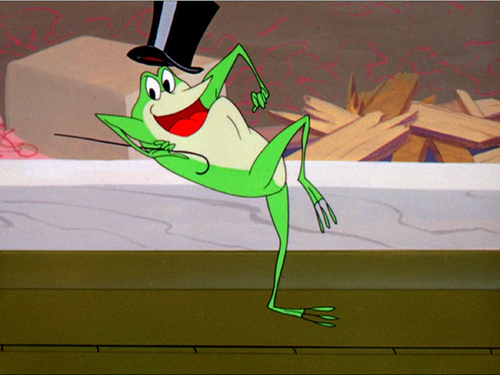
Steven Spielberg called this cartoon short “the Citizen Kane of animated shorts.” It was written by Michael Maltese and directed by Chuck Jones.
This is my favorite cartoon short. The short story is told without dialog…just singing in parts.
If you want to teach someone about Greed… watch this short. Instead of appreciating what he had…he wasn’t happy unless he could make money off of the frog.
The story is great. A 1955 construction worker is on a demolition site and pries open a box from 1892 found in the cornerstone of the building. Out of the box comes an old frog that climbs to the lid. The frog looks up at the construction worker and suddenly pulls up a top hat and coattails and starts singing “Hello my Honey, Hello my Baby…” and continues with the song.
The worker then starts dreaming of a theater marque with the picture of the frog…”He Sings”, “Talks”, and “Dances” with a picture of the frog.
He rents a theater and presents his frog to the audience. Right before the crowd settles in with the curtain down…the Frog starts singing and dancing away but stops the instant the curtain rises. The audience boos and throws vegetables.
That is his dilemma. The frog will only sing for this one guy. Not for paying crowds, not talent agents, ONLY HIM. Slowly he is driven mad, not so much by the frog but by his own failed plans with the frog. Failing to recognize the special gift he has, he sees the building going up and sticks the frog back into the cornerstone. Years pass, and when the laser demolition-man is vaporizing the building with his 21st-century technology, what does he find? Our friend the singing frog. The space suited construction worker from 2056 starts dreaming of the money he can make from the frog… And so the cycle continues.
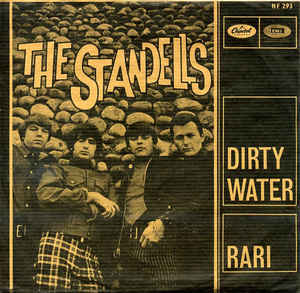
This was a pretty big hit when it was released in 1966, reaching #11 in the Billboard 100. It didn’t gain its mystique until 50 years later when the Boston sports teams adopted it. The Boston Red Sox were the first to use it, playing it after home wins in 1997.
The Celtics basketball team and Bruins hockey team followed suit, making it the song most associated with Boston sports, and thus the city as a whole.
The Standells were an LA garage band… the song was written by their producer, Ed Cobb, a Californian who was once a member of The Four Preps and wrote the song “Tainted Love” recorded by the soul singer Gloria Jones in 1964. Cobb wrote “Dirty Water” on a visit to Boston that turned ugly. “I was with a girl,” he told Blitz magazine. “Two guys tried to mug us, but they ran away. So when I got back to the hotel, I wrote the song.”
From Songfacts
The “Dirty Water” is the notoriously polluted Charles River in Boston, which had become a receptacle for industrial waste. But the song comes off as a celebration of Boston, not an ecological warning:
I love that dirty water
Boston, you’re my home
It may be dirty, but it’s their home and they love it anyway.
The song has become a Boston anthem and a source of pride for the city, but it was written and performed by guys from Los Angeles who didn’t have any good tidings toward the city.
The guy in the song is happy to live in this gritty city among the “fuggers and thieves.” After all, it’s his home.
The line, “Frustrated women have to be in by 12 o’clock” refers to the curfew observed by Boston University co-eds at the time.
Standell’s drummer Dick Dodd, who was once on The Mickey Mouse Club (he claimed to have bought his first snare drum from fellow Mouseketeer Annette Funicello for $20), handled lead vocals on this track. His spoken lines and interjections (“I’m gonna tell you a story…” “Have you heard about the Strangler?”) he made up in the studio.
The Standells hit #43 with their follow-up, “Sometimes Good Guys Don’t Wear White,” but never got any higher on the chart and broke up in 1968. Variations of the group appeared in the ’80s, and when “Dirty Water” became a Boston favorite in the ’00s, they became more visible, showing up to perform the song at sporting events and corporate functions. Dick Dodd, who sang lead on the track, died in 2013.
This song is now considered a classic of the garage rock genre. Garage rock is an undervalued genre of rock. It starts with late ’50s/early ’60s bands like The Wailers, The Kingsmen, The Trashmen (“Surfin’ Bird”), and The Standells. It continues through The Shondells, Shadows of Knight, ? & the Mysterians (“96 Tears”), and Patti Smith. And it comes all the way up to the present time with The Strokes, The White Stripes, The Von Bondies, and The Detroit Cobras. Other genres spun out from garage rock, including surf rock, indie, proto-punk (Hello, Velvet Underground!), and punk rock.
The Standells were pretty happinin’ by 1966 standards. They made appearances in 1960s B-list films such as Get Yourself a College Girl and Riot on Sunset Strip. But that’s not their greatest credit – that would be an appearance in the TV series The Munsters, episode #26 “Far Out Munsters!” In it, The Standells appear as themselves and offer to pay the Munster family a handsome sum to use their house as a recording studio for a week. The Munster family goes to stay at a hotel, but gets homesick for 1313 Mockingbird Lane and comes back early, only to find The Standells throwing a wild party.
This was used in the 2015 episode of The Last Man on Earth, “Alive in Tucson.” It has also appeared in these films:
Fever Pitch (2005) Stateside (2004) The Secret Life of Girls (1999) Edtv (1999) Celtic Pride (1996)
To enhance the Boston theme, a snippet of “Dirty Water” plays in the 2020 Hyundai Sonata Super Bowl commercial, “Smaht Pahk,” where Chris Evans, Rachel Dratch and John Krasinski revert to their Boston accents as Krasinski shows them how to pahk the cah.
Dirty Water
I’m gonna tell you a story I’m gonna tell you about my town I’m gonna tell you a big fat story, baby Aw, it’s all about my town
Yeah, down by the river Down by the banks of the river Charles (Aw, that’s what’s happenin’ baby) That’s where you’ll find me Along with lovers, muggers, and thieves (Aw, but they’re cool people)
Well I love that dirty water Oh, Boston, you’re my home (Oh, you’re the number one place)
Frustrated women (I mean they’re frustrated) Have to be in by twelve o’clock (oh, that’s a shame) But I’m wishin’ and a-hopin’, oh That just once those doors weren’t locked (I like to save time for my baby to walk around)
Well I love that dirty water Oh, Boston, you’re my home (oh, yeah)
Because I love that dirty water Oh, Boston, you’re my home (oh, yeah)
Well, I love that dirty water (I love it, baby) I love that dirty water (I love Boston) I love that dirty water (Have you heard about the strangler?) I love that dirty water (I’m the man, I’m the man) I love that dirty water (Ow) I love that dirty water (Come on, come on)
This has turned into one of my favorite songs since I heard 10 years ago or so.
I originally blogged this when I had around 3 followers two years ago…so I apologize to you three for the repeat!
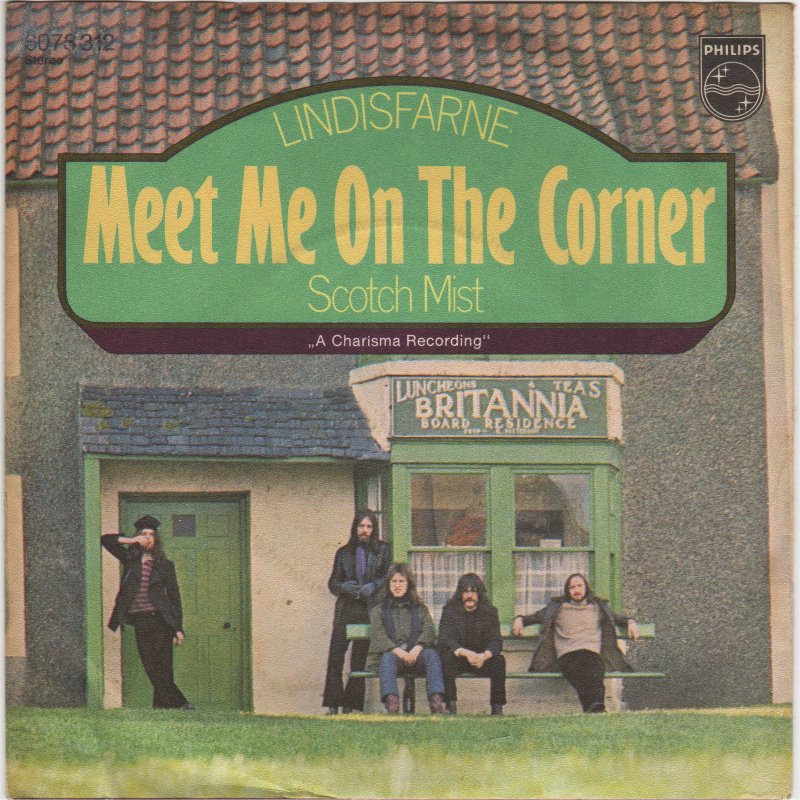
It’s a feel-good, quirky song with bright harmonies. It was released in 1971 and went to number 5 in the UK…kinda like the Bee Gees go folk.
The song was written by Lindisfarne member Rod Clements and sung by Ray Jackson. The mandolin solo in Maggie May by Rod Stewart was played by Ray Jackson. On the “Every Picture Tells A Story”album liner notes, it is stated that “The mandolin is played by the mandolin player in Lindisfarne. The name slips my mind.”
Meet Me On The Corner
Hey mister dream seller Where have you been. Tell me have you dreams I can see? I came along, just to bring you this song, Can you spare one dream for me?
You wont have met me, And you’ll soon forget. So don’t mind me tugging at your sleeve. I’m asking you, If I can fix a rendezvous, For your dreams are all I believe.
[Chorus] Meet me on the corner, When the lights are coming on, And I’ll be there. I promise I’ll be there. Down the empty streets, We’ll disappear into the dawn, If you have dreams enough to share.
Lay down your bundles, Of rags and reminders, And spread your wears on the ground. Well I’ve got time, If you’re dealing mine, I’m just hanging around.
[Chorus]
Hey mister dream seller, Where have you been. Tell me have you dreams I can see? I came along, just to bring you this song, Can you spare one dream for me?
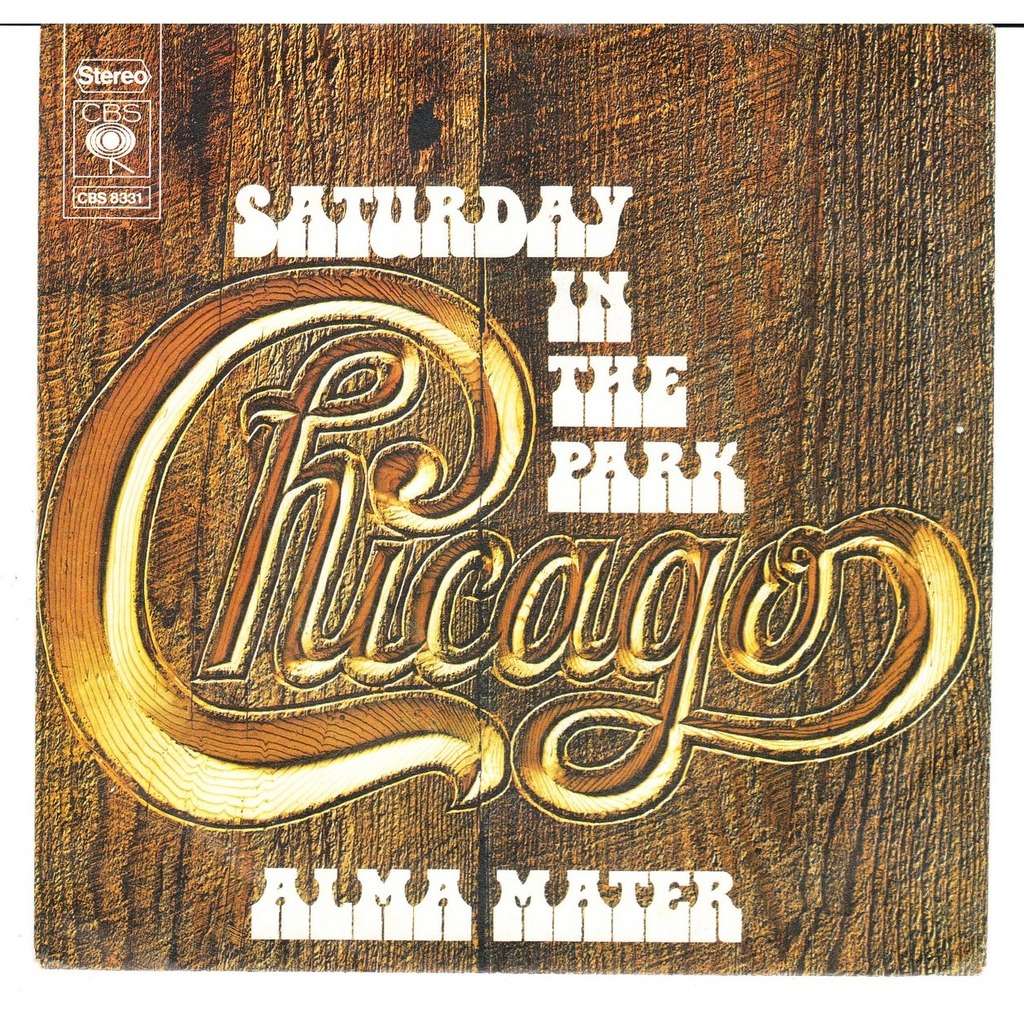
Chicago’s main songwriter, Robert Lamm, wrote this song. Lamm and Peter Cetera sang lead on the track. Robert Lamm based the melody of this song on “You Won’t See Me” by The Beatles, something he openly admitted.
The piano riff, in the beginning, hooks you right away. The song peaked at #3 in the Billboard 100 and #2 in Canada in 1972.
Robert Lamm: It was written as I was looking at footage from a film I shot in Central Park, over a couple of years, back in the early ‘70s. I shot this film and somewhere down the line I edited it into some kind of a narrative, and as I watched the film I jotted down some ideas based on what I was seeing and had experienced. And it was really kind of that peace and love thing that happened in Central Park and in many parks all over the world, perhaps on a Saturday, where people just relax and enjoy each other’s presence, and the activities we observe and the feelings we get from feeling a part of a day like that.
From Songfacts
Like most Chicago singles, this didn’t chart in the UK. In America, however, it was their biggest chart hit to that point and also their first gold single, which at the time meant selling more than a million copies (“25 Or 6 To 4” somehow was never certified gold).
This song contains some of the most famous nonsense singing in rock: after Robert Lamm sings the line, “Singing Italian songs,” he sings some made up words approximating the Italian language.
In the 2000 Adam Sandler film Little Nicky, this song was used for comedic effect when it was played backwards to show that it contains satanic messages.
Other movies to use the song include The Spirit of ’76 (1990) and My Girl (1991). TV series to feature the song include The Sopranos (2002), My Name Is Earl (2005) and Fringe (2011).
Chicago and Robin Thicke performed part of this song at the 2014 Grammy Awards in a medley of Chicago’s hits leading into Thicke’s song “Blurred Lines.” The occasion: Chicago’s first album entering the Grammy Hall of Fame.
Saturday In The Park
Saturday in the park, I think it was the Fourth of July Saturday in the park, I think it was the Fourth of July
People dancing, people laughing A man selling ice cream Singing Italian songs Everybody is another Can you dig it (yes, I can) And I’ve been waiting such a long time For Saturday
Another day in the park I think it was the Fourth of July Another day in the park I think it was the Fourth of July
People talking, really smiling A man playing guitar And singing for us all Will you help him change the world Can you dig it (yes, I can) And I’ve been waiting such a long time For today
Slow motion riders fly the colors of the day A bronze man still can tell stories his own way Listen children all is not lost, all is not lost, oh no, no
Funny days in the park Every day’s the Fourth of July Funny days in the park Every day’s the Fourth of July
People reaching, people touching A real celebration Waiting for us all If we want it, really want it Can you dig it (yes, I can) And I’ve been waiting such a long time For the day, yeah yeah
I had this single in the 70s. I was a kid and I knew every word. I had no clue what it meant…just thought it was a pretty song and the words were powerful. On my single, it was listed as “Only Women” it was shortened from “Only Women Bleed” by the record company because of protests by feminist groups.
Alice Cooper is singing about how women bleed from the heart, mind, and soul. Several feminist groups protested this song, but it was actually a sympathetic look at domestic abuse. It’s a rare song where Cooper doesn’t try to shock.
This ballad was on Alice Cooper’s Welcome To My Nightmare album. The song peaked at #12 in the Billboard 100, #1 in Canada, and #21 in New Zealand in 1975.
The song was written by Cooper and Dick Wagner. Wagner had the melody since the sixties but didn’t like the lyrics. He played the riff for Cooper, and the two developed new lyrics for the song.
The song was produced by Bob Ezrin using a demo that was recorded at the home studio of Micky Dolenz of The Monkees. Cooper and Wagner were able to walk to Dolenz house to record the demo.
Dick Wagner: “It’s really a song about domestic violence. It was misunderstood when it first came out. It was supposedly about a woman’s period, but it wasn’t. It was about a woman’s subservient position in society to a man. I’m a firm believer that women are the superior sex. ‘Only Women Bleed’ was a liberating kind of song.”
From Songfacts
Contrary to what many listeners believed, this is not about menstruation and it does not advocate domestic violence.
Alice Cooper and his guitarist Dick Wagner also wrote the ballads “You And Me” and “I Never Cry” together. Alice called this style “Heavy Metal Housewife Rock,” and explained in an interview with Creem: “I did those songs totally out of spite. I kept reading so many interviews and articles that I said I was never considered musical. Best rock show they ever saw, but musically lacking. They kept saying I was a performer but didn’t write anything. So I said, ‘Oh yeah? Yeah? Wait till you hear this!'”
Cooper performed the song with a single dancer, and it remained a part of his stage show for many of his concerts in the ensuing years. Alice told Mojo: “I didn’t realize it would end up as a woman’s anthem. I just needed a ballad for Welcome to my Nightmare.”
Dick Wagner wrote what would become the music for this song in 1968 when he was with a band called The Frost. Wagner wasn’t happy with the lyrics he wrote for the song, so he never recorded it. When he teamed up with Cooper in 1975, he played the music for Alice, who attached it to a title he was looking to use: “Only Women Bleed.” Based around that title, he and Wagner came up with the rest of the lyrics.
Only Women Bleed
Man’s got his woman to take his seed He’s got the power – oh She’s got the need She spends her life through pleasing up her man She feeds him dinner or anything she can
She cries alone at night too often He smokes and drinks and don’t come home at all Only women bleed Only women bleed Only women bleed
Man makes your hair gray He’s your life’s mistake All you’re really lookin’ for is an even break
He lies right at you You know you hate this game He slaps you once in a while and you live and love in pain
She cries alone at night too often He smokes and drinks and don’t come home at all Only women bleed Only women bleed Only women bleed Only women bleed Only women bleed Only women bleed Only women bleed
Black eyes all of the time Don’t spend a dime Clean up this grime And you there down on your knees begging me please come Watch me bleed
Only women bleed Only women bleed Only women bleed Only women bleed Only women bleed Only women bleed Only women bleed
This song was on Jimi Hendrix’s debut album Are You Experienced released in 1967. The song was written by Hendrix shortly before it was recorded. The guitar and the drum sound is incredible on this one.
The main lyrics in this song (“let me stand next to your fire”) came from a time when the band had just finished a gig in the cold around Christmas, 1966. They went to bass player Noel Redding’s mother’s house in Folkestone, England, and when they got there, Jimi asked Redding’s mother Margaret if he could “stand next to her fire” to warm up. The family dog, a German Shepherd, lay by the fire, which inspired the line, “Move over Rover, and let Jimi take over.”
The song was remixed in stereo for the American release of the album. In 1969, it was released as a stereo single in the UK with the title “Let Me Light Your Fire”
From Songfacts
This lyrical lightning bolt was a breakthrough for Hendrix, who had just started writing songs at the request of his manager Chas Chandler. Writing riffs was easy for him, and it turned out he had a talent for crafting lyrics as well, as he was able to turn a simple line into a fiery tale of lustful passion. (This story is verified in Mat Snow’s Mojo story on Hendrix that ran in the October 2006 issue.)
Hendrix is legendary for theatrics like setting his guitar on fire and playing it with his teeth (not at the same time). This was the song he was (appropriately) playing when he set it on fire for the first time. It happened at a concert in London in March 1967, two months before the Are You Experienced? the album was released. Hendrix was low on the bill (below Engelbert Humperdinck), and looking to garner some media attention. When he ignited his guitar, he created a buzz that grew to a roar as his career took off.
Hendrix set fire to his guitar once again at the Monterey Pop Festival in 1967. At that show, he didn’t do the bit during “Fire,” he did it after playing “Wild Thing.”
The Red Hot Chili Peppers often covered this song in their early years. They decided to play it again at Woodstock ’99 in Rome, New York, but this was a very different festival than the one where Jimi Hendrix performed the song in 1969. The ’99 crowd was violent and unruly; when RHCP launched into this song, they increased their level of mayhem, tearing the place up and setting fires (yes, Rome was burning). >>
Gary Moore covered this on his 1999 release A Different Beat. >>
In the movie Wayne’s World, Wayne falls in love with the bassist from an all-girl band (Tia Carrere) after seeing them cover this song at Gasworks
Fire
Alright, now listen, baby
You don’t care for me I don’-a care about that Gotta new fool, ha! I like it like that I have only one burning desire Let me stand next to your fire Let me stand next to your fire [Repeat 4 times]
Listen here, baby and stop acting so crazy You say your mum ain’t home, it ain’t my concern, Just play with me and you won’t get burned
I have only one itching desire Let me stand next to your fire Let me stand next to your fire [Repeat 4 times]
Oh! Move over, Rover and let Jimi take over Yeah, you know what I’m talking ’bout Yeah, get on with it, baby That’s what I’m talking ’bout Now dig this! Ha! Now listen, baby
You try to gimme your money you better save it, babe Save it for your rainy day
I have only one burning desire Let me stand next to your fire Let me stand next to your fire
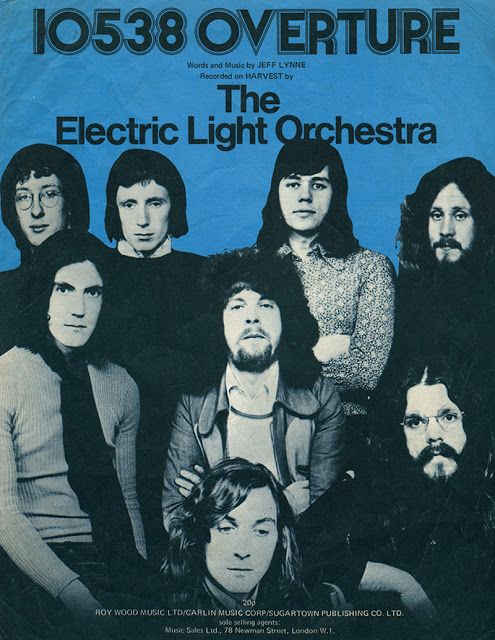
This was the first song ELO recorded and released. Jeff Lynne wrote it when he was in a band called The Move. This prompted some members of The Move to go ahead with plans to create a new band with string instruments called The Electric Light Orchestra.
The song peaked at #9 in the UK in 1972.
The album was first released in the UK as Electric Light Orchestra. When it was released in the US a few months later, someone from their American Record company called to find out the name of the album but didn’t get through. That person wrote down “No Answer” on the paperwork, and that was accidentally used as the name of the US release.
From Songfacts
Lynne wanted the lyrics to be about a man who had a number rather than a name.
1053 was the serial number of the desk Lynne used to write this. They added the 8 and included the word “Overture” to make it clear they were an orchestra.
10538 Overture
Did you see your friend crying from his eyes today Did you see him run through the streets and far away Did you see him run, did you see him fall Did his life flash by at the bedroom door
Did you hear the news it came across the air today Someone has been found on the rocks down in the bay Did you see him hide, did you see him crawl Does his life mean more than it did before
Did you see that man running through the streets today Did you catch his face, was it 10538
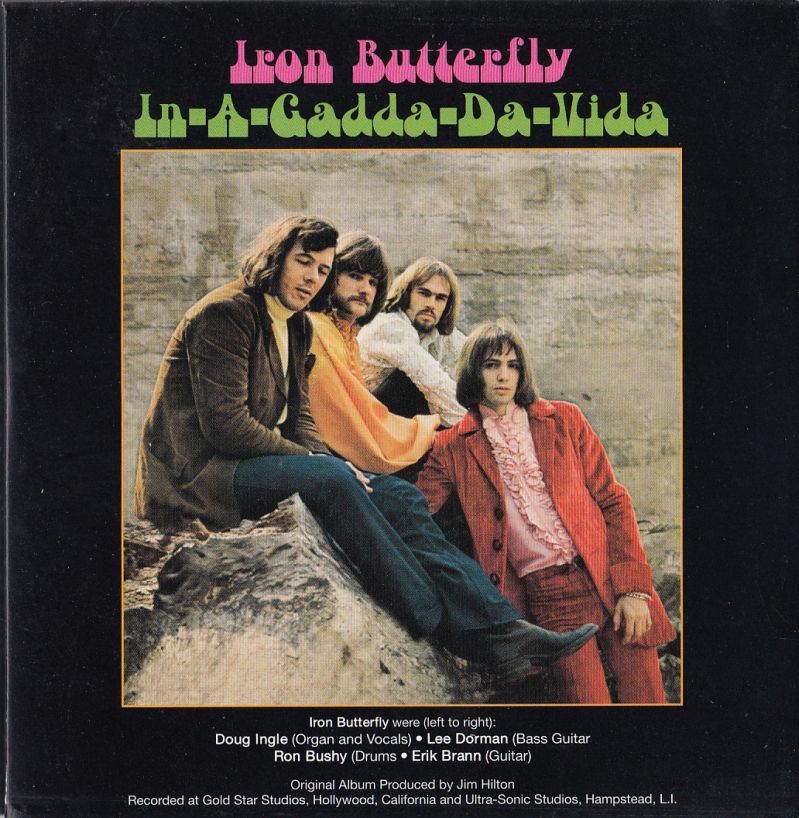
One of the most indulgent rock songs ever. It is 17:05 minutes long and has a grand total of only 30 different words in this song. You might think it has a deep, mystical meaning, but it’s really a translation error.
The title was supposed to be “In The Garden Of Eden.” Someone had written “In-A-Gadda-Da-Vida,” possibly while stoned, on a demo copy. A record company executive saw it and decided to use it as the title.
This was written by Doug Ingle, Iron Butterfly’s vocalist, and keyboard player. His father was a church organist, which influenced the drawn-out organ riffs in this song. When he wrote the song, Doug Ingle didn’t intend for it to be over 17 minutes long, but that’s how it played out. The single was edited down to 2:52, shaving over 14 minutes off the song!
This song reached #30 in the Billboard 100 in 1968.
So… light up some incense (or whatever you want), hang up some beads and turn up In A Gadda Da Vida full blast.
From Songfacts
As for the meaning of the song, it’s just a guy affirming his love for his special girl.
Ron Bushy’s drum solo is not as long as people think; it only runs about 2 1/2 minutes, from 6:30 to a little past 9 minutes. Doug Ingle’s organ solo immediately follows.
The band’s original guitar player quit before this was recorded. He was replaced by Eric Braun, who had only played the guitar for three months.
The title loosely translates as “In The Garden Of Life.”
This was the first hit song that could be classified as “heavy metal.” The phrase was introduced that year in the Steppenwolf song “Born To Be Wild.”
Iron Butterfly would have performed this at Woodstock, but they didn’t make it because they were stuck at the airport.
Hip-hop artist Nas has two different songs that sample “In-A-Gadda-Da-Vida.” The first is “Thief’s Theme” from his 2003 double album Street’s Disciple. The second is the title track of his 2006 album Hip-Hop is Dead. >>
Danny Weiss of Iron Butterfly was recommended to Al Kooper by David Crosby (of Crosby, Stills, & Nash), right when Kooper was forming Blood Sweat & Tears. As given in Backstage Passes and Backstabbing Bastards, “I loved the guitarist, introduced myself, and explained this concept to him. He thought it was a good idea, but insisted that he was committed to the band he was in. His name was Danny Weiss, and his band was Iron Butterfly. He left soon after we met anyway, and joined the great but doomed band Rhinoceros.”
The recording that is heard on the album was done as soundcheck filler for engineer Don Casale while the band waited for the arrival of producer Jim Hilton. However, after the rehearsal was completed it was agreed that the performance was of sufficient quality that another take wasn’t needed.
The song was used in The Simpsons episode “Bart Sells His Soul,” where Bart switches a hymn out for this song and convinces the Reverend Lovejoy it is penned by I. Ron Butterfly. The whole 17-minute version is played by the First Church of Springfield’s exhausted church organist.
In A Gadda Da Vida
In-a-gadda-da-vida honey, Don’tcha know that I love you? In-a-gadda-da-vida baby, Don’tcha know that I’ll always be true?
Oh won’tcha come with me, And take my hand? Oh won’tcha come with me, And walk this land?
Please take my hand… Let me tell ya now. In-a-gadda-da-vida honey, Don’tcha know that I love you?
In-a-gadda-da-vida baby, Don’tcha know that I’ll always be true? Oh won’tcha come with me, And take my hand?
Oh won’tcha come with me, And walk this land? Please take my hand… Let me tell ya.
Two,three,four! In-a-gadda-da-vida honey, Don’tcha know that I love you? In-a-gadda-da-vida baby, Don’tcha know that I’ll always be true?
When I first heard this…I would have bet money…and lost that it was Elvis singing this song. I was shocked when I found out that it wasn’t him. This song was written by the songwriting team of Dennis Lambert and Brian Potter. They wrote hits for various artists, including Glen Campbell, the Four Tops, and Dusty Springfield.
The song peaked at #4 in the Billboard 100 and #1 in Canada in 1971.
The backing group was the great studio musicians called “The Wrecking Crew” who played with countless artists including The Beach Boys, Simon and Garfunkel, and even Cher.
From Songfacts
This was Hamilton, Joe Frank & Reynolds’ third single and first Top 40 hit. Their two previous singles failed to reach the Top 40 and received very little radio play.
Rob Grill of The Grass Roots explained at a concert that this song was intended for his band, but they were about to release another single. So Potter and Lambert crafted “Two Divided by Love” for The Grass Roots, which sounds somewhat similar to this song. The Grass Roots perform “Don’t Pull Your Love (Out)” in concert, since it was supposed to be their song.
Don’t Pull Your Love
Don’t pull your love out on me, baby If you do, then I think that maybe I’ll just lay me down, cry for a hundred years Don’t pull your love out on me, honey Take my heart, my soul, my money But don’t leave me here drowning in my tears
You say you’re gonna leave, gonna take that big white bird, Gonna fly right out of here without a single word But you know you’ll break my heart when I watch you close that door Cause I know I won’t see you anymore
Don’t pull your love out on me, baby If you do, then I think that maybe I’ll just lay me down, cry for a hundred years Don’t pull your love out on me, honey Take my heart, my soul, my money But don’t leave me here drowning in my tears
Haven’t I been good to you, what about that brand new ring? Doesn’t that mean love to you, doesn’t that mean anything? If I threw away my pride and I got down on my knees, Would you make me beg you “pretty please”?
Don’t pull your love out on me, baby If you do, then I think that maybe I’ll just lay me down, cry for a hundred years Don’t pull your love out on me, honey Take my heart, my soul, my money But don’t leave me here drowning in my tears
There’s so much I want to do I’ve got love enough for two And I’ll never use it, girl, if I don’t have you
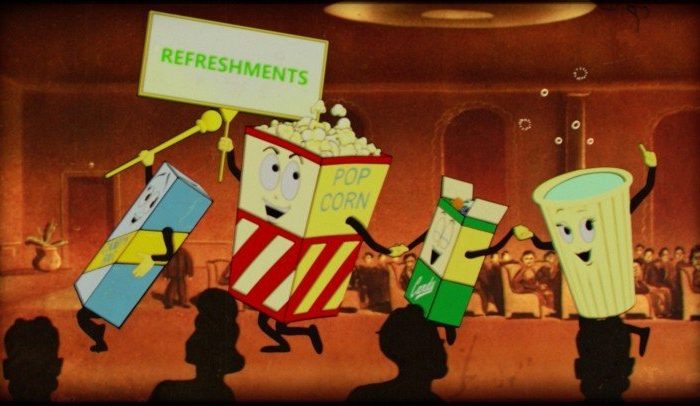
“Let’s All Go To The Lobby” is an animated short from the 1950’s that was played before movies and during drive-in intermissions.
This advertisement is beyond catchy. It’s hard to get it out of your head. Plus, who doesn’t want to see singing popcorn, candy, and a drink? I KNOW I DO!
I see this occasionally at the theater when they are showing an older movie.
In 1957 Chicago-based Filmack Studios released the trailer animated by the producer of Popeye, Dave Fleischer, as part of a series of similar Technicolor shorts to promote the newly installed concession stands in theaters across the country.
Filmack has continued selling copies in the decades since its production. The company estimates that 80% of independent theaters have screened the film at various points.
In 2000, “Let’s All Go to the Lobby” was selected for preservation in the National Film Registry by the Library of Congress as being culturally, historically, or aesthetically significant.
So everyone… Let’s Go Out To The Lobby!!!!
Let’s All Go To The Lobby
Let’s all go to the lobby Let’s all go to the lobby Let’s all go to the lobby And get ourselves a treat
Delicious things to eat The popcorn can’t be beat The sparkling drinks are just dandy The chocolate bars and nut candy So let’s all go to the lobby And get ourselves a treat Let’s all go to the lobby And get ourselves a treat
Johnny Otis wrote this song and had a hit with it in 1958. It peaked at #9 on the Billboard Hot 100 chart and #5 on the Billboard R&B chart. The song had a Bo Diddley type rhythm to it and it’s such a great groove.
Both versions are great…I think out of the two I favor Johnny’s version.
Eric Clapton included this song on his classic album 461 Ocean Boulevard. Willie and The Hand Jive peaked at #27 for Eric in the Billboard 100 in 1974.
The origin of the song came when one of Otis’ managers, Hal Ziegler, found out that rock’n’roll concert venues in England did not permit the teenagers to stand up and dance in the aisles, so they instead danced with their hands while remaining in their seats. At Otis’ concerts, performers would demonstrate Willie’s “hand jive” dance to the audience, so the audience could dance along.
Willie and the Hand Jive
I know a cat named Way-Out Willie Had a cool little chick named Rockin’ Billie Made a heart of stone Susie-Q, doin’ that crazy hand jive too Papa said “You will ruin my house. You and that hand jive have got to go” Willie said “Papa, don’t you put me down, Been doin’ that hand jive all over town.” Hand jive, hand jive, hand jive, doin’ that crazy hand jiveI don’t want you to get on the floor Gettin’ low, getting down with sister go Come on, get baby, little sister’ll die Said doin’ that hand jive one more time Hand jive, hand jive, hand jive, doin’ that crazy hand jive
Doctor getting low and he getting check Now they’re all digging that crazy beat Way-Out Willie gave ’em all a treat Been doin’ that hand jive with his feet Hand jive, hand jive, hand jive, doin’ that crazy hand jiveWilli and Billie got married last fall Had to live with his sisters and that ain’t all Daddy got famous it’s plain to see Been doin’ that hand jive on his knees Hand jive, hand jive, hand jive, doin’ that crazy hand jive
GOOD MORNING everyone. Play this song really LOUD and get on with your day!
The riff of this song is outstanding. It’s a riff that like Louie Louie and Wild Thing is learned by beginning guitar players.
This was released five months after lead singer Bon Scott died. ACDC asked Nobby Holder (lead singer of Slade) to join after Scott had died. Nobby has said that his loyalty was to Slade and turned them down. His voice really would have fit nicely.
The song is a tribute to Scott, and the lyrics, “Forget the hearse ’cause I never die” imply that he will live on forever through his music. With Brian Johnson on lead vocals, the Back In Black album proved that AC/DC could indeed carry on without Scott.
The song peaked at #37 in the Billboard 100 in 1981. The song was written by Brian Johnson, Angus Young, and Malcolm Young
From Songfacts
Brian Johnson made quite a statement with this song, quickly endearing himself to AC/DC fans and leaving little doubt that the band made the right pick to replace Bon Scott. Johnson had been in a group called Geordie, which Scott saw in 1973. After that show, Scott talked up the Geordie lead singer to his bandmates, and in 1980 when they were looking for a replacement, AC/DC’s producer Mutt Lange suggested him. At the time, Johnson was working as a windshield fitter and had recently reunited Geordie.
The band got the idea for the title before writing any of the song, although Malcolm Young had the main guitar riff for years and used to play it frequently as a warm-up tune. After Bon Scott’s death, Angus Young decided that their first album without him should be called Back In Black in tribute, and they wrote this song around that phrase.
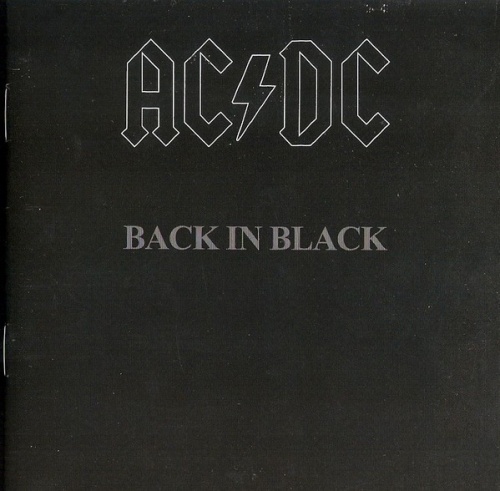
The album had a black cover with the band’s logo on it, which was a tribute to Bon Scott. They didn’t want it to feel mournful, however, and needed a title track that captured the essence of their fallen friend. They were certainly not going to do a ballad, so it fell on Brian Johnson to write a lyric that would rock, but also celebrate Scott without being morbid or literal.
Johnson says he wrote “Whatever came into my head,” which at the time he thought was nonsense. To the contrary, lines about abusing his nine lives and beating the rap summed up Scott perfectly, and his new bandmates loved it.
Bon Scott had several lyrical ideas for the album, but those were abandoned by the band in favor of new lyrics by Brian, Malcolm and Angus. Former AC/DC manager Ian Jeffrey claims to still have a folder that contains lyrics of 15 songs written for Back In Black by Bon, but Angus insists that all of Bon’s notebooks were given to his family.
This song was recorded in The Bahamas and produced in New York by Mutt Lange. Back In Black was one of the first big albums Lange produced. He went on to work with Def Leppard, Celine Dion, and Shania Twain (who he married in 1993). In the late-’70s, he produced two albums for the band Clover, which featured Huey Lewis on harmonica and Alex Call on lead vocals. Call explains Lange’s production style:
“Mutt is a real studio rat. He is Mr. Endurance in the studio. When we were making the records with him, he’d start working at 10:30, 11 in the morning and go until 3 at night, night after night. He is one of the guys that really developed that whole multi-multi-multi track recording. We’d do 8 tracks of background vocals going, “Oooooh” and bounce those down to one track and then do another 8, he was doing a lot of that. A lot of the things you hear on Def Leppard and that kind of stuff, he was developing that when he worked with us. We were the last record he did that wasn’t enormous, and that’s not his fault, he did a really good job with us. Mutt is famous for working long hours. The story I heard about one of the Shania sessions, he had Rob Hajakos, who’s one of the famous fiddle session men down here (Nashville). Rob was playing violin parts for like seven or eight hours and finally he said, ‘Can I take a break,’ and Mutt says, ‘What do you mean take a break?’ Rob goes, ‘Have you ever held one of these for eight hours under your chin?’ Mutt really loves to record, he loves music and he’s a real perfectionist and an innovator. An unbelievable commercial hook writer.” (Check out our full interview with Alex Call.)
This was the title track to AC/DC’s most popular album. It has sold over 19 million copies in the US, the 6th highest ever. Worldwide, it has sold over 40 million.
The Beastie Boys sampled this on their 1985 single “Rock Hard,” a single released in 1985 on Def Jam Records. They sampled it without AC/DC’s permission, so AC/DC refused to allow the Beastie Boys to include the song on their 1999 compilation album Beastie Boys Anthology: The Sounds of Science. >>
A remastered version is included on the 1997 Bon Scott tribute album, Bonfire.
The Atlanta Falcons football team used this as their theme song for a while. The Falcons also went through an MC Hammer phase, when they used “2 Legit 2 Quit” and let the rapper roam their sidelines.
This plays in the opening scene of the 2008 film Iron Man, providing an agressive intro to the Marvel Comic Universe movies. Other films to use the song include:
Grudge Match (2013) The Muppets (2011) Megamind (2010) The Karate Kid (2010) Brüno (2009) School of Rock (2003)
It was also used on episodes of
The Sopranos (“Cold Stones” – 2006) and Family Guy (“Peter Problems” – 2014).
This was used as the backing track to a bootleg version of Eminem’s 1999 hit “My Name Is” The song fits surprisingly well under Eminem’s rap.
Missy Elliott did a remix of this song called “Get Your Freak On (AC/DC remix)” that is played in the beginning of the movie The Rundown, starring Dwayne “The Rock” Johnson and Sean William Scott.
The Appalachian State Mountaineers football team use this song before and during their games, where it is a crowd favorite. The team colors are gold and black. >>
This features in a commercial for the 2015 Chevy Colorado pickup truck, where a mundane guy in a generic sedan is soundtracked with “Rainy Days And Mondays,” which becomes “Back In Black” when a much more exciting fellow comes into the shot and drives off in his black Colorado.
Kurt Cobain was given his first guitar for his 14th birthday, and this was the first song that he learned to play.
Back In Black
Back in black I hit the sack I’ve been too long I’m glad to be back Yes, I’m let loose From the noose That’s kept me hanging about I’ve been looking at the sky ‘Cause it’s gettin’ me high Forget the hearse ’cause I never die I got nine lives Cat’s eyes Abusin’ every one of them and running wild
‘Cause I’m back Yes, I’m back Well, I’m back Yes, I’m back Well, I’m back, back Well, I’m back in black Yes, I’m back in black
Back in the back Of a Cadillac Number one with a bullet, I’m a power pack Yes, I’m in a bang With a gang They’ve got to catch me if they want me to hang ‘Cause I’m back on the track And I’m beatin’ the flack Nobody’s gonna get me on another rap So look at me now I’m just makin’ my play Don’t try to push your luck, just get out of my way
‘Cause I’m back Yes, I’m back Well, I’m back Yes, I’m back Well, I’m back, back Well, I’m back in black Yes, I’m back in black
Well, I’m back, yes I’m back Well, I’m back, yes I’m back Well, I’m back, back Well I’m back in black Yes I’m back in black
Ho yeah Oh yeah Yes I am Oh yeah, yeah oh yeah Back in now Well I’m back, I’m back Back, (I’m back) Back, (I’m back) Back, (I’m back) Back, (I’m back) Back Back in black Yes I’m back in black Out of the sight
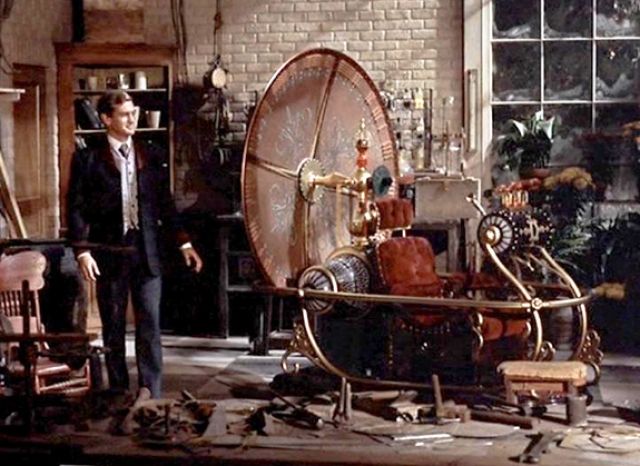
Where is the Time Machine from the Time Machine? I’ve always loved the Time Machine released in 1960. This movie is probably my favorite time travel movie. The prop was perfect that they created for this great movie. The movie was based on the novel by H.G. Wells, it was directed by George Pal, starred Rod Taylor, Alan Young, and Yvette Mimieux, and featured Oscar-winning special effects.
Time Machine prop itself was co-designed by George Pal and MGM art director William Ferrari. Pal incorporated the look of a horse-drawn sleigh, inspired from the winter sleigh rides of his youth.
After the film was completed the Time Machine prop was placed into storage by MGM. In the early 70s MGM held an auction that included the famous Ruby Slippers from The Wizard of Oz and the Time Machine. The Time Machine sold for between eight and ten thousand dollars to the owner of a traveling show.
Film historian Bob Burns tried to buy it at the auction but came up short. Around 5 years later a friend of a friend of Bob’s thought he saw the Time Machine Prop at a thrift shop in Orange California. Bob hurried over and with great excitement checked out the prop. There is was…The Time Machine in a thrift shop. It was not in good shape though. The chair was gone, the pods were broken, but the huge gold disc was in great shape.
When he got home Bob called George Pal (the director) when he got home and told him he had the Time Machine. George had given Bob the blueprints to the machine and Bob used these to restore the machine.
It only took Bob Burns and a crew 4 weeks to restore the machine and it was used in Bob’s annual Halloween show for 1976.
The original Time Machine has made appearances in other productions, including Carl Sagan’s “Cosmos”, “Gremlins, Mike Jittlov’s short “Time Tripper” (1978, and used within his feature film “The Wizard of Speed and Time” in 1989) and the documentary on the making of “The Time Machine” called “The Journey Back” (1993).
Bob Burns owns a ton of movie props. I would LOVE to tour his basement. He also owns the original King Kong.










 PowerPop... An Eclectic Collection of Pop Culture