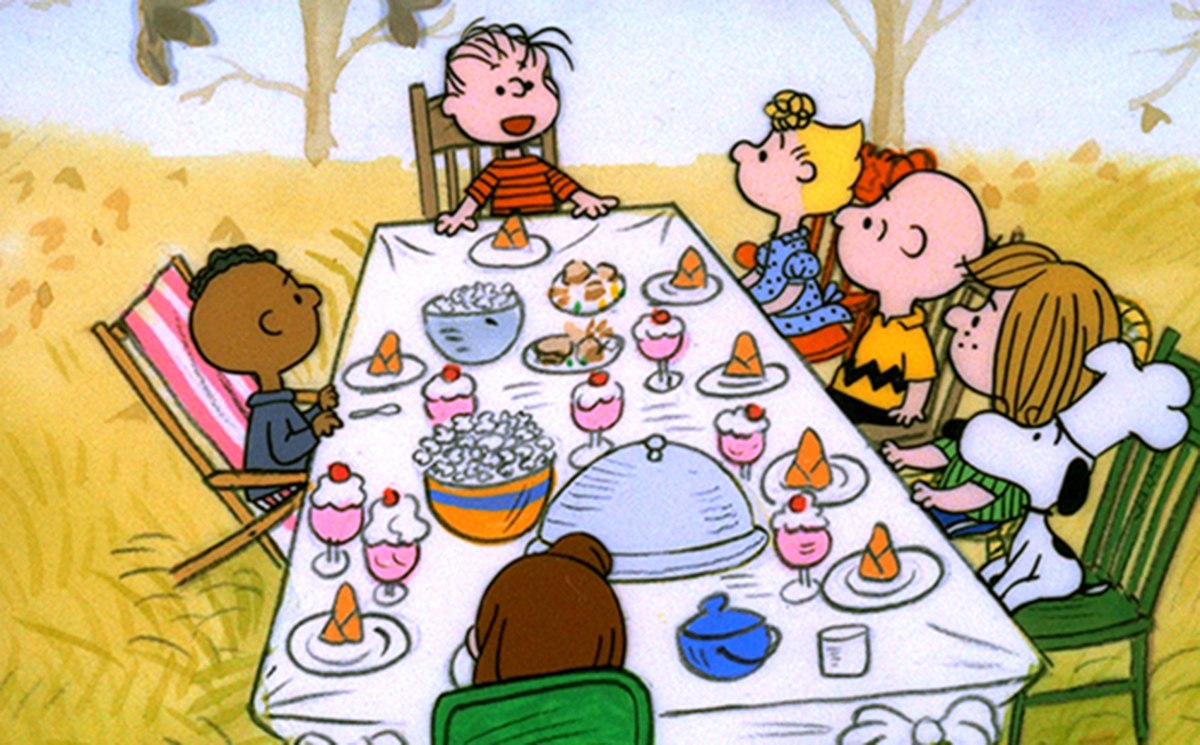
A Charlie Brown Thanksgiving

I will be reposting some of my Thanksgiving Posts along with some music until Thanksgiving.

Happy Thanksgiving to everyone…we are only two days away for those who celebrate it. This special first premiered on November 20, 1973, on CBS and won an Emmy Award. Great Thanksgiving special as always with the earlier Peanuts.

The Halloween, Thanksgiving, and Christmas Peanuts specials I always looked forward to. The way their world was only for kids where grownups were heard but only as noise in the background.

It starts off with Lucy tempting Charlie Brown with that football. Just one time I want to see Charlie kick the football…or Lucy.

It’s Thanksgiving and Peppermint Patty invites herself and Marcie over to Charlie Brown’s house but Charlie and Sally are ready to go to their grandmothers. Charlie talks to Linus and he suggests having two Thanksgiving dinners.

The only thing Charlie can come up with is feeding his friends toast and cold cereal which does not make Peppermint Patty happy whatsoever. She lets Charlie have it really bad until Marcie reminds her that she invited herself over.

Not going to give it away for those who have not seen this wonderful holiday cartoon. The music by Vince Guaraldi is excellent and makes every Peanuts cartoon special.

Classic TV Episodes: WKRP In Cincinnati – Turkeys Away

Some tv episodes are classic and will live on. When you tell someone you like a certain show, there is always that certain episode that many people will bring up that represents that show. I’ll go through a few random shows in the next few weeks and pick the one that I remember the most. They will be in no particular order.

” Those can’t be skydivers. I can’t tell just yet what they are but… Oh my God! They’re turkeys! Oh no! Johnny can you get this?”

” The Pinedale Shopping Mall has just been bombed with live turkeys. Film at eleven”

“I really don’t know how to describe it. It was like the turkeys mounted a counter-attack. It was almost as if they were… organized!”

“As God as my witness, I thought turkeys could fly”

WKRP IN CINCINNATI – Turkeys Away

When I talk to people about this show. This episode always comes to mind. The Characters are Bailey Quarters, Les Nessman, Mr. Carlson, Venus Flytrap, Dr. Johnny Fever, Herb Tarlek, Jennifer Marlowe and Andy Travis

Les’s play by play of the promotion is great. The complete episode is great but when Mr. Carlson says the closing line it turns into a classic episode.

It starts off with the big guy Mr. Carlson trying to act busy driving everyone crazy trying to be useful and probing the office to see what everyone was up to. He decided he would plan a promotion. He told the salesman Herb to get 20 turkeys ready for a Thanksgiving radio promotion.

Les is at the shopping center and Mr Carlson and Herb are up in a helicopter. He then notices a dark object being dropped from the helicopter, then a second one. Believing them to be skydivers, his tone becomes increasingly cautious when he sees no parachutes are opening. After a few more moments he realizes in horror that the objects are live turkeys. Continuing his broadcast (which bears a strong resemblance to the Hindenberg disaster) he says that the turkeys are hitting the ground and that the crowd has begun running away in panic. One turkey hits a parked car. Les continues, saying the turkeys are hitting the ground like “sacks of wet cement”. He tries to retreat to the store behind him but realizes he can’t after annoying the owner.

At the studio, the gang are listening, horrified themselves, when the broadcast is suddenly cut off. Johnny calmly tries to re-establish contact with Les, but hears only silence. Johnny thanks Les, telling his listeners that the shopping mall was just “bombed by live turkeys” and ends the broadcast.

At the end, Mr. Carlson says the phrase that elevates the episode to a classic. “As God as my witness, I thought turkeys could fly”

The play by play by Les.

As God As My Witness, I Thought Turkeys Could Fly

https://www.imdb.com/title/tt0742671/plotsummary?ref_=tt_stry_pl

It’s The Great Pumpkin, Charlie Brown

When I was growing up this was a must-watch in October. It’s The Great Pumpkin, Charlie Brown was first released in October 1966.

Great Pumpkin

Charlie Brown is invited to Violet’s Halloween party. Before the party, the Peanuts gang plan to go trick or treating, with Snoopy, who is dressed as the WWI flying ace, taking his Halloween disguise to an extreme. The one person who won’t be joining them for the trick or treating or the party is Linus, who will be waiting in his local pumpkin patch for the arrival of the Great Pumpkin to give toys and candy to all the girls and boys.

This year he talked Sally, Charlie Brown’s sister, into coming with him while the others went out. Linus and Sally stays at the pumpkin patch all night until Lucy gets up in the middle of the night to take Linus back home. The next day, Charlie Brown and Linus about the night’s events. Charlie Brown assures Linus that he’s done his share of stupid things too. This upsets Linus, who vows that the Great Pumpkin will appear next year.

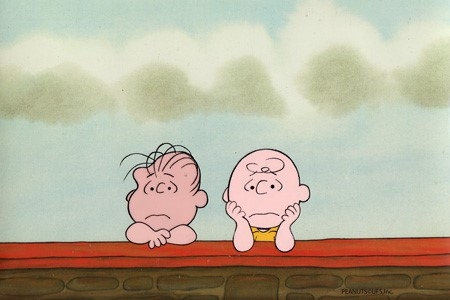
Charlie Brown and Linus at the Wall

It’s The Great Pumpkin Charlie Brown was adapted from Schulz’s newspaper strip, which he had conceived as a metaphor for some of the hope and disappointment associated with Santa Clause. Schulz didn’t like the idea of kids getting their hopes up about a lot of presents when many families could only afford one or two gifts for the holidays. “The Great Pumpkin is really kind of a satire on Santa Claus, when he doesn’t come, Linus is crushed.”

Growing up, there was no other cartoon I looked forward to more than The Peanuts. Every holiday I was there watching the gang. I would also read the  Sunday paper to see the Peanuts strip.

Everything from Linus telling us the true meaning of Christmas, Sally and Linus waiting for the Great Pumpkin, Lucy pulling that football from Charlie Brown, Snoopy being WWI flying ace, Lucy being a Psychiatrist, and Charlie Brown getting that sad-looking Christmas tree…we got to peek into that kids only world and listen to the wisdom that was going on while Linus and Charlie Brown discussed life.

Charlie Brown and Linus wall

The Peanuts taught us about life. We lose more than we win therefore everyone is Charlie Brown to an extent. Every person has failed at a big moment or many of the small ones. We felt for Charlie Brown because we could relate.

The Paul Lynde Halloween Special

 I love watching this from time to time. Yes, it’s bad…really bad but it’s so bad it’s good. All the celebrities who are in different phases of their careers, cross paths in this epic of a show. First, let’s go through all of the stars. It’s probably remembered most for KISS’s first television appearance. 

Paul Lynde of course,

Billie Hayes (Witchiepoo from H.R. Pufnstuf)

Margaret Hamilton (The witch from Wizard of Oz)

Tim Conway (No seventies variety show was right without Tim Conway)

Florence Henderson (Brady Bunch mom)

KISS (their first TV show appearance)

Billy Barty (was in many films)

Betty White (Everyone knew Betty White)

Roz Kelly (Pinky Tuscadero from Happy Days)

Donny and Marie Osmond! (just to top it off)

The plot… which really doesn’t matter.

I always thought Paul Lynde was wickedly funny. In this, he was watered-down and could not be his Hollywood Squares best. He had a quick campy wit at times and the writers probably toned it down for prime time. I first noticed Lynde on Bewitched as Uncle Arthur and he was great in that role. It was his delivery that made everything work in his comedy.

This special has comedy bits and music…oh yes the music. You have KISS, you have the disco and you have Florence Henderson singing “That Old Black Magic…” Most of the comedy bits fail but the real comedy is how bad it is… The only thing missing from this extravaganza was a guest appearance from Harvey Korman and/or Don Knotts.

The main reason many people have watched it since it aired is it was KISS’s first TV show appearance…not including concert material.

It is a train wreck but one I like watching over and over again. At no other time could a show like this have been aired. It only aired once…for good reason.

What other show does Paul Lynde play a trucker who wants to marry Pinky Tuscadero?

The complete show is the second one down.

If you have time…here is the complete show

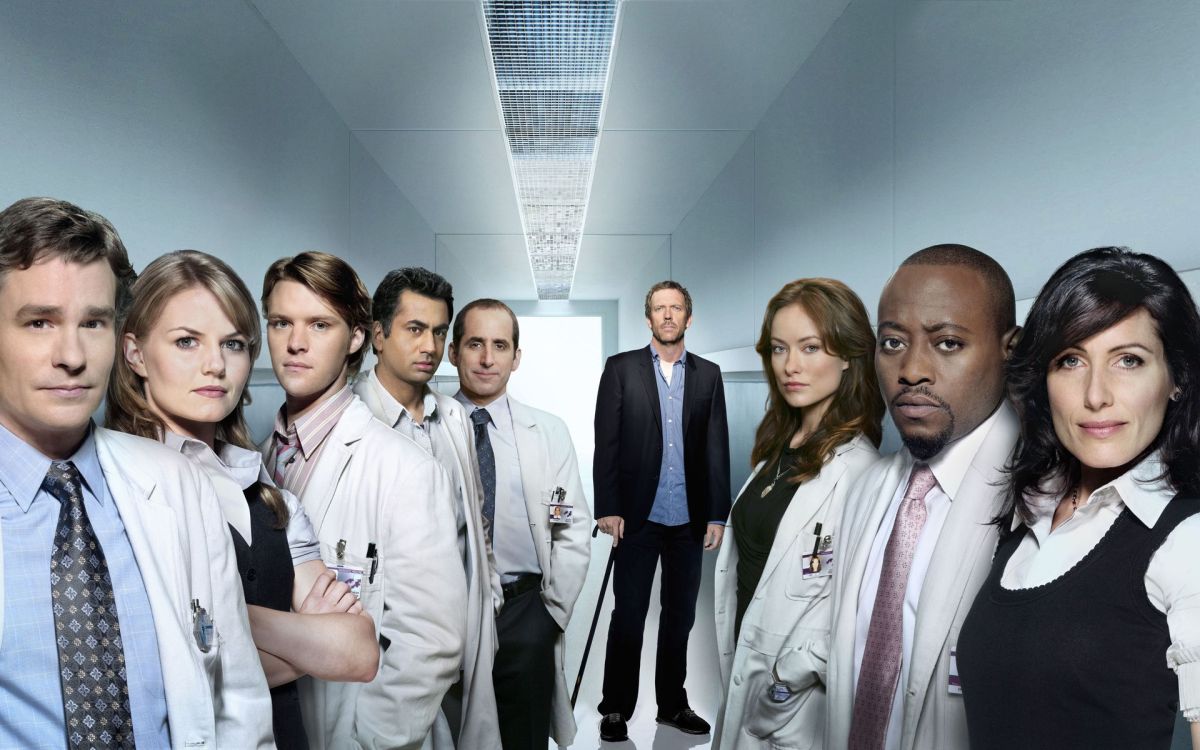
House MD

I’m usually late getting into a show or a band. I didn’t watch The Sopranos, Breaking Bad, or The Wire until years after they went off the air. I just found House MD in May and I’ve been binging on it. It ran from 2004 to 2012. It was one of the most intelligent shows on television. Hugh Laurie did a fantastic job on his show along with the rest of the actors.

Gregory House is a doctor with a horrible bedside manner and that is putting it mildly. He is a genius, mad doctor. House is the head of a diagnostic team that was put together around him. They get the most challenging cases in the hospital and solve them more often than not. On the surface, he has little interest in patients and instead, it is about solving the puzzle of their ailment that draws him in but we see many subtle instances which prove he does have a heart for both his patients and his friends. That is the root of the show that extends not only to patients but to his life and friends. He seems to have Antisocial Personality Disorder (ASPD).

The writers based the show on Sherlock Holmes and Watson. House could have been a master detective because his ability to read people is incredible. Even the names were common…Holmes-House and his best friend on the show was an oncologist named Wilson who was House’s Watson.

The parallels are very close. Both House and Holmes are drug addicts, and both are tortured musicians. But more fundamentally, House is really a detective show, not a medical show. It’s about solving the cause of mysterious diseases in the face of numerous misdirections (which often turn out to be caused by flaws in human nature) as opposed to solving mysterious crimes.

House goes around the hospital popping Vicodin because he is in constant pain. He suffered a leg injury that left him with severe pain for the rest of his life. The injury was caused by an infarction incurred while golfing. He is cynical, often cruel, but yet undeniably a genius. The actor behind House, Hugh Laurie, openly admitted to experimenting with Vicodin to “get closer to the character.” Speaking about his experience, “I wouldn’t recommend it – we have to be careful. But then again … if you’re not in pain it gives a floaty, pleasurable feeling.”

Although House appears to be uncaring to his patients he will do unethical procedures to save them, risking his own career. That could be to solve the all-important “puzzle” also. He does rub off on people. The team that stays around him starts to become him in some ways. They want to work with him because of how great he is at what he does. He spies on their personal life and tells their secrets but they keep coming back. My theory is they would do anything to be around greatness…and have that rub off.

Lisa Cuddy is the Dean of Medicine in the hospital. She tries to reign in House and that is almost impossible but she is strong and sometimes wins the battle. She makes House do “clinic duty” in the free clinic hoping that will improve his relationship with patients but he actively hates it and tries to dodge it because usually, there is no puzzle. As he said… that job can be done by a monkey with a bottle of Motrin. Here are a few clips from the clinic duty. These are not serious cases…but they are funny. Be on the lookout for the lady with an asthma inhaler.

His best friend Wilson is a kind person who is the only friend who can put up with House long term. Wilson is not stupid…he is intelligent and can be manipulative in a way but is not in the same league as House in that department. They are totally different but play college pranks on each other and need each other to be whole in a lot of ways.

The show stays fresh because his team changes through the years but the original team does rejoin at different points. It’s not just about cases…in fact, some episodes don’t even have a case at all.

This is a true ensemble show. Yes, it centers around House but the characters Foreman, Chase, Cameron, Thirteen, Taub, Kutner,  Masters, and more are just as important and you get an insight into their lives as well. You can see them slowly change into House’s logic that “Everybody Lies.”

Medical shows usually bore me but this one kept my attention all the way through. The cases they handle are based on real cases but they are very rare. It’s not a comedy…it’s a drama with comedy thrown in…the writing is second to none. The writers go deep into the characters.

Would you want him as your doctor if you had something terribly wrong with you? Would you care in the end if it was just a puzzle for him to solve or if he cared about you or not? I’ll end it here with just a simple statement…watch this show.

This is a show where you can store up quotes. I used one on the guy who works for me at work when we were both trying to solve a problem together. “I thought I’d get your theories, mock them, then embrace my own. The usual.”

The look on his face was priceless.

Here are a few short clips together from the first season.

Star Trek – Turnabout Intruder

★★★1/2 June 3, 1969 Season 3 Episode 24

If you want to see where we are…and you missed a few…HERE is a list of the episodes in my index located at the top of my blog. 

This show was written by Gene Roddenberry and Arthur Singer

This is IT! The last episode of the last season. Because the original series was canceled instead of coming to a natural end, and the idea of a series finale was not as popular in the 1960s, “Turnabout Intruder” was close to a normal episode and did not have the “finale” touches. The remastered version of “Turnabout Intruder” ended with the Enterprise flying toward a colorful nebula, to artistically signify the episode as being the last of the original series.

First of all, I want to thank all of you for reading all of these posts or just dropping back by once in a while. I know I narrow my audience doing these television shows so I am so thankful that some of you who really never watched it jumped in and I hope some of you come away watching a few of them. Some of you like Lisa, Obbverse, and Liam re-watched the shows as we went along and I thank you for it and the rest that did.

This episode is basically “Freaky Friday” in space.

Kirk’s body gets kidnapped by his former lover Janice Lester (played by Sandra Smith) who has gone jealously insane over the fact that Starfleet apparently doesn’t allow women captains (Roddenberry regretted this in the script). While the script may have been intended as a social commentary on the 1960s, it doesn’t quite work for a Star Trek series that was supposedly set in the 23rd century.

Star Trek - Turnabout Intruder B

Surely by then, women would have risen up the ranks to become captains of starships! While it seems implausible that Kirk would allow his body to be kidnapped on Camus II by an alien device, this cannot be dismissed outright. As Spock rightly notes, the Enterprise has been to many new places and witnessed many strange events. Moreover, Kirk was once cloned in ‘What Are Little Girls Made of?’ and even split into two in ‘The Enemy Within.’

I think Shatner does a fair acting job in this one. He is much more emotional because Lester is in his body. I think this one is an average episode of the third season. Not one of the greats but not bad. 

From IMDB:

William Shatner had a severe case of ‘flu’ during filming of this episode. At one point, he had to lift Sandra Smith in his arms, carry her to a couch and put her on it: during the first take, he got as far as the couch and dropped her. Fortunately, it was well padded, and Smith bounced several times; according to Joanie Winston, who was visiting the set, Shatner looked down at Smith and said, “You know I love you, baby, but you’ve got to lose about six inches off that ass.”

Leonard Nimoy is the only actor to appear in every episode of the series. William Shatner appeared in every episode with the exception of the first pilot, The Cage (1966).

Gene Roddenberry regretted the line about the Federation supposedly not allowing female captains, as he felt it was sexist.

The transposition sequence was the last footage shot for The Original Series.

This episode is subtly referenced in Legacy (1990). Jean-Luc Picard mentions that they are bypassing an archaeological survey on Camus II, the same planet that this episode begins on. This was mentioned because, with the airing of its 80th episode “Legacy”, Star Trek: The Next Generation officially became longer than TOS.

Leonard Nimoy (Spock) and Majel Barrett (Nurse Christine Chapel and Number One) are the only actors to appear in both the series finale and the first pilot The Cage (1966).

Nurse Chapel’s (Majel Barrett) hair color is brown for this episode, not its usual blonde color.

This episode was originally scheduled for broadcast on March 28, 1969. Special network coverage of the death of Dwight D. Eisenhower pre-empted it, and it didn’t air until June 3.

Lieutenant Galloway reappears in this episode, despite being killed by Ronald Tracey in The Omega Glory (1968). He was credited as Galloway (misspelled as “Galoway”) even though actor David L. Ross had been recast as Lieutenant Johnson in Day of the Dove (1968) after the character of Galloway was killed off.

Although this was the last episode of the Original Series to be filmed and aired, this episode has a lower stardate than the previous episode, All Our Yesterdays (1969).

The production crew nicknamed this episode “Captain Kirk: Space Queen”.

Though her voice is muffled, Dr. Lester protests to Dr. Coleman, “Go to Hell!” a rare case of a “swear” sneaking past the network censors.

According to Harry Landers, he was very fatigued during this episode because he had just had his upper right lung removed due to an infection. He wanted to turn the role down but did it as a favor to producer Fred Freiberger.

After two years on the series, Roger Holloway finally gets to speak dialogue, all of two words. His character’s name (Lemli) was the same as William Shatner’s license plate at the time, a mixture of his daughters’ (Leslie, Melanie, Lisabeth) names.

Summary

On the planet Camus II, Kirk meets his old flame, Janice Lester, who is supposedly dying of radiation poisoning. She is a woman scorned and is out to get her revenge on Kirk with whom she was in love many years ago. She has discovered an alien process that will allow her to transfer her essence into Kirk’s body and vice versa. Returning to the Enterprise in Kirk’s body, she now has command of the Enterprise. Kirk on the other hand is now in Lester’s body and can get no one to believe that he is really Kirk. It soon becomes obvious that Lester is incapable of command, leading Spock to accept that she has, in fact, taken over Kirk’s body.

THANKS AGAIN! One final message…Live Long and Prosper. 

CAST

William Shatner … Captain James Tiberius ‘Jim’ Kirk
Leonard Nimoy … Mister Spock
DeForest Kelley … Dr. McCoy
Sandra Smith … Janice Lester
Harry Landers … Dr. Coleman
James Doohan … Scott
George Takei … Sulu
Walter Koenig … Chekov
Majel Barrett … Nurse Chapel
Barbara Baldavin … Communications Officer
David L. Ross … Lt. Galoway
John Boyer … Guard
Tom Anfinsen … Medical Technician (uncredited)
Bill Blackburn … Lieutenant Hadley (uncredited)
James Drake … Security Guard (uncredited)
Roger Holloway … Lt. Lemli (uncredited)

Star Trek – All Our Yesterdays

★★★★ March 14, 1969 Season 3 Episode 23

If want to see where we are…and you missed a few…HERE is a list of the episodes in my index located at the top of my blog. 

This show was written by Gene Roddenberry, Jean Lisette Aroeste, and Arthur H. Singer

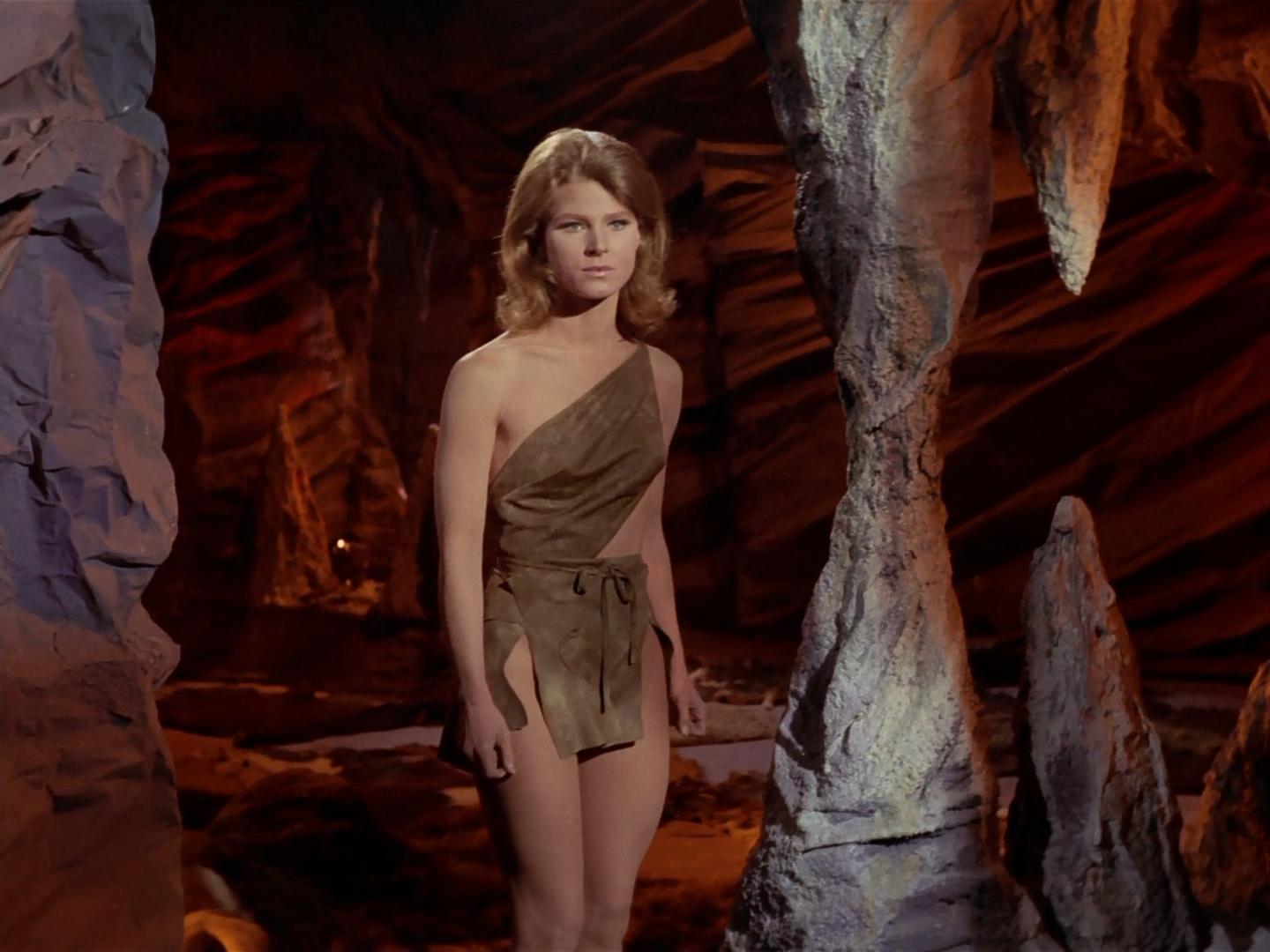
Only one more episode after this one. This is one that you see Spock fall for a lady named Zarabeth who is played beautifully by Mariette Hartley. You see Spock revert back to the time before Vulcan developed the logical way of life. Personally, I think Spock could have been happy there in the cold with Zarabeth…I know I would! This is one of my favorite episodes of the third season. They don’t spend hardly any time in the Enterprise. 

Star Trek - All Our Yesterday B

Kirk and crew land on a lonely planet where the sun is about to explode. They intend to evacuate the inhabitants but find the place deserted except for Mr. Atoz who operates some sort of high-tech library. Despite trying to get a straight answer from him about everyone’s whereabouts, Atoz is indifferent to their questions and insists they must quickly ‘make a selection while there is still time. The reason for the short time is a star is about to nova, and the three arrive on the planet, hoping to help evacuate the population

They have no idea what he’s talking about but wander about looking at the hand mirror-like disks on the viewers and they see images of the planet’s past. Then, while a disk is in the viewer, Kirk runs through the doorway and is magically transported back in time to what on Earth would look like the time of Louis XIV (the 1660s). When McCoy and Spock follow, a different disk is in the viewer and they are sent to an ice-age hell. All too late they realize that the library is a time travel machine and repository.

While Kirk’s visit is pretty short and not all that exciting, Spock and McCoy’s is much more eventful, as Spock falls head over heels for Mariette Hartley–who was sent to this awful place as a punishment. The scenes with Spock are exceptionally interesting and very atypical of the normally logical Vulcan. McCoy almost freezes to death but Spock looks after him but that doesn’t mean we don’t get some verbal jabs from each of them to each other. 

One of the best episodes of the 3rd season in my opinion. I do like Time Travel also so that played a part. 

From IMDB:

The name of the librarian Mr. Atoz is a play on the phrase “A to Z”. Author Jean Lisette Aroeste was a UCLA librarian at the time she wrote this script.

Sulu, Uhura, and Chekov do not appear in this episode. Scotty does not appear on screen but has several voice-over lines. In no other episode are only three regular members of the crew seen in person.

The title is taken from “Macbeth” by William Shakespeare, Act 5, Scene 5: The title character speaks “Tomorrow and tomorrow and tomorrow, / Creeps in this petty pace from day to day / To the last syllable of recorded time, / And all our yesterdays have lighted fools / The way to dusty death.”

The name of the device, the Atavachron, is quite a descriptive one. “Atavus” is Latin for “… (an) ancestor or ancestral type from which a character is assumed to be inherited”, and “chron” is from the Greek “chronos” (“time”), so, an Atavachron is a device which can send you to an ancestral place of any time period.

According to the stardate, this episode is chronologically the last of the series, even though its production number and air date are earlier than Turnabout Intruder (1969). This is therefore the last voyage of the USS Enterprise in the original series. This is also the last time-travel episode of the original series.

Part of the set depicting the surface of the ice age planet where Spock and McCoy are transported was recycled from the MGM film Ice Station Zebra (1968), made the previous year.

There is no footage aboard the Enterprise in this story. Only three crew members (Kirk, Spock & McCoy) are seen and only one stock footage shot of the exterior is used. This was a deliberate attempt to cut costs and to film this episode quickly by using a minimal number of sets. Sets from previous episodes were reused as well.

The Atavachron computer used by Mr. Atoz is the same one as used by Gary Seven in Assignment: Earth (1968).

Mariette Hartley (Zarabeth) was not allowed to show her belly-button in this episode, despite the appearances of other women’s navels in previous episodes. To comment on this censorship, Gene Roddenberry gave Hartley’s character two navels in his pilot Genesis II (1973), stating that “the network owed me one.”

There were two highly successful sequel books, “Yesterday’s Son” and “Time for Yesterday”, both by A.C. Crispin.

The stock footage showing the endless snow fields on the disc McCoy watches was also used as the surface of Exo III in What Are Little Girls Made Of? (1966).

The sound effect used for the Atavachron is the experimental time code broadcast by radio stations WWV and WWVH in the 1960s. A time code seems appropriate for a time machine.

Summary

Kirk, Spock, and McCoy beam down to the planet Sarpeidon to learn what has happened to its population. The planet, which will be completely destroyed when its sun goes supernova in a few hours’ time, once had a thriving population but has now been reduced to one person, the librarian Mr. Atoz. It would appear that the planet’s entire population has gone back in time to a period of their choice in the planet’s history. When the three crewmen unknowingly have gone through the time portal, Kirk ends up in a society similar to 17th-century Earth while McCoy and Spock end up in a frozen ice age. With Kirk arrested and accused of witchcraft and the others having to survive the harsh Arctic-like climate, they have only a short time to find their way back and return to the Enterprise before the planet explodes. For Mr. Spock, he finds a time from before the existence of Vulcan and he’s regressing to an emotional state.

CAST

William Shatner … Captain James Tiberius ‘Jim’ Kirk
Leonard Nimoy … Mister Spock
DeForest Kelley … Dr. McCoy
Mariette Hartley … Zarabeth
Ian Wolfe … Mr. Atoz
Kermit Murdock … The Prosecutor
Ed Bakey … The First Fop
James Doohan … Scott (voice)
Anna Karen … Woman
Albert Cavens … Second Fop (as Al Cavens)
Stan Barrett … The Jailor
Johnny Haymer … The Constable

Star Trek – The Savage Curtain

★★★★1/2 March 7, 1969 Season 3 Episode 22

If you want to see where we are…and you missed a few…HERE is a list of the episodes in my index located at the top of my blog. 

This show was written by Gene Roddenberry, Arthur Heinemann,  and Arthur H. Singer

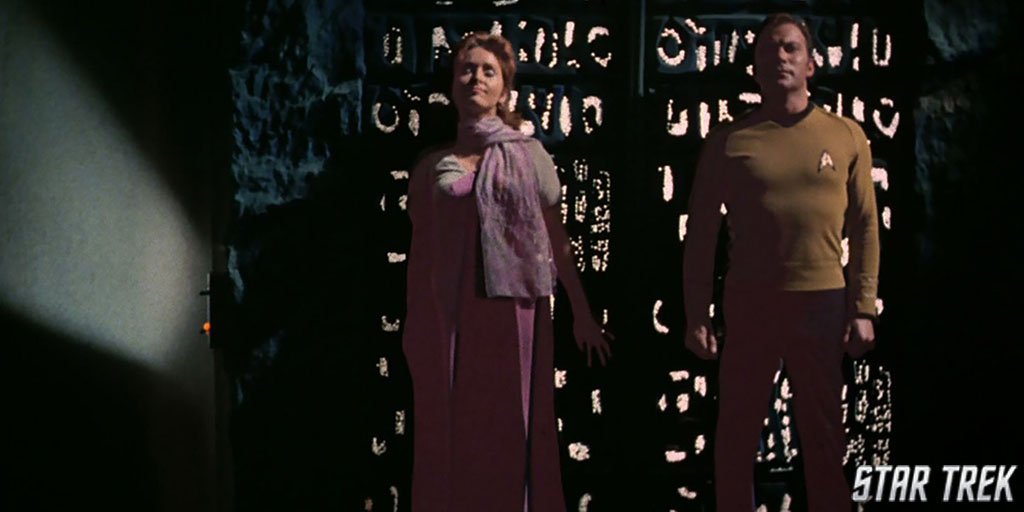
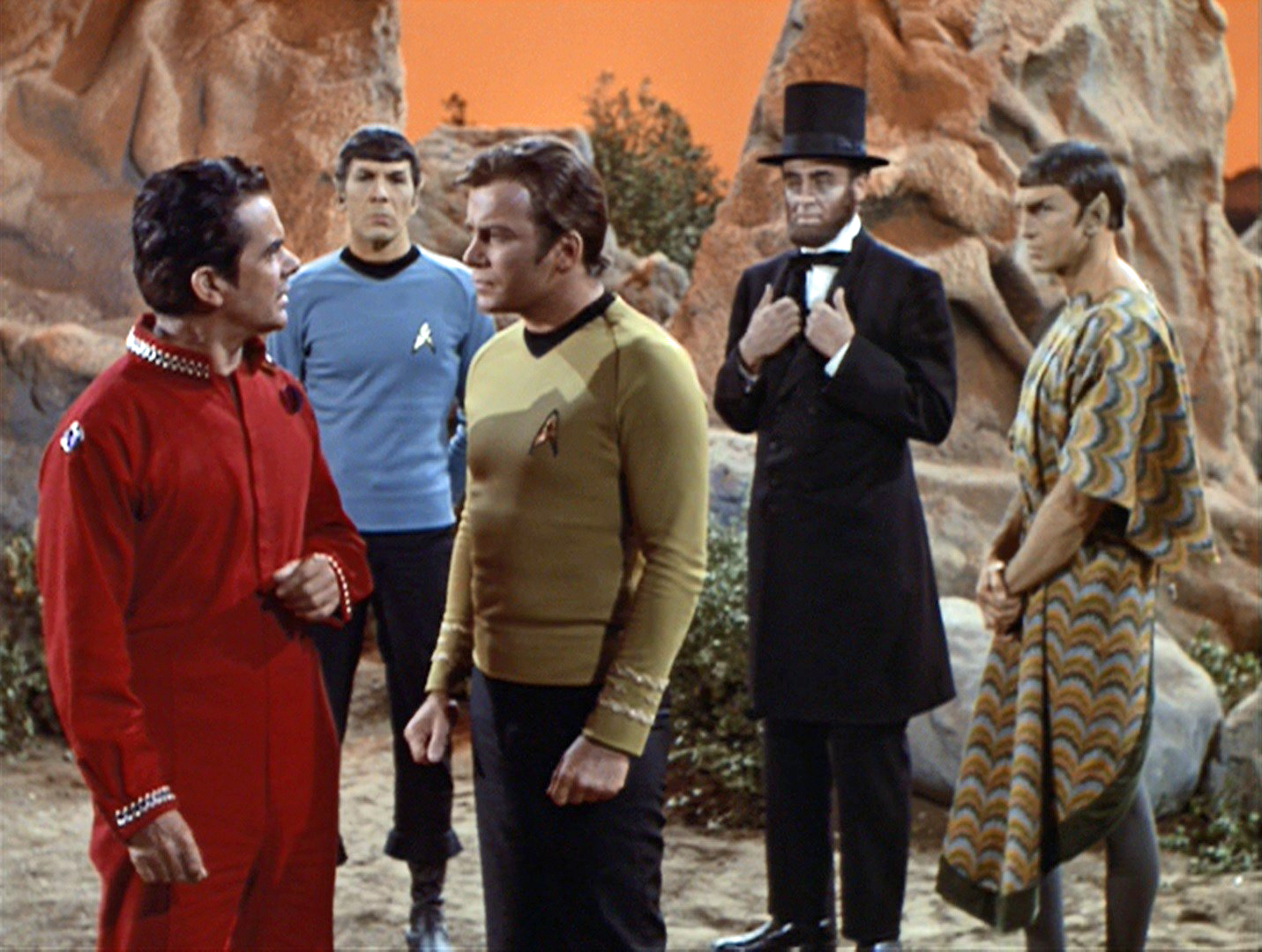
This is a bizarre episode…even for Star Trek. I like the episode more than some Trek fans. When you see Abraham Lincoln materialize in space and talk to you…you know you are in for a different kind of episode. I will say this… it works because of the actor playing Lincoln… he is exactly what I would picture Lincoln. 

The Enterprise crew once again encounters highly advanced/highly evolved aliens, who, in this case, wish to study the concepts of good and evil and use crew members as pawns in their inquiries. This episode, a morality tale, borrows elements from some of the better episodes of the past.

Star Trek - The Savage Curtain

 Apparently Lincoln (Lee Bergere) was a boyhood hero to Captain Kirk, while everyone on the planet Vulcan revered the legendary Surak (Barry Atwater). The two heroes are teamed up with Kirk and Spock to do physical battle with the galaxy’s most notorious outlaws, with a mute Genghis Khan representing ancient Earth history. This, all in the name of defining good versus evil, life versus death

 I simply love the improbable idea of a stunning recreation of Abraham Lincoln and “father of Vulcan civilization/peace/logic”, Surak from the minds of Kirk and Spock (it is established how much admiration and respect Kirk and Spock have for these historical figures) forced into combat with evil historical figures representing the worst kind of lot as rock beings on a planet primarily of lava want to study good vs. evil and judge the results. 

From IMDB:

This is the final episode of the series to feature the entire ensemble cast of Kirk, Spock, McCoy, Scotty, Uhura, Sulu, and Chekov. This episode also marks the final appearance of Nichelle Nichols (Uhura) in the series.

This marks the second time TOS encounters a silicon-based life form. The first time is in The Devil in the Dark (1967). Janos Prohaska played both lifeforms, with Bart La Rue supplying the Excalbian’s voice.

Lincoln tells Kirk, “There is no honorable way to kill, no gentle way to destroy. There is nothing good in war, except its ending.” This speech, written by the Star Trek screen writers, has become so popular that some people mistakenly believe it to be something the real Abraham Lincoln said.

“The Savage Curtain” introduces Klingon founding father Kahless and Vulcan founding father Surak to the Star Trek universe. Kahless’ history played an important role in several episodes of Star Trek: The Next Generation (1987) and Star Trek: Deep Space Nine (1993) (where he is regarded as a force for good, contrary to the sentiments expressed here), and Surak’s history was crucial to the final season of Star Trek: Enterprise (2001) which also gave a little bit of backstory to Colonel Phillip F. Green. Zora of Tiburon is the only “historic” figure introduced here who was not further developed in a later Star Trek series.

Colonel Green’s uniform was recycled into the spacesuit worn by Mork in his appearances on Happy Days (1974) and Mork & Mindy (1978).

Tiburon, homeland of the cruel scientist Zora, is named after the Spanish word for shark, and was also the homeland of Doctor Sevrin, the villain-of-the-week of The Way to Eden (1969).

The first choice for the role of Lincoln was Mark Lenard, best known for playing Sarek, but prior commitments prohibited him from taking the part.

The characters of Zora and Genghis Khan have no lines. This is probably due to budget constraints, as actors with speaking parts were paid significantly more than background actors.

The war that included Colonel Phillip Green’s atrocities was later decided to be World War III in the mid-21st century, which served as an important macguffin in later Trek productions such as Encounter at Farpoint (1987), Star Trek: First Contact (1996), and a number of Star Trek: Enterprise (2001) episodes.

This is the second and final mention in a TOS episode that it may be possible to separate the nacelles from the ship, in this case by specifically jettisoning them.

A Star Trek trading card set gave Colonel Green’s full name as Edward Featherstone Green, but this was superseded by the last few episodes of Star Trek: Enterprise (2001) where he was spoken of as Phillip Green.

Kahless is seen here in the Klingon style typical of TOS. It would seem to contradict the explanation given in Divergence (2005) for the change in physical appearance of the Klingons, since Kahless lived long before those events. However, since the image of Kahless was drawn from Kirk’s and Spock’s minds, not from “fact”, this is not necessarily a contradiction.

The appearances of Kahless and Surak mark the final respective appearances of a Klingon and (full) Vulcan in The Original Series.

The budget cuts imposed by the network for series three are noticeable here. Although, at first glance, this appeared to have a number of guest actors, at least two of them were actor/stunt performers with no lines of dialogue. The planet surface was the Desilu set with fiber-glass rocks that had been used in previous stories or borrowed from the recently canceled CBS show Lost in Space (1965), Genghis Khan’s outfit had been used at least once previously, in The Omega Glory (1968), and Kahless’ Klingon outfit had also been used previously. Note that both Kirk and Spock materialize on the planet surface without their tricorders or phasers, meaning that money could be saved by not requiring any additional visual effects. Also, many of the planet surface props, such as spears, had been used previously. In fact, the only significant spend was on commissioning the molten rock creature costume (which was connected to a smoke machine).

This episode marks the final appearance of dress uniforms in the original series.

Scott’s kilt is the 1826 Scott black and white tartan, which “..was produced for his own use by Sir Walter Scott in 1822, and that he wore it in private, in the form of a Lowland shepherd’s plaid.” In Scotland, the patterns are referred to as ‘tartan’ as opposed to ‘plaid’ preferred in America. The one exception is the design known, in Scotland, as Shepherd’s Plaid.

William Shatner struggled to keep weight off during the show’s run and found the pounds piling on as filming dragged on over the course of a season. His weight gain is particularly noticeable in this story in comparison to episodes earlier in season three.

In the teaser, McCoy says, “There is no intelligent life here.”, and is quickly proven wrong. This is the only time anybody actually says this oft-quoted phrase on the original Star Trek series.

This is one of three productions in which Genghis Khan and Abraham Lincoln appear together as characters, in spite of the fact that Lincoln was born 582 years after the Khan’s death. The others are Bill & Ted’s Excellent Adventure (1989) and Clone High (2002).

Summary

When someone purporting to be Abraham Lincoln asks them to beam down to the planet below, Kirk and Spock agree to join him. Soon Surak, the greatest Vulcan of all time, is with them. They are told by a rock-like creature that they are there to do battle against four of history’s most evil characters. The rock creature’s society does not understand the concepts of good and evil and the battle between the two groups will determine which has the greatest merit. They are free to use any materials available to them on the planet and Kirk soon realizes that there are weapons to be made.

CAST

William Shatner … Captain James Tiberius ‘Jim’ Kirk
Leonard Nimoy … Mister Spock
DeForest Kelley … Dr. McCoy
Lee Bergere … Lincoln
Barry Atwater … Surak
Phillip Pine … Col. Green
James Doohan … Scott
George Takei … Sulu
Nichelle Nichols … Uhura
Walter Koenig … Chekov
Arell Blanton … Chief Security Guard
Carol Daniels … Zora (as Carol Daniels DeMent)
Bob Herron … Kahless (as Robert Herron)
Nathan Jung … Ghengis Khan
Bill Blackburn … Lieutenant Hadley (uncredited)
Roger Holloway … Lt. Lemli (uncredited)
Bart La Rue … Yarnek (voice) (uncredited)
Janos Prohaska … Yarnek (uncredited)

Star Trek – The Cloud Minders

★★★★ February 28, 1969 Season 3 Episode 21

If you want to see where we are…and you missed a few…HERE is a list of the episodes in my index located at the top of my blog. 

This show was written by Gene Roddenberry, Margaret Armen, and David Gerrold

The Enterprise arrives at the planet Ardana to obtain Zenite, a rare mineral that they need to combat a botanical plague on another world. Kirk and Spock beam down but find themselves caught in the middle of a class struggle between the intellectual rulers dwelling in a city in the clouds, sustained by some anti-gravity technology, and Troglytes, the miners who mostly dwell in the caves on the surface of the planet, where such items like Zenite are obtained.

This is essentially a reworking of the worker class story penned by H.G. Wells in his famous novel The Time Machine. Extrapolating from such a premise of basic inequality, where-in the elites get all the benefits through the sweat of the workers.

It proposes that, sometime in the past, one race experienced an extreme branching-off separation into two, though, scientifically, they are still all the same race. Kirk and Spock see them as the same, simply a division of the rich vs. the poor, but the egotistical intellectuals of Stratos, the hovering city, have come to see themselves, over the centuries, as a different, superior race. 

Star Trek: The Original Series

I liked seeing Spock liked by Droxine. She didn’t know it was a dead end but it’s nice seeing Spock, McCoy, or Scotty be involved instead of Kirk every now and then. Over all a good solid episode. 

SPOILERS

The ending was left open…will the Cloud Minders and Troglytes get along? 

From IMDB:

The rest chamber on Stratos is furnished with the iconic “Ribbon Chair” by french modernist designer Pierre Paulin, upholstered here in day-glow orange.

This was one of the first TV roles for football star Fred Williamson, who later became a prolific film actor.

According to John M. Dwyer (on the TOS season 2 DVD special features), the metal artwork and sculptures that appear throughout the city were mostly parts of metal furniture, like tables, etc. that he had rented from “a guy up in Topanga Canyon”, minus the glass tops, and much care had to be taken to return them in their original condition.

It is interesting that Jeff Corey was cast as Plasus, the leader of the privileged people on Stratos. For a number of years he had been blacklisted from working for allegedly being a Communist.

The phrase “For what purpose?” is uttered several times by several characters, in different contexts.

The story line is similar to Metropolis (1927) about a two class society where the upper class lives in the utopian city Stratos in the sky, enjoying their privileged life, while the cave-dwelling Troglytes’ only existence is working in the mines for the pleasure of a few – which is a key philosophical topic about ‘the needs of the many outweigh the needs of the few’ in the Star Trek universe.

When Kirk, Spock, and McCoy explain the benefits of the filter masks to Plasus, they do so from a monitor in the transporter room. This is the first and only time in the series we see a visual communication take place here.

The mine “entrance” is the same set piece that was used for the entrance to the defense computer cave in That Which Survives (1969).

The script was written by David Gerrold, one of four writers of Star Trek who had no prior TV writing credits. The other three were Jean Lisette Aroeste (‘Is There in Truth No Beauty?’, ‘All Our Yesterdays’), Judy Burns (‘The Tholian Web’) and Joyce Muskat (‘The Empath’).

Just before leaving Stratos, Captain Kirk suggests to Plasus that the Federation Bureau of Industrialization (FBI) might be of assistance to mediate the difficulties with the Troglytes.

This takes place in 2269.

Jeff Corey and DeForest Kelley appeared together in Canon City (1948).

The name Droxine supposedly means awareness, audacity and gentleness.

Jeff Corey, who played Plasus, was also a director and teacher. In fact, he was one of Leonard Nimoy’s acting instructors.


Summary

Kirk and the Enterprise arrive at the planet Ardana to collect a supply of Zenite, needed to combat a botanical plague. The Stratosians live in a city literally in the clouds, far above the planet. They are highly intelligent and devote most of their time to art and intellectual pursuits. On the planet however live the Troglites, a primitive people who work in the mines. The Stratosians face a rebellion from the planet’s populace by a group of Troglites known as the Disruptors. In the city above, one particular Stratosian, the beautiful Droxine, takes a particular interest in Mr. Spock. Kirk soon realizes that the Disruptors may have legitimate complaints and is forced to deal with them when they steal the Zenite shipment. They also discover there may be an explanation for the Troglites’ limited intellectual capacity.

CAST

William Shatner … Captain James Tiberius ‘Jim’ Kirk
Leonard Nimoy … Mister Spock
DeForest Kelley … Dr. McCoy
Jeff Corey … Plasus
Diana Ewing … Droxine
Charlene Polite … Vanna
James Doohan … Scott
Nichelle Nichols … Uhura
Kirk Raymond … Cloud Guard #1 (as Kirk Raymone)
Jimmy Fields … Cloud Guard #2
Ed Long … Midro
Fred Williamson … Anka
Garth Pillsbury … Prisoner
Harv Selsby … Guard
Bill Blackburn … Lieutenant Hadley (archive footage) (uncredited)
Louie Elias … Troglyte #1 (uncredited)
Dick Geary … Cloud City Sentinel #1 (uncredited)
Jay D. Jones … Prisoner #2 (uncredited)
Bob Miles … Cloud City Sentinel #2 (uncredited)
Marvin Walters … Troglyte #2 (uncredited)


Star Trek – The Way to Eden

★ February 21, 1969 Season 3 Episode 20

If you want to see where we are…and you missed a few…HERE is a list of the episodes in my index located at the top of my blog. 

This show was written by Gene Roddenberry, Arthur Heinemann, and D.C. Fontana

Not a strong episode or particularly a good one. This is one of the weakest episodes of the series. Now if you are looking for a product of it’s times episode…this is the one for you! Interstellar Hippies + Enterprise is basically what it is. 

The Enterprise intercepts a stolen spacecraft as it heads into Romulan space. Those aboard are flying it in such a reckless manner that it explodes just as they are beamed out. Once aboard the Enterprise, we see that they are a bunch of space hippies. They intend to set up a new colony on Eden; a perfect planet they believe they will find. Kirk is unimpressed and plans to take them to the nearest star base…the only reason they aren’t thrown in the brig is that one of them is the son of an ambassador.

Star Trek: The Original Series

They soon start causing trouble; trying to incite younger crew members to join them and generally being obstructive. Spock seems to have an understanding with them and agrees to use the ship’s computer to help them find the planet they seek. The group is given medical scans which reveal that its leader Dr Sevrin is the carrier of a deadly disease; he is quarantined but soon after his followers release him and take over auxiliary control. From here they shut off bridge controls and take the Enterprise to their Eden in Romulan territory. 

The planet, while as beautiful as all of them imagined, also has a very deadly side.

From IMDB:

Uhura does not appear in this episode. Lieutenant Palmer, who fills in, makes her second and final TOS appearance after The Doomsday Machine (1967).

The space hippie protest “Herbert, Herbert, Herbert!” is a gag, referring to both Star Trek four time director Herb Wallerstein, and long time Executive in Charge of Production Herbert F. Solow. (Spock tells Kirk that the reference to Herbert is “somewhat uncomplimentary” and that “Herbert was a minor official, notorious for his rigid and limited patterns of thought.”)

For the scene in which Spock plays his Vulcan harp for Adam (the last time he plays the instrument on the series), the background music for Uhura’s song from Charlie X (1966) is recycled.

James Doohan (Scotty) stated that this was his least favorite episode.

Charles Napier wrote some of the songs Adam sings.

Walter Koenig was highly critical of the writing for “The Way to Eden”. In particular he felt Chekov was written as too authoritative, rigid and by the book, a complete contrast from his usual and intended characterization.

Dr. Sevrin is based on Timothy Leary, a controversial psychology professor who advocated LSD as a therapeutic drug.

This episode was originally entitled “Joanna.” The character of Irina was originally to be Joanna McCoy, daughter of Dr. McCoy, and love interest for Captain Kirk, but that original script was rejected. The character of Joanna was planned to later appear in the fourth season, but Star Trek was canceled at the end of the third season.

In this episode, for the first time, Chekov’s first and middle names are spoken/revealed, Pavel Andreivich.

In some scenes, William Shatner can be seen to be wearing a corset.

Nurse Chapel’s collapse, as well as the collapse of other crew members in the corridor, is reused footage from Spock’s Brain (1968). This is why the lights go out in sickbay during that shot, while they are functioning normally elsewhere on the ship.

Dr. McCoy does have a number of salt shakers in his arsenal of “medical equipment” (as well as boat anchors) but the spinning hand scanner was a special prop made by the prop department to go with the medical tricorder. It did nothing but spin.

A brief shot of the surface of Eden is reused footage of the lakeside from Shore Leave (1966). A shot of the surface of Gamma Trianguli VI from The Apple (1967) is also recycled and used in the same scene.

Star Trek V: The Final Frontier (1989) recycles many elements of “The Way to Eden,” including Spock’s desire to find Eden.

Skip Homeier also starred in Patterns of Force (1968) as Melakon.

In the original version of the episode, the spacecraft Aurora is a Tholian ship with AMT model kit nacelles added to it. It is shown in the preview trailer without the nacelles. For the remastered version, a new design was created.

Summary

The Enterprise intercepts a stolen spacecraft heading directly for Romulan space. Its occupants are six space-age hippies who refuse to accept authority and are unconventional in their thinking. Led by the renowned Dr. Sevrin, they are in search of paradise – the mythical planet Eden. Kirk cannot relate but Spock does and agrees to help locate the planet. Spock also concludes that Sevrin is insane. For Chekov, it’s a chance to re-unite with Irina, with whom he was in love while they were students at the Academy. When the travelers manage to take control of the Enterprise, they realize their dream and arrive on Eden, which has surprises of its own.

CAST

William Shatner … Captain James Tiberius ‘Jim’ Kirk
Leonard Nimoy … Mister Spock
DeForest Kelley … Dr. McCoy
Skip Homeier … Sevrin
Charles Napier … Adam
Mary Linda Rapelye … Irina (as Mary-Linda Rapelye)
James Doohan … Scott
Walter Koenig … Chekov
George Takei … Sulu
Majel Barrett … Nurse Chapel
Victor Brandt … Tongo Rad
Elizabeth Rogers … Lt. Palmer
Deborah Downey … Girl #1
Phyllis Douglas … Girl #2

Star Trek – Requiem for Methuselah

★★★★ February 14, 1969 Season 3 Episode 19

If you want to see where we are…and you missed a few…HERE is a list of the episodes in my index located at the top of my blog. 

This show was written by Gene Roddenberry, Jerome Bixby, and Arthur H. Singer

The Enterprise crew is racked by Rigelian fever and arrives at a planet to gather raw material (Ryetalin) for treatment. Spock, Kirk, and McCoy beam down and encounter Flint, seemingly the sole occupant and owner of the planet. His actions and motives are mysteriously strange throughout the first 3 acts of the episode… he appears hostile at first, but then shifts his attitude to that of a gracious host, unveiling his legal ward, a young female whose parents died while in Flint’s employ (so he says). Kirk is immediately entranced by this girl (Rayna) of great intellect, who also seems very naive. 

 Flint has something up his sleeve and it’s definitely not just to say goodbye to Kirk, Spock, and McCoy. Spock rightly suspects something is wrong and tells Kirk that their host is delaying their stay at his home for unknown reasons. Spock surmises correctly that Flint knows Brahms, da Vinci, and countless other personalities to create his exquisite collection of paintings and musical masterpieces.

 ‘Flint,’ it turns out, is just using this name as the latest in a long line; he was previously known as Da Vinci, the composer Brahms, as well as Solomon, Lazarus, Methuselah, and Merlin, besides a hundred others. Spock had deduced as much after studying Flint’s paintings and musical compositions, which were all created recently, using 23rd-century materials: Flint was born about 6000 years ago, on Earth.

Star Trek - Requiem for Methuselah A

For reasons never explained, he is some kind of a mutant, an immortal – he found this out way back in his first identity when he recovered from a fatal wound. This backstory is somewhat familiar, and used in other novels, series, or films. It’s very close to a Twilight Zone episode called Long Live Walter Jameson.

When Flint delays the transfer of Ryetalin to the Trek trio and basically compels them to enter his secret room with its models of other Raynas, his intentions become clear: he wants to hold them in stasis with the Enterprise for a thousand years. Spock is in his element with this late Classic Trek episode.

He’s the first person to realize that Flint will never let them leave his home since they have discovered his secret immortality and the first to tell Flint that Rayna would hate him for holding the Enterprise crew in stasis. Rayna is not what she seems…and Kirk has fallen for her…(Video at the bottom)

SPOILERS

A really good episode. Spock does something really touching at the end. He sees Kirk severely depressed about losing Rayna. Kirk put his head down and Spock goes to Kirk and mind melds with him and made him forget so he could stop hurting. 

From IMDB:

The Johannes Brahms paraphrase that Spock plays was written especially for this episode by Ivan Ditmars.

One of many Star Trek productions resembling William Shakespeare’s The Tempest and/or Irving Block’s Forbidden Planet (1956).

Flint’s viewscreen appears to be a fairly close predictor of the modern flat panel TV that would become a commonplace household device decades later, except in 4:3 rather than widescreen format.

Mr. Flint invites Kirk, Spock and Bones to his palace, which is the same as seen from afar in The Cage (1966): an Eastern palace with blue details, golden rooftops, a giant moon or other planet in the background left and a smaller, Saturn-like planet left of that. In ‘The Cage’ this is the stage for the fight between Captain Pike and the quasi-Viking giant. In the remastered Star Trek, this image was replaced with a new background.

The undercarriage of Flint’s robot, M-4, is a reused portion from the upper carriage of Nomad from The Changeling (1967).

The only time in TOS in which the stardate is given with two decimal places instead of the usual one.

In the third season blooper reel, there is a shot of the M-4 on its dolly mount, being wheeled toward William Shatner by its operator. There is also a clip of Leonard Nimoy rocking his head sarcastically while “fill-in” elevator music plays for the scene where Spock plays Johannes Brahms’ waltz for Kirk and Rayna. Ivan Ditmars’ performance was dubbed in later.

In the preview trailer, the view of Kirk’s face saying “my crew” is unobstructed. The shrunken ship had not been spliced in yet.

The closeup of the sheet music of the “totally unknown” waltz of Brahms as declared by Spock is actually a handwritten copy of a very famous Brahms Waltz. Waltz No. 1 (in B Major) of the 16 Waltzes, Op. 39. This sheet music does not replicate what is heard – the original Waltz that is “played” by Spock- which WAS written for the episode.

This episode includes the newest footage of the Enterprise seen since Mirror, Mirror (1967), utilizing the three-foot model built to demonstrate the Enterprise shape in 1964.

Actor James Daly, who plays Mr. Flint, is the father of actress Tyne Daly (Cagney & Lacey, 1981-88) and actor Timothy Daly (Wings, 1990-97).

Jerome Bixby revisited the “immortal man” theme in a novel/play filmed as The Man from Earth (2007).

Flint’s view screen appears to be the Beta III lighting panel seen in The Return of the Archons (1967). It is also similar to the one seen in Where No Man Has Gone Before (1966).

Some of the furnishings in Flint’s castle are recognizably recycled from previous episodes. Spock sits in the ornate chair used by Korob and Sylvia in Catspaw (1967). In the outer room of Flint’s laboratory, just in front of the vertical grill, is Liviana Charvanek’s “communications box” from The Enterprise Incident (1968). In the same room, the back walls are lined with the consoles from the Elba II control room in Whom Gods Destroy (1969).

In Secrets and Lies (2001), Max Evans auditions for a role in a fictional episode of Star Trek: Enterprise (2001) directed by Jonathan Frakes in which the Enterprise crew have contracted Rigelian fever and Doctor Phlox must obtain Ryetalyn to cure them.

Flint and Rayna are very similar to Rojan and Kelinda from By Any Other Name (1968), also written by Jerome Bixby.

Summary

Kirk, McCoy, and Spock beam down to what is supposed to be an uninhabited planet to collect a supply of ryetalin, an essential element to treat a serious virus that is afflicting the Enterprise crew. On the planet, they meet a human named Flint who is not very pleased to see them. He agrees to help them locate the supply of ryetalin but insists that they leave as soon as possible. His home fascinates Spock who notes that the artworks comprise unknown DaVinci paintings, unknown Brahms music, and other works all apparently original except for the fact that contemporary materials were used in their creation. Kirk is attracted to Flint’s ward, the beautiful Rayna, but she too has a secret – one that is unknown even to her.

Here is a short video…it was the only one that didn’t give me an age restriction. Here is a better video

CAST

William Shatner … Captain James Tiberius ‘Jim’ Kirk
Leonard Nimoy … Mister Spock
DeForest Kelley … Dr. McCoy
James Daly … Flint
Louise Sorel … Rayna
James Doohan … Scott
Nichelle Nichols … Uhura
Bill Blackburn … Lieutenant Hadley (uncredited)
Roger Holloway … Lt. Lemli (uncredited)
Naomi Newman … Lt. Rahda (uncredited)
Sally Yarnell … Lieutenant (uncredited)


Star Trek – The Lights of Zetar

★★★ January 31, 1969 Season 3 Episode 18

If you want to see where we are…and you missed a few…HERE is a list of the episodes in my index located at the top of my blog. 

This show was written by Gene Roddenberry, Jeremy Tarcher, and Shari Lewis

Poor old Scotty…he can’t seem to keep a girlfriend. When he liked a girl before she ended up getting murdered by an alien or another one stolen by a Greek God. In this one, something happens to the one he likes… will it work?

This episode highlights the theme of alien possession, as a young woman called Mira Romaine is used by aliens called Zetars. Although their purpose is somewhat vague, their arrival via a “psychic storm cloud” heralds a  takeover and some interesting side effects. When the ship approaches Memory Alpha, Mira Romaine starts having visions of impending danger, and the landing party goes down to investigate

Star Trek - The Lights of Zetar A

Once on Alpha’s surface, the backlash of the Zetar arrival is seen. One female technician starts to talk in a slow frog-like garble, then she undergoes a weird horrifying convulsive transformation…and then dies. Mira is beamed down but is unable to make head or tail out of what Kirk and the others had witnessed – until she senses that the Zetarians are coming back.

Kirk realizes the only way to rid Mira of her condition is to subject her to decompression. Scotty, who had taken a serious liking to Mira, gets her to the decompression chamber but not without being zapped by the Zetars that are in her body. 

We never find out much about the Zetars and if they were good or bad although they did kill all of Memory Alpha’s staff. It’s an enjoyable episode. I kept wondering when Kirk was going to jump on Scotty for displaying so much attention to Mira Romaine…although I would do the same thing.

From IMDB:

Shari Lewis decided to write the romantic angle centering on Scotty as a way to deviate from the formula of Kirk always getting the romantic interests. This is the third show where Scotty actively pursues a specific woman. In season two, he wooed Kara in “Wolf in the Fold”, and Carolyn Palamas in “Who Mourns for Adonais?”.

This show was co-written by Shari Lewis and her husband Jeremy Tarcher. Lewis also lobbied to be cast in the guest role of Lt Romaine, but was denied the part. Lewis was a ventriloquist best known for characters such as Lamb Chop, Charlie Horse and Hush Puppy.

The glass-covered portal of the medical decompression chamber is a reuse of a suspended-animation pod from Space Seed (1967).

The overhead zoom shot of the bridge in the teaser was not shot for this episode. It apparently was filmed for (but not used in) The Galileo Seven (1967). Lt. Hadley, rather than Mr. Chekov, is at the Navigator station in the shot. It is noticeable that he is wearing Lieutenant stripes in the shot. The crew is also noticeably wearing the velour uniforms seen in season 1 and 2, not the nylon variety that replaced them in season 3.

This is the final episode in which we will see a Tellarite and an Andorian in TOS.

Final appearance on the show by John Winston as Kyle, though he would return to play the role in Star Trek II: The Wrath of Khan (1982). In addition, the last episode to feature all seven of the regular characters as well as both Kyle and Chapel.

The Memory Alpha monitor room was the reused control room set from Whom Gods Destroy (1969).

On the Memory Alpha control room main panel, the round indicator light in the middle is a prop that was used in the behavior modification chairs in Whom Gods Destroy (1969) and Dagger of the Mind (1966).

In the fourth act, when Scotty is helping the possessed Mira to her feet before picking her up, James Doohan’s missing finger is clearly noticeable.

Just after Sulu shouts that the shields have been penetrated and everyone runs down the corridor (at around 37 minutes in), a creative male background extra can be seen performing some kind of ‘batten down the hatches’ mime act upon a yellow wall fixture. Looking more closely, one can see that the extra is holding a tool to perform the ‘batten down’ action.

Summary

En route to Memory Alpha, a massive Federation library designed to hold all the knowledge of its member worlds, the Enterprise comes across an entity of twinkling lights that is impervious to the ship’s weapons and can move faster than the speed of light. For Lt. Mira Romaine, it’s her first deep space voyage, but she has the support of Lt. Cdr. Scott, who has fallen very much in love with the lass. When they first encounter the new being, Mira’s body is invaded, and it soon becomes clear that the entity has no intention of releasing her. The challenge for Kirk and Spock is to find a way to rid them of this being, but the only method available may also kill her.

Click here to see the video…preview of the episode

CAST

William Shatner … Captain James Tiberius ‘Jim’ Kirk
Leonard Nimoy … Mister Spock
DeForest Kelley … Dr. McCoy
Jan Shutan … Lt. Mira Romaine
James Doohan … Scott
George Takei … Sulu
Walter Koenig … Chekov
Nichelle Nichols … Uhura
Majel Barrett … Nurse Chapel
John Winston … Lt. Kyle
Libby Erwin … Technician
Barbara Babcock … Zetar (voice)
Bill Blackburn … Lieutenant Hadley (uncredited)
Frank da Vinci … Crewman (uncredited)
Roger Holloway … Lt. Lemli (uncredited)
Jeannie Malone … Yeoman (uncredited)

Star Trek – That Which Survives

★★★★ January 24, 1969 Season 3 Episode 17

If you want to see where we are…and you missed a few…HERE is a list of the episodes in my index located at the top of my blog. 

This show was written by Gene Roddenberry, John Meredyth, and D.C. Fontana

This is the first episode I saw Kirk avoiding a beautiful woman (Losira)…but he had a good reason. 

The Enterprise is investigating a mysterious planet… it is only the size of the Moon and is a mere five thousand years old, but it appears to sustain life, have an atmosphere, and be the mass of the Earth. Just as Kirk, McCoy, Sul,u and an expendable geologist beam down to the surface, Losira appears in the transporter room, saying they must not go to the planet, then kills the transporter operator with a single touch. Soon after the away team arrives, the planet suffers a major earthquake; when it is over, there is no sign of the Enterprise.

Star Trek - That Which Survives B

As they search for anything that might be edible, Losira appears and approaches the geologist. She says she has come for him before touching and killing him. It isn’t that long before she is coming for the others, although it becomes apparent that she can only harm the specific person she has come for.

Back on the Enterprise, the crew discovers that the entire ship has been moved to a point almost a thousand light-years away, and the same woman kills an engineer as he examines the engines after Scotty states that something doesn’t feel right. Further investigations reveal sabotage that could destroy the ship as it hurtles back to the planet.

Losira touched Sulu on the planet and almost killed him until Kirk intervened. She can seemingly be anywhere at any time. She only kills the one she comes for…so when she came for Sulu, she didn’t hurt Kirk because he wasn’t a target. They thought they could fight it by splitting up and guarding the one she came for…then…she split into 3 Losiras. How is Losira doing this? Can she be beaten? Will the Enterprise blow up? 

It’s a suspenseful episode with another subplot going on with an emergency on the Enterprise, and worth a watch. My problem is with my favorite character in the Star Trek universe. Spock is different in this one. He was more of a smart-aleck and sometimes downright rude to the crew. It’s as if the writers knew Spock somewhat but exaggerated him into a snarky Vulcan. 

From IMDB:

Lt. Radha is both the first explicitly Hindu character (shown by the bright red dot on her forehead, known as a Bindi), and the first Enterprise helmswoman, to appear in Star Trek.

The center section of D’Amato’s tricorder differs substantially from the standard Starfleet model. Instead of tape discs and a moiré pattern, it features an intermittently glowing white panel and what appears to be a tubular sensor. In deference to D’Amato’s specialty, some prop-conscious fans have dubbed this a “geological tricorder.”

A new access tube was created for this episode to show where the matter-antimatter reaction chamber was.

Second and final appearance of Dr. M’Benga.

James Doohan lost a finger while fighting in WWII, and consistently hid his right hand during the series. While changing polarity on the magnetic probe, his hand can be clearly seen, which shows the absence of the finger.

This is the last episode of TOS in which Enterprise crew members (Wyatt, D’Amato, and Watkins) die onscreen or close to it. However, in Requiem for Methuselah (1969), Kirk will report in his opening log that three crew members have died of Rigellian fever.

Sulu discusses the silicon-based creatures on Janus VI, i.e., the Horta of The Devil in the Dark (1967).

In this episode, it is revealed there are (at least) three Doctors assigned to the USS Enterprise: Chief Medical Office Dr. Leonard McCoy, Dr M’Benga (also featured in ‘A Private Little War’), and Doctor Sanchez (the only appearance).

Normally characters are perfectly still when being energized. When Losira appears in the transporter room while the landing party beams out, Kirk is able to look up and see her kill the transporter chief. McCoy’s facial expression is also slightly different.

This is the only time a tricorder is shown on the “automatic distress” setting. In place of the usual data disc storage slot, it has a flashing light panel. Since the storage slot is visible in a previous scene, it must be on a type of swivel, allowing it to be rotated to reveal the panel when the unit is placed on this setting.

Spock’s calculation device was reused from the remote control prop created for Spock’s Brain (1968).

After D’Amato dies, Kirk uses his phaser to dig a grave for him. This is only the second time on Star Trek where a crewman is buried by the landing party on a planet, the first occurring in The Galileo Seven (1967). Usually, dead crewmen are returned to the ship. A similar burial will be shown in Star Trek: Generations (1994). One could also say that a “crewman is buried by the landing party on a planet” when Kirk is able to kill and entomb a mutating Gary Mitchell on Delta Vega in Where No Man Has Gone Before (1966), although no formal ceremony is shown.

The bypass valve room that Watkins enters consists of re-used pieces of the Yonada control room from For the World Is Hollow and I Have Touched the Sky (1968). The control panel was re-used from the Vians’ torture chamber in The Empath (1968).

Pavel Chekov does not appear in this episode, although Kirk mentions him.

This episode was used as the background for the Star Trek: Gateways novel ‘One Small Step’, by Susan Wright, which elaborates extensively on the story. The mysteries of this episode were used to help tie in the original series with the rest of the Gateways books.

This is the last episode of TOS to have an unknown stardate.

The Russian seismic event that Sulu mentions is the Tunguska event which occurred in 1908, in Siberia. Captain Kirk responds, “If I wanted a Russian history lesson, I would have brought along Chekov”.

Lee Meriwether is one of four actors to appear in Star Trek who previously played a Batman villain. Meriwether portrayed Catwoman in Batman: The Movie (1966). Malachi Throne played False Face during the first season of Batman before playing Commodore Mendes in The Menagerie: Part I (1966). Julie Newmar played Catwoman in the TV series, and was seen in Friday’s Child (1967). The final Batman “Special Guest Villain” to go from Batman to Star Trek was Frank Gorshin (known for his portrayal of The Riddler), who appeared as Commissioner Bele in Let That Be Your Last Battlefield (1969). In addition, two actors went from a role on Star Trek to a major guest role on Batman (Joan Collins (Edith Keeler / The Siren) and Roger C. Carmel (Harry Mudd / Colonel Gumm)), and dozens of bit players appeared on both shows and/or Mission: Impossible (1966).

Another occasion where network decency standards had a big effect on the costumes worn by women. The beautiful Losira costume had a strategic flap, that covered her navel. The networks usually didn’t allow the showing of a woman’s navel in 1969.

One of the few times a crewman who is not a red shirt, is killed ( D’Amato is in the Sciences Dept. and wears a blue tunic ).

Although already seen in “The Conscience of The King”, we get another example of how powerful the explosion of an overloaded hand phaser is. In “Conscience”, the phaser was jettisoned into space but was powerful enough to rock the ship. In This episode, the explosion is a lot more powerful. It lights up the entire area and people have to drop for cover.

Each time Losira becomes a one-dimensional figure and vanishes, there is the brief sound of a woman singing.

This takes place in 2268.

Dr. M’Benga reports to Spock that it looks like the crewman died because every cell in his body exploded from within, but he also states his findings are only preliminary. Then Dr. McCoy immediately determines the same diagnosis when on the planet, with his tiny whirring analyzer. One would assume that the Enterprise’s huge medical computer could have come to the same conclusion and faster than Dr. McCoy’s hand held device.

In the preview trailer, the visual effect of flashing blue lights has not been added in yet when Scotty’s corridor is shown.

William Shatner and Lee Meriwether would later co-star together in To Catch a Dead Man (1973).

Leonard Nimoy and Lee Merriweather would appear together in a number of episodes of the 4th season of Mission: Impossible (1966).

This was the last episode produced by series pioneer Robert H. Justman. As he said, nearly 30 years later, the show was “now strictly budget-driven. My never-ending battle to cut costs without compromising quality had failed. The ‘Star Trek’ I knew, and was proud to be a part of, was no more.”

Summary

Kirk and company find that all vegetation on the planet is poisonous to them and there is no source of water. Sulu finds brief readings of magnetic fields from the planet, but they disappear after a few moment. The 4 guys split up to do their tasks. D’Amato is confronted by the same woman (as on-board the Enterprise) and she touches D’Amato, who ends up dead. Kirk also discovers that the whole planet is made of a very dense rock.

CAST

William Shatner … Captain James Tiberius ‘Jim’ Kirk
Leonard Nimoy … Mister Spock
DeForest Kelley … Dr. McCoy
Lee Meriwether … Losira
James Doohan … Scott
Arthur Batanides … D’Amato
George Takei … Sulu
Nichelle Nichols … Uhura
Naomi Newman … Rahda (as Naomi Pollack)
Booker Bradshaw … Dr. M’Benga
Brad Forrest … Ensign
Kenneth Washington … Watkins
Bill Blackburn … Lieutenant Hadley (uncredited)
Frank da Vinci … Lt. Brent (uncredited)
Roger Holloway … Lt. Lemli (uncredited)
Jeannie Malone … Yeoman (uncredited)

Star Trek – The Mark of Gideon

★★★★ January 17, 1969 Season 3 Episode 16

If you want to see where we are…and you missed a few…HERE is a list of the episodes in my index located at the top of my blog. 

This show was written by Gene Roddenberry, George F. Slavin, and Stanley Adams

This is a dark episode. 

Enterprise visiting the planet Gideon to negotiate its possible membership of the Federation. Everything they say makes their world like a paradise but they are isolationists and won’t even allow their planet to be scanned. Their one concession is to allow Kirk to beam down. When he does something apparently goes wrong… he rematerializes in the transporter room of the Enterprise strangely the ship appears to be abandoned and Kirk is suffering from an injury he doesn’t remember receiving.

He calls for Spock, McCoy, and the rest of the crew and no one is there. How could a Starship evacuate that fast? You are as confused as Kirk is when you are watching. It starts becoming apparent that this is a facsimile of the Enterprise as we repeatedly cut back to the bridge of the real Enterprise where the crew are concerned about what happened to the captain. 

He searches and eventually meets one other person; a beautiful young woman who identifies herself as Odona. She claims to have no idea how she got on board; saying that she comes from a world that is so crowded that it is impossible to ever be alone. Alone together they start to grow close while strange things start to happen; we see crowds of people looking through the view-screen and it becomes apparent that the ship might not be moving.

Star Trek - The Mark of Gideon E

It turns out they are on Gideon and that far from being a paradise it is an incredibly overpopulated planet where people live longer and longer but a cultural objection to contraception means babies are born at the same rate as before they want Kirk for a more radical solution… to introduce a disease.

Star Trek - The Mark of Gideon C

While this is going on…on the real Enterprise Spock is getting really close to being frustrated. Starfleet has denied him to go and look for the Captain. Gideon’s ruler Hodin…is a true politician! He twists Spock’s words and his own for that matter to make sure no one beams down. Hurst won’t let Spock come down and investigate. In the end, Spock cuts some red tape, but even Vulcans can lose their patience and what he did was eminently logical.

SPOILERS

It’s a good episode but not great. There are many plot holes in this one. If you don’t have the room…why build a replica Enterprise? You could have just beamed Kirk down and got the same result. Their society believes in life but Hodin is willing to sacrifice his own daughter so she can catch a disease and spread it so the population will go down. 

Some episodes are hard to explain…and this is one of them. 

From IMDB:

The episode was written by Stanley Adams, who had earlier guest-starred as Cyrano Jones in The Trouble with Tribbles (1967). Adams has become concerned over the issue of overpopulation, and during production of Tribbles, mentioned to Gene Roddenberry that he thought it would be an interesting social topic for the series to address. However, Adams said that he was disappointed by the episode’s final results.

McCoy makes a sarcastic remark regarding Spock having a career as a diplomat. Spock would later go on to have a career in diplomacy, negotiating with the Klingons in Star Trek VI: The Undiscovered Country (1991) and working as an ambassador during the time of Star Trek: The Next Generation (1987).

The coordinates given to Kirk to transport down to the council chamber were 875 020 079. The coordinates the council member gave Scotty, to beam him up from, were 875 020 709. This is not a “goof” but a (admittedly silly) plot device of the episode.

Remarkably, this episode did not run afoul of NBC censors, despite Kirk broaching such sensitive matters as sexual sterilization and birth control.

When Kirk tries to address anyone on the ship, one of the shots, showing an empty corridor, is recycled from Is There in Truth No Beauty? (1968). Also, another shot shows an empty Sickbay – with the Red Alert indicator light flashing, an obvious pickup shot.

This is the only episode showing an exterior viewing port. The only other time a window looking outside the ship is seen is on the observation deck in The Conscience of the King (1966). Of course, in this case, the port seen is not on the real Enterprise. The exterior viewing port from this episode is the same design as the one used to witness Marta’s execution in Whom Gods Destroy (1969).

Gene Dynarski, who plays Krodak, the man who is beamed up to the Enterprise, appeared as one of the miners in the season one episode Mudd’s Women as Ben.

A sample of the reciting of the 875 020 079 coordinates was repeated multiple times at the end of the song ‘Mathematics of Chaos’ from Killing Joke’s 1994 album ‘Pandemonium’.

This is the second of two TOS episodes that show an empty Constitution-class bridge, the other installment being the first season outing This Side of Paradise (1967).

In This Side of Paradise (1967), Kirk stated in his log that the crew had committed mutiny and had effectively stranded him in orbit because he was unable to pilot the Enterprise by himself. Here, while he’s on the bridge with Odonna, he changes out one microtape for another at the engineering station. When Odona asks Kirk what he’d done, Kirk says he took the Enterprise out of warp and activated the sublight (impulse) engines. This suggests that Kirk can indeed pilot the Enterprise by himself with the assistance of the ship’s computer and pre-programmed microtapes, creating a plot hole for This Side of Paradise.

Sharon Acker (Odona) had earlier showed up on TV in The Night of the Sedgewick Curse (1968), in which she played Lavina Sedgewick. But in this case, she had the opposite problem, as the Sedgewick family had a history of Lubbock’s Distemper, a disease in which the sufferers age rapidly.

This takes place in 2268.

David Hurst would later play Justin Collins in three installments of the original Dark Shadows (1966) in 1971. One of eight actors to appear both in Star Trek and Dark Shadows, he is the only one who appeared in Trek before he appeared in Shadows.

Summary

While beaming down to the planet Gideon, Captain Kirk finds himself still in the transporter room. He can find no one on the ship, now apparently abandoned by the entire crew. He does find one other occupant on the Enterprise, a beautiful young woman, Odona, who does not know how she got there. Back on the real Enterprise, Spock tries to deal with Gideon’s representatives who claim that Kirk never arrived and claim no knowledge of his whereabouts. Soon, Odona falls deathly ill, which is exactly what the leaders of Gideon were hoping for. Spock soon realizes that there is a problem with the beam-down coordinates they were provided.

CAST

William Shatner … Captain James Tiberius ‘Jim’ Kirk
Leonard Nimoy … Mister Spock
DeForest Kelley … Dr. McCoy
Sharon Acker … Odona
David Hurst … Hodin
ames Doohan … Scott
George Takei … Sulu
Nichelle Nichols … Uhura
Walter Koenig … Chekov
Gene Dynarski … Krodak
Richard Derr … Admiral Fitzgerald
Bill Blackburn … Gideon Inhabitant (uncredited)
Frank da Vinci … Lt. Brent (uncredited)
Jay D. Jones … Gideon Guard (uncredited)


Star Trek – Let That Be Your Last Battlefield

★★★★ January 10, 1969 Season 3 Episode 15

If you want to see where we are…and you missed a few…HERE is a list of the episodes in my index located at the top of my blog. 

This show was written by Gene Roddenberry, Oliver Crawford, and Gene L. Coon

This is a good episode and it does have a message that is as subtle as a sledgehammer…I’m interested to see your point of view in the comments. In some ways the story is subtle. It’s not about who was right or who was wrong…it’s the hate between them that is the enemy. The hatred between the two races will only lead to destruction. 

The Starship Enterprise has inadvertently crossed paths with two alien beings who have been at odds for 50,000 years, Lokai and Bele. A shuttlecraft was stolen from a Starbase 4 and the Enterprise is in pursuit. They use a tractor beam to “rescue” the shuttlecraft and a strange humanoid who is black on one side and white on the other.

His name is Lokai and he said he “borrowed” the shuttlecraft to escape a commissioner from the planet Cheron who has been pursuing him. When McCoy examines him, he determines that Lokai would be regarded as a superhuman when compared to average humans from Earth.

Star Trek - Let That Be Your Last Battlefield B

Shortly thereafter another humanoid obviously from the same planet appears on the Enterprise, Bele. He says the Enterprise holds “precious cargo”: Lokai. Bele also has the same trait of having a black side and a white side.

We learn that Bele regards Lokai as an inferior race and that Lokai’s “people” were destroying their civilization. By contrast, Lokai contends that Bele’s people enslaved his people. Bele also demonstrates abilities far above those of Earth humans. When the difference between the two is finely revealed, Kirk and Spock are somewhat flabbergasted as to the characteristic which distinguishes the individuals. Lokai’s race is black on the right side and white on the other. Bele is white on the right side and black on the left. 

While this story device of humanoids with a black side and a white side may appear to be an obvious commentary on contemporary racial relations, the story does well to keep from portraying one side as being “right” and the other “wrong.” Lokai’s claims his people were oppressed by the people represented by Bele may at first seem like the obvious choice for our sympathies. But then we learn that Lokai’s people engaged in destruction on a mass scale. He also continually admonishes the crew for not carrying out justice because they are not willing to kill Bele. Simultaneously Bele believes he is pursuing not only Lokai but justice and that his apprehension of Lokai represents the greater symbolic rightness of “justice.”

SPOILERS:

This episode does have the marvelous self-destruct sequence initiated by Kirk, in which Spock & Scotty join in to voice the self-destruct codes. This sequence manages to squeeze out every bit of suspense possible for such a televised few minutes and foreshadows the now-famous sequence later duplicated in the 3rd Trek film, “The Search For Spock.” Knowing what we do now about that movie, the countdown to doom in this episode is all the more chilling. The ending is bleak but it backs up the point of the episode. This time Kirk’s speech didn’t work and nothing will work until they die. 

Spock: To expect sense from two mentalities of such extreme viewpoints is not logical.

From IMDB:

The original story concept did not depict the aliens with bi-colored skin. One was a devil with a tail and the other was an angel. Episode director Jud Taylor came up with the idea of bi-colored skin shortly before the episode began filming. His original suggestion was that they be half-black/half-white, one color from the waist up and the other from the waist down, but each wearing reversed color schemes. The central idea stuck but the colors were finally separated along the vertical axis rather than along the horizontal.

Bele’s totally “invisible” ship perhaps is the most noticeable effect of the biggest budget cut in the original series.

During the filming of Frank Gorshin and Lou Antonio’s run sequences, Gorshin and Antonio collided with one another when neither actor knew the other was striding down opposite ends of the corridor. The camera crew hadn’t warned them that their scenes were being shot simultaneously.

The characters of Bele and Lokai are depicted as wearing gloves all the time. This was not because it was a requirement of the script or character descriptions, but because the black and white makeup would have smudged and rubbed off every time their hands touched anything or any other character.

This was the last episode Robert H. Justman worked on as co-producer. He left the show because of its declining quality and NBC’s harsh treatment of it.

This episode represents the last on-screen appearance of the hangar deck in the original series. The shuttlecraft makes one last appearance on the planet set of The Way to Eden (1969).

The screenplay was based on a story by Lee Cronin, the pseudonym of Gene L. Coon. He used a pseudonym because he had left Paramount and was under contract with Universal, so he was not supposed to be working for Paramount as well.

The characters of Bele and Lokai both wear shirts which are not pullovers but instead zip up the back. This was because makeup application with the shirts on would have soiled the shirts, and pulling shirts over their heads after the makeup was applied would have disturbed the makeup. Therefore makeup had to be applied first, including below the neckline of the mock turtlenecks they will be wearing. Then the shirts could be put on gently and laid over the made-up neck, and then zipped snugly up the back.

Frank Gorshin had trouble finding a way to interpret his character of Bele when he first received the script. He found the answer one evening, when he was watching a Kirk Douglas film on television with his wife. He realized that Douglas had portrayed the same kind of seething, angry, and stubborn character that he was looking for. Thus Gorshin used Kirk Douglas as a model for the role of Bele.

Gene L. Coon’s association with the series ended with the production of this episode. As with all of his contributions to the third season, the story was credited to one of his pen-names, Lee Cronin.

Every time there is a “red alert”, the camera quickly and repeatedly zooms in and out of a shot of one of the many flashing, red warning lights which indicate the red alert. This camera effect, no doubt an homage to Frank Gorshin’s role as The Riddler in “Batman” (1966-68), was only used in this episode.

The episode’s plot was a clear indictment of the discrimination and prejudice which was still rampant in the late 1960s by showcasing its complete absurdity, especially in light of the assassination of Martin Luther King less than a year prior, and just a few years after the Watts Riots and the events later depicted in the films Ghosts of Mississippi (1996), Malcolm X (1992) and Mississippi Burning (1988). The white/black and black/white makeup was also a rather obvious allegory to the tension that existed between many whites and blacks, especially in the Southern United States. However, many critics charged that this underlying message was considered much too obvious and heavy-handed, overshadowing what was otherwise excellent acting by Frank Gorshin and the series regulars.

This episode features a close-up of the Enterprise model. Zoom shots from below and above the saucer section are used, representing some of the rare ‘beauty shots’ of the ship filmed during the series. (Episodes Operation — Annihilate! (1967) and Metamorphosis (1967) have unique shots of the Enterprise as well.) During the opening credits in the first scene, for example, the camera glides underneath the saucer to an extreme close-up of the saucer’s phaser section and lights. That Which Survives (1969) uses the same shot briefly when the Enterprise is shaking at warp.

Leonard Nimoy (Spock) later directed Lou Antonio (Lokai) in Death on a Barge (1973).

The Saurian Brandy bottle makes an appearance in this episode (on a cabinet behind Spock in the scene where Bele is drinking with Kirk and Spock). The distinctive-shape container was actually a modified George Dickel 1964 commemorative edition “powder horn” whisky bottle.

The SciFi Channel, the DVD, and the remastered version added some new scenes that were not in the original broadcast or VHS versions. After Kirk makes his first log entry at the beginning of this episode, he asks Chekov about estimated time to Ariannus, tells Uhura to contact them to tell them that decontamination is to begin upon arrival, and asks Scotty if it will present any danger. Then, after the shuttle is bought to the hangar deck, there is a shot of the shuttlecraft docking with the Enterprise. Sulu then calls Kirk in the turbolift to inform him that hangar doors are closed. Finally, there is a shot of Kirk and Spock in the hallway, before they meet with the guards.

The costume Frank Gorshin wears is very similar in components to the costume he wore as The Riddler on Batman (1966).

Bele and Lokai have brown hair on their head, but their eyebrows are black and white to match their faces.

Summary

While on a mission of mercy, the Enterprise comes across a shuttlecraft stolen from Starbase 4. Its occupant is Lokai, a humanoid who is exactly half black and half white. Soon his pursuer, Commissioner Bele, arrives on board demanding that Lokai be turned over to him for transport to their home planet where Lokai has been convicted as a terrorist. Both men have extraordinary powers and it turns out that the pursuit has lasted 50,000 years. Their hatred of one another is racially based and, despite attempts by Kirk and others, they are not prepared to reconcile. The pursuit ends on their home planet where they learn the fate of their races.

CAST

William Shatner … Captain James Tiberius ‘Jim’ Kirk
Leonard Nimoy … Mister Spock
DeForest Kelley … Dr. McCoy
Frank Gorshin … Bele
Lou Antonio … Lokai
James Doohan … Scott
Walter Koenig … Chekov
Nichelle Nichols … Uhura
George Takei … Sulu
Majel Barrett … Nurse Chapel
Bill Blackburn … Lieutenant Hadley (uncredited)
Frank da Vinci … Lt. Brent (uncredited)
Roger Holloway … Lt. Lemli (uncredited)
Jeannie Malone … Yeoman (uncredited)