This song was on arguably McCartney’s best album Band On The Run. It didn’t chart but it was released as the B side to the song Band on Run but it was played quite a bit on radio. One of my favorite McCartney album tracks.
Nineteen Hundred And Eighty-Five was never performed live by Wings, and only became part of McCartney’s live set in 2010.
Paul McCartney: With a lot of songs I do, the first line is it. It’s all in the first line, and then you have to go on and write the second line. With Eleanor Rigby I had ‘picks up the rice in the church where the wedding has been.’ that was the one big line that started me off on it. With this one it was ‘No one ever left alive in nineteen hundred and eighty-five.” That’s all I had of that song for months. ”No one ever left alive in nineteen hundred and eighty… six?’ It wouldn’t have worked!
Nineteen Hundred and Eighty-Five
On no one left alive in 1985, will ever do She may be right She may be fine She may get love but she won’t get mine ‘Cause I got you Oh, oh I, oh oh I
Well I just can’t enough of that sweet stuff My little lady gets behind (Shake it, baby, don’t break it)
Oh my mama said the time would come When I would find myself in, love with you I didn’t think I never dreamed That I would be around, to see it all come true Whoa oh oh I, oh oh I
Well I just can’t get enough of that sweet stuff My little lady gets behind
Ah no one left alive in 1985, will ever do She may be right She may be fine She may get love but she won’t get mine ‘Cause I got you Oh oh I, oh oh I
Well I just can’t get enough of that sweet stuff My little lady left behind
This very well may be the very first Punk record. The simple riff was raw and cutting and like Louie, Louie and Wild Thing…became a staple of garage bands forever. This song was the first hit for The Kinks. Before releasing it, they put out two singles that flopped: a cover of “Long Tall Sally” and a Ray Davis composition called “You Still Want Me.”
The sound of the guitar was revolutionary. Dave Davies got the dirty guitar sound by slashing the speaker cone on his amplifier with a razor blade. The vibration of the fabric produced an effect known as “fuzz,” which became common as various electronic devices were invented to distort the sound. At the time, none of these devices were available to Dave, so Davies would mistreat his amp to get the desired sound, often kicking it.
Ray Davies wrote this with the intention of making it a big crowd-pleaser for their live shows. He was trying to write something similar to “Louie Louie,” which was a big hit for The Kingsmen.
The song peaked at #7 in the Billboard 100 and #1 in the UK in 1964.
From Songfacts
Kinks frontman Ray Davies wrote the lyric to this rambunctious rocker after watching girls dancing in a club. It’s not the most articulate lyric, but that’s the point: The guy in the song is so infatuated, all he can do is mutter at the girl how she’s really got him.
In 2015, he told Rolling Stone: “I just remembered this one girl dancing. Sometimes you’re so overwhelmed by the presence of another person and you can’t put two words together.”
Davies expanded on the song’s inspiration during a 2016 interview with Q magazine: “I was playing a gig at a club in Piccadilly and there was a young girl in the audience who I really liked. She had beautiful lips. Thin, but not skinny. A bit similar to Françoise Hardy. Not long hair, but down to about there (points to shoulders). Long enough to put your hands through… (drifts off, wistfully)… long enough to hold. I wrote ‘You Really Got Me’ for her, even though I never met her.”
According to Dave, the amp slashing happened in his bedroom in North London when he was irate – he had gotten his girlfriend, Sue Sheehan, pregnant, and their parents wanted to keep them from getting married. Instead of doing self harm, he used the blade on the amp to channel his rage. The amp was a cheap unit called an Elpico that had been giving him problems – he decided to teach it a lesson!
In the studio, the wounded Elpico was hooked into a another amp, which Dave recalls as a Vox AC30 and producer Shel Talmy remembers as a Vox AC10. The sound they got changed the course of rock history, becoming the first big hit to use distortion.
Davies and Sheehan stayed apart, but she had the baby, a girl named Tracey who finally met her father until 1993.
If “You Really Got Me” didn’t sell, there was a good chance their record label would have dropped them, but the song gave them the hit they were looking for. Soon they were making TV appearances, gracing magazine covers, and playing on bills with The Beatles as an opening act. They didn’t have an album out when the song took off, so they rushed one out to capitalize on the demand. This first, self-titled album has just five originals, with the rest being R&B covers – standard practice at the time for British Invasion bands.
The Kinks recorded a slower version with a blues feel on their first attempt, but hated the results. Ray Davies thought it came out clean and sterile, when he wanted it to capture the energy of their live shows. Dave Davies’ girlfriend backed them up, saying it didn’t make her want to “drop her knickers.”
The Kinks’ record company had no interest in letting them re-record the song, but due to a technicality in their contract, they were able to withhold the song until they could do it again. At the second session, Dave Davies used his slashed amp and Talmy produced it to get the desired live sound. This is the version that was released. Talmy liked the original: He claimed it would also have been a hit if it was released.
Ray Davies came up with famous riff on the piano at the family home. He played it for Dave, who transposed it to guitar. Their first version was 6-minutes long, but the final single release came in at just 2:20.
The first line was originally “you, you really got me going.” Ray Davies changed it to “girl, you really got me going” at the suggestion of one of their advisers. The idea was to appeal to the teenage girls in their audience.
The final version of the song was recorded in July 1964, with Ray Davies on lead vocals, Dave Davies on guitar, and Pete Quaife on bass.
The Kinks didn’t have a drummer when they first recorded the song a month earlier, so producer Shel Talmy brought in a session musician named Bobby Graham to play. When they recorded it the second time in July, Mick Avory had joined the band as their drummer, but Talmy didn’t trust him and made him play tambourine while Graham played drums. A session musician named Arthur Greenslade played piano, and Jon Lord, years before he became a member of Deep Purple, claimed he played keyboards. Lord recalled with a laugh to The Leicester Mercury in 2000: “All I did was plink, plink, plink. It wasn’t hard.”
Released in the UK on August 4, 1964, “You Really Got Me” climbed to #1 on September 16, where it stayed for two weeks. In America, it was released in September and reached a peak of #7 in November.
Ray Davies is the only songwriter credited on this track, even though his brother Dave came up with the signature guitar sound. This was one of many friction points for the brothers, who are near the top of any list of the most combative siblings in rock. When they recorded the song, Ray was 22 and Dave was 17.
Shel Talmy, who produced this track, came to England from California and brought many American recording techniques with him. To get the loud guitar sound on “You Really Got Me,” he recorded the guitar on two channels, one with distortion, the other without. When combined in the mix, the result was a loud, gritty sound that popped when it came on the radio.
“I was using some techniques I worked out on how to get a raunchier sound with distortion,” Talmy said in a Songfacts interview. “It wasn’t that difficult because I had done it before in America.”
Talmy added: “It helped that Dave was as good as he was, and that he was quite happy to listen.”
Talmy later produced the first album for The Who, My Generation.
It was rumored that Jimmy Page, who was a session musician at the time, played guitar on this track, which the band stridently denied. According to producer Shel Talmy, Page didn’t play on this song but did play rhythm guitar on some album tracks because Ray Davies didn’t want to sing and play guitar at the same time.
Ray Davies took pains to make sure we could understand the words. “I made a conscious effort to make my voice sound pure and I sang the words as clearly as the music would allow,” he said.
A 1978 cover of this song was the first single for Van Halen, who played lots of Kinks songs in their early years doing club shows. Eddie Van Halen spent the next several years developing new guitar riffs, and like Davies, was known to manipulate his equipment to get just the right sound.
The powerful rhythm guitar riff was very influential on other British groups. The Rolling Stones recorded “Satisfaction,” which was driven by the rhythm guitar, a year later.
According to Ray Davies, there was a great deal of jealousy among their peers when The Kinks came up with this song. He said in a 1981 interview with Creem: “There were a lot of groups going around at the time – the Yardbirds, the Kinks, the Rolling Stones – and nobody had really cracked with a sort of R&B #1 record. The songs were always sort of like The Beatles. When we first wanted to do a record, we couldn’t get a recording gig. We were turned down by Decca, Parlophone, EMI and even Brian Epstein came to see us play and turned us down. So I started writing songs like ‘You Really Got Me,’ and I think there was a sheer jealousy that we did it first. Because we weren’t a great group – untidy – and we were considered maybe a bit of a joke. But for some reason, I’d just had dinner, shepherd’s pie, at my sister’s house, and I sat down at the piano and played da, da, da, da, da. The funny thing is it was influenced by Mose Allison more than anybody else. And I think there was a lot of bad feeling. I remember we went to clubs like the Marquee, and those bands wouldn’t talk to us because we did it first.”
The Kinks’ next single was “All Day And All Of The Night,” which was basically a re-write of this song, but was also a hit.
In a Rolling Stone interview, Ray said that they “evolved” the sound by putting knitting needles in the speakers when recording this song. That statement prompted a rebuttal from his brother Dave, who wrote in to explain: “I alone created the guitar sound for the song with my Elpico amp that I bought. I slashed the speaker with a razor blade, which resulted in the ‘You Really Got Me’ tone. There were no knitting needles used in making my guitar sound.”
One of the many things the Davies brothers disagree on is the Van Halen cover. Ray loves it. He told NME it is his favorite Kinks cover. “It was a big hit for them and put them on a career of excess and sent them on the road. So I enjoyed that one.”
Dave Davies is not a fan. He told Rolling Stone: “Our song was working-class people trying to fight back. Their version sounds too easy.”
The Who played this at many of their early concerts. Their first single was “I Can’t Explain,” also produced by Shel Talmy with a sound clearly borrowed from “You Really Got Me,” as Pete Townshend played a dirty guitar riff similar to what Dave Davies’ did.
You Really Got Me
Girl, you really got me goin’ You got me so I don’t know what I’m doin’ now Yeah, you really got me now You got me so I can’t sleep at night
Yeah, you really got me now You got me so I don’t know what I’m doin’ now Oh yeah, you really got me now You got me so I can’t sleep at night
You really got me You really got me You really got me
See, don’t ever set me free I always want to be by your side Girl, you really got me now You got me so I can’t sleep at night
Yeah, you really got me now You got me so I don’t know what I’m doin’ now Oh yeah, you really got me now You got me so I can’t sleep at night
You really got me You really got me You really got me Oh no
See, don’t ever set me free I always want to be by your side Girl, you really got me now You got me so I can’t sleep at night
Yeah, you really got me now You got me so I don’t know what I’m doin’ now Oh yeah, you really got me now You got me so I can’t sleep at night
You really got me You really got me You really got me
I was reading Jeremy in Hong Kong’s post about Negative Visualisation which was really interesting. It made me think of a line in this song “It’s not having what you want It’s wanting what you’ve got.” Check out the post if you can…
The song peaked at #15 in the Billboard 100, #24 in Canada, #19 in New Zealand, and #16 in the UK in 2002.
The song was on the C’mon, C’mon album that peaked at #2 in the Billbord Album Charts. During the Glastonbury Festival in June 2019, Sheryl Crow dedicated the song to Swedish environmental activist Greta Thunberg.
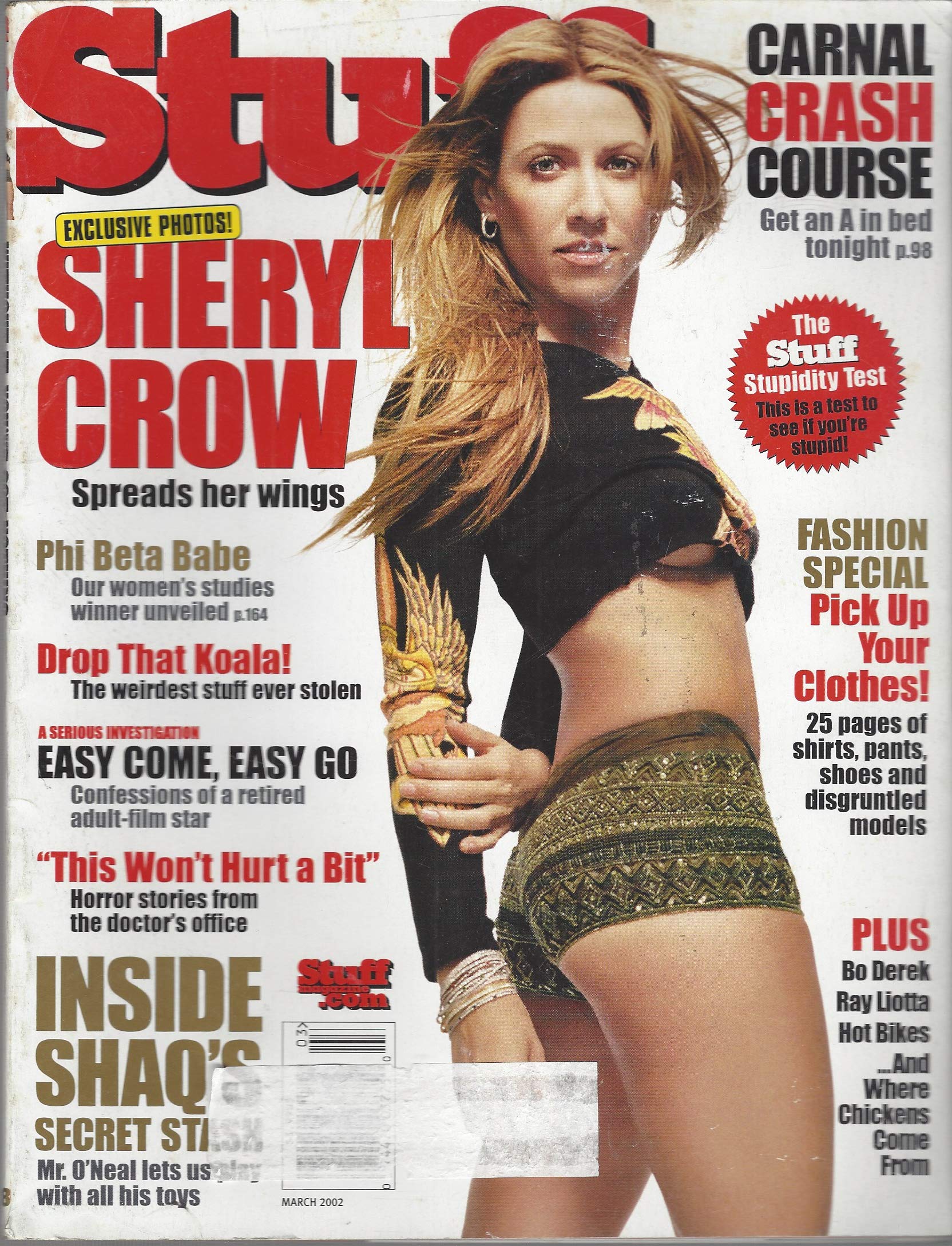
In the video, Sheryl Crow showed off more skin than she ever had before. She also posed provocatively for the cover of Stuff magazine around the time this was released. She said she did it to prove that women over the age of 40 could still be sexy.
Songfacts
Crow’s co-writer, Jeff Trott, came up with the idea for this on a flight from Portland, Oregon, to New York. He told Songfacts: “I’m thinking this is really ironic that I’m leaving Portland being soaked in rain, and I’m actually going to New York to soak up some sun. I’m going to New York to soak up some sun. That’s got a ring to it. That’s kind of cool.
Then I started thinking about the sun, and I started thinking of these Beach Boys-style harmonies. On that five-hour flight, I had come up with the whole song completely in my head, not all the lyrics necessarily. I had a good chunk of the chorus of ‘Soak Up The Sun,’ but I had harmonies and everything all in my head, and I’m just having to scratch it down on a piece of paper.”
As Trott and Crow started working on the song together, they started talking about the then-recent Columbine shootings, where two students went on a killing spree at their high school before committing suicide.
“We kind of carried that over into the song as the voice of Sheryl as a young teenager with a lot of oddball friends who can’t really quite make out why people are the way they are,” Trott told us. “There’s a reference to ‘I’ve got my 45 on so I can rock on.’ The 45 on was like a kid with a gun, originally, and then we thought that’s a little scary.
We were talking about Columbine and we’re like okay I’ve got my 45 on, so I can rock on, like I can blast you guys. I’m going to blast all the people that are bugging me. That’s kind of where we were at with it, and then we said that’s just a little too… over the top.”
The video was part of a promotional deal with American Express. During the shoot, footage was also collected for an American Express commercial, which came out looking very similar to Crow’s video. American Express helped pay the production costs, hoping that viewers would remember their product every time they saw the video, since it looked so much like the commercial. MTV does not allow sponsors to pay for videos, but because the card never appeared in the video, they didn’t know about the deal and gave it plenty of airplay. Sting had a similar deal with Jaguar in his video for “Desert Rose.”
Crow had some high-profile help with the backing vocals on C’mon C’mon. Liz Phair sang backup on this track, and Stevie Nicks sang on the title track and “Diamond Road.” In 2001, Sheryl helped Stevie write and produce some of her album Trouble In Shangri-La.
This casual song about enjoying the simple things in life was very marketable for Crow, as it enjoyed success on pop radio and was a #1 on the Adult Top 40 chart.
Trott was shocked when he first saw the music video, which completely dulled the song’s edge and transformed it into a fun-in-the-sun surf song. “I thought, ‘Oh my God, Sheryl’s surfing. What the hell is that? It’s not even close to what it’s about.’
I think having Sheryl on a surfboard, being at the beach, is probably more palatable then having her in a trench coat shooting people in a lunch cafeteria. Not that I thought that that’s what the song was, but my impression from writing it was that it was much edgier than what came across. The video of course is like, hey, we’re having a holiday. We’re surfing. We’re catching some sun. Everything’s cool. Strum acoustic guitar. Like, wow! That’s not even close to what we thought it was about.”
Best Buy used this song in television commercials to pitch their electronic consumer goods, conveniently ignoring the song’s message of enjoying the simple things in life:
I don’t have digital
I don’t have diddly squat
It’s not having what you want
It’s wanting what you’ve got
Crow performed a kid-friendly version on Sesame Street in 2003, joining Elmo and the gang to sing about the adventures of the letter I in “I Soaks Up The Sun.”
Soak Up The Sun
My friend the communist Holds meetings in his RV I can’t afford his gas So I’m stuck here watching tv
I don’t have digital I don’t have diddly squat It’s not having what you want It’s wanting what you’ve got
I’m gonna soak up the sun I’m gonna tell everyone To lighten up, I’m gonna tell ’em that I’ve got no one to blame For every time I feel lame I’m looking up
I’m gonna soak up the sun I’m gonna soak up the sun
I’ve got a crummy job It don’t pay near enough To buy the things it takes To win me some of your love
Every time I turn around I’m looking up, you’re looking down Maybe something’s wrong with you That makes you act the way you do
I’m gonna soak up the sun I’m gonna tell everyone To lighten up, I’m gonna tell ’em that I’ve got no one to blame For every time I feel lame I’m looking up
I’m gonna soak up the sun While it’s still free I’m gonna soak up the sun Before it goes out on me
Don’t have no master suite But I’m still the king of me You have a fancy ride, but baby I’m the one who has the key
Every time I turn around I’m looking up, you’re looking down Maybe something’s wrong with you That makes you act the way you do Maybe I am crazy too
I’m gonna soak up the sun I’m gonna tell everyone To lighten up, I’m gonna tell ’em that I’ve got no one to blame For every time I feel lame I’m looking up
I’m gonna soak up the sun Got my 45 on So I can rock on
I first heard this song while watching Goodfellas as Joe Pesci is beating Billy Batts. Donovan is reading a poem and then the song really kicks in with it’s sixties goodness around the 1:50 mark with Way down below the ocean…
Atlantis peaked at #7 in the Billboard 100 in 1969. The background vocals are credited as “Donovan’s fans.” It was rumored that Paul McCartney, who had earlier contributed to Donovan’s hit “Mellow Yellow,” sang backing vocals,It has since been discredited by Mark Lewisohn (Beatle historian), McCartney spent the month of November 1968 mostly at his farm in Scotland.
The song was originally the B side in America to To Susan on the West Coast Waiting.
From Songfacts
This song begins as a long narrative poem in which Donovan tells of the legendary island of Atlantis. Exotic and mythological images were on the minds of many Hippies in the ’60s, and Atlantis was the symbol of the counterculture moment with the hope that if true love is found, Atlantis will be reached. The only sung lines in the song are:
Way down beneath the ocean
Where I wanna be she may be
The song was used in a violent scene in the movie Goodfellas.
Donovan re-recorded the song as a parody “Hail Atlantis” on the animated series Futurama. He also redid the song with the German group No Angels for the German soundtrack of Atlantis: The Lost Empire entitled “Atlantis 2002.”
Atlantis
The continent of Atlantis was an island
Which lay before the great flood
In the area we now call the Atlantic Ocean
So great an area of land, that from her western shores
Those beautiful sailors journeyed
To the South and the North Americas with ease
In their ships with painted sails
To the east, Africa was a neighbor
Across a short strait of sea miles
The great Egyptian age is but a remnant of The Atlantian culture
The antediluvian kings colonized the world
All the gods who play in the mythological dramas
In all legends from all lands were from fair Atlantis
Knowing her fate, Atlantis sent out ships to all corners of the Earth
On board were the Twelve
The poet, the physician, the farmer, the scientist
The magician and the other so-called gods of our legends
Though gods they were
And as the elders of our time choose to remain blind
Let us rejoice and let us sing and dance and ring in the new
Hail Atlantis!
Way down below the ocean
Where I wanna be, she may be
Way down below the ocean
Where I wanna be, she may be
Way down below the ocean
Where I wanna be, she may be
Way down below the ocean
Where I wanna be, she may be
Way down below the ocean (she may, she may, she may)
(She may, she may, she may)
Where I wanna be, she may be (she may, she may, she may)
My antediluvian baby (she may, she may, she may)
Oh yeah yeah, yeah yeah yeah
(She may, she may, she may)
I want to see you some day (she may, she may, she may)
Where I wanna be, she may be
My antediluvian baby (she may, she may, she may)
Oh yeah yeah, yeah yeah yeah (she may, she may, she may)
(She may, she may, she may)
My antediluvian baby
Way down below the ocean (she may, she may, she may)
(She may, she may, she may)
Where I wanna be, she may be (she may, she may, she may)
My antediluvian baby
Way down below the ocean
I love you, girl
I want to see you some day (she may, she may, she may)
Where I wanna be
My antediluvian baby, oh yeah
Way down below the ocean
I want to see you some day (she may, she may, she may)
Where I wanna be
My antediluvian baby
Way down below the ocean
(She may, she may, she may)
Where I wanna be, she may be
My antediluvian baby
Way down below the ocean
I want to see you
Where I wanna be, she may be
My antediluvian baby
You gotta tell me where she gone
I want to see you some day
Wake up, wake up, wake up, wake up, oh yeah
Oh glub glub, down down, yeah
Where I wanna be
My antediluvian baby
This is another song I heard for the first time on the 2006 British show Life On Mars. Slade never really broke America until the 80s with Run Runaway and Oh My My. Quiet Riot covered the Slade songs Cum On Feel The Noize and Mama, Weer All Crazee Now and had hits in the 1980s.
“Gudbuy T’Jane” was Slade’s follow-up to their hit single “Mama Weer All Crazee Now.” In his autobiography Who’s Crazee Now?, guitarist and lead vocalist Noddy Holder explained the inspiration for the song.
Jane was the co-host of a TV chat show in San Francisco whom Slade met on their US tour. They wrote the song in about half an hour, “one of the easiest songs we ever recorded.” The line, “Got a kick from her ’40s trip boots” is a reference to her kicking Holder up the backside when the band was having a laugh at her expense.
Jane had bought a pair of platform shoes which she called her “’40s trip boots,” and somehow managed to lose them. “She thought they were original ’40s shoes and she told us that she had paid a fortune for them,” he said. “She was a real loony, a typical San Francisco hippy.”
The song peaked at #2 in the UK and #68 in the Billboard 100 in 1972.
From Songfacts
Jim Lee came up with the title; Holder wanted to call it “Hullo T’Jane,” which doesn’t have the same ring to it. They recorded it in two takes, and, backed by the typically misspelled “I Won’t Let It ‘Appen Agen,” it was released on Polydor and went on to become a monster hit. The single was produced by Chas Chandler.
There was a second track on the A-side: “Take Me Bak ‘Ome.” The sheet music credits “Gudbuy T’Jane”: “Words and Music by Neville Holder and James Lea.” >>
This was kept off the UK #1 spot by Chuck Berry’s live recording of “My Ding-a-Ling.” Coincidentally, Slade was present at the Coventry gig where Berry’s hit was recorded.
Jim Lea recalled the story of the song to Classic Rock magazine: “I’d been round to Nod’s house and played ‘Gudbuy T’Jane’ to him, lyrics and all. He said, ‘S’alright.’ He was always very phlegmatic, had dodgy adenoids.”
“We had some time left at the end of the recording, so we put it down very quickly. Nod said he’d done something with the words on the train down. He started singing, ‘Hello to Jane, hello to Jane.’ I was mortified. He told me he thought that was a bit more optimistic – f–king hell. But with all of them, I knew when we were writing a hit.”
Gudbuy T’Jane
Goodbye to Jane, goodbye to Jane She’s a dark horse see if she can Goodbye to Jane, goodbye to Jane Painted up like a fancy young man She’s a queen, Can’t you see what I mean, she’s a queen, See, see, she’s a queen And I know she’s alright, alright, alright, alright
I say you’re so young, you’re so young I say you’re so young, you’re so young I say you’re so young, you’re so young
I said goodbye to Jane, goodbye to Jane Get a kick from her forties tip boots Goodbye to Jane, goodbye to Jane Has them made to match up to her suits She’s a queen, Can’t you see what I mean, she’s a queen, See, see, she’s a queen And I know she’s alright, alright, alright, alright
I say you’re so young, you’re so young I say you’re so young, you’re so young I say you’re so young, you’re so young
I said goodbye to Jane, goodbye to Jane Like a dark horse see how she ran Goodbye to Jane, goodbye to Jane Spits on me ’cause she knows that she can She’s a queen, Can’t you see what I mean, she’s a queen, See, see, see, she’s a queen And I know she’s alright, alright, alright, alright
I say you’re so young, you’re so young I say you’re so young, you’re so young I say you’re so young, you’re so young I say you’re so young, she’s alright, alright, alright, alright I say she’s so young, so young, alright, alright I say you’re so young …
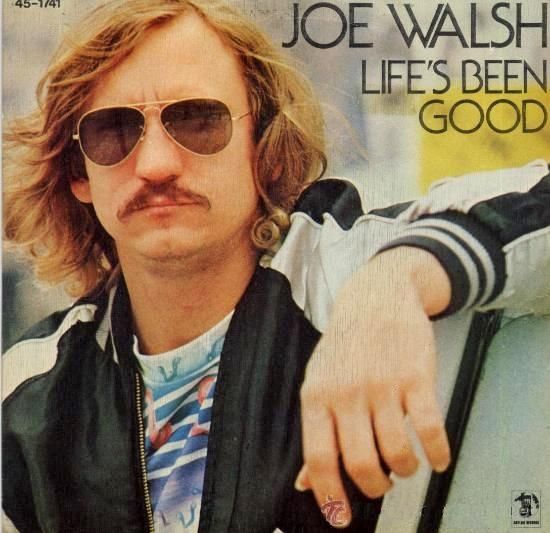
This song peaked at #12 in the Billboard 100 in 1978. Walsh lived this song out. He hung out with fellow stars such as Keith Moon. He said that Keith showed him the ropes of hotel destruction and Walsh was quite accomplished in that art.
The song was on his 4th album But Seriously, Folks… and it peaked at #8 in the Billboard Album Charts in 1978. This is Joe’s highest-charting song.
Joe Walsh:“I wanted to make a statement involving satire and humor, kind of poking fun at the incredibly silly lifestyle that someone in my position is faced with – in other words, I do have a really nice house, but I’m on the road so much that when I come home from a tour, it’s really hard to feel that I even live here. It’s not necessarily me, I think it paraphrases anyone in my position, and I think that’s why a lot of people related to it, but basically, that’s the story of any rock star – I say that humbly – anyone in my position. I thought that was a valid statement because it is a strange lifestyle – I’ve been around the world in concerts, and people say ‘What was Japan like?’, but I don’t know. It’s got a nice airport, you know… so it was kind of an overall statement.”
From Songfacts
This is a humorous look at the spoils of fame and fortune associated with being a rock star. Walsh pokes fun at the lifestyle of wealth and fame and the spoiled mentality – how it’s not me that’s changed, but everyone else.
Walsh lived up to this song, indulging in the hedonism he sang about long after it was released. “I started believing I was who everybody thought I was, which was a crazy rock star,” he told Rolling Stone in 2017. “It took me away from my craft. Me and a lot of the guys I ran with, we were party monsters. It was a real challenge just to stay alive.”
This is the last song on the the album. On the original recording from this album, the music fades away into silence. Then, about 30 seconds later, there is a really funny secret message from Joe Walsh which says “Wha-oh…here comes a flock of wanh-wanhs!”, followed by a chorale of “wannh”, “wanh” “wahn” (collectively sounding like a bunch of ducks or sheep). >>
The cover of the But Seriously Folks album shows Walsh eating a meal… under water. In the same BBC interview, he said: “I had to do that a couple of times, but I did go down to the bottom of the pool, and almost drowned… but it was fun. Not at the time, but it was fun to do. We weighted everything down, but it was very involved and it took a long time, and I was real proud of it. As long as you have access to art, or visually presenting something with your record, I would like to use that, pursue it and try to make it an integral part of the music. It was hard to do, but when I look at it, I can’t believe it either, I can’t believe I was stupid enough to do that, but I was proud of it. I won’t be repeating it, I can assure you!”
In 1979, Walsh announced his campaign for President of the United States, promising “Free gas for everyone” if he won (he didn’t).
A famous line in this song, “My Maserati does 185,” was used as the title to a 2005 episode of the TV series Entourage.
Joe did this to explain how he wrote it
Life’s Been Good
I have a mansion but forget the price Ain’t never been there, they tell me it’s nice I live in hotels, tear out the walls I have accountants, pay for it all
They say I’m crazy but I have a have a good time I’m just looking for clues at the scene of the crime Life’s been good to me so far
My Maseratti does one-eighty-five I lost my license, now I don’t drive I have a limo, ride in the back I lock the doors in case I’m attacked
I’m making records, my fans they can’t wait They write me letters, tell me I’m great So I got me an office, gold records on the wall Just leave a message, maybe I’ll call
Lucky I’m sane after all I’ve been through (Everybody say I’m cool, he’s cool) I can’t complain but sometimes I still do Life’s been good to me so far
I go to parties sometimes until four It’s hard to leave when you can’t find the door It’s tough to handle this fortune and fame Everybody’s so different, I haven’t changed
They say I’m lazy but it takes all my time (Everybody say oh yeah, oh yeah) I keep on goin’ guess I’ll never know why Life’s been good to me so far
This is my favorite song that Roseanne Cash made. The song was written by her dad Johnny Cash and he released it in 1961 and it peaked at #11 on the Country Charts and #84 in the Billboard 100.
Rosanne released it in 1987 on her album King’s Record Shop. The song peaked at #1 in the Billboard Country Charts. The first time I heard it I liked it right away.
This is the only video I could find of them singing it together. It wasn’t professionally recorded. It was in 1989 after the song was a hit for Rosanne… it was videotaped at John & June’s house to celebrate June’s latest book about Mother Mabel Carter.
Tennessee Flat Box
In a little cabaret In a south Texas border town Sat a boy and his guitar And the people came from all around And all the girls From there to Austin Were slippin’ away from home And puttin’ jewelry in hock to take the trip To go and listen To the little dark-haired boy who played the Tennessee flat top box And he would play
Well he couldn’t ride or wrangle And he never cared to make a dime But give him his guitar And he’d be happy all the time And all the girls From nine to ninety Were snappin’ fingers Tappin’ toes And beggin’ him don’t stop And hypnotized And fascinated By the little dark-haired boy who played the Tennessee flat top box And he would play
Then one day he was gone And no one ever saw him ’round He vanished like the breeze They forgot him in the little town But all the girls Still dreamed about him And hung around The cabaret until the doors were locked And then one day On the hit parade Was the little dark-haired boy who played the Tennessee flat top box And he would play
I knew who she was and I knew this song well because it was played endlessly at the time on a pop/rock station I listened to. I really thought she would have gone on to have many pop hits but that didn’t happen…She was very successful in the country charts though. It peaked at #21 in the Billboard 100 and #1 in the Country Charts in 1981.
Rosanne had 23 songs in the Country Charts and 11 number 1’s, and 15 top ten songs. This wasn’t my favorite of hers but it was a solid pop hit. This is by far the biggest hit for Rosanne Cash, whose only other Hot 100 chart appearance is Blue Moon With Heartache, which peaked at #104 in 1982.
From Songfacts
The Seven Year Itch was the name of a particularly irritating skin complaint; by the mid-19th Century the phrase had become a metaphor for an annoying form of behavior. In 1952, it was transformed into a play in which the lead character, played by Tom Ewell, who worked for a publishing company, was reading a book called The Seven Year Itch which claimed that after seven years of marriage, many men started extra-marital affairs. In 1955, it reached the big screen, with Ewell again in the title role, and Marilyn Monroe as his leading lady.
Unlike the play and the film, this song by Rosanne Cash is no romantic comedy. The daughter of Johnny Cash met Rodney Crowell at a party on October 16, 1976, and they married on April 7, 1979. Like most relationships, this one was less than perfect, and after a fight with Crowell at a French restaurant on Ventura Boulevard, she penned this semi-auto-biographical number as a poem; she said it took her about six months to write, but clearly it was worth the labor, because it topped the Country chart in May 1981, as well as reaching #22 on the Hot 100.
It is unclear if Crowell was “playing away.” Probably not, because he produced the song, the title of which indicates that its subject matter is a world away from the whimsical Ewell/Monroe dalliance.
Cash wrote this song in 1979. When she was looking for ideas for the album, she decided to construct a theme around this song. Based on the concept of lovers who fight, break up, then reconcile, the Seven Year Ache album included songs that dealt in some way with the feelings of falling apart and coming back together as a couple. Most of the songs were written by other artists: “What Kinda Girl?,” where she asserts her independence, was written by Steve Forbert; “I Can’t Resist,” where the couple comes back together, is the only Rodney Crowell composition on the set.
Cash never went for mass appeal in her songwriting, which makes her stay on the Top 40 an anomaly. “Seven Year Ache,” however, proved that she could generate a hit song, which led to more creative opportunities and a step outside of her father’s shadow.
Seven Year Ache was Cash’s second album (at least in America – a self-titled set from 1978 that she has since disowned was issued in Europe), but the first one she toured for. Her first album, Right or Wrong, was released in 1979 when she was pregnant, so she stayed off the road. She had been on stage as a backup singer for her father and for Rodney Crowell, but it wasn’t until the release of this second album that she began performing live as a solo artist.
Seven Year Ache
You act like you were just born tonight Face down in a memory but feeling all right So who does your past belong to today? Baby, you don’t say nothing when you’re feeling this way
The girls in the bars thinking, “who is this guy?” But they don’t think nothing when they’re telling you lies You look so careless when they’re shooting that bull Don’t you know heartaches are heroes when their pockets are full
Tell me you’re trying to cure a seven-year ache See what else your old heart can take The boys say, “when is he gonna give us some room” The girls say, “God I hope he comes back soon”
Everybody’s talking but you don’t hear a thing You’re still uptown on your downhill swing Boulevard’s empty, why don’t you come around? Baby, what is so great about sleeping downtown?
Splitting your dice to be someone you’re not You say you’re looking for something you might’ve forgot Don’t bother calling to say you’re leaving alone ‘Cause there’s a fool on every corner when you’re trying to get home
Just tell ’em you’re trying to cure a seven-year ache See what else your old heart can take The boys say, “when is he gonna give us some room” The girls say, “God I hope he comes back soon”
Tell me you’re trying to cure a seven-year ache See what else your old heart can take The boys say, “when is he gonna give us some room” The girls say, “God I hope he comes back soon”
Arguably the best song Creedence ever released. The single was Down On The Corner/Fortunate Son and the two combine peaked at #3 in the Billboard 100 in 1969. Fortunate Song also shows a #14 charting position by itself. Creedence and The Beatles released some of the best double A-Sided singles.
This is an anti-establishment song of defiance, both anti-Washington and against the Vietnam War. John Fogerty and Doug Clifford (drummer) both enlisted in the Army Reserves in 1966 (to avoid being drafted and shipped to Vietnam) and were discharged in 1968 after serving their military commitments.
John Fogerty: The thoughts behind this song – it was a lot of anger. So it was the Vietnam War going on… Now I was drafted and they’re making me fight, and no one has actually defined why. So this was all boiling inside of me and I sat down on the edge of my bed and out came “It ain’t me, it ain’t me, I ain’t no senator’s son!” You know, it took about 20 minutes to write the song
“The song speaks more to the unfairness of class than war itself,” “It’s the old saying about rich men making war and poor men having to fight them.”
From Songfacts
This is one of three political songs on the Willy And The Poorboys album. The others were “It Came From the Sky” and “Don’t Look Now (It Ain’t You or Me).”
Richard Nixon was president of the US when group leader John Fogerty wrote this song. Fogerty was not a fan of Nixon and felt that people close to the president were receiving preferential treatment.
This song spoke out against the war in Vietnam, but was supportive of the soldiers fighting there. Like many CCR fans, most of the soldiers came from the working class, and were there because they didn’t have connections who could get them out. The song is sung from the perspective of one of these men, who ends up fighting because he is not a “Senator’s son.”
Creedence performed this on The Ed Sullivan Show, probably because the show’s producers didn’t realize it was a protest song. The show tried hard not to offend anyone and usually had bands perform their least controversial songs or alter the lyrics for the show (see “Let’s Spend The Night Together” and “Light My Fire”).
Fogerty recorded a bunch of vocal takes for “Down On The Corner” before singing this. As a result, his voice was strained, which he thinks is apparent on the song.
This is one of those songs that came together very quickly. Fogerty recalled to American Songwriter magazine in January 2013: “When I felt it was about ready to hatch, I went into my bedroom and just sat down to write. The whole thing happened in about 20 minutes. That just poured out.”
Like Bruce Springsteen’s “Born In The U.S.A.,” this is often misinterpreted as a patriotic anthem when it is the opposite.
Wrangler jeans used this in commercials in 2000, taking only the first two lines: “Some folks are born, made to wave the flag, Ooh, that red, white and blue,” implying the patriotic misinterpretation. The next lines are: “And when the band plays “Hail to the Chief” Ooh, they’re pointin’ the cannon at you,” but those lyrics would not sell jeans very well.
John Fogerty was furious, but there was nothing he could do about it, since he didn’t own the rights to the song. Wrangler’s director of advertising responded by saying the brand heard the song as “more an ode to the common man. The common man is who we have been directing Wrangler toward.”
The ads ran through 2002, when Fogerty voiced his displeasure in a Los Angeles Times article and the company pulled the spots. Fogerty later explained that it touched a nerve because the ad distorted the meaning of the song. “If there’s some other song that was probably just a simple rock ‘n’ roll song, maybe I wouldn’t feel so strongly, but ‘Fortunate Son’ has a real point to it,” he said.
In 2016, Wrangler again turned to CCR to soundtrack a spot, this time using “Up Around the Bend.”
Fogerty does not own the publishing rights to this song. He lost them, along with all the other songs he wrote for CCR, in his contract with Fantasy Records, which the band signed when they were struggling. Fantasy’s boss at the time, Saul Zaentz, controls the rights and can use the songs any way he wants, as long as it isn’t performed by any member of CCR. Fogerty hates that his song is constantly misused, but has no choice. He expressed this frustration on his solo track “Vanz Kant Danz.”
This has been covered by U2, Bruce Springsteen, Kid Rock, Dropkick Murphys, Sleater-Kinney, Corrosion Of Conformity, Minutemen, Uncle Tupelo, Bob Seger, Circle Jerks, Joe Lynn Turner, Bunny Foot Charm, Death Cab For Cutie, Undead, Raccoon, and 38 Special.
When interviewed by Rolling Stone magazine, John Fogerty was asked: “What inspired ‘Fortunate Son’?” His response: “Julie Nixon was hanging around with David Eisenhower, and you just had the feeling that none of these people were going to be involved with the war. In 1969, the majority of the country thought morale was great among the troops, and like eighty percent of them were in favor of the war. But to some of us who were watching closely, we just knew we were headed for trouble.”
Wyclef Jean’s slow, passionate cover of this was the theme song for the 2004 political thriller The Manchurian Candidate. Another popular political film from the summer of ’04 was the controversial documentary Fahrenheit 9/11, of which John Fogerty remarked: “With the Michael Moore movie, certain conservative talk show hosts call him un-American. Him and anybody else who says anything about the war… To question your country’s policy, especially in a war that kills people, is definitely not un-American. It’s probably the most patriotic thing you can do.” >>
This is one of the first protest songs that makes the point that it’s the poor who are most likely to fight the wars. During the Iraq war, System Of A Down covered this topic with their song “B.Y.O.B..”
Former United States president George W. Bush is often considered a “Fortunate Son,” as he reaped the benefits that came with growing up in a powerful political family, which may have helped him avoid combat. This is covered in a book called Fortunate Son.
On November 6, 2014, Fogerty performed this at the White House as part of the A Salute to the Troops concert that was broadcast the next day on PBS ahead of Veteran’s Day. Fogerty wasn’t sure how the song would be received at an event honoring military personnel, but it got a great reaction from the crowd, including many of the veterans and President Obama.
This was featured in the 1994 movie Forrest Gump as the title character, played by Tom Hanks, is en route to serve in Vietnam.
Fortunate Son
Some folks are born Made to wave the flag Oh, they’re red, white and blue And when the band plays “Hail to the chief” They point the cannon right at you
It ain’t me It ain’t me. I ain’t no senator’s son It ain’t me It ain’t me I ain’t no fortunate one
Some folks are born Silver spoon in hand Lord don’t they help themselves But when the tax man comes to the door Lord, the house looks like a rummage sale
It ain’t me It ain’t me I ain’t no millionaire’s son It ain’t me It ain’t me I ain’t no fortunate one
Some folks inherit Star spangled eyes Ooh, they send you down to war And when you ask them “How much should we give?” They only answer “More! More! More!”
It ain’t me It ain’t me I ain’t no military son It ain’t me It ain’t me I ain’t no fortunate one
I liked Hall and Oates until the early 80s when they started to use more of a formula.
Daryl Hall wrote this for his collaborator/girlfriend Sara Allen. She contributed to many of the duo’s hit singles, including “You Make My Dreams”, “Private Eyes”, “I Can’t Go for That (No Can Do)”, and “Maneater”.
They never got married, but Daryl and Sara were together for about 28 years before they broke up in 2001. In Entertainment Weekly October 16, 2009, Hall listed this as one of their favorite songs and explained: “That was a postcard to Sara Allen, who was my partner for many, many years, a ‘having a great time, wish you were here,’ kind of thing. I cannot tell you how many girls have told me they were named for it!”
Sara’s sister, Janna Allen, co-wrote their hit “Kiss On My List.” Janna died of leukemia in 1993 at age 36.
Sara Smile peaked at #4 in the Billboard 100 in 1976.
From Songfacts
The album’s cover photo by Mick Jagger’s makeup designer Pierre LaRoche is a glitzy shot of Hall and Oates in heavy makeup. John Oates talked about the eye-catching image in Nick Tosches’ biography Dangerous Dances: “We decided that if we were going to put our faces on an album cover for the first time we wanted to do it in a big way. Pierre said, in that French accent of his, ‘I will immortalize you!’ And he just did. To this day it’s the only album cover that people ask us about.”
David Bowie said that LaRoche was the best makeup artist he ever worked with.
According to Barry Rudolph, who was an engineer on the session, Hall sang his vocal live with the band. The only edit they made was to punch in over the word “Sara” in the beginning of the second chorus. With the backing vocals, Hall was trying to get them to sound like the doo-wop group The Dells.
In 2009, the country singer Jimmy Wayne recorded an updated version of this song with Hall & Oates. Wayne got his first record deal because of this tune after the Dreamworks executive Scott Borchetta heard him sing it, and it has been part of his concert repertoire ever since. Wayne said in publicity materials: “Over 13 years ago, I picked a Hall & Oates Greatest Hits CD out of a bargain box that sat outside the department store in the old Gaston Mall in Gastonia, North Carolina. I listened to the CD on my way home and I heard ‘Sara Smile’ for the first time. I began singing this song long before I knew how to play it on guitar, and I just felt like it was as if the song was written for me.”
The Jimmy Wayne updated version was Hall & Oates’ debut on the Hot Country Songs chart.
This song was performed on the episode “Tom, Sarah and Usher” of the Adult Swim show The Boondocks. In the episode, Tom DuBois starts to sing the song to his wife, when Usher comes in and sings the song a lot better.
Tommy Mottola, who would later become chairman of Sony Music and marry Mariah Carey, was Hall & Oates’ manager at the time. He had some experience as a musician (recording as “T.D. Valentine”) and is credited for playing keyboards on the Daryl Hall And John Oates album.
Chris Bond produced this track with Hall & Oates. According to Scott Edwards, who played bass on this song, much of its success is attributable to Bond. Says Edwards: “Chris Bond was the real impetus behind ‘Sara Smile,’ ‘Rich Girl,’ ‘She’s Gone’ for Hall & Oates. But he was never given the accolades he deserved. He’s the one in my mind that was really responsible for their success. They may have written the lyrics and the chords and all that, but Chris was the one who figured out the production and the projection of it. He was a really good arranger and he wrote out note for note. He knew exactly how long he wanted you to let a note ring, how to hit it, how to release it. He was a good guitar player, but he played all the instruments. So he was one person who really could write out everything and it would be great.” (Here’s our full Scott Edwards interview.)
As you can imagine, this is a tough song for Sara Allen to hear, and since it still shows up on many playlists she can’t always avoid it. Daryl Hall explained to American Songwriter: “When that song comes on, the reality hits that we’re not together anymore, so it’s a very poignant and hard thing for her to deal with. I can still sing that song today and feel real about it – and always will – because emotions don’t change even though circumstances change.”
This song has been performed a number of times on Daryl Hall’s show Live From Daryl’s House. Jimmy Wayne, Rumor, Monte Montgomery and Smokey Robinson have all done the song with Hall on the program. One artist who did not was Train, whose lead singer Pat Monahan asked Hall how he hit the high notes. “That surprised me,” Hall said in our 2015 interview. “Because Pat has a higher voice than me. Pat Monahan could sing that song in his sleep.”
Sara Smile
Baby hair with a woman’s eyes I can feel you watching in the night All alone with me and we’re waiting for the sunlight When I feel cold, you warm me And when I feel I can’t go on, you come and hold me It’s you and me forever
Sara smile Won’t you smile a while for me, Sara
If you feel like leaving, you know you can go But why don’t you stay until tomorrow? If you want to be free, you know, all you got to do is say so And when you feel cold, I’ll warm you And when you feel you can’t go on, I’ll come and hold you It’s you and me forever
Sara smile Won’t you smile a while for me, Sara Sara smile Won’t you smile a while for me, Sara
Smile Won’t you smile a while for me, Sara Oh smile a while, won’t you laugh Sara Make me feel like a man not keeping me crazy crazy Smile a while
This song is sometimes forgotten in the shadows of his Prince’s hits but this was his first hit single. Prince was only 21 when this song peaked in January of 1980.
I Wanna Be Your Lover was the first single from Prince’s second self-titled album Prince. It was his breakout hit, going to #1 on the R&B chart, #11 on the Billboard 100, #2 in New Zealand, #62 in Canada, and #42 in the UK. The song became a live favorite and a staple of his early setlists.
“I Wanna Be Your Lover” was written after Warner Bros. requested a follow-up to Prince’s debut album For You, which had underperformed commercially. In response, Prince recorded “I Wanna Be Your Lover.”
From Songfacts
According to the liner notes in the Prince compilation album The Hits / The B-Sides, this song was inspired by Patrice Rushen, an R&B singer/songwriter (“Forget Me Nots”) who did some work programming synthesizers on Prince’s debut album For You. Apparently, Prince was smitten, but nothing came of it.
He offered both “I Wanna Be Your Lover” and “I Feel For You” to Rushen, but she turned them down.
Prince is rather humble in this song, explaining off the top that he’s not a rich man, but he’s the guy who won’t let her down. Unlike his first single, “Soft and Wet,” this one is far more innocent and radio-friendly. This being Prince, there is still some sexual double meaning, as he sings, “I wanna be the only one you come for.”
This was the first Prince song to get a video. It’s a fairly basic clip showing Prince performing the song with a variety of different instruments.
I Wanna Be Your Lover
I ain’t got no money I ain’t like those other guys you hang around It’s kinda funny But they always seem to let you down And I get discouraged ‘Cause I never see you anymore And I need your love, babe That’s all I’m living for, yeah
I didn’t want to pressure you, baby But all I ever wanted to do
I want to be your lover I want to be the only one that makes you come, running I want to be your lover I want to turn you on, turn you out All night long, make you shout Oh, lover, yeah! I want to be the only one you come for
I want to be your brother I want to be your mother and your sister, too There ain’t no other That can do the things that I’ll do to you
And I get discouraged ‘Cause you treat me just like a child And they say I’m so shy, yeah But with you I just go wild, ooo ooo ooo
I didn’t want to pressure you, baby, no But all I ever wanted to do
I want to be your lover I want to be the only one that makes you come, running I want to be your lover I want to turn you on, turn you out All night long make you shout Oh, lover, yeah! I want to be the only one you come for, yeah
The last time I saw Bob Dylan, Mavis Staples opened up the show. She gave a great performance and just knowing the history she represented was incredible. I remember the song “I’ll Take You There” when I was a kid but didn’t really start listening to the Staple Singers until I saw them on the Last Waltz playing The Weight.
This song peaked at #2 in the Billboard 100 in 1971.
The first two Stax albums The Staple Singers recorded were with Steve Cropper of the Stax house band, but by August 1971, when they recorded “Respect Yourself,” they were working with the Muscle Shoals Rhythm Section at their studios in Alabama.
At this time, the Staple Singers were recording what they called “message music,” and ads for the Be Altitude: Respect Yourself album billed it as “The message that rock music is still looking for.”
From Songfacts
The Staple Singers signed with the Memphis Soul label Stax Records in 1968, where they found success after languishing at Epic. “Respect Yourself” was written by the Stax songwriter Mack Rice and one of their artists, Luther Ingram, who is best known for his song “(If Loving You Is Wrong) I Don’t Want to Be Right.” They wrote the song after a discussion where Ingram said to Rice, “Black folk need to respect themselves.” Rice decided to turn the idea into a song, and quickly cut a demo. He didn’t think it was right for The Staple Singers, but Stax vice-president Al Bell did, stating, “I heard that lyric and I heard that melody and I said, ‘that’s it. This is the song I’ve been waiting on.'”
They slowed down the tempo of Rice’s demo and did a lot of experimenting in the studio. Terry Manning, who engineered the session, said: “It was kind of like all or nothing. We consciously put majors and minors together and rock and blues together. It was a lot of elements trying to fuse together, purposely putting little high tinklely sounds to catch kids’ ears, and just seeing if it would work.”
In the liner notes to the 2011 remaster of the Be Altitude: Respect Yourself album, Stax biographer Rob Bowman points out some of the things to listen for in this song:
Roger Hawkins using the rim of his snare and a wet-to-dry sound on the hi-hat. A fuzzed electric guitar line that gets louder as the song fades out at the end. This was supposed to have a subliminal effect on the listener. Mavis Staples blasting into the words “big ole man” at the end of the second verse. The scat singing on two 4-bar sections, which was written as horn lines. On the demo, Mack Rice did the scatting to show where the horns would be, but The Staples sang it anyway, and the results were so good they decided to leave it in.
A cover version was a #5 hit in the US for Bruce Willis in 1987. He was the first white male solo act to hit the Top 5 with a record on the Motown label, and only the second white male solo act – after R. Dean Taylor’s “Indiana Wants Me” – to be so successful for the Motown Corportation.
The very first Soul Train dance line was to this song. The show went on the air in 1971, but the famous segment where dancers showed off their moves grooving down the line didn’t start until five episodes in, when host/creator Don Cornelius realized the dancers were the big draw.
Respect Yourself
If you disrespect anybody that you run in to How in the world do you think anybody’s s’posed to respect you If you don’t give a heck ’bout the man with the bible in his hand, y’all Just get out the way, and let the gentleman do his thing You the kind of gentleman that want everything your way, yeah Take the sheet off your face, boy, it’s a brand new day
Respect yourself, respect yourself, respect yourself, respect yourself If you don’t respect yourself Ain’t nobody gonna give a good cahoot, na na na na Respect yourself, respect yourself, respect yourself, respect yourself
If you’re walking ’round think’n that the world owes you something ’cause you’re here You goin’ out the world backwards like you did when you first come here yeah Keep talkin’ bout the president, won’t stop air pollution Put your hand on your mouth when you cough, that’ll help the solution Oh, you cuss around women and you don’t even know their names, no Then you’re dumb enough to think that’ll make you a big ol’ man
Respect yourself, respect yourself, respect yourself, respect yourself If you don’t respect yourself Ain’t nobody gonna give a good cahoot, na na na na Respect yourself, respect yourself, respect yourself, respect yourself
The bassist and songwriter for British bands the Small Faces and the Faces, Lane gave it all up for a curious solo career: he ran away and formed a circus. After he quit the Faces he released this single.
Ronnie started his own folk-country band named “Slim Chance” and released a surprise hit single “How Come?” in 1974 and it went to #11 in the UK. Ronnie had a unique idea of touring. His tour was called “The Passing Show” which toured the countryside with a circus tent and included a ringmaster and clowns.
During the recording of the album “Rough Mix” with Pete Townshend… Lane was diagnosed with was Multiple Sclerosis. He still toured with Eric Clapton and others afterward and released an album in 1979 called “See Me.”
Ronnie Lane died of Pneumonia while in the final stages of Multiple Sclerosis in 1997
How Come?
How come when I cut the ace of hearts You always draw the ace of spades? How’s it when your best friend Brings you lillies on your birthday?
How come, how come? Well, I ain’t superstitious, but Well, these things I’ve seen How come, how come? I ain’t a superstitious fella, but it worries me
How come when the local clergy calls He tells me that you shouldn’t wear black And what kind of bread are you gonna bake With that hemlock in your spice rack?
How come, how come? Well, I ain’t superstitious, but Well, these things I’ve seen How come, how come? I ain’t a superstitious fella, but it worries me
The spider’s run, the cobweb’s gone Did you eat it when the moon was new? I drowned your cat, what do you say about that? I’ve even broken up your broom
How come, how come? Well, I ain’t superstitious, but Well, these things I’ve seen How come, how come? I ain’t a superstitious fella, but it worries me
How come, how come? Well, I ain’t superstitious, but Well, these things I’ve seen How come, how come? I ain’t a superstitious fella, but it worries me
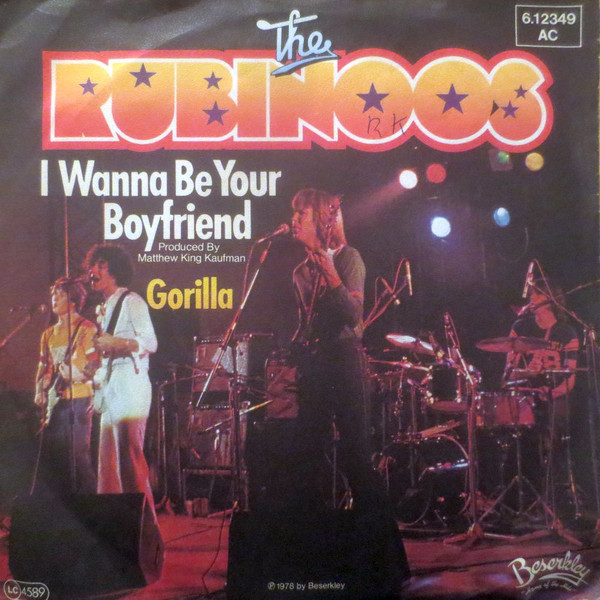
The Rubinoos are an American power pop band that formed in 1970 in Berkeley, California. Their only chart hit was a cover of Tommy James “I Think We’re Alone Now” in 1977.
This song was released in 1979 from the album “Back To The Drawing Board.” They had a resurgence in popularity because of the below claim.
Avril Lavigne had a song called Girlfriend…The writers of The Rubinoos song sued Lavigne in 2007 over the similarities. Avril responded with this statement: “I had never heard this song in my life and their claim is based on five words! All songs share similar lyrics and emotions. As humans we speak one language. Let it be crystal clear that I have not ripped anyone off or done anything wrong.”
The Rubinoos made a statement afterward: “We are satisfied that any similarities between the two songs resulted from Avril and Luke’s use of certain common and widely used lyrics. We therefore completely exonerate Avril and Luke from any wrongdoing of any kind in connection with the claims made by us in our lawsuit.”
They released a new album in 2019 called From Home.
I Wanna Be Your Boyfriend
Sitting here so close, together So far we’re just friends, but I’m wondering whether I, am I just imagining You, or do you really have a thing for me Like I think I see when I see you smile And the smile’s for me, I wanna tell you…Hey, You, I Wanna Be Your Boyfriend Trying to say I wanna be your number one Hey, You, I Wanna Be Your Boyfriend Gonna make you love me before I’m done late at night when I, when I can’t sleep Picture in my mind, I see you and me I, I’m telling you what I wanna be You, you’re saying you’re in love with me And oh, it feels so good in a dream That I know in life it’s just got to be I wanna tell you……Gonna make you love me, yeah I’m Gonna make you love me, yeah I’m Gonna make you love me, before I’m done
I, am I just imagining You, or do you really have a thing for me Like I think I see when I see you smile And the smile’s for me, I wanna tell you… Hey, You, I Wanna Be Your Boyfriend Trying to say I wanna be your number one Hey, You, I Wanna Be Your Boyfriend Gonna make you love me, yeah I’m Gonna make you love me, yeah I’m Gonna make you love me before I’m done
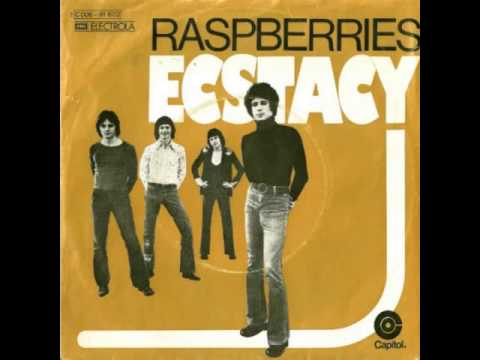
My favorite band from Cleveland. This song was on their Side 3 album released in 1973. The album only charted at #138 in the Billboard album charts. The song was released as a single but it didn’t chart.
The following year the band would give it one more shot with Starting Over and they would have one more top twenty single…Overnight Sensation. After that Eric Carmen lost his edge and was All By…himself.
Anyway, a Raspberries song is a good way to start your weekend…
Ecstacy
Come on!
When I think of all your lovin’ it makes me shiver ‘Cause when I get home Just wait ’til I get you alone
Ecstasy When you touch me I’m in ecstasy No one else could do the things you do Let me please you too Tonight
Ecstasy When you kiss me I’m in ecstasy No one else could make me feel this way Tell me that you’ll stay Tonight
When you wrap your love around me and move so gently, yeah I feel it begin Don’t stop, I can feel my head spinning
Baby, baby, I just wanna make you Feel the way I do You got my backbone shakin’ And my poor heart’s breakin’ in two








 PowerPop... An Eclectic Collection of Pop Culture