John Lennon – Stand By Me

This is the version I like best…and I love Ben E. King’s version. I think it’s the reverb and John’s voice that makes this one the one I listen to the most.

“Stand By Me” was the name of a gospel hymn written by the Philadelphia minister Charles Albert Tindley in 1905. His hymn became popular in churches throughout the American South and was recorded by various gospel acts in the 1950s. The most popular adaptation was by The Staple Singers, who recorded it in 1955. It was this version that Ben E. King heard; he pushed The Drifters to record it, but the group’s manager rejected it.

Ben E. King, Jerry Leiber, and Mike Stoller wrote the song based off the old hymn.

This was on John Lennon’s Rock and Roll album (made up of entirely covers of mostly 50s Rock and Roll). This version peaked at #20 in the Billboard 100 in 1975 for John…and at #4 in 1961 for Ben E. King.

Ben E King:  “David Ruffin from the Temptations did a great version of it. And, of course, the one that held up in my head the most was John Lennon’s version. He took it and made it as if it should have been his song as opposed to mine.

From Songfacts

Ben E. King recorded this shortly after leaving The Drifters in 1960. It gave him a solid reputation as a solo artist.

After leaving The Drifters, King auditioned for the wildly successful songwriting/production team of Jerry Leiber and Mike Stoller, singing a few popular songs before doing what he had of “Stand By Me,” which was just a few lines of lyrics with some humming to fill in the words. He agreed to collaborate on the song with Leiber and Stoller, who gave it a more contemporary sound and polished it into a hit. The bassline at the beginning was Stoller’s idea.

The song was credited as being written by Leiber, Stoller and King. Charles Albert Tindley, who composed the original hymn, was left off the composer credits as his work had been sufficiently transformed. This wasn’t the first time Tindley was omitted from the credits of a song he originated: he also wrote “I’ll Overcome Someday,” which eventually became “We Shall Overcome.”

In an interview with the TV station WGBH, Jerry Leiber explained: “Ben E. is not a songwriter, he’s a singer, he might have written two songs in his whole career. I would guess that this comes out of church. The whole ‘stand by me’ and the way the release takes out, it sounds like a gospel-type song.”

This was used in the 1986 movie of the same name starring River Phoenix. The film was based on a short novel by Stephen King called The Body, but that title was a little to gruesome for a movie hoping to appeal to a wide audience.

Rob Reiner, who directed the film, met the song’s co-writter Mike Stoller at a party, and convinced him to play some of his classic songs on a piano while Reiner sang along. Months later, Reiner got the idea to use “Stand By Me” as the title and incorporate it into the movie when he heard the song at his house. This played up the friendship of the young boys in the film and downplayed the role of the dead body they find, which was a good move at the box office. The movie was a hit and propelled the song back to the charts, introducing the track to a new generation.

When this was first released in 1960, it charted US #4 and UK #27. When it was re-released to coincide with the movie, it hit US #9 and UK #1. Now a hit with two generations, the song started showing up at weddings and other special occasions, becoming a timeless classic.

The movie Stand By Me is set in 1959 – a little before this song was released, but pretty close. When Rob Reiner asked to use the song, its composers Leiber and Stoller thought he would want to re-record it with a contemporary artist like Tina Turner, but Reiner wanted the original so it fit the era. It was surprising then when the song vaulted up the charts, since it was the exact same song released in 1961.

According to BMI, this was the fourth most-played track of the 20th Century on American radio and TV.

This song has made an astounding nine appearances on the US Hot 100, plus two more that “bubbled under.” Here’s the breakdown:

1961, #4 – Ben E. King
1964, #102 – Cassius Clay
1965, #75 – Earl Grant
1967, #12 – Spyder Turner
1970, #61 – David & Jimmy Ruffin
1975, #20 – John Lennon
1980, #22 – Mickey Gilley
1985, #50 – Maurice White
1986, #9 – Ben E. King (re-release)
1998, #82 – 4 The Cause
2010, #109 – Prince Royce

Sean Kingston sampled this on his 2007 hit “Beautiful Girls.” Other songs that have used pieces of “Stand By Me” include “A Little Bit of Soap” by De La Soul (1989), “My Darlin'” by Miley Cyrus feat. Future (2013), and “Marvin Gaye” by Charlie Puth (2015).

Dionne Warwick sang backup on this song as part of a trio known as The Gospelaires. Soon after, songwriter Burt Bacharach helped Warwick launch a successful solo career. 

This was not released on an album until it had been out as a single for two years.

Cassius Clay (who would later change his name to Muhammad Ali) recorded this in 1963 on an album called I Am The Greatest!. In 1964, when he beat Sonny Liston to become the heavyweight boxing champ, Clay’s version of “Stand By Me” was released as a single, with his spoken-boast song called “I Am The Greatest” as the flip side. The single made the Billboard charts, bubbling under at #102 on the Hot 100.

During an interview with Spinner UK,  Now there’s a [Dominican] singer named Prince [Royce] – he has a version out there that I think is brilliant. And then there’s Sean Kingston, with ‘Beautiful Girls’ [chuckles] – that’s another one that did well. So many of them have done well. As a songwriter, it pleases me a lot – you don’t always have a chance to write a song that people can relate to.”

The Bachata singer Prince Royce released a cover of this song (with mostly Spanish lyrics) in 2010 as his first single. Royce had been selling cell phones in New York City when he started shopping his demo CD around. When he got little reaction to the songs he wrote, he decided to record one that was familiar, and he chose “Stand By Me” because it was one of his favorite songs. The ploy worked, as it garnered attention and jumpstarted his career.

Florence + The Machine covered the song for Final Fantasy XV. Her version features in the video game’s trailer. “I’ve always seen Final Fantasy as mythical, beautiful and epic,” Florence Welch said. “‘Stand By Me’ is one of the greatest songs probably of all time and you can’t really improve on it, you just have to make it your own. For me it was just about bringing the song into the world of Florence + The Machine and the world of Final Fantasy.”

In England, this was used in commercials for Levi’s jeans in 1987 before the movie was released there. The exposure helped lift the song to #1 UK. “When A Man Loves A Woman” by Percy Sledge, used in the same group of Levi’s ads, went to #2 at the same time.

Budweiser used a version of this song by Skylar Grey in a commercial that aired during the 2018 Super Bowl between the Philadelphia Eagles and New England Patriots. The spot shows the beermaker’s plant in Cartersville, Georgia transforming to process water as part of disaster relief efforts in the wake of hurricanes and wildfires.

This has been played at countless weddings, but none more prominent than the royal wedding between Prince Harry and Meghan Markle on May 19, 2018. Before exchanging their vows in Windsor Castle, Karen Gibson and The Kingdom Choir performed a stirring gospel rendition of the song, which was chosen by the couple.

An ambient version by the artist Bootstraps (Jordan Beckett) got the attention of music supervisors and landed a number of placements, including the Power Rangers movie (2017) and episodes of MacGyver, Lethal Weapon and Hawaii Five-0.

Bootstraps included the song on his 2016 album Homage at the last minute. In a Songfacts interview, he explained why it works so well in visual media. “A lot of my songs that have done really well in the sync world are pretty linear – they don’t have these big, huge chorus hits,” he said. “‘Stand By Me,’ which has hands down been the biggest sync song I’ve done, has no kick drum. It has a lot of atmospherics, and the chorus is kind of slowly growing into a swell. So it’s really good for an editor, and that’s just the pragmatics of TV and film.”


Stand By Me

When the night has come
And the land is dark
And the moon is the only light we see
No I won’t be afraid
Just as long as you stand, stand by me

And darling, darling stand by me
Oh, now, now, stand by me
Stand by me, stand by me

If the sky that we look upon
Should tumble and fall
And the mountain should crumble to the sea
I won’t cry, I won’t cry
No I won’t shed a tear
Just as long as you stand, stand by me

And darling, darling stand by me
Oh, stand by me
Stand by me, stand by me, stand by me

Whenever you’re in trouble won’t you stand by me
Oh, now, now, stand by me
Oh, stand by me, stand by me, stand by me

Darling, darling stand by me
Stand by me
Oh stand by me, stand by me, stand by me

Zombies – This Will Be Our Year

Since it’s the new year I’m re-posting this one. A favorite of mine from a favorite band of mine. Everyone I wish you a Happy New Year in 2020. Maybe they will be the roaring 20’s like the last… Thanks for reading in 2019.

This sounds like it should have been a hit but it was never pushed as a single at the time. It was the B side to Butcher’s Tale  (Western Front 1914) which is an experimental song and was a big surprise to the band that it was picked as the first single. Both are from the great album Odessey and Oracle in 1968. There are several songs on this album that could have been in the charts but Time of the Season was the only one that made it and it was a year after the album was released.

Bruce Eder of AllMusic gave the album five stars out of five, calling it “one of the flukiest (and best) albums of the 1960s, and one of the most enduring long-players to come out of the entire British psychedelic boom”.

On recording Odessey and Oracle….Rod Argent

“We had the chance of going in and putting things down in the way we wanted people to hear them and we had a new studio, we walked in just after The Beatles had walked out [after recording Sgt. Pepper]. We were the next band in. They’d left some of their instruments behind … I used John Lennon’s Mellotron, that’s why it’s all over Odessey and Oracle. We used some of their technological advances … we were using seven tracks, and that meant we could overdub for the first time. And it meant that when I played the piano part I could then overdub a Mellotron part, and it meant we could have a fuller sound on some of the songs and it means that at the moment the tour we’re doing with Odessey and Oracle it means we’re actually reproducing every note on the original record by having extra player with us as well.”

This Will Be A Year

The warmth of your love
Is like the warmth of the sun
And this will be our year
Took a long time to come

Don’t let go of my hand 
Now darkness has gone
And this will be our year 
Took a long time to come

And I won’t forget 
The way you held me up when I was down
And I won’t forget the way you said, 
“Darling I love you”
You gave me faith to go on

Now we’re there and we’ve only just begun
This will be our year
Took a long time to come

The warmth of your smile
Smile for me, little one
And this will be our year
Took a long time to come

You don’t have to worry
All your worried days are gone
This will be our year
Took a long time to come

And I won’t forget 
The way you held me up when I was down
And I won’t forget the way you said, 
“Darling I love you”
You gave me faith to go on

Now we’re there and we’ve only just begun
And this will be our year
Took a long time to come

Yeah we only just begun
Yeah this will be our year
Took a long time to come

Otis Redding & Carla Thomas – New Year’s Resolution

Stax’s house band, Booker T & the MGs, provides the backing.  Note Booker T’s subtle but effective organ lending the song a spiritual element, while Donald “Duck” Dunn’s bass and Steve Cropper’s tasteful guitar licks ground the track’s rhythm

Stax was hoping to replicate the success of Marvin Gaye and Tammi Terrell. Stax paired two of their greatest stars for the 1967 album King & Queen, which produced the hit “Tramp.” The album featured their takes on classics such as “Knock on Wood,” “When Something Is Wrong with My Baby,” “Bring It on Home to Me,” and “It Takes Two”

This song was on the King and Queen album released in 1967. This is the only album they got to make because Otis died in a plane crash on December 10, 1967.

New Year’s Resolution

I hope it’s not too late
Just to say that I’m sorry, honey
All I want to do
Is just finish what we started, baby

Let’s turn over a new leave
And baby let’s make promises
That we can keep
And call it a New Year’s resolution, hmmm

Oh, I’m a woman
And woman makes mistakes too
But will you, will you forget the changes
That I put you through

let’s try it again
Just you and me
And, baby, let’s see how happy honey, yeah
That we can be
And call it a New Year’s resolution, yeah, yeah, yeah

Many times we had our ups and downs
And times you needed me I couldn’t be found
I’m sorry
And I’m sorry too
I’ll never, never do it again, no, no, no
So baby before we fall out
Let’s fall on in, yeah, yeah
Oh, and we’re gonna try harder
Not to hurt each other again, oh
Love me baby, huh
Week after week
And baby let’s make promises
That we can keep
And call it a New Year’s resolution, yeah, oh
I know we can do it Carla
I’m gonna keep my promises
I’m gonna hold on that we can do it, baby
Oh, it’s not too late
You’re gonna love me
Nobody else
Oh Otis let’s finish what we started
Talk no mean

Bruce Springsteen – Better Days

Here is to better days to all of you…. in the New Year starting tomorrow.

On March 31, 1992, I purchased two albums by Bruce. Lucky Town and Human Touch…both albums released on the same day. I’ve always liked Lucky Town more than Human Touch. Better Days kicked off the album.  It was originally released in the United States in March 1992 as a double A-side with “Human Touch”, and peaked at #16 on Billboard 100.

Bruce Springsteen: “With a young son and about to get married (for the last time) I was feelin’ like a happy guy who has his rough days rather than vice versa.”

From Songfacts

This was the only track from Lucky Town included on Springsteen’s 1995 Greatest Hits album.

This is the first track on Lucky Town, which was released the same day as Human Touch. Springsteen decided to do this after Guns N’ Roses simultaneously released their albums Use Your Illusion I and II.

Better Days

Well my soul checked out missing as I sat listening
To the hours and minutes tickin’ away
Yeah just sittin’ around waitin’ for my life to begin
While it was all just slippin’ away
I’m tired of waitin’ for tomorrow to come
Or that train to come roarin’ round the bend
I got a new suit of clothes a pretty red rose
And a woman I can call my friend

These are better days baby
Yeah there’s better days shining through
These are better days baby
Better days with a girl like you

Well I took a piss at fortune’s sweet kiss
It’s like eatin’ caviar and dirt
It’s a sad funny ending to find yourself pretending
A rich man in a poor man’s shirt
Now my ass was draggin’ when from a passin’ gypsy wagon
Your heart like a diamond shone
Tonight I’m layin’ in your arms carvin’ lucky charms
Out of these hard luck bones

These are better days baby
These are better days it true
These are better days
There’s better days shining through

Now a life of leisure and pirate’s treasure
Don’t make much for tragedy
But it’s a sad man my friend who’s livin’ in his own skin
And can’t stand the company
Every fool’s got a reason for feelin’ sorry for himself
And turning his heart to stone
Tonight this fool’s halfway to heaven and just a mile outta hell
And I feel like I’m comin’ home

These are better days baby
There’s better days shining through
These are better days
Better days with a girl like you

These are better days baby
These are better days it’s true
These are better days
Better days are shining through

Monkees – Randy Scouse Git

I thought I would feature one more Monkees song this weekend. This song was a huge hit in the UK where it peaked at #2 but in America, it was not released as a single. As a kid, I really liked this one because it is so catchy. Mickey Dolenz wrote this song while in England. They had just come from a party thrown for them by the Beatles.

It was on their album Headquarters with the Monkees playing and singing most of the music themselves. On this song… Nesmith is playing guitar, Tork is playing piano, Dolenz drums, Jones is singing backup vocals with Chip Douglas playing bass. The album peaked at #1 in the Billboard 100 in 1967.

When they were going to release it in England, the Monkees were told, ‘You have to change the title.’ The record company said ‘It’s dirty. You have to change it to an alternate title. It was released in England as Alternate Title. It was the title that was found offensive…nothing in the song. Mickey said translated it meant basically “horny, Liverpudlian jerk.”

Micky Dolenz: “Many years ago we had the pleasure of going over to the UK and meeting the royal family: The Beatles. And one night they threw us a party. I’m told I had a great time. After the party, I went back to my hotel room and I noodled around and I wrote a song that I called Randy Scouse Git.”

From Songfacts
So in England it became a big hit and it’s called, over in England, ‘Alternate Title.’ Here, it’s still called ‘Randy Scouse Git.’ And loosely translated it means a horny Liverpudlian putz.”

The TV show were Micky Dolenz heard the title phrase was Till Death Us Do Part, a sitcom that aired on the BBC. This program was the basis for the American show All in the Family.

The only offensive aspect of this song is the title, which doesn’t appear in the lyrics. The song itself is stream of observations pieced together by Dolenz during the group’s visit to England. Some of the references in the song:

The “Four Kings of EMI” were The Beatles, who recorded for EMI Records.

“She’s a wonderful lady, and she’s mine, all mine” relates to Micky’s girlfriend at the time, Samantha Juste, who he married in 1968. The couple met when The Monkees performed on the British TV show Top Of The Pops, where Juste was on-air talent.

The “a girl in a yellow dress” was Mama Cass Elliot of The Mamas & the Papas – she was also in England enjoying the scene.

The British slang words in the title, roughly translated, are as follows:

“Randy”: Horny, in search of sex.
“Scouse”: A person from the north of England.
“Git”: Sort of a jerk, or an idiot.

When The Monkees performed the song on their TV show, Micky Dolenz was out front singing lead behind a tympani, while Davy Jones manned the drums. It was used in the episode “The Picture Frame,” which aired on September 18, 1967.

Randy Scouse Git

She’s a wonderful lady and she’s mine, all mine
And there doesn’t seem a way that she won’t come and lose my mind
It’s too easy humming songs to a girl in a yellow dress
It’s been a long time since the party and the room is in a mess

The four kings of EMI are sitting stately on the floor
There are birds out on the sidewalk and a valet at the door
He reminds me of a penguin with few and plastered hair
There’s talcum powder on the letter and the birthday boy is there

Why don’t you cut your hair?
Why don’t you live up there?
Why don’t you do what I do, see what I feel when I care?

Now they’ve darkened all the windows and the seats are naugh-a-hyde
I’ve been waiting for an hour
I can’t find a place to hide
The being known as wonder girl
Is speaking, I believe
It’s not easy trying to tell her
That I shortly have to leave

Why don’t you be like me?
Why don’t you stop and see?
Why don’t you hate who I hate,
Kill who I kill to be free?

Why don’t you cut your hair?
Why don’t you live up there?
Why don’t you do what I do,
See what I feel when I care?

Why don’t you be like me? (she’s a wonderful lady)
Why don’t you stop and see? (and she’s mine, all mine)
Why don’t you hate who I hate, (and there doesn’t seem a way)
Kill who I kill to be free? (that she won’t come and lose my mind)
Why don’t you cut your hair? (it’s too easy humming songs)
Why don’t you live up there? (to a girl in a yellow dress)
Why don’t you do what I do, (it’s been a long time since the party)
See what I feel when I care? (and the room is in a mess)

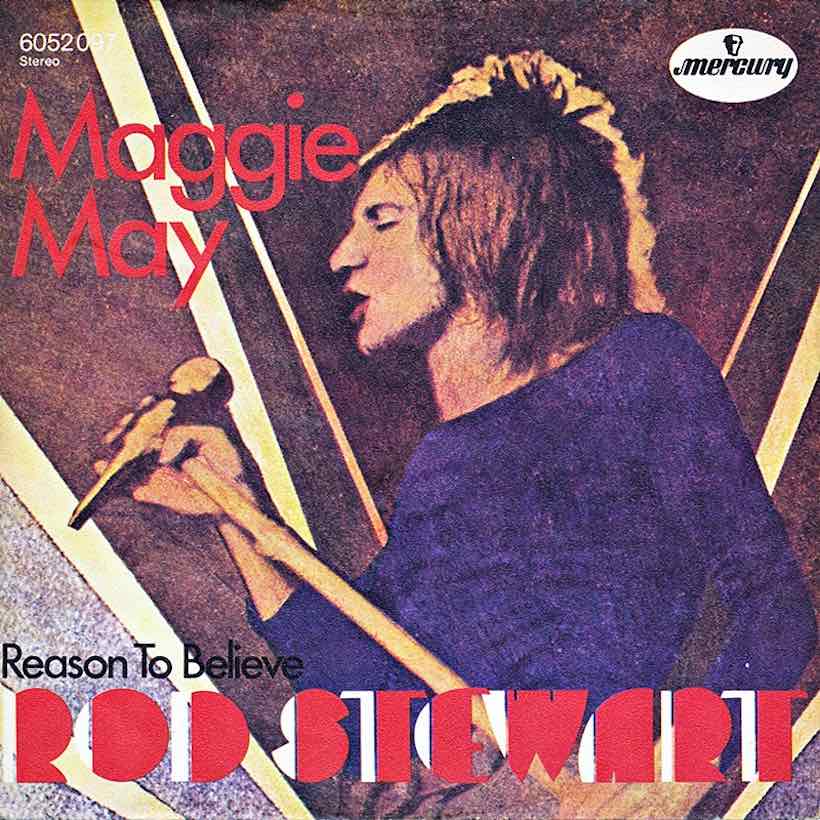
Rod Stewart – Reason To Believe

Stewart’s original version was released as a single with “Reason To Believe” as the B-side. Disc jockeys liked the flip side better and played “Maggie May” instead, which became the hit.

Rod did the song for MTV unplugged in 1993 and the song peaked at #19 in the Billboard 100 in 1993.

This was written by folk singer Tim Hardin, who originally recorded it in 1965 and performed it at Woodstock four years later. Hardin wrote some popular songs and was a very influential musician, but he had severe drug problems and died in December 1980 at age 39.

From Songfacts

At first listen, this song can seem rather sweet, but it’s anything but. The girl “lied straight-faced” while he cried, but still he can’t get over her. He knows if he gives her the chance, she’ll make him forget about it because he keeps looking for a reason to believe she’s not that kind of person.

Stewart released this again in 1993 as a live, acoustic version for MTV Unplugged. Appearing on the album Unplugged… and Seated, this is the version that charted.

Bobby Darin recorded a version of this in 1967.

The 1993 Unplugged version was recorded at an MTV special with Ron Wood, who played with Stewart in The Faces. It was the first time they performed it together in 22 years. Stewart commented that his wife at the time, Rachel Hunter, was one year old when it was first released.

Reason To Believe

If I listened long enough to you
I’d find a way to believe that it’s all true
Knowing that you lied straight-faced while I cried
Still I look to find a reason to believe

Someone like you makes it hard to live without
Somebody else
Someone like you makes it easy to give
Never think about myself

If I gave you time to change my mind
I’d find a way just to leave the past behind
Knowing that you lied straight-faced while I cried
Still I look to find a reason to believe

If I listened long enough to you
I’d find a way to believe that it’s all true
Knowing that you lied straight-faced while I cried
Still I look to find a reason to believe

Someone like you makes it hard to live without
Somebody else
Someone like you makes it easy to give
Never think about myself

Someone like you makes it hard to live without
Somebody else
Someone like you makes it easy to give
Never think about myself

Someone like you makes it hard to live without
Somebody else
Someone like you makes it easy to give
Never think about myself

Someone like you makes it hard to live without
Somebody else


Johnnie Taylor – Who’s Making Love

The chorus alone is enough to interest me. Stax had dubbed Taylor The Philosopher Of Soul. He could be smooth like Sam Cooke or raw in your face like this record. His real name was Johnnie Harrison Taylor and he was born in Crawfordsville, AK. In 1957, Taylor would replace Sam Cooke in the hugely influential Soul Stirrers, after Cooke departed for a solo career in music.

In 1961 Taylor joined Cooke’s Sar label for a few singles. Cooke was killed in 1964 so Taylor switched to Stax the following year.

Motown was more successful than Stax by a large margin but there was a rawness and in your face quality, Stax had that Motown couldn’t find. This song was written by Stax staffers Homer Banks, Bettye Crutcher, Don Davis, and Raymond Jackson. It peaked at #5 in the Billboard 100 and #1 in the R&B Charts.

Who’s Making Love

All you fellows, gather ’round me
And let me give you some good advice
What I’m gonna, I’m gonna ask you now
You better think about it twice
While you’re liking cheating on your woman
There is something you never even thought of

Now tell me who’s making love to your old lady
While you were out making love? (Hear me now)
Now who’s making love to your old lady
While you were out making love?

I’ve seen so, so many fellows
Fall in that same old bag

Thinking that a woman is made to
To be beat on and treated so bad
Oh, fellows, let me ask you something
I’m sure that you never even dreamed of

Now tell me who’s making love to your old lady
While you were out making love? (Oh)
Now who’s making love to your old lady
While you were out making love?

I know there are some women gives the other excuse
I’m not tryin’ to run your life, boy it’s up to you
Oh you, oh you, you and you, and you

The reason why I ask this question
I used to be the same old way
When I decided to straighten up
I found it was a bit too late
Oh yeah, that’s when it all happened
Something I never, never dreamed of

Somebody was-a lovin’ my old lady
While I was out making love
Somebody was-a lovin’ my old lady
While I was out making love (listen now)
Now who’s making love to your old lady
While you were out making love?
(Who? Who? Your old lady)
(While you were out making love)

Little Richard – Good Golly, Miss Molly

No one has a voice like Little Richard. His voice would have worked in any generation. He has one of the most primal aggressive voices I’ve ever heard. He sings these rockers great but he also can sing ballads.

Little Richard recorded this song in 1956 and it was released in 1958. The song peaked at #10 in the charts and #4 in the R&B Charts in 1958… as well as #8 in the UK.

The song is ranked #94 on the Rolling Stone magazine’s list of the 500 Greatest Songs of All Time. Good Golly, Miss Molly was written by John Marascalco and Robert “Bumps” Blackwell.

From Songfacts

The title was taken from the pet phrase of one of Little Richard’s favorite DJ’s, Jimmy Pennick. Musically, the song was inspired by the sax player Jackie Brenston, famous for singing lead and playing with Ike Turner on the song “Rocket 88.”

Like most of Little Richard’s songs, this contains a lot of innuendo (“sure like to ball”) but most people were too busy listening to the music to notice, or didn’t get the reference. At the time, the most common meaning for “balling” was dancing; only later did it became a popular euphemism for oral sex. The term later took on a new meaning when it came describe a lavish and extravagant lifestyle, with these guys flashing their cash known as “ballers.”

This song was a huge influence on many musicians in the early years of rock and roll. Speaking with Songfacts, Roger Reale, who was in the group Rue Morgue with Mick Ronson, said: “It’s revolutionary, rebellious and celebratory all in one, starting with that rolling piano intro, before moving into a totally unique vocal performance. I had never heard such a direct, crazed, almost otherworldly vocal before in my life.”

Little Richard’s publisher sued Creedence Clearwater Revival over their song “Travelin’ Band,” which they claimed lifted from “Molly.” A settlement was reached with Creedence giving up some of their royalties.

Good Golly, Miss Molly

Good golly Miss Molly, sure like to ball.
Good golly, Miss Molly, sure like to ball.
When you’re rockin’ and a rollin’, can’t hear your momma call.

From the early, early mornin’ till the early, early night
When I caught Miss Molly rockin’ at the house of blue light.
Good golly, Miss Molly, sure like to ball.
When you’re rockin’ and a rollin’ can’t hear your momma call.

Momma, poppa told me: “Son, you better watch your step.”
If I knew poppa’s momma’s, have to watch my poppa myself.
Good golly, Miss Molly, sure like to ball.
When you’re rockin’ and a rollin’, can’t hear your momma call.

Good golly Miss Molly, sure like to ball.
Good golly, Miss Molly, sure like to ball.
When you’re rockin’ and a rollin’, can’t hear your momma call.

I am going to the corner, gonna buy a diamond ring.
Would you pardon me kiss me ting-a-ling-a-ling.
Good golly, Miss Molly, sure like to ball.
When you’re rockin’ and a rollin’ can’t hear your momma call.


The Moody Blues – Gemini Dream

I remember in Jr High school in 1981 I bought Long Distant Voyager by the Moody Blues. The album received a lot of airplay and peaked at #1 in the Billboard album charts. It had two top twenty hits with The Voice and Gemini Dream. Gemini Dream peaked at #12 in the Billboard 100.

The Moody Blues knew how to adapt. They started off as an R&B band, moved into experimental orchestral rock, dipped into rock, and in the 80s produced some high charting pop songs. I always liked their early seventies output the best but this was a great comeback for them entering the 80s. This album introduced them to another generation of fans.

This is a combination of two songs, the first being bass player John Lodge’s song about going on the road again and the second being guitarist Justin Hayward’s song about love being shared or twin “Gemini” dreams.

Gemini Dream

Long time no see
Short time for you and me
So fine, so good
We’re on the road
Like you knew we would

First night, so long
A state of mind
What can go wrong
We’re here, the time is right
To rock ‘n’ roll
Right through the night

Make it work out
Make it work
Make it work out
Make it work out
For each other tonight

Stage fright, candle light
You can’t let go
Tonight’s the night
Came back for you
Glad to see
That you came too

There’s a place a Gemini dream
There’s no escaping from the love we have seen
So come with me, turn night today
You gonna wake up
You know you gonna wake up in a Gemini dream

Turned round to see
Where we’ve been
And what we believe
In life, love
Take a chance
See it through
You’ll be glad
That you came too

There’s a place a Gemini dream
There’s no escaping from the love we have seen
So come with me, turn night to day
You gonna wake up
You know you gonna wake up in a Gemini dream

Long time no see
The lights go up
For you and me
We’re here
The time is right
To rock ‘n’ roll
Right through the night

Living it
Believing it
Wanting it
Make it work out
Make it work
Make it work out
Make it work out
For each other tonight

Long time no see
Short time for you and me
So fine so far so good
We’re on the road
Like you knew we would


The Hollies – Look Through Any Window

This song has the sixties stamped all over it. The video that I found is a good example of that. The song peaked at #32 in the Billboard 100 and #4 in the UK in 1966. This song was The Hollies’ first American Billboard Top 40 hit.

It has a distinctive 12 string that started to appear on Byrds and Beatle songs at the time.

Graham Gouldman wrote this song:

“Yes, I was on a train coming back from London up from Manchester where I used to live, with a friend of mine, and he was looking out the window. He said, ‘Look through any window,’ because we were looking as the train crept out of the station and started going through the suburbs quite slowly. We were trying to look into the houses to see what was going on.”


From Songfacts

Proving that not every song has to involve love, heartbreak or espionage, The Hollies released this song about the quotidian delights that happen every day. Just look through any window and you’ll see them.

Graham Gouldman, who wrote the Hollies hit “Bus Stop,” wrote “Look Through Any Window” with Charles Silverman, about whom little is known. 

As he did with “Bus Stop,” Graham Gouldman, who was still a teenager, got help with the lyrics from his father, Hymie, a writer known affectionately as “Hyme the Rhyme.”

Look Through Any Window

Look through any window yeah
What do you see
Smiling faces all around
rushing through the busy town

Where do they go
Moving on their way
walking down highways and the by-ways
Where do they go
Moving on their way
people with their shy ways and their sly ways

Oh you can see the little children all around
Oh you can see the little ladies in their gowns when you

Look through any window yeah
any time of day
See the drivers on the roads
pulling down their heavy loads

Where do they go
Moving on their way
driving down highways and the byways
Where do they go
Moving on their way
drivers with their shy ways and their sly ways

Oh you can see the little children all around
Oh you can see the little ladies in their gowns when you

Look through any window yeah
what do you see
Smiling faces all around
rushing through the busy town

Where do they go
Moving on their way
Moving on their way
Moving on their way

Blondie – One Way Or Another

Let’s move from Christmas to Blondie…not a bad thing. I hope everyone had a great Christmas/Holiday.

Yet another great pop/rock single by Blondie. Blondie had a short window but they made the best of it. They had 4 number 1 hits, 4 top 10 hits, and 10 songs in the Billboard 100 total.

Lead singer Debbie Harry wrote this song with the group’s bass player, Nigel Harrison. Harry wrote the lyrics to Blondie’s songs, but composer credit for the music was generally given solely to whoever made the biggest contribution. This was often guitarist Chris Stein, who co-wrote “Rapture” and “Heart Of Glass.”

The song was on the Parallel Lines album and peaked at #24 in the Billboard 100 in 1979.

From Songfacts

This song is about a stalker. The lyrics are very dark and go into detail about a guy with evil intentions, but the music is very light and catchy, which masked the meaning of the song. According to Blondie lead singer Debbie Harry, it was inspired by real events. She told Entertainment Weekly: “I was actually stalked by a nutjob, so it came out of a not-so-friendly personal event. I tried to inject a little levity into it to make it more lighthearted. It was a survival mechanism.”

Harry says that the title and the idea for the song popped into her head during a rehearsal, and most of the song was hashed out on the spot.

This was featured on a 2011 episode of the TV show Glee in a mashup with “Hit Me With Your Best Shot.” The medley by the Glee Cast was released as a single and went to #86 in the US.

With radio-friendly songs like this one, Blondie was one of the first Punk bands to have Pop success. They played clubs like CBGB’s (stands for Country, BlueGrass, Blues) with bands like The Ramones and Television, but their songs were much lighter and led to mainstream acceptance. The Police and Talking Heads are other groups that came out of that scene.

In 2013 the UK boyband One Direction recorded a new version of this song, mashing it up with The Undertones’ “Teenage Kicks.” It was recorded to mark the 25th anniversary of the fundraising event Red Nose Day and was a hit in both the UK where it topped the chart and the US where it peaked at #13.

Kristen Bell sings this (quite well) at karaoke in the 2005 Veronica Mars episode “Clash Of The Tritons,” where she uses the song to alert a gang of her intentions.

One Way Or Another

One way or another, I’m gonna find ya
I’m gonna get ya, get ya, get ya, get ya
One way or another, I’m gonna win ya
I’m gonna get ya, get ya ,get ya, get ya
One way or another, I’m gonna see ya
I’m gonna meet ya, meet ya, meet ya, meet ya
One day, maybe next week, I’m gonna meet ya
I’m gonna meet ya, I’ll meet ya

I will drive past your house
And if the lights are all down
I’ll see who’s around

One way or another, I’m gonna find ya
I’m gonna get ya, get ya, get ya, get ya
One way or another, I’m gonna win ya
I’ll get ya, I’ll get ya
One way or another, I’m gonna see ya
I’m gonna meet ya, meet ya, meet ya, meet ya
One day, maybe next week, I’m gonna meet ya
I’ll meet ya, ah

And if the lights are all out
I’ll follow your bus downtown
See who’s hangin’ out

One way or another, I’m gonna lose ya
I’m gonna give you the slip
A slip of the hip or another, I’m gonna lose ya
I’m gonna trick ya, I’ll trick ya
One way or another, I’m gonna lose ya
I’m gonna trick ya, trick ya, trick ya, trick ya
One way or another, I’m gonna lose ya
I’m gonna give you the slip

I’ll walk down the mall
Stand over by the wall
Where I can see it all
Find out who ya call
Lead you to the supermarket checkout
Some specials and rat food
Get lost in the crowd

One way or another, I’m gonna get ya (where I can see it all, find out who ya call)
I’ll get ya, get ya, get ya, get ya
One way or another, I’m gonna get ya (where I can see it all, find out who ya call)
I’ll get ya, get ya, get ya, get ya
One way or another, I’m gonna get ya (where I can see it all, find out who ya call)
I’ll get ya, get ya, get ya, get ya
One way or another, I’m gonna get ya (where I can see it all, find out who ya call)
I’ll get ya, get ya, get ya, get ya
One way or another, I’m gonna get ya (where I can see it all, find out who ya call)
I’ll get ya, get ya, get ya, get ya
One way or another, I’m gonna get ya (where I can see it all, find out who ya call)
I’ll get ya, get ya, get ya, get ya

Bing Crosby – Silent Night

This song is not only my favorite Christmas Carol… I think it’s up there with the best songs ever written. I hope everyone has a great Christmas/Holiday.

There are over 26,000 different versions of “Silent Night” on Spotify, meaning you could listen to a different rendition of the carol every night for 72 years.

Halfway through December 1818, the church organ in St. Nicholas in Oberndorf, 11 miles north of Salzburg in what is now Austria, broke (a popular version of the story claims that mice had eaten out the bellows). The curate, 26-year-old Josef Mohr, realized it couldn’t be repaired in time to provide music on Christmas Eve. He told his troubles to his friend, a headmaster and amateur composer named Franz Gruber, while giving him as a present a poem he had written two years earlier. Gruber was so taken by the rhythm of the poem that he set it to music, and on Christmas Eve there was music after all. Mohr played his guitar while the pair sang the song. It was the first public performance of “Stille Nacht” or as we know it “Silent Night.”

It is believed that Silent Night has been translated into over 300 languages around the world, and it is one of the most popular carols of all time.

From Songfacts

Bing Crosby’s version became his best-seller of the 1930s.

Music licensing company PPL announced in December 2010 that this carol tops the list of Britain’s “most recorded Christmas song of all time.” Said Mike Dalby, Lead Reporting Analyst at PPL: “Silent Night is a beautiful carol which encapsulates the feeling of Christmas entirely. Everyone from punk band The Dickies right through to Sinead O’Connor has recorded it, which exemplifies just how much it resonates with all different types of artists.”

According to PPL, Sinead O’Connor’s 1991 recording was the most popular version of the carol in Britain.

When the organ builder finally did show up to repair the St. Nicholas organ, he was given a copy of the “Silent Night” composition and brought it home. From there, traveling folk singers got a hold of it and began incorporating the carol into their repertoire. It didn’t make its way to America until 1839.

As the song gained traction throughout Europe, Franz Gruber composed several different orchestral arrangements. He donated all profits from the carol to local charities for children and the elderly, and eventually died penniless.

According to Steve Sullivan’s Encyclopedia of Great Popular Song Recordings, Crosby, a devout Catholic, refused to record the religious song, arguing it would be “like cashing in on the church or the Bible.” Crosby met with Father Richard Ranaghan, a priest trying to raise money for overseas missions, and decided to donate the royalties to the cause. But Ranaghan died in a car accident later that year, so the money went to several charities throughout the US and abroad.

This song lends itself to interpretation because the first four bars are all on the same chord. Jim Brickman explains: “There’s room to treat it dynamically in a different way: in the tempo, in the sounds and silences, in the time signature.”

Silent Night

Silent night, holy night.
All is calm, all is bright.
‘Round yon virgin mother and child.
Holy infant so tender and mild.
Sleep in heavenly peace,
Sleep in heavenly peace.

Silent night, holy night.
All is calm, all is bright.
‘Round yon virgin mother and child.
Holy infant so tender and mild.
Sleep in heavenly peace,
Sleep in heavenly peace.

O Holy Night

One of the most popular Christmas Carols…

In 1847 Placide, a French wine merchant and an amateur poet was asked to write a Christmas poem by a local parish priest. Shortly afterward Cappeau traveled to Paris on a business trip and about halfway through his journey, he had the inspiration for the poem Minuit, Chretiens (“Midnight Christians”). When Cappeau arrived in Paris, he took it to the composer Adolphe Adam, a friend of a friend. Adam, who specialized in light opera, is best remembered today for the ballet Giselle. He wrote the tune in a few days and the hymn was played for the first time at midnight mass that Christmas Eve back in his home town of Roquemaure. The carol was frowned upon by church authorities, who denounced it for lack of musical taste and “total absence of the spirit of religion.” Many churchmen felt that Adam, a composer of light operatic works and ballets, was an inappropriate composer of a religious song. However within a few years, the carol was being translated into other languages and in 1855, an American Unitarian clergyman John Sullivan Dwight, the editor of Dwight’s Journal of Music, translated it into English, calling it “O Holy Night.”

This carol has the distinction of being the first song ever to be played live on a radio broadcast. On December 24, 1906, a Canadian inventor, Reginald Fessenden, broadcast one of the first-ever AM radio programs, and the first-ever to feature entertainment and music for a general audience, from his Brant Rock, Massachusetts station. After playing Handel’s “Largo” on an Ediphone phonograph, he proceeded to play “O Holy Night” on his violin, singing the last verse as he played. He finished the broadcast by reading various passages from the Gospel of Luke, before wishing his listeners a Merry Christmas.

From Songfacts

In a 2006 poll of over 37,000 listeners, the British classical music radio station Classic FM voted this carol as the UK’s Christmas favorite.

In the first ever Official Carols Chart by the Official Charts Company in December 2009, it was revealed this is the most downloaded carol in the UK. Runner up was “Silent Night”, followed by “Once In Royal David’s City” in third place. Official Charts Company MD Martin Talbot commented: “The fact that ‘O Holy Night’ has beaten more familiar carols such as ‘Silent Night’ and ‘Away In A Manger’ is something of a surprise, although its success is driven by the fact that popular mainstream singers such as Celine Dion, Aled Jones and Katherine Jenkins have recorded new versions over recent years.”

The carol entered the UK singles chart for the first time in 2012 with a version by the children of Ladywell Primary School in Motherwell, Scotland. Proceeds from their single went to meningitis charities and it was recorded in memory of a 6-year-old classmate who died from the illness.

I have found that many people add and subtract lyrics…here are three different versions.

O Holy Night

O holy night, the stars are brightly shining
It is the night of the dear Savior’s birth
Long lay the world in sin and error pining
Till He appeared and the soul felt its worth

A thrill of hope, the weary world rejoices
For yonder breaks a new and glorious morn
Fall on your knees; oh, hear the angel voices
O night divine, O night when Christ was born

O night divine
O night
O night divine
Night divine

The Pretenders – 2000 Miles

The guitar in this song is haunting…

This song is actually Hynde’s tribute to guitarist and founding band member James Honeyman-Scott, who died of a drug overdose in 1982 at the age of 25.

“2000 Miles” was released as a single in December of 1983 and appeared as the 10th track of The Pretenders’ Learning to Crawl album. The single was popular in the UK, where it peaked at #15 on the UK Singles Chart. Learning to Crawl peaked at #5 in the  Billboard 200 albums chart.

In 2014, while finishing up her album Stockholm, Hynde collaborated with Bjorn Yttling on an updated version of “2000 Miles. It was released as a Christmas single in the UK that December.


2000 Miles

He’s gone two thousand miles
It’s very far
The snow is falling down
Gets colder day by day
I miss you The children will sing
He’ll be back at Christmas timeIn these frozen and silent nights
Sometimes in a dream you appear
Outside under the purple sky
Diamonds in the snow sparkle
Our hearts were singing
It felt like Christmas timeTwo thousand miles
Is very far through the snow
I’ll think of you
Wherever you go

He’s gone two thousand miles
It’s very far
The snow is falling down
Gets colder day by day
I miss you

I can hear people singing
It must be Christmas time
I hear people singing
It must be Christmas time


Bing Crosby & David Bowie – Peace On Earth / The Little Drummer Boy

I know what I was doing on November 30, 1977. I was watching Merrie Olde Christmas special as a kid. I didn’t appreciate the weirdness of the combination of Bing Crosby and David Bowie at the time. Something that the seventies did well and sometimes bad…was to intersect generations on variety shows. This one was a good combination.

This special had guest stars  Twiggy, David Bowie, Ron Moody, Stanley Baxter, and The Trinity Boys Choir. It was the duet with Bing Crosby and David Bowie that has been remembered. I remember watching this knowing that Bing Crosby had died the month earlier. The duet was taped on September 11, 1977, and Crosby died on October 14, 1977.

David Bowie’s mother was a huge Bing Crosby fan and Bing Crosby’s children were big David Bowie fans…so the two agreed to sing together. It was questionable at first if it would work out.

Mary Crosby: “The doors opened and David walked in with his wife,” she recalled. “They were both wearing full-length mink coats, they have matching full makeup and their hair was bright red. We were thinking, ‘Oh my god.'” Nathaniel Crosby, Bing’s son, added: “It almost didn’t happen. I think the producers told him to take the lipstick off and take the earring out. It was just incredible to see the contrast.”

Another possible hitch happened with Bowie. He didn’t like The Little Drummer Boy and refused to sing it. The writers then wrote a revised version of the song that he liked. They wrote a counterpart section for Bowie to sing. Crosby liked the challenge of his part. The rest is history and one of the most unusual pairings you will ever see…

One funny part is Bowie’s idea of “older fellas” at the time is John Lennon and Harry Nilsson.

The Little Drummer Boy (Peace On Earth)

Come they told me pa-rum-pum-pum-pum
A newborn king to see pa-rum-pum-pum-pum
Our finest gifts we bring pa-rum-pum-pum-pum
Rum-pum-pum-pum, rum-pum-pum-pum

[Verse 2: Bowie and Crosby]
Peace on Earth can it be?
Come they told me pa-rum-pum-pum-pum
Years from now, perhaps we’ll see?
A newborn king to see pa-rum-pum-pum-pum
See the day of glory
Our finest gift we bring pa-rum-pum-pum-pum
See the day, when men of good will
To lay before the king pa-rum-pum-pum-pum
Live in peace, live in peace again
Rum-pum-pum-pum, Rum-pum-pum-pum
Peace on Earth
So to honour him pa-rum-pum-pum-pum
Can it be
When we come

[Bridge: Bowie and Crosby in unison]
Every child must be made aware
Every child must be made to care
Care enough for his fellow man
To give all the love that he can

[Verse 4: Bowie and Crosby]
I pray my wish will come true
Little baby pa-rum-pum-pum-pum
For my child and your child too
I stood beside him there pa-rum-pum-pum-pum
He’ll see the day of glory
I played my drum for him pa-rum-pum-pum-pum
See the day when men of good will
I played my best for him pa-rum-pum-pum-pum
Live in peace, live in peace again
Rum-pum-pum-pum, rum-pum-pum-pum
Peace on Earth
Me and my drum
Can it be

Can it be