Yet another hit off of Born in the USA. It took me a little longer to get into this one. This was intially my least favorite song on the Born in the USA album. It grew on me because of the guitar.
Springsteen wrote this for Donna Summer, but decided to keep it for himself after recording the demo. A fan of the disco diva, Springsteen gave her a song called “Protection.”
Cover Me would have fit Donna Summer perfectly. The song peaked at #7 in the Billboard 100, #16 in the UK, #12 in Canada, and #7 in New Zealand in 1984.
Arthur Brown did a remix of Cover Me and Bruce liked it so much that he started to adapt parts of it live. This version peaked at #11 in the Billboard Dance/Club Charts in 1984.
The Arthur Baker Remix
Cover Me
The times are tough now, just getting tougher This whole world is rough, it’s just getting rougher Cover me, come on baby, cover me Well I’m looking for a lover who will come on in and cover me
Now promise me baby you won’t let them find us Hold me in your arms, let’s let our love blind us Cover me, shut the door and cover me I’m looking for a lover who will come on in and cover me
Outside’s the rain, the driving snow I can hear the wild wind blowing Turn out the light, bolt the door I ain’t going out there no more
This whole world is out there just trying to score I’ve seen enough I don’t wanna see any more, Cover me, come on in and cover me I’m looking for a lover who will come on in and cover me
Outside’s the rain, the driving snow I can hear the wild wind blowing Turn out the light, bolt the door I ain’t going out there no more
This whole world is out there just trying to score I’ve seen enough I ain’t gonna see any more, Cover me, wrap you arms around and cover me Well I’m looking for a lover who will come on in and cover me Ah looking for a lover who will come on in and cover me Yeah I’m looking for a lover who will come on in and cover me
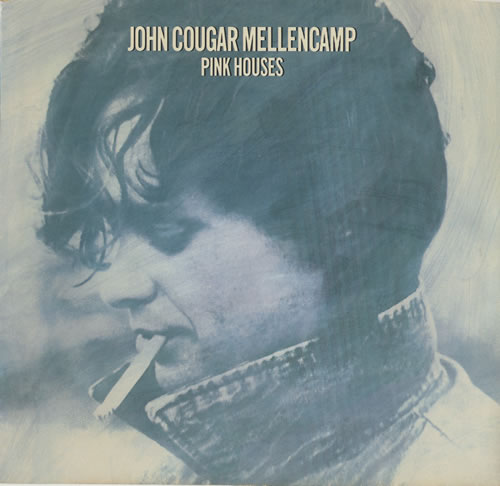
I remember this song well but I also remember the MTV giveaway contest. Oh yes, you could win a free house in Indiana where Mellencamp was from…a pink one of course! MTV got a good deal on the first house…20,000 dollars…there was a reason for that. It was across the street from a toxic dump. MTV then had to get another house and they finally did and gave it away. Susan Miles won the house along with a pink jeep and a garage full of Hawian Punch…not sure how that factored in.
Inspiration for this song came when Mellencamp was driving on Interstate 65 in Indianapolis. As described in the first verse, he saw a black man sitting in a lawn chair just watching the road. The image stuck with Mellencamp, who wasn’t sure if the man should be pitied because he was desolate, or admired because he was happy.
Pink Houses peaked at #8 in the Billboard 100 and #15 in Canada in 1984. The song was on the Uh-Huh and that album peaked at #9 on the Billboard Album Charts in 1984. This is the album that in my opinion placed John Mellencamp with the so-called “Heartland Rockers” like Bruce Springsteen, Tom Petty, and Bob Seger.
From Songfacts
Mellencamp is from a rural town in Indiana and often writes about the American experience. His songs are sometimes misinterpreted as patriotic anthems, when a deeper listen reveals lyrics that deal with the challenges of living in America as well as the triumphs. Mellencamp has expressed his love for his country, but has also criticized the US government for going to war in Iraq, developing a dependency on foreign oil and not doing more to support the working class.
“It’s really an anti-American song,” Mellencamp told Rolling Stone about “Pink Houses.” “The American dream had pretty much proven itself as not working anymore. It was another way for me to sneak something in.”
MTV ran a contest based on this song where they gave away a pink house in Indiana. They got a great deal on the place – John Sykes at the network remembers paying $20,000 for it – but unfortunately, the house was across from a toxic waste dump. When Rolling Stone ran an article pointing this out, Sykes flew to Indiana and bought another house, which is the one they gave away (after painting it pink). The ordeal provided one of the many strange-but-true memories of the early MTV years (and not the only one involving a contest – when they did a promotion with Van Halen making a viewer a “roadie for a day,” the guy who won almost died from the alcohol, drugs and assorted excess). According to Sykes, the house near the waste dump stayed on the books at MTV until 1992, as they couldn’t get rid of it.
Uh-Huh was the first album where Mellencamp used his real name. His manager named him “Johnny Cougar” when he started out, a name he used on his first two albums. He then became “John Cougar” until his seventh album, Uh-Huh, when he used John Cougar Mellencamp. In 1990, he recorded as John Mellencamp.
Changing his name was out of character, as he was notoriously combative with his record company and refused to participate in conventions like listening parties. But he knew that the only way he could ever call his own shots was by making hits, and the name change seemed like a good call, even though it didn’t suit him. When his plan worked, earning his autonomy, he started the process of changing to his real name.
Mellencamp’s previous hits, notably “Hurts So Good” and “Jack & Diane,” took him a long time to write. “Pink Houses” was different, and marked a creative breakthrough.
“I started writing every day and painting and drawing, and I found myself open to suggestion,” he said in his Plain Spoken DVD. “I wrote a song called ‘Pink Houses’ that came very quickly. I wasn’t thinking about it – I saw something a couple of days before, and I just more-less reported on it, and it came out to be ‘Pink Houses.’ True art is always a surprise. It’s not constructed. If it doesn’t surprise the person that’s writing it, it’s not going to surprise the person that’s listening.”
Mellencamp performed an 8-minute version of this with Kid Rock at the 2001 “Concert For New York,” a benefit for victims of the World Trade Center attacks.
Pink Houses
There’s a black man with a black cat Living in a black neighborhood He’s got an interstate running’ through his front yard You know, he thinks, he’s got it so good And there’s a woman in the kitchen cleaning’ up evening slop And he looks at her and says: “Hey darling, I can remember when you could stop a clock”
Oh but ain’t that America, for you and me Ain’t that America, we’re something to see baby Ain’t that America, home of the free, yeah Little pink houses for you and me, oh for you and me
Well there’s a young man in a T-shirt Listenin’ to a rock ‘n’ roll station He’s got a greasy hair, greasy smile He says: “Lord, this must be my destination” ‘Cause they told me, when I was younger Sayin’ “Boy, you’re gonna be president” But just like everything else, those old crazy dreams Just kinda came and went
Oh but ain’t that America, for you and me Ain’t that America, we’re something to see baby Ain’t that America, home of the free, yeah Little pink houses, for you and me, oh baby for you and me
Well there’s people and more people What do they know, know, know Go to work in some high rise And vacation down at the Gulf of Mexico Ooo yeah
And there’s winners, and there’s losers But they ain’t no big deal ‘Cause the simple man baby pays the thrills, The bills and the pills that kill
Oh but ain’t that America, for you and me Ain’t that America, we’re something to see baby Ain’t that America, home of the free, yeah Little pink houses for you and me, ooo, ooo yeah
Ain’t that America, for you and me Ain’t that America, hey we’re something to see baby Ain’t that America, oh the home of the free, Yeah yeah yeah yeah yeah yeah yeah Little pink houses babe for you and me, ooo yeah ooo yeah
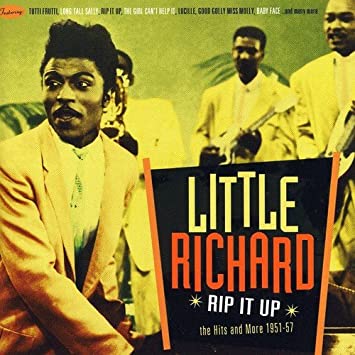
Little Richard passed away yesterday at 87 years old…he was one of the last fifties pioneers left. His influence passed through generations from Bob Dylan, The Beatles, Jimi Hendrix, James Brown, to Lemmy from Motorhead.
I’ve read interviews from so many artists saying how he influenced them. Bob Dylan started on Little Richard in Minnesota as a teenager and I’ve read where Lemmy was a giant fan. Richard touched many generations.
My dad told me about Little Richard before I ever heard him. He said he had the biggest voice he ever heard. He talked about a song called Long Tall Sally. I first heard it…it blew me away. Such a raw emotional power in that voice. He would take us to the edge of the cliff and then at the last minute pull us back.
His voice was one of a kind…and I mean one of a kind. He could sing anything.
Bob Dylan:I just heard the news about Little Richard and I’m so grieved. He was my shining star and guiding light back when I was only a little boy. His was the original spirit that moved me to do everything I would do.
Keith Richards:So sad to hear that my old friend Little Richard has passed. There will never be another!!! He was the true spirit of Rock’n Roll!
Rip It Up
A songwriter named Johnny Marascalco wrote this song, which was released as Little Richard’s third single. Marascalco while he was sitting in a cotton field waiting for a friend to get out of church so they could hunt rabbits. A later weekend, he heard Little Richard’s “Long Tall Sally” and decided that he could write similar songs.
Little Richard’s producer Bumps Blackwell (who has a co-writing credit on this one as well) bought both “Rip It Up” and another Marascalco song, “Ready Teddy,” which was released as the B-side of the single. The two songs were recorded at J&M Studios in New Orleans on May 9, 1956.
The song peaked at #1 in the R&B Charts, #27 in the Billboard Charts, #30 in the UK, and #30 in Canada in 1956.
Rip It Up
‘Cause it’s Saturday night and I just got paid Fool about my money don’t try to save My heart says go, go Have a time ’cause it’s Saturday night And I’m feelin’ fine
I’m gonna rock it up I’m gonna rip it up I’m gonna shake it up I’m gonna ball it up I’m gonna ride it out And ball tonight
I got a date and I won’t be late Pick her up in my ’88’ Shag it on down to the union hall When the music starts jumpin’ I’ll have a ball
I’m gonna rock it up I’m gonna rip it up I’m gonna shake it up I’m gonna ball it up I’m gonna ride it out And ball tonight
Along about 10 I’ll be flying high Rocking on out into the sky I don’t care if I spend my gold ‘Cause tonight I’m gonna be one happy soul
I’m gonna rock it up I’m gonna rip it up I’m gonna shake it up I’m gonna ball it up I’m gonna ride it out And ball tonight, aw
Well it’s Saturday night and I just got paid Fool about my money don’t try to save My heart says go, go Have a time ’cause it’s Saturday night And I’m feelin’ fine
I’m gonna rock it up I’m gonna rip it up I’m gonna shake it up I’m gonna ball it up I’m gonna ride it out And ball tonight
Along about 10 I’ll be flying high Rocking on out into the sky I don’t care if I spend my gold ‘Cause tonight I’m gonna be one happy soul
I’m gonna rock it up I’m gonna rip it up I’m gonna shake it up I’m gonna ball it up I’m gonna ride it out And ball tonight
My wife asked me if I have ever posted this song before. So for her… here it is…September by Earth, Wind, and Fire. It was her…”Jr High Song.” One warning…when you hear it you cannot get it out of your head.
Maurice White, Al McKay, Allee Willis wrote this song. Maurice White said he got the idea for this song in an unlikely place… a hotel room in Washington DC while there was some kind of protest going on below. Said White, “There’s all these cats screaming and throwing things and going crazy and this tune just evolved.”
September peaked at #1 in the Billboard 100, #3 in the UK, #10 in Canada, and #12 in New Zealand in 1979.
Earth, Wind, and Fire had 33 songs in the top 100, 7 top ten hits, and one number 1.
Verdine White (Bass Player): “People now are getting married on September 21st,” he said. “The stock market goes up on September 21st. Every kid I know now that is in their 20s, they always thank me because they were born on September 21st.”
From Songfacts
This song has a tendency to make people happy when they hear it. Allee Willis, who wrote the song with Maurice White and Al McKay from Earth, Wind & Fire, describes it as “Joyful Music.”
It was the first song Willis wrote with the band, and quite a learning experience. She told us: “Their stuff was very much based on Eastern philosophies, an incredibly positive outlook on life; the lyrical content of their songs was not typical of what would have been in soul music at that time. So when I left the studio that first day, Maurice gave me the name of a book, it was called The Greatest Salesman In The World, and he sent me to the Bodhi Tree, which is a very spiritual bookstore here in LA. I got that and a bunch of other books that the saleswoman said was the philosophy. And what went from being a very simple experience turned into, for me, an incredibly complex experience. Because I dove into these books.
And even the way they were written, the language they were written in, I kind of didn’t understand anything. But Maurice told me right from the jump he thought I was a very spiritual person, and I was put here to communicate. And I thought, if Maurice was saying that to me, I need to hang with this.
I was pouring through these books for a couple of months. Lyrics started being 25-30 pages long as I’m trying to figure all this stuff out. Reading all that stuff changed me forever. He lead me to a path I’ve stayed on.
“So ‘September’ was fantastic and thrilling, and they had started the intro of it by the time I had walked into the studio to meet everyone. Just as I opened the door and I heard that little guitar intro, I thought, Oh God, please let this be what they want to work with me on. Because it was so obviously a hit.” (Here’s our full Allee Willis interview. Her website is alleewillis.com.)
While there are many theories as to the “21st night of September” in the opening lyrics, the truth is they just felt right. Willis told us: “Maurice had that very first line, and I said to him, ‘Why the 21st?’ Because I’m someone who likes to tie up all the ends very neatly, so if I’m saying the 21st, I want to know during the song what’s the significance. But he always told me there was no real significance. So whether that’s true or not I can’t say. But as far as I know, it’s just something that sang really well. And I would say the main lesson I learned from Earth, Wind & Fire, especially Maurice White, was never let a lyric get in the way of a groove. Ultimately it’s the feel that is the most important, and someone will feel what you’re saying if those words fit in there right. I do remember us experimenting with other dates, but 21st just sang phonetically fantastic.”
Willis co-wrote most of the songs on Earth, Wind & Fire’s next album I Am, including the hit “Boogie Wonderland.”
Although many people hear the first words in the chorus as “Party On,” it’s really “Bada-Ya.” Allee Willis explained in her Songfacts interview: “I absolutely could not deal with lyrics that were nonsensical, or lines that weren’t complete sentences. And I’m exceedingly happy that I lost that attitude. I went, ‘You cannot leave bada-ya in the chorus, that has to mean something.’ Maurice said, ‘No, that feels great. That’s what people are going to remember. We’re leaving it.’ We did try other stuff, and it always sounded clunky – thank God.”
This was written specifically for Earth, Wind & Fire’s greatest hits album The Best of Earth, Wind & Fire, Vol. 1. Along with their cover of “Got To Get You Into My Life,” it was one of two new songs included on the set, which became their best-selling album and helped the band cross over to a broader audience.
Movies that used this song include Night at the Museum, The Ringer, Soul Food, Dan In Real Life and Babel.
This was featured on the NBC spy comedy Chuck in the 2010 episode “Chuck Versus the Living Dead.” On the show, Buy More manager Big Mike claims he was once a member of the band back when they were called Earth, Wind, Fire & Rain (he was Rain).
Taylor Swift released an airy, banjo-and-acoustic-guitar version of this song on April 13, 2018 that provoked ire on social media. Her recording was part of a Spotify promotion; she explained that she covered it for “sentimental reasons” and because the month of September is when one of her memorable breakups occurred.
Philip Bailey of EW&F came to her defense, tweeting,”Music is free like that… Ain’t Got Nothing But Love for Ya.”
September
Do you remember the 21st night of September? Love was changing the minds of pretenders While chasing the clouds away
Our hearts were ringing In the key that our souls were singing As we danced in the night Remember how the stars stole the night away
Hey hey hey Ba de ya, say do you remember Ba de ya, dancing in September Ba de ya, never was a cloudy day
Ba duda, ba duda, ba duda, badu Ba duda, badu, ba duda, badu Ba duda, badu, ba duda
My thoughts are with you Holding hands with your heart to see you Only blue talk and love Remember how we knew love was here to stay Now December found the love that we shared in September Only blue talk and love Remember the true love we share today
Hey hey hey Ba de ya, say do you remember Ba de ya, dancing in September Ba de ya, never was a cloudy day
There was a Ba de ya, say do you remember Ba de ya, dancing in September Ba de ya, golden dreams were shinny days
The bell was ringing Our souls were singing Do you remember, never a cloudy day
There was a Ba de ya, say do you remember Ba de ya, dancing in September Ba de ya, never was a cloudy day
There was a Ba de ya, say do you remember Ba de ya, dancing in September Ba de ya, golden dreams were shinny days
Ba de ya de ya de ya Ba de ya de ya de ya Ba de ya de ya de ya de ya
Ba de ya de ya de ya Ba de ya de ya de ya Ba de ya de ya de ya de ya
One of the greatest rock guitar riffs…this was credited to Lennon – McCartney and they both worked on it.
This was released as a double-A-sided single with “We Can Work It Out.” It peaked at #1 in the UK and #5 in the Billboard 100.
“We Can Work It Out” got more airplay in the US. In America, the single was released on the same day as the Rubber Soul album, although neither song was on that album. The Beatles were popular enough to support the output…they thought of releasing singles and albums as two different things. What other bands would not place both of these songs on their new album?
A great rock song that still sounds good today.
Paul McCartney: “That was a co-written effort; we were both there making it all up but I would give John the main credit. Probably the idea came from John because he sang the lead, but it was a close thing. We both put a lot of work in on it.”
John Lennon: “Day Trippers are people who go on a day trip, right? Usually on a ferryboat or something. But the song was kind of – you’re just a weekend hippie. Get it?”
From Songfacts
John Lennon’s lyrics were his first overt reference to LSD in a Beatles song. The song can be seen as Lennon teasing Paul McCartney about not taking acid.
In 2004, Paul McCartney did an interview with the Daily Mirror newspaper where he explained that drugs influenced many of The Beatles’ songs. He singled this one out as being about acid (LSD), but also said that people often overestimate the influence of drugs on their music.
The Beatles had some fun with the line, “She’s a big teaser,” which they jokingly worked up as “she’s a prick teaser.” In context with the next line, “She took me half the way there,” it’s pretty clear what’s going on. The group managed to slip in subtle sexual innuendo in a few of their songs, including “I’m Down” and “Please Please Me.”
A short promotional film of The Beatles lip-synching to this song was made for the TV special The Music Of Lennon and McCartney, which first aired December 17, 1965 in the UK. It was one of the first music videos.
Lennon wrote this after their record company demanded a new single. The Beatles were not that happy with the way this song turned out because they had been forced to come up with a new single.
Jimi Hendrix sometimes covered this at his concerts.
James Taylor did a cover version on his album Flag.
With a packed schedule and feverish demand for TV appearances, The Beatles made music videos for five on their songs, including this one, at a one-day shoot at Twickenham Film Studios in London on November 23, 1965. They did three different versions of “Day Tripper,” lip-synching the song while having fun with the set pieces.
Day Tripper
Got a good reason For taking the easy way out Got a good reason For taking the easy way out now She was a day tripper One way ticket, yeah It took me so long to find out And I found out
She’s a big teaser She took me half the way there She’s a big teaser She took me half the way there, now She was a day tripper One way ticket, yeah It took me so long to find out And I found out Ah, ah, ah, ah, ah, ah
Tried to please her She only played one night stand Tried to please her She only played one night stand, now She was a day tripper Sunday driver, yeah It took me so long to find out And I found out
Day tripper, day tripper, yeah Day tripper, day tripper, yeah Day tripper, day tripper, yeah
Sloan got its start in Halifax during the early ‘90s. The band played around the Nova Scotia College of Art and Design before moving to Toronto.
The band made their recording debut on the Halifax, Canada CD compilation “Hear & Now” with the song “Underwhelmed” before releasing their debut EP “Peppermint” in 1991 on their own label Murderecords. In 1992 Sloan signed with Geffen Records and released their full-length debut “Smeared”. The album had somewhat of a grunge style.
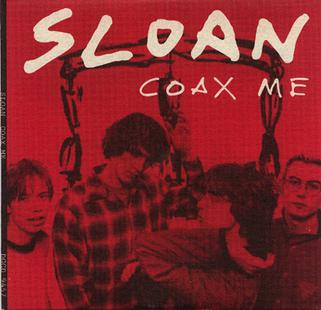
Coax Me was on their second album Twice Removed. They changed their style with the second album with a more power pop feel. Geffen didn’t like the change and pulled a lot of support but it did peak at #25 in the Canadian Album Charts. Coax Me peaked at #6 in the Canadian RPM Charts in 1994.
DeKe mentioned this band and their style is right up my alley. I’ve listened to a few of their songs and I really liked what I’ve heard so far.
Coax Me
It all seemed to happen so fast Will you ever believe the way he passed away I saw his widow speak on her fortune She was feelin’ pretty apathetic
Coax me, cajole me Coax me, cajole me
If I drink concentrated OJ Can I think Consolidated’s okay? It’s not the band I hate, it’s their fans Three cans of water perverts me
Coax me, cajole me Coax me, cajole me Coax me, cajole me
And after he died By rights she’d have cried I gave mine away I gave mine away
I saw a widow’s peak on her forehead It was full of lines and sinkers
Coax me, cajole me Coax me, cajole me Coax me, cajole me
This is my favorite song on In Through The Out Door. The beginning sounds like the end of the world is coming. There is a build-up of sound and then Jimmy blasts the main riff of this song.
The intro was apparently taken from a soundtrack Jimmy Page was working on for fellow Aleister Crowley admirer Kenneth Anger’s film Lucifer Rising.
The song was not released as a single as usual for Led Zeppelin but the album peaked at #1 in the Billboard Album Charts in 1979. This album and The Wall by Pink Floyd were said to help save a Record industry that was slumping at the time.
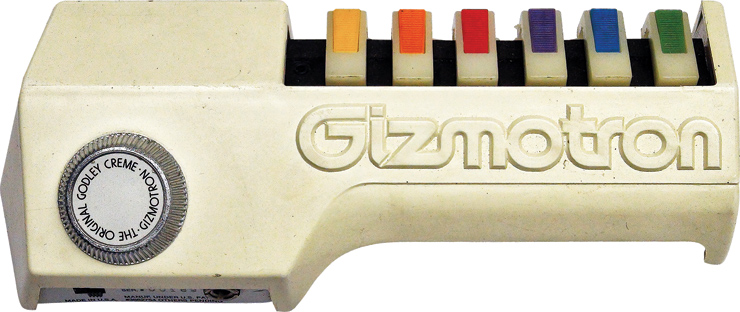
Jimmy Page used a drone effect on his guitar similar to create a sound similar to what he did on the song “In The Light,” but instead of using a cello bow on his guitar, he used a Gizmotron to create the effect. The Gizmotron is a guitar processing device invented by Lol Creme and Kevin Godley from the band 10cc to get a strange distorted sound.
After reading about the Gizmotron…I want one!
Gizmotron
From Songfacts
Robert Plant’s lyrics are about how the rich and famous are still exposed to pain and suffering, just in different ways.
When they were recording this album, Jimmy Page and John Bonham were spending a lot of time together and would usually show up at the studio very late and work through the night. This started out with just drums and keyboards created by John Paul Jones, who had a new drum machine to work with.
Robert Plant called this song, “A great one, a real stomper.”
In The Evening
In the evening When the day is done I’m looking for a woman But the girl don’t come So don’t let her Play you for a fool She don’t show no pity, baby She don’t make no rules
Oh, I need your love I need your love Oh, I need your love I just got to have
So don’t you let her Oh, get under your skin It’s only bad luck and trouble From the day that you begin I hear you crying in the darkness, Don’t ask nobody’s help Ain’t no pockets full of mercy, baby ‘Cause you can only blame yourself
Oh, I need your love Oh, oh, I need your love Yeah, I need your love I just got to have
Oh, it’s simple All the pain that you go through You can turn away from fortune, fortune, fortune ‘Cause that’s all that’s left to you Oh, it’s lonely at the bottom Man, it’s dizzy at the top But if you’re standing in the middle Ain’t no way you’re gonna stop, oh
Oh, I need your love Oh, oh, I need your love Oh, oh, I need your love I just got to have
Ooh, whatever that your days may bring No use hiding in a corner ‘Cause that won’t change a thing If you’re dancing in the doldrums One day soon, it’s got to stop, it’s got to stop When you’re the master of the off-chance When you don’t expect a lot
Oh, I need your love Oh, oh, I need your love Oh yeah, I need your love I just got to have, I just got to have
I never checked the statistics…but I have to think there had to be a baby explosion nine months after “Let’s Get It On” was released in 1973. Anyone born in 1974 may owe their very existence to this song.
This song’s co-writer Ed Townsend also produced the album with Marvin and co-wrote the three other songs on the first side of the disc, including “Keep Gettin’ It On.” He wrote with Marvin again on songs for Marvin’s 1978 album Here, My Dear.
This song peaked at #1 in the Billboard 100, The guitar and voice are excellent in this song. There is no guessing what this song is about.
Marvin Gaye: “I can’t see anything wrong with sex between consenting anybodies. I think we make far too much of it. After all, one’s genitals are just one important part of the magnificent human body … I contend that SEX IS SEX and LOVE IS LOVE. When combined, they work well together, if two people are of about the same mind. But they are really two discrete needs and should be treated as such. Time and space will not permit me to expound further, especially in the area of the psyche. I don’t believe in overly moralistic philosophies. Have your sex, it can be exciting if you’re lucky. I hope the music that I present here makes you lucky.”
Jon Landau (former rock critic and current manager of Bruce Springsteen) “Let’s Get It On” is a classic Motown single, endlessly repeatable and always enjoyable. It begins with three great wah-wah notes that herald the arrival of a vintage Fifties melody. But while the song centers around classically simple chord changes, the arrangement centers around a slightly eccentric rhythm pattern that deepens the song’s power while covering it with a contemporary veneer. Above all, it has Marvin Gaye’s best singing at its center, fine background voices on the side, and a long, moody fade-out that challenges you not to play the cut again.
From Songfacts
Originally written by 1950s one-hit-wonder Ed Townsend (“For Your Love” in 1958), the song originally addressed the author’s desire to get on with life after beating alcoholism. Marvin Gaye completely changed the lyrics (and meaning) to the song after meeting Janis Hunter, the woman who would become his second wife. The song helped cement Gaye’s reputation as one of the greatest singers of baby-making music. Songwriting credits on the song went to both Gaye and Townsend.
“Let’s Get It On” was the title track of Gaye’s 1973 album. It topped the Billboard Pop Singles chart for two weeks and the Billboard Soul Singles chart for eight weeks. It also made history as Motown’s most successful release in the United States to that date and the second most successful song of 1973 (behind Tony Orlando & Dawn’s “Tie A Yellow Ribbon Round The Ole Oak Tree”).
This song has appeared in a variety of TV shows, movies, and commercials, often for comic effect to imply an imminent romantic encounter. Some of the media uses include the TV shows The Simpsons, The Sopranos, Scrubs, House, Ugly Betty, Charmed, Spin City and The King of Queens.
Movie uses include Into the Night (1985), Queens Logic (1991), The Inkwell (1994), Austin Powers: The Spy Who Shagged Me (1999), High Fidelity (2000), Crossroads (2002), Something’s Gotta Give (2003), Mr. 3000 (2004), Bridget Jones: The Edge of Reason (2004), The Change-Up (2011), and The Dictator (2012).
Let’s Get It On
I’ve been really tryin’, baby Tryin’ to hold back this feeling for so long And if you feel like I feel, baby Then, c’mon, oh, c’mon
Let’s get it on Ah, baby, let’s get it on Let’s love, baby Let’s get it on, sugar Let’s get it on
We’re all sensitive people With so much to give Understand me, sugar Since we’ve got to be here Let’s live I love you
There’s nothing wrong with me Loving you, baby no no And giving yourself to me can never be wrong If the love is true, oh baby
Ooh don’t you know how sweet and wonderful life can be ooh I’m asking you baby to get it on with me ooh ooh I ain’t gonna worry I ain’t gonna push, won’t push you baby So c’mon, c’mon, c’mon, c’mon, c’mon, baby Stop beatin’ ’round the bush, hey
Let’s get it on Let’s get it on You know what I’m talkin’ ’bout C’mon, baby Let your love come out If you believe in love Let’s get it on Let’s get it on, baby This minute, oh yeah Let’s get it on Please, please get it on
I know and you know what I’ve been dreaming of, don’t you baby? My whole body makes that feelin’ of love, I’m happy I ain’t gonna worry, no I ain’t gonna push I won’t push you baby, woo
C’mon, c’mon, c’mon, c’mon, c’mon, darlin’ Stop beatin’ ’round the bush Oh, gonna get it on Threatenin’ you, baby I wanna get it on You don’t have to worry that it’s wrong If the spirit moves ya Let me groove ya good Let your love come down Oh, get it on
C’mon, baby Do you know the meaning? I’ve been sanctified Girl, you give me good feeling I’ve been sanctified
Oh dear I, baby Nothing wrong with love If you want to love me just let your self go Oh baby, let’s get it on
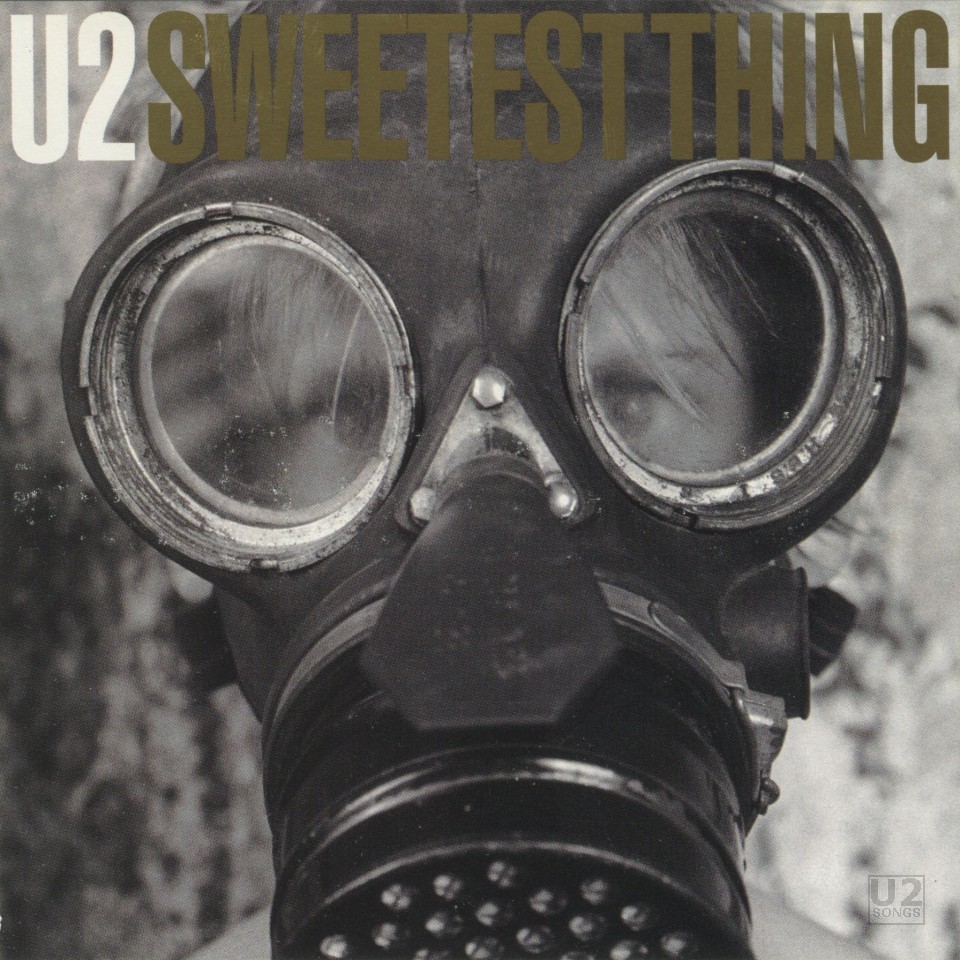
Bono wrote this as a birthday present to his wife, Ali. On her birthday, he was working on recording The Joshua Tree, so he was trying to make up for it. It was originally released as a B-side on the “Where the Streets Have No Name” single in 1987. The song was later re-recorded and re-released as a single in October 1998 for the band’s compilation album The Best of 1980–1990.
The song peaked at #63 in the Billboard 100 in 1998.
All proceeds from the song were given to the charity “The Children of Chernobyl”, which was chosen by Ali as her chosen charity, an organization that brought children affected by the Chernobyl disaster to visit and stay with Irish families.
Bono about his wife: “I’m a bit of a stray dog. I would not have been in the queue to get married had I not met someone as extraordinary as Ali. I always felt more myself with her than with anybody.” He describes the first time he saw her: “I thought she looked Spanish, a rose for sure, dark with blood-red lips.”
From Songfacts
U2 recorded this for The Joshua Tree, but left it off because they felt it did not fit in on the album. It was originally released as the B-side to a 7″ single that also included “Where The Streets Have No Name” and “Silver And Gold.”
This was rerecorded and released on U2 The Best Of 1980-1990 in 1998.
In 1998, this was released as a single with proceeds going to Children Of Chernobyl, the favorite charity of Bono’s wife, Ali.
The video shows Bono orchestrating an elaborate apology to Ali, who appears at the beginning of the clip getting into a horse-drawn carriage. The camera then cuts to Bono, who is facing her, and stays on him as they go for a ride down a street in Dublin. Along the way, Bono makes various outlandish offerings to win her favor, starting with the Irish group Boyzone, who climb on board. Next comes a marching band, a fire engine (with firemen), a string section, Irish step dancers from Riverdance, and an elephant. It’s not clear if the apology works, but he sure made an effort.
It looks like the Bono section is all one shot, but there are actually several edits made where the light flares come in. Kevin Godley, who directed it, did something similar on U2’s video for “Numb,” where the camera stays on The Edge for almost the entire time.
U2 didn’t play this live until March 17, 2000, when they played it a ceremony in Dublin where they were being honored. The following year, it made the setlist for their Elevation tour, then was mothballed until 2015 for their Innocence + Experience tour.
Boyzone star Ronan Keating revealed to co-host Harriet Scott on the Magic Radio Breakfast Show that Bono initially offered the song to him, but he insisted that U2 take it instead. Keating said: “It was U2’s, they had to sing it, I knew they had to sing it.
The Sweetest Thing
My love she throws me like a rubber ball Oh oh oh, the sweetest thing She won’t catch me or break my fall Oh oh oh, the sweetest thing Baby’s got blue skies up ahead But in this I’m a rain cloud You know she likes a dry kind of love Oh oh oh, the sweetest thing
I’m losing you I’m losing you Ain’t love the sweetest thing
I wanted to run but she made me crawl Oh oh oh, the sweetest thing Eternal fire, she turned me to straw Oh oh, the sweetest thing You know I got black eyes But they burn so brightly for her This is a blind kind of love Oh oh oh, the sweetest thing
I’m losing you Oh oh oh, I’m losing you yeah Ain’t love the sweetest thing Ain’t love the sweetest thing Oh oh, yeah, oh
Blue-eyed boy meets a brown-eyed girl Oh oh oh, the sweetest thing You can sew it up but you still see the tear Oh oh oh, the sweetest thing Baby’s got blue skies up ahead And in this I’m a rain cloud Oh this is a stormy kind of love Oh oh oh, the sweetest thing
Oh oh, the sweetest thing Oh oh oh, the sweetest thing
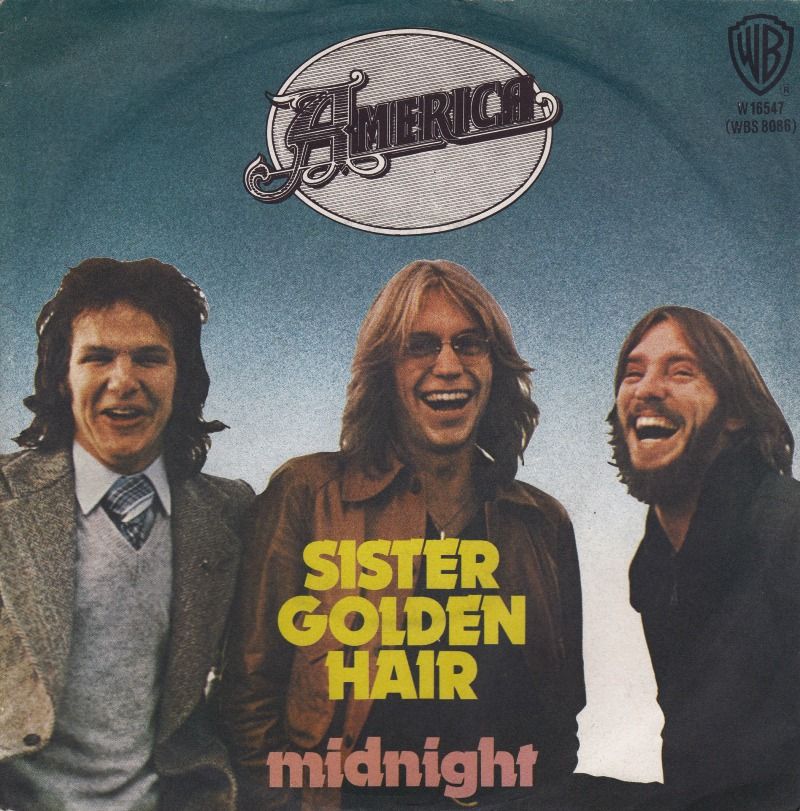
I’ve always liked the slide guitar in this song. It has a George Harrison sound to it. The song was on America’s album Hearts. The former Beatle producer George Martin produced this album.
Gerry Beckley wrote “Sister Golden Hair,” America’s second and final number one hit. Beckley has said that Jackson Brown and George Harrison inspired this song.
The song peaked at #1 in the Billboard 100, #11 in Canada, and #26 in New Zealand.
Gerry Beckley: “I very openly tip my hat there to ‘My Sweet Lord,'” “I was such a fan of all the Beatles, but we knew George [Harrison] quite well and I just thought that was such a wonderful intro.”
One interesting thing about the album… Phil Hartman, who was a graphic designer before his star turn in Saturday Night Live, designed the cover to the Hearts album.
From Songfacts
America’s first single, “A Horse With No Name,” went to #1 in 1972. That song was written by Dewey Bunnell, who formed the band in 1970 with Gerry Beckley and Dan Peek (the group became a duo when Peek left in 1977).
In 1975, they scored another #1 with “Sister Golden Hair,” another enigmatic track with lots of harmony. It was written and sung by Beckley, who says that it was based on a composite of different girls. When asked if it was written to anyone, Beckley said: “No, this is all poetic license. With ‘Sister Golden Hair,’ as far as my folks were concerned, I was writing a song about my sister, and I couldn’t quite fathom it; they must not have listened to the lyrics.”
“I’d like to point out that you can have a #1 record with a line that enters that darkly,” he said. “That’s kind of my thing: I try to mix these emotions and I think ‘Sister’ was a great example. Pretty good message in there. John Lennon famously said, ‘We don’t know what these songs are about till people tell us.’ So all of our songs, including ‘Horse,’ are open to interpretation. But ‘Sister’ was a relationship song and there is a variety of elements. We always combine them as songwriters so that they’re not verbatim, word for word, for a particular circumstance. Poetic license we call it.”
In our interview with Gerry Beckley, he explained that he made a demo of this song before America recorded their fourth album, Holiday, but he was happy with the songs they chose for that album so “Sister Golden Hair” sat on the shelf for a year, making the cut for their next album, Hearts.
“I can’t really tell you if it was a lack of faith in the song or not, but it was interesting to see,” he said. “It shows you that songs can have a life of their own – they might just need the right time and circumstances to surface.”
This song was used in a bloody scene in the 2001 episode of the TV series The Sopranos, “Another Toothpick.” After a mobster kills two people, the song plays on his car radio as he drives off. When he has trouble breathing and can’t reach his inhaler, he crashes the car and dies, but the song keeps playing.
“Sister Golden Hair” also appears in the movies Cherish (2002), Radio (2003) and All the Boys Love Mandy Lane (2006).
George Martin, who was The Beatles producer, produced this track and the rest of the Hearts album (he started working with America on their previous album, Holiday). It was Martin’s 20th US #1 as a producer, and his first away from The Beatles (by this point, each former Beatle had reached #1 outside of the group). Martin would have three chart-toppers: “Ebony and Ivory,” “Say Say Say” and “Candle In The Wind ’97.”
This was recorded at the Record Plant in Sausalito, California. The engineer on the session was Geoff Emerick, who worked with George Martin on much of The Beatles output.
Beckley played lap steel guitar on this track. He told Songfacts that the musical influence came from George Harrison. “I very openly tip my hat there to ‘My Sweet Lord,'” he said. “I was such a fan of all The Beatles but we knew George quite well and I just thought that was such a wonderful intro.”
The group recorded a version in Spanish called “Hermana de Cabellos Dorados.” Gerry Beckley doesn’t speak Spanish, so he did it phonetically.
Sister Golden Hair
Well I tried to make it Sunday, but I got so damn depressed That I set my sights on Monday and I got myself undressed I ain’t ready for the altar but I do agree there’s times When a woman sure can be a friend of mine
Well, I keep on thinkin’ ’bout you, Sister Golden Hair surprise And I just can’t live without you; can’t you see it in my eyes? I been one poor correspondent, and I been too, too hard to find But it doesn’t mean you ain’t been on my mind
Will you meet me in the middle, will you meet me in the air? Will you love me just a little, just enough to show you care? Well I tried to fake it, I don’t mind sayin’, I just can’t make it
Well, I keep on thinkin’ ’bout you, Sister Golden Hair surprise And I just can’t live without you; can’t you see it in my eyes? Now I been one poor correspondent, and I been too, too hard to find But it doesn’t mean you ain’t been on my mind
Will you meet me in the middle, will you meet me in the air? Will you love me just a little, just enough to show you care? Well I tried to fake it, I don’t mind sayin’, I just can’t make it
This is one of the Door’s radio hits that I like. I bought the album LA Woman at relative’s yardsale for 10 cents when I was around 12. I went through a Doors phase and even bought the An American Prayer album with a lot of spoken word poetry by Jim Morrison. That ended my fascination with Jim and the Doors. I do like some of their radio hits…my phase lasted around 6 months.
LA Woman is a good album and was the last album they recorded with Jim Morrison, who died shortly after it was released. The album peaked at #9 in 1971.
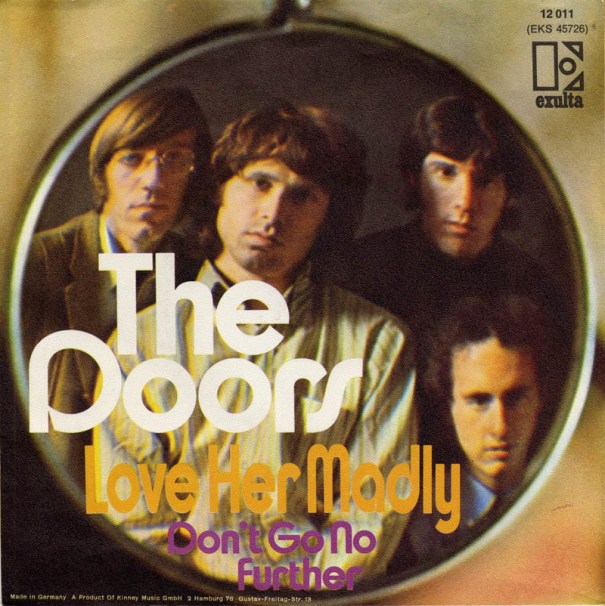
Doors guitarist Robby Krieger wrote this song on a 12-string guitar. It is about the numerous times his girlfriend…later his wife Lynn, threatened to leave him. Krieger said: “Every time we had an argument, she used to get pissed off and go out the door, and she’d slam the door so loud the house would shake,”
The song peaked at #11 in the Billboard 100 and #3 in Canada in 1971.
From Songfacts
Krieger, John Densmore, and Ray Manzarek recorded a new version with Bo Diddley for the 2000 Doors tribute album Stoned Immaculate.
This was recorded in a very casual atmosphere. The musicians all played together, with no overdubs. They produced it themselves, which meant they could relax and make their own rules. The whole album was recorded in just two weeks.
The group’s longtime producer Paul Rothchild had this to say in an interview with BAM magazine: “That’s exactly the song I was talking about that I said sounded like cocktail music. That’s the song that drove me out of the studio. That it sold a million copies means nothing to me. It’s still bad music.”
Along with “Hello, I Love You,” “People Are Strange” and “Soul Kitchen,” this was used in the movie Forrest Gump. It plays in a scene where Jenny (Robin Wright) runs out of a motel with a black eye.
The title is a twist on a phrase Duke Ellington popularized. At his concerts, he would say, “we love you madly.”
The Doors didn’t have a bass player, but sometimes used one in the studio to beef up the low end. On “Love Her Madly,” Jerry Scheff, famous for his work with Elvis Presley, played.
Love Her Madly
Don’t ya love her madly Don’t ya need her badly Don’t ya love her ways Tell me what you say
Don’t ya love her madly Wanna be her daddy Don’t ya love her face Don’t ya love her as she’s walkin’ out the door Like she did one thousand times before
Don’t ya love her ways Tell me what you say Don’t ya love her as she’s walkin’ out the door
All your love All your love All your love All your love
All your love is gone So sing a lonely song Of a deep blue dream Seven horses seem to be on the mark
Yeah, don’t you love her Don’t you love her as she’s walkin’ out the door
All your love All your love All your love
Yeah, all your love is gone So sing a lonely song Of a deep blue dream Seven horses seem to be on the mark
Well, don’t ya love her madly Don’t ya love her madly Don’t ya love her madly
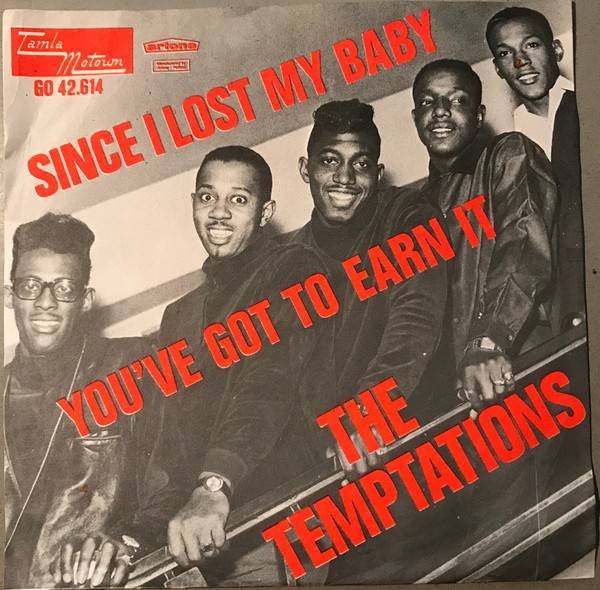
Smokey Robinson and Warren Moore wrote this wonderful song. The Temptations and the Supremes were huge Motown artists in the sixties…they were one of the very few American artists who challenged The Beatles.
The writing of “Since I Lost My Baby” happened with Pete Moore, a member of the Miracles…a songwriting team that delivered other memorable hits for The Miracles, including “Ooo Baby Baby,” “The Tracks Of My Tears,” “My Girl Has Gone” and “Going To A Go-Go.” For the Temptations, the two also created “Fading Away,” “It’s Growing” and “No More Water In The Well.” For Marvin Gaye, they authored “Ain’t That Peculiar” and “One More Heartache.”
The lead vocals were by David Ruffin and Melvin Franklin.
The song peaked at #17 in the Billboard 100 in 1965.
Smokey Robinson: “There’s something about that tune that I just set it aside. It wasn’t the biggest commercially, and I can’t put my finger on what I love about it.”
Since I Lost My Baby
Sun a-shining, there’s plenty of life A new day is dawning sunny and bright But after I’ve been crying all night the sun is cold And the new day seems old Since I lost my baby (since I lost my baby) Since I lost my baby (since I lost my baby)
Birds are singing and the children are playing There’s plenty of work and the bosses are paying Not a sad word should my young heart be saying But fun is a bore and with money I’m poor Since I lost my baby (since I lost my baby) Since I lost my baby (since I lost my baby)
Next time I’ll be kinder (next time I’ll be kinder) Won’t you please help me find her (won’t you please help me find her)? Someone just remind her (someone just remind her) ‘Bout this love she left behind her (’bout this love she left behind her) ‘Til I find her I’ll be tryin’ now, every day I’m more inclined to find her Inclined to find her, inclined to find my baby Been a-looking everywhere, baby, I really, really care
Oh, determination is fading fast Inspiration is a thing of the past Can’t see my hope’s gonna last Good things are bad and what’s happy is sad Since I lost my baby (since I lost my baby) Since I lost my baby (since I lost my baby) I feel so bad Oh, I’ll feel so sad Everything is wrong (since I lost my baby) This heart is hard to carry on (Since I lost my baby) I’m lost as can be (Since I lost my baby) what’s gonna happen to me?
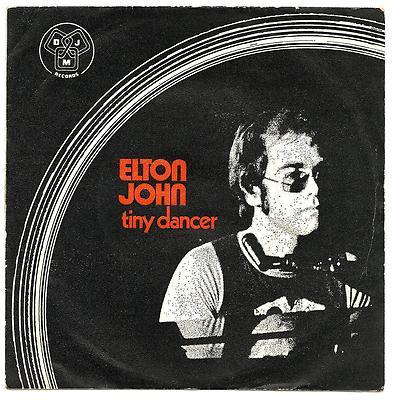
Tiny Dancer is a nice way to start your Sunday morning. Cameron Crowe did a great job of using this song in the movie Almost Famous…which I recommend highly.
The lyrics were written by Bernie Taupin, Elton’s writing partner, and were inspired by Taupin’s first trip to America. John and Taupin are from England, and Madman Across The Water was the first album they wrote after spending time in the US. Taupin and John spent a lot of time together in the ’70s; Bernie traveled with the band and would usually stand by the soundboard during shows.
The “blue jean baby, LA Lady, seamstress for the band” could have been Maxine Feibelmann, who was Bernie Taupin’s girlfriend when he wrote the song and who became his first wife in 1971. She traveled with the band on their early tours, often sewing together the costumes and fixing their clothes. Plus, on the Madman Across The Water album, it says, “With love to Maxine” under the credits for this song. Elton John even said at one point that Bernie wrote it about his girlfriend.
The song peaked at #41 in the Billboard 100, #19 in Canada, and #70 in the UK in 1972. I’m surprised it didn’t reach higher in the charts.
From Songfact
This song ripened into one of Elton John’s classics, but it didn’t even crack the Top 40 when it was released, peaking at #41 in America in 1972. In the UK and most other territories, it wasn’t released as a single.
Its chart failure has a lot to do with its 6:12 running time, making it too long for many radio stations. Also, Elton was only on the precipice of stardom at the time, his biggest hit being “Your Song” at #8. Part of the song’s enduring popularity owes to how it was never overplayed – when it comes on the radio, it seems special.
The Madman Across The Water album was much more heavily produced than Elton’s first three. It was one of his first songs with a lush string section arranged by Paul Buckmaster, who arranged the stings on many of Elton’s albums as well as songs by The Rolling Stones, Train, and Leonard Cohen. Ron Cornelius, who played guitar on Cohen’s album Songs Of Love And Hate, told us: “Buckmaster is a wonderful string arranger, he’s just one of these guys who can make an orchestra talk. In other words, if the strings aren’t saying something, it ain’t on the record.”
This is featured in the 2000 movie Almost Famous in a scene where a rock band is on tour, at each other’s throats. When “Tiny Dancer” come on in the tour bus, they all start singing along and remember how they’re connected through their love of music.
In 2011, Budweiser used the same “Tiny Dancer changes the mood” theme in a commercial that debuted on the Super Bowl. In the spot, a gruff cowboy starts a sing-a-long to the song when he gets his beer. Peter Stormare, whose film credits include Fargo and The Big Lebowski, played the cowboy.
Elton was pleasantly surprised to learn about this song’s use in Almost Famous, as it didn’t always get a great reaction when he performed it live. Speaking to Rolling Stone in 2011, Elton recalled: “Jeffrey Katzenberg called me and said, ‘There’s a scene in this film which is going to make ‘Tiny Dancer’ a hit all over again.’ When I saw it, I said, ‘Oh my God!’ I used to play ‘Tiny Dancer’ in England and it would go down like a lead zeppelin. Cameron resurrected that song.”
After it was used in Almost Famous in 2000, Elton made this a regular part of his setlists. Over the next few years, digital downloading became possible and “Tiny Dancer” was a top seller. In 2005, it earned its first Gold certification for selling 500,000 copies; in 2018, it was certified at 3 million.
Ten different backup vocalists are credited on this track, including bass player Dee Murray and drummer Nigel Olsson, both of whom became played on many of Elton’s later recordings, but not on this one: session man David Glover played bass and Roger Pope was on drums. Other backup vocalists include songwriter Roger Cook (“Long Cool Woman (In A Black Dress)” by The Hollies) and the duo Sue & Sunny (Sue Glover and Sunny Leslie).
Additional personnel are:
Davey Johnstone – acoustic guitar Caleb Quaye – electric guitar B. J. Cole – steel guitar
Madman Across The Water contains another late bloomer in Elton’s catalog: “Levon,” which with a 5:08 running time, didn’t get much airplay when it was first released, but went on to become one of his standards. Released as a US single ahead of “Tiny Dancer,” it stalled at #24.
Elton performed this as a duet with Tim McGraw to open the 2002 American Music Awards. McGraw was named Favorite Male Country Artist, but left before he could accept the award.
In 2008, DJ Ironik interpolated this for his album No Point In Wasting Tears, in a version featuring the rapper Chipmunk. This reworking, which was titled “Tiny Dancer (Hold Me Closer),” hit #3 in the UK. Elton John is featured in the video. >>
On October 28, 2010, Elton played the BBC Radio show Electric Proms, where during his performance of “Tiny Dancer,” a guy in the audience asked his girlfriend to marry him. The following evening, Elton appeared on the BBC magazine program The One Show, and the now-engaged couple were in the audience. When Elton learned of this, he insisted on them coming up to meet him. >>
When Tony Danza hosted the ESPY Awards on ESPN, Chris Berman gave him the nickname Tony “Tiny” Danza. He hated it. On the show, he claimed he wanted the nickname Tony “Extrava” Danza.
Elton John performed this with Miley Cyrus at the Grammy Awards in 2018. Four days earlier, Elton announced his farewell tour.
In February 2019, this featured in a trailer for the movie Rocketman, starring Taron Egerton as Elton John. Egerton did his own singing in the film, and the trailer proved that he could pull it off. A few days after the trailer was released, Egerton sang it with the real Elton John at Elton’s annual Oscars party. The film was released on May 31, 2019.
Tiny Dancer
Blue jean baby, L.A. Lady, seamstress for the band Pretty eyed, pirate smile, you’ll marry a music man Ballerina, you must have seen her dancing in the sand And now she’s in me, always with me, tiny dancer in my hand
Jesus freaks out in the street Handing tickets out for God Turning back she just laughs The boulevard is not that bad Piano man he makes his stand In the auditorium Looking on she sings the songs The words she knows, the tune she hums
But oh how it feels so real Lying here with no one near Only you and you can hear me When I say softly, slowly
Hold me closer, tiny dancer Count the headlights on the highway Lay me down in sheets of linen You had a busy day today Hold me closer, tiny dancer Count the headlights on the highway Lay me down in sheets of linen You had a busy day today
Blue jean baby, L.A. Lady, seamstress for the band Pretty eyed, pirate smile, you’ll marry a music man Ballerina, you must have seen her dancing in the sand And now she’s in me, always with me, tiny dancer in my hand
Oh how it feels so real Lying here with no one near Only you and you can hear me When I say softly, slowly
Hold me closer, tiny dancer Count the headlights on the highway Lay me down in sheets of linen You had a busy day today Hold me closer, tiny dancer Count the headlights on the highway Lay me down in sheets of linen You had a busy day today
The first time our band played in front of an audience…this was our opening song in the high school theater when I was 16. We thought of it as an old song but we played it in 1983…by that time it was only 8 years old.
ZZ Top came up with this song before a gig at a rodeo arena in Florence, Alabama. They were practicing a few hours before the show when Gibbons hit on the opening lick. He kept the riff going, and Dusty Hill improvised a vocal. The song was on the Fandango album.
The song peaked at #20 in the Billboard 100 and #14 in Canada in 1975.
On a humorous note… ZZ Top considered changing the lyrics and performing this as “Bush” when they were asked to play for fellow Texan George W. Bush at his inauguration party in 2001. They decided against it.
The song was named the 67th best hard rock song of all time by VH1.
From Songfacts
In a 1985 interview with Spin magazine, bass player Dusty Hill explained: “Tush, where I grew up, had two meanings. It meant what it means in New York. Tush is also like plush, very lavish, very luxurious. So it depended on how you used it. If somebody said, “That’s a tush car,’ you knew they weren’t talking about the rear and of the car. That’s like saying, ‘That’s a cherry short.’ But tush as in ‘That’s a nice tush on that girl,’ that’s definitely the same as the Yiddish word. I don’t know how we got it in Dallas. All it could have took was one guy moving down from New York.”
According to guitarist Billy Gibbons, they got the idea for the title from a song called “Tush Hog” by the Texas musician Roy Head, released in 1967.
Like “Pearl Necklace,” “Tube Snake Boogie,” and “Velcro Fly,” this song has different meanings depending on the listener interpretation. Such ambiguity keeps the songs radio-friendly while appealing to ZZ Top’s core audience.
The band pointed out to anyone who may have been offended that this song is gender neutral – it can be sung by a man or woman. Their point was proven in 1981 when the group Girlschool covered it on their album Hit & Run.
This was the first national hit for ZZ Top, who were very popular in Texas but little-known elsewhere. They usually play it in their encore.
This was ahead of its time if you consider how many “booty” songs came out years later, including “Baby Got Back,” “Rump Shaker” and “Thong Song.”
Billy Gibbons played a Les Paul guitar on this track through a 1969 Marshall Super Lead 100 amp. In the solo, he used a slide. He also used an unusual processing device called a Cooper Time Cube. Gibbons explained in Guitar World: “In a small rack-mounted can sits a small speaker right up next to maybe 50 feet of one-inch rubber tubing, which is coiled, spring-like. The sound waves actually take longer to travel, having to make these corners, creating a type of delay which is quite unlike the familiar sound of a digital delay. Some of the guitar sounds that appear to be doubled on the early albums are actually the byproduct of that oddball Cooper Time Cube.”
Tush
I been up, I been down Take my word, my way around I ain’t askin’ for much I said, Lord, take me downtown I’m just lookin’ for some tush
I been bad, I been good Dallas, Texas, Hollywood I ain’t askin’ for much I said, Lord, take me downtown I’m just lookin’ for some tush
Take me back way back home Not by myself, not alone I ain’t askin’ for much I said, Lord, take me downtown I’m just lookin’ for some tush
When John Fogerty released the Centerfield album in 1985 I was excited. He had disappeared from the music scene for 10 years. I gave up hope of ever hearing new music from him. I kept hoping he would regroup with Creedence but I didn’t know at that time of the hostile history between them. This album was highly anticipated. I bought the album and it didn’t disappoint.
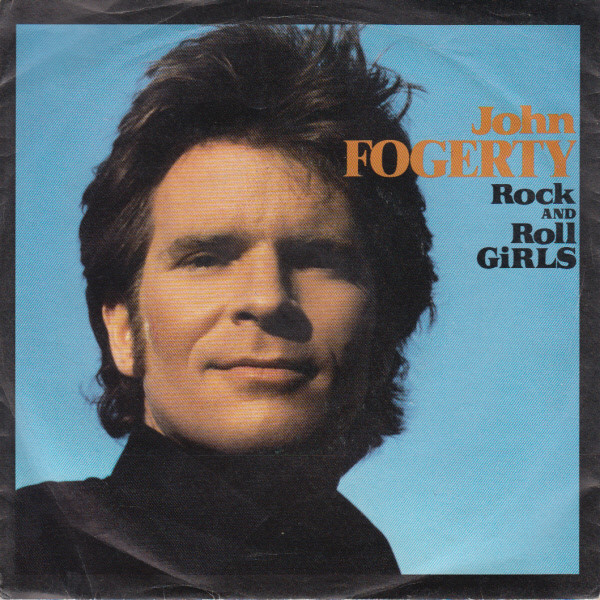
This is the second track on Fogerty’s Centerfield album, his first in 10 years. The song was inspired by his 12-year-old daughter, Laurie. Fogerty would watch her and her best friend hanging out and jokingly call them the Rock and Roll Girls.
The song peaked at #20 in the Billboard 100, #16 in Canada, #38 in New Zealand, and #83 in the UK in 1985.
Rock and Roll Girls
Sometimes I think life is just a rodeo The trick is to ride and make it to the bell But there is a place, sweet as you will ever know In music and love and things you never tell You see it in their face, secrets on the telephone A time out of time, for you and no one else
Hey, let’s go all over the world Rock and roll girls, rock and roll girls
Yeah, yeah, yeah
If I had my way, I’d shuffle off to Buffalo Sit by the lake and watch the world go by Ladies in the sun, listenin’ to the radio Like flowers on the sand, the rainbow in my mind
Hey, let’s go all over the world Rock and roll girls, rock and roll girls
Hey, let’s go all over the world Rock and roll girls, rock and roll girls
Hey, let’s go all over the world Rock and roll girls, rock and roll girls, yeah, yeah, yeah









 PowerPop... An Eclectic Collection of Pop Culture