Canadian Bachman Turner Overdrive was one of those bands in the early to mid seventies that just kept pumping out hits.
Randy Bachman and Fred Turner of Bachman-Turner Overdrive got the idea for this song when they were driving to a gig in New Orleans.
They were driving on a highway when a few truckers decided to have some fun with the musicians, who were riding in the little van from Canada. The truckers boxed them in and slowed down to a crawl. When they finally turned into a truck stop, Randy and Fred followed them with the intent of giving them a good talking to…but when they met up with the trucker Randy said “The trucker looked like a Volkswagen with a head.” The truckers had a good laugh and told the band that they needed to learn to “Let it ride.”
Bachman and Turner had never heard that expression before, but they liked the sound of it: it meant to just relax and not let things upset you. When they got to New Orleans, they wrote the song in their dressing room.
The song was on their album Bachman–Turner Overdrive II released in 1973. The album peaked at #6 in Canada and #3 in the Billboard Album Chart.
The song peaked at #2 in Canada and #23 in the Billboard 100.
Songfacts
The distinctive guitar riff in this song is something Randy Bachman came up with after listening to a classical piece by Antonin Dvorak called “Piano Concerto in D.” He transposed a chord progression he heard in the piece to guitar, which sounded great.
Bachman believes that pretty much any piece of modern music is based on something that came before. When we spoke with him in 2014, he said: “You’ve got to get them, reshape them, and hopefully they are reshaped enough that you can call it original.”
All of the background vocals were sung by Fred Turner, which caused a flanging effect that Randy Bachman liked.
Does this song’s intro sound similar to that of “Long Train Runnin'” by the Doobie Brothers? Randy Bachman thinks so. He says that the Doobie Brothers were sharing a dressing room with him and Fred Turner the night they came up with “Let It Ride,” and the Doobies nicked the riff for their song.
Let It Ride
Good bye, hard life Don’t cry would you let it ride? Good bye, hard life Don’t cry would you let it ride?
You can’t see the mornin’, but I can see the light Try, try, try let it ride While you’ve been out runnin’ I’ve been waitin’ half the night Try, try, try let it ride
And would you cry if I told you that I lied and would you say goodbye or Would you let it ride? And would you cry if I told you that I lied And would you say goodbye or would you let it ride?
Seems my life is not complete I never see you smile Try, try, try let it ride Baby you want the forgivin’ kind and that’s just not my style Try, try, try let it ride
And would you cry if I told you that I lied and would you say goodbye or Would you let it ride? And would you cry if I told you that I lied And would you say goodbye or would you let it ride?
I’ve been doin’ things worthwhile, you’ve been bookin’ time Try, try, try let it ride
And would you cry if I told you that I lied and would you say goodbye or Would you let it ride? And would you cry if I told you that I lied And would you say goodbye or would you let it ride?
Would you let it ride Would you let it ride Would you let it ride Would you let it ride
Try, try, try let it ride Try, try, try let it ride Try, try, try let it ride Try, try, try let it ride
Try, try, try let it ride Try, try, try let it ride Try, try, try let it ride Try, try, try let it ride
Try, try, try let it ride Would you let it ride? Would you let it ride? Would you let it ride? Would you let it ride?
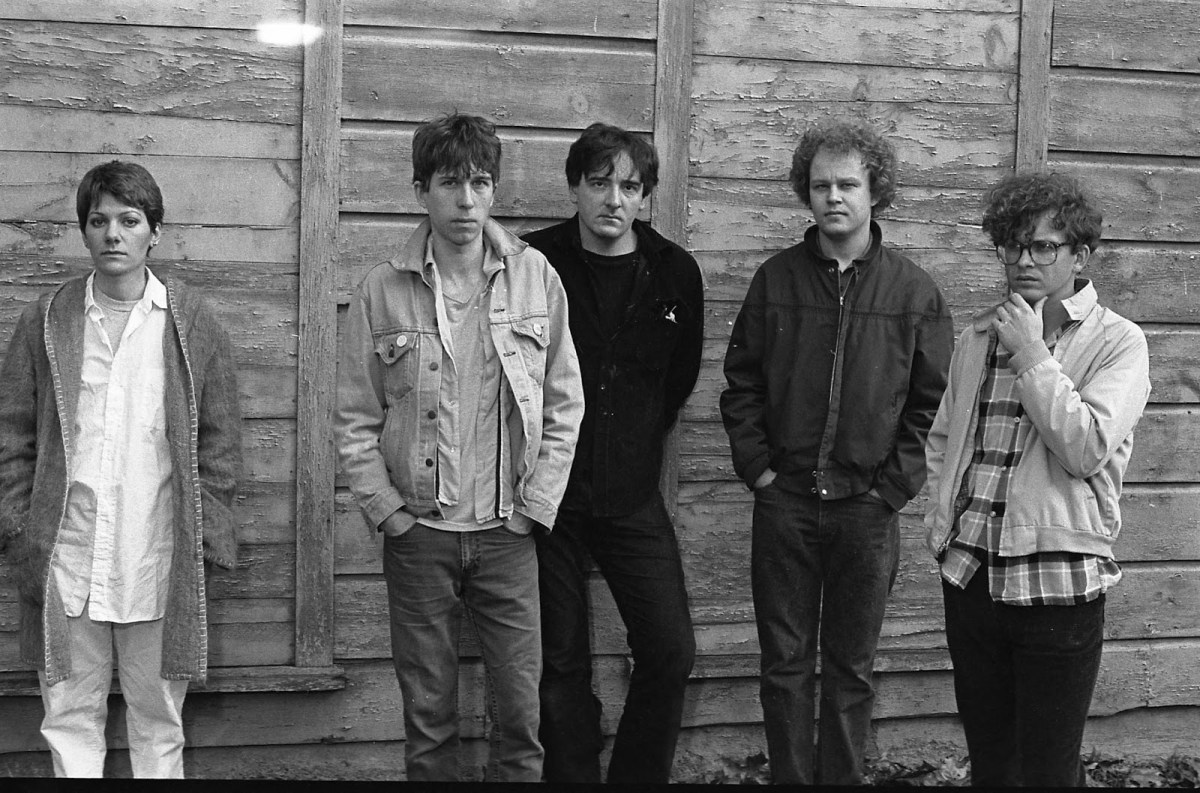
The Feelies were an inspiration to REM and many alternative bands in the 80s. They formed in 1976 and disbanded in 1992 having released four albums. The band reunited in 2008, and most recently released albums in 2011 and 2017.
The band’s name is taken from a fictional entertainment device described in Aldous Huxley’s Brave New World.
The song was released in 1986 on the album The Good Earth with REM’s Peter Buck producing. It was written by members Glenn Mercer and Bill Million. The band toured in support of the album as an opening band for Lou Reed as well as REM that year. The album was one of their most successful albums.
It certainly doesn’t have earth shaking lyrics but it’s a gorgeous over all sound and atmosphere they produce. It reminds me of something that would be on a movie soundtrack…it’s over with before you know it.
Let’s Go
Well alright Well alright Let’s go Let’s go Let’s go Let’s go All night long All night long (spoken?)
Why don’t we ? I know you? Why don’t we ? I know you? Go low (?) Low low (?) Go slow Slow All night long All night long
I love how this song starts off like I Want To Hold Your Hand and then turns into a 60s mild psychedelia that sounds familiar to ? and the Mysterians the 60s American garage rock band.
They were formed in 1979 in Rochester, New York by the former singer of the Distorted Levels, Greg Provost, an underground music journalist, with Andy Babiuk and keyboardist Orest Guran, the Chesterfield Kings offered their own version of psychedelia.
This song was released in 1984 with the B side I’ve Gotta Way With Girls. She Told Me Lies was written by Andy Babiuk, Cedrick Cona, Doug Meech, Greg Prevost, and Orest Guran.
The band, named after a defunct brand of unfiltered cigarette, was instrumental in sparking the 1980s garage band revival that launched many bands with a heavy 60’s influence that ignored the current trends.
The band was active from 1979 to 2009.
In 2000 they made a movie! From IMDB here is the description:
Its Ed Wood meets A Hard Days Night when Greg, Andy, Mike, Ted, and Jeff, together The Chesterfield Kings take on the evil Andro, a maniacal extraterrestrial bent on world domination. The cosmic showdown sends The Kings racing around the globe, from London to Rome, Las Vegas, and Honolulu in a desperate attempt to reclaim drummer Mike whose held hostage by the deranged alien. Can The Chesterfield Kings find their drummer, halt Andro’s master plan, and save the world, all in a brisk seventy minutes? You’ll have to see it to know for sure, but you can count on some killer tunes along the way including The Chesterfield Kings’ new single “Yes I Understand” and “Where Do We Go From Here” featuring lead vocals by Mark Lindsay formerly of Paul Revere and the Raiders in a cameo appearance.
I really want to see that movie.
Greg Provost:“Even when we were doing the garage stuff, we ended up sounding like the Stones. I love bands like the Sweet or Queen, but we could never sound like them. I can’t sing that good! So, we’re just going to capitalize on the kind of stuff we can sound like.”
She Told Me Lies
She told me lies She left me on my own She told me lies I’ll drive away and hide Yeah she cheated, she lied
She told me lies She hurt my pride She told me lies I’ve got tears in my eyes She told me lies I ain’t got nothing to say Yeah she left me today
She went walking to the door I won’t ever see her face no more I don’t know why she treated me bad She’s the only true love I ever had But now she’s gone
She went walking to the door I won’t ever see her face no more I don’t know why she treated me bad She’s the only true love I ever had But now she’s gone
She told me lies But now she’s gone She left me on my own I’ll drive away and hide Yeah she cheat, she lied
Yes Joe you can…When I first heard this in the early 80s on MTV it was such a relief to hear a guitar playing a rock and roll riff. It’s a simple comedic Joe Walsh song… and sometimes that is just what we need.
This is not Joe’s finest work but it’s fun and brings back memories. . After being restrained somewhat with the Eagles it was good to see him let go. This song was on the album You Bought It You Name It. The album has varied styles from reggae, new wave, and rock and roll. The song peaked at #13 on the Billboard Mainstream Rock Airplay list.
The video of Joe trying to kill a fly in a hotel room was burned into my brain as this was on heavy rotation on MTV for a little while. Joe had a deadly aim with the Fender Strat to the television…years of practice I would guess.
In the middle of then current songs such as Safety Dance, Mickey, and Mr. Roboto this minor hit was a welcomed relief to me on MTV and the radio.
I Can Play That Rock and Roll
Well that disco thing can sure get funky All them pretty songs seem too slow I like to sit and pick with them good old boys Maybe New Wave’s in, I just don’t know When the critics try to analyse the current trend I just sit back and watch ’em come and go Cos I can play that rock and roll Oh, now I can play that rock and roll Hey now, I can play that rocking rock and roll
If you, if you wanna party at the next election Only one way to go Put on a rocking rock and roll selection Turn up and vote And you can check out anytime you want Just call me Joe And I can play that rock and roll for ya… Yeah yeah yeah yeah I can play that rock and roll Yeah, now now, I, I, I, well I can play that rock and roll Well I can play that rock and roll I can play that rock and roll
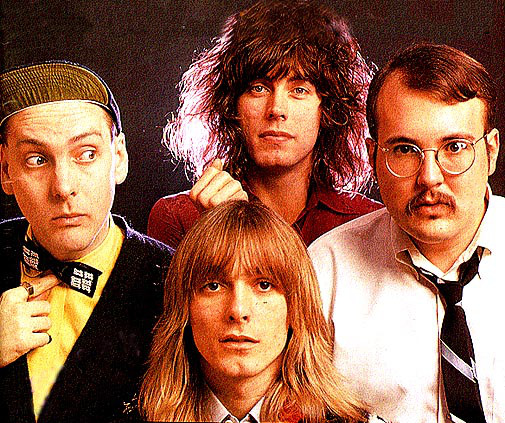
It’s been a while since we covered Cheap Trick and the time has come now. This is a power pop gem from the In Color album released in 1977. Cheap Trick is one of those bands that can cross genres with rock, pop, and heavy metal fans liking them.
This album was released the year before their Cheap Trick at Budokan album that would break their career open. This album has the studio version of I Want You To Want Me that would be a hit off of that live album
This album is a great album as well. It has Southern Girl, Hello There, and The Clock Strikes Ten just to name a few.
In Color peaked at #73 in the Billboard Album Chart in 1977 (I found no Canadian chart for this)…and #30 in Japan…a country which would be important in their career. The song was written by Rick Nielsen.
This song reminds me of a warm seventies evening around twilight cruising with your friends…with a Cheap Trick T-Shirt on of course.
Come On, Come On
Ooo I’m feelin’ good Oh so good Don’t you ruin it tonight, tonight It’s been so long since I don’t know when Ooo treat me, treat me, treat me right Don’t be like sheep and follow the flock Show me you really want to be mine
Ooo I’m feelin’ good Oh so good Don’t you ruin it tonight, tonight It’s been so long since I don’t know when Ooo treat me, treat me, treat me right Don’t be like sheep and follow the flock Show me you really want to be mine
Come on, come on I know you can do it Come on, come on There ain’t nothing to it Come on, come on I know you believe me Come on, come on You can see the real me Every day, every day I need you, I want you Come a little closer to my face Oh little girl I need you now
The song was co-written by brothers Angus and Malcolm Young, and lyricist Bon Scott. The title track of and the third track on the band’s fourth album, it was released as a single in October 1977 backed by “Problem Child.”
George Young (Angus and Malcolm’s brother), acted as producer alongside partner and former bandmate Harry Vanda. In a familiar writing and recording process that was fast, furious and inspired, the entire album was completed in a matter of weeks.
The music video for “Let There Be Rock” was filmed in July 1977. It was recorded in the Kirk Gallery church in Surry Hills, New South Wales and featured Bon Scott, Angus Young, Malcolm Young, Phil Rudd, and Cliff Williams, who replaced Mark Evans as the band’s bassist shortly after the Let There Be Rock album was released.
Angus Young:“I remember the amp literally exploded during the recording session. My brother watched it with crazed eyes, and he told me ‘Come on! Keep on playing!’ while the stuff was steaming.”
From Songfacts
Running to a shade over 6 minutes, it was produced by Harry Vanda and George Young.
In spite of its appearing to be nothing more than a typically mindless rock anthem, this is actually quite a sophisticated track:
In the beginning
Back in 1955
The white man had the schmaltz
The black man had the blues
is an allusion to the birth of rock ‘n’ roll. The genre developed from boogie woogie; the first rock ‘n’ roll song is generally acknowledged to be “Rocket 88,” to which Ike Turner was a very unlikely contributor considering the way his music was to develop, but then the two men who gave rock ‘n’ roll to the world in the first instance were if anything even more unlikely. There was the white man – who had performed as Yodelling Bill Haley – and the black man, a qualified beautician named Chuck Berry. Both Haley’s “Rock Around The Clock” and Berry’s “Maybellene” were released in 1955, and as they say, the rest is history.
An anthem for the band, AC/DC has played this song at every concert since 1978. They often play it very fast and the solo can be extended all the way to 20 minutes as Angus rises above the stage and does the “spasm.”
Let There Be Rock
In the beginning Back in nineteen fifty five Man didn’t know about a rock ‘n’ roll show And all that jive The white man had the smoltz The black man had the blues No one knew what they was gonna do But Tchaikovsky had the news He said
Let there be sound, and there was sound Let there be light, and there was light Let there be drums, and there was drums Let there be guitar, and there was guitar Let there be rock
And it came to pass That rock ‘n’ roll was born All across the land every rockin’ band Was blowing up a storm An the guitar man got famous The businessman got rich And in every bar there was a super star With a seven year itch There were fifteen million fingers Learning how to play And you could hear the fingers picking And this is what they had to say
Let there be light Sound Drums Guitar Let there be rock
One night in a club called the shaking hand There was a ninety two decibel rocking band The music was good and the music was loud And the singer turned and he said to the crowd
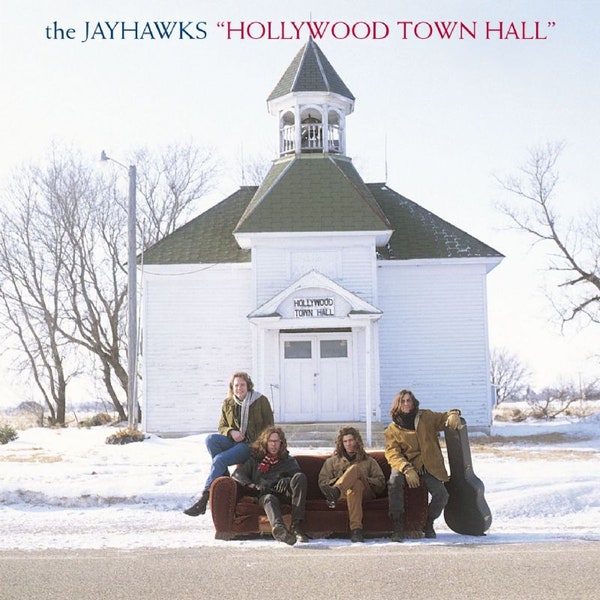
Ever since I heard this band on our alternative radio station in Nashville…Lightning 100 I’ve liked them. The Jayhawk’s writing and voices won me over with songs like Blue and I’m Gonna Make You Love Me.
This song opens up their Hollywood Town Hall album. The album peaked at #192 in the Billboard Album Charts and #11 in the Top Heatseekers Charts.
Benmont Tench, Charley Drayton, and Nicky Hopkins plays on the album with the Jayhawks.
The Jayhawks are an American alternative country and country rock band that emerged from the Minneapolis–Saint Paul music scene in the mid 80s. Minneapolis had a strong scene for bands in the 80s. The Replacements, Husker Du, Soul Asylum, and of course the big one…Prince.
The song, like most of The Jawhawks early cuts, is credited to the band’s guitarist Gary Louris and frontman Mark Olson.
Gary Louris: I didn’t know there was a song called “Waiting for the Sun,” I was not a Doors fan. I like them now, but I didn’t know there was a song called that. Maybe in my subconscious I did.
From Songfacts
According to Mark Derning of Allmusic.com, the song details, “a man who has lost his love under unpleasant circumstances and has hit the road, looking for something better from life and hoping a fair deal from the fates.”
Waiting For The Sun
I was waiting for the sun Then I walked on home alone What I didn’t know Was he was waiting for you to fall
So I never made amends For the sake of no one else For the simple reason That he was waiting for you to fall
It was not lost on me It was not lost on me Walkin’ on down the road Looking for a friend to handout Somethin’ might ease my soul
So I kept my spirits high Entertaining passers-by Wrapped in my confusion While he was waiting for you to fall
It was not lost on me It was not lost on me Walkin’ on down the road Looking for a friend to handout Somethin’ might ease my soul
It was not lost on me It was not lost on me Walkin’ on down the road Walkin’ on down the road Walkin’ on down the road Walkin’ on down the road
I got into Bessie Smith from listening to Janis Joplin and reading about her. Bessie’s voice sends chills up my spine…that is my litmus test. This particular song grabs me because of Smith’s voice and vibe of the recording. She sings it, means it, and she lived it. The sound of the record and her voice is just unbeatable. Yes we have digital now but digital could not give you this sound.
If you are not familiar with her…do yourself a favor and check her out.
I can imagine Dorothy Parker, F. Scott Fitzgerald, and Clara Bow all listening to this in the 20s and 30s.
This song was written by Jimmy Cox in 1923 just as the roaring twenties were taking off. There are many versions but Bessie Smith recorded hers in 1929 with a small trumpet section. It was released right before the stock market crashed and the start of the Great Depression.
Many artists (Peter, Paul and Mary, The Chad Mitchell Trio, Dave Van Ronk, Otis Redding, Popa Chubby, The Allman Brothers Band, Rod Stewart, Janis Joplin, B.B. King, Nina Simone, Sam Cooke, Bobby Womack, Katie Melua, Dutch Tilders, Steve Winwood with The Spencer Davis Group, Emmy Rossum, Leslie Odom Jr.) have covered this song but Bessie’s is my go to version.
She was born in Chattanooga, Tennessee, on April 15, 1894. She lost her dad while she was an infant and her mom when she was 7-8 years old. She was raised by her tough older sister. To help support her orphaned siblings, Bessie began her career as a Chattanooga street musician, singing in a duo with her brother Andrew to earn money to support their poor family.
She is credited with recording more than 160 songs between 1923 and 1933. Smith performed on stage throughout the southern United States and recorded with such jazz greats as Benny Goodman, Louis Armstrong, and Coleman Hawkins.
Before the Great Depression, Bessie was the highest paid black entertainer in the world, collecting as much as two thousand dollars a week to perform. She was accompanied by great musicians such as Louis Armstrong, Lonnie Johnson, and Benny Goodman.
This song was recorded New York City, May 15, 1929.
Mahalia Jackson, Janis Joplin and Norah Jones who have all given her credit as their inspiration.
On September 26, 1937, Smith was severely injured in a car accident while traveling from a concert in Memphis to Clarksdale, Mississippi, with her companion Richard Morgan. She was taken to a hospital, where she died.
By the time of her death, Bessie was known around the world appear with the best players of the day at theaters coast to coast. Bessie’s voice and showmanship drove her from poverty to international fame as a singer of blues tunes, many of which she wrote and co-wrote.
Bessie Smith has been inducted into the Grammy Hall of Fame, winning posthumous awards for her 1923 single “Downhearted Blues,” 1925 single “St. Louis Blues” with Louis Armstrong, and a 1928 single “Empty Bed Blues.” Smith has also been honored with a Grammy Lifetime Achievement Award, was inducted into the Rock and Roll Hall of Fame, the Blues Hall of Fame, and the Big Band and Jazz Hall of Fame.
Janis Joplin:“Back in Port Arthur, I’d heard some Lead Belly records, and, well, if the blues syndrome is true, I guess it’s true about me…So I began listening to blues and folk music. I bought Bessie Smith and Odetta records, and one night, I was at this party and I did an imitation of Odetta. I’d never sung before, and I came out with this huge voice.”
Nobody Knows You’re When You’re Down and Out
Once I lived the life of a millionaire Spending my money, I didn’t care I carried my friends out for a good time Bying bootleg liquor, champagne and wine
Then I began to fall so low I didn’t have a friend, and no place to go So if I ever get my hand on a dollar again I’m gonna hold on to it till them eagle’s green
Nobody knows you when you down and out In my pocket not one penny And my friends I haven’t any But If I ever get on my feet again Then I’ll meet my long lost friend It’s mighty strange, without a doubt Nobody knows you when you down and out I mean when you down and out
Mmmmmmmm…. when you’re down and out Mmmmmmmm… not one penny And my friends I haven’t any Mmmmmmmm… Well I felt so low Nobody wants me round their door Mmmmmmmm… Without a doubt, No man can use you wen you down and out I mean when you down and out
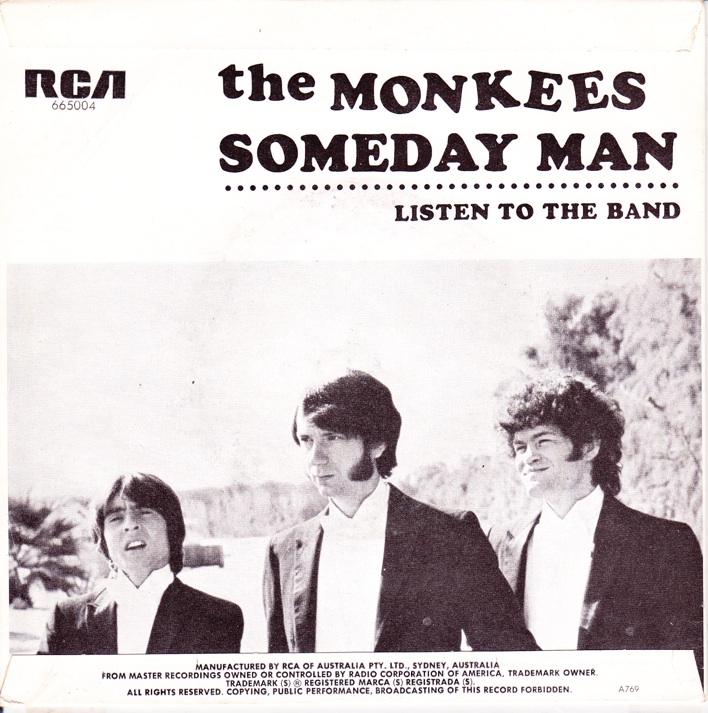
Buddy Miles and the Monkees! Below in one of the clips of this song.
This was the last song they released that I liked…it was at the time Peter Tork quit. The band I was in…this was the lone Monkee song we would do and it always got a good response.
This song was released as a single in 1969. It was the first time Michael Nesmith would sing on a Monkee’s A side…and he was long overdue. He also wrote it and produced it. He started to write it while in Nashville at RCA studios. The song features a brass section that plays during the instrumental section as if the brass were the band.
The Monkees went into MGM studios in November of 1968 to tape their NBC television special 33 1/3 Revolutions Per Monkee, they were just two years away from their commercial peak… selling records by the millions, a hit TV show and battling with the other bands for chart supremacy. But their show went off the air that March, and their psychedelic movie Head flopped in theaters just a couple weeks earlier. They were on the way down.
Their most recent LP, The Birds, The Bees & The Monkees, peaked at #3 on the Billboard Album charts and generated the single “Daydream Believer.” It was enough to get NBC to green light a TV special, though wheels were in motion before critics got a look at Head. The Monkees could have created a television in the same zany, carefree style of their old show in an attempt to win back some old fans, but they decided to double down on psychedelic.
The show was a psychedelic mess that did not restart their career. At this time Peter Tork had grown tired of it all and it was his last appearance with the band. The one clip that was worth it was the clip of this song. Buddy Miles comes in on drums in the middle and really rocks it out.
Listen To The Band
Hey, hey, mercy woman plays a song and no one listens, I need help I’m falling again.
Play the drum a little louder, Tell me I can live without her If I only listen to the band.
Listen to the band!
Weren’t they good, they made me happy. I think I can make it alone.
Oh, mercy woman plays a song and no one listens, I need help I’m falling again.
Play the drum a little bit louder, Tell them they can live without her If they only listen to the band.
Listen to the band!
Now weren’t they good, they made me happy. I think I can make it alone.
Oh, woman plays a song and no one listens, I need help I’m falling again.
C’mon, play the drums just a little bit louder, Tell us we can live without her Now that we have listened to the band.
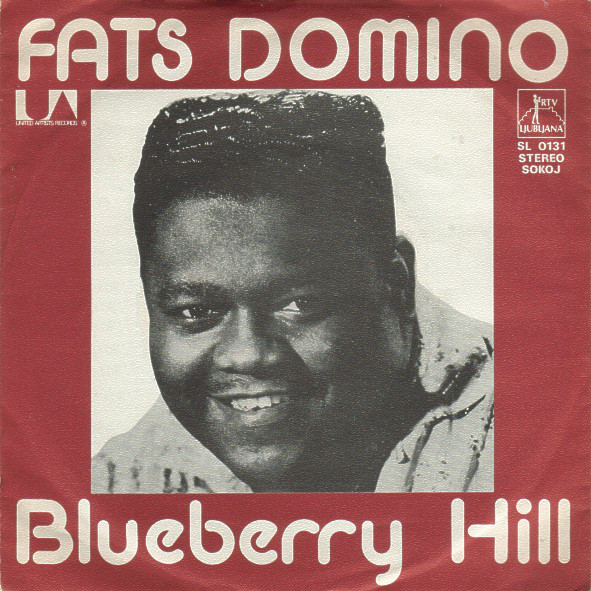
Domino’s real name was Antoine Domino. He placed 37 songs in the US Top 40. Blueberry Hill” was his biggest hit and best seller, spending 11 weeks at #1 on the R&B chart.
When I hear this song I automatically think of Happy Days when Ritchie finds a date. Fats wasn’t as flashy as some of his peers but he was a terrific piano player, performer, and singer.
This now rock classic was written by Vincent Rose, Al Lewis and Larry Stock for the 1940 Western The Singing Hill before they decided it was good enough to be released commercially. The song was used in the movie, where it was heard for the first time performed by Gene Autry.
Larry Stock (wrote the lyrics): “One important publisher turned down ‘Blueberry Hill,’ because, he claimed, blueberries don’t grow on hills. I assured him I had picked them on hills as a boy, but nothing doing. So Chappell And Company bought the song and another hit was born.”
Ray Manzarek of The Doors has said that the baseline to “Light My Fire” was based on this song.
The band couldn’t get a full take of this song they were happy with, so the engineer, Bunny Robyn pieced together the final version from many fragmentary takes.
From Songfacts
Things are going well at the beginning of this song, as the singer has found his true love, enjoying a special moment on Blueberry Hill. It takes a sad turn though, when she leaves him:
Though we’re apart You’re part of me still For you were my thrill On Blueberry Hill
Many artists recorded this before Domino, mostly orchestras. In 1940, it was a #2 US hit for Glenn Miller. That same year, Russ Morgan, Gene Krupa and Kay Kyser all recorded it with their orchestras. Louis Armstrong did the song with Gordon Jenkins and his orchestra in 1949; this version was re-released in 1956, going to #29 in America. Other artists to cover the song include Elvis Presley (on his 1957 album Loving You), The Beach Boys, Andy Williams, Kiki, Cliff Richard, Bruce Cockburn.
Fats Domino, who knew the song through Louis Armstrong’s 1949 version, recorded this at Master Recorders in Los Angeles at a session in which he ran out of material to tape. Domino insisted on recording the song over the vehement objections of producer-arranger Dave Bartholomew, who felt the song been done too many times already. Domino came up with the definitive version though, featuring his famous piano triplets and sly Cajun accent.
Personnel on this track:
Dave Bartholomew – trumpet Walter “Papoose” Nelson – guitar Herb Hardesty – tenor sax Lawrence Guyton – bass Cornelius Coleman – drums
Domino Russian Prime Minister Vladimir Putin performed this song on December 10, 2010 at a charity event in front of an audience of international film and television celebrities. Videos of his performance quickly went viral worldwide. Putin’s spokesman said the former KGB chief learned the lyrics to the song as part of his English language studies.
Blueberry Hill
I found my thrill On Blueberry Hill On Blueberry Hill When I found you
The moon stood still On Blueberry Hill And lingered until My dream came true
The wind in the willow played Love’s sweet melody But all of those vows you made Were never to be
Though we’re apart You’re part of me still For you were my thrill On Blueberry Hill
The wind in the willow played Love’s sweet melody But all of those vows you made Were never to be
Though we’re apart You’re part of me still For you were my thrill On Blueberry Hill
This song kicked off Brucemania in 1984. Born in the USA along with Thriller and Purple Rain ruled in the 80s.
This one is not my favorite off the album but I did like it. Considering the times it was the best sounding song to lead off with. All together Born In The USA had 7 top ten singles….I didn’t know what to think at first…I liked this and Cover me but it was when the title track was released…that is when I was sold when I heard Springsteen sing Born in the U.S.A..
This song peaked at #2 in the Billboard 100, #3 in Canada, #28 in the UK, and #2 in New Zealand.
This was the last song written and recorded for the Born In The U.S.A.. His manager Jon Landau didn’t hear a lead off single from the album at the time and asked him to write something that could be that song. Bruce was not in the mood for hearing this…he said “Look, I’ve written 70 songs (he had written 70 songs for the album). You want another one, you write it.” After giving it a while he sat in his hotel room and wrote about himself at that time…about the isolation that fame had given him since The River.
The next day Landau had the song he was looking for…so for the first time Bruce set out to make a video. It was directed by Brian DePalma, the video was filmed during Springsteen’s concert at the St. Paul Civic Center in Minnesota on June 29, 1984. Courtney Cox, who was planted in the audience, got the role of the adoring fan in the front row who gets to dance on stage with Bruce. Many Springsteen fans were upset that he didn’t get a true fan from the audience.
Springsteen did “Dancing In The Dark” midway through the show, so by that time he was warmed up and the crowd was worked into a frenzy. To get the shots, Springsteen did the song twice, with DePalma repositioning his cameras after the first take.
This song won Springsteen his first Grammy. In 1985, it got the award for Best Male Vocal… also in Rolling Stone reader’s poll, this was voted Single of the Year in 1985.
From Songfacts
Springsteen wrote this about his difficulty writing a hit single and his frustration trying to write songs that will please people. His struggles pour out in the lyric, where he feels like a hired gun dying for some action. He even addresses an industry trope, which he surely heard many times before:
They say you gotta stay hungry hey baby I’m just about starving tonight
Ironically, the song was a hit single – the biggest of his career in terms of US chart position. (Although Manfred Mann’s cover of Springsteen’s “Blinded by the Light” made #1.)
Springsteen was doing just fine, with six successful albums in his discography and an unparalleled concert reputation. He had over 70 songs written for Born In The U.S.A., but Landau wanted a guaranteed hit to ensure superstar status for Springsteen. “Dancing In The Dark” provided just that spark; released as the first single (the only one issued ahead of the album), it started the fire that was Born In The U.S.A. Springsteen’s songs were soon all over the radio, and he found a whole new audience. Unlike many rock artists who are accused of selling out when they hit it huge, Springsteen’s star turn was welcomed (for the most part) by his faithful, who had spent many years spreading his gospel.
The video was Springsteen’s first to get heavy airplay on MTV, and it introduced him to a new, mostly younger audience. As for Cox, a few years later she landed a role on the sitcom Family Ties, and went on to star in the wildly popular TV series Friends.
The lyric is rather bleak, as Springsteen sings lines like, “Man I ain’t getting nowhere, I’m just living in a dump like this.” It doesn’t have a happy ending, but by the end of the song, he seems intent on taking some action, looking for just a tiny bit of inspiration to set him on his path – after all, you can’t start a fire without a spark.
By the last verse, there’s a touch of existentialism, as he puts things in perspective: “You can’t start a fire worrying about your little world falling apart.”
The deep, philosophical message was lost on most listeners who were entranced by the catchy beat (the video didn’t exactly push a deeper meaning either). Springsteen got a similar reaction to his song “Born In The U.S.A.,” where the message was lost in the music. That one bothered him, as the song is about the plight of a Vietnam veteran returning home to hostilities and disregard.
This song sent the Born In the U.S.A. album on a Thriller-like run of chart success, with the next six singles all reaching the US Top 10. The tally, in order of release:
“Cover Me” (#7) “Born In The U.S.A.” (#9) “I’m On Fire” (#6) “Glory Days” (#5) “I’m Goin’ Down” (#9) “My Hometown” (#6)
The original concept for the music video was to have Springsteen literally dancing in the dark – shot against against a black background. Jeff Stein was the director, and Daniel Pearl, famous for his cinematography on “Every Breath You Take,” was the director of photography. Pearl and Springsteen got in a kerfuffle over how he should be shot, with Springsteen wanting a filter and Pearl insisting on hard lighting. Bruce walked out after a few takes, and ended up shooting the video with Brian DePalma. A few years later, despite his efforts to avoid Springsteen, Pearl found himself working on the “Human Touch” video. Pearl says that Springsteen apologized for the “Dancing In The Dark” debacle and asked to work with him again, as he realized Pearl was right about the lighting.
The single was released on May 3, 1984 and reached its US chart peak of #2 on June 30, which was before the video hit MTV. That week, “The Reflex” by Duran Duran held it out of the top spot; with MTV support, “Dancing In The Dark” looked like a sure bet for #1, but then Prince and his crying doves showed up, ruling MTV and the airwaves, and keeping Springsteen’s song at #2 for the next three weeks.
In 1985, Tina Turner performed this on her Private Dancer tour. Her version appears on the album Tina Turner – Live in Tokyo.
A rather intriguing cover of this song was by the group Big Daddy, who hit #21 UK with their version. The concept behind Big Daddy is that a band crash landed on an island while out on tour in the late ’50s or early ’60s, and when they were rescued in the early ’80s, tried to revive their career. Music had changed drastically by then, so they started covering ’80s music in the only style they knew how to play. The result is a kind of modern Pat Boone sound.
According to Rolling Stone, this is is the only Springsteen song that Bob Dylan ever covered, and he only did it once: at the club Toad’s Place in New Haven, Connecticut, on the night of January 12th, 1990. Dylan flubbed most of the words and the performance was so rough that most people in the audience didn’t seem to realize what song it was until the band hit the chorus.
Dancing In The Dark
I get up in the evening and I ain’t got nothing to say I come home in the morning I go to bed feeling the same way I ain’t nothing but tired Man I’m just tired and bored with myself Hey there baby, I could use just a little help
You can’t start a fire You can’t start a fire without a spark This gun’s for hire even if we’re just dancing in the dark
Message keeps getting clearer radio’s on and I’m moving ’round the place I check my look in the mirror I want to change my clothes, my hair, my face Man I ain’t getting nowhere I’m just living in a dump like this There’s something happening somewhere baby I just know that there is
You can’t start a fire you can’t start a fire without a spark This gun’s for hire even if we’re just dancing in the dark
You sit around getting older there’s a joke here somewhere and it’s on me I’ll shake this world off my shoulders come on baby this laugh’s on me
Stay on the streets of this town and they’ll be carving you up alright They say you gotta stay hungry hey baby I’m just about starving tonight I’m dying for some action I’m sick of sitting ’round here trying to write this book I need a love reaction come on now baby gimme just one look
You can’t start a fire sitting ’round crying over a broken heart This gun’s for hire Even if we’re just dancing in the dark You can’t start a fire worrying about your little world falling apart This gun’s for hire Even if we’re just dancing in the dark Even if we’re just dancing in the dark Even if we’re just dancing in the dark Even if we’re just dancing in the dark Hey baby
I had to post this song. Even Eagle fans will admit Henley can be a bit pretentious…that’s not a put down…it just is.
You and your kind Are killing rock and roll It’s not because you are O L D It’s cause you ain’t got no soul!
Don Henley Must Die released in 1990 and it’s off of his album Otis. The song peaked at #20 in the Modern Rock Charts.
According to Nixon, Henley joined Nixon onstage one night in a small club before the Eagles reunion and helped Nixon sing it. This is a quote from Nixon: “There I was, the king of bullshit, completely flabbergasted,” “I took my guitar off, put it back on, did that like three times, then got on the mic and said, ‘Don, do you want to debate? Do you want to fist fight?’ He was shit-faced and he goes, ‘I want to sing that song, especially the part about not getting together with Glenn Frey!'”
When the chorus hit, Nixon let Henley take the lead: “Don Henley must die, don’t let him get back together with Glenn Frey!”
“He was beltin’ that shit out, screaming like he was Johnny fuckin’ Rotten,”
..Don Henley Must Die…
Don Henley Must Die
This is the sound of my brain.
Then I said, this is the sound of my brain on Don Henley!
Then I said, 1 2 3 4…
He’s a tortured artist Used to be in the Eagles Now he whines Like a wounded beagle Poet of despair! Pumped up with hot air! He’s serious, pretentious And I just don’t care Don Henley must die! Don’t let him get back together With Glenn Frey! Don Henley must die!
Turn on the TV And what did I see? This bloated hairy thing Winning a Grammy Best Rock Vocalist? Compared to what? But your pseudo-serious Crafty Satanic blot Don Henley must die! Put a sharp stick in his eye! Don Henley must die! Yea yea yea
Quit playin’ that crap You’re out of the band
I’m only kidding Can’t you tell? I love his sensitive music Idiot poetry, swell You and your kind Are killing rock and roll It’s not because you are O L D It’s cause you ain’t got no soul! Don’t be afraid of fun Loosen up your ponytail! Be wild, young, free and dumb Get your head out of your tail Don Henley must die! Don’t let him get back together With Glenn Frey!
Don Henley must die! Put him in the electric chair Watch him fry! Don Henley must die Don Henley must die No Eagles reunion The same goes for you, Sting!
Welcome to Pub Rock! The Motors were a UK band in the 1970s. This song was their most successful song…peaking at #4 in the UK. All together they had 7 songs in the top 100 in the UK.
lEx-Duck Deluxe members Nick Garvey and Andy McMaster formed the Motors in 1977 with Rob Henry…soon to be replaced by Bram Tchaikovsky and drummer Ricky Slaughter.
This band could get in a groove. I posted something on Bram Tchaikovsky a couple of years ago and knew he was in this band but never checked him out until fellow blogger CB mentioned them. While their peers were in disco, The Motors were finding their groove in rock and roll. Bram would have an international hit with Girl Of My Dreams. His real name is Peter Bramall and he took the stage name of Bram Tchaikovsky…it was also the name of the group he fronted in the late 70s & early 80s after The Motors.
After they released their 1980 album Tenement Steps they broke up. The band released 3 albums in all. This song is off of their Approved By Motors album released in 1978.
When their second greatest hits (Airport: The Motors’ Greatest Hits) was released in 1995 and renewed interest in the band.
Airport
So many destination faces going to so many places Where the weather is much better And the food is so much cheaper. Well I help her with her baggage for her baggage is so heavy I hear the plane is ready by the gateway to take my love away. And I can’t believe that she really wants to leave me and it’s getting me so, It’s getting me so.
Airport – Airport, you’ve got a smiling face, you took the one I love so far away Fly her away – fly her away – airport. Airport, you’ve got a smiling face You took my lady to another place Fly her away – fly her away.
The plane is on the move, And the traces of the love we had in places Are turning in my mind – how I wish I’d been much stronger For the wheels are turning faster as I hear the winds are blowing and I know that she is leaving On the jet plane way down the runaway. And I can’t believe that she really wants to leave me – and it’s getting me so, It’s getting me so.
A nice guitar riff to start this song off by Throwing Muses.
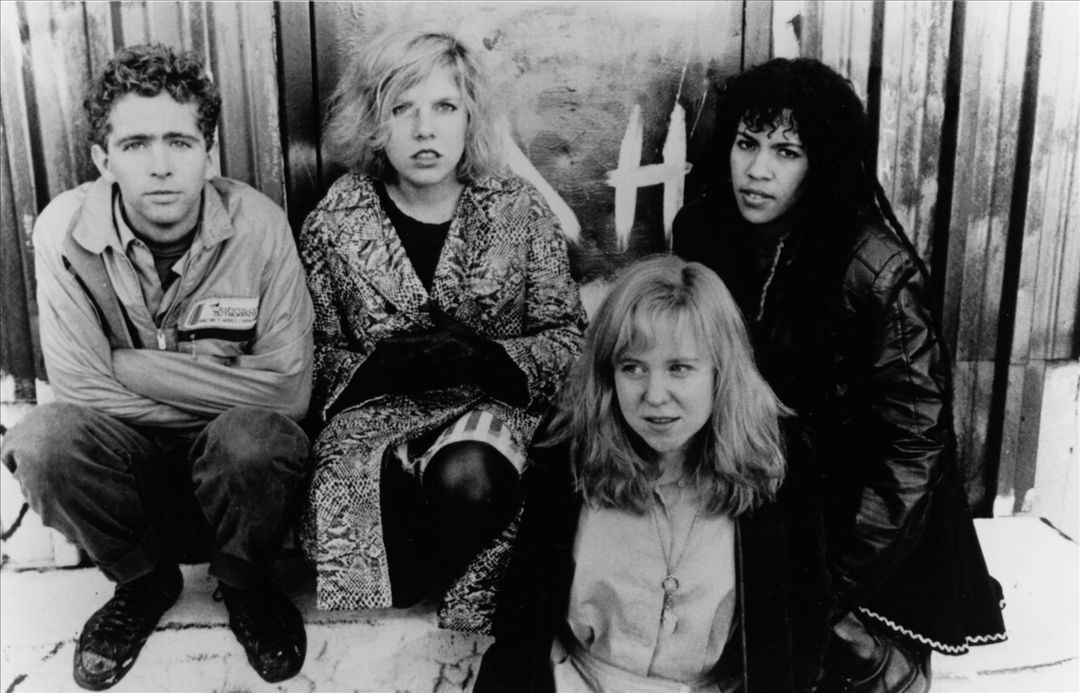
The band was formed in 1981 by step-sisters Kristin Hersh (vocals/guitar) and Tanya Donelly (guitar/vocals), who were both at high school at the time. Initially called Kristin Hersh And The Muses, the line-up was completed by bassist Leslie Langstons and drummer David Narcizo.
They lived close to Providence, Boston and New York and so they could play a club quite often in both places. They had a lot of colleges and some local newspapers, magazines, and radio stations to promote them.
They were the first American band signed to the British 4AD label. An eclectic blend of jerky guitar pop and songwriter Kristin Hersh’s eccentric vocals, the early work by Throwing Muses was quite different than their peers. A year later 4AD would sign Pixies based in part on the band’s connection to Throwing Muses, and by the mid-1990s much of the label’s roster was made up of American bands.
This song was on their self-titled album Throwing Muses in 1986. The song was written by guitar player and singer Kristin Hersh. She wrote every song on the album except one.
Their latest album Sun Racket was released on Fire Records on September 4, 2020.
Kristin Hersh: “We didn’t mean to ever be strange. I guess we were because everybody says we were,” “It’s almost like speaking your own language. I find we kept people out of our world by doing that.”
Hate My Way
I could be a smack freak And hate society I could hate God And blame Dad I might be in a Holocaust Hate Hitler Might not have a child And hate school I could be a sad lover And hate death I could be a neuro And hate sweat No I hate my way
I make you in to a song I can’t rise above the church I’m caught in a jungle Vines tangle my hands I’m always so hot and it’s hot in here I say it’s all right
My pillow screams too But so does my kitchen And water And my shoes And the road
I have a gun in my head I’m invisible I can’t find the ice
A slug I’m TV I hate
A boy, he was tangled in his bike forever A girl was missing two fingers Gerry Ann was confused Mr. Huberty Had a gun in his head
So I sit up late in the morning And ask myself again How do they kill children? And why do I wanna die? They can no longer move I can no longer be still
We are gonna lighten up today with a song from Mojo Nixon. Hope all of you are doing well on this holiday weekend… look around…Elvis is everywhere.
I was commenting with Paul and he brought up Mojo Nixon and it’s probably been since the 1980s that I heard him. A popular Nashville rock station WKDF in the 80s would play this song and a few more by Mojo.
Mojo Nixon (Neill Kirby McMillan, Jr) started in the early eighties and he teamed up with Skid Roper (Richard Banke). Mojo and Skip Roper wrote this song.
This song was released in 1987 and it was on his album Bo-Day-Shus!!!. Mojo has some fun music. I forgot about his songs until Paul pointed me toward him again and they came back to me. I’ll post one tomorrow also.
Nixon announced that he retired from the music business in 2004, playing his last live show in Austin, Texas. In 2009 he announced his “unretirement” and for a short time let anyone download his albums for free with this statement:
Can’t wait for Washington to fix the economy. We must take bold action now. If I make the new album free and my entire catalog free it will stimulate the economy. It might even over-stimulate the economy. History has shown than when people listen to my music, money tends to flow to bartenders, race tracks, late night greasy spoons, bail bondsman, go kart tracks, tractor pulls, football games, peep shows and several black market vices. My music causes itches that it usually takes some money to scratch
Elvis Is Everywhere
When I look out into your eyes out there When I look out into your faces You know what I see? I see a little bit of Elvis In each and every one of you out there
Lemme tell ya… Weeeeeeeeeellllllll… Elvis is everywhere Elvis is everything Elvis is everybody Elvis is still the king
Man o man What I want you to see Is that the big E’s Inside of you and me
Elvis is everywhere, man! He’s in everything He’s in everybody…
Elvis is in your jeans He’s in your cheesburgers Elvis is in Nutty Buddies! Elvis is in your mom!
He’s in everybody He’s in the young, the old The fat, the skinny The white, the black The brown and the blue People got Elvis in ’em too
Elvis is in everybody out there Everybody’s got Elvis in them! Everybody except one person that is… Yeah, one person! The evil opposite of Elvis The Anti-Elvis
Anti-Elvis got no Elvis in ’em Lemme tell ya
Michael J. Fox has no Elvis in him
And Elvis is in Joan Rivers But he’s trying to get out, man! He’s trying to get out! Listen up Joanie Baby!
Elvis is everywhere Elvis is everything Elvis is everybody Elvis is still the king
Man o man What I want you to see Is that the big E’s Inside of you and me
Man, there’s a lot of unexplained phenomenon Out there in the world Lot of things people say What the heck’s going on?
Let me tell ya!
Who built the pyramids? ELVIS! Who built Stonehenge? ELVIS!
Yeah, man you see guys Walking down the street Pushing shopping carts And you think they’re talking to allah They’re talking to themself Man, no they’re talking to ELVIS! ELVIS! ELVIS!
You know whats going on in that Bermuda Triangle? Down in the Bermuda Traingle Elvis needs boats Elvis needs boats Elvis Elvis Elvis Elvis Elvis Elvis