The Prisoner – Free For All

October 20, 1967 Season 1 Episode 4

If you want to see where we are…HERE is a list of the episodes.

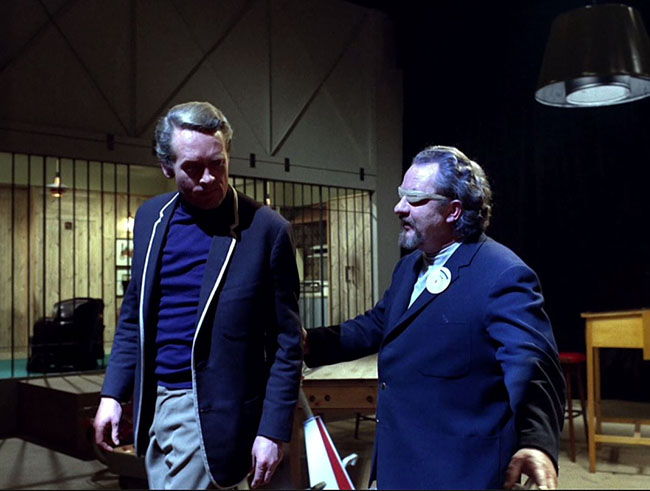
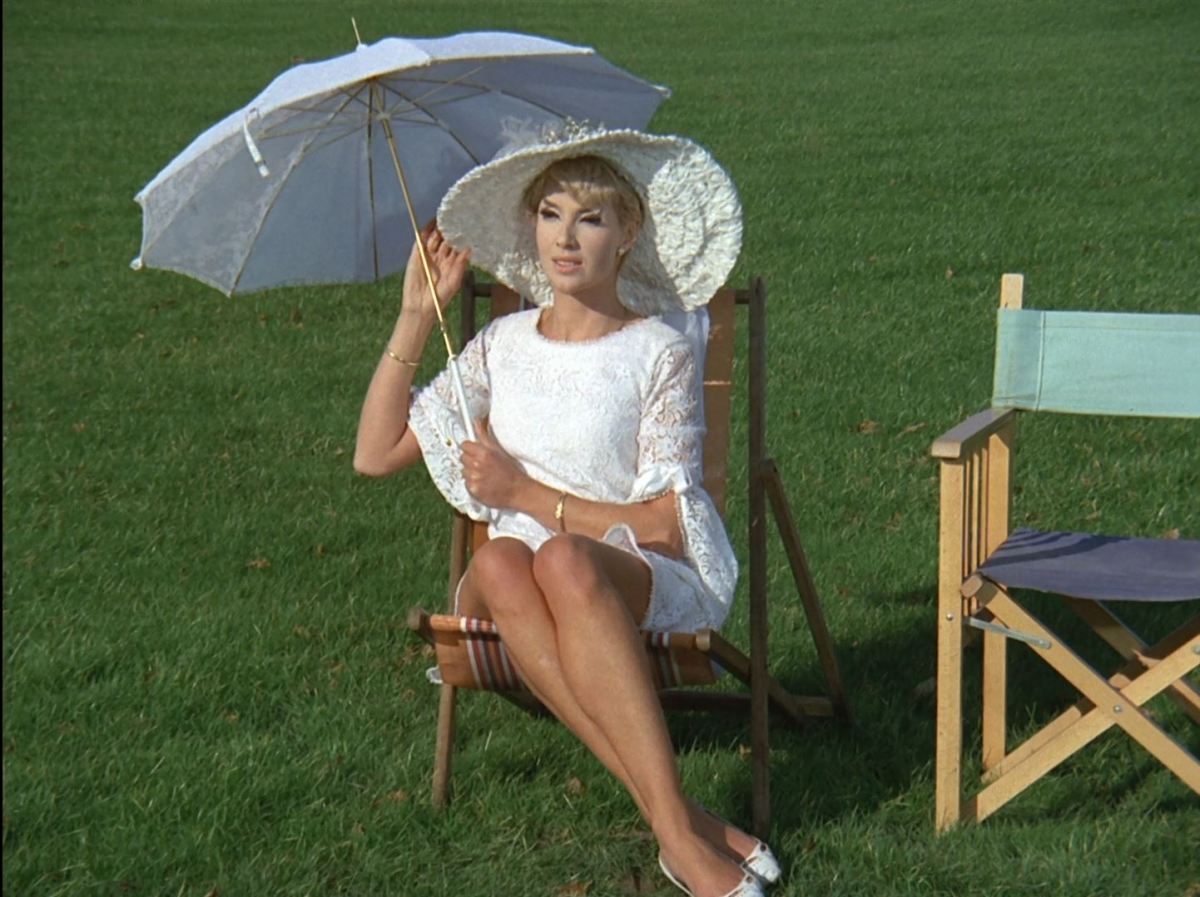
This episode can become confusing quickly if you don’t pay attention. The editing in parts of this is fast. This one shows off the Village really well with its pastel colors. Number 6 is tested more in this episode than in the other ones so far. You can tell in parts that they are getting to him mentally.

Number Six is suddenly treated less like a prisoner and more like a public figure when the Village announces an election for Number Two. He is encouraged to stand as a candidate himself. It sounds like a chance to speak out and maybe even expose the whole setup. He might be able to turn the Village’s own system against itself.

As the campaign gets going, it becomes clear that this election is not really about freedom, choice, or public debate. Number Six is coached and packaged for the crowd. The Village turns politics into another form of control. Rallies, speeches, and promises are all part of the performance. The people around him act like voters, but the whole thing has the feeling of a trap, with every move watched.

He tries to speak honestly, telling people not to trust the system, but the message gets twisted into the campaign. The more he resists, the more popular he becomes. It’s all about power and control. Number 6 can’t separate what’s real from what’s being done to him. By the end, the election was a way to break him down and test him. The campaign itself seems like just another prison. Be Seeing You!


Junkhouse – Praying for the Rain

Just found this Canadian band recently. A great mid – 90s Canadian roots rock band. This song comes from their 1993 debut, Strays, and it sounds like a band already past the starting line. Just straight ahead rock that stings.

The core of the band was singer and songwriter Tom Wilson, along with Ray Farrugia and Russ Wilson. Before Junkhouse, Wilson had been part of the band Florida Razors, but Junkhouse was a shift toward something more rooted in rock, blues, and country. Junkhouse didn’t come out of nowhere with Strays. By the time they got into the studio, they had already been playing around Hamilton, Ontario, for a while. That tightness shows up in the album. These songs were shaped on stage first. Tom Wilson’s vocal carries most of the weight. You hear it once, it sticks with you.

They never became a global name, but they didn’t disappear either. Their songs stuck around, especially in Canada, and over time they’ve picked up a kind of quiet reputation. If you go back to Strays now, it still sounds tight and right. It doesn’t sound made for radio, even though it got there. It sounds like guys in a room who knew when not to add more and do too much. This is one of those tracks I came across late, not when it was new, but it didn’t matter. It plays the same either way. 

After Junkhouse wound down, Tom Wilson kept going. He formed Blackie and the Rodeo Kings with Colin Linden and Stephen Fearing, digging deeper into roots and folk. Later, he worked under the name Lee Harvey Osmond, exploring more atmospheric music.

This song peaked at #41 in Canada in 1993.

Praying For Rain

A big sun setting on the fields, I can’t sleep on this tractor wheelPut my seed into the earth, they never tell me just what it’s worthI’m praying for the rain, the open sky will seal my veinsWhen every farmer has made his grain, I’m praying for the rain, I’m stillPrayingThe road was clear the night was too, and that’s how I remember youI hop a fence, I make my bed, but I can’t make you leave my headI’m praying for the rain, just to wash away this painAnother headlight through my brain, I’m praying for the rain, I’m stillPrayingNow all my words have headed north, they rode a taxi or took a horseThe way I loved you was all in vain, I’m still praying for the rainI’m praying for the rain, beat the drum till I’m insaneGive the next dance craze a name, I’m praying for the rain, I’m stillPrayingYeah, yeah, yeah, yeah, yeah, yeah.

Joe Cocker – When The Night Comes

In 1989, I remember riding around in my Celica and hearing this song a lot on our then-local radio station, 103 WKDF. Later on in 2000, I got to see Joe Cocker open up for Tina Turner. Great concert with two huge talents. He hadn’t lost a step at all in 2000. The last time I posted a Cocker song, Christian reminded me about a later hit for him. It was either this one or Keep Your Hat On… but either way it’s excellent. 

When this song opened the album One Night of Sin in 1989 and marked a strong return for Cocker. The track was written by Bryan Adams, Jim Vallance, and Diane Warren, and you can hear that late 80s style in the structure, built for radio but still rooted in R&B and rock.

The guitar entrance is what caught my ear. Over that, Cocker’s voice carries the song. He doesn’t overplay it; he lets the quality of his voice do the work. It is controlled, but still has that edge he was known for, and what I love about him. The track became one of his bigger late-career hits and helped reintroduce him to a wider audience at the end of the decade. I’ve heard the album, and it’s good, and they avoided overproduction.

It felt current for the time, but still like Joe Cocker. The groove pulls you in, but it is the vocal that keeps you there. It is a comeback song that doesn’t try to go overboard; it just works. The song peaked at #11 on the Billboard 100, #23 in Canada, and #65 in the UK in 1989. The album peaked at #52 on the Billboard Album Charts, #60 in Canada, and #20 in New Zealand. 

When The Night Comes

Hold onI’ll be back for youIt won’t be longBut for now there’s something elseThat’s calling meSo take me down a lonesome roadPoint me east and let me goThat suitcase weighs me downWith memories

I just want to be the one you run toI just want to be the one you come toI just want to be there for someoneWhen the night comesLet’s put all the cares behind usAnd go where they’ll never find usI just want to be there beside youWhen the night comesWhen the night comes

Two spirits in the nightThat can leave before the morning lightWhen there’s nothing left to loseAnd nothing left to fearSo meet me on the edge of townWon’t keep you waiting I’ll be ’roundThen you and IWe’ll just roll right out of here

I just want to be the one you run toI just want to be the one you come toI just want to be there for someoneWhen the night comesLet’s put all the cares behind usAnd go where they’ll never find usI just want to be there beside youWhen the night comesWhen the night comes

I know there’ll be a time for you and IJust take my hand and run awayThink of all the pieces of the shattered dreamWe’re gonna make it out some dayWe’ll be coming backComing back to stayWhen the night comes

I want to be the one you run toWhen the night comesTo be the one you’d come toI want to be the one you run toOohI just want to be the one you run towant to be the one you come toI just want to be there for someoneWhen the night comesLet’s put all the cares behind usAnd go where they’ll never find usI just want to be there beside youWhen the night comesWhen the night comesAh ah when the night comesWhen the night rolls downAh ah when the night comesI want to be with youAh ah when the night comesOh ah when the night comes inAh ah ohAh ah when the night comesWhen the night comesAh ah when the night comesI want to be right by your sideAh ah when the night comesYes babyAh ah ohDon’t do that to me womanAh ah ohEver stayed when the night time gets in hereAh ah when the night comesI want to rise and up in theWhen the night comesAh ah when the night comesAh ah ohLove me

Mink DeVille – Love and Emotion

I love this sound they had. It reminds me of old Springsteen and a Southside Johnny New Jersey sound.  They changed through the years, but Willy DeVille kept his own personal sound. The intro is what hooked me on this. It sounds huge starting off, and that sax is just wonderful. I feel like I’m in a smoky bar listening to a great band around midnight. Been there, done that, and it’s awesome. 

Mink DeVille was formed in 1974 in San Francisco, but they are known for their association with punk bands at the New York club CBGB. They would go on to record six albums, and Willy DeVille made 10 albums solo. The band lasted until 1986.

His songs seem to sound like the songs that came from street corners instead of studios. I mean that as a huge compliment. They feel grounded and tangible. This song is from the 1981 album Coup de Grâce, which keeps that feeling going. By this point, Willy DeVille had a mixture of soul, Latin rhythm, and rock and roll that set the band apart. 

By the time Mink DeVille got to Coup de Grâce in 1981, things had shifted. The early CBGB-era lineup was mostly gone, and Willy DeVille was steering the band on his own terms. The sound moved a little further away from the rawer New York street feel of the first records. It was something more controlled, but it was still rooted in soul and R&B.

The album was produced by Jack Nitzsche (Jack Nitzsche said that DeVille was the best singer he had ever worked with), which matters here. Nitzsche had worked with everyone from Phil Spector to the Rolling Stones, and he understood how to build atmosphere. On this song, that approach shows. It’s a smoother album, but it never loses that club feel that Willy DeVille was good at. 

The title suggests something soft, but the delivery has an edge. That contrast was always part of Mink DeVille’s sound. The music sounds older but without sounding like a revival act. The album peaked at #161 on the Billboard Album Charts in 1981. 

Love And Emotion

We walk the street, and I hold your hand
And as we stroll along, I can’t understand
How a love can live
In this desolate land

Broken windows and broken hearts
And you are cheated before you start
Was there ever a chance?
No, there was never a chance

But then your love, love and emotion
Oh, your love, love and emotion
Oh, how your love, love and emotion
Oh, your love sets me free

So everyday at five o’clock
I run down your street to your block
And up five flights of
Up five flights of stairs

And in your laughter, there’s mission bells
Colored lanterns and carousels
And in this hallway is home
No, I’m not so alone

Because your love, love and emotion
Oh, your love, love and emotion
Oh, how your love, love and emotion
Oh, your love sets me free

Oh, how your love, love and emotion
Oh, your love, love and emotion
Oh, how your love, love and emotion
Oh, your love sets me free


Manfred Mann’s Earth Band – Davy’s On The Road Again

This is one of those tracks I didn’t hear on the radio much growing up, but when I finally caught it, it stuck. It feels like a road song, not romantic, just moving forward. The keyboard hook is what pulls me back every time.

This showed up on the album Watch in 1978, but the song had already lived a life before Manfred Mann’s Earth Band got to it. It was written by producer John Simon and Robbie Robertson, and first recorded by John Simon in 1970. Like a lot of Mann’s best work, the band took an overlooked track and rebuilt it into something that felt bigger and more direct.

The album was a studio album, but with two live songs. This is one of them, and the other was Dylan’s Mighty Quinn. This version runs on momentum. and the groove is steady. Chris Thompson handles the vocals with control, letting the melody carry the weight. Then Mann’s keyboards come in, especially the Minimoog lines, which give the track its identity.

 It fits the late 70s; I’m worn out by the road, theme, without spelling everything out. The band keeps their performance grounded. No over-the-top excess, just steady music. The song became one of their biggest live and chart successes, especially in Europe, and helped define this period of the band. Like their version of Blinded by the Light, it shows how Manfred Mann had a knack for finding songs and reshaping them without losing their core.

The song peaked at #6 in the UK in 1978. The album Watch peaked at #33 in the UK, #83 on the Billboard Album Charts, #29 in New Zealand, and #85 in Canada. 

Davy’s On The Road Again

Davey’s on the road againWearing different clothes againDavey’s turning handouts downTo keep his pockets cleanAll his goods are sold againHis word is good as gold againSays if you see JeanNow ask her please to pity me

Jean and I we’ve moved alongSince that day down in the hollowWhen the mind went drifting onAnd the feet were soon to follow

Davey’s on the road againWearing different clothes againDavey’s turning handouts downTo keep his pockets cleanSaid his goodbyes againWheels are in his eyes againSays if you see JeanNow ask her please to pity me

Downtown is a big townGonna set you back on your heelsWith a mouth full of memoriesAnd a load of stickers for the windshield

Shut the door, cut the lightDavey won’t be home tonightYou can wait till the dawn rolls inYou won’t see our Davey again

Davey’s on the road againDavey’s on the road againDavey’s on the road again

Wearing different clothes againDavey’s turning handouts downTo keep his pockets cleanAll his goods are sold againHis word is good as gold againSays if you see JeanNow ask her please to pity me

Jean and I we’ve moved alongSince that day down in the hollowWhen the mind went drifting onAnd the feet were soon to follow

Davey’s on the road againWearing different clothes againDavey’s turning handouts downTo keep his pockets cleanSaid his goodbyes againWheels are in his eyes againSays if you see JeanNow ask her please to pity me

The Prisoner – A. B. and C.

October 13, 1967 Season 1 Episode 3

If you want to see where we are…HERE is a list of the episodes.

This episode turns the Village into a lab. Number Six is drugged and pulled into a three-part dream program, each scenario designed to crack him open and find out why he resigned. The title is literal, three separate “tests,” and the method is modern for the late 60s, not fists threats, but psychology, repetition, and control of the setting. I love dream sequences in shows, so I’m really happy with this one. 

The first sequence drops him into a rough version of his old life, with familiar faces and a push toward panic. The second shifts the tone, calmer on the surface and built to steer him into the same trap from a different angle. The third is the tightest and most direct. Number 2 is trying to guide him to a single answer through suggestion and pressure.  He keeps fighting for any piece of truth he can find. Each segment feels like a different door leading to the same room.

What makes this one stick is how it shows the Village evolving. They are less interested in punishment and more interested in results. Number Two isn’t just managing the place; he’s running experiments and taking notes. He is trying to solve a human being. Number Six, even half-awake and off-balance, still won’t give them the one thing they want. The episode ends without any comfort at all. They can trap you, study you, and even rewrite your reality for an hour.  But they still can’t own what you choose to keep. Another one where Number 6 turns the tables on Number 2. Be Seeing You!

Squeeze – Piccadilly

I owned the album East Side Story, the fourth album by Squeeze, and this song caught my attention right off. It drew comparisons to the Beatles, especially in Rolling Stone Magazine at the time. That’s usually the kiss of death, and so unfair to any artist to start comparing to Dylan or anyone else.  This album was hyped, but it paid off. This song wasn’t a hit, but it was a hit in my car and at home because I wore it out. So, #1 on Max’s chart.

One of the strengths of Squeeze was always their ability to shift gears within an album. On East Side Story, you get upbeat pop, soul influences, and a few slower pieces. In my opinion, they were one of the best pop bands of the 1980s, but didn’t get played here as much, except for a few big hit singles. Their songs were quality and good, and they didn’t sound thrown together to get a hit. 

It was written by Chris Difford and Glenn Tilbrook, and the song shows their usual approach with sharp observations about what is around them. Like Tempted, they use adjectives SO well in this, and it puts you in the song. You can see what they are talking about. As in a purple hairdryer, begging folk singer, the neon club lights of adult films and Trini Lopez, and just visuals, you can see. Tilbrook’s vocal keeps things straightforward, which fits the tone of the lyrics.

By 1981, Squeeze had become one of the most reliable songwriting bands of the British new wave era. After the success of Argybargy, the group wanted to try something broader for their next record. Instead of using one producer, the band worked with a couple, Elvis Costello and Roger Bechirian, which helped give the album its varied sound.

When the album was released in 1981, it became one of Squeeze’s most respected records. Songs like Tempted, Labelled With Love, Messed Around, Is That Love, and In Quintessence were the singles, but deeper cuts like this song show another side of the band, just as well-crafted.

The album peaked at #44 on the Billboard 100 and #19 in the UK in 1981. 

Piccadilly

She’s not a picture above somebody’s fireShe sits in a towel with a purple hair dryer,She waits to get even with me.She hooks up her cupcakes and puts on her jumperExplains that she’ll be late to a worrying mother,She meets me in Piccadilly.A begging folk singer stands tall by the entranceHis song relays worlds of most good intentions,A fiver a ten p in his hat for collection.She talks about office she talks about dressesShe’s seen one she fancies her smile is impressing,So maybe I’ll treat her someday.We queue among strangers and strange conversationLove’s on the lips of all forms of engagements,All queuing to see tonight’s play.A man behind me talks to his young ladyHe’s happy that she is expecting his baby,His wife won’t be pleased but she’s not been round lately.The girl was so dreadful we left in a hurryWe escaped in the rain for an Indian curry,At the candle lit Taj Mahal.My lips to a napkin I called for a taxiThe invite of eyes made it tense but relaxed me,My mind took a devious role.The cab took us home through a night I’d not noticedThe neon club lights of adult films and Trini Lopez,My arm around love but my acting was hopeless.

We crept like two thieves from the kettle to the fireWe kissed to the sound of the silence that we’d hired,Now captured, your love in my arms.A door opened slightly a voice spoke in worryMum went to bed without wind of the curry,Our secret love made its advance.Like Adam and Eve we took bite on the appleLoose change in my pocket it started to rattle,Heart like a gun was just half of the battle.

Terry Allen – Human Remains … album review

When I hear about a Texas singer-songwriter, I have to listen. Terry Allen is no exception, and yes, I love the styles he has and the songwriting. I couldn’t pick one from the album, so I thought, let’s go over the album. I listened to this album this week, over and over, and now while I’m writing this. It’s different, and that is a good thing. 

Terry Allen was born in 1943 in Lubbock, Texas, the same West Texas town that produced Buddy Holly. While Holly went straight into rock and roll, Allen took a different path. He studied art at Chouinard Art Institute in California during the 1960s and built a career as a respected visual artist before becoming widely known as a songwriter.

He has never really fit in one category. He came out of Texas in the 1970s, making records that mixed country, folk, and storytelling. The thing about Allen that sets him apart is that he is a songwriter who thinks like a novelist. By the mid-90s, he released this album, Human Remains, an album that sounded loose but carried the stories of people and places. He made this album with the help of Lloyd Maines, David Byrne, Joe Ely, Lucinda Williams, and many others.

It feels like a set of sketches from the American West and Southwest. The songs deal with memory, loss, odd characters, and the passing of time. It’s not a polished “Nashville” production. The record sounds live, with guitars, accordion, and rhythm sections that set the mood. The album is full of characters, wisdom, and plenty of commentary.

The first song that really caught my ear was What of Alicia. I like everything about this song and the lyrics of two people during a time frame until they met. The album kicks off with a rolling number called Gone To Texas with the lyric Hey I don’t need no chickenshit business man, tellin’ me what to do, Even if you ain’t got no business, same thing goes for you. I thought, well, this is different, and I like it. Another song that is mixed with humor is Peggy Legg. There’s a one-legged woman, On the dance floor, An that one leg’s so pretty, She don’t need no more. I mean, that is imagination and clever. 

Flatland Boogie is an enjoyable song about cruising in a Ford in the southwest. I hope you give the album a try. The songwriting is top-notch, and he has wit to spare. The lyrics fit so well together, and the music makes this album accessible to everyone. 

I saw a review by a user, and he said this. I don’t know what kind of music this is. Okay, it’s definitely country,  but it’s not normal country; it’s something different. Can’t put my finger on it. It’s not “rock & roll” country, and it’s not Neo-Traditionalist Country. It’s not folksy, and it’s not artsy. I don’t think any traditional genre would claim this stuff. It’s just Terry Allen.

That’s really close to what I think as well, and it’s a huge compliment. Allen has his own thing going on here, and I respect and enjoy it. Terry Allen, as I said, is a well-known visual artist, and you can see some of his work here. Some of his art is in museums. 

What Of Alicia

Well he just turned 17
When he left old Abilene
With his bag
And permission from the kin
Yeah but things just weren’t the same
After his Momma signed her name
And let the navy…take him in

Ahhh
What of Alicia
Española
13 years old
Child of Mexico

And he just turned 19 years
When he learned to face his fears
Of growing up
And acting like a man
He just cocked his sailor cap
Stuck his hands down in his lap
Leaned back and stroked them girls in Japan

Ahhh
What of Alicia
Española
15 years old
Girl of Mexico

An he just turned 23
When he finally took his final leave
Anchored in the port of San Diego
Yeah he met this border girl
An he fancied her body’s curl
So he married her
Then carried her to Colorado

Ahhh
What of Alicia
Española
19 years old
An old woman
But out of Mexico

Madness – One Step Beyond

In the 1980s, I was watching MTV, and I came across this band playing a song called Our House and I loved it. Not only did I like the song, but the bands irrevelant humor wore off on me. They didn’t take themselves seriously at all, and I respect that.

When this song came out in 1979, it sounded like a party breaking out in the middle of the British charts. Madness was part of the late-1970s ska revival that grew out of London clubs. Their version of this was actually a remake of a 1964 instrumental by Jamaican artist Prince Buster. Madness kept the structure but turned it into something louder and more chaotic. The song begins with Chas Smash shouting “Don’t watch that, watch this!” before the band launches into the riff. From that moment, it feels like a call to the dance.

It’s a fast ska rhythm, brass sounds, and a repeating organ line. Unlike many pop songs of the time, there is very little singing. Instead, the horns carry the melody while the band pushes the tempo forward. It captures the mix of Jamaican ska and British pub-rock attitude that defined the early Madness sound. The record was produced by Clive Langer and Alan Winstanley, who helped give the band a tight but lively sound.

The video, with the group dancing and marching through London streets, helped define their image. Madness were not trying to be serious rock stars. They looked like a gang of friends who started a band and brought the party with them. This was the title cut off of their debut album, released in 1979. The album peaked at #2 on the UK Album Charts and #27 in New Zealand that year. The song peaked at #7 in the UK. 

Here is a later live version. The crowd was ready!

One Step Beyond

(Hey you, don’t watch that,
Watch this!
This is the heavy heavy monster sound
The nutsiest sound around
So if you’ve come in off the street
And you’re beginning to feel the heat
Well listen buster
You’d better to start to move your feet
To the rockin’est, rock-steady beat
Of Madness
One step beyond!)

(One step beyond!…)

Wilson Pickett – In The Midnight Hour

This song has been in my head all week. A great classic soul song and a great song in general. The guitar riff is simple but perfect… it drives the song along with Pickett’s explosive voice. It has to be one of my all-time favorite songs to play on bass or guitar. It’s a sliding riff that stays in a perfect rhythm.

The song was recorded in 1965 at FAME Studios in Muscle Shoals. Pickett worked with producer and songwriter Jerry Wexler and Steve Cropper. Cropper came up with the guitar riff while the band worked out the rhythm in the studio. Wexler encouraged the musicians to play slightly behind the beat, which gave the song its loose but powerful feel. That rhythm became one of the signatures of the Muscle Shoals sound.

The backing musicians included members of the studio band that would later be known as the Muscle Shoals Rhythm Section. Their playing is tight, but they left room for the song to breathe. Pickett’s voice sits right in the center, rough and urgent, especially when he shouts the title line. Al Jackson Jr. and Donald “Duck” Dunn from Booker T. & the MG’s played on this track with bandmate Cropper.

In the Midnight Hour” was recorded on May 12, 1965, with all musicians performing at once, in the repurposed movie theater that was the Stax recording studio, with absolutely no overdubs. The song peaked at #21 on the Billboard 100 and #1 on the R&B Chart in 1965.

In 2017, the song was selected for preservation in the National Recording Registry by the Library of Congress as being “culturally, historically, or artistically significant. It was written by Pickett and Steve Cropper.

In The Midnight Hour

I’m gonna wait ’till the midnight hour
That’s when my love come tumbling down
I’m gonna wait ’till the midnight hour
When there’ no one else around
I’m gonna take you, girl, and hold you
And do all things I told you, in the midnight hour

Yes I am, oh yes I am
One thing I just wanna say, right here

I’m gonna wait till the stars come out
And see that twinkle in your eyes
I’m gonna wait ’till the midnight hour
That’s when my love begins to shine

You’re the only girl I know
Can really love me so, in the midnight hour

Oh yeah, in the midnight hour
Yeah, all right, play it for me one time, now

I’m gonna wait ’till the midnight hour
That’s when my love come tumbling down
I’m gonna wait, way in the midnight hour
That’s when my love begin to shine, just you and I
Oh, baby, just you and I
Nobody around, baby, just you and I
Oh, right, you know what?
I’m gonna hold you in my arms, just you and I
Oh yeah, in the midnight hour
Oh, baby, in the midnight hour

The Prisoner – The Chimes of Big Ben

October 6, 1967 Season 1 Episode 2

If you want to see where we are…HERE is a list of the episodes.

Both sides are becoming identical. An International community, a perfect blueprint for world order….Number 2

The show has such a good premise. What does a super spy do when he/she retires? Most likely, they won’t be able to live their life in peace, but where do they go?

This was the 5th episode filmed, but it’s the second one aired. This explains the reason a few months have passed in time since he arrived. It’s one of my favorite episodes. The sugar cubes scene is very telling. They have it in his file how many cubes he uses in his tea. Just to mess with them, he changes the number he usually takes. Number 2 looks on in disbelief because Number 6 will not join quietly like some others did.

This episode really pushes the series into spy territory, playing with the idea that escape might be possible. Number Six encounters another prisoner who claims that she has outside contacts and a plan, and for the first time, the Village seems less sealed than it did in Arrival. She insists she knows a way to escape from the Village, and Number 6 builds a raft. After carefully planning their attempt, the two manage to leave the Village and drift out to sea. You think, hmmm, maybe he will break out of there…and he does, but then comes a twist.

The episode borrows the spy checklist… coded messages, double agents, and quiet deals, which suggests a more familiar path forward. You also see in what lengths the village will go to tame Number 6, and it’s out there. It also makes clear that intelligence work itself can be a trap. Trust becomes a liability, and the system Number Six once served is resembling the one now holding him.

It really drives home that escape is not just physical; it is psychological. It reinforces the idea that resistance is expected, managed, and often used against those who attempt it. It’s a great episode with who I think made the best Number 2, Leo McKern. He is one of the few who will return at the end. Be Seeing You!

Stooges – Fun House

I like the Stooges because I like raw and uncooked…and that is them. This song was the title track of their second studio album. This one is not just loud guitar and vocals. If you are a saxophone fan, you will like this. Steve Mackay plays the tenor saxophone in this and tears it up. 

When they entered the recording studio in 1970, the band wanted to capture what their shows sounded like. Producer Don Gallucci helped them set up the room so the group could play together, loud and loose as normal for them. Out of those sessions came this song, a track that shows how far the band had moved from the more structured songs on their first album.

The lineup at the time was Iggy Pop, guitarist Ron Asheton, drummer Scott Asheton, and bassist Dave Alexander. The song runs on a repeating riff from Ron Asheton while the rhythm section locks into a groove that sticks. Instead of building toward a traditional chorus, the song stretches out. When saxophonist Steve Mackay joins in, adding a free-form part that pushes the music further into chaos.

I love Iggy’s voice in this one. His vocals often move between spoken lines and shouted phrases. The recording keeps the rough edges…which was the goal of the sessions. The band wanted something closer to the stage than to a polished studio track. I tend to write that a lot in my reviews… because well…raw and uncooked remember? That’s what I like. 

When the saxophone really kicks in, and the rhythm keeps rolling, it feels like the walls of the room are closing in…and I like that. 

Fun House

Blow right on it, now!
Blow, Steve!
I feel alright
Yeah, I feel alright
Let me in
Hey, let me in
‘Ey, bring it down

Callin’ from the fun house with my song
We been separated, baby, far too long
A-callin’ all you whoop-dee pretty things
Shinin’ in your freedom, come and be my rings

Hold me tight, callin’ from the fun house

Yeah, I came to play and I mean to play around
Yeah, I came to play and I mean to play real good
Yeah, I came to play

Alright
Hey, let me in
Take it down
I feel alright
A-take it down

Little baby girlie, little baby boy
Cover me with lovin’ in a bundle o’ joy
Do I care to show you what I’m dreamin’ of
Do I dare to whoop y’all with my love

Every little baby knows just what I mean
Livin’ in division in a shiftin’ scene

Hold me tight, callin’ from the fun house

Blow
Yeah, I came to play
I came to play
Blow, Steve!

Hey
Hey now
Let me in
One more time
Take it down
Take it down
A-take it down

We been separated
We been separated
A little too long

Blow
Yeah, I came to play
Yeah, fun house, boy, will steal your heart away
Steal
Yeah
I came to play
I came to play
I came to play
This is it
Baby
Yeah, I came to play
I came to play

Doors – Alabama Song (Whisky Bar)

In the 1980s, I went through my first Doors phase. Read every book and even bought an album called An American Prayer, full of Jim Morrison’s poems. I saw the Oliver Stone movie and many of the documentaries at the time. They came back in popularity big time in the 1980s with Morrison making the Rolling Stone cover with the headline “He’s Hot, He’s Sexy, and He’s Dead.” At the time…I thought…well, that is disturbing sounding. 

When The Doors released their debut album, The Doors, in 1967, most listeners expected songs written by Jim Morrison, Ray Manzarek, Robby Krieger, and John Densmore. But tucked into the record was something unusual, “Alabama Song (Whiskey Bar).” It wasn’t written by the band at all. The song came from German theater, written by Bertolt Brecht with music by Kurt Weill for the 1927 stage production Little Mahagonny, later used in the opera Rise and Fall of the City of Mahagonny.

They discovered the song through Manzarek, who had studied theater and classical music. The band kept the original English lyrics but changed the arrangement. Instead of an orchestra, they built it around Manzarek’s carnival organ. It stood out on the album, but it fit the band’s taste for the theatrical.

Manzarek’s keyboard carries the melody while Krieger adds small guitar lines. It circles around the refrain, “Show me the way to the next whiskey bar,” until it feels like something being shouted across a room. The structure is simple, but the mood is uneasy because of Manzarek and Morrison. You can hear a slight German polka sound in this. 

The album peaked at #2 on the Billboard Album Charts,  #42 in Canada, and #43 in the UK in 1967. 

Alabama Song (Whisky Bar)

Well show me the wayTo the next whiskey barOh don’t ask whyOh don’t ask why

Show me the wayTo the next whiskey barOh don’t ask whyOh don’t ask why

For if we don’t findThe next whiskey barI tell you we must dieI tell you we must dieI tell you, I tell youI tell you we must die

Oh moon of AlabamaWe now, must say goodbyeWe’ve lost, our good old MamaAnd must have whiskeyOh, you know why

Oh, moon of AlabamaWe now must say goodbyeWe’ve lost, our good old MamaAnd must have whiskeyOh, you know why

David Gilmour – There’s No Way Out Of Here

Gilmour is one of those guitarists who you know by his tone. That’s all it takes to recognize him playing without knowing it. In the 1980s, Paul McCartney released “No More Lonely Nights,” and I knew right away that he must have called David Gilmour to do the solo…and he did. Gilmour is like Hendrix in that regard; it’s not hard to pick out his sound. 

I will admit, my favorite Pink Floyd music is the Syd Barrett years, although I do like some of the 1970s as well. Listening to Gilmour’s debut solo album, I’m really impressed. His songs were on point and not much wandering into Floyd land. Of course, you hear some; it’s hard not to with his voice. 

When David Gilmour began work on his first solo album, David Gilmour, the idea made sense. He wanted a break from the structure and pressure that surrounded Pink Floyd in the 1970s. As he said, to establish his own identity outside of the “claustrophobic shadow of Pink Floyd.”  The band had just finished the massive tour for Animals, and was entering a tense period that would lead to The Wall. Recording a solo record gave Gilmour a chance to work at his own pace and record songs that didn’t need to fit a concept.

Some songs came from outside writers. This song was written by Ken Baker and had first appeared on a record by the British country-rock group Unicorn. Gilmour liked the song and reshaped it with a heavier guitar sound and a slower feel to fit him perfectly. Once he puts that guitar on a song, it becomes a Gilmour song. 

The songs on this album were shorter and more straightforward. The guitar stayed at the center of the sound. It didn’t try to compete with the HUGE scale of Pink Floyd’s records. Over time, the album has come to be seen as a snapshot of where he was just before the The Wall era began.

The album peaked at #17 in the UK, #29 on the Billboard Album Charts, and #22 in New Zealand in 1978. 

There’s No Way Out of Here

There’s no way out of hereWhen you come inYou’re in for goodThere was no promise madeThe part you playedThe chance you took

There are no boundaries setThe time and yetYou waste it stillSo it slips through your handsLike grains of sandYou watch it goThere’s no time to be lostYou’ll pay the costSo get it right

There’s no way out of hereWhen you come inYou’re in for good

And never was there an answerThere an answerNot without listeningWithout seeing

There are no answers hereWhen you look outYou don’t see inThere was no promise madeThe part you playedThe chance you took

There’s no way out of hereWhen you come inYou’re in for good

And never was there an answerThere an answerNot without listeningWithout seeing

There’s no way out of hereWhen you come inYou’re in for goodThere are no answers hereWhen you look outYou don’t see in

There was no promise madeThe part you playedThe chance you took

(When you come in)(You’re in for good)

Elvis Presley – I Don’t Care if the Sun Don’t Shine

Many cool people have cool nicknames. I love Elvis’s nicknames. The Big E, King Of Rock ’n‘ Roll, The Memphis Flash, The Jumpsuited One, The Vibrating Valentino, Ol ’Snake Hips, The Tennessee Troubadour, Mr. Sideburns, The Hillbilly Cat, The Cool Cat, or just EP. 

I was listening to Elvis’s Sun songs, and this one stood out. It’s that rhythm that really drew me into this song. Just a simple little rockabilly song that makes me feel good. I would say that Sun Records Elvis is the Elvis I like best. Not that I never liked the songs on RCA and his major hits, but these records had a sound like no other. This song was the B-side to Good Rockin’ Tonight. 

It was written by Mack David and had been recorded earlier by Patti Page in 1950. Mack David wrote it for the animated film Cinderella, but not used in the movie. He also wrote Rain, Rain Go Away, Baby It’s You, and other hit songs. 

Presley’s version was recorded in 1954 during the same period that produced songs like That’s All Right. Backed by guitarist Scotty Moore and bassist Bill Black, Presley pushed the tempo and stayed with that rhythm. Moore’s guitar runs are all over the place, and Black’s slap bass keeps the track moving. Elvis sings with a mix of country phrasing and the energy that would be rockabilly.

This song was recorded in September 1954. It all started a few months earlier for Elvis. On June 7, 1954, WHBQ Radio in Memphis became the first station to play That’s All Right when their disc jockey, Dewey Phillips, aired it on his Red, Hot and Blue show the day after Elvis recorded it. Phillips was a pioneering DJ who played a mix of black and white music that attracted a large and diverse following and helped Elvis on his way. 

He would find worldwide success with RCA, but…I’ll just close this by saying I really love rockabilly, Elvis!

The A side…Good Rockin’ Tonight

I Don’t Care If The Sun Don’t Shine

Well, I don’t care if the sun don’t shine
I get my lovin’ in the evening time
When I’m with my baby

Well, it ain’t no fun with the sun around
I get going when the sun goes down
And I’m with my baby

Well, that’s when we’re gonna kiss and kiss and kiss and kiss
And we’re gonna kiss some more
Who cares how many times we kiss
‘Cause at a time like this, who keeps score?

Well, I don’t care if the sun don’t shine
I get my loving in the evening time
When I meet my baby

Well, that’s when we’re gonna kiss and kiss and kiss and kiss
And we’re gonna kiss some more
Who cares how many times we kiss
‘Cause at a time like this, who keeps score

Well, I don’t care if the sun don’t shine
I get my loving in the evening time
When I meet my baby

And it don’t matter if it’s sleet or snow
The drive-in’s cozy when the lights are low
And I’m with my baby

Makes no difference if the rain comes down
I don’t notice when she’s around
Oh boy, what a baby

Well, that’s when we’re gonna kiss and kiss and kiss and kiss
And we’re gonna kiss some more
Well, one kiss from my baby doll makes me hot
More more more more

Well, I don’t care if the sun don’t shine
I get my loving in the evening time
When I meet my baby

Well, that’s when we’re gonna kiss and kiss and kiss and kiss and
We’re gonna kiss some more
Well, one kiss from my baby doll makes me hot
More more more more

Well, I don’t care if the sun don’t shine
I get my loving in the evening time
When I’m with my baby