The first time our band played in front of an audience…this was our opening song in the high school theater when I was 16. We thought of it as an old song but we played it in 1983…by that time it was only 8 years old.
ZZ Top came up with this song before a gig at a rodeo arena in Florence, Alabama. They were practicing a few hours before the show when Gibbons hit on the opening lick. He kept the riff going, and Dusty Hill improvised a vocal. The song was on the Fandango album.
The song peaked at #20 in the Billboard 100 and #14 in Canada in 1975.
On a humorous note… ZZ Top considered changing the lyrics and performing this as “Bush” when they were asked to play for fellow Texan George W. Bush at his inauguration party in 2001. They decided against it.
The song was named the 67th best hard rock song of all time by VH1.
From Songfacts
In a 1985 interview with Spin magazine, bass player Dusty Hill explained: “Tush, where I grew up, had two meanings. It meant what it means in New York. Tush is also like plush, very lavish, very luxurious. So it depended on how you used it. If somebody said, “That’s a tush car,’ you knew they weren’t talking about the rear and of the car. That’s like saying, ‘That’s a cherry short.’ But tush as in ‘That’s a nice tush on that girl,’ that’s definitely the same as the Yiddish word. I don’t know how we got it in Dallas. All it could have took was one guy moving down from New York.”
According to guitarist Billy Gibbons, they got the idea for the title from a song called “Tush Hog” by the Texas musician Roy Head, released in 1967.
Like “Pearl Necklace,” “Tube Snake Boogie,” and “Velcro Fly,” this song has different meanings depending on the listener interpretation. Such ambiguity keeps the songs radio-friendly while appealing to ZZ Top’s core audience.
The band pointed out to anyone who may have been offended that this song is gender neutral – it can be sung by a man or woman. Their point was proven in 1981 when the group Girlschool covered it on their album Hit & Run.
This was the first national hit for ZZ Top, who were very popular in Texas but little-known elsewhere. They usually play it in their encore.
This was ahead of its time if you consider how many “booty” songs came out years later, including “Baby Got Back,” “Rump Shaker” and “Thong Song.”
Billy Gibbons played a Les Paul guitar on this track through a 1969 Marshall Super Lead 100 amp. In the solo, he used a slide. He also used an unusual processing device called a Cooper Time Cube. Gibbons explained in Guitar World: “In a small rack-mounted can sits a small speaker right up next to maybe 50 feet of one-inch rubber tubing, which is coiled, spring-like. The sound waves actually take longer to travel, having to make these corners, creating a type of delay which is quite unlike the familiar sound of a digital delay. Some of the guitar sounds that appear to be doubled on the early albums are actually the byproduct of that oddball Cooper Time Cube.”
Tush
I been up, I been down Take my word, my way around I ain’t askin’ for much I said, Lord, take me downtown I’m just lookin’ for some tush
I been bad, I been good Dallas, Texas, Hollywood I ain’t askin’ for much I said, Lord, take me downtown I’m just lookin’ for some tush
Take me back way back home Not by myself, not alone I ain’t askin’ for much I said, Lord, take me downtown I’m just lookin’ for some tush
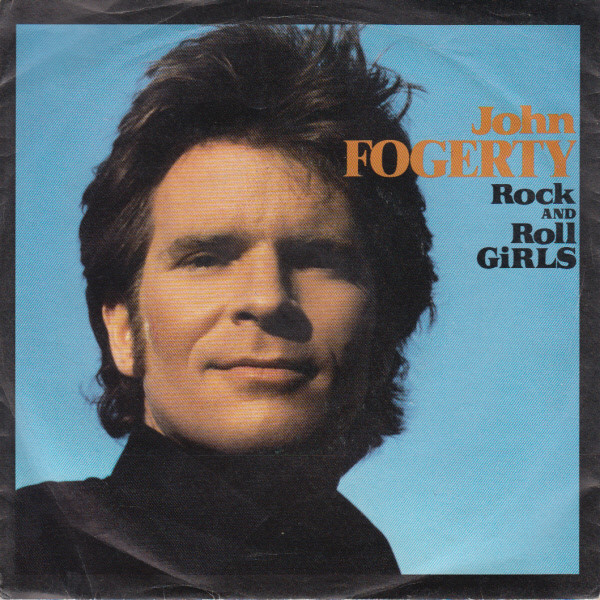
When John Fogerty released the Centerfield album in 1985 I was excited. He had disappeared from the music scene for 10 years. I gave up hope of ever hearing new music from him. I kept hoping he would regroup with Creedence but I didn’t know at that time of the hostile history between them. This album was highly anticipated. I bought the album and it didn’t disappoint.
This is the second track on Fogerty’s Centerfield album, his first in 10 years. The song was inspired by his 12-year-old daughter, Laurie. Fogerty would watch her and her best friend hanging out and jokingly call them the Rock and Roll Girls.
The song peaked at #20 in the Billboard 100, #16 in Canada, #38 in New Zealand, and #83 in the UK in 1985.
Rock and Roll Girls
Sometimes I think life is just a rodeo The trick is to ride and make it to the bell But there is a place, sweet as you will ever know In music and love and things you never tell You see it in their face, secrets on the telephone A time out of time, for you and no one else
Hey, let’s go all over the world Rock and roll girls, rock and roll girls
Yeah, yeah, yeah
If I had my way, I’d shuffle off to Buffalo Sit by the lake and watch the world go by Ladies in the sun, listenin’ to the radio Like flowers on the sand, the rainbow in my mind
Hey, let’s go all over the world Rock and roll girls, rock and roll girls
Hey, let’s go all over the world Rock and roll girls, rock and roll girls
Hey, let’s go all over the world Rock and roll girls, rock and roll girls, yeah, yeah, yeah
First, let’s get this out of the way… wet–willy. Noun. (plural wet willies) (slang) A prank whereby a saliva-moistened finger is inserted into an unsuspecting person’s ear, often with a slight twisting motion… Oh yes…I’ve given them and have been on the receiving end. When you are 12 given wet willies were a lot of fun….oh wait…that was yesterday!
Wet Willie began as a blues-rock band during the Summer of 1969 down in Mobile Alabama. The original nucleus of the group that eventually became known as Wet Willie was called Fox. Wet Willie eventually moved to Macon Georgia and signed to Capricorn Records sharing the label with The Allman Brothers and The Marshall Tucker Band but they really didn’t have a southern rock sound.
They did open for their label mates and gained a following. Like many bands from that era if you were from the south you were automatically “southern rock”…
Keep On Smiling peaked at #10 in the Billboard 100 and #21 in Canada in 1974.
They broke up in 1979. They haven’t recorded anything new since then but they still tour. In 2012 Wet Willie released a new live CD “Miles of Smiles” on the Hittin’ The Note Records label. They continue to tour with three original members including original lead singer Jimmy Hall, brother Jack Hall on bass and vocals, sister Donna Hall Foster on vocals as well as other long time members, drummer T.K. Lively, Ric Seymour on guitar and vocals, Ricky Chancey on guitar and newest member, keyboardist Bobby Mobley.
Keep On Smilin’
Well you say you got the blues, You got holes in both of your shoes, yeah- You’re feeling alone and confused, You got to keep on smilin’, just keep on smilin’
Yeah, you’re- you’re bout to go insane, Cause your womans playing games, And she says that you’re to blame, You try to keep on smilin’, just keep on smilin’
Keep on smilin’ through the rain, laughin’ at the pain Just flowin’ with the changes, till the sun comes out again Keep on smilin’ through the rain, laughin at the pain Just flowin’ with the changes, and singin’ this refrain
Singing in a honky tonk cafe, Nobodys hearin’ what you play, yeah- They’re too busy drinkin anyway, You gotta keep on smilin’, brother keep on smilin’
Say you found a piece of land [Lyrics from: https:/lyrics.az/wet-willie/keep-on-smilin/keep-on-smilin.html] Gonna change from city boy to country man, yeah- Try to build you’re life with your hands And just keep on smilin’, keep on smilin’
Keep on smilin’ through the rain, laughin’ at the pain Just flowin’ with the changes, till the sun comes out again Keep on smilin’ through the rain, laughin at the pain Just flowin’ with the changes, and singin’ this refrain
You’re just hangin out- in a local bar, And you’re wonderin’- who the hell you are Are you a farmer – are you a star?
Smile on through the rain Laugh all through the pain Flow through to changes Till the sun comes out again
Keep on smilin’, smilin’ – smilin’, smilin’ Laughin, laughin- said laughin’, laughin’ Keep on flowin’, flowin’, flowin’ Yeah
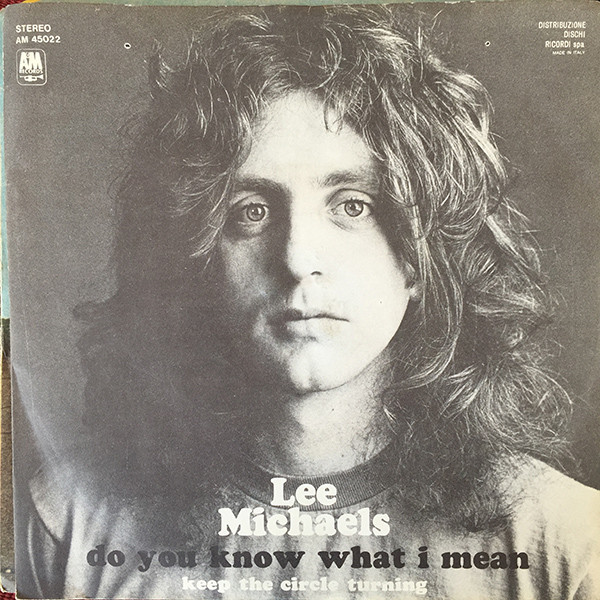
Between 1968 and 1973, Lee Michaels released six studio LPs and a live one. He only had two top 40 records. Can I Get A Witness and Do You Know What I Mean which peaked at #6 in the Billboard 100 and #12 in Canada in 1971. The song was on his fifth album appropriately named “5th” which peaked at #16 in 1971.
The one thing I noticed about Lee is what huge voice he had…it’s strange that this is the only song he had that hit big.
The song was recorded live in the studio in seven hours by Michaels on keyboards and bass pedals and Barry “Frosty” Smith on drums. The song was one of the many on the radio when I was growing up.
Australian musician Renée Geyer recorded a version in 1981. The song was released in October 1981 as the second single from her seventh studio album, So Lucky. The song peaked at number 29 on the Australian Kent Music Report and in New Zealand.
Renee Geyer’s version
Lee Michaels
Do You Know What I Mean
Been forty days since I don’t know when I just saw her with my best friend Do you know what I mean? Do you know, know what I mean?
I just saw her yesterday I just saw her, asked her to stay Do you know what I mean? Lord, do you know what I mean?
Her and Bobby were steppin out Her and Bobby didn’t know I found out Do you know what I mean? Do you know, know what I mean?
So I asked her if she still cared She didn’t hear me, she just stared Do you know what I mean? Lord, do you know what I mean?
And then she said Lee you haven’t loved me in nearly four years You haven’t noticed that I held back my tears And now you have, but it’s really too late Better find yourself another girl Better find another girl Better find uh, another place
She just left me yesterday She just left me, had nothing to say Do you know what I mean? Oh, do you know what I mean?
She’s a dandy, yes indeed She’s a dandy, but now she’s free Do you know what I mean? Lord, do you know what I mean?
Been forty days since I don’t know when I just saw her with my best friend Do you know what I mean? Lord, do you know what I mean?
I just saw her yesterday I just saw her, learn how to stay Do you know what I mean? Lord, Do you know what I mean?
The tone of this track is ominous. What a powerful statement The Stones were making in this song. With me growing up in the late 70s and 80s I didn’t grasp what the song was getting across when I first heard it. We didn’t have the turmoil that was going on during the sixties happening at that time.
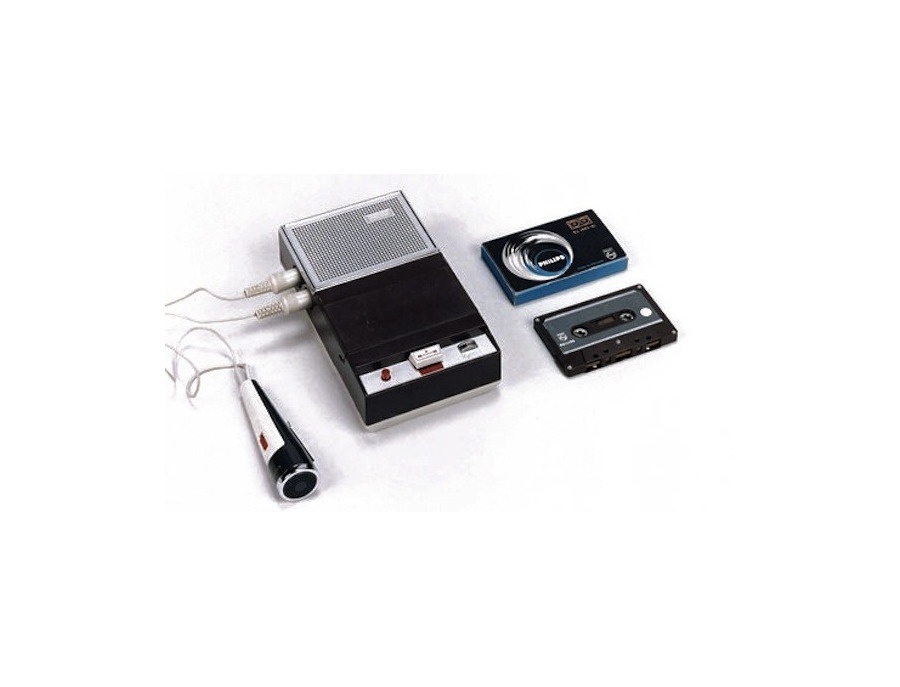
Now the tone…something about the sixties that is missing today is the low fi experimenting. Keith Richards started developing this song in late 1966 but had a hard time getting the sound he was after. The breakthrough came when he bought a Philips cassette recorder and realized he could get a dry, crisp sound by playing his acoustic guitar into it and overloading it. The only electric instrument on the entire song is the bass. The guitar you hear is coming from an old Philips cassette recorder.
Charlie Watts used a 1930s toy drum kit called a London Jazz Kit Set…it was something close to this…
The song was released in 1968 and was on Beggars Banquet. The song peaked at #48 in the Billboard 100, #21 in the UK, and #32 in Canada.
From Songfacts
This song deals with civil unrest in Europe and America in 1968. There were student riots in London and Paris, and protests in America over the Vietnam War. The specific event that led Mick Jagger to write the lyric was a demonstration at Grosvenor Square in London on March 17, 1968. Jagger (along with Vanessa Redgrave), joined an estimated 25,000 protesters in condemning the Vietnam War.
The demonstrators marched to the American embassy, where the protest turned violent. Mounted police charged the crowd, which responded by throwing rocks and smoke bombs. About 200 people were taken to the hospital and another 246 arrested. Jagger didn’t make it to the embassy: before the protest turned violent, he abandoned it, returning to his home in nearby Cheyne Walk. Jagger realized that his celebrity was a hindrance to the protest, as his presence distracted from the cause.
This was the first Stones song to make a powerful political statement, although with an air of resignation. Jagger opens the song declaring “the time is right for fighting in the street,” but goes on to sing, “But what can a poor boy do, ‘cept sing in a rock and roll band.”
This sense of hopelessness in the face of atrocity may be why the Rolling Stones became apolitical, focusing their efforts on songs about relationships and rock n’ roll. In the process, they became very rich and beloved by members of all political persuasion.
In the US, this was released as a single on August 31, 1968, just a few days after the Democratic National Convention, which took place August 26-29. The convention was marred by violence, as Chicago police clashed with protesters. When the song was released, every radio station in Chicago (and most in the rest of the country), refused to play it for fear that it would incite more violence. There was no official ban in America or Chicago, but stations knew it was in their best interest to shun the song, which accounts for its meager chart position of #48.
Mick Jagger later said: “The radio stations that banned the song told me that ‘Street Fighting Man’ was subversive. ‘Of course it’s subversive,’ we said. It’s stupid to think you can start a revolution with a record. I wish you could!”
The original title of this song was “Did Everybody Pay Their Dues?” It had completely different lyrics and therefore altogether a different and rather strange meaning, with Jagger singing about an Indian chief and his family. The music however was basically the same (slightly alternative mixes exist), but the lead guitar over the chorus was omitted on the final mix of “Street Fighting Man.” Fairly listenable versions have appeared on various bootlegs.
Keith Richards created a distinctive guitar sound on this track using a technique he also used on “Jumpin’ Jack Flash,” where his acoustic guitar was overdubbed several times. Said Richards: “‘Street Fighting Man’ was all acoustics. There’s no electric guitar parts in it. Even the high-end lead part was through a cassette player with no limiter. Just distortion. Just two acoustics, played right into the mike, and hit very hard. There’s a sitar in the back, too. That would give the effect of the high notes on the guitar. And Charlie was playing his little 1930s drummer’s practice kit. It was all sort of built into a little attaché case, so some drummer who was going to his gig on the train could open it up – with two little things about the size of small tambourines without the bells on them, and the skin was stretched over that. And he set up this little cymbal, and this little hi-hat would unfold. Charlie sat right in front of the microphone with it. I mean, this drum sound is massive. When you’re recording, the size of things has got nothing to do with it. It’s how you record them. Everything there was totally acoustic. The only electric instrument on there is the bass guitar, which I overdubbed afterwards. What I was after with all of those – Street Fighting Man, Jumping Jack Flash – was to get the drive and dryness of an acoustic guitar but still distort it. They were all attempts at that.”
Dave Mason did session work on this track. He played the shelani, an Indian reed instrument, which comes in near the end of the song. Mason went on to form the group Traffic, and has played guitar on albums by Jimi Hendrix, George Harrison, Paul McCartney and Fleetwood Mac.
Mick Jagger said of this song: “It was a very strange time in France. But not only in France but also in America, because of the Vietnam War and these endless disruptions…. I wrote a lot of the melody and all the words, and Keith and I sat around and made this wonderful track, with Dave Mason playing the shelani on it live. It’s a kind of Indian reed instrument a bit like a primitive clarinet. It comes in at the end of the tune. It has a very wailing, strange sound.”
This was recorded on an 8-track machine with one track devoted to the cassette recording Richards and Watts made together. Richards added more acoustic guitar on another track, Watts put some bass drum on another, and the rest were filled out by Jagger’s vocal and the other instruments: Jones on sitar and tamboura, Dave Mason’s shehnai, Nicky Hopkins on piano and Richards on bass because Bill Wyman wasn’t around. There is a great deal of stereo separation in the mix.
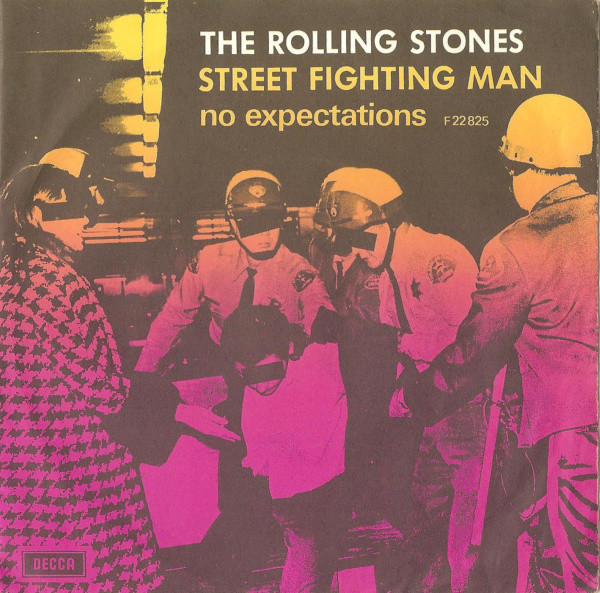
In the US, the single was originally released with a picture on the sleeve of police beating protesters in Los Angeles. The music was different on this version, with different vocals and more piano. This single was quickly pulled by the record company and is now a rare collectors item.
The studio recording, with acoustic guitars and sitar, is impossible to replicate live, but the group came up with an electric arrangement that packed plenty of punch when they performed it. The song remained a concert favorite throughout their run.
The Stones released this the same month The Beatles came out with “Revolution,” which was their first blatantly political song.
A number of sources claim that this song was inspired by the radicalism of a young student leader Tariq Ali, who was active in revolutionary socialist politics in Britain in the late ’60s. In an interview with the April 19, 2007 edition of the Galway Advertiser, Ali, who is now a writer and filmmaker, confirmed this. “Yes, its true. Jagger was/is an artist. He writes and sings what he wants.”
In the UK, this wasn’t released as a single until July 1971, but it still made a strong showing on the chart, reaching #21.
Rod Stewart covered this on his 1973 album Sing It Again Rod. Rage Against The Machine covered it on their 2000 album Renegades.
Mick Jagger said in 1995: “I’m not sure if it really has any resonance for the present day. I don’t really like it that much. I thought it was a very good thing at the time. There was all this violence going on. I mean, they almost toppled the government in France; De Gaulle went into this complete funk, as he had in the past, and he went and sort of locked himself in his house in the country. And so the government was almost inactive. And the French riot police were amazing. Yeah, it was a direct inspiration, because by contrast, London was very quiet.”
Engineer Eddie Kramer recalled to Uncut in a 2016 interview: “The beginning of Street Fighting Man? My recollection is that Jimmy Miller brought in a Wollensak – a cassette machine with one mic built in – stuck it on the floor, pressed ‘Record’ and the band just make a circle round it. And that was the basic track. Now, of course, Keith says it was his idea and his tape machine, but I don’t remember it that way.”
Keith Richards lists this among his favorite Rolling Stones tracks, and feels the message rings true. “When people feel that mad about the way they’re being run, you should go to the streets,” he said. “America wouldn’t be here if it wasn’t for people going to the streets.”
Street Fighting Man
Ev’rywhere I hear the sound Of marching charging feet, boy ‘Cause summer’s here and the time is right For fighting in the street, boy
Well now, what can a poor boy do Except to sing for a rock n’ roll band? ‘Cause in sleepy London town There’s just no place for a street fighting man, no
Hey think the time is right For a palace revolution But where I live the game To play is compromise solution
Well now, what can a poor boy do Except to sing for a rock n’ roll band? ‘Cause in sleepy London town There’s just no place for a street fighting man, no. Get down.
Hey so my name is called Disturbance I’ll shout and scream I’ll kill the king, I’ll rail at all his servants
Well, what can a poor boy do Except to sing for a rock n’ roll band? ‘Cause in sleepy London town There’s just no place for a street fighting man, no Get down
This wraps up Full Moon Fever for the week. I hope you enjoyed it. I didn’t cover every song but we did get to quite a few. The other posts on this album are at the bottom.
This song I don’t hear much more…Love Is A Long Road is a song that I had forgotten about which got some airplay back in 1989.
This is one of the many songs that charted from Full Moon Fever. This song peaked at #7 in the Billboard Mainstream Rock Tracks in 1989. Tom Petty and Mike Campbell wrote this song. This was the 5th single released from the album. Dave from “Have A Sound Day” has a good post about this album.
How did Jeff Lynne meet Tom Petty about producing Full Moon Fever? Jeff said he was on Sunset Boulevard and saw Tom… Here is what Jeff said: “He beeped his horn and I kept thinking, ‘Who’s that?’” “And it was Tom. ‘Hi, Tom!’ He said, ‘Pull over – I wanna have a word with you.’ He’d just been listening to George [Harrison’s album, Cloud Nine, which I’d just worked on, co-produced it, and he really liked it. He said, ‘Do you fancy writing some songs together?’ I said, ‘I sure do.’”
There was a girl I knew She said she cared about me She tried to make my world The way she thought it should be Yeah we were desperate then To have each other to hold But love is a long, long road
There were so many times I would wake up at noon With my head spinning ’round I would wait for the moon And give her one more chance To try and save my soul But love is a long, long road
Yeah it was hard to give up Some things are hard to let go Some things are never enough I guess I only can hope For maybe one more chance To try and save my soul But love is a long, long road
Go to any music store basement right now and some beginner will be playing this riff on guitar. I’ve heard it murdered many times and I contributed to the count also. It’s one of the most popular guitar riffs in rock. I’m not saying best but maybe the most famous….it’s simple for a beginner and sounds great when played right. It was one of the first ones I learned.
This song was based on a true story that happened to the band. Smoke On The Water took inspiration from a fire in the Casino at Montreux, Switzerland on December 4, 1971. The band was going to start recording their Machine Head album there right after a Frank Zappa concert, but someone fired a flare gun at the ceiling during Zappa’s show, which set the place on fire when Deep Purple was watching.
Smoke on the Water peaked at #4 in the Billboard 100 and #2 in Canada in 1973. The song was credited to Deep Purple…Ritchie Blackmore, Ian Gillan, Roger Glover, Jon Lord, and Ian Paice.
Ritchie Blackmore:“Ian Paice (Deep Purple drummer) and I often used to jam, just the two of us. It was a natural riff to play at the time. It was the first thing that came into my head during that jam.”
From Songfacts
Deep Purple was in the audience for the show, and lead singer Ian Gillan recalls two flares being shot by someone sitting behind him which landed in the top corner of the building and quickly set it ablaze. Zappa stopped the show and helped ensure an orderly exit. Deep Purple watched the blaze from a nearby restaurant, and when the fire died down, a layer of smoke had covered Lake Geneva, which the casino overlooked. This image gave bass player Roger Glover the idea for a song title: “Smoke On The Water,” and Gillan wrote the lyric about their saga recording the Machine Head album.
The band was relocated to the Grand Hotel in Montreux, where they recorded the album using the Rolling Stones mobile studio. They needed one more song, so they put together “Smoke On The Water” using Gillan’s lyric and riff the guitarist Ritchie Blackmore came up with. The result was a song telling the story of these strange events just days after they happened – the recording sessions took place from December 6-21.
Frank Zappa, who is mentioned in the lyrics, lost all his equipment in the fire. He then broke his leg a few days later when a fan pulled him into the crowd at a show in England. This prompted Ian Gillan to say “Break a leg, Frank,” into the microphone after recording this for a BBC special in 1972.
Deep Purple bass player Roger Glover had some doubts about the title: he knew it was great but was reluctant to use it because it sounded like a drug song.
Ritchie Blackmore has an affinity for renaissance music, which he writes and performs in his duo Blackmore’s Night. He says that he first took an interest in the form in 1971 when he saw a BBC program called Wives of Henry VIII, and that there is indeed a trace of Renaissance in “Smoke On The Water.” “The riff is done in fourths and fifths – a medieval modal scale,” he explained on MySpace Music. “It makes it appear more dark and foreboding. Not like today’s pop music thirds.”
The band did not think this would be a hit and rarely played it live. It took off when they released it as a US single over a year after the album came out. Talking about the song’s merits as live material, Roger Glover said in Metal Hammer, “I think ‘Smoke On The Water’ is the biggest song that Purple will ever have and there’s always a pressure to play it, and it’s not the greatest live song, it’s a good song but you sorta plod through it. The excitement comes from the audience. And there’s always the apprehension that Ritchie (Blackmore) isn’t gonna want to do it, ’cause he’s probably fed up with doing it.”
When we spoke with Steve Morse, who became Deep Purple’s guitarist in 1994, he talked about performing this song live. “On a tune that I didn’t write like ‘Smoke On The Water,’ I try to tread a line between homage and respect and originality,” he said. “So, say, on the solo, I take it a out a little bit and do it my way for a little bit, and then bring it back to more like the original, and wrap it up with a lick that everybody would recognize. That’s about as much as I can suggest somebody do because there’s ingrained memories of the song in peoples’ minds.”
“Funky Claude,” as in the lyrics “Funky Claude was running in and out pulling kids out the ground,” is Claude Nobs, a man who helped rescue some people in the fire and found another hotel for the band to stay. He is the co-founder of the prestigious Montreux Jazz Festival.
Nobs explained to Gibson.com how this song arose out of the ashes: “Deep Purple were watching the whole fire from their hotel window, and they said, ‘Oh my God, look what happened. Poor Claude and there’s no casino anymore!’ They were supposed to do a live gig [at the casino] and record the new album there. Finally I found a place in a little abandoned hotel next to my house and we made a temporary studio for them. One day they were coming up for dinner at my house and they said, ‘Claude we did a little surprise for you, but it’s not going to be on the album. It’s a tune called “Smoke On The Water.'” So I listened to it. I said, ‘You’re crazy. It’s going to be a huge thing.’ Now there’s no guitar player in the world who doesn’t know [he hums the riff]. They said, ‘Oh if you believe so we’ll put it on the album.’ It’s actually the very precise description of the fire in the casino, of Frank Zappa getting the kids out of the casino, and every detail in the song is true. It’s what really happened. In the middle of the song, it says ‘Funky Claude was getting people out of the building,’ and actually when I meet a lot of rock musicians, they still say, ‘Oh here comes Funky Claude.'”
The B-side of the single was another version of the song, recorded live in Japan.
In 1989, Former members Ritchie Blackmore and Ian Gillan released a new version of this with Robert Plant, Brian May, and Bruce Dickinson. They called the project “Rock Aid Armenia,” with proceeds going to victims of the Armenian earthquake.
IN the 2002 “Weekend at Burnsie’s” episode of The Simpsons, Homer is heard crooning to this song after he uses medicinal marijuana. >>
Pat Boone covered this on In a Metal Mood. On the album, he performed heavy metal songs with string instruments and pianos, but in this case kept the famous guitar riff and even allowed a solo. Otherwise, it’s a very jazzy cover.
In a Songfacts interview with Boone, he said: “Ritchie Blackmore played some guitar on my recording – of his song. He had to do it to a track we sent him in Germany where he was recording in some castle. He played part of the guitar licks on ‘Smoke on the Water,’ but the other part is Dweezil Zappa, on a Hendrix Stratocaster. It was very authentic. I was very serious about treating these songs as good music – with big band jazz arrangements.
The famous guitar riff is performed in the 2003 Jack Black film School Of Rock.
On June 3, 2007 in Kansas City, Kansas, 1,721 guitarists gathered to play this song together and break the record for most guitarists playing at one time. The entire song was played, though only the one lead guitar played the solo. Guitarists from as far as Scotland came out for the event. The event was organized by radio station KYYS.
It’s hard to compete with outsourcing, however, and the record was beaten on October 26, 2007 when 1,730 guitarists gathered in Shillong, India to perform “Knocking On Heaven’s Door.”
This was used in commercials for Dodge trucks. The song plays on a jukebox that a guy is eyeing in an antique store. His wife gets her way and they take home a piece of furniture instead – the point being the large payload capacity of the truck. >>
According to an interview with Ian Gillian on VH1’s Classic Albums: Machine Head, the band did not have much money when recording this album and were renting a recording studio. They stayed past when they were supposed to get out. As they were recording this song, the police were knocking on the door of the studio to kick them out. >>
In a 2008 survey of students from music schools across London, this topped a poll to find the best ever guitar riff. Nirvana’s “Smells Like Teen Spirit” came second and Aerosmith’s “Walk This Way” third.
According to the London Times newspaper, Ritchie Blackmore was embarrassed to present this song to his fellow members of Deep Purple because it was such a Neanderthal tune for a guitarist of his caliber to come up with.
The lyrics, “Swiss time was running out” meant that their visas were going to expire soon. They wrote the songs and recorded them in a matter of weeks.
Many beginners try to play this when they pick up a guitar, and they usually play it wrong. Here’s how: Use the open G and D strings as the starting point and you pluck the strings with a finger each, not a pick. Lots of people play this from the 5th fret of the A and D string, which is wrong.
In Stephen King’s Dreamcatcher (2001), a character recalls losing his virginity to this song at a fraternity party.
Smoke On The Water
We all came out to Montreux On the Lake Geneva shoreline To make records with a mobile We didn’t have much time Frank Zappa and the Mothers Were at the best place around But some stupid with a flare gun Burned the place to the ground
Smoke on the water, a fire in the sky Smoke on the water
They burned down the gambling house It died with an awful sound Funky Claude was running in and out Pulling kids out the ground When it all was over We had to find another place But Swiss time was running out It seemed that we would lose the race
Smoke on the water, a fire in the sky Smoke on the water
We ended up at the Grand Hotel It was empty, cold and bare But with the Rolling truck Stones thing just outside Making our music there With a few red lights and a few old beds We made a place to sweat No matter what we get out of this I know, I know we’ll never forget
Smoke on the water, a fire in the sky Smoke on the water
Tom Petty had written this song for Southern Accents, and it had in the vault for that time. They were going through songs really fast, and Jeff Lynne asked, ‘Have you got anything laying around?’ Tom brought this song out of the closet. He had cut a demo with Stevie Nicks (video at the bottom), just the two of them. That was the only thing Tom had, just that demo. Jeff made it into a Buddy Holly Style record.
The song added to the texture of Full Moon Fever. It is a fun song along with Yer So Bad.
Jeff Lynne on Tom Petty: “I always liked Tom,” “I always loved his style, and he’s so American. It’s a great thing for an English person to actually work with a real Southern American… they’ve got the best voices. George always said, ‘It’s like they’ve got a head start over English people because they already have a twang.’ They’ve just got this lovely-sounding voice.”
Tom Petty and Stevie Nicks on the Demo
The Apartment Song
I used to live in a two-room apartment Neighbors knockin’ on my wall Times were hard, I don’t wanna knock it I don’t miss it much at all
[Chorus:] Oh yeah I’m alright I just feel a Little lonely tonight I’m okay, most of the time I just feel a little lonely tonight
I used to need your love so badly Then I came to live with it Lately I get a faraway feeling And the whole thing starts again
Steve Nicks visited Atlantic Records’ president Doug Morris and made her pitch for her first solo record: “So, listen, what I’d really like to do is be in Tom Petty and the Heartbreakers’ band. He said, ‘No. That’s not going to happen.'” She then asked: “So I can make, like, a Tom Petty girl album?” And she made Bella Donna.
Tom Petty met Nicks while he was recording his group’s album Damn The Torpedoes. She asked him half-jokingly if he could write her a song that she could record for her first solo album. Petty didn’t take her request seriously at first, but Nicks reiterated her request a year later as Petty was putting together his Hard Promises album. Petty wrote a ballad called “Insider” at his home, played it to the Heartbreakers (to their approval), recorded a demo with his band, and sent the demo to Nicks. After listening to the demo of “Insider,” Nicks visited Petty at his studio, taped the song with Petty and the Heartbreakers, then gave the tape to Petty, saying, “You love this so much… YOU take the song.” He did, and included it on Hard Promises.
Shortly after Insider was finished, Petty and company recorded a song that he and guitarist Mike Campbell composed about a year earlier…”Stop Draggin’ My Heart Around” – and sent that demo to Nicks’ producer, Jimmy Iovine. She loved it, saying, “That’s what I wanted all along.” Nicks and Petty ended up doing it as a duet.
The song peaked at #3 in the Billboard 100, #5 in Canada, and #11 in New Zealand in 1981.
Chrissie Hynde would often play the Petty role in this song when she toured with Nicks in the ’00s. They would have a lot of fun with the song…I have it at the bottom.
From Songfacts
This song is about a couple with a complicated relationship. She wants to get rid of him, but he has a hold on her heart. When she tells him to stop dragging that heart around, he explains that he’s just trying to protect her, as “you need someone looking after you.”
Many of the songs Nicks has sung over the years involve hearts in different states of breaking, and many are about her intimate relationships, written either by her or her Fleetwood Mac bandmate/soulmate, Lindsey Buckingham. This song is one of the few she could sing without dealing with the emotional baggage behind it, as it has nothing to do with her personally.
Nicks wanted Petty to produce Bella Donna. He gave it a shot, but it didn’t work out and Jimmy Iovine was brought in. This created an interesting dynamic as Iovine and Nicks began living together while they were making the album.
This was the biggest hit for either Stevie Nicks (as a solo act) or Tom Petty and the Heartbreakers (who had a competing single out – “Woman In Love” – that didn’t chart). Five years later, they joined forces again and hit #37 with a live version of the Springfields/Searchers classic “Needles and Pins.”
In addition to being The Heartbreakers’ guitarist, Mike Campbell has played on albums by many other artists, including several by Stevie Nicks. He told us how this came together: “I had written the music and Tom had written the words. The Heartbreakers had recorded a version of it with Jimmy Iovine, and Jimmy being the entrepreneur that he was, he was working with Stevie, and I guess he asked Tom if she could try it, and it just developed from there. We cut the track as a Heartbreakers record and when she decided to do it we used that track and she came in and sang over it.” (Read more in our interview with Mike Campbell.)
This had the good fortune of being released around the time MTV went on the air. They didn’t have many videos at the time, so this got a lot of airplay. It introduced a younger audience to Nicks and Petty.
Bella Donna was Nicks’ first solo album. Her output with Fleetwood Mac sold extremely well, but solo success was hardly ensured. When Nicks finished the album, her producer Jimmy Iovine told her she didn’t have a single, and if she didn’t record “Stop Draggin’ My Heart Around,” “your record’s going to tank and then you’re not going to have a solo career.”
Nicks was dismayed about removing one of the songs on the album to make room for the track, but she took Iovine’s advice. “I went home and said, ‘You’ve got to drop this self-esteem you’ve got going on right now and realize that the whole reason you even hired Jimmy Iovine was because he produced Tom Petty and you always wanted to be in Tom Petty And The Heartbreakers,” Nicks said while introducing the song in concert. “I said: ‘Okay, I’ll do it.’ So, anyway, ‘Stop Draggin’ My Heart’ became a huge single, all because Mr. Tom Petty was generous enough to give me that song.”
The song was released as the first single and rose to #3, setting the stage for more hits. The next single was another duet: “Leather And Lace” with Don Henley, which reached #6. It wasn’t until the third single that Nicks was finally on her own: “Edge Of Seventeen” reached #11.
A few years after this was released, Dave Stewart of Euryhmics wrote “Don’t Come Around Here No More,” which he and Iovine started producing for Nicks. By this time, Iovine and Nicks had broken up, and when she came over to work on the song, things didn’t go well and she stormed out. Iovine brought in Tom Petty and they completed the song with him, something Nicks knew was fair considering “Stop Draggin’ My Heart Around” went on her album. (as told in The Dave Stewart Songbook)
On her 2001 album Trouble In Shangri-La, Nicks thanked Petty in the liner notes. She asked him to write another song for her, but he refused and encouraged her to write it herself. After that conversation, she started writing songs for the album.
Tom Petty had a connection to another song on the album. His wife, Jane, told Nicks that she was “at the age of 17” when she met Tom. Like her husband, Jane was from Gainesville, Florida, and had such a strong country accent that Stevie thought she said “edge of 17,” which provided the title for one of her most popular songs.
In the liner notes to her TimeSpace album, Stevie Nicks said: “Jimmy (Iovine) played this song to me while he was still finishing Tom’s album; it was one of those songs that Tom was not going to do, and he told Jim that I could do it. I wasn’t used to doing other people’s songs, so I didn’t really like the idea at first, but I loved Tom Petty, so I agreed to try. So we went into the studio and sang it live, together. I was completely entranced, and I instantly fell into love with the song. Duets were the things I loved the most… maybe this was a second beginning. And we would sing like no one else, and nobody else would ever sing like us.”
Petty and Nicks reunited to perform this song when Petty was honored as the MusiCares Person of the Year on February 10, 2017.
Before giving her induction speech, Harry Styles sang this with Nicks when she entered the Rock and Roll Hall of Fame in 2019 as a solo artist.
Stop Draggin’ My Heart Around
Baby you’ll come knocking on my front door Same old line you used to use before I said yeah… well… what am I supposed to do I didn’t know what I was getting into
So you’ve had a little trouble in town Now you’re keeping some demons down Stop draggin’ my… Stop draggin’ my… Stop draggin’ my heart around
It’s hard to think about what you’ve wanted It’s hard to think about what you’ve lost This doesn’t have to be the big get even This doesn’t have to be anything at all
I know you really want to tell me good-bye I know you really want to be your own girl
Baby you could never look me in the eye Yeah you buckle with the weight of the words Stop draggin’ my… Stop draggin’ my… Stop draggin’ my heart around
There’s people running ’round loose in the world Ain’t got nothing better to do Than make a meal of some bright eyed kid You need someone looking after you
I know you really want to tell me goodbye I know you really want to be your own girl
Baby you could never look me in the eye Yeah you buckle with the weight of the words Stop draggin’ my… Stop draggin’ my… Stop draggin’ my heart around
My sister got lucky, married a yuppie Took him for all he was worth
As soon as I heard those two lines I knew I was going to like the song.
Tom Petty had gotten to know Lynne through George Harrison, who brought the Electric Light Orchestra leader to produce Harrison’s 1987 comeback LP Cloud Nine. That led to the three artists taking part in the Traveling Wilburys supergroup. One day, Petty played “Yer So Bad”; he had all the words down but was stuck on the music for the chorus.
“Jeff showed me this little part,” Petty recalled. “E minor to C, and said, ‘You could do this.’ And I said, ‘That’s great!’ And I was so elated, because I had been working on the song for days, and I couldn’t get from the verse to the chorus somehow. And he showed me this little bit, and I said, ‘Great! Will you produce this?'”
Petty wanted Howie Epstein (bass player for the Heartbreakers) to help on the harmonies but Howie said he didn’t like the song so Petty told him he didn’t need him then. That is when he knew it was going to be a solo album.
This was the last fifth single released from the album. Yer So Bad peaked at #5 in the Billboard Album Rock Tracks and #44 in Canada in 1990.
Yer So Bad
My sister got lucky, married a yuppie Took him for all he was worth Now she’s a swinger dating a singer I can’t decide which is worse[Chorus:] But not me baby, I’ve got you to save me Oh yer so bad, best thing I ever had In a world gone mad, yer so badMy sister’s ex-husband can’t get no lovin’ Walks around dog-faced and hurt Now he’s got nothin’, head in the oven I can’t decide which is worse
It’s hard to be down and listen to this song. According to Rundgren, most of this song came to him in a dream, including the entire chorus. Fortunately, he was at home near his studio, so he was able to quickly roll out of bed, record what he could remember, and fill in the rest later.
He said that he never took the song seriously and was surprised when it was released as a sing.
The song peaked at #63 in the Billboard 100 in 1983.
Rundgren added that he believes the song became popular “solely because of the line about banging on the boss’s head,” and said, “It’s a party anthem, and at least once a year I get a request to use it in a commercial or a movie. I hate playing it live, though. I feel ape-like. My hands get tired, my ears get tired. But the audience loves it.”
From Songfacts
Rundgren is a distinguished songwriter, musician and composer, but this novelty romp is one of his most-played songs. How does he feel about the broad swath of the population that know him only for this song? In an interview with Bullz-Eye, he explained: “I like the idea that I’ve written a song that is well known to a broad segment of the population…and they have no idea why they know it! In the same sense that everybody knows ‘Happy Birthday,’ but they can’t remember the first time they heard it, and they have no idea who wrote it. But you’ve penetrated the cultural consciousness in a way that transcends the typical pop song, and what it means is that if I never have another hit record on the radio again, that song is still going to be around likely twenty-five years from now. People probably don’t remember Gary Glitter, but they know “Rock And Roll Part 2″! And in that sense, it has somewhat of a more protractile life span, I guess.”
In a Songfacts interview with Todd Rundgren, he cited this as one of the most important songs of his career, because “I made so much money off of it.” He added: “Everybody likes to hear that ‘Bang The Drum’ song, but everyone’s connection to that is that one line in the song where it talks about abusing your boss (‘I pound on that drum like it was the boss’s head’). I can identify with that, but I don’t really enjoy playing the song that much because it’s just a lot of screaming and flailing around.”
Some of the commercial uses of this song include a TV commercial for Carnival Cruise Lines and a scene in the TV show The Office. It is played at a variety of sporting events and frequently used in movie trailers. Radio stations often play it at quitting time (5 p.m.), as an anthem for working stiffs ready to escape the clutches of their employer. In 2012, Rundgren said that the song makes him “six figures every couple of months,” thanks mostly to Carnival.
After moving to Hawaii, Rundgren had some fun with this song, performing a ukulele version called “Bang On The Ukulele Daily” that he introduced as “an old Hawaiian war chant.” You can hear it on his 2000 album One Long Year.
To mark his 60th, 65th and 70th birthdays, Rundgren organized “Toddstock” celebrations for his core fans, which were intimate gatherings in the outdoors. At these events, drum circles often formed to play “Band The Drum All Day.”
Bang The Drum All Day
I don’t want to work I want to bang on the drum all day I don’t want to play I just want to bang on the drum all day
Ever since I was a tiny boy I don’t want no candy I don’t need no toy I took a stick and an old coffee can I bang on that thing till I got Blisters on my hand because
When I get older they think I’m a fool The teacher told me I should stay after school She caught me pounding on the desk with my hands But my licks was so hot I made the teacher want to dance And that’s why
Listen to this Every day when I get home from work I feel so frustrated The boss is a jerk And I get my sticks and go out to the shed And I pound on that drum like it was the boss’s head Because
I can bang that drum Hey, you want to take a bang at it? I can do this all day
When I bought Full Moon Fever in 1989 I was happy with my first pass through the album. The album doesn’t have seven hits like Born In The USA but it doesn’t have a bad track on it.
Tom Petty started running down his dream of being a rocker in 1961 when he met Elvis Presley. Petty, 11 years old, came to the Ocala, Florida set where Elvis was working on the film Follow That Dream – a title Tom took to heart. In a brief encounter, Petty saw how Elvis captivated onlookers and made the girls go crazy. Petty became fascinated with Elvis and set out to follow his path.
This song peaked at #23 in the Billboard 100, #23 in Canada, and #55 in the UK in 1989.
Those noises were made by Shannon and Jeff Lynne; Petty used them as an interlude to mark the middle of the album because you don’t have to flip over a CD. This section was included only on CD versions of Full Moon Fever but survived the transition when the album was released digitally….I have this at the bottom
From Songfacts
In this song, Petty sings about driving into the great wide open, with nothing but glorious possibility in his path.
The animated video was inspired by a comic strip called Little Nemo In Slumberland by Winsor McKay. Each strip told the story of one of Nemo’s dreams, and at the end, he always woke up.
Full Moon Fever was listed as a Tom Petty solo album even though members of The Heartbreakers played on it. Roy Orbison, George Harrison and Jeff Lynne also played on it.
Heartbreakers’ guitarist Mike Campbell wrote this with Petty and Jeff Lynne. The three of them worked on the album at Campbell’s house. Petty and Campbell were very impressed with Lynne’s production techniques, and learned a lot from the experience. Campbell gave us an example of Lynne’s style: “We’d put the mics up on the drums, and he’d walk out and take the microphone over the drum and he’d turn it away from the drum facing the corner, and he’d go ‘OK, record it like that.’ Sure enough, 99% of the time he’d be right. We’d go, ‘Yes sir, Mr. Lynne.’ We learned so much from him about arrangements and countermelodies and all kinds of stuff.” (Check out our interview with Mike Campbell.)
The line, “Me and Del were singin,’ little ‘Runaway'” is a reference to the 1961 Del Shannon hit “Runaway.” Shannon is credited on the album for “barnyard noises,” which can be heard just after this song ends on the album. Under the animal noises, Petty says, “Hello CD listeners. We have come to the point in this album where those listening on cassettes or records will have to stand – up or sit down – and turn over the record or tape. In fairness to those listeners, we will now take a few seconds before we begin Side 2. Thank you, and here is Side 2.”
In 2007, the documentary Runnin’ Down A Dream was released. Directed by Peter Bogdanovich, the film chronicles the career of Tom Petty and the Heartbreakers. >>
Tom Petty and the Heartbreakers played this at the halftime show of the Super Bowl in 2008. Rather than the usual medley of hits, the band played four full songs, the others being “American Girl,” “I Won’t Back Down” and “Free Fallin’.”
Hello CD Listeners
Runnin’ Down A Dream
It was a beautiful day, the sun beat down I had the radio on, I was drivin’ Trees flew by, me and Del were singin’ little Runaway I was flyin’
Yeah runnin’ down a dream That never would come to me Workin’ on a mystery, goin’ wherever it leads Runnin’ down a dream
I felt so good like anything was possible I hit cruise control and rubbed my eyes The last three days the rain was unstoppable It was always cold, no sunshine
Yeah runnin’ down a dream That never would come to me Workin’ on a mystery, goin’ wherever it leads Runnin’ down a dream
I rolled on as the sky grew dark I put the pedal down to make some time There’s something good waitin’ down this road I’m pickin’ up whatever’s mine
Yeah runnin’ down a dream That never would come to me Workin’ on a mystery, goin’ wherever it leads Runnin’ down a dream
“I just got paid today, got me a pocket full of change.”
That Little Ol’ Band From Texas has a great groove going on in this song. I was going to save this to a more appropriate Friday but for some of us the days are blending into each other at home so let’s just pretend.
This song was inspired by Peter Green’s opening riff in Fleetwood Mac’s “Oh Well.” Billy Gibbons was living in Los Angeles, sitting on the steps of his apartment and it was raining and he couldn’t go anywhere… he kept trying to learn that riff and as he said…it got tangled up and it stayed tangled up.
Just Got Paid was on their second album, Rio Grande Mud released in 1972. The album peaked at #104 in the Billboard Album Charts. The song didn’t chart in the Billboard 100 but it has become an FM staple.
Just Got Paid
I just got paid today, got me a pocket full of change. Said, I just got paid today, got me a pocket full of change. If you believe like workin’ hard all day, just step in my shoes and take my pay.
I was born my papa’s son, when I hit the ground I was on the run. I had one glad hand and the other behind. You can have yours, just give me mine. When the hound dog barkin’ in the black of the night, stick my hand in my pocket, everything’s all right.
I just got paid today, got me a pocket full of change. Said, black sheep, black, do you got some wool? Yes, I do, man, my bag is full. It’s the root of evil and you know the rest but it’s way ahead of what’s second best.
I’m including at least one song off of Tom’s album Full Moon Fever every day this week…So if you don’t know the album stay tuned, if like the album stay tuned,and if you don’t like the album…sorry. It was a great album released in 1989 that was arguably the peak of Tom’s career.
Full Moon Fever
Tom was not happy with the last Heartbreakers album (Let Me Up (I’ve Had Enough) released in 1987 and wanted a change. Mike Campbell (Heartbreakers guitar player): “Tom called me up and said, ‘We’re done. I think we’re done.” He called back later and said that at least temporarily he wasn’t going to work with the Heartbreakers.
He ended up using Belmont Tench and Howie Epstein from the Heartbreakers for a few songs but it was Tom Petty, Jeff Lynne, Mike Campbell and Phil Jones on drums who made the album. They did have some help from George Harrison, Roy Orbison, and Del Shannon among others.
Released in 1989, Full Moon Fever would become Petty’s greatest commercial success. During its creation Jeff Lynne helped inspire him to create some of his best and most popular songs. But along the way he also risked further alienating several members of the Heartbreakers.
Free Fallin’
Free Fallin’ may be the song he is most remembered. Tom Petty and Jeff Lynne wrote and recorded “Free Fallin'” in just two days, the first song completed for Full Moon Fever.“We had a multitude of acoustic guitars,” Petty told Rolling Stone of the song’s Byrds-y feel. “So it made this incredibly dreamy sound.”
The song peaked at #7 in the Billboard 100, #5 in Canada, #4 in New Zealand, and #59 in the UK in 1989.
Tom Petty: “There’s not a day that goes by that someone doesn’t hum ‘Free Fallin” to me or I don’t hear it somewhere,” “But it was really only 30 minutes of my life.”
From Songfacts
Mike Campbell is The Heartbreakers’ guitarist. He has also produced and written the music for many of their songs, as well as “The Boys of Summer” and “The Heart Of The Matter” for Don Henley. Mike told us about working with Jeff Lynne: “When we did that first record with Jeff Lynne, Full Moon Fever, that was an amazing time for me because it was mostly just the three of us – me and Tom and Jeff – working at my house. Jeff Lynne is an amazing record-maker. It was so exciting for a lot of reasons. First of all, our band energy in the studio had gotten into kind of a rut, we were having some issues with our drummer and just kind of at the end of our rope in terms of inspiration – having a lot of trouble cutting tracks in the studio.
This project came along and really we were just doing it for fun at the beginning, but Jeff would come in and every day he would blow my mind. It was so exciting to have him and Tom come over and go, ‘OK, here’s this song,’ and then Jeff would just go. I’d never seen this done before, he’d say, ‘OK, here’s what we’re going to do: Put a drum machine down. Now put up a mic, we’re going to do some acoustic guitars. Put up another mic, were going to do a keyboard. OK, here’s an idea for the bass. Mike, let’s try some guitar on this. I’ve got an idea for a background part here…’
Sure enough, within five or six hours, the record would be done, and we’d just sit back and go, ‘How the f-ck did you do that?’ We were used to being in the studio and like ‘OK, here’s how the song goes’ and everybody would set up to play and just laboriously run the song into the ground, and it usually got worse and worse from trying to get the groove and the spirit and trying to get a performance out of five guys at once. This guy walked in and he knew exactly how to put the pieces together, and he always had little tricks, like with the background vocals how he would slide them in and layer them, and little melodies here and there. Tom and I were soaking it up. Pretty amazing, a very exciting time, like going to musical college or something.” (Read more in our interview with Mike Campbell.)
In a 2006 interview with Esquire magazine, Petty said: “‘Free Fallin” is a very good song. Maybe it would be one of my favorites if it hadn’t become this huge anthem. But I’m grateful that people like it.”
The lyrics deal with Los Angeles culture, mentioning actual places in the area: Reseda, Mulholland and Ventura Boulevard. It implies that the people of LA will casually use others for personal gain, as the singer has just dumped a girl and doesn’t even miss her. Petty was born and raised in Gainesville, Florida and moved to LA with The Heartbreakers in 1974. His outsider perspective came in handy in this song.
Directed by Julien Temple, the music video was ahead of its time in that it featured skateboarding before the X Games existed and action sports went mainstream. Legendary skater Mark “Gator” Rogowski appears in the video.
Petty considers this song a ballad; it’s one of his few hits without a guitar solo. There are plenty of ballads on his albums, but his record companies rarely released them as singles.
Petty and the Heartbreakers played this to close out their set at the halftime show of the Super Bowl in 2008. The song turned out to be appropriate for the New England Patriots, who were undefeated going into the game and led at halftime, only to lose at the end to the New York Giants. In 2002, when the Patriots won their first Super Bowl, the featured song at halftime was “Beautiful Day” by U2.
A live version by John Mayer returned this song to the US Hot 100 in July 2008, going to #51.
Petty performed this song, along with “Runnin’ Down A Dream,” with The Heartbreakers on Saturday Night Live when they were the musical guests on May 20, 1989. Their record company, MCA, wanted them to play “I Won’t Back Down,” which was out as a single and climbing the charts, but Petty defied them.
Petty often tells a story about performing this song at a pivotal night in his career. His label, MCA, rejected the Full Moon Fever album when he submitted it in 1988, claiming they didn’t hear a hit. Crestfallen, he went to a dinner party with George Harrison and Jeff Lynne at the home of Mo Ostin, head of Warner Bros. Records. Harrison had them break out the guitars and play “Free Fallin’,” which everyone thought was great. When Petty explained that it wasn’t good enough for his label, Ostin offered to sign him and put it out. They did the deal, but kept it secret until Petty fulfilled his commitment to MCA. Ostin didn’t have to put it out though: In 1989, management changed at MCA; the new regime liked Full Moon Fever and released it.
While MCA kept him in limbo, Petty teamed up with Lynne, Harrison, Roy Orbison and Bob Dylan to form the Traveling Wilburys, a fruitful and highly acclaimed collaboration that sold over 3 million copies of their first album.
The song achieved its highest position on the UK singles chart in May 2012 after being covered by contestant Max Milner on the music talent show The Voice. It previously peaked at #64 in 1989.
Here’s what Tom Petty said about this song on his VH1 Storytellers appearance:
“‘I used to ride down Mulholland Drive and make up songs. Some of the songs were good, and some of the songs just wouldn’t swing. I had this one: [sings] ‘Mulholland Drive’ and I never could get anywhere with that song. So, I sat down one day with my friend Jeff Lynne and we were playing around on the keyboard. I hit this lick and he said, ‘That’s a good lick you got there,’ and I played it again. So, just to make him laugh I started to make up words:
She’s a good girl, loves her mama
Loves Jesus and America too
She’s a good girl, crazy about Elvis…
And he goes, ‘Good.’
I said, ‘What? What was good?’
‘It’s all good, just sing that.'”
The girl in the music video is Devon Kidd (born Devon Renee Jenkin). She also had roles in Enemy Of The State, Slammer Girls and Slumber Party Massacre III.
She was a gymnast and model when she got the call to audition for “Free Fallin’.”
“I don’t know if you want to do it,” her agent said. “It’s a small job.”
She knew Tom Petty and “Free Fallin'” and jumped at the opportunity. Today, it’s probably the role she’s best known for.
Free Fallin’
She’s a good girl, loves her mama Loves Jesus and America too She’s a good girl, crazy ’bout Elvis Loves horses and her boyfriend too
It’s a long day living in Reseda There’s a freeway runnin’ through the yard And I’m a bad boy ’cause I don’t even miss her I’m a bad boy for breakin’ her heart
And I’m free, free fallin’ Yeah I’m free, free fallin’
All the vampires walkin’ through the valley Move west down Ventura boulevard And all the bad boys are standing in the shadows All the good girls are home with broken hearts
And I’m free, free fallin’ Yeah I’m free, free fallin’ Free fallin’, now I’m free fallin’, now I’m Free fallin’, now I’m free fallin’, now I’m
I want to glide down over Mulholland I want to write her name in the sky Gonna free fall out into nothin’ Gonna leave this world for a while
And I’m free, free fallin’ Yeah I’m free, free fallin’
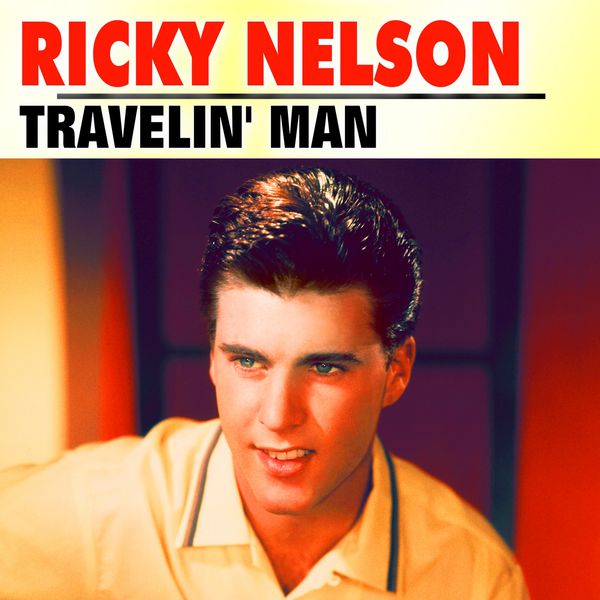
Ricky Nelson was a two-way star in the 50s. He gets overlooked at times compared to his peers.
This song was written by Jerry Fuller, a singer who had minor hits in 1959 with “Betty My Angel” and a cover of “Tennessee Waltz.” Fuller wrote “Travelin’ Man” one day at De Longpre Park in Hollywood while he was waiting to pick up his wife. He didn’t play an instrument, so he beat out the melody on his car’s dashboard.
Fuller recorded a demo of this song with Glen Campbell on guitar. He was hoping Sam Cooke would record it, so he brought it to Cooke’s manager, J.W. Alexander. Joe Osborn, who was Ricky’s bass player, heard it through the wall, He said, ‘J.W., do you have that ‘Travelin” song you just played?’ He said, ‘Yeah, you can have it,’ and he reached in the trash and he pulled out the demo.”
Osborn brought the song to Nelson, who loved it and recorded it. The song became his second (and last) #1 hit, and gave him a huge career boost.
Travelin’ Man peaked at #1 in 1961.
From Songfacts
For the lyrics, Fuller came up with a “girl in every port” idea – a guy who travels all over the world and finds a different girl waiting for him wherever he goes. He used an atlas to get ideas for places and looked up what the word for “girl” was in those places, so in German it’s “Fraulien,” in Mexico it’s “Senorita,” and in Alaska it’s a “cute little Eskimo.” He couldn’t figure out what the term was in Hawaii, so he went with “pretty Polynesian baby.”
Nelson used Elvis Presley’s backing singers The Jordanaires on this song, as he did on most of his recordings. He loved the background vocals on the demo though, which were done by Fuller, Glen Campbell and Dave Burgess. Nelson brought them in to record on subsequent records.
Depending on the criteria, “Travelin’ Man” could be the song with the very first music video. Ozzie Nelson realized that whenever he had Ricky sing on their show The Adventures Of Ozzie And Harriet, Ricky’s record sales shot up the next day, so Ozzie tried to work it into the plot whenever Ricky had a new record out. As Ricky became popular and the demand for his songs was overwhelming, Ozzie realized that working his singing into the plot was going to be impossible, so Ozzie filmed Ricky singing “Travelin’ Man,” superimposed some travelogue scenes over the film and tacked it onto a show episode at the end. Viola! The music video was born.
That is, if you don’t count performance videos and extracted movie scenes like “Jailhouse Rock.” And if you’re OK with it being black and white.
The episode, “A Question of Suits and Ties,” aired on April 5, 1961 (the song hit #1 on May 29). The clip is far from groundbreaking, but it was footage synched to a performance. Around this time, standalone concept videos were starting to show up for use throughout Europe in Scopitone video jukeboxes, which were typically placed in bars. A few American artists made videos for these machines in the mid’-60s when they started to appear Stateside. Neil Sedaka made one for “Calendar Girl” and Nancy Sinatra did one (for a company called Color-Sonics) for “These Boots Are Made For Walkin’.”
Rick Nelson was born Eric Hilliard Nelson in 1940. He died in a small plane crash in Texas in 1985 while flying to a New Year’s Eve concert. Mechanical problems and a cabin fire were suspected as the cause of the crash. Speculation that the fire was caused by someone on board freebasing cocaine was never proven, though aerosol cans were found at the crash site. The Nelson family said that the cans were part of the makeup box and that no drugs were involved. The matter was never completely resolved.
This is a crowd favorite on the “Ricky Nelson Remembered” show, staged by his twin sons Matthew and Gunnar. In our interview with Matthew Nelson, he said, “When I’m singing ‘Travelin’ Man,’ it’s 1977 at the Sahara in Las Vegas, when I hung out for a week while Pop did a residency there. And I think about the guys who were in the band.”
Travelin’ Man
I’m a travelin’ man and I’ve made a lot of stops All over the world And in every part I own the heart Of at least one lovely girl
I’ve a pretty Señorita waiting for me Down in old Mexico If you’re ever in Alaska stop and see My cute little Eskimo
Oh, my sweet Fraulein down in Berlin town Makes my heart start to yearn And my China doll down in old Hong Kong Waits for my return
Pretty Polynesian baby over the sea I remember the night When we walked in the sands of the Waikiki And I held you, oh so tight
Oh, my sweet Fraulien down in Berlin town Makes my heart start to yearn And my China doll down in old Hong Kong Waits for my return
Pretty Polynesian baby over the sea I remember the night When we walked in the sands of the Waikiki And I held you, oh so tight
Oh, I’m a travelin’ man Yes, I’m a travelin’ man Yes, I’m a travelin’ man Whoa, I’m a travelin’ man








 PowerPop... An Eclectic Collection of Pop Culture