I posted a song called Watusi Rodeo by Guadalcanal Diary a while back and I got a great response. I’ve been listening to these guys and it gets better and better. This band had a sophisticated and spiritual bent to the band’s lyrics.
This song is off of the EP Watusi Rodeo released in 1983. The songwriting in this band was a step above many of their peers…clever lyrics with a mixture of jangle and country. When you start listening to this band later on you can see a lot of eclecticism as they could bounce from one style to another.
They did get picked up by a major label after this release. Their LP Jamboree released in 1986 was on Elektra. They unsuccessfully attempted a commercial breakthrough, adopting the style of a country-rock band with some religious sentiment.
Jeff Walls and singer Murray Attaway were friends in high school in Marietta, Ga., just outside of Atlanta. Along with bassist Rhett Crowe and drummer John Poe, they formed Guadalcanal Diary.
In 2011, Guadalcanal Diary briefly reunited to play Athfest, and celebrated their 30th anniversary there. Jeff Walls died, May 29, 2019, of a rare pulmonary disease.
Trail Of Tears
The Sun hangs low in the Western sky I bow my head and remember now Someone’s lips pressed close to mine Her cool hand upon my brow
Hell burns hot for a killer ‘s heart A shallow grave in an unmarked plot Crack of gunfire in the dark Hand in hand we’ll walk at daybreak
One wore black One wore black One wore black
The trail of tears is winding on Many pass along the road Dusty soldiers march along As they file one by one
One wore black One wore black One wore black
Trail of tears is winding on Frightened soldier run no more Arm and arm with lovers gone No one passes on the road
Two girls wait at the railroad track For their soldiers to come back Knowing this will be their last One wore blue and one wore black
This is a perfect song to remember alternative radio with today. This is Paul Westerberg’s tribute to college radio in the 1980s. Of all the bands I’ve covered on Mondays…this band is my favorite of them all. They were more straight rock and roll with some quirks thrown in for good measure.
Left of the Dial celebrates the spirit of the eighties American indie rock scene and was a tribute to the tiny watt college stations populating the far end of the FM radio band—many let the Replacements crash after shows at campuses. Westerberg had said that is where they got most of their airtime…“We ended up going to college in an odd kind of way.”
The song is also about Westerberg’s infatuation with Lynn Blakey, singer-guitarist for North Carolina’s Let’s Active. They’d met when the bands shared a bill at San Francisco’s I-Beam in the fall of 1983. “He followed me around and bummed cigarettes off me,” recalled Blakey. The following night, after a show in Berkeley, the two spent hours walking together. They would exchange calls and letters as Blakey moved to Athens, Georgia, where she joined Michael Stipe’s sister Lynda in the band Oh-OK.
“I figured the only way I’d hear her voice was with her band on the radio . . . on a college station,” said Westerberg. “And one night we were passing through a town somewhere, and she was doing an interview on the radio. I heard her voice for the first time in six months for about a minute. Then the station faded out.” The moment provided the song’s lyric “If I don’t see ya, in a long, long while / I’ll try to find you / Left of the dial.”
The song was on the album Tim and it was released in 1985.
Left of the Dial
Read about your band in some local page Didn’t mention your name, didn’t mention your name The sweet Georgia breezes, safe, cool and warm I headed up north, you headed north
On and on and on and on What side are you on? On and on and on and on What side are you on?
Weary voice that’s laughin’, on the radio once We sounded drunk, never made it on Passin’ through and it’s late, the station started to fade Picked another one up in the very next state
On and on and on and on What side are you on? On and on and on and on and
Pretty girl keep growin’ up, playin’ make-up, wearin’ guitar Growin’ old in a bar, ya grow old in a bar Headed out to San Francisco, definitely not L.A. Didn’t mention your name, didn’t mention your name
And if I don’t see ya, in a long, long while I’ll try to find you Left of the dial Left of the dial Left of the dial Left of the dial Left of the dial Left of the dial Left of the dial Left of the dial
The Creeps sound like they came from the garages in the sixties but it was the 1980s. I love the sound they got on this record.
This song is off of their debut album “Enjoy The Creeps” and it was released in 1986. Critics have said that they never did translate the excitement of their live show to records but this one is good. They released it on a small label named Tracks on Wax which was a Swedish Garage Rock-label in the 80s.
They formed in Sweden in 1985. They were influenced heavily by the Animals and Yardbirds, Robert Jelinek (vocals, guitar), Hans Ingemansson (Hammond organ), Anders Olsson (bass) and Patrick Olson (drums). Whenever I think of music from Sweden I think of Abba…this is not Abba by any stretch of the imagination.
Their third album, Blue Tomato, was released in 1990. It contained their most popular song, ‘Ooh I Like It’, and it became a major Swedish hit and was eventually voted Best Song Of The Year by MTV viewers in 1990.
Down at the Nightclub was written by guitarist Robert Jelinek.
After a few years the band dropped the dirty sound of their debut album and went more for an 80s funk dance sound.
The band broke up in 1997.
Down At The Nightclub
All right We’re going down to the nightclub baby Where the fashion lights are all so gay And the music’s so loud I tell you we’re the in-crowd We’re the grooviest gang around
I got a battering ram in my head The room is turning in a blue green red And the lights sure blows my mind and I might get this time Down at the nightclub
That girl’s dancing in her miniskirt The way she moves now she gives me the hurt Gonna move up to her, let my backbone slip I’m gonna take her on a magic trip
I got a battering ram in my head The room is turning in a blue green red And the lights sure blows my mind and I might get this time Down at the nightclub
I got a battering ram in my head The room is turning in a blue green red And the lights sure blows my mind and I might get this time Down at the nightclub
First time I heard this song I loved it. I hear a strong Hollies and Beatles influence in this. This XTC spinoff band was a great idea and should have gotten airplay here. This is by far my favorite power pop song I’ve feature on Fridays in the past 5 months.
This album was released on April Fools Day 1985 through Virgin Records. It was publicized as a long-lost collection of recordings by a late 1960s group. Under the name The Dukes of Stratosphear, XTC members Andy Partridge, Colin Moulding, Dave Gregory, and and Dave’s brother Ian Gregory paid tribute to such acts as The Beatles, The Hollies, The Yardbirds, and The Beach Boys to name a few. They produced two albums: 1985’s album 25 O’Clock and 1987’s Psonic Psunspot.
Each musician adopted a pseudonym: “Sir John Johns” (Partridge) “Lord Cornelius Plum” (Dave), “The Red Curtain” (Colin Moulding) and “E.I.E.I. Owen” (Ian). The band dressed themselves in Paisley outfits for the sessions and lit scented candles.
Despite the great songs, the Dukes never made the charts. In the UK, the records outsold XTC’s then current albums The Big Express (1984) and Skylarking (1986).
It’s possible that XTC would not have survived beyond the ’80s without this fun side-project according to former XTC guitar player David Gregory as tensions were high recording The Big Express and Skylarking.
David Gregory:That so many others found it amusing and entertaining simply adds to the joy we derived from its creation.
Andy Partridge talking to producer Steve Nye: “Ooh, I’m a bit funny about how this came out, Steve, because it sounds a bit Beatles-esque to me, and I don’t want people to think I’m copying the Beatles.” He said, “Who gives a fuck? That’s how you’ve written it—just do it!’ … I realised that I should not be ashamed about digging them up, and getting them wrong, and using them as my template. … from that moment onward, I started to recognise that those songwriters—the Ray Davieses, the Lennons and McCartneys, the Brian Wilsons—had gone into my head really deeply
Vanishing Girl
Someone’s knocking in the Distance But I’m deaf and blind She’s not expected home this evening So I leave the world behind
for the Vanishing Girl The Vanishing Girl Yes she’d give you a twirl But she vanishes from my world
So burn my letters and you’d better leave Just one pint a day The whole street’s talking about my White shirts looking so grey
People gossip on the doorstep Think they know the score She’s giving him the runaround The man from number four
Has a Vanishing Girl a Vanishing Girl Yes she’d give you a twirl But she vanishes from my world
Yes the paint is peeling and my Garden is overgrown I got no enthusiasm to even answer the phone When she’s here it makes up for the time she’s
not and it’s all forgotten But when she goes I’m putting on the pose for the Vanishing Girl
I didn’t hear this song until I heard it on car commercial. It took me a while to track it down. This band was on the alternative club circuit in the early 80s. Their name was not inspired by William Faulkner’s 1935 novel of the same name as some believe. They were inspired by traffic cones… as simple as that. Bassist Michael Lachowski has said “we chose Pylon because it is severe, industrial, monolithic, functional.”
They were four art students at the University of Georgia in Athens in 1979. Guitarist Randall Bewley and bass guitarist Michael Lachowski began playing music and attempting to form a band in 1978. Neither one of them knew how to play but they started to learn. Drummer Curtis Crowe and vocalist Vanessa Briscoe soon joined.
This song was released in 1979 as a single with “Dub” on the B side.
Mills has said the REM song A Month of Sundays was inspired by them… “I was thinking Pylon when I wrote it, so it’s my tribute to Randy Bewley.” Richard Bewley was Pylon’s guitar player.
They would go on to open for bands like REM, U2, and the B-52s,
When Rolling Stone named R.E.M. “America’s Best Band” in December 1987, R.E.M. drummer Bill Berry said, “We’re not the best rock ‘n’ roll band in America”, declaring that Pylon was instead the best.
The band broke up in 1983 deciding to end it while it was still fun.
Vanessa Briscoe on the breakup in 1983: Let’s just quit while we’re having fun.’ That was kind of the idea in the first place. We were just going to perform as long as it was fun. So we broke up and it was a decision we all made together. We accomplished what we set out to do… It’s not that we are miserable, it’s just that we’ve seen all we’re going to see and don’t want to put any more time into it”
They reformed in 1990 when a complication album came out of their music from 1979-1983.
Cool
Pure form Real gone Like wild Good vibes
Everything is cool
There are these forms I like to watch There are these shapes which talk to me
I love forms, and forms love me The more you look, the more you see
When I heard the organ in this song it hooked me. I haven’t posted much of Costello partly because like the Replacements…I got sidetracked in the late 80s away from him and since I started blogging I’m rediscovering him again.
I was 10 years old walking in our old drug store and I heard this artist I never heard before over the speakers…the song they were playing was Alison. The drug store sold records also and they had Elvis’s debut album propped up for viewing. The name threw me because this “Elvis” was a small skinny guy with glasses…that is when I found his music.
Radio Radio was made more famous by the Saturday Night Life performance.
Radio Radio was released as a single in 1978 and peaked at #29 in the UK. It was on the US version of the album This Year’s Model and it peaked at #30 in the Billboard Album Charts, #21 in Canada, and #4 in the UK.
Costello was slated to play his current UK single “Less Than Zero,” on Saturday Night Live in 1977. Costello launched into a few bars of “Less Than Zero,” but then turned to his band and told them to stop. He then apologized to the live audience, saying, “I’m sorry, ladies and gentlemen, but there’s no reason to do this song here,” and broke into a full rendition of “Radio Radio,” which had not yet been released.
Lorne Michaels…the God of Saturday Night Live was not pleased.
Costello was banned from Saturday Night Live. It has been said that the corporate brass at NBC (which owned radio properties) objected to the lyrics of “Radio Radio,” but others say it was because Costello went off-script, which was a no no to Lorne Michaels. That was one rule Michaels wanted the cast to know…they were not the Carol Burnett show and they were not to go off script or laugh.
Costello later claimed he was inspired by Jimi Hendrix, who in 1969 stopped a performance of “Hey Joe” on the show Happening for Lulu and launched into the Cream song “Sunshine Of Your Love,” earning him a ban from the BBC.
On Saturday Night Live’s 25th anniversary show in 1999, Costello parodied the incident when he interrupted the Beastie Boys while they were playing “Sabotage,” leading them in a full version of “Radio Radio.”
Elvis Costello:“Before I got into show business, I thought radio was great, So I wrote a song about celebrating it – the thrill of listening to it late at night. This was my imaginary song about radio before I found out how foul and twisted it was.”
From Songfacts
In this song, Costello is protesting the commercialization of late 1970s FM radio. Radio stations would become more and more consolidated over the years, and their playlists tightened up considerably. Eventually, deregulation led to a few companies owning the majority of American radio stations, which led to automated stations. Tom Petty sang about this on his 2002 track “The Last DJ.”
This song is a takedown of radio, but it started out as a loving tribute. Costello wrote the first version of the song as “Radio Soul” when he was in a band called Flip City. They recorded a demo in 1974, but the song was never released.
In “Radio Soul,” Costello sings lovingly about radio, without any trace of vitriol:
I could sail away to the songs that play upon that radio soul
Radio soul
It’s a sound salvation
When he reworked the song in 1977, he changed the title and completely flipped the meaning, reflecting his newfound take on the topic.
On December 17, 1977, Elvis Costello & the Attractions appeared on Saturday Night Live as last minute replacements for the Sex Pistols, whose various criminal records had made getting visas in time difficult.
Costello’s ban was lifted in 1989 when he returned as musical guest, performing “Veronica” and “Let Him Dangle” without incident. His 1977 act of defiance became part of Saturday Night Live lore, and is often recounted in retrospectives of the show’s history.
Bruce Springsteen was an influence on this song, musically and lyrically. The Springsteen ethos is more apparent in the “Radio Soul” version, with the theme of escaping to a better place through the power of music.
In the ’10s, Costello started performing the “Radio Soul” version of this song, explaining that it resonates with him far more than “Radio Radio.” He has clearly mellowed out.
Costello performed the early version of this song, “Radio Soul,” at the Apple iTunes Radio announcement event on September 10, 2013. Introducing the song, he explained that radio was very important to him, since his father was singer for a radio dance band.
The 1999 SNL return and parody of the original event.
The 1977 SNL infamous appearance
Radio Radio
I was tuning in the shine on the late night dial Doing anything my radio advised With every one of those late night stations Playing songs bringing tears to my eyes I was seriously thinking about hiding the receiver When the switch broke ’cause it’s old They’re saying things that I can hardly believe They really think we’re getting out of control
Radio is a sound salvation Radio is cleaning up the nation They say you better listen to the voice of reason But they don’t give you any choice ’cause they think that it’s treason So you had better do as you are told You better listen to the radio
I wanna bite the hand that feeds me I wanna bite that hand so badly I want to make them wish they’d never seen me
Some of my friends sit around every evening And they worry about the times ahead But everybody else is overwhelmed by indifference And the promise of an early bed You either shut up or get cut up, they don’t wanna hear about it It’s only inches on the reel-to-reel And the radio is in the hands of such a lot of fools Tryin’ to anesthetize the way that you feel
Radio is a sound salvation Radio is cleaning up the nation They say you better listen to the voice of reason But they don’t give you any choice ’cause they think that it’s treason So you had better do as you are told You better listen to the radio
Wonderful radio Marvelous radio Wonderful radio Radio, radio Radio, radio Radio, radio Radio, radio Radio, radio Radio, radio Radio, radio Radio, radio
I got into XTC late into the game. I didn’t get to know them until they released I’m The Man Who Murdered Love. I liked this song right away because it has a nice power pop sound. The drums stand out on this song.
This song was XTC’s breakthrough single released in 1979. It was written by bassist Colin Moulding, who shared vocal and songwriting duties with guitarist Andy Partridge. It was on the third, breakthrough, album Drums And Wires.
The album peaked at #174 in the Billboard album charts, #15 in Canada, #34 in the UK, and #12 in New Zealand.
Making Plans For Nigel peaked at #12 in Canada, #17 in the UK, and #29 in New Zealand.
The lyrics are told from the point of view of parents who are certain that their son Nigel is happy in his work, affirming that his future in British Steel “is as good as sealed”, and that he “likes to speak and loves to be spoken to”. As a response to the song, British Steel reportedly gathered four Sheffield employees
named Nigel to talk about job satisfaction for the trade publication Steel News.
From Wiki: The first 20,000 pressings of the single came in a fold-out cover that created a fully playable gameboard of “Chutes and Ladders” adapted to details of Nigel’s “miserable life”, including the purchase of a scooter, job interviews, a holiday in Spain and an engagement to “a very nice girl.” There were two versions of the gameboard, one to be played by Nigel and the other to be played by his parents. As credited on the back cover, the illustrator was Steve Shotter and sleeve design was by Cooke Key.
Colin Moulding:
“Partly biographical, this one. My dad prompted me to write it. He wanted a university future for me and was very overpowering in trying to persuade me to get my hair cut and stay on at school. It got to the point where he almost tried to drag me down the barber’s shop by my hair. I know the song tells of a slightly different situation, but it all boils down to the same thing – parental domination.”
There were no Nigels at school. I wasn’t bullied, but I think I had a natural empathy for people that were. ‘Nigel’ was my song for the bullied, I suppose.
“British Steel was just a bit of naughtiness. What I hadn’t bargained on was the union boss later ringing me up and asking me to join the cause! I had the devil of a job to convince him it was an organization I chose at random.”
Andy Partridge:“Quite early on it had been decided that Making Plans For Nigel was going to be the single. We spent five times longer messing with that song than any of my tracks. At one point I was fuming because my songs were being ignored.”
From Songfacts
The Rembrandts, Primus and Robbie Williams all covered this.
This was covered by Nouvelle Vague, a bossa group, and included on a chillout compilation album known as Breakfast Club: Milan.
Andy Partridge told Uncut: “The things that sound like sheets of metal being struck, that’s a white noise patch on a monophonic Korg synth we had. We decided to do it with this industrial sound and glories, so it hinted that British Steel, which is where Nigel works.”
Making Plans For Nigel
We’re only making plans for Nigel We only want what’s best for him We’re only making plans for Nigel Nigel just needs this helping hand
And if young Nigel says he’s happy He must be happy He must be happy in his work We’re only making plans for Nigel
He has his future in a British steel We’re only making plans for Nigel Nigel’s whole future is as good as sealed And if young Nigel says he’s happy
He must be happy He must be happy in his work Nigel is not outspoken But he likes to speak
And loves to be spoken to Nigel is happy in his work We’re only making plans for Nigel
I’ve been listening to this band for the last few days…they combine country with jangle pop on a lot their songs. This band came from Marietta, Georgia, a suburb of Atlanta, but they were often billed as being from Athens, Georgia and was lumped in with the other Athens acts.
The band formed in 1981 and disbanded in 1989. They reformed in 1997, but never recorded any new material. After going on hiatus in 2000, Guadalcanal Diary temporarily reunited for a second time in 2011 for Athfest, where they celebrated their 30th anniversary.
Still in high school, singer/guitarists Murray Attaway and Jeff Walls became musical partners when they joined the punk band Strictly American. Electing to strike out on their own, they formed Emergency Broadcast System. Walls was teaching Rhett Crowe bass at the time and she was asked to join the band. Crowe accepted the offer and quickly suggested a name change to Guadalcanal Diary (based on the 1940s movie).
Though he had no experience on the instrument (having previously played bass), Walls friend John Poe was added as drummer.
The band quickly became staples on the Athens and Atlanta club circuit, signed by Danny Brown’s Atlanta-based dB Records.
Watusi Rodeo was on Guadalcanal Diary’s debut album called Walking In The Shadow of The Big Man released in 1984. They were constantly being overshadowed by the successes other mid-’80s alternative jangle rock bands.
Watusi Rodeo
Come along with me to the Congo land Got a zebra by the tail and a python in my hand Once my home was a Texas plain But now I swing a lasso on an alien terrain
Hottentots and pygmies know where to go Everybody’s heading for the Watusi Rodeo
Cowboys are putting up a big fence around A sacred elephant burial ground Native women stomping up a flurry in the mud Villagers are looking for some cowboy blood
I guess they didn’t like them hats we made ’em wear They don’t look right on the native hair Don’t they know that it’s all for show All for showing at the Watusi Rodeo
Monkeys in the trees just thumbing their nose At the bull riders riding on rhinos Warriors standing with spears in the hands Wondering what’s next from a crazy white man
Natives are restless under these Stetsons What are these cowboys doing in the Congo Look like cows but they’re water buffaloes Ropin and a ridin in the Watusi Rodeo
Oh they look like cows but they’re water buffaloes Everybody’s heading for the Watusi Rodeo
Such a great band but such a frustrating story. Robyn Hitchcock remarked, “Big Star is like a letter that was mailed in 1972 but didn’t arrive until 1985.” That is a great way to explain them. They made three of the best albums of the decade that were not heard until much later. When they were finally discovered they influenced many artists such as The Replacements, REM, Cheap Trick, Matthew Sweet, and more. The last time I checked it was on Netflix…watch this documentary.
When these musicians and critics talk about Big Star…they talk about them like people talk about The Beatles, Rolling Stones, The Who, and The Kinks. In this documentary you have Cheap Trick, REM, Mitch Easter, Robyn Hitchcock, and others talking about the band.
The first album got great reviews…you couldn’t ask for better. When the label called radio stations trying to get them to play it…the stations would say it’s not selling. When someone actually heard the songs on the radio, they couldn’t find the record to buy it. This was basically the same story with all of the albums.
Distribution problems and just bad timing. Stax didn’t do a good job of distribution…they made a deal with Columbia before the second album to distribute the album…problem solved right? Nope, Clive Davis who made the deal was then fired at Columbia. The deal fell through and then Stax disintegrated.
Chris Bell who was key in creating the sound the band had quit after the first album. He came back but then quit again. Chris had depression problems and wanted badly to do something on his own. Alex Chilton continued and finished the second and third album with a new bass player on the third album.
After that, it follows Chris and Alex’s career to the end of both. It also covers Jim Dickinson’s role on the third experimental album. Family members, fans, and rock writers also share their love of Big Star and memories of the band members.
In May of 1973 Ardent Studios where Big Star recorded invited 100 rock writers down to Memphis to hear Big Star live. They all loved Big Star and it went over great…but that wasn’t the band’s problem…it was the business side. What would have happened if they would have signed with a label more suited to them?
Before watching this documentary, a couple of years back I didn’t realize Chris Bell was so instrumental in developing their sound. I knew it wasn’t the Alex Chilton band, but Chris was invaluable and started the ball rolling. All 4 members did contribute writing and singing but Chilton and Bell were the Lennon and McCartney of the group.
It’s a great documentary about a great band that had the talent, but fate wasn’t on their side.
There is the often-used Peter Buck quote that everyone who bought the first Velvet Underground album went out and started a band…the same is true with this band.
My recommendation? Watch it…NOW
Cast
Billy Altman … Self – Writer
Jon Auer … Self
Lester Bangs … Self (archive footage)
Chris Bell … Self (archive footage)
David Bell … Self – Chris Bell’s Brother
Norman Blake … Self
The Box Tops … Themselves (archive footage)
Panther Burns … Themselves (archive footage)
Cheap Trick … Themselves
Stephanie Chernikowski … Self – Photographer
Alex Chilton … Self (archive footage)
Rick Clark … Self – Writer and Musician
Stephen Ira Cohen … Self – U.S. Congressman (archive footage) (as Steve Cohen)
The Cramps … Themselves (archive footage)
John Dando … Self – Band Manager, Ardent Studios 1972-1975
Luther Dickinson … Self
Mary Lindsay Dickinson … Self
Steven Drozd … Self
Van Duren … Self – Musician
Mitch Easter … Self – Musician and Producer
Bruce Eaton … Self (voice) (archive footage)
William Eggleston … Self
Tav Falco … Self
John Fry … Self – Founder, Ardent Studios
John Hampton … Self – Engineer, Ardent Studios
Douglas Hart … Self – Bass, The Jesus and Mary Chain
Robyn Hitchcock … Self
Andy Hummel … Self (archive footage)
Ross Johnson … Self – Writer and Musician
Ira Kaplan … Self
Lenny Kaye … Self – Writer and Musician
John King … Self – Promotions, Ardent Studios 1972-1975
Curt Kirkwood … Self
John Lightman … Self
Carole Manning … Self – Ardent Studios 1972-1975
Mike Mills … Self
The Replacements The Replacements … Themselves (archive footage)
Steve Rhea … Self – Promotions, Ardent Studios 1972-1975
Will Rigby … Self – musician
Richard Rosebrough … Self – Engineer, Ardent Studios 1972-1975
Kliph Scurlock … Self
Tom Sheehan … Self – Photographer
Chris Stamey … Self – Musician and Producer
Big Star … Themselves
Jody Stephens … Self
Sara Stewart … Self – Chris Bell’s Sister
Michael Stipe … Self
Ken Stringfellow … Self
Matthew Sweet … Self
Alexis Taylor … Self
Marge Thrasher … Self – Hostess of Straight Talk (archive footage)
Jon Tiven … Self
Pete Tomlinson … Self – Writer
Jaan Uhelszki … Self – Writer (as Jaan Uhelzski)
Terry Edwards … Conductor, London (uncredited)
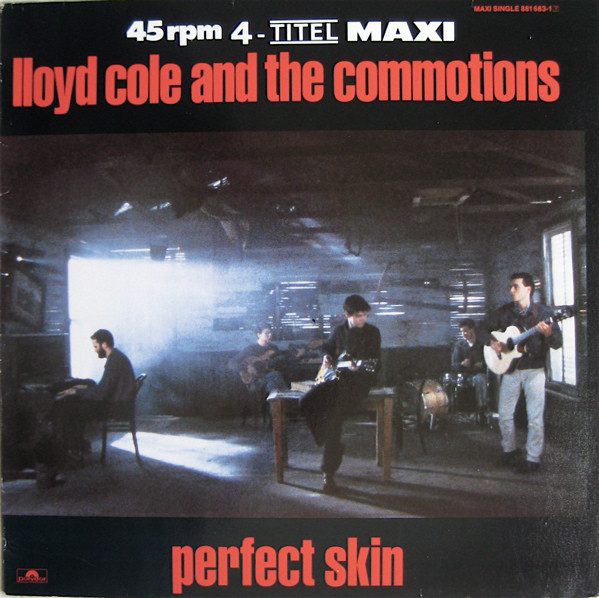
Love the sound of this song. It sounds like it could have come out of any decade. The guitar fills are wonderful. It’s a shame they didn’t have success in America but they were played on college radio stations.
Lloyd Cole wrote the lyrics and music to this song. He would write all the lyrics on the album and on a few songs would get some help with the music.
Perfect Skin was off of the album Rattlesnakes which peaked at #13 in the UK and New Zealand in 1984. The song peaked at #26 in the UK. NME included the album in its Top 100 Albums of All Time list, and the title track was later covered by the American singer Tori Amos.
The Welsh band Manic Street Preachers included the album amongst their top ten list.
They were active from 1984 through 1989 and released three albums and all of them made the top twenty in the UK. They had formed in Glasgow, Scotland in 1982…they broke up in 1989. Cole embarked on a solo career but the band reformed briefly in 2004 to perform a 20th anniversary mini-tour of the UK.
Lloyd Cole:Perfect Skin’s Louise wasn’t real, though. I’d read about Bob Dylan seducing women by writing songs for them, so I was showing off with words: “She’s got cheekbones like geometry and eyes like sin and she’s sexually enlightened by Cosmopolitan.” When I sing that live now, I go: “Who isn’t?”
Between 1983 and 84, we went from being a wimpy band who sounded like the Style Council to more of a rock band. When I wrote Are You Ready to Be Heartbroken? it made us realise what we could do. I took a Portastudio to my room in Glasgow Golf Club, where my parents worked and lived, and wrote Perfect Skin and Forest Fire. Not one song on Rattlesnakes was more than a year old when it was recorded.
Perfect Skin
I choose my friends only far too well I’m up on the pavement They’re all down in the cellar With their government grants and my IQ They brought me down to size Academia blues
Louise is a girl I know her well She’s up on the pavement Yes, she’s a weather girl And I’m staying up here so I may be undone She’s inappropriate but then she’s much more fun and
When she smiles my way My eyes go out in vain She’s got perfect skin
Shame on you, got no sense of grace Shame on me Just in case I might Come to a conclusion other than that which is absolutely necessary And that’s perfect skin
Louise is the girl with the perfect skin She says, “Turn on the light otherwise it can’t be seen” She’s got cheekbones like geometry and eyes like sin And she’s sexually enlightened by Cosmopolitan and
When she smiles my way My eyes go out in vain For her perfect skin Yeah, that’s perfect skin
She takes me down to the basement To look at her slides Of her family life Pretty weird at times At the age of ten she looked like Greta Garbo and I loved her then But how was she to know that
When she smiles my way My eyes go out in vain She’s got perfect skin
Up eight flights of stairs to her basement flat Pretty confused, huh? Being shipped around like that Seems to climb so high Now we’re down so low Strikes me the moral of the song Must be: there never has been one
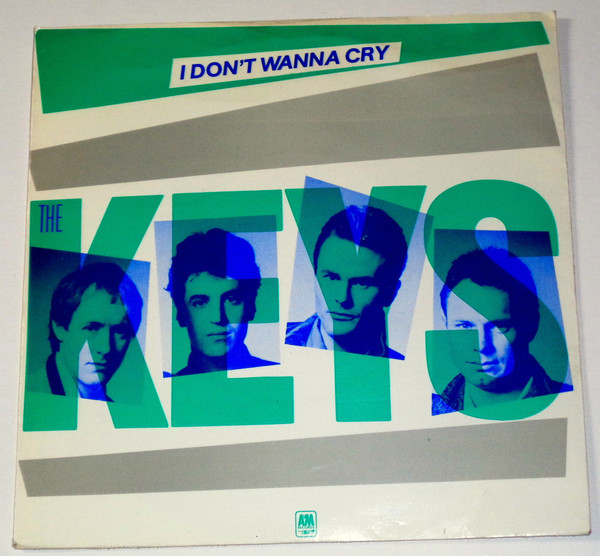
This fantastic English band was active between 1979 through 1983. The Keys attracted a lot of attention. They had a producer who I would have never guessed. Joe Jackson…I just never thought of him producing a power pop record.
The band included main songwriter and bassist Drew Barfield, guitarists
Steve Tatler and Ben Grove, and former Paul McCartney and Wing’s drummer Geoff Britton.
They were signed to A&M records and released the U.K. their only LP “The Keys Album”. The album drew rave reviews, but unfortunately it didn’t sell very well. Besides the album, the label released six singles. Due to a lack of interest The Keys split in 1983.
I listen to the album and I see why they got great reviews…I just can’t figure why they didn’t sell. I Don’t Wanna Cry was the A side and the B side was a song called Listening In. I have the video below…both songs are good power pop.
David Silvia from Allmusic:One of powerpop cornerstones ever. A hidden classic and a real masterpiece. Pop at it’s best
I Don’t Wanna Cry
Was it really just our last good night when I saw the light and I know that you’ve been telling lies Oh, no, not me, I don’t wanna cry You could talk about it all night long but the feeling’s gone and I don’t need you to tell me why Oh no, not me, I don’t wanna cry
‘Cos you know, I’ve got you figured out and you have got, nothing to shout about if this is love, I don’t really wanna play I wanna know why you want to stay
I know all about your little plan find a fool and check up the thing you can well, it seems is never gonna be that way I wanna know what you want to stay ESTRIBILLO
Oh no, not me, I don’t wanna cry Oh no, not me, I don’t wanna cry I don’t wanna cry I don’t wanna cry I don’t wanna cry I want to know what you want to stay
The title was enough for me to take a listen to this band. They combined 60’s garage rock, country, blues, and folk influences to become one of the many 80’s roots rock bands.
The Del Lords were formed in the early ’80s by Scott Kempner of New York punk group the Dictators. They emerged from the’70s new wave scene…which the band never quite fit. Kempner gathered together Eric Ambel of Joan Jett And The Blackhearts, drummer Frank Funero (now with Cracker) and bassist Manny Caiati and set out as The Del-Lords.
How Can a Poor Man Stand Such Times and Live? is an American folk song originally recorded 1929 in New York City. It was written, composed, and performed by Blind Alfred Reed, accompanying himself on the violin.
The song tells of hard times during the Great Depression. It is considered an early example of a protest song. In 2020, the song was added to the Grammy Hall of Fame.
The song was on their Frontiers album released in 1984.
The Del-Lords lived together, played together, recorded and released records as a band through 1990. At the urging of the Spanish Promoter Pepe Ugena they reformed the band in the last decade and recorded and released their most recent music in 2013 on the album Elvis Club.
How Can a Poor Man Stand Such Times and Live?
How can a poor man stand such times and live How can a poor man stand such times and live How can a poor man stand How can a poor man stand How can a poor man stand such times and live
The doctor comes around with his face all bright And he swears, in a little while, it’ll be alright All he gives you is a humbug pill A dose of dope and a great big bill How can a poor man stand such times and live
There once was a time when everything was cheap But the prices nowadays nearly put the man to sleep When we get out grocery bill Man I feel like makin’ out our will How can a poor man stand such times and live
How can a poor man stand such times and live How can a poor man stand such times and live I give all I’ve got to give I get my pay and say, is this it How can a poor man stand such times and live
Tell you what This poor boy’s got some big plans of his own I’m gonna call up a coupla friends on the telephone Tell ’em, Bring some records and bring some beer Then we can just hang out over here How can a poor man stand such times and live
How can a poor man stand such times and live How can a poor man stand such times and live How can a poor man stand How can a poor man stand How can a poor man stand such times How can a poor man stand such times How can a poor man stand such times and live And live
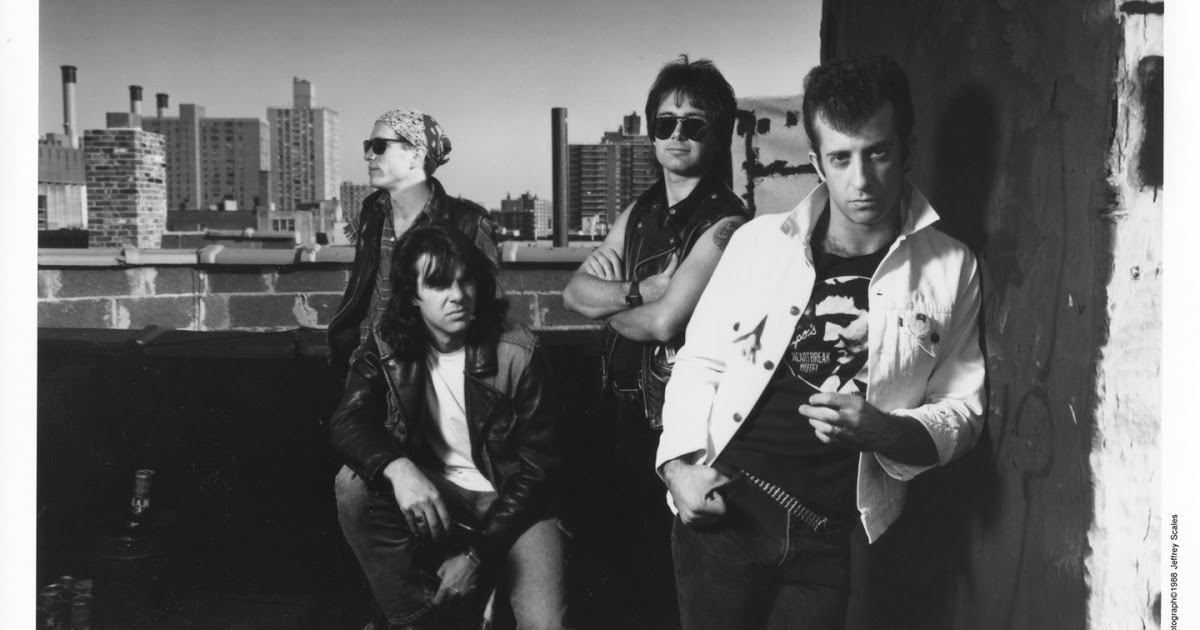
I love the opening riff to this song! It sounds like a riff from the old 70’s ZZ Top with a little Stones thrown in…. but a little rawer. I have to thank my blogger friend CB who mentioned this band.
In 1989 singer and guitarist Marcellus Hall formed the band in 1989 on the Lower East Side of Manhattan with bassist Tony Lee and drummer Jez Aspinall. Within a few months, guitarist Chris Mueller also joined.
I hear a mixture of The Cramps and The Stones. This was on their 4th album The Third Rail released in 1996. The band recorded demos for a fifth Railroad Jerk LP which was to be entitled ‘Masterpiecemeal’. This final LP was never released. Dave Varenka and Marcellus Hall went on to form the band White Hassle.
It’s not a lot about this band, not even the song’s lyrics so I’m including an excerpt from AllMusic.
Railroad Jerk skewer blues, country, rock, and noise into a messy, bohemian post-punk celebration of roots rock. Formed in 1989 by guitarist/vocalist Marcellus Hall and bassist/vocalist Tony Lee in Trenton, NJ, the duo added drummer Jez Aspinall and guitarist Chris Muller by early 1990; the group recorded their self-titled debut for Matador Records in 1990. After its release, Aspinall left the band and was replaced by Steve Cercio; Muller was kicked out of the band and replaced by Alec Stephen. The quartet released their acclaimed second album, Raise the Plow, in 1993; after its release, Cercio left the band and was replaced by Dave Varenka. Railroad Jerk released its third album — its most highly-praised yet — in spring of 1995. Third Rail, the group’s fourth album, also received positive reviews upon its fall 1996 release.
This is great 1980s college radio power pop. Everything is there you want…the jangle and the jangly hook.
Let’s Active was formed in 1981 by Mitch Easter, a guitarist and songwriter best known as a record producer, with Faye Hunter on bass. Drummer Sara Romweber, then 17 years old, joined to form the original trio two weeks before their first live performance. Their first performance was opening for R.E.M. in Atlanta, Georgia in 1981.
Let’s Active was critically praised but like their peers did not sell a ton a records. This song was on the 1983 EP Afoot and they would go on to release three more LPs in all before breaking up in 1990.
Mitch produced REM on their Chronic Town EP, Murmur, and Reckoning. Easter also produced Marshall Crenshaw, Suzanne Vega, and bunches of indie acts. He also took a trip to Memphis in 1978 with members of the dB’s to meet two members of Big Star.
Romweber quit the band in 1984 after the release of the Afoot EP and their debut full-length, Cypress. Later, she co-founded the group Snatches of Pink and performed with her brother as the Dex Romweber Duo. In 2014, she reunited with Mitch Easter as Let’s Active for a benefit show. She would die of a brain tumor in 2019. Bassist Faye Hunter died in 2013.
Mitch Easter:
“I could not imagine myself singing in a Johnny Winter-style voice about ‘I just wanna make love to you,’ but the new goofball lyrics were something I could pull off,’ “I read an article with Andy Partridge of XTC back then where he was saying at no other time in history would he have been allowed to be the singer in a band. And I felt just like that, you know.
“I had this weird voice, but now maybe I could be allowed to sing without suffering some hopeless comparison to Gregg Allman.’
Every Word Means No
Watching for a sound to lead me to where ever you are I can’t help it I will always love you
It used to be no words could come between us Any time was right for secret meetings It’s different now and when you speak Every word means no Every word means no
I’m thinking, of things that never come to life You’re going through some things so shallow There’s nothing to fight
It used to be no words could come between us Any time was right for secret meetings It’s different now and when you speak and Every word means no Every word means no
And it’s just anathema I haven’t lost my way I’m looking around in directions ‘Cause all I ever thought about was you I never noticed anything but you Predicting, puts me down on shaky ground I keep on thinking your looking at me Do you want me around
It used to be no words could come between us Any time was right for secret meetings Now and then I forget the rules have changed You always remind me That every word means no, every word means no
Somewhere in the 80’s out of all the synthesizers, electronic drums, quadraverbs, and that big sheen production…there was a rock roots movement playing out on college radio. Some was a mixture of punk rock, country, British Invasion, and power pop.
Scruffy the Cat was a cowpunk band that was popular on the Boston area, but never sniffed the charts. My Baby, She’s All Right is from 1987 that got some MTV airplay. I do barely remember the song after seeing the video. I want to thank Paul for bringing this one up.
The song was off the album Tiny Days released in 1987 and the album was in the top 5 of college national radio charts.
Charlie Chesterman was in a band in Iowa and they all moved to Boston in 1981. The band he was in then broke up and some moved back to Iowa. Chesterman stayed on in Boston and eventually helped put together another band called Scruffy the Cat (named for a cat owned by the father of one of the band members). Scruffy the Cat began playing around Boston in 1983 and released its first EP-”High Octane Revival”-on the Relativity label in 1986. They released the LP Tiny Days in 1987, Boom Boom Bingo EP in 1987, and their final album Moons of Jupiter in 1988.
They had several national tours and shared the bill with such acts as The Replacements, Yo La Tengo, and Los Lobos. The band played its final shows in 1990 before disbanding. In 2011, Scruffy The Cat played three reunion shows in the Boston area, with the initial show being arranged as a benefit concert for the cancer-stricken Chesterman. Chesterman died in November 2013.
Their music as been described as “a combination of early Elvis Costello and the Attractions with a touch of Jason & the Scorchers’ tough country punk and the American jangle of the Byrds.” They were together between 1984 through 1990.
My Baby, She’s All Right
She’s a long, tall drink of water Badder than Bo Diddley’s electric guitar Badder than anything this whole year I don’t like bragging but I can’t help myself, well…
Long and lean like a Cadillac Supercharged like the Batmobile She drives me into the woods When she gets behind the wheel
In the desert, in the hottest fire, in the houses and over the seas In the cities, in the telephone wires They all talk about what she means to me, ’cause…
My baby, she’s allright My baby, she’s allright My baby, she’s allright My baby…
She’s got that certain something Man, I hope you know what I’m talking about If you’ve ever had a lover who was really true Just walking down the street or when you turn out the lights, ’cause…
My baby, she’s allright My baby, she’s allright My baby, she’s allright My baby…
And when she kisses me, I hear the Drells or is it T. Rex? I could hang my arm out the window, but around my baby is where I’ll be…
I know you must have heard about her You know everything they say is true I suppose you know what she means to me And if you don’t then what’s the matter with you? well…
Haven’t you been listening Or did you hear what I just said? If someone tried to show me something better I’d have to say I’m not interested, because…
My baby, she’s allright My baby, she’s allright My baby, she’s allright My baby…Yeah, yeah, she’s allright My baby, she’s allright My baby, she’s allright My baby, she’s allright My baby…Yeah





:format(jpeg):mode_rgb():quality(90)/discogs-images/R-10180888-1593845402-2304.jpeg.jpg)


 PowerPop... An Eclectic Collection of Pop Culture