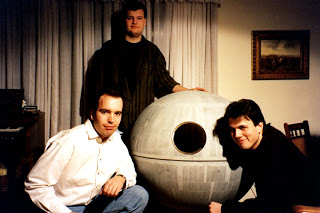
It’s unbelievable how close this famous movie prop came to being lost.
The model used in the film along with some other props were thought to be garbage after the movie finished filming.
Many of the props were kept in a facility called Dollar Moving and Storage. The storage unit was rented by the studio and upon completion of postproduction, the studio decided they no longer wanted to pay rent and ordered everything in storage to be discarded. An employee named Doug W. rescued many of the props from the garbage including the Death Star. In a world before ebay…who knows what was lost.
Doug displayed the Death Star in his home in California for about a decade. Around 1988, Doug moved to Missouri and stored the Death Star at his mother’s antique shop (Sutter’s Mill Antiques, later renamed The Mexican Hillbilly) in Missouri.
Todd Franklin, a Star Wars collector living in the area, drove by the antique shop and was immediately convinced it had to be the original Death Star model. Todd wondered how and why the original Death Star was in Missouri. He made some calls and was convinced it was the one. He was going to buy it but before he got back it was sold to another person named Mark who was the owner of a country and western music show called Star World. Mark displayed the Death Star in the lobby.
In 1994 Todd, his brother Pat, and friend Tim Williams traveled to Star World who was going out of business. The Death Star was being used as a trash can in the corner! Todd made an offer and bought it on the spot. All three owned it and contacted Lucasfilm but they did not want to buy it back.
In 1999 Gus Lopez contacted Todd, Pat, and Tim and negotiated a price. Now, Gus owns the famous Death Star.
Since then, Lopez has had the original Death Star on display in a custom-made case in his home, and he even loaned it to the Museum of Pop Culture in Seattle (though Lopez refers to it by its former name: the EMP (Experience Music Project) Museum) for a five-year stint.
Gus Lopez: “The EMP gave it top billing in the museum with a prominent spot at the center of one of the main rooms. I got a kick out of reading about the Death Star in local tourist literature and walking by the Death Star on display at the museum to hear conversations from people telling their stories about what Star Wars meant to them. And now the Death Star is back home, where I see it every day. And when I look at it, I am still amazed it survived its long journey and is sitting right in front of me.”
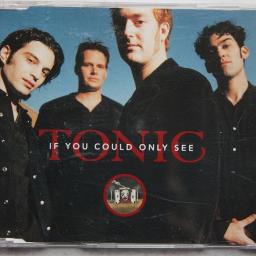
I remember this song in the 90s and never knew much about the song or band. It does have a catchy hook. The song was released to radio and MTV, but in the interest of album sales, it was not sold as a single. This made the song ineligible for the Billboard Hot 100 but pushed sales of their debut album Lemon Parade past one million. The song peaked at #1 in the Billboard Mainstream Rock Charts in 1997.
Tonic frontman Emerson Hart wrote this song after a tense phone call with his mother. Hart was 21 years old and planning to get married – not what his mother had in mind. She tried to talk him out of it, but you can’t argue with love. Emerson told her: “If you could only see the way she loves me, then maybe you would understand,” and then he hung up.
In the end, his mother was right: it didn’t work out with the girl and they never got married.
From Songfacts
This was Tonic’s first single, but it almost didn’t make the album. The band got a deal with Polydor Records after playing clubs for a few years in the Los Angeles area. When it came time to record their debut album, Emerson Hart wasn’t sure if they should use “If You Could Only See,” since it was a very vulnerable song and he wasn’t sure how it would be received. Polydor, however, loved it and made sure it was the debut single.
The song made #1 on the Mainstream Rock chart and received very consistent airplay – it lasted an astonishing 63 weeks on the Airplay chart, peaking at #11 in December 1997, long after it had been released.
Tonic had a minor hit with “Open Up Your Eyes” (#68 Airplay), but never came close to matching “If You Could Only See.”
The music video finds Emerson Hart searching desperately for the girl who is being kept away from him. It was directed by Ramaa Mosley, whose other credits include the Creed videos for “What’s This Life For” and “Higher,” and the movie The Brass Teapot.
Mosley looked to French cinema for inspiration – notably the 1960 film Breathless and 1963 movie Contempt. “I started envisioning this combination of a love story mixed with this kind of communist oppression,” she said in her Songfacts interview. “I locked myself in my house and listened to the song hundreds of times and the story just kept building.”
If You Could Only See
If you could only see the way she loves me Then maybe you would understand Why I feel this way about our love And what I must do If you could only see how blue her eyes can be when she says
When she says she loves me Well you got your reasons And you got your lies And you got your manipulations They cut me down to size Sayin’ you love but you don’t You give your love but you won’t If you could only see the way she loves me
Then maybe you would understand Why I feel this way about our love And what I must do If you could only see how blue her eyes can be when she says
When she says she loves me Seems the road less traveled Show’s happiness unraveled And you got to take a little dirt
To keep what you love That’s what you gotta do Sayin’ you love but you don’t You give your love but you won’t You’re stretching out your arms to something that’s just not there
Sayin’ you love where you stand Give your heart when you can If you could only see the way she loves me Then maybe you would understand Why I feel this way about our love And what I must do If you could only see how blue her eyes can be when she says When she says she loves me
Sayin’ you love but you don’t You give your love but you won’t Sayin’ you love where you stand Give your heart when you can
If you could only see the way she loves me Then maybe you would understand Why I feel this way about or love And what I must do If you could only see how blue her eyes can be when she says When she says she loves me
This song had a resurgence in the 90s because of the movie Pulp Fiction. Urge Overkill did a cover that was included in the movie and soundtrack.
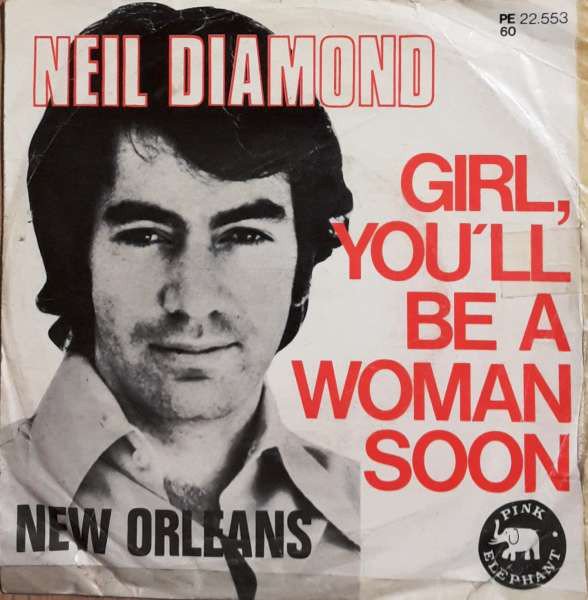
Neil Diamond is protective of his songs, initially refused to let Tarantino use it as he hated the violent script. However, he was probably glad he relented as the success of the song put Diamond back on the radar after a period when he wasn’t having hits. Urge Overkill’s version reached #37 in the UK, and Diamond’s back catalog got a huge bump in sales.
Urge Overkill didn’t fare as well. After serving as the opening act for both Nirvana and Pearl Jam, they got a major label deal with Geffen Records and released the album Saturation. Their next album flopped, and they disbanded in 1997. They reformed in 2004 and have performed from time to time.
The song peaked at #10 in the Billboard 100 in 1967. For Urge Overkill it peaked at #59 in the Billboard 100, #37 in the UK, and #19 in New Zealand in 1994.
From Songfacts
Diamond wrote this one for the ladies, which made up most of his fan base. David Wild wrote in his book He Is…I Say: How I Learned to Stop Worrying and Love Neil Diamond, “When Diamond first recorded the slow, seductively sensitive song in 1967, it solidified his growing connection with his female fan base, many of whom are apparently still following him all these years later, even if they are no longer properly addressed as ‘girl.’ Diamond has said that the song was written for all those teenaged girls who would show up at his earliest tour dates and vocally express their tremendous support.”
In 1994 a cover by alternative rock band Urge Overkill appeared prominently in Quentin Tarantino’s movie Pulp Fiction.
Tarantino recalled to Rolling Stone that he found the Urge Overkill version “on an EP in a little record store in Holland, so I picked it up and thought, ‘Wow, that’s a really cool track.’ And it just kept staying with me and staying with me. So then I worked the scene out with Uma [Thurman] and it ended up working fantastic, it became very iconic.”
Urge Overkill’s Eddie “King” Roeser recalled to Mojo magazine: “We did our version of ‘Girl You’ll Be A Woman Soon’ from memory. The lyrics, I don’t even know if they go that way. It speeds up, the fills are all over the place, it’s out of tune.”
In addition to Pulp Fiction, these movies have used the song:
War Dogs (2016) The Upside of Anger (2005) Sorority Boys (2002)
And these TV series:
Supernatural (“Our Little World” – 2015) Friends (“The One with the Stoned Guy” – 1995) Family Ties (“The Fugitive: Part 1” – 1983)
Girl You’ll Be A Woman Soon
Love you so much, can’t count all the ways I’d die for you girl, and all they can say is “He’s not your kind”
They never get tired of puttin’ me down And I never know when I come around What I’m gonna find Don’t let them make up your mind Don’t you know
Girl, you’ll be a woman soon Please come take my hand Girl, you’ll be a woman soon Soon you’ll need a man
I’ve been misunderstood for all of my life But what they’re sayin’, girl, just cuts like a knife “The boy’s no good”
Well, I finally found what I’ve been looking for But if they get the chance, they’ll end it for sure Sure they would Baby, I’ve done all I could It’s up to you
Girl, you’ll be a woman soon Please come take my hand Girl, you’ll be a woman soon Soon you’ll need a man
I could write pages on this show but I’ll keep it short.
I’ve covered a lot of cartoons but this one is special. This Simpsons is probably my favorite of all time. It has influenced countless TV shows. This show appealed to young and older audiences alike.
The Simpsons was created by Matt Groening, who thought of the idea for the Simpsons in the lobby of James L. Brooks’s office. He named the characters after his own family members, substituting “Bart” for his own name. The family debuted as shorts on The Tracey Ullman Show on April 19, 1987. In 1989, the shorts were spun off into the series The Simpsons which debuted on December 17, 1989.
The family members’ animated bodies have changed shape a bit since, but they have not aged much, aside from shows that looked into characters’ futures. In fact, most people would agree that Matt Groening’s goofy humor hasn’t gotten old either.
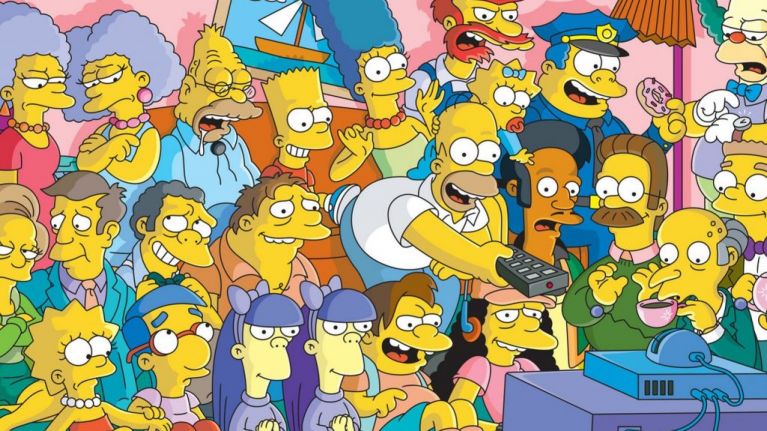
The town of Springfield has a cast of characters that really made the show. You get to know them weekly from Mr. Burns, Ned Flanders, Disco Stu, Barney Gumble, Krusty the Clown, Moe Szyslak, Marge, Lisa, and the list goes on.
Other shows such as Family Guy, American Dad, and South Park were influenced by The Simpsons but they are cruder and use more shock value. Nothing wrong with that but I always thought the Simpsons was more clever. The two cartoons that I have really liked since the Simpsons started are King of the Hill and Futurama, the later also created by Groening.
In the early stages, the show revolved around the young Bart Simpson’s trouble-causing antics, making it appeal to a younger crowd. Over the years, however, the writers, which have included Conan O’Brien, found viewers responded more to the father figure Homer Simpson, and he became the show’s main character.
In 2007, the family finally made its way to theaters in the Simpsons Movie.
The Simpsons have ran for 31 seasons and nearly 700 episodes (676 as of this writing). The show is the longest-running scripted series in TV history.
A few of the Catchphrases that have worked into our everyday life.
Here is to better days to all of you…. in the New Year starting tomorrow.
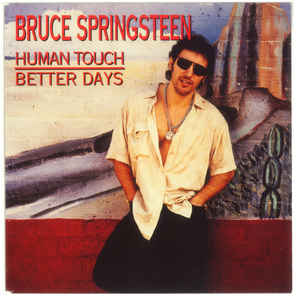
On March 31, 1992, I purchased two albums by Bruce. Lucky Town and Human Touch…both albums released on the same day. I’ve always liked Lucky Town more than Human Touch. Better Days kicked off the album. It was originally released in the United States in March 1992 as a double A-side with “Human Touch”, and peaked at #16 on Billboard 100.
Bruce Springsteen: “With a young son and about to get married (for the last time) I was feelin’ like a happy guy who has his rough days rather than vice versa.”
From Songfacts
This was the only track from Lucky Town included on Springsteen’s 1995 Greatest Hits album.
This is the first track on Lucky Town, which was released the same day as Human Touch. Springsteen decided to do this after Guns N’ Roses simultaneously released their albums Use Your Illusion I and II.
Better Days
Well my soul checked out missing as I sat listening To the hours and minutes tickin’ away Yeah just sittin’ around waitin’ for my life to begin While it was all just slippin’ away I’m tired of waitin’ for tomorrow to come Or that train to come roarin’ round the bend I got a new suit of clothes a pretty red rose And a woman I can call my friend
These are better days baby Yeah there’s better days shining through These are better days baby Better days with a girl like you
Well I took a piss at fortune’s sweet kiss It’s like eatin’ caviar and dirt It’s a sad funny ending to find yourself pretending A rich man in a poor man’s shirt Now my ass was draggin’ when from a passin’ gypsy wagon Your heart like a diamond shone Tonight I’m layin’ in your arms carvin’ lucky charms Out of these hard luck bones
These are better days baby These are better days it true These are better days There’s better days shining through
Now a life of leisure and pirate’s treasure Don’t make much for tragedy But it’s a sad man my friend who’s livin’ in his own skin And can’t stand the company Every fool’s got a reason for feelin’ sorry for himself And turning his heart to stone Tonight this fool’s halfway to heaven and just a mile outta hell And I feel like I’m comin’ home
These are better days baby There’s better days shining through These are better days Better days with a girl like you
These are better days baby These are better days it’s true These are better days Better days are shining through
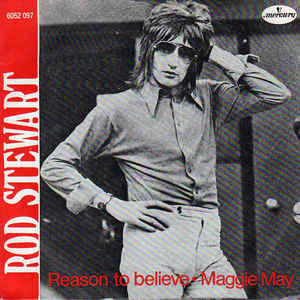
Stewart’s original version was released as a single with “Reason To Believe” as the B-side. Disc jockeys liked the flip side better and played “Maggie May” instead, which became the hit.
Rod did the song for MTV unplugged in 1993 and the song peaked at #19 in the Billboard 100 in 1993.
This was written by folk singer Tim Hardin, who originally recorded it in 1965 and performed it at Woodstock four years later. Hardin wrote some popular songs and was a very influential musician, but he had severe drug problems and died in December 1980 at age 39.
From Songfacts
At first listen, this song can seem rather sweet, but it’s anything but. The girl “lied straight-faced” while he cried, but still he can’t get over her. He knows if he gives her the chance, she’ll make him forget about it because he keeps looking for a reason to believe she’s not that kind of person.
Stewart released this again in 1993 as a live, acoustic version for MTV Unplugged. Appearing on the album Unplugged… and Seated, this is the version that charted.
Bobby Darin recorded a version of this in 1967.
The 1993 Unplugged version was recorded at an MTV special with Ron Wood, who played with Stewart in The Faces. It was the first time they performed it together in 22 years. Stewart commented that his wife at the time, Rachel Hunter, was one year old when it was first released.
Reason To Believe
If I listened long enough to you I’d find a way to believe that it’s all true Knowing that you lied straight-faced while I cried Still I look to find a reason to believe
Someone like you makes it hard to live without Somebody else Someone like you makes it easy to give Never think about myself
If I gave you time to change my mind I’d find a way just to leave the past behind Knowing that you lied straight-faced while I cried Still I look to find a reason to believe
If I listened long enough to you I’d find a way to believe that it’s all true Knowing that you lied straight-faced while I cried Still I look to find a reason to believe
Someone like you makes it hard to live without Somebody else Someone like you makes it easy to give Never think about myself
Someone like you makes it hard to live without Somebody else Someone like you makes it easy to give Never think about myself
Someone like you makes it hard to live without Somebody else Someone like you makes it easy to give Never think about myself
Someone like you makes it hard to live without Somebody else
Two FBI agents assigned to investigate cases for which there may be only paranormal explanations. Hailed by critics, the show was one of the network’s top-rated shows.
The show was heavily influenced by Kolchak, Twilight Zone, and Twin Peaks.
The X-Files was a show I didn’t miss in the 1990s. It was a superbly written science fiction show along with likable characters…Fox Mulder and Dana Scully. The series combined drama, science fiction, comedy, and an ongoing storyline. You could say the X-Files help define the 90s.
This episode won two Emmy Awards: Outstanding Guest Actor in a Drama Series (Peter Boyle), and Outstanding Writing for a Drama Series.
The X-Files – Clyde Bruckman’s Final Repose
The Characters: Fox Mulder, Dana Scully, Clyde Bruckman, The Puppet (as Stu Charno), Detective Cline, Detective Havez, Tarot Dealer, Madame Zelmas, Clerk
The Stupendous Yappi, Young Husband, and Photographer
The writers got the name “Clyde Bruckman” from a comedy writer that wrote for Buster Keaton in the 20s. He later fell on hard times and committed suicide in 1955.
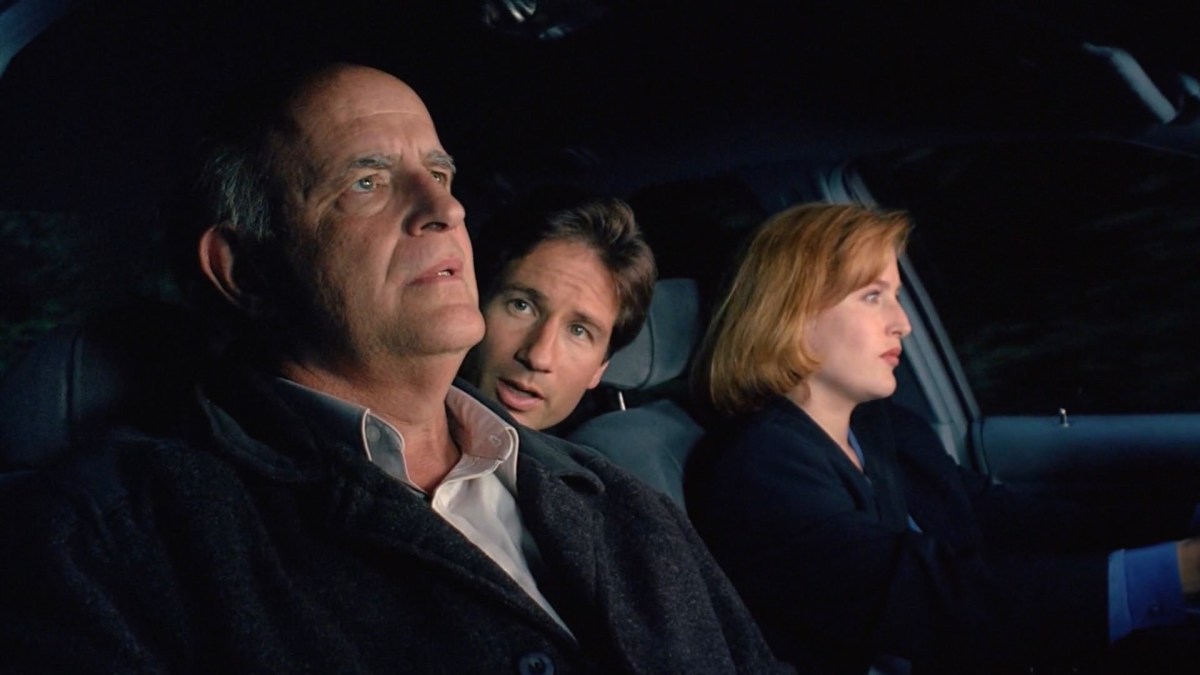
Scully and Mulder are called into the investigation of a series of murders where the victims were all psychics of some sort. A tea leaf reader, tarot card reader and palm reader are all the apparent victims of a serial killer. The local police have brought in a well-known TV psychic that Mulder finds laughable. He does come across Clyde Bruckman, an insurance salesman who may be a genuine psychic. While Scully is appropriately skeptical, Mulder realizes that Bruckman can only see one thing – how people will die.
Clyde Bruckman is a grumpy old man with psychic powers that show him how someone will die assists the agents with the hunt for a crazed killer who targets psychics. He also cryptically reveals to Mulder and Scully their own ultimate fates
I really liked this song when it was released in 1997. Unfortunately what it’s remembered for is the royalties and credit that The Verve lost. Lead singer Richard Ashcroft wrote the lyrics but the credits also included Jagger and Richards. Allen Klein owned the publishing rights on all of the Stones songs until 1969.
The song peaked at #12 in the Billboard 100 and #2 in the UK in 1997. The trouble started when the Verve wanted to use a sample, an instrumental version of the Rolling Stones song “The Last Time” that had appeared on an album by the Andrew Loog Oldham Orchestra. It sounded nothing like The Last Time and was written by the arranger.
According to the book Allen Klein: The Man Who Bailed Out the Beatles, Made the Stones, and Transformed Rock & Roll, it states that The Verve’s manager offered Klein 15% of the publishing to obtain the rights for the sample. Klein turned him down flat, and when he realized that the Verve were sitting on a hit record they couldn’t release without a deal, he insisted on 100% of the publishing. The Verve gave in, since they really had no choice. Richard Ashcroft, who wrote the lyric, was given a flat fee of $1,000 and had to sign away his rights. “I was put under duress to sign away one of the greatest songs of all time.”
The end result was Klein make an enormous profit on the song every time it was purchased or used in a TV show, movie or commercial. Jagger and Richard still owned a percentage and their name was placed on the song. Jagger and Richards had both a payday and a Grammy nomination for Song of the Year which they had nothing to do with.
But there is a good ending. In 2019 Mick Jagger and Keith Richards signed over all their publishing for Bitter Sweet Symphony, which was the right thing for them to do. Jody Klein (Klein’s son) was part of the process.
Richard Ashcroft said this right after this happened:
It gives me great pleasure to announce as of last month Mick Jagger and Keith Richards agreed to give me their share of the song Bitter Sweet Symphony. This remarkable and life affirming turn of events was made possible by a kind and magnanimous gesture from Mick and Keith, who have also agreed that they are happy for the writing credit to exclude their names and all their royalties derived from the song they will now pass to me.
I would like to thank the main players in this, my management Steve Kutner and John Kennedy, the Stones manager Joyce Smyth and Jody Klein (for actually taking the call) lastly a huge unreserved heartfelt thanks and respect to Mick and Keith.
From Songfacts
At this point in his career, Ashcroft had learned that money and happiness were not synonymous. “People have been sold a lottery dream in life that money solves everyone’s problems,” he said in a Songfacts interview. “Suddenly you’re looking at people and you’re thinking: ‘I know they need X but if I give X then that relationship that should have died years ago is going to carry on and spoil.’ It opens up a myriad of things that you would never normally be thinking about, responsibilities on a new level.”
The famous orchestral riff incorporates a sample from an obscure instrumental version of the 1965 Rolling Stones song “The Last Time” by Stones producer Andrew Loog Oldham, who included it on a 1966 album called The Rolling Stones Songbook (credited to The Andrew Oldham Orchestra). The Verve got permission to use the six-second sample from Decca Records, which owned the Oldham recording, but they also needed permission from the publisher of “The Last Time,” something they didn’t realize until after the album was completed.
So, with Urban Hymns ready to go and “Bitter Sweet Symphony” slated as the first single, Verve manager Jazz Summers tried to secure those rights, which belonged to Allen Klein’s company ABKCO. The Rolling Stones signed a very lopsided contract with Klein, who was their manager, early in their career, and had to make huge concessions in order to get out of it. Part of the deal gave Klein the publishing rights to all of the Stones’ songs they recorded through 1969.
“Try to make ends meet, you’re a slave to money, then you die”
Ashcroft’s father, Frank, was an office clerk, a dissatisfying job that earned him enough to get by. He died suddenly of a brain hemorrhage in 1982 when Richard was 11 and his sisters, Victoria and Laura, were very young.
“He worked nine to five and got nowhere,” Ashcroft told Select. “I immediately realized that wasn’t the life for me.”
The sample used in this song is one of many layers that make up the track. The opening section of the song isn’t a sample – it was arranged by Wil Malone – although it was based on those notes.
Nike used this in commercials as part of their 1998 “I Can” campaign, showing everyday athletes practicing with determination. The Verve were dead set against using their songs in commercials, but they didn’t control the publishing rights to this song: Allen Klein’s ABKCO company did. When ABKCO authorized the song, it gave Nike the right to re-record it with other musicians, so The Verve agreed to let their original recording be used so that wouldn’t happen.
Lyrically, the song stands in stark opposition to the sneaker-selling corporate monolith, but Nike used just the instrumental portion, which was in high demand, as Coca-Cola, Budweiser, and other big companies were vying to use it.
The Verve were reportedly paid $175,000, with ABKCO receiving much more. The group donated the money to the Red Cross Land Mine Appeal.
After the ad started running, the Urban Hymns album got a nice sales bump in America, giving the band lots of additional exposure in that country.
In Europe, the song was used under similar circumstances around the same time in ads for the car company Vauxhall.
This was the only American hit for The Verve, but they were far more popular in their native UK, where their next single, “The Drugs Don’t Work,” went to #1. The band broke up in 1999 and reformed in 2007, releasing the album Forth in 2008. Their previous albums were:
A Northern Soul – Released in 1995, it has a darker side. A Storm In Heaven – Released in 1993, a psychedelic rocker. No Come Down – A collection of the B-sides from A Storm in Heaven, released in 1994.
After Urban Hymns, their lead singer, Richard Ashcroft, launched a successful solo career.
Did you catch the play on words in the title?: Bitter Suite Symphony.
The video shows Ashcroft bumping into people as he walks down Hoxton Street, a crowded shopping area in London. It was inspired by the video for Massive Attack’s 1991 song “Unfinished Sympathy,” which was showed the singer walking down a street in a similar manner. The clip was directed by Walter Stern, who also did Massive Attack’s “Teardrop” promo.
Had The Verve retained publishing rights to this song, there’s a good chance it never would have become a hit in America. That’s because they wouldn’t have allowed it to be used in the Nike commercial, which is what introduced the song there.
The Verve tried to break into the American market in 1992 when they staged a publicity stunt, playing their song “A Man Called Sun” for a few hours from the back of a flatbed truck driving around New York City. But they couldn’t break through in America and put little effort into promoting Urban Hymns there.
When Nike started airing the commercial (it debuted during the NFC Championship game between the San Francisco 49ers and Green Bay Packers on January 11, 1998), radio stations added “Bitter Sweet Symphony” to their playlists, and MTV put the video in rotation. But the song wasn’t released as a single in America until March 10, when it had already peaked in popularity. It debuted at #13 on the Hot 100, peaked at #12 a week later and gradually climbed down the chart over the next 18 weeks.
Because this sampled the song from The Rolling Stones, Mick Jagger and Keith Richards got composer credits along with Richard Ashcroft. Upset that he lost the royalties, Ashcroft said this was “The best song Jagger and Richards have written in 20 years.”
This is featured at the pivotal end scene in the 1999 movie Cruel Intentions, where after Sebastian (Ryan Phillippe) dies, his stepsister Kathryn (Sarah Michelle Gellar) gets her comeuppance. It is meant to portray Sebastian’s ups and downs in life: Kathryn’s cruel antics that nearly destroyed him and the beautiful girl (Reese Witherspoon) who showed him how to love and redeemed his life.
According to producer Neal Moritz, the song cost nearly a million dollars to clear, about 10% of their budget. When they found out the cost, they tried many other songs in its place, but none had the same impact.
We have yet to find an explanation why, but the Seattle Seahawks football team has been using this as their theme song since the mid-’00s. The song is certainly not a typical sports anthem, and has nothing to do with Seattle – a city with a rich musical history and many homegrown songs that seem more appropriate.
The Seahawks play the song when coming on to the field, so it could be heard at the three Super Bowls the team made: a loss to the Steelers in 2006, a win against the Broncos in 2014, and a loss to the Patriots in 2015 (the Pats came out to “Crazy Train”).
Details of the legal tussle surrounding this song aren’t clear-cut, as there was no court case to get it on record. It appears that David Whitaker, who did the string arrangement on the orchestral version of “The Last Time” that was sampled, got nothing. Andrew Loog Oldham, who produced that version, got in on the action after “Bitter Sweet Symphony” was released, and it’s unclear if he got a settlement.
As for the publishing rights to the “The Last Time,” those were administrated by ABKCO, but Allen Klein apparently was not the sole owner. According to an article in Mojo magazine, Klein got 9/24ths of the publishing, Mick Jagger and Keith Richards split 9/24ths, and 3/24ths went to Westminster Publishing, who were the Stones publishers early on. The takeaway here is that Jagger and Richards profited from the deal in a big way, which explains why they never had much to say about the lawsuit.
Another wrinkle: “The Last Time” is very similar to a 1955 song by The Staple Singers called “This May Be The Last Time,” but The Stones claimed it as their own.
In a statement released on May 23, 2019, Richard Ashcroft announced that Jagger and Richards had given him back “Bitter Sweet Symphony” royalties and The Stones duo also had their writing credits removed. The announcement coincided with Ashcroft receiving the Outstanding Contribution To British Music prize at the Ivor Novello Awards. Ashcroft says he can finally enjoy the song when he hears it played at football matches.
Bitter Sweet Symphony
Cause it’s a bittersweet symphony this life Trying to make ends meet, you’re a slave to the money then you die. I’ll take you down the only road I’ve ever been down You know the one that takes you to the places where all the veins meet, yeah. No change, I can’t change, I can’t change, I can’t change, but I’m here in my mold, I am here in my mold. But I’m a million different people from one day to the next I can’t change my mold, no, no, no, no, no, no, no
Well I never pray, But tonight I’m on my knees, yeah. I need to hear some sounds that recognize the pain in me, yeah. I let the melody shine, let it cleanse my mind, I feel free now. But the airwaves are clean and there’s nobody singing to me now.
No change, I can’t change, I can’t change, I can’t change, But I’m here in my mold, I am here in my mold. And I’m a million different people from one day to the next I can’t change my mold, no, no, no, no, no, no, no
(Well have you ever been down?) (I can’t change, I can’t change)
Cause it’s a bittersweet symphony this life. Trying to make ends meet, trying to find some money then you die. I’ll take you down the only road I’ve ever been down You know the one that takes you to the places where all the veins meet, yeah. No change, I can’t change, I can’t change, I can’t change, but I’m here in my mold, I am here in my mold. But I’m a million different people from one day to the next I can’t change my mold, no, no, no, no, no, no, no I can’t change my mold, no, no, no, no, no, no, no I can’t change my mold, no, no, no, no, no, no, no
It justs sex and violence melody and silence It justs sex and violence melody and silence (I’ll take you down the only road I’ve ever been down) It’s just sex and violence melody and silence It’s just sex and violence melody and silence It’s just sex and violence melody and silence (I’ll take you down the only road I’ve ever been down) (It’s just sex and violence melody and silence)Been down (Ever been down) (Ever been down) (Ever been down) (Ever been down) (Ever been down)
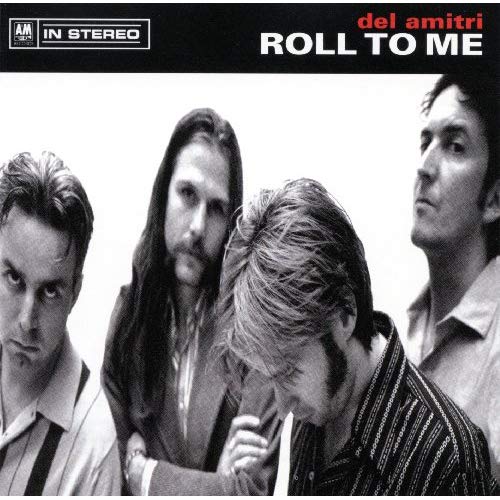
In 1995 “Roll to Me” peaked at #10 in the Billboard 100, #5 in Canada and #22 on the UK charts. One of the many power-pop songs of the 90s.
Ironically it was the band’s biggest hit and they did not like the song. Del Amitri toured the US when this became a hit, but they played the song reluctantly, often telling the audience that it was something they had to do. Del Amitri wasn’t able to get a foothold in the States, and this was their last hit there.
They are a Scottish alternative rock band formed in Glasgow in 1980. In 2002 the band went on hiatus and reformed in 2014 and are now still together.
Roll to Me
Look around your world pretty baby Is it everything you hoped it’d be The wrong guy, the wrong situation The right time to roll to me
Roll to me
Look into your heart pretty baby Is it aching with some nameless need? Is there something wrong And you can’t put your finger on it? Right, then roll to me
And I don’t think I have ever seen A soul so in despair So if you want to talk the night through Guess who will be there?
So don’t try to deny it pretty baby You’ve been down so long you can hardly see When the engine’s stalled and it won’t stop raining It’s the right time to roll to me Roll to me Roll to me
And I don’t think I have ever seen A soul so in despair So if you want to talk the night through Guess who will be there?
So, Look around your world pretty baby Is it everything you hoped it’d be The wrong guy, the wrong situation The right time to roll to me The right time to roll to me The right time to roll to me…oooh
This is more of a question than a post…just curious what you think.
I was commenting on A Sound Day and I asked Dave a question on a post about Michael Hutchinson of INXS. Who was the last Rock Star? Since Kurt Cobain died has there really been a rock star like we knew in the 60s and 70s to come along? Not counting older ones still around.
When I say rock star…I mean one comparable to the legends that we know… Between 1955 and 1994 there were plenty to pick from…Elvis, John Lennon, Bob Dylan, Mick Jagger, Keith Richards, Roger Daltrey, Keith Moon, Robert Plant, Jimmy Page, Elton John, Sly Stone, Roger Waters, Prince, and the list could go on…These artists spoke to generations.
So no… Nickleback’s lead singer would not count.
The only two names I could think of was Dave Grohl and Jack White of the White Stripes. Someone who is known outside the world of Rock and Roll. I’m not sure Grohl and White would count either.
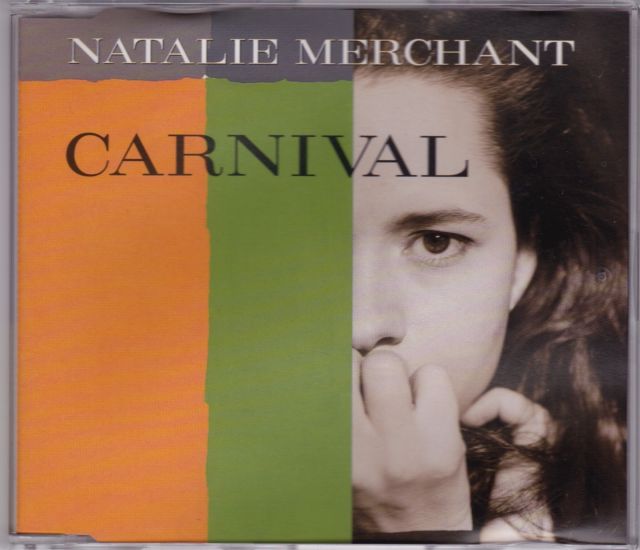
This song peaked at #10 in the Billboard 100 in 1995. This remains Natalie’s highest-charted single thus far. This track from her first album Tigerlily and is what she calls her “New York song,” as it’s written about New York City.
Tigerlily peaked at #13 in 1995 in the Billboard Album Chart.
This is somewhat creepy… This song was played at the funeral of serial killer Aileen Wuornos as part of her final request. She had listened to the song and the entire album Tigerlily continually while on death row. When confronted with this, Natalie was initially shocked but gave permission to use the song in the documentary Aileen: Life and Death of a Serial Killer, saying that “It’s very odd to think of the places my music can go once it leaves my hands. If it gave her some solace, I have to be grateful.” Wuornos was also the subject of the film Monster.
From Songfacts
Merchant grew up in rural Jamestown, New York, which is in the western part of the state south of Buffalo. That’s where she formed 10,000 Maniacs in 1981, a group she was with until 1993 when she left to go solo.
Merchant explained in a VH1 Storytellers appearance: “‘Carnival’ really evokes for me what it’s like to walk down any avenue in the City. I grew up in the country, so the nearest thing I ever experienced to walking down the street in New York before I was 16 and I came here for the first time was a carnival – the Stockton Gala Days actually. I’d never seen people walking down the street eating before – that was a bizarre experience. We in the country sit down to take our meals – that just blew me away.
Something else I’d never seen before were the gentlemen with the two-sided placards that hand out invitations to peep shows, but I never seemed to get one – they always picked the guys around me. It’s an amazing city, but what I love about it even more than places like Los Angeles is that everybody at sometime has to deal with other people. It’s not a car culture here. I like that: people have to rub against each other. I like to take the subway, I like to study people’s faces, try to imagine their stories. In the song, I see the city as a stage, as a spectacle, as a carnival, and as a madhouse, because sometimes it is that, it’s a totally insane place to live. When I was 16 and I visited for the first time, I said, ‘I’m going to live here someday.’ You’ve got to be careful what you wish for because sometimes it comes true.”
Merchant performed this song, along with “Wonder,” on an episode of Saturday Night Live hosted by David Schwimmer in 1995.
Carnival
Well, I’ve walked these streets A virtual stage, it seemed to me Makeup on their faces Actors took their places next to me
Well, I’ve walked these streets In a carnival, of sights to see All the cheap thrill seekers vendors and the dealers They crowded around me
Have I been blind have I been lost Inside myself and my own mind Hypnotized, mesmerized by what my eyes have seen?
Well, I’ve walked these streets In a spectacle of wealth and poverty In the diamond markets the scarlet welcome carpet That they just rolled out for me
And I’ve walked these streets In the madhouse asylum they can be Where a wild-eyed misfit prophet On a traffic island stopped and he raved of saving me
Have I been blind, have I been lost Inside myself and my own mind Hypnotized, mesmerized by what my eyes have seen
Have I been wrong, have I been wise To shut my eyes and play along Hypnotized, paralyzed by what my eyes have found By what my eyes have seen What they have seen?
Have I been blind Have I been lost Have I been wrong Have I been wise Have I been strong Have I been hypnotized, mesmerized by what my eyes have found In that great street carnival
Have I been blind Have I been lost Have I been wrong Have I been wise Have I been strong Have I been hypnotized, mesmerized by what my eyes have found In that great street carnival
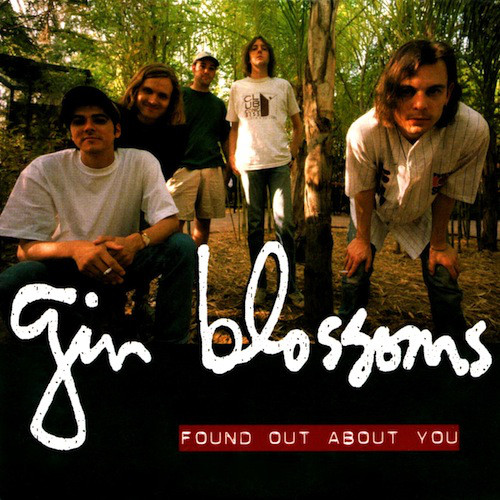
This was written by guitarist Doug Hopkins. He had problems with mental health and alcohol abuse and was fired from the band before this was released. He committed suicide on December 5, 1993. This song peaked at #25 in the Billboard 100 in 1994.
Gin Blossoms broke up in early 1997 but reunited in 2002. They still perform to this day but with some personnel changes. The band had a total of 4 songs in the Billboard 100 with 1 top ten hit… Follow You Down/Til I Hear It From You.
From Songfacts
The song is based on a compilation of episodes with several of Hopkins’ girlfriends: “I heard about nights out in the school yard. I found out about you.” – This has a double meaning. He found out about a girlfriend meeting another guy in a schoolyard and it is also where he and another girl swung on the swings and talked finding out about each other. “Street lights blink on through the car window. I get the time too often on A.M. radio.” – The group members hung around together and this particular line refers to a night when the girl from the swings was with Doug and Robin was driving. They were doing a lot of partying and were listening to the radio when the announcer said the time.
Found Out About You
All last summer in case you don’t recall I was your and you were mine forget it all Is there a line that I could write Sad enough to make you cry All the lines you wrote to me were lies The months roll past the love that you struck dead Did you love me? Only in my head. Things you said and did to me Seemed to come so easily The love I thought I’d won you give for free
Whispers at the bus stop Well I heard about nights at the school yard I found out about you
Rumours follow everywhere you go And when you left I was last to know You’re famous now and there’s no doubt In all the places you hang out They know your name and know what you’re about
Whispers at the bus stop I heard about nights out in the school yard I found out about you I found out about you
Street lights blink on through the car window I get the time too often on AM radio You know it’s all I think about I write your name drive past your house Your boyfriend’s over I watch your lights go out
Whispers at the bus stop I heard about nights out in the school yard I found out about you
This is probably the song that a lot of Beatles fans have been waiting for me to do.
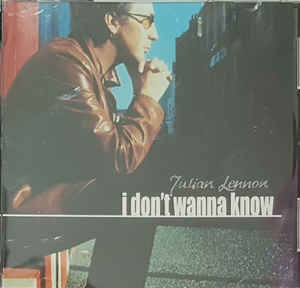
This song was on the Photograph Smile album that was released in 1998. Personally, I like this song and Day after Day better than anything in his career. The song didn’t chart in the US but it did receive some airplay.
The video Julian made was a fun parody of the Beatles…as “The Butlers.” Julian did the song in a Beatle style and turned it into a homage to them
Julian Lennon:
This is probably the song that a lot of Beatles fans have been waiting for me to do. People are always asking when am I going to do something more towards the Beatles style. And so I thought, why not? In a sense it’s a homage, but the sentiment and lyrics are serious. It actually came about from walking around in France and there was a shop with an English newspaper. I thought, ‘Oh get the paper, catch up on the rest of the world,’ and then I thought, ‘I don’t wanna know.’ It turned into a relationship song.
I Don’t Wanna Wanna Know
I don’t wanna know what’s going on And I don’t wanna know what’s right or wrong And I don’t wanna know who’s bed you’re in And I don’t wanna know just where you’ve been.
Oh baby, you were never really good for me
Just maybe, you’re a stranger to reality And baby, don’t you know you haven’t got a clue ‘cos lately, I don’t know what to do.
I don’t wanna know what’s going on And I don’t wanna know what’s right or wrong And I don’t wanna know who’s bed you’re in And I don’t wanna know just where you’ve been.
Oh baby, you said you’re changing for the better now Just maybe, you’re not as strong as you thought somehow And baby, you know you’re heading down a one way track And baby, I won’t bring you back.
Well, you said you were looking for a better way But you just keep coming back To a place you can never seem to get away That will always hold you back…
Oh baby, you said you’d rather be a daddy’s girl, But lately, you’re try’n a fight against the whole wide world Just maybe, you’ve found a love that you can hold on to And baby, I pray for you.
I don’t wanna know what’s going on And I don’t wanna know what’s right or wrong And I don’t wanna know who’s bed you’re in And I don’t wanna know just where you’ve been…
This song has a dirty sounding guitar intro and Sheryl’s voice drives it along.
This is rumored to be about Eric Clapton, who Crow dated for a while. She has said it is not about one person in particular, but a composite of guys she went out with who wasn’t good for her. Clapton appears on her 1999 album Sheryl Crow and Friends.
Crow has said that it is definitely not about Clapton…she has said: “I can’t look at that relationship as a mistake.”
The song peaked at #20 in the Billboard 100 in 1998. It was on her album The Globe Sessions which peaked at #5 in 1998 in the Billboard Album Charts.
From Songfacts
Like Carly Simon, Crow dated many high-profile guys, making the song rife for speculation. Among her paramours: Kid Rock, Lance Armstrong, Jakob Dylan, and Owen Wilson.
In a 2015 interview, we asked Jeff Trott, Crow’s frequent songwriting collaborator and guitarist, to weigh in on the mystery. He said:
“I’ve never ever talked to Sheryl about it – never, ever. One of these days, I’m just going to like throw it out there. Everyone just assumed it was Eric Clapton, but I thought it could be Jakob Dylan from The Wallflowers. The Wallflowers supported Sheryl Crow when I was in her touring band.
But she dated Eric Clapton for a little while, for about six months … But he was really into Sheryl, big time. I thought for sure they were going to get married. I think the real deal is that he really wanted to have a very traditional marriage, meaning that Sheryl would take care of things, in a traditional housewife role. At the time, this was like when she was pretty much peaking and playing everywhere, and she would’ve had to give that up.” (Here’s the complete interview with Jeff Trott.)
The video is pretty straightforward, with Crow miming and vamping to the song in an unadorned room. It was directed by Samuel Bayer, who used the sepia look and film transitions that show up in a lot of his work.
My Favorite Mistake
I woke up and called this morning The tone of your voice was a warning That you don’t care for me anymore
I made up the bed we sleep in I looked at the clock when you creep in It’s six AM and I’m alone
Did you know when you go it’s the perfect ending To the bad day I was just beginning When you go all I know is you’re my favorite mistake
Your friends act sorry for me They watch you pretend to adore me But I’m no fool to this game
Now here comes your secret lover She’ll be unlike any other Until your guilt goes up in flames.
Did you know when you go it’s the perfect ending To the bad day I’d gotten used to spending When you go all I know is you’re my favorite mistake You’re my favorite mistake
Well maybe nothing lasts forever Even when you stay together I don’t need forever after, but it’s your laughter won’t let me go So I’m holding on this way
Did you know could you tell you were the only one That I ever loved? Now everything’s so wrong Did you see me walking by, did it ever make you cry?
Now you’re my favorite mistake Yeah you’re my favorite mistake You’re my favorite mistake
This show had great writing and cast. For my money, it was the sitcom of the 90s. It wasn’t like all the main characters were likable like other sitcoms…far from it…but it worked perfectly.
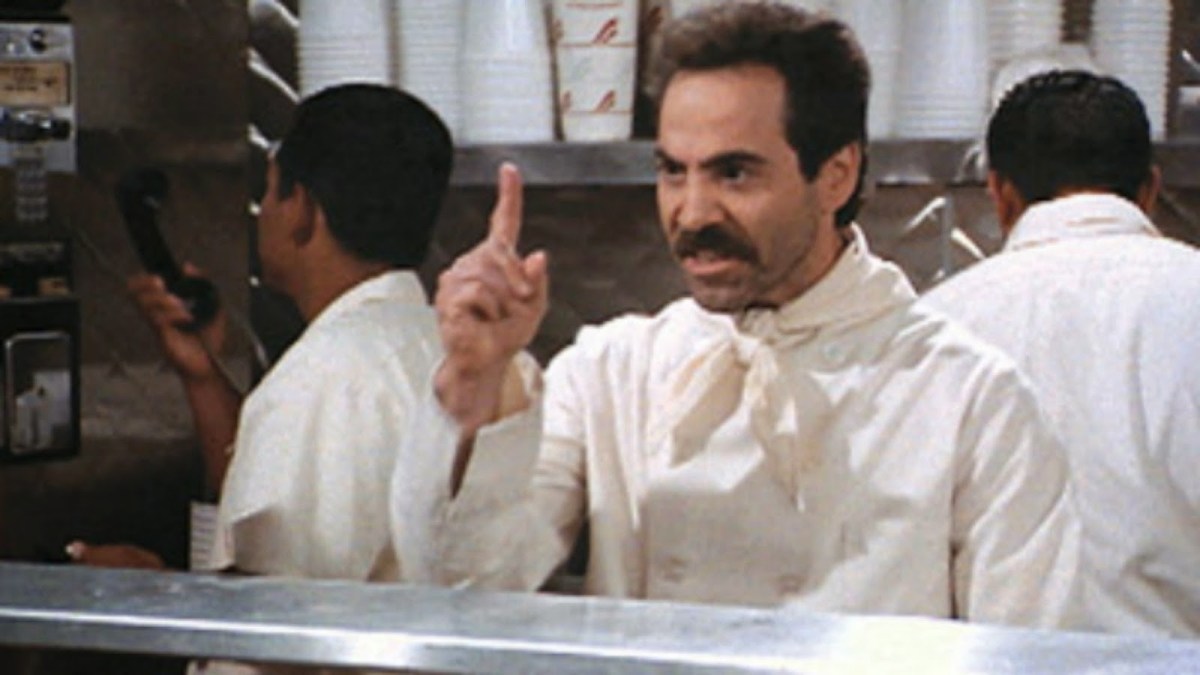
The Soup Nazi was based on Al Yeganeh, the real-life owner of Soup Kitchen International in Manhattan, New York City. After the episode aired, Jerry Seinfeld and members of the cast and crew went to the restaurant for lunch. Yeganeh yelled at them and stated that the publicity had ruined his reputation. After Seinfeld offered an apology, Yeganeh yelled, “No soup for you!” and ejected them from his restaurant. Any references to “Seinfeld” are forbidden in any Soup Kitchen International.
Yeganeh ran his soup kitchen as a very tight ship. All of his customers would line up and be forced to obey his strict and formal rules of standing, talking, paying, waiting and requesting the soup the desired. Anyone who deviated in the slightest and offended Yeganeh was immediately told to get out and refunded their money.
Yeganeh’s pat line, to any customer who offended him, was “No soup for you!”
Um… you know what? Has anyone ever told you you look exactly like Al Pacino? You know, “Scent Of A Woman.” Who-ah! Who-ah!
NO SOUP FOR YOU!
COME BACK ONE YEAR! NEXT!
Seinfeld: The Soup Nazi
The characters: Jerry Seinfield, Elaine Benes, Cosmo Kramer, George Costanza, Newman, Susan Ross, Sheila, Soup Nazi, Bania, Cedric, Bob, Super, and Furniture Guy.
Everyone goes to this new soup stand because the soup is so great. Unfortunately, the owner is obsessed about his customer’s ordering procedure. Jerry and his new girlfriend annoy everybody by using baby talk. George tries to do the same thing with Susan to show how annoying they are to everybody. Jerry and his girlfriend get rejected from the Soup Nazi’s kitchen when they’re caught kissing in line. Elaine buys an Armoire and asks Kramer to watch it. While watching it, Kramer is robbed by some gay, trash-talking street toughs who want nothing more than the Armoire. She then gets rejected from the soup kitchen when she offends the “Soup Nazi”. Kramer, who befriends the Soup Nazi, gets a new Armoire exactly like the one that was stolen from him. He then gives it to Elaine, who discovers the Soup Nazi’s recipes inside. Jerry pleads with her not to do anything, but Elaine threatens to put the Soup Nazi out of business.






 PowerPop... An Eclectic Collection of Pop Culture