A thank you to Dave for publishing this for Turntable Talk. The theme was looking for artists who left popular bands to go solo. I could have done a Beatle easily, but Pete was perfect for this.
Pete recorded Empty Glass a little before the Who recorded their first album without Keith Moon, Face Dances. This was Pete Townshend’s only solo American Top 10 hit, but it charted as high as any Who song released in America… I Can See For Miles also peaked at #9.
This wasn’t The Who smashing guitars or railing against society. This was Pete, solo and sincere, pulling back the curtain and offering something deceptively simple: vulnerability, all wrapped in a three-minute pop song.
Pete always put his solo career on the back burner for The Who. On the surface, Let My Love Open the Door sounds like a pure pop song, but don’t be fooled. There’s gospel in its meaning. Townshend was deep in his Meher Baba-influenced spiritual quest at the time, and this song doubles as a kind of secular hymn. God, lover, self, take your pick. The message lands the same: let something bigger than your pain inside.
The song peaked at #9 on the Billboard 100, #5 in Canada, and #46 in the UK in 1980. The song was on the album Empty Glass, which peaked at #5 in the Billboard Album Charts, #2 in Canada, #21 in New Zealand, and #11 in the UK. Two of the musicians on this track, the bass player Tony Butler and drummer Mark Brzezicki, formed the Scottish rock quartet Big Country in 1981. Chris Thomas who produced this album, also worked with The Beatles, Pink Floyd, The Sex Pistols, Badfinger, and U2, among others.
Pete’s manager at the time didn’t think the song belonged on the album and fought against it. He said it didn’t sound like a Townshend song. He called to apologize after the song hit.
Let My Love Open The Door
When people keep repeating That you’ll never fall in love When everybody keeps retreating But you can’t seem to get enough
Let my love open the door Let my love open the door Let my love open the door To your heart
When everything feels all over Everybody seems unkind I’ll give you a four-leaf clover Take all worry out of your mind
Let my love open the door Let my love open the door Let my love open the door To your heart, to your heart
I have the only key to your heart I can stop you falling apart Try today you’ll find this way Come on and give me a chance to say
Let my love open the door It’s all I’m living for Release yourself from misery There’s only one thing gonna set you free That’s my love That’s my love
Let my love open the door Let my love open the door Let my love open the door Let my love open the door
When tragedy befalls you Don’t let it drag you down Love can cure your problems You’re so luck I’m around
Let my love open the door Let my love open the door Let my love open the door To your heart
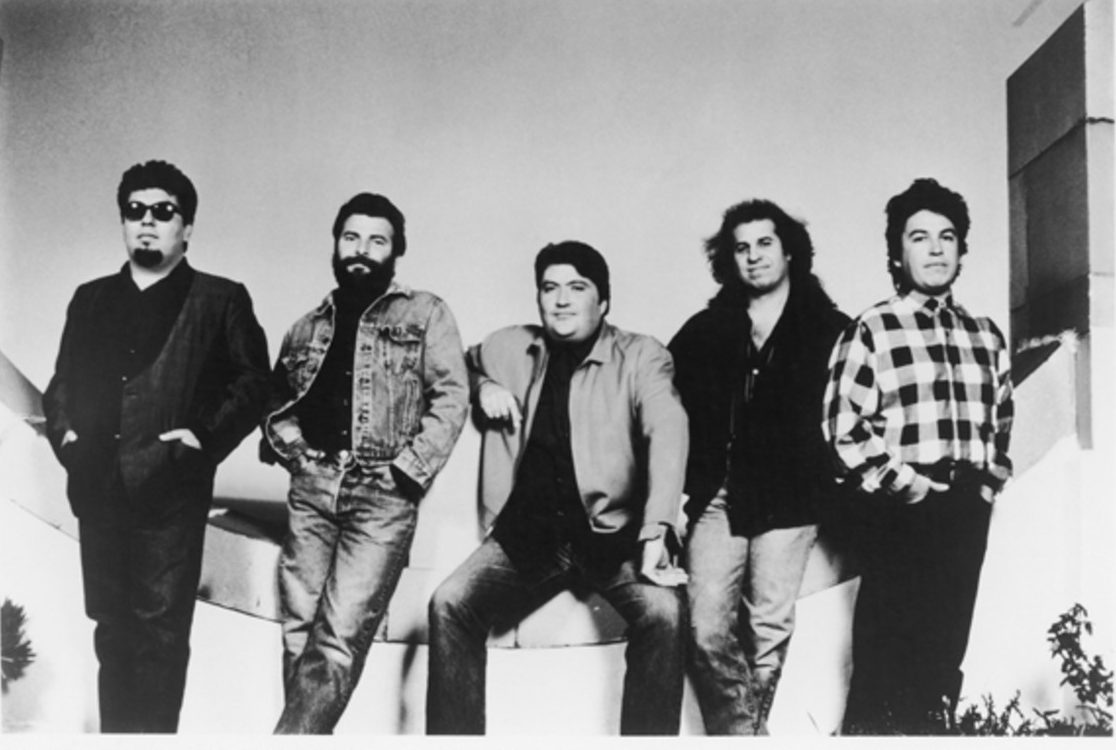
Damn this song swings, and it has a great guitar intro and feel. I heard this for the first time not long ago, and it stuck with me as well as some more of their songs. With a band like this, it’s hard to pin down one song to post.
They’ve always had that rarest of abilities: to wrap roots, rock, and border ballads into something that feels less like a style and more like a lineage. The brilliance here is in the restraint. There’s no over-arrangement, no big production, and no studio trickery. Just a man sitting with his memory.
The song was written by David Hidalgo and Louie Pérez on the album How Will The Wolf Survive? This is truly a great album. It’s easy to overlook this song when you’ve got so much groove and grit elsewhere on the record. But give it a quiet night and some headphones, and you’ll find it’s one of the songs that stays with you longest. I covered the title cut earlier this year.
This song proves something else… they could write songs that cut deep with almost nothing at all. No drawn-out guitar solos. No choruses built for crowd sing-alongs. Just three minutes of pure delight. The album peaked at #47 on the Billboard 100, #13 in New Zealand, #31 in Canada, and #77 in the UK in 1984.
I gave this link in the other post. There is a documentary about Los Lobos called Native Sons that is set to be released this year. As far as I know, it still hasn’t been released. If you have any more information, I would love to hear it.
Evangeline
Evangeline is on the roam Just barely seventeen When she left home Don’t know where she is Or where she’s going She is the queen of make believe, Evangeline
I can still remember this little girl Black eyes just staring At this big old world Ran off to find some American dream Train ticket in one hand In her new blue jeans
Evangeline is on the roam Just barely seventeen When she left home Don’t know where she is Or where she’s going She is the queen of make believe, Evangeline
She went out dancin’ on a Saturday night Silk stockings and high heels Blue liner on her eyes But on Sunday morning she’s all alone Head lying on the nightstand By the telephone
Evangeline is on the roam Just barely seventeen When she left home Don’t know where she is Or where she’s going She is the queen of make believe, Evangeline She is the queen of make believe, Evangeline
I wrote this a while back, but Deke sent me another song that was incredible on guitar. So I canceled this one for that weekend and came back to this today. This was my introduction to Jeff Healey, as it was to many people.
When I think of this song, I think of a dark, smoky bar because we were playing as a house band, and this was on the jukebox. We would listen to it between sets. The way Canadian Jeff Healy played guitar was very interesting. Healy was of course, blind, and he was given a guitar, and no one taught him how to play it. Jeff Healey was a Canadian who started to play guitar when he was 3. He could bend the notes to a limit that normal guitar players normally don’t. His solos were just as interesting as the songs themselves.
In 1989, Jeff Healey came out with this song that peaked at #5 in the Billboard 100, #86 in the UK, and #16 in Canada. The song was written by John Hiatt and Fred Koller. It helped bring Healey into the mainstream and broadened his audience.
He formed The Jeff Healey Band in 1985 with Joe Rockman and Tom Stephen. The band gained recognition in Toronto’s blues scene before being discovered by Stevie Ray Vaughan and Albert Collins. They were signed to Arista Records, and they released their 1988 debut album, See the Light. This song came from that album. He would release 5 albums with The Jeff Healey Band and also played with the Jazz Wizards.
Healey was adopted and raised in Toronto, where he developed a passion for music. He was blind from early childhood due to retinoblastoma and had a great career until his passing in 2008.
Angel Eyes
Girl, you’re looking fine tonight And every guy has got you in his sight What you’re doing with a clown like me Is surely one of life’s little mysteries
So tonight I’ll ask the stars above “How did I ever win your love?” What did I do? What did I say To turn your angel eyes my way?
Well, I’m the guy who never learned to dance Never even got one second glance Across a crowded room was close enough I could look but I could never touch
So tonight I’ll ask, the stars above “How did I ever win your love?” What did I do? What did I say To turn your angel eyes my way?
Don’t anyone wake me If it’s just a dream ‘Cause she’s the best thing Ever happened to me
All you fellows You can look all you like But this girl you see She’s leavin’ here with me tonight
There’s just one more thing that I need to know If this is love why does it scare me so? It must be somethin’ only you can see ‘Cause girl I feel it when you look at me
So tonight I’ll ask the stars above “How did I ever win your love?” What did I do? What did I say, To turn your angel eyes my way? Hey, hey, hey, yeah, awww
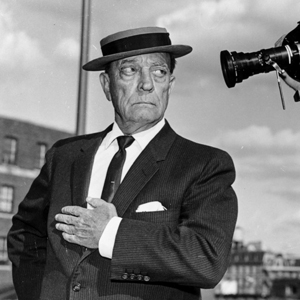
Buster Keaton is one of my all-time favorite comedians, actors, and directors. He is also one of the best film makers I’ve seen.
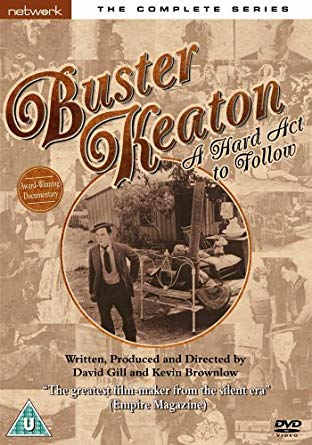
There are documentaries, and then there are love letters dressed up as documentaries. Buster Keaton: A Hard Act to Follow (1987) is very much the latter. Narrated and co-written by Keaton devotee David McGillivray and directed by Kevin Brownlow and David Gill (the same pair who did wonders with their Chaplin and Hollywood series), this BBC-produced trilogy doesn’t just trace the arc of a comedy legend it makes a strong case for Keaton being one of the most inventive minds in any medium, silent or not.
It is one of the best documentaries I have ever seen, not just about Buster but anyone. This documentary is interesting for fans and non-fans alike. I have watched it multiple times and showed it to friends to didn’t have much interest in silent movies and they ended up liking it.
Brownlow also worked on “Hollywood” (a 13-part history of the silent era that I reviewed), The Unknown Chaplin, and Harold Lloyd: The Third Genius. This is in my top 5 of documentaries to recommend to people. I just wish it were easier to get when I wanted to see it. I had to order it from Europe to get a DVD copy of this. You can watch all of them now on YouTube, though...below!
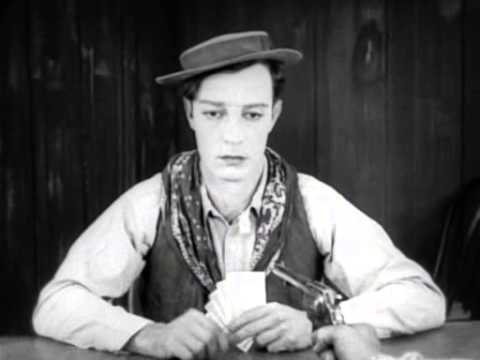
Buster Keaton was not only a great comedian but also a great filmmaker. Some of his special effects in Sherlock Jr and other movies stand up today and that was made in 1924. I always thought that while Chaplin had the best comedy character…Keaton was the better filmmaker.
What sets A Hard Act to Follow apart is its rhythm. It’s tightly edited, gently scored, and clearly built by people who don’t just admire Buster Keaton, they get him. And more than that, they want you to get him, too. For my money, this is the best documentary ever made about a silent-era performer. It respects the intelligence of its subject and the curiosity of its audience. If you already love Keaton, this is the companion piece you didn’t know you needed. If you’re new to him, this might be your gateway to him.
Part One (From Vaudeville to Movies):
Covers his vaudeville childhood with his parents. Because of child labor laws, his parents would claim that Buster was an adult actor. They would dress Buster to look old. This part goes through Vaudeville and up until Buster meets Roscoe Arbuckle and starts his career in movies.
Part Two (Star Without a Studio):
Part Two sums up his great silent movies. He did not work in the studio system…Buster had free rein with his movies in most of the 1920s, working for Independent film executive Joe Schenck. Part two shows some of the best scenes from his silent movies until he had to join a studio (MGM) that along with his drinking, helped ruin his career.
Part Three (Genius Recognized):
This part is the downfall and the comeback. Buster worked through the early thirties in some successful talkies, but by the end of the 30s, he was working as a gag writer. He was soon largely forgotten until he appeared in “Sunset Boulevard”, commercials, and TV. Buster was in a movie with Chaplin called Limelight in 1952. He began to be praised by historians, critics, and fans alike before he passed away in 1966.
There is a new Buster documentary out called ‘The Great Buster: A Celebration’ by Peter Bogdanovich that I have yet to see. I plan to watch it soon. Either way, this one will be hard to beat.
Below is Buster Keaton: A Hard Act to Follow…the complete series.
This song has been in my head for a week now and won’t get out and thats a good thing. The feel of this sounds like it crawled out of the back seat of a 1963 Rambler. It really fits in with The Swingin’ Medallions, Doug Sahm’s 60s style of music, with a tiny bit of a tame Lou Reed thrown in. You can also hear a little of Springsteen in his music at times.
I’m far from an expert on Ben Vaughn, but he shouldn’t be so unknown. Big Star is more well-known than this man. His music is instantly catchy and likable. The song I covered a few years ago, “Too Sensitve for This World,” has hit written all over it. I’m surprised no one has covered that one. Well, I double checked and someone has! Deer Tick…now that is a name that…no I won’t say it.
Vaughn is from New Jersey. He got his start in the late ’70s, playing in punk and new wave bands before forming The Ben Vaughn Combo in 1983. The Combo was everything great about mid-’60s rock and roll, reimagined with a little punk energy. The band was together for five years, releasing two albums and touring the U.S. several times. They received rave reviews in Rolling Stone and People magazine and video airplay on MTV.
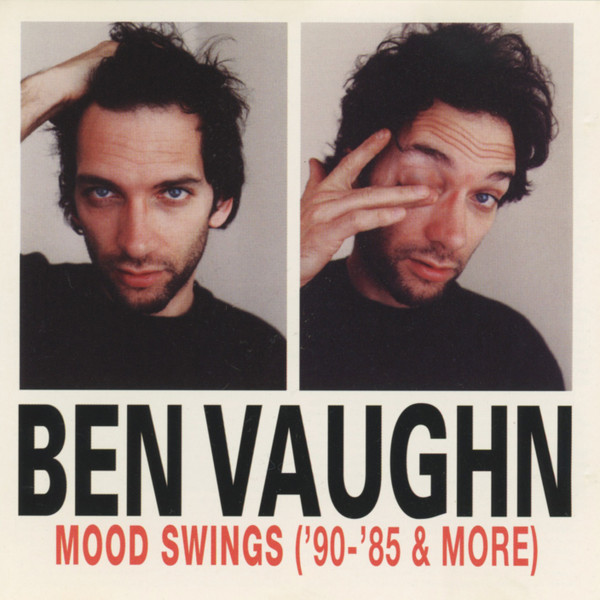
This track comes from Mood Swings, the 1992 album that put Vaughn on the map as a Jersey jangle-pop garage guy with a deep record collection. It’s a compilation album that contains his best songs from 1985 to 1990. This song was originally on his 1987 album Beautiful Thing.
Vaughn started a solo career in 1988 and has released over 17 albums. He is very versatile… he plays Rock, blues, jazz, folk, soul, R & B, country, Power Pop, Bossa Nova, movie soundtracks, easy listening, and more, all with Vaughn’s musical slant.
His older albums are not on Spotify, but here is a YouTube playlist that covers a lot of this album. It really doesn’t matter because his songs are just plain out good.
I blogged about Vaughn a while back with this great song.
I learned about these guys from a friend’s brother, who introduced me to Big Star, The Clash, and The Dead. They had export albums that no one else I knew had at the time. There was no Spotify…you had to work for it. You had to hunt songs and albums down. It made it that much better when you heard them.
I wrote this for another Jam song a while back and it holds true: Sometimes people say…oh this or that band was just too British. I never found a fault in that and wanted more British bands. But…if ever a band could be considered “too British” this may very well be the band. But I want more…
This is one of those rare songs that doesn’t just describe life, it feels like life. Weller wrote it in a single night after stumbling home drunk (“Coming home pissed from the pub”), acoustic guitar in hand. And you can tell, the lyrics have that bleary, late-night poetry, where ordinary objects take on greater significance. A “policeman’s baton,” “a smash of glass,” “a freezing cold flat” these aren’t metaphors, they’re scene-setting. There are strong Ray Davies vibes going on in this, with working-class life.
He’s not glorifying his world; he’s documenting it. And in doing so, he’s creating a kind of working-class poem, a collage of British life with all the glamor scratched off. This is why I love the Kinks, the Who, and other bands that deal with everyday life. I would include Squeeze in there as well.
They formed in 1973 and released their first album in 1977. Their members included guitarist Paul Weller, bassist Bruce Foxton, and drummer Rick Butler. Paul Weller is the best known out of the band, but they were all great musicians. Being a bass player…I’ve noticed a lot of Foxton’s bass playing is terrific.
The song was released in 1981 and peaked at #21 on the UK Charts and #34 in New Zealand. The song was on the album Sound Affects, which peaked at #2 on the UK Charts, #72 on the Billboard 200, #39 in Canada, and #2 in New Zealand.
Paul Weller: “It was just everything that was around me y’know. My little flat in Pimlico did have damp on the walls and it was f–king freezing. I was doing a fanzine called December Child and Paul Drew wrote a poem called ‘That’s Entertainment.’ It wasn’t close to my song, but it kind of inspired me to write this anyway. I wrote to him saying, Look is it all right if I nick a bit of your idea, man? And he said, It’s fine, yeah.”
Thats Entertainment
A police car and a screaming siren A pneumatic drill and ripped up concrete A baby wailing and stray dog howling The screech of brakes and lamp light blinking
That’s entertainment That’s entertainment
A smash of glass and a rumble of boots An electric train and a ripped up phone booth Paint splattered walls and the cry of a tomcat Lights going out and a kick in the balls
I say, that’s entertainment That’s entertainment
Days of speed and slow time Mondays Pissing down with rain on a boring Wednesday Watching the news and not eating your tea A freezing cold flat and damp on the walls
I say that’s entertainment That’s entertainment
Waking up at 6 a.m. on a cool warm morning Opening the windows and breathing in petrol An amateur band rehearsing in a nearby yard Watching the telly and thinking about your holidays
That’s entertainment That’s entertainment
Waking up from bad dreams and smoking cigarettes Cuddling a warm girl and smelling stale perfume A hot summer’s day and sticky black tarmac Feeding ducks in the park and wishing you were far away
That’s entertainment That’s entertainment
Two lovers kissing amongst the scream of midnight Two lovers missing the tranquility of solitude Getting a cab and travelling on buses Reading the graffiti about slashed seat affairs
Now I’m in my car, I got the radio on, I’m yellin’ at the kids in the back seat ‘Cause they’re bangin’ like Charlie Watts
I love the way this song kicks off with that jangly, ragged guitar riff. John’s voice fits this song perfectly as well. It’s rootsy, raucous, and real, a reminder that the best rock & roll doesn’t have to be flashy or fast to hit you in the gut.
A brilliant performer…he is a songwriter’s songwriter. The first time I heard this song, I loved it. When you mention Charlie Watts, you have my attention. John Hiatt always releases songs of quality, and they are all solid. Saying that, he is most remembered for his songs that other people cover. I don’t understand that because he has a fine, distinctive voice with a great band behind him. The keyword here is distinctive, I guess, which I look for.
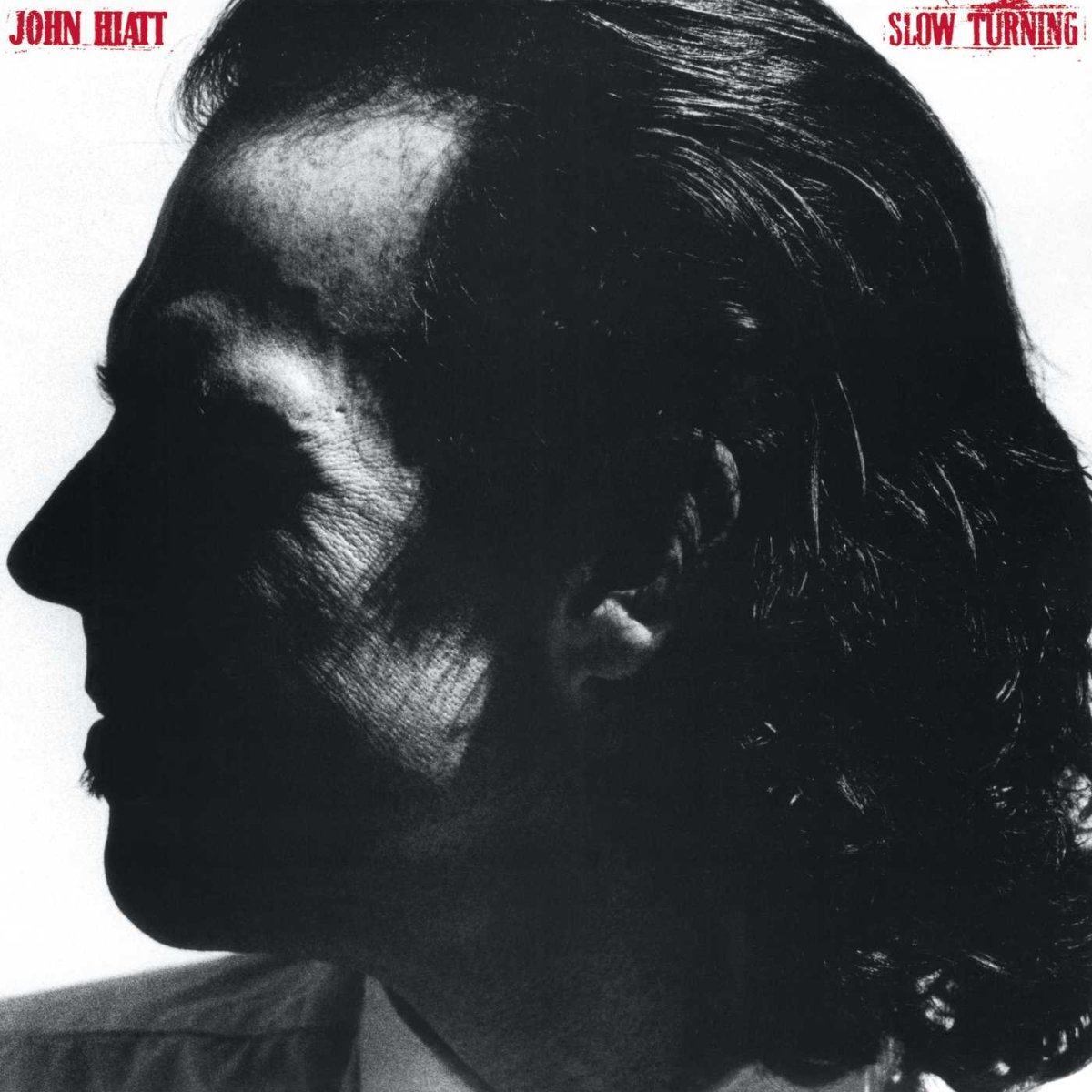
He has a tremendous catalog with 24 studio albums. He released his first album in 1974! By the time John Hiatt released the album Slow Turning in 1988, he wasn’t some wide-eyed newcomer chasing charts; he was a survivor. Some of the songs he wrote and were covered were Angel Eyes, Sure As I’m Sitting Here, and Thing Called Love, just to name a few. Slow Turning is one of his best-known songs, with him singing.
I’ve seen a lot of Hiatt recently on live clips. He and his band are always great. It’s loose in the best way, the kind of groove that feels like it could fall apart at any second but never does. The rhythm section (Kenneth Blevins on drums and Dave Ranson on bass) just locks in with the kind of warmth that doesn’t come from studio perfection but from chemistry built from sweat on the road.
Slow Turning peaked at #22 on the Billboard Alternative Charts. The album peaked at #98 on the Billboard Album Charts. I thought it would have been higher in the charts. In my region, it got a lot of airplay.
Slow Turning
When I was a boy I thought it just came to you But I never could tell what’s mine So it didn’t matter anyway
My only pride and joy Was this racket down here Bangin’ on an old guitar And singin’ what I had to say
I always thought our house was haunted ‘Cause nobody said “boo” to me I never did get what I wanted But now I get what I need
It’s been a slow turnin’ From the inside out A slow turnin’, baby But you come about
A slow learnin’ But you learn to sway A slow turnin’, baby Not fade away, not fade away, not fade away
Now I’m in my car Ooh, I got the radio down Now I’m yellin’ at the kids in the back ‘Cause they’re bangin’ like Charlie Watts
You think you’ve come so far In this one horse town Then she’s laughin’ that crazy laugh ‘Cause you haven’t left the parking lot
Time is short and here’s the damn thing about it You’re gonna die, gonna die for sure And you can learn to live with love or without it But there ain’t no cure
It’s just a slow turnin’ From the inside out A slow turnin’ But you come about, ya
A slow learnin’, baby But you learn to sway A slow turnin’ Not fade away, not fade away, not fade away Not fade away, not fade away
A slow turnin’ A slow turnin’ A slow turnin’ A slow turnin’
I’ve never been a huge fan of The Police, but I do like a lot of their earlier songs. They were fun and energetic.
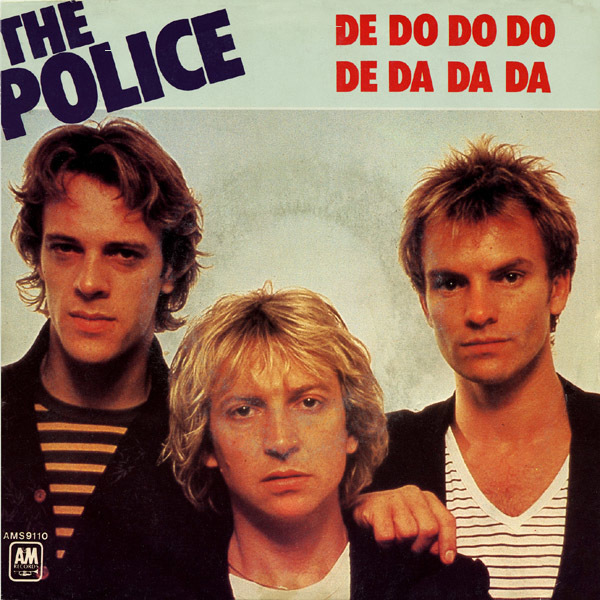
What does this song mean? Some think it’s about the way politicians, entertainers, and other people use words to manipulate others. Sting called it, “An articulate song about being inarticulate.” Sting wrote this when he became interested in songs with nonsense lyrics, like “Do Wah Diddy Diddy,” “Tutti Frutti,” and “Da Doo Ron Ron.” He wanted to find out why they work and write one of his own. He claimed it was his son who came up with the title.
The charm of “De Do Do Do” is that it makes something very complicated feel effortless. That’s a trick the best pop songs pull off. The Police knew how to make a statement while sounding like they were just having a bit of fun. And whether you hear it as a commentary on communication or just a killer hook to blast on cassette, it sticks in your head like bubblegum on a boot.
The song was inspired by the idea that simple, repetitive phrases can have a profound emotional impact, regardless of their literal meaning. Sting explained that the song reflects the way some people are drawn to shallow or meaningless language, and how, sometimes, even educated people may rely on basic communication in emotionally charged situations.
They reunited in 1986 and tried to update their old songs with new releases…the sessions didn’t work. The only song to be reworked and released was Don’t Stand So Close To Me. This song peaked at #10 on the Billboard 100, #5 in Canada, #8 in New Zealand, and #5 in the UK in 1981.
It was on their album Zenyatta Mondatta.
Sting:“Certainly what we’re producing is not elitist High Art, But, equally, I think entertainment’s an art. I think my songs are fairly literate – they’re not rubbish. ‘De Do Do Do’, for example, was grossly misunderstood: the lyrics are about banality, about the abuse of words. Almost everyone who reviewed it said, Oh, this is baby talk. They were just listening to the chorus alone, obviously. But they’re the same people who would probably never get through the first paragraph of Finnegan’s Wake, because that’s ‘baby talk’, too.”
De Do Do Do, De Da Da Da
Don’t think me unkind Words are hard to find They’re only cheques I’ve left unsigned From the banks of chaos in my mind
And when their eloquence escapes me Their logic ties me up and rapes me
De do do do de da da da Is all I want to say to you De do do do de da da da Their innocence will pull me through De do do do de da da da Is all I want to say to you De do do do de da da da They’re meaningless and all that’s true
Poets priests and politicians Have words to thank for their positions Words that scream for your submission And no-one’s jamming their transmission
‘Cause when their eloquence escapes you Their logic ties you up and rapes you
De do do do de da da da Is all I want to say to you De do do do de da da da Their innocence will pull me through De do do do de da da da Is all I want to say to you De do do do de da da da They’re meaningless and all that’s true
De do do do de da da da Is all I want to say to you De do do do de da da da Their innocence will pull me through De do do do de da da da Is all I want to say to you De do do do de da da da They’re meaningless and all that’s true
Many of you who have read this blog for a while know I have a soft spot for bands that never got their full due, especially the ones who could torch a stage and turn a riff into a mountain. Australia’s The Angels (or Angel City, depending on which record bin you’re digging through) are exactly that kind of band.
If you were hanging around an Aussie pub in the late ’70s, there’s a good chance you heard a blistering set from The Angels. Imagine a little the of Bon Scott-era AC/DC, the attitude of punk, and the tension of a film noir, and now picture that exploding from the back of a sweaty pub in Adelaide. That’s The Angels. As the old saying goes, they took no prisoners.
The Angels began as the Moonshine Jug and String Band in 1970, a folk/jug band formed by brothers Rick and John Brewster. But by 1974, they swapped their washboards for electric guitars and rebranded as The Keystone Angels. The real turning point came when they were spotted by AC/DC’s Angus Young and Bon Scott, who were impressed enough to recommend them to their label, Albert Productions.
Like many Australian acts, The Angels took a swing at the U.S. market, but there was already a band called Angel over here, all makeup and white spandex. So, The Angels became Angel City in the US and released several albums under that name, including Dark Room (1980) and Night Attack (1981).
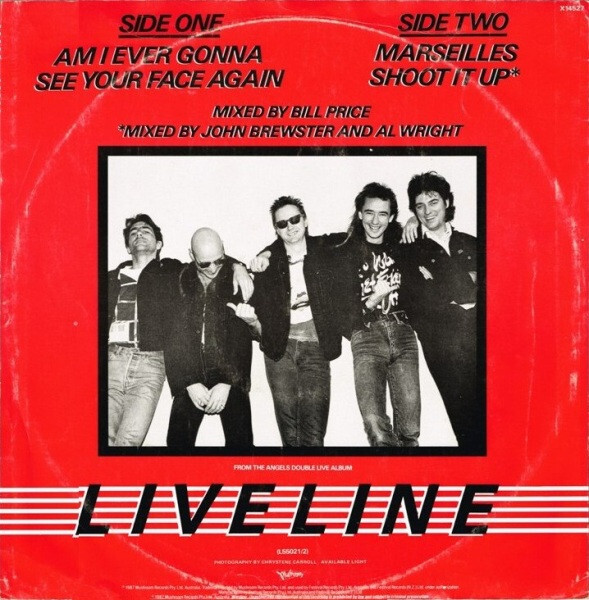
They had the songs. They had the live chops. But they never quite cracked America the way INXS, AC/DC, or Men at Work would. This was their first single back in 1976, and it peaked at #58 in Australia. It was on their debut self-titled album. Band members John Brewster, Rick Brewster, and Doc Neeson wrote this song.
They did have one song that peaked at #35 on the Billboard Mainstream Rock Charts called Underground. Underground was released in 1985. They also covered The Animals We’ve Gotta Get Outta This Place in 1986, which peaked at #7 in Australia and #13 in New Zealand.
When the band plays it live, fans start to answer the chorus with an expletive-laced chant, and it became part of the show. “No way get f*****, f*** off.” It’s become, unofficial part of the song. They are still together, releasing albums.
Here is another song by the Angels…Take A Long Ride
Am I Ever Gonna See Your Face Again
You may recognise yourselves here
Went down to Santa Fe, where Renoir paints the walls Described you clearly, but the sky began to fall
Am I ever gonna see your face again? Am I ever gonna see your face again?
Tram cars and taxis, like a waxworks on the move Carry young girls past me, but none of them are you
Am I ever gonna see your face again? Am I ever gonna see your face again?
Without you near me, I’ve got no place to go Wait at the bar, maybe you might show
Am I ever gonna see your face again? Am I ever gonna see your face again?
I’ve got to stop these tears, that’s falling from my eye Go walk out in the rain, so no one sees me cry
Am I ever gonna see your face again? Am I ever gonna see your face again? Yeah
Can’t stop the memory that goes climbing through my brain I get no answer, so the question still remains
Am I ever gonna see your face again? Am I ever gonna see your face again?
Am I ever gonna see your face again? (No way, get fucked, fuck off) Am I ever gonna see your face again? (No way, get fucked, fuck off) Am I ever gonna see your face again? (No way, get fucked, fuck off) Am I ever gonna see your face again?
Am I ever gonna see your face again? Am I ever gonna see your face again? Am I ever gonna see your face again? Am I ever gonna see your face again?
Hey, I wanna see your face, your sweet smiling face I wanna see your face, see your face again ‘n’ again ‘n’ again, again, oh
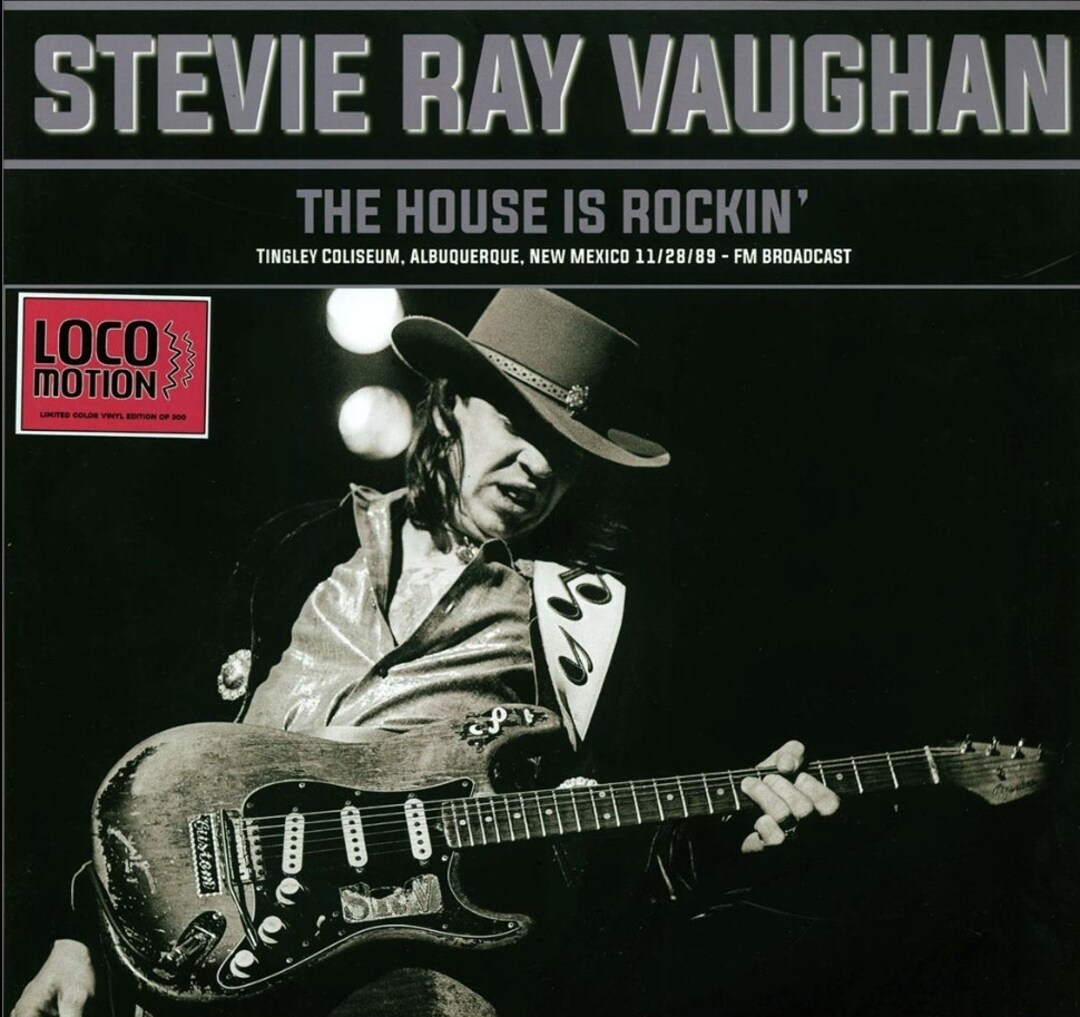
It was back on a winter’s night in a friend’s (Chris) house that I first heard and saw Stevie Ray Vaughan in the mid-1980s. His house had a sunken living room and a rise that the kitchen table sat on at the end. I was on the rise with my amp, and he called me over to the television. He pushed in an old VHS tape of SRV on Austin City Limits that he recorded. It knocked me out…not since seeing clips of Hendrix did I see such an aggressive guitar player. He was even more aggressive than Hendrix.
This two-minute burst of pure energy was a hell of a single. SRV played guitar not by numbers but by precise feel. Like Neil Young, he played by feel but without the wandering…just powerful, precise notes. In this song, I can hear a lot of Jerry Lee Lewis as well. It was written by Stevie Ray Vaughan and Doyle Bramhall and recorded in Memphis.
This song is on the 1989 In Step album. Vaughan had just gotten sober, and this was his first record at the time. This is the last solo album to be released during his lifetime. He made an album with his brother called Family Style, and it was released a month before his death.
This song peaked at #18 on the Billboard Mainstream Rock charts in 1989. The album peaked at #33 on the Billboard 100. Tragically, Stevie Ray Vaughan died in a helicopter crash just over a year after In Step was released. But “The House Is Rockin’” still stands as one of his top singles.
I could watch this man play all day long. His playing was so inspired and electric. I play guitar, but not really big solos as much. He took licks and solos to a new level.
The House Is Rocking
Well, the house is a-rockin’, don’t bother knockin’ Yeah, the house is a-rockin’, don’t bother knockin’ If the house is a-rockin’, don’t bother, come on in
Kick off your shoes, start losin’ the blues This old house ain’t got nothing to lose Seen it all for years, you start spreading the news We got room on the floor, come on, baby, shake something loose
Yeah, the house is a-rockin’, don’t bother knockin’ Yeah, the house is a-rockin’, don’t bother knockin’ Yeah, the house is a-rockin’, don’t bother, come on in
Well, the house is a-rockin’, don’t bother knockin’ Yeah, the house is a-rockin’, don’t bother knockin’ Yeah, the house is a-rockin’, don’t bother, come on in
Walking up the street you can hear the sound Of some bad honky tonker’s really layin’ it down We’ve seen it all for years, and got nothin’ to lose So get out on the floor, shimmy ’til you shake somethin’ loose
Well, the house is a-rockin’, don’t bother knockin’ Well, the house is a-rockin’, don’t bother knockin’ Yeah, the house is a-rockin’, don’t bother, come on in I said the house is a-rockin’, don’t bother, come on in
Thanks, Dave, for asking me to participate. Dave wanted us to pick a band we would like to see reunited based on reality and not bringing people back to life. A lot of bands that I would love to get back together, but most have deceased members, and under his rules, we cannot raise them again. Allman Brothers, The Band, Big Star, and many others where one or a few are alive. I considered The Kinks because Ray and Dave Davies are still alive, along with Mick Avory, the drummer. I also considered REM, CCR, J Geils, and The James Gang. Even if Dave had said we could resurrect people, I still would not pick The Beatles. I’m forever grateful they didn’t try it before Lennon passed. There is no way they would have lived up to people’s expectations.
The Replacements, Paul Westerberg, Tommy Stinson, and Chris Mars are still doing well. Their lead guitar player, Bob Stinson, passed away in 1995. He was replaced by Slim Dunlap in the ’80s when Bob quit. Slim passed away in 2024. He didn’t tour with them in the teens when they DID reunite because of a stroke he had in 2012.
They reunited in 2012 and started to tour, which lasted until 2015. They sold out huge arenas, made more money, and played in front of more fans than they did in their prime. Although their last show in Chicago drew over 50,000 people in 1991.
They had a penchant for shooting themselves in the foot in the ’80s over and over. Grabbing their new producer and tearing his clothes off and throwing him in the hall, saying the F word on Saturday Night Live and then getting banned, guest hosting a radio show and picking old blues records they knew had cuss words, and getting kicked out of there, and opening up for Tom Petty and breaking in Petty’s dressing room and stealing and wearing his wife’s clothes on stage (they finished the tour though…Petty had a sense of humor), refusing to make videos, knowing that record executives from big labels were coming to watch them and getting drunk playing TV theme songs plus KISS covers all night long. No need to add more things…you get the point.
I’ve heard from people who saw them in their prime. They usually have two things to say about them if they have seen them at least twice. “The best rock and roll band I’ve ever seen or heard” OR “The most drunken display I’ve ever seen” but even when they said that…they said they liked them and they still beat most bands. It does make sense, though. They started off as a punk band and slowly developed into a rock band when Westerberg developed as a songwriter. They had a rebellious spirit to the end.
Personally, I think if they had played the music company game like REM, they could have been popular in the mainstream. They had some of the strongest songs of the 1980s because of Paul Westerberg, and I put his songwriting on the level of Springsteen. Now let’s get into the songs of the band. I think many of their songs rival The Beatles, The Who, Led Zeppelin, Stones, or anyone you could throw out there. Bastards of Young, Here Comes A Regular, Alex Chilton, Androgynous, Can’t Hardly Wait, I Will Dare, Left Of The Dial, Unsatisfied, Kiss Me on the Bus, Skyway, Color Me Impressed, The Ledge, and so many more. If they had gotten proper airplay, I have no doubt they would have been hits.
Most indie bands were out of touch with the mainstream at the time, and that is the reason they all had such a large fan base. It started to cross over, though in the late eighties or early nineties at last, but by that time…The Replacements were winding down. This is a band I would want to see again, clicking on all cylinders. From the reviews of all of their reunion shows…they were on.
So Paul and Tommy…how about one more go around? Please include some TV Themes and KISS cover songs…just because you can. If you guys are happy…we will be.
Standing in the middle of nowhere Wondering how to begin Lost between tomorrow and yesterday Between now and then
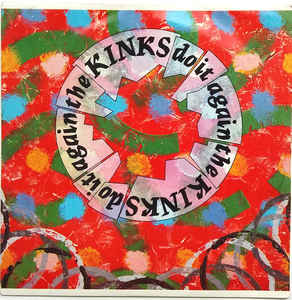
Great riff and rock song by the Kinks. It starts with a chord reminiscent of the A Hard Day’s Night intro. I was in high school when it was released, and it was great to hear a guitar-driven song at that time on the radio. I remember our band following another band, and they did this song. I was jealous we didn’t get to it first. Do It Again was released in 1984 as the opening track on their album Word of Mouth.Written by lead singer Ray Davies
The band had a resurgence in the late seventies and early eighties with 3 straight albums in the top 20. They also had a top ten hit off of State of Confusion with Come Dancing. I bought my first real-time Kinks album in 1980 with Give The People What They Want.
Working on their twentieth album Word of Mouth, conflicts between drummer Mick Avory and guitarist Dave Davies led to Avory’s leaving during the recording of the album.As a result, Avory played drums on just three tracks: Missing Persons, Sold Me Out, and Going Solo.The remaining tracks featured Bob Henrit on drums. Dysfunction seemed to fit this band and others like The Who and The Replacements. It made them who they were. Another song off of this album is the Dave Davies song Living On A Thin Line. The song grew in popularity when played repeatedly in The Sopranos third season episode University.
Ray Davies wrote this about the stressful working schedules the Kinks were going through. The song peaked at #41 on the Billboard 100 in 1984. I saw this line on a review of the song in Rolling Stone: The record kicks off with “Do It Again,” a tune that’s a love letter to every poor bastard out there grinding their teeth to dust in this cruel little hamster wheel of existence. I thought that fit well with this song.
Ray Davies: The saddest day for me was when Mick left. Dave and Mick just couldn’t get along. There were terrible fights, and I got to the point where I couldn’t cope with it anymore. Push came to shove, and to avoid an argument I couldn’t face. … we were doing a track called “Good Day” and I couldn’t face having Mick and Dave in the studio, so I did it with a drum machine. Dave said he wanted to replace Mick, and … I took Mick out, and we got very, very drunk. We were in Guildford, and after about five pints of this wonderful scrumpy, Mick said if any other band offered him a tour, he wouldn’t take it, because he didn’t want to tour. And I remember him getting the train back – because he was banned from driving; it was a very bad year for Mick – and he walked to the station and disappeared into the mist.
Do It Again
Standing in the middle of nowhere Wondering how to begin Lost between tomorrow and yesterday Between now and then
And now we’re back where we started Here we go round again Day after day I get up and I say I better do it again
Where are all the people going Round and round till we reach the end One day leading to another Get up go out do it again
Then it’s back where you started Here we go round again Back where you started Come on do it again
And you think today is going to be better Change the world and do it again Give it all up and start all over You say you will but you don’t know when
Then it’s back where you started Here we go round again Day after day I get up and I say Come on better do it again
The days go by and you wish you were a different guy Different friends and a new set of clothes You make alterations and [a fact in you knows] A new house a new car a new job a new nose But it’s superficial and it’s only skin deep Cause the voices in your head keep shouting in your sleep Get back, get back
Back where you started, here we go round again Back where you started, come on do it again
Back where you started, here we go round again Day after day I get up and I say, do it agaiiinnn Do it again Day after day I get up and I say, do it again
When I’m reading a music bio, everyone knows what I’m reading by reading my blog. I just finished the Peter Wolf book, and I cannot recommend it enough. I have never posted this song before, and I’m shocked that I haven’t. I’ve always liked this song and was reminded of it when I watched the movie The Wedding Singer. I remember in the 70s listening to J Geils with Must Have Got Lost and Give It To Me on AM radio, and they sounded great.
Of all the songs that I did vocals onstage with…this one has to be the most fun I had with a song. The crowd always roared back in the chorus…you could count on it. I was going to post this on Valentine’s Day, but forgot about it.
The J Geils Band started in 1967. They were originally called The J Geils Blues Band, and Peter Wolf saw them perform and joined with his band’s (The Hallucinations) drummer, Stephen Jo Bladd. A fan named Seth Justman soon joined on keyboards. Wolf and Justman soon became the two prominent songwriters of the band. The members were John Geils guitarist, Peter Wolf lead singer, Seth Justman keyboards, Danny Klein bass player, Richard Salwitz harp, trumpet, and saxophone.
They signed a contract with Atlantic Records that was VERY friendly to Atlantic Records. They started to open up for The Allman Brothers, BB King, The Who, The Stones, The Byrds, and just about everyone on the music scene at the time. They built their live reputation up and had a loyal fanbase. They were constantly touring and were known for high-energy shows and music. Peter Wolf was one of the best, if not the best, frontmen in rock. You also had Richard Salwitz (Magic Dick) playing blues harp, trumpet, and saxophone and gave the band a sound.
By their third album, Bloodshot, released in 1973, scored a hit with Give It To Me and the album peaked at #10 on the Billboard 100 and #17 in Canada. The album that set that album up was Live Full House. That album is one of the best live albums I’ve ever listened to. It was released in 1972 and established their live reputation for the rest of their career. As the decade went on, they did have some hits like my favorite Must Of Got Lost. Their Atlantic record contract was up in 1977.
They signed with EMI, and their commercial fortunes turned around with the new label. Their first album with EMI was Sanctuary, and it had a hit called One Last Kiss. Then came the Love Stinks album, and although there were no top 10 hits, this album had two songs that hit and are still played today: Love Stinks and Come Back hit the top 40, and their audience started to grow.
It was their 10th studio album, Freeze Frame, that blew the lid off. Some songs were the #1 Centerfold, #4 Freeze Frame, top 40 Angel in Blue, and a popular dance track called Flamethrower. Their popularity was at an all-time high. They opened for the Stones’ massive tour that year. They had been headlining since Love Stinks…but then…it was all over.
Peter Wolf didn’t like the way they were going into synth pop and wanted to get back to their roots. They pretty much told him to go his way, and they would go their way. They kept rejecting songs he brought, and many of the songs they rejected ended up on his album Lights Out. Listening to Freeze Frame now…you can hear the R&B in the song Freeze Frame and some of the others.
They decided to make an album called Even While I’m Gettin’ Odd, without Peter, and when I listen to it, I can see why Wolf didn’t want to go that way. They wanted to go much further into the 80s pop production than Freeze-Frame. The punch and live feeling of Freeze-Frame and Love Stinks was gone. The album failed and it would be their last. They have regrouped off and on through the years for live shows but never made another album.
The Love Stinks album was released in 1980 and peaked at #18 on the Billboard Album Charts and #4 in Canada. The title track peaked at #15 in Canada and #38 on the Billboard 100.
Peter Wolf on the breakup: Frank Barsalona, our agent, took me out for dinner after his final meeting with the other band members. In disbelief, he said, “After all these years, the band finally made it. It’s really quite unbelievable. I’ve dealt with the craziest of the crazies; the drugs, the girlfriends, the managers—nothing even comes close to this. Nothing as stupid, as senseless, and as wasteful in what these guys are insisting on doing. So, Peter, let’s start thinking about your solo career.”
Here is a version that I love…a bluegrass rendition of the song by Peter Wolf, and I like it.
Here they are in the Netherlands in 1980, live. Peter Wolf has a black eye and broken ribs after being ambushed in a pub. They headlined the Pinkpop Festival.
Love Stinks
You love her But she loves him And he loves somebody else You just can’t win And so it goes ‘Til the day you die This thing they call love It’s gonna make you cry
I’ve had the blues The reds and the pinks One thing for sure (Love stinks)
Love stinks, yeah, yeah (Love stinks) Love stinks, yeah, yeah (Love stinks) Love stinks, yeah, yeah (Love stinks) Love stinks, yeah, yeah
Two by two, and side by side Love’s gonna find you, yes, it is You just can’t hide You’ll hear it call Your heart will fall Then love will fly It’s gonna soar
I don’t care for any casanova thing All I can say is (Love stinks)
Love stinks, yeah, yeah (Love stinks) Love stinks, yeah, yeah (Love stinks) Love stinks, yeah, yeah (Love stinks) Love stinks, yeah, yeah
I’ve been through diamonds I’ve been through minks I’ve been through it all (Love stinks)
Love stinks, yeah, yeah (Love stinks) Love stinks, yeah, yeah
Love stinks Love stinks, yeah, yeah (Love stinks) Love stinks (love stinks), yeah, yeah (Love stinks)
Love stinks, yeah, yeah (Love stinks) Love stinks, yeah, yeah (Love stinks) Love stinks (love stinks), yeah, yeah (Love stinks) Love stinks (love stinks), yeah, yeah (Love stinks) Love stinks (love stinks)
As soon as I clicked on the link that CB sent me I knew I heard this before on our old rock station here WKDF. They would mix new songs with old and it worked well. Love the groove in this one with that guitar constantly riffing through the song.
Mason Ruffner grew up in Texas but has adopted New Orleans as his home. In 1987, he released his second album entitled Gypsy Blood with the title track becoming a Mainstream Rock Track hit in 1987.
In the early 80s, his band backed musicians such as such as John Lee Hooker and Memphis Slim. He was spotted in 1985 by a CBS scout and was offered a contract. He released his self-titled album in 1985 to critical praise.
Ruffner’s style attracted notable musicians, including Bruce Springsteen, Jimmy Page, Carlos Santana, and ZZ Top, who would attend his performances or sit in with him. He opened up for a variety of acts that included Crosby, Stills & Nash, Jimmy Page, U2, and Ringo Starr. He also played on Bob Dylan’s album Oh Mercy.
He released his album Gypsy Blood in 1987 and it was produced by Dave Edmunds. The song peaked at #11 on the Billboard Hot Track Charts in 1987. The album peaked at #80 on the Billboard Album Chart.
Gypsy Blood
Lord knows I was born a gypsy My heart can steal you blind I got my hand on my suitcase Lots of travelin’ on my mind Yeah, it’s that blood yeah, that gypsy blood That carries me far from my love My spirit flies just like a dove I got that gypsy blood
I know that there ain’t nothin’ There’s nothin’ like a woman’s touch But love just burns me like fire Love is costin’ me too much Must be that blood, must be that gypsy blood That carries me far from my love My spirit flies just like a dove I got that gypsy blood
Do you wanta ride along with me, baby? Well, I’m on the run Well, I’m restless and I’m weary I’m gonna shoot my gun!
Take me out there on that highway Let the wind blow in my face If I fall by the wayside Somebody else can take my place Yeah, it’s that blood yeah, that gypsy blood That carries me far from my love My spirit flies just like a dove I got that gypsy blood
I’m featuring two songs by two different trios that Jack Bruce was a part of. I’m not speaking just for me when I say this because many bass players would agree… but Jack Bruce was one of the biggest bass influences I had. There were 3 bassists that I wanted to learn from when I was learning to play bass. John Entwistle, Paul McCartney, and Jack Bruce. All three for different reasons.
John for the pure speed and those runs he pulled off that still amaze me to this day. Paul because of the melody he added to the bass in songs. He would be going everywhere but you hear a counter melody underneath it. Jack…he was the one that set me on my way because of Crossroads. He combined John Entwistle and Paul in some ways…plus a little extra. He added a jazz touch that Paul and John didn’t have…that is why he is one of the best. Plus one inspiration for Jack Bruce was that he played cello and attacked the bass in a different way than most of his peers.
After Cream I never knew much about him. We all know about Eric and to a certain extent Ginger Baker but Bruce I had no clue. Between 1969 through 2014 he released 14 solo albums. On top of the solo albums, he played with some bands like the power trio West, Bruce, and Laing or WBL including Leslie West, Jack, and Corky Laing for 3 albums. He also did collaborations with Gary Moore, Frank Zappa, Robin Trower, Tony Williams, Mick Taylor, and even his ex-bandmate Ginger Baker.
The song I’m featuring today was from an album B.L.T.Jack Bruce (bassist), Bill Lordan (drummer), and Robin Trower (guitarist). I saw this album at the Great Escape a lot. That was a used record store that I went to as a teen. As soon as CB sent me the link to this…I knew the album right away. It was made in 1981. The album peaked at #37 on the Billboard Album Charts. It’s a straight-ahead power trio that doesn’t let up. Into Money was written by Robin Trower.
I saw Clapton and Santana in 1990 at the now-demolished amphitheater in Nashville. That summer I also saw Robin Trower and he really impressed me because I got to see him in a club atmosphere and he was spectacular.
The other song (The Docter) I’m featuring is from WBL which features Leslie West, Jack Bruce, and Corky Laing. It was released in 1972 on the album Why Dontcha which peaked at #26 on the Billboard Album Charts. The Doctor was written by West, Bruce, Laing, and Sandra Palmer. It got quite a bit of radio play at the time.
Into Money
You’ve got your house, you’ve got your car You live up on the hill among the stars You say you did what you had to do But was it really worth what they put you through You know these things we believed in It didn’t touch you at all I hate to see you like this baby With your back to the wall
You lost your heart, when you lost your nerve Maybe you lost your grip on that first curve You used to talk about bein’ free Why, you’re so tied up you can’t even breathe
You know these things we believed in They didn’t touch you at all I hate to see you like this baby With your back to the wall Money into money Money into money
Money into money Money into money You’re into money, into money You’re into money, money Into money yeah, yeah Into money Into money, into money, into money yeah, yeah, yeah, yeah Into money








 PowerPop... An Eclectic Collection of Pop Culture