Roger Daltrey – Free Me

I’ve been listening to the McVicar soundtrack lately, and it’s a great soundtrack for that movie that starred Roger. It’s a song released in 1980 and was written by Russ Ballard. I remember the song and video from MTV, and it’s a hell of a rocker. Roger’s voice, one of rock’s greatest primal instruments, rips through this one, and he means it. 

McVicar was Daltrey’s project. He starred in the biopic, produced it, and brought it into existence. Based on the life of bank robber John McVicar, it’s part prison-break flick, part redemption tale. I’ve watched the movie a couple of times, and I would recommend it. 

A loud rocker with just enough polish to sneak onto FM radio and just enough attitude to sound like it’s kicking the doors in. On his three previous solo albums, Daltrey had gone out of his way to avoid the hard rock sound of The Who. On this one, he upped his game. Musicians varied on the album, but they did include Pete Townshend, John Entwistle, and new Who drummer Kenney Jones. Keith Moon had played on a few songs on his 1977 album One of the Boys

Free Me peaked at #39 in the UK and #53 on the Billboard 100 in 1980. The McVicar album peaked at #22 on the Billboard Album Charts,  #39 in the UK, and #44 in New Zealand.  

I wanted to add one more song from his solo career. A song I haven’t heard in a long time that I always liked. A song called “Say It Aint So Joe” from his One of the Boys album in 1977. The video features John Entwistle, Keith Moon, and Wings guitarist Jimmy McCulloch. 

Free Me

Free me
Can’t you hear that’s what I say
Free me
Anyhow or anyway

I hear a voice
Call in the night
Push on the brain
Fades with the light

And I’ve seen a face
With so many eyes
Out in the words
Know there lies

Can’t you hear me say

Free me, free me
Inside I’m bleeding, can’t you see
Free me
From all this pain and misery

I am a flame
But he held the fire
Call me a fool
Don’t call me a liar

Take me to hell
And let me stay
Get back some prize
Well, I have to pay

Can’t you hear me say

Free me

I lie awake
Burning inside
No where to run
And no where to hide

Old lady time
She’s no friend to me
I feel her change
And she holds the key

Can’t you hear me say

Free me, free me
Can’t you hear that’s what I say
Free me
Anyhow or anyway

My Favorite George Harrison songs

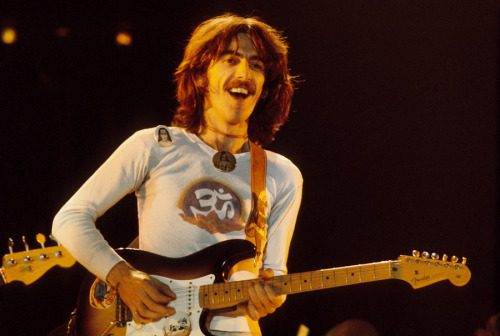
Everyone who knows me knows that John is my favorite Beatle, but since I’ve been blogging, I’ve met a lot of people who have been won over by George. I’ve always liked George, but I’ve probably delved more into his catalog than I did before because of people’s enthusiasm about him. I know many bloggers now who consider him their favorite out of The Beatles, including Lisa from tao-talk.com, who ironically, inspired this post from her John Lennon post on Sunday. Enthusiasm rubs off, so I thought I would list my top ten favorite George songs. For some of Lisa’s posts about George, check here, here, here, here, and here. George’s popularity has grown a great deal in the past few years. 

I can only imagine how he felt being in a band that contained two of the top songwriters of the 20th Century. Unlike John and Paul, George didn’t start writing songs until 1963-1964. John and Paul had been writing songs since 1956. He was influenced by both of them, and I think he influenced them later on. Songs like Something, you can hear McCartney’s influence. With Taxman I can hear some of John in that one. 

You may notice something about this list. It leaves off his two biggest hits. My Sweet Lord and I’ve Got My Mind Set On You. Maybe I’ve heard them too many times, I don’t know, but the other ones hit me more. I’m also going to leave off Beatles (and Wilburys) songs that George wrote. If I made a list of John’s songs (which I will now), I won’t include his Beatles songs because I think they belong to all four, not just John. 

I switched my number one and two songs a little while back. They are close to me, but the number one song has won me over again and again. 

  1. All Things Must Pass

This is not only my favorite George Harrison song, but I also think it’s one of the best solo Beatles songs, period. 

This 1970 George Harrison song is on the album All Things Must Pass. He brought it up during the Let It Be sessions; they went over it, and it sounded fantastic for a rehearsal…you could hear it taking shape. George was mindful of the TV show concert of some kind on Let It Be (it wasn’t decided yet). He wanted to play acoustic and was afraid the acoustic would get lost live.  All the songs they did on Let It Be live on the rooftop…were rockers. They went through the song over 30 times. They picked it back up before the concert, but George dropped it. George wanted to do more of a rocker. 

To me, it’s the greatest non-officially recorded Beatles song. When all the Beatles’ voices came together in the chorus while rehearsing this one…a shiver went through me. None of them could reproduce those vocals apart. 

2. Isn’t It A Pity

I think this one gets forgotten, and it shouldn’t be that way. It was the B side to My Sweet Lord and I think it’s the superior side. George said he wrote it in 1966, but it didn’t see the light of day until 1970. 

It resembles Hey Jude in its structure. 

3.  What Is Life

What an uplifting song this is. It’s a slice of guitar-pop ecstasy. Power pop? Soul-pop? Sunshine fuzz-rock? However you tag it, it belongs high on anyone’s list of 1970s songs. 

4. Blow Away

I bought this album, which was in a cut-out bin at a record store and I was surprised how good this album was. This is a song that doesn’t come up as much when you hear George’s music. Much like Isn’t It A Pity…it gets forgotten. It’s nothing earth-shattering or complicated about this song… It’s just a truly great pop single. 

5. Any Road

This song was released posthumously, and it remains one of my favorite George songs. It pretty much sums up his philosophy, and I love it. It seemed like a final message from George to everyone. 

I heard this song before George passed away…a live version of it by him on a VH1 special that he was on. The interviewer kept pushing him to do a song…I’m glad he did now. When I heard it, I smiled because it was so George. With George’s songs, you could expect a good melody, slide guitar, and his own nugget of knowledge that he left behind.

This song was on George’s last album, Brainwashed, in 2003. George wrote the song in 1988 while working on a video for “Cloud Nine.” 

I would follow with these songs. 

6: Crackerbox PalaceI first saw the video of this song on television in the seventies. I might have seen it on the SNL broadcast…probably a repeat. A good catchy song by George off of his Thirty-Three & 1/3 album. 

7: Give Me Love (Give Me Peace on Earth) –  Another positive song from George. George Harrison said this about the song: “Sometimes you open your mouth and you don’t know what you are going to say, and whatever comes out is the starting point. If that happens and you are lucky, it can usually be turned into a song. This song is a prayer and personal statement between me, the Lord, and whoever likes it.”

8. When We Was Fab – It was nice to hear him having fun with his legend instead of the bitterness that all of them had for a short time. 

9. Devil’s Radio – From what I read about George, as a kid, he didn’t like the neighbors knowing his business and hated gossip…this song says that plain and clear about the press as well. 

10. The Art of Dying – Harrison wrote these lyrics while he was still a Beatle. He found it hard to get many of them on Beatles albums because there was only so much room. The good side is that when The Beatles broke up, he had a backlog full of songs.

..

Camper Van Beethoven – Eye Of Fatima (Pt. 1)

I want to thank obbverse’s brother for recommending this song to him and then him to me. Love the bass in this one and the guitar licks that complement the bass. I hear a little bit of Bakersfield in this one as well, with some twang. The song feels like the first part of a bigger story, which it is. The second part song follows as a kind of comedown, but this first part is where the hooks are. Also, it’s even kind of radio-friendly.

Back in the late eighties, I was working while going to college. A co-worker of mine kept playing this band, and it drove me up the wall. My first reaction was to ask…”what the hell is this and why are you playing it?” By the end of the week, I wanted a copy of it, so she taped it and gave it to me on cassette. The song was Take The Skinheads Bowling and it was heavily played on college radio in the late 80s. That’s how I started to know about this band. 

This song was a few years later than that one. This one was on their 1988 album called Our Beloved Revolutionary Sweetheart. The first Camper Van Beethoven record for a major label, Virgin, no less, and it’s as if the band decided to storm the gates of MTV with fiddles and surrealism. With this band, you know you’re in for something strange, but also something oddly familiar.

With all that is going on, there is something subversively pop about this song. It grooves. It twangs. It rambles with purpose. And you can sing along to it even if you’re not quite sure what it’s about.

Just so we cover this sufficiently, here is Eye of Fatima (Part 2)

Eye of Fatima (Pt. 1)

He’s got the Eye of Fatima on the wall of his room
Two bottles of tequila, three cats and a broom
He’s got an 18-year-old angel and she’s all dressed in black
He’s got 15 bindles of cocaine tied up in a sack

And this here’s a government experiment and we’re driving like Hell
To give some cowboys some acid and to stay in motels
We’re going to eat up some wide open spaces like it was a cruise on the Nile
Take the hands off the clock, we’re going to be here a while

And I am the Eye of Fatima on the wall of the motel room
And cowboys on acid are like Egyptian cartoons
And no one ever conquered Wyoming from the left or from the right
But you can stay in motel rooms and stay up all night

Call – What’s Happened To You

I remember seeing The Call on MTV in the mid-eighties, and there was a reason I remembered them. Playing the organ was no other than Garth Hudson for that song. It was a minor MTV hit, and I liked it a lot. The riff really stuck with you. I started to explore more of what they did, and this song is on their album Red Moon, released in 1990. 

The Call was formed in Santa Cruz, California, in 1980. The Call was led by bassist, singer-songwriter Michael Been, a gravel-voiced singer who brought fire and the introspection of a tortured poet. His lyrics weren’t about getting the girl or cruising in muscle cars; they were about faith, doubt, injustice, identity, and the fragile grip we keep on hope. Heavy stuff delivered in tight, taut rock songs that carried a punch. 

I think the general public really missed a great band here. They did have some MTV play now and then, but never broke through. Probably because they were more Americana, and that didn’t fit in at the time of big production and synths. Altogether, they released 9 albums from 1982 to 1997. In 2024, they released an album called The Lost Tapes with unreleased music from the 1980s and early 1990s. 

Where earlier Call albums leaned into their Springsteen/U2 style, Red Moon pulls things inward. The rhythm section is more restrained. There’s even a bit of The Band in the album’s organic, Americana leanings. I also hear some Van Morrison in this track. 

The production is warm and minimal, again almost Band-like in its restraint. You get brushed drums, subtle guitar, and just enough space to let the song breathe. You could hear this playing while drifting out of a cracked car window on a long, lonely drive.

They did have one celebrity on this recording. Irishman Van …Bono. He did the backups on this song.  In the record company’s infinite wisdom…they picked this one as the single off the album. The reason? Oh, because Bono sang backups. Michael Been said, “I don’t care if Elvis and Lennon came back to life and sang backgrounds, it’s not a single kind of song.”

The song peaked at #25 on the Billboard Alternative Charts and #39 on the Mainstream Rock Charts in 1990.  

It is a good song, though…very Americana. The band members were Michael Been, Bass and lead vocals, Jim Goodwin, keyboards and sax, Tom Ferrier, guitar, and Scott Musick, drums. All of them did vocals except Musick. 

Here is the song that got me to pay attention to this band. The guest organ player is one of a kind. 

What’s Happened To You

La la la la la la la laLa la la la la la la laEverybodyLa la la la la la la laLa la la la la la la la

What’s happened to you?You used to be so shyYou used to hang your head downYou wouldn’t look in my eyesDid you some great vision?Did you finally break through?Did you shake the foundations?What’s happened to you?

La la la la la la la laLa la la la la la la la

What’s happened to you?You used to look so tiredNow there’s a spring in your stepAnd your words are on fireDid you hear some great secret?Did the words ring of truth?Did you rise from the ashes?What’s happened to you?

Where the four winds meetThe world is so stillThe waves are not poundingAnd the hungry are filledOur shadows have crossed hereWhere the sun touched the groundThe gathered are singing (ooh)What a beautiful soundThey’re singing

La la la la la la la laLa la la la la la la laEverybody singLa la la la la la la laLa la la la la la la la

What’s happened to you?You used to be so unkindYou used to curse at this poor worldSo what changed your mind?What stirred such compassionIs a mystery to meI don’t know what’s happenedOh, but I like what I see

Where the four winds meetThe world is so stillThe waves are not poundingAnd the hungry are filledOur shadows have crossed hereWhere the sun touched the groundThe gathered are singingWhat a beautiful soundThey’re singing

La la la la la la la laLa la la la la la la laEverybodyLa la la la la la la laLa la la la la la la la

Everybody!

La la la la la la la laLa la la la la la la laOh singLa la la la la la la laLa la la la la la la la

Twilight Zone 1980s – I, of Newton

Many of the reboots of the Twilight Zone in the 80s were weak, but there were a few that hit the mark. The one I remembered the most is this one. An eight-minute episode of Ron Harris (Barney Miller) and Sherman Hemsley (The Jeffersons). It’s quick and straight to the point, and I thought written and acted brilliantly. The perfect task to send the devil on. 

Marshall Crenshaw – Mary Anne

Marshall reminds me of Nick Lowe a little because they make every song sound like a potential hit in a good way. It’s a kind of song that makes everything feel alright for three minutes. It’s one of those perfect power pop songs. 

He got his first break playing John Lennon in the off-Broadway touring company of the musical Beatlemania between 1978-1980. Crenshaw said: “In the beginning, I was bothered by it, as an egotistical young person, maybe because I had just gotten out of Beatlemania, and I was sick of any kind of heavy association with some other figure.”

He later played Buddy Holly in La Bamba in 1987. “I’ve been a Buddy Holly fan all my life. The joy still comes across in his music. It’s really got its own je ne sais quoi. It really stands apart from a lot of ’50s rock, because it conveys a sense of intimacy. I think it’s because it was made in this little building on the side of a highway late at night with this isolated group of people.”

Marshall Crenshaw’s 1982 self-titled debut is a rare bird in the rock canon, a flawless record that never seems to age. On the album with the jangle of Someday, Someway and the Buddy Holly bop of Cynical Girl, Mary Anne is the track that quietly steals the show. That chorus. It just opens up like sunshine bursting through the clouds. “Mary Anne, you’re not alone,” Crenshaw assures her, and suddenly you’re not alone either. 

The arrangement is a masterclass in restraint. The chiming guitars are pure Rickenbacker, and the bassline has a McCartney-esque melody. No frills, no tricks, just three minutes of songcraft that feels like it could’ve been pulled from AM radio in 1966. In the endless search for a great pop song, Mary Anne is the kind of track that makes you stop searching for a while. 

Marshall Crenshaw peaked at #50 on the Billboard album charts in 1982. As the old phrase goes…it’s got more hooks than a tackle box.

Mary Anne

It isn’t such a crimeIt isn’t such a shameIt happens all the timeYou shouldn’t take the blameGo on and have a laughGo have a laugh on meGo on and have a laughAt all your misery

Mary Anne, Mary Anne (don’t cry Mary Anne)I really wanna tell you Mary Anne, Mary AnneI’m thinking of youMary Anne, Mary Anne (don’t cry Mary Anne)I really wanna tell you Mary Anne, Mary Anne, Mary Anne

You take a look aroundAnd all you seem to seeIs bringing you downAs down as you can beGo on and have a laughGo have a laugh on meGo on and have a laughAt how bad it can be

Mary Anne, Mary Anne (you’ll be all right)I really wanna tell you Mary Anne, Mary AnneI’m thinking of youMary Anne, Mary Anne (you’ll be all right)I really wanna tell you Mary Anne, Mary Anne, Mary Anne

Mary Anne, Mary Anne (goodnight Mary Anne)I really wanna tell you Mary Anne, Mary AnneI’m thinking of you Mary Anne, Mary Anne (goodnight Mary Anne)I really wanna tell you Mary Anne, Mary Anne, Mary Anne

Paul Brady – Can’t Stop Wanting You

If Paul Brady’s name doesn’t ring out like Dylan’s or Springsteen’s, that might just be because he was too versatile for his own good. In the music industry, which prefers its musicians to pick a lane and stick to it, Brady chose the scenic route, wandering from Irish traditional ballads to blue-eyed soul, from Dylan-esque singer-songwriter fare to ‘80s radio pop.

Brady was born in Strabane, a town in County Tyrone, Northern Ireland in 1947. He was raised in a musical household (his mother taught piano), Brady was classically trained early on but gravitated toward American rock and blues as a teenager, playing in local showbands before finding his way into the 1960s Dublin folk scene.

This song is on his album Trick or Treat, released in 1991. Paul was a busy man on this album. He is listed doing vocals, mandolin, piano, keyboards, tin whistle, percussion, drum programming, acoustic, and electric guitar. Some of Toto helped him out in the studio for this one. One of them was Toto drummer Jeff Porcaro in one of the last projects before his death. This song sounds like it should have been blaring out on the radio in the summer of 1991. The album did peak at #1 on the Irish Charts.

I want to add one more song from his second album, Hard Station, to give you another example of him. Hard Station was released a decade earlier than Trick or Treat in 1981. This man is worth checking out!

On Crazy Dreams, that opening guitar riff is tight and dry, like a fuse just waiting to burn down. Then Brady’s voice comes in, urgent, soulful, every syllable laced with exasperation and hope. It’s very smooth without being too smooth. 

Can’t Stop Wanting You

Hot words on a summer night
You ‘n’ me having a fight
One drink and it all come out
Before I knew what we were fightin’ about

Hurt come from a midnight place
Dressed in a web of lace
Brainstorm blowin’ up inside
I can’t stop wanting you

Now I know it’s a modern world
And baby you’re a modern girl
And I try to be tops at school
Pickin’ up on these modern rules
Teacher come and teacher go
Teacher know when a boy is slow
This boy got a lot to learn
I can’t stop wanting you

It’s a new kind of world
For a boy and a girl
And my mind’s in a whirl
I can’t stop wanting you

Hot words on a summer night
You ‘n’ me having a fight
One drink and it all come out
Before I knew what we were fightin’ about
I tried but the truth is out
I can’t stop wanting you

Pete Townshend – Let My Love Open The Door

A thank you to Dave for publishing this for Turntable Talk. The theme was looking for artists who left popular bands to go solo. I could have done a Beatle easily, but Pete was perfect for this. 

Pete recorded Empty Glass a little before the Who recorded their first album without Keith Moon, Face Dances. This was Pete Townshend’s only solo American Top 10 hit, but it charted as high as any Who song released in America… I Can See For Miles also peaked at #9.

This wasn’t The Who smashing guitars or railing against society. This was Pete, solo and sincere, pulling back the curtain and offering something deceptively simple: vulnerability, all wrapped in a three-minute pop song.

Pete always put his solo career on the back burner for The Who. On the surface, Let My Love Open the Door sounds like a pure pop song, but don’t be fooled. There’s gospel in its meaning. Townshend was deep in his Meher Baba-influenced spiritual quest at the time, and this song doubles as a kind of secular hymn. God, lover, self, take your pick. The message lands the same: let something bigger than your pain inside.

The song peaked at #9 on the Billboard 100, #5 in Canada, and #46 in the UK in 1980. The song was on the album Empty Glass, which peaked at #5 in the Billboard Album Charts, #2 in Canada, #21 in New Zealand, and #11 in the UK. Two of the musicians on this track, the bass player Tony Butler and drummer Mark Brzezicki, formed the Scottish rock quartet Big Country in 1981. Chris Thomas who produced this album, also worked with The Beatles, Pink Floyd, The Sex Pistols, Badfinger, and U2, among others.

Pete’s manager at the time didn’t think the song belonged on the album and fought against it. He said it didn’t sound like a Townshend song. He called to apologize after the song hit.

Let My Love Open The Door

When people keep repeating
That you’ll never fall in love
When everybody keeps retreating
But you can’t seem to get enough

Let my love open the door
To your heart

When everything feels all over
Everybody seems unkind
I’ll give you a four-leaf clover
Take all worry out of your mind

Let my love open the door
To your heart, to your heart

I have the only key to your heart
I can stop you falling apart
Try today you’ll find this way
Come on and give me a chance to say

Let my love open the door
It’s all I’m living for
Release yourself from misery
There’s only one thing gonna set you free
That’s my love
That’s my love

Let my love open the door

When tragedy befalls you
Don’t let it drag you down
Love can cure your problems
You’re so luck I’m around

Let my love open the door
To your heart

Los Lobos – Evangeline

Damn this song swings, and it has a great guitar intro and feel. I heard this for the first time not long ago, and it stuck with me as well as some more of their songs. With a band like this, it’s hard to pin down one song to post. 

They’ve always had that rarest of abilities: to wrap roots, rock, and border ballads into something that feels less like a style and more like a lineage. The brilliance here is in the restraint. There’s no over-arrangement, no big production, and no studio trickery. Just a man sitting with his memory. 

The song was written by David Hidalgo and Louie Pérez on the album How Will The Wolf Survive? This is truly a great album. It’s easy to overlook this song when you’ve got so much groove and grit elsewhere on the record. But give it a quiet night and some headphones, and you’ll find it’s one of the songs that stays with you longest. I covered the title cut earlier this year. 

This song proves something else… they could write songs that cut deep with almost nothing at all. No drawn-out guitar solos. No choruses built for crowd sing-alongs. Just three minutes of pure delight. The album peaked at #47 on the Billboard 100, #13 in New Zealand, #31 in Canada, and #77 in the UK in 1984. 

I gave this link in the other post. There is a documentary about Los Lobos called Native Sons that is set to be released this year. As far as I know, it still hasn’t been released. If you have any more information, I would love to hear it. 

Evangeline

Evangeline is on the roamJust barely seventeenWhen she left homeDon’t know where she isOr where she’s goingShe is the queen of make believe, Evangeline

I can still remember this little girlBlack eyes just staringAt this big old worldRan off to find some American dreamTrain ticket in one handIn her new blue jeans

Evangeline is on the roamJust barely seventeenWhen she left homeDon’t know where she isOr where she’s goingShe is the queen of make believe, Evangeline

She went out dancin’ on a Saturday nightSilk stockings and high heelsBlue liner on her eyesBut on Sunday morning she’s all aloneHead lying on the nightstandBy the telephone

Evangeline is on the roamJust barely seventeenWhen she left homeDon’t know where she isOr where she’s goingShe is the queen of make believe, EvangelineShe is the queen of make believe, Evangeline

Jeff Healey – Angel Eyes

I wrote this a while back, but Deke sent me another song that was incredible on guitar. So I canceled this one for that weekend and came back to this today. This was my introduction to Jeff Healey, as it was to many people. 

When I think of this song, I think of a dark, smoky bar because we were playing as a house band, and this was on the jukebox. We would listen to it between sets. The way Canadian Jeff Healy played guitar was very interesting. Healy was of course, blind, and he was given a guitar, and no one taught him how to play it. Jeff Healey was a Canadian who started to play guitar when he was 3. He could bend the notes to a limit that normal guitar players normally don’t. His solos were just as interesting as the songs themselves.

In 1989, Jeff Healey came out with this song that peaked at #5 in the Billboard 100, #86 in the UK, and #16 in Canada. The song was written by John Hiatt and Fred Koller. It helped bring Healey into the mainstream and broadened his audience.

He formed The Jeff Healey Band in 1985 with Joe Rockman and Tom Stephen. The band gained recognition in Toronto’s blues scene before being discovered by Stevie Ray Vaughan and Albert Collins. They were signed to Arista Records, and they released their 1988 debut album, See the Light. This song came from that album. He would release 5 albums with The Jeff Healey Band and also played with the Jazz Wizards. 

Healey was adopted and raised in Toronto, where he developed a passion for music. He was blind from early childhood due to retinoblastoma and had a great career until his passing in 2008.

Angel Eyes

Girl, you’re looking fine tonight
And every guy has got you in his sight
What you’re doing with a clown like me
Is surely one of life’s little mysteries

So tonight I’ll ask the stars above
“How did I ever win your love?”
What did I do?
What did I say
To turn your angel eyes my way?

Well, I’m the guy who never learned to dance
Never even got one second glance
Across a crowded room was close enough
I could look but I could never touch

So tonight I’ll ask, the stars above
“How did I ever win your love?”
What did I do?
What did I say
To turn your angel eyes my way?

Don’t anyone wake me
If it’s just a dream
‘Cause she’s the best thing
Ever happened to me

All you fellows
You can look all you like
But this girl you see
She’s leavin’ here with me tonight

There’s just one more thing that I need to know
If this is love why does it scare me so?
It must be somethin’ only you can see
‘Cause girl I feel it when you look at me

So tonight I’ll ask the stars above
“How did I ever win your love?”
What did I do?
What did I say,
To turn your angel eyes my way? 
Hey, hey, hey, yeah, awww

Buster Keaton: A Hard Act To Follow

Buster Keaton is one of my all-time favorite comedians, actors, and directors. He is also one of the best film makers I’ve seen. 

There are documentaries, and then there are love letters dressed up as documentaries. Buster Keaton: A Hard Act to Follow (1987) is very much the latter. Narrated and co-written by Keaton devotee David McGillivray and directed by Kevin Brownlow and David Gill (the same pair who did wonders with their Chaplin and Hollywood series), this BBC-produced trilogy doesn’t just trace the arc of a comedy legend it makes a strong case for Keaton being one of the most inventive minds in any medium, silent or not.

It is one of the best documentaries I have ever seen, not just about Buster but anyone. This documentary is interesting for fans and non-fans alike. I have watched it multiple times and showed it to friends to didn’t have much interest in silent movies and they ended up liking it.

Brownlow also worked on “Hollywood” (a 13-part history of the silent era that I reviewed), The Unknown Chaplin, and Harold Lloyd: The Third Genius. This is in my top 5 of documentaries to recommend to people. I just wish it were easier to get when I wanted to see it. I had to order it from Europe to get a DVD copy of this.  You can watch all of them now on YouTube, though...below!

Buster Keaton was not only a great comedian but also a great filmmaker. Some of his special effects in Sherlock Jr and other movies stand up today and that was made in 1924. I always thought that while Chaplin had the best comedy character…Keaton was the better filmmaker.

What sets A Hard Act to Follow apart is its rhythm. It’s tightly edited, gently scored, and clearly built by people who don’t just admire Buster Keaton, they get him. And more than that, they want you to get him, too. For my money, this is the best documentary ever made about a silent-era performer. It respects the intelligence of its subject and the curiosity of its audience. If you already love Keaton, this is the companion piece you didn’t know you needed. If you’re new to him, this might be your gateway to him.

Part One (From Vaudeville to Movies):

Covers his vaudeville childhood with his parents. Because of child labor laws, his parents would claim that Buster was an adult actor. They would dress Buster to look old. This part goes through Vaudeville and up until Buster meets Roscoe Arbuckle and starts his career in movies.

Related image

Part Two (Star Without a Studio):

Part Two sums up his great silent movies. He did not work in the studio system…Buster had free rein with his movies in most of the 1920s, working for Independent film executive Joe Schenck. Part two shows some of the best scenes from his silent movies until he had to join a studio (MGM) that along with his drinking, helped ruin his career.

Related image

Part Three (Genius Recognized):

This part is the downfall and the comeback. Buster worked through the early thirties in some successful talkies, but by the end of the 30s, he was working as a gag writer. He was soon largely forgotten until he appeared in “Sunset Boulevard”, commercials, and TV. Buster was in a movie with Chaplin called Limelight in 1952. He began to be praised by historians, critics, and fans alike before he passed away in 1966.

Image result for buster keaton 1965

There is a new Buster documentary out called ‘The Great Buster: A Celebration’ by Peter Bogdanovich that I have yet to see. I plan to watch it soon. Either way, this one will be hard to beat.

Below is Buster Keaton: A Hard Act to Follow…the complete series.

Ben Vaughn – Shingaling with Me

This song has been in my head for a week now and won’t get out and thats a good thing. The feel of this sounds like it crawled out of the back seat of a 1963 Rambler. It really fits in with The Swingin’ Medallions, Doug Sahm’s 60s style of music, with a tiny bit of a tame Lou Reed thrown in. You can also hear a little of Springsteen in his music at times.

I’m far from an expert on Ben Vaughn, but he shouldn’t be so unknown. Big Star is more well-known than this man. His music is instantly catchy and likable. The song I covered a few years ago, “Too Sensitve for This World,” has hit written all over it. I’m surprised no one has covered that one. Well, I double checked and someone has! Deer Tick…now that is a name that…no I won’t say it. 

Vaughn is from New Jersey. He got his start in the late ’70s, playing in punk and new wave bands before forming The Ben Vaughn Combo in 1983. The Combo was everything great about mid-’60s rock and roll, reimagined with a little punk energy. The band was together for five years, releasing two albums and touring the U.S. several times.  They received rave reviews in Rolling Stone and People magazine and video airplay on MTV.

This track comes from Mood Swings, the 1992 album that put Vaughn on the map as a Jersey jangle-pop garage guy with a deep record collection. It’s a compilation album that contains his best songs from 1985 to 1990. This song was originally on his 1987 album Beautiful Thing.

Vaughn started a solo career in 1988 and has released over 17 albums. He is very versatile… he plays Rock, blues, jazz, folk, soul, R & B, country, Power Pop, Bossa Nova, movie soundtracks, easy listening, and more, all with Vaughn’s musical slant.

His older albums are not on Spotify, but here is a YouTube playlist that covers a lot of this album. It really doesn’t matter because his songs are just plain out good.

I blogged about Vaughn a while back with this great song.

Jam – That’s Entertainment 

I learned about these guys from a friend’s brother, who introduced me to Big Star, The Clash, and The Dead. They had export albums that no one else I knew had at the time. There was no Spotify…you had to work for it. You had to hunt songs and albums down. It made it that much better when you heard them. 

I wrote this for another Jam song a while back and it holds true: Sometimes people say…oh this or that band was just too British. I never found a fault in that and wanted more British bands.  But…if ever a band could be considered “too British” this may very well be the band. But I want more…

This is one of those rare songs that doesn’t just describe life, it feels like life. Weller wrote it in a single night after stumbling home drunk (“Coming home pissed from the pub”), acoustic guitar in hand. And you can tell, the lyrics have that bleary, late-night poetry, where ordinary objects take on greater significance. A “policeman’s baton,” “a smash of glass,” “a freezing cold flat”  these aren’t metaphors, they’re scene-setting. There are strong Ray Davies vibes going on in this, with working-class life. 

He’s not glorifying his world; he’s documenting it. And in doing so, he’s creating a kind of working-class poem, a collage of British life with all the glamor scratched off. This is why I love the Kinks, the Who, and other bands that deal with everyday life. I would include Squeeze in there as well. 

They formed in 1973 and released their first album in 1977. Their members included guitarist Paul Weller, bassist Bruce Foxton, and drummer Rick Butler. Paul Weller is the best known out of the band, but they were all great musicians. Being a bass player…I’ve noticed a lot of Foxton’s bass playing is terrific.

The song was released in 1981 and peaked at #21 on the UK Charts and #34 in New Zealand. The song was on the album Sound Affects, which peaked at #2 on the UK Charts, #72 on the Billboard 200, #39 in Canada, and #2 in New Zealand. 

Paul Weller: “It was just everything that was around me y’know. My little flat in Pimlico did have damp on the walls and it was f–king freezing. I was doing a fanzine called December Child and Paul Drew wrote a poem called ‘That’s Entertainment.’ It wasn’t close to my song, but it kind of inspired me to write this anyway. I wrote to him saying, Look is it all right if I nick a bit of your idea, man? And he said, It’s fine, yeah.”

Thats Entertainment

A police car and a screaming sirenA pneumatic drill and ripped up concreteA baby wailing and stray dog howlingThe screech of brakes and lamp light blinking

That’s entertainmentThat’s entertainment

A smash of glass and a rumble of bootsAn electric train and a ripped up phone boothPaint splattered walls and the cry of a tomcatLights going out and a kick in the balls

I say, that’s entertainmentThat’s entertainment

Days of speed and slow time MondaysPissing down with rain on a boring WednesdayWatching the news and not eating your teaA freezing cold flat and damp on the walls

I say that’s entertainmentThat’s entertainment

Waking up at 6 a.m. on a cool warm morningOpening the windows and breathing in petrolAn amateur band rehearsing in a nearby yardWatching the telly and thinking about your holidays

That’s entertainmentThat’s entertainment

Waking up from bad dreams and smoking cigarettesCuddling a warm girl and smelling stale perfumeA hot summer’s day and sticky black tarmacFeeding ducks in the park and wishing you were far away

That’s entertainmentThat’s entertainment

Two lovers kissing amongst the scream of midnightTwo lovers missing the tranquility of solitudeGetting a cab and travelling on busesReading the graffiti about slashed seat affairs

I say that’s entertainmentThat’s entertainment

John Hiatt – Slow Turning

Now I’m in my car, I got the radio on, I’m yellin’ at the kids in the back seat
‘Cause they’re bangin’ like Charlie Watts

I love the way this song kicks off with that jangly, ragged guitar riff. John’s voice fits this song perfectly as well. It’s rootsy, raucous, and real, a reminder that the best rock & roll doesn’t have to be flashy or fast to hit you in the gut.

A brilliant performer…he is a songwriter’s songwriter.  The first time I heard this song, I loved it. When you mention Charlie Watts, you have my attention. John Hiatt always releases songs of quality, and they are all solid. Saying that, he is most remembered for his songs that other people cover. I don’t understand that because he has a fine, distinctive voice with a great band behind him. The keyword here is distinctive, I guess, which I look for.

He has a tremendous catalog with 24 studio albums. He released his first album in 1974! By the time John Hiatt released the album Slow Turning in 1988, he wasn’t some wide-eyed newcomer chasing charts; he was a survivor. Some of the songs he wrote and were covered were Angel Eyes, Sure As I’m Sitting Here,  and Thing Called Love, just to name a few. Slow Turning is one of his best-known songs, with him singing.

I’ve seen a lot of Hiatt recently on live clips. He and his band are always great. It’s loose in the best way, the kind of groove that feels like it could fall apart at any second but never does. The rhythm section (Kenneth Blevins on drums and Dave Ranson on bass) just locks in with the kind of warmth that doesn’t come from studio perfection but from chemistry built from sweat on the road.

Slow Turning peaked at #22 on the Billboard Alternative Charts. The album peaked at #98 on the Billboard Album Charts. I thought it would have been higher in the charts. In my region, it got a lot of airplay. 

Slow Turning

When I was a boyI thought it just came to youBut I never could tell what’s mineSo it didn’t matter anyway

My only pride and joyWas this racket down hereBangin’ on an old guitarAnd singin’ what I had to say

I always thought our house was haunted‘Cause nobody said “boo” to meI never did get what I wantedBut now I get what I need

It’s been a slow turnin’From the inside outA slow turnin’, babyBut you come about

A slow learnin’But you learn to swayA slow turnin’, babyNot fade away, not fade away, not fade away

Now I’m in my carOoh, I got the radio downNow I’m yellin’ at the kids in the back‘Cause they’re bangin’ like Charlie Watts

You think you’ve come so farIn this one horse townThen she’s laughin’ that crazy laugh‘Cause you haven’t left the parking lot

Time is short and here’s the damn thing about itYou’re gonna die, gonna die for sureAnd you can learn to live with love or without itBut there ain’t no cure

It’s just a slow turnin’From the inside outA slow turnin’But you come about, ya

A slow learnin’, babyBut you learn to swayA slow turnin’Not fade away, not fade away, not fade awayNot fade away, not fade away

A slow turnin’A slow turnin’A slow turnin’A slow turnin’

Police – De Do Do Do, De Da Da Da

I’ve never been a huge fan of The Police, but I do like a lot of their earlier songs. They were fun and energetic. 

What does this song mean? Some think it’s about the way politicians, entertainers, and other people use words to manipulate others. Sting called it, “An articulate song about being inarticulate.” Sting wrote this when he became interested in songs with nonsense lyrics, like “Do Wah Diddy Diddy,” “Tutti Frutti,” and “Da Doo Ron Ron.” He wanted to find out why they work and write one of his own. He claimed it was his son who came up with the title.

The charm of “De Do Do Do” is that it makes something very complicated feel effortless. That’s a trick the best pop songs pull off. The Police knew how to make a statement while sounding like they were just having a bit of fun. And whether you hear it as a commentary on communication or just a killer hook to blast on cassette, it sticks in your head like bubblegum on a boot.

The song was inspired by the idea that simple, repetitive phrases can have a profound emotional impact, regardless of their literal meaning. Sting explained that the song reflects the way some people are drawn to shallow or meaningless language, and how, sometimes, even educated people may rely on basic communication in emotionally charged situations.

They reunited in 1986 and tried to update their old songs with new releases…the sessions didn’t work. The only song to be reworked and released was Don’t Stand So Close To Me. This song peaked at #10 on the Billboard 100, #5 in Canada, #8 in New Zealand, and #5 in the UK in 1981.

It was on their album Zenyatta Mondatta. 

Sting: “Certainly what we’re producing is not elitist High Art, But, equally, I think entertainment’s an art. I think my songs are fairly literate – they’re not rubbish. ‘De Do Do Do’, for example, was grossly misunderstood: the lyrics are about banality, about the abuse of words. Almost everyone who reviewed it said, Oh, this is baby talk. They were just listening to the chorus alone, obviously. But they’re the same people who would probably never get through the first paragraph of Finnegan’s Wake, because that’s ‘baby talk’, too.”

De Do Do Do, De Da Da Da

Don’t think me unkind
Words are hard to find
They’re only cheques I’ve left unsigned
From the banks of chaos in my mind

And when their eloquence escapes me
Their logic ties me up and rapes me

De do do do de da da da
Is all I want to say to you
De do do do de da da da
Their innocence will pull me through
De do do do de da da da
Is all I want to say to you
De do do do de da da da
They’re meaningless and all that’s true

Poets priests and politicians
Have words to thank for their positions
Words that scream for your submission
And no-one’s jamming their transmission

‘Cause when their eloquence escapes you
Their logic ties you up and rapes you

De do do do de da da da
Is all I want to say to you
De do do do de da da da
Their innocence will pull me through
De do do do de da da da
Is all I want to say to you
De do do do de da da da
They’re meaningless and all that’s true

De do do do de da da da
Is all I want to say to you
De do do do de da da da
Their innocence will pull me through
De do do do de da da da
Is all I want to say to you
De do do do de da da da
They’re meaningless and all that’s true