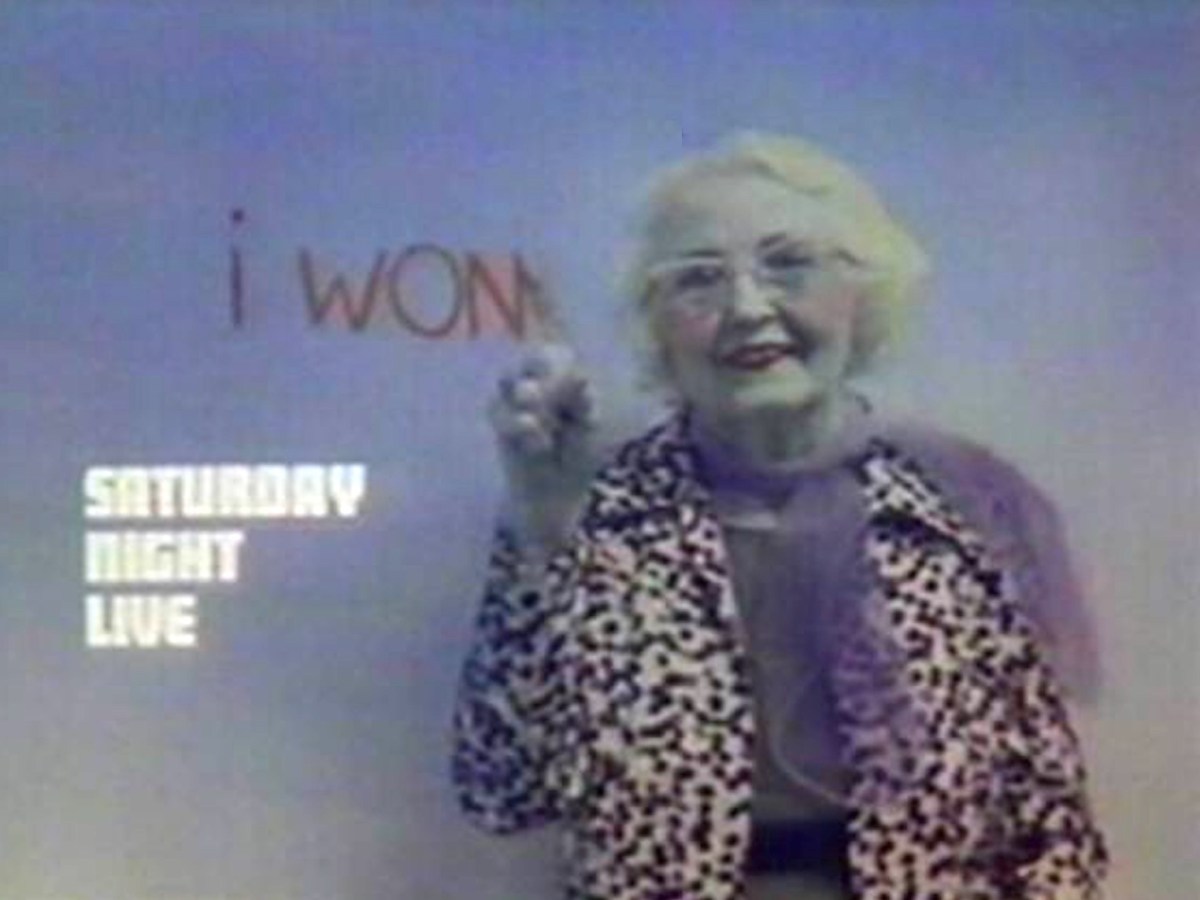
Miskel Spillman on SNL

These are the kind of posts I like the most. They are fun to write. 

Remember the SNL episode where Elvis Costello stopped playing a song and instead played a song Lorne Michaels did not want him to play? The song was Radio, Radio so Elvis defied Michaels and played it anyway. He banned Elvis from ever performing again on SNL. That was eventually lifted but that show is important and not only for that. The host of that show was special, to say the least. 

The person hosting that show was the only non-celebrity they ever had to host. At the time, she was the oldest person to host SNL at 80 years old. That record stood until 2010 when an 88-year-old Betty White hosted. Miskel Spillman won the “Anyone Can Host” contest that SNL had in 1977. The finalists were an unemployed Oregonian, a divorced mother of three, a freshman college student, the governor of South Dakota (Richard F. Kneip), and Miskel, an 80-year-old grandmother from New Orleans. 

The official “Anyone Can Host” ballot from November 1977

The show got over 150,000 entries. They all had them on an earlier show with Buck Henry as the host. The opening skit had John Belushi, Loraine Newman, and Buck Henry talking about how out of it Miskel Spillman seemed. Belushi then said he shared a joint with her. He said: WE SMOKED A JOINT OF OAXACAN AND MAUI WOWIE, A LITTLE HASH OIL…IT CALMED HER RIGHT DOWN.

Miss Spillman did a great job on the show. They limited her to an extent but she did well considering she had no experience. During her hosting stint, Spillman participated in various sketches, including one where she played the elderly girlfriend of John Belushi’s character. Her appearance remains a unique moment in SNL history. 

Lorne Michaels made the show to appeal to baby boomers with a touch of Avant-Garde and “guerrilla-style comedy.” It was a game-changer much like All In The Family was to sitcoms. Late night was never again a wasteland. This show helped open the doors for David Letterman and other shows to follow it. 

It started out as “Saturday Night.” The Saturday Night Live title belonged to ABC for a show hosted by Howard Cosell who was out of his league. After Cosell’s show was canceled, ABC let Saturday Night have the “Live” part.

Who was the best cast through the years? This is a question that is debated over and over again. People argue and usually pick the cast they grew up with. I grew up in the Eddie Murphy and Joe Piscopo era. Personally, I always thought the original cast was the best era of the show. Yes, I thought the Murphy and Piscopo casts were very funny along with later casts that had Dana Carvey, Michael Myers, Chris Farley, Chris Rock, and many others that followed. The first five seasons had something extra that others would not and could not have. It had an underground feel that vanished after it became a pure comedy show. They had a massive amount of talent in that first class. 

In the first 5 seasons, they tried things out, some failed some didn’t but they were going out on a limb and trying. The musical guests were also usually artists that didn’t appear on television at the time. If a guest host was too popular…Lorne would reject them. He would NEVER do that now.

Miskel would live a long life. She lived until she was 94 years old in 1992. She was one of only two hosts that were born in the 1800s. The other one was actress Ruth Gordon (She was a tad bit younger when she hosted). I would have loved to have met Miss Spillman…she looks like a lively fun lady. They did bring her up on the 50th anniversary. 

Miskel Spillman: “I love everyone in the cast, I watch it every Saturday night, and I thought, as I am 80 years old, I want a lot of old old people all over the world to watch it and get the thrill that I have every Saturday night watching it.”

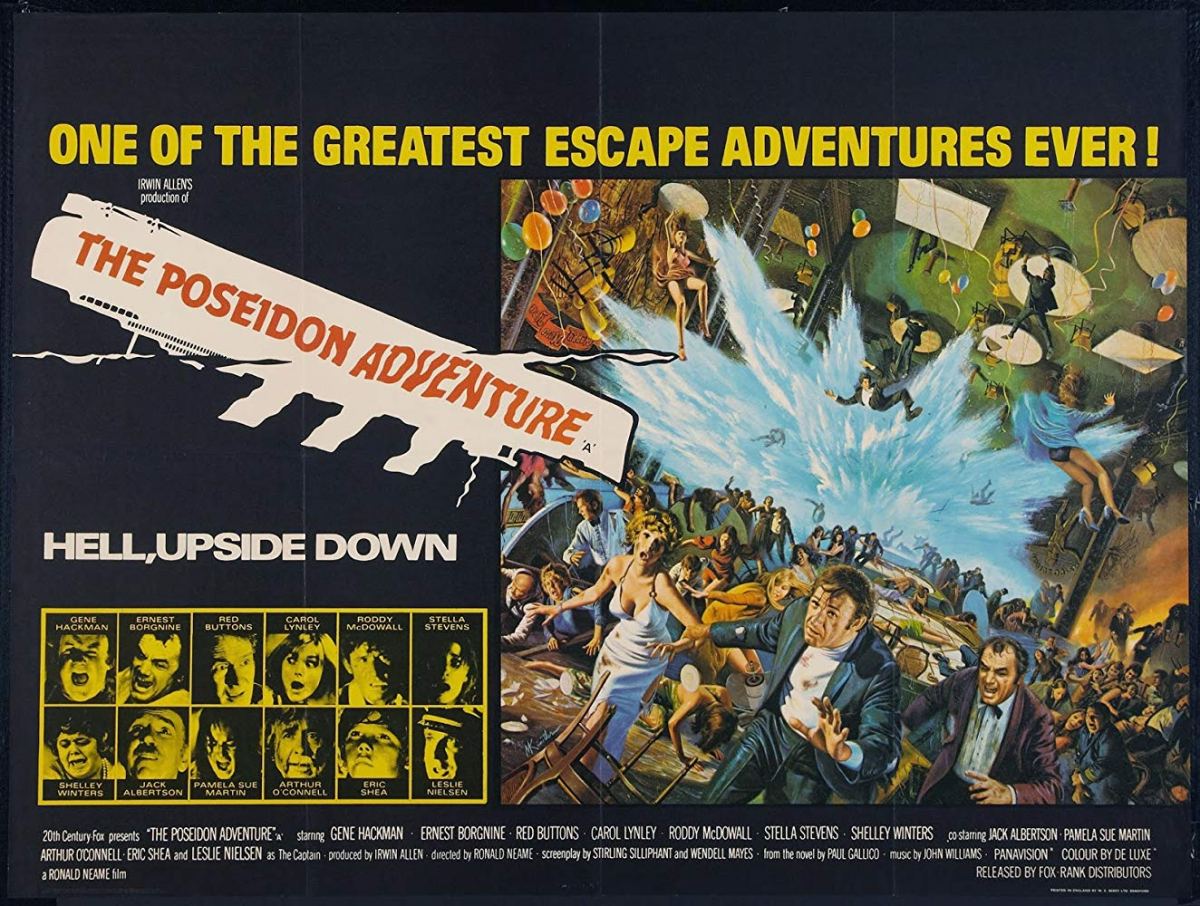
Max’s Drive-In Movie – The Poseidon Adventure

I watched this around 5 months ago for the first time in about 10 years. Altogether, I’ve seen it around 7 to 8 times. I added another watch since I wanted to post this. Disaster movies are hardly ever on “great” lists, but this is a disaster movie done right. Watching it in hindsight, you wouldn’t think a movie full of stars would be this good. Many times, if you see a lot of stars advertised, they are mostly cameos, but this is not the case with this movie.  

I have a weak spot for this kind of movie. Horror and Disaster movies I fall for right away, and yes, I’ve seen a lot of bad movies that way. This one, though, has some smarts to it, and it is enjoyable. The set for this movie must have been super expensive and huge. It’s one of those films that has everything. Gripping adventure scenes, non-stop crises, drama, sadness, and hotpants. I was around 7 (1974) when I saw it on television, and I loved it. It’s a film that offers something for both kids and adults. As I’ve said before, I dislike the word dated, but aside from the clothing styles, it still holds up today. Plus, the special effects have a realism that I prefer over CGI; they just feel more authentic.

It has earned a reputation as the best disaster film of the seventies, not just for its impressive special effects but for its compelling story of survival. The film follows a select group of people fighting to stay alive, and despite some being a bit annoying, you find yourself rooting for them. If you love star power, this movie delivers, featuring Gene Hackman, Shelley Winters, Ernest Borgnine, Red Buttons, Stella Stevens, Jack Albertson, Roddy McDowall, Leslie Nielsen, and more.

The acting was very good in this, as expected with their talent level. The film was based on Paul Gallico’s 1969 novel of the same name. It follows the journey of passengers and crew trying to escape a capsized luxury ocean liner. The budget was 4.7 million, a great amount back in 1972. It made over 125 million, so it did well. If I had to pick the two stars that had the biggest impact in this movie, it would be Gene Hackman and Ernest Borginine. They developed a rivalry in this movie, and it worked well for the survivors. Shelly Winters also did a good job, along with everyone else. She gained 35 pounds for the part of Belle Rosen. Afterward, she complained that she was never able to get back to her original weight. She received an Academy Award nomination for Best Supporting Actress.

The movie was directed by Ronald Neame. Also, don’t get this one confused with its “sequel” in 1979. That one wasn’t anywhere close to this one. 

PLOT

As the Poseidon sails on its final voyage before being retired, a festive New Year’s Eve party is underway. Meanwhile, the ship’s captain reluctantly follows orders from the ship’s owner to maintain high speed despite rough waters. Disaster strikes when a massive tsunami wave hits, flipping the ship upside down.

In the aftermath, a small group of survivors, led by the determined and strong-willed Reverend Frank Scott (Gene Hackman), must navigate their way upward toward the ship’s hull, which is now their only possible escape route. 

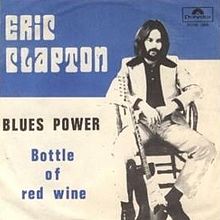
Eric Clapton – Blues Power

Eric Clapton took the guitar and blues to new places. He played differently than most players when he started, and then he was widely copied. His guitar playing in Cream was off the hook with intensity. Because of the trio format, he was pushed by his bandmates. That’s not to say I don’t enjoy his solo work. His playing took on a different character, more restrained and refined. He explored new directions and evolved his sound. It wasn’t all about blazing solos anymore; it was about serving the song and embracing a more soulful, laid-back approach.

I first really noticed Eric Clapton when I heard the solo in Crossroads. I stopped and wanted to know more about this guy. I knew his name from Beatles books and the single my sister had called Promises. I rented a Cream video from the video store, and I was hooked. Like Neil Young and David Bowie, Clapton changed and evolved through the years. 

He wrote the songs for his debut album in early 1970, and it was released in July of that year. He wrote most of the songs with  Bonnie Bramlett, but Blues Power was written by Clapton and Leon Russell. Russell started the song’s first line the way people saw Clapton at the time. It did not chart when released in 1970, but it did chart when Clapton released a live version in 1980, peaking at #76 on the Billboard 100.

Clapton never stayed in any spot too long. He had gone from The Yardbirds, John Mayall, Cream, Blind Faith, and Delaney & Bonnie in a matter of around 7 years. He would soon be the leader of Derek and the Dominos. The Dominos played on this album and were also playing on George Harrison’s All Things Must Pass around the same time.

Blues Power

Bet you didn’t think I knew how to rock ‘n’ roll.
Oh, I got the boogie-woogie right down in my very soul.
There ain’t no need for me to be a wallflower,
‘Cause now I’m living on blues power.

I knew all the time but now I’m gonna let you know:
I’m gonna keep on rocking, no matter if it’s fast or slow.
Ain’t gonna stop until the twenty-fifth hour,
‘Cause now I’m living on blues power.

Talking to you, now.
The boogie’s gonna pull me through.
Keep on, keep on, keep on keeping on.
Keep on keeping on, keep on keeping on.

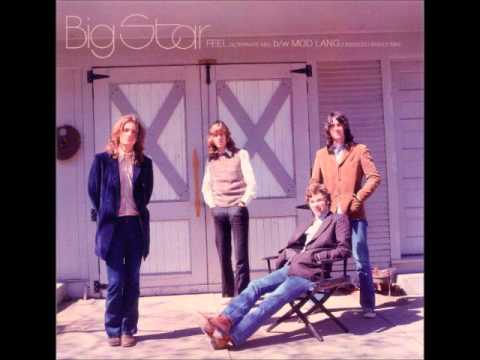
My Top 5 Big Star Songs

This band is one of the big reasons I started to blog in the first place. To meet more Big Star fans and if I got just one person who didn’t know them to listen… my mission was a success. Want a great documentary?  Big Star: Nothing Can Hurt Me

I thought I would list some songs that would be in my top 5 of their catalog. So maybe one of you reading this will take a listen. Here are Graham’s top 10 Big Star songs on his site. These songs are up there with the Beatles, Stones, Kinks, and Who to me. They didn’t have the quantity those bands had, but they had the quality.

Let’s make it 6. My bonus pick is:

BONUS: In The Street – I would say, hands down, the most known song by them besides September Gurls because it was the theme of That Seventies Show. Cheap Trick covered it and someone else for the intro…I wish they had used the original version. 

5: Life Is White –  Love this driving song by Big Star. It was on Radio City, their second album. Some say it is a response to the Chris Bell song off the first album called My Life Is Right…or a message to his girlfriend Diane (Don’t like to see your face Don’t like to hear you talk at all) that he was splitting with at the time.

4: When My Baby’s Beside Me: Great riff by Alex Chilton and full of the hooks that Big Star is known for. This song was the A-side to In The Street released in 1972. Both songs are on Big Star’s album #1 Record.

3: September Gurls: If Big Star had been heard, this would have been a top-ten hit or at least top 20. It was one of the best pop songs that didn’t chart. September Gurls was rated #180 by Rolling Stone in the magazine’s top 500 songs of all time.

Released as a single, it did not chart despite receiving excellent reviews, due mainly to poor marketing and distribution. It was on their second studio album Radio City. The song was later covered by The Bangles on their album Different Light.

2: Thirteen – This song is an absolutely perfect song about adolescence. I played it to my then 14-year-old son, and it made him a Big Star fan, now 10 years later. This song is the most covered song by Big Star, with 49 different covers. It’s almost a perfect acoustic song. The song is about an adolescent guy and his girlfriend who are rock fans, being what 13-14-year-olds are…confused and lost.

1: The Ballad of El Goodo – There are some songs that I hear, and I think…damn I wish I would have written this. This is one of those songs. To me, it’s a perfect song and represents everything I like. The way they transitioned into the chorus is magical to me. It comes very close to being my favorite song of all time. 

The Ballad of El Goodo

Years ago, my heart was set to live, oh
And I’ve been trying hard against unbelievable odds
It gets so hard in times like now to hold on
But guns they wait to be stuck by, at my side is God

And there ain’t no one going to turn me ’round
Ain’t no one going to turn me ’round

There’s people around who tell you that they know
And places where they send you, and it’s easy to go
They’ll zip you up and dress you down and stand you in a row
But you know you don’t have to, you could just say no

And there ain’t no one going to turn me ’round
Ain’t no one going to turn me ’round

I’ve been built up and trusted
Broke down and busted
But they’ll get theirs and we’ll get ours if you can
Just-a hold on, hold on, hold on, hold on

Years ago, my heart was set to live, oh
Though I’ve been trying hard against strong odds
It gets so hard in times like now to hold on
Well, I’ll fall if I don’t fight, and at my side is God

And there ain’t no one going to turn me ’round
Ain’t no one going to turn me ’round

Hold on, hold on, hold on, hold on

Al Green – Tired of Being Alone

If I had to give a definition for soul music…I would play this song. Something about Al Green’s voice that is so soothing and exciting at the same time. Green originally wrote the song in 1968 and recorded a version while signed to Hi Records. However, the song was initially not released. Green said: “I was toting my song around in my pocket for days on end, saying, ‘Hey, I got a song.’ Finally, at the end of the session, I said, ‘Well, I still got a song.'” 

This song was released in 1971 as the first single from his album Al Green Gets Next to You. It was written by Al Green himself, along with Al Jackson Jr. (the drummer for his band, the Hi Rhythm Section). The song became a huge hit and is considered a classic. It has a blend of soul, gospel, and R&B, which did him well in his career. 

This song never gets old, and listening to Al’s voice certainly never gets old. This song peaked at #11 on the Billboard 100 and #36 in Canada. Al Green has had twenty songs in the Billboard top 100, eight top 10 songs, and a #1 with Let’s Stay Together. This song was a turning point in his career. This was his first top-twenty hit. Al Green Gets Next to You peaked at #58 on the Billboard Album Charts. 

During a 1979 concert in Cincinnati, he fell 12 feet off a stage and barely missed being seriously injured. Already a Christian, preaching in front of his Memphis congregation most every Sunday morning, Green thanked Jesus and walked away from performing, vowing never to return. “The fall was God’s way of saying I had to hurry up,” Green said a decade ago, smack in the middle of The Gospel Years. “I wasn’t moving toward God fast enough.” He has rarely performed live since then outside of his Church. 

Al Green is currently the Pastor at Full Gospel Tabernacle Church in Memphis TN.

Tired of Being Alone

I’m so tired of being alone,
I’m so tired of on my own,
Won’t you help me, girl,
Just as soon as you can.
People say that I’ve found a way,
To make you say,
That you love me.
But baby,
You didn’t go for that,
Ha, it’s a natural fact,
That I want to come back,
Show me where it’s at, baby.

I’m so tired of being alone,
I’m so tired of on my own,
Won’t you help me, girl,
Soon as you can.
I guess you know that I, uh,
I love you so,
Even though,
You don’t want me no more,
Hey, hey, hey, hey I’m cryin’ tears,
Through the years,
I tell you like it is,
Honey, love me if you can.

Ya baby,
Tired of being alone here by myself, now
I tell ya, I’m tired baby,
I’m tired of being all wrapped up late at night,
In my dreams, nobody but you, baby.
Sometimes I wonder,
If you love me like you say you do,
You see baby, I, I, I, I’ve been thinking about you,
I’ve been wanting to get next to you, baby,
Sometimes I hold my arms and I say,
Oh baby, yeah, needing you has proven to me,
To be my greatest dream, yeah

Awh!

I’m so tired of being alone,
I’m so tired of on my own,
Sometimes late at night I get to wonderin’ about you baby,
Baby, baby, ya ya, baby you’re my heart’s desire

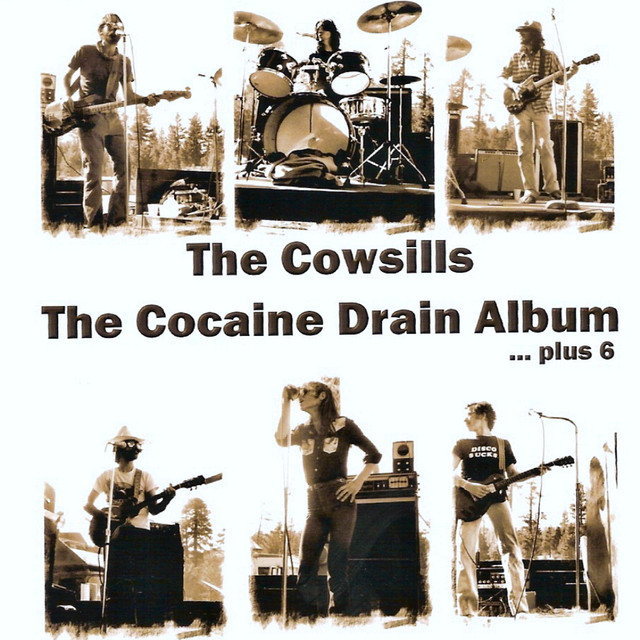
Cowsills – Cocaine Drain

This is a band I never really thought about posting, although they had some huge hits in the ’60s. This is NOT what I was expecting from the Cowsills.  This song has a Linda Rondstadt/Clapton 1970s feel to it. The album Cocaine Drain Plus 6 was recorded in 1978 but not released until 2008. Paul, John, Barry, Bob, and Susan Cowsill are on this one and worked with Chuck Plotkin. Billy or his mom wasn’t on this album. Susan does most of the singing, and when you hear her grown up…you understand why. 

Susan Cowsill was just a little girl when she joined her brothers in the ’60s. Here she is, just 19 years old, and she belts out this song and others. Like I said, it does have a Ronstadt feel, and she is a very good singer. The band sounds really good. John Hall wrote this song. Critics at the time caught them live playing this song and really liked it. 

Since the band was pigeonholed, they would perform under different names like The Secrets and The Critics in the 1970s. They got together in 1978 after playing in Los Angeles at the time. The album was never completed, and at some point, the master tapes were lost. For almost 30 years, the album existed only as a scratchy acetate. An acetate played like an old 45. They were created for demo or publishing purposes NOT for selling.

In March 2008 a version of the album was finally released, remastered from that acetate under Bob Cowsill’s direction. Several other previously unreleased tracks were included in the 2008 release. After the Cocaine Drain sessions, the Cowsills did some reunion shows in 1979–1980 but returned to their separate careers after that.

Audiophiles here will not be happy, as these are obviously recorded from acetate, and the hisses and pops of any 30-year-old LP are apparent. If they couldn’t get it released when it was recorded, they obviously couldn’t afford high remastering to clean it up, and the value in this release is that we finally get to hear these songs AT ALL. But there are only so many things you can do now, though it probably COULD be cleaned up. I like that the proceeds went straight to the band, as it was released to Apple via their self-owned Robin Records label. It was released as MP3s only. 

They have some good songs on there, and the album is not bad at all. Spotify doesn’t have it, but HERE is a link to the album on YouTube. I added a bonus song called That Particular Way from the same album. 

Cocaine Drain

I remember you,
When you were the talk of town.
You always said,
Hello and goodbye.

You looked me right in the eye.
I could be sure of you,
You’d never lie.
You’re so different now.
Are you going down that Cocaine Drain.

Now you’re up all night (up all night),
Feelin’ like a shining star.
But with the Lord in mind,
Let you forget who you really are (really are).

You’re a fragile thing after all.
Remember that even a heavenly body can fall.
And I’m afraid you’re fallin’, (fallin’)
Falling down that Cocaine Drain.
(I’m afraid, afraid you’re fallin’)
Falling down that Cocaine Drain.
(Cocaine Drain)

Now you’re keeping up,
With some pretty fancy company. (fancy company)
But if things get rough,
You know you can always come to me.
(Come to me)

But please don’t wait too long.
I’ve known a few before you who are already gone.
And I don’t want to see you (I don’t want to see you)
Slipping down that Cocaine Drain.
(Cocaine Drain)

I can’t stand by to see you
Slipping down that Cocaine Drain.
I don’t want to see you
(I don’t want to see you)
Slipping down that –
(I don’t want to see you) Cocaine Drain.
Slipping down that Cocaine Drain.
(I don’t want to see you)
Slipping down that Cocaine Drain.
(I don’t want to see you)
Slipping down that Cocaine Drain.
(I don’t want to see you).

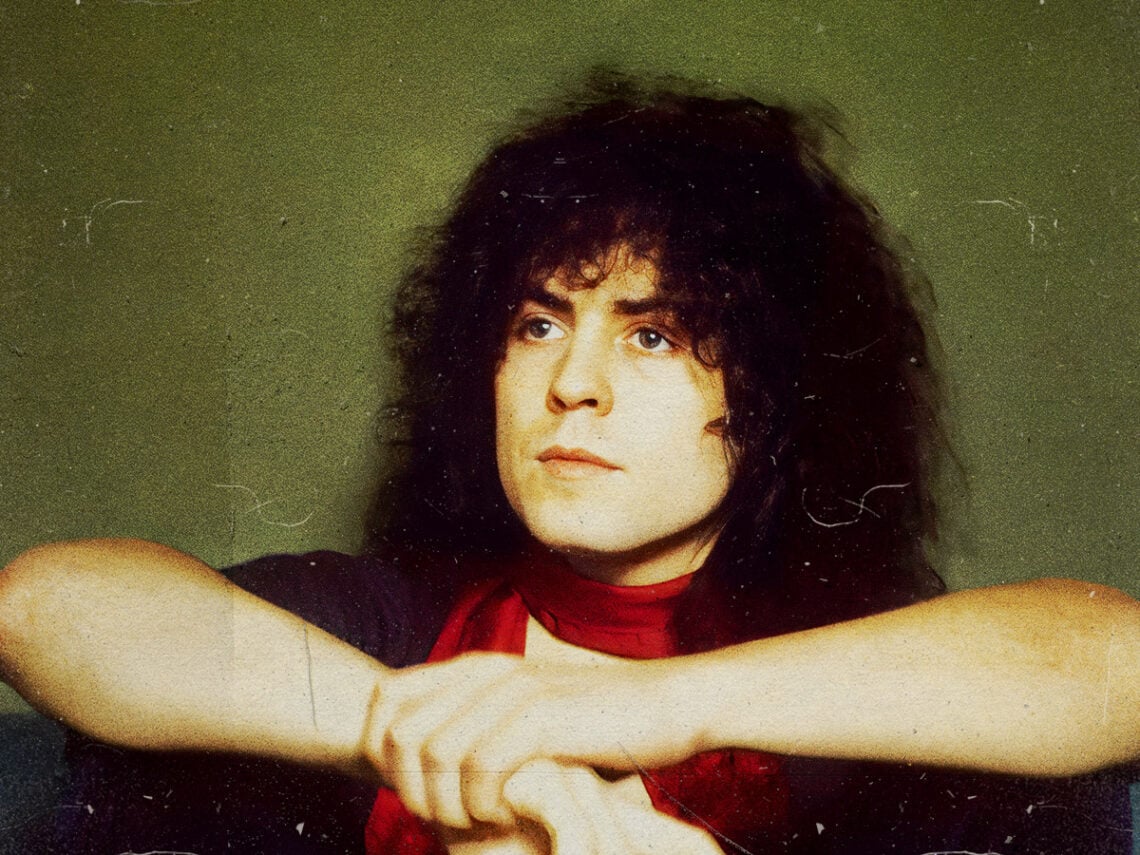
T-Rex – Baby Boomerang

It seems to me to dreamIs something too wildIn Max’s Kansas CityYou a belladonna child

I like joining in Jim’s Song Lyric Sunday when I can. I wanted to this weekend, and when I saw the subject (a Song that mentions your name), the answer should have been easy…Maxwell’s Silver Hammer. One problem: I don’t like it, and I only post songs I like. I searched around and found many songs that have my name, but this one I really liked. 

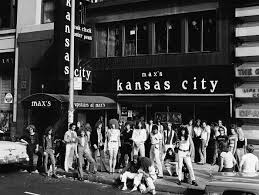
Now, what was Max’s Kansas City? It was a well-known nightclub, restaurant, and music venue in New York City, located at 213 Park Avenue South. It operated from 1965 to 1981 and became a central meeting hub for artists, musicians, and the counterculture. It was famous for being a meeting place for Andy Warhol’s Factory crowd, the punk rock movement, and early glam rock acts.

This song was on the album The Slider, released in 1972, and was written by Marc Bolan. It was never released as a single, but the album did really well. The album peaked at #4 in the UK, #11 in Canada, and #17 on the Billboard 200. It was their highest charting album in America and Canada. 

T. Rex was huge in the UK starting around 1970 but then declined in 1974. They did have a documentary made about them, produced and directed by Ringo Starr, called Born to Boogie. Some have credited Bolan with starting Glam Rock.

He went on to host a musical TV show called Marc, in which he hosted a mix of new and established bands and performed his own songs. Marc’s final show was recorded on September 7, 1977, with special guest David Bowie, who was a friend of Bolan. 

Baby Boomerang

Slim lined sheik facedAngel of the nightRiding like a cowboyIn the graveyard of the night

New York witch in the dungeonOf the dayI’m trying to write my novelBut all you do is play

Mince pie dog-eyeEagle on the windI’m searching through this garbageLooking for a friend

Your uncle with an alligatorChained to his legDangles you your freedomThen he offers you his bed

It seems to me to dreamIs something too wildIn Max’s Kansas CityYou a belladonna child

Riding on the highwaysOn the gateways to the southYou’re talking with your bootsAnd you’re walking with your mouth

Baby BoomerangBaby BoomerangYou never spike a personBut you always bang the whole gangThank you ma’am

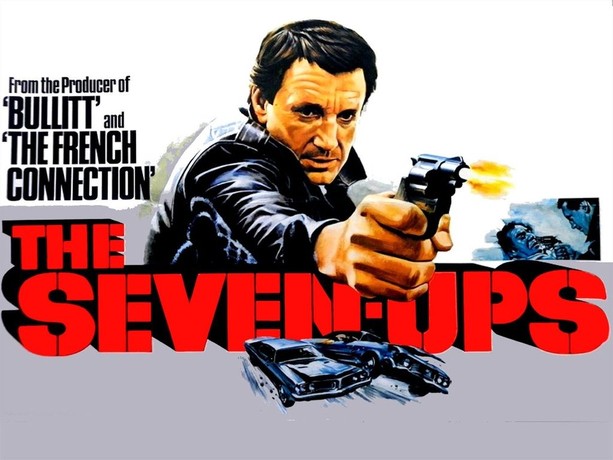
Max’s Drive – In Movie – The Seven-Ups…

I’ve had problems posting this so I’ll try one more time. 

My cousin Ricky let me borrow this movie because he thought I would like it. He was right. It’s described as a crime, action, mystery, and neo-noir ’70s police movie. I would easily put it in the same category as The French Connection and movies like that. Some of the same techniques and backdrops. It was released in 1973, and you can’t get any more early seventies than this movie. 

My uncle was an undercover cop (Fulton was his name) in the ’70s and ’80s, and the movie rings true to some of the stories he told me. In one incident, he was undercover in a restaurant in a drug deal, and someone he knew in real life came up and yelled, “Hey, Fulton!” he had to lay the guy out right there with a punch and pass it off as something else.  I never asked if he was still friends with the guy afterward. It was a dangerous job, and black roses were delivered to his doorstep more than once. 

Philip D’Antoni directed this film. He had produced The French Connection and Bullit. This was his only director credit to his name. Some think it is a follow-up on Scheider’s character of Buddy from The French Connection. It doesn’t matter because it’s strong either way. The movie is not perfect; it has a few disjointed plot points, but it works well. 

It has that grittiness that I love in movies from this period. The realistic feel makes the story so much better because you buy into it. The actors look like everyday people against the backdrop of early 70s New York. When I see some period modern movies try to replicate this look… they usually fail. You won’t find one thing in this movie that is new and shiny. Even the car wash looks grim. 

The Seven Ups has all the earmarks of a 70s Cop film. Corruption, rogue cops, and the mafia all rolled up into one. It has that stark, cold landscape feel from the ’70s. You almost want to slip on a jacket while watching. You also have a hell of a car chase that was in many movies at this time, and this one does not disappoint. If you want a real white knuckle car chase, you just have to see the one in this film. You feel like you’re right in the middle of it.

 Roy Scheider is Buddy and one of a small group of NYC cops with unusual methods, and they are called The Seven-Ups. One of his partners is murdered, and he sets out to find and kill the thugs who were responsible while at the same time discovering that they’re involved in a plan to kidnap mobsters to extort ransom money. 

The movie encompasses all the pitfalls and dangers of police undercover work and the alliances between partners, as well as the relationships and betrayals of informers. The cast is superb, and one of the things that made it even better is none of the actors at the time were big stars. I do like that in some movies because you don’t really associate the actors with other roles. Roy Scheider would soon star in Jaws a couple of years after this movie. 

Plot

The movie follows Buddy Manucci (played by Roy Scheider), a tough New York City detective leading an elite undercover police unit called The Seven-Ups—named after their specialty of catching criminals who receive sentences of seven years or more. The unit operates in the shadows, using unorthodox methods to bring down high-level criminals.

However, their investigation into a series of kidnappings involving Mafia figures takes a dark turn when one of their own is killed, leading Manucci on a personal quest for justice.

The full movie

He Likes It! Hey Mikey!

Hello everyone! 

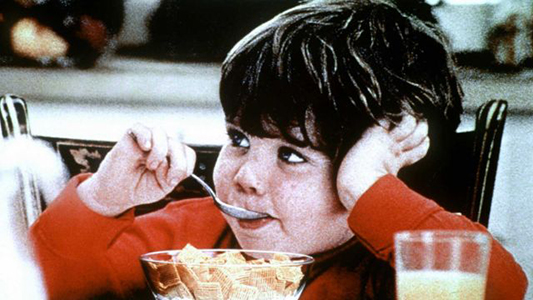
I ordinarily don’t like commercials. I do like it when they try to be at least entertaining… This commercial has stayed in pop culture for over 50 years now. The commercial was created by the Doyle Dane Bernbach (DDB) advertising agency. This Life cereal commercial appeared in 1972 and ran until 1984. It was one of the longest-running commercials in history. 

I grew up watching Mikey’s brothers trying to get their brother who hates everything to eat the supposedly healthy Life Cereal. The phrase “Hey Mikey!” entered pop culture as a phrase used for unexpected approval of something.

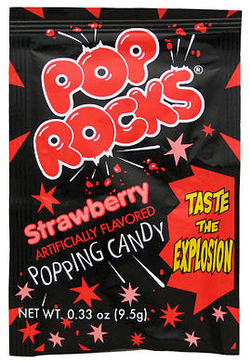
Mikey was portrayed by John Gilchrist, and he is alive now and doing fine despite the urban legend that he died. A false rumor spread in the 1980s that John Gilchrist (Mikey) had died from eating Pop Rocks and drinking soda. This was completely untrue. He was alive and well.

Yes, word got around that the kid who played Mikey bought the farm by eating “pop rocks” and drinking soda. His stomach then exploded because of the lethal combination. A friend of his family actually called his mother in tears, saying she was so sorry about the loss of her son…when in reality he just got home from school.

PopRocks.jpg CokeTheRealThing.jpg

What is interesting about the commercial is that the two kids playing his brothers are John Gilchrist’s brothers in real life.

John today is Director of Media Sales at MSG Network and is living a happy life with his wife and kids…and yes he still enjoys Life Cereal.

D.B. Cooper case solved?

Hello everyone… I’ve missed talking to everyone and I wanted to get this posted before the weekend. I’ll see you tomorrow!

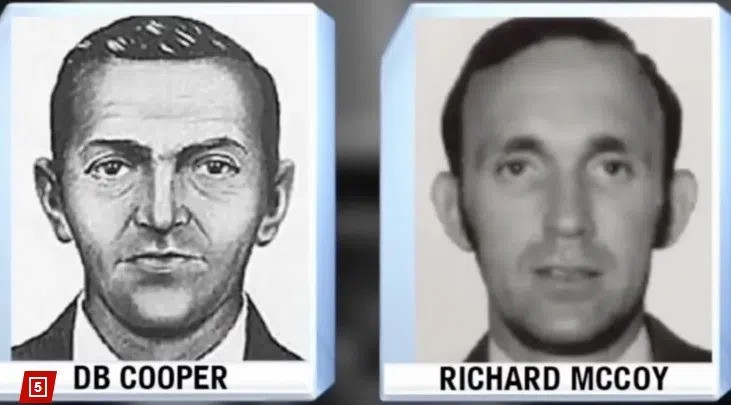
There are mysteries that we all have read about that were never solved. A few were D.B. Cooper, Jimmy Hoffa, and Amelia Earhart. Personally, I had my doubts about anyone solving them. D.B. Cooper was the alias of an unidentified man who, on November 24, 1971, hijacked a Boeing 727 aircraft (Northwest Orient Airlines Flight 305), extorted $200,000 in ransom, and parachuted out of the plane—disappearing without a trace. It remains one of the greatest unsolved mysteries in U.S. history. Is this certain that they found the right person? No, but it is sure looking that way. 

This is a brief summary of the original hijacking. Shortly after takeoff, at around 3:00 PM, Cooper handed a note to flight attendant Florence Schaffner, who initially ignored it, thinking it was a phone number. He noticed that and whispered: “Miss, you’d better look at that note. I have a bomb.” He demanded 200,000 in cash, four parachutes, and a fuel truck ready at Seattle-Tacoma Airport for refueling. The flight attendant asked to see the bomb, and Cooper opened his briefcase, revealing what appeared to be red cylinders with wires and batteries.

The airline told the FBI what was going on and they met his demands. The FBI got together the money and they recorded the serial numbers so they could track him down. The plane landed in Seattle and he demanded that they go to Mexico City. He told them to fly at a low altitude (10,000 feet) and a slow speed of 200 mph. Cooper knew the Boeing 727 had an aft stairway that could be lowered mid-flight. He knew how to control altitude and speed to make a parachute jump survivable. At 8:13 PM, over southwestern Washington, somewhere near Ariel, Washington, and the Lewis River, the crew noticed a sudden pressure change…Cooper had lowered the rear stairway and jumped out into the night. That was the last known sighting of Mr Cooper. The plane landed in Reno, Nevada and the investigation started. 

Through the years, money was found in a creek bed near where he jumped and he left a tie on the airplane. It wasn’t much to go on. There were suspects and one of them was Richard Floyd McCoy and four others but nothing could be proved…until an amateur YouTube documentary maker named Dan Gryder found something. He made a documentary after years of researching and actually traveling to sites. He heard from Chanté and Rick McCoy III and they claim their father, Richard McCoy Jr., was D.B. Cooper. 

They had a very unique parachute in their mom’s old things and it matched the one that was given to D.B. Cooper. Gryder said: That rig is literally one in a billion. The FBI marked Richard McCoy Jr. off the list back in the seventies. What took his kids so long to say something?  The brother and sister said they waited until their mother died in 2020 to come forward, fearing she could be implicated as the parachute that allegedly belonged to Cooper was found in her storage area outside their house.

The FBI didn’t believe it until they got in touch with Gryder and he took them to the sibling’s parachute AND deteriorated money…some with the serials intact. Although it’s not official… the agents have said they are certain that McCoy was D.B. Cooper. I don’t know why it took them so long. He did the SAME thing the next year (1972) to a different airline. McCoy hijacked a United Airlines passenger jet for ransom in April 1972 and again asked for parachutes. To be fair though…the FBI thought it was a copycat at the time. From the New York Post: Gryder claimed the parachute at the McCoys’ home matched the modified parachute prepared by veteran skydiver Earl Cossey for police as part of Cooper’s demands before he disappeared somewhere between Seattle and Reno, Nevada. DB Cooper sleuths have raised the possibility that Richard Jr. was the fugitive for years given his own criminal past.

Richard McCoy Jr. was arrested for the hijacking of American Airlines a few days after it happened. They found him with a duffel bag full of money from the hijacking. He received a 45-year sentence but he escaped from prison in 1974 along with other prisoners in a garbage truck. Three months later he was found in Virginia Beach, Virginia. He went inside his home and was greeted by the FBI and he shot at them and was killed in the shootout. 

He had the experience because he served two terms in the Army and then another one where he went to Vietnam. He was awarded an Army Commendation Medal and The Distinguished Flying Cross and he also served as a warrant officer in the Utah National Guard…and he did a lot of skydiving. 

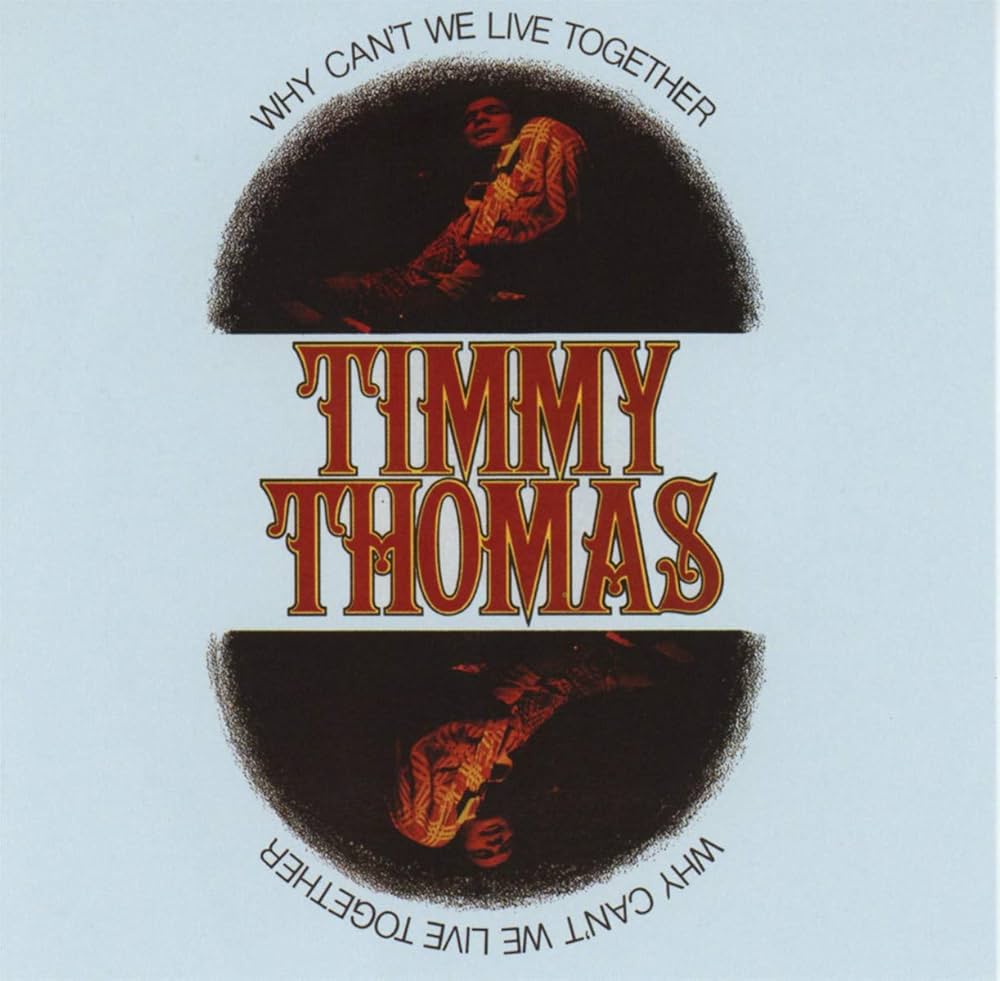
Timmy Thomas – Why Can’t We Live Together 

I was searching around for new/old songs to cover and I ran across this title…I knew it sounded familiar. When I heard it…it took me back. WMAK in Nashville played this a lot when I was a kid. It was like finding a favorite shirt (you know…the one filled with holes but feels perfect?) that you had thought was lost. I didn’t know the artist but now I do. A great soul record from a decade that I think produced some of the best.

Thomas was inspired to write the song after watching news coverage of the Vietnam War and the ongoing unrest in the United States at the time. This song was ahead of its time. it was recorded using only a Lowrey organ, a simple rhythm machine, and Thomas’s vocals.

Thomas grew up in Indiana and went to Lane College in Tennessee to study music. He started his career as a session musician for other artists as a keyboardist. This song was his debut and it was a huge success. The song has been covered 35 times by artists such as Steve Winwood, Santana, Maria Muldaur, John Oats, and Sade to name a few.

This song peaked at #3 on the Billboard 100, #6 in Canada, and #12 in the UK in 1972.

Timmy Thomas: “I had just moved to Miami. And I’ll never forget, I was sitting in the study, because I was getting ready to teach school, higher education… I was sitting in my study, and I heard Walter Cronkite. I’ll never forget this. He said, ‘35,000 Viet Cong died today, 15,000 Americans.’ I said ‘WHAT?! You mean that many mothers’ children died today? In a war that we can’t come to the table and sit down and talk about this, without so many families losing their loved ones?’ I said, ‘Why can’t we live together?'”

“Bing! That light went off. And I started writing it then. ‘No more wars, we want peace in this world, and no matter what color, you’re still my brother.’ And then after that, put it on this little tape, and went to WEBF, which was a local radio station. And they played local artists then… they played it, and the phones lit up. They said ‘Man, who is that?'”

“And I did it as a one-man band! That was my foot playing bass, that was my left-hand playing guitar… Could never believe that as a one-man band, something like that would’ve been played that much. But I do believe that the world was ready to start changing a little bit. And that song made the change.”

Here is Steve Winwood and Sanata covering the song. 

Why Can’t We Live Together

Tell me why, tell me why, tell me why
Why can’t we live together
Tell me why, tell me why
Why can’t we live together

Everybody wants to live together
Why can’t we be together

No more war, no more war, no more war
Just a little peace
No more war, no more war
All we want is some peace in this world

Everybody wants to live together
Why can’t we be together

No matter, no matter what color
You are still my brother
I said no matter, no matter what color
You are still my brother

Everybody wants to live together
Why can’t we be together

Everybody wants to live
Everybody’s got to be together

Everybody wants to live
Everybody’s going to be together

Everybody’s got to be together
Everybody wants to be together

I said no matter, no matter what color
You’re still my brother
I said no matter, no matter what color
You’re still my brother

Everybody wants to live together
Why can’t we be together

Gotta live together
Together

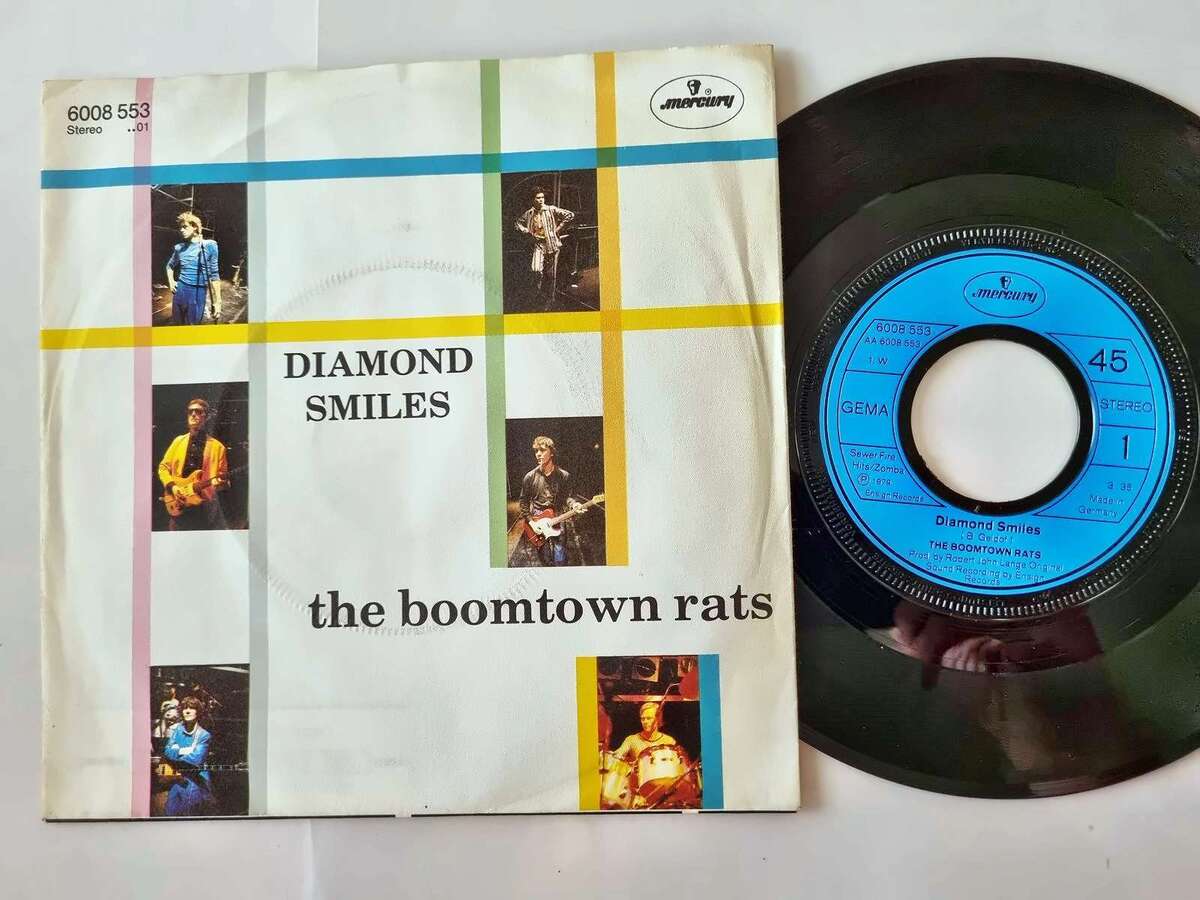
Boomtown Rats – Diamond Smiles

I’ve heard of this band a lot and liked I Don’t Like Mondays but I never knew much about them. CB sent me a few links and I really like what I’ve heard. I hear a good mixture of Pub Rock, New Wave, and Punk. They kept that edge of punk and had a great sound. The more I hear from this UK late seventies era the more I like it. With this band, the sound they had on recordings was huge. 

They are an Irish rock band that formed in Dun Laoghaire, Dublin, Ireland, in 1975. They were formed by Bob Geldof, Garry Roberts, Gerry Cott, Pete Briquette, Johnnie Fingers, and Simon Crowe. They were influenced by pub rock and punk and they played their first gig in 1975. Originally, they used the name The Nightlife Thugs. The name “The Boomtown Rats” comes from a gang of down-and-out boys from Woody Guthrie’s autobiography Bound for Glory

This song was on their album The Fine Art of Surfacing. It was the follow-up single to their biggest hit, “I Don’t Like Mondays.” Bob Geldof said he wrote the lyrics as a critique of superficiality, wealth, and the emptiness of high society life. The song has dynamics that build up from the start. 

The songs on this album sound so fresh and alive. That could be because they were produced by Robert John Mutt Lange who would soon produce AC/DC’s Back In Black. The song peaked at #13  in the UK in 1979. The album peaked at #7 in the UK, #10 in New Zealand, #6 in Canada, and #73 on the Billboard Album Charts. 

They disbanded in 1986 following a charity concert in Ireland. Most of the band members moved on to solo projects or new bands. They reformed in 2013 going on tour again and released a new best of album Back to Boomtown : Classic Rats Hits which includes two new recorded songs.

Diamon Smiles

“Traffic’s wild tonight”Diamond smiles her cocktail smile.Tonight she’s in heavy disquise.She looks at her wrist to clock the passing time.

“Weather’s mild tonight”She wonders do they notice her eyes,She wonders will her glamour survive,And can they see she’s going down a third time.

Everybody tries,It’s Dale Carnegie gone wild,But Barbara Cartland’s childlong ago perfected the motionless glide.

In the low voltage noise,Diamond seems so sure and so poisedShe shimmers for the bright young boys,And laugh’s “Love is for others, but me it destroys”

The girl in the cakeJumped out too soon by mistake,Somebody said the whole things half bakedAnd Diamond lifts her glass and says “cheers”

She stands to the sideThere’s no more to this than meets the eye,Everybody drinks Martini dry,And talks about clothes and the latest styles.

They said she did itWith grace.They said she did itWith style.They said she did it allBefore she diedOh NoI remember Diamond’s smile

Nobody saw her go,They said they should have noticed‘cos her dress was cut so low.Well it only goes to showHa, ha, how many real men any of us know.

She went up the stairs,Stood up on the vanity chair,Tied her lame belt around the chandelier,And went out kicking at the perfumed air.

They said she did itWith grace.They said she did itWith style.They said she did it allBefore she diedOh NoI remember Diamond’s smile

Lite-Brite

One of my favorite toys growing up. To this day I like collecting vintage lighting fixtures like soft drink clocks or signs probably because of this toy. They came with designs that you could use to create different cartoons and clowns but I never used those. I liked to create my own masterpieces.

This toy allowed you to be creative in a very different way. It brought out the artistic side in you. You could design different things and it would light up your room in the dark with colors. Lite-Brite was invented by Joseph M. Burck, a senior designer at Chicago toy and game design company Marvin Glass and Associates. The company licensed Lite-Brite to Hasbro, which officially launched it in 1967. It became a staple toy in the 1970s. 

Of course…when I got older I would make crude messages on the Lite Brite for friends. Lite-Brite is recognized as one of the greatest toys of all time by the Toy Hall of Fame. It has become part of our pop culture. 

Lite Brite commercial from the 1970s. Did you have one growing up? 

My love of Pinball Machines

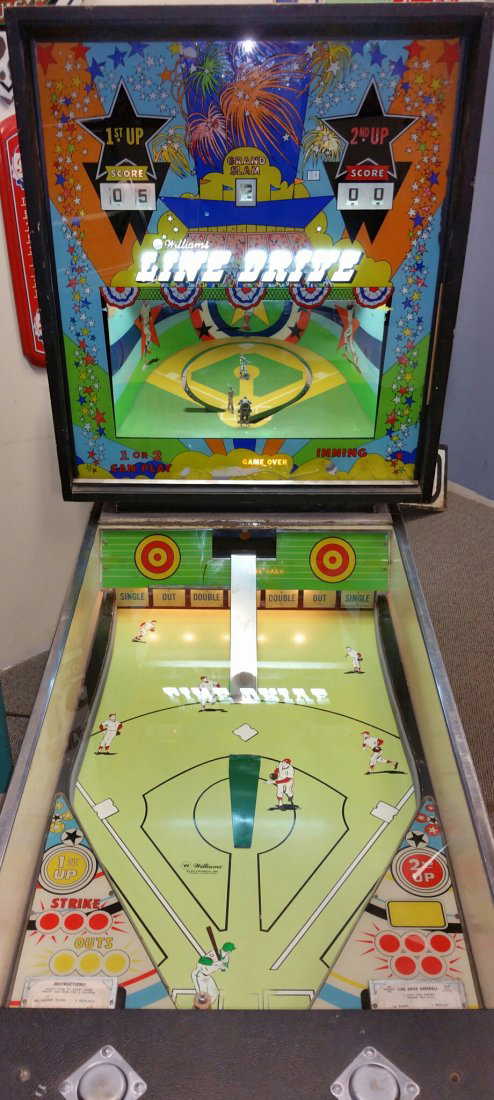
When I would go skating, the best part was playing all of the pinball machines. I’ve always favored them over the video games at arcades because they were machines instead of a screens. Some took some skill and bumping the machine a little but not too much to tilt. I remember Baseball pinball machines, the Elton John model, KISS model, The Who Pinball Wizard model, and many bicentennial models. Below is a quick history of these works of art. 

Related image

The start of pinball machines started in the 19th century with a  “Bagatelle-Table”,  a sort of hybrid between a “pin table” and pool table. Players tried to hit balls with cue sticks and get them into pockets or slots surrounded by nails and pins. Another step towards the modern pinball form occurred sometime at the end of 19th century when inventor Montague Redgrave patented a device called a “ball shooter”, which was based on the recently invented steel spring.

Related image

The first coin-operated “pinball machine” was invented in 1931 by Automatic Industries and was called the “Whiffle Board”. But the gaming industry really began in the mid-1930s with the production of a game called “Ballyhoo”. It was invented by one Raymond Maloney, who later started the Bally Manufacturing Company of Chicago, IL.

Related image

Pinball machines really grew in popularity after World War II. The ten-year period of 1948-58 is referred to by some as the “Golden Age” of pinball, due to the invention of flippers in 1947 by the D. Gottlieb Co. in a game called “Humpty Dumpty”, and was one of the main reasons for the renewed interest in pinball machines at the time. Humpty Dumpty was the very first pinball machine with flippers!

In 1966, the first digital scoring pinball machine, “Rally Girl” was released Rally. In 1975, the first solid-state electronic pinball machine, the “Spirit of 76”, was released by Micro. In 1998, the first pinball machine with a video screen was released by Williams in their new “Pinball 2000” series machines. Versions of pinball are now being sold that are completely software-based.

I still like the software-free machines…some were like works of art.

Image result for vintage pinball machines

I didn’t know they had a Beatle pinball machine.

Image result for beatles pinball machine

I have to close this out… with what else?


Joni Mitchell – Big Yellow Taxi

I heard this song the other day, and I thought to myself, “I would LOVE to post about it, but I probably already have.” I checked, and to my surprise, I had never posted it before. This is one of the first songs I remember from my youth. I was three years old when it was released but I remember it through the seventies.

She wrote “Big Yellow Taxi” in 1970, inspired by her first trip to Hawaii. When she woke up in her hotel room she was struck by the contrast between the mountains in the distance and the large parking lot below her window. The difference between natural beauty and urban development influenced the song’s opening line, “They paved paradise to put up a parking lot.” Mitchell said: I wrote ‘Big Yellow Taxi’ on my first trip to Hawaii. I took a taxi to the hotel and when I woke up the next morning, I threw back the curtains and saw these beautiful green mountains in the distance. Then, I looked down and there was a parking lot as far as the eye could see, and it broke my heart […] this blight on paradise. That’s when I sat down and wrote the song.

This is probably one of the best environmental songs out there. There are a few good ones like Rocky Mountain High, Mother Nature’s Son, Going Up Country, Beds Are Burning, Fall On Me, and Lynyrd Skynyrd’s  All I Can Do Is Write About It

The song appeared on her album Ladies of the Canyon released in 1970. The album’s title references Laurel Canyon in Los Angeles, a hub for musicians and artists during the 1960s, where Mitchell resided at 8217 Lookout Mountain Avenue. Her home became a gathering place for notable musicians, including David Crosby, Stephen Stills, and future boyfriend Graham Nash. Laurel Canyon had a vast array of talent with CSN, James Taylor, Canned Heat, The Doors, Eagles, Linda Rondstadt, and more. My friend Dave wrote a great article about that music scene that happened in the late sixties and early seventies. 

The song peaked at #67 (I checked that twice!) on the Billboard 100, #15 in Canada, and #11 in the UK. I would have bet the farm that it peaked higher than 67 here. There is a “but” to this song though…a live version came out in 1974 and that one did better. It peaked at #24 on the Billboard 100. Sometimes though it doesn’t matter where it charts. Some songs become ingrained into pop culture. Songs like In My Life by the Beatles never was released as a single and many artists have songs we all know and love that didn’t chart high or at all. And some charting songs are never remembered anymore. 

Her guitar playing is unusual, to say the least. She doesn’t use traditional chords as much as other players. She makes up different tunings in open chords. That is why when you see her play, most of the time she is using a finger to bar all of the strings. I would hate to be her guitar tech. I can’t imagine how many guitars she takes on tour with her. I used an open G chord while playing Rolling Stones songs so I would take another guitar already tuned in G so I wouldn’t have to retune my guitar in many songs. 

Big Yellow Taxi

They paved paradise, put up a parking lotWith a pink hotel, a boutique, and a swingin’ hot spot

Don’t it always seem to goThat you don’t know what you’ve got ’til it’s goneThey paved paradise, put up a parking lot(Ooh, bop-bop-bop-bop, ooh, bop-bop-bop-bop)

They took all the trees put ’em in a tree museumAnd they charged the people a dollar an’ a half just to see ’em

Don’t it always seem to goThat you don’t know what you’ve got ’til it’s goneThey paved paradise, put up a parking lot(Ooh, bop-bop-bop-bop, ooh, bop-bop-bop-bop)

Hey farmer, farmer put away that DDT nowGive me spots on my apples, but leave me the birds and the beesPlease

Don’t it always seem to goThat you don’t know what you’ve got ’til it’s goneThey paved paradise, put up a parking lot(Ooh, bop-bop-bop-bop, ooh, bop-bop-bop-bop)

Late last night I heard the screen door slamAnd a big yellow taxi took away my old man

Don’t it always seem to goThat you don’t know what you’ve got ’til it’s goneThey paved paradise, put up a parking lot (ooh, bop-bop-bop-bop)

I said don’t it always seem to goThat you don’t know what you’ve got ’til it’s goneThey paved paradise, put up a parking lot (ooh, bop-bop-bop-bop)They paved paradise, put up a parking lot (ooh, bop-bop-bop-bop)They paved paradisePut up a parking lot