One of my favorite songs by Creedence Clearwater Revival. The song peaked at #2 in the Billboard 100, #19 in the UK, and #5 in Canada. If you want proof that life isn’t fair… Green River was kept from #1 because of the novelty bubblegum song “Sugar, Sugar” by The Archies.
The song is an example of a perfect rock song. Great lick, lyrics, and wonderful guitar fills by John Fogerty.
The song was on the album Green River which peaked at #1 in the Billboard Album Chart.
John Fogerty:“Green River is really about this place where I used to go as a kid on Putah Creek, near Winters, California. I went there with my family every year until I was ten. Lot of happy memories there. I learned how to swim there. There was a rope hanging from the tree. Certainly dragonflies, bullfrogs. There was a little cabin we would stay in owned by a descendant of Buffalo Bill Cody. That’s the reference in the song to Cody Jr. [“Up at Cody’s camp I spent my days…”
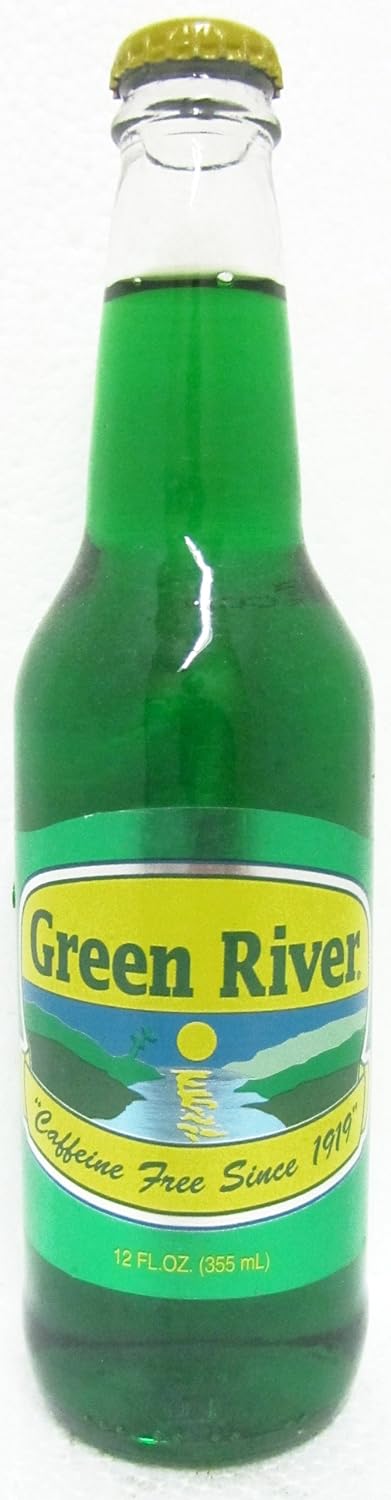
The actual specific reference, Green River, I got from a soda pop-syrup label. You used to be able to go into a soda fountain, and they had these bottles of flavored syrup. My flavor was called Green River. It was green, lime-flavored, and they would empty some out over some ice and pour some of that soda water on it, and you had yourself a Green River.”
From Songfacts
John Fogerty has said that Green River is his favorite Creedence Clearwater Revival album, in part because it sounds like the ’50s albums by the likes of Elvis Presley and Johnny Cash that came out of Sun Records in Memphis.
Asked about his songwriting by Mojo magazine, John Fogerty replied: “More common is me fooling around on the guitar coming up with a riff or a lick or even just a tone which sparks some kind of creativity. Your mind gets a vibe, like the lick for ‘Green River’ – that’s what it sounded like, a green river, haha. And that was a title I had carried around since I was about eight years old.”
Green River
Well, take me back down where cool water flow, yeh Let me remember things I love Stoppin’ at the log where catfish bite, Walkin’ along the river road at night, Barefoot girls dancin’ in the moonlight
I can hear the bull frog callin’ me Wonder if my rope’s still hangin’ to the tree Love to kick my feet way down the shallow water, Shoe fly, dragon fly, get back t your mother Pick up a flat rock, skip it across Green River
Up at Cody’s camp I spent my days, oh, With flat car riders and cross-tie walkers Old Cody, Junior took me over, Said, you’re gonna find the world is smouldrin’ An’ if you get lost come on home to Green River Well, come home
This song was the B side to Get Back. This song was credited to John and Paul but it’s a clear John song that he wrote directly to Yoko. Don’t Let Me Down should have been on the Let It Be album in my opinion. It would have made it a stronger album but Phil Spector decided to took it out.
This one is one of my favorite late Lennon Beatle songs. I liked the time signature change in this song. All measures are in 4/4 time except for the eighth measure, which is in 5/4, the extra beat needed in order to fit in John’s first verse lyric “Nobody ever loved my like she…”
The song peaked at #35 in the Billboard 100 in 1969. It’s a powerful and sincere love song by John.
Billy Preston, who The Beatles met when he was on tour with Little Richard in 1962, played keyboards on this track. Preston was one of the few outside musicians (excluding members of orchestras) to play on any Beatles song.
George Harrison brought Preston in to play on the sessions. It was a smart move by George. Not only did Preston bring his talents in the mix but his presence helped smooth the tensions the band had at the time. He did the same thing on the White Album sessions by bringing Eric Clapton in to play on While My Guitar Gently Weeps.
From Songfacts
John Lennon dedicated this song to Yoko Ono. It was the first song he wrote for Yoko, whom he married on March 20, 1969.
This was one of the songs The Beatles played at their impromptu rooftop concert in 1969. The concept of the album was The Beatles performing new songs for a live audience, with film footage of their rehearsals used to make a documentary TV special. George Harrison didn’t like the idea, and when things got tense during recording, he left the sessions and returned only after they agreed to cancel the live performance. The Beatles were still under contract to make another movie, so they decided to use the rehearsal footage as their last movie, Let It Be. In order to end the movie, they needed a big scene, so they went to the roof of Apple Records and started playing. John Lennon forgot some of the words to this song while the Beatles were playing their rooftop concert.
When Apple Records remixed the album Let It Be and released it in 2003 as Let It Be… Naked, this was included. An alternate take was used. It was the only song on the new album that did not appear on the original.
Lennon asked Ringo to crash his cymbals loudly to “give me the courage to come in screaming.”
Billy Corgan’s band Zwan covered this. They rearranged the entire song so only the melody was the same. They added a guitar solo at the end. Others artists to cover the song include Randy Crawford, Crown of Thorns, Dylan & Clark, Garbage, Gene, Marcia Griffiths, Taylor Hicks, Julian Lennon, Annie Lennox, Maroon 5, Matchbox Twenty, The Persuasions, Phoebe Snow, Stereophonics and Paul Weller. >>
Garbage lead singer Shirley Manson is from Edinburgh, and in 1999 they played this song at the opening of the newly-elected Scottish Parliament, which was celebrating autonomy after 300 years of British rule.
Don’t Let Me Down
Don’t let me down, don’t let me down Don’t let me down, don’t let me down
Nobody ever loved me like she does Oh, she does, yeah, she does And if somebody loved me like she do me Oh, she do me, yes, she does
Don’t let me down, don’t let me down Don’t let me down, don’t let me down
I’m in love for the first time Don’t you know it’s gonna last It’s a love that lasts forever It’s a love that had no past
Don’t let me down, don’t let me down Don’t let me down, don’t let me down
And from the first time that she really done me Oh, she done me, she done me good I guess nobody ever really done me Oh, she done me, she done me good
Don’t let me down, don’t let me down Don’t let me down
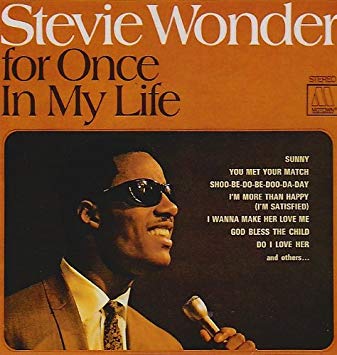
Great song by Stevie Wonder. It peaked at #2 in the Billboard 100 in 1968.
This was written by the Motown songwriters Ron Miller and Orlando Murden and was originally recorded in 1966 by a singer named Jean DuShon, who was signed to Chess records.
Other versions of this song to this point were long, drawn-out ballads. Stevie Wonder was the first to pick up the tempo and use an upbeat arrangement. Wonder’s version, however, sat in the Motown vaults for nearly a year before Gordy finally released it in 1968. This became the hit record and definitive version of the song.
From Songfacts
Miller had DuShon record the song as a demo but liked her version so much that he thought she should sing it. Record company politics ensued as Berry Gordy, the head of Motown, was not pleased with one of his songwriters’ compositions going to other labels. He made sure to have his artists record the song, and the first to do so was Barbara McNair, who performed it later in 1966 on a TV special and released it on her album Here I Am that year. The next Motown act to record it was The Temptations, who released it in 1967 on their album In a Mellow Mood.
The song is about finding that special someone who gives you a feeling of boundless happiness. Wonder was just 17 when he first recorded it.
Ron Miller wrote a few more Motown favorites, including “Heaven Help Us All,” “Yester-Me, Yester-You,” “Yesterday” and “A Place In The Sun” for Stevie Wonder, and “Touch Me In The Morning” for Diana Ross. He also reworked “I’ve Never Been To Me” into a hit for Charlene.
The Temptations version featured lead vocals by Paul Williams. It became the showcase song for Williams at their live shows.
Frank Sinatra and Tony Bennett both recorded this song, with Bennett’s version hitting the Hot 100 at #91 – one year before Stevie Wonder charted with it. Bennett often sang it in concert, and in 2006 he performed a slow version with Stevie Wonder for his album Duets: An American Classic. This version won a Grammy for Best Pop Collaboration with Vocals. At the awards ceremony, Wonder dedicated the Grammy to his mother, who died in 2006. Bennett then thanked his sponsor – Target department stores.
British singer-songwriter Emeli Sande recorded this for the Hulu miniseries Four Weddings and a Funeral. Other versions have also been used in these TV shows:
Happy Endings (“Brothas and Sisters” – 2013) Glee (“Wonder-ful” – 2013) by Kevin McHale Fringe (“Brown Betty” – 2010; “6B” – 2011) The West Wing (“Welcome To Wherever You Are” – 2006) The King Of Queens (“Sold-Y Locks” – 2006) Boston Legal (“Breast In Show” – 2006) Entourage (“Exodus” – 2005)
The Nanny (“The Wedding” – 2008)
Good Times (“That’s Entertainment, Evans Style” – 1978)
Dave Mason wrote this song and recorded it with Traffic in 1968. Included on their self-titled second album, it was released as a single but it didn’t hit the charts in America and didn’t place at all in the UK.
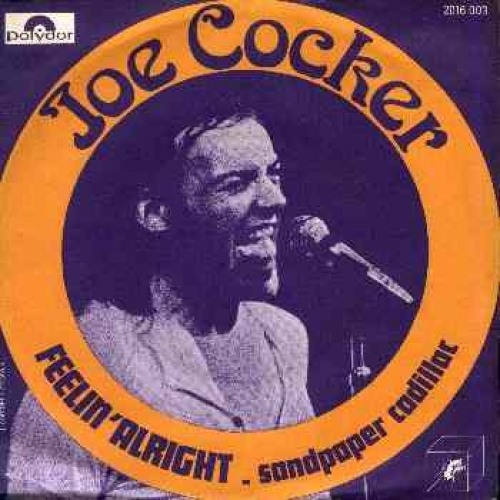
The following year, Joe Cocker recorded what has become the most popular version of the song, peaking at #33 in Billboard 100 in 1972 with a more upbeat rendition. He included it in his set at Woodstock.
Joe Cocker did great covers of songs. Many of Cocker’s hits were covers, including “With A Little Help From My Friends,” “The Letter,” and “You Are So Beautiful.” He made a career out of soulful interpretations of other people’s songs. When Paul McCartney wrote “She Came In Through the Bathroom Window” he gave it to Joe Cocker to record.
From Songfacts
This is one of those songs where the title belies the meaning. The singer is tormented by a breakup and asking “Are you feeling alright,” with the retort, “I’m not feelin’ too good myself.”
In our interview with Dave Mason, he explained: “It’s just a song about a girl. It’s just another relationship gone bad.”
Dave Mason wrote this song with the title “Not Feelin’ Too Good Myself,” which is more accurate in terms of the song’s meaning, but less marketable. The original Traffic version of the song, filled with the corresponding melancholy, was issued as “Feelin’ Alright?” – the question mark providing a vital clue to the content. Joe Cocker’s version scrapped the punctuation and was issued as “Feeling Alright,” which is how it was listed on most subsequent covers.
This song was written while Dave Mason was visiting the Greek island of Hydra. “I was trying to write the simplest thing I could come up with,” he told us. “Two chords was it.”
Mason had left the band when he wrote the song (he split before their first album was released), but when he returned to New York after his time in Hydra, he ran into his bandmates, who were working on the group’s second album. They reached an accord, and Mason came back into the fold, contributing this song and “You Can All Join In,” as well as “Vagabond Virgin,” which he wrote with the band’s drummer Jim Capaldi.
Soon after the album was released in October 1968, Mason once again left the band, and a month later they broke up, with Winwood forming Blind Faith. In 1969, a third Traffic album called Last Exit was cobbled together from live recordings and unused studio tracks.
Traffic lead singer Steve Winwood played on Joe Cocker’s With A Little Help From My Friends album, but not on his cover of this song, which was on the tracklist. Cocker’s version featured the ace Los Angeles bass player Carol Kaye, Paul Humphrey on drums, Artie Butler on piano, and percussion from David Cohen and Laudir de Oliveira.
A distinguishing feature of Cocker’s cover is the female backing vocals, which were comprised of three of the most powerful Soul singers of the era: Brenda Holloway, Merry Clayton and Patrice Holloway. Clayton can also be heard on the Rolling Stones’ “Gimme Shelter.”
At least 45 different acts have recorded this song. Mongo Santamaria took it to #96 US in 1969, and Grand Funk Railroad made #54 with their 1971 version. Other artists to record it include Three Dog Night, Lou Rawls, the 5th Dimension, Rare Earth, Gladys Knight & the Pips, Paul Weller, the Jackson 5, Maceo Parker and Isaac Hayes.
In 1976, Cocker performed this on Saturday Night Live. John Belushi joined him on stage doing his famous impersonation of Cocker’s spastic stage movements. Cocker didn’t know Belushi was going to come on stage, but wondered what was going on when John asked him before the show what he would be wearing during the performance.
The song found a good home on the various FM rock formats of the early ’70s, and Joe Cocker’s version later became a classic rock staple. In 1972, after Grand Funk Railroad charted with the song, Cocker’s was re-released, this time making #33 US.
Billy Gibbons and Dusty Hill of ZZ Top, Keith Richards, Kid Rock, Tom Petty, Jackson Browne, Jeff Lynne, Steve Winwood, and music director Paul Shaffer performed this at the 2004 Rock and Roll Hall of Fame induction ceremony.
The Jackson 5 performed part of this song on a 1971 TV special hosted by Diana Ross. Nine years later, Michael Jackson sang on Dave Mason’s track “Save Me.”
Feelin’ Alright
Seems I got to have a change of scene ‘Cause every night I have the strangest dreams Imprisoned by the way it could have been Left here on my own or so it seems I got to leave before I start to scream But someone’s locked the door and took the key
You feelin’ alright? I’m not feelin’ too good myself Well, you feelin’ alright? I’m not feelin’ too good myself
Boy you sure took me for one big ride Even now I sit and wonder why And when I think of you I start myself to cry out I just can’t waste my time, I must keep dry Gotta stop believin’ in all your lies ‘Cause there’s too much to do before I die, hey
You feelin’ alright? I’m not feelin’ too good myself You feelin’ alright? I’m not feelin’ too good
Don’t get too lost in all I say Though at the time I really felt that way But that was then, and now you know it’s today I can’t get off, I guess I’m here to stay ‘Til someone comes along and takes my place, yeah With a different name, oh, and a different face
You feelin’ alright? I’m not feelin’ too good myself Yeah, not feeling too good myself Oh, woah, I’m not, well I’m not feeling good myself You can turn away, feeling, almighty I’m not feeling too good myself
The solo Eric plays in this song is phenomenal. It is a live version and he pulls notes out of the air and sounds as fresh now as when I first heard it. After Cream, Eric never played the same way again.
This was originally recorded by the blues musician Robert Johnson in the 1930s. According to legend, Johnson went to the crossroads and made a deal with the Devil, giving up his soul in exchange for the ability to play the blues. The story originates from an interview with the blues singer Son House, who explained how Johnson went from being a terrible guitar player to a very good one in a very short period of time. Over the years, the story grew into the tale of Johnson selling his soul to the Devil.
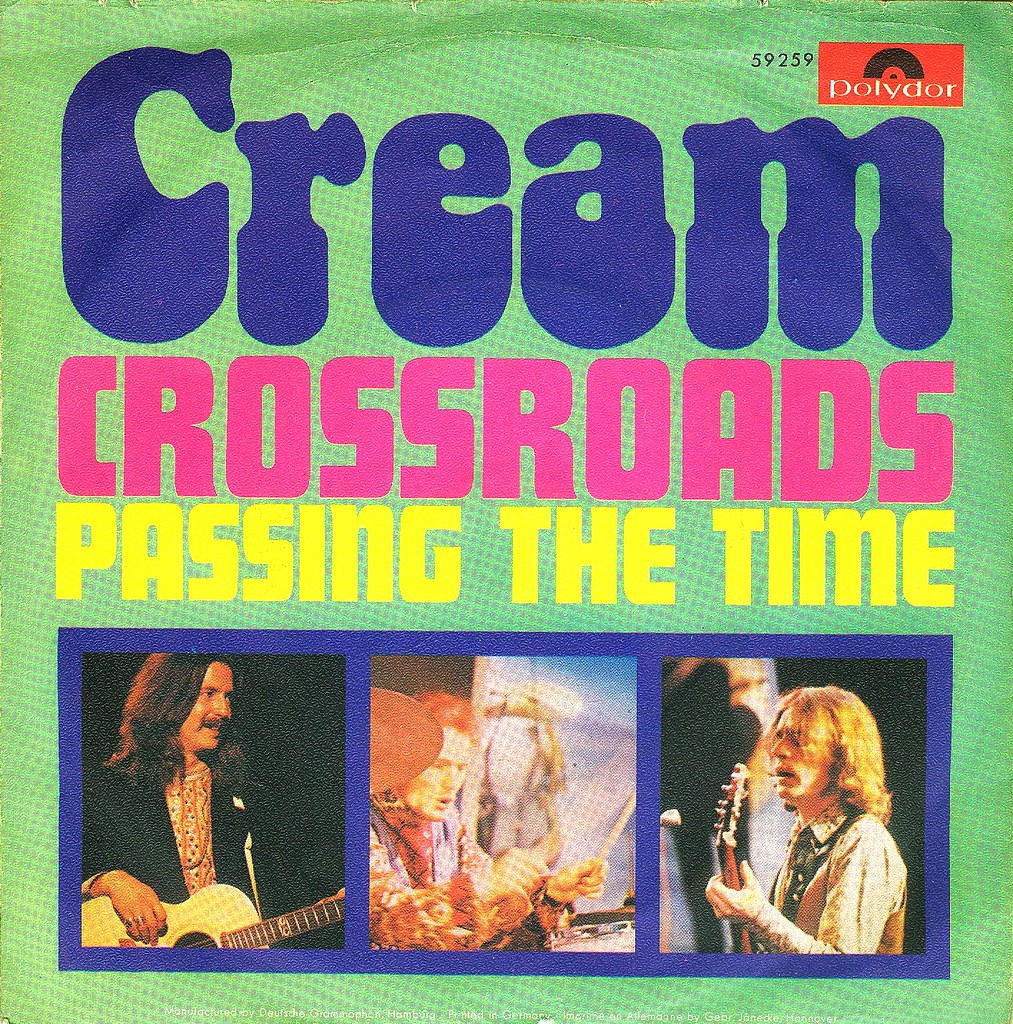
Cream’s version is a compilation of parts of two Johnson songs: “Crossroads Blues” and “Traveling Riverside Blues.” The song was on the album Wheels of Fire which peaked at #1 in the Billboard Album Charts in 1968. Crossroads peaked at #28 in the Billboard 100.
When I first learned the bass to this song…at least kinda close to what Jack Bruce played…I knew I accomplished a lot.
From Songfacts
Johnson fueled the legend on his track “Me And The Devil Blues,” where he sings about his meeting with Satan himself. In that song, Johnson explains that as part of his deal with the Devil, the Prince Of Darkness would harvest all of Robert’s “Childrens” at the age of 27, which is exactly how old he was when he died in 1938. A spooky correlation is the number of music stars who have died at age 27. Some members of the “27 Club” include Jimi Hendrix, Janis Joplin, Jim Morrison, Ron “Pigpen” McKernan, Al Wilson (Canned Heat), Brian Jones (The Rolling Stones) and Kurt Cobain. (Thanks to music historians Dwight Rounds and Ed Parker for their help with this.)
Inside the gatefold of the 2-disk LP Wheels Of Fire, the song listings for Sides 3 (including “Crossroads”) and 4 are misleadingly subheaded, “Live at the Fillmore.” Same with Disk 2 of the 2-CD versions.
“Crossroads” was recorded at the Winterland Ballroom, also in San Francisco. Just one of the four live songs on these two LP sides, “Toad,” was actually recorded at the Fillmore, but the Fillmore name had a lot more marketing appeal. “Crossroads” was recorded at Winterland on March 10, 1968, a Sunday, during the first of the two Cream shows that night. “Crossroads” immediately followed “Spoonful” in the performance, whereas on the album, “Crossroads” comes right before “Spoonful.”
The version on the album was not edited down, although the booklet for the Crossroads boxed set implies that it was. Eric Clapton didn’t like to talk about the song and has said it was an inferior performance because the trio got the time disjointed a bit in Eric’s third solo chorus – that is, the first chorus (instrumental “verse”) of his second solo. So, he never really praised that performance.
When pressed on the length and editing issues, he might say something along the vague lines of he supposed it was originally longer, because the Cream usually played it longer live.
At the end of the song, Jack Bruce announces, “Eric Clapton, please,” over Eric’s saying, “Thank you” (both said simultaneously). Eric follows up by saying (probably turning toward Jack), “Kerfuffle.” This is British English for “foul-up,” referring to the time disjoint back in mid-song.
Clapton played this on a Gibson SG, a solid-body guitar that had been psychedelically painted.
Clapton recorded this song two years earlier in a greatly different form – slower, less urban, Steve Winwood singing, plus a harmonica – though he still gave credit to Robert Johnson.
In March 1966 he was still with John Mayall & the Bluesbreakers, but he went to do a one-off studio session with, among others, Jack Bruce (bass) and Stevie Winwood (vocals and keys). This group called themselves The Powerhouse, and “Cross Roads” (note space) was one of three songs they recorded. This was the version, appearing on an album with various artists called What’s Shakin’, that was heard by a young Duane Allman in mid-1966. With his early band The Allman Joys, Duane (with his brother Gregg on vocals) recorded a ragged version of “Cross Roads” soon after What’s Shakin’ was released, and about two years before the Cream version was released. The Allman Joys’ version might have been pretty ragged, but in spirit it actually anticipated the Cream’s smoking version, rather than the Powerhouse’s take.
Lynyrd Skynyrd recorded this for their One More From The Road live album. In most ways it is like the Cream’s arrangement, but the guitar solos are pretty much different, though they refer to Eric’s solo in a few phrases.
Fusion bassist Jeff Berlin did a version on the 1986 album Pump It!. It had additional parts – especially an intro and an outro – but was otherwise similar to the Cream’s arrangement. Berlin played Eric’s solos somewhat note for note, only on bass.
Eddie Van Halen has also covered the song, and Rush (another trio of musicians) covered this on their album Feedback. John Mayer covered the song on his 2009 album, Battle Studies. >>
Clapton named his 1988 greatest hits compilation Crossroads after this song. In 2004, he released a blues album called Me And Mr. Johnson, the title a reference to Robert Johnson.
Cream played this in 1993 when they reunited for their induction into the Rock and Roll Hall of Fame.
“Crossroads” is the name of Clapton’s rehab center in Antigua. Clapton battled depression and drug addiction in the ’70s.
In Clapton: The Autobiography, Eric talks about Robert Johnson’s fingerpicking style that had him “simultaneously playing a disjointed bass line on the low strings, rhythm on the middle strings, and lead on the treble strings while singing at the same time.” Johnson’s sound was very hard to re-create, and it often sounded like more than one guitarist was playing. >>
This song had a profound effect on Geddy Lee of Rush, who told Rolling Stone: “Seeing Jack Bruce roam wildly up and down the neck of his Gibson EB3 in concert made me not want to play bass, but to play bass in a rock trio.”
Crossroads
I went down to the crossroads, fell down on my knees I went down to the crossroads, fell down on my knees Asked the Lord above for mercy, “Save me if you please”
I went down to the crossroads, tried to flag a ride I went down to the crossroads, tried to flag a ride Nobody seemed to know me, everybody passed me by
I’m going down to Rosedale, take my rider by my side I’m going down to Rosedale, take my rider by my side You can still barrel house, baby, on the riverside
You can run, you can run, tell my friend-boy Willie Brown You can run, you can run, tell my friend-boy Willie Brown And I’m standing at the crossroads, believe I’m sinking down
I’m not a huge Doors fan but I do like some of their songs…this one I really like.
This song was the title track to the Door’s last album with Jim Morrison released in April 1971. The remaining members released two more albums, Other Voices and Full Circle, which both sold poorly.
The Doors performed this live only once, in Dallas at the State Fair Music Hall on December 11, 1970. The only live recording of this is on the bootleg If It Ain’t One Thing, It’s Another. The band wanted to bring more musicians along to simulate the studio sound, but Morrison died before they could launch the tour.
This song wasn’t released as a single. The album peaked at #9 in the Billboard Album Charts in 1971.
Keyboardist Ray Manzarek: “A song about driving madly down the LA freeway – either heading into LA or going out on the 405 up to San Francisco. You’re a beatnik on the road, like Kerouac and Neal Cassady, barreling down the freeway as fast as you can go.”
From Songfacts
“Mr. Mojo Risin'” is an anagram for “Jim Morrison.” He repeats the phrase at the end of the song faster and faster to simulate orgasm. Early blues musicians often referred to their “Mojo,” like in the Muddy Waters song “Got My Mojo Working.”
A mojo is a Hoodoo charm, usually a bag filled with items like roots, lodestone, rattlesnake rattles, alligator teeth, charms, coins – whatever does the trick. Different bags would be used for different purposes: If the bag were red, it would be a mojo for love and you would have to put a personal item, such as hair or bit of clothing in order for the mojo to work. If the mojo were made out of a black bag it would be for death. Many white listeners, including Jim Morrison, thought mojo meant sexual energy, and that is how it’s usually interpreted today, in part due to Austin Powers movies.
Morrison recorded his vocals in the studio bathroom to get a fuller sound. He spent a lot of time in there anyway because of all the beer he drank during the sessions.
The Doors needed extra musicians to record this. Jerry Sheff (famous for his work with Elvis Presley) was brought in to play bass, Marc Benno to play guitar. Sheff and Benno were going to tour with the band, but Morrison’s death canceled those plans.
Morrison got the idea for the “City of Night” lyric from John Rechy’s 1963 book of the same name. The book describes a sordid world of sexual perversion, which Morrison translated to Los Angeles.
They put this together in the studio and recorded it live with no overdubs. It came together surprisingly well. Guitarist Robby Krieger has called it “the quintessential Doors song.”
The first line, “Well, I did a little down about an hour ago,” is a reference to a barbituate, specifically Rorer 714.
Billy Idol covered this on his 1990 album Charmed Life, his version hitting #52 in the US. Idol was in the 1991 Oliver Stone movie The Doors, but had to take a smaller role because of a 1990 motorcycle accident that limited his mobility.
At a press conference to promote the album, Idol explained that he had been playing “L.A. Woman” for years and was a big fan of the song. He would often use it to audition new band members.
The Doors produced this album with Bruce Botnick. Paul Rothchild, who produced their first five albums, did not want to work on this because he didn’t like the songs. He produced an album for Janis Joplin instead.
In 2000, the surviving members of the Doors taped a VH1 Storytellers episode with guest vocalists filling in for Morrison. Perry Farrell, formerly of Jane’s Addiction, sang on this.
Doors drummer John Densmore said in the The Story of L.A. Woman documentary: “The metaphor for the city as a woman is brilliant: cops in cars, never saw a woman so alone – great stuff. It’s metaphoric, the physicality of the town and thinking of her and how we need to take care of her, it’s my hometown.”
Ray Manzarek put his UCLA film studies to use when he made a video for this song that was issued on a collection of Doors material called R-Evolution in 1985. To make the video, Manzarek combined archive footage of the band with new material he shot in Venice Beach, California. The actress Krista Errickson stars as the “LA Woman”; the male lead is John Doe of the band X – Manzarek produced their first four albums and directed two of their videos.
L.A. Woman
Well, I just got into town about an hour ago Took a look around, see which way the wind blow Where the little girls in their Hollywood bungalows
Are you a lucky little lady in the city of light Or just another lost angel, city of night City of night, city of night, city of night, woo, c’mon
L.A. woman, L.A. woman L.A. woman Sunday afternoon L.A. woman Sunday afternoon L.A. woman Sunday afternoon Drive through your suburbs Into your blues, into your blues, yeah Into your blue-blue blues Into your blues, ohh, yeah
I see your hair is burnin’ Hills are filled with fire If they say I never loved you You know they are a liar Drivin’ down your freeways Midnight alleys roam Cops in cars, the topless bars Never saw a woman So alone, so alone So alone, so alone
Motel money murder madness Let’s change the mood from glad to sadness
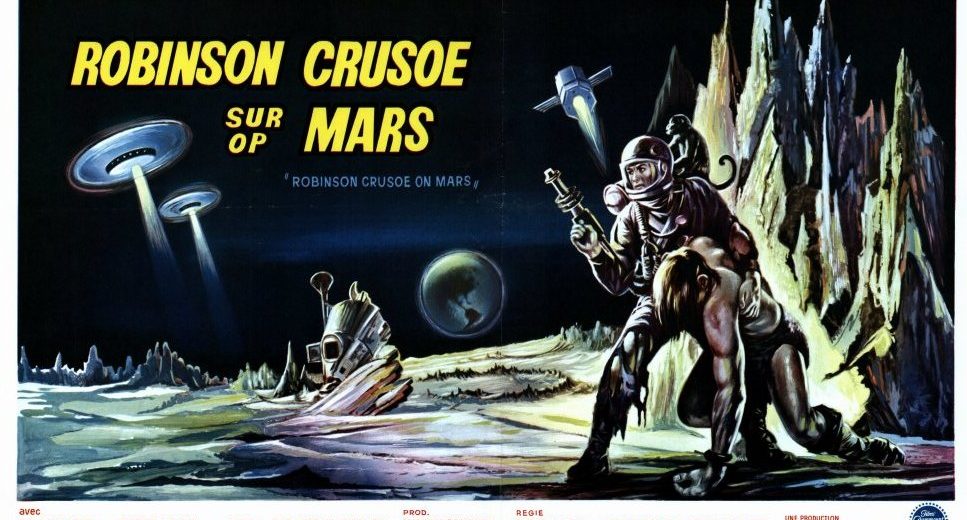
I watched this movie in the early eighties with my dad, it was on the late, late, late-night show and I could not remember the title…with that title, it doesn’t seem possible. I remembered one scene of the movie and googled it for years and 5 years ago…I finally found it. It was better than I thought it would be after watching it as an adult.
The movie was released in 1964 and the special effects were great for being what it was…a 1960s science fiction movie. There are no fake-looking monsters in rubber masks running around and the scenery looks really good. The first half is slow but it picks up well in the second half. Paul Mantee plays the lead role and he does it well. Also, you will see a young Adam West in this one. He is in it a short while.
After a slow start where our stranded astronaut has to find his way around the alien planet, things pick up with the arrival of an odd Man Friday-type who leads him out of the grasp of the aliens who descend with destruction in mind. Mantee holds the lead role together well.
For a low-budget film, this is visually stunning at times. The pre-CGI special effects occasionally fail to convince but the inventiveness of the crew makes it special in its own way.
I would recommend watching this on a slow Sunday. It’s not Star Wars by any means but a fun 60’s movie.
Here is a short description in IMDB
During a flight to Mars in the spaceship Mars Gravity Probe 1, Commander Christopher ‘Kit’ Draper and Colonel Dan McReady are forced to deviate from an asteroid and they leave their spacecraft in pods. Draper lands on the surface of the Red Planet and survives. He learns how to produce oxygen and while exploring the planet, he finds McReady dead in his crashed pod. He finds also the monkey Mona and brings the animal to the cave where he is sheltered. He learns that he can breathe the Martian air for short periods but needs also oxygen. But Mona finds water and an edible plant in the underground. .After a long period alone, Draper feels the loneliness. One day, he sees a spacecraft landing on Mars and he believes it might be the rescue team to save him. But he finds aliens working on the planet and some of them are slaves. One of them flees and stumble with Draper and he names him Friday. Now he needs to find a way to be rescued and return to Earth
Nice easy going laid back song by the Lovin’ Spoonful. John Sebastian wrote this song and he was influenced by “Baby Love” by the Supremes.
A good song by the Lovin’ Spoonful who had a string of hits in the sixties. They had a short window…1966-1969 but they had 14 songs in the Billboard 100. 1 number one and 7 top ten hits. This song peaked at #2 in 1966 in the Billboard 100, #1 in New Zealand, #2 in the UK, and #1 in Canada.
Lovin’ Spoonful played “jug band” music and like the Rascals, they were more of a singles band than an album band.
John Sebastian on Daydream: “We had no way of knowing what a nice long shelf life some of that material was gonna have. At the time, we were certainly aiming only for the next few months. That’s really what we were trying for, a Top Ten record right now, right then. Everything else is unexpected.”
From Songfacts
This song started The whole New Vaudeville Bandwagon in the late 1960s of which Sgt. Pepper was the most well-known example. This song influenced the Beatles, as John Lennon’s jukebox included both this and “Do You Believe In Magic?.” This song was a major influence on Paul McCartney’s Beatles composition “Good Day Sunshine.”
Films and TV shows to include this classic as part of their soundtrack include 1989 film Field of Dreams, the pilot episode of the TV series Men of a Certain Age, 1994 film The War, the “John Lennon’s Jukebox” episode of the TV series The South Bank Show, 1967’s Poor Cow, and 1970 film Summer in the City.
One of our research team members ranted about something involving the Grim Reaper frolicking to this song in a TV commercial. Yes, that’s a Jeep Cherokee commercial with the Grim Reaper enjoying a relaxing day off to the tune of The Lovin’ Spoonful’s “Daydream”, and anybody else suffering from the same fits of half-remembered nostalgia can now see it at that link and rest in peace, at last.
How authentic is the Baby Boomer street-cred of Lovin’ Spoonful lead John Sebastian? So much so that he was born in 1944 in Greenwich Village, New York, and his tie-dyed denim jacket is on display at the Rock and Roll Hall of Fame, since they were inducted into it in 2000.
More trivia: John Sebastian is the godson of actress Vivian Vance, who played Ethel Mertz in the classic TV series I Love Lucy.
Other artists to cover this song include: Chet Atkins, David Cassidy, Art Garfunkel (on the album named Daydream – Songs from a Parent to a Child), Rick Nelson, The Sweet, and The Sandpipers.
Daydream
What a day for a daydream What a day for a daydreamin’ boy And I’m lost in a daydream Dreamin’ ‘bout my bundle of joy And even if time ain’t really on my side It’s one of those days for takin’ a walk outside I’m blowin’ the day to take a walk in the sun And fall on my face on somebody’s new mowed lawn
I’ve been havin’ a sweet dream I been dreamin’ since I woke up today It’s starrin’ me and my sweet dream ‘Cause she’s the one that makes me feel this way
And even if time has passing me by a lot I couldn’t care less about the dues you say I got Tomorrow I’ll pay the dues for droppin’ my load A pie in your face for bein’ a sleepy bulltoad
And you can be sure that if you’re feelin’ right A daydream will last along into the night Tomorrow at breakfast you may pick up your ears Or you may be daydreamin’ for a thousand years
What a day for a daydream Custom made for a daydreamin’ boy And now I’m lost in a daydream Dreamin ‘bout my bundle of joy
My older cousin had given me this single but it skipped so much I replaced it. When I was 5 or 6 I had a fascination with this song. I’m not sure why I liked it so much… but I bought the single in Donelson…a town near Nashville with my mom. The song has a nice pop melody.
The song peaked at #3 in the Billboard 100 in 1963. This was the band’s only top ten hit. They had a total of 5 songs crack the Billboard 100.
This was recorded at Gold Star Studios in Los Angeles, which is where Phil Spector produced many of his hits. Some of the elite west coast studio musicians played on this song, including the legendary session drummer Hal Blaine and guitarist Glen Campbell.
It was written by The Cascades lead singer John Gummoe: “I wrote ‘Rhythm of the Rain’ over a period of time, but the lyrics began while I was serving in the U.S. Navy aboard the U.S.S. Jason AR8. I was standing a mid-watch on the bridge while we were underway to Japan. We were sailing up in the north pacific and it was raining heavily and the seas were tossing.”
The title came to me first and I liked the ‘ring’ of it, the way it flowed, and that night I wrote down most of the lyrics. It was like the rain was talking. It was later on that I sat down at a piano and was fooling around with the black keys and started playing a sequence from E flat down to F sharp, well, if you do it you’ll see it’s the melody that is now stuck in the heads of millions of people around the world. Later on, when we did a demo on the song, that great little ding ding thing that goes FC-FC, DA, DA came to be. The great arranger Perry Botkin Jr. enhanced that little hook and it was producer Barry De Vorzon who came up with the idea of opening the song with that famous burst of thunder.”
From Songfacts
Hundreds of artists have covered this song, including Lawrence Welk, Bobby Darin, Dan Fogelberg, Jan & Dean, Neil Sedaka and Jerry Jeff Walker. A huge worldwide hit, BMI named “Rhythm of the Rain” the 9th most performed song of the 20th century.
The Cascades next singles, “Shy Girl” and “Last Leaf,” failed to chart, and Gummoe left the band in 1967, because he was “mainly just tired of being on the road and our career was going downhill instead of up.”
Gummoe: “Most of the guys though were together on into the mid ’70s. We then reformed for a one night reunion at the Greek theater in Los Angeles in 1995. Next was in 2004 when I was contacted by Danee Samonte (AKA Steve O’Neal) a DJ and promoter in Manila. I contacted Gabe Lapano and Tony Grasso who had at different times been members of the group and we then did four tours of The Philippines which also included a gig in Maylaysia and a gig in Japan. We are blessed by our popularity in The Philippines and we love the Philippine people. We’ve met Gloria, the president and have been to Imelda’s mansion for a party which she threw for us two years ago. We meet mayors, congressmen and other government dignitaries on a regular basis when we are there.”
Gummoe: “A few years ago, I was asked to be a part of a great book that was put together by the legendary Graham Nash. It’s called Off the Record and it contains stories about many famous songs and famous songwriters. The book includes CDs with live interviews with each of the featured songwriters. In conjunction with this, I was asked to do an original piece of art using my song and that is included in the book. In the last four years, I’ve been to Asia on four occasions for concert tours, mainly in The Philippine Islands. During this period, The Cascades and I have done a couple of new CDs which are available on itunes for download. One CD is called All the Way to Yesterday and the other is called We’ve still Got the Magic.” (Thanks to John for the stories. Learn more at rhythmoftherain.com, where you can hear different versions of this song. John adds that his email address is on the site and he’s always happy to hear from the fans around the world.)
Former Neighbours actor and late 1980s teen pop star, Jason Donovan, had a #9 in the UK in 1990 with his cover.
Rhythm of the Rain
Listen to the rhythm of the falling rain Telling me just what a fool I’ve been I wish that it would go and let me cry in vain And let me be alone again
The only girl I care about has gone away Looking for a brand new start But little does she know that when she left that day Along with her she took my heart
Rain please tell me now does that seem fair For her to steal my heart away when she don’t care? I can’t love another when my hearts somewhere far away
The only girl I care about has gone away Looking for a brand new start But little does she know that when she left that day Along with her she took my heart
Rain won’t you tell her that I love her so Please ask the sun to set her heart aglow Rain in her heart and let the love we knew start to grow
Listen to the rhythm of the falling rain Telling me just what a fool I’ve been I wish that it would go and let me cry in vain And let me be alone again
Oh, listen to the falling rain Pitter patter, pitter patter Oh, oh, oh, listen to the falling rain Pitter patter, pitter patter
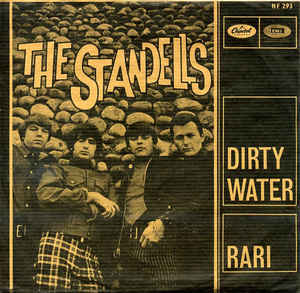
This was a pretty big hit when it was released in 1966, reaching #11 in the Billboard 100. It didn’t gain its mystique until 50 years later when the Boston sports teams adopted it. The Boston Red Sox were the first to use it, playing it after home wins in 1997.
The Celtics basketball team and Bruins hockey team followed suit, making it the song most associated with Boston sports, and thus the city as a whole.
The Standells were an LA garage band… the song was written by their producer, Ed Cobb, a Californian who was once a member of The Four Preps and wrote the song “Tainted Love” recorded by the soul singer Gloria Jones in 1964. Cobb wrote “Dirty Water” on a visit to Boston that turned ugly. “I was with a girl,” he told Blitz magazine. “Two guys tried to mug us, but they ran away. So when I got back to the hotel, I wrote the song.”
From Songfacts
The “Dirty Water” is the notoriously polluted Charles River in Boston, which had become a receptacle for industrial waste. But the song comes off as a celebration of Boston, not an ecological warning:
I love that dirty water
Boston, you’re my home
It may be dirty, but it’s their home and they love it anyway.
The song has become a Boston anthem and a source of pride for the city, but it was written and performed by guys from Los Angeles who didn’t have any good tidings toward the city.
The guy in the song is happy to live in this gritty city among the “fuggers and thieves.” After all, it’s his home.
The line, “Frustrated women have to be in by 12 o’clock” refers to the curfew observed by Boston University co-eds at the time.
Standell’s drummer Dick Dodd, who was once on The Mickey Mouse Club (he claimed to have bought his first snare drum from fellow Mouseketeer Annette Funicello for $20), handled lead vocals on this track. His spoken lines and interjections (“I’m gonna tell you a story…” “Have you heard about the Strangler?”) he made up in the studio.
The Standells hit #43 with their follow-up, “Sometimes Good Guys Don’t Wear White,” but never got any higher on the chart and broke up in 1968. Variations of the group appeared in the ’80s, and when “Dirty Water” became a Boston favorite in the ’00s, they became more visible, showing up to perform the song at sporting events and corporate functions. Dick Dodd, who sang lead on the track, died in 2013.
This song is now considered a classic of the garage rock genre. Garage rock is an undervalued genre of rock. It starts with late ’50s/early ’60s bands like The Wailers, The Kingsmen, The Trashmen (“Surfin’ Bird”), and The Standells. It continues through The Shondells, Shadows of Knight, ? & the Mysterians (“96 Tears”), and Patti Smith. And it comes all the way up to the present time with The Strokes, The White Stripes, The Von Bondies, and The Detroit Cobras. Other genres spun out from garage rock, including surf rock, indie, proto-punk (Hello, Velvet Underground!), and punk rock.
The Standells were pretty happinin’ by 1966 standards. They made appearances in 1960s B-list films such as Get Yourself a College Girl and Riot on Sunset Strip. But that’s not their greatest credit – that would be an appearance in the TV series The Munsters, episode #26 “Far Out Munsters!” In it, The Standells appear as themselves and offer to pay the Munster family a handsome sum to use their house as a recording studio for a week. The Munster family goes to stay at a hotel, but gets homesick for 1313 Mockingbird Lane and comes back early, only to find The Standells throwing a wild party.
This was used in the 2015 episode of The Last Man on Earth, “Alive in Tucson.” It has also appeared in these films:
Fever Pitch (2005) Stateside (2004) The Secret Life of Girls (1999) Edtv (1999) Celtic Pride (1996)
To enhance the Boston theme, a snippet of “Dirty Water” plays in the 2020 Hyundai Sonata Super Bowl commercial, “Smaht Pahk,” where Chris Evans, Rachel Dratch and John Krasinski revert to their Boston accents as Krasinski shows them how to pahk the cah.
Dirty Water
I’m gonna tell you a story I’m gonna tell you about my town I’m gonna tell you a big fat story, baby Aw, it’s all about my town
Yeah, down by the river Down by the banks of the river Charles (Aw, that’s what’s happenin’ baby) That’s where you’ll find me Along with lovers, muggers, and thieves (Aw, but they’re cool people)
Well I love that dirty water Oh, Boston, you’re my home (Oh, you’re the number one place)
Frustrated women (I mean they’re frustrated) Have to be in by twelve o’clock (oh, that’s a shame) But I’m wishin’ and a-hopin’, oh That just once those doors weren’t locked (I like to save time for my baby to walk around)
Well I love that dirty water Oh, Boston, you’re my home (oh, yeah)
Because I love that dirty water Oh, Boston, you’re my home (oh, yeah)
Well, I love that dirty water (I love it, baby) I love that dirty water (I love Boston) I love that dirty water (Have you heard about the strangler?) I love that dirty water (I’m the man, I’m the man) I love that dirty water (Ow) I love that dirty water (Come on, come on)
This song was on Jimi Hendrix’s debut album Are You Experienced released in 1967. The song was written by Hendrix shortly before it was recorded. The guitar and the drum sound is incredible on this one.
The main lyrics in this song (“let me stand next to your fire”) came from a time when the band had just finished a gig in the cold around Christmas, 1966. They went to bass player Noel Redding’s mother’s house in Folkestone, England, and when they got there, Jimi asked Redding’s mother Margaret if he could “stand next to her fire” to warm up. The family dog, a German Shepherd, lay by the fire, which inspired the line, “Move over Rover, and let Jimi take over.”
The song was remixed in stereo for the American release of the album. In 1969, it was released as a stereo single in the UK with the title “Let Me Light Your Fire”
From Songfacts
This lyrical lightning bolt was a breakthrough for Hendrix, who had just started writing songs at the request of his manager Chas Chandler. Writing riffs was easy for him, and it turned out he had a talent for crafting lyrics as well, as he was able to turn a simple line into a fiery tale of lustful passion. (This story is verified in Mat Snow’s Mojo story on Hendrix that ran in the October 2006 issue.)
Hendrix is legendary for theatrics like setting his guitar on fire and playing it with his teeth (not at the same time). This was the song he was (appropriately) playing when he set it on fire for the first time. It happened at a concert in London in March 1967, two months before the Are You Experienced? the album was released. Hendrix was low on the bill (below Engelbert Humperdinck), and looking to garner some media attention. When he ignited his guitar, he created a buzz that grew to a roar as his career took off.
Hendrix set fire to his guitar once again at the Monterey Pop Festival in 1967. At that show, he didn’t do the bit during “Fire,” he did it after playing “Wild Thing.”
The Red Hot Chili Peppers often covered this song in their early years. They decided to play it again at Woodstock ’99 in Rome, New York, but this was a very different festival than the one where Jimi Hendrix performed the song in 1969. The ’99 crowd was violent and unruly; when RHCP launched into this song, they increased their level of mayhem, tearing the place up and setting fires (yes, Rome was burning). >>
Gary Moore covered this on his 1999 release A Different Beat. >>
In the movie Wayne’s World, Wayne falls in love with the bassist from an all-girl band (Tia Carrere) after seeing them cover this song at Gasworks
Fire
Alright, now listen, baby
You don’t care for me I don’-a care about that Gotta new fool, ha! I like it like that I have only one burning desire Let me stand next to your fire Let me stand next to your fire [Repeat 4 times]
Listen here, baby and stop acting so crazy You say your mum ain’t home, it ain’t my concern, Just play with me and you won’t get burned
I have only one itching desire Let me stand next to your fire Let me stand next to your fire [Repeat 4 times]
Oh! Move over, Rover and let Jimi take over Yeah, you know what I’m talking ’bout Yeah, get on with it, baby That’s what I’m talking ’bout Now dig this! Ha! Now listen, baby
You try to gimme your money you better save it, babe Save it for your rainy day
I have only one burning desire Let me stand next to your fire Let me stand next to your fire
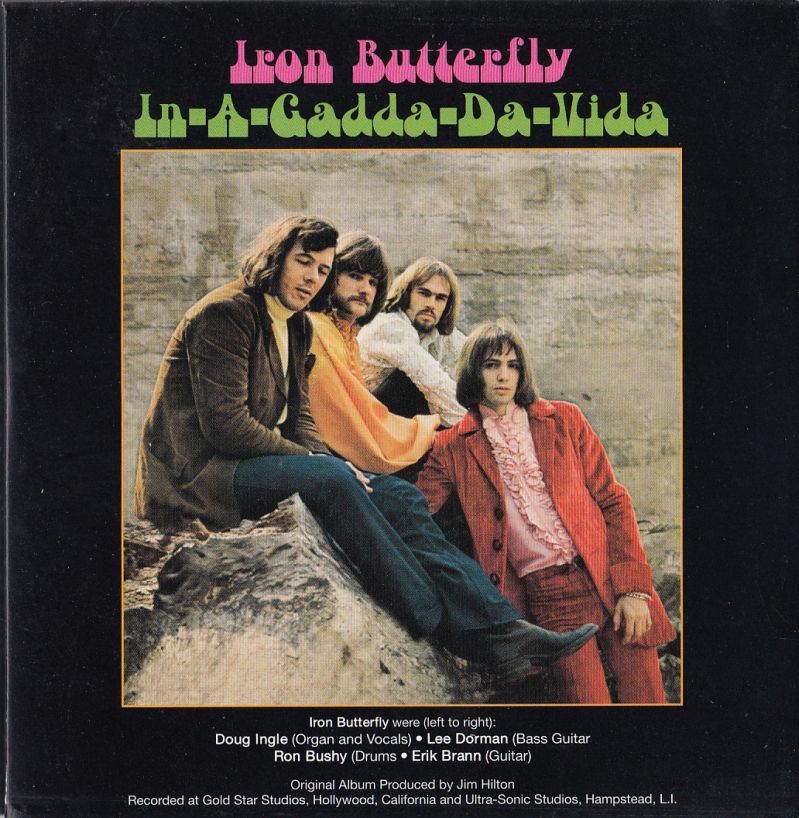
One of the most indulgent rock songs ever. It is 17:05 minutes long and has a grand total of only 30 different words in this song. You might think it has a deep, mystical meaning, but it’s really a translation error.
The title was supposed to be “In The Garden Of Eden.” Someone had written “In-A-Gadda-Da-Vida,” possibly while stoned, on a demo copy. A record company executive saw it and decided to use it as the title.
This was written by Doug Ingle, Iron Butterfly’s vocalist, and keyboard player. His father was a church organist, which influenced the drawn-out organ riffs in this song. When he wrote the song, Doug Ingle didn’t intend for it to be over 17 minutes long, but that’s how it played out. The single was edited down to 2:52, shaving over 14 minutes off the song!
This song reached #30 in the Billboard 100 in 1968.
So… light up some incense (or whatever you want), hang up some beads and turn up In A Gadda Da Vida full blast.
From Songfacts
As for the meaning of the song, it’s just a guy affirming his love for his special girl.
Ron Bushy’s drum solo is not as long as people think; it only runs about 2 1/2 minutes, from 6:30 to a little past 9 minutes. Doug Ingle’s organ solo immediately follows.
The band’s original guitar player quit before this was recorded. He was replaced by Eric Braun, who had only played the guitar for three months.
The title loosely translates as “In The Garden Of Life.”
This was the first hit song that could be classified as “heavy metal.” The phrase was introduced that year in the Steppenwolf song “Born To Be Wild.”
Iron Butterfly would have performed this at Woodstock, but they didn’t make it because they were stuck at the airport.
Hip-hop artist Nas has two different songs that sample “In-A-Gadda-Da-Vida.” The first is “Thief’s Theme” from his 2003 double album Street’s Disciple. The second is the title track of his 2006 album Hip-Hop is Dead. >>
Danny Weiss of Iron Butterfly was recommended to Al Kooper by David Crosby (of Crosby, Stills, & Nash), right when Kooper was forming Blood Sweat & Tears. As given in Backstage Passes and Backstabbing Bastards, “I loved the guitarist, introduced myself, and explained this concept to him. He thought it was a good idea, but insisted that he was committed to the band he was in. His name was Danny Weiss, and his band was Iron Butterfly. He left soon after we met anyway, and joined the great but doomed band Rhinoceros.”
The recording that is heard on the album was done as soundcheck filler for engineer Don Casale while the band waited for the arrival of producer Jim Hilton. However, after the rehearsal was completed it was agreed that the performance was of sufficient quality that another take wasn’t needed.
The song was used in The Simpsons episode “Bart Sells His Soul,” where Bart switches a hymn out for this song and convinces the Reverend Lovejoy it is penned by I. Ron Butterfly. The whole 17-minute version is played by the First Church of Springfield’s exhausted church organist.
In A Gadda Da Vida
In-a-gadda-da-vida honey, Don’tcha know that I love you? In-a-gadda-da-vida baby, Don’tcha know that I’ll always be true?
Oh won’tcha come with me, And take my hand? Oh won’tcha come with me, And walk this land?
Please take my hand… Let me tell ya now. In-a-gadda-da-vida honey, Don’tcha know that I love you?
In-a-gadda-da-vida baby, Don’tcha know that I’ll always be true? Oh won’tcha come with me, And take my hand?
Oh won’tcha come with me, And walk this land? Please take my hand… Let me tell ya.
Two,three,four! In-a-gadda-da-vida honey, Don’tcha know that I love you? In-a-gadda-da-vida baby, Don’tcha know that I’ll always be true?
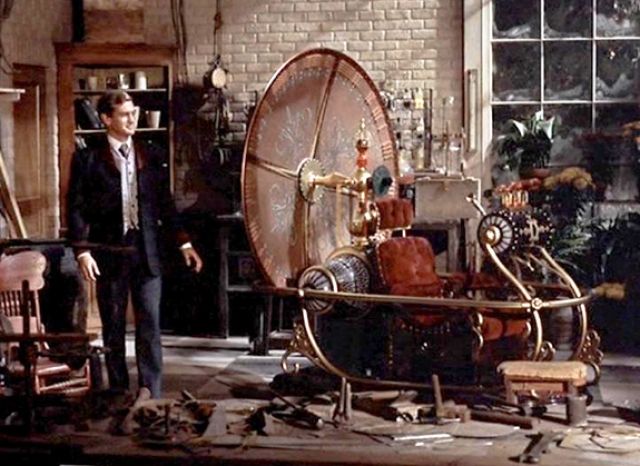
Where is the Time Machine from the Time Machine? I’ve always loved the Time Machine released in 1960. This movie is probably my favorite time travel movie. The prop was perfect that they created for this great movie. The movie was based on the novel by H.G. Wells, it was directed by George Pal, starred Rod Taylor, Alan Young, and Yvette Mimieux, and featured Oscar-winning special effects.
Time Machine prop itself was co-designed by George Pal and MGM art director William Ferrari. Pal incorporated the look of a horse-drawn sleigh, inspired from the winter sleigh rides of his youth.
After the film was completed the Time Machine prop was placed into storage by MGM. In the early 70s MGM held an auction that included the famous Ruby Slippers from The Wizard of Oz and the Time Machine. The Time Machine sold for between eight and ten thousand dollars to the owner of a traveling show.
Film historian Bob Burns tried to buy it at the auction but came up short. Around 5 years later a friend of a friend of Bob’s thought he saw the Time Machine Prop at a thrift shop in Orange California. Bob hurried over and with great excitement checked out the prop. There is was…The Time Machine in a thrift shop. It was not in good shape though. The chair was gone, the pods were broken, but the huge gold disc was in great shape.
When he got home Bob called George Pal (the director) when he got home and told him he had the Time Machine. George had given Bob the blueprints to the machine and Bob used these to restore the machine.
It only took Bob Burns and a crew 4 weeks to restore the machine and it was used in Bob’s annual Halloween show for 1976.
The original Time Machine has made appearances in other productions, including Carl Sagan’s “Cosmos”, “Gremlins, Mike Jittlov’s short “Time Tripper” (1978, and used within his feature film “The Wizard of Speed and Time” in 1989) and the documentary on the making of “The Time Machine” called “The Journey Back” (1993).
Bob Burns owns a ton of movie props. I would LOVE to tour his basement. He also owns the original King Kong.
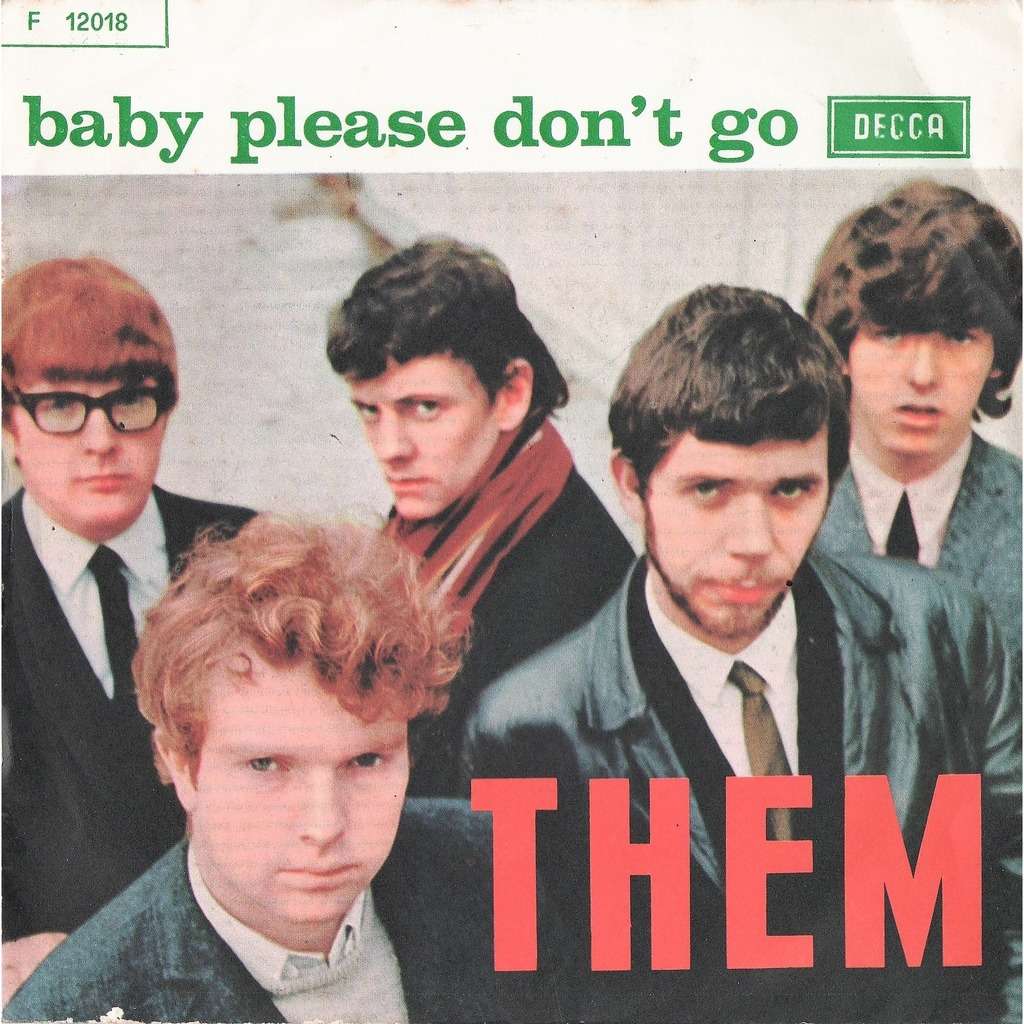
There are many versions of this old blues song but the one I know the best is Them featuring a 19-year-old Van Morrison on lead vocal. This song was the A-side to Gloria when it was released. Gloria ended up being the hit but this one managed to peak at #10 in 1961 and #65 in the UK in 1991.
Morrison based Them’s version on John Lee Hooker’s 1949 arrangement, which he titled “Don’t Go Baby.” He heard the song on Hooker’s 1959 Highway of Blues album.
A pre-Led Zeppelin Jimmy Page, a session musician at the time, played guitar on Them’s version. There’s debate over whether or not he wrote the guitar part or simply played what Them’s Billy Harrison came up with. Whether or not Page is actually the one playing is, itself, debated.
Blues great Big Joe Williams is credited with writing this song, but it was developed from a folk song titled “Long John,” which was recorded in 1934 by John and Alan Lomax for the Library of Congress. That recording captures the song being sung by black prisoners working at Darrington State Prison Farm in Texas. It was a popular tune there because “Long John” was about an escaped prisoner on the run from authorities.
Baby, Please Don’t Go
Baby, please don’t go Baby, please don’t go Baby, please don’t go Down to New Orleans You know I love you so Baby, please don’t go
Baby, your mind done gone Well, your mind done gone Left the county farm You had the shackles on Baby, please don’t go
Before I be your dog Before I be your dog Before I be your dog To git you way down here I make you walk alone Baby, please don’t go Hey
Baby, please don’t go Baby, please don’t go Baby, please don’t go Down to New Orleans You know I love you so Baby, please don’t go
Before I be your dog Before I be your dog Before I be your dog Git you way down here Make you walk alone Baby, please don’t go
Know how I feel right now My baby leavin’, on that midnight train And I’m cryin’
Baby, please don’t go Oh, baby please don’t go Baby, please don’t go Down to New Orleans You know I love you so Baby, please don’t go Let’s go
Before I be your dog Before I be your dog Before I be your dog To git you way down here I make you walk alone Baby, please don’t go, yeah
Peter Jackson combed through 55 hours of video footage to give a broader picture of the Let It Be sessions. A short preview was shown and it showed the Beatles in good spirits…against what we have read about. There was drama, but from what is being said…there was more good than not.
It will be interesting to get more of a broader picture of that time in the Beatles career…right before they made Abbey Road.
I will be there when it’s released. Here are a couple of articles.











 PowerPop... An Eclectic Collection of Pop Culture