In the past few years, I’ve learned more about this group of musicians. The first time I noticed Delaney and Bonnie was in the great movie Vanishing Point.
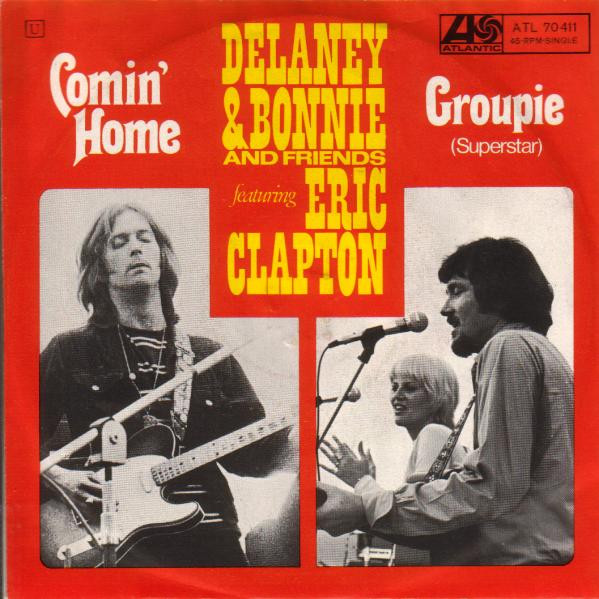
There’s a carefree spirit to Comin’ Home that feels like a blend of Rock, Soul, and Blues. It was released in 1969 on On Tour with Eric Clapton, and after listening to the album…I wish I could have seen that tour. Delaney & Bonnie were leading a rotating group of talented players at the time, and you can hear that sense of a band finding its way together perfectly.
By this time, they had built a strong live band that mixed rock, gospel, and soul, and it caught the attention of Eric Clapton, who was looking for a way out of the pressure surrounding Blind Faith. Clapton joined their touring group, not as a headline name, but as part of the band. He also occasionally brought his friend George Harrison to join in.
Clapton’s guitar work sits along with his work with Blind Faith at the time. The sound tilts toward gospel and Southern soul, which makes for some great roots music. The tour itself ran through the UK in December 1969, with a lineup that was deep to say the least! The backing band featured Leon Russell, Delaney Bramlett, Bonnie Bramlett, Rita Coolidge, Dave Mason, Bobby Whitlock, Carl Radle, Jim Gordon, George Harrison (on some shows), Tex Johnson, Bobby Keys, and Jim Price.
If you wanted a big tour back then, you grabbed Leon Russell. He would soon be on the notorious Mad Dogs and Englishmen tour of Joe Cocker. The recordings were taken from shows in cities like London and Birmingham, captured on the fly rather than built in a studio. Producer credit went to Delaney Bramlett, and the goal was simple: to document the band as it sounded in the room.
What gets me is the looseness of the recordings. Songs like Things Get Better and Only You Know and I Know stretch out, driven by Russell’s piano, while Clapton adds fills and does his thing.
The album also mattered for what came next. Clapton carried this experience forward into Derek and the Dominos, both in personnel and in feel. The Dominos were all in this band except Duane Allman. The idea of a band built around feel and fluidity hit home for Clapton. He would not be the spotlight of that band, just a member. In that sense, On Tour with Eric Clapton works as a bridge record, a live document of one group, and the starting point for another.
You want to listen to a great live album that sounds like the musicians are in the room with you? Listen to this album and hear some of the greatest musicians of the era. The album peaked at #29 on the Billboard Album Charts and #12 in Canada in 1969. The single Comin’ Home peaked at #84 on the Billboard 100 and #55 in Canada.
Comin’ Home
Been out on the road ’bout six months too long. I want you so bad, I can hardly stand it. I’m so tired and I’m all alone. We’ll soon be together and that’s it; I’m comin’ home to your love.
Hitchhiking on the turnpike all day long. Nobody seemed to notice, they just pass me on by. To keep from going crazy, I got to sing my song. Got a whole lot of loving and baby that’s why I’m comin’ home to your love.
I love this genre…I made Part 1 a couple of years ago, but never followed up. Sometimes soul blends with pop and is closely related to R&B. Below are a few that I have always liked.
Freda Payne – Band Of Gold
I’ve always liked this song. It’s a bit of a soap opera but it’s a really good soul song. The song peaked at #3 on the Billboard 100 in 1970. The guitar had a rubberband-type effect that was used in this song.
Because of the subject matter, Freda Payne did not want to record this at first. She thought the song was about a woman who was a virgin or sexually naïve and felt it was more suitable for a teenager. When Payne objected to this song, Ron Dunbar (co-writer of the song) said to her, “Don’t worry. You don’t have to like them! Just sing it,” and she did. Little did she know that this song would become her biggest hit and would give her her first record of gold.
Aretha Franklin – Baby I Love You
This is my personal favorite song of Aretha Franklin…and she has a boatload of great songs to pick from. She could bring soul to You Light Up My Life and THAT is saying something. I’ve said this a lot but Aretha Franklin and Janis Joplin are my top female singers.
This Aretha Franklin song was released in 1967 and it was on the Aretha Arrives album. It peaked at #4 on the Billboard 100, #3 in Canada, and #39 in the UK in 1967. Her sisters Carolyn and Erma provided backing vocals along with the Sweet Inspirations, an R&B girl group founded by Cissy Houston. Musicians who were featured on the track included engineer Tom Dowd and Muscle Shoals players Jimmy Johnson and Joe South on guitars, Tommy Cogbill on bass, Spooner Oldham on electric piano, and Roger Hawkins on drums. Truman Thomas also played the organ.
Franklin recorded this with Atlantic producer Jerry Wexler in New York City during the same session as Chain Of Fools. The song was written by Ronnie Shannon, who was also responsible for another hit for Aretha with I Never Loved A Man (The Way I Love You).
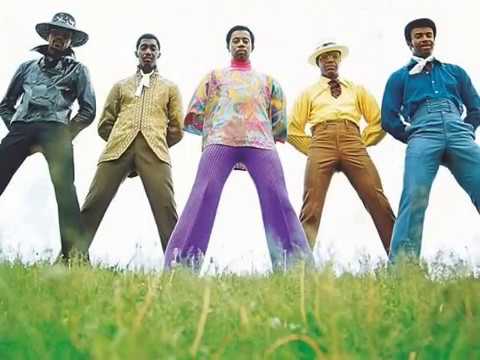
Temptations – I Wish It Would Rain
It sure got A LOT of play when I went through my first real hard breakup. You break up with someone…the Temptations have your back. Their greatest hits were more like advice than songs, which I loved.
David Ruffin sings this song, and you can feel the sadness and pain in his voice. The man had a tremendous voice. Naming my favorite Temptations song would be hard, but this one would be near the top.
The song has been covered by Gladys Knight and the Pips, Marvin Gaye, Aretha Franklin and The Faces. This song was released right before the psychedelic soul hit Cloud Nine, and the band’s style began to change.
Stevie Wonder – I Was Made To Love Her
Of all Stevie Wonder songs…this one is at the top of the list for me.
Anything Stevie does, I like. Sometimes when I hear a song, it takes a few times for me to like it, but this one…hooked me the first time. This song peaked at #2 on the Billboard 100, #5 in Canada, and #5 in the UK Charts in 1967. The song was written by Wonder, Lula Mae Hardaway, Henry Cosby, and Sylvia Moy. Lula Mae Haraway was Stevie Wonder’s mother.
Jimmy Ruffin – What Becomes of the Broken Hearted
Jimmy Ruffin was the brother of then Temptation David Ruffin. This was written by Motown writers Jimmy Dean, Paul Riser, and William Witherspoon. They wrote it for The Detroit Spinners, but Ruffin convinced the Motown writers to let him try it, and they liked what they heard.
I think Motown has been the soundtrack to more breakups than anyone else. This song peaked at #7 in the Billboard 100 in 1966. The great Smokey Robinson produced this track. He worked on many Motown classics as an artist, writer, and producer. This would be Jimmy’s biggest hit of his career.
If you want to see where we are…HERE is a list of the episodes.
I highly recommend this one. The episode is grounded in behavioral science, and there’s something very unsettling about this one. It’s a little too real. Number 6 awakens to discover he’s grown a mustache, his hair is darker, and he’s left-handed. Oh, and now he’s Number 12 (6+6 = 12). I like many of these episodes, but this might be my favorite episode. I do give some things away in this review; it’s hard not to with this one.
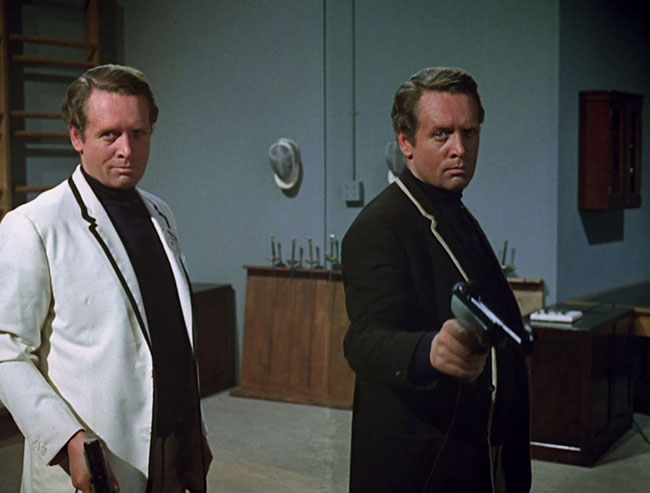
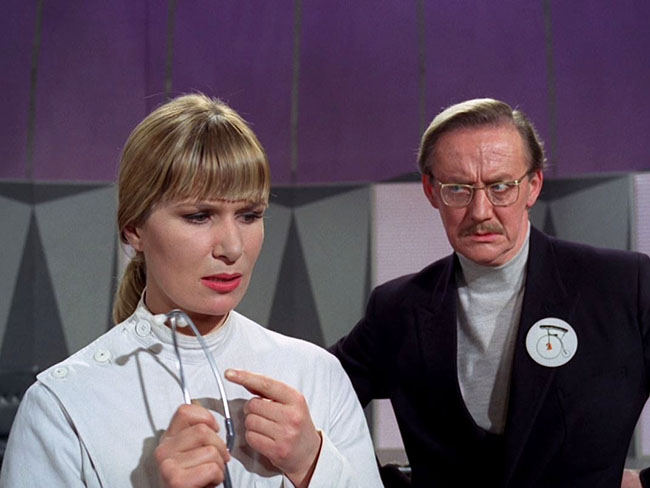
Having a character encounter their double is a common movie or television ploy (even two of the castaways on “Gilligan’s Island” met their doubles), but few examples are as effective as Number Six confronting his spitting, smirking image. It’s not just one of the best interrogation episodes but one of the best I’ve seen. Number 6 and Number 12 are going at it.
They try to break him by splitting his life in two. The Village creates a “new” Number Six who smiles, cooperates, and actually fits in, while the other one is treated like a problem. It’s about making Six doubt himself and making his resistance look like he’s insane.
Number Six wakes up after being drugged and tampered with. When he awakens, he is not in his usual dwelling, and when he looks in a mirror, he sees his appearance has been altered with darker hair and a mustache. At the Green Dome, Number Two addresses him as ‘Number Twelve’, and acts as though he is on his side. Number Six is given his ‘orders’ to break himself! After having his hair dyed back to its original colour and the moustache shaved, Number Six returns to his original dwelling. Who should be in residence but…Number Six! Confused? Of course, the Number Six coming back is actually Number Twelve.
As he is released back into the Village, officials test him by placing him in situations meant to trigger his old defiant behavior. Each time, he hesitates or reacts differently, which convinces them the procedure worked. They assign him a new job and surround him with friendly villagers who reinforce his new identity. Meanwhile, viewers see the Control Room watching every move, adjusting the experiment as they go.
Over time, cracks appear. Small details bring back flashes of who he really is, and he begins to suspect the whole transformation is an act forced onto him. When the Village authorities push him too hard, his old instincts return. He confronts the people manipulating him and exposes that the “new identity” was created through psychological conditioning rather than real memory loss.
What makes this episode work is how it turns identity into a weapon. Number Six fights with logic and willpower, but he’s also fighting a system that is against him. The episode keeps the pressure on, then ends with the Village still ready for the next move.
This one was very hard to write up. It’s best to see it, and I think you will enjoy it. Some have ranked this as the top episode or at least in the top 3. Be Seeing You!
I wrote this for Lisa’s WMM (Women Music March) as I have proudly done for the past few years in March. Lisa was one of the first followers I had when starting out, and she is one of the readers who helped build my site in a lot of ways. Please go see the original post and visit her site. Thanks, Lisa!
It’s a shame she is more remembered for what may or may not have happened to her than for her music. She has been hailed for being ahead of her time, and she was. I plead with everyone reading this, please look her up and read some things about her. I have barely scratched the surface with this post.
Connie Converse is one of the most unusual stories in folk music or music in general. She wrote quiet, thoughtful songs in the early 1950s. That was years before the folk revival made that style popular. At the time, almost no one outside a small circle of friends heard her music. Decades later, people realized she had been doing something new long before it became fashionable.
She was born Elizabeth Eaton Converse in 1924 in New Hampshire. She grew up in a strict Baptist family and showed an early interest in writing and music. After leaving college, she moved to New York City in the late 1940s. She went there hoping to find a place in the arts. Instead of the louder folk style that would come later, Converse wrote reflective songs that sounded closer to personal thoughts or even letters.
During the early 1950s, she performed occasionally in New York apartments and small gatherings. Her friend Gene Deitch, who later worked in animation, recorded many of her songs at home on a tape machine. In 1954, she appeared on The Morning Show on CBS, singing several of her compositions. The appearance did not lead to a recording contract, and by the end of the decade, she stepped away from performing.
In the early 1960s, Converse moved to Michigan and worked in publishing and writing. Music slowly faded from her life, and she became a huge activist on racism. On August 10, 1974, she wrote letters to friends and family and packed her belongings into a Volkswagen Beetle and drove away from her Ann Arbor, Michigan home. She was never heard from again, and her disappearance remains unexplained. She left letters indicating a desire to start a new life and instructed friends/family not to look for her. No traces of her or her car were ever found. There have been theories about her. While she may have started a new life, the most widely discussed theories include suicide (possibly by driving into a body of water) or death by misadventure.
Several years after she left, someone told her brother Philip that they had seen a phone book listing for “Elizabeth Converse” in either Kansas or Oklahoma, but he never pursued the lead. About ten years after she disappeared, the family hired a private investigator in hopes of finding her. The investigator told the family, however, that even if he did find her, it was her right to disappear, and he could not simply bring her back. After that, her family respected her decision to leave and ceased looking for her.
Her music might have stayed unknown if Gene Deitch had not preserved those early tapes. In 2009, the label Squirrel Thing Recordings released a collection of her recordings. For the first time, people heard the songs she had written more than fifty years earlier. Listeners were struck by how modern they sounded, both in their lyrics and their quiet delivery.
Today, Connie Converse is often mentioned as a lost pioneer of singer-songwriter music. She worked alone with a guitar, writing direct songs about daily life, loneliness, and independence, years before artists in the 1960s folk revival made that approach common.
What makes Connie Converse interesting is timing. She was writing personal, singer-songwriter-style material in the early 1950s, almost a decade before that approach became common. If these songs had been recorded during the 1960s folk revival, her story might look very different.
Connie Converse: “Human society fascinates me and awes me and fills me with grief and joy; I just can’t find my place to plug into it”
“I believe all true art is, in this sense, impersonal: its value does not depend on knowing or thinking anything about its maker. Art is not an extension of the artist’s personality, but has its own life”
“The problem, or at least a problem, I’ve been told — is that I am not very concerned about being missed upon any of my exits, not the ones that are voluntary nor the ones that swoop down without warning to cover me in a quilt of dark feathers”.
If you want to see where we are…HERE is a list of the episodes.
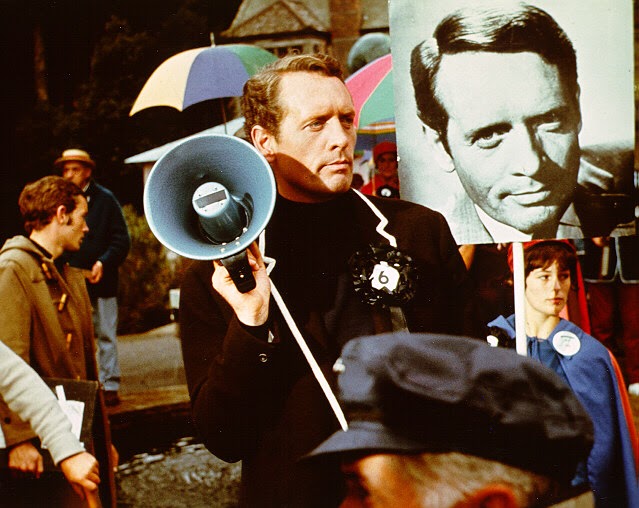
This episode can become confusing quickly if you don’t pay attention. The editing in parts of this is fast. This one shows off the Village really well with its pastel colors. Number 6 is tested more in this episode than in the other ones so far. You can tell in parts that they are getting to him mentally.
Number Six is suddenly treated less like a prisoner and more like a public figure when the Village announces an election for Number Two. He is encouraged to stand as a candidate himself. It sounds like a chance to speak out and maybe even expose the whole setup. He might be able to turn the Village’s own system against itself.
As the campaign gets going, it becomes clear that this election is not really about freedom, choice, or public debate. Number Six is coached and packaged for the crowd. The Village turns politics into another form of control. Rallies, speeches, and promises are all part of the performance. The people around him act like voters, but the whole thing has the feeling of a trap, with every move watched.
He tries to speak honestly, telling people not to trust the system, but the message gets twisted into the campaign. The more he resists, the more popular he becomes. It’s all about power and control. Number 6 can’t separate what’s real from what’s being done to him. By the end, the election was a way to break him down and test him. The campaign itself seems like just another prison. Be Seeing You!
If you want to see where we are…HERE is a list of the episodes.
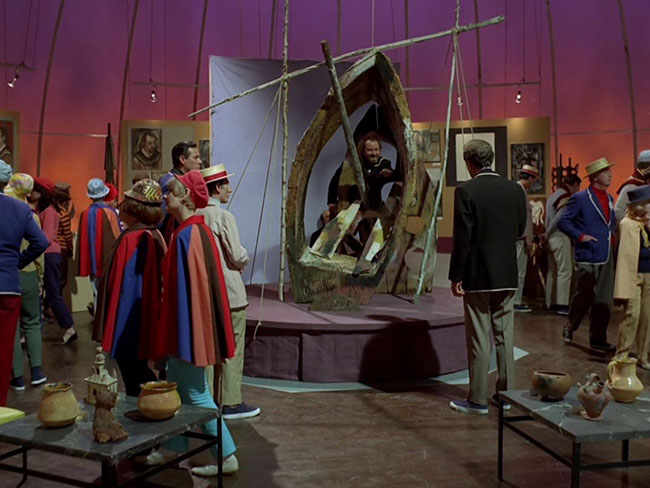
This episode turns the Village into a lab. Number Six is drugged and pulled into a three-part dream program, each scenario designed to crack him open and find out why he resigned. The title is literal, three separate “tests,” and the method is modern for the late 60s, not fists threats, but psychology, repetition, and control of the setting. I love dream sequences in shows, so I’m really happy with this one.
The first sequence drops him into a rough version of his old life, with familiar faces and a push toward panic. The second shifts the tone, calmer on the surface and built to steer him into the same trap from a different angle. The third is the tightest and most direct. Number 2 is trying to guide him to a single answer through suggestion and pressure. He keeps fighting for any piece of truth he can find. Each segment feels like a different door leading to the same room.
What makes this one stick is how it shows the Village evolving. They are less interested in punishment and more interested in results. Number Two isn’t just managing the place; he’s running experiments and taking notes. He is trying to solve a human being. Number Six, even half-awake and off-balance, still won’t give them the one thing they want. The episode ends without any comfort at all. They can trap you, study you, and even rewrite your reality for an hour. But they still can’t own what you choose to keep. Another one where Number 6 turns the tables on Number 2. Be Seeing You!
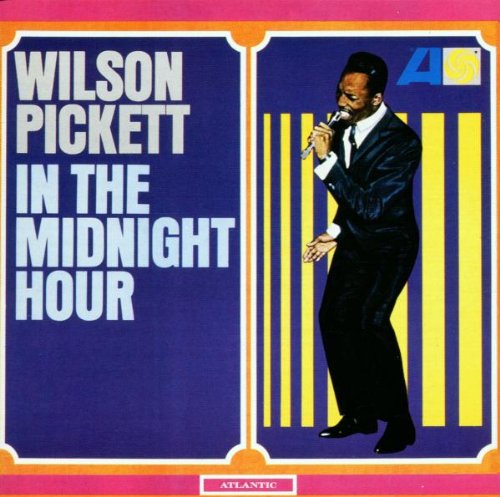
This song has been in my head all week. A great classic soul song and a great song in general. The guitar riff is simple but perfect… it drives the song along with Pickett’s explosive voice. It has to be one of my all-time favorite songs to play on bass or guitar. It’s a sliding riff that stays in a perfect rhythm.
The song was recorded in 1965 at FAME Studios in Muscle Shoals. Pickett worked with producer and songwriter Jerry Wexler and Steve Cropper. Cropper came up with the guitar riff while the band worked out the rhythm in the studio. Wexler encouraged the musicians to play slightly behind the beat, which gave the song its loose but powerful feel. That rhythm became one of the signatures of the Muscle Shoals sound.
The backing musicians included members of the studio band that would later be known as the Muscle Shoals Rhythm Section. Their playing is tight, but they left room for the song to breathe. Pickett’s voice sits right in the center, rough and urgent, especially when he shouts the title line. Al Jackson Jr. and Donald “Duck” Dunn from Booker T. & the MG’s played on this track with bandmate Cropper.
In the Midnight Hour” was recorded on May 12, 1965, with all musicians performing at once, in the repurposed movie theater that was the Stax recording studio, with absolutely no overdubs. The song peaked at #21 on the Billboard 100 and #1 on the R&B Chart in 1965.
In 2017, the song was selected for preservation in the National Recording Registry by the Library of Congress as being “culturally, historically, or artistically significant. It was written by Pickett and Steve Cropper.
In The Midnight Hour
I’m gonna wait ’till the midnight hour
That’s when my love come tumbling down
I’m gonna wait ’till the midnight hour
When there’ no one else around
I’m gonna take you, girl, and hold you
And do all things I told you, in the midnight hour
Yes I am, oh yes I am
One thing I just wanna say, right here
I’m gonna wait till the stars come out
And see that twinkle in your eyes
I’m gonna wait ’till the midnight hour
That’s when my love begins to shine
You’re the only girl I know
Can really love me so, in the midnight hour
Oh yeah, in the midnight hour
Yeah, all right, play it for me one time, now
I’m gonna wait ’till the midnight hour
That’s when my love come tumbling down
I’m gonna wait, way in the midnight hour
That’s when my love begin to shine, just you and I
Oh, baby, just you and I
Nobody around, baby, just you and I
Oh, right, you know what?
I’m gonna hold you in my arms, just you and I
Oh yeah, in the midnight hour
Oh, baby, in the midnight hour
If you want to see where we are…HERE is a list of the episodes.
Both sides are becoming identical. An International community, a perfect blueprint for world order….Number 2
The show has such a good premise. What does a super spy do when he/she retires? Most likely, they won’t be able to live their life in peace, but where do they go?
This was the 5th episode filmed, but it’s the second one aired. This explains the reason a few months have passed in time since he arrived. It’s one of my favorite episodes. The sugar cubes scene is very telling. They have it in his file how many cubes he uses in his tea. Just to mess with them, he changes the number he usually takes. Number 2 looks on in disbelief because Number 6 will not join quietly like some others did.
This episode really pushes the series into spy territory, playing with the idea that escape might be possible. Number Six encounters another prisoner who claims that she has outside contacts and a plan, and for the first time, the Village seems less sealed than it did in Arrival. She insists she knows a way to escape from the Village, and Number 6 builds a raft. After carefully planning their attempt, the two manage to leave the Village and drift out to sea. You think, hmmm, maybe he will break out of there…and he does, but then comes a twist.
The episode borrows the spy checklist… coded messages, double agents, and quiet deals, which suggests a more familiar path forward. You also see in what lengths the village will go to tame Number 6, and it’s out there. It also makes clear that intelligence work itself can be a trap. Trust becomes a liability, and the system Number Six once served is resembling the one now holding him.
It really drives home that escape is not just physical; it is psychological. It reinforces the idea that resistance is expected, managed, and often used against those who attempt it. It’s a great episode with who I think made the best Number 2, Leo McKern. He is one of the few who will return at the end. Be Seeing You!
In the 1980s, I went through my first Doors phase. Read every book and even bought an album called An American Prayer, full of Jim Morrison’s poems. I saw the Oliver Stone movie and many of the documentaries at the time. They came back in popularity big time in the 1980s with Morrison making the Rolling Stone cover with the headline “He’s Hot, He’s Sexy, and He’s Dead.” At the time…I thought…well, that is disturbing sounding.
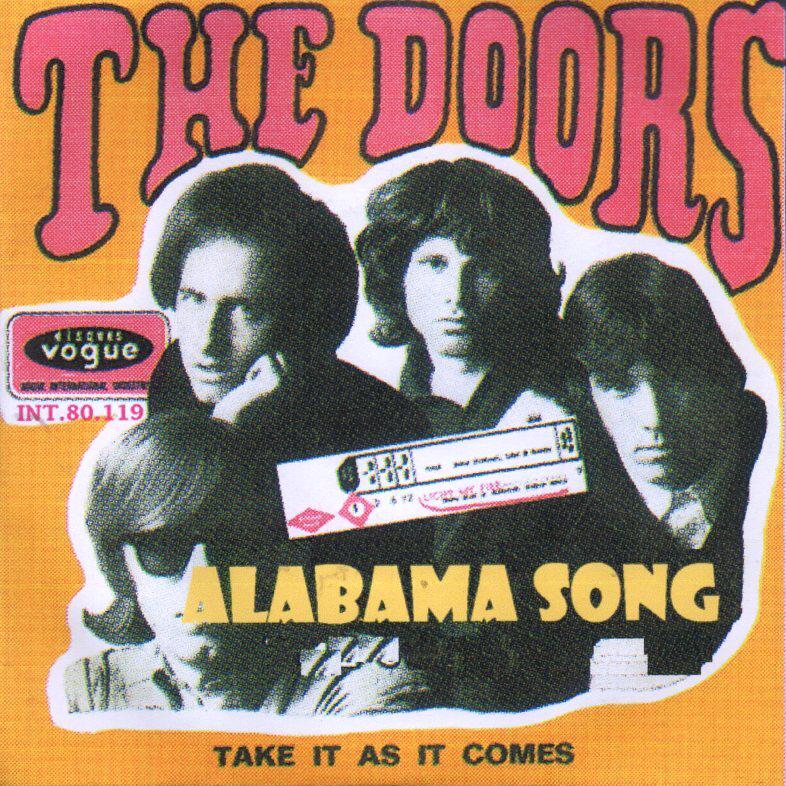
When The Doors released their debut album, The Doors, in 1967, most listeners expected songs written by Jim Morrison, Ray Manzarek, Robby Krieger, and John Densmore. But tucked into the record was something unusual, “Alabama Song (Whiskey Bar).” It wasn’t written by the band at all. The song came from German theater, written by Bertolt Brecht with music by Kurt Weill for the 1927 stage production Little Mahagonny, later used in the opera Rise and Fall of the City of Mahagonny.
They discovered the song through Manzarek, who had studied theater and classical music. The band kept the original English lyrics but changed the arrangement. Instead of an orchestra, they built it around Manzarek’s carnival organ. It stood out on the album, but it fit the band’s taste for the theatrical.
Manzarek’s keyboard carries the melody while Krieger adds small guitar lines. It circles around the refrain, “Show me the way to the next whiskey bar,” until it feels like something being shouted across a room. The structure is simple, but the mood is uneasy because of Manzarek and Morrison. You can hear a slight German polka sound in this.
The album peaked at #2 on the Billboard Album Charts, #42 in Canada, and #43 in the UK in 1967.
Alabama Song (Whisky Bar)
Well show me the way To the next whiskey bar Oh don’t ask why Oh don’t ask why
Show me the way To the next whiskey bar Oh don’t ask why Oh don’t ask why
For if we don’t find The next whiskey bar I tell you we must die I tell you we must die I tell you, I tell you I tell you we must die
Oh moon of Alabama We now, must say goodbye We’ve lost, our good old Mama And must have whiskey Oh, you know why
Oh, moon of Alabama We now must say goodbye We’ve lost, our good old Mama And must have whiskey Oh, you know why
If you want to see where we are…HERE is a list of the episodes.
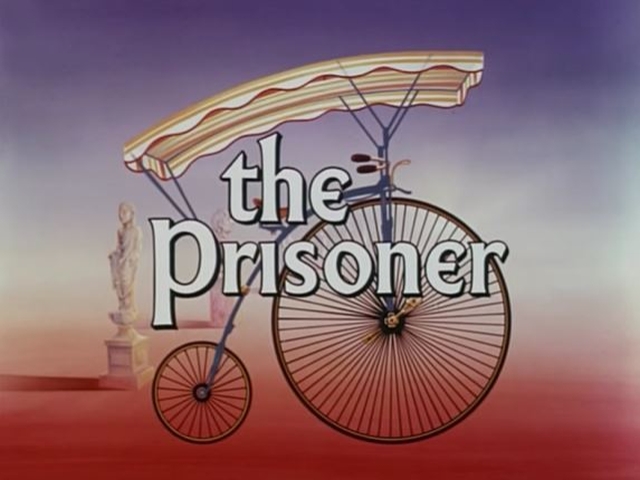
I have covered The Twilight Zone, Star Trek, and Kolchak: The Night Stalker episode by episode, and I think The Prisoner will fit in perfectly. This will be my first British show episode by episode, although I’ve made posts on Fawlty Towers and Are You Being Served. I hope you will enjoy these.
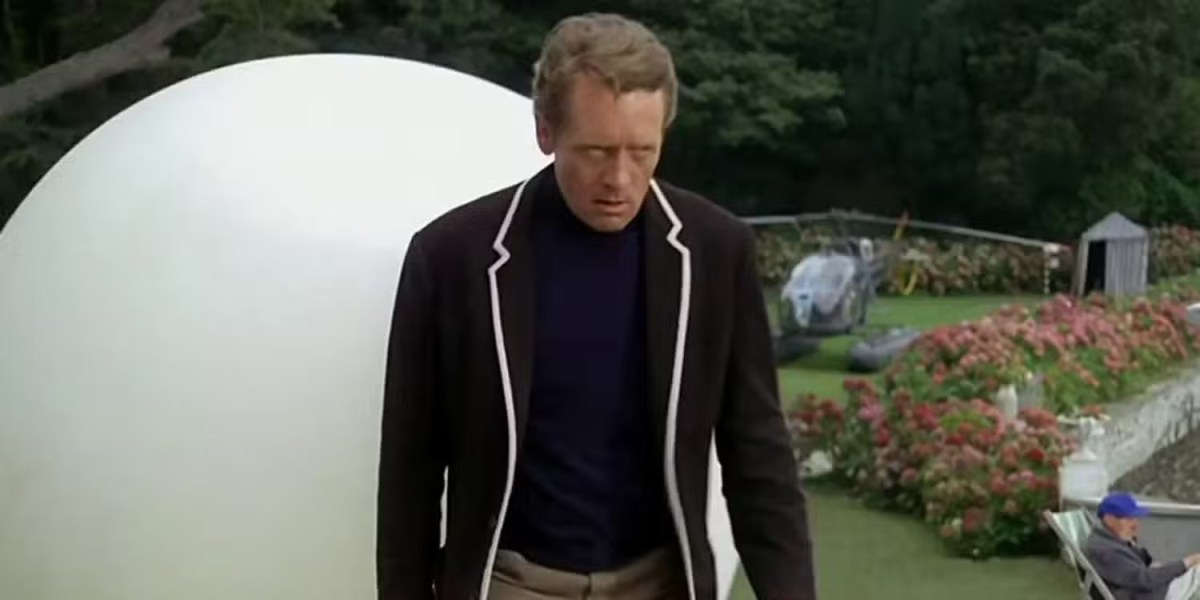
What an opening! You resign from your workplace, and you are abducted by someone or some group and wake up in a pastel-looking village where individuality is a no-go. You are assigned a number, and that is now your name. There are so many symbolic images, and our Number 6 refuses to give in. Also, who would think a white weather balloon-looking device (Rover) could be so menacing?
This episode opens The Prisoner by throwing the viewer, like its hero, straight into disorientation. A government agent abruptly resigns, is abducted, and wakes up in the Village. It’s a bright seaside resort that feels pleasant until it doesn’t. Patrick McGoohan establishes the conflict immediately: individuality versus control and bureaucracy. The episode uses visuals and silence as much as dialogue, which pulls you in. As soon as he awakes from an unfamiliar pillow, the show is on.
The Village itself becomes the real star. Smiling residents, surveillance, and cheery announcements clash with the unspoken threat behind them. Authority is masked as friendliness, and rules are vague but absolute and must be followed. Trying to escape is treated as both foolish and dangerous. The balloon-like Rover makes its first appearance here, not explained, just accepted as the force it is. You will see it in action, and we are not sure why it attacked a Villager, and we are not told why. It reinforces the show’s refusal to reassure the audience that everything will be all right. Names are not used here; only numbers are used. Our spy is now Number 6. The Village is totally internal; no outside is mentioned or displayed. Any map is just of the Village, nothing of the world.
He meets a person who is the so-called leader…today. That would be Number 2. A different Number 2 every episode, with a few exceptions. They want to know why number 6 resigned. That is when our guy Number says I will not make any deals. I’ve resigned. I will not be pushed, filed, stamped, indexed, briefed, debriefed, or numbered. My life is my own. Number 6 comes off as rude and impatient, but it makes sense. He is there against his will and doesn’t know who to trust. Throughout the series, he does find a few he does trust at the moment, at least partway.
By the end, this introductory episode has done its job. It defines the tone and the mystery. It also doesn’t resolve anything. Questions about identity, obedience, and yes, freedom are raised but not answered. That unease is the point and a big reason I kept on watching. As a first episode, it is bold and strange. You think everything will be explained, but it won’t. Beware of Rover!
In this episode, Number 6 is finding out the lay of the land, and the Village is getting to know him. He is looking to get out and give it a couple of shots. He does meet someone he knows, a spy, and he meets a lady with a chance to escape.
And so the trip to the bizarre begins, Be Seeing You!
“I will not make any deals. I’ve resigned. I will not be pushed, filed, stamped, indexed, briefed, debriefed, or numbered. My life is my own.”… Number 6
“I must have individuality in everything I do. I question everything. I don’t accept anything on face value. I argue because by arguing, something good often comes from the results.”… Patrick McGoohan
This introductory post is quite long, but I’ll keep the episodes within a 1-2 minute read, I promise, because I have most of them written. There is SO much to say about this show. I started this post in January and have been adding to it ever since. Next Friday we start the episodes with Episode 1…Arrival.
Original, experimental, very surreal, still totally relevant today, ahead of its time, who is number 1? Where or what is The Village? Struggles with individualism, conformity, authority, and the nature of freedom, set within a mysterious, idyllic village. Surrealism? Yes, this one has it in spades! Salvador Dali could have directed some of the episodes. Also…the color of these shows! They beat modern movie colors with a stick. The brightness and distinct color just pop off the screen, a selling point for color TV back then, creating a surreal, pop-art feel. McGoohan even banned the word “television” on the set. He wanted everyone to have a cinematic view.
The word “allegory” comes up frequently in descriptions of this series. People are still trying to figure out what it means, and we all have our interpretations. Patrick McGoohan was a very successful actor, but he was questioned the rest of his life about this 17-episode series. It was a British show in 1967-1968. In Canada and the US, college classes have been taught about this show to try to get the meaning out of it.
I’m going to post this series episode by episode. It’s only 17 episodes this time, so it won’t take long. I wanted another sci-fi show, and this one fits that bill without a hundred episodes. This is one of the most interesting television shows I’ve ever seen, bar none. It’s like James Bond meets The Twilight Zone…heavy on the Twilight Zone. They only had 17 episodes, but it was enough to go on a trip into the bizarre. I watched this a decade ago, and I just watched it again in the past two weeks. Number 6 is my hero in his fight against a forced society.
A British spy resigns, and he goes home. At home, you see sleeping gas coming through the keyhole, and after that, he wakes up in a new home. He wakes up in a place called “The Village” with no name, a small microcosm of a perfect community where people are issued numbers instead of using names. Escape is made nearly impossible, enforced by a gang of thugs and a bizarre white sphere (called Rover) that smotheres people to death or brings them back to the village after an escape attempt. Cordless phones, constant surveillance, manipulative organisations, people reduced to numbers, and so on. Rover seemed laughable at the time with the effects, but now drones perform exactly that function, so it was a question of the technology not being available when the show was made.
A map (title is Your Village) says “The Mountains,” “The Sea,” and other generic names. Individualism is gone in this place. It’s quite a nightmare. He does not have his name when he is there; he is called Number 6. You never know his real name. The main question the Village leaders want to know is the reason WHY he resigned. He has a lot of secrets in his head, important to both sides. He just will not disclose the reason for his resignation. One reason is that he doesn’t know which side got him. The other reason is that he just didn’t want to because his life is his own.
He doesn’t resist using weapons or gadgets, but with wit and stubbornness. Each episode tests him in a different way: psychological games, manufactured communities, false friendships, and shifting authority figures. The Village looks pleasant, almost cheerful, which makes its constant surveillance more unsettling. The question is never just who is in charge, but why submission is expected at all. They mess with his mind constantly to the point where they bring a double in and convince him he is someone else. But, I’m happy to say, he messes with them as well, like in the episode Hammer Into Anvil. He usually turns the tables on them. He is the only independent thinker in the village, or the only one who admits it.
What separates The Prisoner from standard spy television shows (or other shows, for that matter) is its willingness to abandon logic for an idea. That’s the best way I know of putting it. Some episodes are like satire, others like dreams that do not explain themselves. The rotating cast of Number Twos keeps power unstable, reinforcing the sense that the system matters more than any individual running it. It’s a show that requires your attention, and they counted on that to keep the audience engaged. Number 6 is not a nice guy in this. He doesn’t want to be there, and some of the good citizens were in the know, and some were like Number 6. You cannot trust anyone, and he refuses to conform.
This show was the brainchild of “Danger Man” actor Patrick McGoohan. In The Prisoner, he was also director/co-producer/creator, and his allegorical tale concerned the retirement/imprisonment of a spy who knew too much.
Historians have long argued whether he was retiring his character John Drake from Danger Man, and if this was John Drake character, it’s never said. Patrick denied it, but others say it was probably the character he played before, but wouldn’t mention him because of royalties that would have to be paid tothe creator of Danger Man. It doesn’t really matter if this is John Drake or not; we know him now by Number 6.
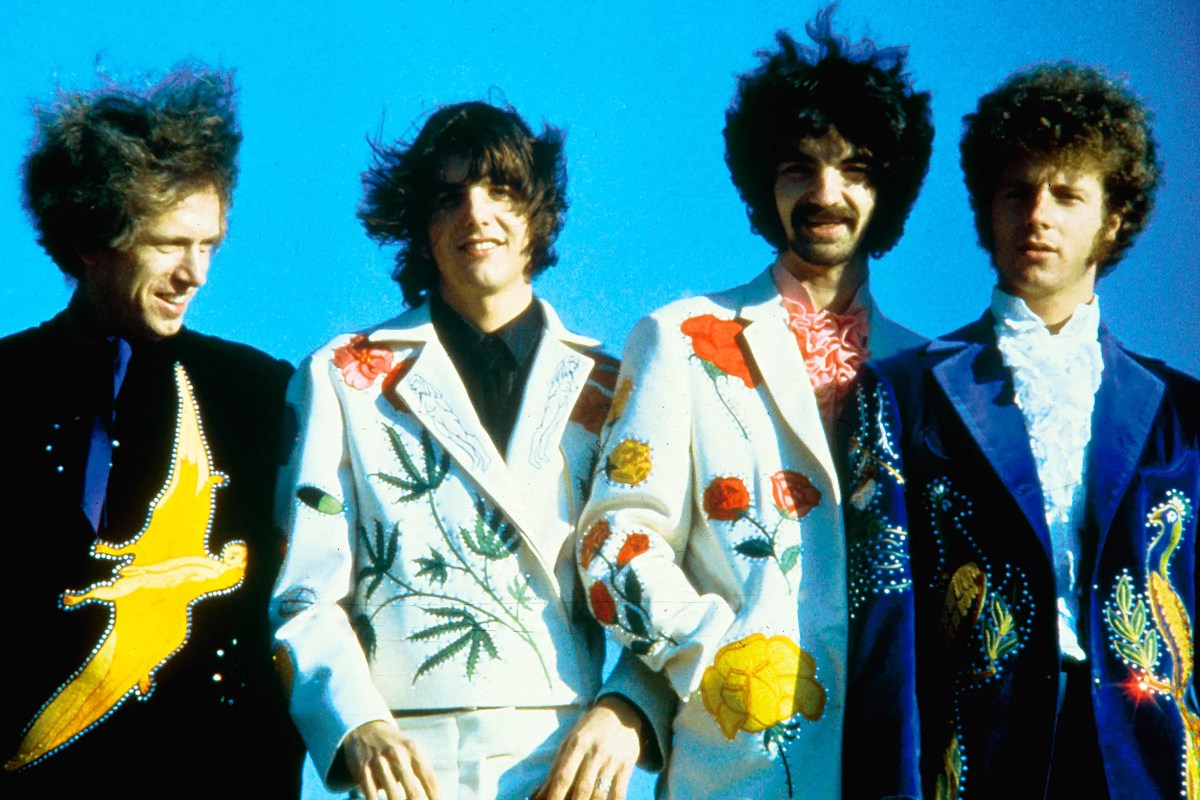
I love this band, and I need to post more by them. Today, I have a theme going: alt-country, with one of the pioneers and one that picked up the mantle a little longer down the line. Like Little Feat, this band was more popular with other musicians than with the public. So the public missed something special here.
This was the opening song on the album The Gilded Palace of Sin. They didn’t ease you in… they hit you hard with this country song with rock attitude. It’s built around a cool rhythm and sharp harmonies. I like how it had a Bakersfield sound mixed with rock’s drive. It was written by Gram Parsons and Chris Hillman.
This song showed how country music could carry an edge without losing its roots. What makes it work is how natural it sounds, blending those two styles. Pedal steel in the background while the rhythm section drives like a rock band. It set the tone for the whole Burritos sound.
This song, like the album, barely made a dent in the music world of 1969. They developed a cult following upon its release that included Bob Dylan and The Rolling Stones. Over time, it turned into a blueprint for country-rock.
Christine’s Tune (Devil in Disguise)
She’s a devil in disguise You can see it in her eyes She’s telling dirty lies She’s a devil in disguise In disguise Now a woman like that all she does is hate you She doesn’t know what makes a man a man She’ll talk about the times that she’s been with you She’ll speak your name to everyone she can She’s a devil in disguise You can see it in her eyes She’s telling dirty lies She’s a devil in disguise In disguise
Unhappiness has been her close companion Her world is full of jealousy and doubt It gets her off to see a person crying She’s just the kind that you can’t do without She’s a devil in disguise You can see it in her eyes She’s telling dirty lies She’s a devil in disguise In disguise
Her number always turns up in your pocket Whenever you are looking for a dime It’s all right to call her but I’ll bet you The moon is full and your just wasting time
She’s a devil in disguise You can see it in her eyes She’s telling dirty lies She’s a devil in disguise In disguise (in disguise) In disguise (in disguise) In disguise (in disguise) In disguise
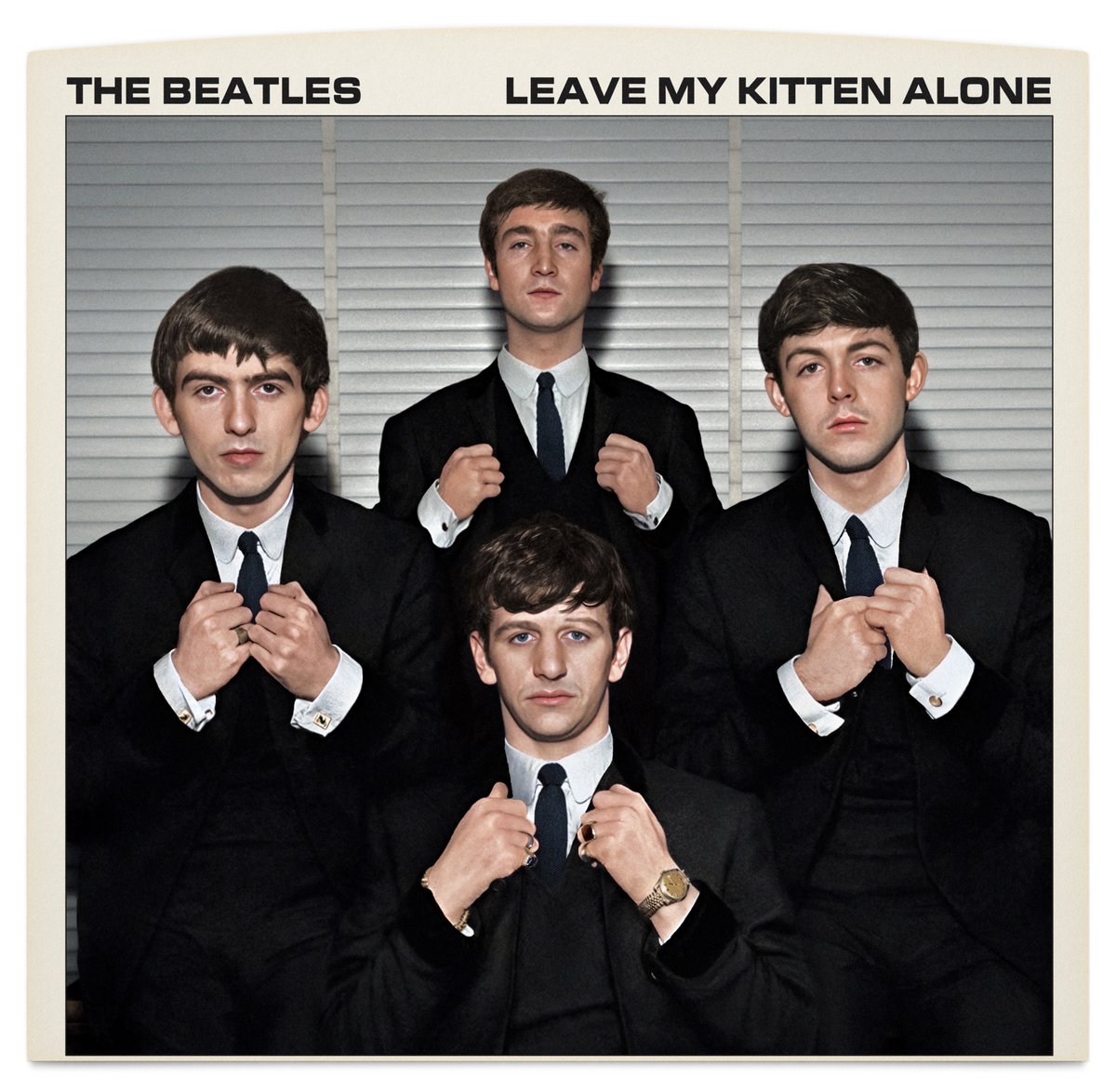
It’s one of those Beatles covers that I read about but never heard until the Anthology came out. This song belongs in their pre-early period, as far as playing it. They played this in Hamburg and The Cavern.
This was recorded during the Beatles for Sale sessions in 1964; it captures the band hard into their early rock and R&B roots. John Lennon takes the lead with a sharp vocal that cuts through the song like all of his other vocals. It’s the kind of song that feels like it could’ve torn up the stage at the Cavern Club and Hamburg. It was excluded from the album at that time.
The Beatles were huge fans of that early American R&B and rock ’n’ roll, and this one fit right into their club repertoire, tough, fast, and built to move a crowd. Their version keeps that same bite, just filtered through their Liverpool interpretation. They don’t go raw like Bad Boy (one of my favorite covers they did), but it’s good.
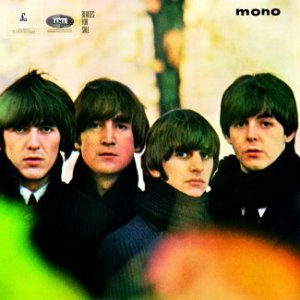
Beatles For Sale was made when they were just plain worn out (look at their faces above, on the album cover). Beatlemania was getting on their nerves, what nerves they had left. George Harrison said Beatlemania was an attack on their nervous system. He explained it well; he said that they didn’t change as much, but the people all around, plus the public, went nuts. They lived inside this bubble until 1966, when they finally said no more touring after that year. It was probably, in some ways, the best decision they ever made. It might have prolonged the band’s life a little.
I looked up the reason why this song was excluded from Beatles For Sale. The only thing I could find is that George Martin thought there were too many covers on the album already. I would agree with that, but why not leave off “Mr. Moonlight” instead of this? This is a totally personal opinion, but Mr. Moonlight (besides Lennon’s vocal, which is special in it) is in the top 5 of my most disliked Beatles songs, not just covers, which it is, but all Beatles songs.
They just didn’t have the time to write more originals. Everyone was waiting for “the bubble to burst” on their success, but it never did. Hell, I’m still posting about them 60 years later. They only had 8 original songs on this album, and filled out the rest with covers they did in Hamburg and Liverpool. Leave My Kitten Alone was not an original; it was written by Little Willie John, Titus Turner, and James McDougal and released in 1959 by Little Willie John.
Leave My Kitten Alone
You better leave my kitten all alone You better leave my kitten all alone Well, I told you, big, fat bulldog You better leave her alone
You better leave my kitten all alone You better leave my kitten all alone This dog is gonna get you If you don’t leave her alone
Well, Mister Dog I’m gonna hit you on the top of your head That child is gonna miss you You’re gonna wish That you were dead
If you don’t leave my kitten all alone Well, I told you, big, fat bulldog You better leave her alone
Well, alright!
Well, Mister Dog I’m gonna hit you on the top of your head That gal is gonna miss you You’re gonna wish That you were dead
If you don’t leave my kitten all alone, oh yeah Well, I told you, big, fat bulldog You better leave her alone
Hey, hey You better leave You better leave You better leave Yeah, you better leave You better leave Oh, you got to leave Yeah, hey Well, I told you, big, fat bulldog
I’ve become a Taj Mahal fan in the past few years, as I was previously unfamiliar with him, except for his name. Also, with THAT title, I don’t care who it was by, I would have to listen to it. Sometimes I know the names of artists, but when I see the passion of other bloggers toward them, I want to check these artists out. It’s not always what stats or facts the blogger writes or comments; it’s the enthusiasm you can tell they have for the performer. It makes you think…hmmm…I’m really missing something here!
His real name is Henry Saint Clair Fredericks Jr., and he was born in Harlem in 1942 and grew up in a musical home. His father was a jazz arranger, and his mother sang gospel, which gave him early exposure to American roots music. After moving to California in the early 1960s, he became part of the rising folk and blues scene, mixing country blues with elements of jazz, Caribbean music, and R&B.
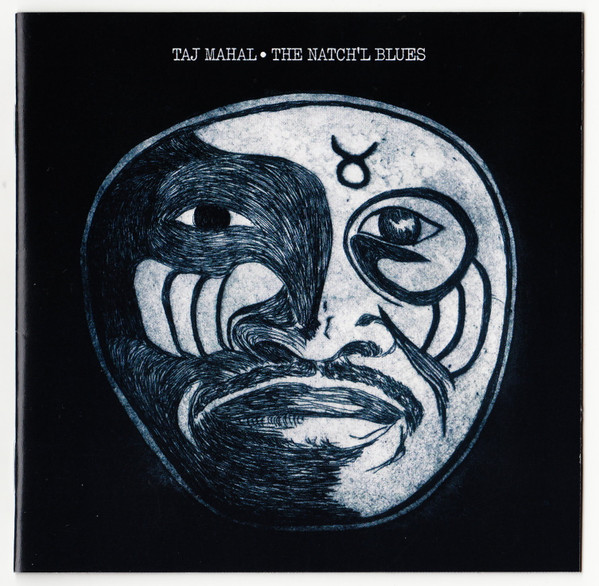
His first major break came with his self-titled debut in 1968, followed closely by The Natch’l Blues. These records helped reintroduce older blues styles to a younger rock audience without changing their original feel. Instead of copying one tradition, Taj Mahal connected Delta blues, jug band music, rural folk, and modern sounds into a single sound that felt natural and current.
The song has since become a blues standard, and it earned that spot. I first heard it in The Blues Brothers movie. Mahal has said the song was built from older blues travel songs that talked about trains, leaving town, and getting left behind. Taj Mahal pulled those themes together and shaped them into something new, keeping the story simple and the rhythm moving.
This was on his second album, The Natch’l Blues, released in 1968. On lead guitar, we have Jesse Ed Davis, Gary Gilmore on Bass, Chuck Blackwell on drums, Earl Palmer on drums, and on piano, none other than Al Kooper. Kooper pops up everywhere in the history of blues, rock, and pop.
The band played mostly live in the room, locking into a steady groove before adding small fills. Guitar and piano stayed in short phrases, never stepping over the vocal.
Taj Mahal – She Caught the Katy (And Left Me a Mule to Ride)
She caught the Katy and left me a mule to ride She caught the Katy and left me a mule to ride Well, my baby caught the Katy She left me a mule to ride The train pulled out and I swung on behind I’m crazy ’bout her That hard-headed woman of mine
Man, my baby long Great, God, she mighty, she tall You know my baby long Great God, she mighty, my baby tall Well, you know my baby, she long My baby, she tall She sleep with her head in the kitchen And her big feet’s out in the hall And I’m still crazy about her That hard-headed woman of mine
I love my baby She’s so fine I wish she’d come to save me sometime ‘Cause she don’t believe I love her Look what a hole I’m in And she don’t believe I’m singin’ What look what a shape I’m in
She caught the Katy and left me a mule to ride She caught the Katy and left me a mule to ride Well, my baby caught the Katy Left me a mule to ride The train pulled out and I swung on behind Well, I’m crazy ’bout her That hard-headed woman Hard-headed woman of mine
A few weeks ago, Lisa posted something on the Monterey Pop Festival with the Animals. After we got our power back on last week, I was browsing through Tubi, and there it was. It’s been so long since I saw the Monterey Pop Festival, I clicked play, and Canned Heat impressed the hell out of me with this song. Alan Wilson’s guitar and especially Bob Hite’s vocal.
This is their take on an old Delta blues standard that goes back to Hambone Willie Newbern, Robert Johnson, and later Muddy Waters. Canned Heat didn’t try to modernize it too much. They kept the pulse steady, the guitar lines loose, and the vocal right up front, like it was happening in the room.
Bob “The Bear” Hite sings it rough but clear, leaning into the rhythm instead of forcing it. His voice is outstanding, and I know many who would kill to have it. Alan “Blind Owl” Wilson’s slide guitar moves in short phrases, answering the vocal like a second voice. The band holds everything in place with everything going in forward motion.
Canned Heat understood the song didn’t need fixing. They honored the blues structure and let feel do the work. It’s not about showing off licks, just getting the essence of the song right. Simple, direct, and built to roll all the way through. They are one of those underrated bands of the sixties, known for their 3 hits Going Up the Country (1968), On the Road Again (1968), and Let’s Work Together (1970). They are far better than that. A live album by them and John Hooker I can’t recommend enough called Hooker ‘n Heat.
Rollin’ and Tumblin’
Well, I rolled ‘n’ tumbled I cried the whole night long Oh well, I rolled ‘n’ tumbled I cried the whole night long Oh well, I had the feelin’, baby Something’s goin’ on wrong
Oh well, I really love you, baby Come on and say you’ll be mine Oh well, I really love you, baby Come on and say you’ll be mine Well, if you don’t like my taters Don’t you dig up my vine
Oh well, I cried last night, mama I cried the night before Oh well, I cried last night, mama I cried the night before Oh well, I had the feelin’, baby You don’t love me no more
Well, if the river was whiskey I was a divin’ duck Well, if the river was whiskey I was a divin’ duck Well, I would swim to the bottom Baby, I wouldn’t come up
Oh well, I rolled ‘n’ tumbled I cried the whole night long Oh well, I rolled’ ‘n’ tumbled I cried the whole night long Oh well, I had the feelin’, baby Something’s goin’ on wrong



 PowerPop... An Eclectic Collection of Pop Culture