Twilight Zone – Mr. Garrity and the Graves

★★★★★ May 8, 1964 Season 5 Episode 32

If you want to see where we are…HERE is a list of the episodes.

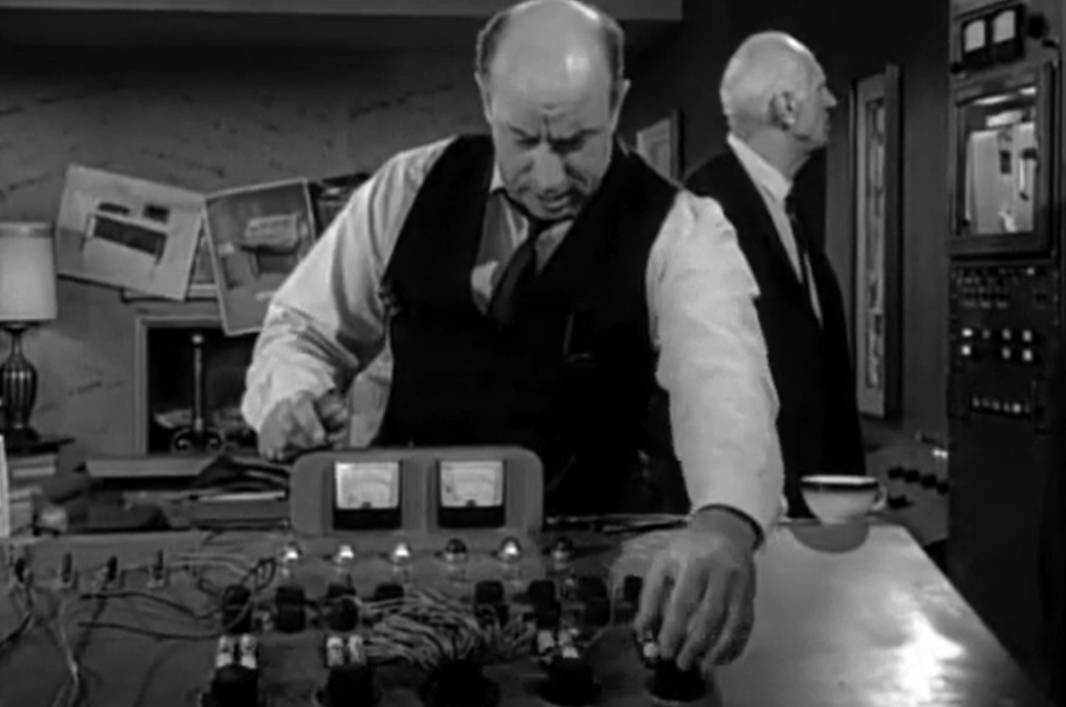
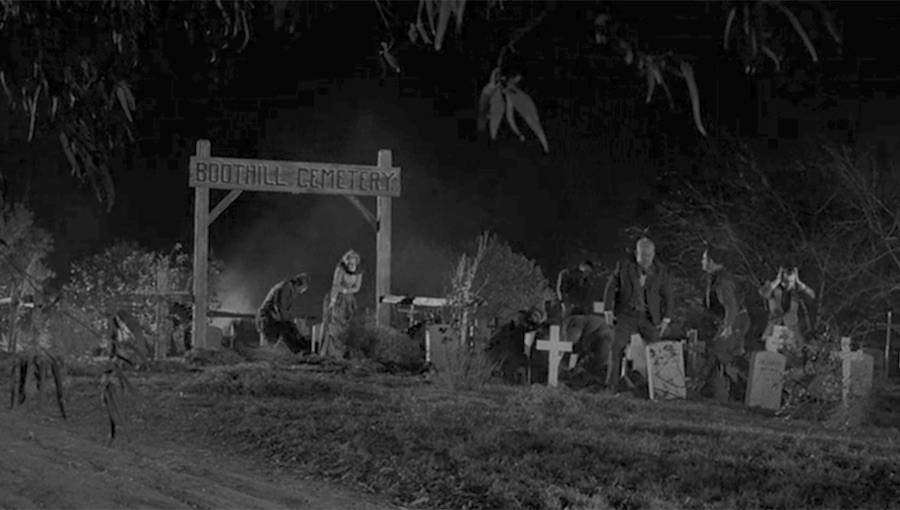
This is an excellent episode and what initially seemed like a straight drama actually had a subtle comedic twist. It says a lot about human nature. This may be a lighter episode but it works on many levels. Top to bottom, the comic casting is impeccable. Not a blight to be found in the cast. John Dehner is marvelously dry as a con man in the Old West and there is a good deal of humor as he goes about his business in the town of Happiness, Arizona. The town’s cemetery contained 128 dead, all but one were victims of violence…and as one drunk put it…that was my dear wife Zelda, rest her soul, a fine, healthy, strapping woman of 247 pounds but not unattractive, mind you. 

John Dehner’s character Jared Garrity is going to raise the dead in Happiness Arizona.  The townspeople in the saloon claim to miss their loved ones. But, upon rethinking the matter, one by one they realize that their late friends, wives, husbands, and drunkards maybe…just maybe weren’t the lovely people they were fondly remembering. Will Garrity be able to pull this feat off or is he taking the town for a ride? 

The Twilight Zone’s 5th season lagged a little in the middle but with three more episodes to go…they finished up quite strong. 

From IMDB Trivia: This is based on a supposed true story that happened in Alta, UT in 1873. It was initially told on Death Valley Days: Miracle at Boot Hill (1961).

This show was written by Rod Serling and Mike Korologos

Rod Serling’s Opening Narration: 

Introducing Mr. Jared Garrity, a gentleman of commerce, who in the latter half of the nineteenth century plied his trade in the wild and wooly hinterlands of the American West. And Mr. Garrity, if one can believe him, is a resurrecter of the dead – which, on the face of it, certainly sounds like the bull is off the nickel. But to the scoffers amongst you, and you ladies and gentlemen from Missouri, don’t laugh this one off entirely, at least until you’ve seen a sample of Mr. Garrity’s wares, and an example of his services. The place is Happiness, Arizona, the time around 1890. And you and I have just entered a saloon where the bar whiskey is brewed, bottled and delivered from the Twilight Zone.

Summary

In the early 1890s Mr. Garrity arrives in Happiness, Arizona apparently knowing a great deal about some of the people who live there. He knows that Jensen the bartender’s brother died and that Gooberman the town drunk lost his wife. Garrity also reveals that he has a very peculiar gift – he can bring back the dead. When a dog is run down by a wagon in the street he resurrects it without any difficulty. When he offers to do the same for the town’s loved one’s, they realize they would rather he not bring back the dearly departed, something they are quite happy to pay him for. Garrity, a charlatan if ever there was one, is glad to accept their money – though he does seem to leave something behind


Rod Serling’s Closing Narration:

Exit Mr. Garrity, a would-be charlatan, a make-believe con man and a sad misjudger of his own talents. Respectfully submitted from an empty cemetery on a dark hillside that is one of the slopes leading to the Twilight Zone.

CAST

Rod Serling … Host / Narrator – Himself
John Dehner … Jared Garrity
J. Pat O’Malley: Mr. Gooberman
Stanley Adams … Jensen
John Mitchum … Ace
Percy Helton … Lapham
Norman Leavitt … Sheriff Gilchrist
Edgar Dearing … First Resurrected Man
Kate Murtagh … Zelda Gooberman
Patrick O’Moore … Man
John Cliff … Lightning Peterson
Robert McCord … Townsman In Black Hat
Cosmo Sardo … Resurrected Man


Little Richard – Long Tall Sally

I first heard this through the Beatles, but nobody beats Little Richard (Richard Penniman) for this kind of raving song. The Beatles played on the same bill with Richard in Hamburg and Liverpool before they were nationally known. They got to know Billy Preston because he was Richard’s keyboard player.

20 Little Richard covers by The Beatles, Elton John, Clapton, Kinks, CCR,  Queen & more

My dad told me about Little Richard before I ever heard him. He said he had the largest voice he ever heard. He talked about a song called Long Tall Sally. I first heard it…it blew me away. Such a raw emotional power in that voice. He would take us to the edge of the cliff and then at the last-minute pull us back.

So was there a real Long Tall Sally? Yes, there was but she was not a cross-dresser as sometimes reported. Little Richard has said that Sally was a friend of the family who was always drinking whiskey…she would claim to have a cold and would drink hot toddies all day.

He described her as tall and not attractive, with just two teeth and cockeyed. She was having an affair with John, who was married to Mary, who they called “Short Fat Fanny.” John and Mary would get in fights on the weekends, and when he saw her coming, he would duck back into a little alley to avoid her. His voice was one of a kind…and I mean one of a kind. He could sing anything. Richard wrote this while working as a dishwasher at a Greyhound bus station in Macon, Georgia. He also wrote Tutti Frutti and Good Golly Miss Molly while working there. He had help with the song…Enotris Johnson and Robert Blackwell are also listed as the writers.

Long Tall Sally peaked at #6 in the Hot 100 and #1 in the R&B Charts in 1956.

Richard’s producer, Bumps Blackwell, had him record the vocal exceptionally fast in an effort to thwart Pat Boone. Boone’s version of “Tutti Frutti” sold better than Little Richard’s, so Blackwell tried to make it very difficult for Boone to copy. He had Richard work on the line “duck back down the alley” over and over until he could sing it very fast. He figured Boone could never match Richard’s vocal dexterity.

As much as I don’t like Pat Boone’s covers of Little Richards songs…they did help Richard get royalties as the writer.

Long Tall Sally

Gonna tell Aunt Mary ’bout Uncle John
He claim he has the misery but he’s havin’ a lot of fun
Oh baby, yeah baby, woo
Havin’ me some fun tonight, yeah

Well long, tall Sally
She’s built for speed, she got
Everything that Uncle John need, oh baby
Yeah baby, woo baby
Havin’ me some fun tonight, yeah

Well, I saw Uncle John with long tall Sally
He saw Aunt Mary comin’ and he ducked back in the alley oh baby
Yeah baby, woo baby
Havin’ me some fun tonight, yeah, ow

Well, long, tall Sally
She’s built for speed, she got
Everything that Uncle John need, oh baby
Yeah baby, woo baby
Havin’ me some fun tonight, yeah

Well, I saw Uncle John with bald-head Sally
He saw Aunt Mary comin’ and he ducked back in the alley, oh, baby
Yeah baby, woo, baby
Havin’ me some fun tonight, yeah

We gonna have some fun tonight
We gonna have some fun tonight, woo
Have some fun tonight, everything’s all right
Have some fun, have me some fun tonight

TV Draft Round 3 – Pick 4 – Perry Mason

Welcome to the Hanspostcard TV Draft. The remaining 8 rounds will be posted here. We will have 64 different TV Shows by 8 different writers. I hope you will enjoy it! Today’s post was written by Keith from https://nostalgicitalian.com/

Perry Mason

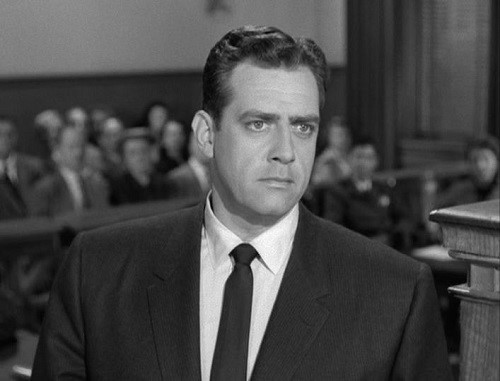
Picture1

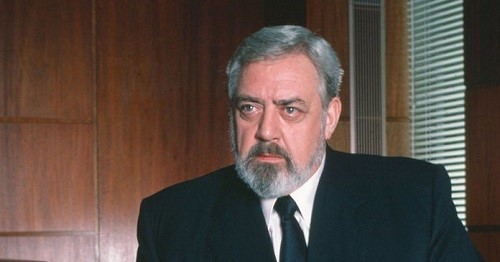
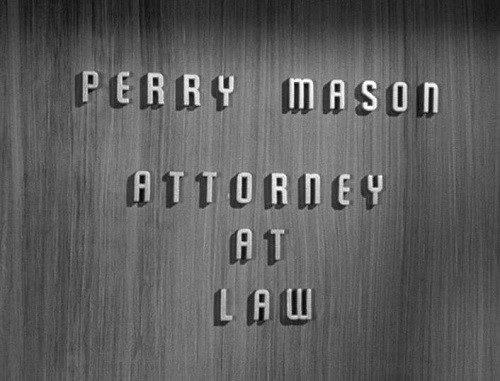
My choice for the third round draft pick is Hollywood’s first weekly one-hour series that was filmed for television – Perry Mason. The show ran for 9 seasons (September 1957 – May 1966) and starred Raymond Burr in the title role.

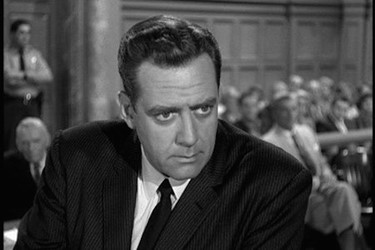
Picture2

Raymond Burr

The character of Perry Mason was well known before he was ever on TV. The attorney was the star of novels and stories written by a lawyer-turned-author Erle Stanley Gardner. There were some movies made by Warner Brothers and also a radio series based starring the character, by Gardner hated them! As a matter of fact, he refused to license the character of Perry mason for any more adaptations. (Interestingly, the radio series continues and evolved into the famous soap opera The Edge of Night.)

Gardner’s agent married actress Gail Patrick and she was the one who talked him into adapting the novels into a TV series. He made it clear that he wanted a lot of control over the show and how it was presented. He also had a hand in helping pick the cast. Many of the stories he wrote were turned into episodes for the series.

The Cast

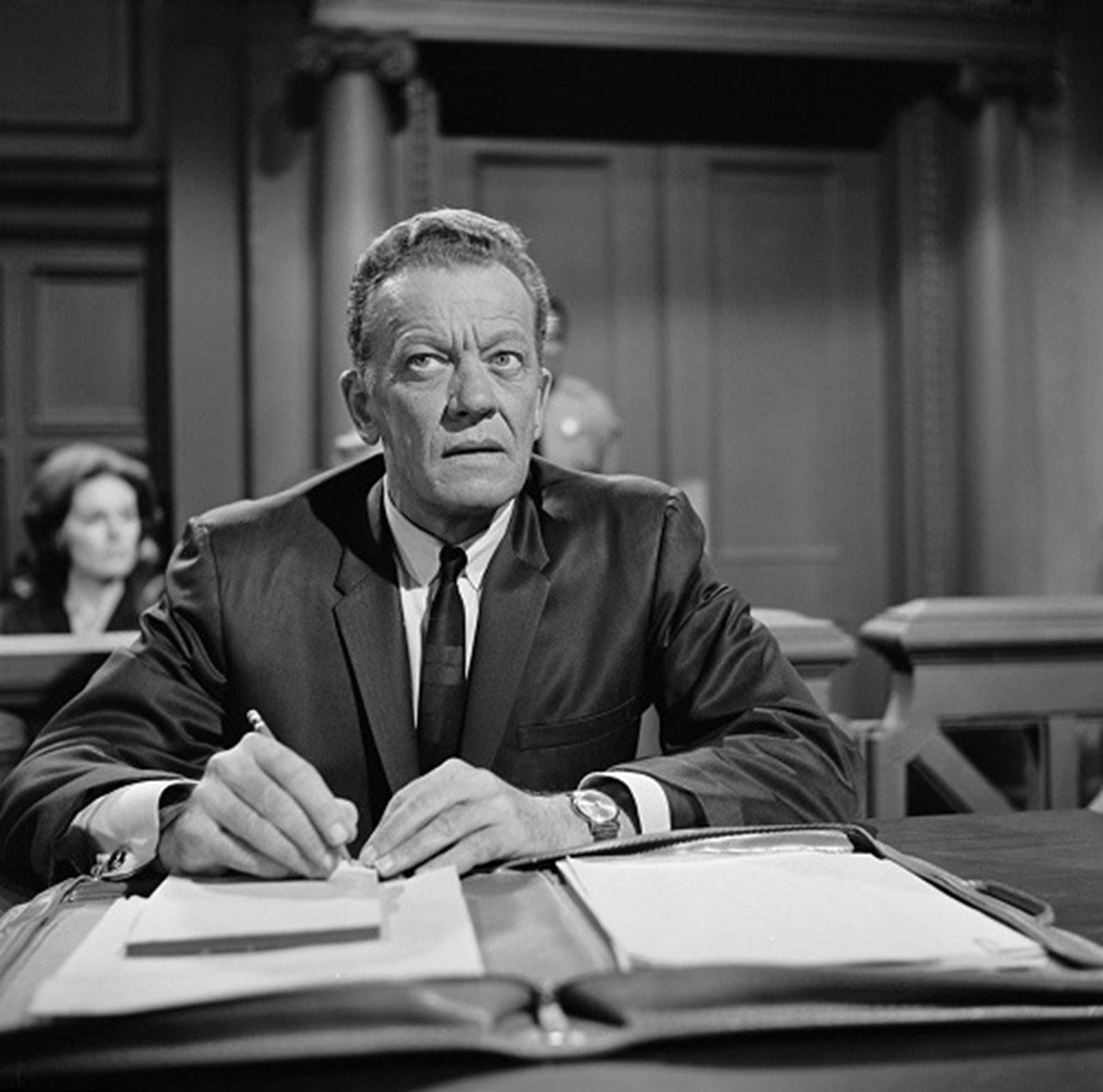
It is hard to imagine anyone other than Raymond Burr as Perry Mason. However, among the actors in the running were Mike Conners, Richard Egan, William Holden, Efrem Zimbalist Jr., William Hopper, and Fred MacMurray. Raymond Burr actually auditioned for the role of Hamilton Burger, the DA. Gail Patrick remembered his performance from the 1951 film “A Place in the Sun” and told him he was perfect for the role.

At the time, Burr was about 60 pounds overweight, so he went on a crash diet and tested for the role again with about 50 other actors. Erle Stanley Gardner saw him and reportedly said, “THAT is Perry Mason!” Burr continued to lose weight as the series continued. He stated, “I just don’t have time to eat.”

Syndicated columnist Erskine Johnson wrote, “Every six days Burr stars in what almost amounts to a full-length feature movie. He’s in 98% of all the scenes.” Burr stated, “I had no life outside of Perry Mason. And that went on 24 hours a day, sox days a week. I never went home at night. I lived on the lot. I got up at 3 o’clock every single morning to learn my lines for that day, and sometimes I hadn’t finished until 9 o’clock. I had a kitchen, bedroom, office space, sitting room – al of that – on every lot I ever worked on.

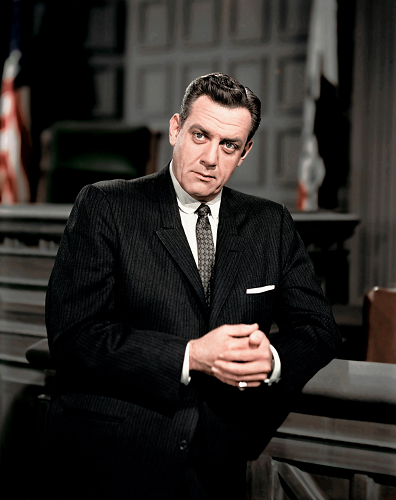
Burr won three Primetime Emmy Awards for his portrayal of Perry Mason (1959, 1960, and 1961).

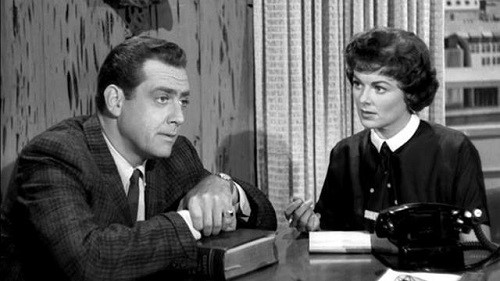
Picture3

Raymond Burr IS Perry Mason

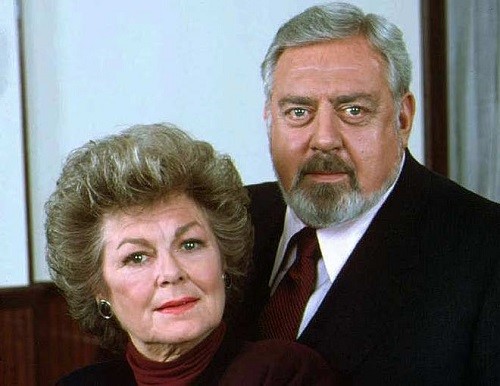
Other major players in the cast included Barbara Hale as Perry’s secretary, Della Street. Hale had done some feature films, but wanted to avoid going away for long periods of time to shoot them because she had a rather young family. According to Gail Patrick, it was Hale who called her to inquire about the role of Della.

Picture4

Perry and Della (Barbara Hale)

William Hopper, as I mentioned before, auditioned for the role of Perry Mason (I believe you can find some of the audition tapes on YouTube). After not getting the role of Mason and auditioning for Private Detective Paul Drake, he walked in the room and said, “You hate my mother!” His mother was Hedda Hopper, the famous gossip columnist. Patrick said he was the perfect Paul Drake, so he got the role.

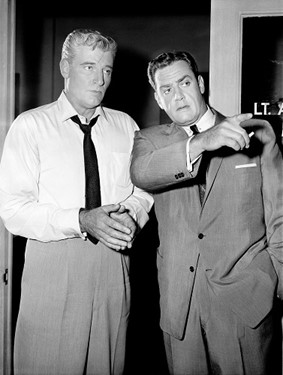
Picture5

William Hopper as Paul Drake with Burr’s Mason

For the role of District Attorney Hamilton Burger, Patrick knew exactly who she wanted. She had seen William Tallman in The Hitch-Hiker and knew he was perfect for the role. She said, “He never disappointed.” In an interview he was asked how he felt about his character losing to Perry Mason every week. His response is perfect. He stated, “Burger doesn’t lose. How can a district attorney lose when he fails to convict an innocent person?” When Burr was asked by a fan why he won every case, he told her, “But madam, you only see the cases I try on Saturday!”

Picture6

William Tallman – Hamilton Burger

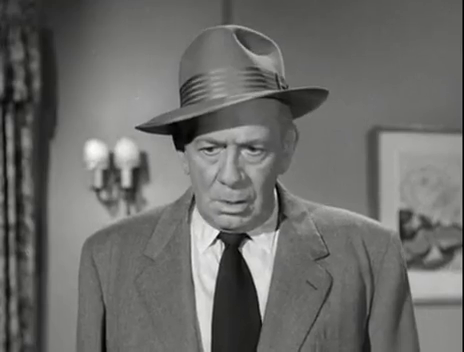
Another one of Perry’s foils was Police Lt. Arthur Tragg. Ray Collins’ voice was known to so many listeners of the Mercury Theater on radio. He had also been in movies and other TV shows. Patrick joked saying, “We overlooked the fact that on an actual police force, he would probably be long retired.” He was 68 years old when the show debuted on CBS. The playful interaction between Tragg and Mason are priceless.

Picture7

The great Ray Collins as Lt. Tragg

The Plot

The basic formula for each episode was the same. The first part of the show introduced the viewer to a client who is hiring Perry Mason for some legal work or is introduced to him in some way. We then see the murder victim and other “suspects” introduced. The victim is murdered and Perry’s client is wrongfully accused of the crime. The remainder of the episode focuses on Burger and Tragg gathering evidence to convict the said “murderer”, Perry, Drake and Della take up their own investigation to prove their client is innocent.

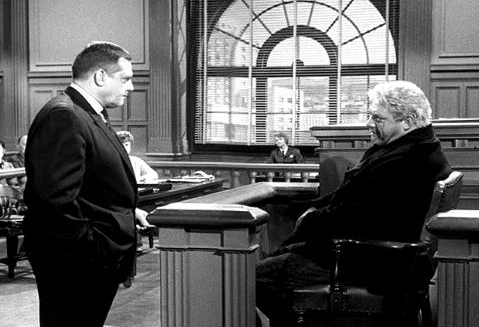
The second half of the show would shift to the courtroom where Perry and Hamilton would duke it out in the preliminary hearing. In the novels, Perry likes to clear the client before they are bound over for trial, so this was worked into the show. They happen, but jury trials are rarely seen on the show.

The show would often culminate with Mason recalling a witness and questioning them until they cracked and admitted committing the murder OR causing someone else in the courtroom to admit that THEY committed the murder. The show would then wrap with a scene in Perry’s office or the courtroom where details would be presented on what led Perry to discover the real killer.

The formula worked for 9 seasons and eventually 30 TV made for TV movies.

Episodes of Interest

Throughout the run of the series, there were some very unique episodes. In the entire run of the series, Perry tackles an astounding 271 cases, and wins almost all of them! He actually lost thre cases (that we know of). In The Case of the Witless Witness, he loses a non-murder case. In The Case of the Terrified Typist, his client is found guilty of murder, but he is eventually able to clear her name. Finally, in The Case of the Deadly Verdict his client is found guilty of murder and is actually sentenced to death in the gas chamber! Perry, of course, is able to save the day before the execution is scheduled to take place.

A fun episode to watch is The Case of the Dead Ringer. Raymond Burr plays a dual role in this episode playing a man named “Grimes.” It’s fun to watch Burr question Burr as two different characters!

Picture8

In season 6, Burr had some episodes where is appeared briefly, but guest actors filled in for Perry. Among those actors were Bette Davis, Michael Rennie, Hugh O’Brian, and Walter Pidgeon. Two years later, Burr was hospitalized for jaw surgery and Mike Conners and Barry Sullivan filled in for him.

How about the three that never set foot in a courtroom? Those were The Case of the Baited Hook, The Case of the Velvet Claws, and The Case of the Careless Kitten.

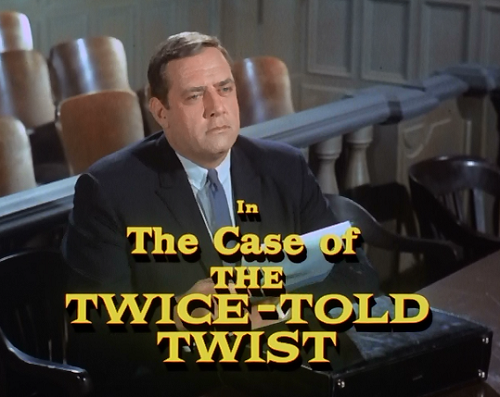
One of the most interesting shows was the one – and only – show that was shot in color. In the 9th season, CBS was hoping that the show would shoot a 10th season. Many shows were being shot in color by this time and they wanted to see what the show would look like. The Case of the Twice-Told Twist aired – in color – on February 27, 1966.

Picture9Picture10

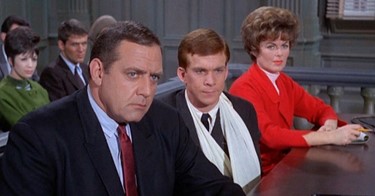
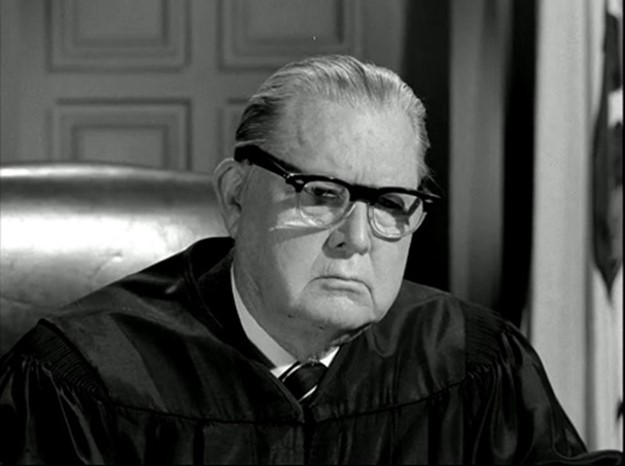
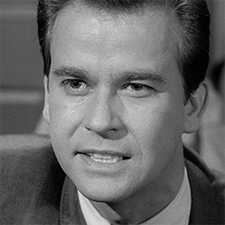
A must see episode is the series finale, The Case of the Final Fade-Out. First of all, it features cameos by all of the Perry Mason Crew in various roles. Second, it features the creator of the character, Erle Stanley Gardner, as the judge, and the murderer is … spoiler alert … a young Dick Clark!

Picture11Picture12

Before They Were Famous

Many soon-to-be stars appeared on Perry Mason. I guess that is another reason why I love watching it. You never know who will pop up. Some examples: Barbara Eden, Cloris Leachman, Lee Meriwether, Pat Priest, Yvonne Craig, James Coburn, Angie Dickenson, George Kennedy, Diane Ladd, Frankie Laine, Ryan O’Neal, Robert Redford, Burt Reynolds, Claude Akins, Richard Anderson, Barbara Bain, James Best, Whit Bissell, Frank Cady, Bert Convey, Richard Deacon, Norman Fell, Alan Hale Jr., Harvey Korman, Gavin MacLeod, Allan Melvin, Leonard Nimoy, Denver Pyle, Marion Ross, Adam West, and MORE!

The Theme Song

Let’s be honest, the Perry Mason Theme Song is one of the most recognizable in all of television. The task of writing the theme went to composer Fred Steiner. He set out to write a song that would convey two of Perry’s prime characteristics – sophistication and toughness. The piece he wrote was called “Park Avenue Beat.”

Here is Fred discussing how he came up with the theme:

Here is the theme from the first season:

As much as I love the original version, I have to admit that when Perry Mason returned to TV in the two hour movies, I loved the version used for these films better. They just sound more full and better produced to me. So here it is:

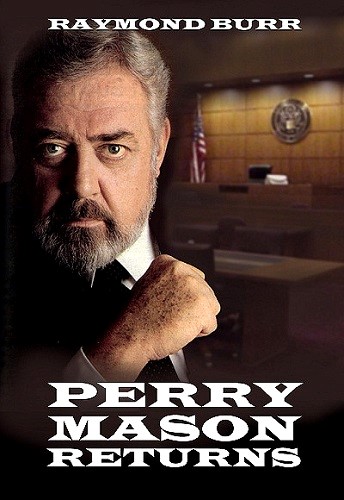
I may as well touch briefly on the TV movies. In December of 1985, Perry Mason Returns aired on NBC.

Picture13

Perry is now a judge and steps down to defend Della Street, who is accused of murder.

Picture14

William Hopper died in 1970, so William Katt (Barbara Hale’s son) was called in to play Paul Drake Jr. The movies followed the same formula as the TV show. Burr and Hale had aged, but their on screen chemistry hadn’t changed at all. Burr was fantastic in this of course, he proves that Della is innocent! The successful reception and ratings of the reunion show led to 29 more Perry Mason Movies (Burr starred in 26 of them before passing away in 1993).

I never tire of watching Perry Mason. Despite being a bit dated, I think it still holds up today. HBO has created a “pre” Perry Mason show supposedly showing how he became the famous lawyer. I have no desire to watch it. To me, there is one and only Perry Mason!

Picture15

Picture16

FUN FACT: Raymond Burr started playing the character in 1957 and played him until his death in 1993. He played Perry Mason for a whopping 36 years!

So if you ever find yourself accused of murder … there is only one lawyer to call….

Picture17


Twilight Zone – The Encounter

★★★★1/2 May 1, 1964 Season 5 Episode 30

If you want to see where we are…HERE is a list of the episodes.

This episode is a serious and powerful episode. Taro (George Takei) lives with the guilt and dishonor that his father brought on the family by turning traitor during World War II, even while employed as a shipbuilder in Hawaii. Fenton (Neville Brand) endures the repressed guilt of having murdered a Japanese soldier after the man had already surrendered.

At first, the two are cordial but you can feel the tension build as the episode proceeds. It deals with themes of guilt and atonement. The dialog sounds authentic and dramatic. George Takei who plays Arthur Takamori would later go on to star in Star Trek. Both actors are superb in this story. 

IMDB Trivia: This episode sparked some intense controversy for CBS after it was first aired in 1964. Due to strong critical blow-back for it’s ostensible racist overtones and revisionist history, CBS pulled this episode out of syndication and it was not rebroadcast again on any network in the U.S. until 2016; although it did air in other countries and was also not removed from streaming services or home video/DVD sets. The Encounter triggered audience and reviewer criticism of the episode as antithetical to the series’ normally positive treatment of otherwise sensitive social, religious, and racial subject matter.

During the dialogue, the Pearl Harbor attack was extensively discussed. Six years later, Neville Brand would have a small role in the epic Pearl Harbor film Tora! Tora! Tora!

This episode was finally rerun in the United States, on the Syfy channel, during a complete Twilight Zone marathon on January 3rd, 2016.

This show was written by Rod Serling and Martin Goldsmith

Rod Serling’s Opening Narration: 

Two men alone in an attic, a young Japanese-American and a seasoned veteran of yesterday’s war. It’s twenty odd years since Pearl Harbor, but two ancient opponents are moving into position for a battle in an attic crammed with skeletons, souvenirs, mementos, old uniforms, and rusted medals. Ghosts from the dim reaches of the past, that will lead us into the Twilight Zone.

Summary

A man, Fenton, is cleaning out his attic when a Japanese gardener, Arthur Takamori, stops by asking if he would like his grass cut. Fenton invites him up for a beer but, having served in the Pacific during World War II, isn’t quite sure what to make of his visitor. He has his prejudices but wavers as Arthur says he was born in the USA and is no different than any other American. As they discuss their pasts, it’s revealed that both men have lied and are haunted by what happened to them

https://www.youtube.com/watch?v=N6IqvSQN-Lg

Rod Serling’s Closing Narration:

Two men in an attic, locked in mortal embrace. Their common bond, and their common enemy: guilt. A disease all too prevalent amongst men both in and out of The Twilight Zone.

CAST

Rod Serling … Host / Narrator – Himself
Neville Brand … Fenton
George Takei … Arthur Takamori/Taro


Twilight Zone – Stopover in a Quiet Town

★★★★★ April 24, 1964 Season 5 Episode 30

If you want to see where we are…HERE is a list of the episodes.

This is a classic episode of the Twilight Zone. The characters are both a little hungover. They can be short-tempered, quarrelsome, and blame each other for their predicament. The wife tends toward hysteria and the man is totally insensitive, but we feel for them. They wake up in a strange house and town after drinking at a party the night before. In this quiet town, the horror is real, and we can sense the panic that the characters are going through. You start caring for the characters and are invested at this point as they think they find the way out time after time.

Serling has used this idea before with the pilot Where Is Everybody? but he explores it more with this episode. Rod Serling achieves a heightened sense of claustrophobia of feeling trapped in this episode. Serling’s closing narration turns it in a warning against drunk driving. “The moral of what you’ve just seen is clear. If you drink, don’t drive. And if your wife has had a couple, she shouldn’t drive either. You might both just wake up with a whale of a headache in a deserted village in the Twilight Zone.”

Earl Hamner Jr: I got that idea walking around the backlot at MGM once, Hamner recalls. Everything was made of papier-mache and was a false front. It suddenly came to me, what if someone woke in this surrounding and there was nothing but false labels on everything, and if you dropped a lighted match on the grass it would catch fire, and if you got on a train it would come all the way around to where you started from?

IMDB Trivia: The abandoned town in which the Frazers find themselves is the same location used for The Twilight Zone: The Monsters Are Due on Maple Street (1960). As the actors move through the ‘town’, they traverse several of the old themed ‘street’ sets which were then standing on the old MGM backlot, including the New England street, the “St Louis” street, and the western town.

The bulletin board in front of the church says that the sermon will be given by Rev. Kogh Gleason. F. Keogh Gleason was a set decorator at M-G-M for many years, and worked on The Twilight Zone (1959).

This is the second episode that shows two people sharing the same bed together on television, something unusual at the time. The first was The Twilight Zone: Person or Persons Unknown (1962). Due to censorship regulations from the networks, TV shows at the time would portray married couples sleeping on separate beds. In both of these cases, the couples were still fully dressed and had gone to sleep while drunk, thus making it clear to the viewer they hadn’t “slept” together.

This show was written by Rod Serling and Earl Hamner Jr.

Rod Serling’s Opening Narration: 

Bob and Millie Frazier, average young New Yorkers who attended a party in the country last night and on the way home took a detour. Most of us on waking in the morning know exactly where we are; the rooster or the alarm clock brings us out of sleep into the familiar sights, sounds, aromas of home and the comfort of a routine day ahead. Not so with our young friends. This will be a day like none they’ve ever spent – and they’ll spend it in the Twilight Zone.

Summary

After drinking too much at a party, Bob and Millie Frazier awaken in a strange bed, in a strange house in a strange town. They’re still dressed in the clothes they wore to the party but their memories are fuzzy. Bob was too drunk to drive so Millie was behind the wheel and she vaguely remembers a shadow falling over them. They soon realize that everything in the town is fake: the telephone in the house isn’t wired; the drawers and cupboards in the kitchen are only a façade; even the trees are fake. The town is deserted and Millie begins to wonder if they’re dead. They keep hearing a child laughing and begin a search. They’re not prepared for what they encounter.

https://www.youtube.com/watch?v=UhgkGFMOnLY

Rod Serling’s Closing Narration:

The moral of what you’ve just seen is clear. If you drink, don’t drive. And if your wife has had a couple, she shouldn’t drive either. You might both just wake up with a whale of a headache in a deserted village in the Twilight Zone.

CAST

Rod Serling … Host / Narrator – Himself
Barry Nelson … Bob Frazier
Nancy Malone … Millie Frazier
Denise Lynn … Little Alien Girl
Karen Norris … Alien Mother


Twilight Zone – The Jeopardy Room

★★★★1/2 April 17, 1964 Season 5 Episode 29

If you want to see where we are…HERE is a list of the episodes.

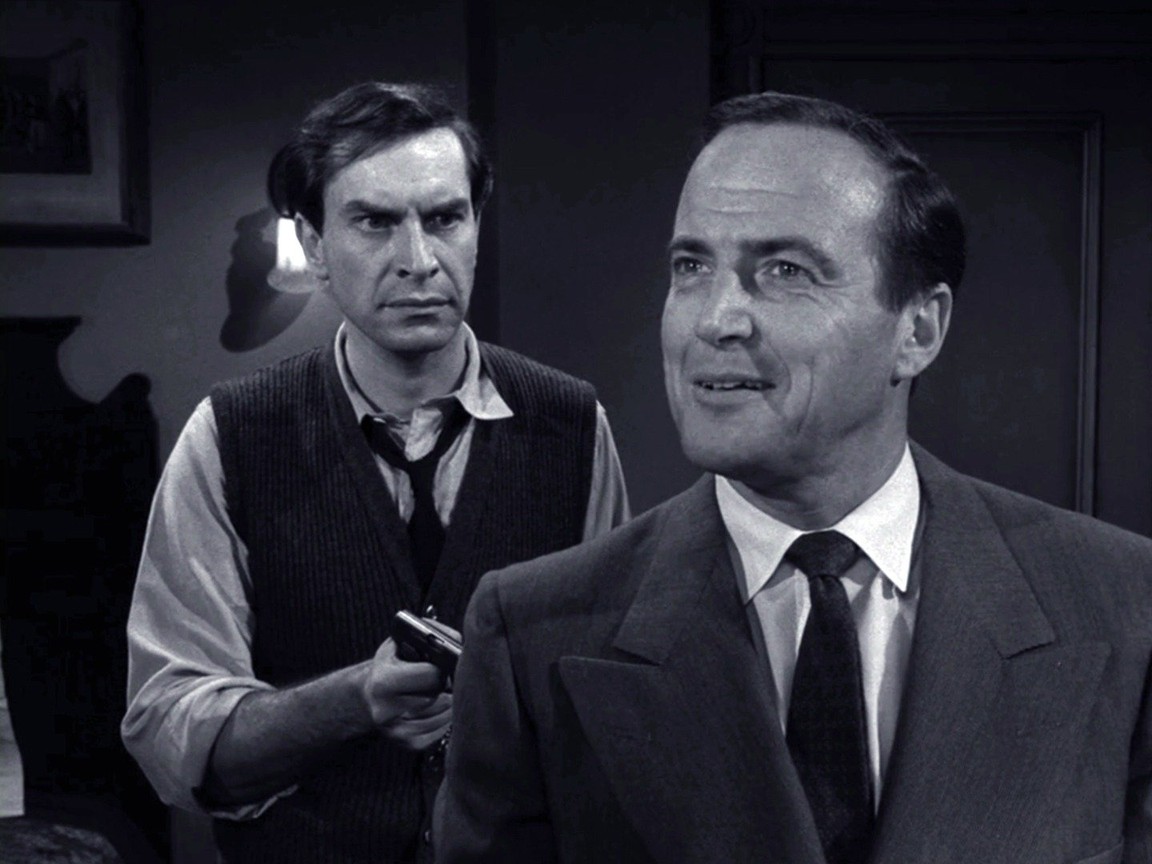
This is another episode in which I’m in the minority. I rated this one a 4 1/2 -star episode though not many have rated it that high. This one is great. It’s not exactly Twilight Zone-ish. You won’t see science fiction in this one. It could be a separate spy show or something out of a James Bond film. Martin Landau plays Major Ivan Kuchenko and he escaped from the Soviet Union to find freedom. He plays a cat and mouse battle between him and his KGB opponent John van Dreelen who plays  Commissar Vassiloff.

You could call this one from a different era… a Cold War film but wait…the era may not be so far gone anymore. Thrilling and suspenseful and worth a watch. It’s one of the highlights of the 5 season. The battle of wills between Kuchenko and Vassiloff is very entertaining. 

IMDB Trivia: One of a handful of TZ episodes that, notably, contains no science fiction or fantasy elements. Others include The Twilight Zone: Dust (1961), The Twilight Zone: The Shelter (1961), and The Twilight Zone: The Silence (1961).

Martin Landau (Major Ivan Kuchenko) later played William Cooper-Janes in The Twilight Zone: The Beacon/One Life, Furnished in Early Poverty (1985).

This show was written by Rod Serling 

Rod Serling’s Opening Narration: 

The cast of characters—a cat and a mouse, this is the latter. The intended victim who may or may not know that he is to die, be it by butchery or ballet. His name is Major Ivan Kuchenko. He has, if events go according to certain plans, perhaps three or four more hours of living. But an ignorance shared by both himself and his executioner, is of the fact that both of them have taken the first step into the Twilight Zone.

Summary

After spending twelve years in a Soviet prison, Major Ivan Kuchenko has fled his homeland and is now in transit in a third country hoping to soon leave and seek asylum in the USA. He is not alone however as Commissar Vassiloff, his torturer during his imprisonment, has caught up with him. Vassilof could easily kill him – he has an assassin with him, Boris – but he decides to give him a chance to walk away. He’s placed a bomb in Kuchenko’s room and he gives the Major 3 hours to find and disarm it. Kuchenko proves himself to be a worthy adversary.

Rod Serling’s Closing Narration:

Major Ivan Kuchenko, on his way West. On his way to freedom: a freedom bought and paid for by a most stunning ingenuity. And exit one Commissar Vassiloff, who forgot that there are two sides to an argument – and two parties on the line. This has been the Twilight Zone.

CAST

Rod Serling … Host / Narrator – Himself
Martin Landau … Major Ivan Kuchenko
John van Dreelen … Commissar Vassiloff
Robert Kelljan … Boris- Vassiloff’s assistant


Twilight Zone – Caesar and Me

★★★1/2 April 10, 1964 Season 5 Episode 28

If you want to see where we are…HERE is a list of the episodes.

This is the second Twilight Zone with a ventriloquist’s dummy that is smarter than his ventriloquist. The episode though doesn’t build the same mystery about the dummy as The Dummy does. Jackie Cooper plays Jonathan West a down-on-his-luck ventriloquist who has no friend but Caesar…the dummy. You do feel some sympathy with this character, but he is far too naive. The trouble starts when Caesar manipulates Jonathan into performing several robberies instead of finding honest work while they are waiting for their big break.

The vicious character in this story is the little girl named Susan played by Suzanne Cupito. She would later play  Katherine Wentworth in Dallas. She started out as an insufferable little  know it all but ended up as evil as the Caesar. This is the only episode of the series written by a woman. Adele T. Strassfield was the secretary of William Froug, the producer of the second half of the final season of The Twilight Zone.

It was a good episode and an improvement over the previous episode Sounds and Silences

IMDB Trivia: The ventriloquist’s dummy is a reuse of the one created for The Twilight Zone: The Dummy (1962). It was modeled on George Murdock, one of that episode’s guest stars.

Jackie Cooper’s name previously appeared on a poster for the film O’Shaughnessy’s Boy (1935), in which he starred, in The Twilight Zone: The Incredible World of Horace Ford (1963).

This show was written by Rod Serling and Adele T. Strassfield

Rod Serling’s Opening Narration: 

Jonathan West, ventriloquist, a master of voice manipulation. A man, late of Ireland, with a talent for putting words into other peoples’ mouths. In this case, the other person is a dummy, aptly named Caesar, a small splinter with large ideas, a wooden tyrant with a mind and a voice of his own, who is about to talk Jonathan West – into the Twilight Zone.

Summary

Ventriloquist Jonathan West isn’t having much luck finding a job. He’s gone to several auditions but no one has taken him on. He’s falling behind in his rent and is now getting to the point where he’s running out of things to pawn. He has to put up with the taunts of young Susan, the landlady’s niece. He’s also talking to his dummy, Caesar, who has advice for him on how to get ahead. It’s not very good advice however.

Rod Serling’s Closing Narration:

A little girl and a wooden doll. A lethal dummy in the shape of a man. But everybody knows dummies can’t talk – unless, of course, they learn their vocabulary in the Twilight Zone.

CAST

Rod Serling … Host / Narrator – Himself
Jackie Cooper … Jonathan West / voice of Caesar
Suzanne Cupito (Morgan Brittany) … Susan
Sarah Selby … Mrs. Cudahy
Stafford Repp … Pawnbroker
Don Gazzaniga … Detective
Kenneth Konopka … Mr. Miller
Sidney Marion … Watchman
Robert McCord … Man Watching Audition
Olan Soule … Mr. Smiles

Twilight Zone – Sounds and Silences

★★  April 3, 1964 Season 5 Episode 27

If you want to see where we are…HERE is a list of the episodes.

EXACTLY on April 3, 1964…58 years ago today, this episode was aired for the first time. I wish it would have been a better episode that lined up with the current date. This is a light episode, not one of the great ones. The main character (Roswell G. Flemington) is not likable but played well by John McGiver. He is a very loud man because his mom made him be quiet all of his childhood.

You feel for his long-suffering wife played by Penny Singleton. All that said, the film has some funny moments at the expense of Roswell, particularly his employees talking among themselves about him when he isn’t around. He expects the world to put up with his very loud ways. The episode is harmless enough, but it doesn’t get off the ground. It can be taxing to get through.

On May 1961, a script was submitted to Serling entitled The Sound of Silence, concerning a man who could not hear the sounds around him. Serling rejected it, then forgot all about it. Two years later, he wrote Sounds and Silences. As soon as it aired, the writer of the original script filed suit. Because of the similarities in title and plot, the writer was paid $3500 and the matter was settled. Unfortunately, because the suit was in litigation when Twilight Zone was put into syndication, Sounds and Silences was not included. The episode was aired only once and then put away in the CBS vaults.
.

IMDB Trivia: Shortly after the airing, a writer came up with a lawsuit claiming his script and title was used. It was settled with him receiving $3500 but litigation prevented it from being included in syndication for a time.

The first “sound effect” record played by John McGiver is actually a 78RPM disc on the Deltone label called “You Won’t Believe Your Eyes” sung by Ina Massine. Ina Massine isn’t a real singer; it was Kathryn Grayson’s character name in the 1951 film “Grounds for Marriage.” This Rodgers and Hart song (real title, “Wait Till You See Him”) was recorded for the movie but not used. This record must have been a leftover prop.

Mrs. Flemington is portrayed by Penny Singleton, who is perhaps best known for portraying Blondie Bumstead from the “Blondie!'” movies of the 1930s and 1940s, that were based on the comic strip created by Chic Young. Penny also provided the voice of Jane Jetson on “The Jetsons” (1962).

This show was written by Rod Serling 

Rod Serling’s Opening Narration: 

This is Roswell G. Flemington, two hundred and twenty pounds of gristle, lung tissue and sound decibels. He is, as you have perceived, a noisy man, one of a breed who substitutes volume for substance, sound for significance, and shouting to cover up the readily apparent phenomenon that he is nothing more than an overweight and aging perennial Sea Scout whose noise-making is in inverse ratio to his competence and to his character. But soon our would-be admiral of the fleet will embark on another voyage. This one is an unchartered and twisting stream that heads for a distant port called the Twilight Zone.

Summary

Rosswell G. Flemington owns a model ship company and loves everything nautical. That’s not his problem, however: he likes everything to be loud. He speaks at the top of his lungs, bellowing commands to his staff. He plays his phonograph records – his favorites include the sound of jets flying off the deck of the USS Hornet – as loud as possible, something that leads his wife to leave him. He’s not prepared for what happens to him in the Twilight Zone however

Rod Serling’s Closing Narration:

When last heard from, Mr. Roswell G. Flemington was in a sanitarium pleading with the medical staff to make some noise. They, of course, believe the case to be a rather tragic aberration – a man’s mind becoming unhinged. And for this they’ll give him pills, therapy, and rest. Little do they realize that all Mr. Flemington is suffering from is a case of poetic justice. Tonight’s tale of sounds and silences from the Twilight Zone.

CAST

Rod Serling … Host / Narrator – Himself
John McGiver … Roswell G. Flemington
Penny Singleton … Mrs. Lydia Flemington
Billy Benedict … Conklin
Francis De Sales … Doctor
Michael Fox … Psychiatrist


Twilight Zone – I Am the Night – Color Me Black

★★★★★ March 27, 1964 Season 5 Episode 26

If you want to see where we are…HERE is a list of the episodes.

IMDB has this one rated with 7.4 out of 10. I think it should have been rated much higher. It is an excellent and powerful episode so I’m giving it 5 stars. A thought-provoking episode that is very original. Rod Serling wrote this and he lashed out at hatred in this episode. It was made only 4 months after JFK was assassinated. I rate this a 5 not because of the action or sci-fi…but it makes you think. The best Twilight Zones do that.  Some might not like it because it is very dark. 

Serling describes darkness covering various areas of the world simultaneously in reference to the evil happenings of the era. It’s a powerful message about a human sickness that all of us can learn and grow from. It was such a great concept to have the sunlight go away and to have total darkness brought on by hate. Maybe it is an act of God that’s being spurred on by men. 

George Lindsey (Goober off of the Andy Griffith Show) plays a backwoods redneck policeman in this one. Michael Constantine plays the sheriff who feels guilty about what is going on and realizes the mistakes that he and everyone else has made. Ivan Dixon plays the Reverend Anderson and he and Constantine are the stars of this episode. The acting, writing, and lessons are great in this one. 

IMDB Trivia: This episode takes place on May 25, 1964.

Ivan Dixon (Reverend) previously starred in The Twilight Zone: The Big Tall Wish (1960).

This show was written by Rod Serling 

Rod Serling’s Opening Narration: 

Sheriff Charlie Koch on the morning of an execution. As a matter of fact, it’s seven-thirty in the morning. Logic and natural laws dictate that at this hour there should be daylight. It is a simple rule of physical science that the sun should rise at a certain moment and supersede the darkness. But at this given moment, Sheriff Charlie Koch, a deputy named Pierce, a condemned man named Jagger, and a small, inconsequential village will shortly find out that there are causes and effects that have no precedent. Such is usually the case—in the Twilight Zone.

Summary

In a small town, a man by the name of Jagger is about to be executed after being found guilty of murder. The local newspaperman, Colbey, is convinced that Jagger is innocent. He accuses Deputy Pierce of having perjured himself to get a conviction and accuses Sheriff Charlie Koch of just plain laziness in investigating the case. As the morning of his execution arrives, the townsfolk realize that the sun hasn’t risen that day. They soon begin to understand the cause of the darkness that surrounds them.

SPOILER WARNING WITH VIDEO

https://www.youtube.com/watch?v=vcl5hg0fAD8&list=RDQMwEno8yA4r5A&start_radio=1


Rod Serling’s Closing Narration:

A sickness known as hate. Not a virus, not a microbe, not a germ—but a sickness nonetheless, highly contagious, deadly in its effects. Don’t look for it in the Twilight Zone—look for it in a mirror. Look for it before the light goes out altogether.

CAST

Rod Serling … Host / Narrator – Himself
Michael Constantine … Sheriff Charlie Koch
Paul Fix … Colbey
George Lindsey … Deputy Pierce
Ivan Dixon … the Reverend Anderson
Terry Becker … Jagger
Eve McVeagh … Ella
Douglas Bank … Man
Russell Custer … Townsman
Elizabeth Harrower … Woman
Michael Jeffers … Deputy
Robert McCord … Townsman
Ward Wood … Man


Twilight Zone – The Masks

★★★★★ March 20, 1964 Season 5 Episode 25

If you want to see where we are…HERE is a list of the episodes.

Rod Serling wrote this episode and it is a bonafide classic. This is one of the episodes I point out to people who have never seen The Twilight Zone. I love some great Twilight Zone justice and this has it. A dying wealthy older man invites his awful family (his daughter Emily, her husband Wilfred, and children Paula & Wilfred Jr.) down to visit and for a party. He makes each of them wear a mask that reflects who they are until midnight. They do not want to wear the masks but he makes it clear, if they don’t wear the masks they will not get anything when he dies. “That is indeed the most touching thing you ever dredged up by way of conversation, Wilfred. But I must include this addendum, this small proviso: You shall wear your masks until midnight. If anyone of you should take them off, from my estate, you shall each receive train fare back to Boston, and that’s it!”

This is one of those perfect episodes. The narration, writing, and acting come together perfectly. The star of it was Robert Keith who played Jason Foster. He is dying and his lines to his family in this episode are cutting but well deserved. This was the only episode of the series to be directed by a woman, Ida Lupino. She previously played Barbara Jean Trenton in the episode The Sixteen-Millimeter Shrine. The famous actress Lupino would end up with 42 director credits to go along with her 105 acting ones. 

Here are a few of his quotes

You’ve been at death’s door so often it’s a wonder you haven’t worn a hole in the mat. 

You know, Wilfred, I think the only book you ever read was a ledger. I think if someone cut you open, they would find a cash register.

Well, that’s friendly of you to tell me that, considering that you haven’t seen me yet. All you’ve seen is your mirror image.

This show was written by Rod Serling 

Rod Serling’s Opening Narration: 

Mr. Jason Foster, a tired ancient who on this particular Mardi Gras evening will leave the Earth. But before departing, he has some things to do, some services to perform, some debts to pay—and some justice to mete out. This is New Orleans, Mardi Gras time. It is also the Twilight Zone.

Summary

When his doctor tells him that he could die at any moment, the wealthy Jason Foster gathers his heirs including his daughter Emily Harper, her husband Wilfred and their children Paula and Wilfred Jr. Jason doesn’t think much of any of them and it’s clear they can’t wait to get their hands on his fortune. It’s Mardi Gras time in New Orleans and he has one last request – for each of them to wear a carnival mask. Each of the masks is meant to reflect some aspect of their personality – and leave a lasting impression on them.

https://www.youtube.com/watch?v=n-pv4DOn5Ss

Rod Serling’s Closing Narration:

Mardi Gras incident, the dramatis personae being four people who came to celebrate and in a sense let themselves go. This they did with a vengeance. They now wear the faces of all that was inside them—and they’ll wear them for the rest of their lives, said lives now to be spent in shadow. Tonight’s tale of men, the macabre and masks, on the Twilight Zone.

CAST

Rod Serling … Narrator / Self – Host (uncredited)
Robert Keith…Jason Foster
Milton Selzer…Wilfred Harper
Virginia Gregg…Emily Harper
Brooke Hayward…Paula Harper
Alan Sues…Wilfred Harper Jr.
Willis Bouchey…Dr. Samuel Thorne
Bill Walker…Jeffrey The Butler
Maidie Norman…Maid


Twilight Zone – What’s in the Box

★★★1/2 March 13, 1964 Season 5 Episode 24

If you want to see where we are…HERE is a list of the episodes.

Two bickering and unlikable characters star in this episode. Do you want to see the dark side of marriage? Watch this episode. It reminds me of the episode A Most Unusual Camera. It’s almost too close to that episode. Both take place in a high-rise apartment building that features a window. This time it’s a TV, not a camera that after a “repair” shows the near feature in wonderful black and white. 

 William Demarest and Joan Blondell are effective in portraying their characters here, even if neither one is very likable. There is no need for a back story of these two, it’s clear why they fight. Sterling Holloway plays the TV repairman, and you might recognize his voice as Winnie The Pooh. Again, not in the top episodes but certainly not too bad. The next episode coming Wednesday…a classic. 

From IMDB Trivia: Joe Britt is surprised at getting Channel 10. When television began, it was broadcast over the very high frequency (VHF) band of the radio spectrum. The VHF channels were 2-13, but, to avoid interference, a city could not have channels with consecutive numbers, except for 4 and 5 or 5 and 6. Britt lives in New York, which had channels 2, 4, 5, 7, 9, 11, and 13.

While the TV repairman is fixing the television in the first scene, numerous voices can be heard. One of them is Rod Serling saying, “Next time on The Twilight Zone (1959)…”

According to The Twilight Zone Companion, Martin M. Goldsmith was brought in to write an episode of The Twilight Zone, due to his previous collaboration with William Froug on Playhouse 90. And according to William Froug, Martin Goldsmith came up with a notion of a guy looking at his own extramarital activities on TV, and trying to it off before his wife could see it. Martin Goldsmith would disown the episode, saying “I didn’t like it, it lacked all subtlety the way it was done. I think Joan Blondell and William Demarest overplayed it. It was just too broad.”

This show was written by Martin Goldsmith and Rod Serling

Rod Serling’s Opening Narration: 

Portrait of a TV fan. Name: Joe Britt. Occupation: cab driver. Tonight, Mr. Britt is going to watch “a really big show,” something special for the cabbie who’s seen everything. Joe Britt doesn’t know it, but his flag is down and his meter’s running and he’s in high gear—on his way to the Twilight Zone.

Summary

Taxi driver Joe Britt usually makes his way home to his wife Phyllis but theirs is not a happy marriage as they constantly bicker and she accuses him of having a girlfriend. The obnoxious Joe is having his TV fixed but after the repairman leaves, Joe sees himself with his girlfriend in scenes from the recent past. Soon after, he has a glimpse of what will happen in the near future.

Rod Serling’s Closing Narration:

The next time your TV set is on the blink, when you’re in the need of a first-rate repairman, may we suggest our own specialist? Factory-trained, prompt, honest, twenty-four hour service. You won’t find him in the phone book, but his office is conveniently located—in the Twilight Zone.

CAST

Rod Serling … Narrator / Self – Host (uncredited)
Joan Blondell…Phyllis Britt
William Demarest…Joe Britt
Sterling Holloway…TV Repairman
Herbert Lytton…Dr. Saltman
Sandra Gould…Woman On T.V.
Howard Wright…Judge
Douglas Bank…Prosecutor
Ted Christy…The Wild Panther
Robert McCord…Electric Chair Guard
Tony Miller…Announcer
Mitchell Rhein…Neighbour
Ron Stokes…Car Salesman
John L. Sullivan…The Russian Duke


Twilight Zone – Queen of the Nile

★★★1/2  March 6, 1964  Season 5 Episode 23

If you want to see where we are…HERE is a list of the episodes.

The show begins with a reporter coming to the home of a pretty film star that looks amazing for her age. At first, the show seems friendly and innocent and then starts getting dark. It’s a good episode but not spectacular and has twists and turns that will keep viewers interested.

Ann Blyth plays ageless film star Pamela Morris, who is adored and envied by her fans, she has a mysterious past that a syndicated journalist Jordan Herrick (played by Lee Philips) hopes to uncover. This episode was very reminiscent of  “Long Live Walter Jameson” from season 1 except Miss Morris will go to any length to keep her youth. Charles Beaumont wrote that one… and he was credited with Queen of the Nile but it was ghostwritten by Jerry Sohl. Beaumont’s health was in bad shape at the time.

This one is has a blend of drama, science fiction, and mystery.  How does she stay young? How old is she really? The universe has rules and Miss Morris is breaking the biggest one.

From IMDB Trivia: When Jordan is on the phone with his Chicago-based editor Krueger, Krueger states that Constance Taylor had been “reigning beauty in the days of the Florodora Girls.” This is a reference to the chorus girls of the play “Florodora,” a popular musical comedy that opened on Broadway in 1900 and ran for over 550 performances. Much of the show’s success was attributed to the beauty of its sextet of chorines, whom the public dubbed “The Florodora Girls.”

Pamela Morris claimed to have been born in 1925.

This show was written by Charles Beaumont, Rod Serling, and Jerry Sohl (uncredited)

Rod Serling’s Opening Narration: 

Jordan Herrick, syndicated columnist, whose work appears in more than a hundred newspapers. By nature a cynic, a disbeliever, caught for the moment by a lovely vision. He knows the vision he’s seen is no dream; she is Pamela Morris, renowned movie star, whose name is a household word and whose face is known to millions. What Mr. Herrick does not know is that he has also just looked into the face—of the Twilight Zone.

Summary

A syndicated columnist, Jordan Herrick, gets an interview with the famous and beautiful actress Pamela Morris. She claims to be 38 years old but according to Jordan’s information, that would have made her first film as an adult when she was only 10. He takes her word for it but her elderly mother, Viola Draper, has news for him: she’s not Pamela’s mother, she is her daughter. The more he looks into her background, the more convinced he becomes that Pamela hasn’t aged for decades. Faced with the facts, Pamela shows the lengths she will go to in order to protect her great secret.

Rod Serling’s Closing Narration:

Everyone knows Pamela Morris, the beautiful and eternally young movie star. Or does she have another name, even more famous, an Egyptian name from centuries past? It’s best not to be too curious, lest you wind up like Jordan Herrick, a pile of dust and old clothing discarded in the endless eternity of the Twilight Zone.

CAST

Rod Serling … Narrator / Self – Host (uncredited)
Ann Blyth…Pamela Morris/Constance Taylor
Lee Philips…Jordan Herrick
Celia Lovsky…Viola Draper
Ruth Phillips…Charlotte
Frank Ferguson…Krueger
James Tyler…Mr. Jackson

Twilight Zone – An Occurrence at Owl Creek Bridge

★★★★★ Feburary 28, 1964 Season 5 Episode 22

If you want to see where we are…HERE is a list of the episodes.

This one is a totally different animal in the Twilight Zone catalog. It was not written or adapted for the show. The producer William Froug had seen An Occurrence at Owl Creek Bridge, a French film that had won first prize for short subjects at the 1962 Cannes Film Festival. Based on the story by Ambrose Bierce, it told the story of a condemned Confederate spy who, during the instant that he’s falling before the rope breaks his neck, imagines an involved and successful escape.

The Twilight Zone was running over budget for the year so they paid 10,000 dollars for a one year viewing and it balanced their budget. The film was shortened by several minutes and an introduction by Serling was added and voilà… it was a Twilight Zone.

The first time I watched this, I didn’t like it as much because I wasn’t expecting it. Now when watching it I realize what a brilliant short film it is. It was almost entirely silent…there were maybe a half-dozen lines in film. It fits the Twilight Zone on one hand…but on another it works independently of it because it was made that way.

A good watch and I reccomend it. It has a little different look and feel but it fits.

I found a discrepancy on who saw the film at a film festival. Rod Serling or the producer William Froug. I’ve read conflicting info at different places. I stated above William Froug because of Marc Scott Zicree’s book on the Twilight Zone. Below this you will see IMDB Trivia saying Mr. Serling…Until confirmed otherwise I will stick to the book. Who knows? Maybe they went together.


IMDB Trivia: Rod Serling was getting ready to take his end-of-season break, with all but one of the shows for the fifth season already filmed or in production, when he decided to leave early and go to a French film festival. There he saw Occurrence at Owl Creek Bridge (1961) and immediately hunted down the producers with an offer to buy it for a one-time showing for American TV. Serling reportedly picked it up for $10,000 and flew straight back to Los Angeles, filming a new intro the moment he got to the studio and plugging the show into that same week’s time slot. Not only did Serling get what was considered a classic, he also saved nearly $100,000 in production costs and brought the season’s worth of shows in on budget. This prompted ABC-TV to offer to pick up The Twilight Zone (1959) for another season. Serling said no to the deal when his discussions over the content of the new season made it appear he would be “going to the graveyard” for each show, doing Gothic horror shows. (ABC did want that, and eventually would pick up Dark Shadows: The Vampire Curse (1966), which fit the bill, in daytime.) ironically, Serling would return to television in 1970 for three seasons of Night Gallery (1970) on NBC, consisting of the exact format that ABC had asked for.

The 1962 French version of Occurrence at Owl Creek Bridge (1961) won the Academy Award for Best Short Subject.

The French title of this film -“La riviere du hibou” – translates into English as “The River of the Owl.”

This show was written by Ambrose Bierce Robert Enrico

Rod Serling’s Opening Narration: 

Tonight a presentation so special and unique that, for the first time in the five years we’ve been presenting The Twilight Zone, we’re offering a film shot in France by others. Winner of the Cannes Film Festival of 1962, as well as other international awards, here is a haunting study of the incredible, from the past master of the incredible, Ambrose Bierce. Here is the French production of ‘An Occurrence at Owl Creek Bridge.

Summary

A Southern planter is about to be hanged for sabotage during the Civil War; when he is dropped off the bridge the rope breaks and he flees for his safety amid bullets and shots from a cannon. In this wonderful adaptation of Ambrose Bierce’s short story, the depths of a condemned man’s mind are probed. What does go through one’s mind moments before death?

Rod Serling’s Closing Narration:

An occurrence at Owl Creek Bridge – in two forms, as it was dreamed, and as it was lived and died. This is the stuff of fantasy, the thread of imagination… the ingredients of the Twilight Zone.

CAST

Rod Serling … Narrator (voice) (uncredited)
Roger Jacquet … Peyton Farquhar
Anne Cornaly … Mrs. Farquhar
Anker Larsen … Union Officer
Stéphane Fey … Union Officer
Jean-François Zeller … Union Sergeant
Pierre Danny … Union Soldier
Louis Adelin … Union Soldier


Twilight Zone – Spur of the Moment

★★★★ Feburary 21, 1964 Season 5 Episode 21

If you want to see where we are…HERE is a list of the episodes.

An eerie opening makes this one very promising. There are things you dream about happening and there is reality that actually happens. Diana Hyland plays Anne Henderson who gets a frightening visitor while riding a horse …or is it a warning? This episode makes you think about the choices you make and how those choices make you who you are…good or bad. Sometimes we all have red flags…not necessarily someone screaming on a horse but things that we know we shouldn’t ignore.

Richard Mathesons final four Twilight Zone scripts run the gamut from mildly disturbing to outright horrific. In Spur of the Moment, the romantic situation is a familiar one…Annes family wants her to marry the proper-but-dull stockbroker, but she is in love with the romantic, headstrong young fellow of whom they disapprove. We just know what she picks. The characters show Serling’s usual level of humanism but with a disturbing realistic edge.

This episode takes place on June 13, 1939, and in 1964.

This show was written by Rod Serling  and Richard Matheson

Rod Serling’s Opening Narration: 

This is the face of terror. Anne Marie Henderson, 18 years of age, her young existence suddenly marred by a savage and wholly unanticipated pursuit by a strange, nightmarish figure of a woman in black, who has appeared as if from nowhere and now, at driving gallop, chases the terrified girl across the countryside, as if she means to ride her down and kill her, and then suddenly and inexplicably stops to watch in malignant silence as her prey takes flight. Miss Henderson has no idea whatever as to the motive for this pursuit. Worse, not the vaguest notion regarding the identity of her pursuer. Soon enough, she will be given the solution to this twofold mystery, but in a manner far beyond her present capacity to understand, a manner enigmatically bizarre in terms of time and space – which is to say, an answer from… the Twilight Zone.

Summary

While out horseback riding on June 13, 1939, 18 year-old Anne Henderson comes across another rider, a middle-aged woman dressed in black, who chases after her. She’s terrified and races home. It’s the day of her engagement party. She’s supposed to marry Robert Blake but childhood friend David Mitchell wants her to break it off and marry him instead. As for the woman in black, she is someone who knows Anne quite well.

Rod Serling’s Closing Narration:

This is the face of terror. Anne Marie Mitchell, 43 years of age, her desolate existence once more afflicted by the hope of altering her past mistake – a hope which is unfortunately doomed to disappointment. For warnings from the future to the past must be taken in the past. Today may change tomorrow but once today is gone, tomorrow can only look back in sorrow that the warning was ignored. Said warning as of now stamped ‘Not Accepted’- and stored away in the dead file, in the recording office… of the Twilight Zone.

CAST

Rod Serling … Narrator (voice) (uncredited)
Diana Hyland … Anne Henderson
Robert J. Hogan … Robert Blake
Philip Ober … Mr. Henderson
Marsha Hunt … Mrs. Henderson
Roger Davis … David Mitchell
Jack Raine … Reynolds


Twilight Zone – From Agnes – With Love

★★★ Feburary 14, 1964 Season 5 Episode 20

If you want to see where we are…HERE is a list of the episodes.

This episode is a light Twilight Zone and it was appropriately released on Valentine’s Day. Wally Cox  plays James Elwood a computer programmer in the early 60s. Wally Cox’s voice is distinctive. If you are a cartoon fan, he was the voice of Underdog. He was also Marlon Brando’s best friend throughout their lives. The computer he is programming is acting strange…that is because “Agnes” the computer is in love with James. 

The problem with From Agnes With Love lies with the main character. James Elwood is enormously brilliant in his position but positively inept and naive in life. Sue Randall appears in this episode and she is probably best known as Miss Landers in Leave It To Beaver. All in all, it’s a fun episode but not as memorable as some of the other lighter episodes. As I’ve said before, the 5th season is not as consistent as the first 3. You do have some great episodes mixed in with good and a couple that are below the Twilight Zone’s high standards. 

From IMDB Trivia: When Agnes opens the doors to communicate, there are a few phrases that apparently make no sense. AUT AMAT AUT ODIT FEMINA is Latin for “a woman either loves or hates”. Also T’MA ZHILI BYLI and V TUMANE are stories by Russian author Leonid Andreyev. They translate to “Once There Lived”, and “In the Fog”, both controversial stories about women’s sexuality.

While they are in Walter’s apartment he mentions he wanted to drive a “Mustang 500” sports car. This episode was broadcast on February 14, 1964. The 1964-1/2 Ford Mustang was first introduced to the public on April 17, 1964 at the New York World’s Fair, although there had been Mustang concept cars in 1962 and 1963. The Shelby GT500 Mustang was first produced for the 1967 model year.

The music heard early in the episode and in different variations throughout the episodes, is titled “The Cuckoo Song”. Also known as “Dance Of The Cuckoos”, it is perhaps best known as the theme music from the Laurel and Hardy comedy films of the early to mid 1900s.

This show was written by Rod Serling and Bernard C. Schoenfeld

Rod Serling’s Opening Narration: 

James Elwood: master programmer. In charge of Mark 502-741, commonly known as Agnes, the world’s most advanced electronic computer. Machines are made by men for man’s benefit and progress, but when man ceases to control the products of his ingenuity and imagination he not only risks losing the benefit, but he takes a long and unpredictable step into… the Twilight Zone.

Summary

When their computer, known as Agnes, breaks down the company supervisor calls in a master programmer James Elwood to see if he can figure out what has gone wrong. He solves the problem quickly and soon finds himself in charge of the machine. Agnes and Elwood quickly develop a rapport and the machine takes to giving him advice about Millie, Jim’s co-worker who has finally agreed to go out on a date with. The date doesn’t go well and Agnes has more and more advice for him. It turns out that Agnes has her own agenda.

https://www.youtube.com/watch?v=quzkabecbyM

Rod Serling’s Closing Narration:

Advice to all future male scientists: be sure you understand the opposite sex, especially if you intend being a computer expert. Otherwise, you may find yourself like poor Elwood, defeated by a jealous machine, a most dangerous sort of female, whose victims are forever banished… to the Twilight Zone.

CAST

Rod Serling … Narrator (voice) (uncredited)
Wally Cox … James Elwood
Sue Randall … Millie
Raymond Bailey … Supervisor
Ralph Taeger … Walter Holmes
Don Keefer … Fred Danziger
Byron Kane … Assistant
Nan Peterson … Secretary