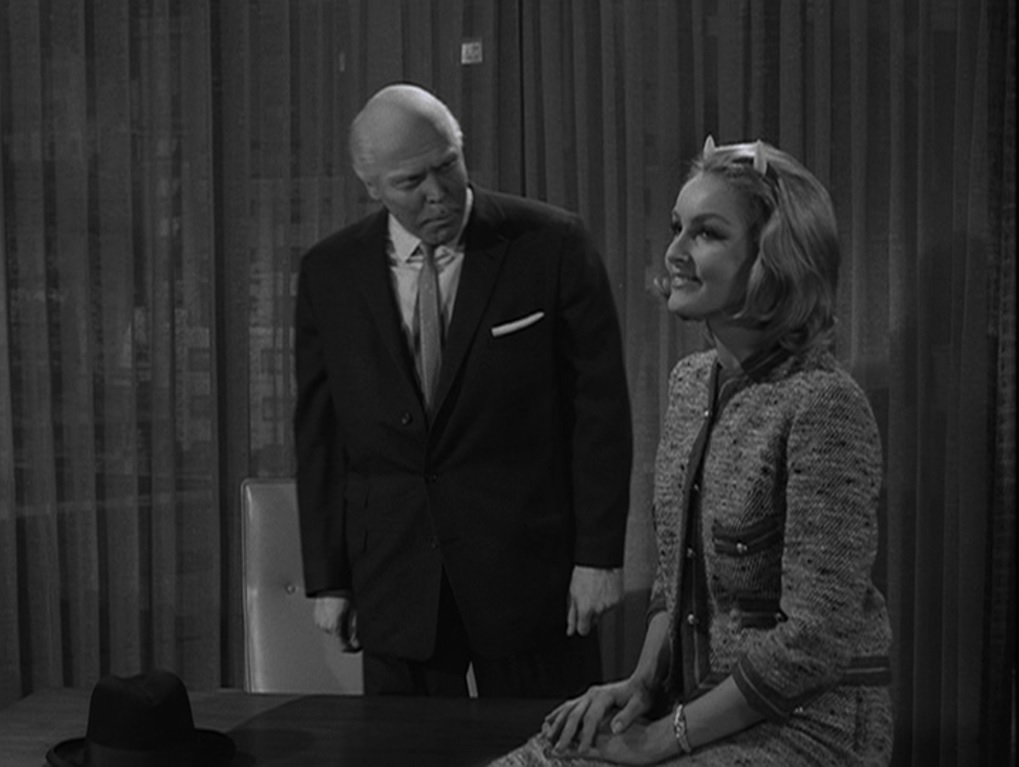
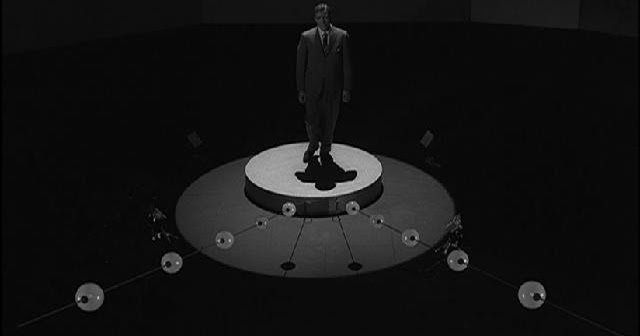
This show closed out the 4th season and the one hour long experiment was over. The Bard is my least favorite episode of the entire series. I’ve seen some lists where it’s the bottom or near the bottom. On the other hand, I’ve seen some have it high. It’s a comedy episode that just doesn’t work. One thing that is interesting about this episode is the appearance of Burt Reynolds playing a Marlon Brando character. That added a star in my rating but even Burt couldn’t save this one.
Jack Weston plays Julius Moomer and the character is a no-talent writer who uses black magic to bring William Shakespeare back to write a television program. Even typing it sounds cringe-worthy. The plot had some good elements of a Twilight Zone but Weston’s character is just not likable. It might have worked in a shorter format with a different script.
Some may think this is a hilarious episode…I just never did.
From IMDB: William Shakespeare (John Williams) quotes lines from his plays nine times with a trumpet flourish sounding each time, and most of the time, him telling what play, act, and scene the quote came from. Three from ‘Romeo & Juliet,’ two from ‘Twelfth Night,’ and one each from ‘Troilus and Cressida,’ ‘As You Like It,’ and ‘A Mid-Summer’s Night Dream’, plus a partial one from ‘Hamlet’ (cut short when Shakespeare forgets the end of the “To be or not to be” line.
Cora (Judy Strangis) looks at the book , “Ye Book of Ye Black Art”, Julius (Jack Weston) is using to conjure black magic and refers to him as Faust. In a classic German legend based on Johann Georg Faust, he makes a pact with the devil, exchanging his soul for unlimited knowledge and worldly pleasures. The devil sends his representative, Mephistopheles. He makes a bargain with Faust: Mephistopheles will serve Faust with his magic powers for a set number of years, but at the end of the term, the Devil will claim Faust’s soul, and Faust will be eternally enslaved.
Burt Reynolds’s character is clearly an amalgam of Marlon Brando and Paul Newman.
Rod Serling’s Opening Narration:
You’ve just witnessed opportunity, if not knocking, at least scratching plaintively on a closed door. Mr. Julius Moomer, a would-be writer, who if talent came 25 cents a pound, would be worth less than car fare. But, in a moment, Mr. Moomer, through the offices of some black magic, is about to embark on a brand-new career. And although he may never get a writing credit on the Twilight Zone, he’s to become an integral character in it.
Julius Moomer, a talentless, but relentless, self-promoting hack who dreams of becoming a successful television writer, uses a book of magic to summon William Shakespeare to write dramatic teleplays that Moomer will pass off as his own. Shakespeare becomes irritated by Moomer’s lack of appreciation and is even more appalled when he discovers the changes wrought on his plays by cynical television executives.
Rod Serling’s Closing Narration:
Mr. Julius Moomer, a streetcar conductor with delusions of authorship, and if the tale just told seems a little tall, remember a thing called poetic license, and another thing called the Twilight Zone.
CAST
Rod Serling … Narrator / Self – Host (uncredited) Jack Weston … Julius Moomer John Williams … William Shakespeare Burt Reynolds … Rocky Rhodes Henry Lascoe … Gerald Hugo John McGiver … Mr. Shannon Howard McNear … Bramhoff Judy Strangis … Cora Marge Redmond … Secretary Doro Merande … Sadie William Lanteau … Dolan Clegg Hoyt … Bus driver John Newton … TV interviewer John Bose … Daniel Boone (uncredited) Rudy Bowman … Robert E. Lee (uncredited)
I’m always looking for more rockabilly artists that I haven’t heard. This one came from Phil from…Notes from the Cactus Patch.
I started to listen to his music and it was good…vocals, guitar, everything. The rhythm to this song is worth a listen.
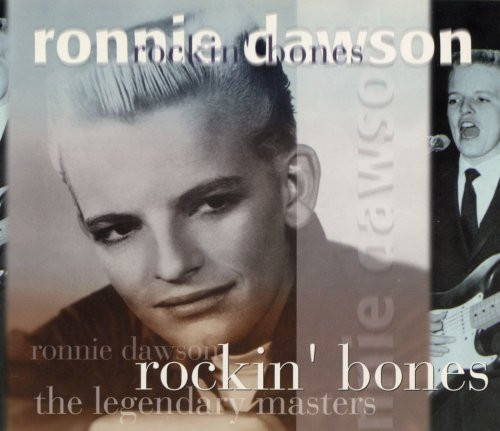
Ronnie appeared on American Bandstand twice and later in the 1990s… twice on the Conan O’Brien show. He had regional success but even after Bandstand in 1960 could not break nationally.
He was from Dallas Texas and was nicknamed “The Blonde Bomber.” His father Pinkie showed him how to play the mandolin, drums, and bass guitar. Dawson attended Southwestern Bible Institute in Waxahachie but was expelled. After that, he appeared regularly on the Big D Jamboree Radio Show in Dallas in 1958 as Ronnie Dee and the D Men. Dawson was known to be highly energetic on stage. Many thought he got it from Elvis but he said no, he learned it from the dynamic Pentecostal revivals he attended.
The Jack Rhodes song “Action Packed” was Dawson’s first release in 1958 on the Backbeat label. After that came the 1959 Rockin’ Bones and this time it was on the Rockin’ Records label. It was issued under Ronnie’s own name with “The Blond Bomber” added. Though Ronnie toured nationally with Gene Vincent and appeared on TV, his records gained no more than regional airplay.
He also played off and on with The Light Crust Doughboys who are a Western Swing Band and Ronnie became a good country artist. You talk about longevity? The Light Crust Doughboys have been playing since 1931…they just celebrated their 90th anniversary as different versions have played through the years.
He made several singles in the early sixties with Dick Clark’s Swan Records. He also did some session work. He played on Paul & Paula’s “Hey Paula. After Elvis died rockabilly started to make a comeback. The Cramps covered Rockin’ Bones.
In the 1980s Ronnie was just beginning. A fifties revival was happening in the UK and he became popular there. This led Dawson to tour Britain for the first time in 1986. He was blown away by the audience’s reception. Dawson sounded purer than most of his peers from the 1950s and he put on a more energetic show.
He recorded new material for No Hit Records, the label of British rockabilly fan Barry Koumis, which was leased in the USA to Crystal Clear Records. No Hit Records also reissued his recordings from the 1950s and early 1960s on a 16-track LP called “Rockin’ Bones” and an extended 2-CD version of which was released by Crystal Clear in 1996.
Ronnie Dawson:“At that point in my life, I was so ready to get out of Dallas. I was really ready to go, and I just blew up when I got over there. … I couldn’t believe it. All these people started embracing me. I was in heaven. I didn’t want to go home.”
He was inducted into Rockabilly Hall of Fame, 1998.
Ronnie was still performing until the early 2000s when health problems started. He passed away in Dallas on September 30, 2003, at the age of 64.
Rockin’ Bones
Roll on, rock on, raw bones
Well, there’s still a lot of rhythm in these
Rockin’ bones
I wanna leave a happy memory when I go
I wanna leave something to let the whole world know
That the rock in roll daddy has a done passed on
But my bones will keep a-rockin’ long after I’ve gone
Roll on, rock on, raw bones
Well, there’s still a lot of rhythm in these
Rockin’ bones
Well, when I die don’t you bury me at all
Just nail my bones up on the wall
Beneath these bones let these words be seen
This is the b***** gears of a boppin’ machine
Roll on, rock on, raw bones
Well, there’s still a lot of rhythm in these
Rockin’ bones
I ain’t a worried about tomorrow, just a-thinkin’ ’bout tonight
My bones are gettin’ restless, gonna do it up right
A few more times around the hardwood floor
Before we turn off the lights and close the door
Roll on, rock on, raw bones
Well, there’s still a lot of rhythm in these
Rockin’ bones
The story is not really scary but the setting will remind you of a horror movie. It takes place on a ship that is surrounded by fog. Mix that with black and white and the Wolfman film comes to mind. This is the first hour-long episode I watched many years ago. This episode benefits from the hour format. You see a couple who are teetering on breaking up decide on a cruise. Throughout the episode, you see the gradual healing and the companionship replacing turmoil. Their older fellow passengers help them both along the way. This story could not have been made as well in a half-hour-long format.
I would strongly recommend this and there is a twist but the twist is a little ambiguous. This is not an episode where a bad person gets cosmically punished for doing bad things. It does show real-life problems that you can relate to today. The cinematographer and set designers deserve praise in this episode.
From IMDB: Because of the large number of well-known actors in this episode, the closing theme featured a credit roll of cast names instead of the usual still frames. The remaining non-cast credits were then done with standard still frames. This was the only episode of the series to ever use a credit roll.
This was the last Charles Beaumont Twilight Zone screenplay to be actually fully written by Beaumont himself. Around the time this episode was made, Beaumont (then only 34) began suffering from the rapid onset of a degenerative neurological disorder (believed to be either Alzheimer’s and/or Pick’s Disease) which affected his speech, memory, and concentration, as well as causing him to physically age very rapidly. As the disease progressed, Beaumont was soon unable to meet his writing commitments. A number of his writer friends, including Jerry Sohl and William F. Nolan, supported Beaumont by ghostwriting stories with or for him and submitting them in his name, although Beaumont insisted on splitting the fees with his helpers. His last screen credit (also probably ghostwritten) was in 1965, by which time he was too ill to work at all, and he died on 21 February 1967, aged only 38, although his son later recounted that his father “looked ninety-five” at the time of his death.
This show was written by Rod Serling and Charles Beaumont
Rod Serling’s Opening Narration:
Portrait of a honeymoon couple getting ready for a journey – with a difference. These newlyweds have been married for six years, and they’re not taking this honeymoon to start their life but rather to save it, or so Eileen Ransome thinks. She doesn’t know why she insisted on a ship for this voyage, except that it would give them some time and she’d never been on one before – certainly never one like the Lady Anne. The tickets read ‘New York to Southampton,’ but this old liner is going somewhere else. Its destination – the Twilight Zone.
Summary
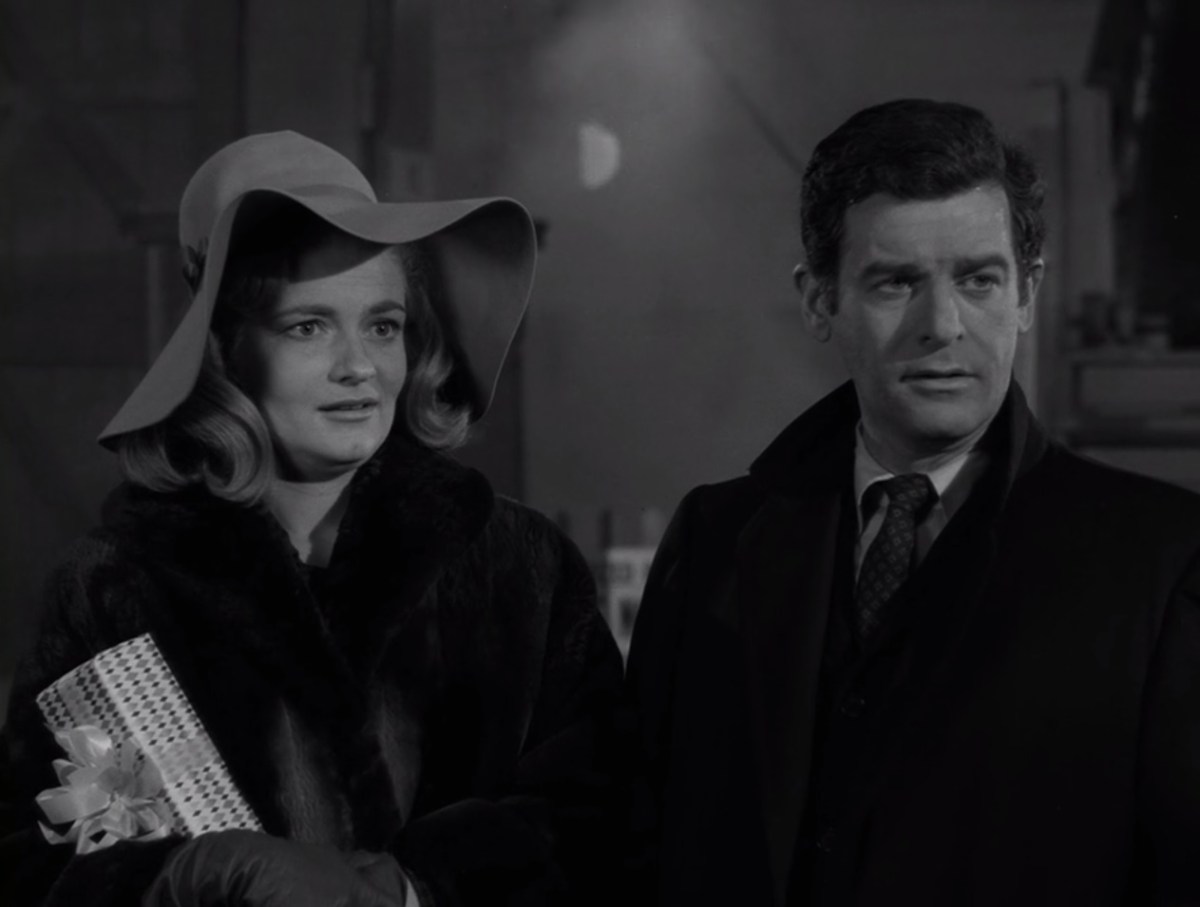
Eileen and Alan Ransome’s marriage is going through a bad patch and they decide to go on a holiday to London. Eileen insists on traveling by ship and they book passage on the Lady Anne, an old ship that is not recommended by the travel agent but is leaving quite soon. When they arrive at the port terminal another passenger, Mr. McKenzie, insists strenuously that the young couple has made a mistake and tries to discourage them from coming along on what is a “private cruise”. Mrs. McKenzie keeps her own counsel but clearly shares her husband’s sentiments. Another passenger, Burgess, tries to warn them off as well. He and McKenzie offer them money, eventually $10,000, to leave immediately. The Ransomes take umbrage and refuse. The couple finds that all of the other passengers are quite elderly but unsurprisingly have a good deal of wisdom to dispense to the young couple. Alan and Eileen are just beginning to really enjoy the trip when the captain suddenly puts them off the ship at gunpoint with provisions and a promise to notify the authorities of their location. They are rescued but as for the Lady Anne and her other passengers — well, there’s the rub
Rod Serling’s Closing Narration:
The Lady Anne never reached port. After they were picked up by a cutter a few hours later, as Captain Protheroe had promised, the Ransomes searched the newspapers for news – but there wasn’t any news. The Lady Anne with all her crew and all her passengers vanished without a trace. But the Ransomes knew what had happened, they knew that the ship had sailed off to a better port – a place called the Twilight Zone.
CAST
Rod Serling … Narrator / Self – Host (uncredited) Gladys Cooper … Millie McKenzie Wilfrid Hyde-White … Toby McKenzie Cecil Kellaway … Burgess Lee Philips … Alan Ransome Joyce Van Patten … Eileen Ransome Alan Napier … Capt. Protheroe Cyril Delevanti … Officer Jack Raine … Officer Colin Campbell … Addicott Don Keefer … Spierto Frank Baker … Otto Champion (uncredited) Sam Harris … Mersia Jones (uncredited) Freda Jones … Ship Passenger (uncredited) Colin Kenny … Ship Passenger (uncredited) Carl M. Leviness … Ship Passenger (uncredited) Scott Seaton … Ship Passenger (uncredited) Arthur Tovey … Ship’s Greeter (uncredited)
This is a not just a great episode…it’s a classic one. The episode takes place in 2021. James Whitmore plays Captain William Benteen and his acting in this is top notch. The writing also is one of Rod Serling’s best scripts. Captain Benteen reminded me of a cult leader…he doesn’t make the Jim Jones jump but he is similiar. Loving, caring, power hungry, narcissistic, and dictatorial. You see all phases and you also see regret but only when it’s too late.
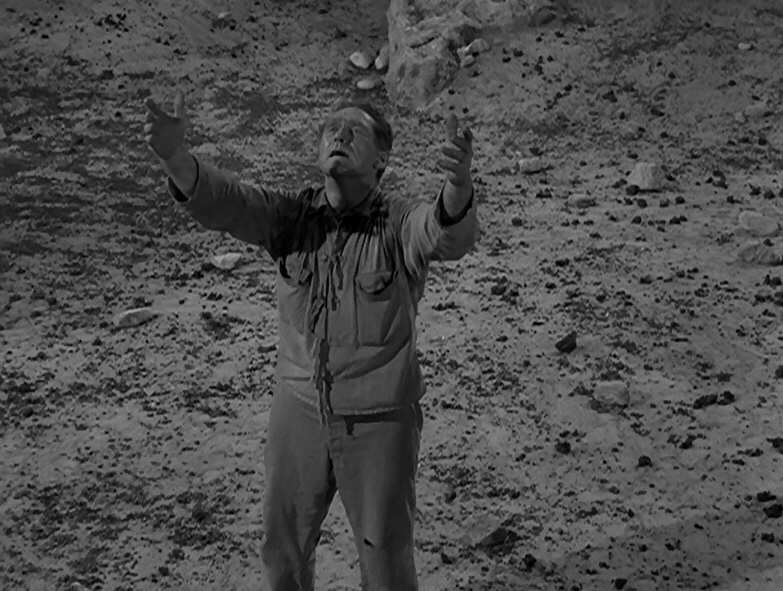
The people in this episode are a remnant society who left the Earth looking for an Eden, a place without war, without jeopardy, without fear. What they found was quite different. They have been here 30 years. The planet is a nightmare place of two suns, unending day and terrible meteor storms. Despair prevails among the 187 survivors of the original colony and suicide is not uncommon. Their thirty-year survival is attributable to one source: the iron leadership of Benteen, their self-appointed Captain.
If you only watch one hour long episode of the Twilight Zone…make it this one. Human nature is on full display in this episode…both the best and the worse. This is a science-fictional examination of the positive and negative uses of power.
From IMDB: The cave that the colonists use as their meeting hall was originally the underground lair of the Morlocks in The Time Machine (1960).
When the rescue ship from Earth arrives, several colonists ask about various places on Earth during a meeting between the ship’s crew and the colonists. One of the questions is about the Finger Lake District of New York. This area had a special significance to script writer Rod Serling. It is located close to his home town of Binghamton, he and his family vacationed there frequently, and Serling named his company that produced “The Twilight Zone,” Cayuga Productions, after one of the lakes. He later taught at Ithaca College for the last five years before his death.
The striking diorama backgrounds of the planet, the model and the large-scale prop of the rescue ship sent to bring the colonists home, and the uniforms of the rescue crew were all originally created for Forbidden Planet (1956). This was a recurring feature on “The Twilight Zone” which was frequently filmed at MGM Studios, and often prominently featured recycled props and set pieces from “Forbidden Planet”. The previous episode, “The Incredible World of Horace Ford” featured copies of the original blueprints of designs for Robby the Robot, created by MGM production designer Robert Kinoshita.
This show was written by Rod Serling
Rod Serling’s Opening Narration:
This is William Benteen, who officiates on a disintegrating outpost in space. The people are a remnant society who left the Earth looking for a millennium, a place without war, without jeopardy, without fear, and what they found was a lonely, barren place whose only industry was survival. And this is what they’ve done for three decades: survive; until the memory of the Earth they came from has become an indistinct and shadowed recollection of another time and another place. One month ago a signal from Earth announced that a ship would be coming to pick them up and take them home. In just a moment we’ll hear more of that ship, more of that home, and what it takes out of mind and body to reach it. This is the Twilight Zone.
Summary
The colonists of Pilgrim I, Earth’s first space colony, have spent 30 years on their new home. It’s a lonely, barren place more akin to hell then Eden. Now, they’re awaiting the arrival of a ship to take them to Earth. Some colonists are at their wits’ end; another – the 9th in 6 months – commits suicide. Their leader, William Benteen, a tough drill sergeant-type, who they call Captain, does his best to keep them together. When the ship arrives, they’re given 3 days to prepare to leave. As the day of departure approaches, Benteen’s assumption that the community will stay together on Earth, is wrong; most will go their own way once on earth. Hearing this, Benteen decides they should stay. When the group decides otherwise, Benteen’s left with only one option.
Rod Serling’s Closing Narration:
William Benteen, who had prerogatives: he could lead, he could direct, dictate, judge, legislate. It became a habit, then a pattern and finally a necessity. William Benteen, once a god, now a population of one.
CAST
Rod Serling … Narrator / Self – Host (uncredited) James Whitmore … Captain William Benteen Tim O’Connor … Colonel Sloane James Broderick … Al Paul Langton … George Jo Helton … Julie Mercedes Shirley … Joan Russ Bender … Hank Danny Kulick … Jo-Jo (as Daniel Kulick) Madge Kennedy … Colonist John Ward … Colonist Shirley O’Hara … Colonist Tony Benson … Colonist (as Anthony Benson) Lew Gallo … Lt. Engle
Pat Hingle who plays Horace Ford is emotionally little more than an oversized child, lives with his wife Laura and his mother. He spends most of his time reminiscing about what he recalls as an idyllic childhood that was all play and no responsibility. This one is similar to “Walking Distance” but just not as effective…Horace isn’t as mature as the Martin Sloan characer in that episode. He fails to get the viewer’s compassion because of his imaturity.
When looking back on childhood with rose colored glasses… Horace may get a chance to peel back the nostalgia and find out what really happened in his youth. It does have a good story but some will be put off by the exaggerated aspect of Pat Hingle’s performance. I liked it and the more times I’ve watched this episode the more I appreciated it.
I have to ask this before I end. Pat Hingle who plays Horace Maxwell Ford…does he not look like Nick Nolte? It’s too bad when Hingle got older he didn’t play Nolte’s dad in a movie.
The writer to this one is Reginald Rose who wrote the great 12 Angry Men.
Reginald Rose:What I meant to do with The Incredible World of Horace Ford, was to tell a simple horror story about an everyday man with a somewhat exaggerated but everyday kind of problem and, in so doing, point out that the funny, tender childhood memories we cling to are often distorted and unreal. What happened to Horace when he finally made it back to his childhood was typical of what actually happened to so many of us again and again when we were children. He was ridiculed, rejected, beaten up. These are all familiar experiences to us, yet somehow we tend only to remember, as Horace did, the joys of swiping pomegranates from Ippolitos.
From IMDB:
This was not an original screenplay for The Twilight Zone (1959). It’s a remake of Studio One: The Incredible World of Horace Ford (1955), which was a live TV version starring Art Carney and Jason Robards.
This episode revisits themes used in The Twilight Zone: Walking Distance (1959) and The Twilight Zone: The Trouble with Templeton (1960) – namely, a person’s propensity to romanticize and try to relive a past that may not have been at all as good as they like to remember it.
The blueprints of Harold’s new robot toy are copies of the actual blueprints Bob Kinoshita made for the design of Robbie the Robot in Forbidden Planet.
This show was written by Rod Serling and Reginald Rose
Rod Serling’s Opening Narration:
Mr. Horace Ford, who has a preoccupation with another time, a time of childhood, a time of growing up, a time of street games, stickball and hide-‘n-go-seek. He has a reluctance to check out a mirror and see the nature of his image: proof positive that the time he dwells in has already passed him by. But in a moment or two he’ll discover that mechanical toys and memories and daydreaming and wishful thinking and all manner of odd and special events can lead one into a special province, uncharted and unmapped, a country of both shadow and substance known as the Twilight Zone.
Summary
Toy designer, Horace Ford’s very enthusiastic about what he does, and his memories of childhood are beginning to become an obsession. But, those childhood moments which brought him great joy aren’t remembered by anytime else – even his mother. She doesn’t recall their time living on Randolph Street as such a great time. Horace goes to visit the old neighborhood, but when he gets there, he seems to have stepped back in time, and the past starts to spill over into the present. He returns to the street several times, and the scene repeats itself. He begins to realise -his childhood wasn’t the wonderful one he remembered
Exit Mr. and Mrs. Horace Ford, who have lived through a bizarre moment not to be calibrated on normal clocks or watches. Time has passed, to be sure, but it’s the special time in the special place known as the Twilight Zone.
CAST
Rod Serling…Narrator / Self – Host (uncredited) Pat Hingle…Horace Maxwell Ford Nan Martin…Laura Ford Ruth White…Mrs. Ford Phillip Pine…Leonard O’Brien Vaughn Taylor…Mr. Judson Jerry Davis…Hermie Brandt Billy Hughes…Kid Mary Carver…Betty O’Brien Jim E. Titus…Horace…a boy
Well it’s one for the money, two for the show Three to get ready, now go cat go
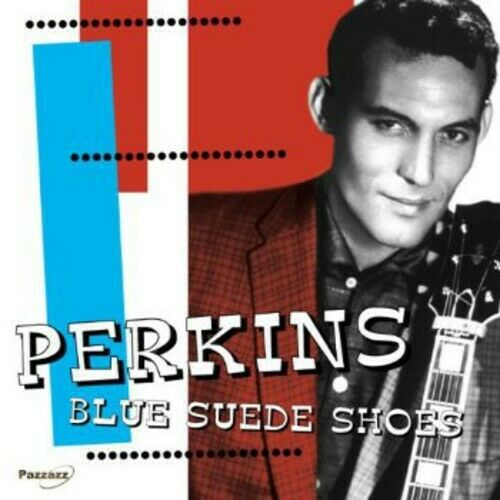
This song could be the definition of rock and roll. One of the many great Sun records that were released. Carl Perkins is a guitar hero to me with his rockabilly style that he never lost. I see why George Harrison and a generation was such a fan of the man. This song is up there with Johnny B Good as a Rock and Roll standard.
This song was written by Carl and it soon became a rock and roll anthem. This is another song that by law…you have to know if you are in a rock band. It’s probably better known by a singer from Memphis…named Elvis. I always favored this version…it has Carl playing guitar and that is all I need.
Carl recorded this in Memphis in 1955 for Sam Phillips at Sun Records. As he was driving to make his first national appearance to promote it on the Perry Como Show, he got into an accident that seriously injured him and killed his brother. He later said he was 85 miles away from being the first rockabilly on national television.
Perkins never fully recovered, either emotionally or career-wise. With Perkins unable to touring and promote it, Elvis’ cover version became a massive hit. Presley’s copy was done at RCA studios in Nashville. Perkins did have some hits after this but nothing like Blue Suede Shoes. Interestingly enough…Elvis’s version only made it to #20 in the pop charts.
This single was released in 1956. The B side was Honey Don’t. The single peaked at #2 in the US Charts and #1 in the Country charts.
I always wondered about blue suede shoes and what was so special about them. Blue suede shoes were a luxury item in the South…you would only wear them on a special night out. . You had to be careful with them though, since suede isn’t easy to clean.
Perkins never owned a pair, but Johnny Cash told him a story about someone who did. Cash told Perkins a story from his days serving in the Air Force in Germany. Cash’s sergeant…C.V. White. He would wear his military best when he was allowed off base, and at one point said to Cash, “don’t step on my blue suede shoes.” The shoes were really just Air Force-issued black, but white would say, Tonight they’re blue suede!
The story Perkins told is that later on, he was playing at a high school sorority dance when he came across a guy who wasn’t paying much attention to his date, but kept telling everyone not to stop on his “suedes,” meaning his blues suede shoes. At 3 a.m. that night, Perkins woke up and wrote the lyrics based on what happened that night and the story he heard from Cash. He couldn’t find any paper, so he wrote it on a potato sack.
Perkins based the beginning of this song on a nursery rhyme One For The Money: “One for the money, two for the show, three to get ready and four to go.”
Sam Phillips, the owner of Sun Records, came up with the idea of changing the line “Go, man, go” to “Go, cat, go.” He thought the change would make it seem like less of a country song and more of a rocker…it worked!
From Songfacts
Sam Phillips discovered Elvis Presley but sold his contract to RCA for $35,000. The money helped Phillips finance this and other records by artists like Johnny Cash and Roy Orbison, but Elvis became The King. Elvis recorded this later in 1956. His version hit US #20 and UK #9.
This was the only Top 40 hit for Perkins on the pop charts, but his influence reaches much further. He was extremely influential to other artists, including Elvis, The Beatles, and Johnny Cash. Perkins was inducted into the Rock and Roll Hall of Fame in 1987.
The lyrics describe some of the things that Perkins would prefer over getting his shoes scuffed, and the list includes some derelict behavior: stepping on his face, stealing his car, burning down his house and drinking his liquor. Some in the Sinatra-loving older generation were horrified, and used the song to back their case that rock ‘n’ roll was the Devil’s music.
This was the first song to hit the US Pop, Country, and R&B charts at the same time. Released on January 1, 1956, the song made a slow climb up the charts, appearing on all three in May, which is when it reached its peak of #2 on the Pop charts.
In Perkins’ original version of this song, there are two deliberate beats after each of the first two lines: “One for the money… bomp, bomp; two for the show… bomp, bomp.” The Elvis version eliminates the pause between the lines and speeds it up considerably.
Dave Edmunds, who later toured with Perkins, tells a story about recording the song with the rock legend for a segment to air on The South Bank Show, a UK program. According to Edmunds, Perkins played the intro without the beats between lines, insisting that when he recorded it, that was a mistake. Edmunds began pleading with him to do it as he did on that record, but then realized the absurdity of explaining to Carl Perkins how to play “Blue Suede Shoes.”
In later appearances, Perkins did play the song in line with his original recording, often with Edmunds by his side. One of his last appearances was with Edmunds performing the song on The Jay Leno Show in 1997 (Perkins died the next year).
The B-side of the single was “Honey Don’t,” which was covered by The Beatles.
This song was a family affair: Perkins’ brother Jay played rhythm guitar on the track, and his other brother Clayton played bass (W.S. “Fluke” Holland was Perkins’ drummer). Jay died from a brain tumor in 1957, and Clayton took his own life in 1974.
The charting versions of this song in America were by:
Carl Perkins – #2, 1956 Elvis Presley – #20, 1956 Boyd Bennett – #63, 1956 Johnny Rivers – #38, 1973
Pat Boone, Conway Twitty, The Dave Clark Five and Merle Haggard are among the many to record it. A version by Buddy Holly surfaced in 1964 on an album of outtakes called Showcase.
The “better not step on my shoes” trope found its way back to the zeitgeist when Spike Lee included a scene in his 1989 movie Do The Right Thing where a character gets very upset when someone steps on his Air Jordan sneakers.
Perkins, backed by Lee Rocker and Slim Jim Phantom of The Stray Cats, recorded a new version of this song in 1985 for the soundtrack of the movie Porky’s Revenge! The soundtrack was produced by Dave Edmunds, who also got Willie Nelson, Jeff Beck and George Harrison to record songs for it, leading to a gaping disparity in quality between the film and the soundtrack.
Later in the year, Edmunds spearheaded the “Carl Perkins and Friends” concert special, recorded October 21 in London and aired January 1, 1986 on Cinemax. Harrison, Ringo Starr, Eric Clapton and Rosanne Cash were among the “friends.”
The Count performed this song on an episode of Sesame Street. It became a counting exercise (one, two, Blue Suede Shoes).
Blue Suede Shoes
Well it’s one for the money, two for the show Three to get ready, now go cat go But don’t you, step on my blue suede shoes You can do anything but lay off of my blue suede shoes
But you can knock me down, step in my face Slander my name all over the place And do anything that you want to do But uh uh honey lay off of my shoes And don’t you step on my blue suede shoes You can do anything but lay off of my blue suede shoes
Oh let’s go cat!
But you can burn my house, steal my car Drink my liquor from an old fruit jar Do anything that you want to do But uh uh honey lay off of them shoes And don’t you, step on my blue suede shoes You can do anything but lay off of my blue suede shoes
Rock!
Well it’s one for the money, two for the show Three to get ready, now go cat go But don’t you, step on my blue suede shoes You can do anything but lay off of my blue suede shoes
Well it’s blue, blue, blue suede shoes Blue, blue, blue suede shoes yeah Blue, blue, blue suede shoes baby Blue, blue, blue suede shoes You can do anything but lay off of my blue suede shoes
This is a good episode. It has two plot lines that I love…time travel and deals with the Devil. If the devil looked like Julie Newmar…there would be a lot of deals signed. Albert Salmi as the greedy Feathersmith is fantastic. He is one of my favorite chacter actors of that time. You may recognize John Anderson as Deidrich…he was a character actor until his death in 1992. He had 246 acting credits on various tv shows.
If you could go back knowing what you know now. Would it be something small or large you would miss because you were so excited? Chances are yes…and that little something could start a chain reaction…and you might just regret it.
The special effects in the Twilight Zone are usually great. The only bad thing I can say about them in this one is Salmi’s “old” makeup. I believe though it’s a product of our times. With high definition tv now…you can see it clear but back then on 60’s tv…it was probably fine. This one is marked low in IMDB which I totally disagree with. It does have it’s faults but is an enjoyable episode.
From IMDB: Ms. Devlin’s Travel Offices are on the 13th floor. This is unusual in the US (and suitable to her nature) as most buildings before the 1980’s skip the 13th floor when numbering floors in their buildings. The number 13 has long been considered unlucky.
Albert Salmi previously appeared in The Twilight Zone: Execution (1960) and The Twilight Zone: A Quality of Mercy (1961), all of which involve time travel. In “Execution” and “Cliffordville” his characters are very unlikable, although that is not the case in “Quality.”
This show was written by Rod Serling and Malcolm Jameson
Rod Serling’s Opening Narration:
Witness a murder. The killer is Mr. William Feathersmith, a robber baron whose body composition is made up of a refrigeration plant covered by thick skin. In a moment, Mr. Feathersmith will proceed on his daily course of conquest and calumny with yet another business dealing. But this one will be one of those bizarre transactions that take place in an odd marketplace known as the Twilight Zone.
Summary
William Feathersmith is a hard-nosed and cold-hearted misanthropic businessman now quite wealthy but bored. It’s clear that what he enjoys is the chase and the acquisition of wealth. He also likes breaking men in the process. While leaving the office one day, he finds himself on the wrong floor (the ominous 13th floor, a number usually associated with bad luck and ill fortune) and in the office of Devlin Travel, run by the statuesque and devilishly attractive Ms. Devlin. In return for his amassed fortune — not his soul because, as she notes, “we got ahold of your soul some time ago” — she offers to send him back in time to his hometown of Cliffordville in 1910 where he can start over and get the pleasure of building his empire all over again. He accepts and once back to the days of his youth begins wheeling and dealing. Nothing quite goes as planned however.
Rod Serling’s Closing Narration:
Mr. William J. Feathersmith, tycoon, who tried the track one more time and found it muddier than he remembered, proving with at least a degree of conclusiveness that nice guys don’t always finish last, and some people should quit when they’re ahead. Tonight’s tale of iron men and irony, delivered F.O.B. from the Twilight Zone.
CAST
Rod Serling…Narrator / Self – Host (uncredited) Albert Salmi … Feathersmith John Anderson … Deidrich Wright King … Hecate Guy Raymond … Gibbons Christine Burke … Joanna John Harmon … Clark Hugh Sanders … Cronk Julie Newmar … Miss Devlin Mary Jackson … Miss Pepper (uncredited)
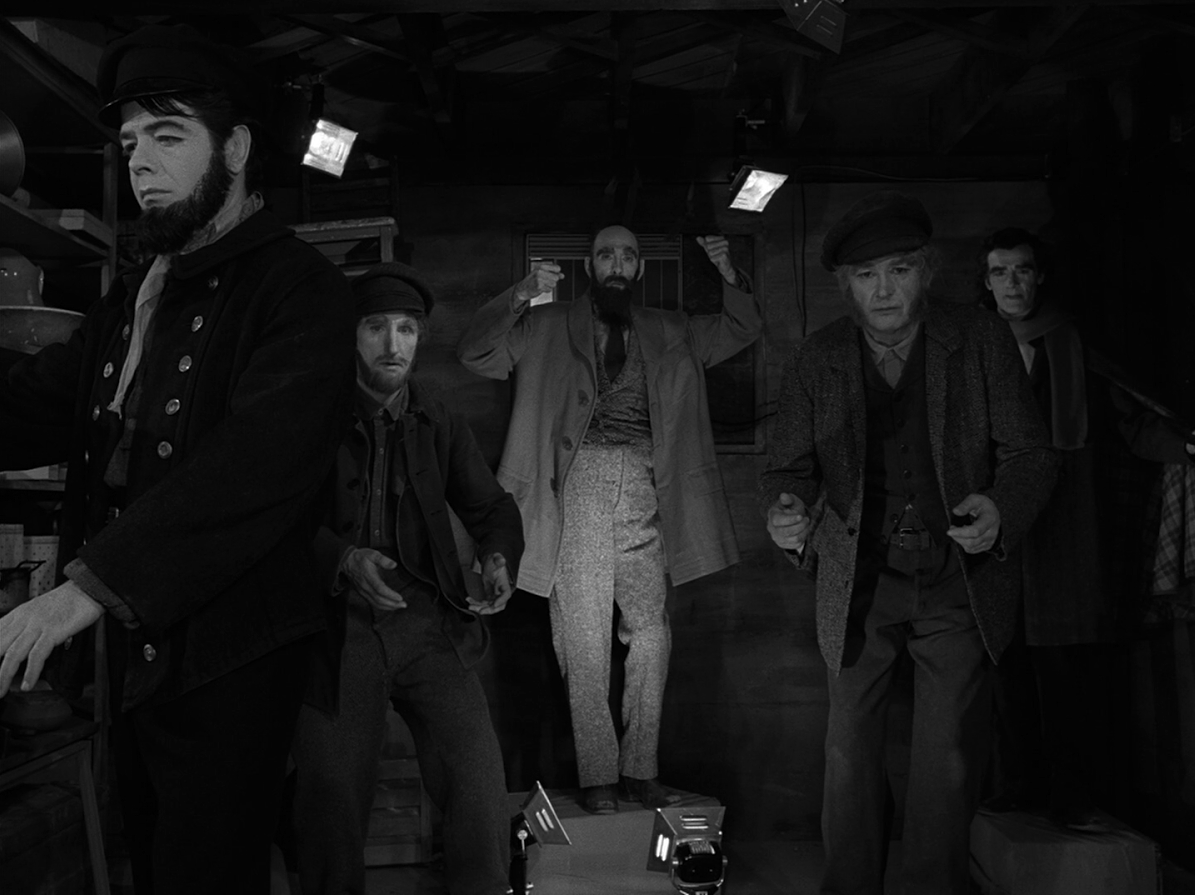
This episode of the Twilight Zone is really good. It has everything…some horror, mystery, and a great twist at the end. It could have been a 50’s type horror movie. You expect Vincent Price to come on at any time. Martin Balsam plays Martin Lombard Senescu and he is fantastic. He is a sympathetic character that loves his job at the wax museum…maybe a little too much. Will Kuluva as Ernest Ferguson plays the owner of the museum who sees the writing on the wall, the museum is not as popular as it was and will have to close. He is a kindly older gentlemen who cares… and gently lets Martin go…but not without granting Martin a favor.
The pacing in this one is good. They use the hour to breathe life to the characters. The story builds nicely and there is a good payoff in the end.
There was a sad story behind the scenes. Charles Beaumont (his real name was Charles Leroy Nutt) was credited as writing this but Jerry Sohl had started ghostwriting for him by this time. Beaumont was only 35 and had been the top writer for Playboy and he wrote some of the very best Twilight Zones. He was probably the best writer the Twilight Zone had besides Rod Serling.
He was starting to forget things and could not concentrate. He was diagnosed with Alzheimers Disease or Picks Disease…they could not know which one until he passed. He passed away at 38 years old in 1967 and his son said he had the body and mind of a 95 year old.
Jerry Sohl helped him out and split everything 50/50 and did all the writing in his name. He wrote for Hitchcock, Route 66 and Playboy under Beamont’s name. Sohl would write more Twilight Zones but not be credited. They had to keep this a secret because it was against Writers Guild rules.
Sohl’s script went before the cameras virtually unchanged, with no rewrites at all. This was the case with most of the scripts he ghosted. They went right in, and the reason is that Chuck Beaumont scripts were always so great that they didnt have to do anything.
Jerry Sohl on visiting the set:
Here I am standing with Chuck Beaumont, he recalls, and John Brahm, the director, comes up, puts his arm around him with the script that / did and says, Chuck, youve done it again! And here I am, standing right next to Chuck, unable to say a word!
This show was written by Rod Serling, Charles Beaumont, and Jerry Sohl (uncredited)
Rod Serling’s Opening Narration:
Martin Lombard Senescu, a gentle man, the dedicated curator of murderers’ row in Ferguson’s Wax Museum. He ponders the reasons why ordinary men are driven to commit mass murder. What Mr. Senescu does not know is that the groundwork has already been laid for his own special kind of madness and torment found only in the Twilight Zone.
Summary
Martin Lombard Senescu is a gentle man and the curator of Murderer’s Row in Ferguson’s wax museum. He loves his work and is fascinated by what drives men to commit the crimes that they do. He’s informed by his boss Mr. Ferguson that the property is being sold to developers who will raze the building and erect a supermarket. Martin brings 5 of of wax figures home but after a year his wife is at her wits end. Martin spends all of his time in the basement with his beloved friends and the cost of keeping them is eating into their already limited income. When Martin finds Emma dead in the basement he buries her there. When her brother Dave shows up, he too is apparently killed. After Mr. Ferguson finally finds a buyer for the wax figures, Martin reluctantly agrees to let them go. There is a new addition to the exhibit however.
Rod Serling’s Closing Narration:
The new exhibit became very popular at Marchand’s, but of all the figures none was ever regarded with more dread than that of Martin Lombard Senescu. It was something about the eyes, people said. It’s the look that one often gets after taking a quick walk through the Twilight Zone.
CAST
Rod Serling…Narrator / Self – Host (uncredited) Martin Balsam …Martin Lombard Senescu Will Kuluva…Ernest Ferguson Margaret Field…Emma Senescu (as Maggie Mahoney) William Mims…Dave Phil Chambers…Gas Man Leonard Bremen…Van Man (as Lennie Bremen) Eddie Barth…Sailor (as Ed Barth) Craig Curtis…Sailor Milton Parsons…Henri Desire Landru David Bond…Jack the Ripper Bob Mitchell…Albert W. Hicks Robert McCord…Burke (as Robert L. McCord) Billy Beck…Hare Marcel Hillaire…The Guide
This episode is one of the light ones. You will notice the star of this episode right off the bat if you are a fan of the Andy Griffith Show. It’s Howard Morris…who is better known as Earnest T Bass. He does what he can do with the script. It’s slow paced and dull in spots. It does have a good moral to the story and a good twist at the very end…getting there is the challenge in this one. I feel like a broken record in a few of these longer episodes…but the hour works against itself in this one. One thing I will say…Howard Morris and Jack Albertson as the Genie are good in their parts.
The best moments in I Dream of Genie is when Howard Morris is in the fantasy roles imagining how a wish would turn out if he made it. There are some funny moments but the journey is too long to get there. A thirty minute version of this still wouldn’t save much.
This show was written by Rod Serling and John Furia
Rod Serling’s Opening Narration:
Meet Mr. George P. Hanley, a man life treats without deference, honor or success. Waiters serve his soup cold. Elevator operators close doors in his face. Mothers never bother to wait up for the daughters he dates. George is a creature of humble habits and tame dreams. He’s an ordinary man, Mr. Hanley, but at this moment the accidental possessor of a very special gift, the kind of gift that measures men against their dreams, the kind of gift most of us might ask for first and possibly regret to the last, if we, like Mr. George P. Hanley, were about to plunge head-first and unaware into our own personal Twilight Zone.
Summary
A smart aleck genie appears from a lamp to a meek man, George P. Hanley. Hanley is so used to bad luck, he imagines how each of three possible wishes could go very wrong – but the genie will grant him only one wish.
Rod Serling’s Closing Narration:
Mr. George P. Hanley, former vocation; jerk. Present vocation; genie. George P. Hanley, a most ordinary man whom life treated without deference, honor, or success, but a man wise enough to decide on a most extraordinary wish, that makes him the contented, permanent master of his own altruistic Twilight Zone.
CAST
Rod Serling … Narrator / Self – Host (uncredited) George P. Hanley…Howard Morris Ann…Patricia Barry Watson…Loring Smith Starlet…Joyce Jameson Genie…Jack Albertson Roger…Mark Miller[1] May…Molly Dodd The P.R. Man/Scientist were played Milton Parsons Masters…James Millhollin Sam…Bob Hastings
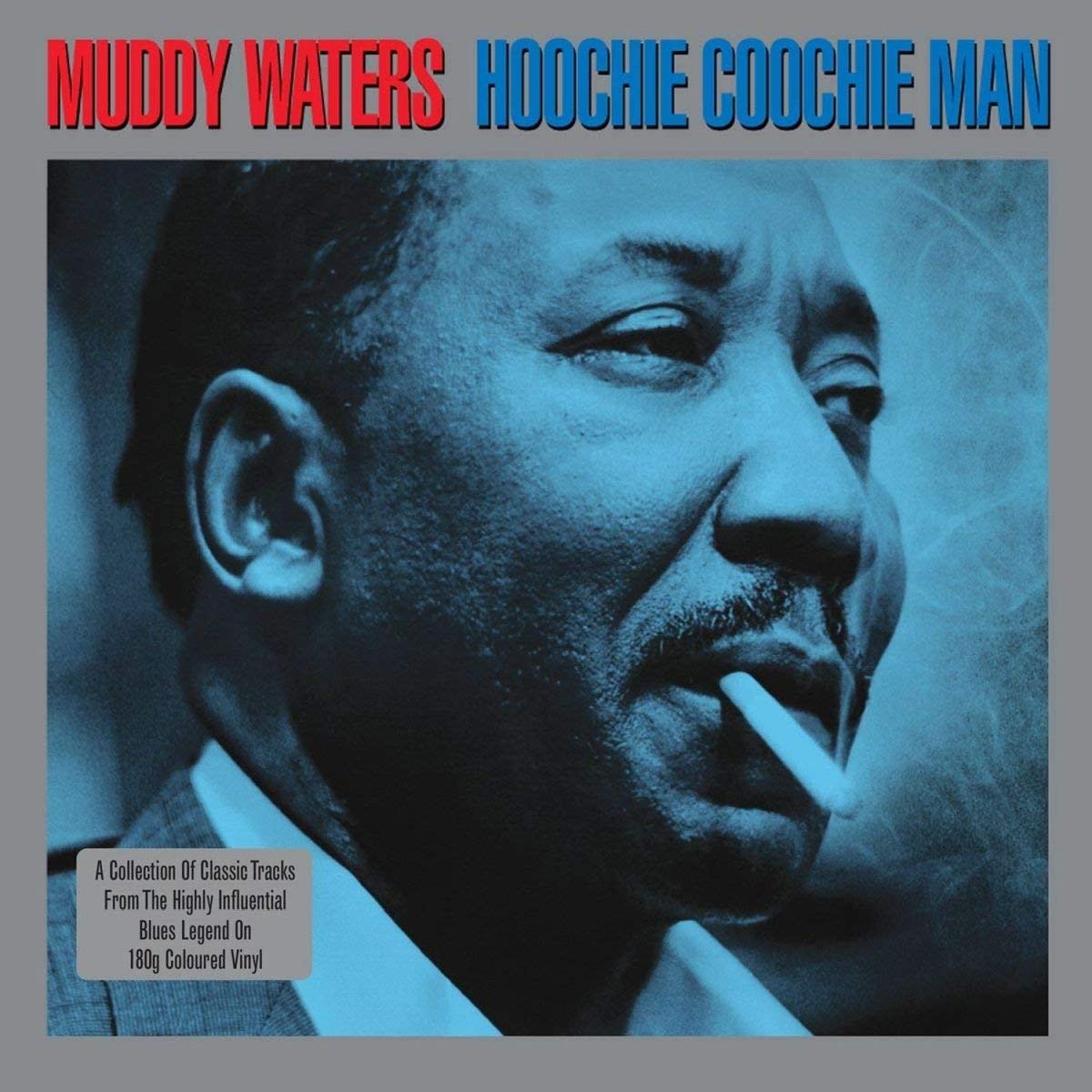
What a great song by the one and only Muddy Waters.
The song was written by the great blues writer Willie Dixon. Muddy Waters recorded this song in 1954. Before Waters recorded it, he tested it out at the Chicago blues club Zanzibar. Willie Dixon gave Waters some advice before the band hit it: “Well, just get a little rhythm pattern, do the same thing over again, and keep the words in your mind.”Muddy recorded it a few weeks later with Dixon on bass.
Record label head Leonard Chess went south to bolster sales, and
partner Phil Chess told the magazine that the record had sold an astounding 4,000 copies in a single week. It became Muddy’s top selling single, and spent three months in the national charts, where it peaked at #3 in the R&B charts in 1954.
Willie Dixon would bring Muddy other songs that solidified his hoochie
coochie image: “Just Make Love To Me,” “I’m Ready,” and “Natural Born Lover.”
What a band backing Muddy! The musicans on the recording were Muddy Waters on lead vocals, guitar, Little Walter on harmonica, Otis Spann on piano, Jimmy Rogers on guitar, Willie Dixon on bass and Fred Below on drums.
British blues musician Long John Baldry named his 1964 band Long John Baldry And His Hoochie Coochie Men in honor of this song.
Willie Dixon:“People believe in mystic things. Like people today believe in astrology. That’s been going on for generations, since biblical days. People all over the world believe in it. Even before Jesus was born, according to the Bible. The wise men saw the stars in the East and were able to predict about things. All of these things are mystic. They say, ‘Hoochie coochie people are telling fortunes.’ You know, like the wise men of the East. They call them ‘voodoo men’ or ‘hoochie coochie men.’ They used to call them ‘hoodoo folk’ and ‘two-head people.’ They got many names for everybody.” (this appears in Zollo’s book Songwriters On Songwriting)
Wilie Dixon:“There was quite a few people around singing the blues,” “But most of ’em was singing all sad blues. Muddy was giving his blues a little pep, and I began trying to think of things in a peppier form.”
Author/musician Roger Reale: “The stark realism, the drama, and especially the vocal delivery are what do it for me on ‘Hoochie Coochie Man.’ It’s half conversational; Muddy gets your attention without overdoing it. And those lyrics about ‘a gypsy woman’ always felt kind of fascinating.”
Hoochie Coochie Man
Gypsy woman told my momma, before I was born You got a boy-child comin’, gonna be a son-of-a-gun Gonna make these pretty women, jump and shout And the world will only know, a-what it’s all about
Why’know I’m here Everybody knows I’m here And I’m the hoochie-coochie man Everybody knows I’m here
On the seventh hour, of the seventh day, On the seventh month, the seventh doctor said: “He’s born for good luck, and I know you see; Got seven hundred dollars, and don’t you mess with me
Why’know I’m here Everybody knows I’m here And I’m the hoochie-coochie man Everybody knows I’m here
Gypsy woman told my momma Said “Ooh, what a boy, He gonna make so many women, Jump and shout for joy”
Why’know I’m here Everybody knows I’m here And I’m the hoochie-coochie man Everybody knows I’m here
Gypsy woman told my momma, before I was born You got a boy-child comin’, gonna be a son-of-a-gun Gonna make these pretty women, jump and shout And the world will only know, a-what it’s all about
Why’know I’m here Everybody knows I’m here And I’m the hoochie-coochie man Everybody knows I’m here
I got a black cat bone, I got a mojo too I got John the Conqueror, I’m gonna mess with you I’m gonna make you, pretty girl, lead me by the hand Then the world will know, the Hoochie-Coochie Man
I kept saying that the 4th season was not a great season of the Twilight Zone. As someone (Paul) pointed out…there are some really good to great episodes. He was right…there are some great episodes in the season. This is one of them. After watching this season over…it’s much better than I gave it credit for. Is it as good as 1, 2, 3, or 5? No, it’s just different with the hour format. Not apples to oranges, just different.
This could be a 5 star…I went back and forth with the rating. The small details in this episode keep it interesting.
This one is about a Parallel world. Steve Forrest who plays Major Robert Gaines is an astronaut that returns home from a troubled mission. He notices things wrong when he gets back…a different president, a gate around his yard that wasn’t there before, and small things that are wrong. His family also starts noticing little things…little things that only a loved one can see.
From IMDB: Steve Forrest played the protagonist, Major Robert Gaines, in this episode while his elder brother Dana Andrews played the protagonist, Paul Driscoll, in the preceding episode The Twilight Zone: No Time Like the Past
There is a moment after Maj. Gaines has spent the night with Mrs. Gaines where they attempt to embrace and she gives him a hard, questioning stare. According to producer Bert Granet, the intent of this interchange was to imply that sexual relations on the parallel world were slightly different from those of Maj. Gaines’ world, and that this had told Mrs. Gaines that he was no longer her husband. Unfortunately, in 1963 no direct mention of sexual behavior, even between spouses, was permissible, so that the scene is really too subtle to communicate this implication.
In the parallel universe, no one has ever heard of John F. Kennedy. The identity of the President of the United States in that universe is not revealed.
This show was written by Rod Serling and Richard Matheson
Rod Serling’s Opening Narration:
In the vernacular of space, this is T minus one hour. Sixty minutes before a human being named Major Robert Gaines is lifted off from the Mother Earth and rocketed into the sky, farther and longer than any man ahead of him. Call this one of the first faltering steps of man to sever the umbilical cord of gravity and stretch out a fingertip toward an unknown. Shortly, we’ll join this astronaut named Gaines and embark on an adventure, because the environs overhead—the stars, the sky, the infinite space—are all part of a vast question mark known as the Twilight Zone.
Summary
Astronaut Major Robert Gaines is the latest to orbit the Earth but something happens while there. Ground control loses all contact with him and although he returns safely, he apparently blacked out and has no recollection of what may have happened. Nor can he explain how the craft landed on land – completely undamaged – when it was meant to splash down in the ocean. When Gaines returns home he finds that little things are different: he’s now a full colonel and has been for some time; his house now has a picket fence; he no longer seems to take sugar in his coffee; and even his wife senses he is different after she kisses him. It is soon apparent that Gaines has returned to an Earth in an alternate universe
Rod Serling’s Closing Narration:
Major Robert Gaines, a latter-day voyager just returned from an adventure. Submitted to you without any recommendations as to belief or disbelief. You can accept or reject; you pay your money and you take your choice. But credulous or incredulous, don’t bother to ask anyone for proof that it could happen. The obligation is a reverse challenge: prove that it couldn’t. This happens to be the Twilight Zone.
CAST
Rod Serling … Narrator / Self – Host (uncredited) Steve Forrest … Major Robert Gaines Jacqueline Scott … Helen Gaines Frank Aletter … Colonel William Connacher Paul Comi … Psychiatrist Shari Lee Bernat … Maggie Gaines Morgan Jones … Captain William Sargent … The Project Manager Philip Abbott … General Stanley Eaton Fred Crane … News Anchorman (uncredited)
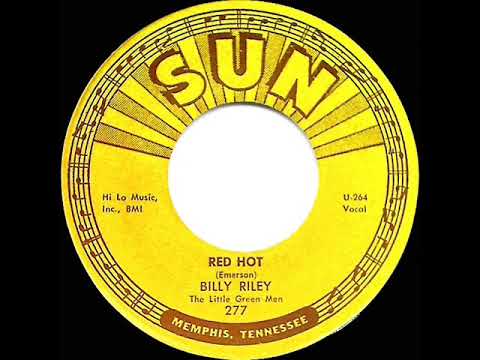
I first heard this song by the ‘Beatles in Hamburg on the Star Club album. They took the song and injected it with steroids…George ripped through it. The quality is terrible but the energy is not.
“Red Hot” featured Jerry Lee Lewis on piano. The song was written by Billy “The Kid” Emerson. Emerson had already had a minor hit when Elvis Presley recorded “When It Rains It Really Pours“. “Red Hot” was showing a lot of promise as a big hit record, but Sam Phillips pulled Sun Records promotion for the single and switched it to “Great Balls Of Fire” by Jerry Lee Lewis.
Riley earned notoriety throughout the South with his wild live performances, and in the late’50s his shows were banned by various town councils and college administrators who worried that Riley’s raucous “devil’s music” would corrupt the souls of innocent teenagers. Riley’s backing band, The Little Green Men, were the main Sun studio band. They were Riley, Roland Janes, J.M. Van Eaton, Marvin Pepper, and Jimmy Wilson, later joined by Martin Willis.
These are the kind of singles that the Beatles liked to cover…not massive hits but good songs that not many bands were covering.
Red Hot
My gal is red hot Your gal ain’t doodly squat Yeah, my gal is red hot Your gal ain’t doodly squat Well, she ain’t got no money But man, she’s a-really got a lot
Well, I got a gal, six feet four Sleeps in the kitchen with her feet out the door, but
My gal is red hot Your gal ain’t doodly squat Yeah, my gal is red hot Your gal ain’t doodly squat Well, she ain’t got no money But man, she’s a-really got a lot
Well, she walks all night, talks all day She’s the kinda woman who’ll have her way, but
My gal is red hot Your gal ain’t doodly squat Yeah, my gal is red hot Your gal ain’t doodly squat Well, she ain’t got no money But man, she’s a-really got a lot
Well, she’s the kinda woman who louds around Spreadin’ my business all over town, but
My gal is red hot Your gal ain’t doodly squat Yeah, my gal is red hot Your gal ain’t doodly squat Well, she ain’t got no money But man, she’s a-really got a lot
Well, she’s a one man’s woman, that’s what I like But I wish she wasn’t gonna change her mind everynight, but
My gal is red hot Your gal ain’t doodly squat Yeah, my gal is red hot Your gal ain’t doodly squat Well, she ain’t got no money But man, she’s a-really got a lot
I love time travel episodes. I wanted so much to love this one. No Time Like The Past has it’s charms but the hour long format works against it. It’s 4 time travel stories in this one. It could have been split up into two 30 minute episodes with the first three time jumps and the second episode the final jump. I think it would have been better for the hour long format to flesh out the first three time jumps.
It was an interesting concept…to go back to the atom bomb dropping in Japan, the Lusitania sinking, and to try to kill Hitler. One of the flaws in this episode is he only gives himself a small amount of time to accomplish his tasks. In this case too much wasn’t a good thing. To sum it up…I wish they would have focused either on Hitler, Japan, and The Lusitania or the 1881 small town of Homeville, Indiana. The most interesting part of the episode is the 1881 Indiana story.
Dana Andrews who played Paul Driscoll was a star in the 1940s in movies with Henry Fonda, Tyrone Powers, and more.
From IMDB: Dana Andrews played the protagonist, Paul Driscoll, in this episode while his younger brother Steve Forrest played the protagonist, Major Robert Gaines, in the succeeding episode The Twilight Zone: The Parallel .
This episode takes place in 1963, in Hiroshima, Japan on August 6, 1945, in Berlin, Germany in August 1939, aboard the RMS Lusitania off the Old Head of Kinsale, Ireland on May 7, 1915 and in Homeville, Indiana from July 1 to July 3, 1881.
This show was written by Rod Serling
Rod Serling’s Opening Narration:
Exit one Paul Driscoll, a creature of the twentieth century. He puts to a test a complicated theorem of space-time continuum, but he goes a step further, or tries to. Shortly, he will seek out three moments of the past in a desperate attempt to alter the present, one of the odd and fanciful functions in a shadowland known as the Twilight Zone.
Summary
Paul Driscoll does not much like the way the 20th century has developed thus far and decides to go back in time to change mankind’s future. He first travels to Hiroshima and tries to warn an English-speaking policeman of what is to come, but to no avail. He then travels to Nazi Germany and attempts to assassinate Adolf Hitler but is thwarted when his rifle misfires. He then finds himself aboard the Lusitania but again is unable to convince the ship’s captain to alter course before it is torpedoed. When he returns to the present, he agrees with his colleague Harvey that the past cannot be changed. He still does not like the present, so decides to go back to July 1881 to live his life in the small town of Homeville, Indiana. Unfortunately he learns yet again that past events cannot be changed
Rod Serling’s Closing Narration:
Incident on a July afternoon, 1881. A man named Driscoll who came and went and, in the process, learned a simple lesson, perhaps best said by a poet named Lathbury, who wrote, ‘Children of yesterday, heirs of tomorrow, what are you weaving? Labor and sorrow? Look to your looms again, faster and faster fly the great shuttles prepared by the master. Life’s in the loom, room for it. Room.’[1] Tonight’s tale of clocks and calendars in the Twilight Zone.
CAST
Rod Serling … Narrator / Self – Host (uncredited) Dana Andrews … Paul Driscoll Patricia Breslin … Abigail Sloan Malcolm Atterbury … Prof. Eliot Robert Cornthwaite … Hanford John Zaremba … Horn Player C. Lindsay Workman … Bartender (as Lindsay Workman) Marjorie Bennett … Mrs. Chamberlain Tudor Owen … Captain of Lusitania James Yagi … Japanese Police Captain Robert F. Simon … Harvey Adolf Hitler … Self (archive footage) Gene Coogan … Fire Spectator Restraining Driscoll (uncredited) Peter Humphreys … Steward on Lusitania (uncredited) Robert McCord … Man Hearing About Garfield (uncredited) Bobs Watson … Man at Dining Room Table (uncredited)
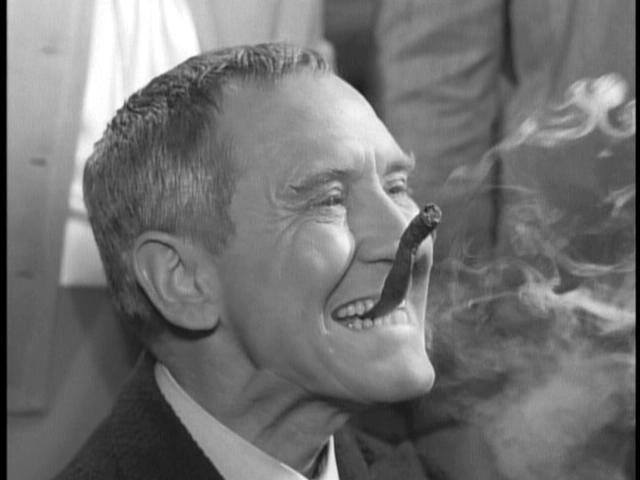
I’ve always liked sell your soul to the devil stories. This one has Burgess Meredith and that means chances are it’s a great one. Three out of four Twilight Zones he is in are classics. Time Enough At Last, The Obsolete Man, and this one are remembered episodes of the Twilight Zone. His eyebrows were pointing slightly upward, a twisted cigar in his mouth, he certainly looks the part. He is a grinning, leering Devil, full of subtleties. His interpretation goes well beyond the lines. Meredith is also listed as one of the writers.
Robert Sterling plays Douglas Winter, a down on his luck newspaper owner who is about to get pushed out by a larger paper. Pat Crowley plays Jackie Benson who is Douglas’s much more acute girlfriend. The hour format doesn’t hurt this one at all…in fact it helps a bit. The fourth season is not full of classic episodes but I have always considered this one…one of the best.
Ralph Senensky: Actors like Burgess Meredith fascinated me with the preparation they brought to their roles. They didn’t just memorize their lines. As Beulah Bondi once said to me, “After the lines are learned, that’s when the work begins.” I’m sure Burgess took his cue for how to work at the linotype machine from one of Jackie’s lines: “If he doesn’t play Chopin’s Polonaise, I’m going to be disappointed.”
This show was written by Robert Sterling, Pat Crowley, and Burgess Meredith
Rod Serling’s Opening Narration:
Take away a man’s dream, fill him with whiskey and despair, send him to a lonely bridge, let him stand there all by himself looking down at the black water, and try to imagine the thoughts that are in his mind. You can’t, I can’t. But there’s someone who can—and that someone is seated next to Douglas Winter right now. The car is headed back toward town, but its real destination is the Twilight Zone.
Summary
Douglas Winter, the editor of The Courier, a failing newspaper, feels there is nothing to live for after a number of employees quit, including the Linotype operator. On a bridge while drunk, he looks down into the inviting water below. When he is going to commit suicide, he is approached by one “Mr. Smith”, who comments that it’s a short fall and probably wouldn’t do a very good job. He then asks Doug for a light, and, if he wasn’t quite ready, a ride into town. Amused and forgetting about suicide, Winter gives him a lift to a café, where Mr. Smith agrees to provide the editor with money to pay off debts and continue the operation of the newspaper. Mr. Smith also signs up to replace the linotype operator and be the sole reporter. With nothing to lose, Doug agrees to the proposition.
Rod Serling’s Closing Narration:
Exit the infernal machine, and with it his satanic majesty, Lucifer, prince of darkness—otherwise known as Mr. Smith. He’s gone, but not for good; that wouldn’t be like him—he’s gone for bad. And he might be back, with another ticket….to The Twilight Zone.
CAST
Rod Serling…Narrator / Self – Host (uncredited) Burgess Meredith…Mr. Smith Robert Sterling…Douglas Winter Pat Crowley…Jackie Benson Ray Teal…Mr. Franklin Charles P. Thompson…Andy Praskins Doris Kemper…Landlady Camille Franklin…Molly
Let me start this out by being completely truthful. I am not an Eagles fan whatsoever but I like biographies and I do respect the band as musicians and songwriters. This is a good book for Eagles fans and rock fans in general. It covers a lot of history of the Eagles and rock in the 60s and 70s.
Felder by far was the most versatile of the band. He was offereded a teaching job at Berklee College of Music in Boston before he even joined the Eagles.
What made me want to read this book was…the documentary on the Eagles released in 2013 (I also love rock documentaries). One of the reasons they made the documentary was because of this book! Don Henley and Glenn Frey were livid about Heaven and Hell and wanted to tell their side. The funny thing is… they ended up proving Don Felder right on most of what he wrote.
It’s a good book…I liked it because it helped document an important time in rock music…the sixties and seventies. The book is interesting for more reasons than the Eagles. Florida in the 1960s was a hotspot for future rock and roll stars. Don Felder, Tom Petty, Allman Brothers, Stephen Stills, and Lynyrd Skynyrd just to name a few were all playing clubs on both coasts of Florida.
Don Felder grew up in Gainesville Florida and worked at a music store. He gave young Tommy his first guitar lessons…that Tommy would be Tom Petty. He played in a band with Stephen Stills in high school. He then met future Eagle Bernie Leadon and they started to play in bands together. Felder was taught slide guitar by no other than Duane Allman! They played many of the clubs that the Allman Joys did.
It’s worth reading just for his pre-Eagle days.
When the Eagles first formed, their goal was to divide the writing and singing equally. That way, they reasoned, nobody would become a star or feel like a sideman. That had happened in their previous bands, and they didn’t create the Eagles to go through all that again. After a while that plan went out the window and the problems started.
You learn about the dynamics of the Eagles and how everything changed after Hotel California. Henley and Frey took over the band and called the shots. The problem was Felder was a full member (owner) in the band unlike Timothy B Schmit and Joe Walsh who were just paid employees then and now. When Felder would sugggest something or would want to know where the money was going…he was ignored or pushed off to Irving Azoff the manager by Henley and Frey.
He also covers the problems that Bernie Leadon and Randy Meisner had with Frey and Henley….and the close friendship that he had with Joe Walsh.
This is not a gossip book. Felder doesn’t use the book just to slam Frey and Henley. Felder has faults and we see them in this book. He does seem to try to be even handed. As I’ve mentioned before…one look at the Eagles documentary and most of what he says will be verified. He covers their career…up until he was let go.
It’s an enjoyable book and I would recommend it. As I said, I’m not an Eagles fan but I enjoyed it.







 PowerPop... An Eclectic Collection of Pop Culture