Led Zeppelin – Good Times, Bad Times

The first song on Led Zeppelin’s 1968 debut album, John Bonham, John Paul Jones and Jimmy Page are the credited songwriters on this track. Jones and Bonham really stand out on this track.

To get the sound on his guitar Page ran his guitar through a Leslie cabinet to make the swirling sound. A Leslie cabinet has a speaker in it that spins and makes the sound swirl. The Beatles and Buddy Guy first used that effect with a guitar in 1965. Before that, it was used mostly with the Hammond Organ.

This song peaked at #80 in the Billboard 100 in 1969.

Jimmy Page: “John Paul Jones came up with the riff. I had the chorus. John Bonham applied the bass-drum pattern. That one really shaped our writing process. It was like, ‘Wow, everybody’s erupting at once.”


From Songfacts

John Bonham used a device called a “Triplet” on his bass drum for this song to get a double bass pedal sound. He used the tip of his toe to flick the bass pedal back fast, creating an effect many drummers tried to copy. Jimmy Page explained in the BBC Book Guitar Greats, “‘Good Times, Bad Times,’ as usual, came out of a riff with a great deal of John Paul Jones on bass, and it really knocked everybody sideways when they heard the bass drum pattern, because I think everyone was laying bets that Bonzo was using two bass drums, but he only had one.” 

Led Zeppelin played this at their live shows until 1970.

Page put microphones all over the studio to capture a live sound when they recorded this.

When the band reformed for a benefit show on December 10, 2007 with Jason Bonham playing drums in place of his father, this was the first song in the set. Bassist John Paul Jones told Rolling Stone magazine after the show: “That’s the hardest riff I ever wrote, the hardest to play.”

There are some rumors that “Good Times Bad Times” (and “Your Time Is Gonna Come”) was played in its entirety once or twice in 1968 when the group was transitioning from The New Yardbirds to Led Zeppelin. However, there is no recording of this, and there’s no complete version on any of the unofficial live recordings from 1968 to 1980, the closest being inside a “Communication Breakdown” medley on September 4, 1970, in which John Paul Jones played a bass solo. They did play parts of it in different medleys, usually either “Communication Breakdown” or, most often “Whole Lotta Love.” The first recorded instance of the entire song being played by the full band is the 2007 reunion.

Good Times, Bad Times

In the days of my youth
I was told what it was to be a man
Now I’ve reached the age
I’ve tried to do all those things the best I can
No matter how I try
I find my way to do the same old jam

Good times, bad times
You know I had my share
When my woman left home
With a brown eyed man
Well, I still don’t seem to care

Sixteen I fell in love
With a girl as sweet as could be
Only took a couple of days
Till she was rid of me
She swore that she would be all mine
And love me till the end
When I whispered in her ear
I lost another friend

Good times, bad times
You know I had my share
When my woman left home
With a brown eyed man
Well, I still don’t seem to care

Good times, bad times
You know I had my share
When my woman left home
With a brown eyed man
Well, I still don’t seem to care

I know what it means to be alone
I sure do wish I was at home
I don’t care what the neighbors say
I’m gonna love you each and every day
You can feel the beat within my heart
Realize, sweet babe, we ain’t ever gonna part
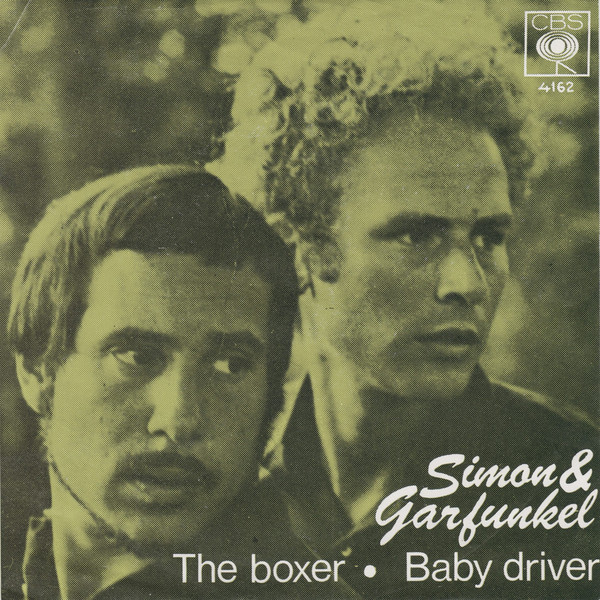
Simon and Garfunkel – The Boxer

This is a truly great song. Wonderfully written by Paul Simon. The song peaked #7 in the Billboard 100, #6 in the UK, #3 in Canada, and  #9 in New Zealand.

This song was not recorded in one take and done. It took over 100 hours to record, with parts of it done at Columbia Records studios in both Nashville and New York City. The chorus vocals were recorded in a church: St. Paul’s Chapel at Columbia University in New York. The church had a tiled dome that provided great acoustics. It was an interesting field trip for the recording crew who had to set up the equipment in the house of worship.

Paul Simon: “I think the song was about me: everybody’s beating me up, and I’m telling you now I’m going to go away if you don’t stop. By that time we had encountered our first criticism. For the first few years, it was just pure praise. It took two or three years for people to realize that we weren’t strange creatures that emerged from England but just two guys from Queens who used to sing rock’n’roll. And maybe we weren’t real folkies at all! Maybe we weren’t even hippies!” 


From Songfacts

With all this material to work with, a standard 8-track recorder wasn’t enough, so the album’s producer, Roy Halee, brought Columbia boss Clive Davis into the studio to demonstrate his problem and lobby for a new, 16-track recorder. Davis, who didn’t become a legendary record executive by turning down such requests, bought him the new machine.

Simon found inspiration for this song in The Bible, which he would sometimes read in hotels. The lines, “Workman’s wages” and “Seeking out the poorer quarters” came from passages.

Sometimes what is put in as a placeholder lyric becomes a crucial part of the song. That was the case here, as Simon used “Lie la lie” in place of a proper chorus because he couldn’t find the right words. Other examples of placeholders that worked include the “I know” chorus in “Ain’t No Sunshine” and Otis Redding’s whistling in “(Sittin’ On) The Dock Of The Bay.”

In a 1990 interview with SongTalk magazine, Simon said: “I thought that ‘lie la lie was a failure of songwriting. I didn’t have any words! Then people said it was ‘lie’ but I didn’t really mean that. That it was a lie. But, it’s not a failure of songwriting, because people like that and they put enough meaning into it, and the rest of the song has enough power and emotion, I guess, to make it go, so it’s all right. But for me, every time I sing that part, I’m a little embarrassed.”

Simon added that the essentially wordless chorus gave the song more of an international appeal, as it was universal.

The legendary session drummer Hal Blaine created the huge drum sound with the help of producer Roy Halee, who found a spot for the drums in front of an elevator in the Columbia offices. As recounted in the 2011 Making of Bridge Over Troubled Water documentary, Blaine would pound the drums at the end of the “Lie la lie” vocals that were playing in his headphones, and at one point, an elderly security guard got a big surprise when he came out of the elevator and was startled by Blaine’s thunderous drums.

The opening guitar lick came courtesy of the session player Fred Carter Jr., who Simon hired to play on the track. Simon would often use another guitarist to augment his sound.

This song was recorded about a year before the album was released.

Bob Dylan recorded a version of this on his 1970 album Self Portrait.


The Boxer

I am just a poor boy
Though my story’s seldom told
I have squandered my resistance
For a pocket full of mumbles
Such are promises
All lies and jests
Still a man hears what he wants to hear
And disregards the rest

When I left my home and my family
I was no more than a boy
In the company of strangers
In the quiet of the railway station
Running scared
Laying low, seeking out the poorer quarters
Where the ragged people go
Looking for the places
Only they would know

Lie la lie, lie la la la lie lie
Lie la lie, lie la la la la lie la la lie

Asking only workman’s wages
I come looking for a job
But I get no offers
Just a come-on from the whores
On Seventh Avenue
I do declare
There were times when I was so lonesome
I took some comfort there
Le le le le le le le

Lie la lie, lie la la la lie lie
Lie la lie, lie la la la la lie la la lie

Then I’m laying out my winter clothes
And wishing I was gone
Going home
Where the New York City winters
Aren’t bleeding me
Leading me
Going home

In the clearing stands a boxer
And a fighter by his trade
And he carries the reminders
Of every glove that laid him down
Or cut him till he cried out
In his anger and his shame
“I am leaving, I am leaving”
But the fighter still remains

Lie la lie, lie la la la lie lie
Lie la lie, lie la la la la lie la la lie
Lie la lie, lie la la la lie lie
Lie la lie, lie la la la la lie la la lie
Lie la lie, lie la la la lie lie
Lie la lie, lie la la la la lie la la lie
Lie la lie, lie la la la lie lie
Lie la lie, lie la la la la lie la la lie
Lie la lie, lie la la la lie lie
Lie la lie, lie la la la la lie la la lie
Lie la lie, lie la la la lie lie
Lie la lie, lie la la la la lie la la lie
Lie la lie, lie la la la lie lie
Lie la lie, lie la la la la lie la la lie
Lie la lie, lie la la la lie lie
Lie la lie, lie la la la la lie la la lie

Albert Hammond – It Never Rains In Southern California

This is one of those AM gold songs from the 70s.

Albert Hammond is a singer and songwriter who wrote this with  Mike Hazlewood. Their songs have been recorded by many artists, including Art Garfunkel, Johnny Cash, and Olivia Newton-John. Hazlewood died in May 2001 while vacationing in Italy. Other hits Mike helped Hammond write include “The Air That I Breathe” and “Free Electric Band.”

This song peaked at #5 in the Billboard 100 in 1972.

Albert Hammond: “One of my most important songs not only because I think it’s a great song and I love it and I think it tells the story of my life in a way, but also because I was the artist, the producer, the writer – I mean, everything was right, it was just like the right thing. If I hadn’t had that, I might have got slowly downhill, you know.”


From Songfacts

Hammond: “It never rains… was written in London, before we (Albert and Michael) came to Los Angeles, and we knew we were coming, and I’ve been telling Mike the story of me in Spain when I started and how I was asking for money outside of the train stations because I had no money to eat and I didn’t want to tell my parents. My cousin was on honeymoon then, and he came out of the train station and saw me, and I didn’t even know it was him… I just asked him for some money, too. And he said ‘you should be ashamed, I’m gonna tell your father,’ and I said ‘please, don’t tell him, he’ll go crazy and stop me doing this!’

And then he took me back into the hotel, I had a bath, he gave me some clean clothes and some money. I moved on, but he did tell my father, you know. All these things like ‘will you tell the folks back home I nearly made it’ and all that stuff came from that era of my life when I was struggling, trying to make it, trying to get from Morocco to Spain, from Spain to England, from England to America… That struggle you go through, that’s It never rains in Southern California, the story of my life.

Albert’s son Albert Hammond Jr. is a member of The Strokes.

It Never Rains In Southern California

Got on board a west bound 747
Didn’t think before deciding what to do
Oh, that talk of opportunities
TV breaks the movies
Rang true, sure rang true

Seems it never rains in southern California
Seems I’ve often heard that kind of talk before
It never rains in California
But girls don’t they warn ya
It pours, man, it pours

I’m out of work, I’m out of my head
Out of self respect, I’m out of bread
I’m underloved, I’m underfed, I wanna go home
It never rains in California
But girls don’t they warn ya
It pours, man it pours

Will you tell the folks back home I nearly made it
Had offers but don’t know which one to take
Please don’t tell them how you found me
Don’t tell them how you found me
Gimme a break, give me a break

Seems it never rains in southern California
Seems I’ve often heard this kind of talk before
It never rains in California
But girls don’t they warn ya
It pours, man it pours

Kinks – A Well Respected Man

Ray Davies wrote this song after the group’s 1965 tour of the United States. The tour did not go well, with infighting, fatigue, and conflict with the musician’s union that kept them from performing in the country for another four years.

Davies recovered from the tour with a vacation at the English resort town of Torquay, Devon. There, a wealthy hotel guest recognized him and asked Ray to play a round of golf. Far from being flattered by the invitation, he took great offense. “I’m not gonna play f–king golf with you,” “I’m not gonna be your caddy so you can say you played with a pop singer.”

The song peaked at #13 Billboard 100 but it didn’t chart in the UK.

A Well Respected Man

‘Cause he gets up in the morning,
And he goes to work at nine,
And he comes back home at five-thirty,
Gets the same train every time.
‘Cause his world is built ’round punctuality,
It never fails.

And he’s oh, so good,
And he’s oh, so fine,
And he’s oh, so healthy,
In his body and his mind.
He’s a well respected man about town,
Doing the best things so conservatively.

And his mother goes to meetings,
While his father pulls the maid,
And she stirs the tea with councilors,
While discussing foreign trade,
And she passes looks, as well as bills,
At every suave young man.

‘Cause he’s oh, so good,
And he’s oh, so fine,
And he’s oh, so healthy,
In his body and his mind.
He’s a well respected man about town,
Doing the best things so conservatively.

And he likes his own backyard,
And he likes his fags the best,
‘Cause he’s better than the rest,
And his own sweat smells the best,
And he hopes to grab his father’s loot,
When Pater passes on.

‘Cause he’s oh, so good,
And he’s oh, so fine,
And he’s oh, so healthy,
In his body and his mind.
He’s a well respected man about town,
Doing the best things so conservatively.

And he plays at stocks and shares,
And he goes to the regatta,
And he adores the girl next door,
‘Cause he’s dying to get at her,
But his mother knows the best about
The matrimonial stakes.

‘Cause he’s oh, so good,
And he’s oh, so fine,
And he’s oh, so healthy,
In his body and his mind.
He’s a well respected man about town,
Doing the best things so conservatively.

Bob Marley – Three Little Birds

A super positive song that I could listen to at any time. The song peaked at #17 in the UK in 1980 and re-charted at 76 in 1985.

The source of Marley’s inspiration for the lyrics of “Three Little Birds” remains disputed. They are partly inspired by birds that Marley was fond of that used to fly and sit next to his home. A friend of Marley, Tony Gilbert, was present at the time he was writing the song and said that Bob was inspired by things around him as he observed life.

Gilbert said he remembered pretty birds, canaries, who would come by the windowsill at Marley’s home.  However, some say the three female singers in ” I Threes” were the “birds” Marley was talking about. Sometimes he would ask them ‘What are my Three Little Birds saying?”

Either way, it’s a fantastic song.

From Songfacts

This uplifting tune from Bob Marley & The Wailers’ ninth studio album, Exodus, is famous for its reassuring refrain, “Don’t worry ’bout a thing, ’cause every little thing is gonna be alright” – a message Marley received from the birds that frequented his porch stoop in Kingston, Jamaica. “That really happened,” he told Sounds magazine. “That’s where I get my inspiration.”

Despite the troubles Marley faced in Jamaica – in 1976, he survived a politically motivated assassination attempt connected to his support of Prime Minister Michael Manley – the singer still viewed the island as sacred place. “JA is one of the heaviest places in the West spiritually, regardless of what a go on,” he explained.

Marley’s friend Tony “Gilly” Gilbert was present when the singer wrote the song and confirmed Marley had several feathered friends. “It was just amazing how he put the words for ‘Three Little Birds’ together in a flow,” Gilbert told Vivien Goldman, author of The Book of Exodus: The Making and Meaning of Bob Marley and the Wailers’ Album of the Century. “Bob got inspired by a lot of things around him, he observed life. I remember the three little birds. They were pretty birds, canaries, who would come by the windowsill at Hope Road.”

The I Threes, Marley’s vocal backing trio, insist the song is actually about them. Group member Marcia Griffiths (who taught us the Electric Slide) explained: “After the song was written, Bob would always refer to us as the Three Little Birds. After a show, there would be an encore, sometimes people even wanted us to go back onstage four times. Bob would still want to go back and he would say, ‘What is my Three Little Birds saying?'”

She continued: “‘Three Little Birds’ was our song, officially for I-Three. It was more or less expressing how we all came together, when he says, ‘Rise up this morning, smile with the rising sun.’ We loved it. Even when we were recording it, we knew that it was our song.”

Marley’s son Ziggy Marley and Sean Paul recorded this for the animated films Shark Tale (2004) and Surf’s Up (2007). Several other artists have covered the song, including Robbie Williams, Karen David, Gilberto Gil, Billy Ocean, Monty Alexander, Alvin and the Chipmunks. Britain’s Got Talent alumna Connie Talbot recorded a popular version for her 2008 album, Over The Rainbow. The single went to #3 on the UK Independent Singles Chart and #1 on the Billboard Hot Singles Sales Chart in the US.

In 2013, Hyundai used a version remixed by Marley’s son Stephen Marley and DJ Jason Bentley (from the Legend: Remixed album) in its All-New Assurance Connected Care Campaign to reflect the automobile manufacturer’s new safety standards. In 2018, the company revisited the tune, this time enlisting Maroon 5 to record it in the Hyundai Santa Fe promotion for the FIFA World Cup. Maroon 5 also released a music video for their version.

Marley’s eldest daughter, Cedella Marley, adapted this into the children’s book Every Little Thing in 2012 and, two years later, the off-Broadway musical Bob Marley’s Three Little Birds. The story follows a shy little boy who is coaxed by three little birds to go outside and play.

This was used on the TV shows Boston Legal (“Helping Hand,” 2006), 90210 (“Another, Another Chance,” 2010), Smash (“The Coup,” 2012), and The Handmaid’s Tale (“Birth Day,” 2017).

This was also featured in the movies Club Paradise (1986), Strange Days (1995), In Her Shoes (2005), I Am Legend (2007), Funny People (2009), Ramona and Beezus (2010), and Strange Magic (2015).

Three Little Birds

“Don’t worry about a thing
‘Cause every little thing gonna be alright
Singing’ “Don’t worry about a thing
‘Cause every little thing gonna be alright!”

Rise up this mornin’
Smiled with the risin’ sun
Three little birds
Pitch by my doorstep
Singin’ sweet songs
Of melodies pure and true
Saying’, (“This is my message to you”)

Singing’ “Don’t worry ’bout a thing
‘Cause every little thing gonna be alright.”
Singing’ “Don’t worry (don’t worry) ’bout a thing
‘Cause every little thing gonna be alright!”

Rise up this mornin’
Smiled with the risin’ sun
Three little birds
Pitch by my doorstep
Singin’ sweet songs
Of melodies pure and true
Sayin’, “This is my message to you”

Singin’ “Don’t worry about a thing, worry about a thing, oh!
Every little thing gonna be alright. Don’t worry!”
Singin’ “Don’t worry about a thing” I won’t worry!
“‘Cause every little thing gonna be alright.”

Singin’ “Don’t worry about a thing
‘Cause every little thing gonna be alright” I won’t worry!
Singin’ “Don’t worry about a thing
Cause every little thing gonna be alright.”
Singin’ “Don’t worry about a thing, oh no!
‘Cause every little thing gonna be alright!

Abbott and Costello… Who’s On First?

Abbott and Costello’s most famous routine. Whether you are a baseball fan or not…it is enjoyable. I wanted to know who wrote the routine or what inspired it.

Some have said “Who’s on First” was based on the names of actual minor leaguers and cup-of-coffee big leaguers such as Honus J. Hoehe (Who), Allie Watt (What) and Isaiah Donough (I Dunno)… but that sounds a little too good to be true.

Most historians believe that it was derived from various early skits performed in burlesque houses including one called “The Baker Scene” (which played on multiple meanings of the word “loaf,” from bread to laziness) and another routine named “Who Dyed” (about a man named “Who”). Various comics and comedy teams over the years expanded on the bit and varied it from show to show. Eventually, somehow, the subject of baseball got involved.

Over the years, usually in obituaries, various comedy writers (including Michael Musto, John Grant, and Irving Gordon) have been credited with the final form of “Who’s On First?” but determining full ownership has proven to be impossible.
Ultimately, one thing is for sure… Abbott and Costello made it their own.


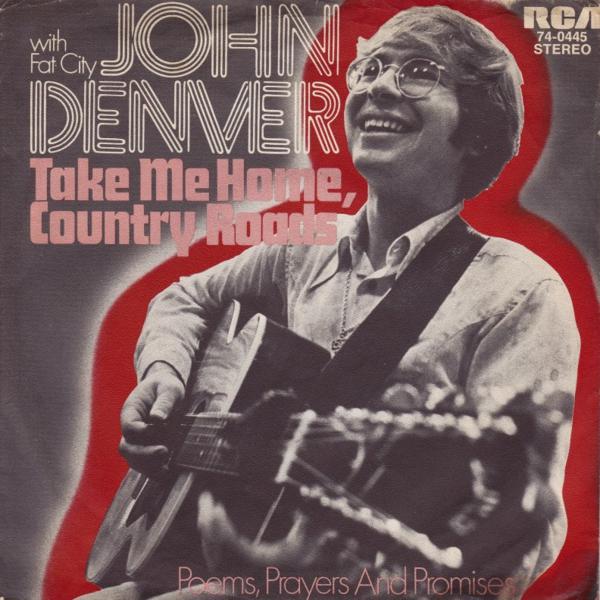
John Denver – Take Me Home Country Roads

This John Denver song I really like. Denver was a huge star in the early to mid-seventies.  I’m not a huge fan by any means but he did have a few songs I liked. He was a songwriter, musician, activist, actor, and he sold millions of records (over 33 million). He was never known to be cool or hip.

Denver was an easy target for critics and peers. Robert Christgau dubbed him “the blandest pop singer in history,” and comparing him to James Taylor…  “If James is a wimp, John is a simp, and that’s even worse.”

I don’t think all the criticism was fair. Some of his music was really good to great like Rocky Mountain High…

Denver wrote this song with his friends Bill and Taffy Danoff. Denver was in Washington, DC to perform with the Danoffs, and after the show, they went back to the couple’s home where they played him what they had of this song. Denver almost didn’t make it because he was in a car wreck and injured his thumb.

The Danoffs have stated they were hoping to get Johnny Cash to record this song when they wrote it. They almost didn’t play it for Denver because they didn’t think it fit his style.

Denver helped them complete the song, and the next night they sang it together on stage. Denver knew he had a hit song on his hands, and brought the Danoffs to New York where they recorded the song together – you can hear Bill and Taffy on background vocals.

The song peaked at #2 in the Billboard 100 and #3 in Canada in 1971.


From Songfacts

The country roads in this song are in West Virginia, but Denver had never even been to West Virginia. Bill and Taffy Danoff started writing the song while driving to Maryland – they’d never been to West Virginia either! Danoff got his inspiration from postcards sent to him by a friend who DID live there, and from listening to the powerful AM station WWVA out of Wheeling, West Virginia, which he picked up in Massachusetts when he was growing up.

Bill Danoff told NPR in 2011: “I just thought the idea that I was hearing something so exotic to me from someplace as far away. West Virginia might as well have been in Europe, for all I knew.”

The Danoffs were in a band called Fat City at the time they wrote this. They later formed the Starland Vocal Band, who had a big hit with “Afternoon Delight” in 1977. There was some speculation that Denver somehow screwed the Danoffs when he became famous and they remained in obscurity, but the couple always defended Denver in interviews, pointing out that he brought Fat City on tour and helped them get a record deal with his RCA/Windsong Records. Denver also recorded several other songs Bill Danoff wrote.

The Shenandoah River is in West Virginia, running right through Harper’s Ferry into the Potomac. The Blue Ridge Mountain Ranges run in a strip from northeast West Virginia to its southwest across the eastern part of the state. Clopper Road originates in Gaithersburg, Maryland. It was a single lane road, but is now a busy four-lane road that heads to Germantown, Maryland. No country road anymore… not even close! It is attainable by exiting off of I-270 at Exit 10.

This was released as a single in the spring of 1971. It broke nationally in mid-April, but moved up the charts very slowly, as Denver was a little-known singer. To this point, Denver’s biggest success was writing “Leaving On A Jet Plane,” which he performed as a member of The Chad Mitchell Trio but was a hit for Peter, Paul and Mary in 1969. Denver pushed RCA records to keep promoting “Take Me Home Country Roads,” and their persistence paid off when it became a huge hit that summer. It was Denver’s first hit, and the first of 13 US Top 40 hits he scored in the ’70s.

Denver charted earlier in 1971 with “Friends With You” at #47, but “Country Roads” established him as a crossover artist with appeal to Pop, Country and Easy Listening audiences. >>

Clopper Road is still there. It is a four lane road from Qince Orchard Boulevard to just past Rt. 118 where it returns to a two lane road. The end of Clopper Road is in a town called Boyds. From Rt. 118 to the end, the road is much like it was in 1969 through the mid-1980s.

In 1969, it really did seem idyllic in a way. Other than the farms and a few houses, there was nothing between Gaithersburg and Boyds other than the few stores and a few businesses in Germantown, and a gas station/country store at the corner of Clopper Road and Rt. 118.

Today, the road is built up from Quince Orchard Road to Seneca Creek, but the last mile or two is like it was back then. The concrete batch plant has been gone for a number of years, the old B&O railroad flag stop is now a MARC commuter rail stop for Boyds, but the rest of Clopper Road has been sold to housing developments. The trip from Rt. 118 to Boyds and to Dickerson beyond is still one of the nicest and peaceful drives in the Metropolitan area. >>

After hearing the first verse, most people feel compelled to sing the chorus, especially in a group environment or if alcohol is involved. The St. Louis Blues hockey team learned this on February 9, 2019 when they played the song during a break in the third period of a game against the Nashville Predators. When play resumed, they faded the song just as it was getting to the chorus, but the crowd sang it anyway and a tradition was born. It helped that the team was winning: they ended up going all the way to the Stanley Cup Finals for the first time in 49 years. Laura Branigan’s “Gloria” also soundtracked the team that season.

Take Me Home Country Roads

Almost heaven, West Virginia
Blue Ridge Mountains
Shenandoah River,
Life is old there
Older than the trees
Younger than the mountains
Blowin’ like the breeze

Country roads, take me home
To the place I belong
West Virginia, mountain momma
Take me home, country roads

All my memories gathered ’round her
Miner’s lady, stranger to blue water
Dark and dusty, painted on the sky
Misty taste of moonshine
Teardrops in my eye

Country roads, take me home
To the place I belong
West Virginia, mountain momma
Take me home, country roads

I hear her voice
In the mornin’ hour she calls me
The radio reminds me of my home far away
And drivin’ down the road I get a feelin’
That I should have been home yesterday, yesterday

Country roads, take me home
To the place I belong
West Virginia, mountain momma
Take me home, country roads

Country roads, take me home
To the place I belong
West Virginia, mountain momma
Take me home, country roads

Take me home, now country roads

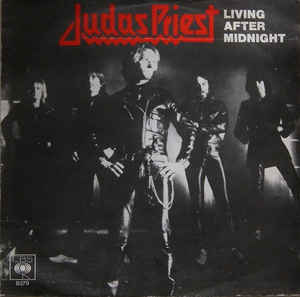
Judas Priest – Living After Midnight

Anyone who follows my posts knows I don’t follow heavy metal but a cool riff is a cool riff. I liked this one the first time I heard it.

John Lennon has a distant connection to this song. Judas Priest was renting Tittenhurst Park (John Lennon’s former home) in 1980 to record their album British Steel. As they were watching television…guitarist Glenn Tipton said they saw John Lennon’s Imagine video and were in the very same room where it was filmed… he said they could imagine the piano and the white walls…and how surreal it was…

Rob Halford actually got the inspiration for the lyrics for Living After Midnight as his bandmates kept him awake by blasting out riffs and drum beats in the studio below.

He came downstairs to complain and said, Hey, guys, come on. It’s gone midnight…and they wrote the song.


Living After Midnight

Living after midnight, rockin’ to the dawn
Lovin’ ’til the morning, then I’m gone, I’m gone

I took the city ’bout one A.M, loaded, loaded
I’m all geared up to score again, loaded, loaded
I come alive in the neon light
That’s when I make my moves right

Living after midnight, rockin’ to the dawn
Lovin’ ’til the morning, then I’m gone, I’m gone

Got gleaming chrome, reflecting steel, loaded, loaded
Ready to take on every deal, loaded, loaded
My pulse is racing, I’m hot to take
This motor’s revved up, fit to break

Living after midnight, rockin’ to the dawn
Lovin’ ’til the morning, then I’m gone, I’m gone

I’m aiming for ya
I’m gonna floor ya
My body’s coming
All night long

The air’s electric, sparkin’ power, loaded, loaded
I’m getting hotter by the hour, loaded, loaded
I set my sights and then home in
The joint starts flying when I begin

Living after midnight, rockin’ to the dawn
Lovin’ ’til the morning, then I’m gone, I’m gone
[repeat and fade]

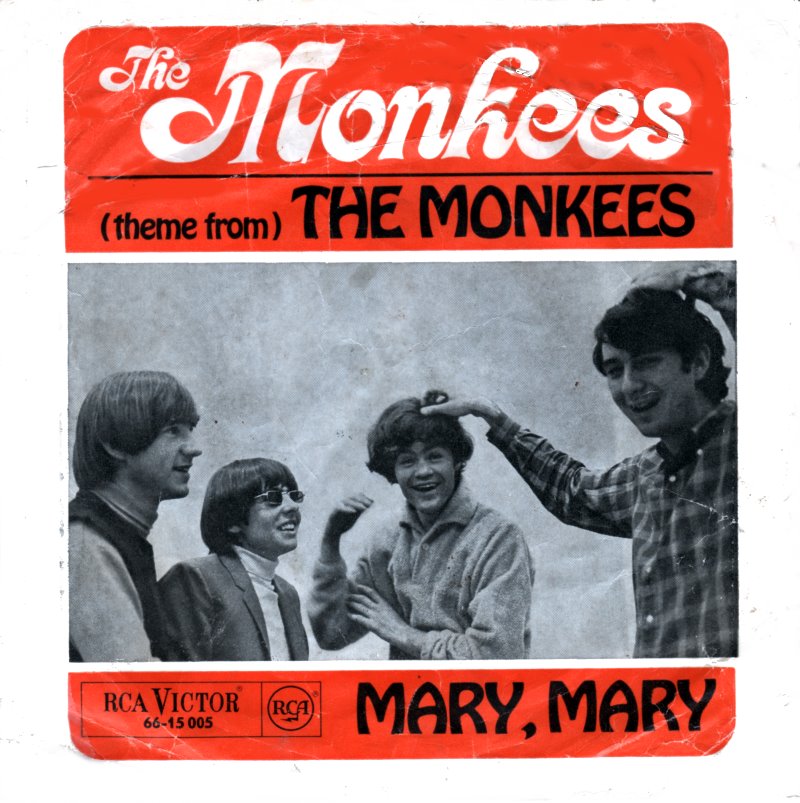
Monkees – Mary, Mary

It’s a misconception that the Monkees completely relied on other people to write all of their songs. They also started playing their own instruments starting with the third album. Michael Nesmith wrote this song before he joined The Monkees. The song was the B side to The Monkees Theme.

Loved this song when I was growing up. I still like the song and the drum sound they recorded. It has been covered by different artists. It was first recorded by The Paul Butterfield Blues Band on their East-West album on Elektra in 1966. The president of Elektra actually caught some flap once the Monkees’ version came out because people couldn’t believe that a Monkee actually wrote it.

Run-D.M.C. also covered this in 1988 on their album Tougher Than Leather.

Micheal Nesmith: Nesmith: “That song was written to be a hit. I knew it would be a hit. I never once thought of me doing the lead on that one. Mickey was my choice for that.”

Mary, Mary

Mary, Mary, where you goin’ to?
Mary, Mary, can I go too.
This one thing I will vow ya,
I’d rather die than to live without ya.

Mary, Mary, where you goin’ to?
Mary, Mary, tell me truly
What did I do to make you leave me.
Whatever it was I didn’t mean to,

You know I never would try and hurt ya.
Mary, Mary, where you goin’ to?
What more, Mary, can I do
To prove my love is truly yours?

I’ve done more now than a clear-thinkin’ man would do.
Mary, Mary, it’s not over.
Where you go, I will follow.
‘Til I win your love again

And walk beside you,
But until then.
Mary, Mary, where you goin’ to?

Mary, where you goin’ to?
Mary, Mary, Mary, Mary, Mary, where you goin’ to

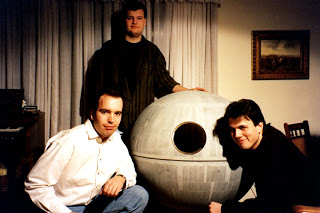
Where is…The original Death Star model from Star Wars now?

It’s unbelievable how close this famous movie prop came to being lost.

The model used in the film along with some other props were thought to be garbage after the movie finished filming.

Many of the props were kept in a facility called Dollar Moving and Storage. The storage unit was rented by the studio and upon completion of postproduction, the studio decided they no longer wanted to pay rent and ordered everything in storage to be discarded. An employee named Doug W. rescued many of the props from the garbage including the Death Star. In a world before ebay…who knows what was lost.

Doug displayed the Death Star in his home in California for about a decade. Around 1988, Doug moved to Missouri and stored the Death Star at his mother’s antique shop (Sutter’s Mill Antiques, later renamed The Mexican Hillbilly) in Missouri.

Todd Franklin, a Star Wars collector living in the area, drove by the antique shop and was immediately convinced it had to be the original Death Star model. Todd wondered how and why the original Death Star was in Missouri. He made some calls and was convinced it was the one. He was going to buy it but before he got back it was sold to another person named Mark who was the owner of a country and western music show called Star World. Mark displayed the Death Star in the lobby.

In 1994 Todd, his brother Pat, and friend Tim Williams traveled to Star World who was going out of business. The Death Star was being used as a trash can in the corner! Todd made an offer and bought it on the spot. All three owned it and contacted Lucasfilm but they did not want to buy it back.

In 1999 Gus Lopez contacted Todd, Pat, and Tim and negotiated a price. Now, Gus owns the famous Death Star.

Since then, Lopez has had the original Death Star on display in a custom-made case in his home, and he even loaned it to the Museum of Pop Culture in Seattle (though Lopez refers to it by its former name: the EMP (Experience Music Project) Museum) for a five-year stint.

Gus Lopez: “The EMP gave it top billing in the museum with a prominent spot at the center of one of the main rooms. I got a kick out of reading about the Death Star in local tourist literature and walking by the Death Star on display at the museum to hear conversations from people telling their stories about what Star Wars meant to them. And now the Death Star is back home, where I see it every day. And when I look at it, I am still amazed it survived its long journey and is sitting right in front of me.”

Image result for original death star


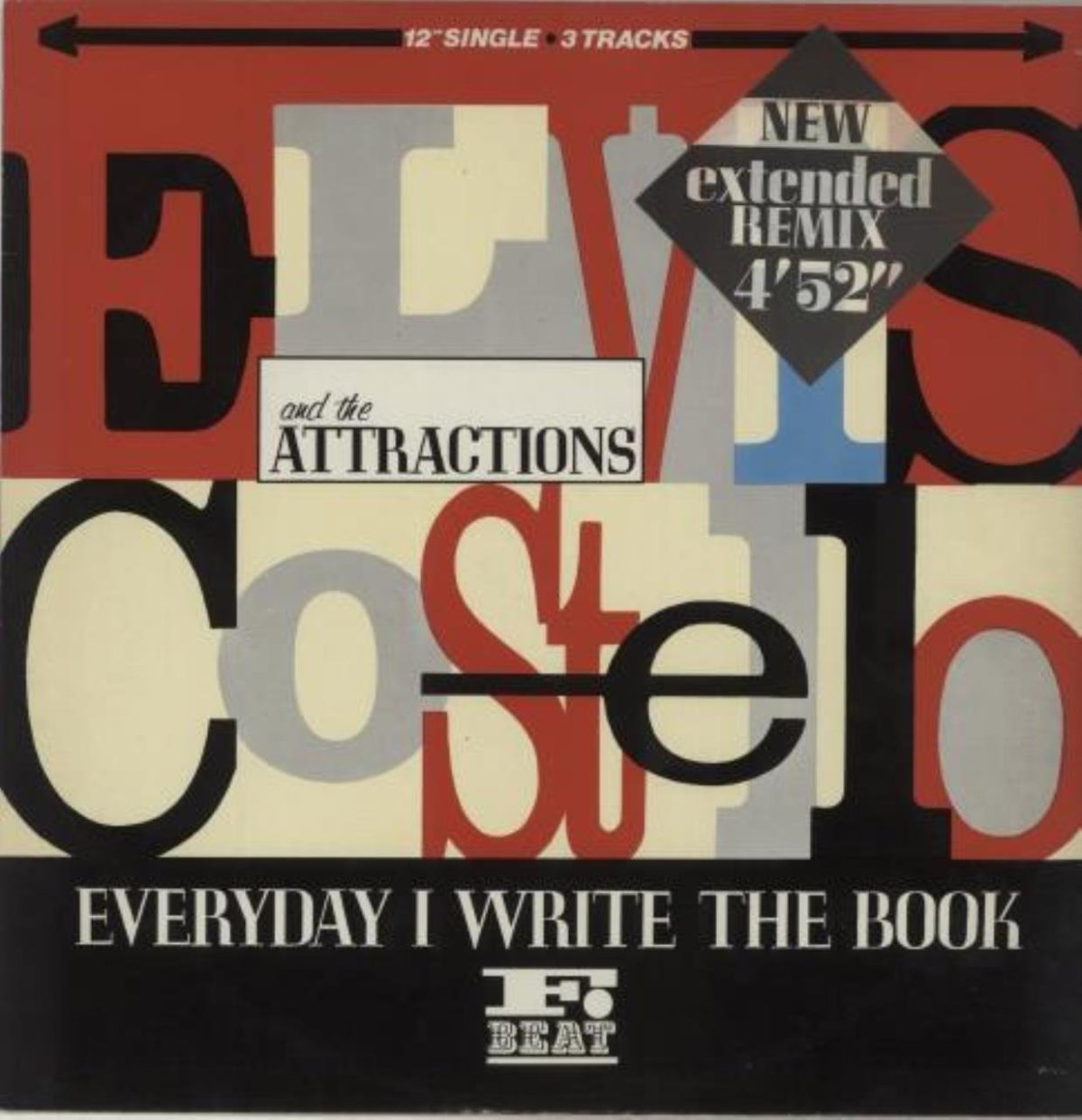
Elvis Costello – Everyday I Write The Book

This was Costello’s first American hit. He was a regular on the UK charts since his first release in 1977, but American singles never hit. Despite support in America from independent record stores, college radio and music journalists, his only chart showings to this point were two singles that bubbled under on the Hot 100: “Watching The Detectives” #108 and “Accidents Will Happen #101.

This song peaked at #36 in the Billboard 100 and #28 in the UK in 1983.

I do remember that MTV pushed the video pretty hard. The push helped the single. It wasn’t until 1989 that he managed another Top 40 hit, “Veronica,” which was helped by MTV.

Elvis Costello: “I wrote it just for a joke,” “But that’s often the way to write a hit record (laughs). We had a group on the road with us that was trying to write these very self-conscious pop jangly kind of songs and that was their trip. So I thought I’d tease them by writing something that was like what they did, only sort of better than them. I wrote it in ten minutes.”

From Songfacts

In this song, Elvis Costello is a novelist who tells his girlfriend that everything that happens in their relationship is source material for his book. On one hand, it’s very sweet that he’s taking the time to chronicle their relationship, but something about it is also kind of creepy, as he’s documented her transgressions and is now willing to use her own words against her in their arguments.

Esquire magazine once called this “the most intellectually satisfying pop song ever written.” 

When Costello wrote this song, he envisioned it with a retro Merseybeat popularized by Liverpool groups of the ’60s (think Gerry and the Pacemakers and very early Beatles recordings). His producer, Clive Langer, heard hit potential in the song and convinced Costello to do a more contemporary arrangement, which they modeled on Marvin Gaye’s “Sexual Healing.” The result was a modern R&B sound that served the song well.

“Everyday I Write The Book” got a push from MTV, which gave the video some spins and helped introduce Costello to younger audience. Radio stations in the US remained lukewarm on Costello, as he didn’t fit in on the Contemporary Hits or Rock playlists. Not that he was concerned; Costello’s indifference to popular taste earned him even more respect from his American fans. 

The video was directed by Don Letts, who did a lot of work with The Clash and The Pretenders. In the clip, Elvis and his band (The Attractions) play in a studio stetting, wearing muted colors in stark contrast to the two backup singers, Caron Wheeler and Claudia Fontaine, who sport colorful dresses and head wraps. Old movie clips and random images like a man typing with boxing gloves are intercut throughout. These rather random videos did very well on early MTV, as they gave viewers a good look at the artist and provided some memorable visuals.

This was used in the films The Wedding Singer (1998) and Brooklyn Rules (2007). It is also heard in the 2001 Gilmore Girls episode, “The Breakup: Part 2.”

Elvis Costello told Uncut that he’s wanted “to write songs as good as Nick Lowe,” since he was 17. He added: “‘Everyday I Write the Book’ is a knockoff of Nick’s ‘When I Write the Book’ with a little Rodgers and Hart thrown in.'”

Everyday I Write The Book

Don’t tell me you don’t know what love is
When you’re old enough to know better
When you find strange hands in your sweater
When your dreamboat turns out to be a footnote
I’m a man with a mission in two or three editions

And I’m giving you a longing look
Everyday, everyday, everyday I write the book

Chapter one we didn’t really get along
Chapter two I think I fell in love with you
You said you’d stand by me in the middle of chapter three
But you were up to your old tricks in chapters four, five and six

The way you walk
The way you talk, and try to kiss me, and laugh
In four or five paragraphs
All your compliments and your cutting remarks
Are captured here in my quotation marks

Don’t tell me you don’t know the difference
Between a lover and a fighter
With my pen and my electric typewriter
Even in a perfect world where everyone was equal
I’d still own the film rights and be working on the sequel

Stevie Ray Vaughan – Willie The Wimp

In 1984 Willie M. ”Wimp” Stokes Jr., described as a Chicago underworld figure who was gunned down on the steps of Roberts Motel at 79th Street and Vincennes Avenue. Such a violent death was not unheard of in Willie the Wimp`s social circles-but the style of his funeral was.

Willie’s dad, Willie Morris “Flukey” Stokes gave his son an extravagant goodbye. He was in the same line of work as his son.


If you want to see the coffin with Mr. Stokes inside… you can go to here “Willie The Wimp and Cadillac Coffin.” I didn’t really want to post that.

Bill Carter and Ruth Ellsworth wrote the song after seeing a newspaper column about the story. Bill Carter released his version on his 1985 album Stompin’ Grounds. Stevie Ray Vaughn started to play the song in concert and it was released on his live album Live Alive in 1986.

Stevie was in the upper echelon of guitar players…right along with Hendrix and Clapton.

Willie The Wimp

Willie the Wimp was buried today,
They laid him to rest in a special way.
Sent him off in the finest style
That casket-mobile really drove ’em wild
Southside Chicago will think of him often
Talkin’ ’bout Willie the Wimp and his Cadillac coffin,
Willie the Wimp and his Cadillac coffin

That casket, it looked like a fine Seville
He had a vanity license and a Cadillac grille
Willie was propped up in the driver’s seat
He had diamonds on his fingers and a smile sweet
Fine red suit had the whole town talkin’
Talkin’ ’bout Willie the Wimp and his Cadillac coffin
Willie the Wimp and his Cadillac coffin

Oh, Cadillac to Heaven he was wavin’ the banner
He left like he lived, in a lively manner
With a-hundred dollar bills in his fingers tight
He had flowers for wheels and a-flashin’ headlights
He been wishin’ for wings, no way he was walkin’
Talkin’ ’bout Willie the Wimp and his Cadillac coffin
Yeah, Willie the Wimp and his Cadillac coffin

Tonic – If You Could Only See Me

I remember this song in the 90s and never knew much about the song or band. It does have a catchy hook. The song was released to radio and MTV, but in the interest of album sales, it was not sold as a single. This made the song ineligible for the Billboard Hot 100 but pushed sales of their debut album Lemon Parade past one millionThe song peaked at #1 in the Billboard Mainstream Rock Charts in 1997.

Tonic frontman Emerson Hart wrote this song after a tense phone call with his mother. Hart was 21 years old and planning to get married – not what his mother had in mind. She tried to talk him out of it, but you can’t argue with love. Emerson told her: “If you could only see the way she loves me, then maybe you would understand,” and then he hung up.

In the end, his mother was right: it didn’t work out with the girl and they never got married.

From Songfacts

This was Tonic’s first single, but it almost didn’t make the album. The band got a deal with Polydor Records after playing clubs for a few years in the Los Angeles area. When it came time to record their debut album, Emerson Hart wasn’t sure if they should use “If You Could Only See,” since it was a very vulnerable song and he wasn’t sure how it would be received. Polydor, however, loved it and made sure it was the debut single.

 The song made #1 on the Mainstream Rock chart and received very consistent airplay – it lasted an astonishing 63 weeks on the Airplay chart, peaking at #11 in December 1997, long after it had been released.

Tonic had a minor hit with “Open Up Your Eyes” (#68 Airplay), but never came close to matching “If You Could Only See.”

The music video finds Emerson Hart searching desperately for the girl who is being kept away from him. It was directed by Ramaa Mosley, whose other credits include the Creed videos for “What’s This Life For” and “Higher,” and the movie The Brass Teapot.

Mosley looked to French cinema for inspiration – notably the 1960 film Breathless and 1963 movie Contempt. “I started envisioning this combination of a love story mixed with this kind of communist oppression,” she said in her Songfacts interview. “I locked myself in my house and listened to the song hundreds of times and the story just kept building.”


If You Could Only See

If you could only see the way she loves me
Then maybe you would understand
Why I feel this way about our love
And what I must do
If you could only see how blue her eyes can be when she says

When she says she loves me
Well you got your reasons
And you got your lies
And you got your manipulations
They cut me down to size
Sayin’ you love but you don’t
You give your love but you won’t
If you could only see the way she loves me

Then maybe you would understand
Why I feel this way about our love
And what I must do
If you could only see how blue her eyes can be when she says

When she says she loves me
Seems the road less traveled
Show’s happiness unraveled
And you got to take a little dirt

To keep what you love
That’s what you gotta do
Sayin’ you love but you don’t
You give your love but you won’t
You’re stretching out your arms to something that’s just not there

Sayin’ you love where you stand
Give your heart when you can
If you could only see the way she loves me
Then maybe you would understand
Why I feel this way about our love
And what I must do
If you could only see how blue her eyes can be when she says
When she says she loves me

Sayin’ you love but you don’t
You give your love but you won’t
Sayin’ you love where you stand
Give your heart when you can

If you could only see the way she loves me
Then maybe you would understand
Why I feel this way about or love
And what I must do
If you could only see how blue her eyes can be when she says
When she says she loves me

Bob Dylan – A Simple Twist Of Fate

This song was on Blood On The Tracks, a brilliant album by Bob released in 1975. This wasn’t a hit but it was a great song. The album though was a hit…peaking at #1.

As with other Dylan songs, the words keep me in this one. I also like the way he sings it…he sings it like he has lived it. People tell me it’s a sin, To know and feel too much within, I still believe she was my twin, but I lost the ring, She was born in spring, but I was born too late, Blame it on a simple twist of fate.

This album was made when he was having trouble with his wife Sara. Dylan denies the album is about the two of them.

In Rolling Stone 500 Greatest Albums of all time in the early 2000s, Blood on the Tracks came in at Number 16.

Jacob Dylan about Blood on the Tracks: ‘When I’m listening to ‘Subterranean Homesick Blues,’ I’m grooving along just like you. But when I’m listening to Blood on the Tracks, that’s about my parents.’ 

From Songfacts

This song is from Blood on the Tracks, the 15th studio album by Bob Dylan, which made the album charts at #1 in the US and #4 in the UK. Blood on the Tracks is also legendary amongst Bob Dylan fans and critics, regarded as one of the high points of his career and standard against which future Bob Dylan albums were compared.

Dylan’s son Jakob Dylan has stated that the songs from Blood on the Tracks are “his parents talking.” Although Dylan denies that the album content is autobiographical, most of the lyrics have a confessional nature.

Covers of “Simple Twist of Fate” include Joan Baez (1975), The Jerry Garcia Band (1991), Concrete Blonde (1994), Sean Costello (2005), The Format (2005), Bryan Ferry (2007), Jeff Tweedy (2007), and Stephen Fretwell (2007). The Jeff Tweedy cover was also used on the soundtrack for the film I’m Not There .

A Simple Twist Of Fate

They sat together in the park
As the evening sky grew dark
She looked at him and he felt a spark
Tingle to his bones
‘Twas then he felt alone
And wished that he’d gone straight
And watched out for a simple twist of fate

They walked along by the old canal
A little confused, I remember well
And stopped into a strange hotel
With a neon burnin’ bright
He felt the heat of the night
Hit him like a freight train
Moving with a simple twist of fate

A saxophone someplace far-off played
As she was walkin’ on by the arcade
As the light bust through a beat-up shade
Where he was waking up
She dropped a coin into the cup
Of a blind man at the gate
And forgot about a simple twist of fate

He woke up, the room was bare
He didn’t see her anywhere
He told himself he didn’t care
Pushed the window open wide
Felt an emptiness inside
To which he just could not relate
Brought on by a simple twist of fate

He hears the ticking of the clocks
And walks along with a parrot that talks
Hunts her down by the waterfront docks
Where the sailors all come in
Maybe she’ll pick him out again
How long must he wait?
One more time, for a simple twist of fate

People tell me it’s a sin
To know and feel too much within
I still believe she was my twin
But I lost the ring
She was born in spring
But I was born too late
Blame it on a simple twist of fate

Jackie DeShannon – Put a Little Love in Your Heart

Well written and great pop song. I remember it from the movie Scrooged where now that film and this song goes hand in hand. Nineteen years after this song was a hit for Jackie DeShannon, Annie Lennox and Al Green covered it for the 1988 film Scrooged. Their version reached #9 in the US and #28 in the UK and reached the Top 40 in five other countries.

DeShannon co-wrote this song with her brother Randy Myers and  Jimmy Holiday.

Jackie is a great songwriter and was inducted into the Songwriting Hall Of Fame in 2010. Other songs that she wrote or co-wrote are Bette Davis Eyes, What The World Needs Now is Love, Santa Fe / Beautiful Obsession and many more.

This song peaked at #4 in the Billboard 100 and #12 in Canada in 1969.


Jackie DeShannon: “My brother Randy was playing this little riff and I said, ‘Gee, I really like that riff, that’s great.’ All of a sudden, ‘Think of your fellow man, lend him a helping hand, put a little love in your heart,’ came just like that. I owe some of that to my mom because she was always saying that people should put a little love in their heart when things are not so good. I’d like to say it was very difficult, but it was one of those songs you wait a lifetime to write.”

Jimmy Page was said to write Tangerine about DeShannon after their breakup.

From Songfacts

She is best known as a singer, but Jackie DeShannon is one of the most talented tunesmiths of her time – she was inducted into the Songwriters Hall of Fame in 2010. She wrote many of her own songs, including this one, which she composed with her younger brother Randy Myers (Jackie’s real name is Sharon Lee Myers) and a Soul singer at her label (Liberty Records), Jimmy Holiday.

In our interview with Jackie DeShannon, she told the story: 

Jimmy Holiday’s contribution came after Jackie and her brother started composing it, as he helped polish the song. Holiday, DeShannon and Myers went on to write Jackie’s hits “Love Will Find A Way” (#40, 1969) and “Brighton Hill” (#82, 1970).

DeShannon recorded a demo of this song which she had a hard time beating in the recording session. In our interview, she recalled struggling to get the right feel. “After about eight hours we finally got it and I just felt that I had done probably one of my best vocals ever,” she said. “But when I came back in to hear it somehow my vocal was erased. Somebody must have hit something. I called my mom and I said, ‘You know what, I’m just heartbroken. I’ve probably done the best vocal ever – at least it felt to me that it was right on the button – and I have to go do it again.’ So I went right back in there fast, before I lost the muse. When I got to hear the new vocal I felt that, of course, I wished I could have had the other one. But who’s to say? Maybe this was the better vocal.”

The song was released as the first single from the album in June of 1969, and it gained momentum when a radio station in Atlanta started playing it. In August, the New York radio station WABC made it a “Pick of the Week,” and stations around the country jumped on it, sending the song to its peak chart position of #4 on August 30. Said DeShannon: “The airplay was great, and in those days if you had a record in rotation, that could be very good money. I was actually able to buy a car for my dad, and I bought a house for my parents.”

Put A Little Love In Your Heart

Think of your fellow man, lend him a helping hand
Put a little love in your heart
You see, it’s getting late, oh, please don’t hesitate
Put a little love in your heart

And the world will be a better place
And the world will be a better place for you and me
You just wait and see

Another day goes by, and still the children cry
Put a little love in your heart
If we want the world to know, we won’t let hatred grow
Put a little love in your heart

And the world will be a better place
And the world will be a better place for you and me
You just wait and see, wait and see

Take a good look around and if you’re lookin’ down
Put a little love in your heart
I hope when you decide kindness will be your guide
Put a little love in your heart
And the world will be a better place
And the world will be a better place for you and me
You just wait and see
People now
Put a little love in your heart
Each and every day
Put a little love in your heart
There’s no other other
Put a little love in your heart
We ought to
Put a little love in your heart
Come on and
Put a little love in your heart