Beatles – Lucy In The Sky With Diamonds

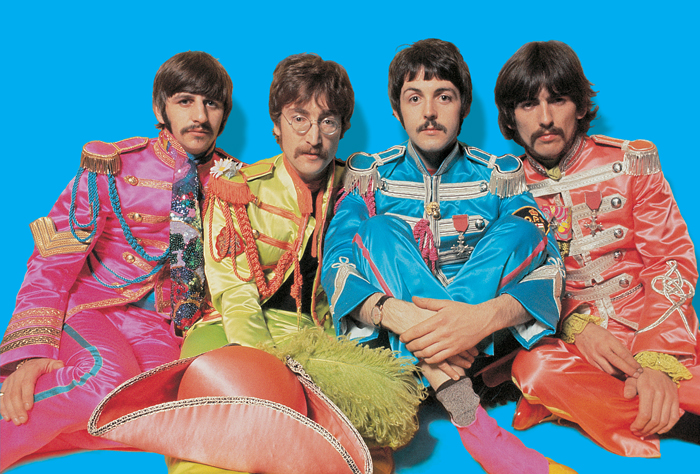
My favorite psychedelic song and it was on Sgt Peppers Lonely Hearts Club Band. The “Lucy” who inspired this song was Lucy O’Donnell (later Lucy Vodden), who was a classmate of John’s son Julian Lennon when he was enrolled at the private Heath House School, in Weybridge, Surrey. Lucy in the Sky with Diamonds — Lupus Trust UK

It was in a 1975 interview that Lennon said, “Julian came in one day with a picture about a school friend of his named Lucy. He had sketched in some stars in the sky and called it Lucy In The Sky With Diamonds.”

Many thought Lucy In The Sky With Diamonds was about LSD because of the initials but John denied it all of his life. I believe John because he was honest about much worse than this…John went to great lengths to deny any drug connotations involved in this song.

John did say he was inspired by Lewis Carroll’s Alice In Wonderland. He wrote the song with help from Paul. One of the highlights of this song is Paul’s bass playing. His walking bass line builds suspense through the song and then kicks in with the chorus.

This was banned by the BBC for what they thought were drug references. A Day In The Life was also banned off of the same album.

John Lennon: “I didn’t even see it on the label. I didn’t look at the initials. I don’t look – I mean I never play things backwards. I listened to it as I made it. It’s like there will be things on this one, if you fiddle about with it. I don’t know what they are. Every time after that though I would look at the titles to see what it said, and usually they never said anything.”

From Songfacts

The identity of the real Lucy was confirmed by Julian in 2009 when she died of complications from Lupus. Lennon re-connected with her after she appeared on a BBC broadcast where she stated: “I remember Julian and I both doing pictures on a double-sided easel, throwing paint at each other, much to the horror of the classroom attendant… Julian had painted a picture and on that particular day his father turned up with the chauffeur to pick him up from school.”

Confusion over who was the real Lucy was fueled by a June 15, 2005 Daily Mail article that claimed the “Lucy” was Lucy Richardson, who grew up to become a successful movie art director on films such as 2000’s Chocolat and 2004’s The Life And Death Of Peter Sellers. Richardson died in June 2005 at the age of 47 of breast cancer.

Lennon affirmed this on the Dick Cavett Show, telling the host, “My son came home with a drawing of a strange-looking woman flying around. He said, ‘It’s Lucy in the sky with diamonds.’ I thought, ‘That’s beautiful.’ I immediately wrote the song about it.”

It’s not just fans that didn’t believe him: Paul McCartney said it was “pretty obvious” that this song was inspired by LSD.

In our interview with Donovan, who was good friends with John Lennon and joined The Beatles on their 1968 retreat to India, he made the point that Lennon often thought in terms of artwork, and like Donovan did on this song “Wear Your Love Like Heaven,” Lennon painted images in his head that became the lyrics for this song. “When we put the painter’s brush down and we picked up the guitar, a lot of the songwriters started ‘painting’ songs,” he said. “You’d just have to think of John’s ‘Picture yourself on a boat on a river’ – you’re actually in a movie or you’re in a painting. ‘Tangerine trees and marmalade skies’ – he’s painting.

The images Lennon used in the song were inspired by the imagery in Through The Looking-Glass, the sequel to the book Alice In Wonderland. “It was Alice in the boat,” Lennon explained in a Playboy interview. “She is buying an egg and it turns into Humpty Dumpty. The woman serving in the shop turns into a sheep and the next minute they are rowing in a rowing boat somewhere and I was visualizing that.”

George Harrison played a tambura on this track. It’s an Indian instrument similar to a sitar that makes a droning noise. He had been studying with Indian musician Ravi Shankar, who is the father of Norah Jones.

Elton John released a cover version of this song in 1974 that hit #1 in the US the first week of 1975. Elton is the only artist to top the tally with a Beatles cover, although Peter & Gordon took “A World Without Love,” which was written by Lennon and McCartney, to #1 in 1964.

John Lennon sang and played guitar on Elton’s “Lucy in the Sky With Diamonds,” but reportedly forgot some of the chords and needed Davey Johnston, Elton John’s guitarist, to help him out. Lennon made a surprise appearance in Elton’s Thanksgiving concert in New York and performed three songs, which proved to be his last public performance.

Actor William Shatner, who played Captain Kirk on Star Trek, covered this in his dramatic, spoken-word style. In at least one poll, this version was voted the worst Beatles cover of all time.

In 1974, Johanson and Gray named the 3 million-year-old Australopithecus fossil skeleton they discovered (the oldest ever found) Lucy, after this song because it was playing on the radio when Johanson and his team were celebrating the discovery back at camp. >>

Lennon said “The girl with kaleidoscope eyes” turned out to be Yoko: “There was also the image of the female who would someday come save me… a ‘girl with kaleidoscope eyes’ who would come out of the sky. It turned out to be Yoko, though I hadn’t met Yoko yet. So maybe it should be ‘Yoko in the Sky with Diamonds.'”

During the media controversy over this song in June of 1967, Paul McCartney admitted to a reporter that the band did experiment with LSD. 

In 2004, McCartney addressed the issue of drugs in an interview with the Daily Mirror newspaper: “‘Day Tripper,’ that’s one about acid. ‘Lucy In The Sky,’ that’s pretty obvious. There are others that make subtle hints about drugs, but it’s easy to overestimate the influence of drugs on The Beatles’ music. Just about everyone was doing drugs in one form or another, and we were no different, but the writing was too important for us to mess it up by getting off our heads all the time.”

A group called John Fred and his Playboy Band had a #1 hit in 1968 with “Judy In Disguise (with Glasses),” a song that is a parody of “Lucy in the Sky With Diamonds.”

In the Anthology one of the Beatles referred to being on LSD as like seeing through a kaleidoscope. Although Lennon denied this is about drugs, it does refer to “The girl with kaleidoscope eyes.” 

This song is very distinctive musically: It’s in three different keys and uses two different beats. 

Lennon admitted to British journalist Ray Connolly in an interview around the time of the break-up of the Beatles that he didn’t think he sang this song very well. “I was so nervous I couldn’t sing,” he said, “but I like the lyrics.”

In 2004 the Harvard-Smithsonian Center for Astrophysics announced the discovery of the universe’s largest known diamond, white dwarf star BPM 37093. Astronomers gave the star the catchier name of “Lucy” from this song.

Lucy In The Sky With Diamonds

Picture yourself in a boat on a river
With tangerine trees and marmalade skies
Somebody calls you, you answer quite slowly
A girl with kaleidoscope eyes

Cellophane flowers of yellow and green
Towering over your head
Look for the girl with the sun in her eyes
And she’s gone

Lucy in the sky with diamonds
Ah

Follow her down to a bridge by a fountain
Where rocking horse people eat marshmallow pies
Everyone smiles as you drift past the flowers
That grow so incredibly high

Newspaper taxis appear on the shore
Waiting to take you away
Climb in the back with your head in the clouds
And you’re gone

Lucy in the sky with diamonds
Ah

Picture yourself on a train in a station
With plasticine porters with looking glass ties
Suddenly someone is there at the turnstile
The girl with the kaleidoscope eyes

Lucy in the sky with diamonds
Ah
Lucy in the sky with diamonds
Ah
Lucy in the sky with diamonds

Allman Brothers – Dreams

According to Gregg, this was written in Los Angeles after the breakup of Hourglass, the band he and his brother Duane had there. They opened up for acts such as Buffalo Springfield and The Doors. They were then forced by the record company to play more pop-style music so Duane quit and headed back home to Macon Georgia.

Gregg stayed behind to fulfill the contract and a little later Duane called him up to come to Macon and try out for a new band he put together. Gregg traveled to Macon and sat behind the keyboard and played them his songs. This song won them over and they soon became the Allman Brothers.

This was on their first album The Allman Brother’s Band and it peaked at #188.

Gregg’s autobiography on first playing with the Brothers: They asked me if I had any songs with me, and I told them I had twenty-two, so they told me to play them. I’d get through with one, and they’d ask me, “What else you got?” I’d play ’em another one and they were like, “That was kinda neat, a little potential; what else you got?”

After twenty of them, I’m going, “Oh fuck, I might be without a job here in a minute.” I had two songs left—“Not My Cross to Bear” and “Dreams.” I showed them “Dreams” first, and let me tell you, they joined right in. We proceeded to sit down, learn that song the same way you hear it today, and I was in, brother. They loved it. I bet we played that thing eleven times in a row, and the more we played it, the better it got.

From Songfacts

Gregg Allman wrote this sorrowful song about unrealized dreams when he was living in Los Angeles. He left Georgia to get his music career going there, and wrote a bunch of songs before returning and forming The Allman Brothers Band with his brother Duane. This was the song that won over his bandmates. Allman wrote in his 2012 biography: “I showed them ‘Dreams,’ and let me tell you, they joined right in. We learned that song the way you hear it today, and I was in, brother.”

Listen to the guitar part – you’ll hear Duane Allman switch to bottleneck guitar midway through the song.

“Dreams” was used as the title of The Allman Brothers 1989 5-album boxed set. An unreleased studio version of this song was used on it.

Molly Hatchet released a version of this in 1978. 

This is one of the few songs Gregg Allman wrote on the Hammond B-3 organ.

Here is a live version at the Fillmore BUT someone didn’t plug the input in Gregg’s mic until a few minutes.


Dreams

Just one more mornin’
I had to wake up with the blues
Pulled myself out of bed, yeah
Put on my walkin’ shoes
And went up on the mountain
To see what I could see
The whole world was fallin’, right down in front of me

‘Cause I’ve a hunger for the dreams I’ll never see, yeah, baby
Ah, help me baby, or this will surely be the end of me, yeah

Pull myself together
Put on a new face
Climb down off the hilltop, baby
Get back in the race

‘Cause I’ve a hunger for dreams I’ll never see, yeah, babe
Lord, help me baby, or, this will surely be the end of me, yeah

Pull myself together
Put on a new face
Climb down off the hilltop, baby
And get back in the race

‘Cause I’ve a hunger for the dreams I’ll never see, yeah, baby
Ah, ah, help me baby, or this will surely be the end of me, yeah, ah
Yeah, yeah, yeah

John Mellencamp – Cherry Bomb

One of my favorite John Mellencamp songs. Back when it was released I liked it because it was a catchy song. Now I like it more because I can relate to it about growing up. I will admit though…I always thought he said “That’s when a spoke was a spoke“… I thought what? Must be some crazy Indiana thing….then I thought…no that can’t be right…it must be “That’s when a smoke was a smoke“….Wrong again…it is… “That’s when a sport was a sport.

The prominence of the accordion and violin in this are usually not associated with Rock and Roll but it makes the song sound fresh. The song peaked at #8 in the Billboard 100, #5 in Canada, and #4 in New Zealand.

It was on the album The Lonesome Jubilee released in 1987. The album peaked at #6 in the Billboard Album Chart in 1987.

Cherry Bomb

Well I lived on the outskirts of town
In an eight room farmhouse, baby
When my brothers and friends were around
There was always somethin’ doin’
Had me a couple of real nice girlfriends
Stopped by to see me every once in a while
When I think back about those days
All I can do is sit and smile

That’s when a sport was a sport
And groovin’ was groovin’
And dancin’ meant everything
We were young and we were improvin’
Laughin’, laughin’ with our friends
Holdin’ hands meant somethin’, baby
Outside the club “Cherry Bomb”
Our hearts were really thumpin’
Say yeah yeah yeah
Say yeah yeah yeah

The winter days they last forever
But the weekends went by so quick
Went ridin’ around this little country town
We were goin’ nuts, girl, out in the sticks
One night, me with my big mouth
A couple guys had to put me in my place
When I see those guys these days
We just laugh and say do you remember when

That’s when a sport was a sport
And groovin’ was groovin’
And dancin’ meant everything
We were young and we were improvin’
Laughin’, laughin’ with our friends
Holdin’ hands meant somethin’, baby
Outside the club “Cherry Bomb”
Our hearts were really thumpin’
Say yeah yeah yeah
Say yeah yeah yeah

Say yeah yeah yeah
Say yeah yeah yeah

Seventeen has turned thirty-five
I’m surprised that we’re still livin’
If we’ve done any wrong
I hope that we’re forgiven
Got a few kids of my own
And some days I still don’t know what to do
I hope that they’re not laughing too loud
When they hear me talkin’
Like this to you

That’s when a sport was a sport
And groovin’ was groovin’
And dancin’ meant everything
We were young and we were improvin’
Laughin’, laughin’ with our friends
Holdin’ hands meant so much, baby
Outside the club “Cherry Bomb”
Our hearts were really thumpin’
Say yeah yeah yeah
Say yeah yeah yeah

Edgar Winter – Free Ride

It doesn’t get much more seventies than this song.

This was released as the first single from the album, but it went nowhere. After Frankenstein went to #1, “Free Ride” was released again, this time going to #14 in America. The song lived on as a radio favorite.

Dan Hartman is credited as the only songwriter on this track even though Edgar Winter made some contributions. Winter didn’t get greedy, knowing that Hartman made some contributions to tracks that were credited to Edgar alone.

Free Ride is a song included in the Edgar Winter Group album They Only Come Out At Night in 1972. The initial riff is played by Dan Hartman who also sings lead on the song.


From Songfacts

The “free ride” can be literally interpreted as a road trip, but it’s really about a spiritual journey. The song was written and sung by Dan Hartman, who had recently joined the Edgar Winter Group, but Winter added the lyrics:

We got to do better, it’s time to begin
You know all the answers must come from within

The song offers salvation of sorts, with Hartman offering us direction when we don’t know where to turn:

So I’ve come here to give you a hand
And lead you into the promised land

The song isn’t an endorsement of a specific religion, but a call to look inside ourselves for answers. Winter was trying to make that message more clear in the lyrics he added.

Edgar Winter played Woodstock before he even released an album. That’s because his older brother, Johnny Winter, was a celebrated blues guitarist who used Edgar in his band. When Edgar struck out on his own in 1970, it was with a horn-heavy band he assembled for his first album. His next two albums were with a group he called White Trash, which had more jazz leanings. In 1972, he started clean with a new band: the Edgar Winter Group. Dan Hartman, who was in a Pennsylvania band called the Legends, was his first recruit. Hartman had already written “Free Ride” (which is one of the reasons Winter wanted him), so it was one of the first songs this new group recorded.

Hartman played guitar on the album version of the song, with Randy Jo Hobbs on bass and Johnny Badanjek on drums (when the group fully formed, it was with Ronnie Montrose on guitar, Chuck Ruff on drums, and Hartman on bass). Speaking with Songfacts, producer Rick Derringer said that on the single version, which they recorded later, he played lead guitar.

Winter was adept at keyboard, synthesizer, saxophone and drums. On “Free Ride,” he played a Hohner clavinet, which is what Stevie Wonder played on Superstition. Winter generated the wind sounds with his new toy: an ARP 2600 synthesizer, the instrument featured on the album’s big hit, “Frankenstein.”

This was produced by Rick Derringer, who produced the entire They Only Come Out at Night as well as Winter’s previous two albums. When Ronnie Montrose formed his own band in 1973, Derringer stepped in as guitarist for the Edgar Winter Group.

Free Ride

The mountain is high, the valley is low
And you’re confused on which way to go
So I’ve come here to give you a hand
And lead you into the promised land, so

Come on and take a free ride (free ride)
Come on and stand here by my side
Come on and take a free ride

All over the country, I’ve seen it the same
Nobody’s winning at this kind of game
We gotta do better, it’s time to begin
You know all the answers must come from within, so

Come on and take a free ride (free ride)
Come on and stand here by my side
Come on and take a free ride

Yeah, yeah, yeah, yeah

Ooh, ooh, ooh
Ooh, ooh, ooh
Ooh, ooh, free ride

Come on and take a free ride
Yeah, yeah, yeah, yeah
Come on and take a free ride
Yeah, yeah, yeah, yeah

Come on and take a free ride
Yeah, yeah, yeah, yeah
Come on and take a free ride
Yeah, yeah, yeah, yeah

Come on and take a free ride
Yeah, yeah, yeah, yeah
Come on and take a free ride
Yeah, yeah, yeah, yeah

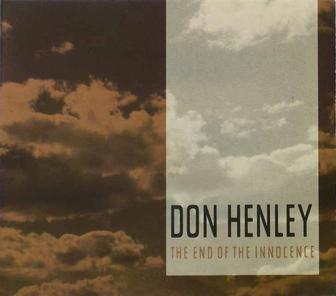
Don Henley – The End of the Innocence

Bruce Hornsby played piano on this and wrote this with Henley.  I did like Don Henley’s solo albums in the 80s. I had this album and I wore it out in the late 80s. This one is probably my favorite Henley album. I prefer his solo music to the Eagles.

When the Eagles broke up in 1980, Joe Walsh (loved The Confessor ) and Glenn Frey also launched solo careers. They all did fairly well, but Henley was the most successful. The Eagles re-formed in 1994 for their Hell Freezes Over tour.

The End of the Innocence peaked at #8 in the Billboard 100, #3 in Canada, and #48 in the UK.

The End of the Innocence album peaked at #8 in the Billboard Album Charts.

The End Of The Innocence was Henley’s third solo album. He didn’t release another for 11 years.

From Songfacts

The “Tired old man that we elected king” is a reference to US president Ronald Reagan. There are a lot of political overtones in the song, as Henley strongly opposed Reagan’s agenda.

The line about “Beating ploughshares into swords” is a distortion of Isaiah 2:4 in which Isaiah describes the end times: “And he shall judge among the nations, and shall rebuke many people: and they shall beat their swords into plowshares, and their spears into pruninghooks: nation shall not lift up sword against nation, neither shall they learn war any more.”

The inversion of the words most likely hints at the decline of the number of family farms and the increase in US military power in the ’80s as a signal of the end times of innocence. 

David Fincher directed the music video. Around this time, he was taking the form to a new level, with cinematic textures and storylines that would later appear in his films (The Game, Fight Club, The Girl with the Dragon Tattoo). Other videos he directed around this time include Madonna’s “Vogue” and Aerosmith’s “Janie’s Got A Gun.”

Bob Dylan often performed this on his 2002 US tour.

You can’t the get original video on youtube from Donny…he doesn’t allow it…so here is a live version.

The End of the Innocence

Remember when the days were long
And rolled beneath a deep blue sky
Didn’t have a care in the world
With mommy and daddy standing by

When happily ever after fails
And we’ve been poisoned by these fairy tales
The lawyers dwell on small details
Since daddy had to fly

But I know a place where we can go
Still untouched by man
We’ll sit and watch the clouds roll by
And the tall grass wave in the wind

You can lay your head back on the ground
And let your hair fall all around me
Offer up your best defense
But this is the end

This is the end of the innocence
O’ beautiful, for spacious skies
But now those skies are threatening
They’re beating plowshares into swords

For this tired old man that we elected king
Armchair warriors often fail
And we’ve been poisoned by these fairy tales
The lawyers clean up all details

Since daddy had to lie
But I know a place where we can go
And wash away this sin
We’ll sit and watch the clouds roll by

And the tall grass wave in the wind
Just lay your head back on the ground
And let your hair spill all around me
Offer up your best defense

But this is the end
This is the end of the innocence
Who knows how long this will last
Now we’ve come so far, so fast

But, somewhere back there in the dust
That same small town in each of us
I need to remember this
So baby give me just one kiss

And let me take a long last look
Before we say good bye
Just lay your head back on the ground
And let your hair fall all around me

Offer up your best defense
But this is the end
This is the end of the innocence

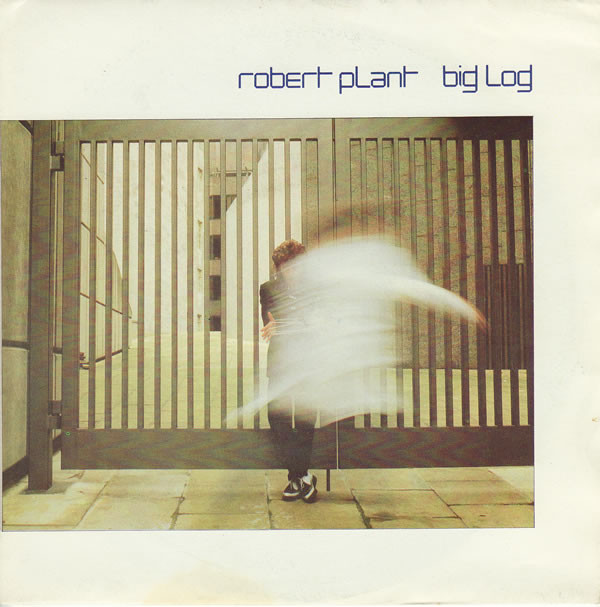
Robert Plant – Big Log

A 1966 Mustang is what I think of when I hear this song. That was my first car in 1983. My mom foolishly got me what is now a classic car. Not a good car to give a 16-year-old. When I heard this song I knew Robert wasn’t in Zeppelin anymore. It was a smart thing to distance himself at the time.

What I remember the most is the guitar parts played by Robbie Blunt. I remember the licks he plays just as much as the words Plant sings. It’s a great song to listen to on a long car trip.

A Big Log is common lingo of tractor-trailer drivers. It is the book in which their road hours are logged, therefore the connection between the road and love and the countless hours we all log on both…

The song peaked at #20 in the Billboard 100, #23 in Canada, #11 in the UK, and #7 in New Zealand in 1983. The album was The Principle of Moments that peaked at #8 in the Billboard Album Chart, #7 in the UK, #1 in Canada, and #

Phil Collins played drums on this and 5 other tracks on the album. He also played drums on Plant’s previous album Pictures At Eleven.


From Songfacts

In the video, Plant’s classic car overheats at a desolate desert gas station, which causes him to muse upon lost love. 

This was Robert Plant’s first hit as a solo artist after the break up of Led Zeppelin.

Some people know this song as “My Love Is In League With The Freeway.” The phrase “Big Log” does not appear in the lyrics.

The name “Big Log” is likely meaningless. Plant’s solo work (up until Now And Zen) and work with Led Zeppelin often featured songs with titles that had little or nothing to do with the lyrics. Also from The Principle Of Moments are the tracks “Messin’ With A Mekon,” “Horizontal Departure” and “Stranger Here… Than Over There.” 

Big Log

My love is in league with the freeway
It’s passion will rise as the cities fly by
And the tail lights dissolve in the coming of night
And the questions and thousands take flight

My love is miles in awaiting
The eyes that just stare and the glance at the clock
In the secret that burns and the pain that won’t stop
And it’s fueled with the years

Leading me on (leading me on)
Leading me down the road
Driving me on (driving me on)
Driving me down the road

My love is exceeding the limit
Red eyed and fevered with the hum of the miles
Distance and longing and my thoughts do collide
Should I rest for a while and decide

Your love is cradled in knowing
Eyes in the mirror still expecting their prey
Sensing too well when the journey is done
There is no turning back
No
There is no turning back

On the run

My love is in league
With the freeway
Oh with the freeway
And the coming of the night time
My love
My love
Is in league with the freeway


Pretenders – Back On The Chain Gang

The “picture of you” Chrissie Hynde sings about is a picture she found in her wallet of Ray Davies, lead singer and songwriter of The Kinks. Hynde and Davies were a couple and had a daughter together. This song started off about him, but the meaning changed when Honeyman-Scott died.

The song turned into a tribute to James Honeyman-Scott, the Pretenders guitarist who died of a drug overdose in 1982 at age 26. Scott’s death was followed by bass player Pete Farndon’s 10 months later. Farndon had been kicked out of the band because of his drug problems and died of an overdose.

The song peaked at #5 in the Billboard 100, #5 in Canada, #14 in New Zealand, and #17 in the UK in 1983.


From Songfacts

This is a very emotional song. Chrissie Hynde would sometimes tear up when performing it.

A Chain Gang is a group of convicts who are chained together while they do manual labor, usually outside.

This was the first Pretenders single featuring Billy Bremner and Tony Butler, who replaced Farndon and Honeyman-Scott.

This was released as a single almost two years before the album came out.

Back On The Chain Gang

I found a picture of you, oh oh oh oh
What hijacked my world that night
To a place in the past
We’ve been cast out of? Oh oh oh oh
Now we’re back in the fight
We’re back on the train
Oh, back on the chain gang

A circumstance beyond our control, oh oh oh oh
The phone, the TV and the news of the world
Got in the house like a pigeon from hell, oh oh oh oh
Threw sand in our eyes and descended like flies
Put us back on the train
Oh, back on the chain gang

The powers that be
That force us to live like we do
Bring me to my knees
When I see what they’ve done to you
But I’ll die as I stand here today
Knowing that deep in my heart
They’ll fall to ruin one day
For making us part

I found a picture of you, oh oh oh oh
Those were the happiest days of my life
Like a break in the battle was your part, oh oh oh oh
In the wretched life of a lonely heart
Now we’re back on the train
Oh, back on the chain gang

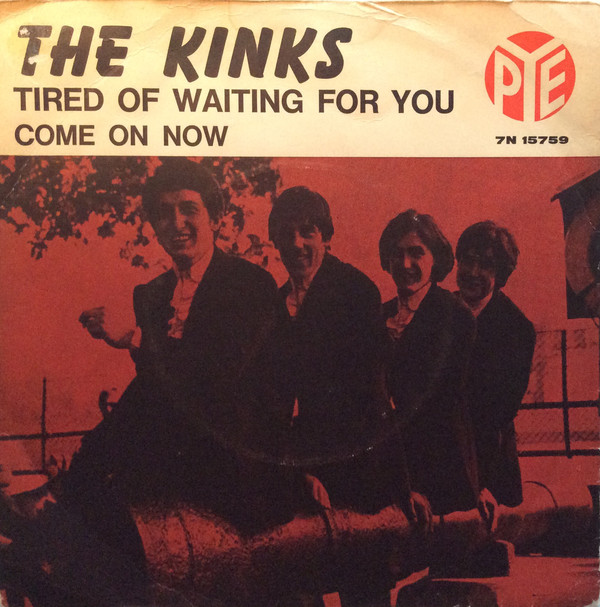
Kinks – Tired Of Waiting

The Kinks are a band that I saw in 1983. Along with The Who and Paul McCartney they were among the best bands, I saw live.

Kinks lead singer Ray Davies wrote this song while he was a student at Hornsey School of Art in London. Ray was running out of ideas, so he decided to record the song he had written in college. The group put down the backing track, but he couldn’t remember the words, so he went home and wrote them the next day on the train ride into the studio.

This was released as the first single from the album Kinda Kinks. “Tired of Waiting for You” was a hit, peaking at #6 in the Billboard 100, #1 in the UK, #3 in Canada in 1965.

Dave Davies: “The recording went well but there was something missing and it was my raunchy guitar sound. Ray and I were worried that putting that heavy-sounding guitar on top of a ponderous song might ruin it. Luckily it enhanced the recording, giving it a more cutting, emotional edge. In my opinion ‘Tired Of Waiting’ was the perfect pop record.”

From Songfacts

When the Kinks released their first album in 1964, they scored a huge hit with the Davies-penned “You Really Got Me,” which was followed by the sound-alike “All Day And All Of The Night.”

In this song, Ray Davies sings about a girl who has him under her spell. Problem is, she keeps stringing him along and it’s wearing him out. The vocal is suitably weary, lacking that adrenaline rush of their previous hits. This discontent would play out for real throughout 1965 as The Kinks were dispatched to one show after another, doing promotional appearances along the way. It quickly became clear that there was a great deal of animosity in the band and that they couldn’t keep up the pace for long.

Tired Of Waiting

So tired
Tired of waiting
Tired of waiting for you

So tired
Tired of waiting
Tired of waiting for you

I was a lonely soul
I had nobody till I met you
But you keep a-me waiting
All of the time
What can I do?

It’s your life
And you can do what you want
Do what you like
But please don’t keep a-me waiting
Please don’t keep a-me waiting

‘Cause I’m so tired
Tired of waiting
Tired of waiting for you

So tired
Tired of waiting
Tired of waiting for you

I was a lonely soul
I had nobody till I met you
But you keep a-me waiting
All of the time
What can I do?

It’s your life
And you can do what you want
Do what you like
But please don’t keep a-me waiting
Please don’t keep a-me waiting

‘Cause I’m so tired
Tired of waiting
Tired of waiting for you

So tired
Tired of waiting
Tired of waiting for you
For you
For you

Lynyrd Skynyrd – I Know A Little

The reason I like this song is caught in the intro. The guitar in this is a lot of fun. Unlike most Lynyrd Skynyrd songs this one was not partly written by Ronnie Van Zant. The new guitar player Steve Gaines wrote this before he joined them.

Gaines replaced Ed King as the band’s guitarist in 1976, but died in the 1977 plane crash that also claimed the lives of lead singer Ronnie Van Zant and Gaines’ sister Cassie, who was a backup singer for the group. This song provides a glimpse of songwriting and guitar talent.

Steve Gaines was a special talent. I personally believe he would have gone far in music outside of that band. There is guitar playing on Street Survivors that you never heard with that band before. Very sophisticated chord patterns and riffs with songs like “I Never Dreamed.”

This song was the B side to What’s Your Name.

From Songfacts

You won’t find diatribes on the complexities of interpersonal relationships in the Skynyrd catalog, but you will find simple explanations. This song is a great example.

Why do people get the blues? From digging what they can’t use. And if you want to hold on to a man, a good way to do it is through commitment. You only need to know a little about love – the rest you can guess.

This is a great example of Skynyrd guitarist Steve Gaines’ contributions to the band. He wrote the song himself, and also wrote or co-wrote three other songs on the album. as Van Zant sings about a guy who has a strong feeling that his girl is cheating on him.

Skynyrd guitarist Gary Rossington told Guitar School magazine, July 1993, that he’d never heard anybody, including the current guitarists in the band, play the picking on this song quite right – the way Steve Gaines did.

This is one of many Skynyrd songs that was never released as a single but endured as a classic track in their catalog. It earned lots of airplay on Classic Rock radio and became one of their most popular live songs, performed at most of their shows when they re-grouped after the plane crash.

Steve Gaines recorded this before he joined Lynyrd Skynyrd.

I Know A Little

Yes sir

Well the bigger the city, well the brighter the lights
The bigger the dog, well the harder the bite
I don’t know where you been last night
But I think mama, you ain’t doin’ right

Say I know a little
I know a little about it
I know a little
I know a little ’bout it
I know a little ’bout love
And baby I can guess the rest

Well now I don’t read that daily news
‘Cause it ain’t hard to figure
Where people get the blues
They can’t dig what they can’t use
If they stick to themselves
They’d be much less abused

Say I know a little
Lord I do know a little about it
I know a little
I know a little ’bout it
I know a little ’bout love
Baby I can guess the rest
Play me a little, oh yeah
Yeah

Well if you want me to be your only man
Said listen up mama, teach you all I can
Do right baby, by your man
Don’t worry mama, teach you all I can

Say I know a little
Lord I do know a little about it
I know a little
I know a little ’bout it
I know a little ’bout love
Baby I can guess the rest
Well I know a little ’bout love
Baby I want your best

Happy Days influence on Pop Culture

I remember the phrases that were on the show and phrases that the show spawned after it went off the air…like “Jump The Shark” and the “Chuck Cunningham Syndrome” (more below on them)

I watched Happy Days as a kid and even got the theme as a single. The show first aired in 1974 and finally came to a halt in 1984. Ever since then it’s gone into syndication.

Happy Days was centered around Ritchie Cunningham (Ron Howard) and his friends and family but the Fonz (Henry Winkler) character soon eclipsed Ritchie. The show portrayed 1950s life as a teenager but it did mirror the problems all teenagers encounter.

Fonz was everywhere in the seventies. Kids at school would do the hair in the mirror thing. If I only had a nickel every time I heard “heeeeyyyy” I would be a rich man. T-Shirts, lunch boxes, notebooks, and anything “Happy Days” could be printed on was… Phrases included Sit On It, Exactamundo, Bucko, and more became popular…Yowsah Yowsah Yowsah!

Two more phrases came because of the show. Jump the Shark and the Chuck Cunningham Syndrome but more in them in a minute.

Richie had some understanding parents… Howard and Marion Cunningham were always there with a solution and he had a sometimes bratty but typical little sister Joanie. His best friends were Potsy and Ralph Malph who would mostly get Richie in trouble.

Happy Days also spawned a number of spin-offs, including the hit shows Laverne & Shirley and Mork & Mindy. We won’t discuss Joanie Loves Chachi…no that didn’t happen.

In the Seventies, a 50s revival was happening at the time and this show certainly added to it. Movies like Grease, American Graffiti, and The Last Picture Show were hits also.

Now some fun stuff.

Jump the Shark – A definition… “(of a television series or movie) reach a point at which far-fetched events are included merely for the sake of novelty, indicative of a decline in quality”

This originated from Happy Days. It was the episode where Fonzie jumps over a shark while on water-skis. This was way outside the original storyline of the show. If you want to know which one…Season 5 Episode 3 of a three-part episode storyline.

The Chuck Cunningham Syndrome – One of the definitions I found…  occurs when a character in a television mysteriously vanishes from the show. No write-off, no death, not even a passing explanation of what happened to the character.

This originated from Happy Days. Poor Chuck was Ritchie’s brother and he is in a total of 11 episodes in the first two seasons. After that, we never see nor hear anything from Chuck again. Did aliens abduct him? Was he in the Witness Protection program? Was he a spy? Was he a figment of the family’s imagination? Did he grow up to be Alice Cooper?

This is where “Jump The Shark” was born…Yea, a guy from Milwaukee is going to water ski and jump a shark…with a leather jacket on.

Talking Heads – Psycho Killer

There are bands that are hard to tell apart from other bands…and then there are bands like Devo and The Talking Heads that sound like no one else.

Psycho Killer is a song from their 1977 album Talking Heads: 77. It was the only song from the album to appear on the Billboard charts, peaking at #92 in the Billboard 100.

Part of the chorus and the bridge are in French. The verse translates to “What I did, that evening, what she said, that evening fulfilling my hope I throw myself towards glory.” The chorus lyric “Qu’est-ce que c’est?” means “What is this?”

The lyrics were said to be inspired by the character Norman Bates in the movie Psycho.

David Byrne: “Chris and Tina helped me with some of the French stuff. I realized, ‘That holds up. That’s a song.’ I may have been inspired by other things when I was writing it, but I hadn’t heard anything quite like it before. I was also writing completely from the character’s point of view. We played it. People liked it. I thought, ‘Oh, I can do more.'”


From Songfacts

This was the result of lead singer David Byrne trying to write an Alice Cooper song, but it came out much more introspective. It ended up being about the thoughts of a murderer.

The “Fa Fa” part comes from an Otis Redding song called “Fa-Fa-Fa-Fa-Fa (Sad Song).” Redding and other Soul singers were a big influence on Talking Heads.

Byrne wrote this two years before it was recorded. It was Talking Heads’ first album.

Byrne never thought this would be a hit. He considered it a “silly song” at the time, and was surprised when it took off.

The Tom Tom Club, a group led by former Talking Heads Tina Weymouth and Chris Frantz, often plays this at their concerts with Tina singing the lead vocal.

This is the first song played in the Talking Heads movie Stop Making Sense.

An acoustic version was the flip side of the single.

This appears on the live albums Stop Making Sense and The Name Of This Band Is Talking Heads.

Artist to cover this song include Barenaked Ladies, Phish, Brand New, Local H and Velvet Revolver.

The 2017 Selena Gomez hit “Bad Liar” samples the bassline from this track. David Byrne has no problem with it. “I would have an issue if somebody took, say, ‘This Must Be The Place,’ which is a very personal love song,” he told Rolling Stone. “Other than that, yeah, repurpose the stuff.”

Psycho Killer

I can’t seem to face up to the facts
I’m tense and nervous and I can’t relax
I can’t sleep ’cause my bed’s on fire
Don’t touch me I’m a real live wire

Psycho Killer
Qu’est-ce que c’est
Fa-fa-fa-fa-fa-fa-fa-fa-fa-far better
Run run run run run run run away oh oh
Psycho Killer
Qu’est-ce que c’est
Fa-fa-fa-fa-fa-fa-fa-fa-fa-far better
Run, run, run, run, run, run, run, away oh oh oh
Yeah yeah yeah yeah!

You start a conversation you can’t even finish it
You’re talking a lot, but you’re not saying anything
When I have nothing to say, my lips are sealed
Say something once, why say it again?

Psycho Killer
Qu’est-ce que c’est
Fa-fa-fa-fa-fa-fa-fa-fa-fa-far better
Run run run run run run run away oh oh oh
Psycho Killer
Qu’est-ce que c’est
Fa-fa-fa-fa-fa-fa-fa-fa-fa-far better
Run, run, run, run, run, run, run, away oh oh oh oh!
Yeah yeah yeah yeah!

Ce que j’ai fais, ce soir la
Ce qu’elle a dit, ce soir la
Realisant mon espoir
Je me lance, vers la gloire, OK
Yeah yeah yeah yeah yeah yeah yeah yeah yeah yeah
We are vain and we are blind
I hate people when they’re not polite

Psycho Killer
Qu’est-ce que c’est
Fa-fa-fa-fa-fa-fa-fa-fa-fa-far better
Run run run run run run run away oh oh oh
Psycho Killer
Qu’est-ce que c’est
Fa-fa-fa-fa-fa-fa-fa-fa-fa-far better
Run, run, run, run, run, run, run, away oh oh oh
Yeah yeah yeah yeah oh!

Who – I’m Free

After reading the John Entwistle biography I’ve been listening to the Who for the past week and a half. Tommy is not my favorite Who album…but the album does contain a lot of good songs. Tommy did make a huge mark in pop culture…a movie and Broadway play has been made from the story.

The riff is simple and powerful. A very good song that adds to Tommy. Like some of the other songs…I’m Free was written before Tommy was thought of but Pete fit what songs he had with the new ones to make the story.

Tommy was the breakthrough album for the Who in America. A concept album about a deaf, dumb, and blind boy who…you guessed it…loves pinball. On the album the Who’s sound is subdued but on tour, they presented it loud and aggressive as only the Who could be.

The album peaked at #4 in the Billboard Album Charts in 1970. I’m Free peaked at #37 in the Billboard 100 in 1969.

Pete Townshend: ‘I’m Free’ came from ‘Street Fighting Man.’ This has a weird time/shape and when I finally discovered how it went, I thought ‘well blimey, it can’t be that simple,’ but it was and it was a gas and I wanted to do it myself.

The guitar sound in this version sends shivers down my spine. Compare it to the album version below this one.

I’m Free

I’m free
I’m free
And freedom tastes of reality
I’m free
I’m free
An’ I’m waiting for you to follow me

If I told you what it takes
To reach the highest high
You’d laugh and say ‘nothing’s that simple’
But you’ve been told many times before
Messiahs pointed to the door
And no one had the guts to leave the temple!

I’m free
I’m free
And freedom tastes of reality

I’m free
I’m free
An’ I’m waiting for you to follow me

How can we follow?
How can we follow?

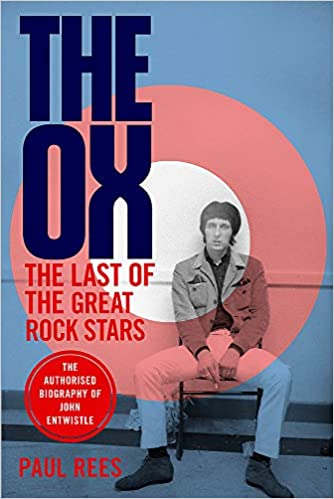
The Ox: The Authorized Biography of The Who’s John Entwistle…. by Paul Rees

When I see the word “authorized” I get really skeptical that they will not tell the complete story. This one proved me wrong. John’s son Christopher had said that this book was going to be warts and all. He was correct in that. I was super excited to read this. In the past year, I re-read Pete Townshend’s autobiography, Roger Daltrey’s autobiography, and re-read Keith Moon’s biography by Tony Fletcher and to top it off the Kenney Jones biography.

John actually wrote 4 chapters himself in 1990 when he wanted to write his own book. He soon grew tired of it and just stored it away. Rees did manage to incorporate some of what he wrote that included stories about him and Moon I never heard. John Entwistle is the least written about of the four. Any info on him is nice and a lot of this was new to me. Rees goes over the highlights and you don’t get dragged down at any point. The only thing I didn’t like was…like Daltrey’s autobiography it’s short…only 320 pages long.

The book goes through the history of the Who that Who fans know but with a lot of anecdotes. I found out more about John’s life than I ever knew. You see where he developed his black humor and he was probably the best pure musician in that band. I would recommend this book to any rock music fan. You get some funny stories also…

One about the Who opening up for the Beatles and listening to them through monitors in the dressing room rolling on the floor laughing hearing The Beatles sing obscene words to their songs “I Want To Hold Your ****”…A Hard Day’s ****. because the screaming was so loud and they couldn’t be heard out front.

Why I looked forward to this book…

___________________________________________________________________________________________

John was a bass hero of mine growing up. I started off learning trying to learn the riffs he did by slowing Who albums with my finger so the riffs would be slower…but they were still fast. Most bass players fill in the empty space but with the Who, there wasn’t much empty space because of Moon’s playing. He played what amounted to lead bass and it worked well…his harmonics made up for the lack of other instruments.

Keith Altham (journalist): John was an enigma. That he was the best bass guitarist of his generation is not in dispute, but because of the peculiar demands placed upon him by The Who he wasn’t a bass player in the accepted sense of the term because he didn’t play bass like anyone else, any more than Keith Moon played the drums like anyone else or, for that matter, Pete Townshend the guitar. “His playing was so dextrous and inventive that he was often indistinguishable from a second guitar.”

Lemmy: “He’s the best player in Rock and Roll ever…no contest”

John Entwistle: “I just wanted to play louder than anyone else …

Bill Wyman: John was the Jimi Hendrix of bass players

The Like – I Can See It In Your Eyes —-Powerpop Friday

I featured this band a few months ago. Elizabeth Anne “Z” Berg  the singer and guitarist wrote this song. It’s on the album Release Me which was released in 2010.

The band has some cool power pop songs. They were formed in Los Angeles in 2001 and unfortunately have been on an indefinite hiatus since 2013.

The Like’s lineup consisted of Z Berg (vocals and guitar), Tennessee Thomas (drums), Laena Geronimo (bass), and Annie Monroe (organ). The band released three extended plays (EPs) and two studio albums.

Their influences were The Kinks, Beatles, Dylan, Motown, and The Who. Also the Motown sound of the 60s.

Now the lead singer “Z Berg” is fronting a band called the Phases.

Z Berg interview in 2005: We timed this band perfectly so we’d never have to get a job. We started the band when we were all 15, and once we started, we were in school for the next three years and worked on the band during the summer and weekends. There was no real way to argue with it because we were playing shows, touring, and working a lot. So the worse day job I’ve ever had is being in a band, which is pretty lucky so far.


I Can See It In Your Eyes

Knock knock knock, you’re knocking
On my window last night
This fire’s been out for some time
You told me it was over with her
That’s not quite right
You said I was your life
So be min, so be mineThings are rough enough
Won’t you toughen up
Please just make up your mind
How could I be so blindI can see it in your eyes
I can see it in your eyes
When you lie
I see it in your eyesYou’ll never leave her will you, baby? I understand
You’ll never grow up, or be a man
And I’d wait a thousand years for you
But this I demand
Just tell me where I stand
Take my hand, I know you canShe keeps calling me
I can’t take it
She thinks I’m really her friend
I think we’re near in the endI can see it in your eyes
I can see it in your eyes
When you lie
I see it in your eyes

So crooked mouths speak crooked words
That ruin you for other girls
I don’t know how to conjugate a lie
My crooked eyes have crooked tears,
You turned the tables on me, dear
I was so shocked I couldn’t even cry

I can see it in your eyes
Yes, I see it in your eyes
When you lie
I see it in your eyes
Yeah, I see it in your eyes
I can see it in your eyes


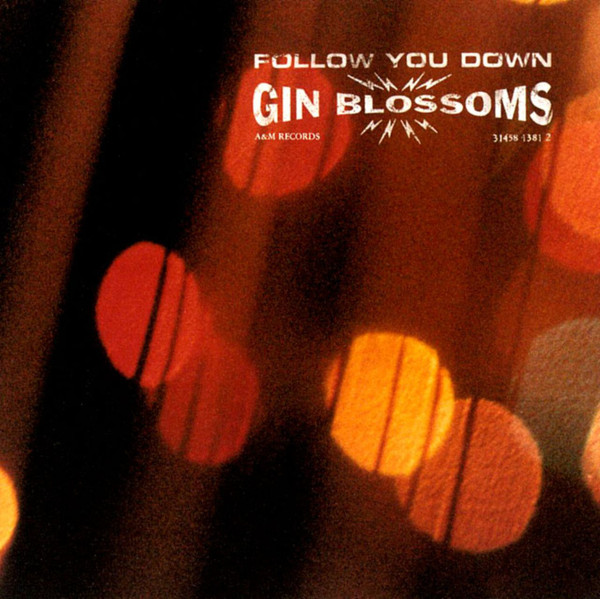
Gin Blossoms – Follow You Down —-Powerpop Friday

The Gin Blossoms made some good power pop in the 90s.

This song was released in 1996 and was part of a double A-side with Til I Hear It From You. The song peaked at #7 in the Billboard 100, #1 in Canada, and #30 in the UK in 1996. Billboard lists the song as Follow You Down/Til I Hear It From You. It did hit #1 in the Billboard Alternative Charts.

The song was on the album Congratulations… I’m Sorry and it peaked at #10 in the Billboard Album Charts in 1996.

The song was written by D. Scott Johnson, Jesse M. Valenzuela, Phillip Rhodes, Phillip N. Rhodes, Robin Wilson,  and William Leen.

The Gin Blossoms broke up in early 1997 but reunited in 2002. They still perform to this day but with some personnel changes.

Follow You Down

Did you see the sky?
I think it means that we’ve been lost
Maybe one last time is all we need
I can’t really help it
If my tongue’s all tied in knots
Jumping off a bridge is just the farthest
That I’ve ever been

Anywhere you go, I’ll follow you down
Anyplace but those I know by heart
Anywhere you go, I’ll follow you down
I’ll follow you down, but not that far

I know we’re headed somewhere
I can see how far we’ve come
But still I can’t remember anything
Let’s not do the wrong thing
And I’ll swear it might be fun
It’s a long way down
When all the knots we’ve tied have come undone

Anywhere you go, I’ll follow you down
Anyplace but those I know by heart
Anywhere you go, I’ll follow you down
I’ll follow you down, but not that far

How you gonna ever find your place
Running in an artificial pace
Are they gonna find us lying face down in the sand
So what the hell now we’ve already been forever damned

Anywhere you go, I’ll follow you down
Anyplace but those I know by heart
Anywhere you go, I’ll follow you down
I’ll follow you down, but not that far