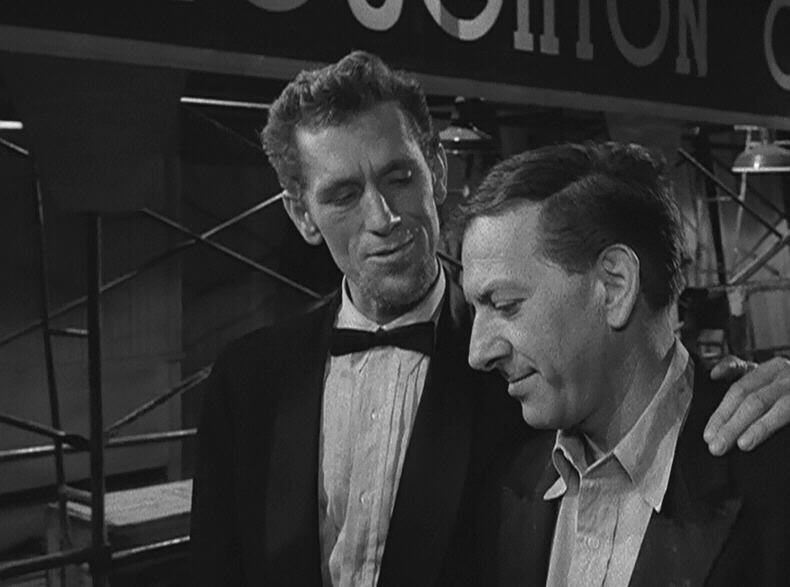
Twilight Zone – A Passage for Trumpet

★★★★  May 20, 1960 Season 1 Episode 32

If you want to see where we are…HERE is a list of the episodes.

This show was written by Rod Serling

Jack Klugman was a great character actor and he was always excellent in the four Twilight Zones that he was in. In this one he conveys depression, suicidal behavior, and alcoholism.

This is a touching episode that works well. It shines the spotlight on a down on his luck alcoholic trumpet player…and this visit in The Twilight Zone gives a chance for salvation if he takes it . This is not a scary, weird, or funny episode…it’s a well written story that works outside of the Twilight Zone. 

John Anderson who plays the Angel Gabriel is believable as a jazz goatee wearing Gabriel. Rod Serling must have been a lover of jazz music because there are a few episodes that feature jazz players and he has the lingo down. 

When Baron is talking to Joey in the alley, he compares him to three famous trumpeters of the big band era. Harry James was a trumpet playing band leader known for his technical proficiency as well as his tone. Max Kaminsky played with big bands like Tommy Dorsey and Artie Shaw, his style was full toned and economical in the style of Louis Armstrong. And Billy Butterfield played trumpet, flugelhorn, and coronet with Artie Shaw, Les Brown, and Benny Goodman.

Rod Serling’s Opening Narration: 

Joey Crown, musician with an odd, intense face, whose life is a quest for impossible things like flowers in concrete or like trying to pluck a note of music out of the air and put it under glass to treasure…Joey Crown, musician with an odd, intense face, who, in a moment, will try to leave the Earth and discover the middle ground – the place we call The Twilight Zone.

Summary

Musician Joey Crown is down on his luck. An alcoholic, he can’t find work because no one trusts him. Broke, he hocks his trumpet but then steps in front of truck which knocks him onto the sidewalk. He awakens in a strange world where no one can see him and he presumes that he has died. He eventually bumps into someone who can in fact see him, a fellow horn player who tells him that it’s still within Joey’s power to decide on life or death.

Rod Serling’s Closing Narration:

Joey Crown, who makes music, and who discovered something about life; that it can be rich and rewarding and full of beauty, just like the music he played, if a person would only pause to look and to listen. Joey Crown, who got his clue in the Twilight Zone.

CAST

Rod Serling … Narrator (voice)
Jack Klugman … Joey Crown
John Anderson … Gabriel
Frank Wolff … Baron
Mary Webster … Nan
James Flavin … Truck Driver
Ned Glass … Pawnshop Man
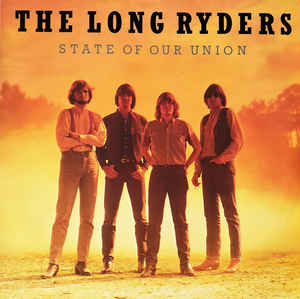
Long Ryders – Looking For Lewis and Clark

How can you not like a band who counts Gram Parsons and Punk Rock as their biggest influences? They have a great raw sound. This American band was very successful in the UK in the mid 80s. They had a chance to break big but broke up before they took an offer from one of their label mates.

The Long Ryders were formed Thanksgiving 1981 in west Los Angeles, California and fell in with the ’80s Paisley Underground scene (Red on Green, the Bangles, the Dream Syndicate, the Rain Parade), and widely considered as one of the forerunners of the alt-country genre.

They made their debut with the EP 10-5-60 in 1983, which had a strong garage folk-rock sound. After that they released 3 studio albums in the 80s and then they released Psychedelic Country Soul in 2019 after numerous reunions.

In 1986 they were in Spain headlining the Barcelona festival to over 100,000 which was broadcast live on national radio. In Canada, the Toronto Daily Mail called them “the best thing to happen to roots rock since The Band.” Then in Italy they played eighteenth century opera houses and the press and rock critics loved them.

They built a dedicated following…especially in Europe. However band members Tom Stevens and Stephen McCarthy left the band in 1987 despite the offer of an opening spot on tour with Island Records labelmates U2. The Long Ryders then broke up.

They released their second album State of Our Union in 1985 and Looking For Lewis and Clark became their signature song. It was written by guitarist Sid Griffin. Griffin also wrote books on Gram Parsons, Bob Dylan, and Bluegrass music.

Looking for Lewis and Clark peaked at #2 in the UK Country Chart and #59 in the UK pop chart in 1985.

Looking For Lewis and Clark

I thought I saw some diplomat hawking secret plans in the park
I thought I saw my President walking through Harlem late after dark
In a world of love where they burn like Nero
You write them a check and you then add zero
In a world of love where they burn like Nero
You write them a check and you then add zero
Looking For Lewis And Clark

I was standing alone in Mabuhay Gardens (looking for Lewis and Clark!)
I was thinking about the late Tim Hardin
Well, when Tim get to heaven hope he told Gram
About the Long Ryders and just who I am
Yeah, no one gave Tim reason to believe
So he just packed his bags to leave

Looking for Lewis and Clark

I thought I saw my government running away with my heart
I thought I heard Mubute anthems in Johannesburg after dark
You can find them in the yellow pages, baby
That’s where you get your kickbacks from the Navy
Looking for Lewis and Clark

I said a Louie-Louie Lou…
Looking for Lewis and Clark

….

XTC – Making Plans For Nigel ….Power Pop Friday

I got into XTC late into the game. I didn’t get to know them until they released I’m The Man Who Murdered Love. I liked this song right away because it has a nice power pop sound. The drums stand out on this song.

This song was XTC’s breakthrough single released in 1979. It was written by bassist Colin Moulding, who shared vocal and songwriting duties with guitarist Andy Partridge. It was on the third, breakthrough, album Drums And Wires.

The album peaked at #174 in the Billboard album charts, #15 in Canada, #34 in the UK, and #12 in New Zealand.

Making Plans For Nigel peaked at #12 in Canada, #17 in the UK, and #29 in New Zealand.

The lyrics are told from the point of view of parents who are certain that their son Nigel is happy in his work, affirming that his future in British Steel “is as good as sealed”, and that he “likes to speak and loves to be spoken to”. As a response to the song, British Steel reportedly gathered four Sheffield employees
named Nigel to talk about job satisfaction for the trade publication Steel News.

From Wiki: The first 20,000 pressings of the single came in a fold-out cover that created a fully playable gameboard of “Chutes and Ladders” adapted to details of Nigel’s “miserable life”, including the purchase of a scooter, job interviews, a holiday in Spain and an engagement to “a very nice girl.” There were two versions of the gameboard, one to be played by Nigel and the other to be played by his parents. As credited on the back cover, the illustrator was Steve Shotter and sleeve design was by Cooke Key.

Colin Moulding:

“Partly biographical, this one. My dad prompted me to write it. He wanted a university future for me and was very overpowering in trying to persuade me to get my hair cut and stay on at school. It got to the point where he almost tried to drag me down the barber’s shop by my hair. I know the song tells of a slightly different situation, but it all boils down to the same thing – parental domination.”

There were no Nigels at school. I wasn’t bullied, but I think I had a natural empathy for people that were. ‘Nigel’ was my song for the bullied, I suppose.

“British Steel was just a bit of naughtiness. What I hadn’t bargained on was the union boss later ringing me up and asking me to join the cause! I had the devil of a job to convince him it was an organization I chose at random.”

Andy Partridge: “Quite early on it had been decided that Making Plans For Nigel was going to be the single. We spent five times longer messing with that song than any of my tracks. At one point I was fuming because my songs were being ignored.”

From Songfacts

The Rembrandts, Primus and Robbie Williams all covered this. 

This was covered by Nouvelle Vague, a bossa group, and included on a chillout compilation album known as Breakfast Club: Milan

Andy Partridge told Uncut: “The things that sound like sheets of metal being struck, that’s a white noise patch on a monophonic Korg synth we had. We decided to do it with this industrial sound and glories, so it hinted that British Steel, which is where Nigel works.”

Making Plans For Nigel

We’re only making plans for Nigel
We only want what’s best for him
We’re only making plans for Nigel
Nigel just needs this helping hand

And if young Nigel says he’s happy
He must be happy
He must be happy in his work
We’re only making plans for Nigel

He has his future in a British steel
We’re only making plans for Nigel
Nigel’s whole future is as good as sealed
And if young Nigel says he’s happy

He must be happy
He must be happy in his work
Nigel is not outspoken
But he likes to speak

And loves to be spoken to
Nigel is happy in his work
We’re only making plans for Nigel

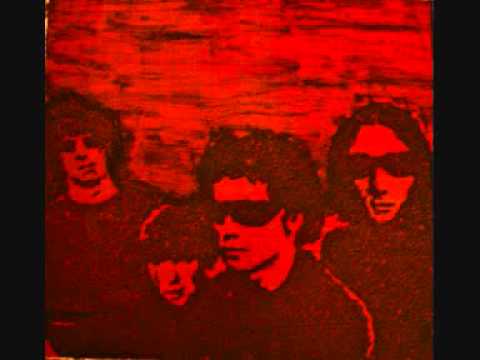
Velvet Underground – Rock and Roll

Lou Reed wrote this song for the album Loaded. This was the last Velvet Undergound album to feature Lou Reed.

Reed left the band right after the album Loaded was recorded. They were booked at Max’s Kansas City in New York City. August 23, 1970.  Reed had played two sets when he simply left the stage, walked up to producer Sesnick, said, “I quit,” and walked out the back door, got into his parents’ car (they drove down from Long Island), and rode away. There was no drama or arguments.

Three months later the album was released and failed to chart. Other founding members Sterling Morrison and Maureen Tucker would leave in 1971  For this reason, it is often considered by fans to be the “last” Velvet Underground album.

In Reed’s 1971 interview with Lester Bangs for Creem magazine, Reed stated that the breakup wasn’t anybody’s fault, but just the way the music business is…he left because he wasn’t making any money, and felt that they’d never be successful.

The band also recorded this song in 1969, during their final weeks with the Verve label, but the well-known version appears on this album.

Lou Reed: “‘Rock and Roll’ is about me. If I hadn’t heard rock and roll on the radio, I would have had no idea there was life on this planet. Which would have been devastating – to think that everything, everywhere was like it was where I come from. That would have been profoundly discouraging. Movies didn’t do it for me. TV didn’t do it for me. It was the radio that did it.”

From Songfacts

Do remember that the album Loaded was supposed to have mainstream appeal. This song perhaps makes the definitive case that Lou Reed boxed in by executive meddling is not the same as Lou Reed given free rein to do whatever he wants by an avant-garde art house. Loaded is an album that divides fans.

Even though it is obviously tailored to mainstream appeal, Velvet Underground managed to slip a subversive edge around “Rock & Roll”: It inverts the standard three-chord progression and has five-bar verses with an especially laid-back approach to the lyrics. It’s done loose and lazy, perfect for the subject, but subtly averting it at the same time.

This looks like a good time to answer the question: What genre do The Velvet Underground belong in? Some say punk, some alternative, some experimental. It was all of those and none of those – Velvet Underground as it was originally formed would doubtless have had the same disdain of conventional labels as does Lemmy Kilmister of Motorhead fame (by the way, Lemmy says he identifies more with punk than metal). The most correct identity that is widely accepted is “protopunk” or “inspiration for punk.” While not having a punk sound as it is understood today, they did bring characteristics to rock music (an aggressive attitude, a rebellious spirit, anti-establishment ideas, and a deliberately crude and minimalist sound) which have since become the hallmarks of the punk genre. Punk rock, when it came along in the early 1970s, was about yelling “You think too much and you don’t get it!” at establishment rock (and likely following with “It’s all about the money to you anyway!”). The Velvet Underground had that idea early on, even if they expressed it as John Cale smashing a whole stack of china dishes instead of Johnny Rotten snarling “Anarchy in the UK!” So, we’ll endorse protopunk, not punk.

Alice Cooper recorded a heavy version for his 2021 Detroit Stories album. Alice told Apple Music he loves the “New York heroin chic” vibe of the Velvet Underground original, but for his cover, he thought, “What happens if we take this song to Detroit and put a V8 engine, and soup it up?”

Alice recruited for his version guitarists “honorary Detroiter” Joe Bonamassa, and Steve Hunter, who played with both Alice and Lou Reed in the 1970s.

Rock and Roll

Jenny said
When she was just five years old
There was nothing happening at all
Every time she puts on a radio
There was a nothin’ goin’ down at all,
Not at all
Then one fine mornin’
She puts on a New York station
You know, she couldn’t believe
What she heard at all
She started dancin’
To that fine fine music
You know her life
Was saved by rock ‘n’ roll
Despite all the amputations
You know you could just go out
And dance to a rock ‘n’ roll station

It was alright
It was allright
Hey baby, You know it was all right

Jenny said
When she was just by five years old
You know why parents gonna be the death of us all
Two TV sets and two Cadillac cars –
Well you know it ain’t gonna help
Me at all
Then one fine mornin’
She turns on a New York station
She doesn’t believe
What she hears at all
Ooh, She started dancin’
To that fine fine music
You know her life
Is saved by rock ‘n’ roll,
Despite all the computations
You could just dance
To a rock ‘n’ roll station

And baby it was alright
And it was alright
Hey it was alright
Hey here she comes now!
Jump! Jump!

It was alright

Twilight Zone – The Chaser

★★★  May 13, 1960 Season 1 Episode 31

If you want to see where we are…HERE is a list of the episodes.

This is another “be careful what you wish for” episode. This one starts off as one of the  light hearted episodes but it’s the Twilight Zone… it turns dark near the end. The real star of this episode is John McIntire  as Professor A. Daemon…the man who has any powder, liquid, or potion that you will need. When you are done with your need…he has an answer for that also. I love the warning that he gives Roger about the love potion and how Roger blissfully ignores the wise man.

This episode gives “glove cleaner” a whole new meaning.

The episode is not without it’s charm but it doesn’t cross over to a great one. The twist at the end is interesting.

This was the only first season episode that was not written by one of the Big Three (Rod Serling, Charles Beaumont, Richard Matheson).

The professor is named A. Daemon, a play on words for A Demon as evidenced by the outcome.

George Grizzard (Roger Shackleforth) wears the same smoking jacket worn by Rod Taylor (H. George Wells) in The Time Machine.

This show was written by  Robert Presnell Jr. and  John Collier

Rod Serling’s Opening Narration: 

Mr. Roger Shackelforth. Age: youthful twenties. Occupation: being in love. Not just in love, but madly, passionately, illogically, miserably, all-consumingly in love – with a young woman named Leila, who has a vague recollection of his face and even less than a passing interest. In a moment, you’ll see a switch, because Mr. Roger Shackelforth, the young gentleman so much in love, will take a short, but very meaningful journey into the Twilight Zone.

Summary

Roger Shackleforth’s infatuated with Leila, a young woman who wants nothing to do with him. Whilst monopolizing a pay phone, someone waiting to make a call refers him to Professor A. Dæmon, a seller of books, notions and potions, who – the man says – can help Roger with his love problem.. Though the Professor tries to dissuade him, Roger happily buys the potion for $1, anyways. It most certainly works. But 6 months later, Roger returns to the Professor – to find a solution to his new problem…

Rod Serling’s Closing Narration:

Mr. Roger Shackelforth, who has discovered at this late date that love can be as sticky as a vat of molasses, as unpalatable as a hunk of spoiled yeast, and as all-consuming as a six-alarm fire in a bamboo and canvas tent. Case history of a lover boy, who should never have entered the Twilight Zone.

CAST

John McIntire … Prof. A. Daemon
Patricia Barry … Leila
George Grizzard … Roger Shackleforth
J. Pat O’Malley … Homburg
Marjorie Bennett… Old Woman
Barbara Perry … Blonde Woman
Rusty Wescoatt … Tall Man
Duane Grey … Bartender (uncredited)
Rod Serling … Narrator (voice) (uncredited)

Guadalcanal Diary – Watusi Rodeo

I’ve been listening to this band for the last few days…they combine country with jangle pop on a lot their songs.  This band came from Marietta, Georgia, a suburb of Atlanta, but they were often billed as being from Athens, Georgia and was lumped in with the other Athens acts.

The band formed in 1981 and disbanded in 1989. They reformed in 1997, but never recorded any new material. After going on hiatus in 2000, Guadalcanal Diary temporarily reunited for a second time in 2011 for Athfest, where they celebrated their 30th anniversary.

Still in high school, singer/guitarists Murray Attaway and Jeff Walls became musical partners when they joined the punk band Strictly American. Electing to strike out on their own, they formed Emergency Broadcast System. Walls was teaching Rhett Crowe bass at the time and she was asked to join the band. Crowe accepted the offer and quickly suggested a name change to Guadalcanal Diary (based on the 1940s movie).

Though he had no experience on the instrument (having previously played bass),  Walls friend John Poe was added as drummer.

The band quickly became staples on the Athens and Atlanta club circuit, signed by Danny Brown’s Atlanta-based dB Records.

Watusi Rodeo was on Guadalcanal Diary’s debut album called Walking In The Shadow of The Big Man released in 1984. They were constantly being overshadowed by the successes other mid-’80s alternative jangle rock bands.

Watusi Rodeo

Come along with me to the Congo land
Got a zebra by the tail and a python in my hand
Once my home was a Texas plain
But now I swing a lasso on an alien terrain

Hottentots and pygmies know where to go
Everybody’s heading for the Watusi Rodeo

Cowboys are putting up a big fence around
A sacred elephant burial ground
Native women stomping up a flurry in the mud
Villagers are looking for some cowboy blood

I guess they didn’t like them hats we made ’em wear
They don’t look right on the native hair
Don’t they know that it’s all for show
All for showing at the Watusi Rodeo

Monkeys in the trees just thumbing their nose
At the bull riders riding on rhinos
Warriors standing with spears in the hands
Wondering what’s next from a crazy white man

Natives are restless under these Stetsons
What are these cowboys doing in the Congo
Look like cows but they’re water buffaloes
Ropin and a ridin in the Watusi Rodeo

Oh they look like cows but they’re water buffaloes
Everybody’s heading for the Watusi Rodeo

Big Star: Nothing Can Hurt Me Documentary

Hanspostcard is hosting a movie draft from 12 different genres…this is my musical entry and final pick.

Such a great band but such a frustrating story. Robyn Hitchcock remarked, “Big Star is like a letter that was mailed in 1972 but didn’t arrive until 1985.” That is a great way to explain them. They made three of the best albums of the decade that were not heard until much later. When they were finally discovered they influenced many artists such as The Replacements, REM, Cheap Trick, Matthew Sweet, and more. The last time I checked it was on Netflix…watch this documentary.

When these musicians and critics talk about Big Star…they talk about them like people talk about The Beatles, Rolling Stones, The Who, and The Kinks. In this documentary you have Cheap Trick, REM, Mitch Easter, Robyn Hitchcock, and others talking about the band.

The first album got great reviews…you couldn’t ask for better. When the label called radio stations trying to get them to play it…the stations would say it’s not selling. When someone actually heard the songs on the radio, they couldn’t find the record to buy it. This was basically the same story with all of the albums.

Distribution problems and just bad timing. Stax didn’t do a good job of distribution…they made a deal with Columbia before the second album to distribute the album…problem solved right? Nope, Clive Davis who made the deal was then fired at Columbia. The deal fell through and then Stax disintegrated.

Chris Bell who was key in creating the sound the band had quit after the first album. He came back but then quit again. Chris had depression problems and wanted badly to do something on his own. Alex Chilton continued and finished the second and third album with a new bass player on the third album.

After that, it follows Chris and Alex’s career to the end of both. It also covers Jim Dickinson’s role on the third experimental album. Family members, fans, and rock writers also share their love of Big Star and memories of the band members.

In May of 1973 Ardent Studios where Big Star recorded invited 100 rock writers down to Memphis to hear Big Star live. They all loved Big Star and it went over great…but that wasn’t the band’s problem…it was the business side. What would have happened if they would have signed with a label more suited to them?

Before watching this documentary, a couple of years back I didn’t realize Chris Bell was so instrumental in developing their sound. I knew it wasn’t the Alex Chilton band, but Chris was invaluable and started the ball rolling. All 4 members did contribute writing and singing but Chilton and Bell were the Lennon and McCartney of the group.

It’s a great documentary about a great band that had the talent, but fate wasn’t on their side.

There is the often-used Peter Buck quote that everyone who bought the first Velvet Underground album went out and started a band…the same is true with this band.

My recommendation? Watch it…NOW

Cast

Billy Altman … Self – Writer
Jon Auer … Self
Lester Bangs … Self (archive footage)
Chris Bell … Self (archive footage)
David Bell … Self – Chris Bell’s Brother
Norman Blake … Self
The Box Tops … Themselves (archive footage)
Panther Burns … Themselves (archive footage)
Cheap Trick … Themselves
Stephanie Chernikowski … Self – Photographer
Alex Chilton … Self (archive footage)
Rick Clark … Self – Writer and Musician
Stephen Ira Cohen … Self – U.S. Congressman (archive footage) (as Steve Cohen)
The Cramps … Themselves (archive footage)
John Dando … Self – Band Manager, Ardent Studios 1972-1975
Luther Dickinson … Self
Mary Lindsay Dickinson … Self
Steven Drozd … Self
Van Duren … Self – Musician
Mitch Easter … Self – Musician and Producer
Bruce Eaton … Self (voice) (archive footage)
William Eggleston … Self
Tav Falco … Self
John Fry … Self – Founder, Ardent Studios
John Hampton … Self – Engineer, Ardent Studios
Douglas Hart … Self – Bass, The Jesus and Mary Chain
Robyn Hitchcock … Self
Andy Hummel … Self (archive footage)
Ross Johnson … Self – Writer and Musician
Ira Kaplan … Self
Lenny Kaye … Self – Writer and Musician
John King … Self – Promotions, Ardent Studios 1972-1975
Curt Kirkwood … Self
John Lightman … Self
Carole Manning … Self – Ardent Studios 1972-1975
Mike Mills … Self
The Replacements The Replacements … Themselves (archive footage)
Steve Rhea … Self – Promotions, Ardent Studios 1972-1975
Will Rigby … Self – musician
Richard Rosebrough … Self – Engineer, Ardent Studios 1972-1975
Kliph Scurlock … Self
Tom Sheehan … Self – Photographer
Chris Stamey … Self – Musician and Producer
Big Star … Themselves
Jody Stephens … Self
Sara Stewart … Self – Chris Bell’s Sister
Michael Stipe … Self
Ken Stringfellow … Self
Matthew Sweet … Self
Alexis Taylor … Self
Marge Thrasher … Self – Hostess of Straight Talk (archive footage)
Jon Tiven … Self
Pete Tomlinson … Self – Writer
Jaan Uhelszki … Self – Writer (as Jaan Uhelzski)
Terry Edwards … Conductor, London (uncredited)

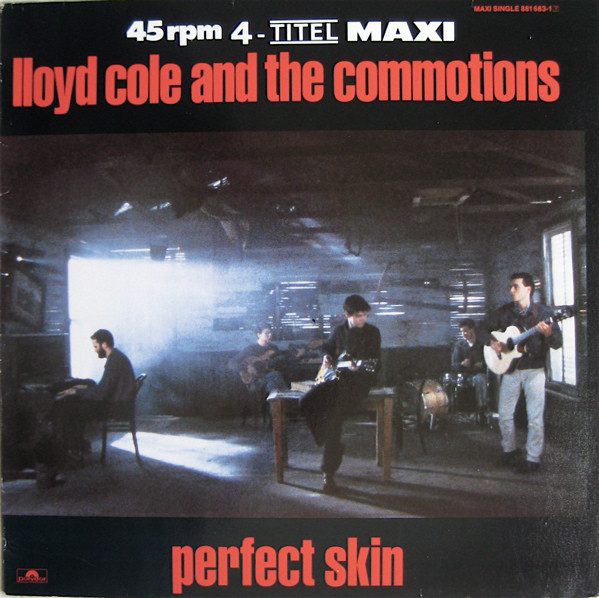
Lloyd Cole & The Commotions – Perfect Skin… 80’s Underground Mondays

Love the sound of this song. It sounds like it could have come out of any decade. The guitar fills are wonderful. It’s a shame they didn’t have success in America but they were played on college radio stations.

Lloyd Cole wrote the lyrics and music to this song. He would write all the lyrics on the album and on a few songs would get some help with the music.

Perfect Skin was off of the album Rattlesnakes which peaked at #13 in the UK and New Zealand in 1984. The song peaked at #26 in the UK. NME included the album in its Top 100 Albums of All Time list, and the title track was later covered by the American singer Tori Amos.

The Welsh band Manic Street Preachers included the album amongst their top ten list.

They were active from 1984 through 1989 and released three albums and all of them made the top twenty in the UK. They had formed in Glasgow, Scotland in 1982…they broke up in 1989. Cole embarked on a solo career but the band reformed briefly in 2004 to perform a 20th anniversary mini-tour of the UK.

Lloyd Cole: Perfect Skin’s Louise wasn’t real, though. I’d read about Bob Dylan seducing women by writing songs for them, so I was showing off with words: “She’s got cheekbones like geometry and eyes like sin and she’s sexually enlightened by Cosmopolitan.” When I sing that live now, I go: “Who isn’t?”

Between 1983 and 84, we went from being a wimpy band who sounded like the Style Council to more of a rock band. When I wrote Are You Ready to Be Heartbroken? it made us realise what we could do. I took a Portastudio to my room in Glasgow Golf Club, where my parents worked and lived, and wrote Perfect Skin and Forest Fire. Not one song on Rattlesnakes was more than a year old when it was recorded.

Perfect Skin

I choose my friends only far too well
I’m up on the pavement
They’re all down in the cellar
With their government grants and my IQ
They brought me down to size
Academia blues

Louise is a girl
I know her well
She’s up on the pavement
Yes, she’s a weather girl
And I’m staying up here so I may be undone
She’s inappropriate but then she’s much more fun and

When she smiles my way
My eyes go out in vain
She’s got perfect skin

Shame on you, got no sense of grace
Shame on me
Just in case I might
Come to a conclusion other than that which is absolutely necessary
And that’s perfect skin

Louise is the girl with the perfect skin
She says, “Turn on the light otherwise it can’t be seen”
She’s got cheekbones like geometry and eyes like sin
And she’s sexually enlightened by Cosmopolitan and

When she smiles my way
My eyes go out in vain
For her perfect skin
Yeah, that’s perfect skin

She takes me down to the basement
To look at her slides
Of her family life
Pretty weird at times
At the age of ten she looked like Greta Garbo and I loved her then
But how was she to know that

When she smiles my way
My eyes go out in vain
She’s got perfect skin

Up eight flights of stairs to her basement flat
Pretty confused, huh?
Being shipped around like that
Seems to climb so high
Now we’re down so low
Strikes me the moral of the song
Must be: there never has been one

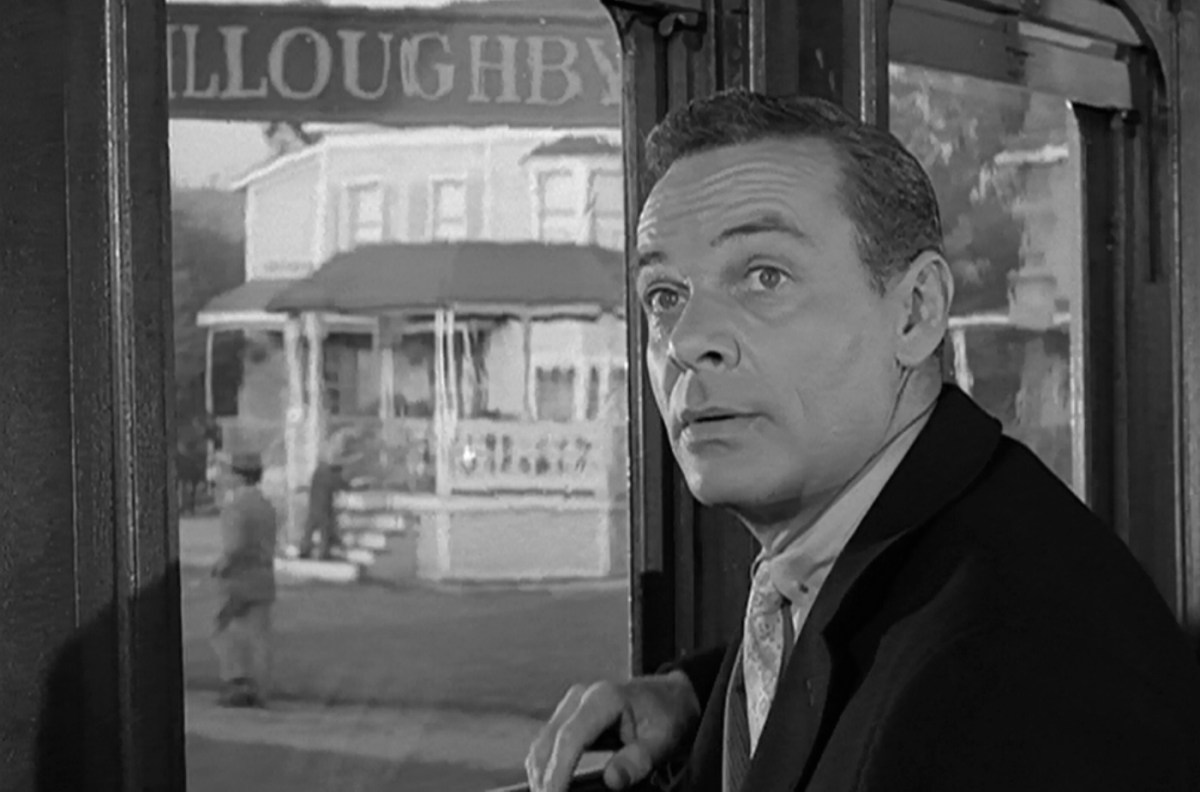
Twilight Zone – A Stop at Willoughby

★★★★★ May 6, 1960 Season 1 Episode 30

If you want to see where we are…HERE is a list of the episodes.

This one is one of my favorites…it could have made my top ten. This one is very modern. James Daly plays Gart Williams who is pushed to the edge of a nervous breakdown by a boss who won’t let up and a wife who can’t get enough status symbols. Daly was great in this role… At some point all of us has felt like Gart Williams. A quote from Gart’s character while arguing with his wife: Some people aren’t built for competition, Janie, or big pretentious houses they can’t afford, or rich communities they don’t feel comfortable in, or country clubs they wear around their neck like a badge of status.

This one had a twist that I did not see coming. The transition to the last scene is brilliant. If Gart could see in the future he would see work tying employees to cell phones twenty four hours a day…”Push Push Push” would take on a whole new meaning.

This was Rod Serling’s first season favorite episode.

The train stations called out by the conductor on the 1960 train are real. At the time of the filming, stations such as “Stamford” and “Westport & Saugatuck” were stations on the New Haven Railroad. They continue to exist as of August 2015 as stations on the Metro North Railroad.

This show was written by Rod Serling

Rod Serling’s Opening Narration: 

This is Gart Williams, age thirty-eight, a man protected by a suit of armor all held together by one bolt. Just a moment ago, someone removed the bolt, and Mr. Williams’ protection fell away from him, and left him a naked target. He’s been cannonaded this afternoon by all the enemies of his life. His insecurity has shelled him, his sensitivity has straddled him with humiliation, his deep-rooted disquiet about his own worth has zeroed in on him, landed on target, and blown him apart. Mr. Gart Williams, ad agency exec, who in just a moment, will move into the Twilight Zone—in a desperate search for survival.

Summary

Ad agency executive Gart Williams has had a particularly rough day – his young protégé has left to work at another agency and took a $3-million account him. He falls asleep on the train home and wakes up in another place and another time. It’s July 1888 and he’s in the village of Willoughby, a peaceful town where life is easy. He comes to back in his own time but as the pressures of works and his home life continue to mount, he decides Willoughby is exactly where he would like to spend the rest of his days.

Rod Serling’s Closing Narration:

Willoughby? Maybe it’s wishful thinking nestled in a hidden part of a man’s mind, or maybe it’s the last stop in the vast design of things—or perhaps, for a man like Mr. Gart Williams, who climbed on a world that went by too fast, it’s a place around the bend where he could jump off. Willoughby? Whatever it is, it comes with sunlight and serenity, and is a part of The Twilight Zone.

CAST

Rod Serling … Narrator (voice)
James Daly … Gart Williams
Howard Smith … Misrell
Patricia Donahue … Janie Williams
Jason Wingreen … 1960 Conductor
Mavis Neal Palmer … Helen (as Mavis Neal)
James Maloney … 1888 Conductor
Billy Booth … Short Boy (uncredited)
James Gonzalez … Passenger (uncredited)
Herschel Graham … Executive (uncredited)
Ryan Hayes … Engineer (uncredited)
Butch Hengen … Tall Boy (uncredited)
Perk Lazelle … Executive (uncredited)
Clark Ross … Executive (uncredited)
Bernard Sell … Executive (uncredited)
Max Slaten … Man on Wagon (uncredited)
Hal Taggart … Executive (uncredited)
Billy Booth … Short Boy (uncredited)
James Gonzalez … Passenger (uncredited)
Herschel Graham … Executive (uncredited)
Ryan Hayes … Engineer (uncredited)
Butch Hengen … Tall Boy (uncredited)
Perk Lazelle … Executive (uncredited)
Clark Ross … Executive (uncredited)
Bernard Sell … Executive (uncredited)
Max Slaten … Man on Wagon (uncredited)
Hal Taggart … Executive (uncredited)

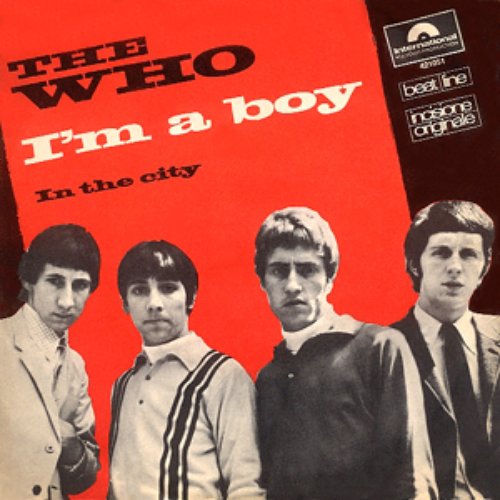
Who – I’m A Boy

My name is Bill, and I’m a head case

Now THAT is a lyric worth exploring.

Pete Townshend wrote this for a Rock Opera he was composing called “Quads,” which was about a future where parents could choose the sex of their children. That opera never happened. I have to wonder if Townshend had this old title in mind when a few years later he came up with the title for “Quadrophenia.”

I’m A Boy was released as a single in 1966. The song peaked at #2 in the UK and #2 in New Zealand. The song was not heard much in America or Canada at the time. Many of their singles would finally come to the light when the great compilation album Meaty Beaty Big and Bouncy was released in 1971. They did a live version and included it on the live album Live At Leeds released in 1970.

Released as the B-side of the single was “In the City”, the first and last song credited to the songwriting collaboration of John Entwistle and Keith Moon. Entwistle referred to it as rip-off of Jan and Dean, a group that was a favorite of Moon’s.

Roger Daltrey: “I always thought The Who went through a weird period after ‘My Generation’ (November 1965) that lasted until we did ‘Magic Bus’ (October 1968). I thought it all went a bit sloppy. But ‘I’m A Boy’ and ‘Pictures Of Lily’ were from that period when I’d been allowed back into the band (Daltrey had been asked to leave after beating up Keith Moon over his heavy use of amphetamines). My ego had been crushed. I was insecure and it showed in my voice. When I first heard those songs, I was like, ‘Oi, what’s this all about?’ I didn’t think I could find the right voice for them. You can hear it when you listen to them now, but my insecurity made those songs sound better. It was a happy accident.”

From Songfacts

This is about a boy whose mother wants him to be a girl, while the boy longs to assert his real sexual identity. The controversial subject of cross-dressing was probably the reason why this failed to reach the American Top 100.

Daltrey told Uncut magazine: “On ‘I’m A Boy’, I tried to sing it like a really, really young kid, like an eight-year-old. Not the voice of an eight-year-old but the sentiment – and I think that came across.”

I’m A Boy

One girl was called Jean Marie
Another little girl was called Felicity
Another little girl was Sally Joy
The other was me, and I’m a boy

My name is Bill, and I’m a head case
They practice making up on my face
Yeah, I feel lucky if I get trousers to wear
Spend evenings taking hairpins from my hair

I’m a boy, I’m a boy
But my ma won’t admit it
I’m a boy, I’m a boy
But if I say I am, I get it

Put your frock on, Jean Marie
Plait your hair, Felicity
Paint your nails, little Sally Joy
Put this wig on, little boy

I’m a boy, I’m a boy
But my ma won’t admit it
I’m a boy, I’m a boy
But if I say I am, I get it

I want to play cricket on the green
Ride my bike across the street
Cut myself and see my blood
I want to come home all covered in mud

I’m a boy, I’m a boy
But my ma won’t admit it
I’m a boy, I’m a boy, I’m a boy
I’m a boy, I’m a boy, I’m a boy, I’m a boy
I’m a boy, I’m a boy, I’m a boy

Twilight Zone – Nightmare as a Child

★★★★  April 29, 1960 Season 1 Episode 29

If you want to see where we are…HERE is a list of the episodes.

I really like the cast in this. Terry Burnham as the child Markie has no trace of a child in her performance which is why it works. This one could have been a Hitchcock episode. Janice Rule and Shepperd Strudwick play their parts perfectly. Strudwich is especially creepy. The show has a slow build up, to watch Helen…slowly trying to find her self while putting the pieces together one piece at a time.

Helen gets aggravated talking to Markie and you can see what is going on. She knows something is different about this kid. Helen can’t grasp who this kid is…or maybe doesn’t want to grasp it. Markie gets as frustrated as us viewers and finally clues Helen in and pulls no punches.

The amnesia card is played in this one but unlike some shows it works in this. Markie seems to represent Helen’s  repressed memories. This episode would work without any real supernatural content.

Janice Rule’s character Helen Foley was named after Rod Serling’s drama teacher. The name Helen Foley was used again in the 1983 Twilight Zone movie.

This show was written by Rod Serling

Rod Serling’s Opening Narration: 

Month of November, hot chocolate, and a small cameo of a child’s face, imperfect only in its solemnity. And these are the improbable ingredients to a human emotion, an emotion, say, like—fear. But in a moment this woman, Helen Foley, will realize fear. She will understand what are the properties of terror. A little girl will lead her by the hand and walk with her into a nightmare.

Summary

Helen Foley is a school teacher who when arriving home one day meets a little girl, Markie, sitting on the steps just outside her apartment door. Helen invites her in and gives her a cup of hot cocoa. Strangely however, Markie seems to know a great deal about her – that she doesn’t like marshmallows in her cocoa or that she has a scar on her elbow. She also knows what Helen did earlier that day including seeing a somewhat familiar man, Peter Selden, behind the wheel of a car. When Selden arrives at her apartment a few moments later he says he worked for her mother but Helen has no memory of what happened to her mother all those years ago. As her memories return however, she finds herself in grave danger.

Rod Serling’s Closing Narration:

Miss Helen Foley, who has lived in night and who will wake up to morning. Miss Helen Foley, who took a dark spot from the tapestry of her life and rubbed it clean—then stepped back a few paces and got a good look at the Twilight Zone.

CAST

Rod Serling … Narrator (voice)
Janice Rule … Helen Foley
Shepperd Strudwick … Peter Selden
Terry Burnham … Markie
Michael Fox … Doctor
Joseph V. Perry … Police Lieutenant (as Joe Perry)

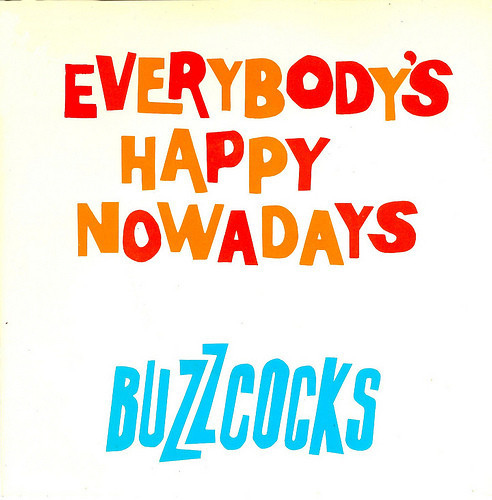
Buzzcocks – Everybody’s Happy Nowadays

This catchy song is hard to get out of your head once you hear the chorus…but it’s a good thing. Lead singer Pete Shelley wrote this song. It was released as a single only and peaked at #29 in 1979 in the UK.

This song is based on a the 1932 Aldous Huxley novel Brave New World, in which culture and art have been excised from society, leaving the population in a mindless state of contentment and pharmaceutical bliss. One character says: “I am free. Free to have the most wonderful time. Everybody’s happy nowadays.”

In 2007, this was used in a commercial for the AARP showing spry, mature adults frolicking at a birthday party. The tagline: “An organization for people who have birthdays.”

Steve Diggle on the commercial. “I thought, it’s going to be bad for our image – it’s for old people,”  “Then… I realized it was for people 50 and over and I realized me and Pete are over 50.”

The chose the name Buzzcocks after reading the headline, “It’s the Buzz, Cock!”, in a review of the TV series Rock Follies in Time Out magazine. The “buzz” is the excitement of playing on stage; “cock” is northern English slang meaning friend.

After splitting up in 1983, Pete Shelley and guitarist Steve Diggle reunited in 1989, and they released six well received albums. Their last album was The Way released in 2014. Lead singer and songwriter Pete Shelley died in 2018.

From Songfacts

In the song, the singer has relieved his misery by entering a similar state where “Life’s an illusion, love is a dream.” It starts with him explaining:

I was so tired of being upset
Always wanting something I never could get
Life’s an illusion love is a dream
But I don’t know what it is

At the end of the song, it switches voice, with the singer imparting his newfound understanding:

Bet you are tired of being upset
Always wanting something you never can get
Life’s no illusion love’s not a dream
Now I know just what it is

Buzzcocks lead singer Pete Shelley wrote this song. “I’ve come to the idea that nothing exists,” he told Sounds regarding the meaning behind it. “There is no world. Or it doesn’t really matter if there is. The way I’m affected by things is the way by which I want them to affect me.”

The group is from England, where they had most of their success with rock songs like this one that were both melodic and subversive. “Everybody’s Happy Nowadays” became one of their most popular songs, but also alienated some of their hard-core fans who felt it was a sell-out to pop.

Everybody’s Happy Nowadays

I was so tired of being upset
Always wanting something I never could get
Life’s an illusion, love is a dream
But I don’t know what it is

Everybody’s happy nowadays

I was so tired of being upset
Always wanting something I never could get
Life’s an illusion, love is a dream
But I don’t know what it is

‘Cause everybody’s happy nowadays
Everybody’s happy nowadays

Life’s an illusion, love is the dream
But I don’t know what it is
Everyone’s saying things to me
But I know it’s okay, okay

Everybody’s happy nowadays

Everybody’s happy nowadays

Life’s an illusion, love is a dream
Life’s an illusion, love is the dream
Life’s the illusion, love is a dream
Life’s the illusion, love is the dream

Everybody’s happy nowadays
Everybody’s happy nowadays, days

Bet you are tired of being upset
Always wanting something you never can get
Life’s no illusion, love’s not a dream
Now, I know just what it is

Everybody’s happy nowadays

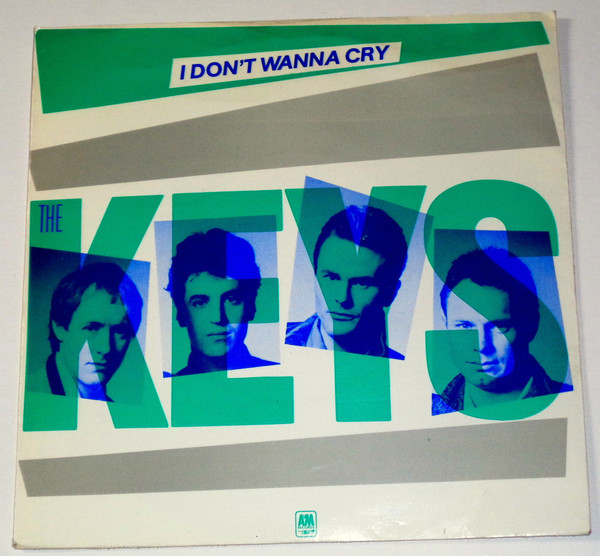
Keys – I Don’t Wanna Cry…. Power Pop Friday

This fantastic English band was active between 1979 through 1983. The Keys attracted a lot of attention. They had a producer who I would have never guessed. Joe Jackson…I just never thought of him producing a power pop record.

The band included main songwriter and bassist Drew Barfield, guitarists
Steve Tatler and Ben Grove, and former Paul McCartney and Wing’s drummer Geoff Britton.

They were signed to A&M records and released the U.K. their only LP “The Keys Album”. The album drew rave reviews, but unfortunately it didn’t sell very well. Besides the album, the label released six singles. Due to a lack of interest The Keys split in 1983.

I listen to the album and I see why they got great reviews…I just can’t figure why they didn’t sell. I Don’t Wanna Cry was the A side and the B side was a song called Listening In. I have the video below…both songs are good power pop.

David Silvia from Allmusic: One of powerpop cornerstones ever. A hidden classic and a real masterpiece. Pop at it’s best

The Keys – The Keys Album (1981, Vinyl) - Discogs

I Don’t Wanna Cry

Was it really just our last good night
when I saw the light and I know
that you’ve been telling lies
Oh, no, not me, I don’t wanna cry
You could talk about it all night long
but the feeling’s gone and
I don’t need you to tell me why
Oh no, not me, I don’t wanna cry

‘Cos you know, I’ve got you figured out
and you have got, nothing to shout about
if this is love, I don’t really wanna play
I wanna know why you want to stay

I know all about your little plan
find a fool and check up the thing you can
well, it seems is never gonna be that way
I wanna know what you want to stay
ESTRIBILLO

Oh no, not me, I don’t wanna cry
I don’t wanna cry
I don’t wanna cry
I don’t wanna cry
I want to know what you want to stay

Pink Floyd – Scarecrow

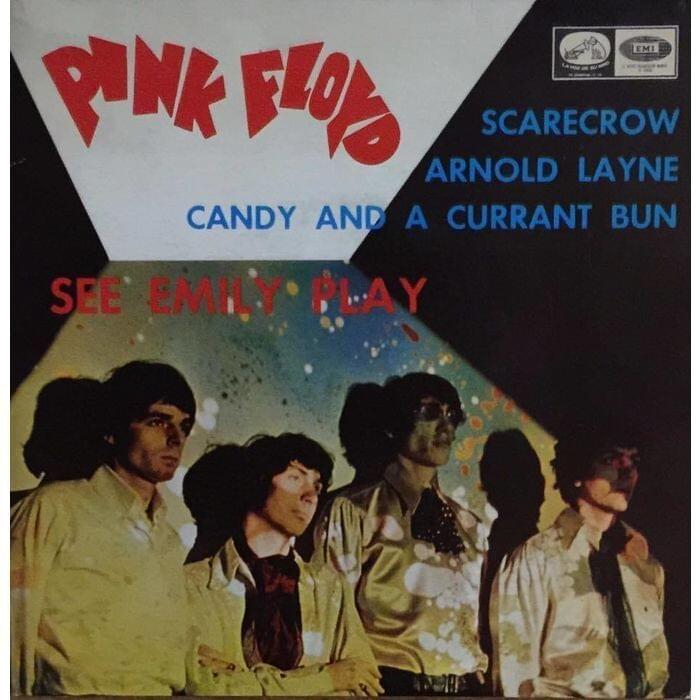
The song was the on their 1967 debut album The Piper at the Gates of Dawn…the song was released 2 months earlier as the B side to the single See Emily Play. I really like this early Pink Floyd. You can see the beginning and know where it went from here.

It’s more like a psychedelic folk song. Syd Barrett wrote the song. Barrett compares his own existence to that of the scarecrow, who, while sadder is also resigned to his fate.

The single, See Emily Play/Scarecrow peaked at #6 in the UK and #134 in the Billboard 100 in 1967.

From Wiki:

A promotional film for the song, made for a Pathé newsreel and filmed in early July 1967, features the band in an open field with a scarecrow, generally fooling around. It shows Roger Waters falling down as if he were shot, and Nick Mason exchanging his hat with the scarecrow’s.[5] Part of this film has been featured in Waters’ live performances of “Set the Controls for the Heart of the Sun”.

A second promo was filmed in 1968 in Brussels, Belgium, with David Gilmour replacing Barrett, and Waters lip-syncing while playing his Rickenbacker bass with a violin bow.

Scarecrow

The black and green scarecrow as everyone knows
Stood with a bird on his hat and straw everywhere
He didn’t care

He stood in a field where barley grows

His head did no thinking
His arms didn’t move except when the wind cut up
Rough and mice ran around on the ground

He stood in a field where barley grows

The black and green scarecrow is sadder than me
But now he’s resigned to his fate
‘Cause life’s not unkind – he doesn’t mind

He stood in a field where barley grows

Twilight Zone – A Nice Place to Visit

★★★★★  April 15, 1960 Season 1 Episode 28

If you want to see where we are…HERE is a list of the episodes.

This is a great one. You will see Mr. French from Family Affair like you have never seen him before. The acting and the twist both are top notch in this episode. I’ve watched this many times and it just keeps getting better. The Twilight Zone can highlight the dregs of society better than any other show I know. Rocky Valentine is not a well known criminal, just a lowlife, and a drag on humanity. A man who doesn’t have a thought for anyone but himself.

There is a fantastic last line given by Pip (Sebastian Cabot) to Rocky. it sums up the episode…which I won’t give away here. (The video below gives it away). On a deeper level this episode has an interesting proposition. When you get everything  you want… and everything goes your way… how can that be a bad thing? We find out how in this episode.

Mickey Rooney was the first choice to play Valentine. In a memo to Rod Serling, Charles Beaumont suggested, should Rooney not be available, that Serling himself consider playing the part. Serling declined and Rooney ended up being unavailable.

Sebastian Cabot had to bleach his hair white for the role and it took three months for the actor’s hair to return to its original dark color.

This show was written by Charles Beaumont

Rod Serling’s Opening Narration: 

Portrait of a man at work, the only work he’s ever done, the only work he knows. His name is Henry Francis Valentine, but he calls himself “Rocky”, because that’s the way his life has been – rocky and perilous and uphill at a dead run all the way. He’s tired now, tired of running or wanting, of waiting for the breaks that come to others but never to him, never to Rocky Valentine. A scared, angry little man. He thinks it’s all over now but he’s wrong. For Rocky Valentine, it’s just the beginning.

Summary

Rocky Valentine is a small-time hood who has been on the wrong side of the law for most of his life. After robbing a pawn shop, he is gunned down by the police and awakens to be met by Mr. Pip, who describes himself as a guide to his new surroundings. Rocky can’t quite believe where he’s ended up as he can have anything he desires. He’s living in a beautiful apartment, never loses at the casino and is always surrounded by beautiful women. What good deed could he have done in life to deserve this. After a month or so however the shine of having anything and everything wears off.

The video has spoilers.

Rod Serling’s Closing Narration:

A scared, angry little man who never got a break. Now he has everything he’s ever wanted – and he’s going to have to live with it for eternity – in The Twilight Zone.

CAST

Larry Blyden … Henry Francis ‘Rocky’ Valentine
Sebastian Cabot … Mr. Pip
John Close … Cop (uncredited)
Barbara English … Dancing Girl (uncredited)
Charles Fogel … Casino Patron (uncredited)
George Ford … Casino Patron (uncredited)
Peter Hornsby … Croupier (uncredited)
Robert McCord … Waiter (uncredited)
Bill Mullikin … Parking Attendant (uncredited)
Nels P. Nelson … Short Cop (uncredited)
Murray Pollack … Casino Patron (uncredited)
Rod Serling … Narrator (voice) (uncredited)
Norman Stevans … Casino Patron (uncredited)
Wayne Tucker … Croupier (uncredited)
Sandra Warner … Girl (uncredited)