I thought I would go through my book collection (hardbacks, paperbacks, and audio) and see which ones I really like. I’m more of a non-fiction reader and I love biographies. I also like documentaries which I will do later on. There are some fiction books I’ve read that I will list later on. I thought I would do a few at a time.
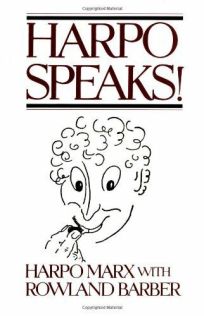
1: Harpo Marx – Harpo Speaks – This is my top autobiography of all time. I have read it at least 8-9 times. When I fly, Harpo goes with me on every flight. Harpo was born in the latter half of the 19th century and his life is one of the most incredible stories I’ve read about. This guy adopted enough kids to fill up every window in his house. He would often wake his kids up just to play if he came home late. If rock bands tell sad stories of them just starting and how hard it was…you should read what the Marx Brothers went through. This book goes to 1964 when he passed away. The link on Harpo Speaks goes to my review of it. It was the first book post I did that actually got interest.
2: Beatles – Tune In – The absolute best biography on The Beatles and it only goes to 1962 and it’s well over 1000 pages. Mark Lewisohn wrote it and is planning to write a part two and then a part three. The criticism of this book is there are too many details…” who needs to know the color of George Harrison’s first car?” Well me that’s who! No, I have read at least 15 or more books on them and I learned a lot from this book. Lewisohn interviewed a lot of early fans who saw them in the Cavern and Hamburg. He uncovers events that no one knew before. He also backs things up so it’s the best by far on the Beatles.
Most books on the Beatles I don’t get through because all they are doing is repeating the well-known history…not this one. I’m impatiently waiting the Part II.
3: Keith Richards – Life– This book started a trend among older rock stars. Keith is upfront about his past and doesn’t hide much if anything. He is straightforward and you learn a lot about what was going on when the Stone’s golden years were happening. You would NEVER get a book like this with Mick Jagger. I’ve ranked this 3rd…but the following 2 could have easily switched places with this one but Keith is the one that started it. The format he used was soon used again by Gregg Allman, Robbie Robertson, and Bill Kreutzmann.
4: Gregg Allman – My Cross To Bear– It felt like Gregg was on a back porch telling you his story. I was an Allman Brothers fan but became a huge one after this book. I started to dive into their music and I saw how great they were. He goes through the Duane years, Cher, the narc incident, and up to the modern Allman Brothers. Even if you are not a huge fan…check this out.
5: Robbie Robertson – Testimony – Same as Keith and Gregg…a wonderful book about The Band. I had no clue what they went through before they toured with Dylan. They were as tight as any band could be musically and physically. Robbie is very even-handed about his relationship with Levon Helm…he doesn’t rip him and generally treats him with respect. You also learn more about Bob Dylan than I ever knew about his personality. Robbie is also such a cool guy and very down to earth.
6: Bill Kreutzmann – Deal– OK, you want Sex, Drugs, and Rock and Roll? You have it here with the Grateful Dead’s drummer. It’s not a complete bio of the Dead but he tells stories that I never heard before. Of all the bands I read about…The Dead probably had more fun than any other. They did have their arguments and Garcia wasn’t always a hippie guy that went along with everything. I did learn more about the Dead’s dynamics from this book than any other.
Gonna see Miss Brer Foxhole Bright diamonds at her teeth She is pure gold down underneath
I’ve talked about it before…a title can draw a person in a song. This one begs to be listened to. Sometimes they don’t live up to the title but this one does. Although Robbie Robertson wrote this, Levon Helm’s vocals brought this piece of Americana to life. He owns this song. He grew up near Helena, Arkansas, and heard stories of traveling Medicine Shows coming in and out of town. When he was a kid he got to see some of these shows. Robertson later translated that into this song.
Helena, Arkansas was the home of the King Biscuit Time radio show. It debuted in 1941. Performers such as Sonny Boy Williamson II would be on the show. The show was the thing that really crystallized blues music in that area. It is said that Muddy Waters and B.B. King would come home from working in the fields every day just to listen to the King Biscuit hour.
This song was on their 3rd album Stage Fright. By this time, Robertson was having trouble writing songs. The brotherhood they all shared was getting complicated because of outside influences. Robertson also had a baby daughter and pregnant wife at home. The songs were great though.
Stage Fright peaked at #5 on the Billboard Album Charts, #6 in Canada, and #15 in the UK in 1970. The album has some of my favorite songs by the Band on it. The Shape I’m In, Stage Fright, and this one.
Robbie Robertson: I wrote about a traveling medicine show I had heard Levon speak of years earlier, something between a carnival sideshow and the African American origins of rock and roll. We recorded “The W. S. Walcott Medicine Show” and another take of “Daniel and the Sacred Harp” with Todd at a studio in the city, and these turned out to be a couple of our favorite tracks. That put the finishing touches on what we could pull out of the hat for this record. I was worn out from this process and trying to maintain a stable family life with my baby daughter and pregnant wife.
The W.S. Walcott Medicine Show
When your arms are empty, got nowhere to go
Come on out and catch the show
There’ll be saints and sinners
You’ll see losers and winners
All kinds of people you might want to know
Once you get it, you can’t forget it
W.S. Walcott medicine show
You know he always holds it in a tent
And if you’re looking for the real thing
He can show you where it went
There’s a young faith healer, he’s a woman stealer
He will cure by his command
When the music’s hot then you might have to stand
To hear the Klondike Klu Klux Steamboat Band
Don’t you sweat it, you can’t forget it
W.S. Walcott medicine show
I’d rather die happy than not die at all
For a man is a fool who will not heed the call
Gonna see Miss Brer Foxhole
Bright diamonds at her teeth
She is pure gold down underneath
She’s a rock and roll singer and a true dead ringer
For something like you ain’t never seen
Once you get it, you can’t forget it
W.S. Walcott medicine show
W.S. Walcott medicine show
W.S. Walcott medicine show
You take what you need And you leave the rest But they should never Have taken the very best
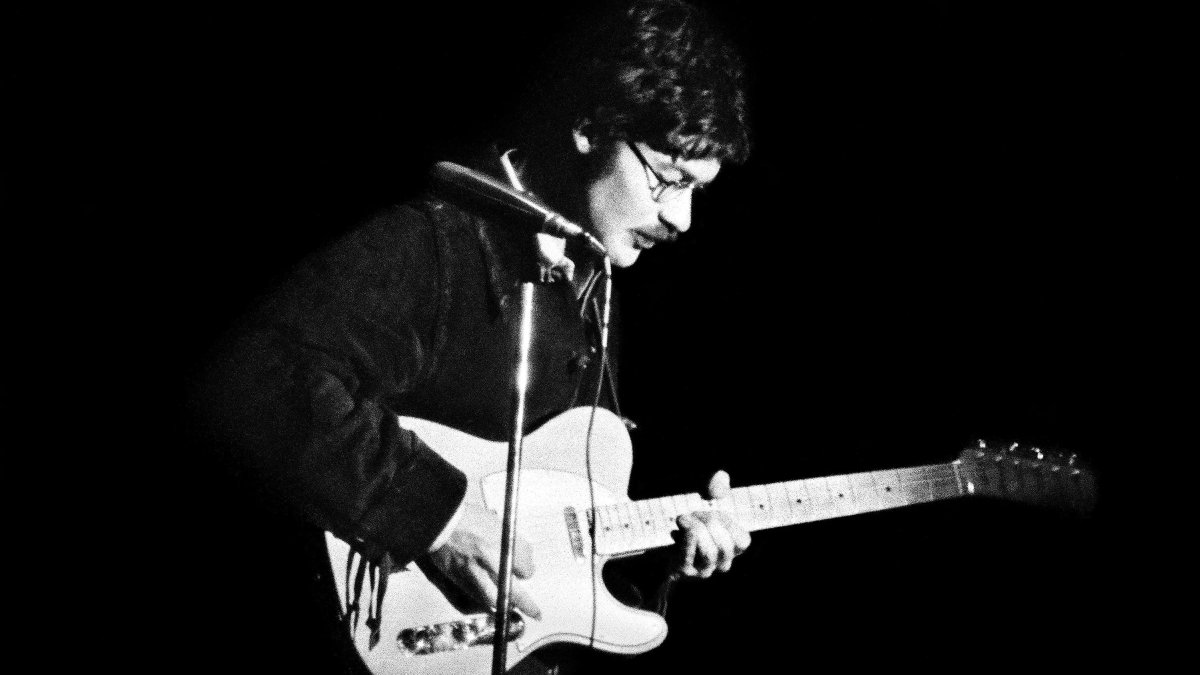
I wasn’t sure if I would post anything on Robbie Robertson but I had to if just for my sake. This loss hits me really hard as it does a lot of people. Most of us never knew the man but we did know him through his songs. I’m not going to list chart positions or anything like that. On this day for me, it’s just about how his music hits me.
Most artists I treat very unfairly. In my mind, they are frozen in time during a certain period. When I think of John Lennon I think of him in 1966…with Robbie Robertson, it was always around 1969-70 after writing two of the most important albums in rock history. In my mind, he was not 80 but 26 years old. So it was shocking to hear he passed away today.
The man not only was a great storyteller but many of his songs were mini-movies you could visualize. Who couldn’t imagine the drunkard and his sweetheart defender Bessie betting on horses up on Cripple Creek? You see and hear a hungry Virgil Kane and his wife struggle during the Civil War. In King Harvest, you get a view from a poverty-stricken farmer getting promises that will never happen. How about pulling into Nazareth and then seeing Carmen and the Devil walking side by side? Can you then visualize Miss Fanny sending her regards to everyone? I can.
Those are not just songs…they are visual pictures sent through music that only Robertson could write. He studied screenplays and that is how he wrote many of his songs and we continue to benefit from his hard work and gift…and always will.
Power Pop Friday will be back next week. Thank you for tuning in this week as we talked about these great Canadian artists…I’ve had a blast with them. There is one band that I didn’t get to cover because I ran out of days…well actually more…but Blue Rodeo will be coming up soon on a Friday.
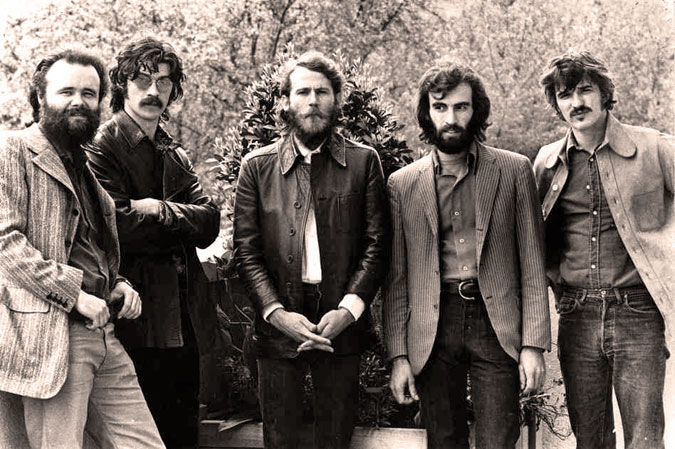
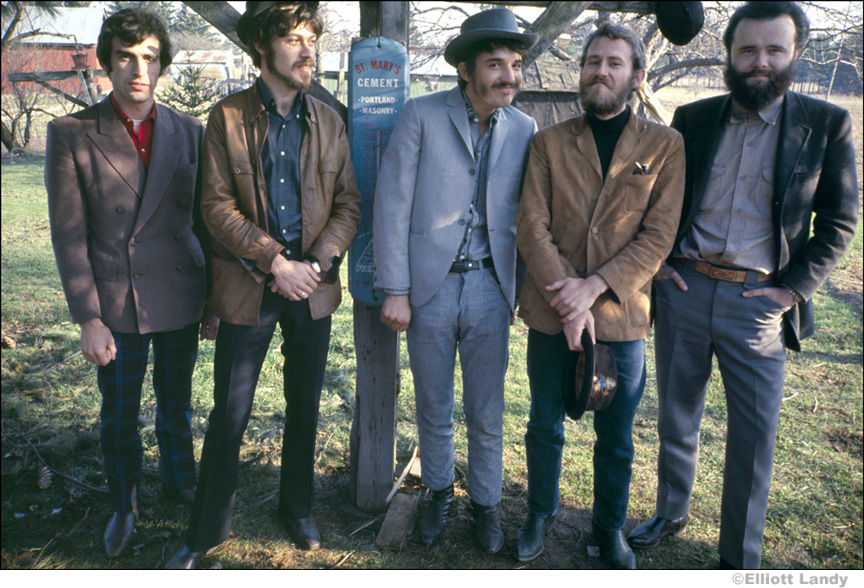
The Band is my favorite Canadian export. Well, I will say Canadian although one member…Levon Helm was from Arkansas but the rest are Canadians. CB mentioned this song not long ago so I used it after listening to it again. It is quite a complex song. I can’t believe I’ve never posted it but better late than never.
The Band was so rootsy… They had it all – rawness, competence, sublimity, experience, originality, and roots. The five different instruments were not five different instruments…they were one. In the liner notes to one of their greatest hits it states… the music is unusually complex, making use of odd verse patterns and tricky rhythmic suspensions and modifying the natural sounds of instruments for various calculated effects. But because of the way the record sounds, none of this calls attention to itself…it sounds effortless.
Robertson said he’d been immersed in the novels of John Steinbeck at this time. I’ve read where The Grapes of Wrath is a big influence on this song. Rock critic Greil Marcus has written that King Harvest might be the finest song that Robertson has ever written. The song is told from the point of view of a poverty-stricken farmer- detailing everything that has happened to his farm- then a union organizer appears and makes promises that things will soon improve.
Richard Manuel is the singer of King Harvest. King Harvest is a great finishing track to one of the greatest albums ever made. The album was their second album called The Band (The Brown Album). The album peaked at #2 in Canada, #9 on the Billboard 100 in 1970. This is their highest-charting album in their home country.
The song is credited solely to guitarist Robbie Robertson, although drummer-singer Levon Helm claimed that “King Harvest” was a group effort. It’s been covered by Blue Rodeo, Bruce Hornsby, and many more.
Robbie Robertson: “It’s just a kind of character study in a time period. At the beginning, when the unions came in, they were a saving grace, a way of fighting the big money people, and they affected everybody from the people that worked in the big cities all the way around to the farm people. It’s ironic now, because now so much of it is like gangsters, assassinations, power, greed, insanity. I just thought it was incredible how it started and how it ended up.”
Robbie Robertson: In the story to me, it’s another piece I remember from my youth, that people looking forward, people out there in the country somewhere, in a place … we all know it, may have been there, may have not … but there’s a lot of people that the idea of come Autumn, come Fall, that’s when life begins. It is not the Springtime where we kinda think it begins. It is the Fall, because the harvests come in.
Levon Helm: Some of the lyrics came out of a discussion we had one night about the times we’d seen and all had in common. It was an expression of feeling that came from five people. The group wanted to do one song that took in everything we could muster about life at that moment in time. It was the last thing we cut in California, and it was that magical feeling of ‘King Harvest’ that pulled us through. It was like, there, that’s The Band.
King Harvest (Has Surely Come)
Corn in the fields
Listen to the rice when the wind blows ‘cross the water
King Harvest has surely come
I work for the union ’cause she’s so good to me
And I’m bound to come out on top
That’s where she said I should be
I will hear every word the boss may say
For he’s the one who hands me down my pay
Looks like this time I’m gonna get to stay
I’m a union man, now, all the way
The smell of the leaves
From the magnolia trees in the meadow
King Harvest has surely come
Dry summer, then comes fall
Which I depend on most of all
Hey, rainmaker, can’t you hear the call?
Please let these crops grow tall
Long enough I’ve been up on Skid Row
And it’s plain to see, I’ve nothing to show
I’m glad to pay those union dues
Just don’t judge me by my shoes
Scarecrow and a yellow moon
And pretty soon a carnival on the edge of town
King Harvest has surely come
Last year, this time, wasn’t no joke
My whole barn went up in smoke
Our horse Jethro, well he went mad
And I can’t remember things bein’ that bad
Then there comes a man with a paper and a pen
Tellin’ us our hard times are about to end
And then, if they don’t give us what we like
He said, “men, that’s when you gotta go on strike”
Corn in the fields
Listen to the rice when the wind blows ‘cross the water
King Harvest has surely come
Happy New Year to all my readers. This is my first post of the year other than the New Years’ post this morning at 12:01 AM CST. My next post in one hour will be just for all of my readers…
My friend CB (Cincinnati Baby Head) reminded me of this song not too long ago…so thank you CB. Man…wasn’t The Band a truly great band? Not many bands could get away with a name like that…but it is no question they lived up to it. They made pure music for the people…
Standin’ by your window in pain A pistol in your hand And I beg you, dear Molly, girl, Try and understand your man the best you can.
Not a good way to start your day.
Canada has given us Neil Young, The Guess Who, BTO, and many more but…to me, this band was their best export.
The Band had 3 great singers and a good one in Robbie. Robertson wrote most of the songs and wrote for the other three voices. He was smart enough to step aside and let his bandmates sing his songs. Not many singer/songwriters would do that but it worked well.
This song was on their second album called The Band released in 1969. The album is one of the best albums ever. It contained these songs, Up On Crippled Creek, The Night They Drove Old Dixie Down, Whispering Pines, Rag Mama Rag, and more.
They recorded this album not in a recording studio but at Sammy Davis’s house in California. They remodeled the adjacent pool house into a recording studio. The Band fashioned a makeshift workshop environment similar to the one at their former home, Big Pink.
The album peaked at #2 in Canada, #9 on the Billboard 100, and #25 in the UK. This song was not released as a single.
Levon Helm:“Sometimes we would grow the songs from scratch, right there in the pool-house, sometimes we would just pull them out of thin air. We had story songs, we had picture songs and we had songs that emulated things we had heard. One thing that helped is that we had two different styles of rhythm section, with Richard and me swapping drum duties. That was done mainly to accommodate Garth’s ability to trade instruments around. Of course, Garth could play percussion, woodwind, bass—just about anything.”
Across The Great Divide
Standin’ by your window in pain A pistol in your hand And I beg you, dear Molly, girl, Try and understand your man the best you can.
Across the Great Divide Just grab your hat, and take that ride Get yourself a bride And bring your children down to the river side
I had a goal in my younger days I nearly wrote my will But I changed my mind for the better I’m at the still, had my fill and I’m fit to kill
Across the Great Divide Just grab your hat, and take that ride Get yourself a bride And bring your children down to the river side
Pinball machine and a queen I nearly took the bus Tried to keep my hands to myself They say it’s a must, but who can ya trust? Harvest moon shinin’ down from the sky A weary sign for all I’m gonna leave this one horse town Had to stall ’til the fall, now I’m gonna crawl Across the Great Divide
Now Molly dear, don’t ya shed a tear Your time will surely come You’ll feed your man chicken ev’ry Sunday Now tell me, hon, what ya done with the gun?
Across the Great Divide Just grab your hat, and take that ride Get yourself a bride And bring your children down to the river side
Robbie Robertson’s Christmas gift to his new son Sebastian during the sessions for Northern Lights-Southern Cross album… it never became a seasonal favorite but it should have been. It wasn’t released until the Islands album in 1977.
Rick Danko sings this song from a Shepherds point of view. It’s pure and down to earth like only the Band can be. No sleigh bells or other Christmas trappings…just pure music. Maybe that is the reason it never got picked up.
Robbie Robertson re-recorded this song after he left the group. And he did for the soundtrack of Bill Murray’s Scrooged. That version is very good but I still like The Bands version much more…it’s hard to beat Rick Danko.
Christmas Must Be Tonight
Come down to the manger, see the little stranger Wrapped in swaddling clothes, the prince of peace Wheels start turning, torches start burning And the old wise men journey from the East
How a little baby boy bring the people so much joy Son of a carpenter, Mary carried the light This must be Christmas, must be tonight
A shepherd on a hillside, where over my flock I bide Oh a cold winter night a band of angels sing In a dream I heard a voice saying “fear not, come rejoice It’s the end of the beginning, praise the new born king”
I saw it with my own eyes, written up in the skies But why a simple herdsmen such as I And then it came to pass, he was born at last Right below the star that shines on high
Happy Thanksgiving! Watching The Last Waltz is just as part of Thanksgiving as the meal with the family…that and Alice’s Restaurant which is coming.
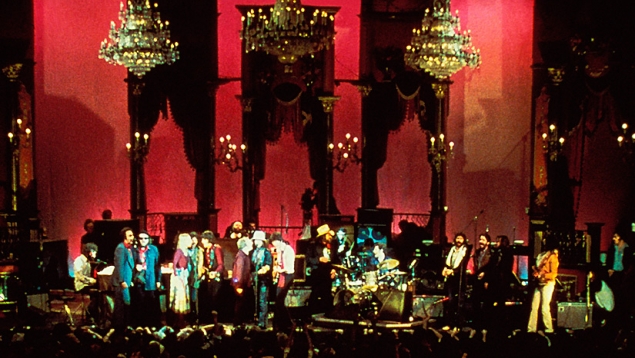
The Band on Thanksgiving in 1976 at the Fillmore West. The film starts off with THIS FILM MUST BE PLAYED LOUD! A cut to Rick Danko playing pool and then it then to the Band playing “Don’t Do It”…the last song they performed that night after hours of playing. Through the music and some interviews, their musical journey and influences are retraced.
This film is considered by many the best concert film ever made. It was directed by Martin Scorsese. I love the setting with the chandeliers that were from the movie Gone With The Wind. The quality of the picture is great because it was shot with a 35-millimeter camera which wasn’t normally done with concerts.
Before the Band and guests hit the stage, Bill Graham, the promoter, served a Thanksgiving dinner to 5000 people that made up the audience with long tables with white tablecloths.
The Band’s musical guests included
Ronnie Hawkins, Bob Dylan, Neil Young, Dr. John, Paul Butterfield, Van Morrison (my favorite performance), Joni Mitchell, Eric Clapton and Muddy Waters
The Staple Singers and Emmylou Harris also appear but their segments were taped later on a sound stage and not at the concert.
Robbie wanted off the road earlier and that is what the Last Waltz was all about…the last concert by The Band with a lot of musical friends. He was tired of touring and also the habits the band was picking up… drugs and drinking. Richard Manuel, in particular, was in bad shape and needed time.
The rest of the Band supposedly agreed but a few years later all of them but Robbie started to tour as The Band again. Richard Manuel ended up hanging himself in 1986. Rick Danko passed away in 1999 at the end of a tour of a heart attack attributed to years of drug and alcohol abuse. Levon Helm died of cancer in 2012.
The Band sounded great that night and it might be the best version you will ever hear of The Night They Drove Old Dixie Down.
The Last Waltz is a grand farewell to a great band and a film that I revisit at least twice a year… once always around Thanksgiving.
The complete concert is at the bottom…without cuts.
The great Garth Hudson gives us a wonderful intro to this song. In live shows, the song became a Hudson showcase, with him improvising wildly on organ (and later, on synthesizer) before cutting into the song. This improvisation came to be known as “The Genetic Method.” .Eventually the improvisation quoted Bach’s “Fugue in D Minor” and followed into the song’s main riff. Only part of the improvisation was included on the actual album cut.
Garth Hudson was the Band’s secret weapon according to Robertson. Back when they were backing Ronnie Hawkins….they asked the classically trained Hudson to join them. His parents didn’t like the idea but… Hudson agreed to join the band on two conditions: that Hawkins buy him a Lowrey organ, and that he be paid an extra $10 a week to give music lessons to the other Hawks. After that he was in The Band.
This gem came from Music From Big Pink in 1968. The song is credited to Robbie Robertson. Levon Helm said that he and Richard Manual wrote the lyrics to the song.
I was talking to another blogger the other day about the Band. They lived up to their name more than about any other band. Not only did they all contribute to songs…not writing…but all of them did contribute some but they all could play each others instruments.
Music From Big Pink was a huge influence on other artists back then and to this day. George Harrison and Eric Clapton were two that were influenced by it. Eric even had ideas of joining the Band. You can hear it in music at that time. Psychedelic was out and more Americana or roots music was in. The album’s influence far outweighed it’s chart position.
The album peaked at #18 in Canada and #30 in the Billboard Album Chart. It has to be on the list of best debut albums of all time.
Robbie Robertson:When Garth played the intro to “Chest Fever,” which he called “The Genetic Method,” I was reminded there was no other keyboard player in rock ’n’ roll who had his improvisational abilities and imagination.
Robbie Robertson:“It’s kind of a hard love song,” “But it’s a reversal on that old rock & roll thing where they’re always telling the girl, ‘He’s a rebel, he’ll never be any good.’ This time, it’s the other way around.”
From Songfacts
The Band’s guitarist, Robbie Robertson, felt he needed a counterbalance for the album’s centerpiece, “The Weight.” He wrote the music for the song solely for that purpose.
Robertson, drummer Levon Helm, and pianist Richard Manuel improvised lyrics (Robertson often calls them meaningless) over the course of the song. Those lyrics remain unchanged on the track, although they loosely tell a story of a man thrown aside by a hard-drinking, fast-talking woman who subsequently literally becomes sick with love for her.
This was the opening song for the Band’s set at the Woodstock Festival in 1969.
Chest Fever
I know she’s a tracker Any style that would back her They say she’s a chooser But I just can’t refuse her She was just there, but then she can’t be here no more
And as my mind unwheels I feel the freeze down in my knees But just before she leaves, she receives
She’s been down in the dunes And she’s dealt with the goons Now she drinks from a bitter cup I’m trying to get her to give it up She was just here, I fear she can’t be there no more
And as my mind unwheels I feel the freeze down in my knees But just before she leaves, she receives
It’s long, long when she’s gone I get weary holding on Now I’m coldly fading fast I don’t think I’m gonna last very much longer
She’s stoned said the Swede, And the moon calf agreed But I’m like a viper in shock With my eyes in the clock She was just there somewhere and here I am again
And as my mind unweaves I feel the freeze down in my knees But just before she leaves, she receives
It doesn’t get much better than this. This wasn’t a huge hit but it doesn’t mean that much when it’s The Band.
The Band did this song by playing musical chairs with the instruments. Most of them grabbed something different than what they normally played. Levon (drummer) sang and played Mandolin, Richard Manuel (piano) played drums, Rick Danko (bass) played fiddle, Garth Hudson (keyboards) played uprigtht piano and producer John Simon played Tuba.
Robbie Robertson wrote the song and was the only one playing their normal instrument…guitar.
The song peaked at #57 in the Billboard 100, #46 in Canada, and #16 in the UK in 1970. The song was on their second album The Band.
Songfacts
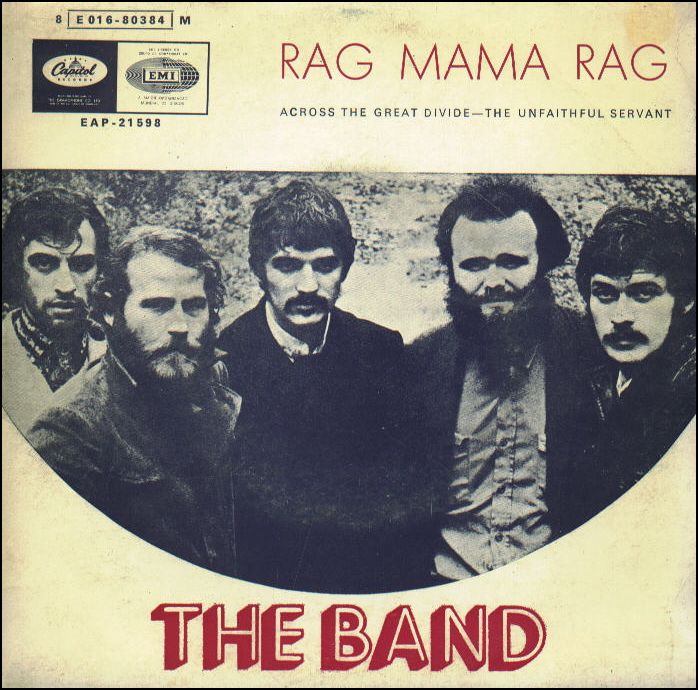
One of the Band’s first big European hit singles, “Rag Mama Rag” has some unusual instrumentation. Lead pianist Richard Manuel played drums, drummer Levon Helm played mandolin and sang lead, and bassist Rick Danko played a fiddle. This left the bass spot open on this track, and it was filled by the album’s producer, John Simon. He improvised a bassline on tuba, although he had no idea how to play the instrument. >>
Robbie Robertson is the only songwriter credited on this track, although other members of the group claim they made contributions. The song finds Levon Helm trying to convince his girl to come back home so she can “rag all over” his house. What he has in mind in unclear: “rag” could mean playing ragtime music (a possibility, considering the line “rosin up the bow”), but he might have more prurient intentions.
Rag Mama Rag
Rag Mama rag, can’t believe its true. Rag Mama Rag, what did you do? Crawled up to the railroad track Let the four nine-teen scratch my back
Sag mama sag now What’s come over you Rag Mama Rag, I’m a pulling out your gag. Gonna turn you lose like an old caboose, Got a tail I need a drag.
I ask about your turtle, And you ask about the weather, Well, I can’t jump the hurdle And we can’t get together.
We could be relaxing in my sleeping bag, But all you want to do for me mama Is rag Mama rag there’s no-where to go, Rag Mama rag. Come on resin up the bow.
Rag Mama rag, where do ya roam? Rag Mama rag, bring your skinny little body back home. Its dog eat dog and cat eat mouse, you can You can rag Mama rag all over my house.
Hail stones beating on the roof, The bourbon is a hundred proof, Its you and me and the telephone Our destiny is quite well known.
We don’t need to sit and brag. All we gotta do is Rag Mama rag Mama rag. Rag Mama rag Where do you roam? Rag Mama rag, bring your skinny little body back home
Robbie Robertson’s Christmas gift to his new son Sebastian during the sessions for Northern Lights-Southern Cross album… it never became a seasonal favorite but it should have been. It wasn’t released until the bands Islands album in 1977.
Rick Danko sings this song from a Shepherds point of view. It’s pure and down to earth like only the Band can be. No sleigh bells or other Christmas trappings…just pure music. Maybe that is the reason it never got picked up.
Robbie Robertson re-recorded this song after he left the group. And he did for the soundtrack of Bill Murray’s Scrooged. That version is very good but I still like The Bands version much more…it’s hard to beat Rick Danko.
Christmas Must Be Tonight
Come down to the manger, see the little stranger Wrapped in swaddling clothes, the prince of peace Wheels start turning, torches start burning And the old wise men journey from the East
How a little baby boy bring the people so much joy Son of a carpenter, Mary carried the light This must be Christmas, must be tonight
A shepherd on a hillside, where over my flock I bide Oh a cold winter night a band of angels sing In a dream I heard a voice saying “fear not, come rejoice It’s the end of the beginning, praise the new born king”
I saw it with my own eyes, written up in the skies But why a simple herdsmen such as I And then it came to pass, he was born at last Right below the star that shines on high
I had a friend who raved about Robbie’s new album in the 80s. He said he liked it better than the Bands music…I would never…ever go that far but… I did like it. Listening to this song, it took me a few listens to like it. In fact the first time I heard it I thought…this is repetitive…but after that I could not get enough of it. The back up vocal is great.
It reminds me of a narration for a movie and then Robbie goes into the chorus and the song clicks then.
Robertson enlisted fellow Canadian Daniel Lanois as co-producer of the album. The self titled album Robbie Robertson was a decent comeback for Robbie.
Robertson also brought in The BoDeans to provide group vocals for some of the tracks on the album
The song peaked at #24 in the Billboard Mainstream Rock charts, #91 in Canada, and #15 in the UK in 1988.
The Robbie Robertson album won the 1989 Juno Award for Album of the Year. Lanois and Robertson jointly won the Producer of the Year Juno award at the same ceremony.
From Songfacts
A single from Robbie Robertson’s eponymous debut album, the song finds the former Band’s guitarist singing of the levee life in the Deep South.
RLanois told Exclaim! magazine that the song started with the “Somewhere Down the Crazy River,” title. It was a line that Robertson came up with when he was telling the producer about hanging out with former Band colleague Levon Helm in his old Arkansas neighborhood. “He was telling me about the hot nights and fishing with dynamite,” he recalled. “I was curious about his stories because I wanted them to be on that record… It’s kind of like a guy with a deep voice telling you about steaming nights in Arkansas.”
Robbie Robertson wrote the song with Martin Page (“These Dreams,” “We Built This City”). He recalled the time spent with Robertson in an interview with us. “With Robbie, you were really dealing with a song craftsman who would take as long as it took to piece a great piece of music together with great, great atmosphere,” he said. Obviously, his time with Bob Dylan had influenced him.”
“My period with Robbie Robertson was very, very long,” Page added. “I’d bring in ideas and he’d mull over it and we’d experiment and experiment and experiment. But he would encourage me in the way I would sing these demos for him and I would guide him with the demo, then leave him alone.”
Somewhere Down The Crazy River
Yeah, I can see it now The distant red neon shivered in the heat I was feeling like a stranger in a strange land You know, where people play games with the night God, it was too hot to sleep
I followed the sound of a jukebox coming from up the levee All of a sudden, I could hear somebody whistling from right behind me I turned around, and she said “Why do you always end up down at Nick’s Cafe?” I said, “Uh, I don’t know, the wind just kinda pushed me this way” She said, “Hang the rich”
Catch the blue train Places never been before Look for me Somewhere down the crazy river (Somewhere down the crazy river) Ooh, catch the blue train All the way to Kokomo You can find me Somewhere down the crazy river (Somewhere down the crazy river)
Take a picture of this The fields are empty, abandoned ’59 Chevy Laying in the back seat listening to Little Willie John Yeah, that’s when time stood still You know, I think I’m gonna go down to Madam X And let her read my mind She said, “That voodoo stuff don’t do nothing for me”
I’m a man with a clear destination I’m a man with a broad imagination You fog the mind, you stir the soul I can’t find no control
Catch the blue train Places never been before Look for me Somewhere down the crazy river (Somewhere down the crazy river) Ooh, catch the blue train All the way to Kokomo You can find me Somewhere down the crazy river (Somewhere down the crazy river)
Wait, did you hear that? Oh, this is sure stirring up some ghosts for me She said, “There’s one thing you gotta learn Is not to be afraid of it” I said, “No, I like it, I like it, it’s good” She said, “You like it now But you’ll learn to love it later”
I been spellbound Falling in trances I been spellbound Falling in trances You give me the shivers Chills and fever You give me the shivers You give me the shivers I been spellbound I been spellbound I been spellbound (Somewhere down the crazy river) Somewhere down the crazy river
It doesn’t get much more classic than this song by The Band. I’ve covered the “Playing for a Change” version with Robbie Robertson, Ringo Starr, and many musicians across the world. It’s been covered by many artists but The Bands version will always be the goto version for me.
Robbie Robertson said he wrote this song one day while noodling with his guitar and trying to come up with songs for Music From Big Pink. When he looked inside his Martin guitar he saw the standard Martin imprint saying that the instrument was crafted in Nazareth, Pennsylvania. The name of the town spurred memories of a journey he made from his native Canada down to the Mississippi Delta when he was 16 years old. He thought of all the characters he met on that trip, and in his mind heard voices singing what would become the song’s chorus.
Robbie Robertson also claims this was influenced by the work of Luis Buñuel, a Spanish director who made some of the first movies dealing with surrealism. Robertson was intrigued by the characters in his films, who were often good people who did bad things.
The song peaked at #63 in the Billboard 100, #31 in Canada, and #21 in the UK in 1968.
The song is a standard now…it’s been covered by (from wiki) Little Feat, the Chambers Brothers, Eric Church, Chris Stapleton, Stoney LaRue, The Staple Singers, Waylon Jennings, Joe Cocker, Travis, Grateful Dead, Blues Traveler, New Riders of the Purple Sage, O.A.R., Edwin McCain, the Nitty Gritty Dirt Band, the Black Crowes, Spooky Tooth, Hanson, Old Crow Medicine Show, Panic! at the Disco, Shannon Curfman, Aretha Franklin, Joan Osborne, John Denver, Trampled by Turtles, Cassandra Wilson, Miranda Lambert, Al Kooper, and Mike Bloomfield, Deana Carter, New Madrid, Dionne Warwick, and Gillian Welch. Mumford & Sons, RatDog, and Bob Weir are also known to cover this song from time to time. Additional notable versions are by Zac Brown Band, Hoyt Axton, Lee Ann Womack, Smith, Weezer, the Allman Brothers Band, the Marshall Tucker Band, Free Wild, Brian Fallon, Aaron Pritchett, and others.
From Songfacts
This tells the story of a guy who visits Nazareth, and is asked by his friend Fanny to visit several of her friends. “The Weight” that is his load are all these strange people he promised he would check on. The song was never a big hit, but it endures as a classic rock staple.
Robbie Robertson got the only writing credit for this song, although other members of the group claimed that they contributed to this as well as many of their other songs and were not credited. Since only the writer receives royalties for a song, this created a great deal of tension in The Band.
The vocals are shared by Richard Manuel, Rick Danko, and Levon Helm, who harmonize on the choruses. Helm takes lead on the first three verses; Danko takes the fourth (“Crazy Chester followed me…); Helm and Danko share the last verse (“Catch the cannonball…).
One of the distinctive characteristics of The Band was their three lead vocalists. Helm had the added challenge of singing from behind his drum kit when they played live.
Nazareth, where the story takes place, refers to the town in Pennsylvania about 70 miles north of Philadelphia. The rock group Nazareth got their name from this line (“Went down to Nazareth, I was feeling about half past dead…”).
In the liner notes for the Across the Great Divide box set, Robbie Robertson is quoted as saying he chose that place because they make legendary Martin guitars there, so he was aware of the town and been there once or twice. Citizens of Nazareth, Pennsylvania, were thrilled when Robertson acknowledged it as the setting in this famous song. >>
Get the new iPhone SE
Ad by Metro by T-Mobile
See More
The characters in the song – Crazy Chester, Luke, Anna Lee, are based on friends of the band. In Levon Helm’s autobiography This Wheel’s On Fire: Levon Helm And The Story Of The Band, he explained:
“We had two or three tunes, or pieces of tunes, and ‘The Weight’ was one I would work on. Robbie had that bit about going down to Nazareth – Pennsylvania, where the Martin guitar factory is at. The song was full of our favorite characters. ‘Luke’ was Jimmy Ray Paulman. ‘Young Anna Lee’ was Anna Lee Williams from Turkey Scratch. ‘Crazy Chester’ was a guy we all knew from Fayetteville who came into town on Saturdays wearing a full set of cap guns on his hips and kinda walked around town to help keep the peace,if you follow me. He was like Hopalong Cassidy, and he was a friend of the Hawks. Ronnie would always check with Crazy Chester to make sure there wasn’t any trouble around town. And Chester would reassure him that everything was peaceable and not to worry, because he was on the case. Two big cap guns, he wore, plus a toupee! There were also ‘Carmen and the Devil’, ‘Miss Moses’ and ‘Fanny,’ a name that just seemed to fit the picture. (I believe she looked a lot like Caladonia.) We recorded the song maybe four times. We weren’t really sure it was going to be on the album, but people really liked it. Rick, Richard, and I would switch the verses around among us, and we all sang the chorus: Put the load right on me!”
There has been more than a little debate among classic rock DJs and enthusiasts over the real meaning of this song. Yes, Robertson has insisted time and again there is no biblical subtext, but many people think he may be deflecting. Consider the following:
– The narrator can’t find a bed in Nazareth, and the guy to whom he makes an inquiry just smiles and says “no.”
– Carmen and the devil were walking side by side, Carmen can go but her friend the devil has to stick around – an allusion to ever-present temptations.
– “Crazy Chester followed me and he caught me in the fall” – possible allusion to Paul on the road to Damascus.
– The most glaring one: “I do believe it’s time to get back to Miss Fanny, you know she’s the only one who sent me here with her regards for everyone” – Miss Fanny is the one who sent him to Nazareth, but now it’s time for him to go back to her; Miss Fanny is God, the “time” in question is the crucifixion, and “regards for everyone” is Jesus dying for all of man’s sins.
This was used in the movie Easy Rider. The Band performed the version heard in the movie, but on the soundtrack, a different group was used because of legal issues.
On September 28, 1968, this song reached its peak US chart position of #63. That same day, Jackie DeShannon’s cover reached its peak of #55 US. DeShannon’s release wasn’t what she had in mind. She explained in her Songfacts interview: “I absolutely said, ‘No way I’m going to do it, it’s The Band’s record, goodbye.’ But the label kept calling me, so I finally said, ‘Well, if you can get confirmation from The Band that they’re not putting it out as a single and I can do it with their permission, then okay.’ So, I recorded it. The record’s going up the chart and all of a sudden, here comes The Band’s single. Then Aretha Franklin’s version comes out. So I was at a radio station talking to the program director, and there were two other people promoting the same record outside the door.”
Aretha Franklin’s version was the biggest hit, reaching #19 in March 1969. Many other acts have since covered the song. A version by Diana Ross and the Supremes with The Temptations reached #46 in October 1969, which was the last time it charted in America. The song was also recorded by: A Group Called Smith, The Black Crowes, Bob Dylan, Grateful Dead, The Allman Brothers, Joan Osborne, Keller Williams, King Curtis & Duane Allman, Otis & Travis, Rotary Connection, Spooky Tooth, and The Ventures.
The album title came from the big pink house in upstate New York they rented and used as a recording studio. The Band was Bob Dylan’s backup band, and they moved there to be near Dylan while he was recovering from a motorcycle accident. Dylan offered to help with this album, but The Band refused because they wanted to make a mark on their own.
Robbie Robertson described this song as being about “the impossibility of sainthood.”
The Staple Singers sing on this in The Band’s 1978 concert film The Last Waltz. “Being in The Last Waltz was the most beautiful thing that ever happened to the Staple Singers,” Mavis Staples told Rolling Stone in 2015. “I still can’t get offstage without doing ‘The Weight.'”
While most of The Last Waltz was taken from The Band’s farewell concert in San Francisco, this performance was shot on a sound stage.
The line, “Catch a Cannonball now, to take me down the line,” refers to a train. There was no real Cannonball except in legend: It was popularized in the song from the 1800s called “The Wabash Cannonball,” and mentioned in some blues songs of the early 1900s, including the original version of “C.C. Rider.”
In 2007, this was used in a commercial for Cingular Wireless. Levon Helm took issue with it and sued BBDO, the advertising agency that came up with the campaign. Said Helm: “It was just a complete, damn sellout of The Band – its reputation, its music; just as much disrespect as you could pour on Richard and Rick’s tombstones.”
The Band played this at Woodstock in 1969. The festival fit in well with their schedule, as they were touring to promote their first album, Music From Big Pink. Their performance stands out as a highlight from the festival, and earned The Band a great deal of exposure. >>
Scottish rock band Nazareth, who are best known for their transatlantic hit “Love Hurts,” took their name from a lyric in this song – “I pulled into Nazareth, Was feelin’ about half past dead.”
This song was featured in the 1978 documentary of The Band, The Last Waltz, directed by Martin Scorsese. Most of the film was shot at their Thanksgiving Day, 1976 concert at the Winterland Ballroom in San Francisco, but their performance of “The Weight” was done in a studio with The Band joined by The Staple Singers, a gospel group who wrung out the spirituality of the song.
In celebration of Band drummer Levon Helm, who died in 2012, “The Weight” was performed at the Grammy Awards the next year with Mavis Staples joining Elton John, Mumford & Sons, the Zac Brown Band and Brittany Howard of Alabama Shakes. Unlike many star-packed performances that get messy fast, this one worked. The song is a great showcase for multiple performers and served as a fitting tribute to Helm.
Aretha Franklin’s version featured Duane Allman playing slide guitar using an empty bottle of decongestant pills.
Joe Cocker also covered this song. It was included on the 2005 deluxe edition of his 1970 live album, Mad Dogs & Englishmen.
Weezer covered this in 2008 and released it as a bonus track on The Red Album.
The Weight
I pulled into Nazareth, was feeling ’bout half past dead I just need some place where I can lay my head Hey, mister, can you tell me, where a man might find a bed? He just grinned and shook my hand, “No” was all he said
Take a load off Fanny, take a load for free Take a load off Fanny, and you put the load right on me
I picked up my bags, I went looking for a place to hide When I saw old Carmen and the Devil, walking side by side I said, “Hey, Carmen, c’mon, let’s go downtown” She said, “I gotta go, but my friend can stick around”
Take a load off Fanny, take a load for free Take a load off Fanny, and you put the load right on me
Go down, Miss Moses, ain’t nothin’ you can say It’s just old Luke, and Luke’s waiting on the judgment day Well, Luke, my friend, what about young Annalee He said, “Do me a favor, son, won’t you stay and keep Annalee company”
Take a load off Fanny, take a load for free Take a load off Fanny, and you put the load right on me
[Rick Danko] Crazy Chester followed me, and he caught me in the fog Said, “I will fix your rag, if you’ll take Jack, my dog” I said, “Wait a minute Chester, you know, I’m a peaceful man” He said, “That’s okay, boy, won’t you feed him when you can”
Take a load off Fanny, take a load for free Take a load off Fanny, and you put the load right on me
[Helm and Danko] Catch the cannonball, now to take me down the line My bag is sinking low, and I do believe it’s time To get back to Miss Fanny, you know she’s the only one Who sent me here, with her regards for everyone
Take a load off Fanny, take a load for free Take a load off Fanny, and you put the load right on me
Playing For Change, a global nonprofit which helps provide music education to young people around the world has just released a collaborative version of Robbie Robertson‘s “The Weight,” the classic song recorded by The Band in 1968 for their debut album, Music From Big Pink
The first Band album I ever bought was The Best of The Band. When I heard “The Shape I’m In” I knew I was going to like them. I knew the hits of course but the songs I never heard of at that point were great. I then started to buy their albums and loving this band. The song was off on the album Stage Fright and was a B side to the song “Time To Kill.”
There is a great version on The Last Waltz which is below. Robbie wrote the song for Richard to sing and at that time Levon, Rick, and Richard were heavy into heroin and drinking. The song peaked at #64 in Canada.
Robbie Robertson talks some about writing this song
At one time, there was talk that if you wanted to play like the angels, you had to dance with the devil—that heroin was a gateway to music supremacy. That myth was yesterday, but the power of addiction was still in full force. It hit me hard that in a band like ours, if we weren’t operating on all cylinders, it threw the whole machine off course. This was the first time that writing songs was painful for me. In some cases I couldn’t help but reflect on what was happening behind the curtain. I wrote “The Shape I’m In” for Richard to sing, “Stage Fright” for Rick, and “The W. S. Walcott Medicine Show” for Levon—all with undertones of madness and self-destruction. While watching Richard pound out the rhythm on the clavichord, I couldn’t help but see the irony as he sang out, “Oh, you don’t know, the shape I’m in.”
The Shape I’m In
Go out yonder, peace in the valley Come downtown, have to rumble in the alley Oh, you don’t know the shape I’m in
Has anybody seen my lady This livin’ alone would drive me crazy Oh, you don’t know the shape I’m in
I’m gonna go down by the water But I ain’t gonna jump in, no, no I’ll just be lookin’ for my maker And I hear that that’s where she’s been?
Oh, out of nine lives, I spent seven Now, how in the world do you get to Heaven Oh, you don’t know the shape I’m in
I’ve just spent 60 days in the jail house For the crime of having no dough, no no Now here I am back out on the street For the crime of having nowhere to go
Save your neck or save your brother Looks like it’s one or the other Oh, you don’t know the shape I’m in
Now two young kids might start a ruckus You know they feel you’re tryin’ to shuck us Oh, you don’t know the shape I’m in
I first read about this concert-festival in a Grateful Dead biography… There is not much video footage from the concert. I never could understand why this concert didn’t hold up in history like some others like The Atlanta Pop festival and others. I’m not saying it should have been remembered like Woodstock because it’s cultural impact was like no others…but this drew more than any other festival including Woodstock.
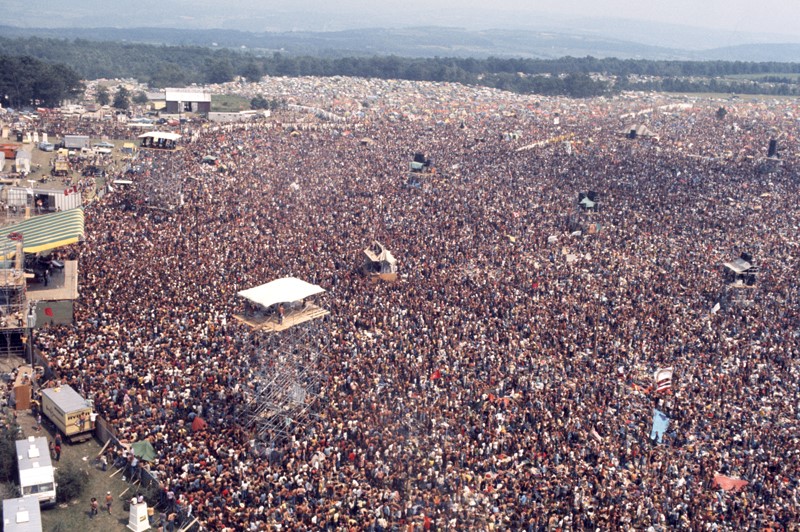
An estimated 600,000 people came to this concert on July 28, 1973, in Watkins Glen N.Y. 45 years ago. Maybe the reason it is not as remembered is that only three bands performed…but the three bands were giant bands in their prime. The Grateful Dead, The Allman Brothers, and The Band.
From the bands themselves, almost all agree the sound check on Friday was better than the concerts.
Perspective about the concert by a member from each band.
Robbie Robertson from his book Testimony
Then we got a request from Bill Graham, who was putting together a show “just up the highway from us” at the Watkins Glen Raceway. We’d be performing with the Allman Brothers and the Grateful Dead. Playing some gigs could help us get “back on the stick,” as they say. We went up to Watkins Glen the day before the show for the sound check. Bill Graham said that the Dead would go on first and play for three or four hours—that was part of their thing, giving the audience their money’s worth. “Until the drugs wear off,” said Bill, laughing. We’d go on in the late afternoon, and the Allmans would take over at sundown. As we were leaving the sound check, it looked like cars were heading toward the racetrack from every direction. Bill said he expected maybe a hundred thousand or more. When we came back the next day, we couldn’t believe our eyes. Hundreds of thousands of people had showed up, and more just kept coming and coming. The crowds mowed down the high chain-link fences around the racetrack and filled the area as far as the eye could see. Bill was running around trying to make people pay admission, but the mobs were out of control. When it came time for the Band to take the stage, it started pouring. As we waited, hoping it was going to let up, Bill came over. “They’ve determined there are 650,000 people here. It’s the biggest concert in history.” The news was somewhere between an incredible accomplishment and a huge disaster. The rain started letting up, and Garth played some churchy, rainy-day keyboard sounds out over the crowd. When it was safe to go on, we decided to start our set with Chuck Berry’s “Back to Memphis.” And wouldn’t you know, as Levon sang that baby, the sun came out.
Gregg Allman from My Cross to Bear
Right before Brothers and Sisters came out, we played the festival at Watkins Glen with the Band and the Grateful Dead, in front of six hundred thousand people—the biggest show in history to that point. People always talk about Woodstock. Watkins Glen was like three Woodstocks. I think actually it might’ve been a little too big. They should have had people all the way around the raceway, and maybe had the stage in the center revolving real slowly, do a revolution in a minute. That’s not that complicated. A show like Watkins Glen was uncomfortable, because you know that you’re getting the show across to this many people, but you still got two times that many behind them. You could finish a song, take your guitar off, put it in the case, and latch it up before the last guy heard the last note. Sound ain’t all that fast, not compared to light.
When you’re playing in that situation, you’re kind of thinking about the end. Not that you’re wishing it to be over, but you can’t even hear yourself—that was back before we had the in-ear monitors. Everything was so loud. You just walk out there and start to wince before you even start playing. It’s hard to get any kind of coziness, any kind of feel with the audience. I guess there’s something about that many people seeing you all at once that’s real nice, but it’s just too much. You’re just like a little squeak in the middle of a bomb going off. But it was interesting, and it was a pretty fun day. People were OD’ing all over the place. And of course, Uncle Bill was there, which cured everything. It was exciting to be there and see it—and to be able to make ’em stand up, now that was something else.
Bill Kreutzmann from Deal
We made some questionable business decisions and we couldn’t sell records, but we sure could sell tickets. We sold around 150,000 tickets for a single show at a racetrack in Watkins Glen, New York, on July, 28, 1973. Yes, and more than 600,000 people ended up coming out for it. The lineup was just us, the Allman Brothers, and the Band. That show, called the Summer Jam at Watkins Glen, made it into the Guinness Book of World Records for what, at the time, was the largest audience ever assembled at a rock concert. In fact, that record may still hold today, at least in the U.S., and some have even proposed that it was the largest gathering in American history. Originally, the bill was supposed to just be the Dead and the Allmans, but our respective camps fought with the promoter over which band would get headliner status. The solution was that both bands would co-headline and they’d add a third, “support” act. The friendly (“-ish”) competition between us and the Allman Brothers carried through to the event itself. And yet, the memory that I’m most fond of and hold most dear from that whole weekend was jamming backstage with Jaimoe, one of the Allman’s drummers. We were just sitting in the dressing room, banging out rhythms, and that was a lot of fun for me. Jaimoe backed Otis Redding and Sam & Dave before becoming a founding member of the Allman Brothers, where he remains to this day. He’s a soulful drummer and just an incredible guy who is impossible not to like. As for the show itself, it is a well-known fact that the Grateful Dead always blew the big ones. Watkins Glen was no exception. However, we still got a great night of music out of it—the night before. The show took place on a Saturday, but by Friday afternoon there were already about 90,000 people in front of the stage. I’ve heard others place that number closer to 200,000. Either way, the audience was already many times the size of any of our regular shows, and the show was still a full day away. The only duty we had on Friday was to do a soundcheck, and even that was somewhat optional. The Band soundchecked a couple of songs. The Allman Brothers soundchecked for a bit. Then, perhaps spurred on by our friendly rivalry, we decided to one-up both bands by turning our soundcheck into a full-on, two-set show. Naturally, without any of the pressure of the “official show” the next day, we really let loose and played a good one. There was an eighteen-minute free-form jam that eventually made it onto So Many Roads, one of our archival box sets. It’s good music, all right, and it still holds its own. On the day of the actual show, we had to fly into the venue via helicopter because the roads were all backed up, like what happened at Woodstock. People left their cars on the side of the road and walked for miles to the gig. I remember looking down from the helicopter and seeing the most incredible impressionist painting, a Monet of heads, shoulders, tie-dyes, baseball caps, and backpacks, packed front to back. You couldn’t see the ground for the crowd. To this day, I’ve never seen anything else like that. Nowadays at large music events and festivals, they have golf carts for artists and crews to get around, but back then they used little motor scooters. Early, during the day of our supposed “soundcheck,” I commandeered one of these scooters and, because the venue was an actual racetrack, I decided to do a lap. This was before the gates were opened. The scooter went maybe fifteen or eighteen miles an hour, something stupid like that, and it took forever just to do one lap. But I did it. And that’s when I first started to get a feel for the scale of the event and just how large it was. During the Summer Jam itself, I watched the other bands play and I honestly thought the Allman Brothers played better on the big day than we did. As for the Band, well, they always sounded great.
If you have read this long…below is some crowd video and a little of the music.










 PowerPop... An Eclectic Collection of Pop Culture