John Lennon – Instant Karma

This track is so alive. Lennon’s voice as always cuts through as always and Lennon’s sense of rhythm is different as always. He wrote and recorded this song in one day. John enlisted George Harrison, Klaus Voormann, Alan White, and Billy Preston to help him record the song. He also got Mal Evans, a Beatles road manager, to do the chimes, handclaps, and backing vocals. He is playing tambourine in the video below. The song was recorded on January 27, 1970, and released to the public on February 6, 1970.

I always tell people that I prefer John’s early albums to his later ones and to Pauls early ones. John had an edge to him that Paul didn’t have until Band on the Run… to me anyway.

The chorus was made up of Mal Evans, Yoko, and a small group of strangers Lennon rounded up from a West End pub called Hatchetts.

The song peaked at #3 in the Billboard 100, #2 in Canada, #4 in New Zealand,  and #5 in the UK in 1970. Phil Spector produced this track with great results. John kept it simple and Spector produced an exciting record and didn’t overproduce it because John reigned him in. The drums are really in your face in this recording.

Stephen King has said the novel The Shining got its inspiration from this song with the chorus of “We all shine on.”. Before Lennon would let Spector touch the Let It Be tapes…he tried him out on this song to see if he could not overproduce something this sparse and have a hit.

Yoko caught a lot of heat in 1993 when she let Nike use this song in a commercial. I will give her credit on this one… she took the $800,000 that Nike gave her, and gave it to the United Negro College Fund. Nowadays no one says anything about it as much because it’s much more commonplace now.

John Lennon: “I wrote it in the morning on the piano. I went to the office and sang it many times. So I said ‘Hell, let’s do it,’ and we booked the studio, and Phil came in, and said, ‘How do you want it?’ I said, ‘You know, 1950’s.’ He said, ‘right,’ and boom, I did it in about three goes or something like that. I went in and he played it back and there it was. The only argument was that I said a bit more bass, that’s all, and off we went.”

Yoko Ono: “It’s like, ‘Let’s all be together and anybody who’s out there who’s not in this game, why don’t you join us?,'” she told Uncut in 1998. “And to say that ‘We all shine on,’ it’s a beautiful, beautiful thing, instead of saying some people are shining and some people are not. It’s a really uplifting song.”

Instant Karma

Instant Karma’s gonna get you
Gonna knock you right on the head
You better get yourself together
Pretty soon you’re gonna be dead
What in the world you thinking of
Laughing in the face of love
What on earth you tryin’ to do
It’s up to you, yeah you

Instant Karma’s gonna get you
Gonna look you right in the face
Better get yourself together darlin’
Join the human race
How in the world you gonna see
Laughin’ at fools like me
Who in the hell d’you think you are
A super star
Well, right you are

Well we all shine on
Like the moon and the stars and the sun
Well we all shine on
Ev’ryone come on

Instant Karma’s gonna get you
Gonna knock you off your feet
Better recognize your brothers
Ev’ryone you meet
Why in the world are we here
Surely not to live in pain and fear
Why on earth are you there
When you’re ev’rywhere
Come and get your share

Well we all shine on
Like the moon and the stars and the sun
Yeah we all shine on
Come on and on and on on on
Yeah yeah, alright, uh huh, ah

Well we all shine on
Like the moon and the stars and the sun
Yeah we all shine on
On and on and on on and on

Well we all shine on
Like the moon and the stars and the sun
Well we all shine on
Like the moon and the stars and the sun
Well we all shine on
Like the moon and the stars and the sun
Yeah we all shine on
Like the moon and the stars and the sun

Stuart Sutcliffe – The Forgotten Artist

In May of 1960, Stuart Sutcliffe was a brilliant young artist with a bright career ahead of him when he sold one of his paintings and his friend John Lennon talked him into buying a bass. He didn’t know how to play bass but was taught by John, Paul, and George because like George said…it was better to have a bass player that couldn’t play than no bass player at all.

StuSutcliffe

Stuart Sutcliffe 1960

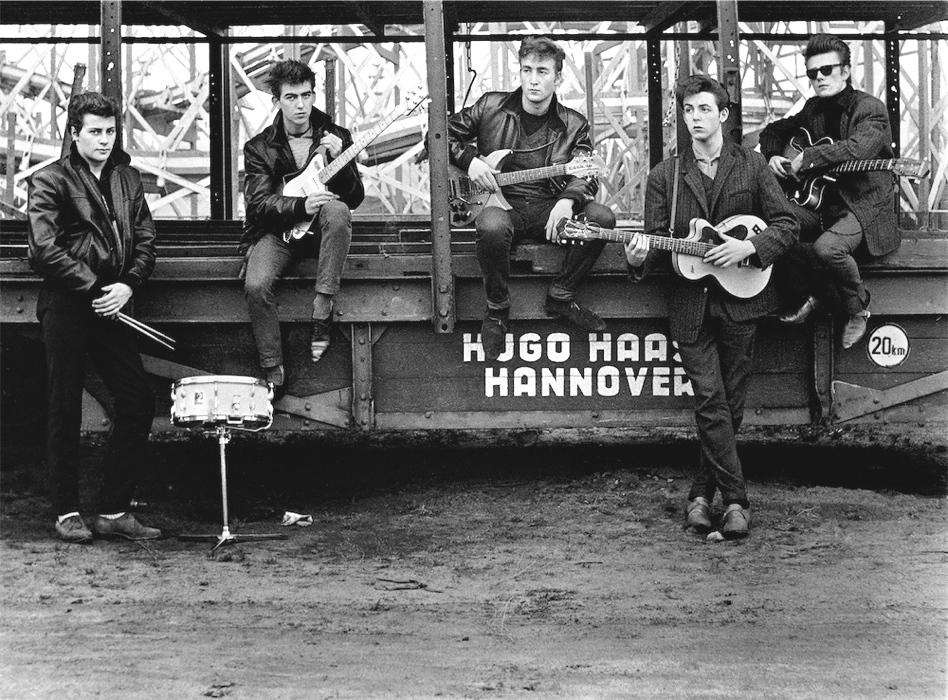
Stuart did learn to play bass and had a lot of stage time in Hamburg. He was never a great bass player but good enough to hold the position down. Stuart and John came up with the band name Beatles. Stuart wanted it to be Beatals but John stuck with Beatles. He quit art college to go on tour with The Silver Beatles to help back up a performer named Johnny Gentle in Scotland. After that they went to Hamburg and that changed their career. John also quit art college but he didn’t have the talent that Stuart did. 

After a year or so he wasn’t at the other Beatles level and Paul never let him forget it. Paul was jealous of Stuart because of him being so close to Lennon. George also was a little jealous but not like Paul. John was basically hero-worshiped by Paul and George. In Hamburg, Paul said something about his girlfriend Astrid and tiny Stuart tackled Paul while they were on stage…they rolled around a bit and then it was finally over. Paul still talks about how he feels bad for the way he treated him.

He probably would have never got to their level musically because although he was good friends with John… his heart was in art not music. He was with them from May 1960 to August of 1961. 

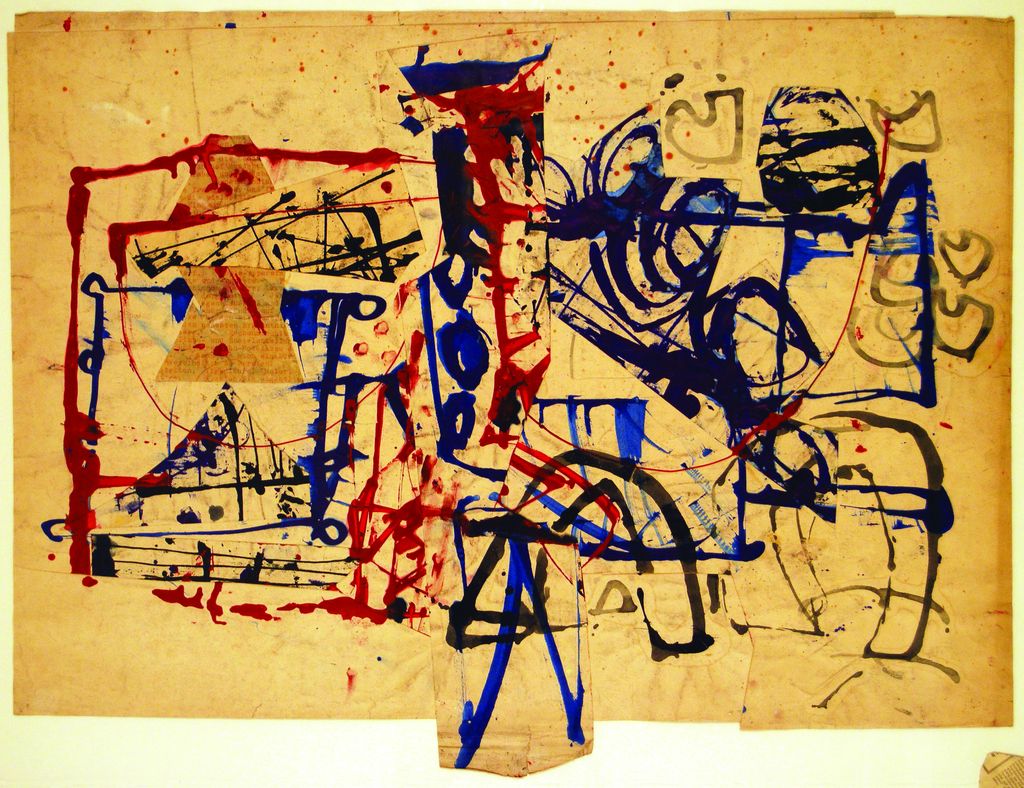
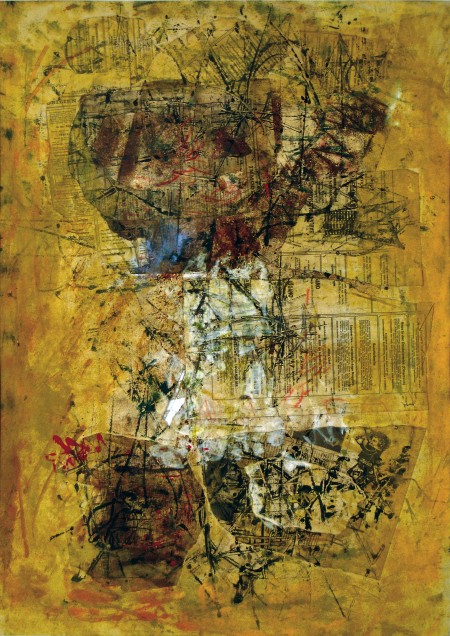
Many art experts say Stuart would have been a major artist had he lived… with or without the Beatle connection. He was indeed a sought-after artist when he quit the Beatles. He was the James Dean of the Beatles…He was the Artist…the Stylish one who attracted new friends in Germany that forever changed the Beatles. Some pictures of him make him look ahead of his time.

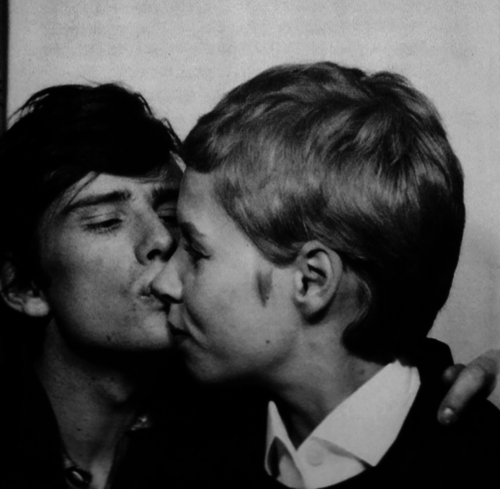
While playing in Hamburg Germany he met Astrid Kirchherr who would become the love of his life. Astrid would take some of the most famous early photographs of the Beatles.

astrid beatles.JPG

Astrid’s soon-to-be ex-boyfriend Klaus Voormann would befriend the Beatles and later designed the Revolver cover and play bass for John, George, and Ringo at different times in their career. Jürgen Vollmer, a photographer in the circle of Astrid’s friends would end up cutting John and Paul’s hair into the famous haircut …after Astrid had already cut Stuart’s hair in that fashion first. Stuart was of course laughed at by the rest until they got theirs cut. Pete Best refused and did his own thing. 

Stuart’s influence went beyond playing bass. Without Stuart, things may have turned out differently for The Beatles.

Stuart finally quit The Beatles to concentrate on art and to marry Astrid. He got a scholarship while living with Astrid in Germany, at the Hamburg College of Art in 1961. He produced a lot of paintings in the last year of his life. He started to lose weight, got terrible headaches, and had trouble walking. He kept going to college and kept painting in Astrid’s attic. They wanted to marry in May but on April 10, 1962, he had a ruptured aneurysm and passed away on the way to the hospital in Astrid’s arms.

If Stuart had lived he would have almost certainly stayed in the Beatles circle although not playing…he may have been remembered more as an artist than a one-time bassist of the Beatles that happened to be an artist. 

For the Beatles part…he was a major influence in coming up with the name, helped bring on the haircuts, and gave them a more sophisticated style other than leather jackets and boots. 

John Lennon would remember his friend in his song “In My Life.”

George Harrison: “He wasn’t really a very good musician. In fact, he wasn’t a musician at all until we talked him into buying a bass, we taught him to play 12-bars, like ‘Thirty Days’ by Chuck Berry. That was the first thing he ever learnt. He picked up a few things and he practiced a bit until he could get through a couple of other tunes as well. It was a bit ropey, but it didn’t matter at that time because he looked so cool. We never had many gigs in Liverpool before we went to Hamburg, anyway.”
John Lennon: “I looked up to Stu. I depended on him to tell me the truth, Stu would tell me if something was good and I’d believe him. We were awful to him sometimes. I used to explain afterwards that we didn’t dislike him, really.”

More about Stuart and his Art…thank you for reading this. 

http://www.anothermag.com/art-photography/8556/a-five-point-guide-to-the-art-and-style-of-stuart-sutcliffe

astrid stu.png

stu1.jpg

stu 2.jpg

Stu 3.jpg

Manfred Mann – Quinn The Eskimo (Mighty Quinn)

Some songs are just fun…and this is one of them. Yes, I like the Manfred Mann version a bunch and I also like Bob Dylan’s released version. It’s a live version with The Band at the Isle of Wight. Bob’s voice fits this song so well…he is over the top, sloppy, and loud but it works. It’s an irresistible melody and hook that Bob wrote in this song. Bob’s version is the only version I knew for a long time.

Bob Dylan wrote this song and I first heard it through his Greatest Hits II album, and then the Basement Tapes of him and The Band. Some time later I heard the Manfred Mann version of it. Something different though…Manfred Mann was the first to release it. This usually didn’t happen but Mike D’abo from Manfred Mann explains it:  “We met in a publisher’s house as Bob Dylan was making some new material available to other artists, we heard about 10 songs and I thought ‘This Wheel’s On Fire’ would be the one to do, but Manfred liked The Mighty Quinn, which was called ‘Quinn The Eskimo’ then. It was sung in a rambling monotone but Manfred had recognized its potential. He sold me on the idea of doing this song, but I had to make up some of the words as I couldn’t make out everything he was saying. It was like learning a song phonetically in a foreign language. I have never had the first idea what the song is about except that it seems to be ‘Hey, gang, gather round, something exciting is going to happen ’cause the big man’s coming.’ As to who the big man is and why he is an Eskimo, I don’t know.” 

The Basement Tapes version is much more mellow. This is probably the demo that Manfred Mann received.

It is thought that Bob Dylan came up with the song after seeing the 1959 movie The Savage Innocents. In that movie, Anthony Quinn plays an Eskimo named Inuk…that would explain Quinn and why he mentions an Eskimo in a pop song.  That film also was the screen debut of Peter O’Toole.

Bob released the song in 1970 on his Self Portrait album… a live version recorded at the Isle of Wight Festival on August 31, 1969, with The Band backing him. His voice is great on this…it fits the song. The “heeyyyyyyyys” and the “whooooaaaas”s are perfect for it. 

Manfred Mann released this in 1968 and it was a huge hit for them. The song peaked at #1 in the UK, #3 in Canada, #1 in New Zealand, and #10 on the Billboard 100 in 1968.

A little trivia for Beatle fans…Klaus Voormann who drew the Revolver cover, was on this song, he played the flute part on the Manfred Mann version. I also believe he played bass but I can’t verify…that is what instrument he played.

Having turned down offers from bands like the Hollies and the Moody Blues, Voormann agreed to become a part of Manfred Mann. He got to know the Beatles when they arrived in Germany. When Stuart Sutcliffe quit playing bass…McCartney took over and a little while later Stuart volunteered…if he had spoken up sooner…you never know what could have happened.

Ron Cornelius who played on the Self Portrait album: “There’s everybody and his brother flying into Nashville to play on that thing. If you look at the credits, it’s amazing how many people were delighted to come and play on it. Out of everybody I’ve worked with, I don’t know of anyone who’s been any nicer than Bob Dylan.”

The Mighty Quinn

Come all without, come all within
You’ll not see nothing like the mighty Quinn
Come all without, come all within
You’ll not see nothing like the mighty Quinn

Everybody’s building ships and boats
Some are building monuments
Others jotting down notes
Everybody’s in despair
Every girl and boy
But when Quinn the Eskimo gets here
Everybody’s gonna jump for joy

Come all without, come all within
You’ll not see nothing like the mighty Quinn

I like to go just like the rest, I like my sugar sweet
But jumping queues and making haste
Just ain’t my cup of meat
Everyone’s beneath the trees feeding pigeons on a limb
But when Quinn the Eskimo gets here
All the pigeons gonna run to him

Come all without, come all within
You’ll not see nothing like the mighty Quinn
Come all without, come all within
You’ll not see nothing like the mighty Quinn

Let me do what I wanna do, I can’t decide ’em all
Just tell me where to put ’em and I’ll tell you who to call
Nobody can get no sleep, there’s someone on everyone’s toes
But when Quinn the Eskimo gets here, everybody’s gonna wanna doze

Come all without, come all within
You’ll not see nothing like the mighty Quinn
Come all without, come all within
You’ll not see nothing like the mighty Quinn

Come all without, come all within
You’ll not see nothing like the mighty Quinn
Come all without, come all within
You’ll not see nothing like the mighty Quinn

John Lennon – Isolation

Many people posted this song during the lockdown and I can see why.

I always liked the song and understood that isolation doesn’t equate to loneliness. You can be in a crowd of people and yet feel isolated or alone. You can be physically isolated from others yet still feel very much connected to others.

The bass player on this track was Klaus Voormann, who was a friend of the Beatles from their Hamburg days. He was also an artist… he is the artist who designed the cover of Revolver. Ringo Starr also lends a hand with drums on this track.

JLPOBCover.jpg

The song was released on his true debut album John Lennon/Plastic Ono Band in 1970. Arguably one of if not his best album. Like Paul’s debut this one was not big in production but unlike Pauls…this album was not light pop songs. You can feel John releasing his inner feelings for everyone to see on this album. Not an album to play to get a party going. You can hear John’s disillusionment with life, fame, and his three former bandmates.

This was during the time John Lennon went to see Doctor Arthur Janov in scream therapy. A way to bare his soul for his feelings like his mom that was killed when he was a teenager.

John Lennon: ‘Isolation’ and ‘Hold On John’, they’re the rough remixes. I just remixed them that night on seven-and-a-half [inches per second tape] to take them home to see what else I was going to do with them. And then I didn’t really, I didn’t even put them onto fifteen [IPS], so the quality is a bit hissy on ’em too. By the time I’d done everything, I started listening. I found out it’s better that, with ‘Instant Karma’ and other things, you remix it right away that night. I’d known that before, but never followed it through.

I usually don’t pay much attention to covers. I ignore actors turn singers but I did find a very good version of this song out there. In 2020 Jeff Beck and Johnny Depp recorded this song and Beck’s guitar work is great. Depp also does the vocals justice in this.

Isolation

People say we got it made
Don’t they know we’re so afraid
Isolation
We’re afraid to be alone
Everybody got to have a home
Isolation

Just a boy and a little girl
Trying to change the whole wide world
Isolation
The world is just a little town
Everybody trying to put us down
Isolation

I don’t expect you, to understand
After you caused so much pain
But then again, you’re not to blame
You’re just a human, a victim of the insane

We’re afraid of everyone
Afraid of the sun
Isolation
The sun will never disappear
But the world may not have many years
Isolation

John Lennon – Cold Turkey

Not the most pleasant song available from John but it does get your attention. I do like the guitar sound that John and Eric Clapton get in this song.

This song is about drug withdrawal. Quitting “Cold Turkey” means abruptly stopping drug use and the effect it has on your body and mind. John Lennon quit cold turkey because he wanted to get off drugs and start a family with Yoko.

John wanted to record this with the Beatles but they rejected it so he went off and recorded it on his own.

Eric Clapton and John played guitar on this, Ringo drummed, and Klaus Voormann played the bass, It was released as a single in 1969 as The Plastic Ono Band. The song peaked at #30 in the Billboard 100, #14 in the UK, and #30 in Canada.

This was Lennon’s second single away from The Beatles. “Give Peace A Chance” was released a few months earlier. This was also the first song John took complete credit for as he dropped the McCartney from Lennon and McCartney.

Its first public performance on September 13, 1969, was recorded and released on the Live Peace in Toronto 1969 album by the Plastic Ono Band.

John Lennon: “Cold Turkey was banned. They thought it was a pro-drugs song. But I’ve always expressed what I’ve been feeling or thinking at the time. So I was just writing the experience I’d had of withdrawing from heroin. To some it was a rock ‘n’ roll version of The Man With The Golden Arm because it showed Frank Sinatra suffering from drug withdrawal.”

From Songfacts

Lennon performed this on September 13, 1969 at The Toronto Rock and Revival Show, where he introduced his Plastic Ono Band (at least the configuration of it for this show). Eric Clapton was on guitar, Klaus Voorman on bass, and Alan White on drums. Yoko Ono was also part of the act, and she made an impact during “Cold Turkey.” As the song played, she emerged from a bag on stage, stepped up to a microphone, and made turkey-sounding noises (not out of character). The set was released as a live album called Live Peace In Toronto 1969.

Eric Clapton played some of the guitar on this. Lennon asked Clapton to join The Plastic Ono Band, but Eric declined.

Lennon wrote and recorded this song before attending Arthur Janov’s Primal Scream therapy workshop, which played a part in his song “Mother.” The screams he used in “Cold Turkey,” he was actually emulating Yoko singing.

When John Lennon decided to return his MBE (Member of the British Empire) award on November 25, 1969, he sent it to Queen Elizabeth II with a note explaining, “I am returning this MBE in protest against Britain’s involvement in the Nigeria-Biafra thing, against our support of America in Vietnam and against ‘Cold Turkey’ slipping down the charts.”

Cold Turkey

Temperature’s rising
Fever is high
Can’t see no future
Can’t see no sky

My feet are so heavy
So is my head
I wish I was a baby
I wish I was dead

Cold turkey has got me on the run
My body is aching
Goose-pimple bone
Can’t see no body
Leave me alone

My eyes are wide open
Can’t get to sleep
One thing I’m sure of
I’m at the deep freeze

Cold turkey has got me on the run

Thirty-six hours
Rolling in pain
Praying to someone
Free me again

Oh I’ll be a good boy
Please make me well
I promise you anything
Get me out of this hell

Cold turkey has got me on the run