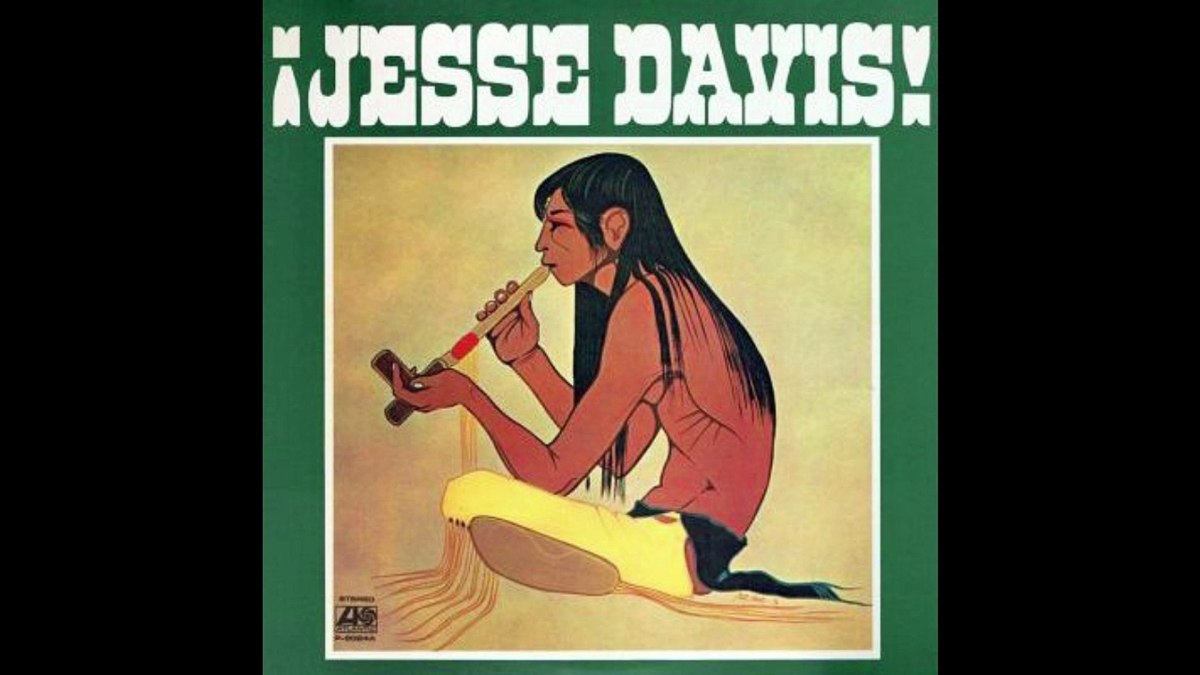
Jesse Ed Davis – ¡Jesse Davis! …album review

I’ve heard of this guy for so long, associated with Taj Mahal and solo Beatles tracks. He played on over 80 albums of other artists. His guitar playing was top shelf and was truly one of the guitar greats. He doesn’t get the attention he deserves. My admitted lack of knowledge of him led me to think he could only play guitar. Much like last week’s Link Wray post, who I didn’t know could sing, he had a really good voice. I also want to thank Lisa from Tao-Talk for posting a Davis song last Friday. 

Jesse Ed Davis was Kiowa, Comanche, and Muscogee (Creek) on his father’s side, while his mother was of Kiowa and Cherokee descent with a small strand of European ancestry. In other words, he was overwhelmingly Native American, with family roots braided through several Plains and Southeastern tribes. He grew up connected to that identity, not as a stage costume, but as him. His dad painted the cover for this album. 

I started to go through his albums like ¡Jesse Davis!, Ululu, and Keep Me Comin or Keep On Coming. He has a couple more, which I still have to get to. I’m totally impressed by his rootsy music. Again, instead of just picking a song, I wanted to feature the album. There is no #1 hit on the album, nor do I think he was trying for that. Just really good, solid songs. 

When Jesse Ed Davis stepped into a studio to record his 1971 debut album ¡Jesse Davis!. He had already carved out a reputation as the guitarist you called when you wanted soul and a heavenly guitar tone, and most importantly, zero ego. He’d played with Taj Mahal, recorded with Gene Clark, and done sessions with everyone from Albert King to Earl Hooker, Jackson Browne, John Lennon, and a ton of other artists. Jesse was the go-to guitarist of the 1970s. 

How respected was he? On this album, he had some incredible guests. Eric Clapton, Leon Russell, Gram Parsons, Alan White, and the Gimme Shelter singer Merry Clayton. This album sounds like a loose jam session that worked all the way around. My favorite song on the album is Washita Love Child. It just hit me and has stuck. I found myself hitting the play button again and again. The band around him cooks with an irresistible looseness. You can hear Clapton on his track loud and clear. After researching for this post, I found out it was featured on the TV show  Reservation Dogs. 

The album works because it stays out of its own way. Lou Adler keeps the production loose and moving. Leon Russell arranged some of the songs and added his unique touch. The songs drift between blues, roots rock, and a kind of West Coast soul. Reno Street Incident floats in like someone cracked open a window at two in the morning. Every Night Is Saturday Night for Me comes alive with Leon’s piano, rolling forward like only Leon can do. And when Gram Parsons or Eric Clapton pop up, they don’t hijack the song; they simply join in.

What really holds everything together is Jesse’s guitar, a voice unto itself. He never shows off, he never “shreds,” he simply plays for the song. His solos feel lived in and warm. He didn’t shout to be heard; he just played. Hearing him play and sing on this album is like slipping into a holey, comfortable favorite shirt.

The album doesn’t scream commercial…it doesn’t scream at all. It’s an album you put on and listen to all the way through, and sit back and enjoy some great music. Jesse Ed Davis passed away in 1988 at the young age of 43. 

I added a 10-minute documentary clip.

Washita Love Child

I was born on the bank
in the Washitaw river
in a Kiowa Comanche teepee

Daddy had a hard time
Mama made his eyes shine
Lord, it was just us three
Well they weaned me riding bareback
And I’d tie my hair back
And i did that pow wow thang
Daddy showed up with his stand up guitar
and then we rocked it i believe

I’m a love child
and I’m running wild
hope it don’t take too long
I’m a love you
I’m a try to make you happy
you got to let me sing my song

Mama said to son
Said what about your school books?
Baby baby what about the draft?
Daddy said honey don’t you worry about this boy he’s headed somewhere
Got a guitar and a van to ride

He’s a love child
He’s gonna be running wild
Hope he don’t take too long
He’s gonna love you
He’s in love with me too
So we got to let him sing his song

Well i got myself together
And i’ve been rolling down the road
Gonna boogie down down down down
If i ever get a chance to boogie woogie you
Ha, you can’t sit down

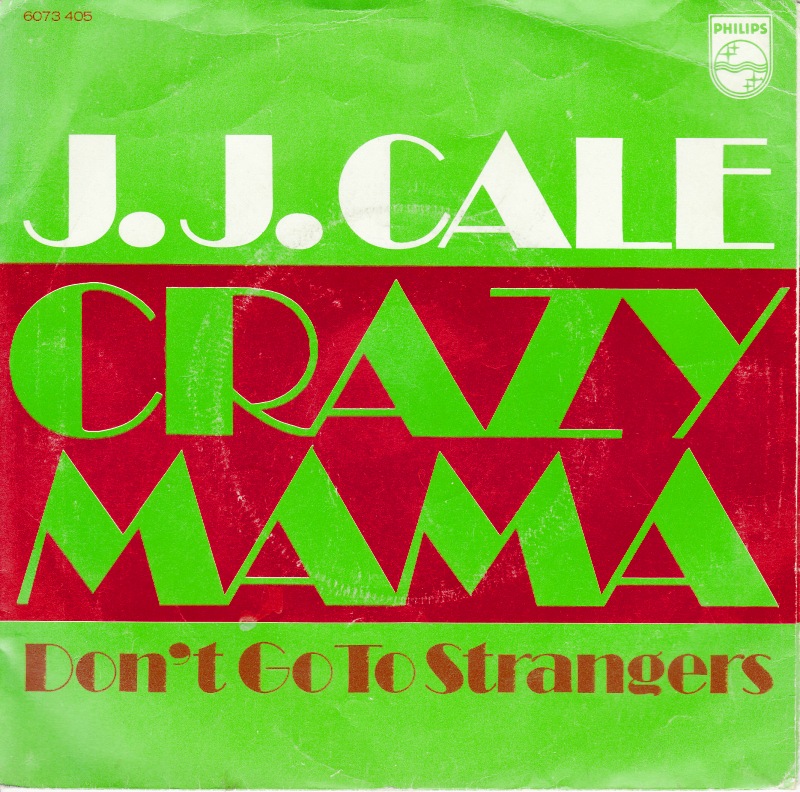
J.J. Cale – Crazy Mama

The thing that I’ve found about Cale is that his music isn’t in your face. It really sneaks up on you while you listen. I remember this getting played on AM radio when I was a kid, and this song introduced me to J.J. Cale. Yes I may have heard some of his songs that were covered by others, but I knew this by Cale and no one else. 

Oklahoma blues guitarist and songwriter J.J. Cale is best known for a number of songs that became radio favorites when covered by other artists. These include both After Midnight and Cocaine, which were written and recorded by Cale before Eric Clapton cut his versions. Also, Cale’s track Call Me The Breeze has been covered by numerous acts, most notably by Lynyrd Skynyrd.

The record feels loose, almost casual, like you just stumbled across him jamming in a Tulsa roadhouse. Yet the track is locked in tight, every note exactly where it needs to be. Musicians took notice; countless guitarists, from Mark Knopfler to Neil Young, would later cite Cale’s minimalism as an influence.

He made this hit song without raising his voice or speeding up this song. Remember this was the era of bombast, arena rock, prog, and wall-to-wall sound. Cale proved that restraint could be just as powerful. It’s no surprise that Clapton and others gravitated to his songs; Cale had a way of making music that felt timeless and genuine. This song may have been his only chart hit, but it wasn’t his only masterpiece.

Crazy Mama is a song from Cale’s debut album, Naturally, and was his only Top 40 hit in the US. Naturally peaked at #51

This song peaked at #22 on the Billboard 100 in 1971.

Crazy Mama

Crazy mama, where you been so long?
You’ve been hiding out, I know that’s true
Crazy mama, I sure need you
Crazy mama, where you been so long?

Standing on the corner, looking for you, babe
Lord have mercy, can I see,
that crazy mama coming back to me?
Crazy mama, where you been so long?

Derek and the Dominos – I Looked Away

This is the album’s opening track, and it doesn’t so much kick down the door as quietly invite you in. If you only know the Layla album for the title track, you might miss how the whole journey begins with this two-and-a-half-minute sigh of regret.

Unlike Clapton’s past work in Cream or Blind Faith, this wasn’t about ripping incredible riffs. The melody flows with a natural grace, closer to something from The Band than the psychedelic guitar Clapton had been known for.

Derek and the Dominos was a band formed in the spring of 1970 by guitarist and singer Eric Clapton, along with keyboardist Bobby Whitlock, bassist Carl Radle, and drummer Jim Gordon. All four musicians also worked with George Harrison on his All Things Must Pass album. Clapton didn’t want his name in the title and had hoped to keep his involvement as low-key as possible. 

The album peaked at #16 in 1970 on the Billboard 100. Although Derek and the Dominos were poised to record a follow-up album in 1971, because of tensions and drug abuse among the band members, along with the tragic death of Duane Allman later that year, this remained their sole album.

This song and Bell Bottom Blues are my two favorites off the album. Everyone knows Layla, but these other songs are great as well. Eric Clapton and Bobby Whitlock wrote this song. As with most of the songs on this album, Patti Harrison was the main inspiration. 

I Looked Away

She took my hand
And tried to make me understand
That she would always be there,
But I looked away
And she ran away from me today;
I’m such a lonely man.
It came as no surprise to me
That she’d leave me in misery.
It seemed like only yesterday
She made a vow that she’d never walk away.
First Verse
And if it seemed a sin
To love another man’s woman, baby,
I guess I’ll keep on sinning
Loving her, Lord, till my very last day.
But I looked away
And she ran away from me today;
I’m such a lonely man.

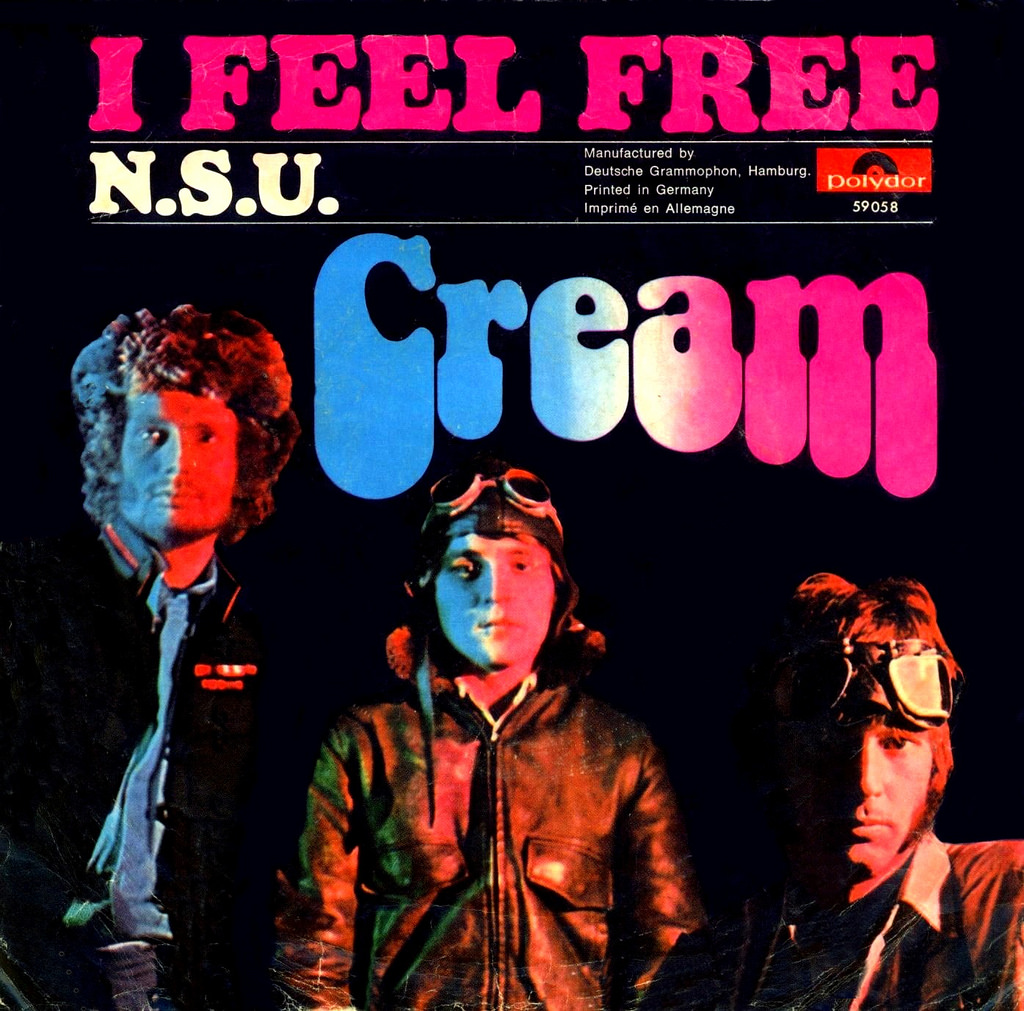
Cream – I Feel Free

Bomp, bomp, bomp, bomp, bomp I feel free…Jack Bruce’s voice in this is great and sets the tone of the song. The song peaked in the UK at #11 in 1967. It’s Cream before they were CREAM, before the mountain-top solos and the molten lava blues.

The track kicks off with that cool a cappella intro, a call-and-response chant that suspends it mid-air. Then Jack Bruce’s bass drops in like a swinging anchor, thumping along with a walking groove that practically skips. The whole song feels like it’s walking a line between psychedelia and British pop, and it works. It’s a perfect single from a band that rarely, if ever, cared about making singles.

Cream wasn’t known for a lot of fun songs. White Room, Sunshine of Your Love, and others meant business, but this one is fun and a little pop. They didn’t have many of those, but they did have a few. Wrapping Paper, I’m So Glad, and my personal favorite, the wonderfully bizarre Anyone For Tennis, have a place in my heart. 

British poet Pete Brown helped the band write the lyrics. Brown, who was a beat poet, had worked with Baker and Bruce before. He also wrote lyrics to Sunshine Of Your Love and White Room. Eric Clapton played a borrowed Les Paul guitar on this track, as his Beano album guitar had been stolen during album rehearsals. It was plugged into a new, 100-watt Marshall amp.

Speaking of Clapton, he used what he called his “Woman Tone” on his guitar in this song. It was one of the first times he used it. He got it by turning the amp all the way up, boosting the treble, cutting the bass, and playing a sustained guitar note.

I Feel Free

Bomp, bomp, bomp, bomp, bomp
I feel free
Bomp, bomp, bomp, bomp, bomp
I feel free
Bomp, bomp, bomp, bomp, bomp
I feel free
Bomp, bomp, bomp, bomp, bomp
I feel free
Bomp, bomp, bomp, bomp, bomp
I feel free
Bomp, bomp, bomp, bomp, bomp
I feel free
Bomp, bomp, bomp, bomp, bomp
I feel free
Bomp, bomp, bomp, bomp, bomp
I feel free
Bomp, bomp, bomp, bomp, bomp
I feel free

Feel when I dance with you,
We move like the sea.
You, you’re all I want to know.

I feel free.
I feel free.
I feel free.

I can walk down the street, there’s no one there
Though the pavements are one huge crowd.
I can drive down the road; my eyes don’t see,
Though my mind wants to cry out loud.

I, I, I, I feel free.
I feel free.
I feel free.

I can walk down the street, there’s no one there
Though the pavements are one huge crowd.
I can drive down the road; my eyes don’t see,
Though my mind wants to cry out loud,
Though my mind wants to cry out loud.

Dance floor is like the sea,
Ceiling is the sky.
You’re the sun and as you shine on me,

I feel free.
I feel free.
I feel free.

I, I, I, I

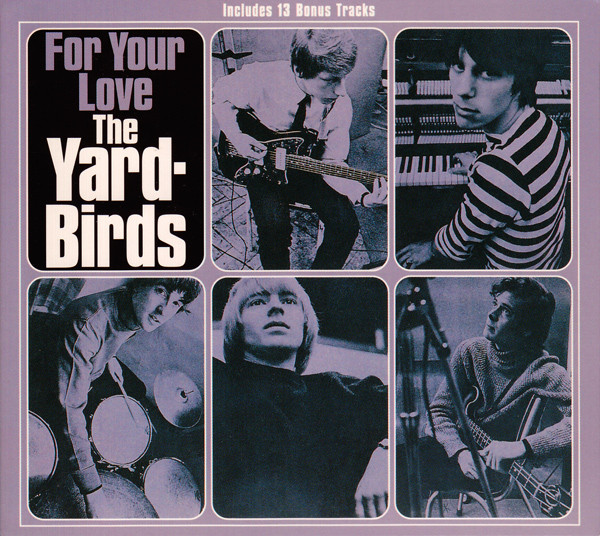
Yardbirds – For Your Love

This is the song that introduced the Yardbirds to me. I got into them heavily as a teenager. I just found one of my old Jr High notebooks with band names on the front, and The Yardbirds are on there. I always thought this was a different-sounding pop hit. Yes, you have the harpsichord, but the song also has a couple of time signatures. 

The song was written by Graham Gouldman, a teenage songwriter whose knack for hooks would later find full bloom in 10cc. For Your Love was handed to them by manager Giorgio Gomelsky, who saw the group’s potential beyond the blues clubs. The song offered a chance on the pop charts. Clocking in at under 2:30, it was compact, catchy, and just different enough to resonate with people. This was one of the few hit pop songs at the time to feature a harpsichord. 

And for Eric Clapton, it was the final straw. Clapton wanted blues, and Gomelsky wanted hits. He couldn’t get behind its commercial lean. Within weeks of its release, he was gone, off to join John Mayall’s Bluesbreakers, where the amps were loud and the blues roots ran deeper.

The song peaked at #6 in the Billboard 100, #1 in Canada, and #3 in the Uk in 1965. This song was more pop than blues. This inspired Eric Clapton to leave the Yardbirds because he feared they were becoming too commercial.

The Yardbirds had three of Rock’s greatest guitar players pass through them. Eric Clapton, Jeff Beck, and Jimmy Page. They had such a raw edge to them with Jeff Beck, so that is the version I like best.

Jim McCarty on the songs by Graham Gouldman: “Well, they were always very original. Very interesting songs, very moody, because they were usually in a minor key, the ones we did, anyway. ‘For Your Love’ was an interesting song, it had an interesting chord sequence, very moody, very powerful. And the fact that it stopped in the middle and went into a different time signature, we liked that, that was interesting. Quite different, really, from all the bluesy stuff that we’d been playing up till then. But somehow we liked it. It was original and different.”

Jim McCarty: “To try and get a hit song in those days was quite a difficult thing to do for us. We could come up with ideas, but our first hit song was very important for us. And with ‘For Your Love’ we heard it and had the demo of it and it sounded like a hit song to all of us. Yeah, there wasn’t a problem doing that. It was the sort of thing that you relied on to get into that other echelon, to have a hit song. All our contemporaries were having hit songs: The Beatles and the Stones and the Moody Blues and Animals, they were all having #1 hits and we were really trying to keep up.”

For Your Love

For your love
For your love
I’d give you everything and more and that’s for sure
(For your love)
I’d bring you diamond rings and things right to your door
(For your love)
To thrill you with delight,
I’d give you diamonds bright
Double takes I will excite,
Make you dream of me at night
For your love
For your love
For your love
For your love,
For your love
I would give the stars above
For your love,
For your love
I would give you all I could
(For your love)
(For your love)
I’d give the moon if it were mine to give
(For your love)
I’d give the stars and the sun for I live
(For your love)

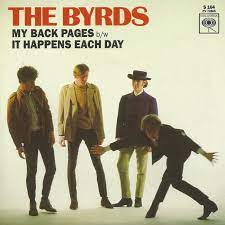
Byrds – My Back Pages

I was so much older then, I’m younger than that now

This is my favorite song by the Byrds. I like the Byrds’ arrangement of this great Bob Dylan song. Roger McGuinn’s voice plus Rickenbacker is always a winning combination. Dylan recorded his version in 1964 on his Another Side of Bob Dylan album. I fell for the song because of the line, I was so much older then, I’m younger than that now. Just a great phrase from a catalog that is full of them. 

On the countless Dylan songs that are covered, I will usually like Dylan’s version better…on this one, I prefer the Byrds. The song peaked at #30 on the Billboard 100 in 1967. It’s one of those songs that I so wish I could have written. Even the title is cool because “My Back Pages” is not uttered in the song. 

Bob Dylan helped the Byrds a lot with Mr. Tambourine Man and other songs. The Byrds, in turn, helped widen Bob’s popularity to the new rock audience that was developing, which may not have heard some of these songs as much. 

In 1992 the Bob Dylan 30th Anniversary Concert happened, and my cousin had the complete concert on VHS. He had a satellite, so I didn’t have to wait for it to be released almost a year later. I’ll never forget this song being played with Roger McGuinn sharing the stage with Dylan, Tom Petty, George Harrison, Eric Clapton, and Neil Young.

Roger McGuinn: “I don’t try to interpret what Bob meant when he wrote the song. He doesn’t do that, and to do that, you spoil it for people who have a different meaning of the song.”

The song being played at Bob Dylan’s 30th Anniversary concert. Bob Dylan, Roger McGuinn, Neil Young, George Harrison, Eric Clapton, and a bunch more. 


My Back Pages

Crimson flames tied through my ears
Rollin’ high and mighty traps
Countless with fire on flaming roads
Using ideas as my maps
We’ll meet on edges, soon, said I
Proud ‘neath heated brow

Ah, but I was so much older then
I’m younger than that now
Half-wracked prejudice leaped forth
Rip down all hate, I screamed
Lies that life is black and white
Spoke from my skull I dreamed
Romantic facts of musketeers
Foundationed deep, somehow
Ah, but I was so much older then
I’m younger than that now

In a soldier’s stance, I aimed my hand
At the mongrel dogs who teach
Fearing not that I’d become my enemy
In the instant that I preach
Sisters fled by confusion boats
Mutiny from stern to bow
Ah, but I was so much older then
I’m younger than that now

Ah, but I was so much older then
I’m younger than that now

My guard stood hard when abstract threats
Too noble to neglect
Deceived me into thinking
I had something to protect
Good and bad, I define these terms
Quite clear, no doubt, somehow
Ah, but I was so much older then
I’m younger than that now

Cream

Randy had a series called Three Piece (Suits Me) that ran a few weeks ago. Thank you, Randy, for inviting me to do this! I’ll take any excuse to write about Cream. When I think of a power trio…no offense to ZZ Top, but Cream is the first one that comes to mind. It was an all-star band that was super aggressive live and translated well in the studio. Either one of the members could have been musically the star of any band. 

Cream was widely regarded as the first supergroup in rock history. They consisted of three legendary musicians: Eric Clapton, Jack Bruce, and Ginger Baker. Cream was formed in July 1966 when Clapton, Bruce, and Baker—all already established musicians—came together to create a band that fused blues, rock, jazz, and psychedelia. The name “Cream” signified that they were the “cream of the crop” in the British music scene. They each had a rich history before Cream.

Clapton had played with The Yardbirds and John Mayall’s Bluesbreakers..Bruce and Baker had been part of The Graham Bond Organization. Bruce also had briefly worked together with Manfred Mann. Clapton and Baker were forming the band and Eric had just played with Jack Bruce and wanted him in this. Clapton said: When Ginger invited me to join, I asked him who else was in the band. He said, “I don’t know yet. So I suggested Jack. He said, “No, what did you have to go and mention him for?” I said, “Because I just played with him and he’s a great bass player and you guys played together with Graham Bond and Alexis, so I thought you’d be pleased.” And he said, “No, we don’t get on very well at all.” So I withdrew at that point. Then I said I would only go in with Ginger if he would go in with Jack. So he had to say OK.

Eric Clapton was confident in his guitar playing but less so in his singing. Early on, it was decided that Jack Bruce would take on the role of the band’s primary singer and songwriter. However, as time went on, Clapton contributed more as both a writer and vocalist. Bruce collaborated with poet Pete Brown to write the band’s songs.

Cream’s debut album, Fresh Cream, was released in 1966, featuring tracks like I Feel Free, NSU, and Spoonful. While the album made an impact, it was their second release, Disraeli Gears, that truly propelled them to fame, with standout songs like “Sunshine of Your Love” and “Strange Brew.”

Released in 1968, Wheels of Fire featured Cream’s iconic cover of Crossroads and White Room, which became one of their signature songs. However, behind the scenes, tensions between Jack Bruce and Ginger Baker were escalating, proving too much for the more laid-back Eric Clapton.

By the end of the year, the band decided to call it quits, playing a farewell concert at the Royal Albert Hall and releasing a final album fittingly titled Goodbye. The album included Badge, one of my favorite Cream songs, co-written by George Harrison.

Cream had a huge influence on rock, blues, metal, and bands such as Led Zeppelin, Deep Purple, Black Sabbath, Rush, and Van Halen. At the time the only other band like them was another trio called The Jimi Hendrix Experience with Hendrix, Mitch Mitchell, Noel Redding, and later Billy Cox replacing Redding. 

They did reunite a few times through the years. The first time was not publicized or open to the public. In 1979 Eric Clapton married Pattie Boyd and he invited Cream, three Beatles, Mick Jagger, Bill Wyman, Elton John, and David Bowie. Cream did play and so did Paul, George, and Ringo. Pattie said that somehow Lennon wasn’t sent an invite but he said he would have gone if he would have known. 

In 1993 they reunited at the Rock and Roll Hall of Fame when they were inducted. They also reunited for two sets of shows in 2005. One with four shows at the Royal Albert Hall and three shows at Madison Square Garden. Yes, there was still friction between Bruce and Baker at that time. That fact made it impossible for them to do any more shows. Bruce passed away in 2014 and Baker in 2019…effectively ending Cream. 

I will say they made the most out of their short window. They influenced countless rock and roll bands through the years. Eric Clapton never sounded as good again as he did with Cream. Part of that reason is he was pushed because of the trio format that we are celebrating today!

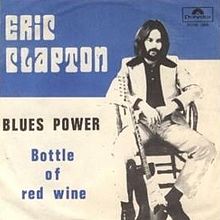
Eric Clapton – Blues Power

Eric Clapton took the guitar and blues to new places. He played differently than most players when he started, and then he was widely copied. His guitar playing in Cream was off the hook with intensity. Because of the trio format, he was pushed by his bandmates. That’s not to say I don’t enjoy his solo work. His playing took on a different character, more restrained and refined. He explored new directions and evolved his sound. It wasn’t all about blazing solos anymore; it was about serving the song and embracing a more soulful, laid-back approach.

I first really noticed Eric Clapton when I heard the solo in Crossroads. I stopped and wanted to know more about this guy. I knew his name from Beatles books and the single my sister had called Promises. I rented a Cream video from the video store, and I was hooked. Like Neil Young and David Bowie, Clapton changed and evolved through the years. 

He wrote the songs for his debut album in early 1970, and it was released in July of that year. He wrote most of the songs with  Bonnie Bramlett, but Blues Power was written by Clapton and Leon Russell. Russell started the song’s first line the way people saw Clapton at the time. It did not chart when released in 1970, but it did chart when Clapton released a live version in 1980, peaking at #76 on the Billboard 100.

Clapton never stayed in any spot too long. He had gone from The Yardbirds, John Mayall, Cream, Blind Faith, and Delaney & Bonnie in a matter of around 7 years. He would soon be the leader of Derek and the Dominos. The Dominos played on this album and were also playing on George Harrison’s All Things Must Pass around the same time.

Blues Power

Bet you didn’t think I knew how to rock ‘n’ roll.
Oh, I got the boogie-woogie right down in my very soul.
There ain’t no need for me to be a wallflower,
‘Cause now I’m living on blues power.

I knew all the time but now I’m gonna let you know:
I’m gonna keep on rocking, no matter if it’s fast or slow.
Ain’t gonna stop until the twenty-fifth hour,
‘Cause now I’m living on blues power.

Talking to you, now.
The boogie’s gonna pull me through.
Keep on, keep on, keep on keeping on.
Keep on keeping on, keep on keeping on.

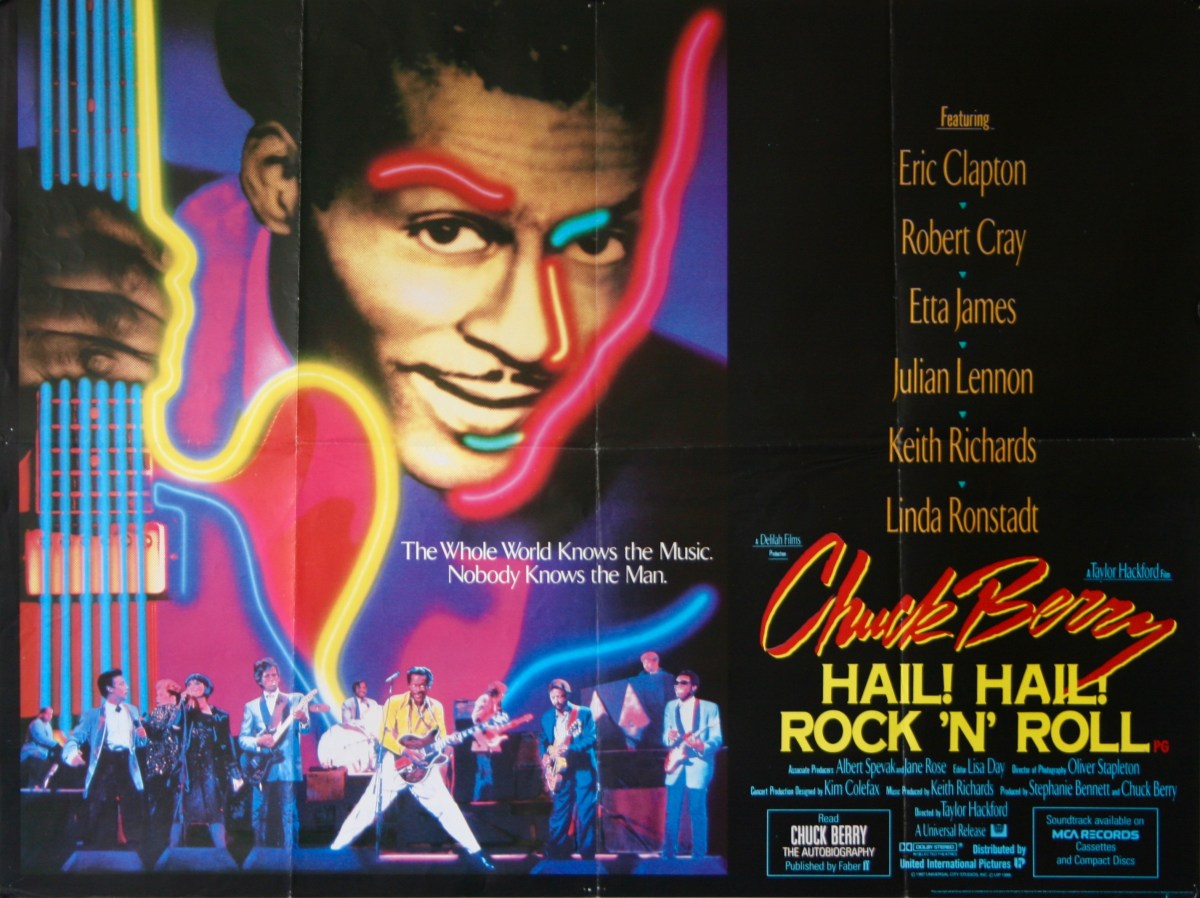
Hail! Hail! Rock ‘N’ Roll

This is one of the best rock and roll documentaries that’s out there. A great documentary and probably the best that Chuck has ever sounded. He had a hell of a band behind him, and his songs did the heavy lifting. Pure poetry-driven songs about life with a huge backbeat. The band was incredible… Keith Richards, Robert Cray, the great Johnnie Johnson (Chuck’s original piano player), Steve Jordan, Bobby Keys, Chuck Leavell, and Eric Clapton are guests on a few songs. More than Chuck or the band…  It’s a great showcase for those wonderful songs Chuck wrote for all of us. 

This documentary starts off in 1986 with Chuck Berry reminiscing about the Cosmopolitan Club, where he played in the earlier days. The film centers around Chuck Berry’s 60th birthday and Keith Richards assembling an All-Star Band to support Chuck in concert. Chuck had been touring since the 60s by traveling from town to town and playing with any pickup band he found. All he brought was his guitar. He would get paid with cash in a paper bag in many places. That was his motivation more than playing with a good band. Chuck could be very sloppy playing live, but he did keep that great feel.

Chuck could also be difficult, to say the least. Keith was determined that Chuck was going to be backed by a great band for this concert… Chuck was Keith’s idol, but Chuck seemed to want to give Keith as much trouble as possible. Richards says in the documentary that Chuck was the only man who hit him that he didn’t hit back. During the rehearsals for the song “Carol”, you can feel the tension in the air between the two.

Seeing Keith’s reaction to Chuck at times is worth the price of admission, and I’m glad Keith was persistent and patient and got this done. It’s great footage of Chuck playing his classics. The concert at the Fox Theatre ended up a success. Chuck sounded great, and so did the band. I will be forever grateful they did this show, and we get to see Chuck Berry at his best. 

During the documentary, there are some great comments by Little Richard, Bo Diddley, Bruce Springsteen, Jerry Lee Lewis, Willie Dixon, and more. Some of the artists that came on and sang were Etta James, Linda Ronstadt, and Julian Lennon. Chuck was a complicated man, but he was a poet as well. I can’t recommend this documentary enough. If you are a music fan you should like it. Chuck Berry may have influenced Rock and Roll more than anyone else.

My favorite story is from Bruce Springsteen. Bruce and the E Street Band volunteered to back up Chuck Berry for a show in the early seventies. Being Chuck’s temporary pickup band must have been nerve-wracking for musicians. Chuck didn’t tell them what songs he was playing or what key…this is Bruce’s quote “About five minutes before the show was timed to start, the back door opens and he comes in. He’s by himself. He’s got a guitar case, and that was it, I said ‘Chuck, what songs are we going to do?’ He says, ‘Well, we’re going to do some Chuck Berry songs.’ That was all he said!”

Below is the video. it’s not extremely clear but watchable.

Band – The Last Waltz

Happy Thanksgiving! Watching The Last Waltz is just as part of Thanksgiving as the meal with the family…that and listening to Alice’s Restaurant.

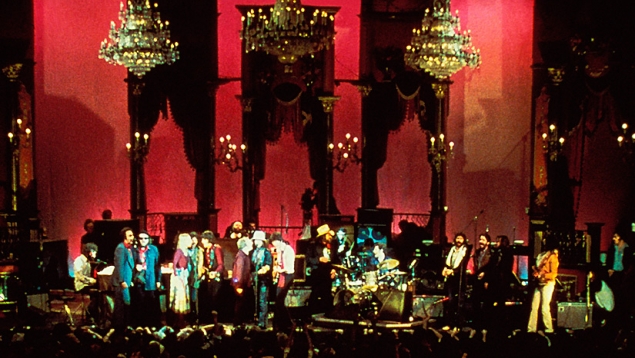
The Band on Thanksgiving in 1976 at Winterland. The film starts off with THIS FILM MUST BE PLAYED LOUD! A cut to Rick Danko playing pool and then it then to the Band playing “Don’t Do It”…the last song they performed that night after hours of playing. Through the music and some interviews, their musical journey and influences are retraced.

This film is considered by many the best concert film ever made. It was directed by Martin Scorsese. I love the setting with the chandeliers that were from the movie Gone With The Wind. The quality of the picture is great because it was shot with a 35-millimeter camera which wasn’t normally done with concerts.

Before the Band and guests hit the stage, Bill Graham, the promoter, served a Thanksgiving dinner to 5000 people that made up the audience with long tables with white tablecloths.

The Band’s musical guests included

Ronnie Hawkins, Bob Dylan, Neil Young, Dr. John, Paul Butterfield, Van Morrison (my favorite performance), Joni Mitchell, Eric Clapton and Muddy Waters

The Staple Singers and Emmylou Harris also appear but their segments were taped later on a sound stage and not at the concert.

Robbie wanted off the road earlier and that is what the Last Waltz was all about…the last concert by The Band with a lot of musical friends. He was tired of touring and also the habits the band was picking up… drugs and drinking. Richard Manuel, in particular, was in bad shape and needed time.

The rest of the Band supposedly agreed but a few years later all of them but Robbie started to tour as The Band again. Richard Manuel ended up hanging himself in 1986. Rick Danko passed away in 1999 at the end of a tour of a heart attack attributed to years of drug and alcohol abuse. Levon Helm died of cancer in 2012.

The Band sounded great that night and it might be the best version you will ever hear of The Night They Drove Old Dixie Down.

The Last Waltz is a grand farewell to a great band and a film that I revisit at least twice a year… once always around Thanksgiving.

The complete concert is at the bottom…without cuts.

John Mayall and The Bluesbreakers – All Your Love

Every weekend I try to post some artists I never have posted before and this weekend it’s John Mayall and another band tomorrow. I’ve read his name and I’ve heard bits and pieces but never dove in so to speak. The one thing I can say…is tone. His band has some of the best tones I’ve ever heard from a guitar. 

I could have picked about anything they did so I searched out some and found this one. This British blues band was formed in the early 1960s by singer, songwriter, and multi-instrumentalist John Mayall. The band is known for its huge role in the British blues boom and for launching the careers of many great musicians. Just to name a few, Eric Clapton, Peter Green, John McVie, Mick Taylor, Mick Fleetwood, Jack Bruce, Aynsley Dunbar, Chris Mercer, Harvey Mandel, Jesse Ed Davis, and the list keeps going. 

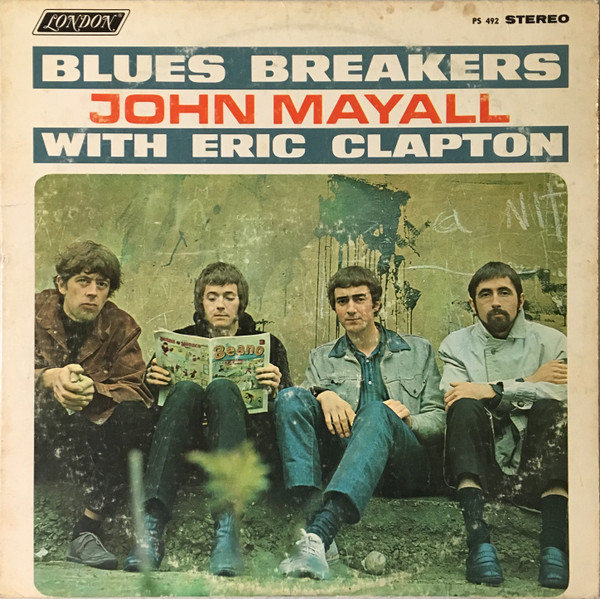
Their most famous album I’m aware of is the album Bluesbreakers with Eric Clapton (often referred to as the “Beano” album due to Clapton reading a Beano comic on the cover). This album helped make Clapton a superstar guitarist to many. It was released in 1966 and was the debut studio album of the band. The album peaked at #6 in the UK. I love that the band was fluid with members. Who is on this album? John Mayall, Eric Clapton, John McVie, and Hughie Flint. 

The song was originally composed by American blues musician Otis Rush. It was first recorded by him in 1958 as “All Your Love (I Miss Loving).” I added a later live version by Otis Rush with Eric Clapton below. Make sure to listen to the studio cut of it as well…why is that? It’s because of the tone and playing by Clapton. It was back when Clapton was still playing a Les Paul through a Marshall. In the Cream reunion, he played a Fender and you could tell the difference. 

John Mayall sadly passed away July 22, 20024. He was 90 years old. 

All Your Love

All the love I miss loving, all the kiss I miss kissing
Before I met you baby, never knew what I was missing

All your love, pretty baby, that I got in store for you
I love you pretty baby, well I say you love me too

All your loving, pretty baby, all your loving, pretty baby
Since I first met you baby, I never knew what I was missing

Hey, hey baby, hey, hey baby
Yeah, yeah, yeah, yeah, yeah, baby, oh, oh, baby
Since I first met you baby, never knew what I was missing

Cream – N.S.U.

Looking through my index…I can’t believe I’ve never posted this one by Cream before. I’m rectifying that mistake today! The song was born from a riff they played in their first rehearsal.

You probably will ask yourself…what did NSU stand for? That would be courtesy of Eric Clapton. He had a venereal disease at the time that was called Non-Specific Urethritis. They thought it would be fun to name the song with the initials.

How this band must have sounded to ears when they first got played. Compared to what was going on it must have sounded like aliens. I would also include Jimi Hendrix with this wash of hard rock psychedelic music.

Cream was formed in 1966 and consisted of Eric Clapton (guitar, vocals), Jack Bruce (bass, vocals), and Ginger Baker (drums). They were one of the first supergroups, with members already having successful careers. Eric had played with The Yardbirds, Bluesbreakers,  John Mayall & the Bluesbreakers, Powerhouse, and more. Jack Bruce played with Manfred Mann,  Blues Incorporated, and helped form The  Graham Bond Organisation. Ginger Baker played with Blues Incorporated, Johnny Burch Octet, and The  Graham Bond Organisation before Cream.

The song was on their debut album Fresh Cream released in 1966. The album peaked at #39 on the Billboard Album Charts and #6 in the UK. I can’t find a reliable source but one source has it peaking at #39 in Canada.

This song was written by bassist Jack Bruce.

N.S.U.

Driving in my car, smoking my cigar,
The only time I’m happy’s when I play my guitar.

Singing in my yacht, what a lot I got,
Happiness is something that just cannot be bought.

I’ve been in and I’m out, I’ve been up and down,
I don’t want to go until I’ve been all around.

What’s it all about, anyone in doubt,
I don’t want to go until I’ve found it all out.

Johnny Otis – Willie and the Hand Jive

I believe I first heard this by Eric Clapton in the late seventies when I was a kid. I always liked the song but this version is great as well. It’s the cool rhythm that draws me in. One of the best and most copied rhythms in rock.

In some circles, Otis was known as “the godfather of rhythm and blues.” He was a multi-talented musician, known primarily as a drummer, vibraphonist, pianist, singer, and composer. He led his own band, the Johnny Otis Orchestra, which played a significant role in the development of West Coast rhythm and blues.

He earned that title. He helped in discovering and promoting such musicians as Etta James, Big Mama Thornton, and Jackie Wilson. Otis was a white musician who immersed himself in black music and culture. He was accepted in that community and became an advocate for racial integration and civil rights. Otis was also a popular radio DJ, hosting shows that showcased rhythm and blues music and spreading the word of that genre.

Johnny wrote this song and released it in 1958. It peaked at #1 on the Billboard R&B Charts and #9 on the Billboard 100. It’s one of the most catchy rhythms in rock and roll next to the Bo Diddley rhythm or Who Do You Love…it very well could be called a variation of Bo Diddley.

When he played this live his audience would mimic a dance and clap they had to the song. Some had said that the song was about masturbation…something that Johnny Otis denied until he passed away in 2012 at the age of 90. I think some people spend their lives trying to find something controversial in everything. I guess I’m guilty of it at times.

According to secondhandsongs.com there are 69 versions of this song. Artists that covered the song include Cliff Richard, The Crickets, Sonny Burgess, The Gentrys, The Tremeloes, New Riders of the Purple Sage, Fleetwood Mac, Eric Clapton, George Thorogood, and I’ve heard The Grateful Dead do it live on a few clips I’ve seen.

Willie and the Hand Jive

I know a cat named Way-Out WillieHe got a cool little chick named Rockin’ BillieDo you walk and stroll with Susie QAnd do that crazy hand jive too?

Papa told Willie “you’ll ruin my homeYou and that hand jive has got to go”Willie said “papa, don’t put me downBeen doin’ that hand jive all over town”

Hand jive, hand jiveHand jive, doin’ that crazy hand jive

Mama, mama, look at uncle Joe, look at himHe’s doin’ that hand jive with sister FloEven gave baby sister a dime, hey, heySaid “do that hand jive one more time”

Well, a doctor and a lawyer and a indian chiefThey all dig that crazy beatWay-Out Willie gave them all a treat, yeahWhen he did the hand jive with his feet

Hand jive, hand jiveHand jive, doin’ that crazy hand jive, hey, heyCome on, sugar, yeah!

Well, Willie and Billie got married last fallThey had a little Willie Junior and that ain’t allYou know that baby got greatness and it’s plain to see, hey, heyDoin’ that hand jive on T.V., come on

Hand jive, hand jive(Why don’t you) hand jive, doin’ that crazy hand jive

Hey, hey, wellYeah, yeah

Yardbirds – Shapes of Things

This is the Yardbirds… Jeff Beck edition. Great song that peaked at #11 in the Billboard 100, #3 in the UK, and #7 in Canada in 1966. Beck’s guitar solo in this song is fantastic as he uses distortion, sustain, feedback, and some Eastern influence. This was shortly before Jimmy Page joined the group.

The band recorded this song at Chess Studio in Chicago, their first time there. Chris Dreja said it’s one of the best songs they ever made. Shapes of Things was about the state of the UK during the Vietnam War, so it was an anti-war song according to the band. The song was written by Jim McCarty, Keith Relf, and Paul Samwell-Smith.

The band is best known now because of the great guitarists that were in the band. Eric Clapton joined the band in 1963, but soon quit to concentrate on the blues with Cream.

Jeff Beck replaced him in 1965, and then Jimmy Page joined in 1966 on bass. He soon switched to guitar, and the band had Page and Beck together.

Later, Beck walked out of the band, leaving only Page. The Yardbirds broke up, but Jimmy Page kept the name and played under “The New Yardbirds” with his new bandmates Robert Plant, John Paul Jones, and drummer John Bonham, who would change their name to Led Zeppelin.

Jeff Beck liked the song so much that he used it on arguably his best album Truth. He was able to control feedback and use it to enhance the song. The song is often considered a precursor to the heavier, more experimental rock sound that would emerge in the late 1960s and early 1970s.

Jeff Beck: “The way they worked was completely off the cuff: We’d jam, Keith would rush off and write some lyrics in the toilet, it was exactly like that. After four verses, let’s go into this raga thing. I kept changing guitar sounds all the way through. So we did two or three takes of my guitars and blended them all together. But the solo on “Shapes Of Things” was pretty honest until that feedback note that comes in over it. If nothing else, that was the best single.”

Bassist Paul Samwell-Smith: I wrote it in a bar in Chicago. I just lifted part of a Dave Brubeck fugue to a marching beat. It’s a sort of protest song.

Jim McCarty: “With ‘The Shapes of Things’ I came up with a marching type of rhythm that I tried to make interesting. And at the end of each line we’d build up like we used to do with some of our stage stuff – the rave ups. And then the bass riff came on top of that. And the bass riff was loosely based on a Dave Brubeck song, sort of a jazz song, around a doo doo doo doo doo doo, and then the chords came over that. The chords were very basic, came between the two tones, I think G and F, and then resolving it in D, each verse. And then the tune came on top of that. In fact, I remember putting the backing track down, which sounded great. I wasn’t at the session where Keith made up the tune, and when I heard the tune, I thought, Oh, that’s great. It’s a real surprise. He made up the tune, and then we had this sort of ‘Come tomorrow,’ but that was part of the song, anyway, at the beginning. So it was an exciting song to be involved in.”

Jim McCarty: “That’s probably the hardest thing to try and do. Every time we tried to do that it never really succeeded. I suppose we were lucky in that when we did ‘Shapes of Things’ it was like a hit song, but we were really coming from not trying to create a sort of a 3-minute piece of music, it was just something that seemed natural to us. We started with the rhythm, we used a bass riff that came from a jazz record, got a groove going with that and then added a few other bits from elsewhere, other ideas that we’d had. And I think it was a great success for us, it was a good hit record that wasn’t really selling out. And it was original.”

Shapes of Things

Shapes of things before my eyes,
Just teach me to despise.
Will time make men more wise?
Here within my lonely frame,
my eyes just heard my brain.
But will it seem the same?

(Come Tomorrow) Will I be older?
(Come Tomorrow) May be a soldier.
(Come Tomorrow) May I be bolder than today?

Now the trees are almost green.
But will they still be seen?
When time and tide have been.
Fall into your passing hands.
Please don’t destroy these lands.
Don’t make them desert sands.

Chorus, Lead.

Soon I hope that I will find,
Thoughts deep within my mind.
That won’t displace my kind.

Eric Clapton – Promises

I had this single when I was a kid that was passed down to me from someone. This was before I knew about Cream, Yardbirds, or anything else. It was probably my first impression of Eric Clapton. When I did hear Cream it was a bit of a shock.

A country rock song by Eric Clapton that’s always been a favorite of mine. It was released in 1978 and peaked at #9 on the Billboard 100, #82 on the Country Charts, #37 in the UK, and #7 in Canada. This song was from his Backless album. At the time when Clapton was influenced by Don Williams the country artist.

His album Slowhand was released the year before this album. He kept the same producer, Glyn Johns, and recorded in the same studio (Olympic in London). This album was laid-back like Slowhand. It also has a country feel with Tulsa time and this song Promises. The album is not as critically acclaimed as Slowhand…this single was the only hit song on the album.

The album peaked at #8 on the Billboard Album Charts, #22 on the Canadian charts, #18 in the UK, and #22 in New Zealand in 1978. The female singer in this song is Marcy Levy. She wrote Lay Down Sally with Clapton and George Terry.

It was written by Richard Feldman and Roger Linn

Promises

I don’t care if you never come home
I don’t mind if you just keep on
Rowing away on a distant sea
‘Cause I don’t love you and you don’t love me

You cause a commotion when you come to town
You give ’em a smile and they melt
Having lovers and friends is all good and fine
But I don’t like yours and you don’t like mine

La la, la la la la la

I don’t care what you do at night
Oh, and I don’t care how you get your delights
I’m gonna leave you alone, I’ll just let it be
I don’t love you and you don’t love me

I got a problem. Can you relate?
I got a woman calling love hate
We made a vow we’d always be friends
How could we know that promises end?

I tried to love you for years upon years
You refuse to take me for real
It’s time you saw what I want you to see
And I’d still love you if you’d just love me

I got a problem. Can you relate?
I got a woman calling love hate
We made a vow we’d always be friends
How could we know that promises end?