Brothers At Arms – Johnny and Dorsey Burnette

We all know the great album Brothers in Arms from Dire Straits, but sometimes those brothers are “at arms” rather than in them. In this series from myself and Randy, have discussed “Rock ‘Em Sock ‘Em” Siblings. This week Randy talks about the Burnette brothers. They were at it while most of the other brother’s acts were still in diapers. The original post is here.

“Tear It Up” by Johnny Burnette and The Rock ‘n Roll Trio (1956) written by Paul Burlison, Dorsey Burnette, and Johnny Burnette. Covered 40 times including Rod Stewart in 1981.

Dorsey William Burnett Jr. (December 28, 1932 – August 19, 1979) and his younger brother John Joseph Burnette (March 25, 1934 – August 14, 1964) along with Paul Burlison (February 4, 1929 – September 27, 2003) were the original Rockabilly band. One thing The Rock ‘n Roll Trio loved almost as much as music, was fighting.

Dorsey and Johnny grew up in the housing projects of Memphis where being tough was a distinct advantage. They both took to boxing and became Golden Glove Champions. In 1949 while working on oil barges on the Mississippi they met another Golden Glove champ, Paul Burlison, also from Tennessee. After work the three began playing in bars at night and in 1952 they formed a band.

After several wins at Amateur contests they landed a record deal with Coral Records. Unfortunately their national TV debut on the Ted Mack Amateur Hour aired on ABC the same night as Elvis’s September 9, 1956 Live appearance on CBS that had 82% of the viewing audience. Misadvised I would say, they performed “Hound Dog” that Elvis had released in July. They appeared on a few other shows but they struggled to gain wide spread fame, but they never gave up.

“Rock Billy Boogie” (1956) by Johnny Burnette and The Rock ‘n Roll Trio, written by Dorsey Burnette, Johnny Burnette, George Hawkins and Henry Jerome.

First cover of “Rock Billy Boogie” was by Robert Gordon in 1979.

The two brothers never entirely gave up ‘boxing’ either. Life on the road was tough and the tensions would lead to some nasty fistfights between Dorsey and Johnny. Sometimes the fights started on stage and would spread into the audience. Apparently one night the three of them took on everyone in the place, and won. This led to several bans from bars and tours. One night in August of 1956 in Niagara Falls, NY the brothers had a brutal fight. The next day Dorsey left the band and it was just days before their big break to appear in the Alan Freed movie Rock! Rock! Rock!

Johnny quickly recruited Bill Black’s (Elvis’s bass player) younger brother Johnny Black and the appearance went ahead. The record company credited their next release with Johnny Burnette at the front and even when Dorsey returned a year later that’s how they were billed. They would then pursue solo careers and continue to write some great rock and roll songs. Johnny would die in a boating accident in 1964. His original recording of “You’re Sixteen” appears on the American Graffiti Movie Soundtrack. Covered over 90 times and of course by Ringo Starr that hit #1 on the Hot 100 in 1973.

“You’re Sixteen” (1960) by Johnny Burnette reached #8 on the Hot 100, written by Richard Sherman and Robert B. Sherman. The Sherman brothers would go on to write all those amazing songs for Disney Movies such as “Chim Chim Cheree”, “I Wan’na Be Like You (The Monkey Song)”, “Super-Cali-Fragil-Istic-Expi-Ali-Docious”, “It’s a Small World” and dozens more.

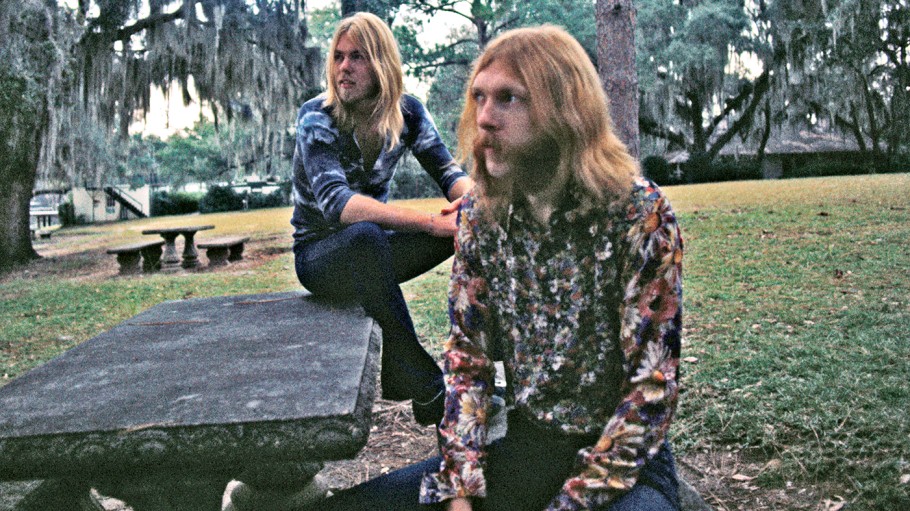
Brothers At Arms – Duane and Gregg Allman

We all know the great album Brothers in Arms from Dire Straits, but sometimes those brothers are “at arms” rather than in them. In this part of the mini-series with Max (Thats Me!) from PowerPop he talks about Duane and Gregg Allman from The  Allman Brothers… Randy from https://mostlymusiccovers.com posted this a few months back right here.

Rare Live Footage of “Statesboro Blues” (1970)

Duane (born November 20, 1946) and Gregg (born December 8, 1947) Allman were born in Nashville, Tennessee, and grew up with a loving but tough mother. Their father, Willis Turner Allman, was murdered in 1949 when Duane was 3 and Gregg was 2. They were raised by their strong mom Geraldine Robbins Allman. Geraldine never remarried because she was scared that a new husband might not treat the boys well. They lived in Nashville for a while but then moved to Daytona Beach and grew up there. Geraldine would soon go to a school to get her accounting degree and send the boys to Castle Heights Military Academy on two separate occasions in Lebanon, Tennessee.

The brothers were almost completely different except in music. Duane lived life on the very edge. Always doing things excessively, be it riding a motorbike, drugs, cars, or playing guitar. Gregg was much more conservative, thoughtful, and worried about the future. Gregg saved up his money from a paper route to buy a Silvertone acoustic guitar early on. He had $21, but the man at the store also wanted tax, so Gregg’s mom kicked in 95 cents.

In 1960, Duane had a small Harley Davidson and wrecked it. He quit school early and continued his partying ways. After a while, he started to get jealous of Gregg’s ability on guitar. Pretty soon they would be fighting over the guitar and the mom soon got Duane a guitar after he sold what was left of the Harley. Gregg showed Duane chords and Duane soon passed Gregg in ability. One, he had a natural gift, and two he had more time through the day. Soon Gregg and Duane started a band called The Allman Joys.

More Rare Live Footage “Whipping Post” (1970)

They developed a following as they started to tour in Florida after Gregg graduated from High School in 1965. Gregg had thoughts of being a dentist if it didn’t work out in music. Duane kept Gregg’s enthusiasm up through the rough times and kept him focused on his keyboard playing, songwriting, and vocals. They soon moved to California to start the band Hourglass and were signed. After two years Duane quit and moved back to the south. After Duane formed the band that would become The Allman Brothers…he called Gregg to come back home to sing. The brothers had a good relationship but were not above fights here and there. Gregg said that he was always Duane’s little brother and would listen to Duane like a second dad. Duane was killed on October 29, 1971, on a motorcycle. Gregg never got over it and it accelerated his drug use. He died on May 27, 2017, at age 69.

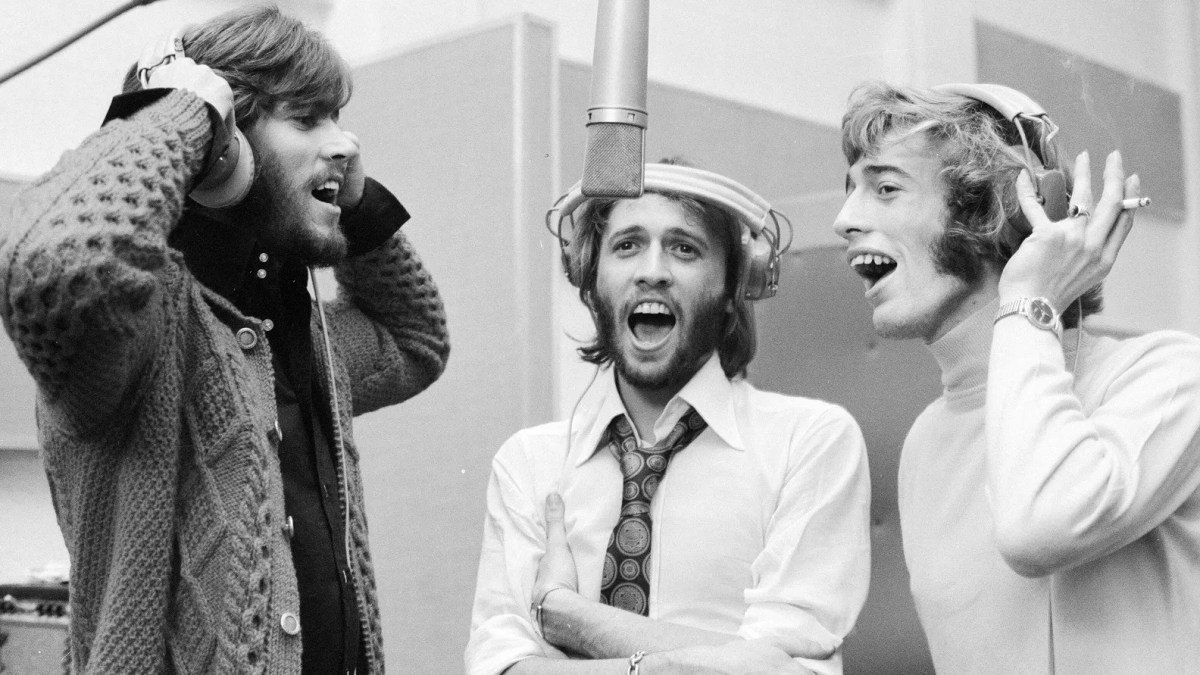
Brothers At Arms – The Bee Gees

We all know the great album Brothers in Arms from Dire Straits, but sometimes those brothers are “at arms” rather than in them. In this part of the mini-series Randy, from mostlymusiccovers.com, talks about the “Rock ‘Em Sock ‘Em” Siblings of the Bee Gees.

“To Love Somebody” was written by Robin and Barry Gibb. It was released as a single in 1967 and reached #41 in their native UK. The song did better elsewhere making several top 10s and #17 on the Hot 100. It would be a cover by Michael Bolton released in 1992 that put it at #1 on the Adult Contemporary charts in Canada and the US. It has endured to become a classic with over 210 versions of the song.

Formed in 1958 with brothers Barry, Robin and Maurice. After the family’s move to Australia they found their first success, just the three boys returned to their native UK in 1967. They would go on to sell an estimated 200 million records, post nine #1s on the Hot 100 and entered the top five of the most successful bands in history.

Life was not so easy, with an unreliable father they became the bread winners for the family at a very young age. Despite the pressures the boys got on quite well, until the dreaded “S” word enter in. Success. Their first #1 in the UK was “Massachusetts” in 1967. Robin sang lead on it and it was a position he was not willing to give up. The in-fighting began.

This is not perhaps the level of fighting on the same scale as some of our other brother groups, but they were not producing any hits and Robin was really at the heart of a split up in 1969. The reconciliation produced their first US #1 Hot 100 hit, “How Can You Mend a Broken Heart” in 1971. It was very much an autobiographical song. Success is fleeting in the music business and another downturn followed as their next album was a flop. By 1975 they had all moved to the US. Both Robin and Maurice struggled mightily with addiction problems. Robin seemed to tolerate the more democratic Barry becoming the defacto leader, but there were tensions. Not enough though to stop them from reinventing themselves yet again.

The Disco era and Saturday Night Fever saw them rise to incredible worldwide success with eight Hot 100 #1 hits in the mid to late 1970s. Younger brother Andy would join in the success. Everyone knows the rise and fall of Disco, and no one paid a heavier price than the Bee Gees. All of a sudden no one wanted to hear a Bee Gees song. In fact, they were and are still hated by some. I was not a disco fan, but I was a Bee Gees fan, and I took my fair share of ribbing for it.

Despite all this turmoil surrounding them, only minor tensions erupted, and Barry, Maurice and Robin would discover other people respected their songwriting abilities. First came “Woman in Love” by Barbra Streisand, and then “Islands in the Stream” by Dolly Parton and Kenny Rogers, both worldwide #1 smash hits. And also, songs for Dionne Warwick, Diana Ross and others. So, the brothers Gibb had risen from the ashes for yet a third time but as songwriters. And then remarkably a fourth time, as recording success returned once again and they placed four more songs in the top 10 in the UK in the 90s.

Maurice would die at age 53 in 2003 and despite attempts to regroup, the band that was the Bee Gees were effectively no more. Younger brother Andy had died in 1988 and Robin in 2012. Barry the oldest, has continued to record and perform.

Brothers At Arms – John and Tom Fogerty

We all know the great album Brothers in Arms from Dire Straits, but sometimes those brothers are “at arms” rather than in them. In this part of the mini-series Randy, from mostlymusiccovers.com, talks about the “Rock ‘Em Sock ‘Em” Siblings of the Fogerty brothers from Creedence Clearwater Revival.

“Proud Mary” written by John Fogerty was CCR’s first big hit single peaking at #2.

Tom was the elder of the two brothers, he was born in 1941 (1990) and John was born in 1945, now age 78. They were born in Berkley but grew up in El Cerrito, California. Tom signed a record contract in 1959 but had little success in terms of recording a hit. John and his band would eventually provide backing to Tom and this led to the creation of the Golliwogs where John and Tom shared lead vocals. By the time Credence Clearwater Revival (CCR) had formed in 1967, John had stepped to the forefront as lead singer, guitar player, and principal songwriter.

That is Tom on the left and John on the right.

CCR would go on to what is now regarded as legendary success. Between 1968 and 1970 they released six albums, two of them charting #1. They still hold the record for having five songs reach #2 without ever having a #1 on the Billboard Hot 100.

Tom left the band early in 1971 to pursue a solo career. CCR would release just one more album Mardi Gras in 1972 but had recorded two of the songs before Tom left. There is no evidence that things got physical but they argued a lot and the tension was high.

Tom’s departure leads us further into the discussion about the feud between him and John was more than just that. As with any break-up, there are two sides to every story, and with this one, there are at least 5 sides, the most notorious falling out suffice to say is with John and their former boss at Fantasy Records, Saul Zaentz. I won’t get too much into that story today and most will be familiar with Zaentz taking control of the CCR music and also controlling the copyright and the infamous lawsuits. I discussed this in a post back in 2018.

John admittedly was so bitter he stopped playing music for almost 10 years. Some years after the nasty split up of CCR, Fogerty recorded two songs aimed squarely at Zaentz, “Zanz Kant Danz” and “Mr. Greed”. John would eventually emerge victorious over the lawsuits brought by Zaentz and his own subsequent countersuit.

For Tom’s part, he clearly sided with Zaentz. Early on Tom was named in the lawsuit against John and at one time referred to Zaentz as his “best friend”. The band, including Tom and Zaentz had their money invested and got a tip to pull out, they didn’t tell John and he lost almost everything. At the heart of the trouble was that Tom left CCR as he felt John had taken control of the band. This I think, is a fair statement. John wrote most all of the lyrics and the music. Certainly for all their big hits. He had the best and most distinctive voice, and at lead guitar was the best musician.

As a band member, Tom in all honesty could not, and did not do better. At their height, they were one of the most successful Rock bands and history has certainly born that out. An estimated 50 million in record sales in about five years is nothing to sneeze at. John as a solo artist has almost doubled that number.

“Have You Ever Seen the Rain”, words and music by John Fogerty and the last hit single before the departure of Tom from the band.

Now I am not saying John is blameless for the falling out, I am sure he might have handled things better, but his ego I think would get in the way. But there may have been little he could have done. Tom’s actions in many ways seem born of jealousy. He decided to leave CCR. I understand his reasoning, he felt he had some good songs and he wanted to sing lead on them, John felt that the band was doing just fine with the way things were, and he wasn’t wrong. Despite the success John brought to CCR, it seems after the breakup it was John that got the cold shoulder from everyone.

Once the band split a year or so later the acrimonious relationship(s) only got worse, with John at the center and Tom and the others all playing a part.

As mentioned, Tom would embark on a solo career with his first album charting at #78 which is the best he would do. I did hear Tom in an interview say that had he been able to do things over, he would not have left the band. John did contribute some guitar tracks on Tom’s Zephyr National (1974). John also attended Tom’s wedding in 1980 and a high school reunion in 1984, and at both they jammed a bit.

John released Blue Ridge Rangers (1973) which charted at #47 and then in 1975 his album John Fogerty had the hit single “Rockin’ All Over the World” that peaked at #27. The weight of the various lawsuits and his admitted bitterness over the feud with Tom and the others led him to withdraw from the business. He was actually barred from playing any CCR songs for several years.

Over the years that followed John made some attempts to reconcile, motivated more for their mother’s benefit. Tom would receive an HIV-contaminated blood transfusion after back surgery and the ensuing complications would lead to his eventual death in 1990. Truly tragic.

The brothers never did reconcile and for John’s part, he says he has forgiven Tom.

Brothers At Arms – Don and Phil Everly

Randy from mostlymusiccovers.com and I teamed up to write about different brothers in rock and roll through the years. This is the first one of the series. I combined the introduction with this first post. I will post these on Sunday mornings.

We all know the great album Brothers in Arms from Dire Straits, but sometimes those brothers are “at arms” rather than in them. In a periodic mini-series Randy, from mostlymusiccovers.com, and I will explore some “Rock ‘Em Sock ‘Em” Siblings. As it happens the Knopfler brothers are among many sets and while we can’t talk about all of them, we will feature some of the better-known sibling rivalries. Two, three, and sometimes even more brothers in a band, well, stop being a band of brothers. How many more cheesy puns can we come up with? Just some of the names Randy and I discussed were; The Everly’s, The Fogerty’s, The Gibb’s, to the Gallagher’s, Allmans, and the Davies.

For those of you who have not checked out Randy and his blog, you really need to. He has been writing a blog about Cover Songs, music genres, and artists since early 2018. He gets in-depth with many artists You can read about the origins of Rock and Roll, Blues, R&B, and Country Music. There are Cover Song and Chart statistics as well, all with a focus on the 1950s, 60s, and 70s at MostlyMusicCovers.com. He has also helped me out with blues artists and Canadian Charts in general.

While we can’t get too in-depth as literally books have been written, we can give a good thumbnail sketch of the bash ups and the break ups. A few days ago Randy mentioned that brothers Doug and Rusty Kershaw had split, but I did not read about it being that acrimonious, more of a creative differences situation. Our brother stories have a bit more ‘punch’ to them.

This is the first post in a periodic mini-series where Randy from mostlymusiccovers.com and I will explore some “Rock ‘Em Sock ‘Em” Siblings. The original post is here. Randy tells us about Don and Phil Everly.

“Bye, Bye, Love” The Everly Brothers first big hit from 1957.

Don was born in 1937 (2021) and Phil in 1939 (2014), raised in Kentucky, the brothers would move to Nashville in 1955 to pursue a recording career. As in the above clip it was “Bye, Bye, Love” in 1957 that sent the brothers skyrocketing. Written by Felice and Boudleaux Bryant it was #1 on the Country chart, #2 in the US and Canada, #6 in the UK and 14 in Australia, and #14 on the R&B chart. Their next song “Wake Up Little Susie” was #1 in the US and Canada, #2 in the UK, and #3 in Australia.

They toured with Buddy Holly in 1957 and 1958 and became very close, Buddy’s death, Feb. 3, 1959 would have a devastating impact on the pair. Don wrote their next and last #1 hit “Cathy’s Clown” in 1960. This was after a dispute with the record/publishing company, leaving Acuff/Rose and unfortunately songwriters Felice and Boudleaux Bryant.

Still, they had a busy schedule, the demands of touring and the pressures of performing and recording, the inevitable happened. The use of amphetamines was rampant in the business and they both got hooked.

By the mid 1960’s they fought over just about everything and of the two it was Don that had the most severe drug problem. Chart success was eluding them and the brothers were not getting along, but it was kept a closely guarded secret that they were able to hold for several years. Don attempted to go solo in 1970 but had no success. Things finally came to a head and in 1973 they agreed their July 14/15 show would be the last one.

Don was drunk before the show started, part way into the show Phil smashed his guitar and walked off stage. Don would finish the show and perform solo the next night. They did not speak for nearly ten years. They would reunite in 1983, had a great reunion concert, and released an album EB84, produced and named in his style 1 by Dave Edmunds that charted #38 on Billboard and #24 on the Country Album chart. They continued to perform periodically, and in 2003 they toured with Paul Simon. They remained close until Phil’s death at age 74 in 2014. Don passed in 2021 at age 84.

“On the Wings of a Nightingale” written for The Everly Brothers by Paul McCartney

Despite the battles and the hardship, they gave us some of the most remarkable harmonies ever-ly recorded.

Dave Edmunds released his 7th Studio album called D.E. 7th in 1982.