Beatles Week – Ain’t She Sweet @mostlymusiccovers.com

Randy has been writing a blog about Cover Songs, music genres and artists since early 2018. He moved to WordPress in February of 2022 and has found a welcome community of music enthusiasts. You can read about the origins of Rock and Roll, Blues, R&B and Country Music. There are Cover Song and Chart statistics as well, all with a focus on the 1950’s, 60’s and 70’s at MostlyMusicCovers.com.

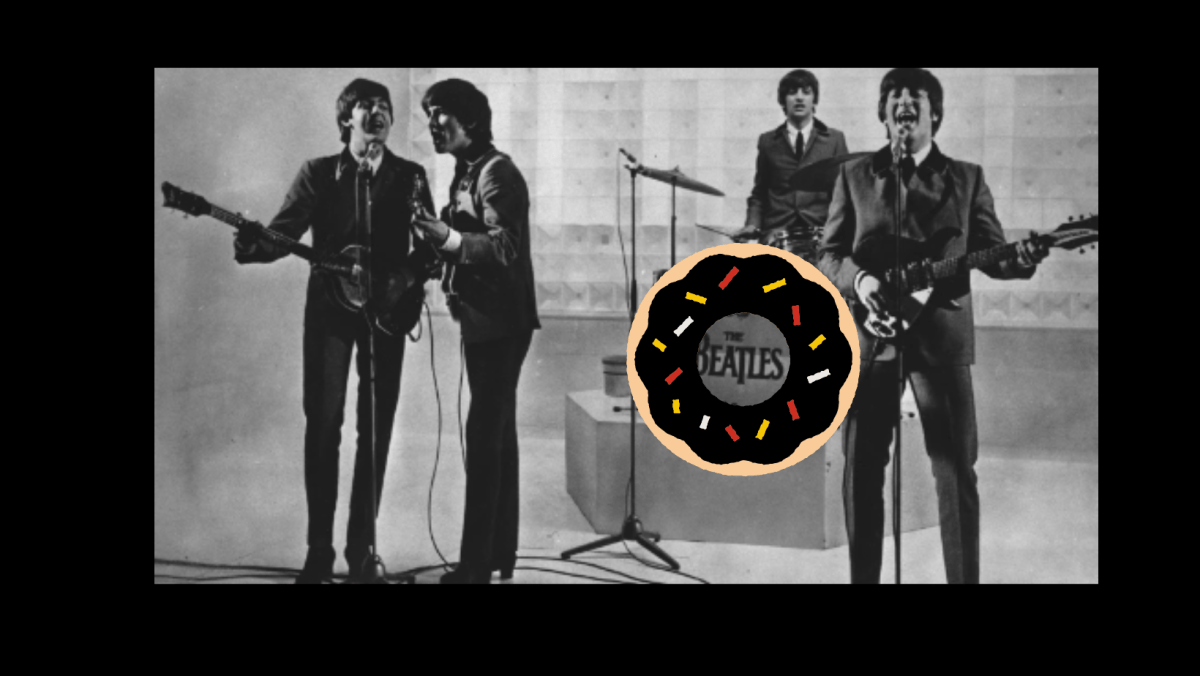
The Beatles

When Max asked us to write about our favorite song, I’m sure the other writers have the same dilemma as most fans would, how do I pick just one? As I am a bit flummoxed on a choice, I’m “taking the easy way out”. Instead of a single song, and being a cover song guy, I am seizing this opportunity to speak about songs recorded by The Beatles in those early years that were not original songs. In other words, songs they covered by other Artists.

Before I get to that, I had assumed that all the ‘original’ songs they recorded, were written/credited to John and Paul or George or Ringo. However, the very first song they recorded for their debut single was written by someone else. Mitch Murray, who became a much acclaimed songwriter/performer/producer wrote a great little song that George Martin thought was perfect for The Beatles first single. It was called “How Do You Do It” and they recorded it on September 4, 1962. The Beatles members never really liked the song and made several changes, much to the chagrin of Mitch Murray. After some debate, Martin agreed with the boys who thought that “Love Me Do”, recorded during the same session was a better pick. It really was the boys first choice for the ‘A’ side all along, perhaps leading to what some describe as a “lack luster” effort on the recording.

How different would the story be if they had picked that song? If you recognized the title you may know that “How Do You Do It” was next recorded by Gerry and The Pacemakers. Released in March of 1963 it became a smash #1 hit in the UK and reached #9 on the Hot 100 in the US. Calling the Pacemakers version, a ‘cover’ is more of technical debate as The Beatles recording was never put on an album and, in deference to Gerry and The Pacemakers or as Paul McCartney once said due to “peer pressure” that’s why they never released it as a single. It first appears on The Beatles Anthology 1 in 1995.

The next thing I looked at, again with a focus on the early days, what were the very first cover songs they released? Setting aside things done/credited as The Quarrymen or with Tony Sheridan etc., there are 25 songs that appeared on various albums. Of which some are stand alone singles. Some of these songs I thought (and maybe some of you did as well) were Beatles originals. I was too young to comprehend much when The Beatles first released songs in North America/Canada. I always was a big fan, and I began taking a keen interest in cover songs in my twenties. The best example would be thinking for the longest time that “Twist and Shout” from their first album was an original song. You likely saw that Max just posted about it recently.

We all know that some of the Albums released outside of the UK came out on different labels, dates, with different titles, and often the track listing had changed as well. Also, the 45’s/singles differed in the same way. So, for my point of reference, and the standard usage, for the most part I will use the UK releases. For that I turned to The Beatles Bible website and Secondhandsong.com.

Please, Please Me was released March 22, 1963. It turns out all the covers (6) on that album were recorded on the same day, February 11, 1963. In addition to “Twist and Shout” (1961) by The Top Notes (Russell/Medley), the cover songs were “Anna (Go to Him)” written and first performed by Arthur Alexander (1962), “Chains” written by Gerry Goffin and Carole King, first released by The Cookies (October 1962), but it was first recorded by The Everly Brothers on July 11, 1962, but not released until 1984. “Boys” was written by Luther Dixon and Wes Farrell and sung by The Shirelles (1960), also by The Shirelles (1961) was “Baby It’s You” written by Burt Bacharach, Luther Dixon, and Mack David (Hal’s brother if you’re keeping score). Then we have “A Taste of Honey” written by Ric Marlow and Bobby Scott for the play of the same name. The first stage performance was by Billy Dee Williams in 1960, his vocal recording was released in December of 1961. Bobby Scott released the instrumental in October of 1960.

Those above songs are the first covers on their first album, but the first single cover version they released was (sort of) on Sincere Good Wishes for Christmas and the New Year on December 6, 1963. The songs were officially listed as “Good King Wenceslas” and “Rudolph the Red Nosed Reindeer”. But they didn’t really sing the songs, however they had to credit the songs they referenced for copyright reasons while kibitzing with their fans. The disc contains spoken word messages of thanks from each of them and some goofing around as well. I think “Ricky, the Red Nosed Reindeer” was the spoof version they sang. It was sent to official Fan Club members as a thank you gift. So technically recorded as ‘cover songs’ but not much of the actual songs.

The first real single cover song that I could find where they credited it to just The Beatles was “Ain’t She Sweet” released on the ‘A’ side of a 45 r.p.m. disc May 19, 1964, on Polydor Records. The label reads The Beatles, Vocals: John Lennon, Recorded in Hamburg 1961. The song was written by Milton Ager, Jack Yellen and first released in 1927 by Lou Gold with The Melody Man – Vocal Chorus by Murray Amster. The song was recorded some 60 times before The Beatles release and twice that since.

Why this song? It was popular at the time and had been recorded by several artists in the late 50’s and early 60’s such as Rockabilly legend Gene Vincent in 1957. Max and any other Beatles experts may correct me on the following… I know Vincent was once on the same bill as The Beatles when he was in Europe, a bit of speculation on my part but perhaps his rendition was the inspiration? I think more likely, there was a popular blues singer at that time in the UK, Duffy Power released the song in 1959 so that may have been it as well. Apparently, it was a regular song from their live sets in Hamburg, Germany. It was recorded there in 1961 when Pete Best was the drummer. So, not the final Fab Four. This version appears on Anthology 1 but is credited as The Beat Brothers. By the time it was put out in 1964 of course Ringo was the drummer, they would re-record the song in 1969 and it appears on Anthology 3.
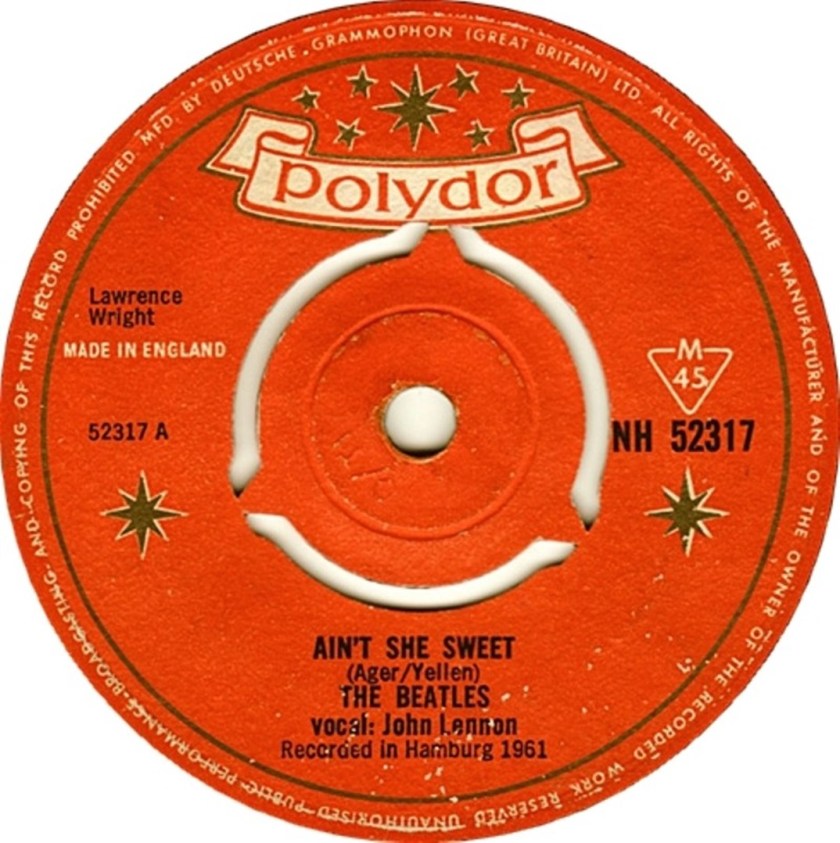
Beatles - Aint She Sweet

On the ‘B’ side of the single and listed as “Take Out Some Insurance on Me, Baby” (1959) written by Charles Singleton and Wally Hall. It was not the only song by Jimmy Reed that The Beatles would sing but I believe the only one recorded. This was also in Hamburg in 1961. The label on the ‘B’ side reads The Beatles with Tony Sheridan.

The first cover version as single released with Ringo on the skins (I believe) was “Dizzy Miss Lizzy”. Originally written and performed by Larry Williams in 1958. This song was released as the ‘A’ side of a 45 r.p.m. disc in 1965 on Parlophone Records. On the ‘B’ side was “Bad Boy” but apparently in some markets the B side was a song you may have heard of called “Yesterday”. The song appears on the 1965 album Help! and Live at the BBC.

Beatles Week – Please Please Me @number1sblog.com

I’ve been visiting Stewart at Number1sblog for a few years. His blog never lets me down. Learning about #1 songs in the UK and how different the American charts can be from them. He is currently in the year 1989 but travel back to see the previous years also. He always gives you a quality take on every #1 song. 

Stewart writes about every UK number one single at number1sblog.com. He’s 630 singles in, give or take, and about to enter the 1990s…

When Max asked us to write a post on our favourite Beatles song, I instantly thought about choosing one of their seventeen UK number one singles. It would have been ‘on-brand’ for me, at least, at the number 1s blog. But I’ve been there and done those, so I decided to cast my eye one place further down the charts.

The Fab Four have two very famous #2 singles. One is the ‘Penny Lane’ / ‘Strawberry Fields Forever’ double-A that became their first single in four years not to make #1, in March 1967 (famously held off by none other than Engelbert Humperdinck). The other is the single that introduced them to the British public in January 1963: ‘Please Please Me’.

‘Love Me Do’ had been the Beatles’ first single to make the charts a few months before. It has huge significance, for obvious reasons, in the history of the band but I’ve never loved it. It’s slow, it’s a bit predictable. Not terrible, not at all, but I can’t imagine many who heard it on the wireless in October 1962 thinking that this new band were going to change the world. ‘Please Please Me’, however…

There are many moments in the Beatles’ discography in which they took a lightyear-sized step towards the future, and this was the first. The tempo has increased a hundred-fold from ‘Love Me Do’, everything – guitars, vocals, drums – is tight, the harmonies inspired by the Everly Brothers, the harmonica in the intro an alarm announcing them to the world. John Lennon was the main player here: he wrote it, and it’s his harmonica that gives the song its distinctive hook. It’s a simple song (a lot of the early, early Merseybeat hits were traditional pop arrangements modernised with guitars and drums) and originally a slow, bluesy number that George Martin thought was dreary. It’s him we have to thank for upping the tempo, and turning this into a rattling, breakneck pop hit, with that wonderful, swinging middle-eight.

The record was released during one of Britain’s worst-ever winters, and legend has it that the audience for their performance of the song on ‘Thank Your Lucky Stars’ on January 19th would have even larger than usual, with large swathes of the country snowbound. This was the first time most people had seen or heard The Beatles, with their long (by 1963 standards) hair and their natty suits. It created a buzz, and got them booked on tours supporting Tommy Roe, Helen Shapiro, and Roy Orbison. ‘Please Please Me’ began to shoot up the charts, and by the time those tours came around The Beatles had been bumped up the bill to headliners. Martin predicted that it would be the Beatles’ first number one hit, and he was correct.

Well, sort of… The singles charts of the 1950s and ’60s were a tad messy. There wasn’t just one of them, for a start. You had the ‘Melody Maker’ chart, the ‘NME’ chart, and the ‘Record Retailer’ chart. None of which offered a complete overview of a week’s sales – they all conducted ‘surveys’ of select record stores over the phone. ‘Please Please Me’ hit #1 in the NME chart (which had the largest circulation) and ‘Melody Maker’ chart, but it only reached #2 in ‘Record Retailer’, which was the one that the Official Singles Chart chose to follow. So, it may well have been the UK’s biggest selling single at some point; we’ll just never know for sure… The history books record it as having stalled behind Frank Ifield’s dull-as-dishwater country ballad ‘The Wayward Wind’ for two weeks.

It’s far from the only single to have suffered this unfortunate fate – it wasn’t until 1969 that the UK charts were unified into one – but it’s a landmark single from the biggest pop group in history, with one of the very best middle-eights. And it set the tone for the next two years, in which the Fab Four would release single after single of pop perfection. ‘From Me to You’, the record that officially gave them their first #1, was perhaps a step back towards ‘Love Me Do’. But then came ‘She Loves You’, and ‘I Want to Hold Your Hand’, and there was no looking back.

It’s interesting to note that an intervention from George Martin, and a particularly snowy winter, contributed to the official start of Beatlemania. Of course a band as good as the Beatles, with a songwriting partnership as prolific as Lennon-McCartney, would have made it eventually. It’s just fitting that ‘Please Please Me’, their first of many, many great songs, was the record that did it.

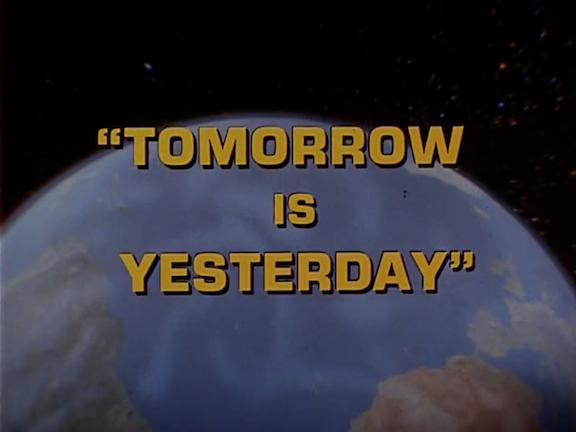
Star Trek – Tomorrow Is Yesterday

★★★★★ January 26, 1967 Season 1 Episode 19

If you want to see where we are…and you missed a few…HERE is a list of the episodes in my index located at the top of my blog.

This show was written by D.C. Fontana and Gene Roddenberry

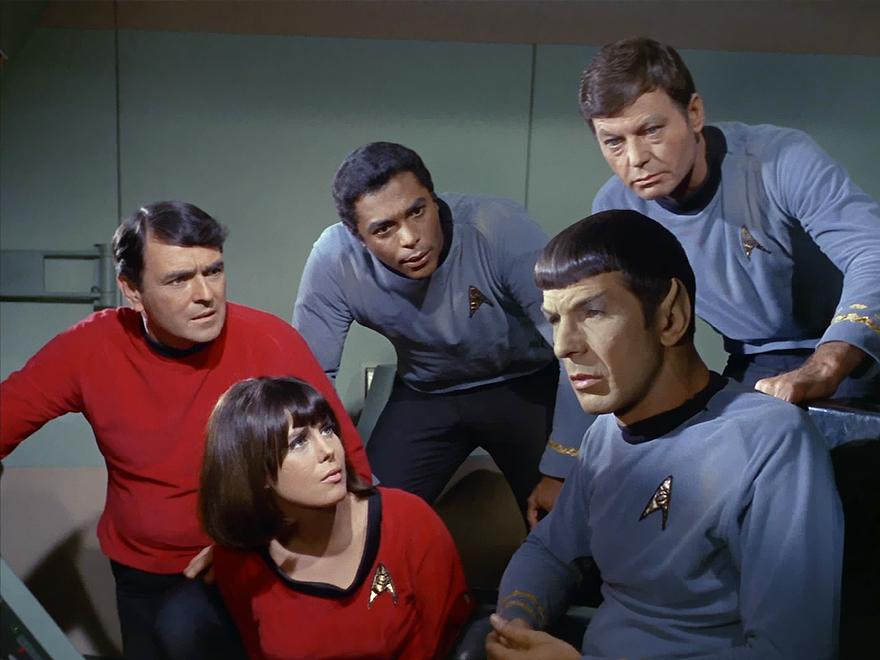
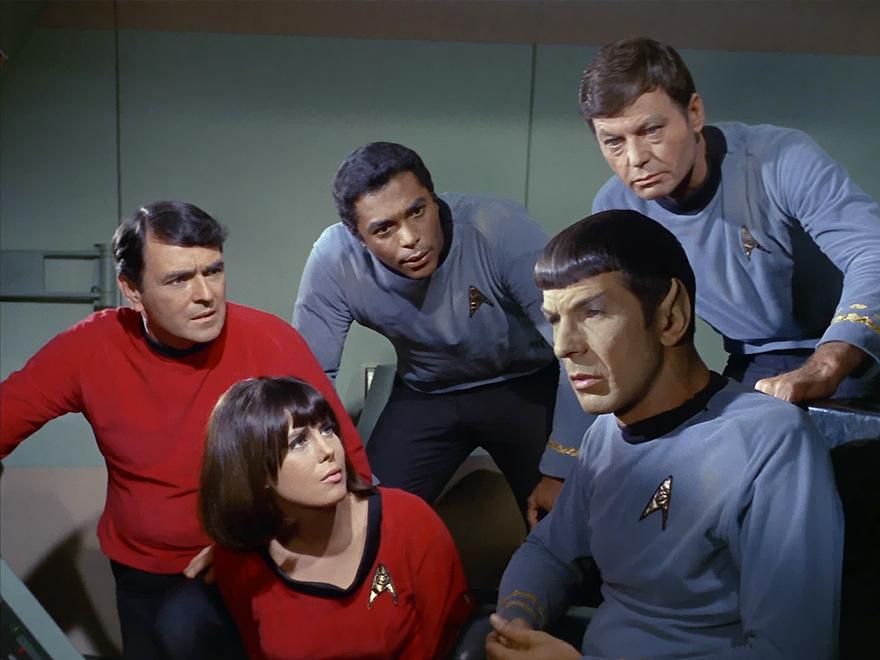
The Enterprise is thrown back in time while trying to escape the gravitational pull of a black star. They find themselves stuck in the 1960s for a while. A 1960s air force catches something on their radar and a pilot, Major Christopher, flies his plane up toward the Enterprise armed with a nuclear warhead. Kirk and Spock talk about the possibility of the pilot firing that weapon at the ship and it ends up that the pilot is beamed aboard the Enterprise. Major Christopher is quite confused and wants to know what is going on plus he just wants to go back to Earth. Kirk & Spock discusses what to do with Christopher because it’s not just a simple thing to beam him back down to the planet because it could alter the future with Christopher knowing the future… it turns out that Christopher will end up having a son that will launch the first successful probe to Saturn. Spock devises a plan that will put everything back to where is was before this incident occurred.

I love Time Travel…in movies, books, or TV shows. The travel itself was actually just an accident…when a mission goes wrong and hostilities ensue, the Enterprise flies toward the Sun and away from it as quickly as possible. This, the so-called “slingshot effect”, causes the ship to end up orbiting Earth – in the late 1960s! Unfortunately, a pilot working for NASA notices the ship and is taken hostage by Kirk and Spock, who must now come up with a way to get back home without altering the course of history.

Star Trek - Tomorrow Is Yesterday 2

Many time travel problems are brought up in this episode. The discovery of a new age, the problems that derive from it, and, of course, the discussions regarding possible paradoxes. What really makes the episode stand out, though, is its sense of fun and foreknowledge… ordinary people’s reaction to the sight of Kirk and Spock is always a joy to behold. It’s funny to hear our heroes mention man’s first landing on the Moon as taking place on a Wednesday at the end of the ’60s…they got it right, weekday and all, a full two years before the whole thing happened.

The interplay between Captain Christopher and the Enterprise crew makes for an interesting look at how representatives from different eras might react to each other. I thought Christopher might have accepted his situation just a bit too readily, but then again, what was he going to do?

The funniest scene is when Air Force MP Sergeant Hal Lynch is also beamed up as he’s cornered Sulu and Kirk stealing the computer tape of the Enterprise. The first person that walks up to him is Spock…his reaction is priceless.

From IMDB:

Captain Kirk says the first moon shot was in the late 1960s. This was the first prediction of the correct decade of this accomplishment in a major science fiction work. Previous motion pictures and television series put the first lunar mission sometime in the 1970s at the earliest.

The Enterprise crew intercepts a radio report that the first manned moon shot will take place on Wednesday. Apollo 11 was launched nearly two years after the filming on 16 July 1969, a Wednesday.

Later in 1967, physicist John Archibald Wheeler would popularize the term “black hole” to refer to the phenomenon Kirk describes as a black star, at the suggestion of a student. While several sources credit Wheeler for coining the phrase, it was used in science journals as early as 1963. The term is now credited to physicist Robert H. Dicke, comparing the phenomenon to a life prison dungeon in Calcutta known as the “Black Hole of Calcutta”.

Premiered on Thursday 26 January 1967, the day before the tragic Apollo 1 fire of 27 January 1967 which killed 3 astronauts.

The star slingshot method of time travel was again used by the crew in Star Trek: Assignment: Earth (1968) and Star Trek IV: The Voyage Home (1986).

Majel Barrett uses a very sultry voice for the ship’s computer in this episode, similar to how she would later voice M’Ress in Star Trek: The Animated Series (1973).

This episode was originally going to be the second part of a two part story that would have begun in Star Trek: The Naked Time (1966). In an earlier draft of the script, when Kirk ordered a hyperbolic course, he wanted the direction to be “Doesn’t matter… the way we came… toward Earth.” When Enterprise breaks away from the sun to go back in time and later, when it goes forward, the same passage (composed by Alexander Courage) plays that was used in the climactic scene of the aforementioned episode.

This episode is the first of two episodes to have a food synthesizer in the transporter room. According to D.C. Fontana, budgetary restrictions precluded taking the security police sergeant to a dining facility or having another actor in the scene bring him food, so Kyle was employed to provide the sergeant’s chicken soup from the dispenser. Several episodes later, in Star Trek: This Side of Paradise (1967), Spock smashed his fist through one of the transporter room’s food synthesizers.

Following Christopher’s arrival on board the Enterprise, he is provided with a Starfleet uniform to wear. The uniform shirt is the green-gold command division colour, consistent with his position as a pilot (rate as shown on his flight suit as Senior Pilot), and the rank braid on his sleeve is that of a lieutenant, equivalent to his USAF captain’s rank (although he is credited as Major Christopher, since it is common on real-world ships with officers holding the rank of captain to be referred to as “major”; the only person traditionally referred to as “captain” is the commanding officer of the ship).

When Colonel Fellini is interrogating Capt. Kirk down at the base, he tells him that he will “lock him up for 200 years”, to which Kirk replies “That seems about right”. Since the 23rd Century time line for Star Trek was not yet established at this point (and would not be so until Star Trek II: The Wrath of Khan (1982)), Kirk’s response could be taken as an implication that the time line for the series was the 2160s instead of the 2260s. Gene Roddenberry himself stated that the series was designed so that it could’ve easily taken place at anytime between the 21st and 22nd centuries.

Summary

When the Enterprise is flung back in time while trying to escape the gravitational pull of a black star, they find themselves in orbit around a 1960’s Earth. When they are seen by a U.S. Air Force pilot, they beam him aboard but then face the dilemma of what to do with him as he learns more and more about the future. They have to review their initial decision to just keep him when historical records show that his yet-to-be-born son will lead Earth’s first successful mission to probe Saturn. Spock devises a plan to do so while also erasing any memory of recent events.

CAST

William Shatner … Captain James Tiberius ‘Jim’ Kirk
Leonard Nimoy … Mister Spock
Roger Perry … Major Christopher
DeForest Kelley … Doctor Leonard ‘Bones’ McCoy
Hal Lynch … Air Police Sergeant
Richard Merrifield Richard Merrifield … Technician
John Winston … Lieutenant Kyle
Ed Peck … Col. Fellini
James Doohan … Lieutenant Commander Montgomery ‘Scotty’ Scott
George Takei … Lieutenant Hikaru Sulu
Nichelle Nichols … Lieutenant Nyota Uhura
Mark Dempsey … Air Force Captain
Jim Spencer … Air Policeman
Sherri Townsend … Crew Woman
Majel Barrett … Enterprise Computer (voice) (uncredited)
Bill Blackburn … Engineer (uncredited)
Frank da Vinci … Brent (uncredited)
Eddie Paskey … Lieutenant Leslie (uncredited)

Beatles Week – Beatles Donut Holes @mojohorizon.home.blog

I’ve been visiting Cork’s site for years and it’s one of my favorite blogs to go to. I’ve read posts about The Beatles, Sasquatch, Frozen Pizza, Iron Maiden, movies, blues songs, and many more. Take a visit to his site at https://mojohorizon.home.blog/

Beatles Donut Holes

I was born in 1970 so I don’t know if Beatles Donut Holes were ever a real thing during the Sixties, but they sure sound tasty. “I’ll have a John Lennon Long John and a large Blacca Macca Coffee to go please. Yeah, and let me get an order of Cinnamon Starr Sticks with a Savoy Truffle.”

If you have no idea what I’m talking about, it’s this….even RAGING, RABID Beatles fans can miss some things…myself included. It’s like, “Oops, how did I miss it?” I’ve experienced this on more than one occasion in my own personal B.L.Q. (Beatles Listening Quest). The American and British album releases are the easiest example of this.

For example, I checked out the vinyl “Revolver” album from my local library branch and recorded it onto a cassette. A few weeks later I was standing in the Beatles’ section of my local record store scratching my head wondering why “Doctor Robert” and “I’m Only Sleeping” aren’t on my newly dubbed version of the album. Thanks, Capitol!

The first Beatles collection I remember owning was the “red” Greatest Hits 1962-1966. Here are two donut holes you might have missed. First is the James Bond-ish intro to the song “Help.”

I always enjoy listening to the 25 second mashup of twangy guitars, sitar, and orchestra instruments. At some point I bought the Help! soundtrack years later. Don’t ask which version because I have no idea. I always associate this song with this greatest hits collection. It would be a shame to like The Beatles and not have heard this one.

Another example is the song “I Feel Fine”, which is also part of that red 62-66 collection. It’s probably best known for the whole feedback intro on the song, but you might have missed something towards the very end of the recording. It helps if you crank the volume and/or wear headphones for this. Towards the very end of the song, around 2:15, I swear I hear the sound of a dog barking.

I Googled this prior to its inclusion in this blog and I’m not the only one who hears this. One person seemed to think it was Paul McCartney barking or whooping, but you tell me what you think. I always thought “Hey Bulldog” was their finest barking, but I could be wrong.

One of my earliest Beatles Donut Hole experiences came from recording “The Compleat Beatles” documentary off USA cable network back in the day. I had the first few lines of this thing memorized from watching it so much. “Liverpool: 200 miles northwest of London.” I went to visit an out of state friend and he brought up some scenes in the film that I had never seen — then I found out the network had cut some parts of the film for time so I had the “InCompleat Compleat Beatles.” I guess American film distributors would call it the “Incomplete Complete Beatles.”

Hopefully, you got a laugh reading this. Not everything associated with The Fab Four is necessarily a rarity or demo version of your favorite song. (I also checked out The Beatles Rarities from the same library branch by the way. ) I think the beauty of enjoying an established band like The Beatles allows fans to make their own discoveries. Here’s hoping no Donut Holes befall you anytime soon.

Till next time, keep your Mojo on the Horizon!

Star Trek – Arena

★★★★ January 19, 1967 Season 1 Episode 18

If you want to see where we are…and you missed a few…HERE is a list of the episodes in my index located at the top of my blog.

This show was written by Gene L. Coon, Fredric Brown, and Gene Roddenberry

I liked this episode’s plot. The Gorn attack a Federation outpost and kill practically everyone with their weapons. The Enterprise has no idea who these enemies are but Kirk, unlike Spock, felt like they had to kill them or risk further attacks. However, in pursuing them, they enter “Metron” space and these advanced beings are horrified by the brutality of these two races. So, to end the problem, they place the captains of both ships on a barren planet and let them fight to the death and the loser’s crew will then be destroyed.

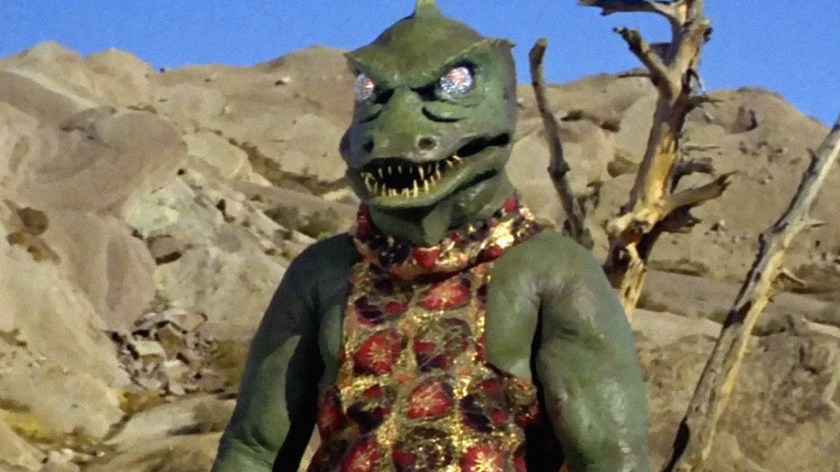
Star Trek special effects usually are pretty good considering the time. If I get an idea of what’s going on by the special effects…they are fine with me. This one though to me contains a really bad looking alien…the alien Gorn could have been better. It’s the one episode in that I don’t think they did all they could with the alien.

Gorn

It wasn’t the look of the monster, it looks like a pre-Sleestak from Land of the Lost. It was the mobility or lack of when Gorn was fighting Kirk. it looked like it was fighting in slow motion…so that slowed William Shatner’s movements also. The one bit of dialog that addressed this was Shatner talking about how slow they were in moving.

Kirk’s readiness to follow the Gorn ship with plans to destroy it, placing the Enterprise in jeopardy as he stretches warp capability is huge. He was risking the lives of his crew just so he can catch the enemy and destroy them in retaliation puts him at odds with Spock who questions such rash actions.

In short, Kirk wanted blood in this episode. He didn’t think that the Gorn had reasons at all to attack a Federation outpost. Spock warned him that they need to find out what happened before they just attacked but Kirk would not have any of it. In the end, Kirk gets it and has compassion for his opponent.

The battle gets tense and they stretch it out a little. The first thing I thought of before the episode was finished…wouldn’t it be nice if the leaders of countries had to fight in wars instead of their young?

From IMDB:

William Shatner currently suffers from tinnitus due to an improperly timed special effects explosion on the set of this episode. Both Leonard Nimoy and DeForest Kelley reportedly suffered from tinnitus as well during the remainder of their lives.

The Gorn is not seen until 23 minutes in, almost halfway through the running time. Despite this alien’s impressive debut, and the cultural popularity of the image, no Gorn was ever seen again in a mainstream Star Trek production until Star Trek: Enterprise: In a Mirror, Darkly, Part II (2005) almost 40 years later. (A Gorn did appear in Star Trek: The Animated Series: The Time Trap (1973), which has sometimes been considered non-canonical.)

Ted Cassidy (Lurch of The Addams Family (1964)) has his final Star Trek role as the voice of the Gorn. Cassidy had also voiced the antagonist in Star Trek: The Corbomite Maneuver (1966) and appeared as Ruk in Star Trek: What Are Little Girls Made Of? (1966), which aired in reverse order as compared to their filming dates.

The Metrons (Carolyne Barry) were named after Metatron, God’s other high-ranking soldier in Michael’s army of angels. Hence, their cherubic, spiritual appearance.

In his final speech, the Metron informs Kirk that, because he demonstrated mercy, he will not be destroyed. Initially, they said they planned to destroy the loser, “in the interests of peace”. In Gene L. Coon’s script, in dialogue not aired, the Metron admits that they had, all along, planned to actually destroy the ship of the winner of the personal combat, because that race would represent the greater danger to them. James Blish preserves this disclosure in his novelization in “Star Trek 2”.

Bobby Clark, one of the performers who played the part of the Gorn Captain, visited a Star Trek sound stage 38 years later for the filming of Captain Archer’s fight with the Gorn Slar in Star Trek: Enterprise: In a Mirror, Darkly, Part II (2005). That episode was the first appearance of the Gorn in live-action Trek since this episode.

Comedian and film director Ben Stiller has the prop Gorn head as he is a very big fan of the Star Trek franchise.

The scenes on the planet surface were filmed at Vasquez Rocks, California, the same location used for Star Trek: Shore Leave (1966), Star Trek: Friday’s Child (1967) and several other Star Trek productions – even as late as Star Trek: Voyager: Initiations (1995). The area of Kirk’s fight with the Gorn, in front of a jagged rock face, is known to fans as “Gorn Rock”.

In the original script, Kirk and the alien captain’s battleground had translucent walls, making it seem as though they were in a giant terrarium.

Sean Kenney, who plays helmsman DePaul, played the disfigured Captain Pike in “The Menagerie” episodes broadcast earlier. His resemblance to Jeffrey Hunter who played the original Captain Pike is plain to see.

Summary

When a reptilian alien race known as the Gorn destroys an Earth colony, the Enterprise comes under attack by the Gorn vessel. Captain Kirk soon gives chase to the Gorn ship, leading them to an unexplored solar system, gradually (and dangerously) increasing speed. Kirk prepares to destroy the Gorn ship until another race of powerful aliens called the Metrons stops them and forces both captains to face off in mortal combat. The main purpose of this one-on-one duel is to solve their dispute, the winner will be released and the loser will be destroyed along with his ship and crew.

CAST

William Shatner … Captain James Tiberius ‘Jim’ Kirk
Leonard Nimoy … Mister Spock
DeForest Kelley … Doctor Leonard ‘Bones’ McCoy
George Takei … Lieutenant Hikaru Sulu
James Doohan … Lieutenant Commander Montgomery ‘Scotty’ Scott
Nichelle Nichols … Lieutenant Nyota Uhura
Jerry Ayres … O’Herlihy
Grant Woods … Kelowitz
Tom Troupe … Lt. Harold
James Farley … Lang
Carolyne Barry … Metron (as Carole Shelyne)
Sean Kenney … DePaul
Bill Blackburn … Gorn (uncredited)
Ted Cassidy … Gorn (voice) (uncredited)
Bobby Clark … Gorn (uncredited)
Gary Combs … Gorn (uncredited)
Frank da Vinci … Lt. Brent (uncredited)
Eddie Paskey … Lieutenant Leslie (uncredited)
Vic Perrin … Metron (voice) (uncredited)
Ron Veto … Crewman (uncredited)

Beatles Week – Beatles Cake @tao-talk.com

Welcome to Beatles Week and we will kick it off in style with this article covering all of the Beatles. So buckle up… We will have over a week with The Beatles. I probably wouldn’t do this with another band…but hey…It’s The Beatles. 

This entry is by Lisa from Tao-Talk. I’ve known Lisa since 2018 and the biggest George Harrison fan I’ve ever met. She is a wonderful writer with a wide knowledge of music. Lisa is a mother, grandmother, gardener, retired government worker, observer, reader, writer, cinema lover, learner, bicyclist, woman who runs with the wolves, and last but not least, a lover of music! Go visit Lisa when you can!

To me, being asked to write about The Beatles is like being asked to write about the air or the sky or water.  They are like elements of nature, so immersing and vast it is difficult to grab on to a small enough aspect to be able to articulate it in words.

Ever since Max asked me to be a part of this series it’s been clear I want the topic to be balanced between all four of them because it is all four of them mixed together like essential ingredients in a prize-winning recipe that the magic happens.

Right now I’m thinking of a delicious cake and what ingredient each of the guys would be.  Paul would for sure be the sugar.  Who else looks as dreamy as he does.  As a young girl his puppy dog eyes and chubby cheeks and innocent smile won me over.  It is his soulful melodies with Cupid’s lyrics that continue to win me over.  “She’s Leaving Home” plucks my heart strings every time.

The flour for the cake would be Ringo.  There cannot be cake without flour.  It is the foundation.  Ringo’s steady drumming gave the other three the freedom to create whatever they wanted.  They knew Ringo would have their back with the beats, and he stepped in with grace when it was time to sing, acting naturally.

John would be the salt in the cake.  His salty comments to the media come to mind.  His bold publicity stunts to call attention to important matters come to mind.  The depth of his feelings shines through in his leavening lyrics.  For example, “In My Life.”  When I think of John I think of The Bible verse Matthew 5:13:  You are the salt of the earth. But if the salt loses its savor, how can it be made salty again? It is no longer good for anything, except to be thrown out and trampled by men.  I think if any of the other three weren’t there, The Beatles would still have existed and they would have been good, but without John there would not have been the essential savor. Without John there would have been no Beatles.

Most everyone knows that George is my favorite Beatle, so you may be wondering by now what part of the cake he is.  Easy answer would be the cherry on top, but I’m not going for the easy answer.  George would be the spice in the cake, as you see, this is a spice cake.  I think of India when I think spices, and George brought an Indian influence to the group.  Also spices are subtle, and with George’s contribution, the flavor of his music and lyrics are both subtle and lasting.  One of the last ones he wrote for Patti has got to haunt her just a little.

When you mix their ingredients together with other carefully selected musicians, instruments, and producers in the right proportions and cook for just the right amount of time, you come out with the perfect cake. Add a secret ingredient for the icing and you’ve got a cake whose taste stays fresh in your memory forever.

Just like there is no view without a viewer, there is no taste without the Apple Scruffs.  Each fan of The Beatles and Their Music effectively immortalizes them and it.  I’m happy to be part of that group of individuals.  I also hope that once we’re in the afterlife, the party continues with John, Paul, George, and Ringo.

Thank you, Max, for asking me to be a part of this writing challenge.  Can’t wait to hear what others will write.

This essay first appeared on Max’ blog, PowerPop… An Eclectic Collection of Pop Culture .

Outsiders – Time Won’t Let Me

Don’t forget tomorrow starts Beatles Week and we will have some great guest hosts. The Star Trek posts will continue. 

Today I’m guest hosting Dave’s site with Turntable Talk…about the one and only Jimi Hendrix.

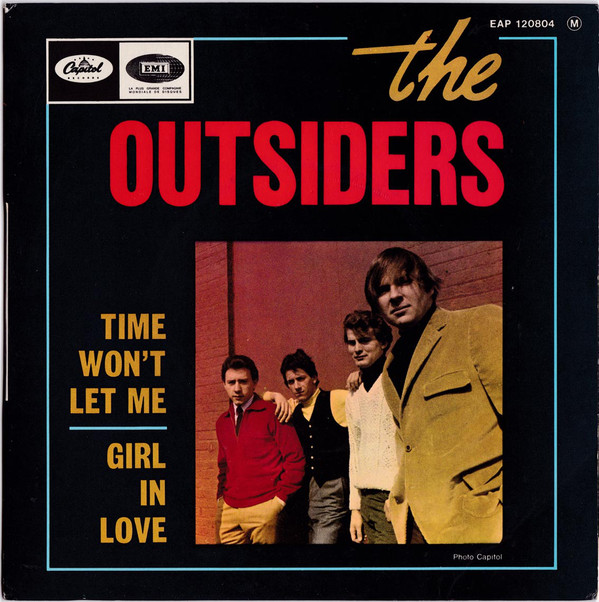
I’ve always liked this song with its garage band sound. The Outsiders were a band from Cleveland Ohio that had a hit with this song in 1965. They had 4 top 40 songs. Time Won’t Let Me peaked at #5 on the Billboard 100 and #5 in Canada in 1966. It does get played occasionally on oldie radio stations. Jimmy Fox, who was the drummer on the Outsiders’ first album, later formed The James Gang with Joe Walsh.

The Outsiders formed in Cleveland, Ohio, and were a continuation of the rock band The Starfires. The members of the Outsiders at this time included Tom King (rhythm guitar, vocals), Sonny Geraci (vocals), Mert Madsen (bass, harmonica), Al Austin (lead guitar), Ronnie Harkai (drums), John Madrid (scream trumpet, and Gayle Guhde (keyboards). The lineup has been very fluid over the years.

They were signed by Capitol Records on the strength of Time Won’t Let Me. A&R man Roger Karshner became the group’s manager. Lead sing Sonny Geraci credits Karshner as the key to the band’s breakout success.

The Outsiders recorded three more Top 40 singles but never had another huge hit like Time Won’t Let Me. The band broke up after their fourth album, Happening Live!, was released in 1967.

Mert Madsen (bass player): “It all started in 1958 when I joined Tom in his new band called The Starfires, which started a few months before I joined the band in late 58. It took us seven hard-working years to get to the time in the fall of 1965 where we cut ‘Time Won’t Let Me’ at the “Cleveland Recording” studio.” 

“We could sense that this was not just any tune, but a tune with great hit potential,” Mert continues: “So we got hold of the East Coast Manager for Capitol Records, Roger Karhsner, and played the master record for him over the phone. He said right away, ‘Hold on, I do believe you guys got a hit on your hands, but I am coming to Cleveland in a few days, and then we will defiantly talk some more.’ The rest is history – all the guys on the record made up their own parts music ways, and I arranged the background singers. — The horns were added on afterwards.”

Time Won’t Let Me

I can’t wait forever
Even though you want me to
I can’t wait forever
To know if you’ll be true
Time won’t let me
Time won’t let me
Time won’t let me wait too long

Can’t you see I’ve waited too long to love you
To hold you in my arms
Time won’t let me
Time won’t let me
Time won’t let me aw
Oh

I can’t wait forever
Even though you want me to
I can’t wait forever
To know if you’ll be true
Time won’t let me
Time won’t let me
Time won’t let me wait that long
It won’t let me wait that long
(Wait, wait, wait, wait, wait that long)

Beatles Week…Coming Friday March 10, 2023

On Friday, March 10, 2023, my blog will be blessed…it will be guest hosted by many of you wonderful bloggers out there. I asked some bloggers to write about their favorite Beatles song or somewhere along those lines. In the next week or so that is what we will have.

I truly appreciate all of them writing on this subject. I admire all of them for their writing abilities and having fantastic sites. I’m calling it Beatles Week but in truth, it WILL go longer than a week. If it does so be it…I’m not going to rename it to Beatles 8 or more days… I think “week” has a certain ring to it.

We will have one post a day BUT…I will still have my Star Trek posts to work in on Wednesday, Saturday, and Sunday. Now…if any of you reading this would want to write about a favorite Beatle song…just tell me and I’ll get you in…although I’ll need to know by Friday. I so appreciate all of my readers and it’s been a joy working with all of these different bloggers. We do have a great community here on WordPress.

Thanks

Max

Star Trek – The Squire Of Gothos

★★★1/2 January 12, 1967 Season 1 Episode 17

If you want to see where we are…and you missed a few…HERE is a list of the episodes in my index located at the top of my blog. 

This show was written by gene Roddenberry and Paul Schneider

This is one of the lighter episodes of Star Trek. That doesn’t mean it isn’t good…quite the opposite. It shows intellect without discipline and power without a constructive purpose go nowhere. 

The star of this episode is not a crew member but is actor William Campbell who plays Trelane. Trelane can seemingly do anything he wishes. He can get people off of the Enterprise in a second. William Campbell is over the top in this episode and it fits perfectly!

The_Squire_of_Gothos_231

I’ve always thought Trelane was a forerunner of the Q character, from the Next Generation series,  and it is impossible to re-watch this episode without making comparisons. Many of them are favorable to actor William Campbell who played Trelane as if the role had been written for him. 

Trelane appears to have stumbled upon an eighteenth-century decor but he gets so many things wrong such as the food with no taste. He’s stuck in space and he’s lonely. He wants the Enterprise crew for the company…but they all have work to do….and don’t have time to keep him entertained. They don’t have much of a choice though when they see how powerful he is. 

Leonard Nimoy intrigues Trelane. He’s studied the earth, but he’s only gotten as far as the 18th century. A Vulcan like Spock is something he can’t account for. The very serious-minded Spock has no time to deal with what Captain Kirk and the rest realize is an immature mind. But a very powerful one who can change matter to energy and back simply at will.

The ending was amusing and sad when the revelation regarding Trelane’s story is revealed… I won’t give it away here. 

From IMDB

The costume worn by Campbell as Trelane was rented from the Western Costume company. Almost two weeks after it was seen worn by Campbell on Star Trek, the same costume appeared in the Gilligan’s Island third season episode “Lovey’s Secret Admirer” worn by actor Jim Backus. A short time later, it was again re-used and worn by actor Michael Nesmith in The Monkees episode “The Prince and the Pauper”

William Campbell has said that the part of Trelane was really written for Roddy McDowall. The reason why it was eventually decided not to use him was that it was feared that the mannerisms of the character combined with McDowall’s look would make the character appear gay. Campbell was chosen because his supposedly “huskier look/build” would offset the foppish mannerisms of the character. However, he is not noticeably huskier than McDowell. In the fact, Campbell’s higher-pitched voiced and greater penchant for theatricality are more likely to appear gay than McDowell’s. The result is that Trelane’s over-the-top manner is (possibly deliberately) somewhat camp.

n an interview on the Star Trek: The Next Generation (1987) Season 7 DVD, John de Lancie said he believed that Gene Roddenberry, whether consciously or subconsciously, was channeling Trelane when he created Q.

William Campbell, who plays Trelane, would later play Captain Koloth in Star Trek: The Trouble with Tribbles (1967).

Barely visible before Trelane vaporizes it with the phaser is a strange bird-like creature with striped legs that is also in a display niche. It was the reuse of the humanoid bird creature costume, fleetingly and partially seen in the Talos zoo in Star Trek: The Cage (1966).

An M-113 creature is among the trophies on display in Trelane’s castle. When Dr. McCoy (the creature’s last defender in Star Trek: The Man Trap (1966)) sees it, he does a double-take. During the scene, the howling music theme from that episode is heard. It is possible that Trelane had observed Planet M-113 with his telescope at some point.

According to an interview with William Campbell in “The World of Star Trek”, in his fight with William Shatner in the forest, he fell down and dislocated his shoulder. Fortunately, as he flung his arm up in his instinctive reaction to the excruciating pain, the shoulder popped back into its socket. Due to Campbell’s injury, shooting finished in seven filming days, one day over schedule. Campbell can be seen favoring the injured shoulder, hold the arm limp.

The exact century in which Star Trek was set had not been determined during the filming of the original series. Kirk refers to people and events of the 18th and 19th century as being nine hundred years in the past, which could have placed the series in the 27th century or later. De Forest Research, Inc., the company who reviewed scripts for clearances and other related matters, noted in their commentary on the line “Then you’ve been looking in on doings nine hundred years past”: “Other scripts have placed it c. 200 years in the future, e.g. Star Trek: Shore Leave (1966). That places this reference in the 13th century.”

In his book Q-Squared, author Peter David related that Trelane was an adolescent Q entity. Trelane’s nature may seem inconsistent with Q lore, but David uses creative speculation to explain away any questions that may arise.

William Campbell recalled the part of Trelane as “It was just a great role. It was sensational. I’ll never forget it.” and “It would be very easy for any actor who had any training to play the Squire of Gothos. The character was so well written and, of course, it was the show”.

Summary

When Kirk and Sulu vanish into thin air from the bridge of the Enterprise, Spock sends a landing party to the planet below to locate them. What they find is an 18th century castle and a rather foppish man, Trelane, who seems to know a great deal about the Earth – even if it is the wrong time period. If truth be told, Trelane acts like a spoiled little boy and it’s obvious Kirk and the others have become his playthings. They soon realize that if they are to overcome Trelane and free themselves, they must locate and destroy his power source

CAST

William Shatner … Captain James Tiberius ‘Jim’ Kirk
Leonard Nimoy … Mister Spock
William Campbell … Trelane
DeForest Kelley … Doctor Leonard ‘Bones’ McCoy
Richard Carlyle … Jaeger
Nichelle Nichols … Lieutenant Nyota Uhura
George Takei … Lieutenant Hikaru Sulu
James Doohan … Lieutenant Commander Montgomery ‘Scotty’ Scott
Michael Barrier … DeSalle
Venita Wolf … Yeoman Teresa Ross
Barbara Babcock … Trelane’s Mother (voice) (uncredited)
Bill Blackburn … Lieutenant Hadley (uncredited)
Frank da Vinci … Lt. Brent (uncredited)
Carey Foster … Enterprise crewmember (uncredited)
Bart La Rue … Trelane’s Father (voice) (uncredited)
Eddie Paskey … Lieutenant Leslie (uncredited)

Bad Company – Can’t Get Enough

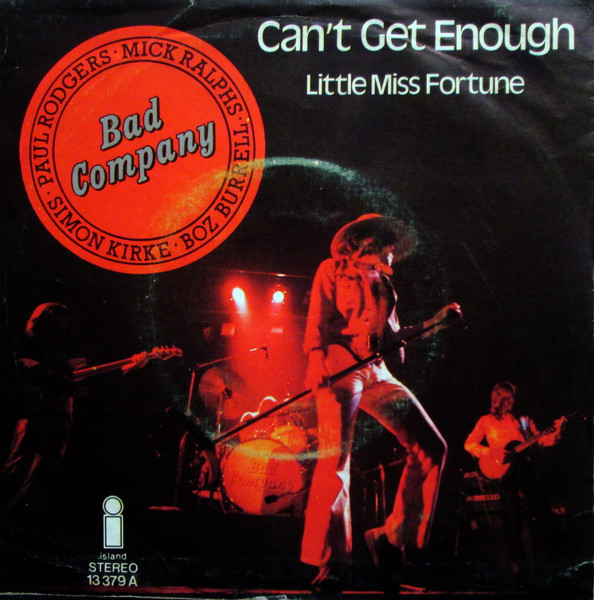
This song is worn out but I still get excited when I hear that intro! You also have one of the top vocalists in his generation…Paul Rodgers. I’ve always loved the feel of this song. The lyrics won’t challenge Dylan at any point but the feel makes up for it.

The band combined singer Paul Rodgers and drummer Simon Kirke from the band Free, guitarist Mick Ralphs from the band Mott the Hoople, and bassist Boz Burrell from King Crimson.

This song was their debut single off of their debut self-titled album. The song peaked at #5 on the Billboard 100, #3 in Canada, and #15 in the UK. The album Bad Company peaked at #1 on the Billboard 100, #1 in Canada, #3 in the UK, and #27 in New Zealand in 1974.

I will never understand why Mott The Hoople turned this song down. It was written by Mick Ralphs when he was still with Mott the Hoople, but the band rejected it. When Ralphs joined Bad Company, they didn’t mind it one bit. Ralphs also brought “Movin’ On” with him, which became the group’s next single, as well as “Ready For Love,” which he originally recorded with Mott The Hoople, but redid the song with Bad Company.

Bad Company had just formed and they were signed by Peter Grant (Zeppelin’s manager) to Led Zeppelin’s new Swan Song record label. This was by far the label’s best signing of outside artists…the most successful anyway. Grant traveled with Bad Company and gave them a lot of attention during this period. After a couple of years, no artist at Swan Song would get much attention.

They recorded the album with Ronnie Lane’s mobile studio at Headley Grange. That is where Zeppelin recorded a few of their albums.

Simon Kirke: “We were scattered all over this country house. Bad Company were doing their first album and I believe it was one of the first songs that we did. I was in the basement, Boz [Burrell] the bass player was in the boiler room, Mick Ralphs and Paul Rodgers were up in the main living room where the guitar amps were. So, in order to get their attention, because we couldn’t see each other, I did the count: ‘1, 2… 1, 2, 3…’ and then I did this ‘guh-brah’ to get everyone’s attention. And that’s how we kicked it off. It was born out of necessity.”

Can’t Get Enough

Well I take whatever I want
And baby I want you
You give me something I need
Now tell me I got something for you
Come on come on come on and do it
Come on and do what you do

I can’t get enough of your love

Well it’s late and I want love
Love that’s gonna break me in two
Don’t hang me up in your doorway
Don’t hang me up like you do
Come on come on come on and do it
Come on and do what you do

I can’t get enough of your love

Van Morrison – Bulbs

I must admit…the first line threw me off when I first heard it at age 19. “Kicking off from centerfield” left me confused. Baseball has a centerfield but you don’t kick off. Of course, it’s soccer but back then I had no clue about the game.

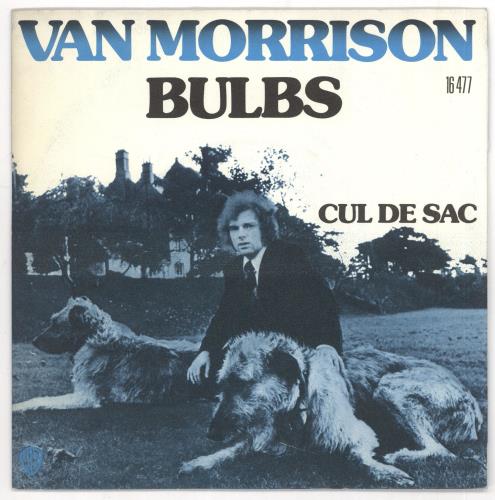
Bulbs was the only single to be taken from his 1974 album Veedon Fleece, with a B-side of “Cul de Sac” for the US release and “Who Was That Masked Man” for the UK release.

I bought Veedon Fleece sometime in the mid-eighties right after I bought his first six albums. I was heavily into Van the Man at that time…and still am. I thought this album was an improvement to the previous one called Hard Nose The Highway. The song kicked off the second side of the album. I would always buy the album and record it on cassette immediately so I could listen to it in my car.

Van Morrison is an interesting person. His musical landscape spanned so many genres in his career. You had the garage rock of Gloria and Here Comes The Night, the blues with Thank God For The Blues, jazz with Moondance, and everything in between including conventional rock and roll with Wild Night.

Van would be in the top 2-3 of my favorite vocalist of all time. I saw the man live on March 7, 2006, at the Ryman Auditorium. I had admired his voice for years but was knocked out by how great he was in concert. I’ve seen film clips of him live but you don’t get the full effect unless you see him in person.

Veedom Fleece peaked at #53 on the Billboard album charts, #80 in Canada, and #41 in the UK in 1974. He had a stretch of albums from 1968 to this one that is hard to beat. Astral Weeks, Moondance, His Band and the Street Choir, Tupelo Honey, Saint Dominic’s Preview, Hard Nose The Highway, and this one. I do like his other albums also but I like his late sixties to early seventies sound…The first time I noticed Van was on Saturday Night Live when he appeared and played songs from the album Wavelength. I was too young to know who he was though. It was when I heard Brown Eyed Girl in 1985 that I started to buy his albums and haven’t stopped liking him since.

Bulbs

I’m kicking off from center fieldA question of being down for the gameThe one shot deal don’t matterAnd the other one’s the same

Oh! My friend I see youWant you to come through (alright)And she’s standing in the shadowsWhere the street lights all turn blue

She leaving for an American (uhuh)Suitcase in her handI said her brothers and her sistersAre all on Atlantic sand

She’s screaming through the alley wayI hear the lonely cry, why can’t you?And her batteries are corrodedAnd her hundred watt bulb just blew

Lallallal, alright, huhuhhuh

She used to hang out at Miss Lucy’sEvery weekend they would get looseAnd it was a straight clear case ofHaving taken in too much juice

It was outside, and it was outsideJust the nature of the personNow all you got to rememberAfter all, it’s just show biz

Lallalal, huhuh, lallal

We’re just screaming through the alley wayI hear her lonely cry, ah why can’t you?And she’s standing in the shadowsCanal street lights all turn blueAnd she’s standing in the shadowsWhere the street lights all turn blueAnd she’s standing in the shadowsDown where the street lights all turn blueHey, hey, yeah

Star Trek – The Galileo Seven

★★★★ January 5, 1967 Season 1 Episode 16

If you want to see where we are…and you missed a few…HERE is a list of the episodes in my index located at the top of my blog.

This show was written by Oliver Crawford, Shimon Wincelberg, and Gene Roddenberry

This was the first episode that was centered around Spock and not Captain Kirk. Spock is in control of the shuttle that is stranded on a planet. The special effects people did a great job with the shuttle taking off into space. You would see this again in Star Wars a decade later.

Spock is in charge of the space shuttle Galileo.  Spock and the others aboard the shuttlecraft… crash land on an unexplored planet. With no sensors to find their crewmen, the Enterprise must figure out a way to locate the Galileo before its duty to deliver the medical supplies forces it to leave the crewmen for dead. Spock and company must survive on the planet’s surface, fending off the giant creatures that live there.

The Galileo Seven

As the story plays out, the crew is not enamored of Spock’s logical based decisions. It highlights the personality of Spock and shows us how Spock thinks. I can see why the crew would have problems with Spock. When one crewman is killed, they must take off in a hurry but the crew wants to bury the man first. Spock doesn’t see the logic in putting everyone at risk to do that…but in the end, allows it anyway. I can totally see his side but it seemed rather cold-blooded…or green-blooded in Spock’s case.

Spock’s rationale for wanting to leave a crew member behind to save others was the first instance in the series of his use of the Vulcan axiom regarding the needs of the many outweighing the needs of the few or the one. Spock’s ever calm logical manner does grate on the nerves of Dr. McCoy more than usual as well as crewman Don Marshall. DeForest Kelley’s scenes with Nimoy have even more bite than usual, not to mention an almost mutinous Marshall.

At the end of the episode… we are led to believe that Spock’s final action while in charge was an act of emotion rather than logic. For me… it seemed the most logical act of the episode.

From IMDB:

After this episode was filmed, no new shots of the shuttlecraft miniature were taken. All shuttlecraft model shots used in the series were stock footage from this episode, sometimes matted into different backgrounds. The shuttle craft was built by AMT in exchange for them gaining the rights to make the plastic model kit version.

It has been noted that the behavior of some of the personnel, particularly Lt. Boma, was grossly insubordinate to Spock for a quasi-military organization like Starfleet. By contrast, Spock’s act of jettisoning the fuel and igniting it, in hopes of the USS Enterprise detecting, it is perfectly keeping with military procedures and a completely logical decision under the dire circumstances the crew was facing.

The story was partly drawn from Spock’s break-out popularity that had already occurred early on in the show’s run. According to Leonard Nimoy, as a result, one writer simply suggested a story in which Spock was seen commanding a vessel.

To make the creatures look larger than they really were, small spear and shield props were made for Robert ‘Big Buck’ Maffei to fling at the crew. The one that is dropped near the three men is fairly small in size, but in the next shot, it is much larger.

The producers liked Don Marshall’s performance as Boma, and intended to bring the character back. However, by that time, Marshall was already signed with Irwin Allen to co-star in Land of the Giants (1968) (which began filming in 1967, but only premiered a year later).

The black rectangular instrument with the round face on the aft bulkhead of the shuttlecraft is actually a Foxboro controller, a device used in the wastewater industry to control the level of sewage in holding tanks.

The basic premise of “The Galileo Seven” is that a small ship is forced down onto an alien planet inhabited by giant humanoids. Don Marshall, who plays Lt. Boma, would soon star in another show called Land of the Giants (1968) where he plays the co-pilot of a small ship that is forced down onto an alien planet inhabited by giant humanoids.

Summary

A shuttlecraft under Mr. Spock’s command is forced to land on a hostile planet. His emotionless approach to command does not sit well with some crew members, particularly Mr. Boma who challenges Spock at every opportunity. The Enterprise and Captain Kirk meanwhile have only a short time to find the lost shuttlecraft as they must deliver urgent medical supplies to Markus III in only a few days

CAST

William Shatner … Captain James Tiberius ‘Jim’ Kirk
Leonard Nimoy … Mister Spock
Don Marshall … Boma
DeForest Kelley … Doctor Leonard ‘Bones’ McCoy
James Doohan … Lieutenant Commander Montgomery ‘Scotty’ Scott
George Takei … Lieutenant Hikaru Sulu
Nichelle Nichols … Lieutenant Nyota Uhura
John Crawford … Commissioner Ferris
Peter Marko … Gaetano
Phyllis Douglas … Yeoman Mears
Rees Vaughn … Latimer
Grant Woods … Kelowitz
Robert ‘Big Buck’ Maffei … Creature (as Buck Maffei)
David L. Ross … Transporter Chief (as David Ross)
Majel Barrett … Enterprise Computer (voice) (uncredited)
Bill Blackburn … Lieutenant Hadley (uncredited)
Frank da Vinci … Lt. Brent (uncredited)
Eddie Paskey … Lieutenant Leslie (uncredited)
Ron Veto … Crewman (uncredited)

Merle Haggard – Okie From Muskogee

I will say it again today, unfortunately….our power has been out since Friday. Right now I’m using the last charge on my laptop with my phone as a hotspot. I called the county department and our electric company… over 200 trees were blown over on power lines. Some have electricity and some don’t…our road has a tree over the power lines. We are pretty much stuck here in the dark…Our electric company has called in help from other states…but right now all we can do is wait. This is a pic of my road. So I won’t be commenting much if any until there is once again power. Funny how we take some things for granted. 

Now I have to go to my car to charge my dying phone again.

Tree on lines

I almost didn’t post this song at all. Everyone knows that I’m non-political to the core. Even for a song that is over 50 years old… this one has drawn its admirers and haters. Was it a parody or was he serious? It goes both ways.

I always wondered if Merle Haggard was serious in this song. I really didn’t think he was totally and as it turns out he wasn’t on most of it. The song started as a joke but more and more people took it on face value and the song became huge. Merle said:  “‘Okie’ made me appear to be a person who was a lot more narrow-minded, possibly, than I really am.”

As Haggard and his band were going to Muskogg Oklahoma he and drummer Eddie Burris started to write this song as a parody. Haggard spotted a sign that read, Muskogee, 19 miles, and he joked to Burris that they probably didn’t smoke marijuana in the small town. The rest of the band joined in and threw out other activities that probably wouldn’t be happening in Muskogee, and because of the times they were in, talked about the Vietnam War.

There are things Haggard didn’t like though… he didn’t like the protesters giving soldiers a hard time when Vietnam was going on when they didn’t have a choice but to go. When Johnny Cash visited the White House, Nixon wanted him to play this song. Cash refused and later said the song was a lightning rod for the anti-hippie movement.

I remember it as a kid very well. Country radio would play it to death back then. I would just sing along because it’s super catchy. There are a few country artists I really like. Merle Haggard, Johnny Cash, Willie Nelson, Waylon Jennings, Roy Clark, Buck Owens, Dolly Parton, Emmylou Harris, Loretta Lynn, Tanya Tucker, and the king of them all…Hank Williams Sr. I don’t care too much about what a fellow blogger…Jeff calls “Bro Country” which is on the airwaves now.

The song peaked at #1 in the Billboard Country music charts and #3 in the Canadian Country music charts in 1969-70.

I did find an interesting cover version by The Grateful Dead AND The Beach Boys together at the Fillmore in 1971. Mike Love is singing lead and you can hear Jerry Garcia’s guitar. The Dead also covered Mama Tried.

Merle Haggard: “We wrote it to be satirical originally. But then people latched onto it, and it really turned into this song that looked into the mindset of people so opposite of who and where we were. My dad’s people. He’s from Muskogee.”

Merle Haggard: “When I was in prison, I knew what it was like to have freedom taken away. During Vietnam, there were all kinds of protests. Here were these [servicemen] going over there and dying for a cause we don’t even know what it was really all about. And here are these young kids, that were free, bitching about it. There’s something wrong with that and with [disparaging] those poor guys. We were in a wonderful time in America and music was in a wonderful place. America was at its peak and what the hell did these kids have to complain about? These soldiers were giving up their freedom and lives to make sure others could stay free. I wrote the song to support those soldiers.”

Oki From Muskogee

We don’t smoke marijuana in Muskogee
We don’t take our trips on LSD
We don’t burn our draft cards down on Main Street
‘Cause we like livin’ right, and bein’ free

We don’t make a party out of lovin’
But we like holdin’ hands and pitchin’ woo
We don’t let our hair grow long and shaggy
Like the hippies out in San Francisco do

And I’m proud to be an Okie from Muskogee
A place where even squares can have a ball
We still wave Old Glory down at the courthouse
And white lightnin’s still the biggest thrill of all

Leather boots are still in style for manly footwear
Beads and Roman sandals won’t be seen
And football’s still the roughest thing on campus
And the kids here still respect the college dean

And I’m proud to be an Okie from Muskogee
A place where even squares can have a ball
We still wave Old Glory down at the courthouse
And white lightnin’s still the biggest thrill of all

And white lightnin’s still the biggest thrill of all
In Muskogee, Oklahoma, USA

Star Trek – Shore Leave

★★★★★ December 29, 1966 Season 1 Episode 15

If you want to see where we are…and you missed a few…HERE is a list of the episodes in my index located at the top of my blog.

This show was written by Theodore Sturgeon and Gene Roddenberry

The crew of the Enterprise is worn out. They all need to take some leave and this episode covers that. Several well-known future movies like Westworld, Ghostbusters, IT,  and TV show Fantasy Island took their cue from the premise of this episode.  Here, we get to really see them relax, converse and work together to figure out this planet’s puzzle…the strong narrative is a mystery again, of sorts, and the audience is along for the ride as the crew seeks to unravel a very bizarre series of events which some have a decidedly amusing flavor to them.

This one is a bit of a light/funny episode though at the same time a bit of a fantasy suspense thriller which is part of what makes the episode fun. The light/funny is not a negative at all. There are a bunch of things just appearing out of nowhere, Like McCoy was seeing a giant White Rabbit and Alice, and then more strange things happen.

Kirk was stressed out from the missions they had been on and wasn’t going to beam down to the planet to relax but Spock tricked him into it. He did beam down reluctantly and strange things started to happen to him.

Emily Banks -Yeoman Tonia Barrows

One thing that did disappoint me about this episode. Emily Banks who plays Yeoman Tonia Barrows was terrific in this role but this is the only episode she was in. The part was written for Yeoman Janice Rand but she had been written out of the series. I will talk about that in the Season 1 review. Fans loved her and wanted her back for the movies.

It’s a playful, fun episode. It’s not a good episode to introduce someone who is new to Star Trek… but great once you know what the original series is all about. If I say too much more I will spoil it for someone if I haven’t already.

From IMDB:

The episode was being rewritten as it was being shot. Cast members recalled Gene Roddenberry sitting under a tree, frantically reworking the script to keep it both under budget and within the realms of believability. As a result the filming went over schedule and took seven days instead of the usual six.

William Blackburn (a professional ice skater in real life), who played the White Rabbit, got the costume from Ice Capades for free. The claustrophobic Blackburn had a really painful time wearing it, especially as costume designer William Ware Theiss had originally sewn the Rabbit head to the suit. After nearly suffocating, Blackburn tore off the head, for which Theiss became very mad at him. Finally, they negotiated and Theiss put the head back with Velcro. Afterwards, Blackburn had no problem with the costume. He also commented that wearing the Gorn head in Star Trek: Arena (1967) was “even worse.”

A chained tiger is brought in to appear in the episode, and never directly interacts with any of the performers. William Shatner had originally hoped to wrestle it, but was persuaded that it would not be a wise decision.

This is the only episode in which the U.S.S. Enterprise is seen orbiting a planet from right to left. The shot was deliberately reversed in post-production because the shape of the Eastern United States and the Caribbean sea could clearly be seen on the globe used as a model for the planet.

The script called for an elephant to appear in the episode. An elephant was indeed “hired” by the production staff and brought to the set, but, due to running over time and other difficulties during shooting, the animal never made it before the cameras, which made associate producer Robert H. Justman (who was not on the set at the time and couldn’t oversee production) truly angry. Later, production staff members often jokingly asked assistant director Gregg Peters, “Say – when do you get to use your elephant?”

The original script featured Yeoman Rand as part of the landing party, but, as the character was written out of the series, she was changed to Yeoman Tonia Barrows. Also, in Theodore Sturgeon’s original script, the Yeoman had a share of close scenes with Kirk. In the rewrites, Gene L. Coon and Gene Roddenberry changed these to feature Doctor McCoy instead and introduced Kirk’s old Academy flame Ruth to the story. (In the Oct 3, 1966 draft, one incidence of “Yeoman Rand” is still present on page 58.)

When Rodriguez and Angela see a WWII air battle, the first plane seen is an American Vought F4U Corsair. It is then attacked by a Japanese Mitsubishi A6M “Zero.” The only time the two planes are seen together is a brief shot following the line “Come on!”

Gene Roddenberry deemed that Theodore Sturgeon’s original script contained too much fantasy and lacked credibility. Gene L. Coon was assigned to re-write it. However,, Coon misinterpreted the task and his draft turned out to be even more of a pure fantasy. Roddenberry then began to heavily re-write the script, but, since the production team had run out of time, Roddenberry had to do so while the episode was being filmed.

The preview of this episode shows Yeoman Barrows being accosted by Don Juan while she was wearing her princess costume. This scene was not used in the final cut.

Actress Emily Banks, who played Yeoman Tonia Barrows in her only appearance on the series, was interviewed by Entertainment Weekly for an all-Star Trek issue in 1994. Banks said that her most vivid memory of the appearance was that she seemed to be running all the time – or as she described it, she told the producers, “You don’t want actors – you want Olympic athletes!” Unused to that much sprinting, Banks said that her legs were stiff and sore for several days after the shooting wrapped.

Summary

The past three months have left the crew of the Enterprise exhausted and in desperate need of a break, but does this explain McCoy’s encounter with a human-sized white rabbit or Kirk crossing paths with the prankster who plagued his days at Starfleet Academy?

CAST

William Shatner … Captain James Tiberius ‘Jim’ Kirk
Leonard Nimoy … Mister Spock
Emily Banks … Yeoman Tonia Barrows
Oliver McGowan … Caretaker
Perry Lopez … Rodriguez
DeForest Kelley … Doctor Leonard ‘Bones’ McCoy
George Takei … Lieutenant Hikaru Sulu
Bruce Mars … Finnegan
Barbara Baldavin … Angela
Nichelle Nichols … Lieutenant Nyota Uhura
Marcia Brown … Alice
Sebastian Tom … Warrior
Shirley Bonne … Ruth
Paul Baxley … Black Knight (uncredited)
Bill Blackburn … White Rabbit (uncredited)
John Carr … Guard (uncredited)
Frank da Vinci … Lt. Brent (uncredited)
Jim Gruzalski … Don Juan (uncredited)
Jeannie Malone … Yeoman (uncredited)
Eddie Paskey … Lieutenant Leslie (uncredited)

Ronnie Lane – The Poacher

Hello everyone. Because of the storms in our area we do not have electricity… I’m not sure when I will be able to comment. I have to charge my phone with the car.

The more I hear Ronnie Lane’s deep cuts the more I like him. The reason I started to blog is because of songs like this. Lane was with the Small Faces and then The Faces. He was a key member of each band. In the Small Faces, he played bass and wrote most songs with lead guitarist and guitar player Steve Marriott. Lane also sang some songs for them as well.

In the Faces, again he played bass and wrote songs by himself and with other members of the band. Again…he sang some songs but the lead singer was Rod Stewart. I like Lane’s voice a lot but he happened to be in two bands with two of the best lead singers of their generation.

The Poacher appeared on his 1974 album Anymore for Anymore released in 1974 after he left The Faces. His music was earthy, rootsy….real. You could almost picture Ronnie Lane on your back porch replicating these wonderful songs. No studio tricks just good melodies and lyrics. I’ve always been a lyric guy and I love a good phrase. For instance this song…Bring me fish with eyes of jewels, And mirrors on their bodies, Bring them strong and bring them bigger
Than a newborn child. It just rolls so well together.

He had a dream of bringing music back to the people and all of them traveled in a gypsy-type caravan around the country like a circus. He thought that playing music just for money and fame was wrong.  The lyrics to this song back that up…And I’ve no use for power And I’ve no use for a broken heart I’ll let this world go by. He is essentially rejecting the world and leaving himself behind.

The album was recorded with his mobile studio at his farm. You can hear animals and you can hear children playing in the background when you listen. It’s down to earth as Ronnie Lane was in real life. It’s a beautiful song that needs to be discovered by more people. It barely hit the UK charts when released.

During the recording of Rough Mix with Pete Townshend…Lane diagnosed with was Multiple Sclerosis. He still toured with Eric Clapton and others afterward and released an album in 1979 called See Me.

Ronnie Lane died of Pneumonia while in the final stages of Multiple Sclerosis in 1997

Ronnie Lane:  “The idea for The Poacher came to me when I was living in a fortune teller’s caravan by the side of the River Thames at Pete Townshend’s back garden.”

Pete Townshend: “He was homeless at the time and they lived like gypsies and they used to cook in the open air.” 

For you Jam/Paul Weller fans…here is Lane’s band Slim Chance and Weller playing this song. 

The Poacher

Was fresh and bright and early
I went towards the river
But nothing still has altered just the seasons ring a change
There stood this old timer
For all the world’s first poacher
His mind upon his tackle
And these words upon his mind:

Bring me fish with eyes of jewels
And mirrors on their bodies
Bring them strong and bring them bigger
Than a newborn child

Well I’ve no use for riches
And I’ve no use for power
And I’ve no use for a broken heart
I’ll let this world go by

There stood this old timer
For all the world’s first poacher
His mind upon his tackle
And these words upon his mind:

Bring me fish with eyes of jewels
And mirrors on their bodies
Bring them strong and bring them bigger
Than a newborn child