I met deKE when I published a Georgia Satellites song and fellow blogger Graham told me about him after he posted a Satellites song a little earlier. Since then he has me listening to all sorts of music. I’m forever indebted to him for the introduction to the Canadian Power Pop band Sloan. Go visit his WordPress site. and he also has a youtube channel to visit. It’s worth subscribing to the YouTube channel. He has interviewed musicians, producers, and all sorts in the know. Ok, deKE…take it away…
Thanks to Mad Max for letting me be a part of this series. I’ve been reading everyone’s posts about The Kinks and I can honestly say I know the least about them and their history. Sure I know about Ray and Dave’s onstage/offstage antics as I read about some of it back in the day when I would pick up the monthly issue of Creem magazine.
The first time I ever heard of the band name ‘The Kinks’ was via ‘Van Halen’. Believe it or not it wasn’t VHs killer version of ‘You Really Got Me’ but Dave and Eddie’s muscled up version of ‘Where Have All The Good Times Gone’.
Now you’re probably thinking “say what?!” but it’s true. I discovered VH back in April 81 but I didn’t get the VH debut with ‘You Really Got Me’ on it until 1984.(if you’re a fan of VH, see what I did there). There was so much hard rock coming out between 1980 and 1985 (my teenage years) I had a hard time keeping up. My first two VH purchases were ‘Women & Children First’ and ‘Fair Warning’ in 1981 as previously mentioned. My third VH purchase was in 1982 when they dropped the half originals/half covers release ‘Diver Down’. One of the cover tunes featured was ‘Where Have All The Good Times Gone’.
If VH wanted to kick off their latest release with a loosey jam like vibe then this was the track to do just that with. Once you hear Alex Van Halen’s drums kick in, next thing you know Eddie Van Halen and Micheal Anthony are joining the party. Ringleader/vocalist David Lee Roth pulls down a good vocal on the song.
As a young rock fan and even as the years passed by and the decades started rolling by, I liked the fact that VH could take a cover tune and make it their own! Eddie’s guitar solo on the song is what air guitar is all about.
The great thing about YouTube is I pulled up The Kinks original of this song and holy moly Van Halen definitely rocked it up but you have to consider back when Ray and Dave cooked up this track that many years later VH took that cue and partied it up and put it out for the masses to devour.
By the way I’m sure Ray and Dave are still enjoying the royalty pay cheques thanks to Halen!
We all know the great album Brothers in Arms from Dire Straits, but sometimes those brothers are “at arms” rather than in them. In this part of the mini-series Randy, from mostlymusiccovers.com, talks about the “Rock ‘Em Sock ‘Em” Siblings of the Fogerty brothers from Creedence Clearwater Revival.
“Proud Mary” written by John Fogerty was CCR’s first big hit single peaking at #2.
Tom was the elder of the two brothers, he was born in 1941 (1990) and John was born in 1945, now age 78. They were born in Berkley but grew up in El Cerrito, California. Tom signed a record contract in 1959 but had little success in terms of recording a hit. John and his band would eventually provide backing to Tom and this led to the creation of the Golliwogs where John and Tom shared lead vocals. By the time Credence Clearwater Revival (CCR) had formed in 1967, John had stepped to the forefront as lead singer, guitar player, and principal songwriter.
That is Tom on the left and John on the right.
CCR would go on to what is now regarded as legendary success. Between 1968 and 1970 they released six albums, two of them charting #1. They still hold the record for having five songs reach #2 without ever having a #1 on the Billboard Hot 100.
Tom left the band early in 1971 to pursue a solo career. CCR would release just one more album Mardi Gras in 1972 but had recorded two of the songs before Tom left. There is no evidence that things got physical but they argued a lot and the tension was high.
Tom’s departure leads us further into the discussion about the feud between him and John was more than just that. As with any break-up, there are two sides to every story, and with this one, there are at least 5 sides, the most notorious falling out suffice to say is with John and their former boss at Fantasy Records, Saul Zaentz. I won’t get too much into that story today and most will be familiar with Zaentz taking control of the CCR music and also controlling the copyright and the infamous lawsuits. I discussed this in a post back in 2018.
John admittedly was so bitter he stopped playing music for almost 10 years. Some years after the nasty split up of CCR, Fogerty recorded two songs aimed squarely at Zaentz, “Zanz Kant Danz” and “Mr. Greed”. John would eventually emerge victorious over the lawsuits brought by Zaentz and his own subsequent countersuit.
For Tom’s part, he clearly sided with Zaentz. Early on Tom was named in the lawsuit against John and at one time referred to Zaentz as his “best friend”. The band, including Tom and Zaentz had their money invested and got a tip to pull out, they didn’t tell John and he lost almost everything. At the heart of the trouble was that Tom left CCR as he felt John had taken control of the band. This I think, is a fair statement. John wrote most all of the lyrics and the music. Certainly for all their big hits. He had the best and most distinctive voice, and at lead guitar was the best musician.
As a band member, Tom in all honesty could not, and did not do better. At their height, they were one of the most successful Rock bands and history has certainly born that out. An estimated 50 million in record sales in about five years is nothing to sneeze at. John as a solo artist has almost doubled that number.
“Have You Ever Seen the Rain”, words and music by John Fogerty and the last hit single before the departure of Tom from the band.
Now I am not saying John is blameless for the falling out, I am sure he might have handled things better, but his ego I think would get in the way. But there may have been little he could have done. Tom’s actions in many ways seem born of jealousy. He decided to leave CCR. I understand his reasoning, he felt he had some good songs and he wanted to sing lead on them, John felt that the band was doing just fine with the way things were, and he wasn’t wrong. Despite the success John brought to CCR, it seems after the breakup it was John that got the cold shoulder from everyone.
Once the band split a year or so later the acrimonious relationship(s) only got worse, with John at the center and Tom and the others all playing a part.
As mentioned, Tom would embark on a solo career with his first album charting at #78 which is the best he would do. I did hear Tom in an interview say that had he been able to do things over, he would not have left the band. John did contribute some guitar tracks on Tom’s Zephyr National (1974). John also attended Tom’s wedding in 1980 and a high school reunion in 1984, and at both they jammed a bit.
John released Blue Ridge Rangers (1973) which charted at #47 and then in 1975 his album John Fogerty had the hit single “Rockin’ All Over the World” that peaked at #27. The weight of the various lawsuits and his admitted bitterness over the feud with Tom and the others led him to withdraw from the business. He was actually barred from playing any CCR songs for several years.
Over the years that followed John made some attempts to reconcile, motivated more for their mother’s benefit. Tom would receive an HIV-contaminated blood transfusion after back surgery and the ensuing complications would lead to his eventual death in 1990. Truly tragic.
The brothers never did reconcile and for John’s part, he says he has forgiven Tom.
I’m very happy to have Colin Jackson from Once Upon A Time In The 70’s guest host my blog today. Colin Jackson and Paul Fitzpatrick who both run Once Upon A Time In The 70’s grew up in Bearsden, a northern suburb of Glasgow, Scotland. They were school friends from the age of five until in 1974, aged sixteen, Paul left school to starta career working with fashion and sportswear brands. Their paths would not cross again for forty-four years, during which time Colin pursued a career in Banking. Their site will take you back in time…just as well as a time machine!
THE KINKS: ‘Apeman’
Should Andy Murray have been born ten years either side of when he was, he’d have been the best tennis player of his generation. As it was, despite two Olympic gold medals and three Grand Slam titles amongst goodness knows how many other achievements, he will be forever mentioned almost as an afterthought in any conversation of the greatest players of the 2000s – possibly all time.
Damn those Federer, Nadal and Djokovic fellas!
A similar fate befell The Kinks, and Ray Davies in particular. Maybe they wouldn’t have gone down in history as the best band ever, but they certainly would have benefitted from a greater appreciation.
Damn those Lennon and McCartney and Jagger and Richards fellas!
Then again, I suppose it could be argued that without the Beatles and Stones, The Kinks wouldn’t have capitalised on The British Invasion of America.
Whatever, throughout the ‘60s and ‘70s The Kinks were always playing catch-up in the popularity stakes, despite their critical acclaim and string of hits. Sticking within those two decades, the band had nineteen Top 40 hits here in the UK, including three Number 1s. Not bad on any level.
I must confess, though, that I too am guilty of overlooking them in favour of (most definitely) The Rolling Stones and (yes, probably even) The Beatles. Which is a terrible admission to make, when I take a proper look at the prolificacy of Davies’s writing.
I’d not long turned twelve years old when this single was released. My musical bias had not yet been shaped. I just liked what I liked. I had no idea of what was ‘cool’ or otherwise. It would be a year further down the line before I decided I was a fan of The Sweet and John Kongos … but there was something about ‘Apeman’ I found so appealing.
Perhaps it was the catchy hook. Or maybe it was the (now cringeworthy) faux Caribbean accent during the short, spoken word passage. Or maybe, most likely it was, the silly video of some geezer dressed up like a gorilla and following the band around a most ‘un-jungle-like’ wet and miserable (London?) park.
It certainly wouldn’t have been the lyrics – not at that age. In fact, as I’ve alluded in the past, I’m still a bit of a philistine when it comes to song lyrics. However, even a very young ‘me’ was aware of the Cold War at that time, and the line about not wanting to die in a nuclear war did hit home.
Ray Davies had of course by this time already shown a great deal of social conscience and disdain for the forsaking of tradition. I’m sure others will cover these, but think of ‘Dead End Street,’ ‘Autumn Almanac’ and ‘The Village Green Preservation Society’ for starters. So, for him to display the utopian spirit of peace and freedom would have come as no surprise who already appreciated his work.
Davies had (has) a knack of making serious comment from entertaining, upbeat and melodic songs. Almost fifty-four years on from ‘Apeman’ peaking at #5 in the UK charts, sadly nothing much appears to have changed. Indeed, the words are perhaps even more pertinent today:
… So I’m no better than the animals sitting
In the cages in the zoo man
‘Cause compared to the flowers and the birds and the trees
I am an apeman
I think I’m so educated and I’m so civilized
‘Cause I’m a strict vegetarian
But with the over-population and inflation and starvation
And the crazy politicians
I don’t feel safe in this world no more
I don’t want to die in a nuclear war
I want to sail away to a distant shore and make like an apeman
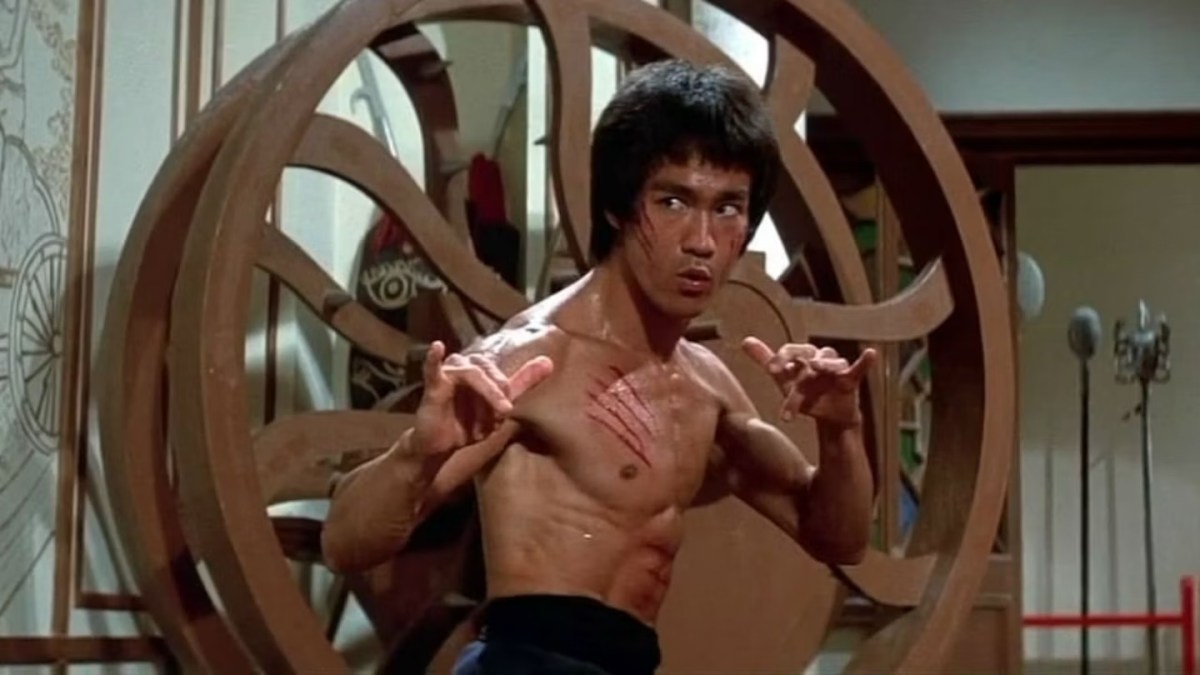
I remember black velvet paintings in the 1970s. Two of the biggest subjects of those paintings were Elvis Presley and Bruce Lee and at one time I had a Bruce Lee painting. Lee was one of my non-musical and non-baseball childhood heroes. This guy was the MAN. Bruce Lee was Rambo, Rocky, and the Terminator rolled into one…but with one difference…he was real. He also had a coolness about him.
After watching his movies when I was young I also purchased some nunchucks when I was a teenager and konked my noggin enough times to realize I was no Bruce Lee. Lee was the first actor to bridge East and West. He understood how to speak to both audiences no one else ever had. Enter the Dragon was the first film co-produced in Hong Kong and Hollywood. Bruce greatly influenced the action movie genre from the 70s to now.
Bruce would run into nut cases at times. Some person idiot would call him out and want to challenge him to a fight while he would be walking down the street and Bruce would have to defend himself while teaching the person a lesson. Imagine being the dolt who saw Bruce Lee and thought it would be a good idea to fight him. A boxer who sparred with him said “Body of a lightweight with a hit stronger than a heavyweight.”
Bob Wall who appeared in some of Bruce Lee’s movies said this.
One day, while filming Enter the Dragon, an extra taunted Bruce Lee and challenged him to fight. The extra told Bruce he was just an actor, not a martial arts expert… The whole thing went won like this. This kid was good. He was no punk. He was strong and fast, and he was really trying to punch Bruce’s brains in. But Bruce just methodically took him apart.
I mean Bruce kept moving so well, this kid couldn’t touch him…Then all of a sudden, Bruce got him and rammed his ass into the wall and swept him, he proceeded to drop his knee into his opponent’s chest, locked his arm out straight, and nailed him in the face repeatedly.
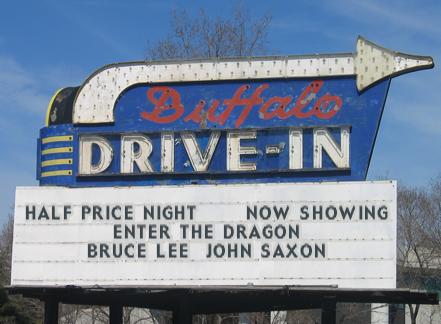
This 1973 movie was Bruce Lee’s final completed film before his death. The movie contributed to martial arts’s global popularity and helped make Bruce Lee’s legacy. I also want to include John Saxon in this. I’ve always been a fan of Saxon in whatever movie he was in. He plays a character named Roper in this flick. Saxon was also a student of Bruce Lee.
The movie’s plot is about a British intelligence agent named Braithwaite to participate in a martial arts tournament organized by the mysterious and reclusive crime lord named Han. Han is suspected of being involved in illegal activities such as prostitution, and human and drug trafficking, and the tournament is a cover for these operations. Lee’s mission is to gather evidence against Han and bring down his criminal empire.
It’s a good story movie with plenty of action scenes. I’ve seen some martial arts movies that dump the story and just go for action. This one is not like that…quality writing and acting throughout the film. It influenced many of the action films that came later. The film keeps the action, drama, and some comedy flowing. It’s worth it to see Bruce Lee with his almost balletic moves.
While filming Bruce in fight scenes Bruce had to slow down his movements so the camera would catch it. His training methods were legendary and some say he was the fastest human they had ever seen.
Before this, Bruce had problems finding acting jobs after the TV series The Green Hornet. He became a private instructor to the stars such as Steve McQueen, John Saxon, and more. He moved to Hong Kong in 1971 and made three Asian movies, Fists of Fury, The Chinese Connection, and Return the Dragon.
The next movie was a joint production between Hong Kong and US production companies. The movie was Enter the Dragon and it was Bruce’s breakthrough movie. Unfortunately, Bruce Lee died six days before the film’s Hong Kong release.
Quotes:
Lee: Teacher?
Shaolin Abbott: I see your talents have gone beyond the mere physical level. Your skills are now at the point of spiritual insight. I have several questions. What is the highest technique you hope to achieve ?
Lee: To have no technique.
Shaolin Abbott: Very good. What are your thoughts when facing an opponent?
Lee: There is no opponent.
Shaolin Abbott: And why is that ?
Lee: Because the word “I” does not exist.
Shaolin Abbott: So, continue…
Lee: A good fight should be like a small play, but played seriously. A good martial artist does not become tense, but ready. Not thinking, yet not dreaming. Ready for whatever may come. When the opponent expands, I contract. When he contracts, I expand. And when there is an opportunity, I do not hit. It hits all by itself.
Kareem Abdul-Jabbar: Bruce created a jambalaya of martial arts, adding and discarding moves that were less effective. No wasted movements I took it to heart, I dedicated myself to preparation by maintaining complete focus during basketball practice and my training with Bruce. As a result, I became stronger, faster and a much more intense player. Bruce was an innovator and caused martial arts to move forward. … The skyhook is the embodiment of an efficient shot that requires minimal movement but sudden speed.
I’ve been going to Jeff’s site for years at https://eclecticmusiclover.com. He features newer music on his blog from a large range of bands. He does a lot of great work there… often getting inside information and interviews with the bands themselves. Go check Jeff out…he is a fine writer.
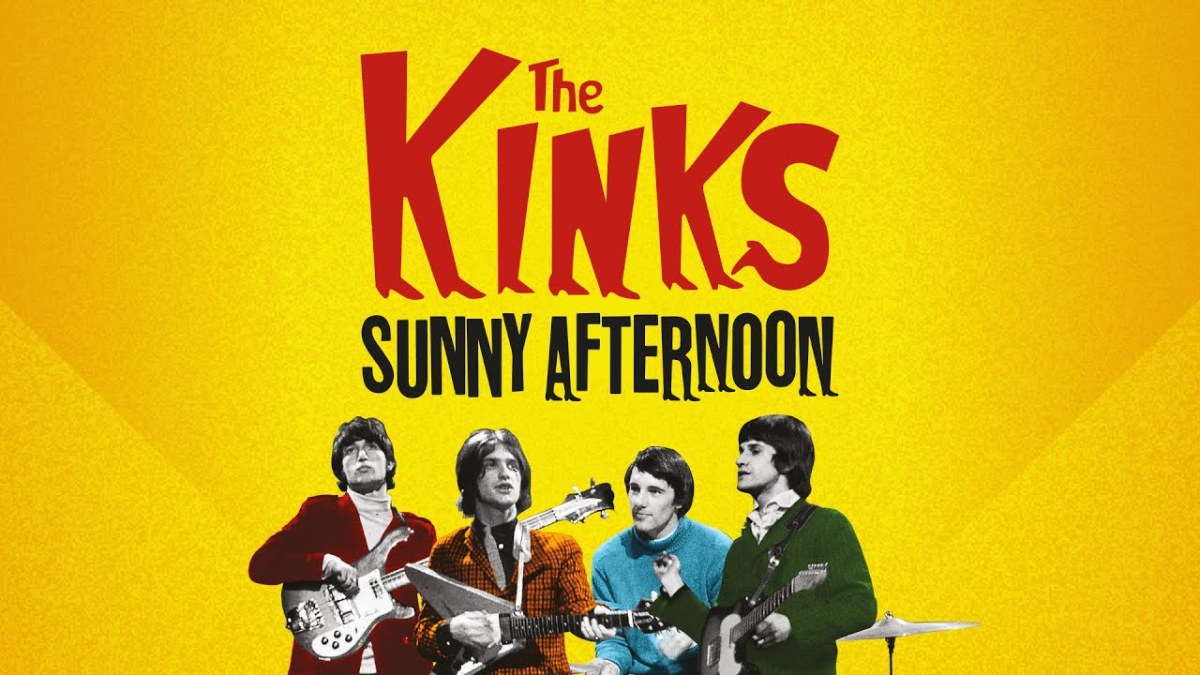
I’m honored to be included in Max’s series on The Kinks, and my pick is their 1966 single “Sunny Afternoon”, which ranks among my top ten favorites of their songs. I was 11 when the song came out and I remember liking it a lot, not only because of its catchy, upbeat melody but also for the lines “Save me, save me, save me from this squeeze. I gotta big fat mama trying to break me” which, being an 11-year-old, I found pretty funny. Though I didn’t fully comprehend the deeper meaning of the lyrics at the time, my guess was that the song was generally about a guy’s discontent over his current life situation.
Written by Kinks frontman Ray Davies while he was at home suffering from a bad cold, “Sunny Afternoon” was inspired by the high levels of progressive tax imposed by the British Labour government of Harold Wilson (a subject also covered by the Beatles in their song “Taxman”), as well as a host of difficult issues he was facing at the time. Despite the Kinks’ immense success, group tensions, lawsuits, an unrealistic workload and unsupportive management was making them miserable. Davies was also dealing with new fatherhood, and had even left the band for a while.
In writing the song, Davis composed the melody first, then created an alter ego to express his feelings. He later recalled: “The only way I could interpret how I felt was through a dusty, fallen aristocrat who had come from old money as opposed to the wealth I had created for myself.” In order to prevent the listener from sympathizing with the song’s protagonist, a spoiled aristocrat bemoaning the loss of his vast unearned wealth, Davies said, “I turned him into a scoundrel who fought with his girlfriend after a night of drunkenness and cruelty.” (Songfacts)
Regarding those lyrics I loved as a kid, Davies explained in a 2016 interview with Q magazine: “My mother was quite large. But that also alludes to the government, the British Empire, trying to break people.”
Davies was still suffering from his cold on the day he recorded the song on May 13, 1966, and now that I know this, his nasal congestion is apparent in his vocals, which nevertheless still sound great to me. He recalled to Q magazine: “I did it in one take and when I heard it back I said, ‘No, let me do it properly,’ but the session was out of time. So that was the vocal. I heard it again the other day. I was 22 but I sound like someone about 40 who’s been through the mill. I really hang on some of the notes. A joyous song, though, even if it’s suppressed joy. I had real fun writing that.” Backing vocals were sung by Dave Davies, Kinks bassist Pete Quaife, and Ray Davies’ then wife Rasa.
With its strong music hall vibe (a type of British theatrical entertainment similar to American vaudeville that was popular from the early Victorian era through World War I, characterized by a mix of popular songs, comedy and specialty acts), “Sunny Afternoon” was a continuation of the stylistic departure from the band’s earlier hard-driving, power chord songs like “You Really Got Me” and “All Day and All of the Night” that began with 1965’s “A Well Respected Man”. Besides Davies’ wonderful vocals, I love Pete Quaife’s jaunty bass riff, session musician Nicky Hopkins’ spirited piano, and the charming little musical touches like the harmonica, tambourine and lively percussion heard throughout the track.
Released as a single on June 3, 1966, “Sunny Afternoon” went to #1 on the UK Singles Chart that July, where it spent three weeks. The song also reached #1 in Ireland, Canada, the Netherlands and Norway, and peaked at #14 on the Billboard Hot 100 chart in the U.S. It was later included on their fourth album Face to Face, released in October 1966, as well as becoming the title track for their 1967 compilation album.
The promotional video produced for the single featured the band performing in a cold, snowy environment, in sharp contrast to the lyrics about enjoying a sunny afternoon.
Christian and I share a lot of the same musical tastes. It’s odd because neither one of us grew up with The Beatles in real-time or that great 60s generation. We both grew up in the 80s but share a lot of the same likes. He has a very cool informative site that is a must if you are a music fan. He goes over older music and newer music much more than I do. Go see him at https://christiansmusicmusings.wordpress.com/
A Kinks Song I Dig: Living on a Thin Line
When Max, who writes the great PowerPop blog, came knocking to see whether I’d like to participate in a song series dedicated to The Kinks I replied, ‘sure!’ After all, next to The Beatles, The Rolling Stones and The Who, they are my favorite ‘60s band.
I also knew right away what my pick would be, which may seem a bit strange. After all, the British group has many great songs. As an ‘80s song, it’s also not the most obvious choice, especially considering I tend to favor the band’s ‘60s output over what they released in subsequent decades: Living on a Thin Line.
One distinct feature of Living on a Thin Line is that it was written by Kinks lead guitarist and backing vocalist Dave Davies instead of his older brother Ray Davies who penned most of the group’s songs. The track first appeared in November 1984 on the Kinks’ 21st studio album Word of Mouth. Two months later, it was also released separately as a 12-inch promotional radio single in the U.S., backed by Ray Davies track Sold Me Out.
Living on a Thin Line, one of two songs Dave wrote for the album, was a reflection on the Kinks’ long and difficult career, as well as his disdain for politicians, he noted in his 1997 biography Kink. Another influence was what he viewed as the deterioration of English identity in the 20th century and a sense of nostalgia for the old days.
In a July 2022 interview with UK paper The Independent, conducted in the wake of Dave’s memoir that’s also titled Living On a Thin Line, he gave a more narrow explanation of the song. “Living on a Thin Line is about us,” he said, meaning The Kinks. For context, the story notes at the time he wrote it, Dave had started to worry The Kinks had become Ray’s backing band and, quoting the article, poured his feelings about how their relationship had become an uneasy tightrope into lyrics ostensibly about the decline of England.
Here’s a live version of the song, which apparently was captured in 1984 during the Word of Mouth Tour in Frankfurt, Germany. Setlist.fmdocuments a concert The Kinks played at the city’s Festhalle on November 23, 1984. Damn, I wish I would have been there!
Living on a Thin Line has received praise from critics as one of the best songs written by Dave Davies who also penned some other Kinks songs, most notably the great Death of a Clown. “In ‘Living on a Thin Line’ – a dark variation on Ray’s own death-of-England’s-glory songs – brooding, goose-stepping chords and moping Pink Floyd synths underscore the desperate effectiveness of Dave’s nervous croon,” opined Rolling Stone’s David Fricke. Even Robert Christgau had something nice to say about the song, calling it the second-best on the Word of Mouth album after Come Dancing.
Living on a Thin Line also gained some exposure on TV. It was featured three times in a 2001 episode of The Sopranos titled University. According to Wikipedia, producer Terence Winter said it was the series’ most asked-about song. Living on the Thin Line was also used during the credits in the finale of HBO series Vice Principals.
Sources: Wikipedia; The Independent; Setlist.fm; YouTube
Dave grew up in Canada, now resides in Texas, and has been passionate about music for as long as he can remember. Unfortunately, a brief foray into buying keyboards during his high school years didn’t equate to making music people were passionate about doing anything with but avoiding! He writes a daily music blog, A Sound Day, looking at memorable music events from album releases to artist birthdays to important concerts and more. You can find Dave at https://soundday.wordpress.com.
Thanks Max, for inviting me to be a part of this “forum.” I look forward to seeing what other music fans come up with, what their reactions are to The Kinks and which songs from the band’s 25-or-so year run they choose to highlight.
It would be easier and more obvious to do the Beatles or Rolling Stones instead, but The Kinks are perhaps a more interesting choice since they’ve always been sort of on the periphery of major headline stardom and to many are an afterthought when discussing the ’60s and the British Invasion. I don’t put them on an even footing with the other two bands but the Kinks certainly deserve a bit more respect. A good chunk of their catalog is unknown to most, myself included.
My first thought when asked to write about a song of theirs was “Come Dancing”, their superb 1983 comeback hit, but that title had already been claimed. Which was actually good because it made me think a bit more and re-examine some more of their songs. Still, I knew I wanted to do something off State of Confusion, the album that put them back on hit radio after a fairly long absence, in North America at least. It was indeed the first album of theirs I bought and to date, still the only studio album – not a greatest hits sort of compilation – that I’ve had.
Though the Kinks showed up on the scene at approximately the same time as the Beatles and the Stones, they never quite matched their success and weren’t adopted nearly as much by “oldies” or “Classic Rock” radio stations. So as a kid growing up in the ’70s, I was aware of and quite liked some of their big hits – the quirky, scandalous for the times “Lola”, the rock staples like “All Day and All of The Night” and the nicely pop-py “Victoria” but they were never at the forefront of my musical thoughts.
I noticed and liked their hard-rocking “Destroyer” in 1981; think I even bought the 45. But I really only began to appreciate their real talent with State of Confusion. I heard enough of it on radio to go out and buy it, and when I did, I found myself liking almost all the tracks and playing it end to end quite often. I really became aware of what a great lyricist Ray Davies was – how he could paint such aural pictures, and match opposing feelings like joy and sorrow, optimism and realism so well in a song. Thus, how he captured the nuances of life!
Also clear to me was that the band, like most good ones, was varied. They put together both great fist-pumping rockers and beautifully melodic pop tunes. This, ironically, annoyed their label boss Clive Davis. For some reason he thought this would cause, well a “State of Confusion” among fans and limit their appeal. Instead, I think the opposite was true. However, he wanted to market them exclusively as a hard rock act and didn’t like songs like “Come Dancing” or “Don’t Forget to Dance” since they were hardly companion pieces to Ozzy Osbourne or AC/DC for radio.
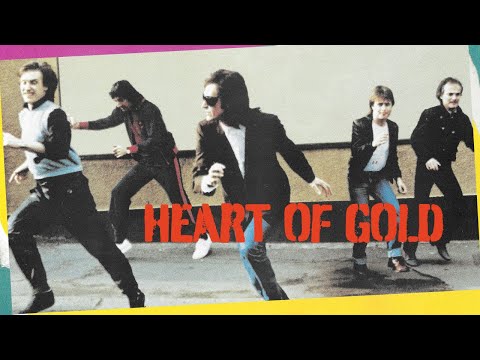
Many of their best tunes are rock; many are “pop”. But “Heart of Gold” falls somewhere in between, rather best described as “power pop” – so where better than the Power Pop Blog for it to show up!
The song tells of a young woman who is embittered and seems to have a tough demeanor, but he realizes has a “heart of gold” underneath that “tough exterior”. In the song she was “the apple of your father’s eye” until a younger sister came along and she found “all the affection suddenly gone.” Random, fictitious thoughts from Ray… or about someone he knew? Many think the latter.
Ray had been in a serious relationship with Chrissie Hynde for a couple of years or more at the time the song appeared. In fact, they’d just had a baby together, Natalie Hynde. Rather mirrored in the lyrics. However, all wasn’t rosy for the pair; soon after they split up and she married Jim Kerr from Simple Minds, making the song all the more poignant and an admirable expression if it was indeed about his soon-to-be ex, who certainly showed a tough exterior in public.
Musically, I love the upbeat song and especially the jangly playing of Ray’s brother Dave, the band’s lead guitarist. Despite being contentious as anything, the two brothers were always the core and heart of The Kinks. On this one they manage to pull off a very retro-’60s sound yet keep it modern with solid production (which Ray did himself). While mirroring their ’60s heyday, it also showed a keen ear-to-the-ground awareness of the new alternative rock sounds just beginning to show up – R.E.M., The Smiths and yes, The Pretenders. It was lost on me back then, but re-listening to “Heart of Gold”, the first thing that jumped out at me is how much it sounds like a Pretenders song. It is easy in fact to imagine Chrissie singing it instead of Ray. So similar are the stylings I went to the liner notes to see if any of The Pretenders were on the song. They aren’t, but I’m betting they were in Ray’s mind when he was putting the song down on paper. Indeed, Rolling Stone noted the same, saying it “has the jangly, quasi-folk rock sound of the present hit ‘Back on the Chain Gang’” by the Pretenders.
The song wasn’t released as a single, so like many other worthy Kinks songs, it was never widely known. A shame. I’ll give the last word over to Rolling Stone again, who at the time stated “nobody but The Kinks could have made such a record in 1983 and no band deserves more to be at the top.”
I’ve been visiting Cork’s site for years and it’s one of my favorite blogs to visit. I’ve read posts about Eric Clapton, Sasquatch, Frozen Pizza, Iron Maiden, movies, blues songs, and many more. Take a visit to his site at https://mojohorizon.home.blog/ it’s totally worth it.
Made you look! This isn’t an exploration of the erotic — sorry, if you’re disappointed. It’s a comparison of recordings. The song is called “She’s Got Everything”. It’s a pretty generic title, but it’s definitely in the hidden gem category. I came to know The Romantics’ version of this song when I was a college student. (You might be more familiar with “What I Like About You” which precedes it on their self-titled release.) Both songs are in the world of three-chord-or-so garage rock. I used to hear the songs back-to-back at college parties when enough people were feeling loose enough to dance.
If I had a time machine, I’d go back and yell, “It’s a TWIN SPIN!!” in the middle of them. I can honestly say I actually saw people doing “the monkey” to this song in the late 80’s and early 90’s. The song rocks! It’s got a great feel to it. Loud, fast, raucous. What more could you want?
If I’m not mistaken, I had The Romantics album on vinyl and discovered “She’s Got Everything” was actually written and sung by The Kinks’ Ray Davies from the liner notes. It took me awhile to find it or find it in a collection I wanted. It was apparently the B side to “Days.” The original version of “She’s Got Everything” by The Kinks is worth a listen.
I’m biased towards The Romantics version, but I love The Kinks and the songwriting of Ray Davies. Naturally, Ray’s brother Dave Davies plays an aggressive-sounding lead guitar solo on the track. “Pretty ringlets in her hair” is my favorite line from this song. I don’t think I’ve ever heard the word ringlets used in song outside of this example. (I always pictured a ringlet as a ribbon or something, but it’s a style of “princess curls” a la Shirley Temple.)
I recently listened to The Kinks’ tune again and dialed in the little instrumental bit around the 1:30 mark. When I listened to it, I heard the first few seconds of Deep Purple’s “Woman from Tokyo.” Listen to the DP tune around 8 seconds into it.
Deep Purple’s song didn’t come out until 1973. Did they own a copy of the 1968 Kinks release “She’s Got Everything”? I don’t know, but it’s just what I hear. The two songs are in different keys, but both feature the same chord changes of I to V, which is a distinct feature.
I want to welcome my friend Jim to Kinks Weeks. Jim’s site is https://jimadamsauthordotcom.wordpress.com . I hope you can check it out. He has music and other subjects and…when I have a question about The Grateful Dead…Jim is the man I go to. He tackles one of my favorite Kinks songs today. He also has Song Lyric Sunday that is fun to participate in…and I have on a few occasions. Take it away Jim…
Still Have a Way to Go
Ray Davies wrote the Kinks song ‘A Rock ‘n’ Roll Fantasy’ which was released on their 1978 seventeenth studio album Misfits and the single charted #30 in the US. The lyrics to this song are written as a one-way conversation till the very end when he finally gets a response, where a musician (let’s assume, this is Ray Davies) is talking to another member in the band and Ray is trying to convince them not to quit, but the other musician lets him know that he doesn’t want a rock ‘n’ roll lifestyle. Ray wants the guy to hang in there, because this could just be a bump in the road and if they can get through this period, the sky is the limit. Ray relates a story to this band member that is thinking about leaving the group about a guy (most likely, Dan the fan) that he knows who lives on his block that lives for rock and plays records all the time. When this neighbor of his feels the world is closing in, he turns his stereo way up high in order to live the rock ‘n’ roll fantasy on the edge of reality. Davies tells this wavering musician that he has nothing left to prove, because the King is dead, and even if the undecided musician quits the group, that he will still be playing in it, as he feels like he has just begun since there is plenty of life left in him. While Ray was writing this song, he learned that Elvis Presley had died, which influenced the “the King is dead” lyrics. He was in New York at the time, and when he looked out his window late at night, he saw a single light on in one of the buildings. Davies imagined that light being the apartment of an ardent Elvis fan, which became the character Dan the Fan in the song.
The Kinks were going through a rough period around this time, with their guitarist Dave Davies wanting to quit touring, and their keyboard player (piano, organ, synthesizer) for the past 8 years John Gosling and bass player Andy Pyle leaving after only one album, both decided that Misfits would be their last album with the group. For a long time, the Kinks were immersed in concept albums and theatrical rock operas where they stopped making hit songs, till their 1977 previous album Sleepwalker. Davies learned his lesson and although Misfits didn’t have the punch like their earlier songs, it did feature a more rock-oriented style giving the Kinks a commercial rebirth. The Kinks signed with Arista Records in 1977 and Misfits was the second of 6 albums recorded on this label.
‘A Rock ‘n’ Roll Fantasy’ was the Kinks best showing on the charts since their hit with ‘Lola’ eight years previously.
Hello you, hello me Hello people we used to be Isn’t it strange, we never changed We’ve been through it all, yet we’re still the same
And I know, it’s a miracle we still go For all we know, we might still have a way to go
Hello me, hello you You say you want out, want to start anew Throw in your hand, break up the band Start a new life, be a new man
But for all we know, we might still have a way to go Before you go, there’s something you ought to know
There’s a guy in my block, he lives for rock He plays records day and night
And when he feels down he puts some rock ‘n’ roll on And it makes him feel alright
And when he feels the world is closing in He turns his stereo way up high
He just spends his life living in a rock ‘n’ roll fantasy He just spends his life living on the edge of reality He just spends his life in a rock ‘n’ roll fantasy
He just spends his life living in a rock ‘n’ roll fantasy He just spends his life living on the edge of reality He just spends his life in a rock ‘n’ roll fantasy
He just spends his life living in a rock ‘n’ roll fantasy Look at me, look at you You say we’ve got nothing left to prove The King is dead, rock is done You might be through, but I’ve just begun
I don’t know, I feel free and I won’t let go Before you go, there’s something you ought to know
Dan is a fan and he lives for our music It’s the only thing that gets him by He’s watched us grow and he’s seen all our shows He’s seen us low and he’s seen us high
Oh, but you and me keep thinking That the world’s just passing us by
Don’t want to spend my life living in a rock ‘n’ roll fantasy Don’t want to spend my life living on the edge of reality Don’t want to waste my life hiding away any more
Don’t want to spend my life living in a rock ‘n’ roll fantasy
Randy has been writing a blog about Cover Songs, music genres, and artists since early 2018. He moved to WordPress in February of 2022 and has found a welcoming community of music enthusiasts. You can read about the origins of Rock and Roll, Blues, R&B, and Country Music. There are Cover Song and Chart statistics as well, all with a focus on the 1950s, 60s, and 70s at MostlyMusicCovers.com. He has also helped me out with blues artists and Canadian Charts in general!
This is the opening track on the 1981 album Give the People What They Want. It was written by Ray Davies of course. It was not one of the three singles they released off the album, but it may be my favorite track. Max told me this was the opening song when he saw them on tour in ’83. I have not made sufficient effort to see them. This does not mean I am not a fan, as we can’t attend many of the performances we would like to.
As you might guess the song is focused on the radio dial and the words are quite prophetic, I think. The lyrics speak of the protagonist’s frustration in not being able to find their favorite DJ. Hence going “Around the Dial” and searching in vain. While there are slightly differing interpretations, I had not read anywhere quoting Ray himself on what he was saying when he wrote it. From what I hear in the song and things I have read, this is my take on the song.
The protagonist’s speculation involves questions. Had the DJ said or done something to upset the ‘Corporation’? The song sets the theme for the album, as the lead track, it ties in nicely with the overall message of Give the People What They Want. In other words, don’t try and silence my favorite DJ just for telling it like it is. Let us listen to what we want to listen to.
I said prophetic because this was the beginning of increased pressure on the local DJ. While this was not the first such song, it is reminiscent of Elvis Costello who warned of corporate control over what we see and hear in his song “Radio, Radio” in 1978. Ray Davies took it to the grassroots level of the listener and the radio DJ. This was before (in the US) the Telecommunications Act in 1996 which saw the buying up/combining of stations and the closure of some 1,000 operations by 1999.
Meanwhile, soon to come we had Internet, Digital, and Satellite Radio. Not to mention Podcasts and Streaming Services. This all changed the way we listen worldwide.
Yet despite all this competition music radio stations have been surprisingly resilient. Stations don’t have to store thousands of records and CDs, everything is digital, and they can access anything. Ray asks us, “We’re going ’round the dial, (Are you listening) Around the dial”? Yes Mr. Davies we are still listening.
Around The Dial
The radios of the world are tuning in tonight
Are you on the dial? Are you tuned in right?
One of our D.J.’s is missing
Are you listening?
Are you listening to me?
Can you hear me?
Can you hear me clearly?
Around the dial
I’ve been around the dial so many times
But you’re not there
Somebody tells me that you’ve been taken off the air
Well, you were my favorite D.J.
Since I can’t remember when
You always played the best records
You never followed any trend
F.M., A.M.. Where are you?
You gotta be out there somewhere on the dial
On the dial
(Are you ready?) We’re going ’round the dial
(Are you listening?) Around the dial
(Are you tuned in?) Around the dial
(Are you searching?) Around the dial
F.M., A.M.. Where are you?
You gotta be out there somewhere on the dial
On the dial
Where did you go Mr. D.J.?
Did they take you off the air?
Was it something that you said to the corporation guys upstairs?
It wasn’t the pressure
You never sounded down
It couldn’t be the ratings
You had the best in town
Somehow I’m gonna find you, track you down
Gonna keep on searching
Around and around and ’round and ’round…
(They’re searching) Around the dial
(They’re listening) Around the dial
(Poor station) The best in town
(Poor D.J.) Who never let us down
While the critics kept on knocking you
You just kept on rocking ’round the dial
Around the dial
I’ve been searching for you on my radio
This time your station really must have gone underground
Somebody said you had a minor nervous breakdown
Was it something that you heard
Or something that you saw
That made you lose your mind
Did you lose control
Did you step out of line?
If you’re there, give us a sign
I can’t believe that you’ve been taken off the air
Think I’ll sell my radio now that you’re not there
You never gave in to fashion
You never followed any trends
All the record bums tried to hack you up
But you were honest to the end
Gonna keep my radio on
‘Til I know just what went wrong
The answer’s out there somewhere on the dial
On the dial
Can you hear me? (around the dial)
Are you listening? (around the dial)
Are you out there? (around the dial)
Can you hear me?
Around the dial
When the idea of the drive-in movie posts came up…this was one of the first ones I thought of. You get a glimpse of the 1970s drug dealing life in New York. I will eventually hit some other eras rather than just the early to mid-seventies.
I saw this movie at the Belcourt Theatre in Nashville in 2018. It was like being in a time warp and back in 1972. This movie has some padding and some wooden acting (but there is a reason) but you can tell where Quentin Tarantino was inspired. I’ve always liked the movie and seeing it on the big screen made it that much better. I do think Tarantino’s Jackie Brown was hugely influenced by this movie.
They filmed Superfly on the cheap with some real criminals in the movie to add authenticity. The character “KC” was a pimp in real life and the famous car from the movie is, in fact, KC’s car. The car is no longer with us…it was seized by the IRS when KC got into trouble.
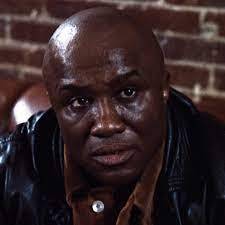
“Fat Freddie”(Charles McGregor) in real life was a reformed criminal. He helped the realism and went on to appear in more blaxploitation films in the 1970s. He also ended up going to schools and counseling children on the dangers of a life in crime.
I had some sympathy for the lead character Youngblood Priest played by Ron O’Neal. He lived well financially but knew he was living on borrowed time. He was a cocaine dealer who knew the walls were closing in. He wanted out but was in a cycle that was almost impossible to break. He needed a great plan to get out of it. It reminds me of mafia members wanting out but are trapped.
The highlight of the movie, of course, is the music. Curtis Mayfield’s soundtrack is great. Curtis does appear in the movie playing in a bar. The movie’s budget was under 500,000 but grossed over 30 million at the box office. The film was shot in only 19 days! This led to some creative choices, like using a car’s headlights for lighting in certain scenes. The film was celebrated but also condemned by civil rights groups who said it glorified drug dealers. I didn’t see that as much. Yeah, Priest had a lot of money but at what cost?
One quote got a laugh from the 2018 audience…and it was because of the mention of an eight-track. You’re gunna give all this up? Eight Track Stereo, color T.V. in every room, and can snort a half a piece of dope everyday?! That’s the American Dream.” I’m glad they didn’t clean the film up too much. It had some grainy elements and it fit the atmosphere perfectly. It’s not a great, great movie but the story is good with a nice twist… and it did make a cultural impact.
Quotes:
Georgia (Priest’s Girlfriend): Look maybe you should get out now, now before something really bad happens. I could be happy with a plain life, a poor one if only you were.
Youngblood Priest: Look what would I do? With my record I can’t even work civil service or join the damn army. If I quit now, then I took all this chance for nothing and I go back to being nothing. Working some jive job for chump change day after day. Well if that’s all I’m supposed to do then they gonna have to kill me ’cause that ain’t enough.
From IMDB
The plot revolves around Youngblood Priest, an African-American cocaine dealer in New York City who is looking to make one last big score before getting out of the drug business for good. The film is a defining example of the blaxploitation genre and became iconic for its gritty portrayal of the urban drug trade and its anti-hero protagonist.
I thought this was appropriate today since tomorrow will kick off two weeks of Kinks songs. A huge Thank You to Randy from mostlymusiccovers.com for publishing all of these that him and I wrote.
We all know the great album Brothers in Arms from Dire Straits, but sometimes those brothers are “at arms” rather than in them. In part two of the mini-series Max (that’s me!), from PowerPop, talks about the “Rock ‘Em Sock ‘Em” Siblings of Ray and Dave Davies of the legendary band The Kinks.
Ray Davies was born in 1944 and Dave in 1947 in Muswell Hill, North London. One of the granddads of rock’s sibling rivalries starts with the Davies brothers. Ray Davies, as the lead vocalist and principal songwriter of The Kinks, often clashed with his younger brother Dave Davies, who played lead guitar in the band. Their tumultuous relationship was fueled by creative differences, sibling rivalry, and personal conflicts. The two have admitted coming to blows many times right before shows.
Ray Davies is known for being a perfectionist and prickly at the best times. Dave is known as a free spirit who likes to go with the flow. The Kinks were formed in 1963 by the brothers and included Peter Quaife and Mick Avory. Their first success came the following year with worldwide hits such as You Really Got Me, All Day and All of the Night, and Tired of Waiting for You all top 10 hits in the UK and America. The Kinks never got to the level of The Who, Beatles, or Stones. One of the reasons was because they were banned for 4 years from touring in America for using non-union roadies during a tour. Another rumor was bad behavior, but it seems the non-union help rings truer.
They were the youngest in a family with 6 sisters. At age 13 Ray was thrilled by being gifted a guitar by his 31-year-old sister Rene, but she died the same night. Dave, got an underage girl pregnant when they were both 15 and the parents kept the couple apart. Dave remembers fighting Ray and he knocked Ray down once and thought he seriously hurt him. He goes over to check on Ray and Ray pummeled him. Nice.
When Ray got married in 1964, he made Dave the best man, but Dave was smashed and could not function at the wedding. At Dave’s 50th birthday party…Ray came in and smashed the cake and left. In 2013 they got together again and wrote some songs in Ray’s kitchen in harmony. It only lasted a short time. They started an old argument over the song.
‘You Really Got Me”. Dave said that yes, his older brother wrote the riff and the song, but he cut a slit in the amp speaker to make that sound. Ray refused to acknowledge how important that sound was to the success of the song. Underneath it all though they do love each other and protect each other from other people. They are not above fighting with each other though. In 2021 there was a statement by the brothers that they were going to regroup and record again. We can only hope that they make it to the end and finish it.
I first found out about The Jayhawks in 2000 or so with a song called I’m Gonna Make You Love Me and the song Blue.
The Jayhawks formed in Minneapolis–Saint Paul in 1985 and played alternative country rock. They have released 11 studio albums and are worth checking out. The band went on hiatus in the early 2000s but soon reformed and returned in 2003 with a highly regarded album Rainy Day Music and has stayed together ever since.
This song was written by Gary Louris. The song did reasonably well when released. I would hear it on our alternative channel in Nashville. They are one of those bands that never could get over the hump to a mass audience. I always think of them, Wilco, and Big Star coming from some of the same musical territory. The Jayhawks have had a few successful albums but never became household names.
The album peaked at #75 on the Billboard Album Charts and #51 in the UK in 2016. The single peaked at #26 on the Alternative Album Charts.
Since our Kinks Weeks are coming up I thought I would mention this. They have a Kinks tie… They backed Ray Davies on his albums Americana and Our Country – Americana Act II. T
Gary Louris: Quiet Corners & Empty Spaces” started with the idea that I wanted to write a big, soaring, old-school pop song. With lyrics, I either tend to do a stream-of-consciousness or a cut-and-paste kind of thing. This one was something out of a newspaper that I cut out. I just have piles of stuff.
For me, it’s a spark to kind of throw some things together, along with other methods, like mumbling. A lot of times, when I’m writing, I sing and play and whatever comes out comes out, and these words are inferred by sounds and half-words. Then I come around and get the meaning out of that, and it’s usually coming from some place inside that is kind of revelatory in a way. It’s almost like therapy.
So, from there, I wrote a song about running away from certain things. Again, in a Proust kind of way, finding a spot where you can be introspective, away from the noise, and get your head together.
Quiet Corners & Empty Spaces
Aside the wandering eye has opened A stare all the way bare and broken The start of a brand new adventure
Hey now Catch me quick before I walk away Tell me if there’s something I should say I’ll find the quiet corners and the empty spaces
Not far a blue guitar is playing It drew me like it knew And it’s saying
Hey now Catch me quick before I walk away Tell me if there’s something I should say I’ll find the quiet corners and the empty spaces
We drown in ups and downs Neglecting The beauty of my sun is setting
In the end there’s no way in redemption Hey now Catch me quick before I walk away Tell me if there’s something I should say I’ll find the quiet corners and the empty spaces Hey now Catch me quick before I walk away Tell me if there’s something I should say
I always thought Blaze was a Texan but I was wrong…but technically that is where he made his mark in music. Blaze Foley (Michael David Fuller) was born in Malvern, Arkansas, but grew to be an important figure in the Texas outlaw country music scene. I started to listen to Foley’s songs and the strength of the lyrics has won me over. This was an interesting man. A documentary was made about him called “Duct Tape Messiah: Blaze Foley.” If you have time at some point, watch it. This documentary is based on a hell of a story.
Foley grew up in a musical family, moving frequently throughout the South. His parents were part of a gospel band, and he was exposed to music from a young age. The family’s traveling lifestyle and deep-rooted religious beliefs influenced Foley’s music.
Foley became a fixture in the Austin music scene in the 1970s and 1980s, where he befriended and collaborated with other songwriters, including Townes Van Zandt (he wrote a song about Foley after his death called Blaze’s Blues). His music was deeply personal, often reflecting his struggles with homelessness, addiction, and relationships. Despite his talent, Foley struggled to gain commercial success during his lifetime, partly due to his unpredictable behavior and refusal to compromise his artistic integrity. I do have a Townes Van Zandt story at the bottom.
This song gained a wider audience after being covered by several artists, most notably John Prine, who included it on his 2005 album Fair & Square. Prine’s version introduced the song to a broader audience and solidified its place in the Americana and folk music canon.
On February 1, 1989, Foley was tragically shot and killed at the age of 39 in Austin, Texas. He was trying to defend a friend, Concho January, from his violent son. Foley accused him of stealing January’s checks. Foley’s death was a big loss to the music community, and his life story has since been the subject of many articles, documentaries, and films.
He didnt’ gain popularity until after his death. He only released one 1984 studio album before his death and those tapes were confiscated by the DEA when the executive producer was caught in a drug bust. He also recorded one in 1980 but the tapes were stolen out of his car. He did get some singles released during the 80s but a lot of live and some studio material came out after he died. Some tribute albums have come out as well with other artists covering his songs. Artists such as Townes Van Zandt, Calvin Russell, Merle Haggard, Willie Nelson, Lucinda Williams, Timbuk 3 and many more.
Now the Townes Van Zandt Blaze Foley story. Blaze was known as The Duct Tape Messiah for the strappings that held his boots together. His life was disorderly, to say the least. He had said that when he died he wanted Townes to have his guitar. When Foley died, Van Zandt and his friends went for the guitar but found out that the late singer/songwriter had pawned the guitar among other things. Van Zandt told the Pawn Shop clerk that the guitar had been left for him and he was there to collect it. However, the clerk insisted that without a pawn stub, that transaction was impossible. So, along with the rest of Foley’s friends, they searched every possession (which wasn’t much) that the late musician had left behind. The pawn slip was nowhere to be found.
They figured out it must be in Foley’s front pocket in the suit he was buried in. Townes then borrowed a backhoe and dug his friend up. He went through his pockets and there it was…the pawn ticket. Van Zandt went straight to the pawn shop with the freshly dug-up stub and collected Foley’s guitar that he kept in his possession until he, too, passed away.
Now whether this was true or not I don’t know… but that is what the documentary is all about that I mentioned in the first paragraph. Here is a picture of Townes Van Zandt with Foley’s guitar.
Clay Pigeons
I’m goin’ down to the Greyhound station Gonna get a ticket to ride Gonna find that lady with two or three kids And sit down by her side
Ride ’til the sun comes up and down around me ‘Bout two or three times Smokin’ cigarettes in the last seat Tryin’ to hide my sorrow from the people I meet And get along with it all
Go down where the people say y’all Sing a song with a friend Change the shape that I’m in And get back in the game and start playin’ again
I’d like to stay, but I might have to go To start over again Might go back down to Texas Might go to somewhere that I’ve never been
And get up in the mornin’ and go out at night And I won’t have to go home Get used to bein’ alone Change the words to this song And start singin’ again
I’m tired of runnin’ ’round Lookin’ for answers to questions that I already know I could build me a castle of memories Just to have somewhere to go
Count the days and the nights that it takes To get back in the saddle again Feed the pigeons some clay, turn the night into day And start talkin’ again when I know what to say
I’m goin’ down to the Greyhound station Gonna get a ticket to ride Gonna find that lady with two or three kids And sit down by her side
Ride ’til the sun comes up and down around me ‘Bout two or three times Smokin’ cigarettes in the last seat Try to hide my sorrow from the people I meet And get along with it all
Go down where the people say y’all Feed the pigeons some clay Turn the night into day And start talkin’ again when I know what to say
Thanks It’s called “Clay Pigeons” Anywhere I roam, there’s ask That’s right Road-hog did We have a lot of requests, so we’re gonna do it anyway Ain’t never had a lesson in his life, alright
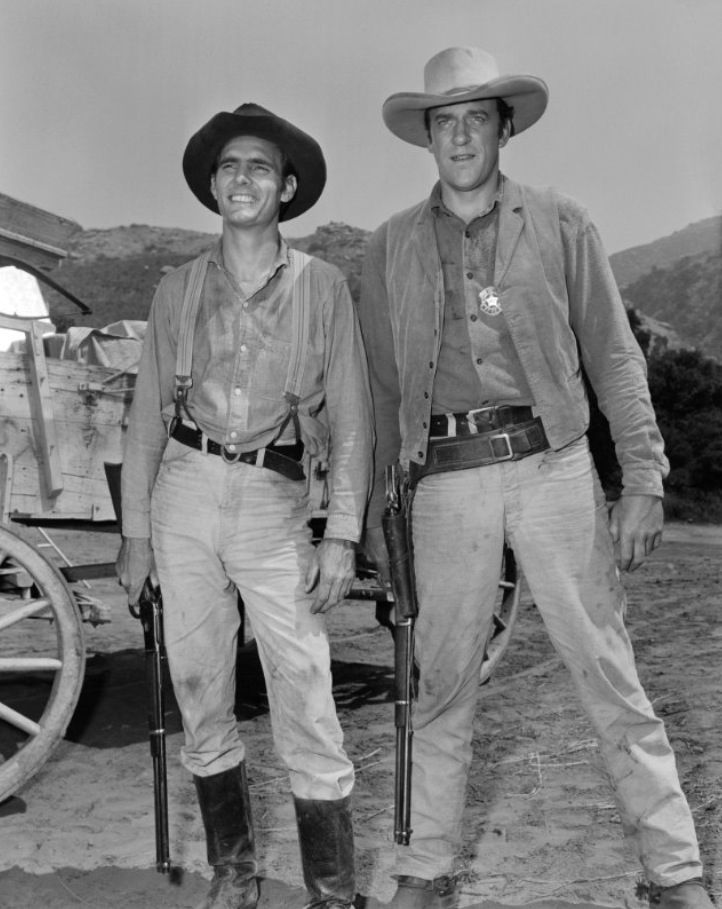
I’m reading a book on James Arness…or Matt Dillion from Gunsmoke. When you watch these beginning shows you see Arness turn into a fine actor. He was in many movies before Gunsmoke but he looked a little uncomfortable in the first season. By the second season, you could see a huge change. Arness said he wasn’t comfortable and he got an acting teacher to help refine his acting for television.
I liked the show because I grew up watching the hour-long color episodes (seasons 12-20) of Gunsmoke in reruns. The first 6 seasons were black and white and 30 minutes long. Seasons 7-11 were one-hour black and white shows. As I said seasons 12-20 were one-hour color shows.
Now I’m watching the first 6 seasons for about the 6th time… There is no Festus or Newly…we have Chester (Dennis Weaver), who is a refreshing character. They never played these episodes on television when I was younger. There still is Doc Adams (Milburn Stone)and the astonishing Kitty Russell (Amanda Blake).
These episodes dealt with murder, rape, human trafficking, and plenty of Matt Dillon (James Arness) decking bad guys with his fist or the butt of his gun. They are 30 minutes long which is great. They got to the point quickly. Some of the stories were grim but matched the look of the series. It was an adult show at this time.
I was surprised at how rough, violent, and authentic they were and that is not knocking the later episodes but there is a huge difference. The violence was toned down as the series continued. The later color episodes centered more around the guest stars and the old black and white ones centered more on the local residents of Dodge City. That was by design because of the hour format…and some shows had some filler in them in that format.
Have Gun Will Travel was also on CBS along with Gunsmoke. You will see some of the same character actors and sets. Some Have Gun Will Travel scenes were filmed in a redecorated Long Branch… Too bad there wasn’t a crossover at least once.
Chester…I’ve always liked Dennis Weaver as an actor…in McCloud, Duel, and anything he was in… He brings his character Chester alive as a real person. Chester had a limp on the show and Dennis Weaver said he would take yoga classes so he could do things like putting on a boot to look believable with a bad leg…he also put a pebble in his boot on his right foot so he would not forget which leg was lame. He said it took him months after Gunsmoke not to use the limp on camera because he was so used to it.
Chester could be lazy but he was invaluable and loyal to a fault to Matt Dillon. Dennis Weaver left the show after the 9th season with no explanation on what happened to Chester as was the way back then with TV shows. He was mentioned one time in the 20th season. Burt Reynolds joined the show for two years in seasons 8 and 9. He said it was his best experience in entertainment. The cast was extremely close.
If you are a fan and have seen only the later episodes…check these out. It puts a new light on the show. Unlike other Westerns, Native Americans were not usually the bad guys in Gunsmoke. Matt Dillion was a good friend to many of them.
Here is a badly recorded clip of Matt Dillion, Chester, and Ken Curtis who would later take Chester’s place in the show and play Festus.







 “Fat Freddie”(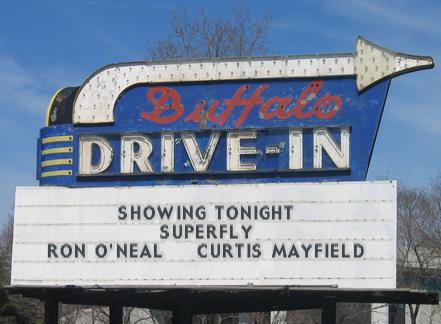





 PowerPop... An Eclectic Collection of Pop Culture