I haven’t done one of these posts in a long time. I have the others linked at the bottom, like the Mustang from Bullitt, the Partridge Family Bus, the Time Machine from The Time Machine 1960 movie, etc. I love finding out what happened to different props.
I love movie and TV show props, especially the shows I grew up with. If I had the money, I would have a warehouse full of props. This is one of the first props I remember seeing. I grew up on Mary Tyler Moore. She was part of the CBS Saturday night lineup that was considered one of the best nights for television in history.
I loved Mary’s first apartment, where she lived downstairs from Rhoda Morgenstern. I always noticed a letter M hanging on the wall. Later in the show, when Mary moved to another apartment, she was shown hanging it up in her new place. It was one of the most recognizable props on television.
Mary Tyler Moore took the prop home and had it for years. She said she accidentally broke it years ago, but she repaired it and still had it when she passed in 2017. It was just sold this year, as were a lot of her personal items. It was sold to a private owner for $35,200.
I didn’t start really finding out about Gabriel until reading my fellow bloggers. I was burnt out on many of his ’80s hits because MTV loved the man and played them non-stop. Now that I’m finding his seventies catalog, I’m really liking what I’ve been hearing. It’s also strange for me to be listening to Genesis without Phil Collins singing a 3 minute hit.
Peter Gabriel never made it easy for himself or his listeners. While most artists who left huge bands tried to either replicate the formula or tear it down brick by brick, Gabriel decided he was going to build a whole new musical landscape for himself. His listeners would have to catch up with him. Other artists have done some of this, but I’m not sure to the extent Gabriel did. He named his first four albums Peter Gabriel. This was off his second album, Peter Gabriel, known as Gabriel 2: Scratch.
What I like about this song is that it’s not polished to death. It sounds natural and not all studio-created. That small upward musical run he does in this song keeps the energy up and is a great hook. He is known for his theatrical prog rockers, but during this period, he was trying something a little different, and it worked. A big part of the feel of this album came from producer Robert Fripp, the man behind King Crimson. Fripp wasn’t a conventional producer like George Martin. He encouraged Gabriel to take off the polish and to go toward the texture and atmosphere.
Fripp kept the sessions lean and also tense, recording in the Netherlands at Relight Studios. The musicians, Tony Levin on bass, Jerry Marotta on drums, and Larry Fast on synths, were said to be more collaborators than sidemen. They weren’t there to sweeten the songs; they were there to challenge them, to throw odd rhythms into the mix. Gabriel wanted friction, and he got it. The album didn’t chart as high as his later work, but it set the blueprint for the “trying new things” approach that defined his career.
The album peaked at #10 in the UK, #46 in Canada, #45 on the Billboard Album Charts, and #24 in New Zealand in 1978.
D.I.Y
D.I.Y D.I.Y D.I.Y D.I.Y
Don’t tell me what I will do, ’cause I won’t Don’t tell me to believe in you, ’cause I don’t Be on your guard, better hostile and hard, don’t risk affection Like flesh to the bone in the no-go zone You’re still looking for the resurrection Come up to me with your “What did you say?” And I’ll tell you, straight in the eye, hey!
D.I.Y D.I.Y D.I.Y D.I.Y D.I.Y. (Do it yourself!) D.I.Y D.I.Y D.I.Y
Everyone wants to be what he not, what he not Nobody happy with what he got, what he got You function like a dummy with a new ventriloquist Can you say nothing yourself? Hanging like a thriller on the final twist Is it true you’re getting stuck on the shelf? Come up to me with your “What did you say?” And I’ll tell you, straight in the eye, hey
D.I.Y Do it yourself D.I.Y Do it yourself D.I.Y Do it yourself D.I.Y Do it yourself
When things get so big, I don’t trust them at all You want some control, you’ve got to keep it small, hey
I was given the single Elenor as a kid, and since then, I’ve always had a soft spot for the Turtles. They never took themselves seriously and always seemed to have fun. Howard Kaylan and Mark Volman (later Flo and Eddie) could harmonize so well together, and those harmonies kept this song a step above garage rock. They were not going to be mistaken as the next pin-up stars in 16 magazine.
It’s almost comically simple, but that was the cool thing about mid-1960s pop music. You didn’t need a great plan; you just needed two and a half minutes adn a catchy tune. And with that soaring chorus, the Turtles sold it well. It’s a sound that would carry them through the next few years, although they would grow into more sophisticated pop music.
The band was formed by Mark Volman and Howard Kaylan in the early sixties. They were saxophone players who did whatever was trendy to make a living as musicians. They were also in the choir together in high school. They started off as an instrumental band, but with the Beatles and the British invasion, they soon switched to a rock and roll band with Howard Kaylan as lead singer. They hit with a Bob Dylan song called It Ain’t Me Babe released in 1965.
They were just getting started here, but they would end up with quite a career. I’m happy to say that I did see them, although in the ’80s with Flo and Eddie.
This song was released in 1966 on the You Baby album. The song peaked at #20 on the Billboard 100 and #11 in Canada. The song was written by P.F. Sloan and Steve Barri. They would also write songs for the Grass Roots and the Association.
Every time I post on The Turtles…I recommend watching their documentary… one of the most entertaining docs I’ve ever seen. If you have watched it…what do you think? It’s one of the funniest documentaries I’ve ever seen.
You Baby
From the time I fall asleep ‘Til the morning comes I dream about You, baby And I feel all right ‘Cause I know tonight I’ll be with You, baby And who makes me feel like smiling When the weary day is through?
You baby, no-one but you, baby, nobody but you You baby, no-one but you, baby, nobody but you
They say candy is sweet But it just can’t compete with You, baby You’ve got everything I need And nobody can please like You do, baby (nobody but you) And who believes that my wildest dreams And my craziest schemes will come true?
You baby, no-one but you, baby, nobody but you You baby, no-one but you, baby, nobody but you
A little ray of sunshine A little bit of soul Add just a touch of magic You got the greatest thing since rock ‘n’ roll
You baby, no-one but you, baby, nobody but you You baby, no-one but you, baby, nobody but you You baby, no-one but you, baby, nobody but you
To my ears, this was always a hymn that doubled as a pop song. As smooth as you can get. After posting the Jerry Butler song this week, I wanted to hear some Impressions. It’s been covered by everyone from Jeff Beck and Rod Stewart to Bob Dylan, but the original remains untouchable.
The producer Johnny Pate understood that this song didn’t need horns blaring or big arrangements. The Impressions’ harmonies, Fred Cash and Sam Gooden’s voices around Curtis’s lead, were the orchestra, and it works perfectly. The roots of the song go back to Curtis’s church upbringing on Chicago’s North Side. He grew up playing guitar in gospel groups and listening to the Five Blind Boys of Alabama and the Soul Stirrers, where Sam Cooke had once stood at the mic.
The song was released just after the 1963 March on Washington and the Civil Rights Act of 1964. Dr. Martin Luther King Jr. often spoke of “the train of freedom,” and Mayfield picked up that imagery and carried it into the studio. The track would be used by King himself at some rallies. It was released in 1965 and peaked at #14 on the Billboard 100 and #3 on the Billboard R&B Charts.
Curtis Mayfield: “While I had written a few Gospel songs, what would be looked upon as Gospel, I called them more inspirational, such things as ‘People Get Ready, this is a perfect example of what I believe has laid in my subconscious as to the preaching of my grandmother, and most ministers when they reflect from the Bible.”
Curtis Mayfield:“It doesn’t matter what color or faith you have, I’m pleased the lyrics can be of value to anybody.”
Curtis Mayfield doing a live version.
People Get Ready
People get ready, there’s a train a comin’ You don’t need no baggage, you just get on board All you need is faith, to hear the diesels hummin’ Don’t need no ticket, you just thank the Lord
So people get ready, for the train to Jordan Picking up passengers coast to coast Faith is the key, open the doors and board ’em There’s hope for all, among those loved the most
There ain’t no room for the hopeless sinner Whom would hurt all mankind, just to save his own, believe me now Have pity on those whose chances grow thinner For there is no hiding place, against the kingdom’s throne
So people get ready there’s a train a comin’ You don’t need no baggage, you just get on board All you need is faith, to hear the diesels hummin’ Don’t need no ticket, you just thank the Lord
I like many of the Canadian bands and artists I’ve listened to. I’m not going to mention all the popular ones like The Guess Who, Neil Young, etc, but artists like Sloan, Tragically Hip, Blue Rodeo, 54.40, Art Bergmann, Blue Northern, Blue Shadows, and now Barney Bentall and the Legendary Hearts. Their songs sound earnest and full of hooks that still sound fresh today.
Barney Bentall was born in Toronto, but he made his musical mark in Vancouver. By the early 1980s, he’d already put together the band that would carry his name: the Legendary Hearts. The lineup included longtime friends and collaborators, Colin Nairne, Jack Guppy, Barry Muir, Cam Bowman, and David Reimer. They were a real road band, a grassroots effort, slowly building a reputation as one of the tightest rock bands around
Their name was a nod to Lou Reed’s 1983 album Legendary Hearts. In 1988, after years of touring, the band signed with Epic Records and released their self-titled debut. This single was the first song released from that album. It peaked at #17 on the Canadian Charts in 1988. It was soon followed by “House of Love (Is Haunted)” and “Come Back to Me,” tracks that got serious radio play and earned the band a Juno Award for Most Promising Group of the Year in 1989.
Barney Bentall isn’t a household name here, but up in Canada, he charted quite a few songs. He is one of those artists who never quite hit the MTV rotation, but stayed on the radio in Canada. What I liked about Bentall is that he has a Mellencamp/Petty/Springsteen-grounded sound to him. The track itself feels like a heartland rocker.
Give Barney Bentall a listen; Barney and his band are worth it. I’m including a bonus song…Living in the 90s from 1992.
Something To Live For
Woo Alright
Bobby drives a pickup For the corner store Four bucks an hour And he’s hoping for more
He’s twenty eight years old And he still lives at home Bobby’s got ideas But he ain’t alone
There’s a million Bobby’s across this land Everybody’s got Real big plans
He’s got something to live for Something so real He’s got something to live for That one, big deal
Bobby’s got an uncle He talks a mean streak Makes more in an hour Than Bobby in a week
He tells the boy Don’t waste your time Be useless like your father Nickel and dime
There’s a million Bobby’s across this land Everybody’s got Real big plans
He’s got something to live for Oh, something so real He’s got something to live for That one, big deal
Well Bobby could’a done it If he only tried Could’a been a contender Could’a been a big guy
But he didn’t rob a bank Or write a hit song Got a raise Married Yvonne
Yea Turn it on Turn it up now baby Let’s go
He’s got something to live for Something so real He’s got something to live for That one, big deal
He’s got something to live for That one sweet deal He’s got something to live for Ohh oh one sweet deal He’s got something to live for That one big deal He’s got something to live for Oh oh
Sometimes…I need some arena rock; this is one of those times. If you were a long-haired kid in 1974, flipping through the FM dial in a Chevelle or Mustang with the windows down, odds are this song was the reason for a speeding ticket. This is a straight-ahead blues-rocker that sounds like it was born on a plane, train, and an automobile. The story of many rockers in the 1970s.
Bad Company cut their self-titled debut album at Headley Grange in November 1973, using Ronnie Lane’s Mobile Studio. If that sounds familiar, it’s because Led Zeppelin recorded many of their early seventies albums in the same manor house. There was something about that place that produced a sound that you just can’t manufacture in a sterile studio. Mick Ralphs wrote this song and brought it over from his days in his former band, Mott the Hoople. It was the perfect fit for Paul Rodger’s voice.
Led Zeppelin’s new record label Swan Song got off to a smashing start. Bad Company was the first album released on the new label, followed by Physical Graffiti a few months later. Bad Company was their most commercially successful signing with the label, which included Dave Edmunds, Maggie Bell, The Pretty Things, Detective, and others. The label folded soon after John Bonham’s passing. Swan Song exists now just for reissues.
The 1974 album was a smash; it peaked at #1 on the Billboard Album Charts, #1 in Canada, #3 in the UK, and #27 in New Zealand. This single peaked at #19 on the Billboard 100 and #30 in Canada.
Movin’ On I get up in the morning and it’s just another day Pack up my belongings, I’ve got to get away Jump into a taxi and the time is gettin’ tight I got to keep on movin’ I got a show tonight
And I’m movin’ on, movin’ on from town to town Movin’ on, baby, never seem to touch the ground
I check in to the ticket desk I have an hour to go Headin’ for the boarding gate I’m feelin’ pretty low Fifteen minutes later I’m sittin’ on my plane Fastening my safety belt I’m takin’ off again
And I’m movin’ on, movin’ on from town to town Moving on, baby, yeah I’m never touching the ground
Movin’ on, movin’ on from town to town Movin’ on, I can’t seem to stop now
Movin’ Movin’ on
I got to move on, move on from town to town I got to move on And I never seem to slow me down
I was talking to a friend of mine named Greg, who lived in Texas for around 10 years. We were talking about Texas music, and I brought up Freddie Fender. I remember he told me that he met him in Nashville around 1987 when he was around 15.
He saw Freddy and said, “Hey Freddy, I love your music.” Fender was not only polite, but he went over to Greg and called him “little one” because he was so small, and he could not believe Greg was a fan, being that young. He said Fender was such a nice person and thanked him for being a fan. That always stuck with me about Fender.
Fender was one of the many country artists I heard growing up. Wasted Days and Wasted Nights was the song by Fender that I remember the most, and I’ve found that he is much deeper than that. If you’ve only ever dipped into Freddy Fender through the big radio hits, this is a good one to chase down.
This song rides a rail of half Tex-Mex and half Nashville. It was written by Huey Meaux and came out in 1962. A couple of weeks ago, while posting about the Sir Douglas Quintet, I heard this song, and I knew I had heard it before, and this is the version I remember. The song has been covered by many artists over the years, including Ripp Tide, Alvin Crow, Jimmie Vaughan, Doug Kershaw, and B.J. Thomas.
This song peaked at #4 on the Billboard Country Charts and #1 in Canada in 1976. The song was on his album Rock ‘n’ Country that peaked at #3 on the Billboard Country Charts.
Freddy had three successful careers, as a pop star in the late 50’s, a country pop star in the 70’s, and a member of the Texas Tornados and Los Super 7 in the 90’s.
The Rains Came
The rain keeps falling Tears keep coming down I can’t find my baby I wonder she left town
Rain rain rain rain I’d like to see my girl again She broke my heart in two And caused me so much pain
Rain rain rain rain My pillow’s soaking wet I can’t find her in the morning She’s not home yet
The rain keeps falling Tears keep coming down I couldn’t find my darling I wonder she left town
Rain rain rain rain My pillow’s soaking wet Where is she in the morning She’s not home yet
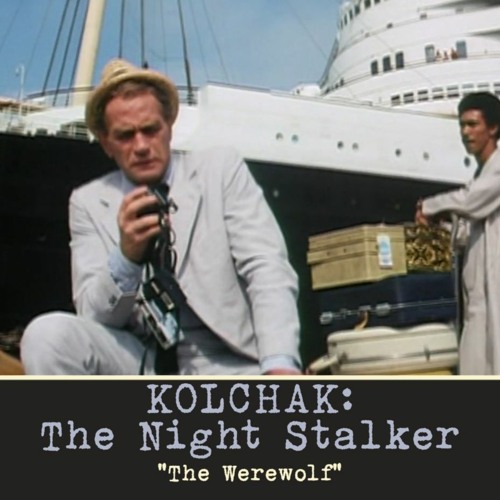
Before we dive into the TV show, we will cover the two movies that lead up to Season 1. You don’t often see an actor embody a character like Darren McGavin; he IS Carl Kolchak.
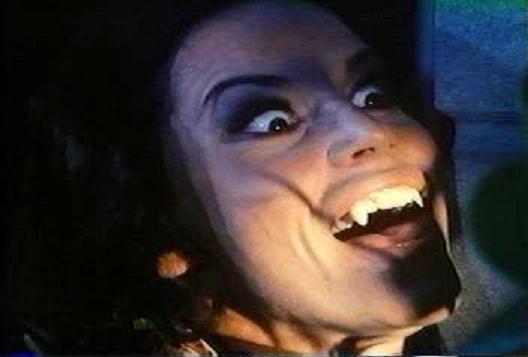
Alright, let’s dim the lights, cue up some eerie harpsichord, and head back to 1972, when ABC aired a made-for-TV movie that changed the whole game for supernatural thrillers on television. I’ve seen this described as a noir-horror movie, and that hits the mark. The movie moves at a good pace. You see action right away, and the story doesn’t stall. Mixed in with the thrills is the humor of Kolchak, and that mixes well in the two movies and the TV series.
People were dropping all over Las Vegas with bite marks and loss of blood. Carl Kolchak was a rumpled shirt reporter who would not give up on the truth. He finds clues, and the police shoo him away. He is a thorn in their side, and his boss, Tony Vincenzo, played by Simon Oakland, suffers daily. Although Kolchak is telling the truth, Vincenzo is very hesitant to OK stories to print about a real vampire.
The thing about The Night Stalker is it hasn’t lost its punch. The pacing is different from modern movies, but with the seedy Vegas strip, the sterile hospital halls, and the dusty police files, it feels real. And because it feels real, when the vampire strikes, it’s genuinely unsettling. It’s not gothic castles and bats flapping in the fog. It’s neon lights and the smell of asphalt in the air. That contrast is what makes the horror work.
Carol Lynley plays Kolchak’s girlfriend, and I remember her from the Poseidon Adventure. Claude Akins and Larry Linville are also featured in this movie. This is not your typical TV movie; its quality was better than many horror movies I’ve seen around that time. Kolchak’s character draws you in. It is as if he walked in from a 1940s noir movie.
When The Night Stalker aired on January 11, 1972, it pulled in a staggering 48 share of the audience, which translates to more than half of all TVs in America being tuned to McGavin chasing a vampire around Vegas. It became the most-watched TV movie up to that point. People weren’t used to seeing something this dark and this scary on their living room screens.
This was for Dave’s Turntable Talk, and he wanted us to pick either an artist, or an album, or even one song that has risen steadily in our estimation through the years. I picked two…because they are similar and both happened at the same time with me.
I’m cheating a bit, but I got permission from the principal. I simply could not pick between the Grateful Dead and the Allman Brothers. I always liked them both, but didn’t really LIKE them until the teens, around the same time. Thanks, Dave, for another intriguing question.
In the 1980s, I had a greatest hits package by both bands, and I thought I was doing fine. One day, I needed to pick a book from Audible, and I happened to pick Gregg Allman’s book The Cross I Bear, which I would put up there with the Keith Richards book Life. I started to get into the book, and then I started to listen to the music, and I was blown away. In that book, he talked about The Grateful Dead, and I soon got Dead’s drummer Bill Kreutzmann’s book Deal about his life, and the same thing happened.
This is how a young Max got into music in the first place: by getting Beatles books and going from there. In those books, the author would mention other artists, and I would have to check them out. Out of that, I got the Who, Kinks, Stones, and the rest.
Both of these bands seem to be related to each other. Two jam bands, one from the West Coast and their southern brother in Macon, Georgia. Both were led by a strong lead guitarist and two drummers. They did have separate styles, but live, you could expect a different concert night to night. Both of them treated their road crew much better than other bands. They considered them just as important as the band itself.
Both bands pulled from American styles: blues, country, folk, and jazz. The Dead leaned into folk, bluegrass, and psychedelic experimentation, while the Allmans drew more heavily from Delta blues and Southern soul. But in both cases, their sound was a gumbo rather than a single style.
As I got into them, what grabbed me about the Grateful Dead were the lyrics that Hunter and Garcia wrote and the beautiful melodies they wrote. With the Allmans, it was that driving music. I always thought they were more intense than the Dead. Their songs were not as deep, but I loved the music. I instantly fell for both bands. I threw away the greatest hits packages and started to explore more of their albums, and I’m better for it.
It’s a shame we didn’t have more Allmans with Duane and more Dead with Pigpen. Those two losses changed the dynamics of both bands. Both of these bands had talent to burn, and the Allmans put that to the test. After losing Duane, they lost their melodic bass player, Berry Oakley, a year after Duane’s passing.
If I had to pick my favorite album by both bands, it would be Eat A Peach by the Allmans and American Beauty by the Grateful Dead, although Wake of the Flood would be a close second. Without them, there’s no Phish, Widespread Panic, or modern jam band scene. Both are considered the patron saints of improvisational rock, each with its own branch on the family tree.
They did share a stage at the Fillmore East in 1970 with Duane and Pigpen. They also played massive shows together at Watkins Glen and at RFK Stadium, both in 1973.
This post is a little longer than usual, but this was a unique artist, to say the least. Many musicians like Jeff Tweedy, Kurt Cobain, Chris Cornell, Tom Waits, Beck, Lana Del Rey, Eddie Vedder, and countless others were huge fans. Eddie Vedder spent some time with Chris Cornell listening to Johnston’s music. Eddie Vedder: “We listened for two hours straight, it turned into four hours, and then into six hours, until it was six in the morning, laughing and crying and then smiling so hard that tears were squeezed out of our eyes, and then looking at each other and going, I’ll never forget, we said, ‘He is better than both of us.’”
My friend Ron (Hanspostcard) grew up with this guy, as they met in high school. Ron and he hung out with each other and would visit, and Ron would listen to what Daniel recorded. Johnston was very socially awkward and not really connected to the world as much. He recorded on cassette tapes, very lo-fi. He was a musician and a very good painter as well. It was hard for him to perform in front of people. You can see it on his face when he did live performances. He suffered from different mental issues.
The most powerful songs don’t always come from stacks of amplifiers or a room full of seasoned players. This is one of those songs. At just over two minutes, it’s as unvarnished as a song can be and so vulnerable. It was recorded with the kind of lo-fi immediacy that feels more like he was confessing this to a person, and it wasn’t meant to be heard. It was on his 1984 cassette album Retired Boxer. Underneath the out-of-tune singing and guitars, there are some pure gems. Most people compose songs self-consciously, hence why it is sometimes not very original or good. This guy writes songs so naively, like a child, that it sometimes creates incredibly beautiful songs
He was born in Sacramento in 1961 but raised in West Virginia. He didn’t look like your typical future rock icon. He sketched comic book heroes, taped Beatles songs off the TV, and played on a chord organ in his parents’ basement. When he later moved to Austin, Texas, he began recording homemade cassette tapes, cassette albums like Hi, How Are You, Songs of Pain, and Don’t Be Scared. These weren’t studio-polished records. These were hissing-filled songs, often off-key, but full of heart. He would dub them by hand and pass them out on the streets. Austin didn’t just shrug him off…they embraced him.
In the mid-1980s, Johnston was the local eccentric in the Austin music scene, passing out tapes at gigs and working at McDonald’s, where he’d draw cartoons for customers along with their fries. His break nationally came almost by accident: MTV aired a special on Austin’s underground in 1985, and there was Daniel playing a song called Walking The Cow. Suddenly, he wasn’t just the quirky guy on the street; he was a known musician.
Everything changed when Kurt Cobain started wearing a Hi, How Are You t-shirt in the early ’90s. At the height of Nirvana’s fame, Cobain’s endorsement turned Johnston into a name everyone knew, even if they hadn’t actually heard a single song. Labels arrived, and a bidding war began. But signing Daniel wasn’t like signing Pearl Jam. He was battling severe manic depression and schizophrenia, and his health often made recording and touring a near impossibility. He did sign with Atlantic Records briefly.
As the years went on, Johnston’s health declined, and he lived with his parents in Waller, Texas. He was the subject of the 2005 documentary The Devil and Daniel Johnston, which told his story. Artists wore his shirts, fans tattooed his drawings, and a mural of his alien frog (“Hi, How Are You”) became a landmark in Austin.
When Daniel Johnston died in 2019 at age 58, the tributes poured in from artists all over the world.
I would highly recommend this documentary.
Here is Wilco doing this song.
True Love Will Find You In The End
True love will find you in the end You’ll find out just who was your friend Don’t be sad, I know you will But don’t give up until
True love will find you in the end This is a promise with a catch Only if you’re looking can it find you ‘Cause true love is searching too
But how can it recognize you If you don’t step out into the light, the light Don’t be sad I know you will Don’t give up until True love will find you in the end
California is the garden of eden It’s a paradise to live in or see But believe it or not You won’t find it so hot If you ain’t got the do re mi
Guitar player extraordinaire Ry Cooder… everything he plays has feeling and soul. This song just rolls and doesn’t skip a beat. I want to thank Clive for bringing Ry Cooder up a month or so ago, before I posted another Cooder song. I usually don’t post songs by the same artist so close together, but I made an exception in this case.
Cooder is an excellent musician and one of the great slide players of our time. He contributed to the Rolling Stones’ albums Let It Bleed and Sticky Fingers and was briefly considered as a replacement for Brian Jones. Some say he wrote the riff to “Honky Tonk Woman.”
The song was written by Woody Guthrie as a warning to the Okie dreamers heading west during the Great Depression. It’s a cautionary folk tale wrapped in wit. But when Ry Cooder tackles it on his 1970 self-titled debut album, he swaps Woody’s acoustic for a blues groove that you won’t forget.
I’ve talked about guitar tone here before, and this is great. It moans. It sings. It talks back. He plays like he’s got some blues legends in his hand. Each lick feels like it was pulled straight from the dirt.
What makes Cooder’s take so great isn’t just the craftsmanship, it’s the context. Coming out in 1970, on the heels of the Nixon unease and the Vietnam burnout, Ry drags this Depression-era ballad into a new kind of storm.
Do Re Mi
Lots of folks back east they say Leaving home most every day Beating the hot old dusty way To the California line
Across the desert sands they roll Getting out of that old dust bowl Think they’re coming to a sugar bowl But here’s what they find
Police at the port of entry say You’re number fourteen thousand for today
Hey, if you ain’t got the do re mi, boy If you ain’t got the do re mi Well, you better go back to beautiful Texas Oklahoma, Kansas, Georgia, Tennessee
California is the garden of eden It’s a paradise to live in or see But believe it or not You won’t find it so hot If you ain’t got the do re mi
You want to buy a home or a farm That can’t do nobody harm Take your vacation by mountains or sea Don’t swap your old cow for a car You better stay right where you are Better take this little tip from me
Well, I look through the want ads every day The headlines in the papers always say
Hey, if you ain’t got the do re mi, boy If you ain’t got the do re mi…
California is the garden of eden It’s a paradise to live in or see But believe it or not You won’t find it so hot If you ain’t got the do re mi
I posted this song, covered by Greg Kihn a while back.
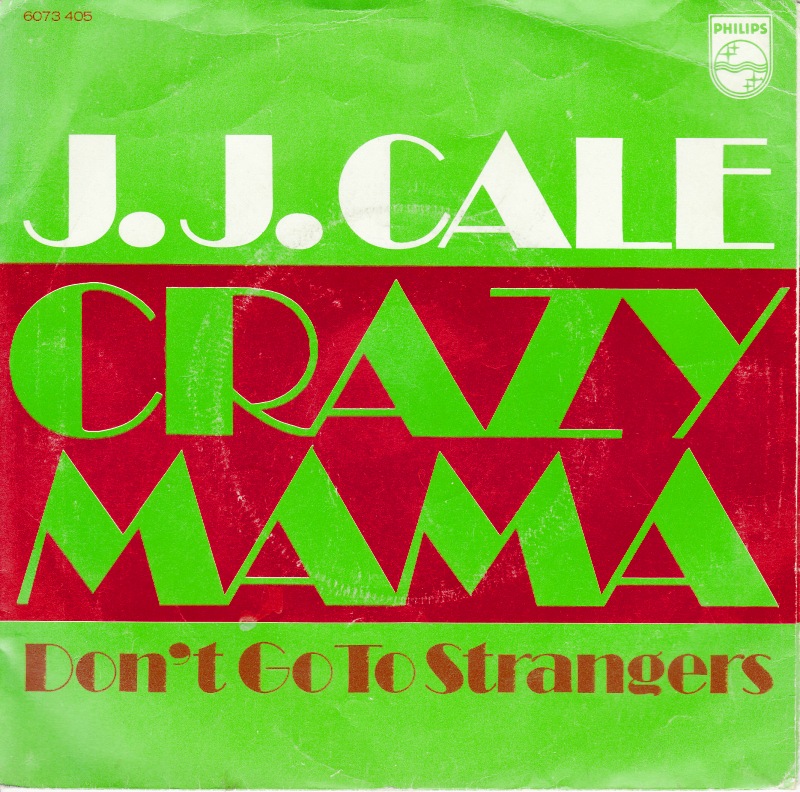
The simplicity is what gets me about this song. It reminds me a little of the Velvet Underground in that way. Jonathan Richman, who wrote the song, had seen the VU many times, and this was influenced by the Underground song Sister Ray. John Cale produced the 1972 version.
Jonathan Richman grew up in Natick, Massachusetts, a suburb of Boston. As a teenager in the mid-60s, he became obsessed with The Velvet Underground. He wasn’t just a fan; he followed them around New York City, crashing on couches, walking down the same streets Lou Reed walked. He took their sound and feel and made something a little brighter.
It was first recorded in 1972 with John Cale producing, but it would be recorded with different producers through the years. Roadrunner exists in multiple versions, some faster, some longer, some even sloppier, and it works in each version.
Richman takes the Velvet Underground’s art style and replaces it with suburbia. He created a song that manages to be a blend of punk, power pop, and garage rock all at once. It’s a great song to blast out of your windows while driving down the road. Richman took the Chuck Berry/Springsteen dream of a car equaling freedom and ran with it.
Here are two versions of the song. I like the original 1972 the best.
Roadrunner
Roadrunner, roadrunner Going faster miles an hour Gonna drive past the Stop ‘n’ Shop With the radio on I’m in love with Massachusetts And the neon when it’s cold outside And the highway when it’s late at night Got the radio on I’m like the roadrunner
Alright I’m in love with modern moonlight 128 when it’s dark outside I’m in love with Massachusetts I’m in love with the radio on It helps me from being alone late at night Helps me from being lonely late at night I don’t feel so bad now in the car Don’t feel so alone, got the radio on Like the roadrunner That’s right
Said welcome to the spirit of 1956 Patient in the bushes next to ’57 The highway is your girlfriend as you go by quick Suburban trees, suburban speed And it smells like heaven, I say Roadrunner once Roadrunner twice I’m in love with rock and roll and I’ll be out all night Roadrunner That’s right
Well now Roadrunner, roadrunner Going faster miles an hour Gonna drive to the Stop ‘n’ Shop With the radio on at night And me in love with modern moonlight Me in love with modern rock & roll Modern girls and modern rock & roll Don’t feel so alone, got the radio on Like the roadrunner O.K. now you sing Modern Lovers
I got the AM (Radio on!) Got the car, got the AM (Radio on!) Got the AM sound, got the (Radio on!) Got the rockin’ modern neon sound (Radio on!) I got the car from Massachusetts, got the (Radio on!) I got the power of Massachusetts when it’s late at night (Radio on!) I got the modern sounds of modern Massachusetts I’ve got the world, got the turnpike, got the I’ve got the, got the power of the AM Got the, late at night, hit ’em wide, rock & roll late at night The factories and the auto signs got the power of modern sounds Alright
I could place Jerry Butler on the turntable and drift away in a cloud full of soul. He was nicknamed “The Ice Man” for his cool, smooth delivery. He wasn’t a flashy guy, didn’t move like James Brown or shout like Wilson Pickett, but when he sang, like EF Hutton, everyone listened.
He grew up in Chicago’s Cabrini-Green projects, and like so many soul legends, it began in the church with gospel music. By the late 1950s, he teamed up with a young Curtis Mayfield to form The Impressions. Their 1958 single, For Your Precious Love was a template for modern soul, which he co-wrote with Arthur and Richard Brooks. It had a gospel foundation dressed up as a pop song. Jerry left the group in 1960, but his partnership with Mayfield would remain throughout his career.
His songs would be covered by everyone from Aretha to Otis Redding. He would also eventually become a Chicago politician. Few artists could claim hit records on Vee-Jay, Mercury, Motown, and Philadelphia International, while also serving as a Cook County Commissioner for over 30 years. The man’s career stretched across six decades.
This song was written by Jerry Butler, Calvin Carter, and Curtis Mayfield. Butler’s voice is calm, and he gives it effortlessly.. The song peaked at #7 on the Billboard 100, #1 on the R&B charts, and #9 in Canada in 1960.
This song didn’t just stop with Butler. The song took on a second life in 1975 when Tony Orlando & Dawn covered it under the longer title “He Don’t Love You (Like I Love You).” That version actually hit No. 1 on the Billboard Hot 100. Orlando may have had a bigger hit out of it, but Butler had the soul.
I’m including a bonus song…Ain’t That Lovin’ You Baby, a duet with Betty Everett in 1964. They also had a #5 song together called Let It Be Me. According to Discogs, he released a total of 161 singles and EPs throughout his career, which lasted until 1983. Mr Butler passed away in February of this year at the age of 85 years old.
He Will Break Your Heart
He don’t love you like I love you If he did, he wouldn’t break your heart He don’t love you like I love you He’s tryin’ to tear us apart
Fare thee well, I know you’re leavin’ (I know you’re leavin’) For the new love that you’ve found The handsome guy that you’ve been dating, whoa I got a feelin’ he’s gonna put you down, ’cause
He don’t love you like I love you If he did, he wouldn’t break your heart He don’t love you like I love you He’s tryin’ to tear us apart
He uses all the great quotations Says the things I wish I could say Whoa, but he’s had so many rehearsals Girl, to him it’s just another play But wait When the final act is over And you’re left standing all alone When he takes his bow and makes his exit Girl, I’ll be there to take you home
He don’t love you (and he never will) like I love you If he did, he wouldn’t break your heart Oh, he don’t love you, girl, like I love you He’s tryin’ to tear us apart
I started to go through his songs and found quality throughout. I went with this one because the car/van song fan in me had to pick it. Here is a 1985 Econoline. Let’s take a ride.
Certain songs feel like they were written for the open highway. Not really to a set destination, but through unnamed towns and roadside attractions. This is that type of song. In this song, every mile matters, and the road is always calling.
Prophet first broke onto the music scene in the mid-1980s with Green on Red, a band in the Paisley Underground in Los Angeles. Prophet joined as guitarist in 1985, just in time to inject his rootsy edge into their sound. He was barely out of his teens, suddenly on the road in Europe, and finding out fast what life in a rock band really meant: cheap motels, crooked promoters, and that you kept going, no matter what.
When Green on Red broke up in the early 1990s, Prophet made a solo album called Brother Aldo, which showcased his knack for blending storytelling with rootsy music. He has released 17 solo albums since then and was on 10 of Green on Red albums. While some of his peers have retired, he is still showing up in clubs playing his Telecaster.
After listening to some of his catalog, he comes from everywhere. He has something for almost everyone, from pop, soul, rock, and Americana. I’ve mostly listened to Night Surfer, but I started to explore other albums. His songwriting really stands out, and his songs are catchy and stick with you. This song came out in 2014 on his Night Surfer album. Peter Buck worked on this album with Chuck, playing guitar.
Ford Econoline
She pulled over said, “Climb on in” I did what she said She turned the music up real loud It was The Talking Heads Didn’t matter where we were going Made no difference to me at the time It takes me back when I hear that song Makes me feel warm inside Ford Econoline! Ever since the beginning of the world The beginning of time Somebody said that the road was his Somebody said, “No, it’s mine” Some folks are born ‘neath a sign on the road Close enough to turn and leave it all behind Fall together like the Rock Of Gibraltar Guitars and drums inside Ford Econoline! Ford Econoline Ford Econoline Chris-crossed the country in two tone job It was a 1985 Mile after mile we was burning oil We couldn’t keep it alive Laid out flatter than a Chinese rug When she went her way I went mine All these memories like dirty plates Stacked up in the sink of time Ford Econoline! Ford Econoline
I didn’t really listen to it until the 1980s when I saw Good Morning Vietnam. I’ve loved the song ever since. Sometimes a great song is a hit by a good performer. Sometimes a great performer makes a good song a hit. In this case… great meets great, and we have one for the ages. I can’t be a critic with this song…it’s about as perfect as you can get.
This was completely out of step in 1968; it could have been sung in 1948, but it worked then as it does now. It was written by Bob Thiele (under the pseudonym George Douglas) and George David Weiss. The song was intended as a soothing counterpoint to the racial and political turmoil of the late 1960s. Some say the song was offered to Tony Bennet first, who reportedly turned it down; however, Weiss claims it was written specifically for Louis Armstrong.
Not such a wonderful world all of the time, but a wonderful song every time it is played. Not many songs can match the beauty of this recording. It only peaked at #112 in the Billboard Charts… but charted again in 1988 off the strength of the movie Good Morning Vietnam and peaked at #32 on the Billboard 100.
The song did peak at #1 in the UK in 1968, and Armstrong was the oldest male to ever top it at 66 years old. Eva Cassidy had a posthumous UK chart-topper. #1 UK hit with this song 11 months after she passed. Joey Ramone covered the song, and it was released posthumously.
No matter how many weddings, graduations, and slow-motion movie montages have borrowed it since, the song never loses its sincerity.
I see trees of green, red roses too I see them bloom for me and you And I think to myself what a wonderful world
I see skies of blue and clouds of white The bright blessed day, the dark sacred night And I think to myself what a wonderful world
The colors of the rainbow so pretty in the sky Are also on the faces of people going by I see friends shaking hands saying how do you do They’re really saying I love you
I hear babies crying, I watch them grow They’ll learn much more than I’ll never know And I think to myself what a wonderful world Yes I think to myself what a wonderful world