I’m not a huge Motorhead fan and it’s a bit harder music than I usually listen to… but I do like this song. I also like any interview of Lemmy I’ve ever listened to. After playing this for years, Lemmy admitted he was sick of the song, but said he kept it in the setlist because, “If I went to a Little Richard concert, I’d expect to hear Long Tall Sally.”
From Wiki.
The song spent 13 weeks in the UK Singles Chart and originally peaked at number 15 upon its initial release. At the midweek point in January 2016 it reached No. 9 and in the official Friday chart, they reached number 13, following the death of frontman Ian “Lemmy” Kilmister in December 2015 and subsequent dissolution of the band. It has sold 208,830 digital copies as of January 2016.[6] It reached the top of the UK Rock & Metal Singles and Albums Charts on 9 January 2016.
In 2014, NME ranked it number 155 in a list of The 500 Greatest Songs of All Time.
This is Motörhead’s most famous song; it is about gambling and risks. Lemmy recalled writing the song in an interview with Mojo magazine February 2011: “‘Ace of Spades’ is unbeatable, apparently, but I never knew it was such a good song. Writing it was just a word-exercise on gambling, all the clichés. I’m glad we got famous for that rather than for some turkey, but I sang ‘the eight of spades’ for two years and nobody noticed.”
The “Ace Of Spades” is the dead man’s hand, which was Wild Bill Hancock’s hand as he was shot dead (he was an American sheriff who was killed during a game of poker). The hand consists of aces and eights, including the ace of spades.
This song was featured in the episode of The Young Ones called “Bambi,” where Motörhead performed as the stars of the show got to the train station.
This is used in the video game Tony Hawk’s Pro Skater 3, and also appears in the movie Superbad.
Ace of Spades
If you like to gamble, I tell you I’m your man, You win some, lose some, all the same to me, The pleasure is to play, makes no difference what you say, I don’t share your greed, the only card I need is The Ace of Spades
Playing for the high one, dancing with the devil, Going with the flow, it’s all a game to me, Seven or eleven, snake eyes watching you, Double up or quit, double stake or split, The Ace of Spades
You know I’m born to lose, and gambling’s for fools, But that’s the way I like it baby, I don’t wanna live for ever, And don’t forget the joker!
Pushing up the ante, I know you gotta see me, Read ’em and weep, the dead man’s hand again, I see it in your eyes, take one look and die, The only thing you see, you know it’s gonna be, The Ace of Spades
Listening to this song is like reading a novel. You have early Springsteen’s themes…cars, roads, and a plan to flee. This song is from the now classic 1975 Born to Run album.
After the album was released Bruce’s popularity jumped immensely when Bruce was on the cover of Newsweek and Time in the same week.
This was the first track on Born To Run, a crucial album for Springsteen. His first two albums sold poorly, and he was in danger of losing his record deal if he did not produce a hit. With songs like this one about escaping to the open road, he connected with an audience that proved extremely loyal.
He considered this song the “invitation” to the album, with the opening notes being the welcome. “Something is opening up,” Springsteen said during his 2005 Storytellers appearance. “What I hoped it would be was the sense of a larger life, greater experience, sense of fun, the sense that your personal exploration and possibilities were all lying somewhere inside of you.”
Springsteen took the title from a 1958 Robert Mitchum movie. He did not see the film, but got the idea from a poster for it in a theater lobby.
The vocal sound was inspired by Roy Orbison. Springsteen pays homage to him with the line: “The radio plays Roy Orbison singing for the lonely,” a reference to Orbison’s 1960 hit, “Only The Lonely.”
The name of the girl mentioned at the beginning was changed several times. It had been Angelina and Chrissie before Springsteen settled on “Mary’s dress waves.”
The original title was “Wings For Wheels.” It began as an outtake called “Glory Road.”
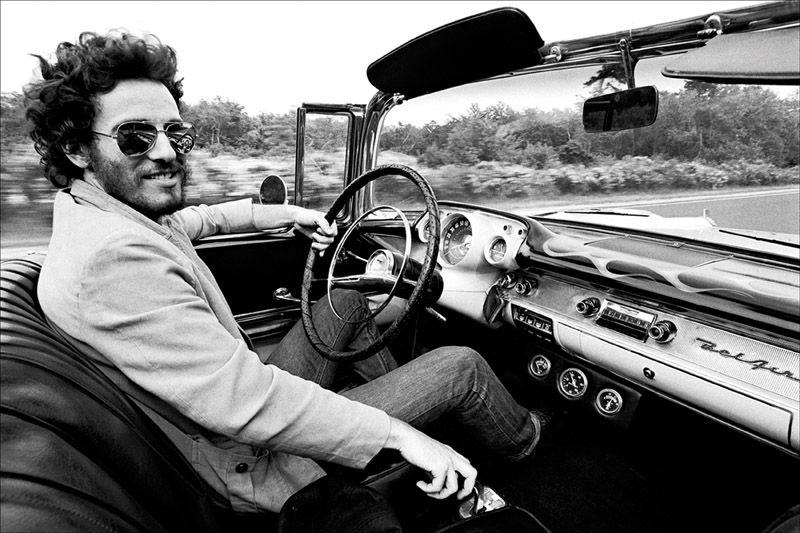
Cars were very important growing up in New Jersey and show up in many of Springsteen songs. Bruce’s first car was a ’57 Chevy with orange flames painted on the hood.
This is a concert favorite that Springsteen has performed at many of his shows over the years.
At one point, Born To Run was going to be a concept album spanning the course of a day, with an acoustic version of this starting the album and the full band version closing it.
Springsteen’s friend and future manager, Jon Landau, convinced him to record this at The Record Plant in New York instead of the low-budget studio he was using. Springsteen’s current manager, Mike Appel, resented Landau’s influence and would file a lawsuit that kept Springsteen from recording for 3 years.
Since the band didn’t know the song very well, Springsteen used a version with just him at the piano to open a series of shows at The Bottom Line in New York City in 1975. Sponsored by a New York radio station, the disc jockey, Dave Herman, apologized on the air for not playing enough Springsteen the morning after the first show.
On November 3, 1980, Springsteen kicked off his tour to support the album in Ann Arbor, Michigan. For the encore, Bob Seger, who is to Michigan what Springsteen is to New Jersey, joined him onstage to perform this.
Has been performed live many different ways: with the full band, solo with guitar, solo with piano, slowed down, etc. The version on Live 1975-1985 features Springsteen singing over Roy Bittan’s piano.
Bruce taped a performance of this that was played at the funeral of James Berger, a worker in the World Trade Center who helped people get out before he was killed when it collapsed. He was a big Springsteen fan and this was his favorite song. Bruce dedicated it to his sons.
This was also the first track on Springsteen’s live album Hammersmith Odeon London 1975, which was recorded on November 18, 1975 during Springsteen’s first concert in Europe. It was released on DVD in 2005, and on CD the following year
Thunder Road
The screen door slams, Mary’s dress waves Like a vision she dances across the porch as the radio plays Roy Orbison singing for the lonely Hey, that’s me and I want you only Don’t turn me home again, I just can’t face myself alone again Don’t run back inside, darling, you know just what I’m here for So you’re scared and you’re thinking that maybe we ain’t that young anymore Show a little faith, there’s magic in the night You ain’t a beauty but, hey, you’re alright Oh, and that’s alright with me
You can hide ‘neath your covers and study your pain Make crosses from your lovers, throw roses in the rain Waste your summer praying in vain For a savior to rise from these streets Well now, I ain’t no hero, that’s understood All the redemption I can offer, girl, is beneath this dirty hood With a chance to make it good somehow Hey, what else can we do now? Except roll down the window and let the wind blow back your hair Well, the night’s busting open, these two lanes will take us anywhere We got one last chance to make it real To trade in these wings on some wheels Climb in back, heaven’s waiting on down the tracks
Oh oh, come take my hand We’re riding out tonight to case the promised land Oh oh oh oh, Thunder Road Oh, Thunder Road, oh, Thunder Road Lying out there like a killer in the sun Hey, I know it’s late, we can make it if we run Oh oh oh oh, Thunder Road Sit tight, take hold, Thunder Road
Well, I got this guitar and I learned how to make it talk And my car’s out back if you’re ready to take that long walk From your front porch to my front seat The door’s open but the ride ain’t free And I know you’re lonely for words that I ain’t spoken But tonight we’ll be free, all the promises’ll be broken
There were ghosts in the eyes of all the boys you sent away They haunt this dusty beach road in the skeleton frames of burned-out Chevrolets They scream your name at night in the street Your graduation gown lies in rags at their feet And in the lonely cool before dawn You hear their engines rolling on But when you get to the porch, they’re gone on the wind So Mary, climb in It’s a town full of losers, I’m pulling out of here to win
My favorite Christmas song hands down. Yea I’m biased because I am a Beatles fan but this one is great. John’s voice goes so well with this song. The song peaked at #2 in the UK charts in 1971.
I think of High School when I hear this song. Our school had a Christmas poster contest and a buddy and I made a poster as a joke and wrote “So this is Christmas and what have you done another year over, and a new one just begun” and won first prize…with an assist from John.
John Lennon and Yoko Ono wrote this in their New York City hotel room and recorded it during the evening of October 28 and into the morning of the 29th, 1971 at the Record Plant in New York. It was released in the US for Christmas but didn’t chart. The next year, it was released in the UK, where it did much better, charting at #4. Eventually, the song became a Christmas classic in America, but it took a while.
John and Yoko spent a lot of time in the late ’60s and early ’70s working to promote peace. In 1969, they put up billboards in major cities around the world that said, “War is over! (If you want it).” Two years later this slogan became the basis for this song when Lennon decided to make a Christmas record with an anti-war message. John also claimed another inspiration for writing the song: he said he was “sick of ‘White Christmas.'”
The children’s voices are the Harlem Community Choir, who were brought in to sing on this track. They are credited on the single along with Yoko and The Plastic Ono Band.
Lennon and Ono produced this with the help of Phil Spector. Spector had worked on some of the later Beatles songs and also produced Lennon’s “Instant Karma.” It was not Spector’s first foray into Christmas music: he and his famous session stars (including a 17-year-old Cher) spent six weeks in the summer of 1963 putting together A Christmas Gift for You from Phil Spector, featuring artists like The Ronettes and Darlene Love. Unfortunately, the album was released on November 22, 1963, which was the same day US president John F. Kennedy was assassinated. The album sold poorly as America was focused on news of the killing.
This was originally released on clear green vinyl with Yoko Ono’s “Listen, The Snow Is Falling” as the B-side.
At the beginning of the song, two whispers can be heard. Yoko whispers: “Happy Christmas, Kyoko” (Kyoko Chan Cox is Yoko’s daughter with Anthony Cox) and John whispers: “Happy Christmas, Julian” (John’s son with Cynthia). >>
This being a Phil Spector production, four guitarists were brought in to play acoustic guitars: Hugh McCracken (who had recently played on the Paul McCartney album Ram), Chris Osbourne, Stu Scharf and Teddy Irwin. According to Richard Williams, who was reporting on the session for Uncut, when Lennon taught them the song, he asked them to “pretend it’s Christmas.” When one of the guitarists said he was Jewish, John told him, “Well, pretend it’s your birthday then.”
As for the other personnel, Jim Keltner played drums and sleigh bells, Nicky Hopkins played chimes and glockenspiel. Keltner and Hopkins were part of Lennon’s Plastic Ono Band, and a third member, Klaus Voorman, was supposed to play bass on this track, but got stuck on a flight from Germany. One of the guitarists brought in for the session covered the bass – which one nobody seems to remember.
John Lennon was shot and killed less than three weeks before Christmas in 1980. The song was re-released in the UK on December 20 of that year, reaching #2 (held off the top spot by “There’s No One Quite Like Grandma” by St. Winifred’s School Choir). It made the UK Top 40 again in 1981 (#28), 2003 (#32) and 2007 (#40). Also in 2003, a version sung by the finalists of the singing competition Pop Idol reached #5.
The Fray were the first to chart with this song in America, reaching #50 in 2006; Sarah McLachlan’s version went to #107 that same year. Other artists to cover it include The Alarm, The Cranes, The December People, and Melissa Etheridge (in a medley with “Give Peace a Chance”).
The Australian artist Delta Goodrem also covered it in 2003, taking it to #1 in her native country as a double-A-side single with “Predictable.” >>
Though now a Christmas standard, Lennon originally penned this as a protest song about the Vietnam War, and the idea “that we’re just as responsible as the man who pushes the button. As long as people imagine that somebody’s doing it to them and that they have no control, then they have no control.”
This didn’t appear on an album until 1975, when it was included on Lennon’s Shaved Fish singles compilation. Most Christmas songs are compiled with other songs of the season, but Shaved Fish listeners got to hear it year round.
Happy Xmas (War is Over)
(Happy Christmas Kyoko) (Happy Christmas Julian)
So this is Christmas And what have you done Another year over And a new one just begun And so this is Christmas I hope you have fun The near and the dear one The old and the young
A very Merry Christmas And a happy new year Let’s hope it’s a good one Without any fear
And so this is Christmas For weak and for strong For rich and the poor ones The world is so wrong And so happy Christmas For black and for white For yellow and red ones Let’s stop all the fight
A very Merry Christmas And a happy new year Let’s hope it’s a good one Without any fear
And so this is Christmas And what have we done Another year over A new one just begun And so happy Christmas We hope you have fun The near and the dear one The old and the young
A very Merry Christmas And a happy new year Let’s hope it’s a good one Without any fear War is over, if you want it War is over now
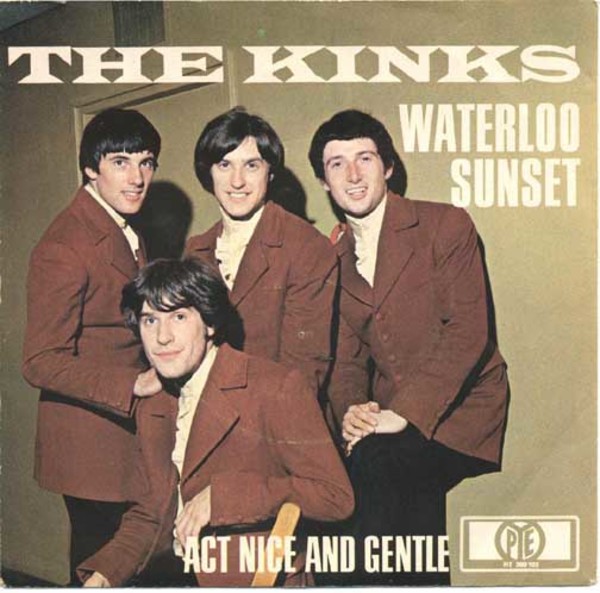
One of the great Kinks songs. The song peaked at #2 in the UK Charts but failed to chart in America.
Ray Davies brought this to the band while they were in the middle of recording the album. He was reluctant to share the lyrics because they were so personal. In a Rolling Stone magazine interview, his brother (and Kinks guitarist) Dave Davies said Ray felt “it was like an extract from a diary nobody was allowed to read.”
Written by Kinks lead singer Ray Davies, he called this “a romantic, lyrical song about my older sister’s generation.”
Waterloo Bridge is in London, and the lyrics are about a guy looking out of a window at two lovers meeting at Waterloo Station. Davies used to cross Waterloo Bridge every day when he was a student at Croydon Art School.
It is often claimed that the line, “Terry meets Julie, Waterloo Station every Friday night” is about the relationship between actor Terence Stamp and actress Julie Christie. However, Ray Davies denied this in his autobiography. He subsequently revealed that it was “a fantasy about my sister going off with her boyfriend to a new world and they were going to emigrate and go to another country.”
According to Kinks biographer Nick Hasted, Terry was Ray’s nephew Terry Davies, whom he was close to in early teenage years.
Further confusing the matter, Davies told Rolling Stone in 2015 that Julie and Terry were “big, famous actors at the time.” The actors had been dating since the early ’60s and starred together in the film Far From the Madding Crowd, which is often cited as the direct inspiration for the song, but the film didn’t come out until six months after the single’s release.
Waterloo Sunset
Dirty old river, must you keep rolling Flowing into the night? People so busy, make me feel dizzy Taxi light shines so bright
But I don’t need no friends As long as I gaze on Waterloo sunset I am in paradise
Every day I look at the world from my window But chilly, chilly is the evening time Waterloo sunset’s fine (Waterloo sunset’s fine)
Terry meets Julie Waterloo station Every Friday night But I am so lazy, don’t want to wander I stay at home at night
But I don’t feel afraid As long as I gaze on Waterloo sunset I am in paradise
Every day I look at the world from my window But chilly, chilly is the evening time Waterloo sunset’s fine (Waterloo sunset’s fine)
Millions of people swarming like flies ’round Waterloo underground But Terry and Julie cross over the river Where they feel safe and sound And they don’t need no friends As long as they gaze on Waterloo Sunset They are in paradise
Waterloo sunset’s fine (Waterloo sunset’s fine) Waterloo sunset’s fine
Let It Rain peaked at #48 in the Billboard 100 and #42 in Canada in 1972. It was on Eric’s self-titled album released in 1970 but this song was released on a single in 1972.
Clapton wrote this with the help of Bonnie and Delaney Bramlett. They put most of it together while they were touring together in 1969; Clapton with Blind Faith, and The Bramletts supporting them with their group Delaney & Bonnie. Blind Faith broke up after their first tour, and Clapton formed Derek and the Dominos with Delaney & Bonnie’s backup group, who Clapton became friends with on the tour.
This was the last track on Clapton’s first solo album. Delaney Bramlett produced it.
Organist Bobby Whitlock, bass player Carl Radle and drummer Jim Gordon were part of Clapton’s backing band on his first album and played on this track. After recording the album, these four formed their own group, Derek and the Dominos, and released the classic album Layla and Other Assorted Love Songs.
Jim Gordon wrote the piano part for “Layla” and later suffered terrible mental illness and bludgeoned his mother to death.
Jerry Allison and Sonny Curtis sang backup on this track. They were former members of The Crickets, Buddy Holly’s backup band. The female backup singers were Bonnie Bramlett and Rita Coolidge.
This wasn’t released as a single until 1972, two years after the album came out. This was done to capitalize on the success of “Layla,” which became a hit that year when it was re-released as a long version and after people figured out that Derek and the Dominos was Clapton’s group.
This was one of the few Eric Clapton solo tracks Derek and the Dominos played when they toured. At one point, they used it to teach drummer Jim Gordon a lesson. “Jim Gordon was going on about how he never got a drum solo, so we fixed his little wagon,” Bobby Whitlock said in his Songfacts interview. “We gave him a drum solo in ‘Let It Rain’ and it lasted for nine-and-a-half minutes. And he kept going – you could hear it in the solo. He would stop and he was looking at Eric. We were on the side of the stage behind the curtain smoking a cigarette and having a drink, and we wouldn’t come back out, so he had to keep going and keep going. Okay, Mr. Drummerman, you want a solo? Take your solo.”
Stephen Stills played the guitar solo in the middle of the song.
Let It Rain
The rain is falling through the mist of sorrow that surrounded me The sun could never thaw away the bliss that lays around me
Let it rain, let it rain, Let your love rain down on me Let it rain, let it rain, Let it rain, rain, rain
Her life was like a desert flower burning in the sun Until I found the way to love, it’s harder said than done
Let it rain, let it rain, Let your love rain down on me Let it rain, let it rain, Let it rain, rain, rain
Now I know the secret; there is nothing that I lack If I give my love to you, you’ll surely give it back
Let it rain, let it rain, Let your love rain down on me Let it rain, let it rain, Let it rain, rain, rain
Let it rain, let it rain, Let your love rain down on me Let it rain, let it rain, Let it rain, rain, rain
This is about the song, not the album…Love the story and the way the words just flow in this song by Traffic. There have been many versions of this song. Jethro Tull has covered it but this is the version I’ve always known.
While researching this song there is not a lack of information. Everyone has an opinion on this one. The song was off Traffic’s album of the same name. The album peaked at #5 in the Billboard 200 in 1970 but the song did not chart.
When you first listen to the song you may think that you landed in the midst of a Middle Ages inquisition session. The lyrics describe all kinds of brutal methods inflicted by three men upon a poor fellow named John Barleycorn. However, a closer look reveals that the distressing lyrics are actually a metaphor to the process applied to barley in order to produce beer and whiskey. While it has its roots in old folklore tales about the Corn God and religious symbolism, it is really a satire on legally prohibiting the production of alcoholic beverages while still needing the drink to get on with everyday life, as revealed in the last verse:
The huntsman, he can’t hunt the fox, Nor so loudly to blow his horn, And the tinker he can’t mend kettle nor pot,
Without a little Barleycorn
but there are many interpretations.”
This is an old British folk song that railed against the ludicrousness of prohibition. The joke was that all those “brave” teetotalers who claimed to be doing the work of the Lord were actually hypocrites and were ruining that work, because, as the lyric sums up, in the end, no one can do the rudimentary work necessary to build and grow the land “without a little barleycorn.”
John Barleycorn : A personification of alcoholicliquor.
John Barleycorn Must Die
There were three men came out of the west, their fortunes for to try And these three men made a solemn vow John Barleycorn must die They’ve plowed, they’ve sown, they’ve harrowed him in Threw clods upon his head And these three men made a solemn vow John Barleycorn was dead
They’ve let him lie for a very long time, ’til the rains from heaven did fall And little Sir John sprung up his head and so amazed them all They’ve let him stand ’til midsummer’s day ’til he looked both pale and wan And little Sir John’s grown a long long beard and so become a man They’ve hired men with their scythes so sharp to cut him off at the knee They’ve rolled him and tied him by the way, serving him most barbarously They’ve hired men with their sharp pitchforks who’ve pricked him to the heart And the loader he has served him worse than that For he’s bound him to the cart
They’ve wheeled him around and around a field ’til they came onto a pond And there they made a solemn oath on poor John Barleycorn They’ve hired men with their crabtree sticks to cut him skin from bone And the miller he has served him worse than that For he’s ground him between two stones
And little Sir John and the nut brown bowl and his brandy in the glass And little Sir John and the nut brown bowl proved the strongest man at last The huntsman he can’t hunt the fox nor so loudly to blow his horn And the tinker he can’t mend kettle or pots without a little barleycorn
One of the most exciting songs of The Who. It was off of the Mod concept album Quadrophenia. Roger and Pete are excellent in this song but John and Keith really stand out. The song peaked at #92 in 1974.
I have sat hours with a bass in my hand trying to get the runs right to this. One of John’s best bass parts.
John Entwistle on The Real Me… “The Real Me” was the first take. I was joking when I did that bass part. The band said, “Wow, that’s great, that’s great!” And I was just messing around. They just loved the song. I was sitting on top of my speaker cabinet playing a silly bass part and that’s the one they liked.
This is about how a Mod can’t see who he really is. “Mods” were British youth who kept up with the latest music and fashion trends. Pete Townshend was a champion of Mod culture, and the rock opera Quadrophenia told the story of a Mod named Jimmy.
John Entwistle gave what many consider one of his greatest bass performances on this song. In a 1996 interview with Goldmine magazine, Entwistle explained that he recorded it in one take. He was just “joking around” when he played it, but the band thought it was great and used it in the final version.
The Real Me
I went back to the doctor To get another shrink I sit and tell him ’bout my weekend But he never betrays what he thinks
Woo Can you see the real me, doctor? Doctor? Can you see the real me, doctor? Woah, doctor
I went back to my mother I said I’m crazy ma, help me She said I know how it feels son ‘Cause it runs in the family
Can you see the real me, mama? Mama? Can you see the real me, mama? Woah, mama
Can you see Can you see the real me? Can you see Can you see the real me The real me The real me
The cracks between the paving stones Look like rivers of flowing veins Strange people who know me Peeping from behind every window pane The girl I used to love Lives in this yellow house Yesterday she passed me by She doesn’t want to know me now
Can you see the real me? Can ya? Can ya? Can you see the real me? Can ya? Woah, yeah
I ended up with a preacher Full of lies and hate I seemed to scare him a little So he showed me to the golden gate
Can you see the real me, preacher? Preacher? Can you see the real me, preacher?
Can you see Can you see Can you see Woah
Can you see the real me, doctor?
Can you see the real me, ma?
Can you see the real me (me, me, me, me, me, me, me, me, me, me, me)?
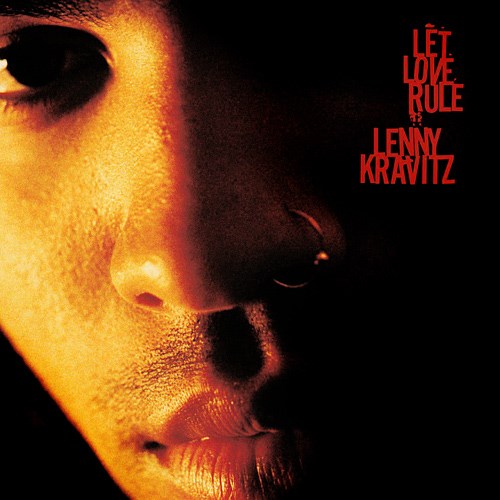
This sounded older when it was released in 1989 because it has a 60s psychedelic sound which some critics complained about…it’s the reason that I liked it. Lenny plays a lot of the instruments his self. The song peaked at #89 in the Billboard 100 and #39 in the UK in 1989.
A little trivia for you about Lenny…his mom was Roxie Roker from the tv show The Jeffersons.
Lenny Kravitz in a 1998 interview with Tracey Pepper: “When I did ‘Let Love Rule,’ everyone said what a naive piece of s–t it was. Journalists would ask, ‘Don’t you feel funny singing about that?’ and I was like, If I were sitting here singing about the devil and raping children, then it’d be okay? God forbid you sing about love. It’s a lost concept.”
This song is Kravitz’ credo. “Love has to be the final outcome of every situation,” he said.
This was the title track from Lenny Kravitz’ debut album on which he provided almost all of the instrumental and vocal material himself. However when it was released many critics condemned him for being an out of date throwback to late ’60s psychedelic rock.
Lenny Kravitz’s then-wife Lisa Bonet directed and appeared in the music video for this song.
The singer was persuaded by his style-star daughter Zoe Kravitz to develop a new line of shoes for Tom’s. Amongst his designs, which debuted in 2012 were footware printed with lyrics from this song.
Let Love Rule
Love is gentle as a rose And love can conquer any war It’s time to take a stand Brothers and sisters join hands
We got to let love rule (Let love rule) We got to let love rule (Let love rule)
Love transcends all space and time And love can make a little child smile Oh can’t you see This won’t go wrong But we got to be strong We can’t do it alone
We got to let love rule (Let love rule) We got to let love rule (Let love rule)
(Let love rule) You got to got to got to (Let love rule)
You got to got to got to, yeah (Let love rule) let let let let love rule (Let love rule)
You got to, got to, got to Just say yeah You got to yeah You got to You got to, got to, got to yeah Let love rule
Nilsson’s vocal on this song is outstanding. He took a small blues song written by Badfinger’s Pete Ham and Tom Evans and turned it into an epic. Ham had written a song called “Is This Love?” but wasn’t happy with the chorus. Evans came up with the “I can’t’ live if living is without you” chorus but had no verses for it, so they put the two songs together as one. Both would die broke while this song made millions. Ham and Evans never considered it a strong song.
The song was a smash… peaking at #1 in the Billboard 100 as well as Canada and the UK in 1971. Mariah Carey also released the song on Jan 15 1994 (the day Nilsson died) and the song proved to be a smash again.
Nilsson first came across this song at a Laurel Canyon party in 1971 and thought it was a Beatles song. Badfinger was signed to Apple Records, The Beatles’ label. The story did not end well for Badfinger: Both Ham and Evans became despondent when they encountered various legal difficulties and committed suicide. Ham hanged himself in 1975 and Evans did the same in 1983.
Nilsson’s version added an orchestra and gave the song a dramatic production. When Nilsson recorded it, he initially played the song slow and dark, accompanied only by piano. Producer Richard Perry recalled to Mojo magazine April 2008 that he had to persuade an unwilling Nilsson to record it as a big ballad: “I had to force him to take a shot with the rhythm section. Even while we were doing it, he’d be saying to the musicians, ‘This song’s awful.'”
January 15th is a date with some interesting coincidences where Nilsson’s version of this song is concerned. He died on January 15, 1994, the same day Mariah Carey’s version was released, which is also 22 years to the day after his interpretation of “Without You” hit #1 on the US charts.
Badfinger’s original version is under Nilsson’s version
Without You
No I can’t forget this evening or your face as you were leaving But I guess that’s just the way the story goes You always smile, but in your eyes Your sorrow shows Yes, it shows
No I can’t forget tomorrow When I think of all my sorrow When I had you there but then I let you go And now it’s only fair that I should let you know What you should know
I can’t live If living is without you I can’t live I can’t give anymore I can’t live If living is without you I can’t give I can’t give anymore
Well, I can’t forget this evening or your face as you were leaving But I guess that’s just the way the story goes You always smile, but in your eyes Your sorrow shows Yes, it shows
I can’t live If living is without you I can’t live I can’t give anymore I can’t live If living is without you I can’t live I can’t give anymore
No no no no I can’t live If living is without you I can’t live I can’t give anymore I can’t live
I remember this song in the 80s and I didn’t hear it again until playing…Grand Theft Auto Vice City. It’s the only game I ever got hooked on as an adult. After playing the game for hours and stealing cars…this would be on the radio of the car you were driving constantly. After I beat it…I really never played another game again. I guess I just had to get it out of my adult system.
The song kicks in nicely.
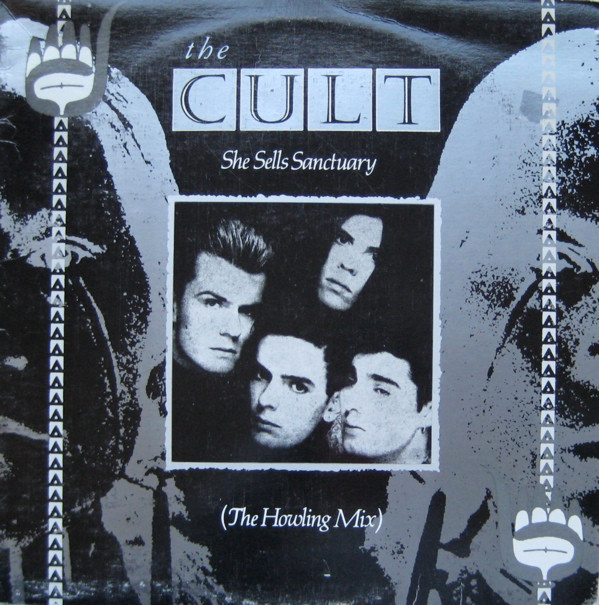
The lead singer Ian Astbury puts it bluntly on what the song is about…he says “What’s the song about? Sex. Plain and simple, it’s about sex. I’ve had sex and I’m very proud of that fact.”
The song peaked at #15 in the UK charts but didn’t chart in the Billboard 100.
Billy Duffy of The Cult talks about how his quasi-psychedelic guitar intro came about: “I found a violin bow, and I started to play the guitar with the bow like Jimmy Page. I did it to amuse Astbury, who was in the control room, and in order to make it sound weirder, I just hit every pedal I had on the pedal board. Then once I stopped banging the strings and doing all that, I played the middle section of the song, which was kind of a pick thing with all the BOSS pedals on, and that sound just leaped out. The producer went, ‘Hold it, hold it, that’s great!’ And we decided to start the song with that mystical sound. If I hadn’t found that violin bow laying around, we wouldn’t have gone there.”
“She Sells Sanctuary” was the last song to feature Nigel Preston on drums. Preston was fired from the band shortly after its release and was replaced by Big Country’s drummer, Mark Brzezicki.
In 1993, a collection of remixes of this song by Youth, Butch Vig and JG Thilwell reached #15 in the UK.
This song featured in the 1992 film, With Honors and in the 2004 film, Layer Cake.
This formed part of a mashup with Flo Rida’s “Good Feeling” in a Budweiser commercial broadcast during the 2012 Super Bowl. The one-minute ad celebrates several decades of great times in the US, beginning at the end of Prohibition in 1933.
She Sells Sanctuary
Oh, the heads that turn Make my back burn And that heads that turn Make my back, make my back burn
The sparkle in your eyes Keeps me alive And the sparkle in your eyes Keeps me alive, keeps me alive
The world And the world turns around The world and the world yeah The world drags me down
Oh, the heads that turn Make my back burn And that’s heads that turn Make my back, make my back burn, yeah Hey yeah hey, yeah hey
The fire in your eyes keeps me alive And the fire in your eyes keeps me alive Inside her you’ll find sanctuary Inside her you’ll find sanctuary
And the world the world turns around And the world and the world the world drags me down And the world and the world the world turns around And the world and the world and the world and the world And the world drags me down
Ah, hey yeah, hey yeah And the world and the world turns around And the world and the world Yeah, the world drags me down And the world Yeah, the world turns around And the world and the world the world drags me down
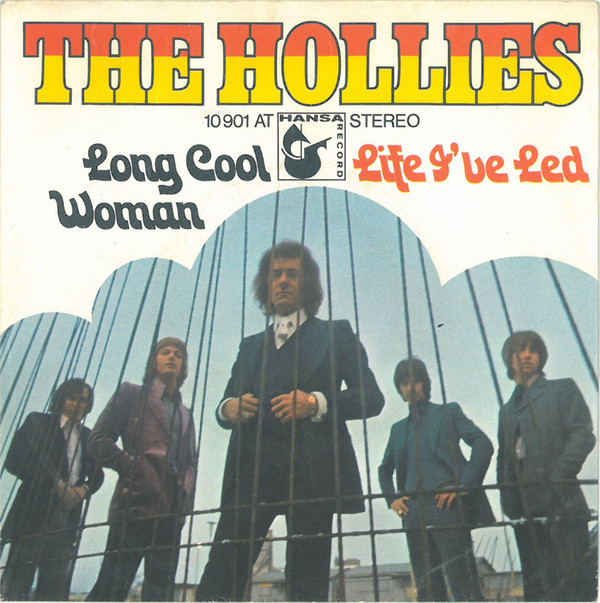
Great song by CCR Uh no the Hollies. This song peaked in 1972 at #2 in the Billboard 100 and #32 in the UK. The Hollies had most of their success in the UK but surprisingly it missed there but was a huge hit in America. Lead singer Alan Clarke wrote this song with the Brittish songwriters Roger Cook and Roger Greenaway.
Love the intro and I especially like the slapback echo on the vocals. I never really thought of CCR when I heard it though many people do… Alan Clarke’s voice will never be confused with John Fogerty’s but the style here is the same. Here is a quote from Alan Clarke… On the vocal, my intention wasn’t to sound like John Fogerty of Creedence Clearwater Revival. I was thinking of Elvis on his early songs, like “Mystery Train.”
This is the only Hollies single without any backing vocals. The reason why Clarke is the only singer on this record is that he didn’t intend the song to be released on a Hollies album but as a record of his own. When the band learned that he intended to do a solo recording, Clarke was issued an ultimatum – he could either remain with The Hollies or pursue a solo career, but not both. Clarke told Rolling Stone in 1973: “I think with me the band feared that if I got a hit I’d leave. How can you stop destiny? Now, if they originally agreed, I might not even have left. ‘Long Cool Woman’ would have been released a year earlier, and we’d have done a few tours of the States and maybe would have been really big.”
Note to readers outside the UK: A “skinful” is a British term, essentially meaning an amount of alcohol that is enough to make a person drunk.
Great article with Roger Cook (one of the songwriters) from the Tennessean.
Saturday night I was down town Working for the F.B.I. Sitting in a nest of bad men Whiskey bottles piling high Boot legging boozer on the west side Full of people who are doing wrong Just about to call up the D.A. man When I heard this woman singing a song.
A pair of forty fives made me open my eyes My temperature started to rise She was a long cool woman in a black dress Just a five nine Beautiful Tall With just one look I was a bad mess Cause that long cool woman had it all.
Saw her heading to the table Well a tall walking big black cat When Charlie said “I hope that you’re able boy” Well I’m telling you she knows where it’s at Well suddenly we heard a siren And every body started to run A jumping out of doors and tables Well I heard somebody shooting a gun.
Well the D.A. was pumping my left hand And a she a holding my right And I told her don’t get scared Cause you’re gonna be spared I gotta be forgiven If I want to spend my living with A long cool woman in a black dress Just a five nine Beautiful Tall With just one look I was a bad mess ‘Cause that long cool woman had it all Had it all Had it all Had it all
My introduction to Robert Johnson came from Eric Clapton while playing with Cream. Johnson was a great blues guitarist that supposedly sold his soul to the devil at the crossroads to be able to play the blues. Some of the songs he wrote played into this myth. He only cut 29 songs that he recorded in a two year period of 1936 and 1937.
I’m not a blues expert, nor do I play one on tv, but I love these old blues recordings. Johnson wasn’t the only one but they influenced everything I’ve liked since. They are also historical documents of the time.
Robert Johnson’s slide playing was so complete that he sounded like two guitar players instead of one on some songs. The atmosphere of those recordings is incredible to me and something that you can’t duplicate. Johnson’s influence is huge. Keith Richards, Eric Clapton, Bob Dylan. Duane Allman, and too many more to list.
Movies such as the 1980’s film Crossroads brought Johnson many more fans. My friend Ronald was one of those people and went out and bought everything he could find of Johnson in the 80s. Many people have searched out Johnson after listening to artists that were influenced by him. His voice will haunt you after you listen to his recordings. His songs are pure and timeless.
Some quotes on Robert Johnson
Keith Richards – Brian Jones had the first album, and that’s where I first heard it. I’d just met Brian, and I went around to his apartment-crash pad, actually, all he had in it was a chair, a record player, and a few records. One of which was Robert Johnson. He put it on, and it was just-you know-astounding stuff. When I first heard it, I said to Brian, “Who’s that?” “Robert Johnson”. I said, “Yeah, but who’s the other guy playing with him?” Because I was hearing two guitars, and it took me a long time to realize he was actually doing it all by himself. Eric Clapton – His music is like my oldest friend, always in the back of my head and on the horizon. It’s the finest music I’ve ever heard. I’ve always trusted its purity. And I always will.’ I don’t know what more you could say….” Robert Cray – He is a perfect example of what anybody should listen to if they want to get an understanding of the blues… and American history.’
Below is Robert Johnson and down below is Cream’s version.
Cross Road Blues
I went down to the crossroad fell down on my knees I went down to the crossroad fell down on my knees Asked the lord above “Have mercy now save poor Bob if you please” Yeeooo, standin at the crossroad tried to flag a ride ooo ooo eee I tried to flag a ride Didn’t nobody seem to know me babe everybody pass me by Standin at the crossroad babe risin sun goin down Standin at the crossroad babe eee eee eee, risin sun goin down I believe to my soul now, Poor Bob is sinkin down You can run, you can run tell my friend Willie Brown You can run, you can run tell my friend Willie Brown (th)’at I got the croosroad blues this mornin Lord babe, I’m sinkin down And I went to the crossroad momma I looked east and west I went to the crossroad baby I looked east and west Lord, I didn’t have no sweet woman ooh-well babe, in my distress
This is a very likable ballad that was a big hit in 1981. It peaked at #12 in the Billboard 100. This song developed a large following and continues to get airplay on many radio stations. The legendary Nicky Hopkins played on this track.
There’s something beautifully disarming about a song that just steps out and says it: I Love You. No poetic misdirection, no clever metaphors about moons and tides. Just three words wrapped in a melody soft enough to fall asleep on and sung with the kind of vulnerability that makes it impossible to roll your eyes.
There’s also something sneakily elegant in how the chorus sneaks in. It doesn’t hammer the title. It eases into it like an embrace. And when the saxophone solo shows up, it doesn’t break the spell; it deepens it.
Derek Holt, who was the bass player, wrote the song. None of the band liked it. They would not even tour to support it. He would have the last laugh as this came from an interview with Derek.
Derek:Up until the ‘Flying the Flag’ album, we used to split songwriting royalties four equal ways as we were all credited with writing songs. For this album, we had a meeting to discuss starting to have songwriting credit split separately. I lost the argument to keep it all the same as before and ended up gaining 100% of my own song. Ironic!
When the song became a hit (also it was the start of me then becoming a lead singer which worried the others), we had a major U.S. tour booked but both Colin and Pete didn’t want to “go on the road to promote my career”. So even with a song high up on the U.S. charts, they actually chose not to back me up instead of just being grateful for another hit. I never got to tour and sing the song live so I feel slightly cheated out of performing it. But it became a really popular radio song and of course, a lot of people fell in love because of it. I also get emails from people who actually got married because of it even had it played at their “first dance” at their reception.
Bass player Derek Holt wrote this song. He told us: “It was about meeting my first wife, meeting the lady that’s going to encourage me to do what I did best, and that was be a musician, with no qualms about it. I used to go away from home, used to leave her behind, and used to come back. I was a hippie, a drinking hippie with really long hair. We had a great time – I’m meeting my wife since then I’ve never looked back. You know, pretty much out living a dream, because, ‘Ooo, I love you.’ You could say it’s for one person, but it’s quite generic. At that particular moment in time, everything was right. You know, usually, songs appear from nowhere, and that one appeared in a couple of hours. Why I have no idea, but it did. And I guess the influence was the person I was with at the time.”
Holt: “That song was written in my house. After a couple of hours just sitting in my studio I came up with this song I Love You – words, solo, drums, the whole thing. And I thought, ‘Well, it’s a lovely song.’ We had a guy come over from L.A., an American producer called John Ryan, who arrived in Stafford to do some pre-production on an album that we were going to record in Los Angeles called Flying The Flag. So he came to England and spent probably 2 weeks with us going through all the tracks that we’d got. And he said, ‘Does anybody have any more songs?’ I’d already played my song to the band and they didn’t really like it; it was a little bit too lovey, so I said to John Ryan, ‘I’ve got this song called ‘I Love You.” He said, ‘Well, play it for me.’ So I plugged in my cassette, played it, then he said, ‘That’s a hit.’ Just like that. Everybody just sort of looked at each other and said, ‘Oh, bloody hell.’ So anyway, we ended up going to Los Angeles, and that song was recorded with just me and the drummer because the other two guys weren’t really into the song. So it’s me, the drummer, and a fantastic keyboard player named Nicky Hopkins. He’s since died, unfortunately. He was the sort of legendary keyboard player, he played with The Stones and lots of people like that, and he was great. So it was me, Nicky Hopkins and the drummer in the studio. We all sat down together and played the basic backing track. I then put the bass on it, sang it, did all the harmonies, then I got Pete – the guitarist – to play the lead solo, which was the solo that I wanted to be played. So he played the solo, because he was the guitarist – reluctantly. Then John Ryan said, ‘This song needs some strings.’ So he got a string section in at whatever cost it was, which also pissed the other guys in the band off to think that the strings were a big part of my song. Then Warner Brothers arrived to hear all the tracks, and everybody was blown away by ‘I Love You,’ this song that I believed in, the producer believed in, but none of the other guys did, and it became a hit. And it’s just unbelievable that nobody else in the band recognized it other than the producer and me. So the story’s quite phenomenal, really. And it’s also probably one of the reasons why the band split up in the end because they weren’t into playing it live, and I was. The song was in the charts, we had the tour booked, and two guys in the band said, ‘We’re not going to go to America to promote Derek Holt’s career.’ How’s that for faith?”
I Love You
When I was younger man I hadn’t a care Foolin’ around, hitting the town, growing my hair You came along and stole my heart when you entered my life Ooh babe you got what it takes so I made you my wife
Since then I never looked back It’s almost like living a dream And ooh I love you
You came along from far away and found me here I was playin’ around, feeling down, hittin’ the beer You picked me up from off the floor and gave me a smile You said you’re much too young, your life ain’t begun, let’s walk for awhile
And as my head was spinnin’ ’round I gazed into your eyes And thought ooh I want you
Thank you babe for being a friend And shinin’ your light in my life ‘Cause ooh I need you
As my head was comin’ round I gazed into your eyes And thought ooh I want you
Thanks again for being my friend And straightenin’ out my life ‘Cause ooh I need you
Since then I never looked back It’s almost like livin’ a dream Oh I got you
If ever a man had it all It would have to be me And ooh I love you
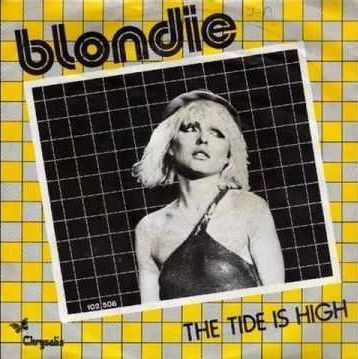
I remember hearing this a lot in 1981. The Tide Is High,” a remake of an obscure 1967 song by the Jamaican group the Paragons (Very good version by the way). It was released in 1980 but peaked in 1981 at #1 in the Billboard 100, the UK and Canada. It was written by Jamaican DJ Duke Reid in the 1930s
This is interesting. Sean Lennon said: “My father had an old Wurlitzer in the game room of our house on Long Island. It was filled with 45s, mostly Elvis and The Everly Brothers. The one modern song I remember him listening to was ‘The Tide Is High’ by Blondie, which he played constantly. When I hear that song, I see my father, unshaven, his hair pulled back into a ponytail, dancing to and fro in a worn-out pair of denim shorts, with me at his feet, trying my best to coordinate tiny limbs.”
Blondie experimented with many different sounds. They were a punk/new wave band in their early years, making a name playing clubs like CBGB’s in New York. This song was their foray into reggae, but they played around with rap on “Rapture” and with disco on “Heart Of Glass.”
Debbie Harry in 1000 UK #1 Hits by Jon Kutner and Spencer Leigh: “I first heard ‘The Tide Is High’ on a compilation tape that someone had given me while we were in London. Chris (Stein) and I both fell in love with the song and decided it was too good to resist.”
Blondie wanted to give the song a Jamaican feel, so they hired three percussion players and created a new string and horn arrangement to give it an authentic sound. According to Chris Stein, the percussion includes “eight tracks of drum sticks tapping on a piano bench.”
The Tide is High
The tide is high but I’m holdin’ on I’m gonna be your number one I’m not the kind-a girl who gives up just like that, oh no
It’s not the things you do that tease and hurt me bad But it’s the way you do the things you do to me I’m not the kind-a girl who gives up just like that, oh no
The tide is high but I’m holdin’ on I’m gonna be your number one, number one.
Ev’ry girl wants you to be her man But I’ll wait my dear till it’s my turn I’m not the kind-a girl who gives up just like that, oh no
The tide is high but I’m holdin’ on I’m gonna be your number one, number one, number one
Ev’ry girl wants you to be her man But I’ll wait my dear till it’s my turn I’m not the kind-a girl who gives up just like that, oh no
The tide is high but I’m holding on I’m gonna be your number one, number one, number one
The tide is high but I’m holding on I’m gonna be your number one The tide is high but I’m holding on I’m gonna be your number one The tide is high but I’m holding on I’m gonna be your number one
This song was played and played when it was released but I haven’t heard it a lot since. The song peaked at #2 in the Billboard 100, #14 in the Country Charts, and #8 in Canada in 1981. This song was written by Hank DeVito, who was the pedal steel guitarist for Emmylou Harris’ backing group, The Hot Band.
In 1981 I remember 3 songs that you would hear on the radio at any time after they were released. Bette Davis Eyes, The Tide Is High, and Queen of Hearts. You didn’t have to wait for it…turn on the radio and one of them would be there.
From Songfacts.
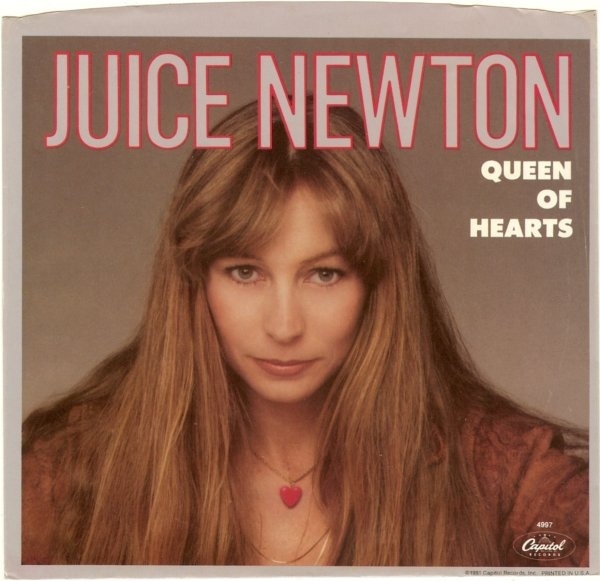
Juice Newton had the biggest success with “Queen of Hearts” after it appeared on her 1981 album, Juice. In September 1981, Newton’s version peaked at #2 on the US charts, having shifted over one million copies. In 1982, the song was nominated for the Grammy Award for Best Female Country Vocal Performance. Dave Edmunds, who first recorded “Queen of Hearts” in 1979, told Creem Newton stole his composition: “She did pinch my arrangement, note for note, but I’m not angry with that.”
The Welsh musician Dave Edmunds was the first artist to record “Queen of Hearts.” The song appears on his 1979 album, Repeat When Necessary. The track peaked at #11 in the UK, but Edmunds’ label – Led Zeppelin’s Swan Song – refused to release it in the US. Edmunds, who reached #4 US with his 1970 cover of “I Hear You Knocking,” was hoping for another American hit and was not pleased when Swan Song held back both “Queen of Hearts” and “Girls Talk” (a song written by Elvis Costello that made #4 UK for Edmunds in 1979).
Queen of Hearts
Midnight, and I’m a-waiting on the twelve-oh-five Hoping it’ll take me just a little farther down the line
Moonlight, you’re just a heartache in disguise Won’t you keep my heart from breaking If it’s only for a very short time
Playing with the queen of hearts Knowing it ain’t really smart The joker ain’t the only fool Who’ll do anything for you Laying out another lie Thinking ’bout a life of crime ‘Cause that’s what I’ll have to do To keep me away from you
Honey, you know it makes you mad Why is everybody telling everybody what you have done
Baby, I know it makes you sad But when they’re handing out the heartaches You know you got to have you some
Playing with the queen of hearts Knowing it ain’t really smart The joker ain’t the only fool Who’ll do anything for you Laying out another lie, Thinking ’bout a life of crime ‘Cause that’s what I’ll have to do To keep me away from you
Lovers, I know you’ve had a few But hide your heart beneath the covers And tell ’em they’re the only one
And others, they know just what I’m going through And it’s a-hard to be a lover When you say you’re only in it for fun
Playing with the queen of hearts Knowing it ain’t really smart The joker ain’t the only fool Who’ll do anything for you
Playing with the queen of hearts Knowing it ain’t really smart The joker ain’t the only fool Who’ll do anything for you Laying out another lie, Thinking ’bout a life of crime ‘Cause that’s what I’ll have to do To keep me away from you
Playing with the queen of hearts Playing with the queen of hearts Playing with the queen of hearts Playing with the queen of hearts









 PowerPop... An Eclectic Collection of Pop Culture