I’m a lover of B sides. Downbound Train, Darlington County, and No Surrender were not the big hits off of Born In The USA but these are the ones I listen to the most.
This song starts off with I had a job, I had a girl, I had something going, mister, in this world and his life goes down from there. The poor guy had 3 jobs in the space of 3 minutes. The song has enough drama to be a soap opera but the riff and that great sound lift it up. Like the rest of the album, the song has a sound that is great.
What makes this album stand out…other than the great songs… is the mix that Bob Clearmountain did…everything is sharp and in focus…every guitar lick, vocal, and drum.
Tomorrow we will have a couple more from the album. This is not my favorite Bruce album but it’s tied to a great time in my life.
Downbound Train
I had a job, I had a girl I had something going, mister, in this world I got laid off down at the lumber yard Our love went bad, times got hard Now I work down at the car wash Where all it ever does is rain Don’t you feel like you’re a rider on a downbound train
She just said, “Joe, I gotta go We had it once, we ain’t got it anymore” She packed her bags, left me behind She bought a ticket on the Central Line Nights as I sleep, I hear that whistle whining I feel her kiss in the misty rain And I feel like I’m a rider on a downbound train
Last night I heard your voice You were crying, crying, you were so alone You said your love had never died You were waiting for me at home Put on my jacket, I ran through the woods I ran till I thought my chest would explode There in the clearing, beyond the highway In the moonlight, our wedding house shone I rushed through the yard I burst through the front door, my head pounding hard Up the stairs I climbed The room was dark, our bed was empty Then I heard that long whistle whine And I dropped to my knees, hung my head and cried Now I swing a sledge hammer on a railroad gang Knocking down them cross ties, working in the rain Now, don’t it feel like you’re a rider on a downbound train
I’ve been a Sheryl Crow fan since I heard her first songs. The lyrics she writes with Jeff Trott are different than the usual pop song. Many of their songs are abstract which I like.
Crow wrote this with guitarist Jeff Trott and drummer Brian MacLeod during a six-month stay in New Orleans. The song shows an array of images to highlight what needs changing in someone’s life.
This song peaked at #1 in the Billboard US Adult Alternative Songs, #8 in the UK, and #2 in Canada in 1997.
If you want to check out something new Sheryl has done…check out this piece from Christian from christiansmusicmusings about Sheryl and Citizen Cope covering a Bill Withers song. A very good version of Lonely Town, Lonely Street.
In this song, she takes a gentle swipe at the Material Girl who inspired this verse…and a few others with:
Canine, feline, Jekyll and Hyde
Wear your fake fur on the inside
Queen of south beach, aging blues
Dinner’s at six, wear your cement shoes
I thought you were singing your heart out to me
Your lips were syncing and now I see
Jeff Trott: I don’t know how we were talking about Madonna, but the second verse of “A Change Would Do You Good” was directed at Madonna. “You wear your fake fur on the inside.” It’s been awhile. I can’t think of all the lyrics. But one of them was “Mercedes Ruehl and a rented Lear.”
“We were trying to come up with something like the Staple Singers. Mavis Staples is one of those legendary soul singer/songwriters, and Sheryl and I have this affinity for those old soul songs, Motown, stuff like that. We’re always trying to find those rare, rare songs for inspiration.”
Songfacts
The trio came up with so many lyric ideas that they decided to throw them all in a hat and draw them out, leading to a string of non-sequiturs that tie the song together. Trott said: “Sheryl just picked them out randomly and put them on a piece of paper, and we all read them. We all thought, ‘Whoa, this actually makes sense, even though it’s so oblique and completely abstract.’ So, we put this thing together and tried to keep the order pretty close, just swapping a couple of the lines to make more sense.”
So, a change would do who good? According to Trott, the first verse is about producer Bill Bottrell, who walked out on the making of the album. While the lyrics are biting, Trott says it was all in fun. “She had a little bit of resentment towards him, but not in a harsh way, but in a playful kind of way.”
He’s a platinum canary, drinkin’ Falstaff beer
Mercedes Ruehl, and a rented Lear
Bottom feeder insincere
Prophet lo-fi pioneer
The above lyrics are often misquoted, but Trott confirmed they indeed reference Mercedes Ruehl. The Academy Award-winning actress also starred in the 1999 thriller The Minus Man, in which Crow made her debut film appearance.
After some convincing, Crow agreed to make the last verse about herself:
I’ve been thinking ’bout catching a train
Leave my phone machine by the radar range
Hello it’s me, I’m not at home
If you’d like to reach me, leave me alone
Three music videos were made. The first, a black-and-white clip directed by Crow and Lance Acord, shows the singer both performing out on the street and tossing her belongings out of a window in the background.
The star-studded second video, directed by Michel Gondry, has Crow magically manipulating characters’ lives, loosely inspired by the classic sitcom Bewitched. Cameos include Mary Lynn Rajskub, Heather Matarazzo, Jeff Garlin, Ellen DeGeneres, Molly Shannon, Andy Dick and Toby Huss.
The third video consists of footage from a live VH1 performance.
This was covered by Dean Geyer and Lea Michele on the 2012 Glee episode “Makeover.”
A Change Would Do You Good
Ten years living in a paper bag, Feedback baby, he’s a flipped out cat, He’s a platinum canary, drinkin’ Falstaff beer, Mercedes rule, and a rented leer.
Bottom feeder insincere, High fed low fat pioneer, Sell the house and go to school. Pretty young girlfriend, daddy’s jewel.
A change, (A change would do you good) Would do you good, (A change would do you good) I think a change, (A change would do you good) Would do you good. (A change would do you good)
God’s little gift is on the rag, Poster girl posing in a fashion mag, Canine, feline, Jekyll and Hyde? Wear your fake fur on the inside.
Queen of south beach, aging blues, Dinners at six, wear your cement shoes, I thought you were singing your heart out to me, Your lips were singing and now I see.
A change, (A change would do you good) Would do you good, (A change would do you good) I think a change, (A change would do you good) Would do you good. (A change would do you good)
A change, (A change would do you good) Would do you good, (A change would do you good) I think a change, (A change would do you good) Would do you good. (A change would do you good)
Chasing dragons with plastic swords, Jack off jimmy everybody wants more, Scully and angel on the kitchen floor, And I’m calling buddy on the ouija board.
I’ve been thinking ’bout catching a train, Leave my phone machine by the radar range, “Hello it’s me, I’m not at home, If you’d like to reach me, leave me alone”
A change, (A change would do you good) Would do you good, (A change would do you good)
“Hello it’s me, I’m not at home, If you’d like to reach me, leave me alone”
A change, (A change would do you good) Would do you good, (A change would do you good) I think a change, (A change would do you good) Would do you good. (A change would do you good)
A lot of memories are connected with this song. Summer of 1985. I never got into much trouble in high school…never got caught making mischief anyway… but I did have this adventure after graduation. I was driving to Florida with 3 other guys with this song blasting out with 140 bucks in my pocket…to Cocoa Beach, Florida…15 hours away. I was the rich one on this trip.
A bunch of guys that just graduated and are acting stupid. We learned if you tilted a coke machine (those back then), Cokes would stream out. Funny how you try things out when you are 18 and stupid. We filled a couple of coolers up with them. It’s a wonder we weren’t caught or crushed by all of those machines. We also halfway wrecked a hotel room (TV was bolted down, thank goodness) and dreaded getting back home, where we would have to begin…gulp…life. No, I never tilted another coke machine, wrecked a hotel room, or anything like it again. 4 guys in a Toyota Celica for 15 hours…not comfortable but when you are 18…fun all the same…now I’d be in traction after such a trip.
Certain songs take you back to a time. Walking On Sunshine, Glory Days, and Darlington County all connect me with that trip. Back to the song! This is one of the very few on the album that wasn’t a hit…but it’s just as good as many of the others.
Bruce originally wrote this for his 1978 album Darkness On The Edge Of Town, but it didn’t make the cut. The riff in the song reminds me of Cadillac Ranch that was on The River album.
The song resolves itself in the end with the narrater’s buddy in trouble.
Driving out of Darlington County My eyes seen the glory of the coming of the Lord Driving out of Darlington County Seen Wayne handcuffed to the bumper of a state trooper’s Ford
Darlington County
Driving in to Darlington County Me and Wayne on the Fourth of July Driving in to Darlington County Looking for some work on the county line We drove down from New York City Where the girls are pretty but they just want to know your name Driving in to Darlington City Got a union connection with an uncle of Wayne’s We drove eight hundred miles without seeing a cop We got rock and roll music blasting off the T-top, singing
Sha la la, sha la la la la Sha la la la, la la la Sha la la, sha la la la la Sha la la la, la la la
Hey little girl, standing on the corner Today’s your lucky day for sure, all right Me and my buddy, we’re from New York City We got two hundred dollars, we want to rock all night Well girl, you’re looking at two big spenders Why, the world don’t know what me and Wayne might do Our pa’s each own one of the World Trade Centers For a kiss and a smile, I’ll give mine all to you Come on baby, take a seat on my fender It’s a long night, and tell me, what else were you gonna do? Just me and you, we could
Sha la la, sha la la la la Sha la la la, la la la Sha la la, sha la la la la Sha la la la, la la la
Little girl, sitting in the window Ain’t seen my buddy in seven days, play it boys County man tells me the same thing He don’t work and he don’t get paid
Little girl, you’re so young and pretty Walk with me and you can have your way And we’ll leave this Darlington City For a ride down that Dixie Highway
Driving out of Darlington County My eyes seen the glory of the coming of the Lord Driving out of Darlington County Seen Wayne handcuffed to the bumper of a state trooper’s Ford
Sha la la, sha la la la la Sha la la la, la la la Sha la la, sha la la la la Sha la la la, la la la
Sha la la, sha la la la la Sha la la la, la la la Sha la la, sha la la la la Sha la la la, la la la
Sha la la, sha la la la la Sha la la la, la la la Sha la la, sha la la la la Sha la la la, la la la
This song was on the Out of the Blue album. It edges toward disco a little but everything was at this time.
The song was originally called “Dead End Street” before Jeff Lynne decided he wasn’t happy, so he erased the vocal track and re-wrote the lyrics. Some words that survived from that version can be heard in the opening of the third verse, “I’ve been livin’ on a dead-end street.”
This song peaked at #17 in the Billboard 100, #16 in Canada and #6 in the UK in 1978.
Jeff Lynn: “It was a song called Dead End Street. I’d done all the words and everything, finished it. And I came down the next day in the studio and I went, ‘I hate that. Let’s rub all the vocals off.’ And so, he goes, ‘Really?’ Y’know, me engineer. And I said, ‘Yup. Get rid off everything off there. Whatever to do with the vocals.’ And he did. He rubbed ’em all off. And I’d been sitting up in the hotel, which is above the studio, working at night just trying to think of a new tune and new words, which I did. And tried it the next day and there they worked. So, it was a good job I did, but it also meant changing the arrangement slightly. So a lot of pairs of scissors were used that day.”
From Songfacts
This was a hit single from British pop rock band Electric Light Orchestra’s double album, Out of the Blue, recorded at Musicland Studios in Munich, Germany during the summer of 1977. The song finds ELO leader Jeff Lynne searching for the elusive sweet talkin’ woman. He asks everyone he knows where he can find her, and even calls the operator to ask about her whereabouts, but his search is fruitless. Seems she doesn’t want to be found.
The USA single release was ten seconds shorter than its British counterpart due to a slightly faster mix. It is not known whether it was purposely edited to help the song to get more airplay or a simple error due to the tape machine being run at the wrong speed.
Like several songs on Out of the Blue, this song made use of the Vocoder 2000. ELO were one of the first music acts to make extensive use of the vocoder, which could synthesize voice into a robotic sound.
Robert John “Mutt” Lange inadvertently ripped off this track when he wrote the Huey Lewis & the News song “Do You Believe In Love?,” for their 1982 Picture This album. The verses have the same melody and the lyrics of the opening verse are remarkably similar. “I was walking down a one way street; Just a looking for someone to meet; One woman who was looking for a man.”
Sweet Talkin’ Woman
I was searchin’ (searchin’) on a one-way street I was hopin’ (hopin’) for a chance to meet I was waitin’ for the operator on the line (She’s gone so long) What can I do? (Where could she be?) Don’t know what I’m gonna do I gotta get back to you
You gotta slow down (slow down), sweet talkin’ woman You got me runnin’, you got me searchin’ Hold on (hold on), sweet talkin’ lover It’s so sad if that’s the way it’s over
I was (walkin’), many days go by I was thinkin’ (thinkin’) ’bout the lonely nights Communication break down all around (She’s gone so long) What can I do? (Where could she be now?) No no no, don’t know what I’m gonna do I gotta get back to you
You gotta slow down (slow down), sweet talkin’ woman You got me runnin’, you got me searchin’ Hold on (hold on), sweet talkin’ lover (hold on) It’s so sad if that’s the way it’s over
I’ve been livin’ on a dead-end street I’ve been askin’ ev’rybody I meet Insufficient data coming through (She’s gone so long) What can I do? (Where could she be?) No no no, don’t know what I’m gonna do I gotta get back to you
Slow down (slow down), sweet talkin’ woman You got me runnin’, you got me searchin’ Hold on (hold on), sweet talkin’ lover (hold on) It’s so sad if that’s the way it’s over
Slow down (slow down), sweet talkin’ woman You got me runnin’, you got me searchin’ Hold on (hold on), sweet talkin’ lover (hold on) It’s so sad if that’s the way it’s over
Slow down (slow down), sweet talkin’ woman You got me runnin’, you got me searchin’ Hold on (hold on), sweet talkin’ lover (hold on) It’s so sad if that’s the way it’s over
Slow down (slow down), sweet talkin’ woman You got me runnin’, you got me searchin’ Hold on (hold on), sweet talkin’ lover (hold on) It’s so sad if that’s the way it’s over
Slow down (slow down), sweet talkin’ woman You got me runnin’, you got me searchin’
Get your bandanas ready…this weekend I’m going to cover some of the Born In The USA album by Bruce Springsteen. We will start off with the title track.
Springsteen wrote this about the problems Vietnam veterans encountered when they returned to America. Vietnam was the first war the US didn’t win, and while veterans of other wars received a hero’s welcome, those who fought in Vietnam were mostly ignored when they returned to their homeland.
The other song that has someone really ripping the vocals is “Twist and Shout” sung by John Lennon with the Beatles.
The song peaked at #9 in the Billboard 100, #1 in New Zealand, #11 in Canada, and #5 in the UK in 1985. This is the first song and title track to one of the most popular albums ever…Born In The U.S.A. sold over 18 million copies.
I remember back in the 80s Chrysler offered Springsteen $12 million to use this in an ad campaign with Bruce… Springsteen turned them down so they used “The Pride Is Back” by Kenny Rogers instead. Springsteen has never let his music be used to sell products.
From Songfacts
The original title was “Vietnam.” The director Paul Schrader sent Springsteen a script for a movie called Born In The U.S.A., about a rock band struggling with life and religion. This gave Bruce the idea for the new title. Unfortunately for Schrader, when he was finally ready to make the movie in 1985, the title “Born In The U.S.A.” was too associated with the song. Springsteen helped him out however, providing the song “Light Of Day,” which became the new title for Schrader’s movie and the feature song in the film.
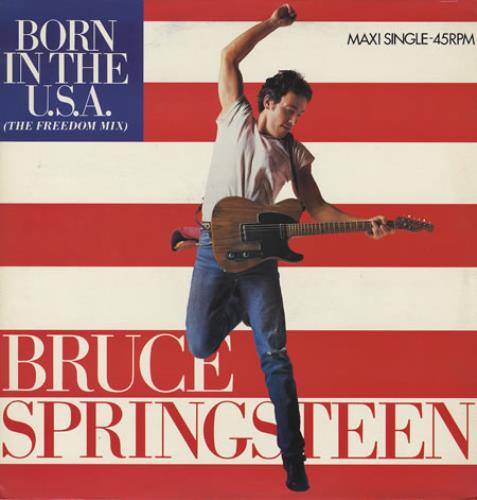
This is one of the most misinterpreted songs ever. Most people thought it was a patriotic song about American pride, when it actually cast a shameful eye on how America treated its Vietnam veterans. Springsteen considers it one of his best songs, but it bothers him that it is so widely misinterpreted. With the rollicking rhythm, enthusiastic chorus, and patriotic album cover, it is easy to think this has more to do with American pride than Vietnam shame.
The single was released in England as a double A-side with “I’m On Fire.” It was the first song Springsteen wrote for the album. He first recorded it on January 3, 1982 on the tape that became his album Nebraska later that year.
While campaigning in New Jersey in 1984, Ronald Reagan said in his speech: “America’s future rests in a thousand dreams inside your hearts. It rests in the message of hope in songs so many young Americans admire: New Jersey’s own Bruce Springsteen. And helping you make those dreams come true is what this job of mine is all about.”
Springsteen talked about this in a 2005 interview with National Public Radio. Said Bruce: “This was when the Republicans first mastered the art of co-opting anything and everything that seemed fundamentally American, and if you were on the other side, you were somehow unpatriotic. I make American music, and I write about the place I live and who I am in my lifetime. Those are the things I’m going to struggle for and fight for.”
Speaking of how the song was misinterpreted, he added: “In my songs, the spiritual part, the hope part is in the choruses. The blues, and your daily realities are in the details of the verses. The spiritual comes out in the choruses, which I got from gospel music and the church.”
This song inspired the famous Annie Leibowitz photo of Springsteen’s butt against the backdrop of an American flag. Bruce had to be convinced to use it as the album’s cover. Some people thought it depicted Springsteen urinating on the flag.
Looking back on the cover in a 1996 interview with NME, Springsteen said: “I was probably working out my own insecurities, y’know? That particular image is probably the only time I look back over pictures of the band and it feels like a caricature to me.”
According to Max Weinberg, Bruce attempted to do the song in a rockabilly trio style, with a country beat.
The drum solo towards the end of the song was completely improvised. Drummer Max Weinberg said that the band was recording in an oval-shaped studio, with the musicians separated into different parts. Springsteen, at the front, suddenly turned towards Weinberg (at the back) after singing and waved his hands in the air frantically to signal drumming. Weinberg then nailed it.
Eight minutes were cut from the song, which Max Weinberg said went on into a psychedelic jam.
Bruce performed solo, acoustic versions on his tours in 1996 and 1999. He wanted to make sure the audience understood the song.
Springsteen allowed notorious rap group The 2 Live Crew to sample this for their song “Banned In The U.S.A.” in 1990, after the group was arrested for performing songs with obscene lyrics. Bruce felt they had a constitutional right to say whatever they wanted in their songs.
This was recorded live in the studio in three takes.
Richard “Cheech” Marin parodied this in the song “Born In East L.A.,” which came from his 1987 movie of the same name. Sample lyrics:
Next thing I know, I’m in a foreign land
People talkin’ so fast, I couldn’t understand
Born In The U.S.A. was the first CD manufactured in the United States for commercial release. It was pressed when CBS Records opened its CD manufacturing plant in Terre Haute, Indiana in 1984. Discs previously had been imported from Japan.
The children’s TV show Sesame Street reworked this as “Barn In The U.S.A.,” credited to Bruce Stringbean and the S. Street Band.
Springsteen’s fist-pumping recitations of this lament for the plight of the Vietnam War veterans during his 1984-85 Born In The USA tour contributed to its mis-reading as a patriotic song by US right-wingers. Critic Greil Marcus wrote: “Clearly the key to the enormous explosion of Bruce’s popularity is the misunderstanding… He is a tribute to the fact that people hear what they want to hear.”
The video was directed by John Sayles, who wrote the screenplay for the 1978 movie Piranha and later directed the films Lone Star, Honeydripper and Eight Men Out . Most of the video is footage of Springsteen performing the song in concert – he wore the same outfit for a few consecutive shows so Sayles could get the shots (Springsteen didn’t want to lip-synch). Other footage came from a Vietnamese neighborhood in Los Angeles and Springsteen’s old stomping ground, Asbury Park, New Jersey. The video stuck to the true meaning of the song, with shots of factory workers, regular folks walking the streets, soldiers training for combat, and a line of guys waiting for payday loans. Sayles said in the book I Want My MTV: “It was right around the time that Ronald Reagan had co-opted ‘Born In The U.S.A.’ and Reagan, his policies were everything that the song was complaining about. I think some of the energy of the performance came from Bruce deciding, ‘I’m going to claim this song back from Reagan.'”
This was not the first hit song to tell a story about a Vietnam veteran’s return to America. In 1982, The Charlie Daniels Band took “Still in Saigon” to #22 in America. That song was written by Dan Daley, who felt that only two artists were right for it. “Since it was such a political song, the strategy was there were only two artists that it would make sense to give it to,” Daley told us. “One was Bruce Springsteen and the other was Charlie Daniels. Because both had made public statements in support of Vietnam veterans.”
Springsteen has often reflected on the Vietnam War in his work. He didn’t serve because he dodged the draft, pretending to be a misfit high on LSD. He has expressed guilt, knowing someone else went in his place, and may not have returned.
When Springsteen performed a spare, acoustic version of the song during his Springsteen On Broadway run from 2017-2018, he would introduce it with a story about Walter Cichon (pronounced sha-shone), leader of a New Jersey rock band called the Motifs, who seemed destined for stardom. Cichon got drafted and in 1968 went missing in action (Springsteen’s 2014 song “The Wall” is about Cichon).
With this backdrop, “Born In The U.S.A.” tells the tragic story not just of soldiers who were neglected when they returned to Vietnam, but also to those who never made it home.
Jennifer Lopez incorporated a bit of this song into her set when she performed at halftime of the 2020 Super Bowl. Lopez honored both her homeland and her heritage by donning a feathered cape with the Puerto Rican flag on one side and the American flag on the other. When she revealed the Puerto Rican side, her daughter Emme sang the chorus of “Born In The U.S.A.” Lopez was born in New York City.
Springsteen left the song out of his set when he played the Super Bowl halftime show in 2009.
The opening line, “Born down in a dead man’s town,” is quoted in Stephen King’s It (1986) to introduce “Part 1: The Shadow Before,” which tells us all about the cursed town of Derry, Maine, and the children who came together to fight an evil clown.
Born In The USA
Born down in a dead man’s town The first kick I took was when I hit the ground End up like a dog that’s been beat too much ‘Til you spend half your life just covering up
Born in the U.S.A I was born in the U.S.A I was born in the U.S.A Born in the U.S.A
Got in a little hometown jam So they put a rifle in my hand Sent me off to a foreign land To go and kill the yellow man
Born in the U.S.A I was born in the U.S.A I was born in the U.S.A I was born in the U.S.A
Come back home to the refinery Hiring man said “son if it was up to me” Went down to see my V.A. man He said “son, don’t you understand”
I had a brother at Khe Sanh fighting off the Viet Cong They’re still there, he’s all gone He had a woman he loved in Saigon I got a picture of him in her arms now
Down in the shadow of the penitentiary Out by the gas fires of the refinery I’m ten years burning down the road Nowhere to run ain’t got nowhere to go
Born in the U.S.A I was born in the U.S.A Born in the U.S.A I’m a long gone Daddy in the U.S.A Born in the U.S.A Born in the U.S.A Born in the U.S.A I’m a cool rocking Daddy in the U.S.A
After watching the Pretenders on the Concert for Kampuchea I’ve been listening to Pretenders lately. The original band was something special. The original band was James Honeyman-Scott (lead guitar, backing vocals, keyboards), Pete Farndon (bass guitar, backing vocals), and Martin Chambers (drums, backing vocals, percussion)…and of course Chrissie Hynde.
Following the drug-related deaths of Honeyman-Scott and Farndon, the band experienced numerous subsequent personnel changes. Hynde has been the band’s only consistent member.
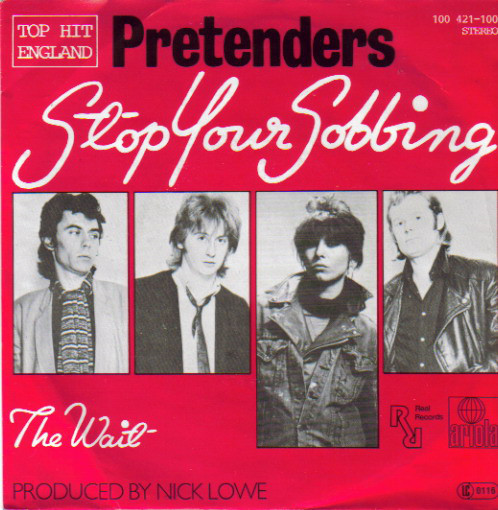
Written by Ray Davies and recorded for The Kinks’ 1964 self-titled debut album, this was later covered by The Pretenders as their first single. The Pretenders’ recording of the song led to the relationship between Davies and the band’s frontwoman Chrissie Hynde.
In order to convince guitarist James Honeyman-Scott to join The Pretenders, Chrissie Hynde hired one of his favorite recording artists, Nick Lowe, to produce this song.
This song peaked at #65 in the Billboard 100 and #34 in the UK in 1980.
From Songfacts
In his autobiography, Ray Davies writes of a girlfriend who may have been the subject of this song: “Her sobbing was making me feel guilty and I told her to stop… there was something so desperately lonely about her.”
The Pretenders covered another Ray Davies penned track a couple of years later, “I Go To Sleep,” for another single release.
Stop Your Sobbing
It is time for you to stop all of your sobbing Yes it’s time for you to stop all of your sobbing oh oh oh There’s one thing you gotta do To make me still want you Gotta stop sobbing now Yeah yeah stop it stop it
It is time for you to laugh instead of crying Yes it’s time for you to laugh so keep on trying oh oh oh There’s one thing you gotta do To make me still want you Gotta stop sobbing now Yeah yeah stop it stop it
Each little tear that falls from your eyes Makes, makes me want To take you in my arms and tell you To stop all your sobbing
There’s one thing you gotta do To make me still want you And there’s one thing you gotta know To make me want you so Gotta stop sobbing now Yeah yeah stop, stop, stop, stop Gotta stop sobbing at all Stop, stop, stop, stop Gotta stop sobbing at all Stop, stop, stop, stop Gotta stop sobbing at all Stop, stop, stop, stop Stop, stop, stop sobbing Stop, stop, stop, stop Gotta stop sobbing Stop, stop, stop, stop Gotta stop sobbing at all Stop, stop, stop, stop Gotta stop sobbing at all
This song was from Fleetwood Mac…the 60’s version of the band with the great guitar player Peter Green. The song peaked at #55 in the Billboard 100 in 1970.
Fleetwood Mac was six years away from their Stevie Nicks/Lindsey Buckingham era when this song was released. The lineup on this track was Peter Green (vocals, guitar), John McVie (bass), Danny Kirwan (guitar), Mick Fleetwood (drums), and Jeremy Spencer (piano).
This is the only song that has been played in every decade of Fleetwood Mac, starting in the ’60s. When Mike Campbell of Tom Petty & the Heartbreakers joined the band in 2018, the song became a feature for him, and his only lead vocal in their set.
The single was released in two parts. Radio stations usually play the A-side, “Oh Well (part 1).” The B-side is “Oh Well (part 2),” an orchestral piece that sounds completely different. Both parts were written by Peter Green and go together on the album, but Green always thought the best part wasn’t played.
Peter Green: “The best bit was Part 2 on the other side of the record,” “You miss the best bit, the Spanish guitar break. The first side was what we played on stage. I didn’t think it would be a hit and I used to hate playing that one because we played the part that wasn’t as good. I wanted a bit of moody guitar playing. They wanted the bit that was easy to do, that everyone knew.”
From Songfacts
At the time, Fleetwood Mac was a successful blues band known for their raucous stage shows. Their albums consistently sold about 300,000 copies and they were known as outstanding musicians. When Stevie Nicks and Lindsey Buckingham joined the band in 1974, they changed their sound and became one of the best-selling bands ever. Until then, “Oh Well” was the only Fleetwood Mac song that made the Hot 100 in America; they did have several UK hits in this era, including the #1 “Albatross.”
This was one of Peter Green’s last contributions to Fleetwood Mac. He was revered as one of the greatest guitarists and songwriters of the time, having replaced Eric Clapton in John Mayall’s Bluesbreakers before forming Fleetwood Mac in 1967. He became a high profile acid casualty in 1970 when he suffered a mental breakdown and left the band, devoting himself to religious practice and proclaiming money as evil. An oft-repeated tale has him entering his manager’s office with a shotgun, demanding that his royalty checks be discontinued.
Mick Fleetwood was sure this song would go nowhere. He bet Green that it would tank.
The stop and start technique inspired Led Zeppelin to do the same thing on “Black Dog.”
Jimmy Page and The Black Crowes released a version on their 2000 album Live At The Greek.
Oh Well – Part 2
The original with Peter Green
Oh Well
I can’t help about the shape I’m in I can’t sing, I ain’t pretty and my legs are thin But don’t ask me what I think of you I might not give the answer that you want me to
Now, when I talked to God, I knew He’d understand He said, “Stick by my side and I’ll be your guiding hand But don’t ask me what I think of you I might not give the answer that you want me to” Ooh, well
I heard this song in a movie called The Matchmaker and I liked the song better than the movie. A great song that was a hit but not for World Party, unfortunately. When I listen to the song I think of Jeff Lynn.
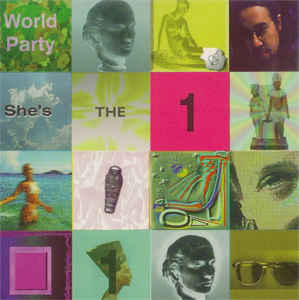
World Party began as an outlet for the pop of vocalist and multi-instrumentalist Karl Wallinger, previously best known for his tenure with the Waterboys. He grew up with the Beatles and Motown as influences. World Party released this song in 1997 on their Egyptology album.
Robbie Willams covered the song in 1998 and took it to number 1 in 1999 in the UK charts. The song’s producer, Guy Chambers, used World Party’s touring band to perform the backing track for Williams, resulting in an identical sounding cover.
World Party’s frontman and songwriter Karl Wallinger was not made aware that a soundalike cover was going to be released using his own band. When the song became a hit, Wallinger stated that he experienced “ongoing bitterness”, going on to state, “The song had a much better time than me, popping off to the Brits while I was at home eating crackers dipped in water”
Williams often claims it is one of the best songs he’s ever written, despite not actually having written the song. This culminated in a telephone outburst from the song’s actual writer, Wallinger, to Chambers, stating “Your fucking friend Robbie Williams. Tell him from me that he’s a c**t”
She’s The One
I was her She was me We were one We were free And if there’s somebody calling me on She’s the one If there’s somebody calling me on She’s the one
We were young We were wrong We were fun All along And If there’s somebody calling me on She’s the one
When you get to where you want to go And you know the things you want to know You’re smiling When you said what you want to say And you know the way you want to play it You’ll be so high you’ll be flying.
Tho’ the sea Will be strong I know we’ll Carry on Cos if there’s somebody calling me on She’s the one If there’s somebody calling me on She’s the one
When you get to where you want to go And you know the things you want to know You’re smiling When you said what you want to say And you know the way you want to play it You’ll be so high you’ll be flying.
I was her She was me We were one We were free And if there’s somebody calling me on She’s the one If there’s somebody calling me on She’s the one If there’s somebody calling me on She’s the one She’s the one If there’s somebody calling me on She’s the one She’s the one If there’s somebody calling me on She’s the one She’s the one If there’s somebody calling me on She’s the one She’s the one If there’s somebody calling me on She’s the one She’s the one If there’s sombody calling me on She’s the one
Now they call you Prince Charming, Can’t speak a word when you’re full of ‘ludes
If you see ludes…you know you are in the seventies or in that vicinity.
This song is about Skynyrd guitarist Gary Rossington, who bought a new car (a Ford Torino), got drunk, and took some Quaaludes, and crashed it into a tree, and then into a house. The band was supposed to start a tour in a few days but had to postpone it because of Rossington’s injuries. I always wonder what Gary thinks when he plays this song. He is the only original member left in the touring band.
Lead singer Ronnie Van Zant and guitarist Allen Collins wrote this song. They were not pleased with Rossington, whose drug and alcohol problems were affecting the band.
A couple of years ago I read a book by their tour manager and this band was a handful on the road. They were tutored by the master… Keith Moon on the fine art of destruction but Lynryd Skynrd loved to fight…mostly each other. Ronnie Van Zant was said to be a nice guy until drunk…after that, the band members would tend to go the opposite way from their tough lead singer and undisputed leader.
The song didn’t chart but remains a classic rock staple and a good song of that era. It was on their last album Street Survivors released in 1977…3 days before the plane they were in crashed killing Ronnie Van Zant, guitarist Steve Gaines, and backup singer Cassie Gaines.
That Smell
Whiskey bottles, and brand new cars Oak tree you’re in my way There’s too much coke and too much smoke Look what’s going on inside you Ooooh that smell Can’t you smell that smell Ooooh that smell The smell of death surrounds you
Angel of darkness is upon you Stuck a needle in your arm So take another toke, have a blow for your nose One more drink fool, will drown you Ooooh that smell Can’t you smell that smell Ooooh that smell The smell of death surrounds you
Now they call you Prince Charming Can’t speak a word when you’re full of ‘ludes Say you’ll be all right come tomorrow But tomorrow might not be here for you Ooooh that smell Can’t you smell that smell Ooooh that smell The smell of death surrounds you
Hey, you’re a fool you Stick them needles in your arm I know I been there before
One little problem that confronts you Got a monkey on your back Just one more fix, Lord might do the trick One hell of a price for you to get your kicks Ooooh that smell Can’t you smell that smell Ooooh that smell The smell of death surrounds you Ooooh that smell Can’t you smell that smell Ooooh that smell The smell of death surrounds you
A long song but I will say the chorus is very catchy. A southern rock band who had a few hits but this one didn’t chart…but it did catch on FM radio after it was released in 1975.
Outlaws founding member Henry Paul says this song is not about marijuana, but about rock and roll luminaries, and the title, he says, was taken from the 1966 “Best Of” collection by the Rolling Stones called High Tides and Green Grass.
The song was on the Outlaws debut album called “Outlaws” and it peaked at #13 in the Billboard album charts.
Hughie Thomasson: I wrote that song in Saint Augustine, Florida. We went to a cookout on the beach and everybody forgot to bring their guitars. I was standing by the ocean and there was a breeze and the words kept coming to me. It’s about all the rock stars I liked that died had come back and were playing a show just for me. Like Jimi Hendrix, Janis Joplin and Jim Morrison. And eventually more of course.
Henry Paul:“From what I gather, there was an album out, the best of the Rolling Stones, called ‘High Tides and Green Grass.’ That was the name of the Rolling Stones’ greatest hits – this is like 1966 – and I think it was a manifestation of that title turned in reverse, ‘Green Grass and High Tides.’ I know that much. And I know that it was a song written for rock and roll illuminaries, from Janis Joplin to Jimi Hendrix, and it had nothing to do with marijuana. But it had to do with, I think, a specific person’s lyrical look at rock and roll legends. ‘As kings and queens bow and play for you.’ It’s about Jimi Hendrix and Janis Joplin. ‘Castles of stone, soul and glory.’ A lot of it is just sort of a collage of words that really don’t have all that much to do with anything, they just fit and sounded right. But I have to say it’s one of my favorite lyrics. My songwriting is more Steinbeck, really rooted in accuracy and reality; this is definitely Alice In Wonderland. It’s the whole ‘White Rabbit.’ It’s sort of like one of those magic lyrical moments that will forever be mysteriously unclearly conceived.”
In most of the Outlaws albums’ liner notes, Hughie Thomasson signed off with the line “green grass and high tides forever.”
The song is the final encore of Solo Tour in the video game Rock Band. Because the game only has four tracks (guitar, bass guitar, drums, and vocals), the song’s three guitar parts are combined into one track.
Green Grass and High Tides
In a place you only dream of Where your soul is always free Silver stages, golden curtains Filled my head, plain as can be As a rainbow grew around the sun All my stars of love who died Came from somewhere beyond the scene you see These lovely people played just for me
Now if I let you see this place Where stories all ring true Will you let me past your face To see what’s really you It’s not for me I ask these questions As though I were a king For you have to love, believe and feel Before the burst of tambourines take you there
Green grass and high tides forever Castles of stone souls and glory Lost faces say we adore you As kings and queens bow and play for you
Those who don’t believe me Find your souls and set them free Those who do, believe and love This time will be your key Time and time again I’ve thanked them For a piece of mind They helped me find myself Amongst the music and the rhyme That enchants you there
Green grass and high tides forever Castles of stone souls and glory Lost faces say we adore you As kings and queens bow and play for you Yeah, they play just for you
This is one of the first bass runs I ever learned…It was on the album Willy And The Poor Boys album.
The song was part of yet another double A-sided single paired with Fortunate Son. Down on the Corner peaked at #3 in the Billboard 100,
On the cover, the band is seen down on the corner performing to a (very) small crowd outside the Duck Kee Market. This location had no real significance except it just happened to be half a block from the recording studio. John Fogerty recalls only ever going in there one time, and that was sometime after the album’s release.
The album cover and building and below picture is recently.
From Songfacts
This song tells the story of a fictional jug band, Willy and the Poor Boys, who were street musicians “playing for nickels, can’t be beat.” The name of the jug band was also the name of CCR’s fourth straight million-selling album.
Just as The Beatles took the role of Sgt. Pepper’s Lonely Hearts Club Band, Creedence became Willy And The Poorboys for this album. This is the only song that played to the concept, but CCR appeared on the cover as the fictional band. The Willy And The Poorboys persona suited the group, as they really were a basic, hardworking band who paid their dues before hitting it big. They sold the jug band theme by performing this song with a washtub bass and washboard.
John Fogerty did all the singing on this. He recorded a bunch of vocal tracks that were overdubbed to create the effect that he was harmonizing with himself.
The line in this song, “Willy goes into a dance and doubles on kazoo” is often misheard. A journalist named Phil Elwood thought the last part of the line was “Devil’s on the loose,” and published it in a newspaper article. John Fogerty got a big kick out of this, and as a nod to Elwood, put this line into the CCR song “Run Through the Jungle”:
They told me, “Don’t go walking slow
‘Cause Devil’s on the loose”
John Fogerty claims that bassist Stu Cook couldn’t play the bass properly for the song. “Eventually, we spent six weeks rehearsing the song, but Stu still couldn’t do it when we got to the recording session,” Fogerty says in Fortunate Son: My Life, My Music. The problem, according to the CCR frontman, was that Cook had no rhythm. This led to a tense moment in the studio, but they eventually managed to get the song down.
Down On The Corner
Early in the evenin’ just about supper time, Over by the courthouse they’re starting to unwind. Four kids on the corner trying to bring you up. Willy picks a tune out and he blows it on the harp.
Down on the corner, out in the street Willy and the Poorboys are playin’ Bring a nickel; tap your feet.
Rooster hits the washboard and people just got to smile, Blinky, thumps the gut bass and solos for a while. Poorboy twangs the rhythm out on his kalamazoo. Willy goes into a dance and doubles on kazoo.
Down on the corner, out in the street Willy and the Poorboys are playin’ Bring a nickel; tap your feet.
Down on the corner, out in the street, Willy and the Poorboys are playin’ Bring a nickel; tap your feet.
You don’t need a penny just to hang around, But if you’ve got a nickel, won’t you lay your money down? Over on the corner there’s a happy noise. People come from all around to watch the magic boy.
Down on the corner, out in the street, Willy and the Poorboys are playin’; Bring a nickel; tap your feet.
Down on the corner, out in the street Willy and the Poorboys are playin’ Bring a nickel; tap your feet.
Down on the corner, out in the street Willy and the Poorboys are playin’ Bring a nickel; tap your feet.
I usually feature originals but I found this video of John covering Slippin and a Slidin’ that I never have seen before and I had to include it. My son listened to John Lennon’s Rock and Roll album (made up of entirely covers of mostly 50s Rock and Roll) and he flipped over it. Afterward, he played it so much I relistened to it and John’s love of that music really came through.
The song was on the Rock and Roll album released in 1975. I could listen to John sing the phone book.
The album made it to #6 in the Billboard 200, #6 in the UK, and #5 in Canada. Stand By Me made it to #20 in the Billboard 100. John Lennon did not make another album until Double Fantasy in 1980.
Slippin’ and Slidin’
Slippin’ and a slidin’, peepin’ and a hidin’, been told long time ago, Slippin’ and a slidin’, peepin’ and a hidin’, been told long time ago, I been told, baby, you been bold, I won’t be your fool no more.
Oh, big conniver, nothing but a jiver, done got hip to your jive, Oh, big conniver, nothing but a jiver, done got hip to your jive, Slippin’ and a slidin’, peepin’ and a hidin’, won’t be your fool no more.
Oh Malinda, she’s a solid sender, you know you better surrender, Oh Malinda, she’s a solid sender, you know you better surrender, Slippin’ and a slidin’, peepin’ and a hidin’, won’t be your fool no more.
This band was musician’s musicians… Not a weak link in the Zombies.
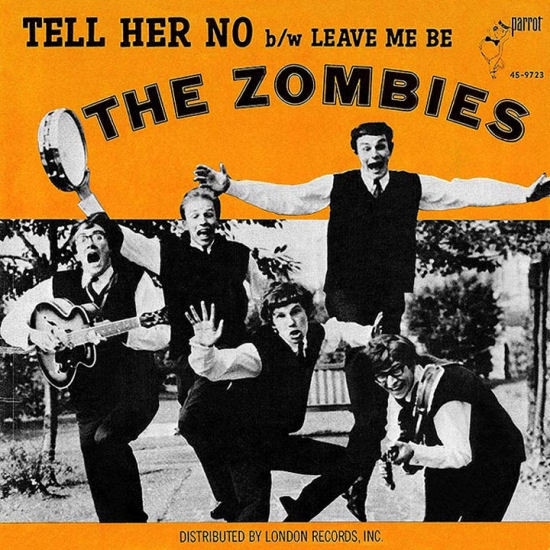
This was written by Zombies keyboardist Rod Argent. The group had a big hit with their first single, “She’s Not There.” The band followed it up in the UK with “Leave Me Be,” which flopped. The band did not want that song to be next but the producer and all the people that were making the decisions released it anyway.
The Zombies then recorded “Tell Her No,” which became their second single in the US and third in the UK. In America, it did very well, but in the UK it fared worse as the band had lost some momentum by releasing “Leave Me Be.”
The song peaked at #6 in the Billboard 100, #6 in Canada, and #42 in the UK. Some critics point to this song as a precursor to jazz fusion for the way the song moves.
This is one of the three big hits the band had in America. She’s Not There, Tell Her No, and Time of the Season. I also have to include their great album Odessey and Oracle which personally I would put up there in the same league as Sgt Pepper and Pet Sounds.
Tell Her No
And if she should tell you “come closer” And if she tempts you with her charms
Tell her no no no no no-no-no-no No no no no no-no-no-no No no no no no Don’t hurt me now for her love belongs to me
And if she should tell you “I love you” And if she tempts you with her charms
Tell her no no no no no-no-no-no No no no no no-no-no-no (Don’t take her love for your arms) No no no no no Don’t hurt me now for her love belongs to me
I know she’s the kind of girl Who’d throw my love away But I still love her so Don’t hurt me now, don’t hurt me now
If she tells you “I love you” Just remember she said that to me
Tell her no no no no no-no-no-no No no no no no-no-no-no (Don’t take her love from my arms) No no no no no Don’t leave me now for her love belongs to me
Today, while thinking of songs for this part of the blog. This very important part I might say. I thought of the song “So Far Away” by Carole King from her 1971 album Tapestry. Well, in searching for the song, I also found the great lady herself, doing her bit for change. Here are her words of encouragement followed by the original version live in 1971.
I always liked the guitar part of this song. I’m not a huge Doors fan but there are some songs I do like by them.
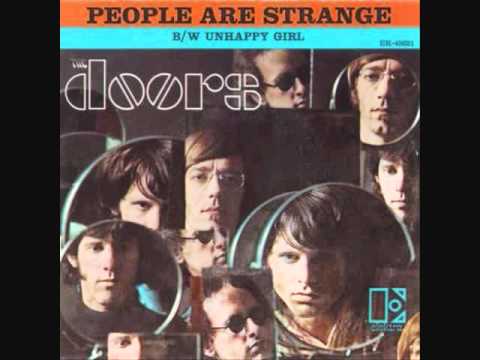
Jim Morrison went to Robby Krieger’s house, they went to a canyon to watch a sunset, at which time Jim realized he was depressed because “if you’re strange, people are strange.” He then wrote the rest of the lyrics, which are about feeling alienated. Krieger wrote the music… He did his guitar solo in one take
The Doors played this on their only Ed Sullivan Show appearance. They also played “Light My Fire,” and Sullivan never asked them to come back because Morrison sang the lines, “Girl we couldn’t get much higher.”
People are Strange appeared on their second album Strange Days.
The song peaked at #12 in the Billboard 100, #1 in Canada, and #9 in New Zealand in 1967.
From Songfacts
This was covered by horror-core rap duo Twiztid on their album Freekshow.
In 1987 the Liverpool band Echo & The Bunnymen covered this song, reaching #29 in the UK charts. Their version, which was featured in the film The Lost Boys, was produced by Ray Manzarek, who also played on the track. In a scene from the movie, the vampires’ cave contains a huge poster of Jim Morrison in his Jesus pose.
Manzarek also played keyboards on the Echo & the Bunnymen song “Bedbugs And Ballyhoo”; Echo also covered the Doors song “Soul Kitchen,” which appears on their album It’s All Live Now. Their guitarist, Will Sergeant, told Songfacts: “We used to get compared to The Doors. I don’t know why. It’s probably because Mac [lead singer Ian McCulloch] had that kind of lower voice, similar to Jim Morrison. He never liked The Doors when we started out. He sort of got into them, as weeks went on, because I was always playing the tapes in the van. Then he got into the whole thing.”
In the 1994 movie Forrest Gump, Forrest improves his ping pong game as this plays.
People Are Strange
People are strange When you’re a stranger Faces look ugly When you’re alone. Women seem wicked When you’re unwanted Streets are uneven When you’re down.
When you’re strange Faces come out of the rain When you’re strange No one remembers your name When you’re strange When you’re strange When you’re strange.
When you’re a stranger Faces look ugly When you’re alone. Women seem wicked When you’re unwanted Streets are uneven When you’re down.
When you’re strange Faces come out of the rain When you’re strange No one remembers your name (X3) When you’re strange When you’re strange When you’re strange.










 PowerPop... An Eclectic Collection of Pop Culture