In 1984 Willie M. ”Wimp” Stokes Jr., described as a Chicago underworld figure who was gunned down on the steps of Roberts Motel at 79th Street and Vincennes Avenue. Such a violent death was not unheard of in Willie the Wimp`s social circles-but the style of his funeral was.
Willie’s dad, Willie Morris “Flukey” Stokes gave his son an extravagant goodbye. He was in the same line of work as his son.
If you want to see the coffin with Mr. Stokes inside… you can go to here “Willie The Wimp and Cadillac Coffin.” I didn’t really want to post that.
Bill Carter and Ruth Ellsworth wrote the song after seeing a newspaper column about the story. Bill Carter released his version on his 1985 album Stompin’ Grounds. Stevie Ray Vaughn started to play the song in concert and it was released on his live album Live Alive in 1986.
Stevie was in the upper echelon of guitar players…right along with Hendrix and Clapton.
Willie The Wimp
Willie the Wimp was buried today, They laid him to rest in a special way. Sent him off in the finest style That casket-mobile really drove ’em wild Southside Chicago will think of him often Talkin’ ’bout Willie the Wimp and his Cadillac coffin, Willie the Wimp and his Cadillac coffin
That casket, it looked like a fine Seville He had a vanity license and a Cadillac grille Willie was propped up in the driver’s seat He had diamonds on his fingers and a smile sweet Fine red suit had the whole town talkin’ Talkin’ ’bout Willie the Wimp and his Cadillac coffin Willie the Wimp and his Cadillac coffin
Oh, Cadillac to Heaven he was wavin’ the banner He left like he lived, in a lively manner With a-hundred dollar bills in his fingers tight He had flowers for wheels and a-flashin’ headlights He been wishin’ for wings, no way he was walkin’ Talkin’ ’bout Willie the Wimp and his Cadillac coffin Yeah, Willie the Wimp and his Cadillac coffin
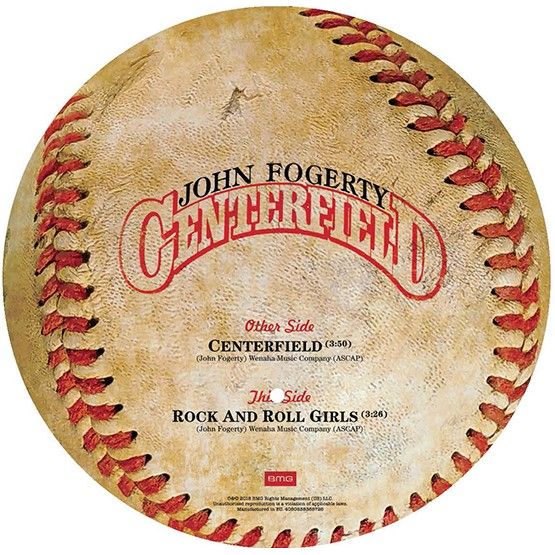
Spring training has started and baseball will be returning soon. It’s a good day to listen to John Fogerty’s Centerfield. This was John Fogerty’s comeback after being away from the charts since 1975.
The song peaked at #44 in the Billboard 100 in 1985. The album Centerfield peaked at #1 in the Billboard Album Charts in 1985.
Along with “Talkin’ Baseball” and “Take Me Out To The Ballgame,” this quickly became one of the most popular baseball songs ever. It’s a fixture at ballparks between innings of games and plays at the Baseball Hall of Fame in Cooperstown, New York.
John Fogerty:“I’d hear about Ruth and DiMaggio, and as my dad and older brothers talked about the Babe’s exploits, their eyes would get so big. When I was a little kid, there were no teams on the West Coast, so the idea of a Major League team was really mythical to me. The players were heroes to me as long as I can remember.”
“It is about baseball, but it is also a metaphor about getting yourself motivated, about facing the challenge of one thing or another at least at the beginning of an endeavor. About getting yourself all ready, whatever is necessary for the job.”
From Songfacts
This song was inspired by Fogerty’s childhood memories of baseball, and although he didn’t play the game, he loved watching it and hearing the stories his father would tell about the legendary New York Yankees centerfielder Joe DiMaggio, who like Fogerty was from San Francisco.
Fogerty left Creedence Clearwater Revival in 1972 and released solo albums in 1973 and 1975 that sold poorly. For the next 10 years, Fogerty refused to record because of legal battles with his record company, but when Centerfield was finally released in 1985, it hit the mark thanks to this title track. A song about baseball was a risk, as the sport isn’t exactly rock-worthy. In the MLB.com interview, Fogerty said: “Over the years it seemed like sports songs just didn’t qualify into the rock-and-roll lexicon. There was that unwritten distinction. It was never considered rock-and-roll. And I realized creating this song would very much put baseball in a rock-and-roll setting. I expected to be roundly thrashed by owners of the flame.”
One of Fogerty’s idols – Chuck Berry – inspired the lyrics, “Rounding third he was heading for home, it was a brown eyed handsome man,” which is lifted from Berry’s song “Brown Eyed Handsome Man.”
Baseball legends mentioned in this song: Joe DiMaggio, Willie Mays, and Ty Cobb.
The second verse refers to the legendary Mighty Casey from the epic poem Casey At The Bat. At the end of the story, Casey strikes out. >>
The line, “It’s a-gone and you can tell that one good-bye” comes from the catchphrase of baseball announcer Lon Simmons, who called games for the San Francisco Giants. He would often say, “Tell it goodbye” when the Giants hit a home run.
Fogerty produced this track and played all the instruments.
On July 25, 2010, in honor of the 25th anniversary of “Centerfield”‘s release, Fogerty played the song at the Major League Baseball Hall of Fame induction ceremonies, where he became the first musician honored by the Hall of Fame – at least the baseball one. Fogerty is in both the Songwriters and Rock and Roll Hall of Fames.
At the ceremony, Fogerty donated a custom-made baseball-bat-shaped guitar to the Baseball Hall of Fame.
The 1984 Major League Baseball All-Star Game was held at Candlestick Park in Fogerty’s hometown of San Francisco. This led to erroneous reports that he watched the game from the center field bleachers, leading to this song. Among the publications to report this was Billboard Publications Rock Movers & Shakers.
When George W. Bush was campaigning for president of the US in 2000, he told a reporter this was his favorite song. Bush used to own part of the Texas Rangers baseball team, and liked the line “Put me in coach, I’m ready to play.”
Brad Paisely played “Centerfield” at an outdoor festival when he was 13 years old, something he told Fogerty about many years later. After the conversation, Fogerty hit him up for his 2013 album Wrote a Song for Everyone, where he performed his songs with contemporary musicians. Paisely picked a deep cut: “Hot Rod Heart” from Fogerty’s 1997 solo album Blue Moon Swamp.
Fogerty has always been a huge baseball fan; the first book he ever read was Lou Gehrig: Boy of the Sandlot.
When his boys played Little League, Fogerty always got a kick out of listening to this song when it was played during warm-ups.
Centerfield
Well, I beat the drum and hold the phone The sun came out today We’re born again, there’s new grass on the field A-roundin’ third and headed for home It’s a brown-eyed handsome man Anyone can understand the way I feel
Oh, put me in, coach, I’m ready to play today Put me in, coach, I’m ready to play today Look at me, I can be centerfield
Well, I spent some time in the Mudville Nine Watching it from the bench You know I took some lumps, when the mighty Case struck out So say hey, Willie, tell the Cobb And Joe DiMaggio Don’t say it ain’t so, you know the time is now
Oh, put me in, coach, I’m ready to play today Put me in, coach, I’m ready to play today Look at me, I can be centerfield
Yeah, got it, I got it
Got a beat-up glove, a home-made bat And a brand new pair of shoes You know I think it’s time to give this game a ride Just to hit the ball and touch ’em all A moment in the sun It’s a-gone and you can tell that one good-bye
Oh, put me in, coach, I’m ready to play today Put me in, coach, I’m ready to play today Look at me (yeah), I can be centerfield
Oh, put me in, coach, I’m ready to play today Put me in, coach, I’m ready to play today Look at me, gotta be, centerfield Yeah
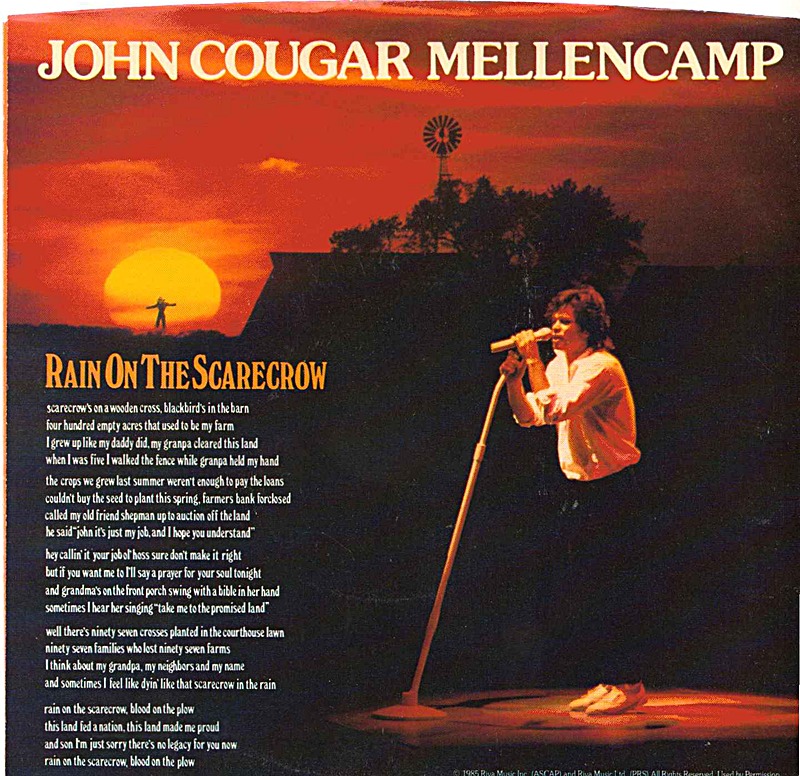
This song was from what I think was John Mellencamp’s best album Scarecrow and the peak of his career.
This song is about the financial difficulties farmers in the Midwest US face… difficulties that can go as far as having their farms repossessed by banks. Mellencamp wrote the song with George Green, who he worked with on many tracks, including “Hurts So Good.”
He has taken an active role in helping American farmers. Along with Neil Young and Willie Nelson, he regularly plays at the Farm-Aid concerts to help raise money.
The song peaked at #21 in the Billboard 100 in 1986. The album peaked at #2 in 1985.
From Songfacts
“Our songs always came about the same way: talk around the kitchen table,” Mellencamp told Rolling Stone. “I had just played ‘Small Town’ for him. He said, “I don’t know why these towns are going out of business” – towns like Freetown and Dudleytown, Indiana. We couldn’t figure out why they were disappearing. We did our research and wrote this song – Reagan had been using grain against the Soviet Union and all sorts of other things. Talking to people was heartbreaking. Nobody wanted to lose their farm.”
When the banker forecloses on the farm in this song, Mellencamp introduces himself into it:
He said, “John it’s just my job and I hope you understand” Hey, calling it your job ol’ Hoss sure don’t make it right
This bit was culled from the 1967 movie Cool Hand Luke, where the boss man puts Paul Newman’s character, Luke, in “the box” (solitary confinement), telling him, “Sorry, Luke. I’m just doing my job. You gotta appreciate that.”
Luke replies: “Nah, calling it your job don’t make it right, Boss.”
Another track on the album, “Lonely Ol’ Night,” also uses dialogue from a Paul Newman movie: the 1963 film Hud. In that one, a character asks, “It’s a lonesome ol’ night, isn’t it?”
Rain On The Scarecrow
Scarecrow on a wooden cross blackbird in the barn Four hundred empty acres that used to be my farm I grew up like my daddy did my grandpa cleared this land When I was five I walked the fence while grandpa held my hand
[Chorus] Rain on the scarecrow blood on the plow This land fed a nation this land made me proud And son I’m just sorry theres no legacy for you now Rain on the scarecrow blood on the plow Rain on the scarecrow blood on the plow
The crops we grew last summer weren’t enough to pay the loans Couldn’t buy the seed to plant this spring and the farmers bank foreclosed Called my old friend schepman up to auction off the land He said john its just my job and I hope you understand Hey calling it your job ol hoss sure dont make it right But if you want me to Ill say a prayer for your soul tonight And grandmas on the front porch swing with a Bible in her hand Sometimes I hear her singing take me to the promised land When you take away a mans dignity he cant work his fields and cows
There’ll be blood on the scarecrow blood on the plow Blood on the scarecrow blood on the plow
Well there’s ninety-seven crosses planted in the courthouse yard Ninety-seven families who lost ninety-seven farms I think about my grandpa and my neighbors and my name and some nights I feel like dying like that scarecrow in the rain
[Chorus]
Rain on the scarecrow blood on the plow This land fed a nation this land made me so proud And son I’m just sorry they’re just memories for you now Rain on the scarecrow blood on the plow Rain on the scarecrow blood on the plow
The Baby’s were formed in 1976 and they broke up in 1981. They had 8 songs in the Billboard 100 and two songs in the top 2.
Back On My Feet Again peaked at #33 in the Billboard 100 in 1980. The song was on the album Union Jacks released in 1980. It peaked at #42 in 1980. The band’s first two singles from the album failed until this one hit.
This is the song I remember the most by them. It was written by Dominic Bugatti, Frank Musker, and John Waite.
Lead singer John Waite on how the Babys got their name: “The name was meant to be a joke. We took the name simply because the record companies wouldn’t listen to any bands they thought were rock & roll. I mean, they wanted sure-fire teen bands, pre-teen bands. We couldn’t get anybody down to hear us to get a record deal, so we called ourselves The Babys. We thought we’d keep the name just for two weeks. Then, the word got around in London that there was a band playing rock & roll called The Babys and it seemed so off the wall, so completely crazy, that it was worth taking a shot with. It really appealed to everyone’s sense of humor.”
Back On My Feet Again
I was so lonely until I met you Told myself I’d get by without love Drownin’ my sorrows, avoiding tomorrows Kind of felt that I just had enough
You light up my face with your jokes and your smiles And the way that you came every night Don’t know what you got, but I’m sure glad I found you Could be wrong but it sure feels right
And here I am I’m back on my feet again Here I am I’m back on my feet again
Surprised at myself for the way that I feel So happy that you’re here with me Some women I’ve known, have left me with nothing But I guess that was just meant to be
And here I am I’m back on my feet again Here I am I’m back on my feet again
I was down for the count I was down, I was beat, I was cryin’ I was cornered and hurt I was hidin’ my face, sick of tryin’
I was so lonely until I met you Told myself I’d get by without love Drowning my sorrows, avoiding tomorrows Kind of felt that I just had enough
And here I am I’m back on my feet again Here I am I’m back on my feet again
Yeah, here I am I’m back on my feet again Here I am I’m back on my feet again
Ooh yeah, here I am I’m back on my feet again Here I am I’m back on my feet again
Here I am, yeah I’m back on my feet again Here I am I’m back on my feet again
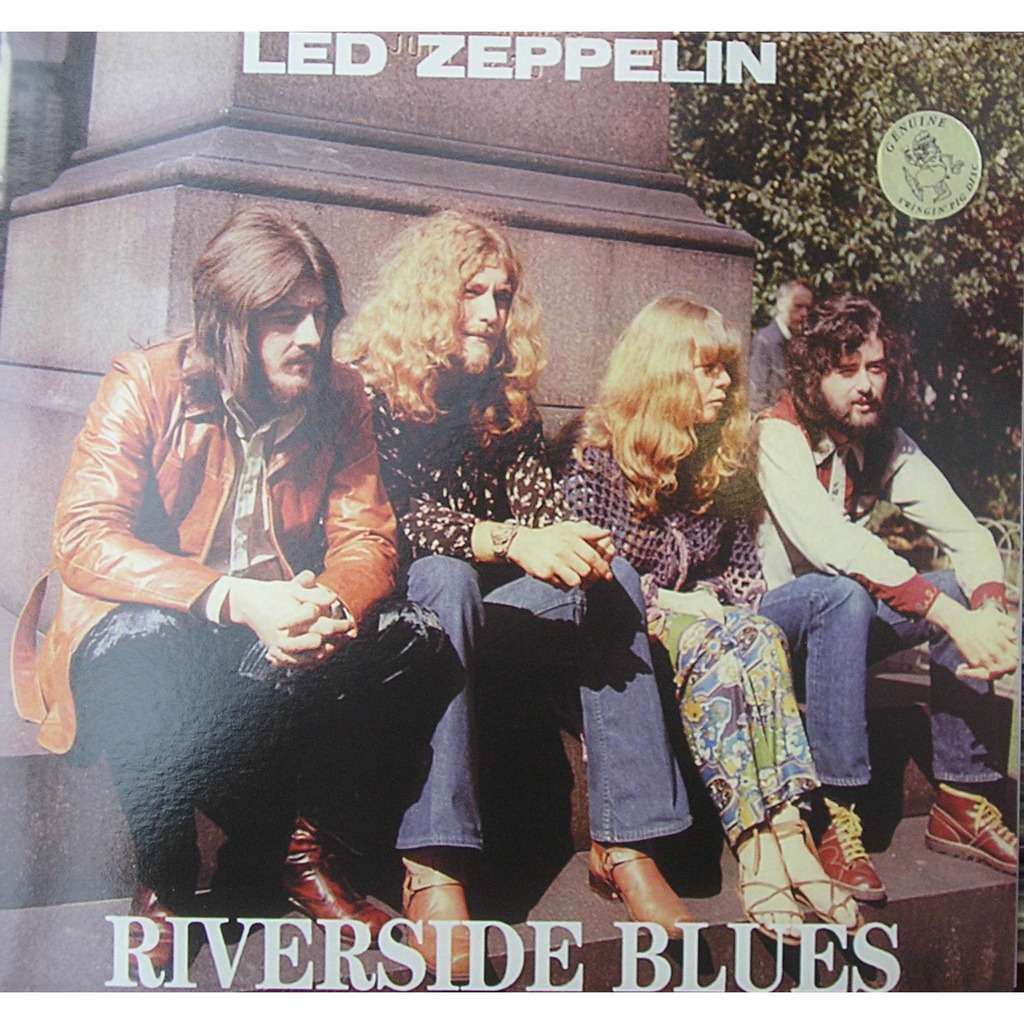
This was on their last album Coda after John Bonham died in 1980. Coda was released in 1982 and peaked at #6 in the Billboard Album Charts in 1983.
Led Zeppelin first played this for a BBC session in 1969, but the song was never released on an album. It was placed on the Box Set in 1990, and it was also made a bonus track on the Coda album for the Complete Studio Recordings.
This was written and originally recorded by blues great Robert Johnson. Led Zeppelin borrowed heavily from American blues music…some would say “borrowed” is too kind of word… but they did introduce some of that music to new fans.
From Songfacts
Jimmy Page used a 12-string acoustic guitar to play this song.
In the third verse, it sounds like Robert Plant mistakenly sings “My baby geen bone” instead of ‘My baby been gone.”
The lyric, “I’ve had no lovin’ since my baby been gone” came from B.B. King’s “Woke Up This Morning (My Baby Was Gone).”
To get the fast bass beats, John Bonham used “triplets” on the bass drum – he would use the tip of his toe.
Traveling Riverside Blues
Asked sweet mama, Let me be her kid She said, “You might get hurt if you don’t keep it hid”
Well I know my baby, If I see her in the dark I said I know my rider, If I see her in the dark
Now, I goin’ to Rosedale, Take my rider by my side Still barrelhouse, If it’s on the riverside, yeah I know my baby, Lord, I said, “is really sloppy drunk” I know my mama, Lord, a brownskin, but she ain’t no plum
See my baby, tell her, Tell her hurry home Had no lovin’, since my baby been gone See my baby, Tell hurry on home I ain’t had, Lord, my right mind, Since my rider’s been gone
Hey, she promises, She’s my rider I wanna tell you, She’s my rider I know you’re mine, She’s my rider She ain’t but sixteen, But she’s my rider
I’m goin’ to Rosedale, Take my rider by side Anybody argue with me man, I’ll keep them satisfied Well, see my baby, tell her, Tell her the shape I’m in Ain’t had no lovin’, Lord, since you know when
Spoken: Why don’t you come into my kitchen
She’s a kindhearted lady. She studies evil all the time She’s a kindhearted woman. She studies evil all the time
Squeeze my lemon ’til the juice runs down my leg Squeeze it so hard, I’ll fall right out of bed Squeeze my lemon, ’til the juice runs down my leg
Spoken: I wonder if you know what I’m talkin’ about
Oh, but the way that you squeeze it girl I swear I’m gonna fall right out of bed
She’s a good rider She’s my kindhearted lady I’m gonna take my rider by my side I said her front teeth are lined with gold She’s gotta mortgage on my body, got a lien on my soul She’s my brownskin sugar plum…
GOOD MORNING everyone. Play this song really LOUD and get on with your day!
The riff of this song is outstanding. It’s a riff that like Louie Louie and Wild Thing is learned by beginning guitar players.
This was released five months after lead singer Bon Scott died. ACDC asked Nobby Holder (lead singer of Slade) to join after Scott had died. Nobby has said that his loyalty was to Slade and turned them down. His voice really would have fit nicely.
The song is a tribute to Scott, and the lyrics, “Forget the hearse ’cause I never die” imply that he will live on forever through his music. With Brian Johnson on lead vocals, the Back In Black album proved that AC/DC could indeed carry on without Scott.
The song peaked at #37 in the Billboard 100 in 1981. The song was written by Brian Johnson, Angus Young, and Malcolm Young
From Songfacts
Brian Johnson made quite a statement with this song, quickly endearing himself to AC/DC fans and leaving little doubt that the band made the right pick to replace Bon Scott. Johnson had been in a group called Geordie, which Scott saw in 1973. After that show, Scott talked up the Geordie lead singer to his bandmates, and in 1980 when they were looking for a replacement, AC/DC’s producer Mutt Lange suggested him. At the time, Johnson was working as a windshield fitter and had recently reunited Geordie.
The band got the idea for the title before writing any of the song, although Malcolm Young had the main guitar riff for years and used to play it frequently as a warm-up tune. After Bon Scott’s death, Angus Young decided that their first album without him should be called Back In Black in tribute, and they wrote this song around that phrase.
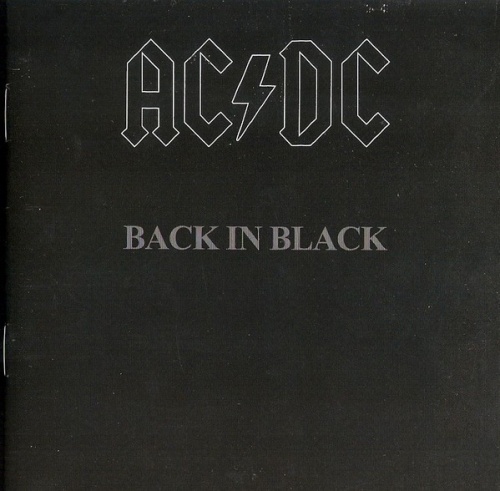
The album had a black cover with the band’s logo on it, which was a tribute to Bon Scott. They didn’t want it to feel mournful, however, and needed a title track that captured the essence of their fallen friend. They were certainly not going to do a ballad, so it fell on Brian Johnson to write a lyric that would rock, but also celebrate Scott without being morbid or literal.
Johnson says he wrote “Whatever came into my head,” which at the time he thought was nonsense. To the contrary, lines about abusing his nine lives and beating the rap summed up Scott perfectly, and his new bandmates loved it.
Bon Scott had several lyrical ideas for the album, but those were abandoned by the band in favor of new lyrics by Brian, Malcolm and Angus. Former AC/DC manager Ian Jeffrey claims to still have a folder that contains lyrics of 15 songs written for Back In Black by Bon, but Angus insists that all of Bon’s notebooks were given to his family.
This song was recorded in The Bahamas and produced in New York by Mutt Lange. Back In Black was one of the first big albums Lange produced. He went on to work with Def Leppard, Celine Dion, and Shania Twain (who he married in 1993). In the late-’70s, he produced two albums for the band Clover, which featured Huey Lewis on harmonica and Alex Call on lead vocals. Call explains Lange’s production style:
“Mutt is a real studio rat. He is Mr. Endurance in the studio. When we were making the records with him, he’d start working at 10:30, 11 in the morning and go until 3 at night, night after night. He is one of the guys that really developed that whole multi-multi-multi track recording. We’d do 8 tracks of background vocals going, “Oooooh” and bounce those down to one track and then do another 8, he was doing a lot of that. A lot of the things you hear on Def Leppard and that kind of stuff, he was developing that when he worked with us. We were the last record he did that wasn’t enormous, and that’s not his fault, he did a really good job with us. Mutt is famous for working long hours. The story I heard about one of the Shania sessions, he had Rob Hajakos, who’s one of the famous fiddle session men down here (Nashville). Rob was playing violin parts for like seven or eight hours and finally he said, ‘Can I take a break,’ and Mutt says, ‘What do you mean take a break?’ Rob goes, ‘Have you ever held one of these for eight hours under your chin?’ Mutt really loves to record, he loves music and he’s a real perfectionist and an innovator. An unbelievable commercial hook writer.” (Check out our full interview with Alex Call.)
This was the title track to AC/DC’s most popular album. It has sold over 19 million copies in the US, the 6th highest ever. Worldwide, it has sold over 40 million.
The Beastie Boys sampled this on their 1985 single “Rock Hard,” a single released in 1985 on Def Jam Records. They sampled it without AC/DC’s permission, so AC/DC refused to allow the Beastie Boys to include the song on their 1999 compilation album Beastie Boys Anthology: The Sounds of Science. >>
A remastered version is included on the 1997 Bon Scott tribute album, Bonfire.
The Atlanta Falcons football team used this as their theme song for a while. The Falcons also went through an MC Hammer phase, when they used “2 Legit 2 Quit” and let the rapper roam their sidelines.
This plays in the opening scene of the 2008 film Iron Man, providing an agressive intro to the Marvel Comic Universe movies. Other films to use the song include:
Grudge Match (2013) The Muppets (2011) Megamind (2010) The Karate Kid (2010) Brüno (2009) School of Rock (2003)
It was also used on episodes of
The Sopranos (“Cold Stones” – 2006) and Family Guy (“Peter Problems” – 2014).
This was used as the backing track to a bootleg version of Eminem’s 1999 hit “My Name Is” The song fits surprisingly well under Eminem’s rap.
Missy Elliott did a remix of this song called “Get Your Freak On (AC/DC remix)” that is played in the beginning of the movie The Rundown, starring Dwayne “The Rock” Johnson and Sean William Scott.
The Appalachian State Mountaineers football team use this song before and during their games, where it is a crowd favorite. The team colors are gold and black. >>
This features in a commercial for the 2015 Chevy Colorado pickup truck, where a mundane guy in a generic sedan is soundtracked with “Rainy Days And Mondays,” which becomes “Back In Black” when a much more exciting fellow comes into the shot and drives off in his black Colorado.
Kurt Cobain was given his first guitar for his 14th birthday, and this was the first song that he learned to play.
Back In Black
Back in black I hit the sack I’ve been too long I’m glad to be back Yes, I’m let loose From the noose That’s kept me hanging about I’ve been looking at the sky ‘Cause it’s gettin’ me high Forget the hearse ’cause I never die I got nine lives Cat’s eyes Abusin’ every one of them and running wild
‘Cause I’m back Yes, I’m back Well, I’m back Yes, I’m back Well, I’m back, back Well, I’m back in black Yes, I’m back in black
Back in the back Of a Cadillac Number one with a bullet, I’m a power pack Yes, I’m in a bang With a gang They’ve got to catch me if they want me to hang ‘Cause I’m back on the track And I’m beatin’ the flack Nobody’s gonna get me on another rap So look at me now I’m just makin’ my play Don’t try to push your luck, just get out of my way
‘Cause I’m back Yes, I’m back Well, I’m back Yes, I’m back Well, I’m back, back Well, I’m back in black Yes, I’m back in black
Well, I’m back, yes I’m back Well, I’m back, yes I’m back Well, I’m back, back Well I’m back in black Yes I’m back in black
Ho yeah Oh yeah Yes I am Oh yeah, yeah oh yeah Back in now Well I’m back, I’m back Back, (I’m back) Back, (I’m back) Back, (I’m back) Back, (I’m back) Back Back in black Yes I’m back in black Out of the sight
I could write pages on this show but I’ll keep it short.
I’ve covered a lot of cartoons but this one is special. This Simpsons is probably my favorite of all time. It has influenced countless TV shows. This show appealed to young and older audiences alike.
The Simpsons was created by Matt Groening, who thought of the idea for the Simpsons in the lobby of James L. Brooks’s office. He named the characters after his own family members, substituting “Bart” for his own name. The family debuted as shorts on The Tracey Ullman Show on April 19, 1987. In 1989, the shorts were spun off into the series The Simpsons which debuted on December 17, 1989.
The family members’ animated bodies have changed shape a bit since, but they have not aged much, aside from shows that looked into characters’ futures. In fact, most people would agree that Matt Groening’s goofy humor hasn’t gotten old either.
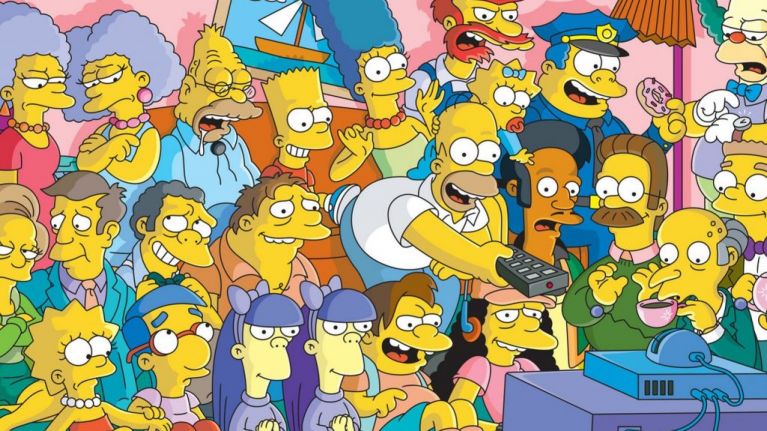
The town of Springfield has a cast of characters that really made the show. You get to know them weekly from Mr. Burns, Ned Flanders, Disco Stu, Barney Gumble, Krusty the Clown, Moe Szyslak, Marge, Lisa, and the list goes on.
Other shows such as Family Guy, American Dad, and South Park were influenced by The Simpsons but they are cruder and use more shock value. Nothing wrong with that but I always thought the Simpsons was more clever. The two cartoons that I have really liked since the Simpsons started are King of the Hill and Futurama, the later also created by Groening.
In the early stages, the show revolved around the young Bart Simpson’s trouble-causing antics, making it appeal to a younger crowd. Over the years, however, the writers, which have included Conan O’Brien, found viewers responded more to the father figure Homer Simpson, and he became the show’s main character.
In 2007, the family finally made its way to theaters in the Simpsons Movie.
The Simpsons have ran for 31 seasons and nearly 700 episodes (676 as of this writing). The show is the longest-running scripted series in TV history.
A few of the Catchphrases that have worked into our everyday life.
This is my favorite song that Roseanne Cash made. The song was written by her dad Johnny Cash and he released it in 1961 and it peaked at #11 on the Country Charts and #84 in the Billboard 100.
Rosanne released it in 1987 on her album King’s Record Shop. The song peaked at #1 in the Billboard Country Charts. The first time I heard it I liked it right away.
This is the only video I could find of them singing it together. It wasn’t professionally recorded. It was in 1989 after the song was a hit for Rosanne… it was videotaped at John & June’s house to celebrate June’s latest book about Mother Mabel Carter.
Tennessee Flat Box
In a little cabaret In a south Texas border town Sat a boy and his guitar And the people came from all around And all the girls From there to Austin Were slippin’ away from home And puttin’ jewelry in hock to take the trip To go and listen To the little dark-haired boy who played the Tennessee flat top box And he would play
Well he couldn’t ride or wrangle And he never cared to make a dime But give him his guitar And he’d be happy all the time And all the girls From nine to ninety Were snappin’ fingers Tappin’ toes And beggin’ him don’t stop And hypnotized And fascinated By the little dark-haired boy who played the Tennessee flat top box And he would play
Then one day he was gone And no one ever saw him ’round He vanished like the breeze They forgot him in the little town But all the girls Still dreamed about him And hung around The cabaret until the doors were locked And then one day On the hit parade Was the little dark-haired boy who played the Tennessee flat top box And he would play
I knew who she was and I knew this song well because it was played endlessly at the time on a pop/rock station I listened to. I really thought she would have gone on to have many pop hits but that didn’t happen…She was very successful in the country charts though. It peaked at #21 in the Billboard 100 and #1 in the Country Charts in 1981.
Rosanne had 23 songs in the Country Charts and 11 number 1’s, and 15 top ten songs. This wasn’t my favorite of hers but it was a solid pop hit. This is by far the biggest hit for Rosanne Cash, whose only other Hot 100 chart appearance is Blue Moon With Heartache, which peaked at #104 in 1982.
From Songfacts
The Seven Year Itch was the name of a particularly irritating skin complaint; by the mid-19th Century the phrase had become a metaphor for an annoying form of behavior. In 1952, it was transformed into a play in which the lead character, played by Tom Ewell, who worked for a publishing company, was reading a book called The Seven Year Itch which claimed that after seven years of marriage, many men started extra-marital affairs. In 1955, it reached the big screen, with Ewell again in the title role, and Marilyn Monroe as his leading lady.
Unlike the play and the film, this song by Rosanne Cash is no romantic comedy. The daughter of Johnny Cash met Rodney Crowell at a party on October 16, 1976, and they married on April 7, 1979. Like most relationships, this one was less than perfect, and after a fight with Crowell at a French restaurant on Ventura Boulevard, she penned this semi-auto-biographical number as a poem; she said it took her about six months to write, but clearly it was worth the labor, because it topped the Country chart in May 1981, as well as reaching #22 on the Hot 100.
It is unclear if Crowell was “playing away.” Probably not, because he produced the song, the title of which indicates that its subject matter is a world away from the whimsical Ewell/Monroe dalliance.
Cash wrote this song in 1979. When she was looking for ideas for the album, she decided to construct a theme around this song. Based on the concept of lovers who fight, break up, then reconcile, the Seven Year Ache album included songs that dealt in some way with the feelings of falling apart and coming back together as a couple. Most of the songs were written by other artists: “What Kinda Girl?,” where she asserts her independence, was written by Steve Forbert; “I Can’t Resist,” where the couple comes back together, is the only Rodney Crowell composition on the set.
Cash never went for mass appeal in her songwriting, which makes her stay on the Top 40 an anomaly. “Seven Year Ache,” however, proved that she could generate a hit song, which led to more creative opportunities and a step outside of her father’s shadow.
Seven Year Ache was Cash’s second album (at least in America – a self-titled set from 1978 that she has since disowned was issued in Europe), but the first one she toured for. Her first album, Right or Wrong, was released in 1979 when she was pregnant, so she stayed off the road. She had been on stage as a backup singer for her father and for Rodney Crowell, but it wasn’t until the release of this second album that she began performing live as a solo artist.
Seven Year Ache
You act like you were just born tonight Face down in a memory but feeling all right So who does your past belong to today? Baby, you don’t say nothing when you’re feeling this way
The girls in the bars thinking, “who is this guy?” But they don’t think nothing when they’re telling you lies You look so careless when they’re shooting that bull Don’t you know heartaches are heroes when their pockets are full
Tell me you’re trying to cure a seven-year ache See what else your old heart can take The boys say, “when is he gonna give us some room” The girls say, “God I hope he comes back soon”
Everybody’s talking but you don’t hear a thing You’re still uptown on your downhill swing Boulevard’s empty, why don’t you come around? Baby, what is so great about sleeping downtown?
Splitting your dice to be someone you’re not You say you’re looking for something you might’ve forgot Don’t bother calling to say you’re leaving alone ‘Cause there’s a fool on every corner when you’re trying to get home
Just tell ’em you’re trying to cure a seven-year ache See what else your old heart can take The boys say, “when is he gonna give us some room” The girls say, “God I hope he comes back soon”
Tell me you’re trying to cure a seven-year ache See what else your old heart can take The boys say, “when is he gonna give us some room” The girls say, “God I hope he comes back soon”
This song is sometimes forgotten in the shadows of his Prince’s hits but this was his first hit single. Prince was only 21 when this song peaked in January of 1980.
I Wanna Be Your Lover was the first single from Prince’s second self-titled album Prince. It was his breakout hit, going to #1 on the R&B chart, #11 on the Billboard 100, #2 in New Zealand, #62 in Canada, and #42 in the UK. The song became a live favorite and a staple of his early setlists.
“I Wanna Be Your Lover” was written after Warner Bros. requested a follow-up to Prince’s debut album For You, which had underperformed commercially. In response, Prince recorded “I Wanna Be Your Lover.”
From Songfacts
According to the liner notes in the Prince compilation album The Hits / The B-Sides, this song was inspired by Patrice Rushen, an R&B singer/songwriter (“Forget Me Nots”) who did some work programming synthesizers on Prince’s debut album For You. Apparently, Prince was smitten, but nothing came of it.
He offered both “I Wanna Be Your Lover” and “I Feel For You” to Rushen, but she turned them down.
Prince is rather humble in this song, explaining off the top that he’s not a rich man, but he’s the guy who won’t let her down. Unlike his first single, “Soft and Wet,” this one is far more innocent and radio-friendly. This being Prince, there is still some sexual double meaning, as he sings, “I wanna be the only one you come for.”
This was the first Prince song to get a video. It’s a fairly basic clip showing Prince performing the song with a variety of different instruments.
I Wanna Be Your Lover
I ain’t got no money I ain’t like those other guys you hang around It’s kinda funny But they always seem to let you down And I get discouraged ‘Cause I never see you anymore And I need your love, babe That’s all I’m living for, yeah
I didn’t want to pressure you, baby But all I ever wanted to do
I want to be your lover I want to be the only one that makes you come, running I want to be your lover I want to turn you on, turn you out All night long, make you shout Oh, lover, yeah! I want to be the only one you come for
I want to be your brother I want to be your mother and your sister, too There ain’t no other That can do the things that I’ll do to you
And I get discouraged ‘Cause you treat me just like a child And they say I’m so shy, yeah But with you I just go wild, ooo ooo ooo
I didn’t want to pressure you, baby, no But all I ever wanted to do
I want to be your lover I want to be the only one that makes you come, running I want to be your lover I want to turn you on, turn you out All night long make you shout Oh, lover, yeah! I want to be the only one you come for, yeah
In the eighties, I would watch this as much as possible. It was a good Twilight Zone type show that had some hits and misses but even when it missed it could be creepy. The show combined horror, science fiction, and comedy. The series was made in the 1980s and boy can you tell! The music, the sets, and the hair.
Each episode of this TV series depicts a short, strange tale…with a twist! With eerie stories that were most of the time smartly written. The usual plot formula is comprised of an initial normal, mundane situation that gradually begins to get off-kilter, with suspense building up to the final, chilling, surprise conclusion.
Some episodes are gruesome, a few are of a lighter comedic style. Like many such shows, they were adapted from the work of famous genre authors of the period such as Harlan Ellison, Stephen King, and Clive Barker. Many episodes also featured veteran actors of the 40’s and 50’s.
The show ran from 1983 to 1988 and had a total of 90 episodes.
So…listen very carefully… get some popcorn, put some 80’s acid-washed jeans on, and binge watch this show at night time to make the atmosphere a little creepier.
With a line like “You Ain’t Worth The Salt In My Tears” in a song…how could you not listen? This song was released in 1983 and reached #36 on the Billboard Charts. I liked the song because it had a catchy guitar riff that stood out at the time with all the synth music going on.
This was Briley’s only charting single as a solo artist. He released 3 albums on the Mercury label in the early 1980s and was in the groups Mandrake Paddle Steamer, Liverpool Echo, Greenslade, and Ian Hunter’s band. He also worked as a session guitarist and singer for artists like Andy Williams and Meatloaf. He wrote songs for Kenny Loggins, Pat Benatar, and Celine Dion.
Martin Briley is a talented musician… below is from Wikipedia
Briley has received orchestral commissions, and has written songs for such artists as Céline Dion, *NSYNC, Dream, Michael Bolton, Mietta, Kenny Loggins, Pat Benatar, Jessica Andrews, Five Star, Jeff Healey, Rebecca St. James, Nana Mouskouri, Willie Nile, Gregg Allman, Night Ranger, David Hasselhoff, Patrick Swayze, Michael Monroe, Chastity Bono, Peter Tork, Nikki Webster, Hope Partlow, Natascha Sohl, Ballas Hough, Phil Stacey, Orianthi, The Maine and Barry Manilow.
Salt In My Tears
I never did it, no, I won’t admit it
Why should I lie for you anymore
You never loved me
You pushed and shoved me
I see the woman I never saw
I saw you laugh when the knife was twisted
It still hurts but the pain has shifted
I’m looking back at the time that drifted by
But I won’t cry for the wasted years
Cause you ain’t worth the salt in my tears
Feeling neglected, used and rejected
You need a shoulder to lean upon
Baby you picked him, found your next victim
Don’t worry, someone will come along
I broke the spell that you kept me under
I had enough of the rain and thunder
I lost track of the time and I wonder why
But I won’t cry for the wasted years
Cause you ain’t worth the salt in my tears
I’ll sit around and drink a few more beers
Until the memory just disappears
Cause you ain’t worth the salt in my tears
I saw you laugh when the knife was twisted
It still hurts but the pain has shifted
I’m looking back at the time that drifted by
But I won’t cry for the wasted years
Cause you ain’t worth the salt in my tears
The great hook here that keeps you listening…then comes the catchy chorus that is hard to forget.
The Breakup song was released in 1981 and peaked at #15 in the Billboard 100. Greg Kihn would later have a top hit ten hit “Jeopardy” when it reached #2 in 1983. Kihn had 7 songs in total in the top 100.
The song was off of the album RocKihnRoll.
This is an interview with Greg Kihn in 2011 about writing the song.
Oh, yeah. There are times in your life that the way is clear. I remember coming home from a gig with the guys. We were in a van, and we pulled up to where I used to live. All of my stuff was piled up on the lawn, and it was raining.
I thought, “Oh, God. My first wife had done it.” We pulled up to the house, and I remember Steve, the bass player, looked at me and just went, “Well, you might as well just keep on going. You’re not going in there.”
There was a Japanese restaurant. I went up there with Stevie, and we were pounding down hot sake. I didn’t know where else to go. It was a cold, rainy night, and we were getting toasted. There was an old Japanese dude there at the sake bar, and he kept saying, “They don’t write ‘em like that anymore.” I thought, Yeah, damn. They don’t, do they? So we got the idea, we wrote that song probably in 15 minutes. All of the great songs are written quickly, by the way.
You have to take a lesson that the stuff that’s real, it’s in you and it’s got to come out like that song. I’d really broken up that very day. It wasn’t like I was trying to feel like what’s a guy like when he’s broken up. I was living it. When things are real, they’re always better than when they’re fiction, if you can dig what I’m saying.
The Breakup Song
We had broken up for good just an hour before Ah ah ah, ah ah ah ah ah And now I’m staring at the bodies as they’re dancing ‘cross the floor Ah ah ah, ah ah ah ah ah And then the band slowed the tempo and the music took me down Ah ah ah, ah ah ah ah ah It was the same old song, with a melancholy sound Ah ah ah, ah ah ah ah ah
They don’t write ’em like that anymore They just don’t write ’em like that anymore
We’d been living together for a million years Ah ah ah, ah ah ah ah ah But now it feels so strange out in the atmospheres Ah ah ah, ah ah ah ah ah And then the jukebox plays a song I used to know Ah ah ah, ah ah ah ah ah And now I’m staring at the bodies as they’re dancing so slow Ah ah ah, ah ah ah ah ah
They don’t write ’em like that anymore They don’t write ’em like that anymore Oh
Hey Now I wind up staring at an empty glass Ah ah ah, ah ah ah ah ah ‘Cause it’s so easy to say that you’ll forget your past Ah ah ah, ah ah ah ah ah
They don’t write ’em like that anymore, no They just don’t write ’em like that anymore They don’t write ’em like that anymore They just don’t write ’em like that anymore They just don’t, no, they don’t No, no, uh-uh
In Jr. High the Go Go’s broke out and got my attention. This song peaked at #20 in 1981 in the Billboard 100. It was on the album Beauty and the Beat that peaked at #1 in the Billboard Album Charts. The album had some good hooks and the songs were mostly written by the band members.
The Go-Go’s are the first all-girl band to write the songs and play the instruments on a #1 US album. The group formed in 1978 in Los Angeles, California. Frontwoman Belinda Carlisle was briefly a member (drummer) of the influential punk band The Germs, but Charlotte Caffey was the only member with much experience – she had been in a band called The Eyes. The group learned on the fly with constant gigs.
Jane Wiedlin on why the band started as punk but soon went to pop: “We, from the beginning, were always kind of enamored with the pop/punk style, like our favorite band, the band that we always tried to emulate was The Buzzcocks, who had that great pop song done in a punky style. So that was kind of what we were going for from the beginning. And for the first few years when we were just learning how to play, I think we sounded probably a lot worse than we meant to, just because we didn’t know what we were doing. And then, slowly as we learned to play, the songs started coming out more and more. It was always trying to sort of straddle the line between pop and punk.”
From Songfacts
Go-Go’s guitarist Jane Wiedlin wrote this with British musician Terry Hall, who was lead singer of The Specials. Wiedlin told Songfacts: “In 1980 we were playing at The Whisky on Sunset Strip, and The Specials were in town from England, and they came to see us, and they really liked us and asked us if we would be their opening act on their tour. I met Terry Hall, the singer of The Specials, and ended up having kind of a romance. He sent me the lyrics to ‘Our Lips Are Sealed’ later in the mail, and it was kind of about our relationship, because he had a girlfriend at home and all this other stuff. So it was all very dramatic. I really liked the lyrics, so I finished the lyrics and wrote the music to it, and the rest is history. And then his band, The Fun Boy Three, ended up recording it, too – they did a really great version of it, also. It was like a lot gloomier than the Go-Go’s’ version.”
Speaking about her relationship with Terry Hall, Wiedlin adds: “Like I said, he had a girlfriend in England, and they were talking about getting married and all this stuff. So I don’t know how I got in the picture. And, you know, that’s something that I did as a teenager, maybe I was 20. That’s something I would never do now, knowingly enter into a relationship with someone who was with someone else. I mean, it was completely screwed on my part. Although I think when people do that, you really have to look at the person who’s in the relationship, and they have to take the burden of the responsibility as well. Anyways, it was one of those things with the tragic letters, ‘I just can’t do this.’ You know, ‘I’m betrothed to another.’ All that kind of stuff.”
This was the first hit for the Go-Go’s, who started as a punk band in the late ’70s, but became pop superstars with the release of their first album, Beauty And The Beat. Unlike most other female pop groups, the Go-Go’s wrote their own songs and were serious musicians. Despite their pure pop sound, they had a confidence and attitude that gave them lots of credibility and set them apart from other bands on the fledgling MTV network.
Jane Wiedlin said in her Songfacts interview: “We’d been together about two years when I wrote that. Some of the songs from the very beginning were songs that ended up part of our repertoire. Others fell by the wayside. I remember when I wrote it, I was really afraid to show it to the band in case they didn’t like it and all this stuff. But luckily they did like it.”
The video was directed by Derek Burbidge, who did the early videos for The Police. It’s low-budget but effective, showing the band performing the song in a small club and also having carefree fun outside on a sunny day. For much of the video they are playing around in a fountain, a trope later popularized in the opening credits of the TV series Friends.
Jane Wiedlin explained: “That was the first single in America. But before we got our record deal with IRS, we actually put out one single in England so that when we toured we had something to sell, and we had like a one single deal with Stiff Records, who were the record company that had signed The Specials and Madness, who also we toured with. We also toured with Madness in England. And then that single was a previous version of ‘We Got The Beat.'” (In our interview with Jane Wiedlin, she talks about another song inspired by a “Euro-guy,” and what happened when she tried to be “The Good Wife.” Her website is janewiedlin.com.)
Terry Hall’s version with his group The Fun Boy Three hit #7 in the UK.
In 2004, Hilary and Haylie Duff recorded this for the movie A Cinderella Story, which starred Hilary.
In the 2002 movie Home Room, high school classmates Alicia (Busy Philipps) and Deanna (Erika Christensen) argue over the meaning of the song. Alicia says, “It’s about a bunch of chicks trying to stay virgins,” and Deanna claims, “It’s about a bunch girls trying to keep a secret.”
Our Lips Are Sealed
Can you hear them? They talk about us Telling lies Well, that’s no surprise
Can you see them? See right through them They have no shield No secrets to reveal
It doesn’t matter what they say In the jealous games people play Our lips are sealed
There’s a weapon That we must use In our defense Silence reveals
When you look at them Look right through them That’s when they’ll disappear That’s when we’ll be feared
It doesn’t matter what they say In the jealous games people play Our lips are sealed
Pay no mind to what they say It doesn’t matter anyway Our lips are sealed
Hush, my darling Don’t you cry Quiet, angel Forget their lies
Can you hear them? They talk about us Telling lies Well, that’s no surprise
Can you see them? See right through them They have no shield No secrets to reveal
It doesn’t matter what they say In the jealous games people play Our lips are sealed
Pay no mind to what they say It doesn’t matter anyway Our lips are sealed Our lips are sealed Our lips are sealed
I remember in Jr High school in 1981 I bought Long Distant Voyager by the Moody Blues. The album received a lot of airplay and peaked at #1 in the Billboard album charts. It had two top twenty hits with The Voice and Gemini Dream. Gemini Dream peaked at #12 in the Billboard 100.
The Moody Blues knew how to adapt. They started off as an R&B band, moved into experimental orchestral rock, dipped into rock, and in the 80s produced some high charting pop songs. I always liked their early seventies output the best but this was a great comeback for them entering the 80s. This album introduced them to another generation of fans.
This is a combination of two songs, the first being bass player John Lodge’s song about going on the road again and the second being guitarist Justin Hayward’s song about love being shared or twin “Gemini” dreams.
Gemini Dream
Long time no see Short time for you and me So fine, so good We’re on the road Like you knew we would
First night, so long A state of mind What can go wrong We’re here, the time is right To rock ‘n’ roll Right through the night
Make it work out Make it work Make it work out Make it work out For each other tonight
Stage fright, candle light You can’t let go Tonight’s the night Came back for you Glad to see That you came too
There’s a place a Gemini dream There’s no escaping from the love we have seen So come with me, turn night today You gonna wake up You know you gonna wake up in a Gemini dream
Turned round to see Where we’ve been And what we believe In life, love Take a chance See it through You’ll be glad That you came too
There’s a place a Gemini dream There’s no escaping from the love we have seen So come with me, turn night to day You gonna wake up You know you gonna wake up in a Gemini dream
Long time no see The lights go up For you and me We’re here The time is right To rock ‘n’ roll Right through the night
Living it Believing it Wanting it Make it work out Make it work Make it work out Make it work out For each other tonight
Long time no see Short time for you and me So fine so far so good We’re on the road Like you knew we would