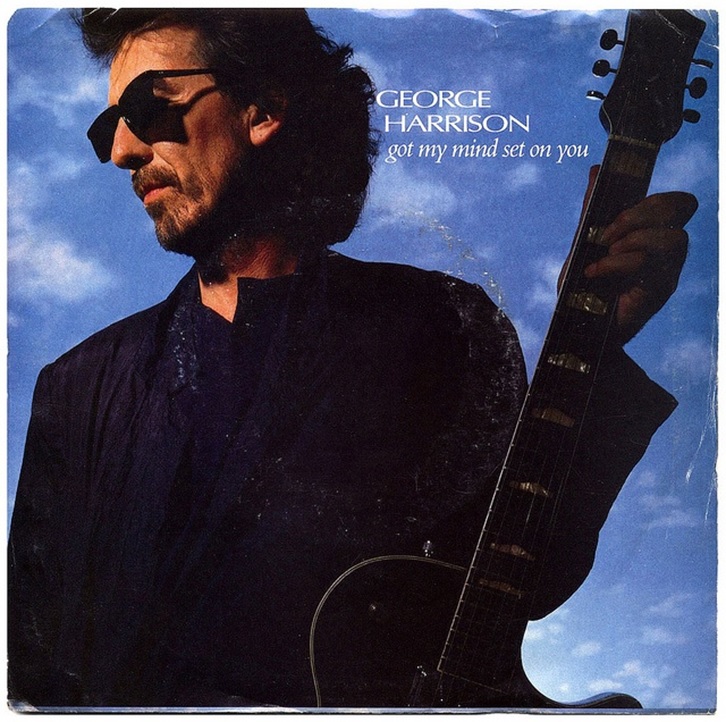
In 1988 I bought Cloud Nine by George Harrison. It stayed on my turntable and in my cassette player for months. This song is not my favorite on the album but I was happy to see George at the top of the charts for the first time since “Give Me Love (Give Me Peace on Earth)” in 1973.
The song was written and composed by Rudy Clark and originally recorded by James Ray in 1962 but it was not a hit for James.
ELO’s Jeff Lynne produced this song with Harrison. His influence can be heard in the backing vocals of the chorus. The song peaked at #1 in the Billboard 100, #1 in Canada, #2 in the UK, and #4 in NewZealand in 1988.
This song is the last number 1 song by a Beatle. Paul did have a number 1 album in 2018 with Egypt Station. Cloud Nine peaked at #8 in the Billboard Album Chart.
From Songfacts
This was written by Rudy Clark and originally recorded by James Ray in 1962. Harrison bought a copy of the single in the summer of 1963 when visiting his sister Louise in Illinois. Many years later when he was writing his Cloud Nine album, he remembered the song and decided to cover it.
Cloud Nine was Harrison’s comeback album. He hadn’t had a hit since 1981 with “All Those Years Ago,” and his previous US #1 was “Give Me Love (Give Me Peace On Earth)” in 1973. Until the Beach Boys released “Kokomo,” Harrison had the record for longest span between #1 hits. “Got My Mind Set On You,” however, was his last single to chart.
Harrison released another album earlier in 1982 called Gone Troppo, which flopped. Proving that he could whip up a hit, he released this very simplistic cover song and it was a huge commercial success. A lot of Harrison’s work was well off the mainstream, using unusual instruments and based on Indian music. This proved that he could release a song requiring very little thought and send it up the charts. Predictably, many of Harrison’s ardent followers can’t stand this song.
Along with Roy Orbison, Bob Dylan, and Tom Petty, Harrison and Lynne formed The Traveling Wilburys in 1988.
Got My Mind Set On You
I got my mind set on you I got my mind set on you I got my mind set on you I got my mind set on you
But it’s gonna take money A whole lot of spending money It’s gonna take plenty of money To do it right, child
It’s gonna take time A whole lot of precious time It’s gonna take patience and time, um To do it, to do it, to do it, to do it, to do it To do it right, child
I got my mind set on you I got my mind set on you I got my mind set on you I got my mind set on you
And this time I know it’s for real The feelings that I feel I know if I put my mind to it I know that I really can do it
I got my mind set on you Set on you I got my mind set on you Set on you
But it’s gonna take money A whole lot of spending money It’s gonna take plenty of money To do it right, child
It’s gonna take time A whole lot of precious time It’s gonna take patience and time, um To do it, to do it, to do it, to do it, to do it To do it right
I got my mind set on you I got my mind set on you I got my mind set on you I got my mind set on you
And this time I know it’s for real The feelings that I feel I know if I put my mind to it I know that I really can do it
But it’s gonna take money A whole lot of spending money It’s gonna take plenty of money To do it right, child
It’s gonna take time A whole lot of precious time It’s gonna take patience and time, um To do it, to do it, to do it, to do it, to do it To do it right
Set on you Set on you
Set on you Set on you Set on you Set on you Set on you Set on you I set my mind on you I’m gonna set on you
This is the first song I heard by them and I liked it right away.
The Go-Go’s formed in the spring of 1978 but didn’t really get serious until 1979 when drummer Gina Schock joined. Her playing gave the music a more forceful punch, and her insistence on frequent practicing helped move the band from novelty to contender in the L.A. scene.
Guitar player Charlotte Caffey wrote this song. It peaked at #2 in the Billboard 100 and #3 in Canada. The song was on the album Beaty and the Beat which peaked at #1 in 1981 in the Billboard Album Charts.
The Go-Go’s are the first all-girl band to write the songs and play the instruments on a #1 US album.
Charlotte Caffey: “I thought it would be very clever to do ‘Going To A Go-Go.’ I thought, Well, let’s try working this out as a cover song. Which is really funny when I think about it. I was listening to it a lot one day, and later that night, the song came to me within five minutes. I don’t even know if it has anything to do with listening to that song, but this whole idea came to me. It was one of those things that just went right through me and came out my hand; I wrote it down, recorded it a little bit, and then brought it into rehearsal a few days later.”
From Songfacts
The Go-Go’s wrote their own songs, and along with the Bangles and The Dixie Chicks, are one of the most successful all-girl bands to do so. “We Got The Beat” was written by guitarist Charlotte Caffey, who drew inspiration from some Motown beats, specifically one that mentioned the name of her group.
In the ’70s, American female rockers like Suzi Quatro and The Runaways found the UK more receptive than their homeland, so The Go-Go’s followed this model, releasing an early version of “We Got The Beat” in the UK as their first single. It was issued on Stiff Records, which was home to The Specials and Madness, both groups The Go-Go’s toured with in England to promote it. It flopped, but the group fared far better in America, where they were signed to IRS Records by Miles Copeland, who managed The Police. In the US, “Our Lips Are Sealed” was released as their first single in the summer of 1981, followed by a new version of “We Got The Beat” in January 1982. This release was The Go-Go’s biggest hit, spending three weeks at #2 in April behind Joan Jett’s “I Love Rock And Roll.”
Jett was able to box them out of the top spot on the Hot 100, but Beauty And The Beat spent six weeks at #1, fending off Jett’s album. This made The Go-Go’s the first all-girl band to top the US albums chart, a mark that stood until 1999, when Dixie Chicks landed with Fly.
This plays in the opening scene of the 1982 movie Fast Times at Ridgemont High, where we meet the main characters in their natural habitat: the Ridgemont Mall. The song doesn’t appear on the soundtrack but got a lot of attention from the film. Other movies to use the song include:
Brimstone & Treacle (1982) Romy and Michele’s High School Reunion (1997) Jimmy Neutron: Boy Genius (2001) My Little Pony: The Movie (2017) Poms (2019)
When The Go-Go’s formed in 1978, they had little experience but figured they could learn on the fly in the LA punk scene, where enthusiasm could make up for shortfalls in musicianship. The only seasoned member was guitarist Charlotte Caffey, who was a few years older and knew how to play when lead singer Belinda Carlisle asked her to join this new all-girl band. Charlotte took the offer, leaving her band The Eyes and becoming a key songwriter in the group along with Jane Wiedlin, the group’s other guitarist, who quickly developed into an excellent musician as well. In 1979, they replaced original drummer Elissa Bello with the more experienced Gina Schock; in early 1981 they swapped out bass player Margot Olavarria for Kathy Valentine, who had been in a group called The Textones and also wrote songs.
The narrative of the band having no idea how to play when they started stuck with them, but by the time they released their first album, Wiedlin and Carlisle were the only members without much previous experience. Those two became the most visible members and each launched successful solo careers after the band folded in 1985. Carlisle got a lot of help from Charlotte Caffey, who worked on much of her solo material.
The Go-Go’s played this and “Our Lips Are Sealed” when they were musical guests on Saturday Night Live, November 14, 1981. The group would often have a few drinks before their shows, but for SNL they didn’t take the stage until about midnight, so all that early drinking caught up with them, resulting in a rather sluggish performance.
In a Songfacts interview with Go-Go’s bass player Kathy Valentine, she said: “I think of ‘We Got The Beat’ as an anthem. It’s very trance-like, so you combine that trance factor with the beat and the anthem nature and it’s very unique.”
The song ties into the album title, Beauty And The Beat, which was Belinda Carlisle’s idea. The group’s first album, it was recorded in New York City with producer Richard Gottehrer, the man who gave us “I Want Candy.” The Go-Go’s were based in Los Angeles, so during this time they stayed together in suites at the Wellington Hotel in New York City, causing lots of mischief and having way too much fun.
The group brainstormed ideas for the cover and decided to go with a spa theme, showing the girls wrapped in towels with cream on their faces. Their art director, George DuBois, took the photos in the hotel, with shots of each member in the bathtub for use on the back cover. According to Kathy Valentine, their manager, Ginger Canzoneri, got the towels from Macy’s and returned them after the shoot. They used Pond’s cold cream on their faces.
This was performed by the cast of the TV series Glee in the 2011 episode “The Purple Piano Project.” Released as a single, this version went to #83 in the US.
This opens the musical Head Over Heels, based on the music of The Go-Go’s, which played on Broadway in 2018. When an oracle, played by Peppermint of RuPaul’s Drag Race, foresees a beatless future for the Elizabethan-era townsfolk of Arcadia, they respond with the tune.
We Got The Beat
See the people walking down the street Fall in line just watching all their feet They don’t know where they want to go But they’re walking in time
They got the beat They got the beat They got the beat Yeah, they got the beat
All the kids just getting out of school They can’t wait to hang out and be cool Hang around ’til quarter after twelve That’s when they fall in line
They got the beat They got the beat Kids got the beat Yeah kids got the beat
Go-go music really makes us dance Do the pony puts us in a trance Do the Watusi just give us a chance That’s when we fall in line
‘Cause we got the beat We got the beat We got the beat Yeah we got it!
We got the beat We got the beat We got the beat Everybody get on your feet we got the beat We know you can dance to the beat we got the beat Jumpin’ get down we got the beat Round and round and round
We got the beat We got the beat We got the beat We got the beat We got the beat We got the beat We got the beat We got the beat We got the beat We got the beat We got the beat We got the beat We got the beat We got the beat
Got a wife and kids in Baltimore, Jack I went out for a ride and I never went back Like a river that don’t know where it’s flowing I took a wrong turn and I just kept going
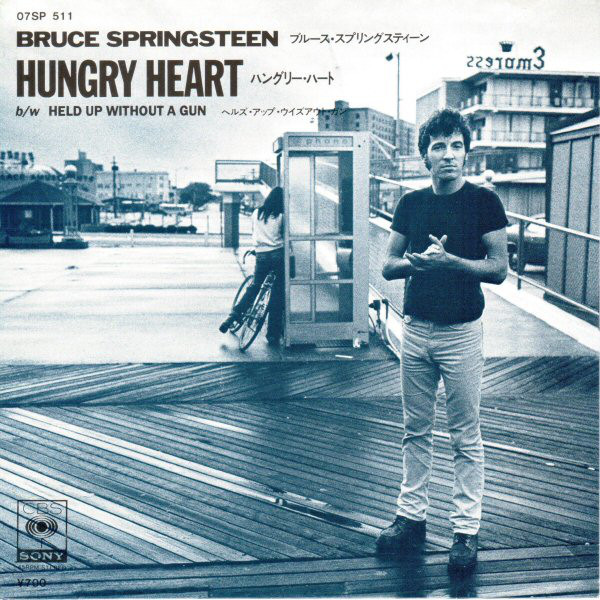
It’s hard to beat that as an opening verse…once I heard that I was hooked. Springsteen met Joey Ramone in Asbury Park, New Jersey, Ramone asked Bruce to write a song for his band, The Ramones. Springsteen wrote “Hungry Heart” that night but decided to keep it.
Mark Volman and Howard Kaylan (Flo and Eddie) of The Turtles sang backup.
The song was on the album The River. The album peaked a #1 in the Billboard Album Charts in 1980. Hungry Heart peaked at #5 in the Billboard 100 in 1980. This was Springsteen’s first top 10 hit.
Bruce Springsteen:“I saw the Ramones in Asbury Park,” “and we were talking for a while and I was like, ‘Man I’ve got to write the Ramones a song.’ So I went home and I sat at my table and I wrote it in about the time it took me to sing it. I brought it in and we went to make a demo for it or I played it for [Johnny Ramone], and he said, ‘Nah, you better keep that one.’ He was right about that. It did pretty well.”
From Songfacts
This was Springsteen’s first Top 10 hit. Born To Run was a big album five years earlier, but did not have any hit singles. This song proved that Springsteen could not just sell concert tickets and albums, but could record hit pop songs.
This song explores a man’s wanderlust contrasted with his desire for a stable family life. Many of Springsteen’s songs are about wanting to get away, and in this song the main character concludes that he does not want to be alone.
Springsteen’s voice was slightly sped up on the recording, producing a higher vocal. Bob Dylan did the same thing on “Lay Lady Lay.”
This was used in the Tom Cruise movie Risky Business. It was the first time a Springsteen song was used in a film.
In the 1981 Rolling Stone reader’s poll, this was voted best single. Springsteen also won for Best Artist, Album, and Male Singer.
Bruce has the audience sing the first verse and chorus when he performs this live.
The single was backed with “Held Up Without A Gun.” This started a tradition of using songs that did not appear on his albums as B-sides.
This went to #28 when it was Reissued in England in 1995. The first time it was released it only went to #44.
Springsteen performed this with Crosby, Stills, Nash & Young at Young’s first annual Bridge School benefit concert in 1986.
Hungry Heart
Got a wife and kids in Baltimore, Jack I went out for a ride and I never went back Like a river that don’t know where it’s flowing I took a wrong turn and I just kept going
Everybody’s got a hungry heart Everybody’s got a hungry heart Lay down your money and you play your part Everybody’s got a hungry heart
I met her in a Kingstown bar We fell in love I knew it had to end We took what we had and we ripped it apart Now here I am down in Kingstown again
Everybody’s got a hungry heart Everybody’s got a hungry heart Lay down your money and you play your part Everybody’s got a hungry heart
Everybody needs a place to rest Everybody wants to have a home Don’t make no difference what nobody says Ain’t nobody like to be alone
Everybody’s got a hungry heart Everybody’s got a hungry heart Lay down your money and you play your part Everybody’s got a hungry heart
When this came out it took me a while to warm up to it… but after a few listens I liked it. They were all over MTV then when they were opening up for the Who’s “farewell” tour.
Clash drummer Topper Headon wrote the music and the original lyrics. After he wrote it he was fired from the band because of drug problems… In the meantime, the song became an enormous hit in the US. In the music video for the song, its original Clash drummer Terry Chimes at the kit (he had returned to replace Headon temporarily).
Joe Strummer decided to take Headon’s lyrics in a different direction. According to former Clash co-manager Kosmo Vinyl, Headon’s original words were a filthy ode to his girlfriend. Joe Strummer wrote the lyrics with a more political bent.
This was The Clash’s biggest US hit, and along with “Train In Vain,” one of only two that reached the Top 40. They had several Top 40 hits in England.
The song peaked at #8 in 1983 in the Billboard 100. The album Combat Rock peaked at #7 in the Billboard Album Charts.
From Songfacts The first line of Strummer’s re-written lyrics had a specific genesis: manager Bernie Rhodes was frustrated in the early Combat Rock sessions with every track ending up being really long (stuff like “Straight To Hell” and “Sean Flynn”) and in one session shouted, “Does everything have to be as long as raga?!” Strummer told Rolling Stone shortly before he died in 2002: “I got back to the hotel that night and wrote on a typewriter, ‘The King told the boogie men You gotta get that raga drop.’ I looked at it and for some reason I started to think about what someone had told me earlier, that you get lashed for owning a disco album in Iran.” This served as inspiration for the rest of the lyrics, about the people defying the Arab ruler (Shareef)’s ban on disco music and “Rocking the Casbah.”
“Casbah” (also spelled “Qasbah” or “Kasbah”) refers to walled areas in many North African towns, especially the one in Algiers. The lyrics use many different terms in humorous context from Arabic, Hebrew, Turkish and Sanskrit language and culture – along with Casbah, there are also Sharifs, Bedouins, Sheikh, kosher, raga and minerets in the song.
In the UK this single was backed on the B-side by “Long Time Jerk,” a song mostly written by bassist Paul Simonon about his then-girlfriend Pearl Harbour. “Jerk” wasn’t available anywhere else until it was included on the expanded Super Black Market Clash rarities compilation in 1993.
The US military used this as a rallying cry when they invaded Iraq in 1991. During Operation Desert Storm, Joe Strummer was irate over the song being one of the most requested on US radio because of the misunderstanding that it was an anti-Iraq in sentiment (a similar fate befell The Cure’s “Killing An Arab”).
With electronic sound effects and an intriguing video, this appealed to Americans more than any other Clash song, but it wasn’t a good representation of the band. For many young people in the US, The Clash were known as a British import with a catchy song, similar to MTV darlings like Thomas Dolby and A Flock of Seagulls. In England they were revered for breaking new ground as rock rebels.
When this became a hit, Joe Strummer considered leaving The Clash. He couldn’t justify singing rebellious songs when the band was rich and successful. In their early years, when they were struggling, their music was sincere, but he felt they were becoming a joke.
When the band broke up in 1985, it was speculated that their plan all along was to break up once they had conquered America, a feat that was achieved by “Rock the Casbah” becoming such a huge hit along with “Should I Stay or Should I Go?.”
The music video features an Arab and an orthodox Jewish person skanking, to go with the Middle Eastern theme. The parts of the Arab and Jew were played by Titos Menchaca (the sheik), and local theater director Dennis Razze (the Jew). Titos told us the story:
“We shot it in 1981 in and around Austin, Texas. This was a few months before MTV was even launched. At the time, I was a young film acting student (I had stage experience/training, but working in front of the camera is a different beast). My teacher was a guy named Loren Bivens. One day after class he mentioned that some guys were in from out of town to do some sort of film shoot. He didn’t know much about it but thought it’d be a good opportunity to work in front of a camera.
I chatted with them at their hotel room later. There was Don Letts, a rastah from London who would direct, John Hazard, ace camera man from New York, and some guy named Barry, who I later learned was their DP (director of photography). They explained that they were with the Clash and working in a brand new medium called “music videos” that bands were going to be using to pitch songs to record companies and other powers-that-be. It was such a foreign concept at the time that I didn’t think much about it after the interview until they called later and said they wanted me for the part of the sheik, they liked the contrast between my height (6’3″) and Dennis’, and the gig would pay $350 for one day’s work. NOW they had my attention.
This was Don’s directorial debut, so he was a bit unsure how to handle actors. But, he was extremely creative and we soon learned to glean from his instructions what he wanted from us in each scene.
A few quick notes about the shoot: The rock quarry scene near the beginning where I’m running – we shot that about 6 times because Don wanted to see dust flying off my shoulders à la Indiana Jones when he’s running from the natives at the beginning of the original Raiders movie which had just come out and was all the rage. He kept heaping more and more dirt on me and we kept doing takes until, mercifully, John and Barry told him it simply couldn’t be seen from that distance.
The scene where we’re jamming down the highway with the Austin skyline in the background – John was shooting out an open panel van door and there was lots of honking traffic behind us. That was real beer we were drinking all day.
For the final scene where we’re dancing in the crowd at the concert – some punk kept trying to worm his way into the shot and Don had to physically block him out (like a basketball player) so we could get the shot. (that venue has since been torn down to make a park).
We got to hang out with the band for a bit before the show. They struck me as quiet, serious. Sober, too. Joe Ely was there, also. That night, I hung out at a local reggae joint in Austin called Liberty Lunch (now torn down also) with Bivens, Barry, and these two brothers from New York who were former students of Bivens’ – in town to scout locations for their first feature, which Barry was going to DP for them.
I enjoyed some notoriety from the video when it became an MTV (and later VH1) mainstay, but that all kind of quieted down after a few years except for rabid fans of the band (of which there are many). I find it interesting that it has such social relevance now, as it did then. Maybe more. Also, kids today are rediscovering the Clash and when I do guest artist gigs at colleges my ‘cool factor’ shoots up immediately. Heh heh! Oh, by the way… Barry’s last name? Sonnenfeld. And the two brothers scouting locations? Joel and Ethan Coen. The movie? Blood Simple.
Dennis Razze, who played The Rabbi, told us: “A casting agent friend of mine suggested I audition for this video shoot, so on a lark I went down to the Sheraton Hotel that night to audition. At 8pm or so was a long line around the block of guys auditioning, and finally around 11pm I was ushered into the hotel room to meet three guys who were doing the shoot. Titos, who was a friend of mine, was next in line so we went in together. They had a boom box on which they played this song I had never heard (“Rock the Casbah”) and asked us to improv to it. We danced around a bit and did some interaction as the two characters they wanted – the Sheik and the Rabbi. When we were done they told us on the spot we got the job. We were told to be back there at 5am for makeup and costume!
I had to wear three layers of dark heavy wool and also fake “locks” that were glued to my sideburns. The day of the shoot was ungodly hot as Austin can be in the summer. Close to 100 degrees. They drove us around in a van from location to location and by mid day we had also met the band who didn’t have much to do with us (and I didn’t have a clue who they were). They had rented an expensive film camera to do the shoot (most people don’t realize that music videos were shot on film) The director loved the little bits I added like the “Fiddler on the Roof” dance and spitting beer in the pool. He encouraged me to have fun and I had no trouble being silly. As the day went by, I began to really like the song that they played over and over again at each location. The coolest thing was doing the scene with the armadillo – what a cool creature, bigger than I thought one might be.
We didn’t end the very long day till around midnight after the concert shoot which was absolutely crazy because they just worked us into the audience in front of the stage and shot us and the band in real time during the concert. I was drenched in sweat by that time, exhausted, and just wanted to go home to bed.
I never thought I would hear another thing about the video, but six months later, friends of mine form the East Coast would call and say they saw me on HBO and later MTV. (I never saw the video myself till almost two years after it was shot) We were paid a few hundred dollars for our work, and because there were no residuals in the early days of music videos, we never made another cent off of our success. Given the number of times over so many years the video has been aired, Titos and I would have made a sizable sum I think if the video had been shot a year later when it was determined that music videos would work the same way as commercials.
Combat Rock was recorded at the Electric Ladyland studio in New York. Topper Headon recalled to Mojo magazine November 2008: “I loved New York, the 24-hour city. (But) we’d lost that unity and had stopped hanging out together as friends, and would all turn up at the studio at different times, writing stuff as and when it came up. The sessions were supposed to start at two in the afternoon, though by the time everyone turned up it was seven. I got there early, and what else was I going to do except put down an idea?” That idea was the drum pattern and tune for this song.
Live performances of this song often took a different direction, since by this time the band had given up on taking a keyboard player on tour. This meant the piano part couldn’t be played live, and the song took on a heavier, more all-out rock feel in a live setting.
It was a live staple from its introduction in 1982 through to the band’s breakup in 1985. Joe Strummer was so proud of the song that it was one of the Clash songs that he performed live with his solo band, The Mescaleros (who did indeed have a keyboard player!).
Rock The Casbah
Now the king told the boogie men You have to let that raga drop The oil down the desert way Has been shakin’ to the top The Sheik he drove his Cadillac He went a-cruisin’ down the ville The muezzin was a-standing On the radiator grille
Shareef don’t like it Rock the Casbah, rock the Casbah Shareef don’t like it Rock the Casbah, Rock the Casbah
By order of the prophet We ban that boogie sound Degenerate the faithful With that craazy Casbah sound But the Bedouin they brought out the electric camel drum The local guitar picker got his guitar-picking thumb As soon as the Shareef had cleared the square They began to wail
Shareef don’t like it Rock the Casbah, rock the Casbah Shareef don’t like it Rock the Casbah, Rock the Casbah
Now, over at the temple Oh, they really pack ’em in The in-crowd say it’s cool To dig this chanting thing But as the wind changed direction Then the temple band took five The crowd caught a wiff Of that crazy Casbah jive
Shareef don’t like it Rock the Casbah, rock the Casbah Shareef don’t like it Rock the Casbah, Rock the Casbah
The king called up his jet fighters He said you better earn your pay Drop your bombs between the minarets Down the Casbah way
As soon as the Shareef was chauffeured outta there The jet pilots tuned to the cockpit radio blare As soon as the Shareef was outta their hair The jet pilots wailed
Shareef don’t like it Rock the Casbah, rock the Casbah Shareef don’t like it Rock the Casbah, Rock the Casbah
Shareef don’t like it, he thinks it’s not kosher Rock the Casbah, rock the Casbah Shareef don’t like it, fundementally can’t take it Rock the Casbah, Rock the Casbah
Shareef don’t like it, you know he really hates it Rock the Casbah, rock the Casbah Shareef don’t like it, really, really hates it
This was my favorite song off of the Lets Dance album released in 1983.
Stevie Ray Vaughan played guitar on this song. Bowie asked him to play on the Let’s Dance album after seeing him perform at a music festival.
David Bowie and Nile Rodgers wrote this song. Modern Love peaked at #14 in the Billboard 100, #2 in Canada, #2 in the UK, and #6 in New Zealand in 1983. The album was also produced by Bowie and Rodgers.
Nile Rodgers said that Bowie came into his apartment one day and showed him a photograph of Little Richard in a red suit getting into a bright red Cadillac, saying “Nile, darling, that’s what I want my album to sound like.”
How cool is that?
From Songfacts
This is about the struggle to find solace in love and religion. It has also been suggested this song contemplates the old adage “The more things change the more they stay the same.” Explaining how he remained a force in pop music for so many years, Bowie sings, “It’s not really work it’s just a power to charm.”
Bowie said this song’s call-and-response vocal arrangement “all comes from Little Richard.” A defining moment in Bowie’s childhood was when his dad came home with a copy of “Tutti Frutti.”
This sounds very similar to Elton John’s “I’m Still Standing.” They were both recorded around the same time and Bowie nor John were aware of each other’s song.
In 1987, Bowie re-recorded this with Tina Turner for a Pepsi commercial where he plays a scientist who creates the perfect woman (Turner), with a little help from Pepsi. The storyline is cribbed from the 1985 movie Weird Science.
Modern Love
I know when to go out Know when to stay in Get things done
I catch a paper boy But things don’t really change I’m standing in the wind But I never wave bye-bye But I try, I try There’s no sign of life It’s just the power to charm I’m lying in the rain But I never wave bye-bye But I try, I try Never gonna fall for
(Modern love) walks beside me (Modern love) walks on by (Modern love) gets me to the church on time (Church on time) terrifies me (Church on time) makes me party (Church on time) puts my trust in God and man (God and man) no confession (God and man) no religion (God and man) don’t believe in modern love
It’s not really work It’s just the power to charm I’m still standing in the wind But I never wave bye bye But I try, I try Never gonna fall for
(Modern love) walks beside me (Modern love) walks on by (Modern love) gets me to the church on time (Church on time) terrifies me (Church on time) makes me party (Church on time) puts my trust in God and man (God and man) no confession (God and man) no religion (God and man) I don’t believe in modern love
Modern love (modern love) Modern love (modern love) Modern love (modern love) Modern love (modern love) Modern love (modern love) Modern love (modern love) Modern love (modern love) Modern love (modern love) (Modern love) (Modern love) (Modern love) (Modern love) Modern love, walks beside me (Modern love) Modern love, walks on by (Modern love) Modern love, walks beside me Modern love Modern love, walks on by Modern love Never gonna fall for Modern love Modern love
Where were you on February 28, 1983? It’s very possible you were watching the final M*A*S*H episode. I was one of the 106 million that tuned in.
Goodbye, Farewell and Amen – The last episode of Mash. The show was so strongly anticipated that commercial blocks were sold higher than for the Superbowl that year… from Wiki… It still stands as the most-watched finale of any television series, as well as the most scripted watched TV show.
I always favored the Cars first two albums and those string of hits…but I did like their later output as well. Cars frontman Ric Ocasek wrote this song, but he didn’t sing the lead vocal…their bass player Ben Orr did.
The song peaked at #3 in the Billboard 100 and #5 (1984) #4 (1985) in the UK
This was the Cars’ highest-charting US single and their second-highest charting UK single, the highest being “My Best Friend’s Girl.” In the UK, this hit #5 on its initial release. It was reissued one year later and reached #4. The royalties from its reissue were donated to the Band-Aid Trust.
The song was on the album Heartbreak City released in 1984 and peaked at #3 in the Billboard Album Charts.
From Songfacts
A very melancholy song by The Cars, this is written from the perspective of a guy who’s watching a woman (whom he presumably used to date) “going down the tubes,” trying to get her to take a hard look at what’s going on in her life.
Orr died of Pancreatic cancer in 2000. When he died, “Drive” was played in his honor at a memorial service at the Rock and Roll Hall of Fame.
Orr also sang lead on the first Cars hit: “Just What I Needed.”
The Cars resisted the urge to use automotive imagery in their songs; “Drive” is a rare instance where they did.
At the Live Aid concert, this was used as background music to film clips of famine stricken Africa. The group performed on the Philadelphia stage and included “Drive” in their set.
The video was directed by a 23-year-old Timothy Hutton, who had won the Oscar for Best Supporting Actor for his role in the movie Ordinary People. Hutton aspired to direct, so when Ric Ocasek of The Cars suggested he do it, Hutton jumped at the chance.
Hutton cast the Czechoslovakian model Paulina Porizkova as the female lead in the clip. Auditioning for the role was the first time she met Ocasek, whom she married in 1989.
The Cars performed this on Saturday Night Live on May 12, 1984.
This was used in two 2019 episodes of the TV series Arrested Development: “Saving for Arraignment Day,” and “Check Mates.” It was also used in the movies Midnight Heat (2007), Transformers (2007) and The Squid and the Whale (2005).
After the death of Princess Diana, the UK radio station XFM banned certain songs that might upset people. Their list of barred songs included “Drive.”
The song was covered by Sixx: A.M. on their 2014 album, Modern Vintage. Regarding the decision to record their own version, Nikki Sixx said: “We had started going down the street of [the Elvin Bishop hit] ‘Fooled Around And Fell In Love.’ One day I called [vocalist James Michael] up and just sang the opening line to ‘Drive’, and [he] said, ‘That’s a Sixx: A.M. song!’ I think it was an opportunity to cover a song that is so defined that you have to be very careful not to wreck it. That song is so loved by so many people, including us, that we really wanted to pay a real tribute to it, and I believe we have.”
“It’s such a simple song – the original version was so simple, but that’s what was exciting about it,” Michael added. “In a way, it’s a blank canvas, but you need to respect the simplicity … that’s what was so fun about the version we did, especially when [DJ Ashba] started doing his guitar solo. Even that had to be carefully structured around what the original song was.”
Drive
Who’s gonna tell you when It’s too late Who’s gonna tell you things Aren’t so great You can’t go on Thinking nothing’s wrong Who’s gonna drive you home tonight
Who’s gonna pick you up When you fall Who’s gonna hang it up When you call Who’s gonna pay attention To your dreams Who’s gonna plug their ears When you scream
You can’t go on Thinking nothing’s wrong Who’s gonna drive you home tonight
Who’s gonna hold you down When you shake Who’s gonna come around When you break
You can’t go on Thinking nothing’s wrong Who’s gonna drive you home tonight
A super positive song that I could listen to at any time. The song peaked at #17 in the UK in 1980 and re-charted at 76 in 1985.
The source of Marley’s inspiration for the lyrics of “Three Little Birds” remains disputed. They are partly inspired by birds that Marley was fond of that used to fly and sit next to his home. A friend of Marley, Tony Gilbert, was present at the time he was writing the song and said that Bob was inspired by things around him as he observed life.
Gilbert said he remembered pretty birds, canaries, who would come by the windowsill at Marley’s home. However, some say the three female singers in ” I Threes” were the “birds” Marley was talking about. Sometimes he would ask them ‘What are my Three Little Birds saying?”
Either way, it’s a fantastic song.
From Songfacts
This uplifting tune from Bob Marley & The Wailers’ ninth studio album, Exodus, is famous for its reassuring refrain, “Don’t worry ’bout a thing, ’cause every little thing is gonna be alright” – a message Marley received from the birds that frequented his porch stoop in Kingston, Jamaica. “That really happened,” he told Sounds magazine. “That’s where I get my inspiration.”
Despite the troubles Marley faced in Jamaica – in 1976, he survived a politically motivated assassination attempt connected to his support of Prime Minister Michael Manley – the singer still viewed the island as sacred place. “JA is one of the heaviest places in the West spiritually, regardless of what a go on,” he explained.
Marley’s friend Tony “Gilly” Gilbert was present when the singer wrote the song and confirmed Marley had several feathered friends. “It was just amazing how he put the words for ‘Three Little Birds’ together in a flow,” Gilbert told Vivien Goldman, author of The Book of Exodus: The Making and Meaning of Bob Marley and the Wailers’ Album of the Century. “Bob got inspired by a lot of things around him, he observed life. I remember the three little birds. They were pretty birds, canaries, who would come by the windowsill at Hope Road.”
The I Threes, Marley’s vocal backing trio, insist the song is actually about them. Group member Marcia Griffiths (who taught us the Electric Slide) explained: “After the song was written, Bob would always refer to us as the Three Little Birds. After a show, there would be an encore, sometimes people even wanted us to go back onstage four times. Bob would still want to go back and he would say, ‘What is my Three Little Birds saying?'”
She continued: “‘Three Little Birds’ was our song, officially for I-Three. It was more or less expressing how we all came together, when he says, ‘Rise up this morning, smile with the rising sun.’ We loved it. Even when we were recording it, we knew that it was our song.”
Marley’s son Ziggy Marley and Sean Paul recorded this for the animated films Shark Tale (2004) and Surf’s Up (2007). Several other artists have covered the song, including Robbie Williams, Karen David, Gilberto Gil, Billy Ocean, Monty Alexander, Alvin and the Chipmunks. Britain’s Got Talent alumna Connie Talbot recorded a popular version for her 2008 album, Over The Rainbow. The single went to #3 on the UK Independent Singles Chart and #1 on the Billboard Hot Singles Sales Chart in the US.
In 2013, Hyundai used a version remixed by Marley’s son Stephen Marley and DJ Jason Bentley (from the Legend: Remixed album) in its All-New Assurance Connected Care Campaign to reflect the automobile manufacturer’s new safety standards. In 2018, the company revisited the tune, this time enlisting Maroon 5 to record it in the Hyundai Santa Fe promotion for the FIFA World Cup. Maroon 5 also released a music video for their version.
Marley’s eldest daughter, Cedella Marley, adapted this into the children’s book Every Little Thing in 2012 and, two years later, the off-Broadway musical Bob Marley’s Three Little Birds. The story follows a shy little boy who is coaxed by three little birds to go outside and play.
This was used on the TV shows Boston Legal (“Helping Hand,” 2006), 90210 (“Another, Another Chance,” 2010), Smash (“The Coup,” 2012), and The Handmaid’s Tale (“Birth Day,” 2017).
This was also featured in the movies Club Paradise (1986), Strange Days (1995), In Her Shoes (2005), I Am Legend (2007), Funny People (2009), Ramona and Beezus (2010), and Strange Magic (2015).
Three Little Birds
“Don’t worry about a thing ‘Cause every little thing gonna be alright Singing’ “Don’t worry about a thing ‘Cause every little thing gonna be alright!”
Rise up this mornin’ Smiled with the risin’ sun Three little birds Pitch by my doorstep Singin’ sweet songs Of melodies pure and true Saying’, (“This is my message to you”)
Singing’ “Don’t worry ’bout a thing ‘Cause every little thing gonna be alright.” Singing’ “Don’t worry (don’t worry) ’bout a thing ‘Cause every little thing gonna be alright!”
Rise up this mornin’ Smiled with the risin’ sun Three little birds Pitch by my doorstep Singin’ sweet songs Of melodies pure and true Sayin’, “This is my message to you”
Singin’ “Don’t worry about a thing, worry about a thing, oh! Every little thing gonna be alright. Don’t worry!” Singin’ “Don’t worry about a thing” I won’t worry! “‘Cause every little thing gonna be alright.”
Singin’ “Don’t worry about a thing ‘Cause every little thing gonna be alright” I won’t worry! Singin’ “Don’t worry about a thing Cause every little thing gonna be alright.” Singin’ “Don’t worry about a thing, oh no! ‘Cause every little thing gonna be alright!
Anyone who follows my posts knows I don’t follow heavy metal but a cool riff is a cool riff. I liked this one the first time I heard it.
John Lennon has a distant connection to this song. Judas Priest was renting Tittenhurst Park (John Lennon’s former home) in 1980 to record their album British Steel. As they were watching television…guitarist Glenn Tipton said they saw John Lennon’s Imagine video and were in the very same room where it was filmed… he said they could imagine the piano and the white walls…and how surreal it was…
Rob Halford actually got the inspiration for the lyrics for Living After Midnight as his bandmates kept him awake by blasting out riffs and drum beats in the studio below.
He came downstairs to complain and said, Hey, guys, come on. It’s gone midnight…and they wrote the song.
Living After Midnight
Living after midnight, rockin’ to the dawn Lovin’ ’til the morning, then I’m gone, I’m gone
I took the city ’bout one A.M, loaded, loaded I’m all geared up to score again, loaded, loaded I come alive in the neon light That’s when I make my moves right
Living after midnight, rockin’ to the dawn Lovin’ ’til the morning, then I’m gone, I’m gone
Got gleaming chrome, reflecting steel, loaded, loaded Ready to take on every deal, loaded, loaded My pulse is racing, I’m hot to take This motor’s revved up, fit to break
Living after midnight, rockin’ to the dawn Lovin’ ’til the morning, then I’m gone, I’m gone
I’m aiming for ya I’m gonna floor ya My body’s coming All night long
The air’s electric, sparkin’ power, loaded, loaded I’m getting hotter by the hour, loaded, loaded I set my sights and then home in The joint starts flying when I begin
Living after midnight, rockin’ to the dawn Lovin’ ’til the morning, then I’m gone, I’m gone [repeat and fade]
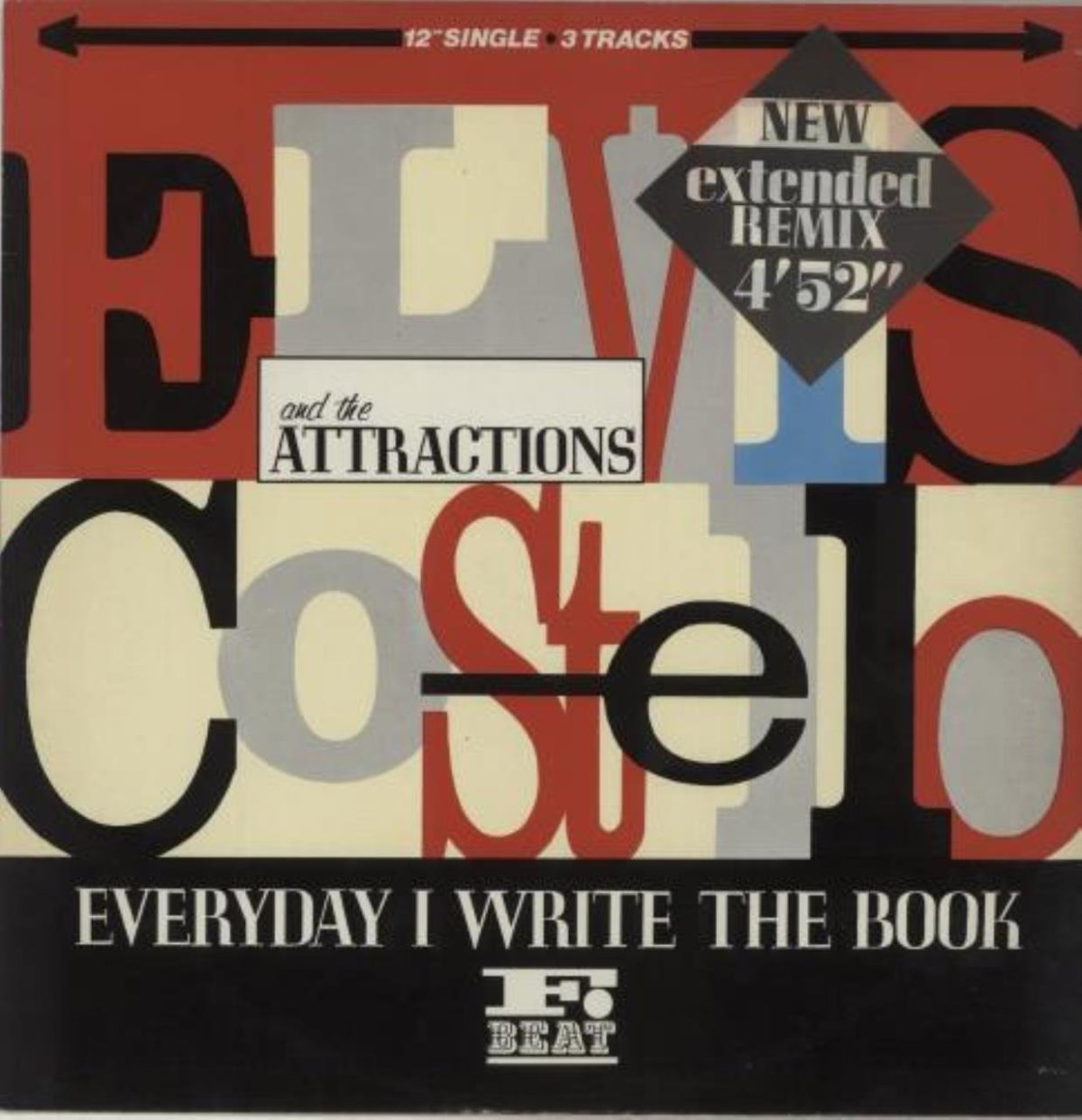
This was Costello’s first American hit. He was a regular on the UK charts since his first release in 1977, but American singles never hit. Despite support in America from independent record stores, college radio and music journalists, his only chart showings to this point were two singles that bubbled under on the Hot 100: “Watching The Detectives” #108 and “Accidents Will Happen #101.
This song peaked at #36 in the Billboard 100 and #28 in the UK in 1983.
I do remember that MTV pushed the video pretty hard. The push helped the single. It wasn’t until 1989 that he managed another Top 40 hit, “Veronica,” which was helped by MTV.
Elvis Costello: “I wrote it just for a joke,” “But that’s often the way to write a hit record (laughs). We had a group on the road with us that was trying to write these very self-conscious pop jangly kind of songs and that was their trip. So I thought I’d tease them by writing something that was like what they did, only sort of better than them. I wrote it in ten minutes.”
From Songfacts
In this song, Elvis Costello is a novelist who tells his girlfriend that everything that happens in their relationship is source material for his book. On one hand, it’s very sweet that he’s taking the time to chronicle their relationship, but something about it is also kind of creepy, as he’s documented her transgressions and is now willing to use her own words against her in their arguments.
Esquire magazine once called this “the most intellectually satisfying pop song ever written.”
When Costello wrote this song, he envisioned it with a retro Merseybeat popularized by Liverpool groups of the ’60s (think Gerry and the Pacemakers and very early Beatles recordings). His producer, Clive Langer, heard hit potential in the song and convinced Costello to do a more contemporary arrangement, which they modeled on Marvin Gaye’s “Sexual Healing.” The result was a modern R&B sound that served the song well.
“Everyday I Write The Book” got a push from MTV, which gave the video some spins and helped introduce Costello to younger audience. Radio stations in the US remained lukewarm on Costello, as he didn’t fit in on the Contemporary Hits or Rock playlists. Not that he was concerned; Costello’s indifference to popular taste earned him even more respect from his American fans.
The video was directed by Don Letts, who did a lot of work with The Clash and The Pretenders. In the clip, Elvis and his band (The Attractions) play in a studio stetting, wearing muted colors in stark contrast to the two backup singers, Caron Wheeler and Claudia Fontaine, who sport colorful dresses and head wraps. Old movie clips and random images like a man typing with boxing gloves are intercut throughout. These rather random videos did very well on early MTV, as they gave viewers a good look at the artist and provided some memorable visuals.
This was used in the films The Wedding Singer (1998) and Brooklyn Rules (2007). It is also heard in the 2001 Gilmore Girls episode, “The Breakup: Part 2.”
Elvis Costello told Uncut that he’s wanted “to write songs as good as Nick Lowe,” since he was 17. He added: “‘Everyday I Write the Book’ is a knockoff of Nick’s ‘When I Write the Book’ with a little Rodgers and Hart thrown in.'”
Everyday I Write The Book
Don’t tell me you don’t know what love is When you’re old enough to know better When you find strange hands in your sweater When your dreamboat turns out to be a footnote I’m a man with a mission in two or three editions
And I’m giving you a longing look Everyday, everyday, everyday I write the book
Chapter one we didn’t really get along Chapter two I think I fell in love with you You said you’d stand by me in the middle of chapter three But you were up to your old tricks in chapters four, five and six
The way you walk The way you talk, and try to kiss me, and laugh In four or five paragraphs All your compliments and your cutting remarks Are captured here in my quotation marks
Don’t tell me you don’t know the difference Between a lover and a fighter With my pen and my electric typewriter Even in a perfect world where everyone was equal I’d still own the film rights and be working on the sequel
In 1984 Willie M. ”Wimp” Stokes Jr., described as a Chicago underworld figure who was gunned down on the steps of Roberts Motel at 79th Street and Vincennes Avenue. Such a violent death was not unheard of in Willie the Wimp`s social circles-but the style of his funeral was.
Willie’s dad, Willie Morris “Flukey” Stokes gave his son an extravagant goodbye. He was in the same line of work as his son.
If you want to see the coffin with Mr. Stokes inside… you can go to here “Willie The Wimp and Cadillac Coffin.” I didn’t really want to post that.
Bill Carter and Ruth Ellsworth wrote the song after seeing a newspaper column about the story. Bill Carter released his version on his 1985 album Stompin’ Grounds. Stevie Ray Vaughn started to play the song in concert and it was released on his live album Live Alive in 1986.
Stevie was in the upper echelon of guitar players…right along with Hendrix and Clapton.
Willie The Wimp
Willie the Wimp was buried today, They laid him to rest in a special way. Sent him off in the finest style That casket-mobile really drove ’em wild Southside Chicago will think of him often Talkin’ ’bout Willie the Wimp and his Cadillac coffin, Willie the Wimp and his Cadillac coffin
That casket, it looked like a fine Seville He had a vanity license and a Cadillac grille Willie was propped up in the driver’s seat He had diamonds on his fingers and a smile sweet Fine red suit had the whole town talkin’ Talkin’ ’bout Willie the Wimp and his Cadillac coffin Willie the Wimp and his Cadillac coffin
Oh, Cadillac to Heaven he was wavin’ the banner He left like he lived, in a lively manner With a-hundred dollar bills in his fingers tight He had flowers for wheels and a-flashin’ headlights He been wishin’ for wings, no way he was walkin’ Talkin’ ’bout Willie the Wimp and his Cadillac coffin Yeah, Willie the Wimp and his Cadillac coffin
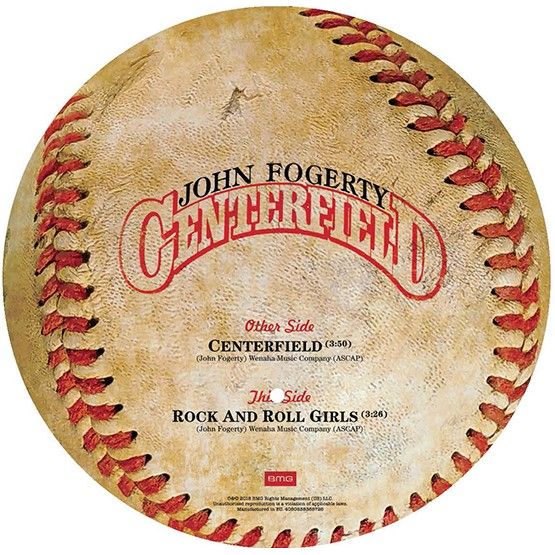
Spring training has started and baseball will be returning soon. It’s a good day to listen to John Fogerty’s Centerfield. This was John Fogerty’s comeback after being away from the charts since 1975.
The song peaked at #44 in the Billboard 100 in 1985. The album Centerfield peaked at #1 in the Billboard Album Charts in 1985.
Along with “Talkin’ Baseball” and “Take Me Out To The Ballgame,” this quickly became one of the most popular baseball songs ever. It’s a fixture at ballparks between innings of games and plays at the Baseball Hall of Fame in Cooperstown, New York.
John Fogerty:“I’d hear about Ruth and DiMaggio, and as my dad and older brothers talked about the Babe’s exploits, their eyes would get so big. When I was a little kid, there were no teams on the West Coast, so the idea of a Major League team was really mythical to me. The players were heroes to me as long as I can remember.”
“It is about baseball, but it is also a metaphor about getting yourself motivated, about facing the challenge of one thing or another at least at the beginning of an endeavor. About getting yourself all ready, whatever is necessary for the job.”
From Songfacts
This song was inspired by Fogerty’s childhood memories of baseball, and although he didn’t play the game, he loved watching it and hearing the stories his father would tell about the legendary New York Yankees centerfielder Joe DiMaggio, who like Fogerty was from San Francisco.
Fogerty left Creedence Clearwater Revival in 1972 and released solo albums in 1973 and 1975 that sold poorly. For the next 10 years, Fogerty refused to record because of legal battles with his record company, but when Centerfield was finally released in 1985, it hit the mark thanks to this title track. A song about baseball was a risk, as the sport isn’t exactly rock-worthy. In the MLB.com interview, Fogerty said: “Over the years it seemed like sports songs just didn’t qualify into the rock-and-roll lexicon. There was that unwritten distinction. It was never considered rock-and-roll. And I realized creating this song would very much put baseball in a rock-and-roll setting. I expected to be roundly thrashed by owners of the flame.”
One of Fogerty’s idols – Chuck Berry – inspired the lyrics, “Rounding third he was heading for home, it was a brown eyed handsome man,” which is lifted from Berry’s song “Brown Eyed Handsome Man.”
Baseball legends mentioned in this song: Joe DiMaggio, Willie Mays, and Ty Cobb.
The second verse refers to the legendary Mighty Casey from the epic poem Casey At The Bat. At the end of the story, Casey strikes out. >>
The line, “It’s a-gone and you can tell that one good-bye” comes from the catchphrase of baseball announcer Lon Simmons, who called games for the San Francisco Giants. He would often say, “Tell it goodbye” when the Giants hit a home run.
Fogerty produced this track and played all the instruments.
On July 25, 2010, in honor of the 25th anniversary of “Centerfield”‘s release, Fogerty played the song at the Major League Baseball Hall of Fame induction ceremonies, where he became the first musician honored by the Hall of Fame – at least the baseball one. Fogerty is in both the Songwriters and Rock and Roll Hall of Fames.
At the ceremony, Fogerty donated a custom-made baseball-bat-shaped guitar to the Baseball Hall of Fame.
The 1984 Major League Baseball All-Star Game was held at Candlestick Park in Fogerty’s hometown of San Francisco. This led to erroneous reports that he watched the game from the center field bleachers, leading to this song. Among the publications to report this was Billboard Publications Rock Movers & Shakers.
When George W. Bush was campaigning for president of the US in 2000, he told a reporter this was his favorite song. Bush used to own part of the Texas Rangers baseball team, and liked the line “Put me in coach, I’m ready to play.”
Brad Paisely played “Centerfield” at an outdoor festival when he was 13 years old, something he told Fogerty about many years later. After the conversation, Fogerty hit him up for his 2013 album Wrote a Song for Everyone, where he performed his songs with contemporary musicians. Paisely picked a deep cut: “Hot Rod Heart” from Fogerty’s 1997 solo album Blue Moon Swamp.
Fogerty has always been a huge baseball fan; the first book he ever read was Lou Gehrig: Boy of the Sandlot.
When his boys played Little League, Fogerty always got a kick out of listening to this song when it was played during warm-ups.
Centerfield
Well, I beat the drum and hold the phone The sun came out today We’re born again, there’s new grass on the field A-roundin’ third and headed for home It’s a brown-eyed handsome man Anyone can understand the way I feel
Oh, put me in, coach, I’m ready to play today Put me in, coach, I’m ready to play today Look at me, I can be centerfield
Well, I spent some time in the Mudville Nine Watching it from the bench You know I took some lumps, when the mighty Case struck out So say hey, Willie, tell the Cobb And Joe DiMaggio Don’t say it ain’t so, you know the time is now
Oh, put me in, coach, I’m ready to play today Put me in, coach, I’m ready to play today Look at me, I can be centerfield
Yeah, got it, I got it
Got a beat-up glove, a home-made bat And a brand new pair of shoes You know I think it’s time to give this game a ride Just to hit the ball and touch ’em all A moment in the sun It’s a-gone and you can tell that one good-bye
Oh, put me in, coach, I’m ready to play today Put me in, coach, I’m ready to play today Look at me (yeah), I can be centerfield
Oh, put me in, coach, I’m ready to play today Put me in, coach, I’m ready to play today Look at me, gotta be, centerfield Yeah
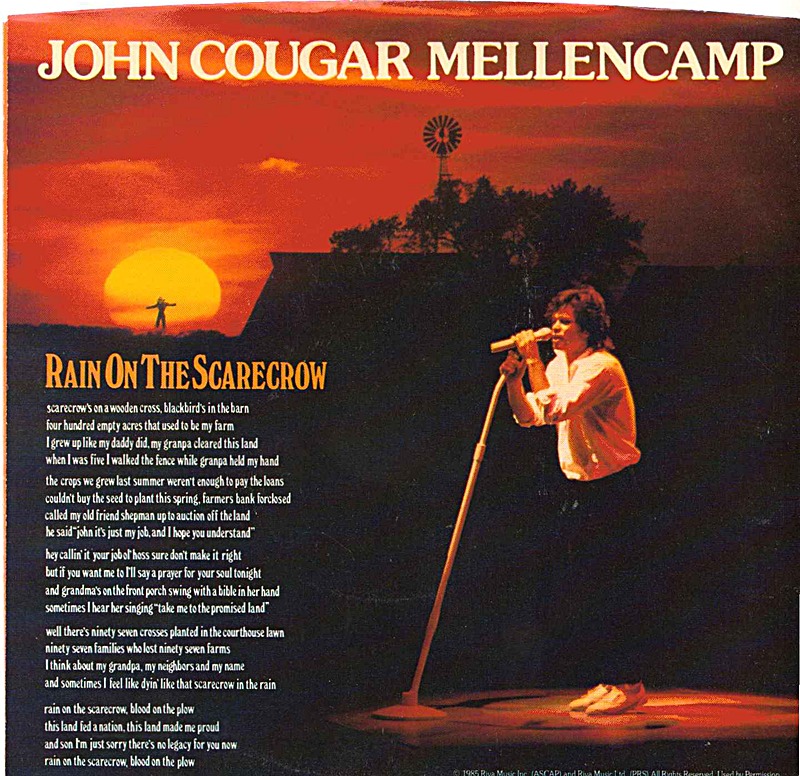
This song was from what I think was John Mellencamp’s best album Scarecrow and the peak of his career.
This song is about the financial difficulties farmers in the Midwest US face… difficulties that can go as far as having their farms repossessed by banks. Mellencamp wrote the song with George Green, who he worked with on many tracks, including “Hurts So Good.”
He has taken an active role in helping American farmers. Along with Neil Young and Willie Nelson, he regularly plays at the Farm-Aid concerts to help raise money.
The song peaked at #21 in the Billboard 100 in 1986. The album peaked at #2 in 1985.
From Songfacts
“Our songs always came about the same way: talk around the kitchen table,” Mellencamp told Rolling Stone. “I had just played ‘Small Town’ for him. He said, “I don’t know why these towns are going out of business” – towns like Freetown and Dudleytown, Indiana. We couldn’t figure out why they were disappearing. We did our research and wrote this song – Reagan had been using grain against the Soviet Union and all sorts of other things. Talking to people was heartbreaking. Nobody wanted to lose their farm.”
When the banker forecloses on the farm in this song, Mellencamp introduces himself into it:
He said, “John it’s just my job and I hope you understand” Hey, calling it your job ol’ Hoss sure don’t make it right
This bit was culled from the 1967 movie Cool Hand Luke, where the boss man puts Paul Newman’s character, Luke, in “the box” (solitary confinement), telling him, “Sorry, Luke. I’m just doing my job. You gotta appreciate that.”
Luke replies: “Nah, calling it your job don’t make it right, Boss.”
Another track on the album, “Lonely Ol’ Night,” also uses dialogue from a Paul Newman movie: the 1963 film Hud. In that one, a character asks, “It’s a lonesome ol’ night, isn’t it?”
Rain On The Scarecrow
Scarecrow on a wooden cross blackbird in the barn Four hundred empty acres that used to be my farm I grew up like my daddy did my grandpa cleared this land When I was five I walked the fence while grandpa held my hand
[Chorus] Rain on the scarecrow blood on the plow This land fed a nation this land made me proud And son I’m just sorry theres no legacy for you now Rain on the scarecrow blood on the plow Rain on the scarecrow blood on the plow
The crops we grew last summer weren’t enough to pay the loans Couldn’t buy the seed to plant this spring and the farmers bank foreclosed Called my old friend schepman up to auction off the land He said john its just my job and I hope you understand Hey calling it your job ol hoss sure dont make it right But if you want me to Ill say a prayer for your soul tonight And grandmas on the front porch swing with a Bible in her hand Sometimes I hear her singing take me to the promised land When you take away a mans dignity he cant work his fields and cows
There’ll be blood on the scarecrow blood on the plow Blood on the scarecrow blood on the plow
Well there’s ninety-seven crosses planted in the courthouse yard Ninety-seven families who lost ninety-seven farms I think about my grandpa and my neighbors and my name and some nights I feel like dying like that scarecrow in the rain
[Chorus]
Rain on the scarecrow blood on the plow This land fed a nation this land made me so proud And son I’m just sorry they’re just memories for you now Rain on the scarecrow blood on the plow Rain on the scarecrow blood on the plow
The Baby’s were formed in 1976 and they broke up in 1981. They had 8 songs in the Billboard 100 and two songs in the top 2.
Back On My Feet Again peaked at #33 in the Billboard 100 in 1980. The song was on the album Union Jacks released in 1980. It peaked at #42 in 1980. The band’s first two singles from the album failed until this one hit.
This is the song I remember the most by them. It was written by Dominic Bugatti, Frank Musker, and John Waite.
Lead singer John Waite on how the Babys got their name: “The name was meant to be a joke. We took the name simply because the record companies wouldn’t listen to any bands they thought were rock & roll. I mean, they wanted sure-fire teen bands, pre-teen bands. We couldn’t get anybody down to hear us to get a record deal, so we called ourselves The Babys. We thought we’d keep the name just for two weeks. Then, the word got around in London that there was a band playing rock & roll called The Babys and it seemed so off the wall, so completely crazy, that it was worth taking a shot with. It really appealed to everyone’s sense of humor.”
Back On My Feet Again
I was so lonely until I met you Told myself I’d get by without love Drownin’ my sorrows, avoiding tomorrows Kind of felt that I just had enough
You light up my face with your jokes and your smiles And the way that you came every night Don’t know what you got, but I’m sure glad I found you Could be wrong but it sure feels right
And here I am I’m back on my feet again Here I am I’m back on my feet again
Surprised at myself for the way that I feel So happy that you’re here with me Some women I’ve known, have left me with nothing But I guess that was just meant to be
And here I am I’m back on my feet again Here I am I’m back on my feet again
I was down for the count I was down, I was beat, I was cryin’ I was cornered and hurt I was hidin’ my face, sick of tryin’
I was so lonely until I met you Told myself I’d get by without love Drowning my sorrows, avoiding tomorrows Kind of felt that I just had enough
And here I am I’m back on my feet again Here I am I’m back on my feet again
Yeah, here I am I’m back on my feet again Here I am I’m back on my feet again
Ooh yeah, here I am I’m back on my feet again Here I am I’m back on my feet again
Here I am, yeah I’m back on my feet again Here I am I’m back on my feet again
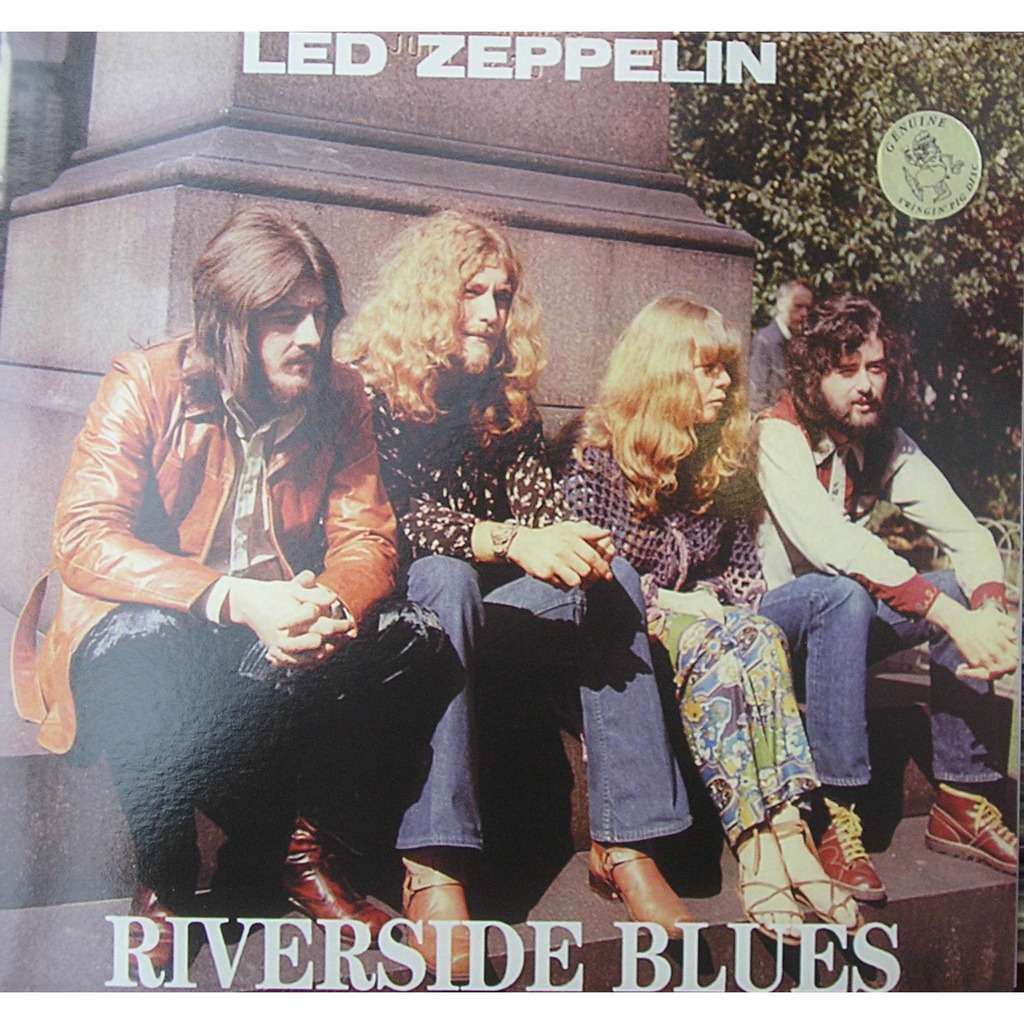
This was on their last album Coda after John Bonham died in 1980. Coda was released in 1982 and peaked at #6 in the Billboard Album Charts in 1983.
Led Zeppelin first played this for a BBC session in 1969, but the song was never released on an album. It was placed on the Box Set in 1990, and it was also made a bonus track on the Coda album for the Complete Studio Recordings.
This was written and originally recorded by blues great Robert Johnson. Led Zeppelin borrowed heavily from American blues music…some would say “borrowed” is too kind of word… but they did introduce some of that music to new fans.
From Songfacts
Jimmy Page used a 12-string acoustic guitar to play this song.
In the third verse, it sounds like Robert Plant mistakenly sings “My baby geen bone” instead of ‘My baby been gone.”
The lyric, “I’ve had no lovin’ since my baby been gone” came from B.B. King’s “Woke Up This Morning (My Baby Was Gone).”
To get the fast bass beats, John Bonham used “triplets” on the bass drum – he would use the tip of his toe.
Traveling Riverside Blues
Asked sweet mama, Let me be her kid She said, “You might get hurt if you don’t keep it hid”
Well I know my baby, If I see her in the dark I said I know my rider, If I see her in the dark
Now, I goin’ to Rosedale, Take my rider by my side Still barrelhouse, If it’s on the riverside, yeah I know my baby, Lord, I said, “is really sloppy drunk” I know my mama, Lord, a brownskin, but she ain’t no plum
See my baby, tell her, Tell her hurry home Had no lovin’, since my baby been gone See my baby, Tell hurry on home I ain’t had, Lord, my right mind, Since my rider’s been gone
Hey, she promises, She’s my rider I wanna tell you, She’s my rider I know you’re mine, She’s my rider She ain’t but sixteen, But she’s my rider
I’m goin’ to Rosedale, Take my rider by side Anybody argue with me man, I’ll keep them satisfied Well, see my baby, tell her, Tell her the shape I’m in Ain’t had no lovin’, Lord, since you know when
Spoken: Why don’t you come into my kitchen
She’s a kindhearted lady. She studies evil all the time She’s a kindhearted woman. She studies evil all the time
Squeeze my lemon ’til the juice runs down my leg Squeeze it so hard, I’ll fall right out of bed Squeeze my lemon, ’til the juice runs down my leg
Spoken: I wonder if you know what I’m talkin’ about
Oh, but the way that you squeeze it girl I swear I’m gonna fall right out of bed
She’s a good rider She’s my kindhearted lady I’m gonna take my rider by my side I said her front teeth are lined with gold She’s gotta mortgage on my body, got a lien on my soul She’s my brownskin sugar plum…