Favorite Toy of Childhood

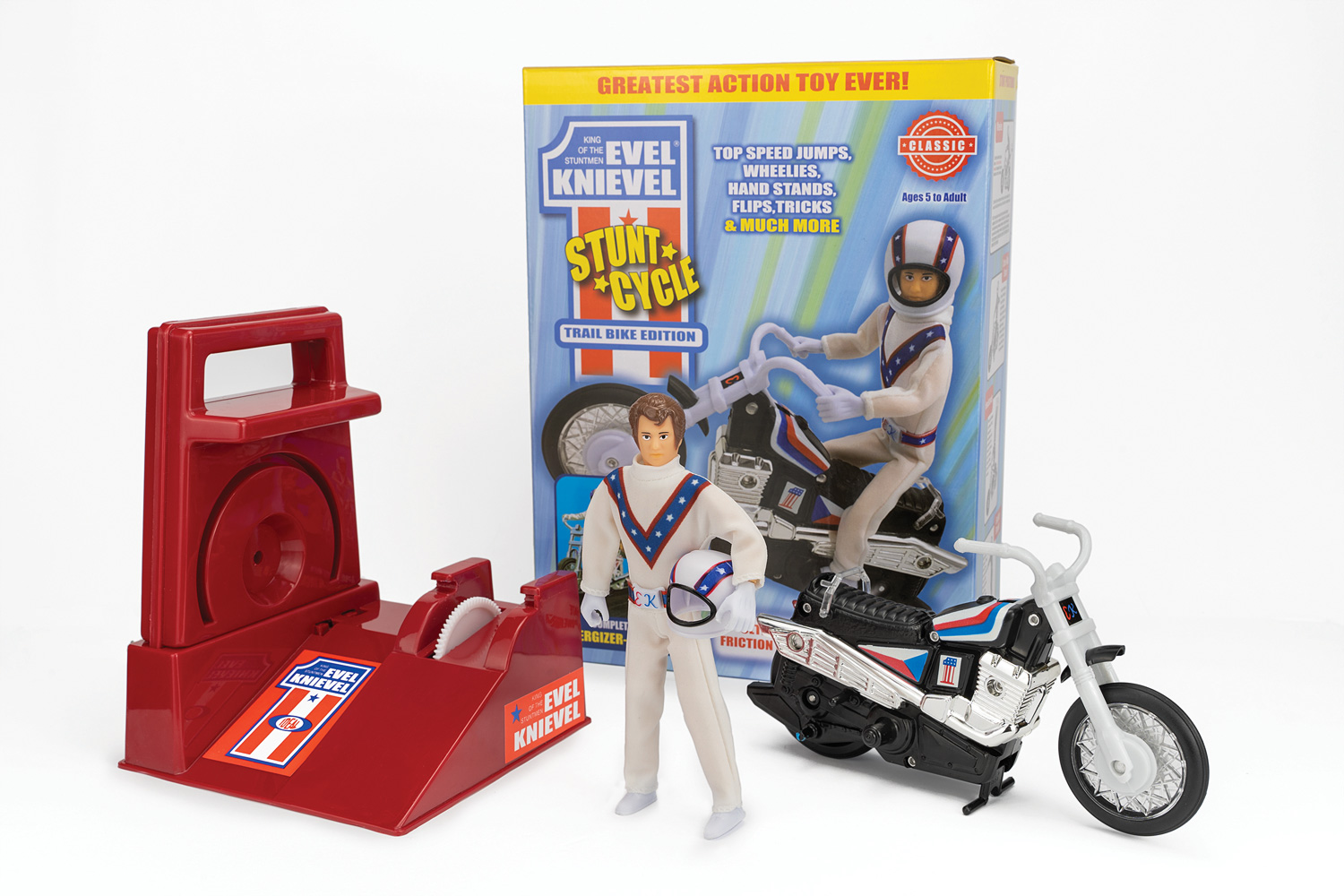
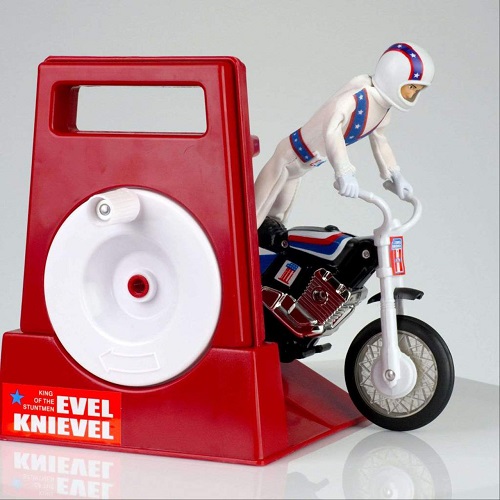
Evel Knievel Stunt Cycle

Thank you Keith @ https://nostalgicitalian.com for inviting me to do this. Keith had bloggers over to his site to write about their favorite toys while growing up.

Whenever I see red, white, and blue not only do I think of the flag but I think of Evel Knievel. A hero to many in the 1970s… He is responsible for more broken arms, legs, bruises, bumps, and scrapes than anyone… Kids set up homemade ramps and then jumping them with their bicycles. I said kids…it wasn’t exclusive to boys because I remember some girls jumping also.

Riding down hills standing on your seat, popping wheelies, jumping ramps with your buddy stupidly laying in-between. We wanted to be Evel Knievel jumping over those cars or buses.

He was THE Daredevil… There are Daredevils around today but no one has reached the popularity that Knievel achieved. Not only did he jump and crash he looked cool jumping and crashing. He was like a cool Elvis in a jumpsuit jumping various objects.

I got the Evel Knievel Stunt Cycle and Figure when I was 8 years old on Christmas Eve. I have a picture that I can see halfway unwrapped. I immediately started to play with it that night. Over the next couple of months, I would jump everything in sight.


I would make it jump on our porch, our outside dog, and finally, I got a great idea. It took me hours to set it up but I finally got it right. I had ramps going over my mom’s car. I never could get it to go completely over but I got it really close when it came down on the trunk…who needed the Snake Canyon? My mom wasn’t a big fan of the Stunt Cycle…when Evel missed and hit the flowers…some flowers would be missing. When I revved it up in the house…more than one glass shattered making mom shut down my jumping activities.

I wouldn’t mind getting one now to tell you the truth!

Pong

Another…well Keith could disqualify this but it was a toy to me…it was called Pong. Basically, it was magical! It would connect to your television, and you could play table tennis all day long. It was the forerunner of modern games that we have today. It was simple black and white, but I can’t tell you how it felt playing the thing.

I got it around 1977 and we just didn’t have things like this. There is one thing I remember well though…mom made me play it at night or on rainy days. The days were made for kids to go out and play baseball, play in the creek, or ride their bicycles for miles. What I wouldn’t give to relive one of those days being 11 again.


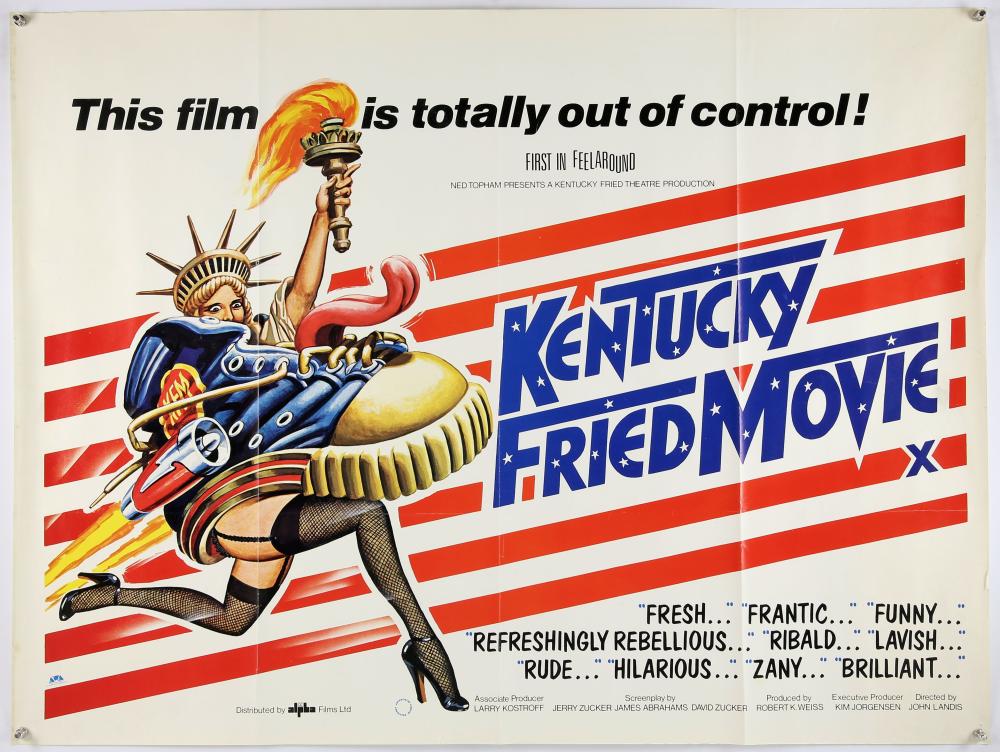
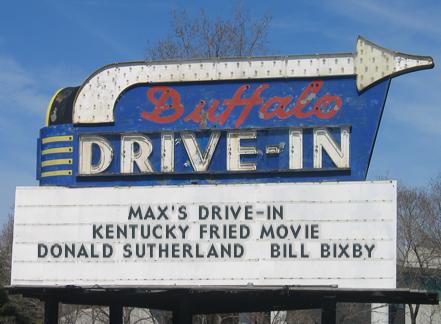
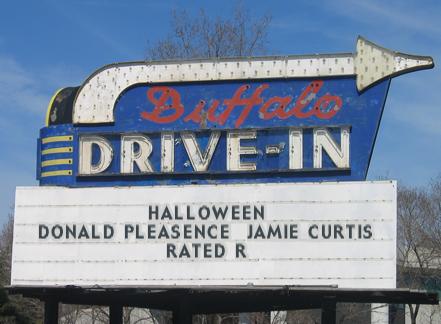
Max’s Drive-In Movie – Halloween

Halloween Header

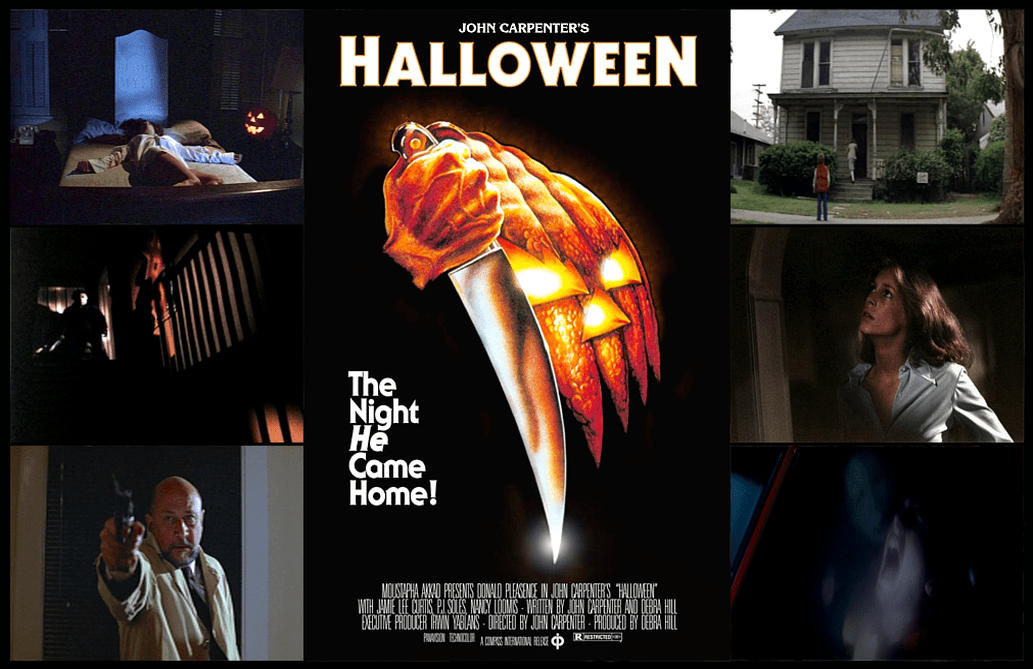
Que that spooky piano part now. This 1978 film is a horror classic that I still enjoy watching. While I’m at it…Happy Halloween Everyone! Sometimes, sequels can ruin a franchise and it gets silly. We sometimes forget how great the original is. I’m not a fan of the no-brain slasher movies that followed this.

From the very beginning, Halloween grabs your attention with its eerie, minimalist score—also composed by Carpenter himself. The haunting piano melody sets the tone for the entire film, creating a sense of dread even before it begins. It’s one of those soundtracks that sticks with you long after the credits roll. The two main leads…Jamie Lee Curtis and Donald Pleasence do an excellent job. I’ve liked Pleasence in anything he has done.

What’s surprising about Halloween after rewatching it, is how little blood and gore is actually shown. The movie relies more on atmosphere and suspense than graphic violence, which is why it remains such an effective horror film today. Carpenter’s use of shadows, lighting, and camera angles makes everything feel off-kilter.  Halloween doesn’t go overboard with its horror… just enough to leave a sense of unease.

There are little things as well that this movie does well. Before it all starts Lauire (Jamie Lee Curtis) and Annie (Nancy Kyes) are smoking a joint in a car while Michael is following them. While this was going on…Don’t Fear The Reaper was playing on the radio faintly. Annie’s dad is the sheriff and his name is Brackett. Dr Loomis (Donald Pleasence) tells him that he and his town better be worried. Michael Myers escaped a facility and was headed toward the town where Myers lived when he killed his sister when he was a kid.

This is another movie that has been ingrained in pop culture. After this film, there was a part 2. John Carpenter did not want to make it but was sued to make it. He made sure to blow Myers up in the 2nd film and part 3 had nothing to do with Myers. Halloween II was written by Carpenter and Debra Lee…the two who wrote Halloween. He refused to direct it and he never liked it. “I had to come up with something. I think it was, perhaps, a late night fueled by alcoholic beverages, was that idea. A terrible, stupid idea! But that’s what we did.”

Rob Zombie remade the film in 2007 and a sequel with much more blood and gore. He traded mystic for the obvious, which didn’t work as well for me…but I’m glad he put a little more reason on why Michael did what he did.

Plot IMDB

The year is 1963, the night: of Halloween. Police are called to 43 Lampkin Ln. only to discover that 15-year-old Judith Myers has been stabbed to death by her 6-year-old brother, Michael. After being institutionalized for 15 years, Myers breaks out on the night before Halloween. No one knows, nor wants to find out, what will happen on October 31st, 1978, besides Myers’ psychiatrist, Dr. Loomis. He knows Michael is coming back to Haddonfield, but by the time the town realizes it, it’ll be too late for many people.

Quotes

  • Loomis: I met him, 15 years ago; I was told there was nothing left; no reason, no conscience, no understanding in even the most rudimentary sense of life or death, of good or evil, right or wrong. I met this… six-year-old child with this blank, pale, emotionless face, and… the blackest eyes – the Devil’s eyes. I spent eight years trying to reach him, and then another seven trying to keep him locked up, because I realized that what was living behind that boy’s eyes was purely and simply… evil.

_____________________________________

  • Brackett: I have a feeling that you’re way off on this.
  • Loomis: You have the wrong feeling.
  • Brackett: You’re not doing very much to prove me wrong!
  • Loomis: What more do you need?
  • Brackett: i going to take a lot more than fancy talk to keep me up all night crawling around these bushes.
  • Loomis: I-I-I watched him for fifteen years, sitting in a room, staring at a wall; not seeing the wall, looking past the wall; looking at this night, inhumanly patient, waiting for some secret, silent alarm to trigger him off. Death has come to your little town, Sheriff. Now, you can either ignore it, or you can help me to stop it.
  • Brackett: More fancy talk.

..,

Black Sabbath – Black Sabbath

Happy Early Halloween Everyone!

It doesn’t get much more Halloween than this song. Black Sabbath was a hard rock band that gets credited a lot for influencing heavy metal. That is perplexing to me…what is heavy metal and what is hard rock? When I think of heavy metal I think of some of the many heavy 80s bands with a huge processed sound on guitar. That probably isn’t what others think of though.

The song was inspired by a series of ominous and eerie experiences. According to bassist Geezer Butler, the concept for the song emerged from a frightening incident he had after reading an occult book given to him by Ozzy Osbourne. Butler claims that after leaving the book on a shelf, he saw a dark figure standing at the foot of his bed that disappeared suddenly. This experience led him to write the lyrics. The song is credited to Ozzy Osbourne, Tony Iommi, Geezer Butler, and Bill Ward.

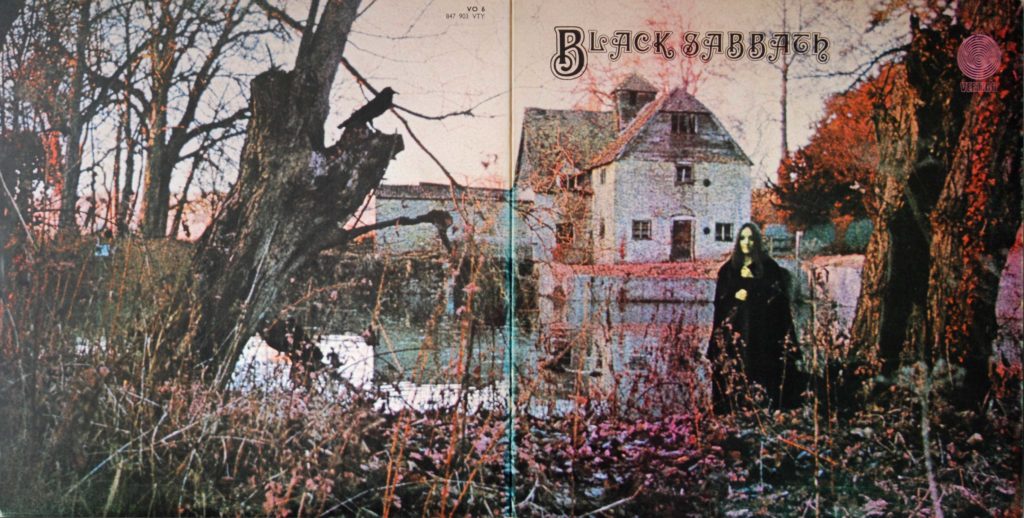
The album cover. It has to be the spookiest album cover ever. On one hand it looks real and on another it looks like a horror movie poster but better. At the center of the album cover is a mysterious, cloaked woman dressed in black. Her identity has been the subject of speculation for decades. Some have claimed she symbolizes a witch or an occult figure, which fits the band’s early associations with the dark arts. It’s one of rocks most iconic album covers.

Louisa Livingstone was a model that was hired for the cover. No one knew who she was until Rolling Stone tracked her down in 2020. Turns out Mrs. Livingstone is not much a fan of Black Sabbath after she finally listened to the album. It just wasn’t her type of music. She now records electronic music under the name of Indreba. Keith Macmillan is the photograhper who shot the album cover.

The album peaked at #23 on the Billboard 200, #29 in Canada, and #8 in the UK in 1970.

Keith Macmillan: “She was a fantastic model. She was quite petite, very, very cooperative. I wanted someone petite because it just gave the landscape a bit more grandeur. It made everything else look big. She wasn’t wearing any clothes under that cloak because we were doing things that were slightly more risqué, but we decided none of that worked. Any kind of sexuality took away from the more foreboding mood. But she was a terrific model. She had amazing courage and understanding of what I was trying to do.”

Louisa Livingstone: I had to get up at about four o’clock in the morning, or something as ridiculously early as that. It was absolutely freezing. I remember Keith rushing around with dry ice, throwing that into the pond nearby, and that didn’t seem to be working very well, so he was using a smoke machine. It was just, ‘Stand there and do that.’ I’m sure he said it was for Black Sabbath, but I don’t know if that meant anything much to me at the time.”

If you want to know about Black Sabbath’s album Black Sabbath VOL 4 cover… go to The Press Music Reviews.

Black Sabbath

What is this that stands before me?
Figure in black which points at me
Turn around quick, and start to run
Find out I’m the chosen one
Oh no

Big black shape with eyes of fire
Telling people their desire
Satan’s sitting there, he’s smiling
Watches those flames get higher and higher
Oh no, no, please God help me

Is it the end, my friend?
Satan’s coming ’round the bend
People running ’cause they’re scared
The people better go and beware
No, no, please God help me

Max’s Drive-In Movie – Carrie

Carrie Header

Next to The Shining, this is my favorite King adaptation. 

Carrie is a 1976 horror film directed by Brian De Palma, based on Stephen King’s 1974 debut novel of the same name. He used many techniques in this movie that put it over the top. Split screens, slow motion, and vivid color contrast just to name a few.

It is one of the most iconic films in the horror genre and focuses on subjects like bullying, supernatural powers, and revenge. It’s so easy to relate to because in high school we have all been through embarrassing things…getting pig blood dumped on you…probably not but we can relate with Carrie. We know the good people and we have known the bad people in this movie. We also know the popular cliques and the not-so-popular cliques. The girls that were out of reach and the ones that were.

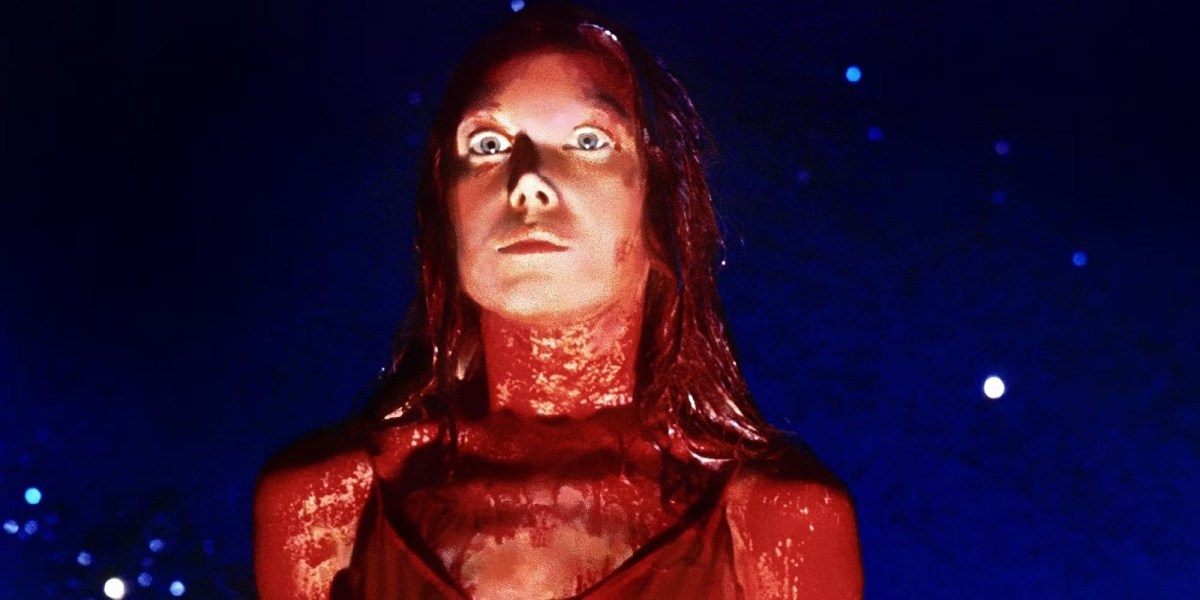
The story revolves around Carrie White, a shy and socially awkward high school girl who is mercilessly bullied by her classmates. Raised by an overbearing, fanatically religious mother, Carrie leads a lonely and repressed life. After experiencing a traumatic event at school, she discovers that she has telekinetic powers. The situation escalates when her classmates cruelly prank her at the senior prom. In a moment of intense emotion, Carrie uses her powers to take a horrifying revenge on those who tormented her.

Sissy Spacek starred in this film and was perfect in the role. Piper Laurie portrayed her mother with an exaggerated, fanatically religious fervor. Laurie’s portrayal of a zealot was intentionally over-the-top, adding to the film’s tone. . The movie also launched the film careers of Nancy Allen and Amy Irving who both went on to star in many movies.

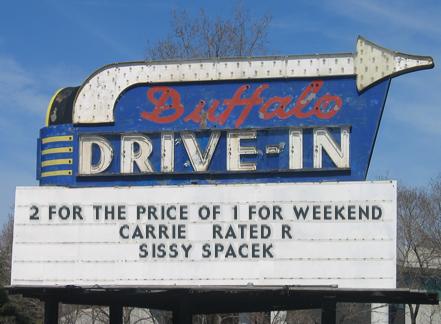
 In 1976 my class went to see Charlotte’s Web at the theater. On the wall were movie posters of Carrie. Since then I’ve always associated them with each other. As a 9-year-old, seeing a teenager covered with blood with an evil look made me want to see it. I didn’t get to see it until almost a decade later. It was worth the wait!

Both Sissy Spacek and Piper Laurie received Academy Award nominations for their performances, a rarity for the horror genre.

This story has been remade in 3 different movies. This one in 1976, 2002, and a remake in 2013. I’ve watched all of them…trust me on this…this is the best version out there at least to me. 

..,

ZZ Top – Goin’ Down To Mexico

That Lil Ol’ Band from Texas. I loved it when Billy Gibbons had this tone on his guitar. This was pre-Eliminator and his tone was just perfect. They sound loose in this but the music is tight. It’s classic ZZ Top. A buddy of mine had most of their albums and played this one a lot and Fandango.

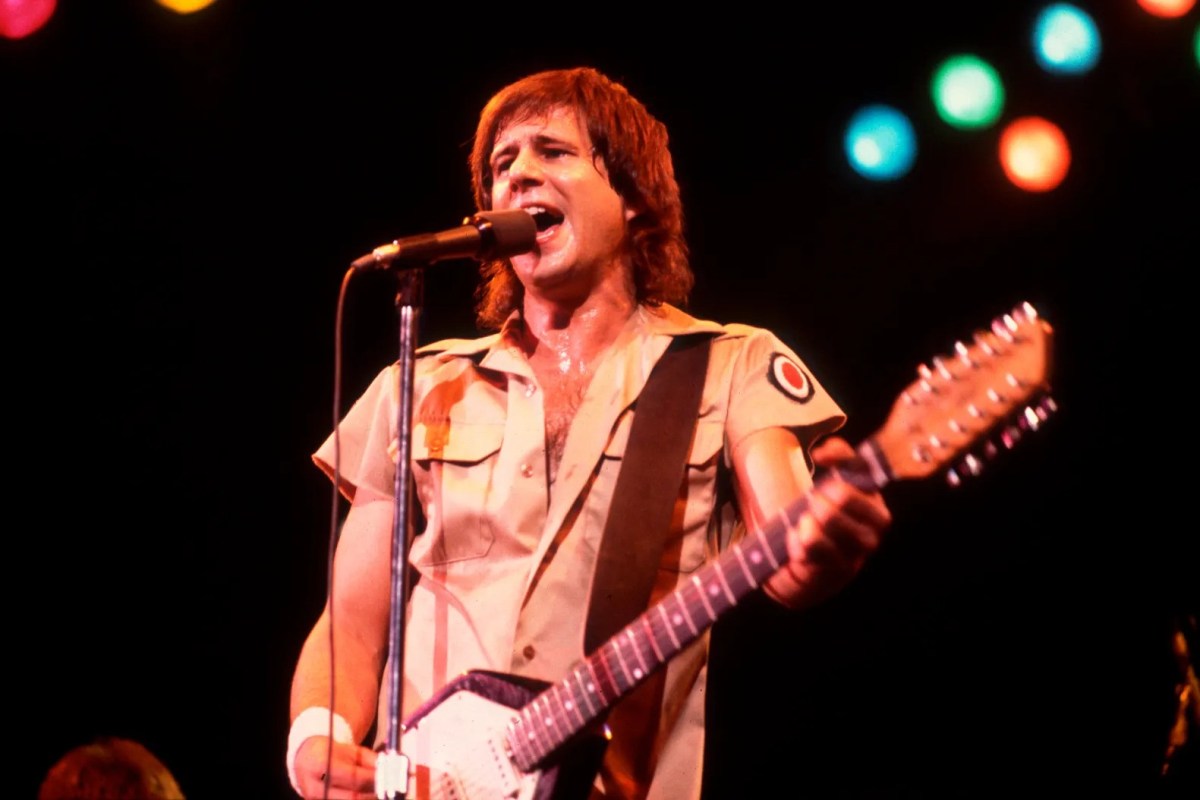
I saw them on the Eliminator tour and they were fantastic. They had Sammy Hagar opening up for them after he released Three Lock Box. ZZ Top had the best lighting show I’ve ever seen to this day.

This song has the entire band credited. Billy Gibbons, Dusty Hill, and Frank Beard. This song was on their debut album ZZ Top’s First Album released in 1970. That is an easy way of remembering it.

This album isn’t as polished as some of their others, but it previews exactly what sound you would get until Eliminator. ZZ Top was formed in 1969, with Billy Gibbons (guitar and vocals), Dusty Hill (bass), and Frank Beard (drums). Before forming ZZ Top, Billy Gibbons played in various bands, most notably The Moving Sidewalks, which opened for Jimi Hendrix during his 1968 tour.

The album didn’t make a huge splash commercially, but it helped establish the band as a powerful live act. The album was produced by Bill Ham, who became a key figure in shaping ZZ Top’s sound. He would go on to produce their subsequent albums and manage the band for decades. Ham produced or co-produced all of their albums up through 1996’s Rhythmeen as well as being their manager. They parted ways in 2006. He passed away in 2016 at 79.

Going Down to Mexico

I was on my way down to MexicoThere was trouble on the riseIt was nothin’ more than I’d left behindWhich was much to my surpriseI turned around and lit a cigaretteWiped the dust off of my bootsWhen up ahead I saw the crowdI knew it was no use

It’s been the same way for oh so longIt looks like I’m singin’ the same old song

A fine and fancy man was heDoin’ good things for the poorGivin’ rides in his rocket 88 for freeThey could not hope for moreWhen it came my turn, he said to me“Have I seen your face before?”I said, “Oh no, you must be wrongI’m from a distant shore”

So if you don’t mind, I’ll just move alongBut it looks like I’m singin’ the same old song

A 1940 movie starWith a long-forgotten nameShe was a sexy mess in her beaded dressStill hangin’ on to fameWith forgotten lines, she missed her cueAnd left her glass of wine at homeShe was singin’ the same song that I wasCould we both be wrong?

So hand in hand we walked alongEach of us singin’ the same old song

Flamin’ Groovies – Teenage Head

This band went through two distinct phases: an early rock/blues era followed by a shift to power pop. Their diverse catalog spans power pop gems, gritty blues-rock, and classic rock ‘n’ roll. In this song, we’re focusing on their rock/blues period from the early ’70s, hearing the raw Groovies.

I first heard this band with the song Shake Some Action. That song is probably their best-known, but the blues/rock period should be heard. This song was written by Cyril Jordan and Roy A. Loney.

Released the same year as the Rolling Stones album Sticky Fingers, Mick Jagger reportedly noticed the similarities between the Groovies Teenage Head album … and thought the Flamin’ Groovies did the better take on the theme of classic blues and rock ‘n roll. The band was started in 1965 by  Roy Loney and Cyril Jordan. By the end of the sixties, they clashed over where to go. Loney was more Stones and Jordon leaned toward the Beatles. Loney left in 1971 and they got an 18-year-old lead singer named Chris Wilson.

They moved to London and started to work with Dave Edmunds. With Chris, they did more power pop and that is when Shake Some Action came about with Wilson and Jordon writing it. They would go on to be a great power pop band known as an early proto-punk band…they pretty much covered the gamut. This anti-drug song was written by Jordon and Loney before he left…Chris Wilson is singing it.

I’ve listened to this album and it does sound very Stonesy but not copying them at all. This album was released before the Stones Sticky Fingers.

There is a Canadian band with the same name as this album and song…Teenage Head. They took their name from this song title and album. They quickly gained a loyal following on the Ontario club circuit for their shows, highlighted by Gord Lewis’ guitar work and frontman Venom’s (Frankie Kerr) vocals and on-stage presence.

Their self-titled debut album was released in 1979 and distributed by Epic Records Canada. A year later, the group signed to Attic Records and released the Frantic City album, which put them on the international radar. The hit singles, “Something On My Mind” and “Let’s Shake” helped propel the album to platinum sales (100,000) in Canada.

I added another cool song off of the album called Yesterday’s Numbers.

Teenage Head

I’m a monster
got a revved up teenage head.
Teenage monster
California born and bred.
Half a boy and half a man
I’m half at sea and half on land, oh my
Bye-bye.

Got a woman,
she’s my hopped up high school queen.
She’s my woman,
she’s a teenage love machine.
She knows how to turn me on
and get me high and get it on and on,
yeah she does.

When ya’ see me,
better turn your tail and run,
’cause I’m angry
and I’ll mess you up for fun.
I’m a child of atom bombs
and rotten air and Vietnams; I am you,
you are me.

Max’s Drive-In Movies – Late Night With The Devil

Usually, I only review older movies but this one is right up powerpop.blog’s alley! It’s a 2023 film set in the year 1977. They have the 1970s down…one of the best time-period movies I’ve seen as far as getting the era right. The audience in the movie could have been off a film clip of the Johnny Carson era Tonight Show. This movie marries nostalgia with horror quite nicely. It’s almost like The Exorcist meets Johnny Carson. It will make you uneasy and you have to pay attention because there are a few subplots you can miss if not. Some of it is based on the reception of the 1980 book Michelle Remembers by Canadian Lawrence Pazder. That book helped cause the “Satanic Panic” around that time on talk shows and the public.

It’s about a talk show host Jack Delroy who was a popular DJ in Chicago who got a chance to host a late-night talk show that was going against Johnny Carson. He signed a 5 year deal in 1972 and now in 1977 it’s running out.  A year after the tragic death of Jack’s wife, ratings have plummeted. It’s a “found footage” movie and the footage being a master tape that was never shown again.  Desperate to turn it around, Jack plans a Halloween special like no other, unaware he is about to unleash evil on late-night television.

On Halloween night 1977, Jack is set to host a special live episode featuring an array of guests, including a renowned paranormal expert with a single name, Christou. However, what starts as exploring the supernatural quickly devolves into chaos when a series of unexplained events unfold.

You get to know Jack’s past and about his wife that just passed away from lung cancer. Jack was part of a secret club called The Grove (a reference to the Bohemian Club) that many celebrities and elites joined. That info plays a big part of this movie. Did Jack essentially sacrifice his wife to be popular? It asks the question…what are you prepared to give up for success?

It all starts with Christou picks an audience member and accurately tells her about her son who killed himself. After that, a skeptical but nasty guest named Carmichael the Conjurer starts to say how all supernatural and unusual events are not real.  He offered Christou $100,000 to prove he was not a con man. He books an interview with a parapsychologist and the subject of her recent book, a young teenager who was the sole survivor of a Satanic church’s mass suicide. Naturally, all hell breaks loose when paranormal activity begins wreaking havoc during the show.

The plot blurs the lines between reality and the supernatural, with the audience left questioning what’s real as Jack faces his worst fears live on air. The tension mounts as the show’s studio audience becomes unsettled, mirroring Jack’s descent into madness. The film’s use of practical effects and atmospheric cinematography sells what is happening. 

Horror movies… the one thing that bothers me about most of them are the endings.  This one has an ending with a twist. My only complaint…being the 1970s lover I am…I wish they would have used the same kind of film look the Tonight Show had but the set was great. At the end of the movie you will also hear a song by Flo and Eddie called Keep It Warm.

David Dastmalchian did a great job as Jack Delroy.

Max’s Drive-In Movie -Jaws

Da-Dum, Da-Dum, Da-Dum…

June 20, 1975, was not only the opening of this movie but it turned into a huge pop culture event of the 1970s. It’s a movie known around the world. There were T-shirts, novelty songs, and hype…but the movie lived up to it and then some. 

Why was it so great? For me, I would say that Spielberg kept it simple. Jaws is based on the 1974 novel by Peter Benchley, which was inspired by a series of shark attacks off the coast of New Jersey in 1916. Benchley’s book tells the story of a great white shark terrorizing a small coastal town, and the efforts of three men to hunt it down. 

The acting in this was excellent to me. The one that I always pick out is Robert Shaw as the character Quint. He makes himself known quickly by the fingernails down the chalkboard tactic. Shaw made that character real to me. My favorite scene was him telling the story of delivering the atomic bomb, the sinking of the USS Indianapolis, and the shark attacks that happened. His performance is probably the main reason for Jaws being one of my favorite films of all time. The speech is based on a real event. The USS Indianapolis sank in 1945, resulting in the greatest loss of life due to shark attacks in history.

Spielberg wanted Lee Marvin for Quint and Jon Voight for Hooper. Spielberg got it right for this film. Roy Scheider as Martin and newcomer Richard Dreyfuss as Matt Hooper were great. It’s the realism that Shaw added that pushed this over. 

Spielberg’s use of tension, combined with John Williams’ score proved that a horror thriller could achieve both critical and commercial success. The film won three Academy Awards (for editing, score, and sound) and remains highly regarded by critics. But perhaps its greatest legacy is even today, many people feel some fear whenever they step into the ocean.

John Williams…The man is renowned for his film scores. Along with Jaws and barely scratching the surface…he also did Star Wars, Indiana Jones, E.T., Harry Potter, and Jurassic Park, just to name a few. 

The movies Duel and Jaws were Spielberg’s first two big movies. They share a common thread. Duel features a large diesel truck that is much like Jaws on dry land. Both movies work well. 

PLOT

It’s a hot summer on Amity Island, a small community whose primary business is its beaches. When new Sheriff Martin Brody discovers the remains of a shark attack victim, his first inclination is to close the beaches to swimmers. It doesn’t sit well with Mayor Larry Vaughn and several local business people. Brody backs down to his regret of that weekend. A predator kills a young boy. The dead boy’s mother puts out a bounty on the shark, and Amity is soon swamped with amateur hunters and fishermen hoping to cash in on the reward. A local fisherman with much experience hunting sharks, Quint, offers to hunt down the creature for a hefty fee. Soon, Quint, Brody, and Matt Hooper from the Oceanographic Institute are hunting the Great White shark at sea. As Brody succinctly surmises after their first encounter with the creature, they will need a bigger boat.

QUOTES

  • Quint: [Quint first scratches the chalk board to get everyone’s attention] Y’all know me. Know how I earn a livin’. I’ll catch this bird for you, but it ain’t gonna be easy. Bad fish. Not like going down the pond chasin’ bluegills and tommycods. This shark, swallow you whole. Little shakin’, little tenderizin’, an’ down you go. And we gotta do it quick, that’ll bring back your tourists, put all your businesses on a payin’ basis. But it’s not gonna be pleasant. I value my neck a lot more than three thousand bucks, chief. I’ll find him for three, but I’ll catch him, and kill him, for ten. But you’ve gotta make up your minds. If you want to stay alive, then ante up. If you want to play it cheap, be on welfare the whole winter. I don’t want no volunteers, I don’t want no mates, there’s just too many captains on this island. $10,000 for me by myself. For that you get the head, the tail, the whole damn thing.

_______________________________________________

  • Ellen Brody: Martin hates boats. Martin hates water. Martin… Martin sits in his car when we go on the ferry to the mainland. I guess it’s a childhood thing. It’s a… there’s a clinical name for it isn’t there?
  • Brody: Drowning.

_______________________________________________

  • Brody: You’re gonna need a bigger boat.

..,

Brothers At Arms – Angus and Malcolm Young

Today’s installment of this series goes back to Max at Power Pop (that’s me!). We are stopping here but haven’t closed the door on revisiting more famous brother acts. Randy’s original post on mostlymusiccovers.com is here. Randy and I want to thank all of you who have followed along! At the bottom, I have the complete series labeled. 


Angus and Malcolm Young were the co-founders of the legendary rock band AC/DC. They had a unique and dynamic relationship that was marked by both collaboration and rivalry. The band was formed in 1973 by Malcolm, with Angus joining a little later. They were called AC/DC. The band’s name is inspired by the abbreviation for “alternating current/direct current” (AC/DC), signifying power and energy. They were influenced most by Chuck Berry, and you can hear it in their music. Malcolm would play rhythm guitar with Angus taking up the lead guitar for decades to come. They also had a brother named George who would help his younger brothers immensely in music. His contributions cannot be overstated.

Malcolm was born on January 6, 1953, and Angus on March 31, 1955, in Glasgow Scotland. In 1963 the family moved to Sydney Australia. George Young was born in 1946 and started a band called The Easybeats in 1964 playing rhythm guitar and either writing or co-writing many of their songs. They had 7 top 10 hits in Australia, two number one hits, and altogether 15 top 40 hits there! They did have one international hit which was “Friday On My Mind” which peaked at #1 in Australia, #2 in New Zealand, #6 in the UK, #13 in Canada, and #16 on the Billboard 100. It’s still played on classic rock radio today.

He encouraged his younger brothers to form a band, recognizing their talent and potential. George, along with his Easybeats bandmate Harry Vanda, mentored Malcolm and Angus. His experience in the music industry provided insights into songwriting, recording, and navigating the business. George would end up co-producing (with Vanda) six AC/DC albums. He would also produce some songs for future albums. The band underwent several lineup changes before settling with Bon Scott as the lead vocalist. They release their debut album, “High Voltage” exclusively in Australia in 1974. Angus and Malcolm would collaborate closely with songwriting.

Malcolm was a perfectionist in the studio while Angus was more of a free spirit. That caused some clashes but none to the degree of other brothers in rock.

Angus’s schoolboy-uniformed antics on stage were a stark contrast to Malcolm’s more reserved presence. This was important to the band’s success. They went through tough times with Bon Scott dying and starting again with a new singer Brian Johnson, but they only got more popular. It was a sad ending for Malcolm though. In 2014 Malcolm could no longer remember lyrics to songs. He was diagnosed with alcohol-related dementia and passed away in 2017. These brothers used their rivalries as a positive thing and pushed each other to greatness.

Rumble In The Jungle

The 50th anniversary of this is coming up in 16 days. I thought I would go ahead and post it today. It brings back a lot of memories with my dad. We will get back to music and movies tomorrow. If you ever wondered where the phrase “rope-a-dope” got famous…this is it. This is one of the most iconic events of the 20th Century.

I was 7 years old when this took place but I remember my dad was super excited for this fight. I also remember him griping how it wasn’t on television. It was on closed-circuit TV in theaters back on October 30, 1974, in America. It was later played on television here a week later I believe on Wild World of Sports. I watched it with my dad and he was happy that Ali won so I was as well.

It was George Foreman against Muhammid Ali. Ali, written off by most, faced the seemingly unbeatable Foreman, who was younger, stronger, and terrifying. Foreman had thoroughly beaten Joe Frazier and Ken Norton…the two men who had given Ali serious trouble.

The event took place in Kinshasa, Zaire (now the Democratic Republic of Congo) Africa, a choice by promoter Don King. King promised both fighters $5 million each (a staggering amount for the time) and found a host in Zaire’s dictator, Mobutu Sese Seko, who saw this as an opportunity to showcase his country to the world.

From the moment Ali landed in Zaire, it was clear… Ali was the people’s champion. He embraced the locals, chanting “Ali, bomaye!” (“Ali, kill him!”). Ali knew the power of spectacle, and he hyped the fight into a clash of good vs. evil—himself, the people’s hero, against the seemingly cold and invincible Foreman. Ali knew all about spectacles and how to create them. No one could hype an event like Ali could. Below this is what happened in the fight.

Foreman, by contrast, kept to himself. He was intense and silent, bringing his deadly reputation but lacking Ali’s charisma and showmanship. As Ali paraded through the streets of Kinshasa, the crowd adored him, feeding his ego and energizing his mission. Foreman? He just looked like a man on a mission to destroy Ali. Foreman threw a hell of a punch. If you got caught flat-footed with him…one punch is all it would take. Ali wasn’t the Cassius Clay a few years before…he was a little older and a little slower (still faster than Foreman)…but smarter.

Before writing this I sat down and watched the entire eight rounds. Ali was 32 years old but Foreman was 25 and the current Heavy Weight Champion of the World. You could still feel the electricity in the air now when you watch it. Ali came out swinging but in the second round Ali would lean against the ropes a cover…all the while Foreman would punch and punch…and punch. He got some hits in Ali’s side but Foreman could not land THAT punch. As this was going on…Ali’s mouth was running as usual…telling Foreman to punch him and punch again. He kept antagonizing him Foreman and it made him do exactly what Ali wanted… use up his energy.

I won’t go through every round but basically, Ali got Foreman to punch and use his energy up on useless punches. Ali knew that Foreman hadn’t gone over 4 rounds since 1971 plus George is a huge guy. By the 8th round, you could tell George was spent. He still was throwing punches but he wasn’t as focused and it cost him. Ali connected on 6 straight punches and the 7th punch knocked Foreman down and Ali was once again…the World’s Heavy Weight Champion. Ali said the famous phrase “rope-a-dope” as the way he beat Foreman…laying on the ropes while Foreman punched himself to a loss.

The local crowd was with Ali because of his hype and the professionals mostly picked Foreman in an easy win over the older Ali. George never got the rematch with Ali and that is a shame. In 1977 Foreman became a Christian Minister and retired and a much nicer guy. On November 5, 1994, at the age of 45 years old George Foreman beat Michael Moorer for the Heavy Weight Champion of the World. He was behind in point until George unloaded that lethal punch and that was it. Moorer was down and he lost the championship. I know it well because our band was playing in a sports bar and I got to announce it to the crowd there.

There is so much more to talk about with this fight but the post has gone on much longer than I had wanted. Hope you enjoyed it! The two ended up being National Treasures and some of that started with this fight.

One commenter named Beth brought up the documentary When We Were Kings about this….it’s worth a watch!

THE ENTIRE FIGHT

Max’s Drive-In Movie – North Dallas Forty

North Dallas Forty Header

This 1979 sports movie was based on the 1973 novel of the same name by former NFL Dallas Cowboys player Peter Gent. The film offers a gritty and realistic look at pro football. It hits on the physical and emotional toll, corruption, and the commercialization of the game. You get a glimpse into 1970s football with the players, coaches, groupies, and owners. It’s listed as a comedy but it’s more a drama.

I saw this movie in the early nineties and liked it immediately. It has a very realistic feel. I’m a Nick Nolte fan and he was his normal grumpy self in this. You don’t have to be a fan to watch this movie. Seldom has the corruptive nature of professional sports been on display than here. Pro football comes across as supremely exploitative of players, with owners reflecting in the glory. The MLB was basically the same at the time as well.

It really gives an insight into what happened behind the scenes in football and it’s not pretty. Nolte plays an aging talented wide receiver who loves the game and has left himself on fields throughout the league. He hurts constantly but management is more worried about what he does in his own time than on the field.  He loves the game but not the business. The movie was not allowed to use real NFL football names. In this movie…the Cowboys are the Bulls.

Players were treated terribly by coaches, managers, and owners. They were not paid well unless they were a star player. Now they pay the players so much they take good care of them but during this era, everyone was expendable except stars and this movie shows that better than most.

Mac Davis played Seth Maxwell who was modeled after quarterback Don Meredith. Nick Nolte played Phillip Elliot who was wide receiver and author Peter Gent. The other players resemble Gent’s Cowboys of the late sixties down to the Tom Landry type of head coach. John Matuszak, a real NFL football player was in this movie as well.

After reading multiple books on the 1970s Oakland Raiders and Pittsburgh Steelers…this movie is very true to form for those years. In the end, the movie leaves you wanting more.

Plot

It’s a sports drama film based on Peter Gent’s semi-autobiographical novel. The story revolves around Phil Elliott (played by Nick Nolte), a veteran wide receiver for a fictional professional football team, the North Dallas Bulls. The movie explores the brutal realities behind professional football, including the physical pain, drug use, and pressure players endure to stay on the field.

Phil is disillusioned with the sport’s business-like nature, the corruption within the team, and the manipulation by management and coaches. His relationships with teammates, including his best friend Seth Maxwell (played by Mac Davis), highlight the personal cost of sacrificing health and integrity for success. As Phil struggles to maintain his individuality and cope with the harsh demands, he faces a moral dilemma about whether to keep playing or walk away from the game.

The film provides a gritty and realistic portrayal of the darker side of professional sports, contrasting the glamorous public image of football with the physical and emotional toll it takes on the players.

Quotes

  • Maxwell: You had better learn how to play the game, and I don’t mean just the game of football.

______________________________________

  • Coach Johnson: Douglas! The reason we drafted you was because they said you were fast and smart. At this point, I’d be delighted if you’d be at least one of those things!

..,

Big Star – Thirteen

Big Star was the best band never heard. This song is an absolutely perfect song about adolescence. I played it to my then 14-year-old son and it made him a Big Star fan now 10 years later. This song is the most covered song by Big Star with 49 different covers. It’s almost a perfect acoustic song. The song is about an adolescent guy and his girlfriend who are rock fans being what 13-14-year-olds are…confused and lost.

There is not a bad song on the first album. The song was originally featured on the 1972 album #1 Record. It was released as a single by Big Star with “Watch The Sunrise” as the B-Side, on Ardent Records, but was mislabeled as “Don’t Lie To Me”. Chris Bell and Alex Chilton were the two main songwriters.

Bell and Chilton wanted to emulate the Lennon/McCartney formula as much as they could, so they shared credit on many of the songs on #1 Record even though there was, in fact, little writing collaboration between the two. “Thirteen,” was entirely Chilton’s creation.

This was ranked #396 on Rolling Stone’s list of the 500 greatest songs. Artists who have covered this include Evan Dando, Garbage, Elliot Smith, Wilco, and Kathryn Williams.

Alex Chilton: “I don’t know where it came from but I made up this wild bit of guitar in 15 minutes. You don’t hear many 20-year-olds doing that.”

Thirteen

Won’t you let me walk you home from school
Won’t you let me meet you at the pool
Maybe Friday I can
Get tickets for the dance
And I’ll take you

Won’t you tell your dad, get off my back
Tell him what we said ’bout ‘Paint It Black’
Rock ‘n Roll is here to stay
Come inside where it’s okay
And I’ll shake you

Won’t you tell me what you’re thinking of
Would you be an outlaw for my love
If it’s so, well, let me know
If it’s no, well, I can go
I won’t make you

Frederick Knight – I’ve Been Lonely For So Long

I love early seventies soul…this is a cool gem of a song and very overlooked. I remember this one when I was around 5-6 being played on A.M. Radio. He released this on Stax Records in 1972. Stax was starting to go down around this time.

In the early 1970s, under the leadership of Al Bell, Stax expanded too rapidly and faced financial difficulties due to over-expansion and mismanagement. Despite producing some hits during this period, including Isaac Hayes’ successful albums, Stax declared bankruptcy in 1975.

The song was written by Posie Knight and Jerry Weaver. It peaked at #27 on the Billboard 100, #8 on the Billboard R&B charts, and #23 in the UK in 1972. It’s been covered 15 times and one cover was by Mick Jagger on his 1993 solo album Wandering Spirit. Paul Young also covered it on his debut album No Palez in 1983.

He didn’t chart any more top 40 songs on the top 100 and he would be known as a one-hit wonder which is a shame. He kept releasing music until 1981 and did get a song in the top 40 of the R&B Charts with I Betcha Didn’t Know That in 1975.

In the mid-1970s, Knight founded his own record label, Juana Records. Through Juana Records, he produced and promoted music for other artists, including the successful disco group Anita Ward, who had a hit with Ring My Bell in 1979.

I’ve Been Lonely For So Long

I’ve been lonely for so longDon’t seem like happiness will come alongI’ve been lonely for so longDon’t seem like happiness will come along

These ain’t rain clouds over my headEverybody’s throwing rocks in my bedJust can’t seem to get ahead in lifeOoh, nothin’ I do ever turn out for the right

Won’t somebody help me please

‘Cause I’ve been lonely for so longDon’t seem like happiness will come alongI’ve been lonely for so longDon’t seem like happiness will come along

I lay awake every nightTryin’ to figure out how to make things rightThere’s got to be a better way I knowTo shake this monkey off ’cause he’s makin’ me so

Won’t somebody help me please

‘Cause I’ve been ooh, lonely for so longDon’t seem like happiness will come alongI’ve been lonely so longDon’t seem like happiness will come along

Yes, I know what it feels like to be lonelyTo have your friends turn their backs on youTo never know the real meaningOf peace of mind, oh

Just can’t seem to get ahead in lifeOoh, nothin’ I do ever turn out for the right

Won’t somebody help me please

‘Cause I’ve been lonely for so longDon’t seem like happiness will come alongI’ve been lonely for so longDon’t seem like happiness will come along

I’ve been down so longI’ve been down so longI’ve been down so longI’ve been down so long

I get lonely, I get lonelyI get lonely, I get lonelyI get lonely, lonely

Kinks – Strangers

It’s great to be back with everyone today. I know I know…we just finished up with the Kinks a few weeks ago but I wrote this one for the Kinksathon but decided to use another post. This was like uncovering a gem. This is not a Ray Davies song but his brother Dave wrote and put some heartfelt vocals into this. His voice and the sound of his voice sound great…I love the slapback echo they added.

Dave wrote this song about a friend he had named George Harris. Him and George were going to form a band and they were really tight but George got hooked on drugs bad. This was all before the Kinks formed. Dave Davies said: “We were dear friends, actually, George and I were going to start a band, but he got too heavily into drugs and it kind of pulled us apart. The drug thing was like a three-way affair. He died of a methamphetamine overdose. They found him departed … he was young. I always felt it was going to be me and him. I didn’t think at that age that it was going to be me and Ray. So I really kind of wrote it to him; ‘Strangers on this road we are on, we are not two we are one.’ It was like, what might of been if he hadn’t died so tragically.”

The singer of this song mentions a friend who seems to have separated from him. What emerges is not just a portrait of his lost pal but also of the person who’s searching for him. A Hank Williams line “I’ll Never Get Out of This World Alive” influenced Dave in this song as well…with is line if I live too long I’m afraid I’ll die. 

The song came off the album Lola vs. Powerman And The Moneygoround, Part 1 which had the massive hit Lola. Maybe that is the reason this song got overlooked. Many Kinks fans love this song but the radio doesn’t hardly play it. The album peaked at #35 on the Billboard 100 and #33 in Canada in 1970. Unfortunately, there was never a part 2.

The song was used in the 2007 film The Darjelling Limited. 

Dave Davies: “I was going through a lot of change, personally – spiritual stuff and getting into different philosophy, I was 15 at the time when we first started. And we had success, we were touring, and it doesn’t really give you a chance to grow up.”

Ray Davies on the part 1 album: Lola Versus Powerman… was good versus evil, obviously, and in Volume Two, I sketched out how you become your worst nightmare, how the good man goes so far he becomes the evil person he always fought against. But we had to do another tour, we had the RCA deal, and we had other recording projects that we had to work towards, and it got lost, unfortunately.

Here is Dave in 2017 doing it acoustically.

Strangers

Where are you going, I don’t mind
I’ve killed my world and I’ve killed my time
So where do I go? What will I see?
I see many people coming after me
So where are you going to, I don’t mind
If I live too long I’m afraid I’ll die
So I will follow you wherever you go
If your offered hand is still open to me

Strangers on this road we are on
We are not two, we are one

So you’ve been where I’ve just come
From the land that brings losers on
So we will share this road we walk
And mind our mouths and beware our talk
‘Til peace we find, tell you what I’ll do
All the things I own I will share with you
And, if I feel tomorrow like I feel today
We’ll take what we want and give the rest away

Strangers on this road we are on
We are not two, we are one

Holy man and holy priest
This love of life makes me weak at my knees
And when we get there, make your play
‘Cause soon I fear you’re gonna carry us away
And a promised lie you made us believe
For many men there is so much grief
And my mind is proud but it aches with rage
And, if I live too long I’m afraid I’ll die

Strangers on this road we are on
We are not two, we are one
Strangers on this road we are on
We are not two, we are one

Dobie Gray – Drift Away

I had some time today so I thought I would publish a couple of posts. It will be nice to post today until I come back in a couple of weeks.

Drift Away is one of the most perfect singles I remember. Much like Baker Street…a single where everything is right. This is one of the first songs I remember hearing and liking. That guitar intro and tone hooked me into this song. Gray said in an interview that the song’s hook of “Gimme the beat boys and free my soul” has been misheard and incorrectly sung as “Gimme the Beach Boys,” “Gimme the wheat boys” (proposed for a cereal commercial), “Gimme the peat moss,” and “Gimme the meatballs.”

The song was recorded at Quad Studio in Nashville. Drift Away was written by producer/songwriter Mentor Williams. Mentor is the brother of Paul Williams. Mentor initially intended the song for John Henry Kurtz, an actor and country artist who recorded the song in 1972. However, Dobie Gray’s version, recorded the following year, became the definitive rendition.

Drift Away has been covered by various artists over the years, including a version by Uncle Kracker in 2003, which featured Dobie Gray himself. That version was also a hit, peaking at #9 on the Billboard Hot 100 and introducing the song to a new generation.

The Rolling Stones recorded a version of Drift Away for their “It’s Only Rock and Roll” album in November of 1973 but it didn’t make the album and has never been released except on bootlegs. It is a great version…made for Jagger’s voice but nothing tops the original.

Drift Away peaked at #5 on the Billboard 100 and #7 in Canada in 1973. You would think this would have been the start of something huge but it was his only top 10 hit on Billboard. He did have a hit in 1965 with The In Crowd which peaked at #8 in Canada and #13 on the Billboard 100.

Reggie Young, a session guitar player, played the famous intro to this song. His song Reggie Young Jr. said: “Dobie Gray asked my father to join him in playing ‘Drift Away’ live. This was the first time since 1973 that they had played the song together. In the ’80s my father was showing another guitar player how to play the intro to ‘Drift Away,’ but the other guy said he thought that my father was playing it wrong. In fact he was playing in the wrong key. Also, when this was re-recorded in 1997 for Gray’s CD Diamond Cuts, he declined, as he didn’t think he could do it any better than he did on the original.”

Mentor Williams: “I think one of the hardest things for me to learn about songwriting was to really expose my feelings and weaknesses and to write personal, emotional things. As soon as I started doing that, I realized other people were relating to my songs. You can study how to write and spend a lot of time writing, but without this emotional content in a song, it’s just not there. ‘Drift Away’ was a big breakthrough for me. It was a song where it suddenly was okay for me to write about being hurt and let people know that I had been hurt and I wasn’t afraid to expose my feelings.”

Drift Away

Day after day I’m more confused
So I look for the light in the pouring rain
You know that’s a game that I hate to lose
I’m feelin’ the strain, ain’t it a shame

Oh, give me the beat boys, and free my soul
I want to get lost in your rock and roll and drift away

Beginning to think that I’m wastin’ time
I don’t understand the things I do
The world outside looks so unkind
I’m countin’ on you to carry me through

And when my mind is free
You know a melody can move me
And when I’m feelin’ blue
The guitar’s comin’ through to soothe me
Thanks for the joy that you’ve given me
I want you to know I believe in your song
Rhythm and rhyme and harmony
You help me along makin’ me stro