Animals – House of the Rising Sun

I bought this 1964 single when I was 12 in 1979. On the B side was the wonderful Bring It On Home to Me. I became an Animals fan that day. Let’s talk about a song so soaked in sorrow, so drenched in drama, that it feels like a dark southern gothic fable set to tape.

This is a British band covering an old American folk ballad about a New Orleans house of ill repute, and somehow, they made it definitive. The song had already passed through Woody Guthrie, Lead Belly, and Bob Dylan before it landed in the hands of The Animals. But it wasn’t until Eric Burdon opened his mouth that the song finally got its fangs. His voice is more of a howl than singing at times, and gives the song the oomph it needed. 

Historians have not been able to definitively identify The House Of The Rising Sun, but the two instances I have read about are these: 

1) The song is about a brothel in New Orleans. The House Of The Rising Sun was named after its occupant Madame Marianne LeSoleil Levant (which means “Rising Sun” in French), and was open for business from 1862 (occupation by Union troops) until 1874, when it was closed due to complaints by neighbors. It was located at 826-830 St. Louis St.

2) It’s about a woman’s prison in New Orleans called the Orleans Parish women’s prison, which had an entrance gate adorned with rising sun artwork. This would explain the “ball and chain” lyrics in the song.

The song peaked at #1 in the Billboard 100, #1 in Canada, and #1 in the UK in 1964. 

More than anything, his song cemented The Animals as the most dangerous-sounding band to crawl out of the British Invasion. It wasn’t the pop of the Hollies or Herman Hermits. This was dark. Gritty. Adult. You believed every damn word.

The original lineup only recorded three albums, yet nevertheless managed to break out eight Top 40 hits between 1964 and 1966. Alan Price left in 1965, and John Steel the following year. Also in 1966, Chandler left to start managing artists, and he discovered Jimi Hendrix in Greenwich Village.

Eric Burdon: “I don’t think that The Animals got a chance to evolve. We were the first to admit that we took blues songs from American artists, but if the Animals had stuck together and worked together instead of worrying about who was getting all the money, we could have evolved more and come out with more music to be proud of.”

The B side on my single

House of The Rising Sun

There is a house in New Orleans
They call the Rising Sun
And it’s been the ruin of many a poor boy
And God I know I’m one

My mother was a tailor
She sewed my new blue jeans
My father was a gamblin’ man
Down in New Orleans

Now the only thing a gambler needs
Is a suitcase and trunk
And the only time he’s satisfied
Is when he’s on a drunk

Oh mother tell your children
Not to do what I have done
Spend your lives in sin and misery
In the House of the Rising Sun

Well, I got one foot on the platform
The other foot on the train
I’m goin’ back to New Orleans
To wear that ball and chain

Well, there is a house in New Orleans
They call the Rising Sun
And it’s been the ruin of many a poor boy
And God I know I’m one

McCoys – Hang On Sloopy

A relative gave me this single when I was around 7 or 8 years old, and I’ve been a fan ever since. It’s mid-sixties garage rock that was fronted by a great guitarist. 

This thing is raw, ragged, and ridiculously catchy. It’s also one of the most unlikely #1 hits of the mid-’60s. A teenage bar band out of Indiana fronted by a 16-year-old Rick Derringer (still using his birth name, Zehringer), drafted into the spotlight by producers looking for someone to finish off a half-assembled track. What they delivered was a rock ‘n’ roll time capsule.

They opened for a band called The Strangegloves, who were a group of producers who formed a band and had a hit called I Want Candy. The Strangegloves, an American band, told everyone they were from Australia and said they were shepherds who got rich by crossbreeding sheep. Yes, it was the sixties. They gave Rick and the Raiders (before they changed their name to the McCoys)a chance to record this song. 

It started life as “My Girl Sloopy,” a minor R&B single by The Vibrations in 1964. But the McCoys stripped it down to its most essential parts and cranked up the amp. By the time it hit the airwaves in 1965, it was an instant anthem for kids who didn’t have a lot of time for nuance.

The song peaked at #1 in the Billboard 100 and #5 in the UK in 1965. The McCoys were not one-hit wonders. They had another top 10 hit named Fever and a top 40 hit named Come On Let’s Go.

The song was written by Bert Berns and Wes Farrell. Bert Berns wrote many songs in the sixties and signed Van Morrison to his first solo contract. The name “Sloopy” most likely originated from Dorothy Sloop, a jazz singer from Steubenville, Ohio. Sloop, who died in 1998 at age 85, performed in the New Orleans area using the name “Sloopy.”

This video was done later than the song in 1975. The Dancer, Lisa Leonard Dalton, was surprised when her video went viral a few years ago. Here is a short bio of her

Hang On Sloopy

Hang on Sloopy, Sloopy hang on

Sloopy lives in a very bad part of town
And everybody there tries to put my Sloopy down
Sloopy I don’t care what your daddy do
‘Cause you know Sloopy girl I’m in love with you
And so I’m singing

Yeah, yeah, yeah, yeah

Sloopy let your hair down girl, let it run down on me

Come on Sloopy, come on, come on
Well, come on Sloopy, come on, come on

Well it feels so good, come on, come on
You know it feels so good, come on, come on

Well shake it, shake it, shake it Sloopy, come on, come on
Well shake it, shake it, shake it yeah
Yeah

Yeah, yeah, yeah, yeah

Troggs – Wild Thing

I had an obsession with this band when I was a kid. I wanted to know everything about them, but back then, you could not search Google or find many any books on The Troggs. I did learn about the Trogg Tapes, which were hilarious! A friend of mine had a bootleg cassette of them in the 80s. It’s them in a session and probably breaking the record for the number and variations of f**k in a session. It probably has more than Scarface did with Pacino. It was better than many comedy albums I bought back then. “Put a Little Bit of F***ing Fairy Dust Over the Bastard!” It doesn’t get much rock and roll than that.

Some songs arrive like lightning. This song showed up like a Molotov cocktail tossed into the tea party of mid-’60s pop, three chords, one brain cell, and more raw tension than a teenage first kiss. This is pre-punk, garage rock, and sexual threat, all crammed into 2 minutes and 34 seconds of glorious slop. The opening chord staggers into the room like a drunk on a bender.

If you were in a garage band in the sixties…or now, you probably have played this song. This is the Troggs’ claim to fame in the history of Rock and Roll. They had other good songs, but nothing that had this much influence. The song is as raw as you could get at the time. It’s also a song like ‘Louie Louie’ that every garage band has played or at least tried to play once. 

Reg Presley, one of rock’s unlikeliest frontmen (a former bricklayer with a sneer in his voice), had just enough voice to get him through. They were not stocked with great talent, but they sounded raw, and they had songs that were tailored for them. Instead of excellent musical chops, they had enthusiasm and just enough talent to make it exciting. And it worked. 

The band combined a pop touch with a garage band style, resulting in two top ten songs and four songs in the Billboard 100. This song peaked at #1 on the Billboard 100, #2 in the UK, and #2 in Canada in 1966.

Many people will remember the Jimi Hendrix version at the Monterey Pop Festival in 1967. Comedian Sam Kinison also did a version in 1989. The first version of this song was by The Wild Ones in 1965. Secondhandsongs shows 153 versions of this song. 

Chip Taylor (whose real name was Chip Voight) was a singer-songwriter who wrote this song. Taylor is the brother of actor Jon Voight and the uncle of Angelina Jolie. He has made a fortune on this song because it’s been in countless movies and TV Shows. He also wrote Angel of the Morning

Chip Taylor: “I was on the floor laughing when I was through. Wild Thing’ came out in a matter of minutes. The pauses and the hesitations are a result of not knowing what I was going to do next.”

Reg Presley: “There was a guy there (at DJM) called Dennis Berger, who had a heap of demos on his desk. The first one I picked up was Wild Thing. I took a look at the lyric sheet and read: ‘Wild Thing-you make my heart sing-you make everything groovy.’ It seemed so corny, I thought, Oh my God, what are they doing to us! Then I played Chip Taylor’s demo- just guitar and him- and it was incredible. The other boys all liked it too. Chip Taylor later told us our version was just what he wanted.”

Wild thing

You make my heart sing
You make everything groovy
Wild thing
Wild thing, I think I love you
But I wanna know for sure
Come on and hold me tight
I love you

Wild thing
You make my heart sing
You make everything groovy
Wild thing

Wild thing, I think you move me
But I wanna know for sure
So come on and hold me tight
You move me

Wild thing
You make my heart sing
You make everything groovy
Wild thing
Oh, come on, wild thing
Shake it, shake it, wild thing

Monkees – Pleasant Valley Sunday

I’ve heard so many times, How can you listen to the Monkees? Easy answer: I might not have gotten into rock music as early as I did without them. They inspired me later on to pick up a guitar and join a band. When I was 7, I saw the reruns of the Monkees in the mid-seventies. They made being in a band look fun. Of course, they never told you about the backbiting and the politics. The thing is, they made some good pop singles.

Also, the claim that they didn’t play their instruments, which was true on their first two albums, until their third album on. No, the hits didn’t dry up after they started to play their own instruments. This one they played on. Michael Nesmith was a singer-songwriter and guitarist before joining; Peter Tork was the best musician in the band at the time and played with Stephen Stills, Davy Jones played drums before joining, and Mickey Dolenz was a guitar player. Micky soon learned drums and possessed one of the best pop voices of the sixties. Mickey and Mike did the vocals on this song, singing together. 

This song was written by Goffin and King about suburbia. The Monkees started to play their own instruments on the Headquarters album. Pleasant Valley Sunday was released from that album and peaked at #3 in the Billboard 100, #11 in the UK, and #1 in Canada in 1967. The song had a rebellious streak. It is a dig at suburban life, but a really catchy dig. 

The Monkees were hot in 1967. Their show was on the air from 1966 to 1968. The opening guitar lick of this song was based on The Beatles’ “I Want To Tell You.” They influenced at least a couple of generations of musicians.

Peter Tork: “A notion of mine that I was real pleased with took over at one point, and that was having two guys sing in unison rather than one guy doubling his own voice. So you’ve got Mike, who was really a hard-nosed character, and Micky, who’s a real baby face, and these two voices blended and lent each other qualities. It’s not two separate voices singing together, it’s really a melding of the two voices. Listening to that record later on was a joy.”

One more thing…Jan Wenner of Rolling Stone Magazine can stuff it.  

Here is a demo by Carol King

“Pleasant Valley Sunday”

The local rock group down the street
Is trying hard to learn their song
They serenade the weekend squire
Who just came out to mow his lawn
Another pleasant valley Sunday
Charcoal burning everywhere
Rows of houses that are all the same
And no one seems to care See Mrs. Gray, she’s proud today
Because her roses are in bloom
And Mr. Green, he’s so serene
He’s got a TV in every room
Another pleasant valley Sunday
Here in status symbol land
Mothers complain about how hard life is
And the kids just don’t understand Creature comfort goals, they only numb my soul
And make it hard for me to see
(Ah ah ah) ah thoughts all seem to stray to places far away
I need a change of scenery Ta ta ta ta, ta ta ta ta
Ta ta ta ta, ta ta ta taAnother pleasant valley Sunday
Charcoal burning everywhere
Another pleasant valley Sunday
Here in status symbol land
Another pleasant valley Sunday (a pleasant valley Sunday)

Creation – Making Time

Thank you, Dave, for this Turntable Talk. I wrote this for his series about songs with Time in the title, in the song, or about time. I like trying out new songs on the weekend, and this is a great example of mid-sixties British Rock. If you dig the Who and Kinks…you should like this one. 

Here’s a 1966  track that hits you like a kaleidoscopic brick through a plate-glass window. This is a band that I so wish would have done more things. Their lead guitarist, Eddie Phillips, was asked by Pete Townshend to join the Who as their second guitarist. They are one of those bands that slipped through the cracks.

They were formed in 1966 from a band called The Mark Four.  The Creation was from Chesthunt, 12 miles north of central London. They formed in 1963 as the Mark Four and went through different names until 1966 when they became the Creation. The Creation was sharper, weirder, and wilder than most of their peers. They had the raw power chords and the feedback fury of early Hendrix, and the pop art mindset of a band who not only wanted to be heard, they needed to be seen as well. The lead singer, Kenny Pickett, would spray paint a canvas, and someone from the road crew would set it a fire during the set…during the song Painter Man

This song was released in 1966. They patterned themselves after The Who and The Kinks. It had the sonic sound of The Who, the garage grit of The Kinks, and the art-school sound with later groups like The Jam to Blur. But what really made it jump off the grooves? That guitar solo really helped out. Long before Jimmy Page, Eddie Phillips, the guitar player, used a bow. Making Time was the first rock song to feature the guitar being played with a bow. Shel Talmy produced the group that also produced The Who and The Kinks.

The band broke up in 1967-1968 with some different members. The guitar player Eddie Phillips and singer Kenny Pickett started to write songs in the seventies after leaving the business for a while. They wrote Teacher, Teacher for Rockpile.  They regrouped in the 1980s and are still out there touring. 

I’ve been talking about the Who and Kinks…a member from each band played with The Creation along with a Rolling Stone. Mick Avory, the drummer for the Kinks played with the reformed band from the mid-1980s to 1993. Doug Sandom, who was replaced by Keith Moon in the Who, played with them off and on until he died in 2019. Ronnie Wood played with them in 1968 (right before they broke up) as a vocalist and guitar player. 

They only released 3 studio albums. One in 1966 called We Are Paintermen. One in 1987 called Psychedelic Rose and another one in 1996 called Power Surge. This song peaked at #49 on the UK Charts in 1966. 

Making Time

Making time
Shooting lines
For people to believe in
Things you say
Gone in a day
Everybody leavin’
Everybody leavin’

Why do we have to carry on?
Always singing the same old song
Same old song
The same old song

Tellin’ lies
Closing your eyes
Making more excuses
Pullin’ the wool
Actin’ the fool
People have their uses

Why do we have to carry on?
Always singing the same old song
Same old song
The same old song

Lookin’ for
An open door
Never taking chances
Take your pick
Makes you sick
Seekin’ new advances

Why do we have to carry on?
Always singing the same old song
Same old song
The same old song

Love – Forever Changes ….album review

Pam from All Things Thriller recommended this band and the album Forever Changes. I’ve been following her blog for years, and I trust when she recommends someone, and she came through. I was not disappointed with this album. This album has been listed in the top 100 best albums ever by different publications. It doesn’t have a bad song on it. The album is not known for hit singles but for the collective whole of the songs on that album. I was going to pick one song, but again, this album needs to be listened to as a whole.

One single did get pulled off of this album called Alone Again Or and it did hit the UK and Billboard Charts, and it sounded familiar. The reason it did was because The Damned covered back in 1987.

This is a band that I heard of but never really heard as much. With founder Arthur Lee, Love fused garage rock, folk, psychedelia, and baroque pop. They were not commercial juggernauts, but they sure did sound great. This album’s core is acoustic, and they build on it from there. I could not stop listening to it all this week.  They were also one of the first racially diverse American rock bands.

Released in late 1967, just as the Summer of Love was peaking and already beginning to fall, it’s a record that doesn’t sound like its time, and doesn’t really belong to any other, either. This was the band’s 3rd album. Arthur Lee was just 22 when he put this band together. He already had two solid albums under his belt, full of garage rock, Byrds-like jangle, and attitude, but Forever Changes was something else entirely. It’s as if Lee had seen the whole California dream flicker and die and was moving on.

I’ve listened to this album around five times overall, and it keeps getting better. I love how they mixed the acoustic with jaw-dropping percussion and touches of electric guitar. I’m not going to go down the list of songs; the best way is to listen to it. 

The original lineup featured Lee, guitarist Johnny Echols, bassist Ken Forssi, drummer Don Conka (later replaced by Alban “Snoopy” Pfisterer), and singer/guitarist Bryan MacLean.

Alone Again Or

Yeah, said it’s all rightI won’t forgetAll the times I’ve waited patiently for youAnd you’ll do just what you choose to doAnd I will be alone again tonight my dear

Yeah, I heard a funny thingSomebody said to meYou know that I could be in love with almost everyoneI think that people areThe greatest funAnd I will be alone again tonight my dear

Yeah, I heard a funny thingSomebody said to meYou know that I could be in love with almost everyoneI think that people areThe greatest funAnd I will be alone again tonight my dear

Van Morrison – Brown Eyed Girl

Somehow, I didn’t hear this song until I was 18 in 1985. When  I heard it, I immediately loved it. I didn’t just like the song, I was infatuated with it. One of the most infectious bass lines I’ve ever heard. I would play it so much that my friends would ask…again? So this post is basically a love letter to this song. 

The bass wasn’t the only thing that hit me, it is as clear as a spring day guitar riff. Last but certainly not least, it began my lifelong love for Van Morrison’s writing and voice. How did I make it until 18 without hearing it? I’ll never know. I not only learned the bass, but I also learned the guitar and some of the drums. I described it to someone as Buddy Holly in Technicolor.

I was at the right age for it. It’s a scrapbook of teenage moments, skipping school, hanging out by the green grass, and making out behind the stadium. There’s even a sneaky little bit of controversy: the original line “making love in the green grass” got scrubbed from the single version and replaced with a tamer repeat of an earlier verse (“Laughing‚ and a-running”).

It’s a song that I never get tired of hearing. The entire sound is crystal clear, and it made me feel nostalgic at just 18. It’s not Van Morrison’s best song…that would be impossible to pick, but it is a great pop song packed with memories and fun.

This was Van’s first single after leaving Them. Brown Eyed Girl isn’t trying to change the world. It’s not aiming for psychedelia (very popular at the time) or pushing the studio envelope. What it does do is pack memory, melody, and a whole lot of youthful yearning into a tight little pop song. 

Van would go on to far deeper waters with albums like Astral Weeks, Moondance, Tupelo Honey, and Saint Dominic’s Preview, albums brimming with spiritual searching and jazz improvisation. But Brown Eyed Girl was a huge introduction to the new solo artist… Van Morrison. I’ve told people…if I could have been born with any voice, Van’s voice would have been it. 

He released this song in 1967, it peaked at #10 on the Billboard 100, #13 in Canada, and #60 in the UK. My friends say that I might have listened to this song more than anyone…including Van. Hmmm, where is that email address to the Guinness people?

Brown Eyed Girl

Hey where did we go
Days when the rains came
Down in the hollow
Playin’ a new game
Laughing and a running hey, hey
Skipping and a jumping
In the misty morning fog with
Our hearts a thumpin’ and you
My brown eyed girl
You’re my brown eyed girl

Whatever happened
To Tuesday and so slow
Going down the old mine
With a transistor radio
Standing in the sunlight laughing
Hiding behind a rainbow’s wall
Slipping and sliding
All along the water fall, with you
My brown eyed girl
You’re my brown eyed girl

Do you remember when we used to sing
Sha la la la la la la la la la la te da
Just like that
Sha la la la la la la la la la la te da, la te da

So hard to find my way
Now that I’m all on my own
I saw you just the other day
My how you have grown
Cast my memory back there, Lord
Sometime I’m overcome thinking ’bout
Making love in the green grass
Behind the stadium with you
My brown eyed girl
You’re my brown eyed girl

Do you remember when we used to sing
Sha la la la la la la la la la la te da (lying in the green grass)
Sha la la la la la la la la la la te da (bit, bit, bit, bit, bit, bit)
Sha la la la la la la la la la la te da (sha la la la la la)
Sha la la la la la la la la la la te da

? & the Mysterians – 96 Tears

I absolutely love the organ riff that starts out this song. It was performed on a Vox Continental.

Well, it’s an original name I will say that much for the group…or the lead singer anyway. This song was written by “Question Mark,” the band’s frontman who wanted to be anonymous (he’s listed on the composer credits as (Rudy Martinez). At one point, he referred to the individual band members only by three-letter names (at one point, the band was known as XYZ). The mystery helped market the group, who wore dark glasses to add to the intrigue. He publicly stated that his soul had originated from Mars and that he once walked on Earth with the dinosaurs.

There’s a reason 96 Tears is often tagged as one of the first true garage rock hits, and even a proto-punk to what The Stooges and Ramones would soon torch the world with. It’s raw, it’s relentless, and it’s got attitude for days. It was recorded in Bay City, Michigan, by a band of mostly teenage Mexican-American kids, and it has that magical garage sound. No overthinking. Just a stomp and a sneer. 

The song was originally released on the tiny Pa-Go-Go label before being picked up by Cameo Records. Against all odds, it climbed all the way to #1 on the Billboard Hot 100. Think about that: in a year dominated by the Beatles, stones, Motown, and the Beach Boys, this little three-chord song with an organ and a singer named Question Mark took the top spot.

The song peaked at #1 in the Billboard 100, #1 in Canada, and #37 in the UK in 1966.  They were an American garage rock band of Mexican origins from Bay City and Saginaw in Michigan who were initially active between 1962 and 1969.

It was later covered by Garlan Jefferies

96 Tears

Too many teardrops
For one heart to be crying
Too many teardrops
For one heart to carry on

You`re way on top now since you left me
You’re always laughing way down at me
But watch out now, I`m gonna get there
We`ll be together for just a little while
And then I`m gonna put you way down here
And you`ll start crying ninety-six tears
Cry, cry

And when the sun comes up, I`ll be on top
You`ll be way down there, looking up
And I might wave, come up here
But I don`t see you waving now
I`m way down here, wondering how
I`m gonna get you but I know now
I`ll just cry, cry, I`ll just cry

Too many teardrops
For one heart to be crying
Too many teardrops
For one heart to carry on

You’re gonna cry ninety-six tears
You’re gonna cry, cry, cry, cry now
You’re gonna cry, cry, cry, cry
Ninety-six tears

Come on and lemme hear you cry, now
Ninety-six tears, woo
I wanna hear you cry
Night and day, yeah, all night long

Uh, ninety-six tears, cry cry cry
Come on, baby
Let me hear you cry now, all night long
Uh, ninety-six tears, yeah, come on now
Uh, ninety-six tears

Bonzo Dog Doo-Dah Band – I’m the Urban Spaceman

 I stopped posting every day, so now I post on the weekends and sometimes on Thursdays and Fridays. On Thursday, I like out-of-the-box posts. And this one fits the bill. I’ve been re-reading a book on Keith Moon written by his former PA named Dougal Butler. I would recommend it to anyone; it’s called Full Moon or Moon The Loon, depending on which country you are in. Members of this band were discussed, so I had to revisit them.

I first saw them in Magical Mystery Tour with a song called Death Cab for Cutie. I always had a soft spot for this band, kinda like I have one for some Frank Zappa and Captain Beefheart. This 1968 single is the Bonzos at their most accessible and probably their most pop, or the closest thing to that. It was written by Neil Innes, the band’s Lennon to Vivian Stanshall’s mad McCartney.  I’m the Urban Spaceman is a blast of optimism with a huge wink. To say this band thought “out of the box” is severely underestimating them. 

The song is a satirical anthem for the then-Swinging London, mocking the hipster lifestyle while also kind of celebrating it. It walks the fine line between parody and pure joy. Though the Bonzos were always more a cult act than a chart band, Urban Spaceman briefly broke them into the mainstream. It peaked #5 on the UK Singles Chart in 1968, making it the closest thing they had to a conventional success. But conventional was never really the point of this band. The song was produced by Paul McCartney as “Apollo C. Vermouth.”

There’s a long British tradition of absurdist pop, the kind that runs a straight line from The Goons to Monty Python, with a few detours through The Kinks and Small Faces. And right there, hovering in that orbit is the Bonzo Dog Doo-Dah Band. Equal parts satire, whimsy, and dime-store psychedelia, they managed to twist vaudeville, trad jazz, and British music hall into something altogether different. In other words, “interesting” only scratches the surface. I think of the Marx Brothers because everything seemed irrelevant to them. 

Viv Stanshall shared two things with Keith Moon. A friendship and the ability not to get embarrassed. A rare and dangerous thing in the hands of the wrong people.. Another similar friend of Keith’s in the Bonzos was Larry “Legs” Smith. One of the many stories was:

Smith went into a tailor’s shop where he admired a pair of trousers. Keith Moon came in, posing as another customer, and admired the same trousers, demanding to buy them. When Smith protested, the two men fought, splitting the trousers in two, so they ended up with one leg each. The tailor was beside himself. A one-legged actor hired by Smith and Moon came in, saw the split trousers and proclaimed, “Ah! Just what I was looking for.”

The song was on their third album, called Tadpoles, released in 1968. It peaked at #36 in the UK. They made 6 studio albums with their last one in 2007 called Pour l’Amour Des Chiens… French for For The Love Of Dogs. They were together from 1962 through 1970 but did reunite several times…in 1972, 1988, 2006-2008, and 2008 – 2019.

The members were Vivian Stanshall, Neil Innes, Roger Ruskin Spear, Larry “Legs” Smith, Rodney Slater, Dennis Cowan, Vernon Dudley Bowhay-Nowell, Bob Kerr, Martin Ash, Ian Cunningham, Tom Parkinson, and Joel Druckman. 

Neil Innes would go on to write songs for Monty Python and front The Rutles, cementing his status as a master of affectionate parody.

I’m the Urban Spaceman

I’m the Urban Spaceman, babyI’ve got speedI’ve got everything I needI’m the Urban Spaceman, babyI can flyI’m a supersonic guy

I don’t need pleasureI don’t feel painIf you were to knock me downI’d just get up againI’m the Urban Spaceman, babyI’m making outI’m all about

I wake up every morning with a smile upon my faceMy natural exuberance spills out all over the place

I’m the Urban SpacemanI’m intelligent and cleanKnow what I mean?I’m the Urban SpacemanAs a lover, second to noneIt’s a lot of fun

I never let my friends downI’ve never made a boobI’m a glossy magazine, an advert in the tubeI’m the Urban Spaceman, baby, here comes the twistI don’t exist

Beatle Album Tracks that could have been singles

I think people forget how many singles The Beatles could have had in their career. They treated singles and albums differently back then. The Beatles wanted more bang for their buck, so they would release many singles independently from their albums. When you buy an album, it isn’t full of previously released singles like they did in the late 70s and 80s, as in Rumours, Thriller, and Born In The USA.

There were no singles off Sgt Pepper or The White Album…none zilch. They could have added Penny Lane and Strawberry Fields to Sgt Pepper and they could have added Hey Jude and the electric version of Revolution to the White Album, but didn’t. 

They had 18…now 19 (Now and Then in 2023) number 1’s in the UK and 20 on Billboard. I’ll list the songs below that were album cuts. No, not all of these would have gone to number 1, but some would have. The songs I think that would have had a chance at #1 on either the US or UK chart are in bold. What other band would not have released these songs as singles, regardless?

This list is album cuts…it could have been a greatest hits package. Also, if you want to hear the songs, I have a Spotify list at the bottom. I didn’t want to post over 30 YouTube videos. 

  1. Here Comes The Sun – This is the most streamed song by The Beatles…yet it’s an album cut.
  2. In My Life – One of the most remembered Beatles songs. 
  3. Lucy In The Sky With Diamonds
  4. Got To Get You Back Into My Life (it was 1976 before this was released, and it hit the top ten… 10 years after it was recorded)
  5. Here, There and Everywhere
  6. Michelle
  7. Getting Better
  8. Birthday
  9. Taxman
  10. A Day In The Life
  11. Back in the USSR
  12. Norwegian Wood (This Bird Has Flown)
  13. You’ve Got to Hide Your Love Away
  14. Hey Bulldog
  15. The Fool on the Hill
  16. Drive My Car
  17. Magical Mystery Tour
  18. Dear Prudence
  19. With A Little Help From My Friends
  20. It Won’t Be Long
  21. The Night Before
  22. I’ve Just Seen a Face
  23. And Your Bird Can Sing
  24. Two Of Us
  25. You Never Give Me Your Money
  26. Ob-La-Di, Ob-La-Da (it was 1976 before this was released)
  27. Good Day Sunshine
  28. You Won’t See Me
  29. You’re Going To Lose That Girl
  30. All I’ve Got To Do
  31. No Reply
  32. While My Guitar Gently Weeps

Yardbirds – For Your Love

This is the song that introduced the Yardbirds to me. I got into them heavily as a teenager. I just found one of my old Jr High notebooks with band names on the front, and The Yardbirds are on there. I always thought this was a different-sounding pop hit. Yes, you have the harpsichord, but the song also has a couple of time signatures. 

The song was written by Graham Gouldman, a teenage songwriter whose knack for hooks would later find full bloom in 10cc. For Your Love was handed to them by manager Giorgio Gomelsky, who saw the group’s potential beyond the blues clubs. The song offered a chance on the pop charts. Clocking in at under 2:30, it was compact, catchy, and just different enough to resonate with people. This was one of the few hit pop songs at the time to feature a harpsichord. 

And for Eric Clapton, it was the final straw. Clapton wanted blues, and Gomelsky wanted hits. He couldn’t get behind its commercial lean. Within weeks of its release, he was gone, off to join John Mayall’s Bluesbreakers, where the amps were loud and the blues roots ran deeper.

The song peaked at #6 in the Billboard 100, #1 in Canada, and #3 in the Uk in 1965. This song was more pop than blues. This inspired Eric Clapton to leave the Yardbirds because he feared they were becoming too commercial.

The Yardbirds had three of Rock’s greatest guitar players pass through them. Eric Clapton, Jeff Beck, and Jimmy Page. They had such a raw edge to them with Jeff Beck, so that is the version I like best.

Jim McCarty on the songs by Graham Gouldman: “Well, they were always very original. Very interesting songs, very moody, because they were usually in a minor key, the ones we did, anyway. ‘For Your Love’ was an interesting song, it had an interesting chord sequence, very moody, very powerful. And the fact that it stopped in the middle and went into a different time signature, we liked that, that was interesting. Quite different, really, from all the bluesy stuff that we’d been playing up till then. But somehow we liked it. It was original and different.”

Jim McCarty: “To try and get a hit song in those days was quite a difficult thing to do for us. We could come up with ideas, but our first hit song was very important for us. And with ‘For Your Love’ we heard it and had the demo of it and it sounded like a hit song to all of us. Yeah, there wasn’t a problem doing that. It was the sort of thing that you relied on to get into that other echelon, to have a hit song. All our contemporaries were having hit songs: The Beatles and the Stones and the Moody Blues and Animals, they were all having #1 hits and we were really trying to keep up.”

For Your Love

For your love
For your love
I’d give you everything and more and that’s for sure
(For your love)
I’d bring you diamond rings and things right to your door
(For your love)
To thrill you with delight,
I’d give you diamonds bright
Double takes I will excite,
Make you dream of me at night
For your love
For your love
For your love
For your love,
For your love
I would give the stars above
For your love,
For your love
I would give you all I could
(For your love)
(For your love)
I’d give the moon if it were mine to give
(For your love)
I’d give the stars and the sun for I live
(For your love)

Spencer Davis Group – Gimme Some Lovin’

I heard this song on an oldies channel in the mid-1980s, and it sounded so fresh and powerful. I remember wanting to know more about them, but books on the Spencer Davis Group were in short supply at that time. Before I started blogging, I knew very little about this band.

Let’s talk about the not-so-secret weapon here: Steve Winwood. The kid was 17, but he sings like a man three divorces deep with a gospel choir in his chest. He is simply electric when he plays or sings. No buildup, no easing into it, it’s all gas, no brakes, and all the more thrilling because of it. A teenage Steve Winwood, somehow sounding like a man who had lived five blues lifetimes by age seventeen.

The song peaked at #1 in Canada, #7 on the Billboard 100, #5 in New Zealand, and #2 in the UK in 1966. Steve Winwood’s voice and his B-3 organ drives this song. The Spencer Davis Group formed in 1963, with Spencer Davis on guitar, Pete York on drums, and Muff Winwood on bass, while his brother Steve Winwood, remarkably, was just 14 years old.

By 1966, the Spencer Davis Group had a few hits under their belt in the UK (Keep On Running, Somebody Help Me), but they needed something fast to keep the momentum going. Their producer, Jimmy Miller (who later remade the Stones) asked for an original song that would go over well in the US. So Steve Winwood sat down at the Hammond, punched out that legendary riff, and the band built the rest around it in about 30 minutes. Steve Winwood, Spencer Davis, and Muff Winwood are listed as the writers. 

In 1980, The Blues Brothers returned this song to the Billboard Top 20 when their cover reached #18.

Gimme Some Lovin’

Well, my temperature is rising, got my feet on the floor
Crazy people rocking ’cause they want to some more
Let me in baby, I don’t know what you got
But you better take it easy ’cause this place is hot

And I’m so glad you made it, so glad you made it
You got to gimme some lovin’, gimme, gimme some lovin’
Gimme some lovin’, gimme, gimme some lovin’
Gimme some lovin’ everyday

Well, I feel so good, everything’s getting high
You better take it easy ’cause the place is on fire
Been a hard day and I had no work to do
Wait a minute baby, let it happen to you

And I’m so glad we made it, so glad we made it
You got to gimme some lovin’, gimme, gimme some lovin’
Gimme some lovin’, gimme, gimme some lovin’
Gimme some lovin’ everyday, yeh

Well, I feel so good, everything’s getting high
You better take it easy ’cause the place is on fire
Been a hard day nothing went too good
Now I’m gonna relax, buddy everybody should

And I’m so glad we made it, hey hey, so glad we made it
You got to gimme some lovin’, gimme, gimme some lovin’ woo ooo
Gimme some lovin’, gimme, gimme some lovin’

Gimme, gimme, gimme some of your lovin’, baby
You know I need it so bad woo ooo
Gimme some of your lovin’, baby

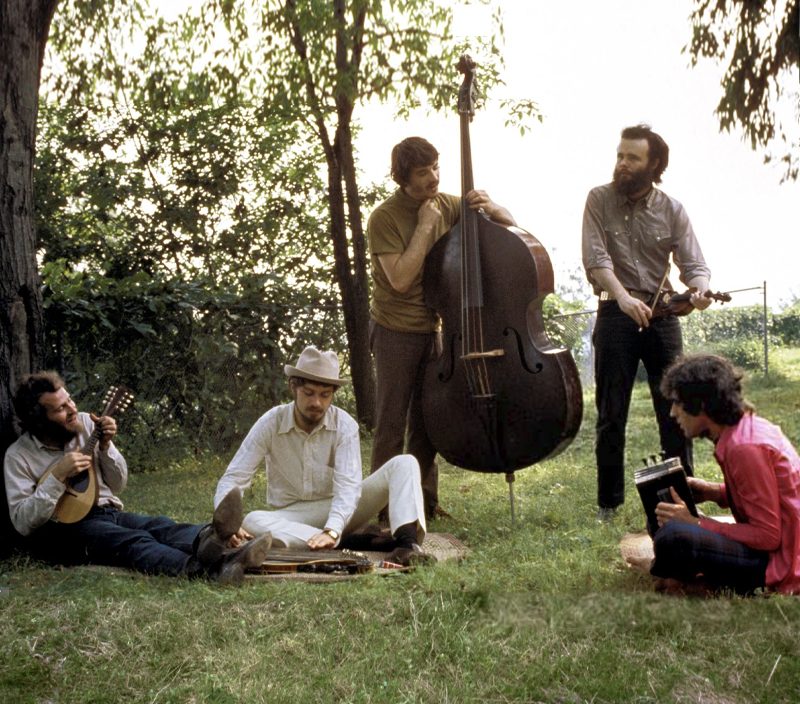
Band – I Shall Be Released

This song is for Song Lyric Sunday for Jim Adams’s blog. This week’s prompt is a song off a debut album. I picked The Band and their debut album, Music From Big Pink, released in 1968. 

Every once in a while, a song doesn’t just sound like it was written in stone; it feels like it was. I Shall Be Released is one of those songs. That’s the magic of The Band. They could turn a Dylan lyric into a backwoods hymn, all soul and no showbiz.

There is a very solemn song with a religious hymnal feel to it. The song is not commercial, not meant to be a hit, sell a million copies, but just pure music at its best.  There are no pretensions or gimmicks…this is the Band at one of its many peaks.

Richard Manuel, whose voice always sounded like it was teetering on the edge of breaking, whether from emotion, exhaustion, or both, delivers a vocal here that’s just haunting. He makes Dylan’s already powerful lyrics sound like the final words of a man who’s seen too much and still manages to believe that salvation might come… someday.

Bob Dylan wrote this in 1967, but his version was not officially released until 1971 on his Greatest Hits Vol. II album. The Band, which backed up Dylan on his first electric tour, recorded it for Music From Big Pink, their first album. Their version is the most well-known. Bob wrote it after his motorcycle accident in 1966. Some have said the song represents Dylan’s search for personal salvation. 

Everyone under the sun has covered this song, but the Band’s own rendition was released first and is probably the best-known version.

The song was the B side to The Weight released in 1968. Music From The Big Ping peaked at #30 in the Billboard 100 and #18 in Canada. That wasn’t the biggest thing, though…the album helped change the landscape of popular music from the psychedelic harder rock to more earthy roots music.

I Shall Be Released

They say everything can be replaced
They say every distance is not near
So I remember every face
Of every man who put me here

I see my light come shining
From the west down to the east
Any day now, any day now
I shall be released

They say every man needs protection
They say that every man must fall
Yet I swear I see my reflection
Somewhere so high above this wall

I see my light come shining
From the west down to the east
Any day now, any day now
I shall be released

Now, yonder stands a man in this lonely crowd
A man who swears he’s not to blame
All day long I hear him shouting so loud
Just crying out that he was framed

I see my light come shining
From the west down to the east
Any day now, any day now
I shall be released

Beatles – She Said, She Said

At this point during recording, Revolver was nearly finished. They were worn down and creatively drained, but also ambitious. This song was the final track recorded for the album, and it came under a lot of pressure. They had to nail it quickly because the album deadline was looming. It has been said that this song was the first time an LSD experience directly influenced a song by them.

George Harrison deserves an assist credit with this song. Lennon had the core of the song but was struggling to pull the parts together. George Harrison jumped in to help him link two unfinished song fragments, the “She said / I know what it’s like to be dead” part and the “When I was a boy” section. This last-minute patchwork was crucial: without Harrison, it’s possible She Said She Said wouldn’t have been finished in time.

Love the guitar sound and the brilliant bridge to this song. It was inspired by the actor Peter Fonda, who was on an acid trip along with George Harrison and John Lennon while they were together in a mansion in California. Accounts vary as to how events unfolded, but there is a consensus that Fonda kept saying “I know what it’s like to be dead,” which ended up being a key line in the lyric.

This is one Beatles song that Paul did not play on. He got in an argument with the rest of them and walked out the door before they recorded it, so George Harrison is playing bass. The song was on Revolver, which is considered by many the best album the Beatles produced…and by some the best by anyone.

George Harrison: “I don’t know how, but Peter Fonda was there.  He kept saying, ‘I know what it’s like to be dead, because I shot myself.’  He’d accidentally shot himself at some time and he was showing us his bullet wound.  He was very uncool.”

She Said She Said

She said, “I know what it’s like to be dead.
I know what it is to be sad.”
And she’s making me feel like I’ve never been born

I said, “Who put all those things in your head?
Things that make me feel that I’m mad.
And you’re making me feel like I’ve never been born.”

She said, “You don’t understand what I said.”
I said, “No, no, no, you’re wrong.
When I was a boy everything was right,
Everything was right.”

I said, “Even though you know what you know,
I know that I’m ready to leave
‘Cause you’re making me feel like I’ve never been born.”

She said, “You don’t understand what I said.”
I said, “No, no, no, you’re wrong.
When I was a boy everything was right,
Everything was right.”

I said, “Even though you know what you know,
I know that I’m ready to leave
‘Cause you’re making me feel like I’ve never been born.”

She said, “I know what it’s like to be dead.
I know what it is to be sad.
I know what it’s like to be dead…”

Underdog Is Here!

There’s no need to fear…Underdog is here!

Thanks, Keith, for hosting this and coming up with this great idea! Today, we go back to Saturday mornings. This was when we sat in front of the TV with our favorite cereal and watched hours of cartoons. So I asked my guests to write about their favorite cartoon or cartoon character growing up.

When I was growing up, we kids had two prime times for cartoons. Saturday mornings were our Super Bowl, packed with classics from Warner Bros. and Hanna-Barbera. Even Land of the Lost—though live-action—was a can’t-miss favorite. But not all the best cartoons aired on Saturdays. Every weekday morning, from 6 to 7 a.m. before school, we had another dose of animated fun, with shows like Rocky and Bullwinkle and Courageous Cat and Minute Mouse keeping us entertained.

Underdog debuted October 3, 1964, on the NBC network under the primary sponsorship of General Mills, and continued in syndication until 1973 (although production of new episodes ceased in 1967, for a run of 124 episodes.

Underdog’s secret identity was Shoeshine Boy. He was in love with Sweet Polly Purebred, who was a news reporter. I would watch this cartoon before going to school in 1st and 2nd grade. Underdog would use his secret ring to conceal pills that he would take when he needed energy. NBC soon put an end to that.

For many years, starting with NBC’s last run in the mid-1970s, all references to Underdog swallowing his super energy pill were censored, most likely out of fear that kids would see medication that looked like the Underdog pills (red with a white “U”) and swallow them. Two instances that did not actually show Underdog swallowing the pills remained in the show. In one, he drops pills into water supplies; in the other, his ring is damaged, and he explains that it is where he keeps the pill—but the part where he actually swallows it was still deleted.

The shows introduced such characters as King Leonardo, Tennessee Tuxedo, Commander McBragg, Klondike Kat,  and more. Underdog was voiced by Wally Cox. Underdog always talked in rhyme and I’m a sucker for that in this and Dr Seuss. Two of the villains every week were Simon Bar Sinister and Riff Raff.

W. Watts Biggers teamed with Chet Stover, Treadwell D. Covington, and artist Joe Harris in the creation of television cartoon shows to sell breakfast cereals for General Mills. The shows introduced such characters as King Leonardo, Tennessee Tuxedo, and Underdog. Biggers and Stover contributed both scripts and songs to the series.

When Underdog became a success, Biggers and his partners left Dancer Fitzgerald Sample to form their own company, Total Television, with animation produced at Gamma Studios in Mexico. In 1969, Total Television folded when General Mills dropped out as the primary sponsor (but continued to retain the rights to the series until 1995; however, they still own TV distribution rights.

Underdog became a pop culture icon, with reruns airing for decades. The character was featured in toys, comics, and even a 2007 live-action film starring Jason Lee as the voice of Underdog. The theme song remains one of the most recognizable in cartoon history.