Power Pop fan, Baseball, Beatles, Alternative music, old movies, and tv show fan. Also anything to do with pop culture in the 60s and 70s... I'm also a songwriter, bass and guitar player. Not the slightest bit interested in politics at all.
I like hearing this song once in a while. It’s one of those 1970’s AM Gold Hits.
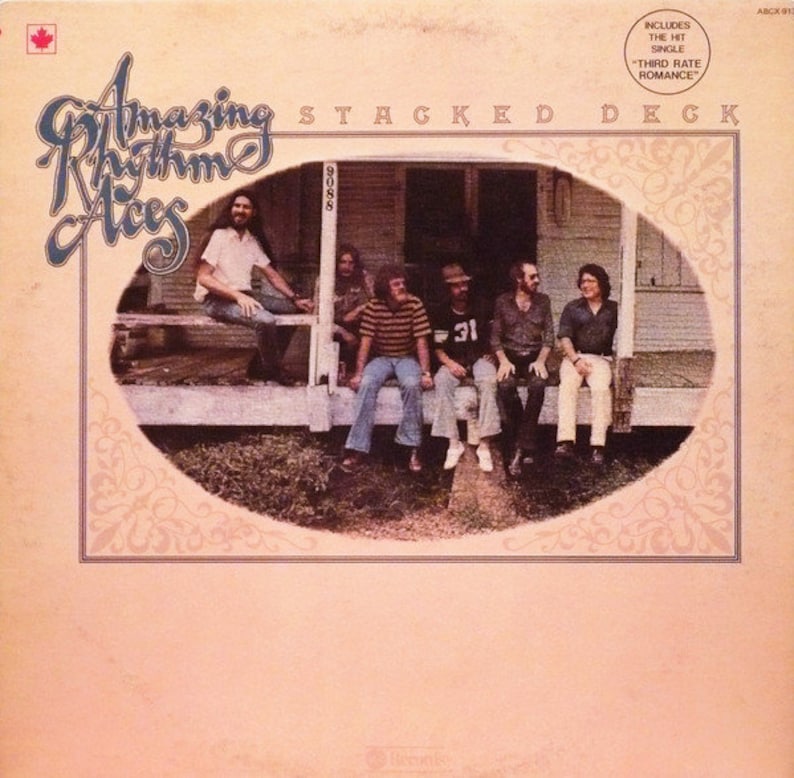
They recorded Third Rate Romance for its 1975 album Stacked Deck, releasing the song as the group’s debut single. The song peaked at #14 on the Billboard 100 and #1 in Canada in 1975. This is a country/rock humorous song. Sammy Kershaw covered this song in 1994 and is maybe the better-known version for some people but this is the version I remember and like.
The Amazing Rhythm Aces were formed in 1974 in Memphis by Jeff Davis and Butch McDade. By 1975 they had added Russell Smith, Barry Burton, and James Hooker to the group. Burton left the group in 1977 and was replaced by Duncan Cameron. They disbanded in 1980 after the release of their album How the Hell do you spell Rhythum? The song was written by Russell Smith.
Rusell Smith went on to be a successful songwriter, Billy Earheart joined Hank Williams Jr’s Bama Band and Cameron joined Sawyer Brown, who had their own success with a style close to the Amazing Rhythm Aces.
Russell Smith:“I got the idea for it from watching a couple in a restaurant, but I made up a lot of the story. At first, it was like a goddamn book report, about eight minutes long. But once I’d edited it down, I was pretty happy with it.”
Third Rate Romance
Sitting at a fancy table, in a ritzy restaurant,
He was staring at his coffee cup,
Trying to get his courage up.
The talk was small when they talked at all,
They both knew what they wanted,
There was no need to talk about it,
They were old enough to talk it out, and still keep it loose.
Third rate romance, low rent rendezvous,
Then he said, “You don’t look like my type, but I guess you’ll do.”
Third rate romance, low rent rendezvous,
He said, “I’ll tell you I love you, if you want me to.”
Third rate romance, low rent rendezvous,
They left the bar, got in his car, and they drove away;
They drove to the Family Inn, she didn’t even have to pretend.
She waited in the car and he went to the desk,
Made his request while she waited outside.
When he came back with the key she said,
“Give it to me and I’ll unlock the door.”
She said, “I’ve never done this kind of thing before, have you?”
Third rate romance, low rent rendezvous
He said, “Yes I have, but only a time or two.”
Third rate romance, low rent rendezvous
Third rate romance, low rent rendezvous
Third rate romance, low rent rendezvous.
If you want to see where we are…and you missed a few…HERE is a list of the episodes in my index located at the top of my blog.
This show was written by Theodore Sturgeon and Gene Roddenberry
A 5-Star Classic episode of Star Trek. They don’t get much better than this one. This is a good episode. The series was renewed for another year and began with a very original story. Spock’s physiology demands that every seven years he must mate. Mr. Spock is overcome with desire, and his emotions are raging on fire, must return to Vulcan, the flames he must fan, if he can’t the prognosis is dire.
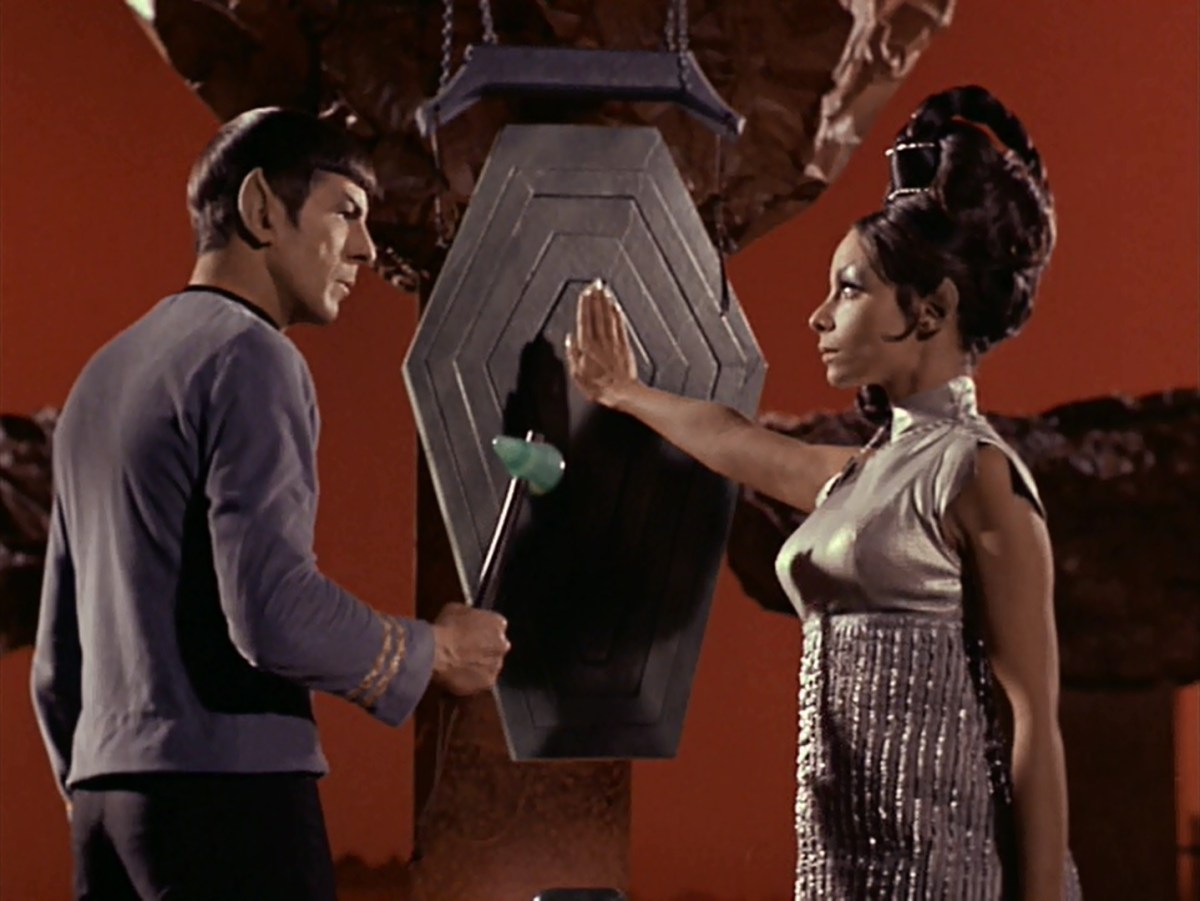
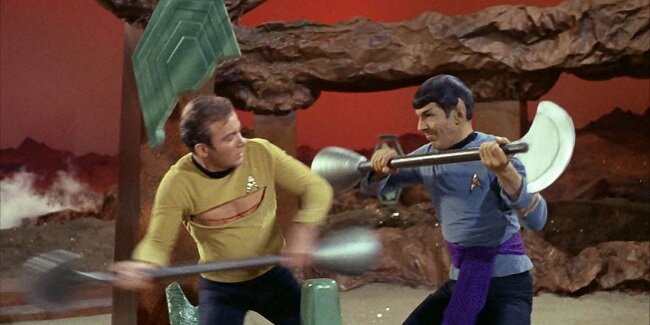
This requires a trip to Vulcan. When Spock and his crew mates arrive, it becomes obvious that Spock must be a very important figure because he is in the presence of the matriarch ruler, T’Pau. Unfortunately, his trip proves a difficult one in that his soon-to-be bride has decided, according to Vulcan law, to choose a different mate. She also has the privilege of choosing someone to fight for her. Instead of choosing a Vulcan hero, she picks Kirk.
This is one of the most memorable shows concerning Spock and his home planet of Vulcan. You get to see Spock in a different light completely. The scene between Nurse Chapel and Spock is very good and shocking in some ways.
I can’t really pick on this episode. It has the chemistry between Kirk, Spock, and Bones and is an excellent episode. This was the first episode in that Walter Koenig appears as Pavel Chekov.
From IMDB:
First appearance of the Vulcan phrases “Peace and long life” and “Live long and prosper”. Also the first ever Star Trek episode to feature any Vulcan characters other than Spock.It’s also the first episode to air since filming began for 2001: A Space Odyssey (1968).
First appearance of the Vulcan hand salute. Leonard Nimoy improvised this symbol during the production of “Amok Time,” modified from a traditional Jewish religious hand gesture.
Season 2 introduced new opening credits. DeForest Kelley’s name was added to the “starring” cast and the theme music was extended and had the female soprano voice Loulie Jean Norman and percussion added to it.
The prequel series Star Trek: Enterprise (2001) considered having its regular Vulcan character (played by Jolene Blalock) be a younger version of T’Pau. Since that would have required paying a fee to the estate of Theodore Sturgeon the author of Amok Time, this plan was abandoned and the new character was rechristened T’Pol.
Romulan helmets are reused from Star Trek: Balance of Terror (1966), this time worn by Vulcans during the pon farr ritual. In both productions, the helmets were a de facto economy measure as they precluded the need for the actors to wear ear prostheses.
Another innovation of the second season was the further-expanded sickbay that now includes McCoy’s new office.
First time we hear the now-famous “Star Trek fight music” (in 5/4 time), when Kirk and Spock battle. The theme is also played, albeit differently and more slowly, when Spock first informs Kirk of the details of his condition in Spock’s quarters and during the entrance of T’Pau.
When child model Mary Elizabeth Rice posed as seven year-old T’pring (fitted with only one ear prosthetic, since a single still photograph taken from the side was all the script called for), she was ill with chicken pox, replete with fever. She later commented that her sickness had been a plus, as it made her appear more serious.
One of only two times in Star Trek (1966) where Spock shows an emotional reaction without being influenced by something – if only for a few seconds. The other example is the first pilot Star Trek: The Cage (1966), filmed when the rules hadn’t been established for this character.
Summary
Lately, Spock’s behavior has been increasingly and unprecedentedly erratic. When McCoy finds it to be a growing medical risk, Kirk drags the truth out of him: it is the ‘blood fever’, the one time in a Vulcan’s life he regresses to a primitive, hormonal state of mind, setting out to mate for life. He is granted the first request for shore-leave in his entire career to go to Vulcan, asking Kirk and McCoy to join him in his equivalent of a marriage ceremony with his since-age-seven arranged fiancée, T’Pring. But, once on Vulcan, T’Pring halts the matrimony by calling the ancient challenge, whereby a champion of her choice will fight Spock for her. Surprising all, she selects Jim Kirk. He accepts after due consideration only to find, when the first of two dueling weapons are handed out, that the fight is to the death – too late to decline in front of T’Pau, the presiding top official for Spock’s family and the most powerful of all Vulcan dignitaries.
CAST
William Shatner … Captain James Tiberius ‘Jim’ Kirk Leonard Nimoy … Mister Spock DeForest Kelley … Doctor Leonard ‘Bones’ McCoy Celia Lovsky … T’Pau Arlene Martel … T’Pring Lawrence Montaigne … Stonn Majel Barrett … Nurse Christine Chapel George Takei … Lieutenant Hikaru Sulu Nichelle Nichols … Lieutenant Nyota Uhura Walter Koenig … Ensign Pavel Chekov Byron Morrow … Admiral Komack Bill Blackburn … Lieutenant Hadley (uncredited) Frank da Vinci … Vulcan Ceremonial Aide (uncredited) Walker Edmiston … Space Central (voice) (uncredited) Charles Palmer … Vulcan Litter Bearer (uncredited) Eddie Paskey … Lieutenant Leslie (uncredited) Joseph Paz … Vulcan Ceremonial Aide (uncredited) Russ Peek … Vulcan Executioner (uncredited) Mary Rice … T’Pring as Child (uncredited) Mauri Russell … Vulcan Litter Bearer (uncredited) Gary Wright … Vulcan Litter Bearer (uncredited)
This is a song that should have been a bigger hit. Mick Jagger and Paul McCartney were fans of this song. Dave Davies remembered Paul jokingly telling him “You bastards! How dare you! I should have made that record!”
This song is about the loss of Ray’s sister, who lived for a time in Ontario, Canada. Upon her return to England she developed a sickness and died while dancing at a night club. Just before she died she gave Ray his first guitar for his 13th birthday.
He wrote the song while traveling in India years later when he heard about the significance of the Ganges river in the Indian death ritual. Two years later he again used the metaphor of crossing a river in his beautiful song Waterloo Sunset.
The song peaked at #10 on the UK Charts in 1965.
Ray Davies:“A bit more care should have been taken with it. I think (producer) Shel Talmy went too far in trying to keep in the rough edges. Some of the double tracking on that is appalling. It had better songs on it than the first album, but it wasn’t executed in the right way. It was just far too rushed.”
Ray Davies:“It’s more about you’ve lost the female love of your life, therefore you only have your friends left. That little interchange – ‘She is gone’ – is the sound of someone who is completely distraught. It’s more about camaraderie than homosexuality. But then it borders on that. You go out for a pint with the blokes and then it gets to that moment… (whispery laughter) and they’re singing to one another pissed, and they hug one another.”
See My Friends
See my friends,
See my friends,
Layin’ ‘cross the river,
See my friends,
See my friends,
Layin’ ‘cross the river,
She is gone,
She is gone and now there’s no one left
‘cept my friends,
Layin’ ‘cross the river,
She just went,
She just went,
Went across the river.
Now she’s gone,
Now she’s gone,
Wish that I’d gone with her.
She is gone,
She is gone and now there’s no one left
‘cept my friends,
Layin’ ‘cross the river,
She is gone and now there’s no one else to take her place
She is gone and now there’s no one else to love
‘cept my friends,
Layin’ ‘cross the river,
See my friends,
See my friends,
Layin’ ‘cross the river,
See my friends,
See my friends,
Layin’ ‘cross the river,
The first season was a tremendous opening season. Out of 29 episodes I had 11 with 5 stars. Only one episode was under 3 and that one was at least interesting. Some of the most classic episodes are in Season 1 but we have more in Season 2. We will also see a new crew member Pavel Chekov, a Russian who joins the crew in the 2nd season. The Monkees were huge at the time so the producers wanted to have their own “Davy Jones” for the girls watching.
Lucille Ball... without her, it might not have happened. She wasn’t in on the creative side of the show but she and her studio Desilu did help finance Star Trek. A studio accountant named Edwin “Ed” Holly is on the record saying “If it were not for Lucy, there would be no Star Trek today.”
Grace Lee Whitney as Yeoman Janice Rand… only after 8 total episodes Yeoman Rand just vanished from the series. Janice Rand was supposed to be a major character on Star Trek but was written off the show after season 1. Gene Roddenberry once stated that Whitney’s firing was purely financial. Whitney tells a different story. Only a few days before her firing, she was sexually assaulted by a studio executive on the Star Trek set. Whitney discussed the incident in her autobiography years later and, although she deliberately did not mention the executive by name, stated that she had a hard time believing the assault wasn’t at least in some way related to her exit from The Original Series.
Gene Roddenberry later apologized for giving in to pressure from the network to let Whitney go, even going so far as to say that writing Janice Rand off “was the dumbest mistake” he had ever made. To show how much she was loved by the fans and cast…she returned when the movies started in 1979.
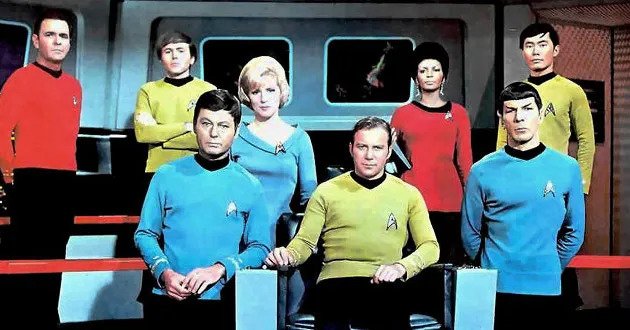
William Shatner once said that their budget was lower than what it takes to cater a cast and crew in today’s time. What they had were great writers and good actors who had extremely good chemistry. The leading three men will always be known for their roles in this series. William Shatner as Kirk, Leonard Nimoy as Spock, and DeForest Kelley as “Bones” or Doctor McCoy. The supporting cast was great also…with Majel Barrett as Nurse Chapel, Nichelle Nicols as Nyota Uhura, George Takei as Hikaru Sulu, Walter Koenig as Pavel Chekov, and James Doohan as Scotty. I can’t forget Grace Lee Whitney who should have been in the entire series.
Thank you all for reading each Wednesday, Saturday, and Sunday. We have some more in front of us and I’m looking forward to it.
If you tried to giverock ‘n’ roll another name, you might call it Chuck Berry…John Lennon
Chuck Berry is the father of rock and roll. His guitar paved the way but most importantly his poetry with his writing. He used rhyme and more reason to weave his songs into the fabric of society. If you were a teenager in the 1950s you understood No Particular Place To Go and his other songs. He used cars as a symbol of freedom much like Bruce Springsteen would do years later.
Berry’s assistant, Francine Gillium, told Berry about the High School that she worked at and helped him get in the right mindset to write these songs about teenagers. He mostly stayed away from politics and topical references in his songs…which is why many are relatable today.
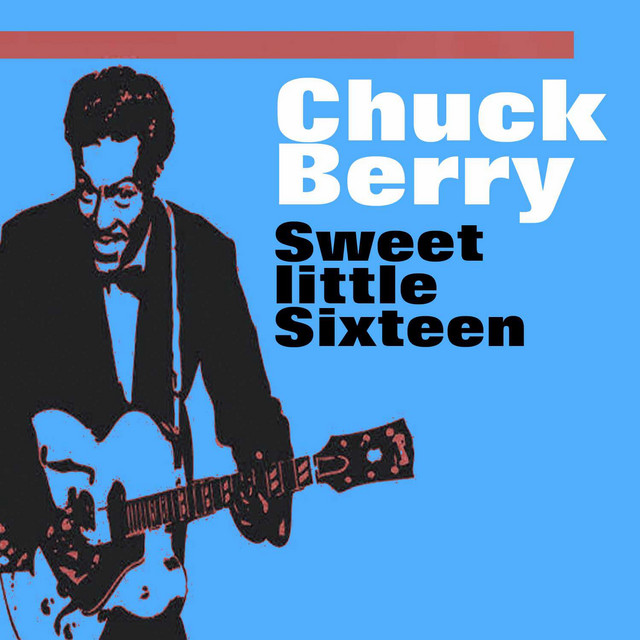
Sweet Little Sixteen, the second-biggest pop hit of his career next to the terrible My Ding-a-Ling. Chuck wrote this song when he was on a package tour, and came across a teenage autograph-seeker who was insistent upon getting the autograph of each headliner on the tour.
The most important collaborator that Chuck had was Johnnie Johnson. He was a piano player who collaborated with Berry on many songs, including “Maybellene,” “Roll Over Beethoven” and “Sweet Little Sixteen.” Johnson often wrote songs on the piano, and then Berry converted them to guitar and wrote lyrics. Berry joined Johnson’s group, The Sir John Trio, in 1953, and quickly became the lead singer and centerpiece of the band.
There is a controversy that Johnson came up with a lot of the riffs that Chuck used and Berry would transpose them from piano to guitar. In 2000, Johnson sued Chuck Berry, alleging he deserved co-composer credits (and royalties) for dozens of songs, including No Particular Place to Go, Sweet Little Sixteen, and Roll Over Beethoven, which credit Berry alone. The case was eventually dismissed because too many years had passed since the songs in dispute were written. Keith Richards has talked about this also… he is a huge fan of Chuck but also a huge fan of Johnnie Johnson.
Sweet Little Sixteen
They’re really rockin’ Boston
In Pittsburgh, PA
Deep in the heart of Texas
And ’round the ‘Frisco Bay
All over St. Louis
And down in New Orleans
All the cats wanna dance with
Sweet Little Sixteen
Sweet Little Sixteen
She’s just got to have
About half a million
Famed autographs
Her wallet filled with pictures
She gets ’em one by one
Becomes so excited
Watch her, look at her run, boy
Oh, mommy, mommy
Please, may I go?
It’s such a sight to see
Somebody steal the show
Oh, daddy, daddy
I beg of you
Whisper to mommy
It’s all right with you
‘Cause they’ll be rockin’ on Bandstand
In Philadelphia, PA
Deep in the heart of Texas
And ’round the ‘Frisco Bay
All over St. Louis
Way down in New Orleans
All the cats wanna dance with
Sweet Little Sixteen
‘Cause they’ll be rockin’ on Bandstand
Philadelphia, PA
Deep in the heart of Texas
And ’round the ‘Frisco Bay
All over St. Louis
Way down in New Orleans
All the cats wanna dance with, ooh
Sweet Little Sixteen
Sweet Little Sixteen
She’s got the grown up blues
Tight dresses and lipstick
She’s sportin’ high heel shoes
Oh, but tomorrow morning
She’ll have to change her trend
And be sweet sixteen
And back in class again
But they’ll be rockin’ in Boston
Pittsburgh, PA
Deep in the heart of Texas
And ’round the ‘Frisco Bay
Way out in St. Louis
Way down in New Orleans
All the cats wanna dance with
Sweet Little Sixteen
This was the Journey I really liked…before a member left (Gregg Rolie) and one was added (Jonathan Cain)…and they became more radio-friendly with Escape. It comes down to my personal tastes. Gregg Rolie played a B4 organ and sounded great and Cain played an 80’s Casio (just kidding but…) synth…it changed the music completely…but it did make them more accessible to the masses…so yea I’m in the minority.
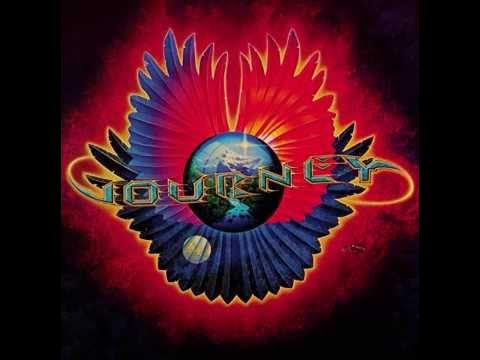
This song was on the album Infinity. Personally…my favorite Journey album is Departure. The three I listen to are Infinity, Evolution, and Departure. The albums before were prog albums and the ones after…more 80’s radio pop. With those three albums, they were more of a rock band.
The origin of this song is interesting. It started off as a poem by Diane Valory, the wife of Journey bassist Ross Valory. The band’s first vocalist, Robert Fleischman, wrote new lyrics, and guitarist Neal Schon wrote the melody on acoustic guitar in the back seat of a station wagon while the band was driving between shows.
This song was the first single to chart for the band. Before this album, they were more of a progressive band. With this single and the next two albums, they started building themselves up in the charts to lay the groundwork for superstardom in the eighties.
The song peaked at #57 on the Billboard 100 and #45 in Canada in 1978.
Wheel In The Sky
Winter is here again, oh Lord
Haven’t been home in a year or more
I hope she holds on a little longer
Sent a letter on a long summer day
Made of silver, not of clay
Ooh, I’ve been runnin’ down this dusty road
Ooh, the wheel in the sky keeps on turnin’
I don’t know where I’ll be tomorrow
Wheel in the sky keeps on turnin’
I’ve been trying to make it home
Got to make it before too long
Ooh, I can’t take this very much longer, no
I’m stranded in the sleet and rain
Don’t think I’m ever gonna make it home again
The morning sun is risin’
It’s kissin’ the day
Ooh, the wheel in the sky keeps on turnin’
I don’t’ know where I’ll be tomorrow
Wheel in the sky keeps on turnin’, whoa, whoa, whoa
My, my, my, my, my
For tomorrow
Oh, the wheel in the sky keeps on turnin’
Ooh, I don’t know where I’ll be tomorrow
Wheel in the sky keeps me yearnin’
Ooh, I don’t know, I don’t know where
Oh, the wheel in the sky keeps on turnin’
Ooh, I don’t know where I’ll be tomorrow
Wheel in the sky keeps on turnin’
Ooh, I don’t know, I don’t know, I don’t know
Wheel in the sky keeps on turnin’
Don’t know where I’ll be tomorrow
Ooh, the wheel in the sky keeps turnin’
Wheel in the sky keeps on turnin’
If you want to see where we are…and you missed a few…HERE is a list of the episodes in my index located at the top of my blog.
This show was written by Steven W. Carabatsos and Gene Roddenberry
We have hit the last episode of the first season. This weekend I’ll have a First Season review.
The Enterprise is tracking a strange straight line pattern where all of the inhabitants of the planets in line are going crazy and dying – some are killing themselves. The next planet in line is Deneva, a Federation Outpost where Kirk’s brother Sam is stationed. Kirk, Spock & McCoy beam down to the planet to investigate and to visit Sam and his family. What they find are strange flat flying creatures attacking people and everyone on the planet are either going crazy, dying or already dead.
When they get to Sam’s place they find Sam is dead, Sam’s wife starting to go mad then suddenly dies and Sam’s son in a comatose state and dying. Spock is attacked by one of the creatures. The 3 beam back aboard the ship with Kirk’s comatose nephew. Kirk, Spock and McCoy race to find the answers.
Spock is infected with one of the aliens, who cause such great pain as to drive their hosts mad. Spock uses his Vulcan half to control his emotions, even under extreme pain, and this provides Nimoy something to really sink his teeth into.
Unless a method of destroying the creatures can be found, Kirk is faced with the possibility of having to kill millions of people to prevent the creatures from spreading further throughout the galaxy, Spock and Peter, Kirk’s nephew included.
This time there are no mind melds or any kind of communication with the flat-looking creatures. They want them exterminated immediately and for good reason.
From IMDB:
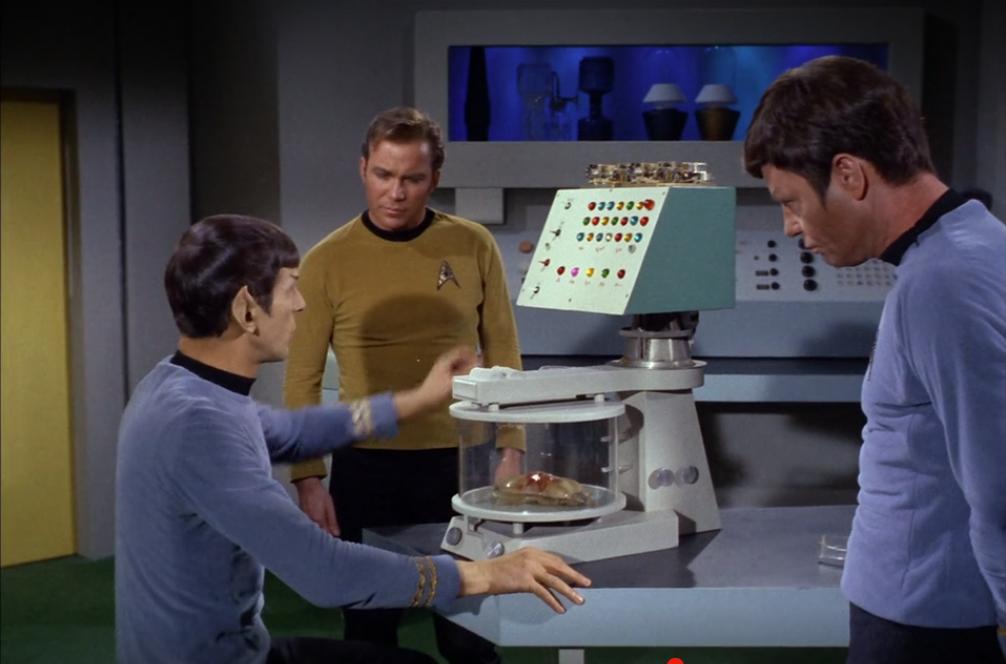
This is the first time McCoy’s lab is seen. Inside the lab, the prop used previously as Balok’s lamp device in Star Trek: The Corbomite Maneuver (1966) can be seen sitting on a shelf. Different components of sickbay were added over the first season, such as the decompression chamber seen in Star Trek: Space Seed (1967). McCoy’s lab contains one of the life support canisters used on the Botany Bay.
The Deneva outdoor scenes were shot at the headquarters of TRW Space and Defense Park in Redondo Beach, California (currently [2021] the Northrop Grumman Space Technology headquarters). The establishing shot of Kirk’s brother – Sam’s lab was a building on the campus of UCLA, and the entrance of the building was the cafeteria at TRW. See Google Earth for location. The actual location where Spock is attacked by the parasite is the lobby of TRW Building E1 next door to the cafeteria where the outdoor scenes were shot. It is now (2021) Northrop Grumman Aerospace Building E1.
The parasites bear a strong resemblance to the titular enemies from the 1951 Robert A. Heinlein novel The Puppet Masters, sometimes considered to have started the “body snatchers” sub genre of science fiction. The same story was the unofficial basis for The Brain Eaters (1958) which also starred Leonard Nimoy. See also Star Trek: Charlie X (1966) and Star Trek: The Trouble with Tribbles (1967), additional Star Trek The Original Series episodes with Heinlein resemblances.
William Shatner portrays Kirk’s brother Sam in the scene where McCoy rolls his body over to identify him. The shot is brief, but freezing the frame reveals Shatner in light character makeup and a mustache.
Craig Huxley (Kirk’s nephew Peter) reappears in Star Trek: And the Children Shall Lead (1968) as Tommy Starnes, and composed some music for Star Trek III: The Search for Spock (1984). Also invented the “Blaster Beam”, the musical instrument used for the distinctive “V’Ger” sound from Star Trek:The Motion Picture.
Steven W. Carabatsos had an obligation in his contract, that he must deliver at least one script of his own while serving as story editor. Carabatsos left the series in late-1966, but still had to fulfill this task before departing. Having no idea of his own, Gene Roddenberry suggested him one, entitled Operation: Destroy!, which was the basis for this episode.
The fly-by of the Enterprise that opens this episode was only seen one other time. It is re-used in Star Trek: The Tholian Web (1968) as the ship is thrown clear of the Tholian force field.
Stock footage of Leslie’s hands from Star Trek: The Alternative Factor (1967) is used to represent the personnel in the satellite control room. This shot was removed from the remastered version of the episode.
The voice of the Denevan who cries out, “I did it. it’s finally gone! I’m free!” is clearly that of Leonard Nimoy’s.
Some non canonical Star Trek novels have given the explanation that Sam Kirk’s two other sons (spoken of in Star Trek: What Are Little Girls Made Of? (1966)) were away from Deneva during the events of the episode. It has also been suggested that Sam Kirk having three sons was part of the misinformation Kirk planted in his robot double in that episode.
The clubs used by the Denevans during their attack on the landing party appear to be thick Lucite rods. Curiously, the gray, grooved clubs used by Spock during his fight with Kirk in Star Trek: This Side of Paradise (1967) and some of the miners on Janus VI in Star Trek: The Devil in the Dark (1967) were not recycled for this use.
Summary
The Enterprise traces a virus-like outbreak that seems to be traveling in a direct line across a planetary system. The next planet is home to Kirk’s brother Sam, his sister-in-law and their young son. The Enterprise arrives too late however for Sam. They find flying jellyfish-like creatures that attach themselves to humans. They take over the victims nervous system forcing them to bend to their will. Spock finds a weapon to use against the creatures but it leaves him hopelessly blind.
CAST
William Shatner … Captain James Tiberius ‘Jim’ Kirk / Samuel ‘Sam’ Kirk Leonard Nimoy … Mister Spock DeForest Kelley … Doctor Leonard ‘Bones’ McCoy James Doohan … Lieutenant Commander Montgomery ‘Scotty’ Scott Joan Swift … Aurelan Kirk Maurishka … Yeoman Ellen Zahra Majel Barrett … Nurse Christine Chapel George Takei … Lieutenant Hikaru Sulu Nichelle Nichols Nichelle Nichols … Lieutenant Nyota Uhura Craig Huxley … Peter Kirk (as Craig Hundley) Fred Carson … First Denevan Jerry Catron … Second Denevan David Armstrong … Kartan (uncredited) Bill Blackburn … Lieutenant Hadley (uncredited) Frank da Vinci … Guard (uncredited) Jeannie Malone … Yeoman (uncredited) Eddie Paskey … Lieutenant Leslie (uncredited) Ron Veto … Harrison (uncredited)
It’s a rare event that I post a top ten song of the eighties but this song was a cover and I didn’t know that for the longest. In the 80s my favorite female singers of that time were Maria McKee from Lone Justice and Patty Smyth of Scandal. As far as mainstream artists…I did like Cyndi Lauper and Pat Benatar at the time. My then-girlfriend played Lauper constantly so I gradually started to like her music like Money Changes Everything.
This song was her breakout song and never did I think it was a cover. She released an album in 1981 as a member of the group Blue Angel, but “Girls Just Want To Have Fun” made her famous. She turned the song into a 1980s anthem. The song was on the album She’s So Unusual released in 1983.
Singer/songwriter named Robert Hazard, who had a band called Robert Hazard and the Heroes, wrote it and released it in 1979. It was much more rock guitar based than Lauper’s version.
Lauper had trouble recording the song. They tried it in different ways but nothing worked. Lauper listened to Come On Eileen and was inspired by that…they did it in that tempo and it worked.
The song peaked at #2 on the Billboard 100, #1 in Canada, #1 in New Zealand, and #2 in the UK in 1983. She would have two number 1’s in Billboard with Time After Time and True Colors.
The album She’s So Unusual peaked at #4 on the Billboard Album Charts, #1 in Canada, #3 in New Zealand, and #16 in the UK. She had 5 charting singles off of that album…four top 5 songs including a number 1 and one top 30 song.
The video made for the song features the wrestler Captain Lou Albano as Lauper’s father, and also Lauper’s real-life mother, who had no acting experience. It won the first ever award for Best Female Video at the 1984 MTV Video Music Awards. Albano was also in her next video, “Time After Time.”
What’s an eighties song without a parody from Weird Al?… “Girls Just Wanna Have Lunch.” He said he didn’t want to make fun of women so he kept it at lunch. Lauper said: “I like Weird Al. I LOVED ‘Like a Surgeon.’ I thought he was going to make MORE fun of Girls just wanna have lunch. But it wasn’t hard. Because everybody thought I was an alien, I spoke funny and I dressed funny… Not hard to make fun of.”
Cyndi Lauper:“I wanted ‘Girls Just Want To Have Fun’ to be an anthem for women around the world – and I mean all women – and a sustaining message that we are powerful human beings. I made sure that when a woman saw the video, she would see herself represented, whether she was thin or heavy, glamorous or not, and whatever race she was.”
Girls Just Want To Have Fun
I come home in the morning light
My mother says, “When you gonna live your life right?”
Oh, mother dear, we’re not the fortunate ones
And girls they wanna have fun
Oh, girls just wanna have fun
The phone rings in the middle of the night
My father yells, “What you gonna do with your life?”
Oh, daddy dear, you know you’re still number one
But girls they wanna have fun
Oh, girls just wanna have
That’s all they really want
Some fun
When the working day is done
Oh, girls, they wanna have fun
Oh, girls just wanna have fun
(Girls they want, wanna have fun)
(Girls wanna have)
Some boys take a beautiful girl
And hide her away from the rest of the world
I wanna be the one to walk in the sun
Oh, girls they wanna have fun
Oh, girls just wanna have
That’s all they really want
Is some fun
When the working day is done
Oh, girls, they wanna have fun
Oh, girls just wanna have fun
(Girls they want, wanna have fun)
(Girls wanna have)
They just wanna, they just wanna (girls)
They just wanna, they just wanna (girls just wanna have fun)
Oh, girls, girls just wanna have fun
(They just wanna, they just wanna)
They just wanna, they just wanna (girls)
They just wanna, they just wanna (girls just wanna have fun)
Oh, girls, girls just wanna have fun
When the workin’
When the workin’ day is done
Oh, when the workin’ day is done
Oh, girls, girls just wanna have fun
Everybody, ha, ha
They just wanna, they just wanna (girls)
They just wanna, they just wanna (girls just wanna have fun)
Oh, girls, yeah, girls just wanna have fun
(They just wanna, they just wanna)
When the workin’
When the workin’ day is done, oh (they just wanna, they just wanna)
When the workin’ day is done (girls)
(Girls just wanna have fun)
Oh, girl, girls just wanna have fun
(They just wanna, they just wanna) Everybody now
Yeah, yeah, yeah
(They just wanna, they just wanna) Yeah, yeah
Girls
In the late seventies, my friend had the Fly Like An Eagle album. I loved it at that time and this song is the one young Max zoned in on. It’s one Steve Miller song that is NOT worn out! It’s not a great song by any means but there is something charming about this country-type song. It’s one you can imagine someone singing on a back porch.
I like when artists do something different out of the norm. At this time he was changing from blues to pop…and this song went in a different direction.
The Steve Miller Band started off as a blues psychedelia band. They got signed for $50,000 dollars in 1967…quite a lot at that time… after the band had an impressive performance at the legendary Monterey Pop Festival They continued to release one album a year but they never rose up the charts too much. At that time the band included drummer Gary Mallaber and LonnieTurner on bass, but the albums also featured contributions by harmonica player James Cotton, session guitarist Led Dudek, and the Doobie Brothers’ John McFee…and Boz Scaggs was a member for a while.
One song in the earlier period I’ll touch on in a few weeks is “My Darkest Hour” and he recorded it with Paul McCartney in one of his most darest hours…right after Paul refused to sign with Allen Klein.
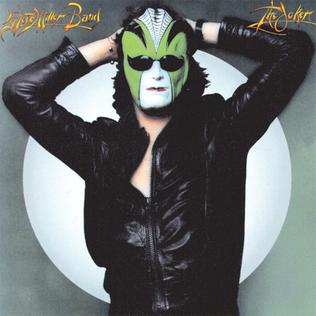
After The Joker was released as a single in 1973, Miller started to move toward pop melodies and struck gold with Fly Like An Eagle. The album bounces everywhere in style. He does a Sam Cooke cover, Send Me to sitars on “Wild Mountain Honey…along with this Bluegrass – Country song Dance, Dance, Dance. Then there are the hits. The title track Fly Like An Eagle, Take The Money and Run, and Rockin’ Me. This album is one of the building blocks of classic rock radio.
The album was released in 1976 and it peaked at #3 in the Billboard Album Charts, #4 in Canada, and #11 in the UK.
Dance, Dance, Dance
My grandpa, he’s 95
And he keeps on dancin’
He’s still alive
My grandma, she’s 92
She loves to dance
And sing some, too
I don’t know
But I’ve been told
If you keep on dancing
You’ll never grow old
Come on darling
Put a pretty dress on
We’re gonna go out tonight
Dance, dance, dance
Dance, dance, dance
Dance, dance, dance
All night long
I’m a hard working man
I’m a son of a gun
I’ve been working all week in the noon day sun
The wood’s in the kitchen
And the cow’s in the barn
I’m all cleaned up and my chores are all done
Take my hand, come along
Let’s go out and have some fun
Come on darling put a pretty dress on
We’re gonna go out tonight
Dance, dance, dance
Dance, dance, dance
Dance, dance, dance
All night long
Pick on
Dance, dance, dance
Dance, dance, dance
Dance, dance, dance
All night long
Come on darling, don’t look that way
Don’t you know when you smile
I’ve got to say you’re my honey pumpkin lover
You’re my heart’s delight
Don’t you want to go out tonight
You’re such a pretty lady
You’re such a sweet girl
When you dance it brightens up my world
Come on darling put a pretty dress on
We’re gonna go out tonight
And dance, dance, dance
Dance, dance, dance
Dance, dance, dance
All night long
A true rock and roll pioneer. I don’t have to be coaxed to listen to Gene Vincent but I watched the 1969 bio of him doing a UK tour in 1969 (at the bottom of the post). He radiated star but you could tell he was in pain probably from all directions. I always liked him because of his attitude while singing but I noticed…very late…but I saw what a great unusual voice he had. He could go from ballad to rocker in a split second.
Vincent was injured in a car accident on April 16, 1960…with Eddie Cochran in a taxi which killed Cochran. Vincent whose leg was weak due to a wound incurred in a motorcycle accident in Virginia during the Korean War. He walked with a noticeable limp for the rest of his life. In 1962 he was in Hamburg and played on the same bill as the Beatles.
The 50s revival had started in the UK and Vincent did around 24 shows altogether on that tour. The bio is a fascinating look into the UK in 1969. The music is there of course but it gives a lesson on how touring is not always glamorous and 5-star hotels.
Vincent’s energetic performance and dynamic vocals make this song a standout track. It was written by Whitey Pullen and Jerry Merritt. The song was released in 1960 and it peaked at #22 in the UK charts. By this time the UK is where all of the 50’s rock stars went because America was too busy listening to Paul Anka, Fabion, and Pat Boone. It was a sad state of music at that time for rock and roll. The parents probably loved the no soul no trouble singers. Then thankfully…the British invasion and Motown were coming up.
The Beatles, Stones, Who, and other bands made America wake up to the blues and rock artists they had been ignoring.
Gene Vincent would die only two years after this tour in 1971 after recording an album called The Day the World Turned Blue at 36 years old. He was the first inductee into the Rockabilly Hall of Fame upon its formation in 1997. The following year he was inducted into the Rock and Roll Hall of Fame. He would die of a ruptured ulcer, internal hemorrhage and heart failure.
She She Little Sheila
Well, she, she, she little Sheila
Best lookin’ gal in town
Well now, she, she, she little Sheila
With your hair so long and brown
Well, you never-never know what my Sheila’s puttin’ down
Well now, Dick Clark said you’re the best lookin’ girl
On his big bandstand
I know it too and I love you true
And honey, I’m your man
Well, you never-never know what my Sheila’s puttin’ down
Yeah, she, she, she little Sheila
She, she, she little Sheila
She, she, she little Sheila
She, she, she little Sheila
Well, you never-never know what my Sheila’s gonna put down
Well, she, she, she little Sheila
Best lookin’ gal around
Well, she, she, she little Sheila
With your hair so long and brown
Well, you never-never know what my Sheila’s puttin’ down (aw)
Yeah, she, she, she little Sheila
She, she, she little Sheila
She, she, she little Sheila
She, she, she little Sheila
Well, you never-never know what my Sheila’s puttin’ down
If you want to see where we are…and you missed a few…HERE is a list of the episodes in my index located at the top of my blog.
This show was written by Harlan Ellison and Gene Roddenberry
If someone asked me the best episode of Star Trek…this would be the one. This one has drama, comedy, romance, and most importantly…Time Travel!
McCoy is accidentally injected with a stimulant that makes him paranoid and aggressive. He attacks crewmen and beams himself down on a planet the ship is orbiting. There, he jumps into a time travel device that resembles a giant donut called the Guardian. The Guardian has time running through and you can watch history. He manages to totally disrupt time…so much so that the Enterprise no longer exists.
Kirk and Spock ask the Guardian to start again and Kirk and Spock jump through into a period a few weeks before McCoy lands in depression-era New York. They take refuge in a homeless shelter run by Edith Keeler and prepare for McCoy’s arrival. Spock works to create a method of viewing the history he had recorded and Kirk grows close to Edith. When Spock finally finishes his work he sees that he has recorded two contradictory histories… one where Edith dies in the near future and one where she does on to work for peace
The question is which history is the ‘correct’ one, which led to the future being changed and how will McCoy interfere with what is meant to happen? I cannot say enough great things about this episode.
This episode is considered to be one of the best episodes of the series and rightly so. It uses the time travel device to set up a moral conundrum and surprisingly doing the right thing might mean allowing a good woman to die. Guest star Joan Collins does a fine job in the role of Edith and DeForest Kelley’s portrayal of the drug-affected McCoy is one of his best performances in the series.
We have one more episode to wrap up the first season!
From IMDB:
To emphasize on the extremely high age of the Guardian in the upper millions, or well into the billions, the starfield of its planet is surrounded by red dwarfs and red giants.
When William Shatner and Joan Collins are walking together on the street, they pass in front of a shop with the name Floyd’s Barber Shop clearly painted on the window. This is the same Floyd’s Barber Shop which is often seen on The Andy Griffith Show (1960), adjacent to the sheriff’s office, in the town of Mayberry.
Gene Roddenberry apparently denied Harlan Ellison’s pseudonym request because he knew everyone in the science fiction community was aware that the “Cordwainer Bird” credit was Ellison’s way of signaling his dissatisfaction with the way production people treated what he wrote. It would have meant that Star Trek was no different than all the other “science fiction” shows in mistreating quality writers, and could have resulted in prose science fiction writers avoiding contributing to the program.
In Harlan Ellison’s original story, Beckwith’s change of the past is revealed by members of the Enterprise team who are beamed back to the ship, only to find it is now a pirate vessel named the Condor. This idea was later used in Star Trek: Mirror, Mirror (1967).
Widely considered by both fans and critics to be the best episode of the series.
At the 50th anniversary “Star Trek” convention in Las Vegas in August 2016, fans voted this the best episode of the “Star Trek” franchise.
Gene L. Coon is mainly responsible for the small comical elements of the story, including the famous “rice picker” scene, which Harlan Ellison reportedly hated.
The footage seen through the time portal is, for the most part, lifted from old Paramount films.
This was the most expensive episode produced during the first season, with a budget of $245,316 ($2,163,601.87 in 2022 adjusted for inflation), and also the most expensive episode of the entire series, except the two pilots. The average cost of a first season episode was around $190,000 ($1,675,733.97). Also, production went one and a half days over schedule, resulting in eight shooting days instead of the usual six.
When asked in February 26, 1992 interview whether the makers of this episode consciously intended it to have the contemporaneous anti-Vietnam-war movement as subtext, associate producer Robert H. Justman replied, “Of course we did.”
The Guardian of Forever was designed by Art Director Rolland M. Brooks. Normally, set design was the purview of his colleague Matthew Jeffreys, but due to illness, Brooks took over his chores for the Guardian. When Jefferies returned to his duties and saw the donut-shaped set piece for the first time, he reportedly exclaimed, “What the hell is this?!”, according to D.C. Fontana. Special effects artist Jim Rugg was responsible for the light effects for the Guardian.
Clark Gable, who was by no means a leading man in 1930, was not the original choice of reference. The final shooting draft of this script has Edith reference “a Richard Dix movie”, but the crew on the set felt Dix’s name wouldn’t be familiar to viewers in the 1960s.
Originally, then-story editor Steven W. Carabatsos got the job to rewrite Harlan Ellison’s script, but his draft was not used. Instead, Ellison agreed to make a rewrite himself, which was again deemed unsuitable. Producer Gene L. Coon also got himself into the rewriting. Finally, the new story editor, D.C. Fontana got the assignment to rewrite Ellison’s script and make it suitable for the series. Fontana’s draft was then slightly rewritten by Roddenberry to become the final shooting draft. Much of the finished episode is the product of Fontana, who went uncredited (as did all the other writers) for her contribution. Only two lines from Ellison’s original teleplay survive in the final episode, both spoken by the Guardian: “Since before your sun burned hot in space, since before your race was born,” and “Time has resumed its shape.”
The title of this episode refers to both the dead city on the time planet and New York itself, where the timeline will either be restored or disrupted. In Harlan Ellison’s original script, Kirk, upon first seeing the city sparkling like a jewel on a high mountaintop, reverently says it looks like “a city on the edge of forever”. In Ellison’s first treatment for this episode, the city they travelled back in time to was Chicago.
The alley in which Kirk steals the clothing from the fire-escape is the same alley seen in Star Trek: Miri (1966), in which Spock and the guards have debris dumped on them by the children and the same alley seen in Star Trek: The Return of the Archons (1967) where the townspeople are stunned.
Leonard Nimoy characterizes the episode as a high-water mark in the series, calling it “good tragedy”.
Harlan Ellison’s original story had the time portal manned by people who were the real guardians of time, rather than a machine entity.
In Harlan Ellison’s original story, Kirk and Spock are aided in the 1930s by a vagrant called Trooper who reveals himself to be a veteran of the Battle of the Somme. This character was renamed Rodent, and has a smaller role as the bum who incinerates himself with McCoy’s phaser.
In one scene in this episode, a poster can be seen advertising a boxing event at Madison Square Garden featuring “Kid McCook” vs. “Mike Mason”. For Star Trek: Deep Space Nine: Past Tense, Part II (1995), scenic artists Doug Drexler and Michael Okuda created a near replica of this boxing poster for a scene set in 1930 San Francisco; the DS9 poster features the same boxers, and says that it is “their first rematch since Madison Square Garden”.
The network heavily objected to Kirk’s last line, “Let’s get the hell out of here” and wanted it to be removed from the episode. The word “Hell” was used five times in The Original Series, the other four being: Star Trek: Space Seed (1967)(#1.22), when Kirk quotes Milton, “It is better to rule in Hell than serve in Heaven”, Star Trek: The Alternative Factor (1967)(#1.27), when Lazarus tells his counterpart, “I’ll chase you into the very fires of hell!”, and Star Trek: The Doomsday Machine (1967)(#2.6), when Decker describes the berserker as “right out of hell.” Kirk also says “What the hell is going on?” when he activates the Constellation viewscreen and sees the Enterprise being pulled into the maw of the Planet Killer. These are the only two times that the word was used as an expletive, rather than a reference to the domicile of the damned.
Harlan Ellison’s script was unusable for the series for many different reasons. Gene Roddenberry objected to the idea that drug usage would still be a problem in the 23rd century, and even present among starship crews. Also, the production staff was heavily against Kirk’s final inactivity. It seemed that being unable to decide and act, viewers could never be able to accept him as the strong leader figure in later episodes. Elements, such as the Guardians and the Condor and its crew were simply impossible to create on the series’ budget.
One of William Shatner’s favorite episodes.
William Shatner recalled that he attempted to talk to Harlan Ellison during the writing dispute to try and calm things down. According to Shatner, Ellison responded by yelling at him.
After Kirk and Spock talk about the “flop”, the scene changes to a street view, where a kosher meat store, with a conspicuously large Star of David on its front, is displayed in the center of the scene. This is one of the very few times a human (Earth) religious symbol is displayed in this series.
Desilu Stage 11, usually not a Star Trek stage, was used for filming the mission interiors. The stage was occupied by My Three Sons (1960) previously, but as that series was moved to another location, it became available for the crew to film.
Harlan Ellison’s original script later won the Writers’ Guild of America Award.To emphasize on the extremely high age of the Guardian in the upper millions, or well into the billions, the starfield of its planet is surrounded by red dwarfs and red giants.
When William Shatner and Joan Collins are walking together on the street, they pass in front of a shop with the name Floyd’s Barber Shop clearly painted on the window. This is the same Floyd’s Barber Shop which is often seen on The Andy Griffith Show (1960), adjacent to the sheriff’s office, in the town of Mayberry.
Gene Roddenberry apparently denied Harlan Ellison’s pseudonym request because he knew everyone in the science fiction community was aware that the “Cordwainer Bird” credit was Ellison’s way of signaling his dissatisfaction with the way production people treated what he wrote. It would have meant that Star Trek was no different than all the other “science fiction” shows in mistreating quality writers, and could have resulted in prose science fiction writers avoiding contributing to the program.
In Harlan Ellison’s original story, Beckwith’s change of the past is revealed by members of the Enterprise team who are beamed back to the ship, only to find it is now a pirate vessel named the Condor. This idea was later used in Star Trek: Mirror, Mirror (1967).
Widely considered by both fans and critics to be the best episode of the series.
At the 50th anniversary “Star Trek” convention in Las Vegas in August 2016, fans voted this the best episode of the “Star Trek” franchise.
Gene L. Coon is mainly responsible for the small comical elements of the story, including the famous “rice picker” scene, which Harlan Ellison reportedly hated.
The footage seen through the time portal is, for the most part, lifted from old Paramount films.
This was the most expensive episode produced during the first season, with a budget of $245,316 ($2,163,601.87 in 2022 adjusted for inflation), and also the most expensive episode of the entire series, except the two pilots. The average cost of a first season episode was around $190,000 ($1,675,733.97). Also, production went one and a half days over schedule, resulting in eight shooting days instead of the usual six.
When asked in February 26, 1992 interview whether the makers of this episode consciously intended it to have the contemporaneous anti-Vietnam-war movement as subtext, associate producer Robert H. Justman replied, “Of course we did.”
The Guardian of Forever was designed by Art Director Rolland M. Brooks. Normally, set design was the purview of his colleague Matthew Jeffreys, but due to illness, Brooks took over his chores for the Guardian. When Jefferies returned to his duties and saw the donut-shaped set piece for the first time, he reportedly exclaimed, “What the hell is this?!”, according to D.C. Fontana. Special effects artist Jim Rugg was responsible for the light effects for the Guardian.
Clark Gable, who was by no means a leading man in 1930, was not the original choice of reference. The final shooting draft of this script has Edith reference “a Richard Dix movie”, but the crew on the set felt Dix’s name wouldn’t be familiar to viewers in the 1960s.
Originally, then-story editor Steven W. Carabatsos got the job to rewrite Harlan Ellison’s script, but his draft was not used. Instead, Ellison agreed to make a rewrite himself, which was again deemed unsuitable. Producer Gene L. Coon also got himself into the rewriting. Finally, the new story editor, D.C. Fontana got the assignment to rewrite Ellison’s script and make it suitable for the series. Fontana’s draft was then slightly rewritten by Roddenberry to become the final shooting draft. Much of the finished episode is the product of Fontana, who went uncredited (as did all the other writers) for her contribution. Only two lines from Ellison’s original teleplay survive in the final episode, both spoken by the Guardian: “Since before your sun burned hot in space, since before your race was born,” and “Time has resumed its shape.”
The title of this episode refers to both the dead city on the time planet and New York itself, where the timeline will either be restored or disrupted. In Harlan Ellison’s original script, Kirk, upon first seeing the city sparkling like a jewel on a high mountaintop, reverently says it looks like “a city on the edge of forever”. In Ellison’s first treatment for this episode, the city they travelled back in time to was Chicago.
The alley in which Kirk steals the clothing from the fire-escape is the same alley seen in Star Trek: Miri (1966), in which Spock and the guards have debris dumped on them by the children and the same alley seen in Star Trek: The Return of the Archons (1967) where the townspeople are stunned.
Leonard Nimoy characterizes the episode as a high-water mark in the series, calling it “good tragedy”.
Harlan Ellison’s original story had the time portal manned by people who were the real guardians of time, rather than a machine entity.
In Harlan Ellison’s original story, Kirk and Spock are aided in the 1930s by a vagrant called Trooper who reveals himself to be a veteran of the Battle of the Somme. This character was renamed Rodent, and has a smaller role as the bum who incinerates himself with McCoy’s phaser.
In one scene in this episode, a poster can be seen advertising a boxing event at Madison Square Garden featuring “Kid McCook” vs. “Mike Mason”. For Star Trek: Deep Space Nine: Past Tense, Part II (1995), scenic artists Doug Drexler and Michael Okuda created a near replica of this boxing poster for a scene set in 1930 San Francisco; the DS9 poster features the same boxers, and says that it is “their first rematch since Madison Square Garden”.
Harlan Ellison’s script was unusable for the series for many different reasons. Gene Roddenberry objected to the idea that drug usage would still be a problem in the 23rd century, and even present among starship crews. Also, the production staff was heavily against Kirk’s final inactivity. It seemed that being unable to decide and act, viewers could never be able to accept him as the strong leader figure in later episodes. Elements, such as the Guardians and the Condor and its crew were simply impossible to create on the series’ budget.
One of William Shatner’s favorite episodes.
William Shatner recalled that he attempted to talk to Harlan Ellison during the writing dispute to try and calm things down. According to Shatner, Ellison responded by yelling at him.
After Kirk and Spock talk about the “flop”, the scene changes to a street view, where a kosher meat store, with a conspicuously large Star of David on its front, is displayed in the center of the scene. This is one of the very few times a human (Earth) religious symbol is displayed in this series.
Desilu Stage 11, usually not a Star Trek stage, was used for filming the mission interiors. The stage was occupied by My Three Sons (1960) previously, but as that series was moved to another location, it became available for the crew to film.
Harlan Ellison’s original script later won the Writers’ Guild of America Award.
Summary
When a drug-crazed Dr. McCoy leaps through a time portal to 1930 Earth, he does something to change history resulting in the disappearance of the Enterprise. Kirk and Spock soon follow hoping to arrive just before McCoy. They soon find themselves working at the 21st Street Mission for the beautiful Edith Keeler. Spock builds a crude computer and finds two newspaper articles about Edith: one dated 1936 about a meeting she had with President Roosevelt and the other her obituary dated 1930. The question then becomes which of the two are correct. Is Edith Keeler, with whom Kirk has fallen in love, supposed to live or to die?
CAST
William Shatner … Captain James Tiberius ‘Jim’ Kirk Leonard Nimoy … Mister Spock Joan Collins … Edith Keeler DeForest Kelley … Doctor Leonard ‘Bones’ McCoy James Doohan … Lieutenant Commander Montgomery ‘Scotty’ Scott George Takei … Lieutenant Hikaru Sulu Nichelle Nichols … Lieutenant Nyota Uhura John Harmon … Rodent Hal Baylor … Policeman David L. Ross … Galloway John Winston … Lieutenant Kyle Bart La Rue … Guardian (voice) (as Bartell La Rue) Walter Bacon … Onlooker on Street (uncredited) Bill Blackburn … Lieutenant Hadley (uncredited) Bill Borzage … Drunk (uncredited) Dick Cherney … Passerby on Sidewalk (uncredited) Noble ‘Kid’ Chissell … Server (uncredited) Jane Crowley … Onlooker on Street (uncredited) Joe Garcio … Man in Mission (uncredited) Joseph Glick … Man in Mission (uncredited) Carey Loftin … Truck Driver (uncredited) Eddie Paskey … Lieutenant Leslie (uncredited) Eleanore Vogel … Onlooker on Street (uncredited) Max Wagner … Man in Mission (uncredited)
I’ve heard of this band but CB (Cincinnati Babyhead) turned me on to them…and when that happens great music comes out of it. I listened to their first real album Birth, School, Work, Death and it was fantastic. I then skipped around and listened to some songs throughout their career. Super band… they have a tough, rought Katie bar the door… no-holds-barred sound. I hear some Who, Kinks, Small Faces, Sloan, and other bands in them.
The main reason I like them…the hooks. They know how to develop and use great hooks in the right places. While you have the hooks and melodies you also have the super-aggressive anger riding on top of everything. They mix it perfectly. In short… abrasive in-your-face rock.
Think of this post as a sample platter…I included some history but the main thing is…listen to these songs.
Peter and Chris Coyne started the band in 1982 calling it the Side Presley Experience. By 1985 they had removed some members and brought in some more. They also made a name change to The Godfathers. They wanted to record so they found a producer in Vic Maile who had worked with The Kinks, Who, and Motorhead. They released some singles in the UK and finally after seeing import sales they put together an album made up of singles and B sides plus they did a cover of John Lennon’s Cold Turkey and called it Hit By Hit (#3 in the UK).
Then came the call every band wants…Epic Records signed them to a contract. They released the single Birth, School, Work, Death in 1987. The following year they released an album with the same name. Birth, School, Work, Death peaked at #38 in the US Modern Rock Charts.
They broke up in 2000 but reformed in 2008 with the original members. Chris is not with the band but Peter still is. They released an album last year named Alpha Beta Gamma Delta.
Also on the album was this song…Love Is Dead peaked at #3 in the UK indie chart in 1987.
Now, let’s skip around a little too different album songs. She Gives Me More peaked at #8 in 1989 on the US Modern Rock Chart.
Now to one of the coolest titles ever… Just Because You’re Not Paranoid Doesn’t Mean To Say They’re Not Going To Get You!
Together they had 10 studio albums with the last released in 2022.
Hit by Hit (comp, 1986)
Birth, School, Work, Death (1988)
More Songs About Love & Hate (1989)
Unreal World (1991)
Unreal World (1991)
The Godfathers (1993)
Afterlife (1995, Intercord)
Jukebox Fury (2013)
A Big Bad Beautiful Noise (2017)
Alpha Beta Gamma Delta (2022)
Peter Coyne: I would like The Godfathers to be remembered as a great British rock & roll band who made some fantastic singles & classic albums – right from the start to the very end. I would also like us to be remembered as a brilliant, kick ass live band who brought a lot of pleasure to punters all round the world. On my gravestone you can chisel “He came, he saw, he’s gone – awopbopalubopalopbamboom!”
Peter Coyne: I would have liked to have been in The Beatles circa ’61 during their Hamburg period. All that black leather gear they wore, quiffs, speed, girls with peroxide blonde hair, seedy clubs, high energy rock & roll & exotic, neon night life would have suited me fine!! Beatlemania & their psychedelic era was ace too. Fab4 FOREVER! X
Now one for the road…Unreal World was their highest charting song in North America. It peaked at #6 in the US Modern Rock Chart.
Unreal World
I heard women crying everywhere
Babies born and no one cares
People sleeping on the ground
See the rain come falling down
There’s decisions to be made
There has to be some give and take
For this the road we walk along
Is no the road we started on
Have you heard the full time score
We’re living under Murphy’s Law
I’ve been walking ‘cross vast empty spaces I feel
I’ve been looking for one face I know that is real
I’ve been walking ‘cross vast empty spaces
Let’s talk about the way I feel
The whole wide world’s become unreal
Time’s like money it’s soon spent
Let’s talk about the government
They’re selling England by the gram
We’re stranded in the strangest land
There’s not enough to go around
No one knows what’s going down
Nothing ventured nothing gained
Why should we feel so ashamed
‘Cause every dog must have it’s day
And I refuse to be your slave
I’ve been walking ‘cross vast empty spaces I feel
I’ve been looking for one face I know that is real
I’ve been walking ‘cross vast empty spaces
Let’s talk about the way I feel
The whole wide world’s become unreal
Let’s talk about the way I feel
The whole wide world’s become unreal
London’s mourning skies turned black
They’ve gone too far we can’t turn back
Free the ravens from the tower
We’ve yet to have our finest hour
Don’t believe the news at ten
That happy days are here again
Where’s the Union Jack and Jill
‘Cause we should not be standing still
Listen to me understand
A hungry man’s an angry man
Let’s talk about the way I feel
The whole wide world’s become unreal
Let’s talk about the way I feel
The whole wide worl’ds become unreal
If you want to see where we are…and you missed a few…HERE is a list of the episodes in my index located at the top of my blog.
This show was written by Don Ingalls and Gene Roddenberry
Only two more episodes after this and we are done with the first season! I’ll write up a Season 1 review for next weekend and we will tackle the 2nd season after that.
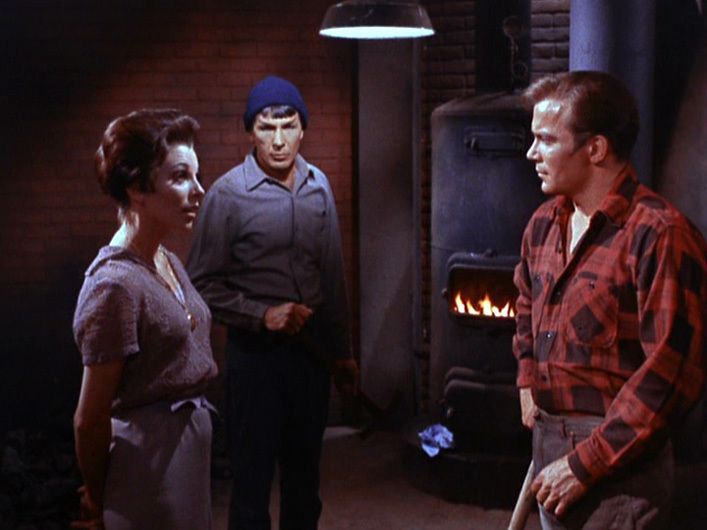
Ok…this is one of the unpopular episodes of Star Trek. It’s not one of the better ones but I find it interesting…but saying that…it’s hard to get a handle on exactly what is going on. This is the first episode where even Spock has more questions in his answers than answers. The funny thing is…the next episode coming up is maybe the best in the entire series.
Robert Brown does a good job of performing the rather maniacal Lazarus…an interesting biblical allusion, but a bit difficult to interpret the meaning given the character. The cinematography and the script impose limitations that inhibit dramatic development.
The known universe is, apparently, about to be destroyed by a malevolent humanoid from a parallel universe of antimatter. If antimatter meets matter…the results will be catastrophic. Lazarus has been chasing this being for years to exact revenge for the destruction of his world. The Enterprise crew is stymied and confused (as well as us the viewers), until the identity of the would-be destroyer is revealed.
In closing… this is some hard-core science fiction with a wonderful mystery setup. The script hints at the possibility of an invasion from the antimatter universe and/or the destruction of all existence due to the collision of both. The execution, however, leaves much to be desired. It could have been so much better…maybe in a movie format or with a much better script.
In other words…you will do better seeing this episode than reading about it. That doesn’t mean everything will make sense…at the end of the episode I saw what was going on but it’s like describing a train wreck getting to that point.
From IMDB
This is the first time that live two-way communication with Starfleet Command is depicted. In previous episodes, communication with Starfleet Command was through delayed radio messages.
John Drew Barrymore (Drew’s dad) was originally cast as Lazarus, but failed to show up for shooting and had to be replaced by Robert Brown, causing the episode to go two days over schedule. Star Trek’s producers subsequently filed and won a grievance with the Screen Actors Guild, which suspended Barrymore’s SAG membership for 6 months.
Along with Star Trek: Friday’s Child (1967), this is one of the only two episodes where outdoor planet scenes were filmed both on Desilu Stage 10 and on location (both times at Vasquez Rocks). Originally, all planet-side scenes were scheduled to be filmed on location, but due to the turmoil during production, director Gerd Oswald couldn’t finish shooting at Vasquez. Matt Jefferies and the art department prepared a spot on Stage 10 which could accomodate the missing “alternate universe” sequence.
At the 50th anniversary “Star Trek” convention in Las Vegas in August 2016, fans voted this the ninth worst episode of the “Star Trek” franchise.
Depending on which version of this episode you watch, the closing stills change. The original syndicated version and the VHS version show the still as the Enterprise leaving the Earth-like planet from Star Trek: Miri (1966). However, the Sci-fi Channel and DVD version show the still as just a blue planet, possibly Rigel 12 from Star Trek: Mudd’s Women (1966) or Starbase 11 from Star Trek: Court Martial (1967).
Actor Eddie Paskey appeared in 59 episodes of the original Star Trek series, 50 of them playing Lt. Leslie – a character name that came from William Shatner himself inserting the first name of his eldest daughter Leslie Carol Shatner into the show – but only in ‘The Alternative Factor’ does Eddie’s role as Lt. Leslie ever appear in closing credits, and when it does – in contrast to the spelling by which it has become widely known and accepted – it is spelled ‘Lesley’. Also, this was the second episode in which Leslie was seen in the command chair.
James Doohan and George Takei do not appear in this episode. For unknown reasons, Scotty and Sulu were substituted in the roles of engineer and helmsman by Charlene Masters and Mr. Leslie, respectively.
The visual of the iron-silica planet from orbit is reused footage previously representing Alfa 177 in Star Trek: The Enemy Within (1966) and M-113 in Star Trek: The Man Trap (1966). This planet effect was reused again as Argus X in Star Trek: Obsession (1967) and Ardana in Star Trek: The Cloud Minders (1969).
When Lazarus sabotages the Engineering Panel to create an overload, and eventually steal several dilithium crystals, the electrical plugs he switches around are actually Dual Binding Post Plugs (banana plugs), very common when this show was made in the 1960s and still in use in 2021.
A still image in the closing credits of Star Trek: The Squire of Gothos (1967) shows the corridor between universes set unaltered by the effects and double exposure. Titled at a 45 degree angle, William Shatner stands ankle deep in smoke in a near pose of the crucifixion, falling back into a purple corridor, where an orange line draws the horizon to a vanishing point.
Although this episode isn’t the best of the series, it does serve as the springboard for other plot lines concerning parallel or alternative universes as well as time travel. These subjects would be expanded upon through the original series seasons as well as in sequel television and film productions.
Summary
While mapping the uninhabited planet below, the Enterprise – indeed the entire galaxy – is affected by a powerful force after which a single human, Lazarus, is found on the planet. He claims to be after an evil creature who destroyed his entire civilization, but Spock can identify no other creature on the planet. Lazarus is in fact a time traveler who has been battling an alternate version of himself from an alternate universe. When Lazarus’ opponent steals the ship’s dilithium crystals, solving the mystery becomes a matter of life and death for Kirk and the crew.
CAST
William Shatner … Captain James Tiberius ‘Jim’ Kirk Leonard Nimoy … Mister Spock Robert Brown … Lazarus DeForest Kelley … Doctor Leonard ‘Bones’ McCoy Janet MacLachlan … Lt. Charlene Masters Nichelle Nichols … Lieutenant Nyota Uhura Richard Derr … Barstow Arch Whiting … Assistant Engineer Christian Patrick … Transporter Chief Eddie Paskey … Lieutenant Leslie Bill Blackburn … Lieutenant Hadley (uncredited) Vince Cadiente … Security Guard (uncredited) Bill Catching … Anti-Matter Lazarus Being #2 (uncredited) Frank da Vinci … Crewman (uncredited) Carey Foster … Enterprise crewmember (uncredited) Tom Lupo … Security Guard (uncredited) Ron Veto … Security Guard (uncredited) Al Wyatt Sr. … Anti-Matter Lazarus Being #1 (uncredited)
I first heard the Turtles with the single that I got from a cousin. The single was Eleanor… I fell for them at that moment. After I got to know them better…I found out they didn’t take themselves seriously and had some good pop songs.
This was written and originally recorded by Bob Dylan, who released the song on his 1964 album Another Side Of Bob Dylan. Smart performers started to pick up that this Bob guy could write accessible songs for the public. Add a Rickenbacker or a jangly guitar and whala you have folk rock.
The band was formed by Mark Volman and Howard Kaylan. They were saxophone players who did whatever was trendy in order to make a living as musicians. They were also in the choir together in high school.
They were in an instrumental band but with the Beatles and the British invasion, they soon switched to a rock and roll band with Howard Kaylan as lead singer.
This was their debut single and what a single it was for them. It peaked at #8 on the Billboard 100 and #3 in Canada in 1965. It was on their debut album with the same name. The album didn’t do as well…it peaked at #98 on the Billboard Album Charts.
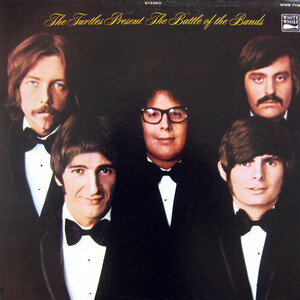
The Turtles were more of a singles band but did release some interesting ones at the end of their career. One of them was called The Turtles Present The Battle of the Bands. It was a concept album where they pretended to be different bands for each song. I’ve always liked that idea.
After they broke up Mark Volman and Howard Kaylan became Flo and Eddie.
Howard Kaylan: “When the Turtles first signed our original recording agreements with the tiny label that would become White Whale, we were all under the legal age of 18. Needless to say, the contracts required our parents’ approval. This was all done before a judge in the county of Los Angeles who reviewed the paperwork about to be executed and told our parents that, “If you let your sons sign these papers, the court won’t be responsible for the outcome. These are the worst contracts that I have ever seen.” We didn’t care. We wanted to make records and damn the consequences. So we signed. And our parents co-signed. And the judge had been right. It took many years and many thousands of dollars to win back our money and our self-respect. But, in the meantime, we had a record deal.
We had originally intended to break up our band, the Crossfires, on one particular evening in 1965, while playing our usual Friday night gig at the a teen club in Redondo Beach, California called the Revelaire. On my way upstairs with our resignation, two shady-looking entrepreneurs stopped me and asked if we were interested in making a record. They loved the way we sounded doing a cover of the new Byrds single (our guitarist had gone out and bought a 12-string guitar earlier that week) and thought that doing folk-rock was the key to our future.
It fell upon me to find the tunes to record. The Crossfires had been a surf band in high school, but together with a friend of ours, Betty McCarty, we had also done some folk singing as The Crosswind Singers. In fact, we opened a concert at Westchester High that starred the folk duo Joe and Eddie (a foreshadowing of things to come, many years before the names Flo and Eddie were to become our nom de plumes). I found Dylan’s ‘It Ain’t Me Babe’ on an album and, being blissfully unaware that anyone else had ever recorded it, thought that it would make a great rock song. So I literally ‘lifted’ the Zombies’ approach to pop – a soft Colin Blunstone-like minor verse bursting into a four-four major chorus a-la ‘She’s Not There.’
It Ain’t Me Babe
Go away from my window
Leave at your own chosen speed
I’m not the one you want, babe
I’m not the one you need
You say you’re lookin’ for someone
Who’s never weak but always strong
To protect you and defend you
Whether you are right or wrong
Someone to open each and every door
But it ain’t me, babe
A-no, no, no it ain’t me, babe
Well, it ain’t me you’re lookin’ for, babe
Go lightly from the ledge, babe
Go lightly on the ground
I’m not the one you want, babe
I’ll only lead you down
You say you’re lookin’ for someone
Who’ll promise never to part
Someone to close his eyes to you
Someone to close his heart
Someone who will die for you and more
But it ain’t me, babe
A-no, no, no it ain’t me, babe
Well, it ain’t me you’re lookin’ for, babe
No it ain’t me you’re lookin’ for, babe
I said a-no, no, no, it ain’t me, babe
I said a-no, no, no, it ain’t me, babe
I said a-no, no, no, it ain’t me, babe
I said a-no, no, no, it ain’t me, babe
I won this single at the county fair. From the title, I didn’t know what it was until I played it. It was a hit single at the time. It’s a well-constructed song that never gets old to me. The song peaked at #11 in the Billboard 100, #8 in Canada, and #21 in New Zealand in 1979-80. It came off the great Jackrabbit Slim album.
I liked that album and also Alive on Arrival released a year before this one. Sometimes I hear songs and think…man I wish I could have wrote that song. This is one of them. It’s a pop song but a pop song that fits together perfectly. It has great hooks and the verses flow perfectly.
Steve has had a nice career but I really thought he would have been more known. He was one of the many who got stuck with the “New Bob Dylan” tag. I met him one afternoon. He is a nice guy…he sat behind me at a Rolling Stones concert in Vanderbilt Stadium on the Bridges to Babylon tour on Oct. 26, 1997. He was almost 20 years older but still had that boyish face. It surprised me because I was thinking…wait…he is Steve Forbert…why doesn’t he have better seats?
According to the Jackrabbit Slim album sleeve, the song was dedicated to the memory of the late Supreme, Florence Ballard, who died in 1976. Forbert actually wrote the song about a girl from his hometown of Meridian, Mississippi, rather than the Supremes singer.
John Simon produced this song/album. His credits include The Band’s Music from Big Pink and Janis Joplin’s Cheap Thrills. The song and album were recorded in Quadraphonic Sound studios, Nashville, Tennessee.
One tidbit I picked up that I would have never guessed. Steve was in Cyndi Lauper’s video “Girls Just Want To Have Fun.” I only halfway believed it but sure enough he plays Cyndi’s boyfriend in a tuxedo at the end.
Steve Forbert on Ballard: “that seemed like such bad news to me and such sad news. She wasn’t really taken care of by the music business, which is not a new story.”
Steve Forbert on being compared with Dylan: “You can’t pay any attention to that. It was just a cliché back then, and it’s nothing I take seriously. I’m off the hook – I don’t have to be smarter than everybody else and know all the answers like Bob Dylan.”
Romeo’s Tune
Meet me in the middle of the day
Let me hear you say everything’s okay
Bring me southern kisses from your room
Meet me in the middle of the night
Let me hear you say everything’s alright
Let me smell the moon in your perfume
Oh, Gods and years will rise and fall
And there’s always something more
It’s lost in talk, I waste my time
And it’s all been said before
While further down behind the masquerade the tears are there
I don’t ask for all that much I just want someone to care
That’s right now
Meet me in the middle of the day
Let me hear you say everything’s okay
Come on out beneath the shining sun
Meet me in the middle of the night
Let me hear you say everything’s alright
Sneak on out beneath the stars and run
Oh yeah, oh yeah yeah, oh yeah
It’s king and queen and we must go down now beyond the chandelier
Where I won’t have to speak my mind and you won’t have to hear
Shreds of news and afterthoughts and complicated scenes
We’ll huddle down behind the light and fade like magazines
Meet me in the middle of the day
Let me hear you say everything’s okay
Bring me southern kisses from your room
Hey hey, meet me in the middle of the night
Let me hear you say everything’s alright
Let me smell the moon in your perfume
Oh now, meet me in the middle of the day
Let me hear you say everything’s okay
Let me see you smiling back at me
Hey, meet me in the middle of the night
Let me hear you say everything’s alright
Hold me tight and love and loving’s free













 PowerPop... An Eclectic Collection of Pop Culture