Power Pop fan, Baseball, Beatles, Alternative music, old movies, and tv show fan. Also anything to do with pop culture in the 60s and 70s... I'm also a songwriter, bass and guitar player. Not the slightest bit interested in politics at all.
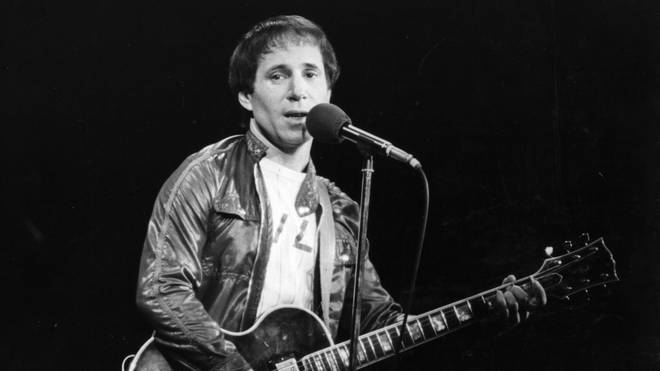
Here are some of my favorite guitarists. Being fast is not something I care about… I’ve always liked guitarists who play with feel more than finger tapping.
Roger McGuinn, Byrds – He will not rip off lightning licks but he plays the Rickenbacker 12 string like no one else. I like the tone and his understated style.
Neil Young – This may seem like an odd choice but when Neil plays the electric guitar…anything that can happen will. He plays by feel and feedback and God bless him for that.
Brian May, Queen– You can hum his solos. One of the most melodic lead guitar players I’ve ever heard.
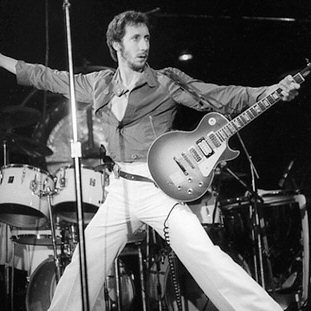
Pete Townsend, Who – The king of the power chord. Pete does not have blinding speed but every note he plays is for a purpose.
Keith Richards, Stones – The Human Riff… When Keith found G tuning the Stones sound changed forever and it may have been the key to their longevity.
George Harrison, Beatles – After the Beatles, he reinvented himself into a great slide guitar player. Guitar players are still trying to find that tone. He had a great touch and taste in whatever he played.
Buddy Guy – For electric blues and the tone he gets Buddy Guy is the man. Below is a picture of Buddy at the Festival Express playing a great version of Money.
Jimi Hendrix – Like Keith Moon…many musicians have tried to copy him but none have. It is controlled chaos but I like it.
Chuck Berry – Rock and roll owes a lot to him…he has been copied more than anyone.
Scotty Moore, Elvis – The guitar player backing Elvis on his great 50s hits. Keith Richards said of Moore… Everyone else wanted to be Elvis, I wanted to be Scotty.
Also
Robert Johnson, Eric Clapton, Duane Allman, Peter Green, Lindsey Buckingham, BB King, Joe Walsh, Jimmy Page
The song peaked at #1 in 1971 in the Billboard 100 and #11 in Canada. They were an R&B soul trio. These early seventies soul records have some great grooves on them. Martha & the Vandellas and the Marvelettes two of the female vocal groups that epitomized Motown Records’ sound in the ’60s were among Honey Cone’s main influences
Honey Cone was the first act signed to the Hot Wax label, which Eddie Holland, Lamont Dozier and Brian Holland (Holland-Dozier-Holland) formed after leaving Motown in 1969. The group was the trio of Shelly Clark, Carolyn Willis, and Edna Wright. Wright was an accomplished singer, having done background work on various TV shows as well as tours with Bill Medley and Billy Preston, and singing backup for Motown, which is where she met Eddie Holland. Hot Wax wanted to sign Wright’s sister, Darlene Love (Phil Spector is the one who suggested she change her name from Darlene Wright to Darlene Love), but she was busy with her group the Blossoms and passed on the offer. When Darlene got an offer to do an Andy Williams TV special, she turned it down but suggested Edna, who called her friend Carolyn Willis, who called her friend Shelly Clark, and they sang together for the first time at the gig.
They continued to perform together, and when Hot Wax signed them, they took a page from Motown’s book and crafted an image for them. The attractive trio was christened Honey Cone and sent to charm school and to dance classes where they choreographed some routines. The girls returned to Detroit and released the singles “Girls It Ain’t Easy” and “While You’re Out Looking For Sugar” (both written by H-D-H, “Girls hit #68 and “Sugar went to #62, both in 1969) before hitting it big with “Want Ads,” a song about a girl who is fed up with her lying, cheating man and is ready to advertise for a new one (and even willing to train). The song topped both the Hot 100 and the R&B charts.
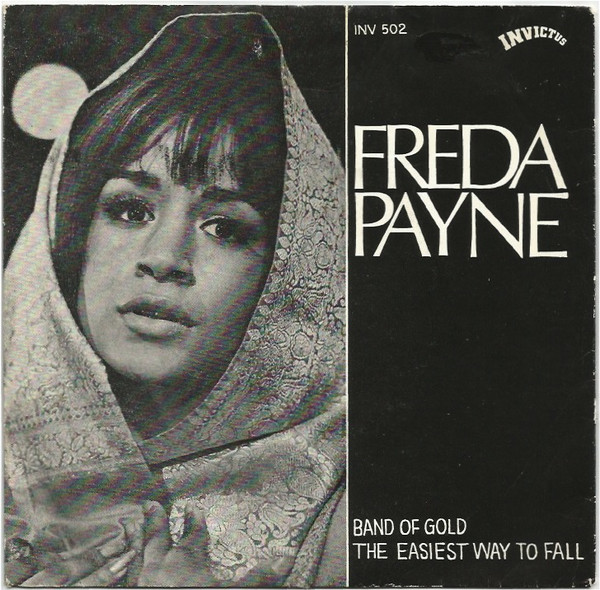
This was written by the Hot Wax songwriting team of General Johnson (the Showmen, The Chairmen of the Board) and Greg Perry (Chairmen of the Board), who produced versions by Glass House, Scherrie Payne (who later joined the Supremes), and Frieda Payne (Scherrie’s sister, who hit #1 with “Band of Gold”) before deciding to try the song with Honey Cone. An engineer at the studio named Barney Perkins also got a songwriting credit.
It was Perkins who suggested a song about want ads, which were the way goods and services were solicited before the internet. A week later, Perry was sitting at the piano when the chorus line came to him: “Gonna put it in the want ads, I need some love for sale.” Johnson suggested they tweak the lyric so the girl didn’t sound like a prostitute, and they came up with the idea of looking for a new man to replace the defective one.
Johnson and Perry teamed up to write a follow-up hit for Honey Cone (this time with Angelo Bond as co-writer) called “Stick-Up,” which made #11 on the Hot 100 and gave the group their second #1 R&B hit. Subsequent hits for the group were “One Monkey Don’t Stop No Show (Part I)” (#15) and “The Day I Found Myself” (#23).
Sixteen years later in 1987, Taylor Dayne, who was nearly unknown at the time, recorded a cover version of this song for her debut album Tell It To My Heart. Dayne’s cover wasn’t released as a single, but the album was a big hit, selling over 2 million copies.
Want Ads
Wanted, young man single and free Experience in love preferred, but will accept a young trainee Oh I’m gonna put it in the want ads, I need a love that’s true Gonna put it in the want ads, my man and I are through
At home I find myself, lost and all alone My man is playing the field, the thrill is gone He stays out all night, says he’s with the boys But lipstick on his collar, perfume on it too Tells me he’s been lying, tell ya what I’m gonna do I’m gonna put it in the want ads, this girl’s in misery Gonna put it in the want ads, somebody rescue me
I spend my nights alone, cryin’ bitter tears Although I cry aloud, nobody really hears And when I need him most, he’s never by my side He’s either playing cards or drinking at the bar He thinks that I’m a fool, I’m going to the evening news Gonna put it in the want ads, I need somebody new Gonna put it in the want ads, my man and I are through
Extra extra, read all about it, wanted, young man single and free Experience in love preferred but will accept a young trainee
Oh I’m gonna put it in the want ads, I need somebody new Gonna put it in the want ads, my man and I are through Gonna put it in the want ads, this girl’s in misery Gonna put it in the want ads, please somebody rescue me
Lipstick on his collar, perfume on it too Tells me he’s been lying, I’m going to the evening new Gonna put it in the want ads, I need somebody new Gonna put it in the want ads, my man and I are through Gonna put it in the want ads, this girl’s in misery Gonna put it in the want ads, please som
My first favorite Beatle song. The first Beatle album I was exposed to was the American album “Meet the Beatles” and I loved it. This song jumped out at me. Loved Johns voice, melody and the guitar riff. I also like the call and answer of the “yeah”. John had the chorus written and sat down with Paul in 1963 to finish it off. With the intention of writing a follow up single to the yet unreleased “She Loves You,” they put together verses and bridges in an unusual configuration with the already written chorus.
The song is a rocker and catchy but never released as a single.
It Won’t Be Long
It won’t be long yeh, yeh, yeh It won’t be long yeh, yeh, yeh It won’t be long yeh, till I belong to youEvery night when everybody has fun Here am I sitting all on my ownIt won’t be long yeh, yeh, yeh It won’t be long yeh, yeh, yeh It won’t be long yeh, till I belong to youSince you left me, I’m so alone Now you’re coming, you’re coming on home I’ll be good like I know I should You’re coming home, you’re coming home
Every night the tears come down from my eyes Every day I’ve done nothing but cry
It won’t be long yeh, yeh, yeh It won’t be long yeh, yeh, yeh It won’t be long yeh, till I belong to you
Since you left me, I’m so alone Now you’re coming, you’re coming on home I’ll be good like I know I should You’re coming home, you’re coming home
So every day we’ll be happy I know Now I know that you won’t leave me no more
It won’t be long yeh, yeh, yeh It won’t be long yeh, yeh It won’t be long yeh, till I belong to you, woo
Slade was one of the UK’s biggest glam bands in the early to mid-seventies. They were huge in the UK but never hit in America until the 80s. This song was released in 1972 and peaked at #1 in the UK and #76 in the Billboard 100 in 1973.
Quiet Riot took two of their songs, Cum On Feel The Noize and this one and hit with them in the 80s. I’ll take Slade’s versions myself. It’s a fun rock and roll song.
Some trivia about Noddy Holder the lead singer… AC/DC asked him to sing for them after the death of Bon Scott but he turned them down because of loyalty to Slade.
This was originally the work of bassist Jim Lea; it was the first tune he wrote completely on his own. However, his writing partner Noddy Holder was responsible for the lyrics, standing on the stage after a typically boisterous London show and surveying the smashed seating left in the auditorium. “I thought everyone must have been crazy tonight,” he later said.
The song was originally titled “My My We’re All Crazy Now.” The title was changed by their manager Chas Chandler, and the intentional misspelling became a Slade trademark years before Prince adopted a similar convention. Some of their other hits were “Look wot You Dun,” “Cum On Feel The Noize” and “Skweeze Me Pleeze Me.”
In the UK Slade enjoyed 16 Top 10 hits including six #1s. They didn’t enjoy the same success in the US, where their biggest hit was “Run Runaway,” which peaked at #20 in 1984. They had just one other American Top 40: “My Oh My” (#37) also in 1984.
The American metal band Quiet Riot broke big with a cover of Slade’s “Cum On Feel The Noize” in 1983. For their next album, they did “Mama Weer All Crazee Now,” issuing it as the first single. It reached #51, marking their last Hot 100 appearance. “We were already getting the stigma of, ‘You had a hit with somebody else’s song,'” their drummer, Frankie Banali, said in a Songfacts interview. “I could see the writing on the wall coming on that one.”
Slade
I don’t want to drink my whisky like you do I don’t need to spend my money but still do Chorus Don’t stop now a c’mon another drop now c’mon I want to lot now so c’mon That’s right, that’s right I said Mama but we’re all crazy now I said Mama but we’re all crazy now I said Mama but we’re all crazy now A you told me fool fire water won’t hurt me A you tease me and all my ladies desert me Chorus don’t want to drink my whisky but still do I had enough to fill up “H” Hill’s left shoe Chorus Mama mama mama mama oh yeah…
I was 12 when this came out in 1979 and loved it…especially the video that went with it. The live version is the one that hit really big and the single had the live and studio version. The song (Live Version) peaked at #1 in the Billboard 100, #2 in the UK and #1 in Canada in 1980.
McCartney played all the instruments and shared vocal harmonies with wife Linda McCartney on the studio version.
Paul McCartney on recording Coming Up
I originally cut it on my farm in Scotland. I went into the studio each day and just started with a drum track. Then I built it up bit by bit without any idea of how the song was going to turn out. After laying down the drum track, I added guitars and bass, building up the backing track. I did a little version with just me as the nutty professor, doing everything and getting into my own world like a laboratory. The absent-minded professor is what I go like when I’m doing those; you get so into yourself it’s weird, crazy. But I liked it.
Then I thought, ‘Well, OK, what am I going to do for the voice?’ I was working with a vari-speed machine with which you can speed up your voice, or take it down a little bit. That’s how the voice sound came about. It’s been speeded up slightly and put through an echo machine I was playing around with. I got into all sorts of tricks, and I can’t remember how I did half of them, because I was just throwing them all in and anything that sounded good, I kept. And anything I didn’t like I just wiped.
On John Lennon
I heard a story from a guy who recorded with John in New York, and he said that John would sometimes get lazy. But then he’d hear a song of mine where he thought, ‘Oh, shit, Paul’s putting it in, Paul’s working!’ Apparently ‘Coming Up’ was the one song that got John recording again. I think John just thought, ‘Uh oh, I had better get working, too.’ I thought that was a nice story.
Coming Up
You want a love to last forever One that will never fade away I want to help you with your problem Stick around, I say
Coming up, coming up, yeah Coming up like a flower Coming up, I say
You want a friend you- can rely on One who will never fade away And if you’re searching for an answer Stick around. I say
It’s coming up, it’s coming up It’s coming up like a flower It’s coming up. yeah
You want some peace and understanding So everybody can be free I know that we can get together We can make it, stick with me
It’s coming up, it’s coming up It’s coming up like a flower It’s coming up for you and me
Coming up, coming up It’s coming up, it’s coming up, I say It’s coming up like a flower It’s coming up I feel it in my bones
You want a better kind of future One that everyone can share You’re not alone, we all could use it Stick around we’re nearly there
It’s coming up, it’s coming up everywhere It’s coming up like a flower It’s coming up for all to share It’s coming up, yeah It’s coming up, anyway It’s coming up like a flower Coming up
Something light and simple today…a number one in 1969. This song was written as a throwaway B side but ended up peaking at #1 in the Billboard 100 in 1969. The song was written by Gary DeCarlo, Dale Frashuer and Paul Leka, who had been in a band together called the Chateaus in the early ’60s. One of the unfinished songs they wrote as the Chateaus was a tune called “Kiss Him Goodbye,” which they worked on in 1961.
Not a great piece of work but a memorable song that will stay with you.
In 1968, Leka co-wrote and co-produced the song “Green Tambourine,” which was a huge hit for The Lemon Pipers. The following year, he started working with DeCarlo, who was using the stage name Garrett Scott. Working for Mercury Records, they set to work writing singles for “Garrett Scott,” recording four songs, which Leka produced. The first one released was “Working On A Groovy Thing,” which was written by Roger Atkins and Neil Sedaka. The 5th Dimension also recorded the song and released it first, which tanked the Garrett Scott version (The 5th Dimension recording made #20 US; Patti Drew recorded the song a year earlier, taking it to #62).
The next single planned for DeCarlo was “Sweet Laura Lee,” a ballad written by Larry Weiss, composer of “Rhinestone Cowboy.” Needing a B-side, Leka and DeCarlo went back to the studio, where they were joined by their old bandmate Dale Frashuer, who suggested they use their 1961 song “Kiss Him Goodbye.” That song didn’t have a chorus, so Leka wrote one, lazily using “na na”s instead of actual words. They started the session around 7 p.m. and finished at 5 a.m., but when they emerged, they had the completed song.
When Bob Reno, the A&R man at Mercury, heard the song, he loved it and didn’t want to waste it as a B-side. He needed singles for the Mercury subsidiary Fontana Records, so the song was released on that label and credited to the group Steam (named because after the session to record it, the guys were crossing 7th Ave and a subway train went beneath the roadway, shooting steam up from a manhole).
From there, the story gets convoluted, but when the single was released it became a surprise hit. Another song called “Now That I Love You” was used instead on the Garrett Scott “Sweet Laura Lee” single, which went nowhere when it was released. DeCarlo had a huge hit on his hands, but not as a solo artist but as part of an anonymous group.
The most-repeated story is that the three writers were embarrassed about “Na Na Hey Hey Kiss Him Goodbye,” so they created the name Steam to hide their identities. DeCarlo told Songfacts, however, that he was never embarrassed by the song, and that he was promised more of the action. “I was supposed to be the singer and road act for ‘Na Na’ as it was my B-side,” he said. “When Paul and the company got together they decided to split the record, meaning there would be two out. Paul said I would be able to do both as Garrett Scott, which I was later told I had no group. Paul said he would get me a group from a booking agency in New York, which never happened. ‘Na Na’ was never done with a group in mind, it was the B-side of my single. The name Steam wasn’t invented until the album was being done.”
Steam – Na Na Hey Hey Kiss Him Goodbye
He’ll never love you, the way that I love you
‘Cause if he did, no no, he wouldn’t make you cry
He might be thrillin’ baby but a-my love
(My love, my love)
So dog-gone willin’, so kiss him
(I wanna see you kiss him, wanna see you kiss him)
Go on and kiss him goodbye, now
Na na na na, hey hey, goodbye
Na na na na, na na na na, hey hey, goodbye
Listen to me now
He’s never near you to comfort and cheer you
When all those sad tears are fallin’ baby from your eyes
He might be thrillin’ baby but a-my love
(My love, my love)
So dog-gone willin’, so kiss him
(I wanna see you kiss him, I wanna see you kiss him)
Go on and kiss him goodbye, na na na na, na na na
Na na na na, hey hey, goodbye
Hey hey, goodbye
Na na na na, na na na na, hey hey, goodbye
Hey hey, goodbye
Na na na na, na na na na, hey hey, goodbye
Hey hey, goodbye
Na na na na, na na na na, hey hey, goodbye
When I heard this on Lightning 100 in Nashville (alternative station) I thought it was an old song. I liked it off the bat. Alex Ebert had left his band Ima Robot and formed this odd hippie type band with Jade Castrinos. They were a band that had members that would come and go and were like a commune type group. The song was released in 2010 and it charted at #25 in the Billboard Alternative Songs in 2010 and #50 in the UK Charts in 2013.
The song is extremely catchy. Unfortunately Jade is not in the band now…
This feel-good song was written by Edward Sharpe & the Magnetic Zeros vocalists Alex Ebert and Jade Castrinos, who were a couple at the time. As Jade tells it, they were enjoying a romp through Elysian Park in Los Angeles when she lost her shoes and he carried her on his back. The scene was like a montage from a romantic comedy, and giddy with love, they returned to his apartment and wrote the song. Using Ebert’s Pro Tools setup, they put the song together on the fly, with each trading lines and then singing together on the chorus.
The lyrics are effusively lovey, but genuine:
I’ll follow you into the park Through the jungle, through the dark Girl, I never loved one like you
And while there are many songs called “Home,” this one has a key hook line in the lyric that connected with listeners:
Home is wherever I’m with you
Ebert does the whistling intro, which is reminiscent of the Ennio Morricone scores found in many westerns, often starring Clint Eastwood.
Edward Sharpe & the Magnetic Zeros rose to power early in the American folk music revival that included acts like Mumford & Sons and The Lumineers. “Home” was part of their debut album Up From Below, and established their love-centric, communal sound that made them a festival favorite.
The band is named after a character from a novel Ebert was writing – Edward Sharpe is an otherworldly figure who comes to Earth to offer enlightenment to the masses, but finds himself getting distracted by the beautiful women. Ebert, raised in an upper middle class household, spent a lot of time looking for the meaning of life, and created his own hardship by getting hooked on heroin. He got clean, but sobriety didn’t suit him, so he ditched treatment and switched to (mostly) mushrooms. He went minimalist, with no car or cell phone, and began working on the Up From Below in a tiny apartment. After meeting the like-minded Jade Castrinos, they put a 10-piece band together and went all-in on the joyful, enlightened sound. Even churlish listeners who weren’t buying this hippie vibe agreed that it was convincing, and even after they found an audience with this song, Ebert stayed steady to his creed, often blurring the lines between Edward Sharpe and his true self.
When Ebert and Castrinos banter about her falling out of a window on this track, they’re recounting a true story:
Jade Alexander, do you remember that day you fell out of my window? I sure do, you came jumping out after me
Castrinos was defenestrated from his second-story apartment, and couldn’t walk for a week. Ebert came to her rescue and took her to the hospital.
In 2014, the band parted ways with Jade Castrinos, changing the dynamic of this song considerably (she and Ebert had broken up). At their first show without her – May 11, 2014 at the Shaky Knees Music Festival in Atlanta – Ebert turned much of the song over to the crowd, doing it “campfire style.” It worked, and the band continued performing it that way, with the crowd filling in much of Castrinos’ vocals.
Like many songs in its genre, this song didn’t make the US Hot 100, even though it seemed to be everywhere. Much of its ubiquity comes from its use in commercials – the message and the melody make it suitable for a number of companies looking to project community.
In 2010, the NFL used it in a spot titled “There’s No Place Like Home”; that same year it was in commercials for the Kin phone, Blue Cross Blue Shield of Texas, Levi’s, and the trailer for the movie Cyrus. They did turn down some offers: AT&T wanted to use the song where “Home” was the AT&T store, and the band declined.
Home
Alabama, Arkansas I do love my ma and pa Not that way that I do love you
Holy moley, me oh my You’re the apple of my eye Girl, I’ve never loved one like you
Man, oh man, you’re my best friend I scream it to the nothingness There ain’t nothing that I need
Well, hot and heavy, pumpkin pie Chocolate candy, Jesus Christ Ain’t nothing please me more than you
Ah, home, let me go home Home is wherever I’m with you Ah, home, let me go home Home is wherever I’m with you
La, la, la, la, take me home Mommy, I’m coming home
I’ll follow you into the park Through the jungle, through the dark Girl, I never loved one like you
Moats and boats and waterfalls Alleyways and pay phone calls I’ve been everywhere with you
That’s true, laugh until we think we’ll die Barefoot on a summer night Never could be sweeter than with you
And in the streets you run a-free Like it’s only you and me Geez, you’re something to see
Ah, home, let me go home Home is wherever I’m with you Ah, home, let me go home Home is wherever I’m with you
La, la, la, la, take me home Daddy, I’m coming home
Jade Alexander, do you remember that day you fell out of my window? I sure do, you came jumping out after me Well, you fell on the concrete, nearly broke your ass, You were bleeding all over the place and I rushed you out to the hospital, you remember that? Yes, I do, well, there’s something I never told you about that night What didn’t you tell me? While you were sitting in the backseat smoking a cigarette you thought was going to be your last, I was falling deep, deeply in love with you, and I never told you until just now
Ah, home, let me go home Home is wherever I’m with you Ah, home, let me go home Home is where I’m alone with you
Home, let me come home Home is wherever I’m with you
Ah, home, yes I am home Home is when I’m alone with you
Alabama, Arkansas I do love my ma and pa Moats and boats and waterfalls Alleyways and pay phone calls
Ah, home, let me go home Home is wherever I’m with you Ah, home, let me go home Home is where I’m alone with you
When I would go skating, the best part was playing all of the pinball machines. I’ve always favored them over the video games at arcades because they were machines instead of a screen. Some took some skill and bumping the machine a little but not too much to tilt. I remember Baseball pinball machines, Elton John model, KISS model, The Who Pinball Wizard model, and many bicentennial models.
The start of the pinball machine started in the 19th century with a “Bagatelle-Table”,
a sort of hybrid between a “pin table” and pool table. Players tried to hit balls with cue sticks and get them into pockets or slots surrounded by nails and pins. Another step towards the modern pinball form occurred sometime at the end of 19th century when inventor Montague Redgrave patented a device called a “ball shooter”, which was based on the recently invented steel spring.
The first coin-operated “pinball machine” was invented in 1931 by Automatic Industries and was called “Whiffle Board”. But the gaming industry really began in the mid-1930’s with the production of a game called “Ballyhoo”. It was invented by one Raymond Maloney, who later started the Bally Manufacturing Company of Chicago, IL.
Pinball machines really grew in popularity after World War II. The ten year period of 1948-58 is referred to by some as the “Golden Age” of pinball, due to the invention of flippers in 1947 by the D. Gottlieb Co. in a game called “Humpty Dumpty”, and was one of the main reasons for the renewed interest in pinball machines at the time. Humpty Dumpty was the very first pinball machine with flippers!
In 1966, the first digital scoring pinball machine, “Rally Girl” was released Rally. In 1975, the first solid-state electronic pinball machine, the “Spirit of 76”, was released by Micro. In 1998, the first pinball machine with a video screen was released by Williams in their new “Pinball 2000” series machines. Versions of pinball are now being sold that are completely software based.
I still like the software free machines…some were like works of art.
This is the last Christmas song that I will feature…because right now people have had about enough Christmas songs in every restaurant, mall, and grocery store…this one I don’t hear as much.
I also want to thank everyone for dropping by here this year.
The Beatles recorded this in 1967 and wasn’t released until 1994 paired with “Free As A Bird”. It is a fun Christmas song that will stick in your head. The Beatles did not release a Christmas song commercially… only to their fan club when they were active.
Recorded December 6, 1966, and November 28, 1967, in London, England, this song was never officially released until it appeared as the B-side to “Free As A Bird” in 1994. The original version was distributed to The Beatles fan club in 1967. It’s the only song ever written specifically for the Beatles Fan Club members.
Many upbeat Pop groups of this era like The Beach Boys and The Four Seasons released Christmas songs, but The Beatles never had an official Christmas release.
Christmas time is here again
Christmas time is here again Christmas time is here again Christmas time is here again Christmas time is here again
Ain’t been round since you know when Christmas time is here again O-U-T spells “out”
Christmas time is here again Christmas time is here again Christmas time is here again Christmas time is here again
Ain’t been round since you know when Christmas time is here again O-U-T spells “out”
Christmas time is here again Christmas time is here again Christmas time is here again Christmas time is here again
Ain’t been round since you know when Christmas time…[music continues and fades to background]
[spoken]
This is Paul McCartney here, I’d just like to wish you everything you wish yourself for Christmas.
This is John Lennon saying on behalf of the Beatles, have a very Happy Christmas and a good New Year.
George Harrison speaking. I’d like to take this opportunity to wish you a very Merry Christmas, listeners everywhere.
This is Ringo Starr and I’d just like to say Merry Christmas and a really Happy New Year to all listeners
[a John Lennon pastiche at this point, very hard to understand]
I’ve never had recipe’s on my blog but since it’s near Christmas I thought I would stick with my usual theme and post this dessert that is associated with the 1970s.
I’ve never been a big Eddie Money fan but this is one of his songs I like. This one has an old west theme and I like the guitar. The song is off of his album Life for the Taking released in 1978.
Johnny Cash covered this song live at times… Eddie Money “I had a song called ‘Give Me Some Water,’ and when I was told that Johnny Cash put it in his set — I was on Cloud Nine,” Money said. “I mean this is the guy who ‘Walked the Line!’”
Gimme Some Water
Mama never understood what it’s like for a losing man When her number one son goes bad playing cards with the Devil’s Hand Daddy got real sick so quick – four walls never understand I was the one who got good with the gun – took the money from the rich man’s land
Give me some water ’cause I shot a man on the Mexican border Cool, cool water Give me some water I need a little water
Jimmy grew up so fast and he met me at the pass one day Said, “You’re a wanted man. Take your brother’s hand – I’ll be running with you, anyway.” So we rode late in the night like fires on the desert sand ’til one day the posse caught us ’cause the sheriff always gets his man
Give me some water ’cause I killed a man on the Mexican border Cool, cool water I need a little water
Oh, geeze, if I just get loose my hands I’d run just as fast as my legs can But, Lord, I’ve got no room to run Shouldn’t have done what I did without that gun
Give me some water ’cause I killed a man on the Mexican border Cool, cool water
Can’t you see that long, white rope hanging from the hangman’s tree Take the restless horse; tie may hands, of course; tell my mother that I’m finally free Let me die like a man – no one understands; let me pray that a poor man pray Smack that horse in the ass; with my last dying gasp my brother could hear me say
Give me some water ’cause I shot a man on the Mexican border Cool, cool water Give me some water
Give me some water ’cause I killed a man on the Mexican border Cool, sweet water Give me some water
Whenever I see a documentary or movie about the sixties this song usually is playing somewhere in it. The Youngbloods charted with this song twice. #62 in 1967 and #5 in 1969.
Many artists including The Byrds, Jefferson Airplane, and The Dave Clark Five covered it. Renewed interest in the Youngbloods’ version came when it was used in a radio public service announcement as a call for brotherhood by the National Conference of Christians and Jews. The Youngbloods’ version, the most-remembered today, was re-released in 1969, peaking at number 5 on the Billboard Hot 100.
This song has a very convoluted origin story. It was written as “Let’s Get Together” by Chester Powers, who recorded as Dino Valenti. He died in 1994 at age 57, stricken with a brain mass that required surgery. Raised by carnival performers who did a vaudeville-style act in the off-season, he was constantly on the move. A stint in the Air Force didn’t take, so he tried his hand at music, making his way to Greenwich Village, New York, where the folk scene was taking shape. In the early ’60s, he moved to Los Angeles; he claimed he wrote the song in the summer of 1963 at the estate of the actress Edie Sedgwick, where he was staying. In the florid version of his tale, he was thinking about the power of music, and how he could use it to convey a powerful message: Relax. Smile at each other.
Valenti may have had more pragmatic aspirations, as he was working on songs he could sell or record to get his career going, and “Let’s Get Together” fit the mood of the times.
In 1964, The Kingston Trio became the first to record the song, including it on their album Back In Town (as “Let’s Get Together”). Later that year, the actor Hamilton Camp, who was taking a turn as a folk singer, included it on his album Paths of Victory (as “Get Together”).
In 1965, the California group We Five were the first to release the song as a single, taking it to #31 in the US (as “Let’s Get Together”). This same year, Powers was arrested three times: the first two busts for marijuana possession, the third for speed. In 1966, Jefferson Airplane included the song (as “Let’s Get Together”) on their debut album, Jefferson Airplane Takes Off. The song became a fixture on the San Francisco music scene, with Joni Mitchell and Judy Collins sometimes performing it. This is around the time Powers began serving his one-to-ten-year sentence at Folsom Prison. He got out early in 1967 though a series of legal maneuvers that included a deal with Epic Records as a solo act – with his song making the rounds, the label was hot to have him on the roster. Signing him signified that he was worthy of parole, as he was less of a threat to society. This deal required a lawyer, which Powers paid for by selling the rights to “Get Together” to SFO Music.
Jesse Colin Young, who had been performing the song as a solo artist, released it with his band The Youngbloods in 1967. This release had little impact, peaking at #62 in America in October, somehow missing the Summer Of Love. Powers released his debut solo album (as Dino Valente) in 1968, but didn’t include “Get Together” on the track list (SFO would have earned the royalties).
“Get Together” stayed in the zeitgeist, with covers by Linda Ronstadt, The Sunshine Company, and The Staple Singers in 1968. But it didn’t break through as a hit until 1969, when The National Conference of Christians and Jews distributed it to radio and TV stations to support Brotherhood Week. At the time broadcasters were required to run public service announcements for the public good. Non-profit organizations vied for this airtime with messages that were often preachy (Don’t do drugs!) or unappealing (Have a rash? It could be a sign of something worse.). Brotherhood Week was a fun one, with this catchy tune in the background. These PSAs were very popular, and listeners started calling radio stations to ask about the song. This prompted The Youngbloods record company, RCA, to re-release it, and this time it was an undeniable hit, reaching #5 in September 1969.
When Rolling Stone asked Powers if he regretted selling the song, he answered, “A lot of people say I was stupid for selling all my rights to the song, but for ten years of my life, man, I can write another song.”
Here are the charting versions of the song in America:
1965: We Five (#31) 1967: The Youngbloods (#62) 1968: The Sunshine Company (#112) 1969: The Youngbloods (#5) 1996: Big Mountain (#44)
Other acts to cover the song include Anne Murray, Skeeter Davis, Indigo Girls and Wilson Phillips.
This song was the last of The Dave Clark Five‘s eight Top Ten UK hits, reaching #8 when they recorded it as “Everybody Get Together” in 1970. The backing vocals on their version were done by the students of the Central London School of Speech and Drama. Included amongst the backing vocalists was one Peter Davison who went on to star in the BBC TV series All Creatures Great And Small, 1977-79, and as the fifth Dr. Who, 1982-84. This was the only version of the song to have much impact in the UK.
Early versions of this song were done in a folk style at a medium tempo. The Yardbirds version was slower, with a memorable acoustic guitar intro.
This song has been used in a number of TV shows and movies, notably Forrest Gump, where it was part of a soundtrack that sold over 12 million copies. Other films to use the song include:
Pump Up the Volume (1990) Radio Flyer (1992) Fear and Loathing in Las Vegas (1998) Riding the Bullet (2004) Walk Hard: The Dewey Cox Story (2007)
TV shows include:
Baywatch (“Lost and Found” – 1996) 3rd Rock from the Sun (“Dick on a Roll” – 1998) Cold Case (“Volunteers” – 2004) The Simpsons (“Oh Brother, Where Bart Thou?” – 2009)
In 2017, this was used in commercials for Blue Diamond almonds. It also featured in Walmart’s “Many Chairs, One Table” ad showing people of many ethnicities joining together for a meal.
The song’s writer, Dino Valenti (Chester Powers), was friends with the band Quicksilver Messenger Service and wrote “Dino’s Song,” made it onto their debut album. Valenti joined the group in 1969.
Get Together
Love is but a song to sing Fear’s the way we die You can make the mountains ring Or make the angels cry Though the bird is on the wing And you may not know why
Come on people now Smile on your brother Everybody get together Try to love one another Right now
Some may come and some may go We shall surely pass When the one that left us here Returns for us at last We are but a moment’s sunlight Fading in the grass
Come on people now Smile on your brother Everybody get together Try to love one another Right now
If you hear the song I sing You will understand (listen!) You hold the key to love and fear All in your trembling hand Just one key unlocks them both It’s there at your command
Come on people now Smile on your brother Everybody get together Try to love one another Right now
Love the tone of the guitar in this one. The song peaked at #61 in the Billboard 100 and #42 in the UK in 1968. The song is off of the album In Search of the Lost Chord.
John Lodge quote on writing Ride My See-Saw
“The song is really about growing up. It’s about what you learn at school and everything else…it’s pretty cool. But when you grow up and go into the real world, you can’t take that with you. You need to see what’s happening in the real world, and whatever you learned in life up until that time, it will give you a nice grounding so you can find your way in life. It’s really important that you’re aware of the world and what’s actually happening in it, and to try to relate to that. “Ride My See-Saw” is the fact that you’re going up and down—you learn a bit and you lose a bit. That’s what this song is about.”
“Ride My See-Saw” was written by John Lodge, bass player for The Moody Blues. It was one of two singles from their In Search of the Lost Chord album. The B-side of the single was “A Simple Game” in the UK “Voices In The Sky” in the US.
“Ride My See-Saw” has become one of the band’s most popular live tunes. It is the song regularly reserved for the finale performance in stage shows, with a lengthy keyboard and drum duet before the rest of the band comes out onstage for the encore.
This song was one of the first single releases to be recorded on 8-track multi-track tape.
In Search of the Lost Chord is a concept album around a broad theme of quest and discovery. This song found the Moodies exploring knowledge in a changing world.
Ride My See-Saw
Ride, ride my see-saw, Take this place On this trip Just for me.
Ride, take a free ride, Take my place Have my seat It’s for free.
I worked like a slave for years, Sweat so hard just to end my fears. Not to end my life a poor man, But by now, I know I should have run.
Run, run my last race, Take my place Have this number Of mine.
Run, run like a fire, Don’t you run in In the lanes Run for time.
Left school with a first class pass, Started work but as second class. School taught one and one is two. But right now, that answer just ain’t true.
One of the most surreal shows to ever be on television.
I was too young to catch this show when it was on originally. I never thought too much of it but I started to watch it later on in life. At first look, it looked like a rural show with country humor….wrong wrong wrong. Yes, it was wacky but it broke through the 4th wall… You can see it’s influenced in the Simpsons and more shows. Poor Oliver was surrounded by crazy people and the craziness infected him at times. The show takes place in the fictional town of Hooterville…they never reveal the state but it doesn’t matter. The characters of this show were classic.
It’s really hard to describe this show. It was intertwined with 2 other shows…The Beverly Hillbillies and Petticoat Junction…BUT it’s nothing like those other two. Not in the same zip code or planet…