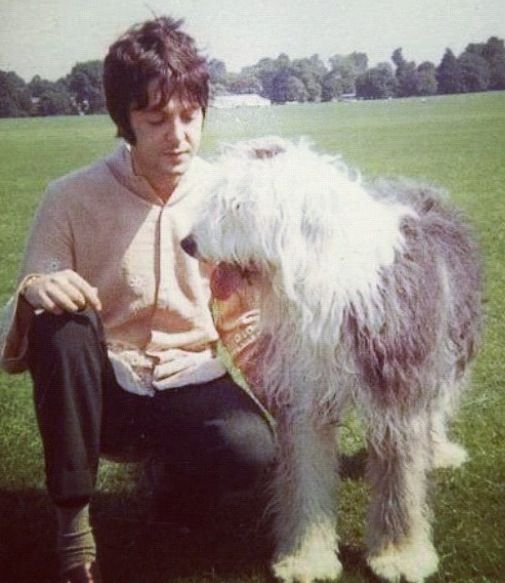
Where The Wild Things Are

I loved this book as a kid. When I see it I feel like I’m 7 again. The book came out in 1963. I did know some kids that the book really scared but I thought it was great. As a kid, it was entertaining and enlightening. The other reason I liked it? The leading character’s first name. When I grew up, “Max” was not a common name. If Max was in trouble…the entire school knew what Max they were talking about since I was the only one. It was nice sharing my name with a little boy who could tame monsters.

An animated film was made in 1975 and a feature-length movie in 2009. My son Bailey and I saw it and we enjoyed it together but he knew the book because he enjoyed it as well.

Where The Wild Things Are was written by Maurice Sendak about a boy named Max who “makes mischief” in his house and is sent to bed without supper all while wearing a wolf suit. His room is then transformed into a magic forest and Max sets off in his very own boat to the Land of the Wild Things.

Once there he tames the monsters by staring into their yellow eyes without blinking. Knowing they have met their master, they acclaim Max King of all Wild Things and celebrate their wildness together. When Max decides to return to where someone loves him best of all, the wild things try all their wiles to persuade him to stay, but he sails back into the warmth of his own room and finds supper waiting.

When the book came out some were not happy. Many psychologists thought that the book would be very traumatizing for young children. Sendak has said that the book was banned by libraries for a couple of years and then it started to be accepted and took off.

The Electric Prunes – I Had Too Much to Dream (Last Night)

1960’s garage band music with a Psychedelic edge. This group came from Los Angeles first named The Sanctions and in 1966 renamed themselves to the Electric Prunes. The first two hit singles, “I Had Too Much To Dream (Last Night)” and”Get Me To The World On Time.” were on their first album (The Electric Prunes).

The entire album and those two songs were recorded in late summer and the fall of 1966. They were released before Christmas of 1966 and climbed up the Billboard charts very slowly. The first hit, “Too Much To Dream” peaked in February of ‘1967 at #11 in the Billboard 100.

the song was written by Annette Tucker and Nancie Mantz.

I had Too Much To Dream (Last Night)

Last night your shadow fell upon my lonely room
I touched your golden hair and tasted your perfume
Your eyes were filled with love the way they used to be
Your gentle hand reached out to comfort me
Then came the dawn
And you were gone
You were gone, gone, gone

I had too much to dream last night
Too much to dream
I’m not ready to face the light
I had too much to dream
Last night

The room was empty as I staggered from my bed
I could not bear the image racing through my head
You were so real that I could feel your eagerness
And when you raised your lips for me to kiss

Came the dawn
And you were gone
You were gone, gone, gone

Oh, too much to dream
Too much to dream last night
Oh, too much to dream


The Who – Bargain

The most aggressive love song I’ve ever heard. The song did not chart but it was on the classic album Who’s Next. There is not a weak song on the album. Bargain has some of Moon’s best drumming and a strong performance from Daltrey. Townshend has said that the song was influenced by  Meher Baba and the subject of the song is God.

Townshend’s use of the ARP synthesizer on Who’s Next was groundbreaking. He didn’t just add texture with it but the ARP became part of the structure of the songs. This was not like today’s synthesizer where you just took it out of the box. It had to be programmed and connected together…and not many people knew how to do it. He took a risk using it because of technology in general always moving ahead, Who’s Next could have sounded dated in a few years afterward but it still sounds fresh and interesting today…unlike some 1980s synth music.

Related image

Pete Townshend’s lead guitar was played on a vintage Gretsch, a gift from Joe Walsh, who had just formed Barnstorm that same year and would later join the Eagles.

From Songfacts

Pete Townshend wrote this as an ode to Meher Baba, who was his spiritual guru. Meher Baba was from India, where he worked with the poor and served as spiritual adviser to Mahatma Gandhi. He developed a worldwide following by the ’60s, and died in 1969 at age 75. Townshend believed in his message of enlightenment, which was a big influence on Who songs like “Baba O’Riley” and “See Me, Feel Me.”

The song is about losing all your material goods for spiritual enlightenment, thus being a “bargain.”

Roger Daltrey sings most of this, but Townshend sings the part that starts, “I sit looking ’round, I look at my face in the mirror…”

The first line of the song, “I’d gladly lose me to find you” is from one of the teachings of Meher Baba.

Bargain

I’d gladly lose me to find you
I’d gladly give up all I had
To find you I’d suffer anything and be glad

I’d pay any price just to get you
I’d work all my life and I will
To win you I’d stand naked, stoned and stabbed

I’d call that a bargain
The best I ever had
The best I ever had

I’d gladly lose me to find you
I’d gladly give up all I got
To catch you I’m gonna run and never stop

I’d pay any price just to win you
Surrender my good life for bad
To find you I’m gonna drown an unsung man

I’d call that a bargain
The best I ever had
The best I ever had

I sit looking ’round
I look at my face in the mirror
I know I’m worth nothing without you
And like one and one don’t make two
One and one make one
And I’m looking for that free ride to me
I’m looking for you

I’d gladly lose me to find you
I’d gladly give up all I got
To catch you I’m gonna run and never stop

I’d pay any price just to win you
Surrender my good life for bad
To find you I’m gonna drown an unsung man

I’d call that a bargain
The best I ever had
The best I ever had

Herman Hermits – I’m Into Something Good

They were not considered the coolest British invasion band but a very popular and successful one. The song peaked at #13 in the Billboard 100 and #1 in the Uk in 1964. They had a total of nineteen songs in the Billboard 100, 11 top ten songs, and two number one hits. Hard to believe that the Who opened up for them in 1967  when the Who came to America.

This was Herman’s Hermits’ only song to reach #1 in the UK, where it remains their best-known song. After it hit, the band went on tour in America with Dick Clark’s Caravan of Stars and made inroads in that country, where they were welcomed as part of the British Invasion. In 1965, they had two Billboard 100 #1 hits: “Mrs. Brown You’ve Got A Lovely Daughter” and “I’m Henry The VIII, I Am.”

This song is a very good pop song.

From Songfacts

The prolific songwriting team of Gerry Goffin and Carole King wrote this bubbly song, which is about meeting someone new and falling into puppy love. Goffin and King wrote popular songs for The Monkees, Aretha Franklin, The Crystals and many others.

This was originally recorded by Earl-Jean (real name Ethel McCrea), who had been the lead singer the R&B vocal group The Cookies. Her version, titled “I’m Into Somethin’ Good,” peaked at #38 in the US in August 1964.

The song became a British Invasion hit when producer Mickie Most heard Carole King’s demo and decided to cover it with a new British group, Herman’s Hermits. The band was fronted by 16-year-old John F. Kennedy lookalike Peter Noone, who had already appeared in the British TV soap Coronation Street. Released as the group’s first single, it went to #13 in America in December 1964, but proved wildly popular on their home turf, reaching #1 in the UK in September.

The youthful exuberance on this track is very real, as the band was very excited to be cutting a single. “On the record you can hear the enthusiasm of this band who believe that they were going to be heard on the radio,” lead singer Peter Noone said in his Songfacts interview. “When the record was on the radio, we thought we’d made it.”

Jimmy Page and John Paul Jones, both future members of Led Zeppelin, played on some Herman’s Hermits songs, but not this one. Someone outside the band played the piano on this track, but other than that it was the actual band.

Peter Noone recorded a new version of this song for the 1988 movie The Naked Gun. Herman’s Hermits recorded for Cameo/Parkway Records, which was bought by Allen Klein, who as a result owned the rights to the songs Herman’s Hermits recorded for the label as well as tracks by The Animals, Chubby Checker, Bobby Rydell and many others. Klein rarely allowed the songs he controlled to be used in movies.

Before Allen Klein’s death in 2009, Peter Noone explained to the Forgotten Hits newsletter how this song ended up in The Naked Gun: “They wanted to use the song in the movie. Klein declined because he knew he would have to account to somebody (e.g. Paramount). As he hates to account to anyone, because he can’t cheat and lie, he had to say no. The producers and writers contacted me with their story and I said, ‘I can make a copy exactly like the original and nobody will be able to tell the difference.’ When it was done, we decided you couldn’t tell the difference so we took off the guitar and replaced it with a whahhoo machine so Klein wouldn’t say it was the original. It’s a tragedy that Klein and his witless children stop all the product they control from being in movies so they can steal ALL the money. A question: Have any songs under the Klein families’ control ever been used in movies, commercials, TV shows? Doesn’t anyone ever wonder why? Surely there would be one Herman’s Hermits song, one Animals song. One song from a Cameo / Parkway artist, one Sam Cooke song, just one, that would work in a motion picture?”

The hand claps on this song were done into the same microphone where Peter Noone was recording his vocal. They aren’t always in time to the beat, but that’s part of the appeal of the recording, as it’s unrefined, but jubilant.

Donny Osmond recorded this when he was 13 for his second album To You With Love, Donny in 1971. Other artists to record it include Graham Parker and The Surfaris.

In late 2005, this was used in a commercial for Yogurt Blast Cheerios.

I’m Into Something Good

Woke up this mornin’ feelin’ fine
There’s somethin’ special on my mind
Last night I met a new girl in the neighbourhood, whoa yeah
Somethin’ tells me I’m into something good (Somethin’ tells me I’m into somethin’)

She’s the kind of girl who’s not too shy
And I can tell I’m her kind of guy
She danced close to me like I hoped she would (she danced with me like I hoped she would)
Somethin’ tells me I’m into something good (Somethin’ tells me I’m into somethin’)

We only danced for a minute or two
But then she stuck close to me the whole night through
Can I be fallin’ in love
She’s everthing I’ve been dreamin’ of

I walked her home and she held my hand
I knew it couldn’t be just a one-night stand
So I asked to see her next week and she told me I could
(I asked to see her and she told me I could)
Somethin’ tells me I’m into something good (somethin’ tells me I’m into somethin’)
(Somethin’ tells me I’m into somethin’, ahhh)

I walked her home and she held my hand
I knew it couldn’t be just a one-night stand
So I asked to see her next week and she told me I could
(I asked to see her and she told me I could)
Somethin’ tells me I’m into something good (somethin’ tells me I’m into somethin’)
To something good, oh yeah, something good (somethin’ tells me I’m into somethin’)
To something good, something good, something good

Yahtzee History

Saturday night we had some guests over and we all played Yahtzee. It was the first time I’d played it since the 1980s at least. I had a good time and looked up the history of the game.

In 1954 a wealthy anonymous Canadian couple, who called it The Yacht Game invented the game to play aboard their yacht. They would invite friends and teach them. In 1956 they went to toy maker Edwin S. Lowe to make some games for their friends as Christmas gifts. Edwin liked the game so much that he wanted to buy the rights to it. The couple sold the rights for the amount of making them a 1000 games.

When Edwin released it on the market it did not do well in it’s first year. The game could not be explained easily in an ad.  It had many nuances and interesting things about it and they can only be understood if the game was actually played.

Finally, Edwin tried a different approach. He started to have Yahtzee parties hoping to spread the news about the game by word of mouth. That started to work and Yahtzee got extremely popular. During Lowe’s ownership alone, over forty million copies of the game were sold in the United States of America as well as around the globe

In 1973  Milton Bradley Company bought the E.S. Lowe Company and in 1984 Hasbro, Inc. acquires the Milton Bradley Company and the game.

The origins of the game came from the  Puerto Rican game Generala and the English games of Poker Dice and Cheerio. Another game, Yap, shows close similarities to Yahtzee.


http://www.twoop.com/yahtzee/


The Spinners – I’ll Be Around

In 1970, when Motown was riding high, it let the Spinners go. And that was after the band was coming off its biggest hit for the label, the Stevie Wonder-penned and -produced “It’s a Shame.”

The Spinners soon signed with Atlantic Records and were paired with producer Thom Bell, one of the founders of the early and mid-’70s Philadelphia sound. The combination reeled off  hits  “I’ll Be Around,” “One of a Kind (Love Affair),” “Could It Be I’m Falling in Love,” “The Rubberband Man.”

This song peaked at #3 in the Billboard 100 and #6 in Canada in 1972.

From Songfacts

This song of devotion is heartbreaking on a deeper level. The lyrics, written by the aptly named Phil Hurtt, find our hero unable to move on from a relationship that has ended. There is an air of desperation as he offers himself up to his lost love unconditionally. He might be bowing out gracefully, but he can’t leave her behind.

It was The Spinners’ producer Thom Bell who came up with the music and the title for the song. In our interview with Phil Hurtt, he explained: “When Thommy said ‘I’ll be around,’ I started thinking about a scenario and a story. Thommy was telling me, ‘Whenever you call me, I’ll be there.’ That’s one of the things he did give me. And I’m thinking, okay, great. So the guy broke up and he wants her back, whenever you call me I’ll be there, whenever you need me, I’ll be there. So, okay, great. And then the next thing I know, this is our fork in the road. And that’s the way it happens.

I’m just so proud and happy and blessed that that song has crossed over into that company of being referred to as ‘classic.’ You hear a great melody and a great idea for a song, and then all you’ve got to do is write the story. I mean, wow, what an opportunity.”

Phil Hurtt assured us he was not going through any personal trauma when he wrote the lyric. “That’s what part of the job requires you to do,” he said. “I was an early reader, so I read a lot of stories from the age of 3. I’m always on the edge of a new story, so if I hear a rhythm, sometimes I can hear lyrics.”

The Spinners were signed to Motown Records in 1963, but were never one of the top acts at the label. In 1972, they moved to Atlantic Records, and recorded some successful sessions with producer Jimmy Roach.

Atlantic recorded some of their top R&B acts, including Archie Bell & The Drells and Dusty Springfield, at Sigma Sound Studios in Philadelphia. A top producer at Sigma was Thom Bell, so Atlantic sent him a list of their artists to see if there was one he would like to work with. The very last name on the list was The Spinners, which Bell had been listening to since the early ’60s. He took them on and wrote the music to “I’ll Be Around” for their first session at Sigma Sound. Bell needed lyrics for the song, but his usual writing partner, Linda Creed, was out of town. He tracked down a songwriter he had gone to high school with named Phil Hurtt, who agreed to compose the words, with instructions by Bell to fit them exactly to the melody. Hurtt delivered, and Bell recorded the song with the group for their first single. When Atlantic issued the single, “I’ll Be Around” was the B-side of another song they cut with Bell, “How Could I Let You Get Away.” When disc jockeys flipped it and played “I’ll Be Around,” Atlantic made it the A-side on future pressings, and The Spinners were off and running at their new label. The song was a #1 R&B hit, and led to many more hits, including “Could It Be I’m Falling in Love” and “Then Came You.”

The musicians on this track were the Sigma Sound Studios house band, MFSB, who scored a #1 hit with the 
Soul Train theme song. Some of the musicians on this track were Norman Harris on guitar, Ronnie Baker on bass, and Earl Young on drums. According to producer Thom Bell, the musicians laughed at the arrangement because it was so simple. He says they had the track recorded in 40 minutes.

The lead vocals on this one were by Bobby Smith, who was an original member of the group. Philippé Wynne, who sang lead on some of The Spinners hits, was with the group at the time, but he did tenor backing vocals on this track.

Cover versions made the US Hot 100 in the each of the three decades after The Spinners first charted with the song:

In 1985, the Todd Rundgren-produced group What Is This? took the song to #62. 

In 1995, a rap version by Rappin’ 4-Tay with The Spinners hit #39.

In 2005, Hall & Oates’ cover went to #97.

The song has also been liberally sampled. Examples included “Any Emcee” by Nine, “You Made Your Choice” by Papoose, and “Tru Homies” by TRU.

I’ll Be Around

This, is our fork in the road
Love’s last episode
There’s nowhere to go, oh no

You made your choice, now it’s up to me
To bow out gracefully
Though you hold the key, but baby

Whenever you call me, I’ll be there
Whenever you want me, I’ll be there
Whenever you need me, I’ll be there
I’ll be around

I, knew just what to say
Now I found out today
That all the words had slipped away, but I know

There’s always a chance
A tiny spark remains, yeah
And sparks turn into flames
And love can burn once again, but I know you know

Whenever you call me, I’ll be there
Whenever you want me, I’ll be there
Whenever you need me, I’ll be there
I’ll be around yeah

Whenever you call me, I’ll be there
Whenever you want me, I’ll be there
Even if I have to call, I’ll be there
I’ll be around

Just call me at home, I’ll be there
I’ll never leave you alone, I’ll be there
Just call out your name you know I know you know
I’ll be around

Whenever you call me, I’ll be there
Whenever you want me, I’ll be there
Whenever you need me, I’ll be there
I’ll be around

Betty Everett – The Shoop Shoop Song (It’s In His Kiss)

Betty really belts out this song. The song peaked at #6 in the Billboard 100 and #34 in the UK in 1964. I have heard this song most of my life but never knew who sang it.

This was written by Rudy Clark, whose credits include “Good Lovin'” and “Got My Mind Set On You.” Like “The Shoop Shoop Song,” the original artist didn’t fare very well on those, but cover versions were very successful “Good Lovin'” was first released by The Olympics in 1965, but it was The Young Rascals 1966 cover that went to #1. “Got My Mind Set On You” was originally by James Ray in 1962, but George Harrison’s 1987 cover was the hit, also going to #1.

Everett was reluctant to record this song at first and was urged by Calvin Carter, her producer to do so. She felt that the song would flop.

From Songfacts

How can you tell if a guy loves you? His eyes can deceive, and you certainly can’t trust what he says, so the only way to for sure is with his kiss, which acts as a kind of truth serum for love, according to this song.

Merry Clayton, a onetime Raelette who can be heard on the Rolling Stones song “Gimme Shelter,” was the first to release this song, issuing it in 1963. Ramona King from the doo-wop group The Fairlanes was the next to release it, but it wasn’t until Everett’s 1964 cover that the song finally hit.

The song has spanned decades with more successful cover versions. In 1975, Linda Lewis reached #107 US; James Taylor’s younger sister, Kate Taylor, hit #49 US in 1977; Cher took it to #33 US in 1991. Her version also hit #1 in the UK.

The song received its name on account of backup vocals that sing, “shoop shoop shoop…” These gibberish words are heard every time the line, “If you wanna know if he loves you so,” is sung.

Everett’s version stood out in large part because of the xylophone solo – something you don’t hear very often in a pop song.

This was Everett’s third single and her first Top 40 hit. Her first failed to chart and her second single (“You’re No Good,” later covered by Linda Ronstadt) climbed only to #51 on the Hot 100. Everett recorded for Vee Jay Records, a Motown competitor.

The backup vocals were provided by a local female group from Chicago called the Opals.

Cher recorded her version for the 1990 film Mermaids, which she starred in along with 
Winona Ryder and Christina Ricci. Both Cher’s version and Everett’s version are featured in the film, but Cher’s is the only version featured on the soundtrack. >>

Cher’s version was produced by Peter Asher, a longtime Beatles associate who produced most of James Taylor’s and Linda Ronstadt’s hits. In a Songfacts interview with Asher, he explained: “The song was already chosen. They were going to sing it in the movie anyway and they just wanted a proper record version for the end titles.

That one I cut without Cher’s input entirely. I just did it the way I thought she should do it. I had one conversation with Cher about the key, and that was it. And then she showed up and it was all done. She liked it, luckily.”

Salt-N-Pepa got their shoop on in 1993 for their song “Shoop.” In 1995, Whitney Houston appropriated the Shoop for her song “Exhale (Shoop Shoop),” which was a massive hit from the movie Waiting To Exhale.

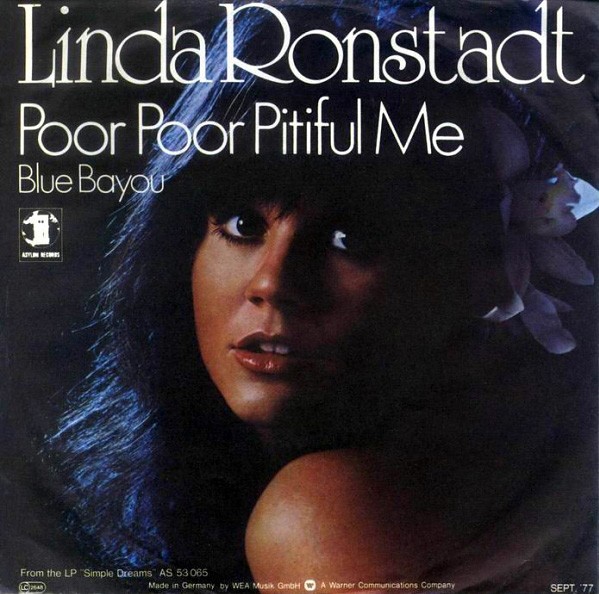
Linda Rondstadt sometimes performed this song, and sang it on an episode of The Muppets, with Kermit the Frog the object of her affection.

Betty Everett – The Shoop Shoop Song (It’s In His Kiss)

Does he love me, I want to know
How can I tell if he loves me so

(is it in his eyes) Oh no, you’ll be deceived
(is it in his eyes) Oh no, he’ll make believe
If you want to know if he loves you so
It’s in his kiss (that’s where it is, oh yeah)

(or is it in his face) Oh no, it’s just his charm
(in his one embrace) Oh no, that’s just his arm
If you want to know if he loves you so
It’s in his kiss (that’s where it is)
Oh oh, it’s in his kiss (that’s where it is)

Oh oh oh, kiss him and squeeze him tight
And find out what you want to know
If it’s love, if it really is
It’s there in his kiss

(how ’bout the way he acts) Oh no, that’s not the way
And you’re not listenin’ to all I say
If you want to know if he loves you so
It’s in his kiss (that’s where it is)
Oh yeah, it’s in his kiss (that’s where it is)

Whoa oh oh, kiss him and squeeze him tight
And find out what you want to know
If it’s love, if it really is
It’s there in his kiss

(how ’bout the way he acts) Oh no, that’s not the way
And you’re not listenin’ to all I say
If you want to know if he loves you so
It’s in his kiss (that’s where it is)
Oh yeah, it’s in his kiss (that’s where it is)
Oh oh, it’s in his kiss (that’s where it is)

ABBA – Take A Chance On Me

ABBA dominated the charts in the seventies. Love them or hate them, Bjorn Ulvaeus and Benny Andersson could write catchy and well-produced pop songs. This song charted at #3 in the Billboard 100 and #1 in the UK in 1978.

Agnetha Fältskog and  Anni-Frid Lyngstad sang lead on most of the songs. They had a total of 20 songs in the top 100, 4 top ten songs and 1 number one song which was Dancing Queen. They have sold over 375 million singles and albums as of 2010.

Bjorn Ulvaeus enjoyed jogging and as he ran he sang a “tck-a-ch”-style rhythm to himself. This evolved into the line “Take a Chance on Me,” around which he wrote the rest of the words.

From Songfacts

Ulvaeus in 1000 UK #1 Hits by Jon Kutner and Spencer Leigh: “I remember that Benny didn’t like the line, ‘We could go dancing, we could go walking,’ but in the end we went with it.”

This was also #1 in Austria, Belgium, Ireland and Mexico.

Although unlike “Dancing Queen” this didn’t top the US chart, it did sell more than the chart topper.

The working title was “Billy Boy.”

In 1992 Erasure recorded Abba-esque, an EP made up of 4 ABBA songs. It became their first UK #1 and kick-started an Abba revival. One of the songs on it was “Take A Chance On Me,” which they did Techno style spliced up with a Ragga section. Andy Bell in 1000 UK #1 Hits recalls: “The ABBA EP was commercial and fun, but a throwaway project for us to do because it was only 4 songs. And because they were written by the same writers it was easy for us to do. The ABBA stuff was originally going to be an album project, but then we were glad we didn’t do that, because we were pretty swamped by ABBA anyway.” >>

John McCain is a huge ABBA fan and after being elected as the Republican candidate for the 2008 presidential elections, he vowed to have ABBA songs played “in elevators all over the White House” if elected. McCain apparently pumps himself up by listening to this song at full volume before making a big speech and he contacted the Swedish group to get permission to use this number as his official campaign anthem. However it appears they priced him out of the market, as McCain was forced to admit to reporters: “It gets expensive in a big hurry.” It’s possible that ABBA just didn’t want to be associated with the Republican Party.

This song appeared, among others, in the Mamma Mia! soundtrack and musical starring Pierce Brosnan, Meryl Streep and Colin Firth. The song is performed in the movie by Julie Walters and Stellan Skargaard. 

Take A Chance On Me

If you change your mind, I’m the first in line
Honey I’m still free
Take a chance on me
If you need me, let me know, gonna be around
If you’ve got no place to go, if you’re feeling down
If you’re all alone when the pretty birds have flown
Honey I’m still free
Take a chance on me
Gonna do my very best and it ain’t no lie
If you put me to the test, if you let me try

Take a chance on me
(That’s all I ask of you honey)
Take a chance on me

We can go dancing, we can go walking, as long as we’re together
Listen to some music, maybe just talking, get to know you better
‘Cos you know I’ve got
So much that I wanna do, when I dream I’m alone with you
It’s magic
You want me to leave it there, afraid of a love affair
But I think you know
That I can’t let go

If you change your mind, I’m the first in line
Honey I’m still free
Take a chance on me
If you need me, let me know, gonna be around
If you’ve got no place to go, if you’re feeling down
If you’re all alone when the pretty birds have flown
Honey I’m still free
Take a chance on me
Gonna do my very best and it ain’t no lie
If you put me to the test, if you let me try

Take a chance on me
(Come on, give me a break will you?)
Take a chance on me

Oh you can take your time baby, I’m in no hurry, know I’m gonna get you
You don’t wanna hurt me, baby don’t worry, I ain’t gonna let you
Let me tell you now
My love is strong enough to last when things are rough
It’s magic
You say that I waste my time but I can’t get you off my mind
No I can’t let go
‘Cos I love you so

If you change your mind, I’m the first in line
Honey I’m still free
Take a chance on me
If you need me, let me know, gonna be around
If you’ve got no place to go, if you’re feeling down
If you’re all alone when the pretty birds have flown
Honey I’m still free
Take a chance on me
Gonna do my very best, baby can’t you see
Gotta put me to the test, take a chance on me
(Take a chance, take a chance, take a chance on me)

Ba ba ba ba baa, ba ba ba ba baa
Honey I’m still free
Take a chance on me
Gonna do my very best, baby can’t you see
Gotta put me to the test, take a chance on me
(Take a chance, take a chance, take a chance on me)

Ba ba ba ba baa, ba ba ba ba baa ba-ba
Honey I’m still free
Take a chance on me

The Unknown Chaplin

A three-part documentary based on unseen footage from Charlie Chaplin. Chaplin ordered all of his outtakes burned but some did survive. This gives us a glimpse of how he constructed a story. He relied on inspiration and rarely had anything planned out in advance and that lead to classic scenes.

He would rearrange sets and actors and if a good mistake happened he would act on it and stretch it out. This was a good way to waste thousands of dollars worth of film but it also made him a comedy genius. Chaplin said he would build sets without an idea in his head but would be inspired.

Below is an outtake he never used in his feature “City Lights” which It would have been interesting if he would have kept it in. He takes the simplest prop…a piece of wood and works a scene around it in a grate.

The documentary was in three parts.

My Happiest Years – This part is mostly on his early Mutual shorts years in 1916-1917

The Great Director – Actresses and Actors talk about working on Chaplin’s films.

Hidden Treasures – A look at a variety of informal, private or salvaged pieces of film by or relating to Chaplin, including home movie footage, visitors to his studios, and several sequences that were edited out of his final films.

Like the Buster Keaton biography A Hard Act To Follow this was produced by Kevin Brownlow and David Gill. It’s worth chasing these down or click on this link in youtube. 


Zombies – Care of Cell 44

This is one of my favorite pop songs of the 1960s. The vocals are reminiscent of the Beach Boys. It’s a sunny and bright song musically about a guy writing to his girl…in prison. The song doesn’t express or explain why she is in prison just that he will be with her when her stay is over.

The song is arranged beautifully. with the vocal only arrangements, You can hear Brian Wilson and Paul McCartney’s influence on this recording. Chris White’s (Zombies bass player) bass playing is phenomenal in this song.

It is on the album Odessey and Oracle, one of the best albums of the sixties. The hit song on the album is Time of the Season but it is full of great songs. It charted a year after it was released at #95 in the Billboard 200 album charts in 1969. The song/album would be on my desert island list.

Rod Argent (Zombies keyboard player) talks about recording the album: We didn’t think, “Oh, we have to do something like Pet Sounds,” but I think it did inspire us. There wasn’t any attempt to copy the elements that were in there so much as the creativity of it and the feeling of pushing pop music forward into different spaces than it had been before. I think Pet Sounds was an indirect influence, as it was on Sgt. Pepper. Since then, Paul McCartney’s said the same thing; they felt they had to do something similar.

Rod Argent wrote the song.

From Songfacts

This uptempo pop symphony is about a guy writing to his girlfriend, who is in prison. The group’s main songwriter Rod Argent recalled in Mojo Magazine February 2008: “It just appealed to me. That twist on a common scenario, I just can’t wait for you to come home to me again.”

This was released as the first single from the Odessey And Oracle album in the UK, but it didn’t make the charts, which surprised vocalist, Colin Blunstone. He said in his Songfacts interview, “It’s a wonderfully crafted song. I think it’s got an incredible lyric, wonderful chord sequence and a great melody – it’s just got everything.”

Blunstone was shocked by the song’s lack of popular appeal, as he thought it was a very commercial track. Soon after it stiffed, the band split up and Blunstone took a job in the Burglary Department of a London insurance office. Bassist Chris White admitted: “We tried to promote ‘Care Of Cell 44,’ but there was no positive reaction. It was downhill from then on.” However the band did have a surprise hit in America a year after their breakup when “Time Of The Season” peaked at #3.

Care of Cell 44

Good morning to you, I hope your feeling better baby
Thinkin of me while you are far away
Counting the days until they set you free again
Writing this letter, hoping your okay
Sent to the room you used to stay in every Sunday
The one that is warmed by sunshine every day
And we’ll get to know each other for a second time
Then you can tell me about your prison stay

Feels so good your coming home soon

Its gonna be good to have you back again with me
Watching the laughter play around your eyes
Come up and getcha, saved up for the train fare money
Kiss and make-up and it will be so nice

Feels so good your coming home soon

Walking the way we used to walk
And it could be so nice
Talkin the way we used to talk
And it could be so nice

Its gonna be nice to have you back again with me
Watching the laughter play around your eyes
Come up and getcha, saved up for the train fare money
Kiss and make-up and it will be so nice

Feels so good your coming home soon

(Ahh ahh ahh ahh ahh ahh
Ahh ahh ahh ahh ahh ahh)

Feels so good your coming home soon

The Knickerbockers – Lies

I had forgotten about this song and band. The Knickerbockers were basically a Beatles knock-off band. This is not a great song by any means but at the time some people passed this off as a rare unheard Beatles track. For me and I’m sure many more, it is not too hard to tell this is not a Beatles track…but it’s a fun song.

The Knickerbockers were found Jerry Fuller in a bar in Albany, New York and he relocated them to Los Angeles and they soon became a popular club attraction.

This was their only top forty recording… it peaked at #20 in the Billboard 100 in 1966.

Lies

Lies, lies, you’re tellin’ me that you’ll be true
Lies, lies
That’s all I ever hear from you
Tears, tears

I shed a million tears for you
Tears, tears
And now you’re lovin’ someone new
Someday I’m gonna be happy

But I don’t know when just now
Lies, lie-ies
A-breakin’ my heart
You think that you’re such a smart girl

And I’ll believe what you say
But who do you think you are, girl
To lead me on this way hey
Lies, lies

I can’t believe a word you say
Lies, lies
Are gonna make you sad someday
Some day you’re gonna be lonely

But you won’t find me around
Lies, lie-ies
A-breakin’ my heart
Someday I’m gonna be happy

But I don’t know when just now
Lies, lie-ies
A-breakin’ my heart
You think that you’re such a smart girl

And I’ll believe what you say
But who do you think you are, girl
To lead me on this way hey
Lies (ah!), lies (yeah baby)

I can’t believe a word you say
Lies, lies
Are gonna make you sad someday
Some day you’re gonna be lonely

But you won’t find me around
Lies, lie-ies
A-breakin’ my heart
I said, baby, now (breakin’ my heart)

Oh, yeah, you’re still breakin’ my heart (breakin’ my heart)

Steppenwolf – Magic Carpet Ride

The dynamic of the intro really works in this song. The wall of distortion and feedback starts and then it snaps into the song. It is incredibly catchy and bouncy for being a harder song. This song was on Steppenwolf’s “Second” album and the song peaked at #3 in the Billboard 100 in 1968. I’ve always liked John Kays voice and he also has a great stage presence.

Steppenwolf had 13 songs in the Billboard 100 and 3 top ten hits. This was the second big hit for Steppenwolf. “Born To Be Wild” was released a few months earlier. They were on different albums, with “Born To Be Wild” on their first and this on their second, although this was released well before their second album came out.

From Songfacts

The group wrote this based on the bass line their bass player, Rushton Moreve, came up with. The only words he had written for it were, “I like my job, I like my baby.” Lead singer John Kay wrote the rest of the lyrics. He got inspired when he put the demo tape in a home stereo system he bought with the royalties from their first album. That’s where he came up with the line, “I like to dream, right between my sound machine.”

John Kay of Steppenwolf teamed up with Grandmaster Flash and the Furious Five to do a 1988 rap-rock remake of this song. It was similar to the Run-D.M.C./Aerosmith mash-up of “Walk This Way,” which was released in 1986.

This song first appeared in a 1968 movie called Candy by the French director Christian Marquand. It starred Ewa Aulin, Marlon Brando, Richard Burton, Ringo Starr and Charles Aznavour. It’s an extremely strange movie, definitely of it’s time and kind of gives context to the song, intended or not. The movie was based on a popular counterculture novel.

In 2004, this was used in the “America Revolution” series of Chevy car commercials.

Magic Carpet Ride

I like to dream, yes, yes
Right between the sound machine
On a cloud of sound I drift in the night
Any place it goes is right
Goes far, flies near
To the stars away from here

Well, you don’t know what
We can find
Why don’t you come with me little girl
On a magic carpet ride

Well, you don’t know what
We can see
Why don’t you tell your dreams to me
Fantasy will set you free

Close your eyes now
Look inside now
Let the sound
Take you away

Last night I hold Aladdin’s lamp
So I wished that I could stay
Before the thing could answer me
Well, someone came and took the lamp away

I looked
Around
A lousy candle’s all I found

Well, you don’t know what
We can find
Why don’t you come with me little girl
On a magic carpet ride

Well, you don’t know what
We can see
Why don’t you tell your dreams to me
Fantasy will set you free

Close your eyes now
Look inside now
Let the sound
Take you away

Charlie Chaplin – The Kid

This 1921 movie by Charlie Chaplin teamed him up with young Jackie Coogan. You may remember the adult Coogan as Uncle Fester on the Addams Family. It’s a great film with some classic scenes between Chaplin and Coogan. This was Chaplin’s first feature film. He was finishing up his First National contract as he co-founded United Artists with Mary Pickford, Douglas Fairbanks, and D.W. Griffith.

Image result for jackie coogan kid and adult

The Jackie Coogan and Chaplin…Jackie Coogan as Uncle Fester

The story starts off with a woman (Edna Purviance) that abandons her baby in the back of an expensive car hoping that the owners will give her baby a life that she can not. The car is then stolen and the baby is left on the street. The Tramp (Chaplin) finds the baby and takes it home and raises him. Five years pass and he loves the kid and together they have a great scheme going on.

The kid goes around throwing rocks through windows and out of nowhere later on comes The Tramp who would just so happen to have glass and materials with him to fix the window for a price.

The authorities soon find out that the Tramp is not the kid’s father. While this is going on the mother who is doing really well now is looking for her child. The Tramp and Kid are pursued and in this film, Chaplin had some serious and tender moments combining comedy with pathos which at the time was a turning point. The movie was considered a masterpiece when it was released.

One scene that jumps out is the scene where social services are physically taking the child away and Chaplin fights…not comically but really fights to keep the Kid.

The film was written, directed, produced and starred… Charlie Chaplin. Edna Purviance makes her last appearance acting with Chaplin. She would be directed by him one more time in a drama as a leading lady. This movie kicked off Coogan’s very successful child acting career.

Jackie Coogan would become a star in the twenties. He earned 3-4 million dollars acting and when he turned 21 in 1935 he thought he was set for life only to find out the money was gone. His mother and step-father spent all of his money on furs, jewelry, and cars. His mom said that Jackie enjoyed himself acting and no promises were ever made to give him any of the money. Jackie sued his mom in 1938 and only received 125,000 dollars of his money.

Coogan had financial problems for a long while and even went to Chaplin for help which Chaplin gladly gave him money.

One good thing came out of it. The “Coogan Act” which made parents set aside at least 15 percent of their child’s earnings to a trust fund.

If you get a chance this is a great short entertaining movie.


Foundations – Build Me Up Buttercup

Wednesday I covered their other song Baby Now That I’ve Found You and this is their other big hit…Build Me Up Buttercup that was the biggest hit of their career. It’s one of those 60’s pop hits that I can’t help but like. The song peaked at #3 in the Billboard 100 in 1969.

The Foundations sounded like they were straight out of Motown but they were actually formed in London and consisted of members from the West Indies, Britain, and even Sri Lanka.

From Songfacts

This was written by Mike D’Abo and Tony Macaulay. D’Abo was lead singer of Manfred Mann, and Macaulay was a successful songwriter who also wrote The Foundations hit “Baby Now That I’ve Found You” as well as songs by The Hollies, Andy Williams and The New Seekers.

David Essex, who was unknown at the time but went on to success with “Rock On,” was offered this song, but he turned it down as he didn’t like the title.

This was featured in the 1998 film There’s Something About Mary. 

This was featured in the 2001 pilot episode of the spy drama Alias, “Truth Be Told,” when Sydney Bristow’s (Jennifer Garner) ill-fated boyfriend sings it on the campus lawn before he proposes to her.


Build Me Up Buttercup

Why do you build me up (build me up) Buttercup, baby
Just to let me down (let me down) and mess me around
And then worst of all (worst of all) you never call, baby
When you say you will (say you will) but I love you still
I need you (I need you) more than anyone, darlin’
You know that I have from the start
So build me up (build me up) Buttercup, don’t break my heart

“I’ll be over at ten”, you told me time and again
But you’re late, I wait around and then (bah-dah-dah)
I went to the door, I can’t take any more
It’s not you, you let me down again

(Hey, hey, hey!) Baby, baby, try to find
(Hey, hey, hey!) A little time and I’ll make you mine
(Hey, hey, hey!) I’ll be home
I’ll be beside the phone waiting for you
Ooo-oo-ooo, ooo-oo-ooo

Why do you build me up (build me up) Buttercup, baby
Just to let me down (let me down) and mess me around
And then worst of all (worst of all) you never call, baby
When you say you will (say you will) but I love you still
I need you (I need you) more than anyone, darlin’
You know that I have from the start
So build me up (build me up) Buttercup, don’t break my heart

You were my toy but I could be the boy you adore
If you’d just let me know (bah-dah-dah)
Although you’re untrue, I’m attracted to you all the more
Why do I need you so

(Hey, hey, hey!) Baby, baby, try to find
(Hey, hey, hey!) A little time and I’ll make you mine
(Hey, hey, hey!) I’ll be home
I’ll be beside the phone waiting for you
Ooo-oo-ooo, ooo-oo-ooo

Why do you build me up (build me up) Buttercup, baby
Just to let me down (let me down) and mess me around
And then worst of all (worst of all) you never call, baby
When you say you will (say you will) but I love you still
I need you (I need you) more than anyone, darlin’
You know that I have from the start
So build me up (build me up) Buttercup, don’t break my heart

I-I-I need you-oo-oo more than anyone, baby
You know that I have from the start
So build me up (build me up) Buttercup, don’t break my heart

Gentrys – Keep on Dancing

This song was written by Allen A. Jones and Willie David Young. The Gentrys were from Memphis and best known for this 1965 hit which rose to the Top 10 and became a million seller. It’s not a great song but it’s a fun one.

The song is interesting for the fact that it is actually one short recording repeated, to stretch the record out to the length of the typical pop single of its day. The second half of the song, after the false fade, beginning with Wall’s drum fill, is the same as the first. Many modern recordings today more or less use the same trick on songs.

Keep on Dancing peaked at #4 in the Billboard 100 in 1965. The Gentrys did manage an appearance in the 1965 movie It’s a Bikini World and kept releasing singles up to 1971 but they had no other top 40 single and the Gentrys disbanded.

I owned a Gentrys single before…they did a cover of Neil Young’s Cinnamon Girl which I placed below the Keep On Dancing video. It’s odd that its the same group that did Keep On Dancing.

I’m not a wrestling fan at all but this band included Jimmy Hart who would make his name as a bad guy wrestling manager.

Keep On Dancing

I keep on dancin’ (keep on)
Keep on doin’ the jerk right now
Shake it, shake it, baby
Come on & show me how you work

Yellin’ in motion
Keep on doin’ the locomotion, yeah
Don’t worry, little babe
Shake it, shake it, shake it, shake it, yes!

[Chorus:]
Keep on dancin’ & a-prancin’ (ah)

[Organ Solo]

I keep on dancin’ (keep on)
Keep on doin’ the jerk
Shake it, shake it, baby
Come on & show me how you work

Yellin’ in motion
Keep on doin’ the locomotion, yeah
Don’t worry, little babe
Shake it, shake it, shake it, shake it, yes!

[Chorus:]
Keep on dancin’ & a-prancin’ (ah)

[Organ solo, temporarily fadin]

I keep on dancin’ (keep on)
Keep on doin’ the jerk right now
Shake it, shake it, baby
Come on & show me how you work

[Chorus:]
Keep on dancin’ & a-prancin’ (ah)

[Fade]