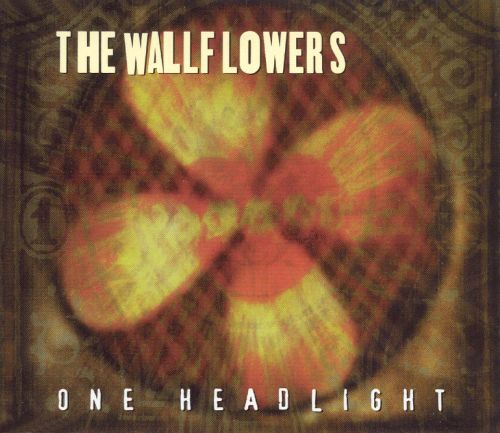
Wallflowers – Sixth Avenue Heartache

Hard to believe this song peaked at #2 in the Billboard Alternative song chart 23 years ago in 1996. At first I thought well that is cool…it’s Bob Dylan’s son Jacob but then I realized I really liked the Wallflowers…Dylan’s son or not. I always thought he did it the right way by being in a band and not coming out at first as Jacob Dylan solo artist.

I went out and bought this album Bringing Down the Horse and their debut album. Bringing down the Horse peaked at #4 in the Billboard Album chart.

Mike Campbell played slide on the album and he said: “I really like the one guitar line in there, it was very George Harrison sounding and I was really proud of it when I got the sound in the studio, so I was glad they used it. The funny thing is, later, I ran into George. He had a real whimsical, cynical kind of thing – he looked at me and goes, ‘You know, I heard that record on the radio – you’re doing me now?’ He said it with a little chuckle.”

Lead singer Jakob Dylan wrote this in 1988 when he was only 18 years old. He considers it to be his first real song. Part of the song is about some time that Jakob spent in New York City and the things he witnessed.

From Songfacts

This was the first video and single released off of Bringing Down The Horse. It was originally written for The Wallflowers first CD, but the record company wouldn’t let them include it with the album.

Mike Campbell from Tom Petty and the Heartbreakers played the slide guitar part. There is a connection here: Jakob’s dad, Bob Dylan, played with Tom Petty in The Traveling Wilburys. Tom Petty and the Heartbreakers also toured with Dylan in 1986, and Dylan helped write “Jammin’ Me.”

Producer T-Bone Burnett is the one who wanted Campbell to play on this. Campbell didn’t have time to come to the studio, so Burnett sent him the tape, which had some open tracks along with the basic rhythm track. Mike has a studio in his house, and one afternoon when he had a few hours to spare, he plugged in his guitar, came up with a few parts, doubled a couple of things, and got a sound he liked. He sent the tape back to Burnett, and the next thing he knew, Burnett called to tell him it came out really good, and the song was on the radio with his tracks. He never even met the guys in The Wallflowers.

The video was shot in New York City by David Fincher. Predominantly a movie director, Fincher has directed films such as Seven, The Game, Fight Club, and the third installment of Alien.

Pointing out how David Fincher came to direct the video, Jakob Dylan said: “You know, I don’t exactly remember how it happened. He just got a tape before the record was out. He got a preview of the record – an advance copy. He had heard that this was going to be the new single, and he actually called us and said he was interested in doing it, if we were interested. So we thought about it and we were like, what else have you done.”

Adam Duritz of Counting Crows provided backing vocals. Duritz and Dylan became friends in the early ’90s when Duritz was working as a bartender at The Viper Room in Los Angeles.

Sixth Avenue Heartache

Sirens ring, the shots ring out
A stranger cries screams out loud
I had my world strapped against my back
I held my hands, never knew how to act

And the same black line that was drawn on you
Was drawn on me
And now it’s drawn me in
6th Avenue heartache

Below me was a homeless man
Singin’ songs I knew complete
On the steps alone, his guitar in hand
It’s fifty years, stood where he stands

And the same black line that was drawn on you
Was drawn on me
And now it’s drawn me in
6th Avenue heartache

Now walkin’ home on those streets
The river winds move my feet
Subway steam, like silhouettes in dreams
They stood by me, just like moonbeams

And the same black line that was drawn on you
Was drawn on me
And now it’s drawn me in
6th Avenue heartache

Look out the window, down upon that street
And gone like a midnight where was that man
But I see his six strings laid against that wall
And all his things, they all look so small
I got my fingers crossed on a shooting star
Just like me just moved on

And the same black line that was drawn on you
Was drawn on me
And now it’s drawn me in
6th Avenue heartache

The Mr. Bill Show

I was a kid in the seventies and I would stay up and watch Saturday Night Live… Mr. Bill got my attention right away. The hapless Mr. Bill would live in fear of Mr. Hands and Sluggo.

The poor guy and his dog Spot were kicked, punched, buried, burned, stabbed, stepped on, and dropped from the Empire State Building. At school, there was a lot of Ohhhh Nooooo…when someone fell or got hurt.

Walter Williams invented Mr. Bill in 1973 and after SNL had a contest for anyone to submit home movies…Walter and Vance DeGeneres made the first film with an 8mm camera. Lorne liked Mr. Bill and it premiered in the first season…Walter wasn’t paid anything for them for a while but he kept sending them in and Lorne Michaels kept airing them.

Walter eventually was hired as a staff writer in the 4th and 5th season and wrote skits and for the Weekend Update. After the 5th season, he left the show with the original cast but did make a couple of more Mr. Bill’s for SNL that aired in 1981 to bring the total number to 24 Mr Bill Shows.

Mr. Bill’s popularity never completely waned and Walter Williams has made episodes for Fox TV and commercials for different products.

Vance DeGeneres originated “Mr Hands” and helped William film a few of the first films and later sued Williams for part ownership. The judge awarded DeGeneres some money but ruled that the basic idea was Willaims.

From Wiki…SNL Appearances

  1. February 28, 1976 (The Mr. Bill Holiday Special)
  2. October 16, 1976 (Mr. Bill Goes To A Party)
  3. January 22, 1977 (Mr. Bill Goes To A Magic Show)
  4. March 25, 1978 (Mr. Bill Goes To The Circus)
  5. April 8, 1978 (Mr. Bill Pays His Taxes)
  6. October 14, 1978 (Mr. Bill Goes To New York)
  7. October 21, 1978 (Mr. Bill Moves In)
  8. November 18, 1978 (Mr. Bill Goes Fishing)
  9. December 2, 1978 (Mr. Bill Is Late)
  10. January 27, 1979 (Mr. Bill Goes To Court)
  11. February 24, 1979 (Mr. Bill Shapes Up)
  12. March 17, 1979 (Mr. Bill Is Hiding)
  13. May 12, 1979 (Mr. Bill Runs Away)
  14. May 19, 1979 (Mr. Bill Goes To The Movies)
  15. May 26, 1979 (Mr. Bill Visits Saturday Night Live; cold open)
  16. October 13, 1979 (The All-New Mr. Bill Show)
  17. November 3, 1979 (Mr. Bill Stays Home)
  18. November 17, 1979 (Mr. Bill Builds A House)
  19. January 26, 1980 (Mr. Bill Gets Help)
  20. April 5, 1980 (Mr. Bill Strikes Back)
  21. May 10, 1980 (Mr. Bill Gets 20 Years In Sing Sing)
  22. December 20, 1980 (Mr. Bill’s Christmas Special)
  23. April 11, 1981 (cold open with Chevy Chase)
  24. October 17, 1981 (Mr. Bill Goes To L.A.; final appearance)


Interview with Walter Williams

http://www.mrbill.com/WWInterview.htm


The Chi-Lites – Have You Seen Her

I never get tired of 70’s soul music. This one and Ooh Girl by the Chi-Lites stay on my playlist. This song peaked at #3 in the Billboard 100 and #3 in the UK in 1971.

The Chi-Lites label Brunswick Records didn’t think much of this song and released three other songs as singles from the album. When R&B radio stations started playing “Have You Seen Her” off of the album, the label finally saw the hit potential and issued it as a single. It became the group’s first #1 on the R&B chart and their first Top 10 on the Hot 100.

From Songfacts

This was written by Barbara Acklin and Eugene Record (who was the frontman for The Chi-Lites). The spoken parts were inspired by the opening monologues on Isaac Hayes’ 1969 Hot Buttered Soul album, where Hayes would tell an often heartbreaking tale using his speaking voice before singing.

On “Have You Seen Her,” Record speaks the verses, explaining that ever since his girl left him, he hasn’t been able to enjoy the simple pleasures in life like going to the movies or playing with the neighborhood children. That’s because he can’t stop thinking about his girl, and he envisions her everywhere he goes, even though she’s not really there. He tell himself she’ll be back, but he knows deep down it’s a lie. Still, he asks anyone who will listen, “Have you seen her?”

Eugene Record had the “doo doo doo” intro for this song and the line, “Have you seen her? Tell me have you seen her?,” but didn’t know where to go with it until he sang it for Acklin, who helped complete the song.

Barbara Acklin and Eugene Record had dual careers as artists and songwriters. Acklin was a solo artist who had her biggest hit in 1968 with “Love Makes A Woman” (#15 US), which Record co-wrote. Record fronted The Chi-Lites and wrote most of their hits, including “(For God’s Sake) Give More Power to the People” and “Oh Girl.” As a team, Acklin and Record’s compositions include “Two Little Kids” for Peaches & Herb and several other Chi-Lites tracks, including “Stoned Out Of My Mind” and “We Are Neighbors.”

They wrote the first version of the song years earlier but thought it was too long to record. When Isaac Hayes released Hot Buttered Soul, which included an 18-minute song, they saw the song’s potential and decided to record it for The Chi-Lites third album, since they had some room. The track clocks in at 5:08 and was the last song recorded for the set.

The Chi-Lites followed this template of lovelorn spoken verses on a number of other songs, including their #33 hit in 1973, “A Letter To Myself.”

MC Hammer covered this song on his 1990 10-million-selling album, Please Hammer, Don’t Hurt ‘Em. It was released as the second single from the album, following “U Can’t Touch This,” and it reached #4 in the US.

Have You Seen Her

Ah…ah…ah…ah…ah…ah…
Ooh…ooh…ooh…ooh…ooh…ooh…ooh…ooh…
Ah…ah…ah…ah…ah…ah…
Ooh…ooh…ooh…ooh…ooh…ooh…ooh…ooh…
One month ago today
I was happy as a lark
But now I go for walks
To the movies, maybe to the park
I have a seat on the same old bench
To watch the children play, huh
You know tomorrow is their future
But for me just another day
They all gather ’round me, huh
They seem to know my name
We laugh, tell a few jokes
But it still doesn’t ease my pain
I know I can’t hide from a memory
Though day after day I’ve tried
I keep sayin’ she’ll be back
But today again I’ve lied
Oh, I see her face everywhere I go
On the street and even at the picture show
Have you seen her
Tell me have you seen her
Oh, I hear her voice as the cold winds blow
In the sweet music on my radio
Have you seen her
Tell me have you seen her
Why, oh, why
Did she have to leave and go away?
Oh…oh…oh…oh…oh…
I’ve been used to havin’ someone to lean on
And I’m lost, baby, I’m lost
Oh, doo, doo, doo, doo, doo, doo, doo, doo
Doo, doo, doo, doo, doo, doo, doo, doo
Have you seen her
Tell me have you seen her [Tell me have you seen her]
Oh, doo, doo, doo, doo, doo, doo, doo, doo
Doo, doo, doo, doo, doo, doo, doo, doo
Have you seen her
Tell me have you seen her [Tell me have you seen her]
Oh, she left her kiss upon my lips
But left that break within my heart
Have you seen her
Tell me have you seen her
Oh, I see her hand reaching out to me
Only she can set me free
Have you seen her
Tell me have you seen her
Why, oh, why
Did she have to leave and go away
Oh…oh…oh…oh…oh…
I’ve been used to havin’ someone to lean on
And I’m lost, baby, I’m lost
Oh, doo, doo, doo, doo, doo, doo, doo, doo
Doo, doo, doo, doo, doo, doo, doo, doo
Have you seen her
Tell me have you seen her [Tell me have you seen her]
As another day comes to an end
I’m lookin’ for a letter or somethin’
Anything that she would send
With all the people I know, hmm
I’m still a lonely man
You know it’s funny
I thought I had her in the palm of my hand
Have you seen her
Tell me have you seen her [Tell me have you seen her]
Oh (Oh, yeah…eah…eah…), doo, doo, doo, doo, doo, doo, doo, doo
Doo, doo, doo, doo, doo, doo, doo, doo
Have you seen her (Have you seen her)
Tell me have you seen her (Have you seen her)
Have you seen her
Tell me have you seen her [Tell me have you seen her]
Have you seen her
Tell me have you seen her [Tell me have you seen her]
Have you seen her
Tell me have you seen her [Tell me have you seen her]
Have you seen her
Tell me have you seen her [Tell me have you seen her]
Have you seen her
Tell me have you seen her [Tell me have you seen her]

Elvis Presley – Burning Love

I’m on the second Peter Guralnick book about Elvis and I’m in the year of 1972…the jumpsuit, karate, Vegas Elvis. Though it had obvious hit potential, Elvis had just separated from his wife, Priscilla, and was not in the mood for a Rock n Roll number, so he wasn’t excited to record it. Elvis’ producer Felton Jarvis had to persuade him that the song was worth trying, and after 6 attempts, he recorded a suitable take. The song is great and Elvis’s performance is on the mark.

This song would peak at #2 in the Billboard 100 in 1972. Burning Love would his last top ten Billboard hit. The song was also released on an album titled Burning Love and Hits from his Movies: Volume 2… an album with this song and the rest very forgettable movie songs. This was another Colonel Tom Parker special. It was released on RCA’s budget label. 

Album Covers… Elvis’s album packaging in the 1970s was just bland to me. Elvis…on stage…in the jumpsuit…in a karate pose and holding a mic. Since the sixties, album covers had been an important part of representing the artist. His covers were unmemorable and were put out cheaply to make a quick buck…very shortsighted and very Colonel Parker. The only one I remember well was the Aloha from Hawaii album with the satellite but it still didn’t compete with Pink Floyd, Led Zeppelin, and every other major act at the time. His album covers were interchangeable with each other for the most part. I’m not downing Elvis’s music but I just wish more thought would have been put into designing and marketing.

I’m not saying they had to be all works of art but a little more distinguishable.

When you see Abbey Road, Led Zeppelin II, Who’s Next, Dark Side of the Moon you know what songs are on them by just looking at them…Elvis albums?

Image result for elvis presley 1970s album coversRelated imageImage result for elvis presley 1970s burning love album

Related imageImage result for elvis presley 1970s album covers

From Songfacts

This was Elvis’ biggest hit single Stateside since “Suspicious Minds” in 1969 and his last Top 10 hit in the American Hot 100 or pop charts.

This song about the breakdown of a relationship had already featured on the self-titled 1972 album by Country-Soul pioneer Arthur Alexander. 

In addition to making the original commercial recording of a song later covered by Elvis, Arthur Alexander has the claim of being the only songwriter in history to have his songs sung by The Beatles (“Anna (Go to Him))”), the Rolling Stones (“You’d Better Move On”) and Bob Dylan (“Sally Sue Brown”).

Dennis Linde, who wrote this song and also provided the guitar intro, was reclusive by nature and was at one time tagged “Nashville’s best-kept songwriting secret.” Apart from “Burning Love,” most of the successful songs he wrote were for Country stars, including,Roger Miller (“Tom Green County Fair” – 1970), Garth Brooks (“Callin’ Baton Rouge” – 1993) and The Dixie Chicks (“Goodbye Earl” – 1999.) In Britain, Welsh Rock and Roll revivalist Shakin’ Stevens recorded a #10 hit with his version of Linde’s “A Letter to You” in 1984.

In 2005, an Australian woman, who was evidently not a fan of this song, stabbed her partner in the back, thigh, and shoulder with a pair of scissors because “he played the song too many times.”

As part of a series of re-releases of Elvis songs in the UK in 2007 this re-entered the UK chart at #13.

Burning Love

Lord Almighty,
I feel my temperature rising
Higher higher
It’s burning through to my soul

Girl, girl, girl
You gonna set me on fire
My brain is flaming
I don’t know which way to go

Your kisses lift me higher
Like the sweet song of a choir
You light my morning sky
With burning love

Ooh, ooh, ooh,
I feel my temperature rising
Help me, I’m flaming
I must be a hundred and nine
Burning, burning, burning
And nothing can cool me
I just might turn into smoke
But I feel fine

‘Cause your kisses lift me higher
Like a sweet song of a choir
And you light my morning sky
With burning love

It’s coming closer
The flames are reaching my body
Please won’t you help me
I feel like I’m slipping away
It’s hard to breath
And my chest is a-heaving

Lord have mercy,
I’m burning a hole where I lay
‘Cause your kisses lift me higher
Like the sweet song of a choir
You light my morning sky
With burning love
With burning love
Ah, ah, burning love
I’m just a hunk, a hunk of burning love
Just a hunk, a hunk of burning love

The Boys of Summer

It’s finally opening day…

Badfinger (Max)'s avatarPowerPop... An Eclectic Collection of Pop Culture

Opening Day…Baseball is back and I’m thrilled. I’ve always been a baseball fan first. No other sport matches up against it. It’s a game that takes a tremendous amount of skill to play. Most players who get drafted never get to play in the majors. Hitting a major league curveball is probably the hardest thing to do in all sports.

Anyway, there is nothing like spring training and the hope for a new season. Every team is tied at 0 in the standings. I really wish an MLB team was in the city I live in…we have an NFL team that I would trade in a heartbeat to get an MLB team. Baseball is not an action-packed game like basketball, soccer or hockey but there is a game within a game. When you get up to bat…no one is going to block for you…no it’s you against that pitcher ……

View original post 201 more words

Danny & the Juniors – At The Hop

Poodle skirts and pink Cadillacs is what I think of when I hear this song.

In the ’50s, high school dances in America were often referred to as “the hop.” Sometimes, these dances would be “sock hops” because school administrators would make the kids take off their shoes so they didn’t scuff up the floor of the gymnasium, where the dance was usually held.

This song stayed on the top of US charts for seven weeks in 1958, longer than any other song that year. For four of those weeks, it held “Great Balls of Fire” off the top spot…

From Songfacts

This was written by Dave White and John Madara, who were songwriter/producers based in Philadelphia – White was a member of Danny and the Juniors. Madara explained in an interview with Forgotten Hits: “‘At The Hop’ originally was recorded by myself, with Danny and The Juniors (who at the time were called The Juvenairs) singing background. It was titled ‘Do The Bop,’ with the B Side, ‘Sometimes,’ also with me singing lead and Danny and The Juniors singing background. I was under contract at the time to Prep Records and had just had a record, ‘Be My Girl,’ which had made the national charts.

Prep had me all set up to record again with a producer who was working with Paul Anka, Sid Feller, when I had the idea to write a song ‘Do The Bop.’ I wanted to do something that had a piano featured like ‘Whole Lotta Shakin’ Goin’ On.’ So, off we go to the recording studio, with me singing lead, Danny and The Juniors singing background, and my 45 record ‘A Whole Lotta Shakin’ Goin’ On’ to set the tone of what I was shooting for. I paid for the session, sat in the control room, told the engineer what to do, played the Jerry Lee Lewis record for the musicians and that is how ‘Do The Bop’ was created. After the recording, we played the record for Prep.

They didn’t care for it. They still wanted me to record with Sid Feller. So we went back to Philadelphia where ‘Do The Bop’ was played for Dick Clark, who suggested that The Bop wasn’t really happening around the country and why don’t we change it to something about record hops. So with some additional lyric changes, and because I was under contract with Prep, we went back into the studio with Danny and The Juniors. Danny, who was their lead singer, sang lead, using a lot of the same phrasing that I did on ‘Do The Bop.’ Of course, the rest is rock and roll history.”

Danny & the Juniors were the Philadelphia group of Danny Rapp, Dave White, Frank Maffei and Joe Terranova. At the time, they were known as The Juvenairs. They were on a street corner singing when a someone who worked at a recording studio heard them and brought them in to sing. The “Bah”‘s go in this order of singers:

Bah 1, Terranova (also does the Oh, Baby)

Bah 2, Rapp (Lead Singer and choreographer. He committed suicide in 1983 in a Holiday Inn in Arizona with a shotgun, he owned a black 1958 Impala Convertible with a continental kit)

Bah 3, Maffei (First Tenor)

Bah 4, White (Second Tenor)

Danny and the Juniors hit the US Top 40 three more times, including “Rock And Roll Is Here To Stay,” but this was their only hit in England.

This was used in the 1973 film American Graffiti, which is set in 1962 and features lots of music from early in the Rock Era.

Artie Singer also has a composer credit on this song. In the Forgotten Hits interview, Madara said: “Artie Singer, who had been my vocal coach, took all of the credit for the production (and production monies and all of the publishing), put his name on as a songwriter and publisher and has tried to take credit for producing ‘At The Hop’ all these years. I have read on many websites that Artie Singer went out and got Leon Huff to help with the production and play piano. This is totally, one hundred percent false. I discovered Leon Huff in 1963 playing with a band called ‘The Lavenders,’ and at that time he was about 18 years old. He would have had to have been 12 years old to be involved with ‘At The Hop.'”

Sha-Na-Na played this at Woodstock in 1969. They were relatively unknown at the time and performed covers of ’50s hits and doo-wop songs. Their Woodstock performance, which preceded Jimi Hendrix, helped launch their career, which led to their own TV show in 1977.

At The Hop

Bah-bah-bah-bah, bah-bah-bah-bah
Bah-bah-bah-bah, bah-bah-bah-bah, at the hop!

Well, you can rock it you can roll it
You can stop and you can stroll it at the hop
When the record starts spinnin’
You chalypso when you chicken at the hop
Do the dance sensation that is sweepin’ the nation at the hop

Ah, let’s go to the hop
Let’s go to the hop, (oh baby)
Let’s go to the hop
Come on, let’s go to the hop

Well, you can swing it you can groove it
You can really start to move it at the hop
Where the jockey is the smoothest
And the music is the coolest at the hop
All the cats and chicks can get their kicks at the hop
Let’s go!

Let’s go to the hop
Let’s go to the hop, (oh baby)
Let’s go to the hop
Come on, let’s go to the hop
Let’s go!

Well, you can rock it you can roll it
You can stop and you can stroll it at the hop
When the record starts spinnin’
You chalypso when you chicken at the hop
Do the dance sensation that is sweepin’ the nation at the hop

You can swing it you can groove it
You can really start to move it at the hop
Where the jockey is the smoothest
And the music is the coolest at the hop.
All the cats and chicks can get their kicks at the hop.
Let’s go!

Let’s go to the hop
Let’s go to the hop, (oh baby)
Let’s go to the hop
Come on, let’s go to the hop

Bah-bah-bah-bah, bah-bah-bah-bah
Bah-bah-bah-bah, bah-bah-bah-bah, at the hop!

Van Morrison – Tupelo Honey

I’ve heard this song so much that I know every nuance of it. The song was on the album of the same name. This song would be in my top 5 of Van Morrison. It’s a beautiful epic song. I’ve always noticed the lyrics are not Morrison’s best by any means. The melody is not complicated, in fact, it is reminiscent of The Weight…same chord pattern. Van’s voice and phrasing lift this song into a great song. Well, there is Connie Kay’s drumming also.

The song peaked at #47 in the Billboard 100 in 1972. The album peaked at #27 in 1971.

From Songfacts

“Tupelo Honey” is an unreserved typically mystic take on the domestic happiness Morrison had found since he’d married his wife Janet. They’d met during his time with the Irish R&B band Them. She’d already been his muse for several of Morrison’s earlier songs.

Tupelo honey is honey made from the sweet flowers of the tupelo tree, which grows abundantly in swampy areas of the Southern United States. 

There are allusions to early America and the Boston Tea Party in this song:

You can take all the tea in China
Put it in a big brown bag for me
Sail right around the seven oceans
Drop it straight into the deep blue sea

And

You can’t stop us on the road to freedom
You can’t stop us ’cause our eyes can see

The Irish Troubles were still raging when this song was written, and it’s important to view it as the song of an artist who was a product of that situation. Freedom was surely heavy on Van’s mind.

This song plays at the conclusion of the 1997 film Ulee’s Gold, which stars Peter Fonda as a beekeeper who makes Tupelo Honey.

Tupelo Honey

You can take all the tea in China
Put it in a big brown bag for me
Sail right around all the seven oceans
Drop it straight into the deep blue sea
She’s as sweet as Tupelo honey
She’s an angel of the first degree
She’s as sweet as Tupelo honey
Just like honey from the bee

You can’t stop us on the road to freedom
You can’t keep us ’cause our eyes can see
Men with insight, men in granite
Knights in armor bent on chivalry
She’s as sweet as Tupelo honey
She’s an angel of the first degree
She’s as sweet as Tupelo honey
Just like honey, baby, from the bee

You can’t stop us on the road to freedom
You can’t stop us ’cause our eyes can see
Men with insight, men in granite
Knights in armor intent on chivalry
She’s as sweet as Tupelo honey
She’s an angel of the first degree
She’s as sweet as Tupelo honey
Just like honey, baby, from the bee

You know she’s alright, oh she’s alright with me
You know, you know, you know she’s alright, she alright with me
You know, you know, you know you know
You know she’s alright, alright with me
She’s alright, she’s alright
She’s alright with me
She’s alright 
She’s alright with me
She’s alright 
She’s alright with me

She’s al, she’s alright, she’s alright
She’s alright with me
She’s alright, she’s alright, she’s alright, she’s alright

You can take all the tea in China
Put it in a big brown bag for me
Sail it right around all these seven oceans
Drop it smack dab in the middle of the deep blue sea
Because, she’s as sweet as Tupelo honey, yes she is
She’s an angel of the first degree
She’s as sweet as Tupelo honey
Just like honey, baby, from the bee

She’s as sweet as Tupelo honey
She’s an angel of the first degree
She’s as sweet as Tupelo honey
Just like the honey, from the bee
She’s alright, she’s alright with me
She’s my baby, you know she’s alright
She’s my baby, she’s my baby, she’s alright
She’s my baby

The Who – I Can’t Explain

Great debut single by “The Who.” They released a single before this one but the band had a different name…”The High Numbers.” The song was released in 1964 but peaked at #8 in the UK in 1965.

I Can’t Explain is a simple 3 chord song and what makes it go are the drums. Keith makes his presence felt right away. This was not released on an album until 1971. It is the first song on one of the best compilation albums I ever bought, Meaty, Beaty, Big, and Bouncy.

Roger Daltrey said: “When we turned up to record it there was this other guitarist in the studio – Jimmy Page. And he’d brought in three backing vocalists, which was another shock. He must have discussed it with our management, but not with us, so we were thrown at first, thinking, ‘What the f–k’s going on here?’ But it was his way of recording.”

Page ended up playing the riff and Townsend played the solo.

John Carter, Perry Ford, and Ken Lewis provided the background vocals. The trio were popular session singers in England, where they were known for their harmony vocals. For session work, they called themselves The Ivy League, but they went on to have a hit called “Let’s Go To San Francisco” as The Flower Pot Men. Perry Ford also played piano on this track.

From Songfacts

This was produced by an American named Shel Talmy. He was famous for putting loud, powerful guitar on the songs he produced, and had recently worked with The Kinks on their first hit, “You Really Got Me.” Talmy produced this in a similar style.

Jimmy Page of Led Zeppelin fame was a session musician at the time and was brought in to play guitar on this track. The Who producer Shel Talmy knew the guitar would be very prominent on this song and had Page ready in case Townshend couldn’t handle it. Pete did just fine, and quickly established himself as a premier rock guitarist.

The Who made their first US television appearance performing this on the ABC show Shindig. The program aired from 1964-1966 and featured many popular musicians performing their hits. The Everly Brothers, Glen Campbell, and Sonny and Cher were all frequent guests on the show.

Meaty, Beaty, Big And Bouncy was a 1971 compilation of The Who’s early hits, many of which did not appear on albums and could only be purchased as singles. In 1966, The Who broke their contract with manager and producer Shel Talmy. As part of the deal, Talmy got royalties from Who records over the next five years. By 1971, the band was able to release the compilation album without giving the royalties to Talmy.

The Who played this at the Woodstock festival in 1969. It was the second of 24 songs in their set, which ended with a performance of all the songs from their rock opera Tommy. The Who went on at 3 a.m. the second night of Woodstock and played until the sun came up the next day.

The Kinks song “You Really Got Me” was released the previous year and was also produced by Shel Talmy. If you hear similarities in the guitar riffs, you’re not along. Dave Davies of The Kinks says that when he heard “I Can’t Explain,” he thought those “cheeky buggers” from The Who were copying them.

This was a staple of the band’s setlists throughout their career. When The Who toured in 2015 for their 50th anniversary, it was the opening number. Promoting (sort of) the tour in a Rolling Stone interview, Pete Townshend said that he didn’t like performing, partly because songs like this one have no meaning for him anymore. “The first chord of ‘I Can’t Explain’ for me kind of sets the tone for the evening,” he said. “Is this going to be an evening in which I spend the whole evening pretending to be the Pete Townshend I used to be? Or do I pretend to be a grown-up? In both cases, I think I’m pretending.”

Roger Daltrey admitted to Mojo May 2018 that he thought “I Can’t Explain” was a bit namby-pamby. He explained: “It was the backing vocals. ‘Cos Shel Talmy got the Ivy League in. They did these kind of girly high (sings in comedy falsetto) ‘I caaan’t expaaaaain (laughs)’. But you know, it was commercial and it worked, and I was grateful for that.”

I Can’t Explain

Got a feeling inside (can’t explain)
It’s a certain kind (can’t explain)
I feel hot and cold (can’t explain)
Yeah, down in my soul, yeah (can’t explain)

I said (can’t explain)
I’m feeling good now, yeah, but (can’t explain)

Dizzy in the head and I’m feeling blue
The things you’ve said, well, maybe they’re true
I’m gettin’ funny dreams again and again
I know what it means, but

Can’t explain
I think it’s love
Try to say it to you
When I feel blue

But I can’t explain (can’t explain)
Yeah, hear what I’m saying, girl (can’t explain)

Dizzy in the head and I’m feeling bad
The things you’ve said have got me real mad
I’m gettin’ funny dreams again and again
I know what it means but

Can’t explain
I think it’s love
Try to say it to you
When I feel blue

But I can’t explain (can’t explain)
Forgive me one more time, now (can’t explain)

(Ooh) I said I can’t explain, yeah
(Ooh) you drive me out of my mind
(Ooh) yeah, I’m the worrying kind, babe
(Ooh) I said I can’t explain

Beatles – All I’ve Got To Do

You won’t find this song on a greatest hits package or hear it on the radio. The Beatles never performed the song live throughout their career and it’s a shame but it was an embarrassment of riches for them. It was one of my first favorite songs from them.

This song was written by John Lennon but of course, credited to Lennon-McCartney. This is where John’s voice cuts through everything and when the harmonies kick in on “All I Got To Do” I’m hooked. The song acted as filler on the album but it is way above a filler song. Any other group would have pushed this song.


John Lennon said: “I had the image of walking down the street and seeing her silhouetted in the window and not answering the ‘phone, although I have never called a girl on the ‘phone in my life! Because ‘phones weren’t part of the English child’s life.”

He also said, “That’s me trying to do Smokey Robinson again.”

All I’ve Got To Do

Whenever I want you around, yeah
All I gotta do
Is call you on the phone
And you’ll come running home, yeah
That’s all I gotta do.

And when I, I wanna kiss you, yeah
All I gotta do
Is whisper in your ear
The words you long to hear
And I’ll be kissing you

And the same goes for me
Whenever you want me at all
I’ll be here yes I will
Whenever you call
You just gotta call on me, yeah
You just gotta call on me

And when I, I wanna kiss you, yeah
All I got to do
Is call you on the phone
And you’ll come running home, yeah
That’s all I gotta do.

And the same goes for me
Whenever you want me at all
I’ll be here, yes I will
Whenever you call
You just gotta call on me
You just gotta call on me.

Oh, you just gotta call on me


Rock Combinations That Could Have Happened

Jimi Hendrix, Paul McCartney, Miles Davis, and jazz drummer Tony Williams. 

This one would have been interesting. Jimi had sent a telegram to Paul in 1969. The telegram said:

“We are recording and LP together this weekend in NewYork [sic],” “How about coming in to play bass stop call Alvan Douglas 212-5812212. Peace Jimi Hendrix Miles Davis Tony Williams.”

Beatles aide Peter Brown responded the next day say that McCartney was on Holiday and was not expected back until 2 weeks.

Of the ones on this post…this would have been the most musically interesting to me.

Image result for Jimi Hendrix, Paul McCartney, Miles Davis, and jazz drummer Tony Williams.


Elvis Presley album produced by David Bowie

Dwight Yokum said in an interview that David Bowie told him that in 1977 Elvis heard “Golden Years” on the radio and he called Bowie and asked him to produce his next album. This is a “he said he said” but it would have been a unique combination…but Bowie was no stranger to that.


A Bob Dylan/Beatles/Rolling Stones Super Album

In 1969 Producer Glyn Johns met Bob Dylan and Dylan told Johns that he would like to make an album with the Beatles and Stones. Glyn went back to England very excited and told Keith Richards and George Harrison and they were all for it. Ringo, Charlie, and Bill said they would do it. John didn’t say no but Mick and Paul said absolutely not…leaves you to wonder what it would have sounded like…

Glyn also said  “I had it all figured out. We would pool the best material from Mick and Keith, Paul and John, Bob and George, and then select the best rhythm section from the two bands to suit whichever songs we were cutting. Paul and Mick were probably, right, however, I would have given anything to have given it a go.”

XYZ Band

It would have been comprised of ex-Yes bassist and drummer, Chris Squire and Alan White, along with Jimmy Page of Led Zeppelin. XYZ was said to have stood for eXYes-&-Zeppelin. They had rehearsals and Robert Plant came to one to give it a try in 1981 but found the music too complex for his liking…he was also getting over the death of their drummer and his friend John Bonham.

This one didn’t excite me as much…now Chris Squire and Page does sound interesting and with Robert’s comment it looks like it was going to be a more Yes progressive path.


Nitty Gritty Dirt Band – Mr. Bojangles

I admit that the part when the dog “up and died” it hits me.”Mr. Bojangles,” written by country music artist Jerry Jeff Walker.

It was based on a homeless man Jerry Walker met in a New Orleans jail. The man referred to himself as “Mr. Bojangles” and regaled Walker with various stories about his life and then created a depressing mood in the cell when he talked about his dog, who had died. When one of the other men requested for someone to cheer everyone up, “Mr. Bojangles” hopped up and performed a tap dance.

“Mr. Bojangles” was the nickname used by Bill Robinson, a black tap dancer who appeared in many movies in the 1930s, including with Shirley Temple in Rebecca of Sunnybrook Farm. After Robinson’s success, many black street dancers became known as “Bojangles.”

The song peaked at #9 in the Billboard 100 and #2 in Canada in 1971.

Some of the many artists to record this song include Bob Dylan, Harry Nilsson, John Denver, Nina Simone, Sammy Davis Jr., and Neil Diamond.


From Songfacts

This was written and originally released by the singer/songwriter Jerry Jeff Walker, who wrote the song in the mid-’60s and recorded it in 1968. Walker left his home in upstate New York and traveled the country playing music. He spent some time in New Orleans, where one day he was a bit tipsy and made a public display trying to convince a young lady that love, at first sight, was real. This landed him in jail, where his cellmate was an older black man who made a living as a street dancer and told Walker all about his life.

In his book Gypsy Songman, Walker tells the story: “One of the guys in the cell jumped up and said, ‘Come on, Bojangles. Give us a little dance.’ ‘Bojangles’ wasn’t so much a name as a category of itinerant street entertainer known back as far as the previous century. The old man said, ‘Yes, Hell yes.’ He jumped up and started clapping a rhythm, and he began to dance. I spent much of that long holiday weekend talking to the old man, hearing about the tough blows life had dealt him, telling him my own dreams.” 

Walker moved on to Texas, where he sat down to write: “And here it came, just sort of tumbling out, one straight shot down the length of that yellow pad. On a night when the rest of the country was listening to The Beatles, I was writing a 6/8 waltz about an old man and hope. It was a love song. In a lot of ways, Mr. Bojangles is a composite. He’s a little bit of several people I met for only moments of a passing life. He’s all those I met once and will never see again and will never forget.”

Walker wrote another verse to the song but didn’t perform it because he couldn’t fit it all in. This verse was about the three wives the man in jail told him about.

The Nitty Gritty Dirt Band version starts with a spoken intro called “Uncle Charlie And His Dog Teddy.”

Jerry Jeff Walker told American Songwriter Magazine May/June 1988 that the success of this showed that songs needn’t conform to rules. He explained: “‘Bojangles’ broke all the rules. It was too long, was 6/9 time, about an old drunk and a dead dog. They had so many reasons why it didn’t fit anything. It would have never been a song if I had been living in Nashville and tried to take it through there. I recorded it in New York. I’ve always had my record deals through New York or L.A.”

According to Jerry Jeff Walker’s confrere Todd Snider, Jerry Jeff was known for a time as “Mr. Blowjangles” because of his raging cocaine habit. Todd quotes Jerry Jeff as saying: “A line of cocaine will make a new man out of you – and he’ll want some too.”

Mr. Bojangles

I knew a man, Bojangles and he danced for you
In worn out shoes
Silver hair, a ragged shirt and baggy pants
The old soft shoe
He jumped so high
He jumped so high
Then he’d lightly touch down
I met him in a cell in New Orleans, I was
Down and out
He looked to me to be the eyes of age
As he spoke right out
He talked of life
He talked of life
He laughed, clicked his heels and stepped
He said his name, Bojangles and he danced a lick
Across the cell
He grabbed his pants, a better stance
Oh, he jumped so high
Then he clicked his heels
He let go a laugh
He let go a laugh
Pushed back his clothes all around
Mr. Bojangles
Mr. Bojangles
Mr. Bojangles
Dance
He danced for those in minstrel shows and county fairs
Throughout the south
He spoke with tears of fifteen years how his dog and him
Traveled about
The dog up and died
He up and died
After twenty years he still grieves
He said I dance now at every chance in honky tonks
For drinks and tips
But most the time I spend behind these county bars
He said I drinks a bit
He shook his head
And as he shook his head
I heard someone ask him please
Please
Mr. Bojangles
Mr. Bojangles
Mr. Bojangles
Dance

Bob Dylan – Love Minus Zero/No Limit

I usually post single releases but this song is one of my favorites of Bob Dylan. I can just read the lyrics of this song and enjoy it. Bob Dylan is the king of song imagery. It was written about his future wife Sara Lownds. It was released in 1965 on the “Bringing It All Back Home” album.

The lyric that hooked me was She knows there’s no success like failure, And that failure’s no success at all. That line is hard to beat.

The song was included on the album Bringing It All Back Home released in 1965. The song was not released as a single but the album peaked at #6 in the Billboard Album Charts.

The title of the song is one of a kind. It’s fun to read people’s interpretations of Dylan’s songs. His songs mean so many different things to people and he is never too open about revealing what they are about.

I found this of someone attempting to mathematically break down the song.

 It’s a strange way to title a song, with a slash in the middle. Until you realize that this is not a normal title per se. It’s an equation, like 4/2=2. In mathematics, the forward slash represents “divided by. Four divided by two equals two.

So what’s Love minus zero divided by no limit? Well, no limit equals infinity. It is infinite. Ten divided by infinity would be an infinitely small number. In fact, any finite number divided by infinity would be an infinitely small number.

However, if one’s love is infinite, and you subtract zero from that, the equation now reads “Infinity divided by infinity.” Which equals One. If each human heart is an infinity, it is through love that the two become one.


Love Minus Zero/No Limit

My love she speaks like silence
Without ideals or violence
She doesn’t have to say she’s faithful
Yet she’s true, like ice, like fire
People carry roses
Make promises by the hours
My love she laughs like the flowers
Valentines can’t buy her

In the dime stores and bus stations
People talk of situations
Read books, repeat quotations
Draw conclusions on the wall
Some speak of the future
My love she speaks softly
She knows there’s no success like failure
And that failure’s no success at all

The cloak and dagger dangles
Madams light the candles
In ceremonies of the horsemen
Even the pawn must hold a grudge
Statues made of matchsticks
Crumble into one another
My love winks, she does not bother
She knows too much to argue or to judge

The bridge at midnight trembles
The country doctor rambles
Bankers’ nieces seek perfection
Expecting all the gifts that wise men bring
The wind howls like a hammer
The night blows cold and rainy
My love she’s like some raven
At my window with a broken wing


The Crystals – Then He Kissed Me

I always think of Goodfellas when I hear this. It is the scene where Ray Liotta takes Lorraine Bracco out to the Copacabana. The song peaked at #6 in the Billboard 100 in 1964.

Dolores “La La” Brooks is the only Crystal to perform on this song. Spector recorded the group’s first recordings in New York City, where they were from. When he relocated to Los Angeles, he had a group called The Blossoms (with Darlene Love singing lead) record the songs “He’s A Rebel” and “He’s Sure the Boy I Love,” which he issued as The Crystals.

On all following Crystals recordings, Spector flew Brooks from New York to Los Angeles to perform the lead vocals, but the other Crystals never made the trip, as Spector preferred to use local backup singers.

From Songfacts

By July 1963, Phil Spector had already made the Hot 100 with seven chart hits that he produced. He successfully ended his partnership with Lester Sill and began his marriage to Annette Merar. Shortly after his marriage, Spector traveled to New York looking for a song to follow up on The Crystals success with “Da Doo Ron Ron.” “Then He Kissed Me” was the perfect song for the group and Phil put together one of his most extravagant productions for the record. (Thanks to Kent at Forgotten Hits.)

This was also around the time when the group shrunk from five members to four, losing Mary Thomas, who left to get married.

Phil Spector produced this using his “Wall Of Sound” technique, which meant long hours in the studio for the musicians, as Spector was notoriously stingy allowing breaks. His engineer Larry Levine recalled: “He didn’t want to give them a bathroom break. Not because he wanted to work them to death, but because he didn’t want them to move microphones or bodies or anything. He wanted everything to stay as it was in the studio. But he would work for three hours or more before we ever put anything on tape. And I think the reason was he wanted to tire these great musicians so that they weren’t playing individualistic; they were too tired. And so they just melded into this wall of sound.”

This was written by Jeff Barry and Ellie Greenwich. Phil Spector also received a songwriting credit. 

Crystals lead singer La La Brooks was just 15 when she recorded this song. Had she ever been kissed? “Yeah,” she replied when we asked her. “My little boyfriend at 13 years kissed me on my mouth at the door. But not kiss kiss – you know what I’m saying?”

To coax the vocal performance out of La La Brooks, Phil Spector dimmed the lights in the studio and gave her specific instructions. “He said, ‘Think of somebody kissing you,'” Brooks told us. “I was a kid, so I’m not going to think like that. So he would turn off the lights, I would have a little light on my music, on my words, and then he said, ‘Now, concentrate.’ And I said (singing), ‘Well, he walked up to me and he asked me if I wanted to dance.’ He said, ‘That’s the way you do it!’

So I guess he had to train my mind to think that I was talking about a boy. He knew how to get things out of you.”

This was The Crystals’ last US Top 40 hit, as Phil Spector soon lost interest in them and turned his attention to another girl-group called The Ronettes. The song’s first appearance on an album was on a various-artists compilation of Phil Spector’s artists entitled Today’s Hits.

In 1965, the Beach Boys recorded a version titled “Then I Kissed Her,” which reached UK #4.

The flip side of the record was an instrumental called “Brother Julius,” which was named after a hamburger stand near the Gold Star studio where the recording sessions took place. Spector usually put throwaway songs on the B-sides of his singles so the DJs wouldn’t play them instead of the A-sides.

This song opens the 1987 movie Adventures in Babysitting, where Elisabeth Shue dances to it while getting ready for a date. The song was also used in a 2006 episode of The Simpsons called “Marge and Homer Turn a Couple Play.”

Then He Kissed Me

Well, he walked up to me and he asked me if I wanted to dance
He looked kinda nice and so I said I might take a chance
When he danced he held me tight
And when he walked me home that night
All the stars were shining bright
And then he kissed me

Each time I saw him I couldn’t wait to see him again
I wanted to let him know that he was more than a friend
I didn’t know just what to do
So I whispered I love you
He said that he loved me too
And then he kissed me

He kissed me in a way that I’ve never been kissed before,
He kissed me in a way that I want to be kissed forever more

I knew that he was mine so I gave him all the love that I had
And one day he took me home to meet his mon and his dad
Then he asked me to be his bride
And always be right by his side
I felt so happy I almost cried
And then he kissed me

Then he asked me to be his bride
And always be right by his side
I felt so happy I almost cried
And then he kissed me

Roy Orbison – In Dreams

How I love this song but…no matter how hard I try I cannot get the movie Blue Velvet out of my head while listening to it. The song helped revive Roy’s career when it appeared in the movie. Here is what Roy said:

Oh God! I was aghast, truly shocked! I remember sneaking into a little cinema in Malibu, where I live, to see it, Some people behind me evidently recognised me because they started laughing when the “In Dreams” sequence came on. But I was shocked, almost mortified, because they were talking about ‘the candy coloured clown’ in relation to doing a dope deal, then Dean Stockwell did that weird miming thing with that lamp. Then they were beating up that young kid! I thought, ‘What in the world? But later, when I was touring, we got the video out and I really got to appreciate not only what David Lynch gave to the song, and what the song in turn gave to the film, but how innovative the movie was, how it really achieved this otherworldy quality that added a whole new dimension to “In Dreams”. I find it hard to verbalise why, but Blue Velvet really succeeded in making my music contemporary again.

Roy Orbison claimed in interviews that the lyrics for this song came to him in a dream he wrote the music once he woke up. The song peaked #7 in the Billboard 100 in 1963. While the song was in the charts Orbison toured Britain with a new unknown group, named the Beatles.

From Songfacts

This song is featured in a key scene in the 1986 film Blue Velvet where Dean Stockwell’s character lip-synchs to the song. Orbison initially rejected director David Lynch’s request to use this song, but later made a video for the track with scenes from the film.

The use of this song in Blue Velvet sparked a career resurgence for Orbison. Because of legal entanglements, he didn’t have access to the master recordings of many of his hits, so after the movie drummed up interest in his work, he set about re-recording his songs for a compilation called In Dreams: The Greatest Hits. When Orbison asked Lynch if he could use footage of the film in a video for the re-recorded “In Dreams,” Lynch not only agreed, but offered to help with the song. With T Bone Burnett producing, Lynch directed Orbison in his performance as he would an actor in a film, and it worked, allowing Orbison to be faithful to the original recording by doing it with no overdubs.

Shortly before he died, Roy Orbison recorded a follow-up to this song called “In The Real World” on his 1989 album Mystery Girl.

In Dreams

A candy-colored clown they call the sandman
Tiptoes to my room every night
Just to sprinkle star dust and to whisper
“Go to sleep, everything is alright”

I close my eyes then I drift away
Into the magic night, I softly say
A silent prayer like dreamers do
Then I fall asleep to dream my dreams of you

In dreams I walk with you
In dreams I talk to you
In dreams you’re mine all the time
We’re together in dreams, in dreams

But just before the dawn
I awake and find you gone
I can’t help it, I can’t help it if I cry
I remember that you said goodbye

Too bad it only seems
It only happens in my dreams
Only in dreams
In beautiful dreams.

Chris Bell – I Am The Cosmos

Alex Chilton’s songwriting partner in power-pop legend Big Star, Chris Bell was an overlooked member of an overlooked band. In London, he teamed up with longtime Beatles’ engineer Geoff Emerick at AIR Studios, where the final touches and mix were completed. Bell would spend the next two years engaged in a frustrating attempt to get a record deal in the U.S. and Europe. With those prospects dimming, he eventually abandoned his career and took a job with his family’s fast-food chain back home.

Just another sad story that came from Big Star. In 1978, amid when Big Star started to get a  cult following, “Cosmos” was released as a single by fan and fellow musician Chris Stamey, on his tiny North Carolina-based Car label. The song (backed with the “You and Your Sister”) would be the only solo work released during Bell’s life. Just a few months after the record was pressed, Bell would die in a late-night single-car accident near his home in East Memphis on December 27, 1978. He was 27.

The B side…You and Your Sister


I Am The Cosmos

Every night I tell myself,
“I am the cosmos,
I am the wind”
But that don’t get you back again
Just when I was starting to feel okay
You’re on the phone
I never wanna be alone
Never wanna be alone
I hate to have to take you home
Wanted too much to say no, no,
Yeah, yeah, yeah
Yeah, yeah, yeah
Never wanna be alone
I hate to have to take you home
Want you too much to say no, no
Yeah, yeah, yeah
Yeah, yeah, yeah
My feeling’s always happening
Something I couldn’t hide
I can’t confide
Don’t know what’s going on inside
So every night I tell myself
“I am the cosmos,
I am the wind”
But that don’t get you back again
I’d really like to see you again
I really wanna see you again
I’d really like to see you again
I really wanna see you again
I’d really like to see you again
I really wanna see you again
I never wanna see you again
Really wanna see you again