Charlie Daniels (1936-2020) – Uneasy Rider

I said would you believe this man has gone as far
As tearin’ Wallace stickers off the bumpers of cars
And he voted for George McGovern for president

Charlie Daniels passed away on Monday, July 6, 2020. I wrote this up the next day but forgot to post it. He was a country music legend. While I wasn’t a huge fan he was part of my childhood. He was an incredible musician…he played with Dylan, George Harrison, and many other greats… along with having a very successful career himself. The man at 83 had booked a tour this year but it was canceled of course.

Charlie had more serious hits than this… This is a novelty song and not a great representation…it’s spoken word country…but it’s one that is a little different because it captures the time.

I first heard this song in the mid-seventies. It brings back a lot of memories for me as a kid. I thought it was extremely funny although I knew nothing about McGovern, Wallace, John Birch, Tokin’ on a number, or much of anything. I did know what mag wheels and a peace sign was so that was a start. The song is about a long-haired guy that walks into a redneck bar to use a phone. He ends up playing on the conspiracy-minded rednecks there to get free…

I remember we would see hippies (or anyone) harrassed on television shows…My dad would always take their side. “Why are they bothering them…it’s just hair! (as my mom would shake her head) If I was 20 I would grow my hair out”…and he eventually did when he got old. My dad taught me a lot about equality…and to treat everyone the same…no one is better no one is worse.

This song peaked at #9 in the Billboard 100 in 1973. He would go on to have 9 songs in the Billboard 100 and two top 10 hits.

In the country charts, he would have 33 songs in the top 100 and three top ten hits.

Charlie Daniels: “I used to do a little bit of record producing. I used to produce a group called the Youngbloods that were headquartered in San Francisco. And we were doing a live album, and we did part of it at the Fillmore East and West, and we did part of what used to be called a rock festival, in Baton Rouge, Louisiana. It was one of those big three-day affairs where everybody in the world played. And that day I think it was the Youngbloods and the Grateful Dead and the Jefferson Airplane, and I don’t know who else.

And all these people were there at the motel. And they were these long-haired hippie-type people. The movie Easy Rider had not been out very long, and here we were sitting in Baton Rouge, Louisiana, with all these long-haired people, and I think a lot of them had the impression that if they were to get two blocks away, that somebody was going to run out with a pair of shears and cut their hair and threaten their life. I was born in the South, and to me this attitude was just kind of funny, and that’s where the idea came from. I just took a guy and put him in a fictitious situation, and extricated him. But of course there’s no truth to it other than just being around people that kind of had a fear of redneck bars.”

Daniels says the line in the song, “I just reached out and kicked ole Green Teeth right in the knee,”  “He had tartar on his teeth, and they actually turn green if they don’t get it off. I don’t think he practiced very good dental hygiene. And that’s where that came from; he had little spots of green on his teeth.” Daniels did not, however, kick him. “Maybe I should have,” he says, “but I didn’t kick him.”

Uneasy Rider

I was takin’ a trip out to LA,
Toolin’ along in my Chevrolet
Tokin’ on a number and diggin’ on the radio

Just as I cross the Mississippi line
I heard that highway start to whine
And I knew that left rear tire was about to go

Well the spare was flat and I got uptight
‘Cause there wasn’t a fillin’ station in sight
So I just limped down the shoulder on the rim

I went as far as I could and when I stopped the car
It was right in front of this little bar
A kind of a redneck lookin’ joint called the Dew Drop Inn

Well I stuffed my hair up under my hat
And told the bartender that I had a flat
And would he be kind enough to give me change for a one

There was one thing I was sure proud to see
There wasn’t a soul in the place except for him an’ me
And he just looked disgusted an’ pointed toward the telephone

I called up the station down the road a ways
And he said he wasn’t very busy today
And he could have somebody there in just ’bout ten minutes or so

He said now you just stay right where yer at and I didn’t bother
Tellin’ the durn fool
I sure as hell didn’t have anyplace else to go

I just ordered up a beer and sat down at the bar
When some guy walked in an’ said who owns this car
With the peace sign the mag wheels and four on the floor

Well he looked at me and I damn near died
And I decided that I’d just wait outside
So I laid a dollar on the bar and headed for the door

Just when I thought I’d get outta there with my skin
These five big dudes come strollin’ in
With this one old drunk chick and some fella with green teeth

And I was almost to the door when the biggest one
Said you tip your hat to this lady son
An’ when I did all that hair fell out from underneath

Now the last thing I wanted was to get into a fight
In Jackson Mississippi on a Saturday night
‘Specially when there was three of them and only one of me

Well they all started laughin’ and I felt kinda sick
And I knew I’d better think of somethin’ pretty quick
So I just reached out an’ kicked ol’ green-teeth right in the knee

He let out a yell that’d curl your hair
But before he could move I grabbed me a chair
And said watch him folks ’cause he’s a thoroughly dangerous man

Well you may not know it but this man’s a spy
He’s an undercover agent for the FBI
And he’s been sent down here to infiltrate the Ku Klux Klan

He was still bent over holdin’ on to his knee
But everyone else was lookin’ and listenin’ to me
And I laid it on thicker and heavier as I went

I said would you believe this man has gone as far
As tearin’ Wallace stickers off the bumpers of cars
And he voted for George McGovern for president

Well he’s a friend of them long-haired hippie type pinko fags
I betcha he’s even got a Commie flag
Tacked up on the wall inside of his garage

He’s a snake in the grass I tell ya guys
He may look dumb but that’s just a disguise
He’s a mastermind in the ways of espionage

They all started lookin’ real suspicious at him
And he jumped up an’ said just wait a minute Jim
You know he’s lyin’ I’ve been livin’ here all of my life

I’m a faithful follower of Brother John Birch
And I belong to the Antioch Baptist Church
And I ain’t even got a garage you can call home and ask my wife

Then he started sayin’ somethin’ ’bout the way I was dressed
But I didn’t wait around to hear the rest
I was too busy movin’ and hopin’ I didn’t run outta luck

And when I hit the ground I was makin’ tracks
And they were just takin’ my car down off the jacks
So I threw the man a twenty an’ jumped in an’ fired that mother up

Mario Andretti would of sure been proud
Of the way I was movin’ when I passed that crowd
Comin’ out the door and headin’ toward me in a trot

An’ I guess I shoulda gone ahead and run
But somehow I couldn’t resist the fun
Of chasin’ them just once around the parkin’ lot

Well they’re headin’ for their car but I hit the gas
And spun around and headed them off at the pass
Well I was slingin’ gravel and puttin’ a ton of dust in the air

Well I had them all out there steppin’ an’ a fetchin’
Like their heads were on fire and their asses was catchin’
But I figured I oughta go ahead and split before the cops got there

When I hit the road I was really wheelin’
Had gravel flyin’ and rubber squeelin’
An’ I didn’t slow down ’til I was almost to Arkansas

I think I’m gonna re-route my trip
I wonder if anybody think I’d flipped
If I went to LA via Omaha!

Linda Ronstadt – You’re No Good

Great song by the one and only Linda Ronstadt. “You’re No Good” was written by Clint Ballard, Jr., who also wrote songs for Connie Francis and The Hollies.

This song had been around for a while before Linda Ronstadt took it to the top of the chart. It was originally recorded by Dee Dee Warwick in 1963. Her version stalled at #117.

The song was on the album Heart Like A Wheel produced by Peter Asher and it peaked at #1 in the Billboard Album Chart and #7 in Canada.

Heart Like a Wheel became Ronstadt’s first album to hit the top spot on the Billboard Top 200 album chart and spent four weeks at number 1 on the Billboard Country Album chart in early 1975.

The song peaked at #1 in the Billboard 100, #7 in Canada, and #24 in New Zealand in 1975.

Linda Ronstadt:  “I thought the production on ‘You’re No Good’ was very good but [that] I didn’t sing it very well. As a song it was just an afterthought. It’s not the kind of song I got a lot of satisfaction out of singing.”


From Songfacts

One of the most blatant and memorable songs in the “no-good man” milieu,

Betty Everett had more success with her version, which went to #51 in 1964. First released on her 1963 album of the same name, Everett recorded the song at Chess Records in Chicago, with Maurice White on drums (White, who later formed Earth, Wind & Fire, was a staff drummer at Chess early in his career). Everett was a former gospel singer who, like Ronstadt, had a very powerful voice. Her next single, “The Shoop Shoop Song (It’s In His Kiss),” became her biggest hit.

The song made one more chart appearance in 1964 when the British male band Swinging Blue Jeans switched the gender and took the song to #97 in the US and #3 in the UK, where it became the best-known rendition of the song.

A decade later, Ronstadt started performing the song and recorded it with her producer Peter Asher. Released as a single from her fifth album, the song was a huge breakthrough for Ronstadt, whose chart success to this point was sporadic (her biggest hit to then: “Long, Long Time” at #25). She became one of the biggest stars of the ’70s, known for her musical versatility and impressive vocal range. Most of her hits were cover songs, including the follow-up, “When Will I Be Loved,” originally recorded by the Everly Brothers.

This song makes it quite clear that the lowdown guy is no good, but in the second verse, Ronstadt turns it around, as she’s done some bad things herself and deserves some comeuppance:

I broke a heart that’s gentle and true
Well I broke a heart over someone like you
I’ll beg his forgiveness on bended knee
I wouldn’t blame him if he said to me
You’re no good

By the third verse, she’s back to bashing the guy:

I’m telling you now baby and I’m going my way
Forget about you baby ’cause I’m leaving to stay

Heart Like A Wheel was the first album Peter Asher produced for Ronstadt, and the results were spectacular. With his duo Peter & Gordon, Asher had a #1 hit in 1964 with “A World Without Love,” and later became head of A&R at The Beatles’ Apple Records, where he began a longstanding relationship with James Taylor.

In a Songfacts interview with Asher, he explained that getting the most out of Ronstadt meant listening to her and honoring her ideas. “I may have listened to her with a bit more attentiveness than others had in the past,” he said. “There was, particularly back in that era, an element of, ‘Don’t you worry your pretty little head about that, I know what’s best.’ Linda knew a lot and was not given credit for it.”

Van Halen recorded this for their second album. It was one of many successful cover songs by the group; Others include Roy Orbison’s “Pretty Woman,” The Kinks’ “You Really Got Me,” and Martha & the Vandellas’ “Dancing in the Street.” This is the only cover on the album. Between 1978-1983, Van Halen released an album a year. Since they toured constantly, including cover songs on the albums helped ease the songwriting burden.

You’re No Good

Feeling better now that we’re through
Feeling better ’cause I’m over you
I learned my lesson, it left a scar
Now I see how you really are

You’re no good
You’re no good
You’re no good
Baby you’re no good

I’m gonna say it again
You’re no good
You’re no good
You’re no good
Baby you’re no good

I broke a heart that’s gentle and true
Well I broke a heart over someone like you
I’ll beg his forgiveness on bended knee
I wouldn’t blame him if he said to me

You’re no good
You’re no good
You’re no good
Baby you’re no good

I’m gonna say it again
You’re no good
You’re no good
You’re no good
Baby you’re no good

I’m telling you now baby and I’m going my way
Forget about you baby ’cause I’m leaving to stay
You’re no good
You’re no good
You’re no good
Baby you’re no good

I’m gonna say it again
You’re no good
You’re no good
You’re no good
Baby you’re no good
Oh, oh no
You’re no good
You’re no good
You’re no good
Baby you’re no good


https://en.wikipedia.org/wiki/Heart_Like_a_Wheel


Beatles – Revolution

You say you’ll change the constitution
Well, you know
We all want to change your head

This song was the B side to Hey Jude…a heck of a B side. John Lennon wanted it to be the first A-side released on Apple Records, the label The Beatles started, but Paul McCartney’s “Hey Jude” got the honor.

This was the first overtly political Beatles song. It was John Lennon’s response to the Vietnam War.

The “Hey Jude” and “Revolution” videos were shot in a studio setting and meant to look like the band was performing it live. They both aired September 8 on Frost On Sunday, a popular UK show hosted by David Frost, who was at the Twickenham shoot to introduce the clip for the segment on his show, making it appear that the band was really there.

*** A little fun here… I always wondered about the Revolution video. Between 10-13 seconds on the video below you see George say something to Paul. It’s either “John’s mic is sh*t” or something else …what do you think? Any lip readers?

The dirty guitar sound was created by plugging the guitars directly into the audio board and overloading it. The guitar sounded so scratchy that many who bought the 45 RPM single tried to return it, thinking it was defective.

There are two very different versions of this song… a slow version that appears on The White Album, and a fast, loud version was released as a single. In the slow version, Lennon says “count me in” as well as “count me out” when referring to violence. This gives the song a dual meaning.

The song peaked at #12 in the Billboard 100 and #1 in Canada

John Lennon: “I wanted to put out what I felt about revolution,”  “I thought it was about time we spoke about it, the same as I thought it was about time we stopped not answering about the Vietnamese war when we were on tour with Brian Epstein and had to tell him, ‘We’re going to talk about the war this time and we’re not going to just waffle’…That’s why I did it: I wanted to talk. I wanted to say my piece about revolutions. I wanted to tell you, or whoever listens, to communicate, to say, ‘What do you say? This is what I say.'”

Paul McCartney:  “It was a great song, basically John’s…it was an overtly political song about revolution and a great one. I think John later ascribed more political intent to it than he actually felt when he wrote it.”

Continuing, Paul writes: “They were very political times, obviously, with the Vietnam war going on, Chairman Mao and the Little Red Book, and all the demonstrations with people going through the streets shouting ‘Ho, Ho Ho Chi Minh!’ I think he wanted to say you can count me in for a revolution, but if you go carrying pictures of Chairman Mao ‘you ain’t gonna make it with anyone anyhow.’ By saying that I think he meant we all want to change the world Maharishi-style, because ‘Across The Universe’ also had the change-the-world theme.”


From Songfacts

John Lennon wrote this in India while The Beatles were at a transcendental meditation camp with The Maharishi. Lennon told Rolling Stone: “I had been thinking about it up in the hills in India. I still had this ‘God will save us’ feeling about it, that it’s going to be all right (even now I’m saying ‘Hold on, John, it’s going to be all right,’ otherwise, I won’t hold on) but that’s why I did it, I wanted to talk, I wanted to say my piece about revolution. I wanted to tell you, or whoever listens, to communicate, to say ‘What do you say? This is what I say.'”

Revolutionaries take different approaches to reach their goals. In a 1998 interview with Uncut, Yoko One gave her thoughts on Lennon’s approach and how he expressed it in this song: “John’s idea of revolution was that he did not want to create the situation where when you destroy statues, you become a statue. And also what he means is that there’s too much repercussion in the usual form of revolution. He preferred evolution. So you have to take a peaceful method to get peace rather than you don’t care what method you take to get peace, and he was very, very adamant about that.”

The fast version was released as the B-side of “Hey Jude” in August 1968, three months before the slow version appeared on The White Album.

There are so many versions of this song because Paul McCartney didn’t like it. Lennon really wanted this song to be the “A” side of the single instead of “Hey Jude,” and kept changing it around to come up with something that would make Paul see it his way. He basically wrote the song because he felt like he was being pulled in so many directions by different people, all of whom wanted his backing, politically. It was also him questioning his own belief in the revolution that was going on… whether he was “out” or “in.” In truth, he was writing about a revolution of the mind rather than a physical “in the streets” revolution. He truly believed that revolution comes from inner change rather than social violence. (This is discussed in the DVD Composing the Beatles Songbook)

Nike used this for commercials in 1987. Capitol Records, who owned the performance rights, meaning The Beatles version of the song, was paid $250,000. Michael Jackson, who owned the publishing rights, meaning use of the words and music, also had to agree and was paid for the song (Jackson acquired the rights to 251 Beatles songs in 1985 when he outbid Paul McCartney for them, fracturing their friendship in the process).

The commercials caused a huge backlash from Beatles fans who felt that Nike was disrespecting the legacy of John Lennon, who likely would have objected to its use, but the ad campaign, called “Revolution in Motion,” was successful, helping Nike expand their market by featuring ordinary joggers, gym rats and cyclists. “We’re trying to promote the concept of revolutionary changes in the fitness movement and show how Nike parallels those changes with product development,” the company stated. “Because of this ‘revolution,’ we were able to draw a strong correlation with the music and the lyrics in the Beatles song.”

It wasn’t just fans who had beef with the ads: the surviving Beatles, along with Yoko Ono (representing Lennon’s estate), sued Nike, bringing even more publicity to the campaign. The ads ran for about a year, and eventually a settlement was reached in the lawsuit. As years went by, it became more acceptable to use songs in commercials, but Beatles songs remained off-limits, as any use would result in a lawsuit and hostile reaction by fans. What was “revolutionary” about the Nike commercials were that they were the first to do it.

In 2002, “When I’m 64” was used in a commercial for Allstate insurance. Many Beatles fans were not pleased, but it didn’t get nearly the reaction of the Nike commercials, partly because it was not a political song, but also because it was sung by Julian Lennon, which implied endorsement by his father.

On September 4, 1968, The Beatles made a promotional film for this song and “Hey Jude” at Twickenham Studios in London. These were directed by Michael Lindsay-Hogg, who did the previous Beatles videos: “Paperback Writer” and “Rain.”

Unlike those clips, which were shot outdoors, the “Hey Jude” and “Revolution” videos were shot in a studio setting and meant to look like the band was performing it live. They both aired September 8 on Frost On Sunday, a popular UK show hosted by David Frost, who was at the Twickenham shoot to introduce the clip for the segment on his show, making it appear that the band was really there.

Another edit of the footage was later broadcast on Top Of The Pops, and yet another was shown in America on The Smothers Brothers Comedy Hour. When the Beatles compilation 1+ was released in 2015, a restored version of the video was included in the set.

Before this song was used to shill for Nike, Yoko Ono was fine with using John Lennon’s music in commercials; she authorized “Imagine” for a Japanese ad and said it was “making John’s music accessible to a new generation.” Nike bypassed the living Beatles, but went to her for approval, since the lead vocalist (the “principal performer”) of a song needs to grant permission under certain statutes. Also, as the keeper of Lennon’s legacy, it helped to have her consent for publicity purposes. Nike claimed the song was used “with the active support of Yoko Ono Lennon.”

This is one of the Beatles songs (“Help!” and “In My Life” are other examples) where John Lennon’s falsetto makes an appearance. He takes it up high for the word “be” in the line, “You know it’s gonna be all right.”

Nicky Hopkins played the piano. When The Beatles needed keyboards, they usually used Hopkins, Billy Preston, or their producer, George Martin.

 The word “Revolution” is mentioned just once, in the first line.

John Lennon wanted his vocals to have an unusual sound, so he recorded most of them lying on his back in the studio. The famous scream at the beginning is a double-tracked recording of Lennon. >>

The version on the Hey Jude compilation, released in February 1970 in the US, was the B-side of the “Hey Jude” single. The Hey Jude compilation album peaked at #2 in the US and consists of a collection of singles and B-sides that had not previously appeared on US non-soundtrack album releases. The album cover was taken at the final Beatles photo session, at Lennon’s (later Starr’s) country estate in Ascot, England. >>

Thompson Twins performed this song at the Philadelphia stage of Live Aid on July 13, 1985. The concert, which raised money for famine relief in Africa, had a global audience of at least 1.5 billion. Thompson Twins were joined on stage for the performance by Madonna (who contributed backing vocals and tambourine), Steve Stevens (best known as Billy Idol’s guitarist) and Nile Rodgers, who was also on guitar.

Thompson Twins included the song on their album Here’s to Future Days, which was released a few months later and produced by Rodgers.

The Stone Temple Pilots performed this at Madison Square Garden as part of the 2001 special, Come Together: A Night For John Lennon’s Words And Music. Their version was released as a single, with proceeds going to charity.

Revolution

You say you want a revolution
Well, you know
We all want to change the world
You tell me that it’s evolution
Well, you know
We all want to change the world

But when you talk about destruction
Don’t you know that you can count me out
Don’t you know it’s gonna be
All right, all right, all right

You say you got a real solution
Well, you know
We’d all love to see the plan
You ask me for a contribution
Well, you know
We’re doing what we can

But if you want money for people with minds that hate
All I can tell is brother you have to wait
Don’t you know it’s gonna be
All right, all right, all right

You say you’ll change the constitution
Well, you know
We all want to change your head
You tell me it’s the institution
Well, you know
You better free you mind instead

But if you go carrying pictures of chairman Mao
You ain’t going to make it with anyone anyhow
Don’t you know it’s gonna be
All right, all right, all right
All right, all right

Fleetwood Mac – Jewel Eyed Judy

What a beautiful song this is and it was between the Green and the Buckingham/Nicks era. Thanks to Sharon for bringing this wonderful song up. The song was written by Danny Kirwan and was on the album Kiln House released in 1970.

18-year-old guitarist Danny Kirwan joined Fleetwood Mac in 1968 and one of the first recordings he played on was Albatross. He couldn’t take the pressure of touring and eventually fired in 1972.

The album peaked at #69 in the Billboard Album Charts, #67 in Canada, and #39 in the UK. The song didn’t chart. This is the first album after Peter Green left the band. Christine McVie contributed to the album with backup vocals, keyboards, and even cover art. After this album, she became a full member.

It doesn’t really sound like the Peter Green blues era or the later pure pop sound. It has more of a power-pop sound.

Jewel Eyed Judy

Moonshine time
Thoughts of you
Spinning round
As thoughts do
I just wondered if
Your eyes still shine
As they did
When you were mine

I can see
In a dream
Thougts so clear
And jewels that gleam
Would your eyes
Still sparkle then
If we were, once again

Jewel eyed Judy please come home
Jewel eyed Judy don’t leave me alone
Jewel eyed Judy please come home
Jewel eyed Judy don’t leave me alone

Lovely Judy
Can you see
Where it is
You’re meant to be
Where you lay
Your head tonight
May the stars
Find your light
So am I
Sitting here
Moonlight glistens
On my tears
Is this all
That we could find
Chains of memories
Left behind

Jewel eyed Judy please come home
Jewel eyed Judy don’t leave me alone
Jewel eyed Judy please come home
Jewel eyed Judy don’t leave me alone


https://en.wikipedia.org/wiki/Kiln_House


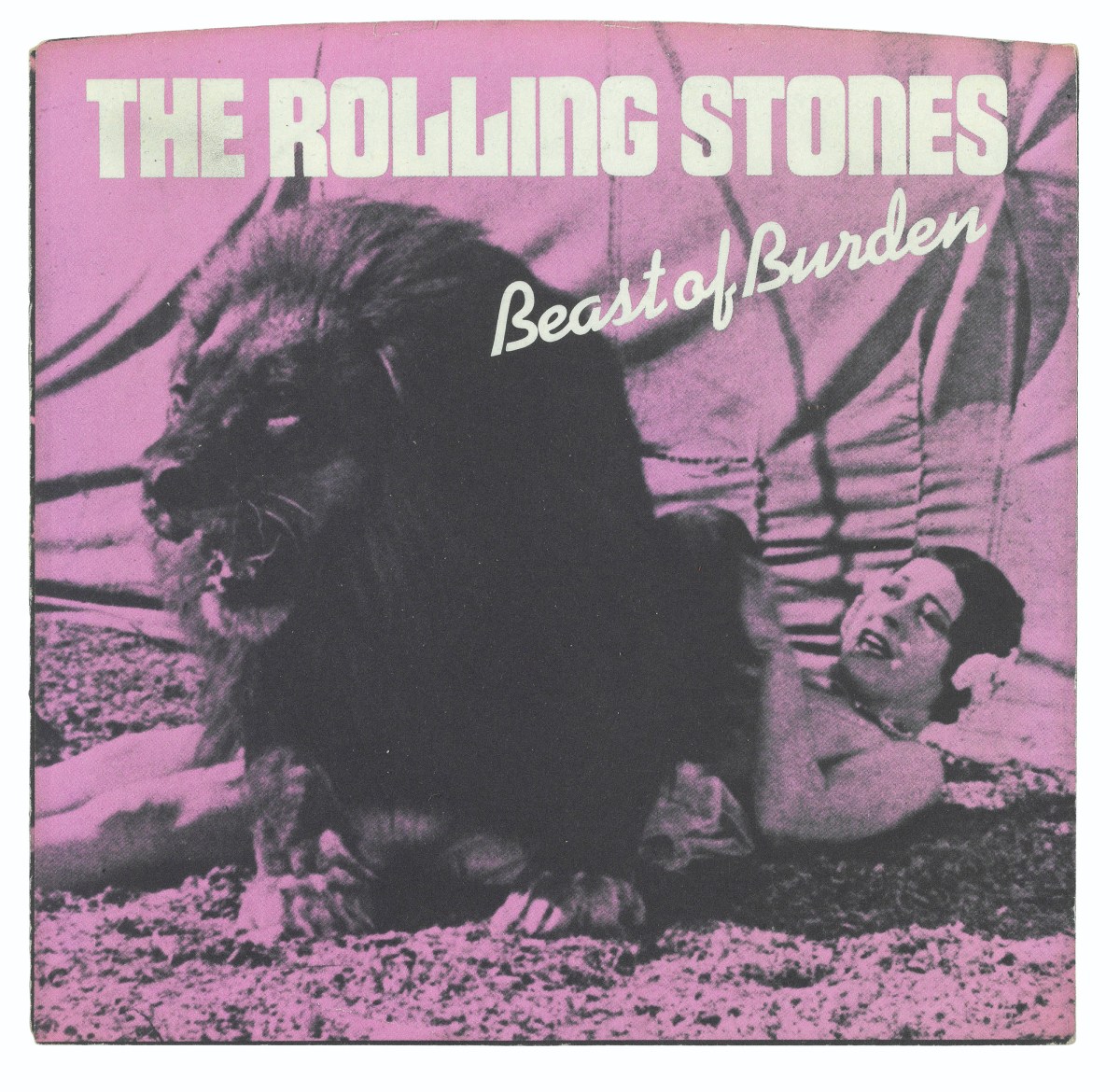
Rolling Stones – Beast Of Burden

This one was always a favorite of mine of the Stones. Keith Richards wrote this, but a lot of the lyrics were improvised in the studio. While the band played, Jagger came in with different lines to fit the music.

This song is a good example of the Rolling Stones tapestry of guitars. Keith and Ron Wood weave their guitars in and out until the two guitars are almost indistinguishable from each other.

The song peaked at #8 in the Billboard 100 and #9 in Canada.

The song was on Some Girls released in 1978. It was perhaps their last great album although I did like Tattoo You. Some Girls peaked at #1 in the Billboard Album Charts and #1 in Canada, and #2 in the UK.

Keith Richards: “Those who say it’s about one woman in particular, they’ve got it all wrong. We were trying to write for a slightly broader audience than just Anita Pallenberg or Marianne Faithfull. Although that’s not to say they didn’t have some influence in there somewhere. I mean, what’s close by is close by! I’ve always felt it’s one of my best soul songs. It was another strict collaboration between Mick and me. I think I had the first verse—‘I’ll never be your beast of burden’—along with the hook, and we were still working very much in our traditional way: Here’s the idea, here’s the song, now run away and fill it in! Some of the theories surrounding it are very intriguing, but they’re about as divorced from reality as can be. I find it quite amusing that there are people in the world who spend a lot of their time trying to decode something that is, at the end of the day, completely undecodable. I mean, even I’ve forgotten the code!”

From Songfacts

Sometimes misunderstood as a putdown, this is a rare Stones song that treats women as equals. Jagger sings that he “Don’t need no beast of burden.”

This isn’t about a specific woman. Most women in Stones’ songs are composites of many.

A live version from their 1981 US tour was used as the B-side of their “Going To A Go-Go” single.

A beast of burden is an animal that labors for the benefit of man, like an ox or a pack mule.

This song could be allegorical – it was written by Keith as a kind of homage to Mick for having to carry the band while Keith was strung out on heroin: “All your sickness I can suck it up, throw it all at me, I can shrug it off.” 

The Chinese ministry of culture ordered The Stones not to play this when they performed there in 2003. It was going to be the first time The Stones played in China, but they canceled because of a respiratory disease that was spreading through the country.

Whilst Richards spent much of the ’70s insulating himself with drugs, former London School of Economics student Jagger was running the band. However, by the time of Some Girls, Richards wanted to share the workload. Mojo magazine January 2012 asked Richards how much this song was about his relationship with Jagger? He replied; “Mick wrote a lot of it but I laid the general idea on him. At the time Mick was getting used to running the band. Charlie was just the drummer, I was just the other guitar player. I was trying to say, ‘OK I’m back, so let’s share a bit more of the power, share the weight, brother.”

Beast Of Burden

I’ll never be your beast of burden
My back is broad but it’s a hurting
All I want for you to make love to me
I’ll never be your beast of burden
I’ve walked for miles my feet are hurting
All I want for you to make love to me

Am I hard enough?
Am I rough enough?
Am I rich enough?
I’m not too blind to see

I’ll never be your beast of burden
So let’s go home and draw the curtains
Music on the radio
Come on baby make sweet love to me

Am I hard enough?
Am I rough enough?
Am I rich enough?
I’m not too blind to see

Oh little sister
Pretty, pretty, pretty, pretty, pretty girls
Uh you’re a pretty, pretty, pretty, pretty, pretty, pretty girl
Pretty, pretty, such a pretty, pretty, pretty girl
Come on baby please, please, please

I’ll tell ya
You can put me out
On the street
Put me out
With no shoes on my feet
But, put me out, put me out
Put me out of misery, yeah

All your sickness I can suck it up
Throw it all at me
I can shrug it off
There’s one thing baby
I don’t understand
You keep on telling me
I ain’t your kind of man

Ain’t I rough enough, ooh baby
Ain’t I tough enough
Ain’t I rich enough, in love enough
Ooh, ooh please

I’ll never be your beast of burden
Never, never, never, never, never, never, never be

I’ll never be your beast of burden
I’ve walked for miles, my feet are hurting
All I want is you to make love to me
Yeah

I don’t need the beast of burden
I need no fussing
I need no nursing
Never, never, never, never, never, never, never be