Imagine a concert in 1975 with The Beatles, Bob Dylan, the Allman Brothers, Linda Ronstadt, The Rolling Stones, The Who, and more. Well, it happened! Sorta. Rod Serling did all of the radio promos. It would be one of his last projects…he would pass away before it aired.
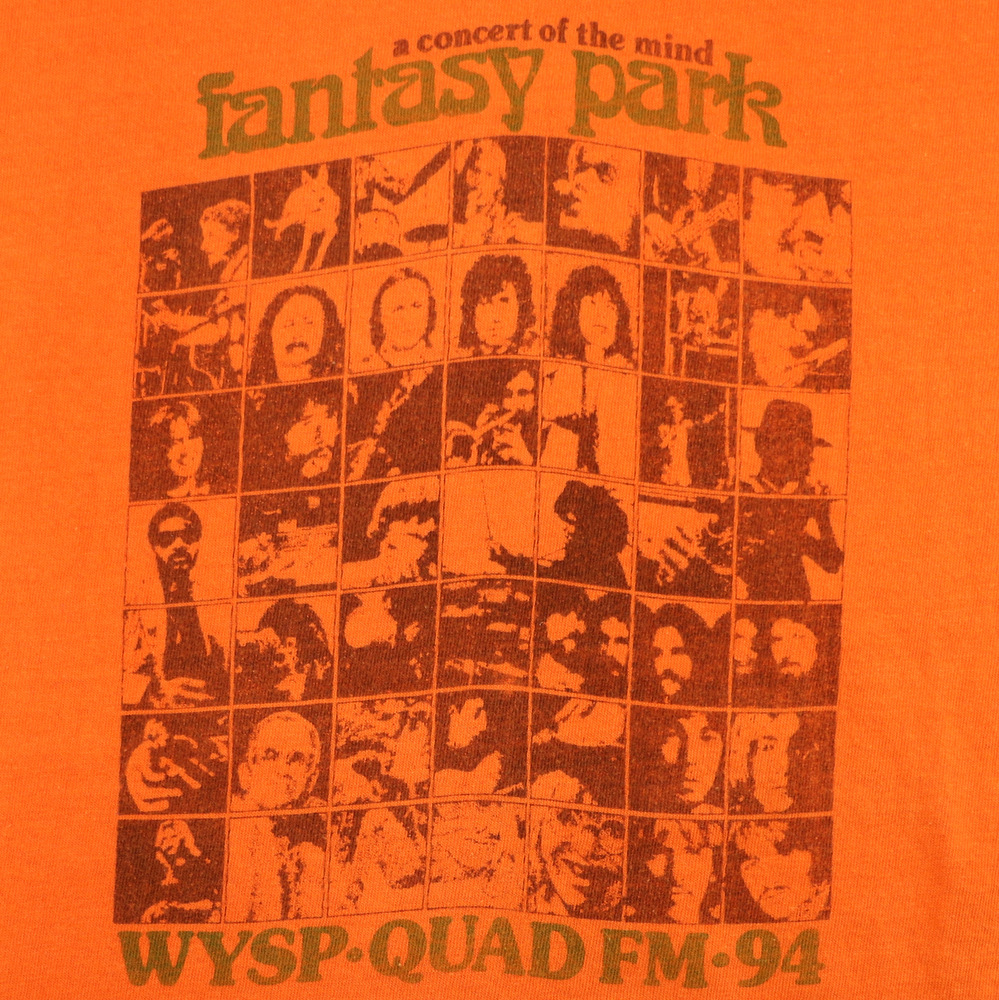
It was a 48-hour-long rock concert (Fantasy Park) that was aired by nearly 200 radio stations over Labor Day weekend in 1975. The program, produced by KNUS in Dallas, featured performances by dozens of rock stars of the day and even reunited The Beatles. It was also completely imaginary, a theatre-of-the-mind for the 70s.
The “concert” consisted of live and studio recordings by the artists with live effects added to make it sound legit.
The show had college students hitchhiking all over America hoping to get to Fantasy Park. In New Orleans when the concert aired, the IRS came knocking on the doors of WNOE trying to attach the gate receipts to make sure the Feds got their cut! Callers were asking where they could get tickets to this amazing show.
The show was so popular in Minnesota that they played it again in its entirety the next year…now that people knew it wasn’t real and weren’t looking for tickets. The greatest concert that never was. Fantasy Park had their own emcee and special reporters covering the weekend event giving you the play-by-play details along with some behind-the-scenes updates.
The concert would always be halted due to rain on a Sunday morning to allow the locals to get in their regular (usually religious) programming. The whole event ended promptly at 6 pm on Sunday.
Now people look for the full 48-hour tapes of the show. They are a hot collector’s item. Rod Serling passed away on June 28, 1975.
Bands at Fantasy Park
Chicago Elton John Led Zeppelin Joe Walsh Cream Shawn Phillips Pink Floyd Carly Simon James Taylor (& Carol King) Poco Alvin Lee Eagles Linda Rondstadt Dave Mason Steve Miller John Denver Beach Boys War Grand Funk Yes Deep Purple Rolling Stones Cat Stevens The Who Rolling Stones Moody Blues Marshall Tucker Band Allman Brothers Band Seals & Crofts America Joni Mitchell Doobie Brothers Loggins and Messina Crosby/Stills/Nash/Young Bob Dylan Beatles
Of all the U2 songs this one is probably on the top of my list. The drum pattern sounds like they are marching off to battle. It’s raw and you can hear the conviction in what Bono is singing. The Edge’s guitar is crunchy and perfect.
The drum-beat was composed by Larry Mullen Jr., which was recorded in a staircase of their Dublin recording studio because producer Steve Lillywhite was trying to get a full sound with natural reverb.
“Bloody Sunday” was a term given to an incident, which took place on 30th January 1972 in Derry, Northern Ireland where British Soldiers shot 28 unarmed civilians who were peacefully protesting against Operation Demetrius. Thirteen were killed outright, while another man lost his life four months later due to injuries. It was reported that many of the victims who were fleeing the scene were shot at point-blank range.
The first person to have addressed these events musically was John Lennon who composed “Sunday Bloody Sunday” and released it on his third Solo album “Sometime In New York City”. His version of the song directly expresses his anger towards the massacre
The song peaked at #7 in the US Billboard Top Tracks Chart.
From Songfacts
There are two Bloody Sundays in Irish history. The first was in 1920 when British troops fired into the crowd at a football match in Dublin in retaliation for the killing of British undercover agents. The second was on January 30, 1972, when British paratroopers killed 13 Irish citizens at a civil rights protest in Derry, Northern Ireland. The song is more about the second Bloody Sunday.
The lyrics are a nonpartisan condemnation of the historic bloodshed in Ireland – politics is not something you want to discuss in Ireland. Bono’s lyrics in the song are more about interpersonal struggles than about the actual Bloody Sunday events.
Bono used to introduce this at concerts by saying: “This is not a rebel song.”
U2 has played several times at Croke Park, the site of the 1920 Bloody Sunday in Dublin. They first performed there in 1985 on the Unforgettable Fire tour.
Bono started writing this with political lyrics condemning the Irish Republican Army (the IRA), a militant group dedicated to getting British troops out of Northern Ireland. He changed them to point out the atrocities of war without taking sides.
While performing this, Bono would wave a white flag as a call for peace.
Bono was trying to contrast the 1972 Bloody Sunday massacre with Easter Sunday, a peaceful day Protestants and Catholics both celebrate.
The music video for this song was taken from a live performance that’s part of their Live at Red Rocks: Under a Blood Red Sky concert film. The concert took place June 5, 1983 at Red Rocks Amphitheatre in Colorado. Directed by Gavin Taylor, it captures the live energy of the band as they fight through the wind and rain to deliver a high-energy performance. At this time, U2 liked their videos shot outdoors in a natural setting.
Larry Mullen’s drums were recorded in a staircase of their Dublin recording studio. Producer Steve Lillywhite was trying to get a full sound with a natural echo.
Steve Wickham, who went on to join The Waterboys, played the electric fiddle on this track.
This took on new meaning as the conflict in Northern Ireland continued through the ’90s.
U2 recorded this in Denver for their Rattle And Hum movie on November 8, 1987. It was the same day as the Enniskillen massacre, where 13 people in Northern Ireland were killed by a bomb detonated by the Irish Republican Army (the IRA). Angered by these events, U2 gave a very emotional performance.
The version on U2’s live album Under A Blood Red Sky was recorded at a show in Sankt Goarshausen, Germany on August 20, 1983.
In 2003, The Edge inducted The Clash into the Rock and Roll Hall of Fame. In his speech, he said, “There is no doubt in my mind that “Sunday Bloody Sunday” wouldn’t – and couldn’t – have been written if not for The Clash.”
A live version of this song plays during the end credits of the 2002 movie Bloody Sunday, which is a documentary-style drama recreating the events of January 30,1972 in Derry, Ireland. It stars James Nesbitt (you may remember him as “Pig Finn” from Waking Ned Devine) as a local Member of Parliament who is involved with the Civil Rights Movement.
Sunday Bloody Sunday
Yeah Hmm hmm
I can’t believe the news today Oh, I can’t close my eyes And make it go away How long How long must we sing this song? How long? How long
’cause tonight we can be as one Tonight
Broken bottles under children’s feet Bodies strewn across the dead end street But I won’t heed the battle call It puts my back up Puts my back up against the wall
And the battle’s just begun There’s many lost, but tell me who has won? The trench is dug within our hearts And mothers, children, brothers, sisters torn apart
Sunday, bloody Sunday Sunday, bloody Sunday
How long How long must we sing this song? How long? How long
’cause tonight we can be as one Tonight tonight
Sunday, bloody Sunday Sunday, bloody Sunday
(Yeah, let’s go)
Wipe the tears from your eyes Wipe your tears away Oh, wipe your tears away I wipe your tears away (Sunday, bloody Sunday) I wipe your blood shot eyes (Sunday, bloody Sunday)




 PowerPop... An Eclectic Collection of Pop Culture