It wasn’t the highest-charting song (See Me, Feel Me peaked at #12) but probably the most well-known song off their concept album Tommy.
It was the last song written for Tommy. Townshend wrote it when he found out influential UK rock critic Nik Cohn was coming to review the project. Townshend knew Cohn was a pinball fanatic, so he put this together to ensure a good review. Cohn gave it a great review, and pinball became the main theme of the rock opera.
After writing this song for Nik Cohn, Townshend almost didn’t even mention it to the band because he hated it so much. They told him to play it and told him he had written a hit. Meanwhile, he thought it was a mindless, badly written song.
The song peaked at #19 in the Billboard 100, #4 in the UK, #6 in Canada, and #8 in New Zealand.
From Songfacts
This is part of Tommy, the first “rock opera.” Tommy is about a young man who is deaf, dumb, and blind, but becomes a pinball champion and gains hordes of adoring fans. It was made into a play and continues to run as an off-Broadway production.
Tommy was made into a movie in 1975 starring Jack Nicholson, Ann Margaret, Tina Turner, and Roger Daltrey (who played Tommy). Elton John made an appearance as The Pinball Wizard and performed this song. His version hit UK #7.
Pete Townshend wrote this. It existed mostly in his head while they were recording it, and the other members of The Who had no idea how most of the story would end until they finished it. Townshend was not credited as the only songwriter on the project – John Entwistle wrote “Cousin Kevin” and “Fiddle About,” and Keith Moon got credit for “Tommy’s Holiday Camp.”
The character Tommy played pinball by feeling the vibrations of the machine. Townshend liked how that related to listeners picking up the vibrations of the music to feel the story.
The single version was sped up to make it more radio-friendly.
This was the most famous and enduring song from the Tommy project. Along with “See Me, Feel Me,” it is one of 2 songs from the album that The Who played throughout their career.
The Who performed this at Woodstock in 1969. The song was still fairly new, so many in the crowd did not recognize it. The Who were given the early morning slot, so they ended up playing this as the sun came up.
The Who performed the entire album from start to finish on their subsequent tour. Two of the dates were in the Metropolitan Opera House in New York City.
The famous guitar riff was sampled by The Shocking Blue on their 1969 hit “Venus,” which was covered by Bananarama in 1986.
The album got The Who out of a financial mess. After a legal battle with their manager, Shel Talmy, and some bad business deals in England, they were facing bankruptcy if it didn’t sell.
According to the book The Duh Awards by Bob Fenster, Rod Stewart asked Elton John if he should accept an offer to sing in Tommy. Elton told him no way, “Don’t touch it with a barge pole.” A year later, The Who asked Elton John to sing the same song. Elton grabbed his barge pole and took the offer. “I don’t think Rod’s quite forgiven me for that,” he commented years later.
The Dutch group The Shocking Blue used the guitar riff from this song for their 1969 hit “Venus.”
Townshend played a 1968 Gibson SG Special guitar on this song.
This features in a commercial for the Toyota Supra GR that debuted during the 2019 Super Bowl between the Rams and Patriots. In the spot, a driver navigates a life-size pinball game in the vehicle.
Pinball Wizard
Ever since I was a young boy I’ve played the silver ball From Soho down to Brighton I must have played them all But I ain’t seen nothing like him In any amusement hall
That deaf, dumb and blind kid Sure plays a mean pinball!
He stands like a statue Becomes part of the machine Feeling all the bumpers Always playing clean Plays by intuition The digit counters fall
That deaf, dumb and blind kid Sure plays a mean pinball!
He’s a pinball wizard There has to be a twist A pinball wizard’s got such a supple wrist
‘How do you think he does it? I don’t know What makes him so good?’
Ain’t got no distractions Can’t hear no buzzers and bells Don’t see no lights a-flashin’ Plays by sense of smell Always gets the replay Never seen him fall
That deaf, dumb and blind kid Sure plays a mean pinball!
I thought I was The Bally table king But I just handed my pinball crown to him
Even on my favorite table He can beat my best His disciples lead him in And he just does the rest He’s got crazy flipper fingers Never seen him fall
That deaf, dumb and blind kid Sure plays a mean pinball!
A band called The Pudding heard this song from a Pete Townshend demo that was circulated. The Pudding recorded the first version (see video below), which came and went without much fanfare in 1967…they could have picked a little better name. Their version was a little too smooth for me.
I’ve always liked this song with it’s Bo Diddley rhythm.
The Who’s version came out in the next year in 1968 and peaked at #25 in the Billboard 100, #26 in the UK, #6 in Canada, and #13 in New Zealand.
The song was included on the American album Magic Bus: The Who on Tour although no tracks were live…they were all studio tracks. In the UK it was just released as a single. It would later be included on the great compilation album Meaty Beaty Big and Bouncy in 1971.
Pete Townsend: “When I wrote ‘Magic Bus,’ LSD wasn’t even invented as far as I knew. Drug songs and veiled references to drugs were not part of The Who image. If you were in The Who and took drugs, you said, ‘I take drugs,’ and waited for the fuzz to come. We said it but they never came. We very soon got bored with drugs. No publicity value. Buses, however! Just take another look at Decca’s answer to an overdue Tommy; The Who, Magic Bus, On Tour. Great title, swinging presentation. Also a swindle as far as insinuating that the record was live. Bastards. This record is what that record should have been. It’s The Who at their early best. Merely nippers with big noses and small genitals trying to make the front page of The Daily News.”
Magic Bus
Every day I get in the queue (too much, Magic Bus) To get on the bus that takes me to you (too much, Magic Bus) I’m so nervous, I just sit and smile (too much, Magic Bus) You house is only another mile (too much, Magic Bus)
Thank you, driver, for getting me here (too much, Magic Bus) You’ll be an inspector, have no fear (too much, Magic Bus) I don’t want to cause no fuss (too much, Magic Bus) But can I buy your Magic Bus? (too much, Magic Bus)
(No)
I don’t care how much I pay (too much, Magic Bus) I want to drive my bus to my baby each day (too much, Magic Bus)
I want it, I want it, I want it, I want it (you can’t have it) Thruppence and sixpence every day Just to drive to my baby Thruppence and sixpence each day ‘Cause I drive my baby every way
Magic bus, Magic Bus, Magic Bus Magic bus, Magic Bus, Magic Bus Magic bus, Magic Bus, Magic Bus Magic bus, Magic Bus, Magic Bus
I said, now I’ve got my Magic Bus (too much, Magic Bus) I said, now I’ve got my Magic Bus (too much, Magic Bus) I drive my baby every way (too much, Magic Bus) Each time I go a different way (too much, Magic Bus)
I want it, I want it, I want it, I want it I want it, I want it, I want it, I want it
Every day you’ll see the dust (too much, Magic Bus) As I drive my baby in my Magic Bus (too much, Magic Bus)
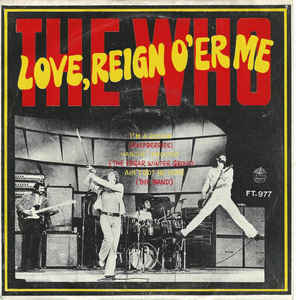
This is an epic song That was on the Who’s concept album Quadrophenia. The album peaked at #2 in 1973 in the Billboard Album Charts.
This may be Roger Daltrey’s best vocal performance in the Who’s long career. Pete has said he wanted a quiet song but when Roger sang it…it was more of a scream…Pete liked what Roger did and thought it fit the story better.
“Love, Reign o’er Me,” date back to 1972. It was originally intended to be part of the unreleased autobiographical album, Rock Is Dead—Long Live Rock! This later evolved into Quadrophenia.
The song peaked at #76 in the Billboard 100 and #31 in Canada in 1973.
From Songfacts
This is the last track on The Who’s rock opera Quadrophenia. The main character Jimmy suffers from a four-way split personality, with each personality reflecting a member of The Who. This is Pete Townshend’s theme. The personality is described as “A beggar, a hypocrite, love reign over me.”
At the end of the story, Jimmy steals a boat and takes it to a rock out on the sea. What happens out on the rock is described in this song.
Townshend was a follower of the spiritualist Meher Baba. Meher Baba’s teachings were incorporated into some of Townshend’s songs, including this one.
Townshend (from the Quadrophenia liner notes): “(Love, Reign O’er Me) refers to Meher Baba’s one-time comment that rain was a blessing from God; that thunder was God’s Voice. It’s another plea to drown, only this time in the rain. Jimmy goes through a suicide crisis. He surrenders to the inevitable, and you know, you know, when it’s over and he goes back to town he’ll be going through the same s–t, being in the same terrible family situation and so on, but he’s moved up a level. He’s weak still, but there’s a strength in that weakness. He’s in danger of maturing.”
In 2007, Adam Sandler starred in a dramatic film titled after this song, named Reign Over Me. Sandler played a widowed dentist who can only relate to old rock music since losing his family in the September 11th terrorist attacks. The soundtrack of the film featured a cover version of this song by the band Pearl Jam. Pearl Jam’s Eddie Vedder is a huge Who fan, and has covered many Who songs in the past.
Love Reign O’er Me
Only love Can make it rain The way the beach is kissed by the sea. Only love Can make it rain Like the sweat of lovers’ Laying in the fields.
Only love Can bring the rain That makes you yearn to the sky. Only love Can bring the rain That falls like tears from on high.
Love reign o’er me. On the dry and dusty road The nights we spend apart alone I need to get back home to cool cool rain. I can’t sleep and I lay and I think The nights are hot and black as ink Oh God, I need a drink of cool cool rain.
This week I’ll feature songs that have been banned from the radio for one reason or another for a time. I will just feature pre-9-11 songs because after 2001 practically every song was banned for a little while.
My Generation featured the chorus “Hope I Die Before I Get Old” but that was ok…It was the vocals that resembled stuttering; afraid to offend people with actual stuttering problems, the BBC prohibited the song from receiving airplay. Later, when the song proved to be a huge hit, they allowed it.
The best part of this song for me was John Entwistle’s bass solo. You just didn’t hear many bass solos at that time. John Entwistle “I bought this Danelectro bass and it had these tiny, thin wire-wound strings on. They were so thin, they sounded just like a piano, an unbelievably clear sound. The only thing was that you couldn’t buy these strings. When we recorded ‘My Generation,’ I ended up with three of these Danelectros just for the strings. The last one I had, the string busted before we actually got into the studio to re-record it, so I did it on a Fender Jazz in the end with tape-wound La Bella strings.”
Pete wrote this song for British mods at the time who didn’t think older people understood what was going on. The song peaked at #74 in the Billboard 100, #2 in the UK, and #3 in Canada in 1966.
Pete Townshend was asked if the line still resonated with him. “I think it does,” “The line actually came from a time when I was living in a really wealthy district of London, just by accident. I didn’t really understand quite where I was living at the time. And I was treated very strangely on the street, in an imperious way by a lot of people, and it was that that I didn’t like. I didn’t like being confronted with money and the class system and power. I didn’t like being in a corner shop in Belgravia and some woman in a fur coat pushing me out of the way because she was richer. And I didn’t know how to deal with that. I could’ve, I suppose, insisted on my rights and not written the song. But I was a tucked-up little kid and so I wrote the song.”
From Songfacts
Roger Daltrey sang the lead vocals with a stutter, which was very unusual. After recording two takes of the song normally, The Who’s manager, Kit Lambert, suggested to Daltrey that he stutter to sound like a British kid on speed. Daltrey recalled to Uncut magazine October 2001: “I have got a stutter. I control it much better now but not in those days. When we were in the studio doing ‘My Generation’, Kit Lambert came up to me and said ‘STUTTER!’ I said ‘What?’ He said ‘Stutter the words – it makes it sound like you’re pilled’ And I said, ‘Oh… like I am!’ And that’s how it happened. It was always in there, it was always suggested with the ‘f-f-fade’ but the rest of it was improvised.”
Pete Townshend wrote this on a train ride from London to Southampton on May 19, 1965 – his 20th birthday. In a 1987 Rolling Stone magazine interview, Townshend explained: “‘My Generation’ was very much about trying to find a place in society. I was very, very lost. The band was young then. It was believed that its career would be incredibly brief.”
Back in 1967, Pete Townshend called this song, “The only really successful social comment I’ve ever made.” Talking about the meaning, he explained it as “some pilled-up mod dancing around, trying to explain to you why he’s such a groovy guy, but he can’t because he’s so stoned he can hardly talk.”
This contains the famous line, “I hope I die before I get old.” The Who drummer Keith Moon did, dying of a drug overdose in 1978 at age 32. The rest of the band found themselves still playing the song 50 years later, giving that line more than a hint of irony.
A Singapore magazine called BigO is named for the famous line in this song – it’s an acronym for “Before I Get Old.”
This song went through various stages as they tried to perfect it. It began as a slow song with a blues feel, and at one point had hand claps and multiple key changes. The final product was at a much faster tempo than the song was conceived; it was Kit Lambert’s idea to speed it up.
This is the highest charting Who song in the UK, but it never cracked the Top 40 in America, where they were less known. In the UK, the album was also called My Generation, but in America it was titled The Who Sing My Generation.
Entwistle was the least visible member of the band, and his bass solos on this song threw off directors when The Who would perform the song on TV shows. When it got to his part, the cameras would often go to Pete Townshend, and his fingers wouldn’t be moving. Entwistle played the solos using a pick, since their manager Kit Lambert didn’t think fingers recorded well. Most of Entwistle’s next recordings were done with fingers.
The BBC refused to play this at first because they did not want to offend people with stutters. When it became a huge hit, they played it.
In 1965, Roger Daltrey stood by this song’s lyric and claimed he would kill himself before reaching 30 because he didn’t want to get old. When he did get older, he answered the inevitable questions about the “hope I die before I get old” line by explaining that it is about an attitude, not a physical age.
On September 17, 1967, The Who performed this song on The Smothers Brothers Comedy Hour. Keith Moon set his drums to explode after the performance, but the technical crew had already done so. The resulting explosion burned Pete Townshend’s hair and permanently damaged his hearing.
Also of note during this performance was Moon’s total disregard for the illusion of live performance. The band was playing along to a recorded track (common practice on the show), and while his bandmates synched their movements to the music, Moon made no effort to keep time, even knocking his cymbal over at one point.
Shel Talmy, who produced this track, was fired the next year. Talmy filed a lawsuit and won extensive royalties from future albums.
The ending of this song is electric mayhem, with Keith Moon pounding anything he can find on his drum kit and Townshend flipping his pickups on an off, something he also did on the album opener “Out in the Street.” Townshend and Daltrey go back and forth on the vocals, intentionally stomping on each other to add to the chaos.
This was covered by Iron Maiden, who was usually the Who’s polar opposite both musically and lyrically. One connection they share is the BBC-TV series Top of the Pops. Performances on the show were customarily lip-synched, but The Who performed live on the show in 1972. In 1980, Iron Maiden also performed live, and was the first band to do so since The Who. Maiden put their version of “My Generation” on the B-side to the single for “Lord of the Flies.”
The Who played this during their set at Woodstock, which didn’t begin until 5:00 a.m. on the second day. The group turned in a solid performance, but they weren’t pleased with the scheduling and weren’t feeling the peace and love – at one point an activist named Abbie Hoffman came on stage uninvited and was forcibly ejected by Pete Townshend.
Green Day recorded this for their 1992 album Kerplunk!.
When the teen pop singer Hilary Duff covered this as a B-side for her 2005 single “Someone’s Watching Over Me,” she made the curious decision to rewrite some of the lyrics. “I hope I don’t die before I get old,” doesn’t really have the same rock ‘n’ roll attitude as Townshend’s original words, and her rendition caused some consternation among Who fans.
This song fits nicely into the “primal rock” genre, which covers tunes that are raucous, rebellious, unusual, and also celebratory. Roger Reale, who was in one of these primal rock bands with Mick Ronson, explains the impact of the song:
“‘My Generation’ had no lead guitar, but a lead part played on the bass. It also had a bass breakdown, and unless you listened to a lot of jazz, there were no bass breakdowns in pop music. I remember playing the end of that track over and over and over again, because you could hear the feedback of the guitar, which was so exciting to listen to. In those days, you weren’t supposed to have an outro that was pure noise.”
My Generation
People try to put us d-down (talkin’ ’bout my generation) Just because we get around (talkin’ ’bout my generation) Things they do look awful c-c-cold (talkin’ ’bout my generation) I hope I die before I get old (talkin’ ’bout my generation)
This is my generation This is my generation, baby
Why don’t you all f-fade away (talkin’ ’bout my generation) Don’t try to dig what we all s-s-s-say (talkin’ ’bout my generation) I’m not trying to ’cause a big s-s-sensation (talkin’ ’bout my generation) I’m just talkin’ ’bout my g-g-g-generation (talkin’ ’bout my generation)
My generation This is my generation, baby
Why don’t you all f-fade away (talkin’ ’bout my generation) And don’t try to d-dig what we all s-s-say (talkin’ ’bout my generation) I’m not trying to ’cause a b-big s-s-sensation (talkin’ ’bout my generation) I’m just talkin’ ’bout my g-g-generation (talkin’ ’bout my generation)
This is my generation This is my generation, baby My my my generation
People try to put us d-down (talkin’ ’bout my generation) Just because we g-g-get around (talkin’ ’bout my generation) Things they do look awful c-c-cold (talkin’ ’bout my generation) Yeah, I hope I die before I get old (talkin’ ’bout my generation)
This is my generation This is my generation, baby My my my generation
(Talkin’ ’bout my generation) (Talkin’ ’bout my generation) (Talkin’ ’bout my generation) (Talkin’ ’bout my generation) (Talkin’ ’bout my generation) this is my generation (Talkin’ ’bout my generation) this is my generation (Talkin’ ’bout my generation) this is my generation (Talkin’ ’bout my generation) this is my generation (Talkin’ ’bout my generation) this is my generation (Talkin’ ’bout my generation) this is my generation (Talkin’ ’bout my generation) this is my generation
This was Jimi Hendrix’s favorite song of The Who…which didn’t amuse Pete.
This was the first Who song written by bass player, John Entwistle. Pete Townshend asked him to write a song for their second album…A Quick One. A common story about the song is that “Boris the Spider” was written after John had been out drinking with Bill Wyman. They were making up funny names for animals when Entwistle came up with Boris the Spider.
The song became a huge concert favorite because it was so fun and offset many of their more serious songs. Also, the popularity of the song eventually wore off on Entwistle himself, and he began ritualistically wearing a spider medallion on stage.
Pete Townshend had this to say about the song: Politics or my own shaky vanity might be the reason, but ‘Boris The Spider’ was never released as a single and should have been a hit. It was the most-requested song we ever played on stage, and if this really means anything to you guitar players, it was Hendrix’s favorite Who song. Which rubbed me up well the wrong way, I can tell you. John introduced us to ‘Boris’ in much the same way as I introduced us to our ‘Generation;’ through a tape recorder. We assembled in John’s three by ten-foot bedroom and listened incredulously as the strange and haunting chords emerged. Laced with words about the slightly gruesome death of a spider, the song had enough charm to send me back to my pad writing hits furiously.”
From Songfacts
Entwistle was afraid of spiders as a kid. He wrote this about seeing a spider crawling from the ceiling and squishing it.
Entwistle wrote this as a joke, but it became a concert favorite. It is a fun song that offset many of the more serious Who songs.
This was the only song from the album that they continued to play live.
In the UK, the album was called A Quick One. It was changed to Happy Jack in the US to avoid being offensive.
After he wrote this, Entwistle started wearing a spider medallion at concerts.
Boris The Spider
Look, he’s crawling up my wall Black and hairy, very small Now he’s up above my head Hanging by a little thread
Boris the spider Boris the spider
Now he’s dropped on to the floor Heading for the bedroom door Maybe he’s as scared as me Where’s he gone now, I can’t see
I’m more of a studio guy when it comes to listening to bands but there are a few live albums I really like. This is my top 10 and a few honorable mentions at the bottom. Very few artists can improve on the studio version but sometimes some manage to pull it off.
10. Led Zeppelin – How the West Was Won – After the disappointing live album The Song Remains The Same, this album released in 2003 contained Led Zeppelin live in 1972 from two shows in top form.
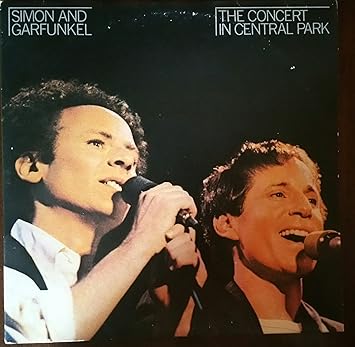
9: Simon And Garfunkel – The Concert In Central Park – This was big for me when it was released. I had by this time worn a groove out in their greatest hits. The band was great and their harmonies were as good as ever.
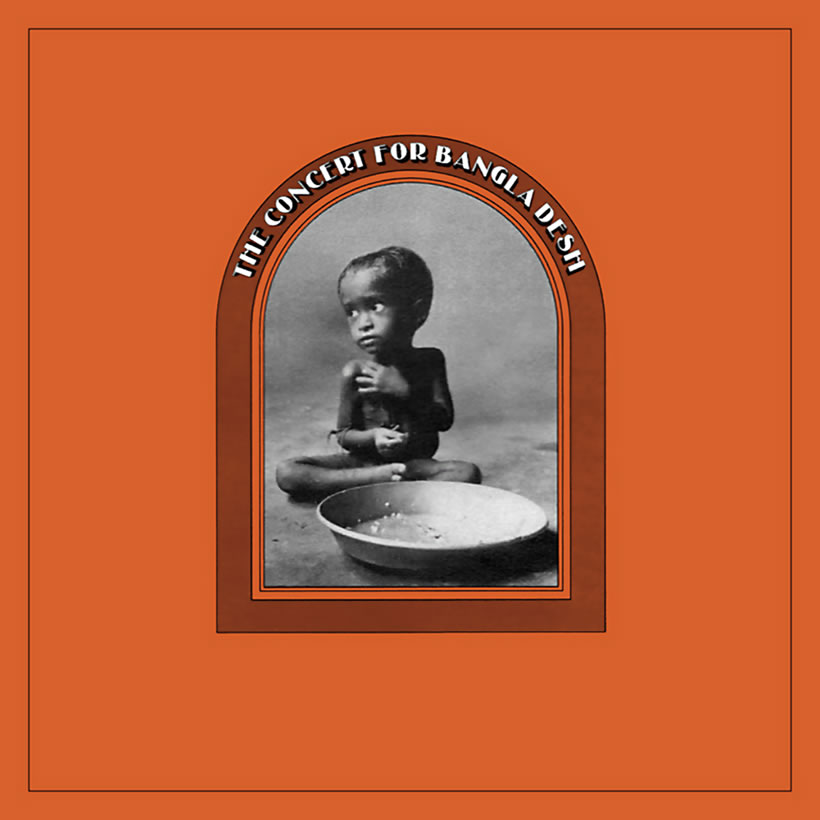
8: George Harrison – The Concert For Bangladesh – Fun to listen to George freed from the Beatles and he sounds great with Dylan, Billy Preston, Ringo, and other friends.
7: The Band: The Last Waltz – One of the best live albums ever. The Band’s last concert with Robbie with a host of talented famous friends. I still don’t get the Neil Diamond selection…nothing against Neil…he didn’t fit in with this atmosphere.
6: The Allman Brothers Band “At Fillmore East” – This album floats up and down this list depending on my mood. It was at number 2 when I first made this list a couple of weeks ago. This band was probably one of the most talented bands in the seventies. I didn’t start heavily listening to them until around 5-10 years ago. They are better live than in the studio. There was not a weak link in this 6 piece band…especially in the Duane version but later incarnations were almost as strong.
5: Bruce Springsteen & the E Street Band, ‘Live/1975-85’ – I listened to this so much in the 80s that I knew the stories Bruce would tell by heart. Later when listening to the studio version of a song I would expect the story that went with it.
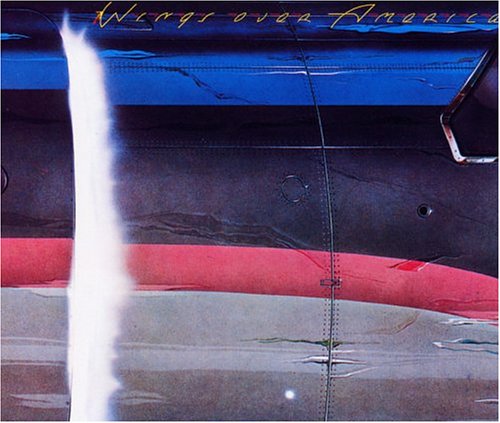
4: Paul McCartney Wings Over America – This triple album set was a live greatest hits. The songs had some edge to them thanks to Jimmy McCulloch the young prodigy guitar player. Paul even broke his silence on the Beatles and included five Beatle songs. Blackbird, I’ve Just Seen a Face, Yesterday, The Long and Winding Road, and Lady Madonna. Unlike the other 3 albums ahead of this on in the list, Paul didn’t mess with the songs too much from the original studio recordings.
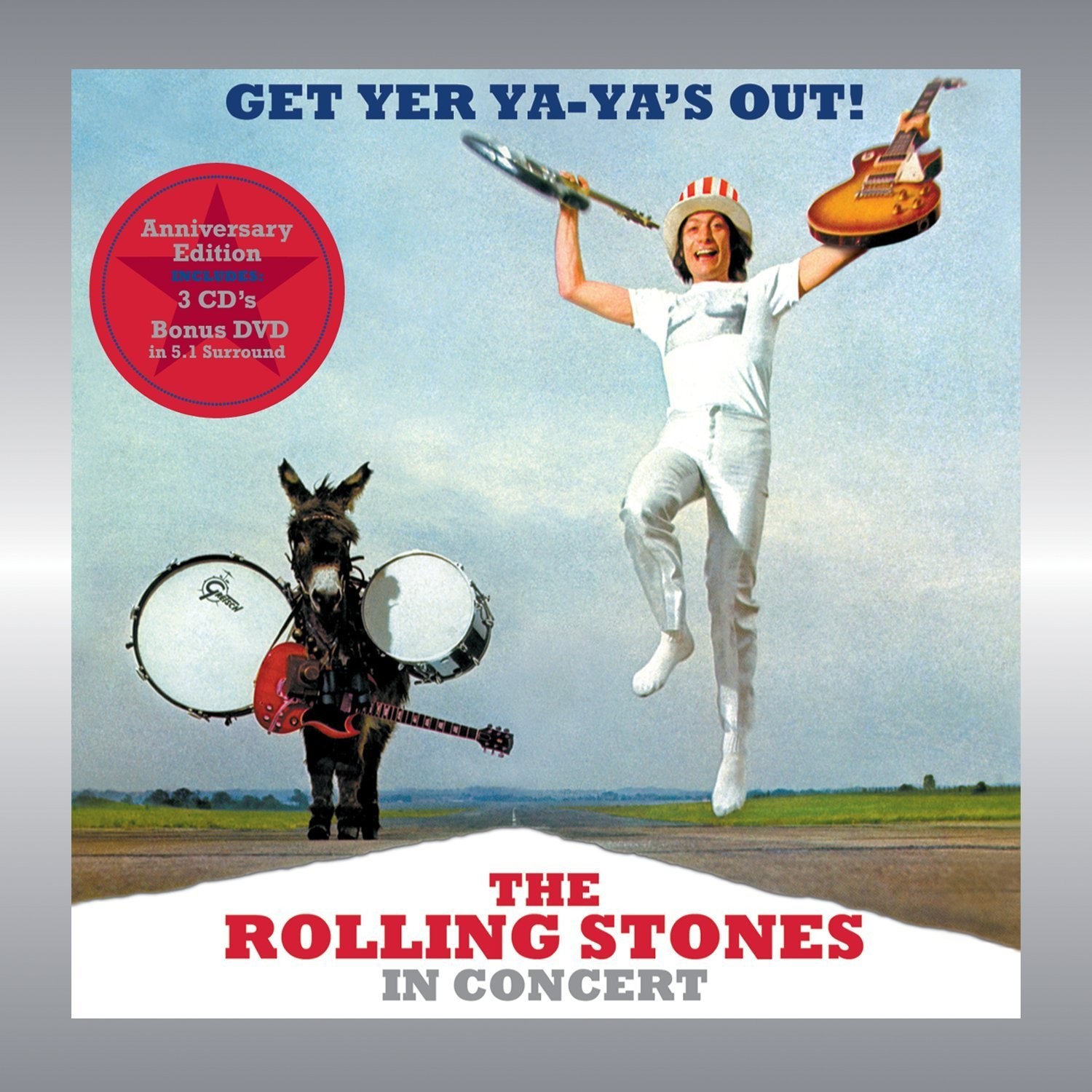
3: The Rolling Stones – ‘”Get Yer Ya-Ya’s Out!” – This tour and the 1972 tour were the Stones at their live peak.
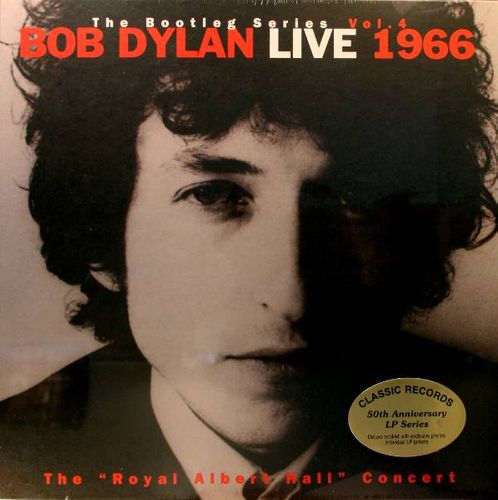
2: Bob Dylan – The Bootleg Series, Vol. 4: Bob Dylan Live 1966, The “Royal Albert Hall” Concert – I have seen Dylan 8 times but if I could pick a tour to see him on…I would go back and this would be the one. With The Band backing him up…minus Levon Helm but Mickey Jones on drums is very powerful.
1: The Who – ‘Live at Leeds’ This album highlights The Who at their best. I don’t think I’ve ever heard a rock band so tight. The power of the performance is huge. Pete Townshend told his soundman Bob Pridden to erase all other shows on this tour at the time…Bob did… much to Pete’s regret later on.
Honorable Mentions
Beatles Live At The Star-Club in Hamburg Germany – The quality of the recording is pretty bad but it’s exciting to hear the punkish Beatles before Beatlemania hit.
The sound of this song is amazing…from the drums to the guitar. It was very different than their other singles to this point.
It’s hard to believe that I Can See For Miles was The Who’s only top 10 hit in the Billboard 100. It peaked at #9 in the Billboard 100 and #10 in the UK in 1967. The song was recorded for the band’s 1967 album, The Who Sell Out.[3] It was the only song from the album to be released as a single. The album peaked at #48 in the Billboard Album Charts in 1968.
Pete Townshend considered this some of his best songwriting, calling it “a remarkable song.” He thought it would be a huge hit and was disappointed when it wasn’t.
Pete Townshend talking about this song: “I swoon when I hear the sound,” “The words, which aging senators have called ‘drug oriented,’ are about a jealous man with exceptionally good eyesight. Honest.”
The song is ranked #40 on Dave Marsh’s The 1001 Greatest Singles Ever Made
From Songfacts
Pete Townshend wrote this shortly after meeting his future wife Karen. It was a reminder that even though he was on the road, he could still keep an eye on her from miles away.
The song was inspired by the jealousy and suspicion that would well up inside him when he left to tour, but the song is written in character as a vindictive type who wants to get back at a girl. It’s a little creepy:
Well, here’s a poke at you
You’re gonna choke on it too
You’re gonna lose that smile
Because all the while
I can see for miles and miles
He’s warning her that she can’t get out of his sight.
In real life, Townshend married Karen Astley in 1968. They were together until their divorce in 2009.
Townshend’s guitar was overdubbed in the studio. They rarely played this live because it was impossible to recreate the sound with one guitar.
The Who Sell Out is a concept album that makes fun of radio commercials. Fake ads were inserted between songs on the first side of the album.
The word “Miles” is said 57 times in the song.
This was covered in a lighter, easygoing, and rather corny manner by Vegas lounge lizard Frankie Randall (who sang the lyric “There’s magic in my eyes” as “There’s magic in your eyes”, thus rather confusing the song’s meaning). It is included on the Golden Throats CD.
Townshend’s played a one-note guitar solo on this song. According to an interview he conducted with his mate Richard Barnes for the book The Story of Tommy, Townshend did this because he “couldn’t be bothered.” He later admitted that he felt very intimidated at the arrival of Hendrix on the London scene during that time and that he couldn’t ever compete in the guitar solo stakes.
Paul McCartney set out to write “Helter Skelter” shortly after reading a Pete Townshend interview, which described this track as, “The most raucous rock ‘n’ roll, the dirtiest thing they’d ever done.”
This is the theme song for the TV series CSI: Cyber, which debuted in 2015. It’s the fourth in the CSI franchise, with each series using a Who song as its theme. The song has some relevance to the show content, as the detectives use technology to investigate crimes that could be many miles away.
I Can See For Miles
I know you’ve deceived me, now here’s a surprise I know that you have ’cause there’s magic in my eyes
I can see for miles and miles and miles and miles and miles Oh yeah
If you think that I don’t know about the little tricks you’ve played And never see you when deliberately you put things in my way
Well, here’s a poke at you You’re gonna choke on it too You’re gonna lose that smile Because all the while
I can see for miles and miles I can see for miles and miles I can see for miles and miles and miles and miles and miles Oh yeah
You took advantage of my trust in you when I was so far away I saw you holding lots of other guys and now you’ve got the nerve to say
That you still want me Well, that’s as may be But you gotta stand trial Because all the while
I can see for miles and miles I can see for miles and miles I can see for miles and miles and miles and miles and miles Oh yeah
I know you’ve deceived me, now here’s a surprise I know that you have ’cause there’s magic in my eyes
I can see for miles and miles and miles and miles and miles Oh yeah
The Eiffel Tower and the Taj Mahal are mine to see on clear days You thought that I would need a crystal ball to see right through the haze
Well, here’s a poke at you You’re gonna choke on it too You’re gonna lose that smile Because all the while
I can see for miles and miles I can see for miles and miles I can see for miles and miles and miles and miles and miles And miles and miles and miles
I can see for miles and miles I can see for miles and miles I can see for miles and miles I can see for miles and miles I can see for miles and miles I can see for miles and miles
So Sad About Us could be the definition of powerpop.
This song was not a hit…in fact, it was never released as a single. The Who recorded this song in 1966, though it was originally written for the Merseys, a band that shared the Who’s manager and had a hit with a Townshend-produced version of the song that same year. It is one of the most covered songs by the Who. I remember the version by the Jam.
The song was on the album A Quick One. The album didn’t chart in America but it did peak at #4 in the UK in 1966.
So Sad About Us
La la la la la la la La la la la la la la La la la la la la la La la la la la la la
So sad about us So sad about us Sad that the news is out now Sad, suppose we can’t turn back now Sad about us
So bad about us So bad about us Bad, never meant to break up Bad, suppose we’ll never make up Bad about us
Apologies mean nothing When the damage is done But I can’t switch off my loving Like you can’t switch off the sun
La la la la la la la La la la la la la la La la la la la la la La la la la la la la
La la la la la la la la la la La la la la la la la la la la
So sad about us So sad about us Sad, never meant to break up Sad, suppose we’ll never make up Sad about us
This song was released in 1966 and it appears on The Who’s debut album My Generation. The song peaked at #41 in the UK but didn’t make it into the top 100 in the US. This song, along with My Generation, became anthems for The Who, as well as for the Mod movement in England.
Pete Townshend said this about it in 2000: When I wrote this song I was nothing but a kid, trying to work out right and wrong through all the things I did. I was kind of practicing with my life. I was kind of taking chances in a marriage with my wife. I took some stuff and I drank some booze. There was almost nothing that I didn’t try to use. And somehow I’m alright
I first heard this on Meaty Beaty Big and Bouncy a compilation album of the band’s singles… In the UK it was more of a greatest hits LP…in America, while a few were known…most never charted.
One of my favorite albums by the Who.
From Songfacts
The song was written by Pete Townshend as a tribute to the Mods, who were trendy and often rebellious British youth.
Check out Keith Moon’s drumming on this song – he used his cymbals and toms to emphasize the vocal lines, crashing down at the end of lyrical lines. This was one of his innovations with The Who.
A 1979 rockumentary concerning the Who shares the same title.
This song has been covered by both Goldfinger and Green Day.
The Offspring song The Kids Aren’t Alright is a reference to this
The Kids Are Alright
I don’t mind other guys dancing with my girl That’s fine, I know them all pretty well But I know sometimes I must get out in the light Better leave her behind with the kids, they’re alright The kids are alright
Sometimes, I feel I gotta get away Bells chime, I know I gotta get away And I know if I don’t, I’ll go out of my mind Better leave her behind with the kids, they’re alright The kids are alright
I know if I go, things would be a lot better for her I had things planned, but her folks wouldn’t let her
I don’t mind other guys dancing with my girl That’s fine, I know them all pretty well But I know sometimes I must get out in the light Better leave her behind with the kids, they’re alright The kids are alright
Sometimes, I feel I gotta get away Bells chime, I know I gotta get away And I know if I don’t, I’ll go out of my mind Better leave her behind with the kids, they’re alright The kids are alright, the kids are alright, the kids are alright
There is probably not a song on Who’s Next that hasn’t been played to death…but I dont’ hear this one as much as some of the others.
One of my favorite Keith Moon drum tracks… It’s not the most noticeable part he played but no other drummer would have played it this way. I included an isolated drum track of this song at the bottom.
Pete Townshend wrote this and sang it… it was part of his “Lifehouse” project, which was a film script featuring The Who in a future world where rock ‘n’ roll saves the masses. The Who scrapped plans for the concept double album and released most of the songs on Who’s Next…pretty much agreed their best album and one of the best in rock.
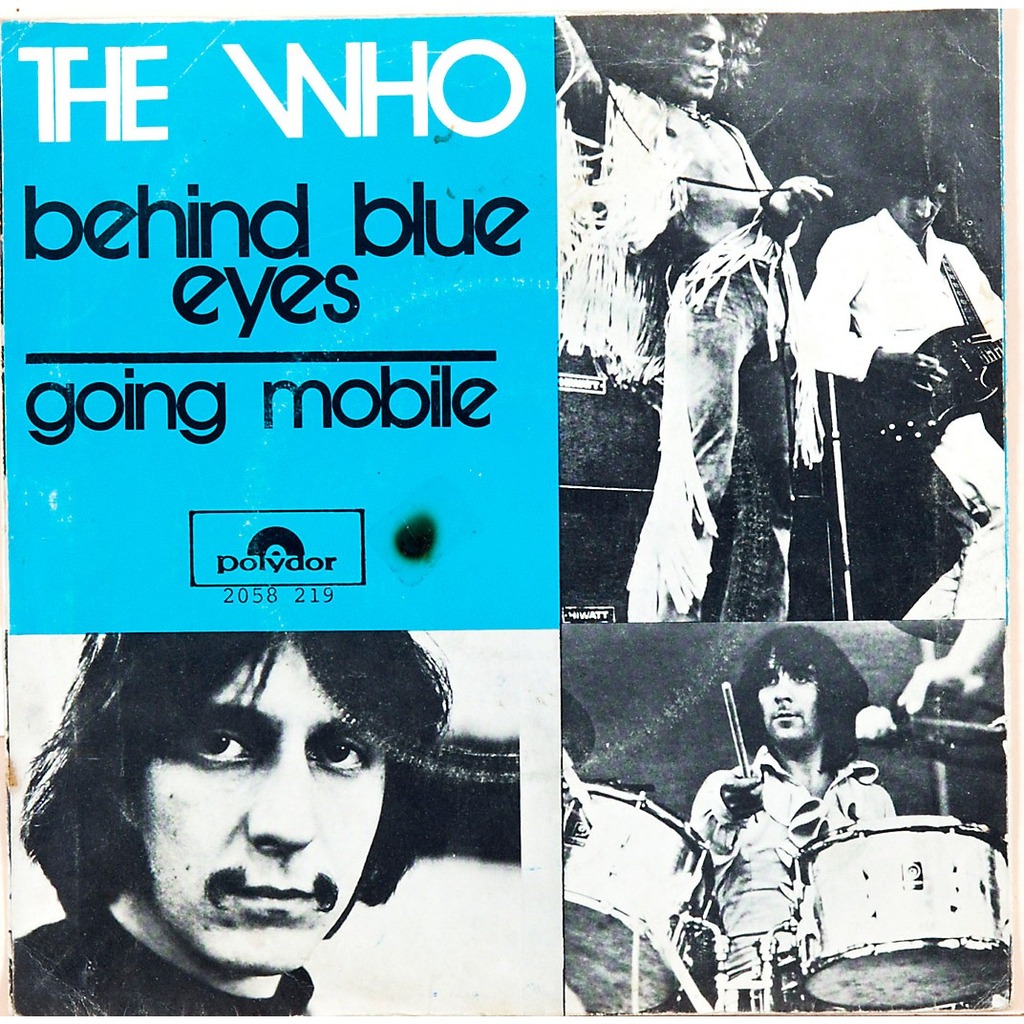
The song was the B side to Behind Blue Eyes in 1971.
From Songfacts
This is about taking a vacation by riding around in a car with no particular destination. It was something Pete Townshend liked to do.
This was much lighter and more simplified than the other songs on the album.
For the solo, Townshend ran his guitar through a device called an Envelope Follower. It was a type of synthesizer distortion that made it sound like he was playing under water.
Keith Moon’s isolated drums on Going Mobile
Going Mobile
I’m going home And when I want to go home, I’m going mobile Well I’m gonna find a home on wheels, see how it feels, Goin’ mobile Keep me moving
I can pull up by the curb, I can make it on the road, Goin’ mobile I can stop in any street And talk with people that we meet Goin’ mobile Keep me moving, mmm
Out in the woods Or in the city It’s all the same to me When I’m driving free The world’s my home When I’m mobile, ey woo, beep beep
Play the tape machine Make the toast and tea When I’m mobile Well, I can lay in bed with only highway ahead When I’m mobile Keep me moving
Keep me moving Over fifty Keep me groovin’ Just a hippie gypsy Come on move now Movin’ Keep me movin’ yeah
Keep me movin’, movin’, movin’, yeah Movin’ yeah Mobile, mobile, mobile, mobile, mobile, mobile, mobile
I don’t care about pollution I’m an air-conditioned gypsy That’s my solution Watch the police and the taxman miss me! I’m mobile! Oh yeah he he Mobile, mobile, mobile, yeah
After reading about Keith’s exploits it doesn’t surprise me this incident happened to him, what surprises me is that it didn’t happen more often.
On the 1973 tour opener at the Cow Palace in San Fransico Keith found out that Horse Tranquilizers and Brandy don’t mix with drumming. It has been said that someone slipped the tranquilizer in his drink backstage. Dougal Butler his PA said it was a Monkey Tranquilizer.
Keith was playing erratic most of the night slowing down and speeding up the tempo. The Who were coming towards the end of their set and Moon was clearly struggling. A few minutes into Won’t Get Fooled Again he ground to a halt, and left the stage. He came back and played Magic Bus and just fell over on his drums near the end of the song…he looked out of it on the video. He was soon carried off stage
Pete Townshend told the audience “We’re just gonna revive our drummer by punching him in the stomach,” “He’s out cold. I think he’s gone and eaten something he shouldn’t have eaten. It’s your foreign food…”
Pete then asked if anyone can play the drums… someone really good.
It’s hard to imagine one of the biggest bands in the world at that time asking for someone in the audience to fill in for their passed out drummer.
19-year-old Scott Halpin was there with a friend and said…“My friend was pushing me forward and saying, ‘Come on man, you can go up there and play, you can play,’” said Halpin. “He’s really the one that got me into it.”
In interviews, Halpin claimed the last thing he remembered was swallowing a shot of brandy and being introduced to the crowd by Roger Daltrey. That, and the size of Keith Moon’s kit: “It was ridiculous. The tom-toms were as big as my bass drum.” Scott did really well and Daltrey said afterward that he was really good. Halpin walked away from the kit an even bigger Keith Moon fan than before: “I only played three numbers, and I was dead.”… He talked later about the stamina that Moon must have had to play just a set.
From Wiki
Halpin was born in Muscatine, Iowa, to Elizabeth and Richard Halpin, of Muscatine. He grew up in Muscatine, showing early promise as a visual artist and musician. In the early 1970s, he moved to California, where he met his wife and lifetime collaborator Robin Young at City College of San Francisco in 1978. Halpin went on to earn an MA in Interdisciplinary Arts from San Francisco State University.
Halpin became a composer in residence at the Headlands Center for the Arts, in Sausalito, California, and played with a number of bands over the years, including The Sponges, Funhouse, Folklore, SnakeDoctor and Plank Road. While on the West Coast, Halpin and his wife managed a new wave punk rock night club, The Roosevelt, before moving to Indiana in 1995 to pursue opportunities in the visual arts.
From 1995 until his death, Halpin resided in Bloomington, Indiana, with his wife Robin and son, James. According to local newspapers in the Bloomington area, Halpin died February 9, 2008, of an inoperable non-malignant brain tumor.
Keith leaves the stage 1:13:40 … and then passes out around 1:29:48. Pete talks to the audience and asks someone to play drums 1:37:50.
I have a friend named Bob who lived in Boston in 1976. His father worked for MCA Records and he saw The Who with Moon. After the first two songs, I Can’t Explain and Substitute Moon passed out and the show was canceled. The show was rescheduled but he didn’t make it to the makeup show…he regrets it now but he got to see Moon in action for 2 songs anyway… No call out for replacements in this concert since it was so early in the show.
San Francisco and Boston are the only two occasions that I know of that Keith passed out and caused a cancellation. I sent Bob this link and told him at least he has a short audio souvenir of the concert he attended. It doesn’t have the opener Can’t Explain but it does have Substitute and Pete telling the audience about Keith at 3:22… you can hear people talking about it on this bootleg. The cause of this one was too much Brandy and downers.
Great debut single by “The Who.” They released a single before this one but the band had a different name…”The High Numbers.” The song was released in 1964 but peaked at #8 in the UK in 1965.
I Can’t Explain is a simple 3 chord song and what makes it go are the drums. Keith makes his presence felt right away. This was not released on an album until 1971. It is the first song on one of the best compilation albums I ever bought, Meaty, Beaty, Big, and Bouncy.
Roger Daltrey said: “When we turned up to record it there was this other guitarist in the studio – Jimmy Page. And he’d brought in three backing vocalists, which was another shock. He must have discussed it with our management, but not with us, so we were thrown at first, thinking, ‘What the f–k’s going on here?’ But it was his way of recording.”
Page ended up playing the riff and Townsend played the solo.
John Carter, Perry Ford, and Ken Lewis provided the background vocals. The trio were popular session singers in England, where they were known for their harmony vocals. For session work, they called themselves The Ivy League, but they went on to have a hit called “Let’s Go To San Francisco” as The Flower Pot Men. Perry Ford also played piano on this track.
From Songfacts
This was produced by an American named Shel Talmy. He was famous for putting loud, powerful guitar on the songs he produced, and had recently worked with The Kinks on their first hit, “You Really Got Me.” Talmy produced this in a similar style.
Jimmy Page of Led Zeppelin fame was a session musician at the time and was brought in to play guitar on this track. The Who producer Shel Talmy knew the guitar would be very prominent on this song and had Page ready in case Townshend couldn’t handle it. Pete did just fine, and quickly established himself as a premier rock guitarist.
The Who made their first US television appearance performing this on the ABC show Shindig. The program aired from 1964-1966 and featured many popular musicians performing their hits. The Everly Brothers, Glen Campbell, and Sonny and Cher were all frequent guests on the show.
Meaty, Beaty, Big And Bouncy was a 1971 compilation of The Who’s early hits, many of which did not appear on albums and could only be purchased as singles. In 1966, The Who broke their contract with manager and producer Shel Talmy. As part of the deal, Talmy got royalties from Who records over the next five years. By 1971, the band was able to release the compilation album without giving the royalties to Talmy.
The Who played this at the Woodstock festival in 1969. It was the second of 24 songs in their set, which ended with a performance of all the songs from their rock opera Tommy. The Who went on at 3 a.m. the second night of Woodstock and played until the sun came up the next day.
The Kinks song “You Really Got Me” was released the previous year and was also produced by Shel Talmy. If you hear similarities in the guitar riffs, you’re not along. Dave Davies of The Kinks says that when he heard “I Can’t Explain,” he thought those “cheeky buggers” from The Who were copying them.
This was a staple of the band’s setlists throughout their career. When The Who toured in 2015 for their 50th anniversary, it was the opening number. Promoting (sort of) the tour in a Rolling Stone interview, Pete Townshend said that he didn’t like performing, partly because songs like this one have no meaning for him anymore. “The first chord of ‘I Can’t Explain’ for me kind of sets the tone for the evening,” he said. “Is this going to be an evening in which I spend the whole evening pretending to be the Pete Townshend I used to be? Or do I pretend to be a grown-up? In both cases, I think I’m pretending.”
Roger Daltrey admitted to Mojo May 2018 that he thought “I Can’t Explain” was a bit namby-pamby. He explained: “It was the backing vocals. ‘Cos Shel Talmy got the Ivy League in. They did these kind of girly high (sings in comedy falsetto) ‘I caaan’t expaaaaain (laughs)’. But you know, it was commercial and it worked, and I was grateful for that.”
I Can’t Explain
Got a feeling inside (can’t explain) It’s a certain kind (can’t explain) I feel hot and cold (can’t explain) Yeah, down in my soul, yeah (can’t explain)
I said (can’t explain) I’m feeling good now, yeah, but (can’t explain)
Dizzy in the head and I’m feeling blue The things you’ve said, well, maybe they’re true I’m gettin’ funny dreams again and again I know what it means, but
Can’t explain I think it’s love Try to say it to you When I feel blue
But I can’t explain (can’t explain) Yeah, hear what I’m saying, girl (can’t explain)
Dizzy in the head and I’m feeling bad The things you’ve said have got me real mad I’m gettin’ funny dreams again and again I know what it means but
Can’t explain I think it’s love Try to say it to you When I feel blue
But I can’t explain (can’t explain) Forgive me one more time, now (can’t explain)
(Ooh) I said I can’t explain, yeah (Ooh) you drive me out of my mind (Ooh) yeah, I’m the worrying kind, babe (Ooh) I said I can’t explain
I first saw them perform this on The Kids Are Alright. The performance was electric. I like the studio version but the live versions they push a little harder. The song didn’t chart being so long. The album “A Quick One” peaked at #4 in the UK charts. The hit song of the album was Happy Jack.
The Who had 10 minutes left to fill on the album. Kit Lambert, The Who’s manager, suggested to Pete Townshend that he write “something linear… perhaps a 10-minute song.” Townshend responded by saying that rock songs are “2:50 by tradition!” Lambert then told Townshend that he should write a 10-minute story comprised of 2:50 songs.
The song was a “mini-opera,” paving the way for the other mini-opera “Rael” and eventually full-length rock operas Tommy and Quadrophenia.
From Songfacts
The plot of the story is simple. A girl is sad that her boyfriend is away. Her friends suggest that she take a substitute lover, Ivor The Engine Driver. When the boyfriend returns, she confesses her infidelity and is forgiven.
The Who performed this on the Rolling Stones Rock And Roll Circus, which was going to be a TV special. It never aired on television but it was released on VHS in 1996 and DVD in 2004. The Who’s performance of this was included in The Kids Are Alright, a 1979 film about The Who.
According to legend, Rock And Roll Circus didn’t air because the Rolling Stones felt that they were showed up by The Who. Jethro Tull, Taj Mahal, Marianne Faithful, John Lennon, Eric Clapton, and Mitch Mitchell all appeared on Rock And Roll Circus.
A live version of this song appears on Live At Leeds and the soundtrack for The Kids Are Alright.
The Who wanted to put Cellos on the track but Kit Lambert said they couldn’t afford it. So they sang “cello, cello, cello, cello,” where the Who thought they should go. >>
This was used in the Wes Anderson film Rushmore starring Jason Shwartzman and Bill Murray
A Quick One, While He’s Away
Her man’s been gone For nearly a year He was due home yesterday But he ain’t here
Her man’s been gone For nigh on a year He was due home yesterday But he ain’t here
Down your street your crying is a well-known sound Your street is very well known, right here in town Your town is very famous for the little girl Whose cries can be heard all around the world
Fa la la la la la Fa la la la la Fa la la la la la Fa la la la la
We have a remedy You’ll appreciate No need to be so sad He’s only late
We’ll bring you flowers and things Help pass your time We’ll give him eagle’s wings Then he can fly to you
Fa la la la la la Fa la la la la Fa la la la la la Fa la la la la Fa la la la la la Fa la la la la la
We have a remedy Fa la la la la la la We have a remedy Fa la la la la la la We have a remedy Fa la la la la la la We have a remedy Fa la la la la la la
We have a remedy. We have!
Little girl, why don’t you stop your crying? I’m gonna make you feel all right
My name is Ivor I’m an engine driver
I know him well I know why you feel blue Just ’cause he’s late Don’t mean he’ll never get through
He told me he loves you He ain’t no liar, I ain’t either So let’s have a smile for an old engine driver So let’s have a smile for an old engine driver
Please take a sweet Come take a walk with me We’ll sort it out Back at my place, maybe
It’ll come right You ain’t no fool, I ain’t either So why not be nice to an old engine driver? Better be nice to an old engine driver Better be nice to an old engine driver
We’ll soon be home We’ll soon be home We’ll soon We’ll soon, soon, soon be home
We’ll soon be home We’ll soon be home We’ll soon We’ll soon, soon, soon be home
Come on, old horse
Soon be home Soon be home Soon We’ll soon, soon, soon be home
The most aggressive love song I’ve ever heard. The song did not chart but it was on the classic album Who’s Next. There is not a weak song on the album. Bargain has some of Moon’s best drumming and a strong performance from Daltrey. Townshend has said that the song was influenced by Meher Baba and the subject of the song is God.
Townshend’s use of the ARP synthesizer on Who’s Next was groundbreaking. He didn’t just add texture with it but the ARP became part of the structure of the songs. This was not like today’s synthesizer where you just took it out of the box. It had to be programmed and connected together…and not many people knew how to do it. He took a risk using it because of technology in general always moving ahead, Who’s Next could have sounded dated in a few years afterward but it still sounds fresh and interesting today…unlike some 1980s synth music.
Pete Townshend’s lead guitar was played on a vintage Gretsch, a gift from Joe Walsh, who had just formed Barnstorm that same year and would later join the Eagles.
From Songfacts
Pete Townshend wrote this as an ode to Meher Baba, who was his spiritual guru. Meher Baba was from India, where he worked with the poor and served as spiritual adviser to Mahatma Gandhi. He developed a worldwide following by the ’60s, and died in 1969 at age 75. Townshend believed in his message of enlightenment, which was a big influence on Who songs like “Baba O’Riley” and “See Me, Feel Me.”
The song is about losing all your material goods for spiritual enlightenment, thus being a “bargain.”
Roger Daltrey sings most of this, but Townshend sings the part that starts, “I sit looking ’round, I look at my face in the mirror…”
The first line of the song, “I’d gladly lose me to find you” is from one of the teachings of Meher Baba.
Bargain
I’d gladly lose me to find you I’d gladly give up all I had To find you I’d suffer anything and be glad
I’d pay any price just to get you I’d work all my life and I will To win you I’d stand naked, stoned and stabbed
I’d call that a bargain The best I ever had The best I ever had
I’d gladly lose me to find you I’d gladly give up all I got To catch you I’m gonna run and never stop
I’d pay any price just to win you Surrender my good life for bad To find you I’m gonna drown an unsung man
I’d call that a bargain The best I ever had The best I ever had
I sit looking ’round I look at my face in the mirror I know I’m worth nothing without you And like one and one don’t make two One and one make one And I’m looking for that free ride to me I’m looking for you
I’d gladly lose me to find you I’d gladly give up all I got To catch you I’m gonna run and never stop
I’d pay any price just to win you Surrender my good life for bad To find you I’m gonna drown an unsung man
I’d call that a bargain The best I ever had The best I ever had
It took me a few listens to warm up to this song…after that, I’ve been hooked. Roger Daltrey on Happy Jack. “I remember when I first heard ‘Happy Jack’, I thought, ‘What the f–k do I do with this? It’s like a German oompah song!’ I had a picture in my head that this was the kind of song that Burl Ives would sing, so ‘Happy Jack’ was my imitation of Burl Ives!”
The song peaked at #24 in the Billboard 100 and #3 in the UK in 1967.
Pete Townshend based the “Happy Jack” character on the strange and not-too-intelligent guys who used to hang around English beaches and play with the kids. Townshend would play on the Isle Of Man beach as a kid.
This was featured on The Who’s second album, A Quick One. In the US, the album title was changed to “Happy Jack” due to record company fears that the original title was a reference to sex.
In 1966 The Who were slotted to film a television series in much the same vein as the Monkees series. For the pilot episode, the band filmed a clip to go along with this song. It featured the 4 of them as robbers attempting to rob a safe. They get distracted, however, by a cake sitting close by and wackiness ensues as The Who smear themselves from head to foot with frosting. Finally a cop busts in and foils their plan, chasing them out of the room. The show never aired, but the clip can now be found in the Kids Are Alright DVD. The clip is light years ahead of its time for what other bands of the ’60s were doing.
A live version can be found on the expanded Live at Leeds album.
At the tail end of the song, you can hear Townshend yelling the phrase “I saw yer!” to Who drummer Keith Moon. Apparently, Moon had been banished from the studio and was trying to sneak back in.
This song was used in an ad campaign for the Hummer H2 in 2004. The commercial featured a boy in a wooden car rolling straight down a hill to win a soap box derby instead of taking the winding road down like everyone else.
Happy Jack
Happy Jack wasn’t old, but he was a man He lived in the sand at the Isle of Man The kids would all sing, he would take the wrong key So they rode on his head on their furry donkey
The kids couldn’t hurt Jack They tried and tried and tried They dropped things on his back And lied and lied and lied and lied and lied
But they couldn’t stop Jack, or the waters lapping And they couldn’t prevent Jack from feeling happy
But they couldn’t stop Jack, or the waters lapping And they couldn’t prevent Jack from feeling happy
The kids couldn’t hurt Jack They tried and tried and tried They dropped things on his back And lied and lied and lied and lied and lied
But they couldn’t stop Jack, or the waters lapping And they couldn’t prevent Jack from feeling happy








:format(jpeg):mode_rgb():quality(90)/discogs-images/R-1333395-1381101639-9694.jpeg.jpg)







 PowerPop... An Eclectic Collection of Pop Culture