Brothers At Arms – Johnny and Dorsey Burnette

We all know the great album Brothers in Arms from Dire Straits, but sometimes those brothers are “at arms” rather than in them. In this series from myself and Randy, have discussed “Rock ‘Em Sock ‘Em” Siblings. This week Randy talks about the Burnette brothers. They were at it while most of the other brother’s acts were still in diapers. The original post is here.

“Tear It Up” by Johnny Burnette and The Rock ‘n Roll Trio (1956) written by Paul Burlison, Dorsey Burnette, and Johnny Burnette. Covered 40 times including Rod Stewart in 1981.

Dorsey William Burnett Jr. (December 28, 1932 – August 19, 1979) and his younger brother John Joseph Burnette (March 25, 1934 – August 14, 1964) along with Paul Burlison (February 4, 1929 – September 27, 2003) were the original Rockabilly band. One thing The Rock ‘n Roll Trio loved almost as much as music, was fighting.

Dorsey and Johnny grew up in the housing projects of Memphis where being tough was a distinct advantage. They both took to boxing and became Golden Glove Champions. In 1949 while working on oil barges on the Mississippi they met another Golden Glove champ, Paul Burlison, also from Tennessee. After work the three began playing in bars at night and in 1952 they formed a band.

After several wins at Amateur contests they landed a record deal with Coral Records. Unfortunately their national TV debut on the Ted Mack Amateur Hour aired on ABC the same night as Elvis’s September 9, 1956 Live appearance on CBS that had 82% of the viewing audience. Misadvised I would say, they performed “Hound Dog” that Elvis had released in July. They appeared on a few other shows but they struggled to gain wide spread fame, but they never gave up.

“Rock Billy Boogie” (1956) by Johnny Burnette and The Rock ‘n Roll Trio, written by Dorsey Burnette, Johnny Burnette, George Hawkins and Henry Jerome.

First cover of “Rock Billy Boogie” was by Robert Gordon in 1979.

The two brothers never entirely gave up ‘boxing’ either. Life on the road was tough and the tensions would lead to some nasty fistfights between Dorsey and Johnny. Sometimes the fights started on stage and would spread into the audience. Apparently one night the three of them took on everyone in the place, and won. This led to several bans from bars and tours. One night in August of 1956 in Niagara Falls, NY the brothers had a brutal fight. The next day Dorsey left the band and it was just days before their big break to appear in the Alan Freed movie Rock! Rock! Rock!

Johnny quickly recruited Bill Black’s (Elvis’s bass player) younger brother Johnny Black and the appearance went ahead. The record company credited their next release with Johnny Burnette at the front and even when Dorsey returned a year later that’s how they were billed. They would then pursue solo careers and continue to write some great rock and roll songs. Johnny would die in a boating accident in 1964. His original recording of “You’re Sixteen” appears on the American Graffiti Movie Soundtrack. Covered over 90 times and of course by Ringo Starr that hit #1 on the Hot 100 in 1973.

“You’re Sixteen” (1960) by Johnny Burnette reached #8 on the Hot 100, written by Richard Sherman and Robert B. Sherman. The Sherman brothers would go on to write all those amazing songs for Disney Movies such as “Chim Chim Cheree”, “I Wan’na Be Like You (The Monkey Song)”, “Super-Cali-Fragil-Istic-Expi-Ali-Docious”, “It’s a Small World” and dozens more.

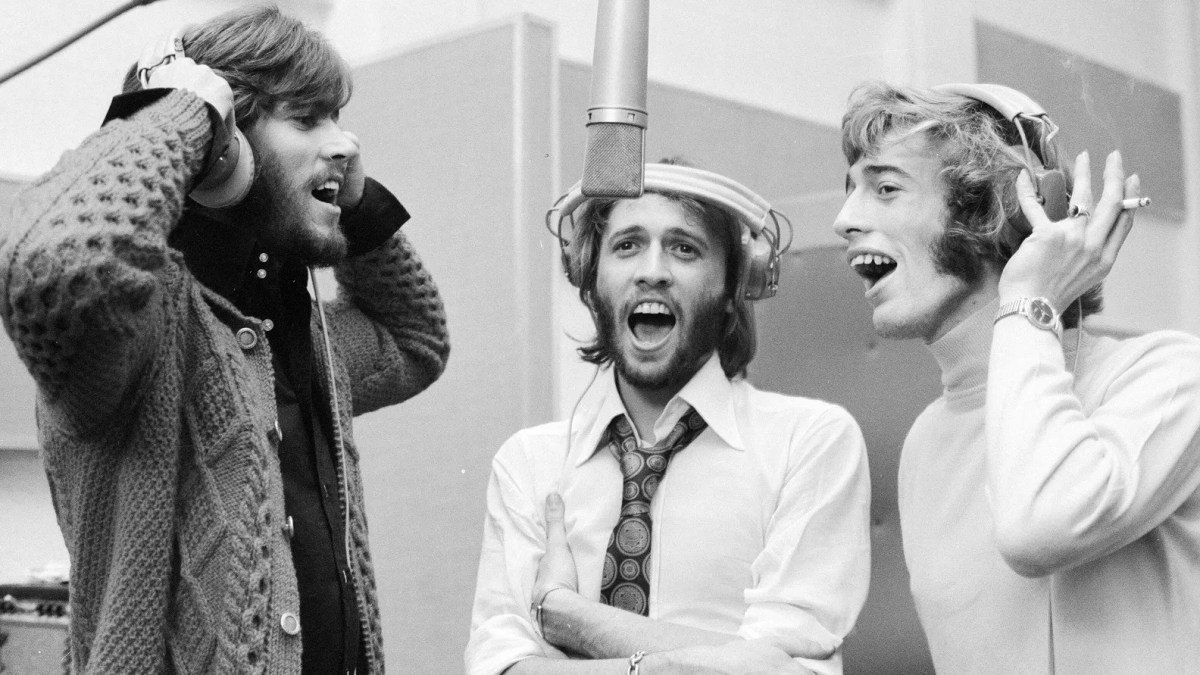
Brothers At Arms – The Bee Gees

We all know the great album Brothers in Arms from Dire Straits, but sometimes those brothers are “at arms” rather than in them. In this part of the mini-series Randy, from mostlymusiccovers.com, talks about the “Rock ‘Em Sock ‘Em” Siblings of the Bee Gees.

“To Love Somebody” was written by Robin and Barry Gibb. It was released as a single in 1967 and reached #41 in their native UK. The song did better elsewhere making several top 10s and #17 on the Hot 100. It would be a cover by Michael Bolton released in 1992 that put it at #1 on the Adult Contemporary charts in Canada and the US. It has endured to become a classic with over 210 versions of the song.

Formed in 1958 with brothers Barry, Robin and Maurice. After the family’s move to Australia they found their first success, just the three boys returned to their native UK in 1967. They would go on to sell an estimated 200 million records, post nine #1s on the Hot 100 and entered the top five of the most successful bands in history.

Life was not so easy, with an unreliable father they became the bread winners for the family at a very young age. Despite the pressures the boys got on quite well, until the dreaded “S” word enter in. Success. Their first #1 in the UK was “Massachusetts” in 1967. Robin sang lead on it and it was a position he was not willing to give up. The in-fighting began.

This is not perhaps the level of fighting on the same scale as some of our other brother groups, but they were not producing any hits and Robin was really at the heart of a split up in 1969. The reconciliation produced their first US #1 Hot 100 hit, “How Can You Mend a Broken Heart” in 1971. It was very much an autobiographical song. Success is fleeting in the music business and another downturn followed as their next album was a flop. By 1975 they had all moved to the US. Both Robin and Maurice struggled mightily with addiction problems. Robin seemed to tolerate the more democratic Barry becoming the defacto leader, but there were tensions. Not enough though to stop them from reinventing themselves yet again.

The Disco era and Saturday Night Fever saw them rise to incredible worldwide success with eight Hot 100 #1 hits in the mid to late 1970s. Younger brother Andy would join in the success. Everyone knows the rise and fall of Disco, and no one paid a heavier price than the Bee Gees. All of a sudden no one wanted to hear a Bee Gees song. In fact, they were and are still hated by some. I was not a disco fan, but I was a Bee Gees fan, and I took my fair share of ribbing for it.

Despite all this turmoil surrounding them, only minor tensions erupted, and Barry, Maurice and Robin would discover other people respected their songwriting abilities. First came “Woman in Love” by Barbra Streisand, and then “Islands in the Stream” by Dolly Parton and Kenny Rogers, both worldwide #1 smash hits. And also, songs for Dionne Warwick, Diana Ross and others. So, the brothers Gibb had risen from the ashes for yet a third time but as songwriters. And then remarkably a fourth time, as recording success returned once again and they placed four more songs in the top 10 in the UK in the 90s.

Maurice would die at age 53 in 2003 and despite attempts to regroup, the band that was the Bee Gees were effectively no more. Younger brother Andy had died in 1988 and Robin in 2012. Barry the oldest, has continued to record and perform.