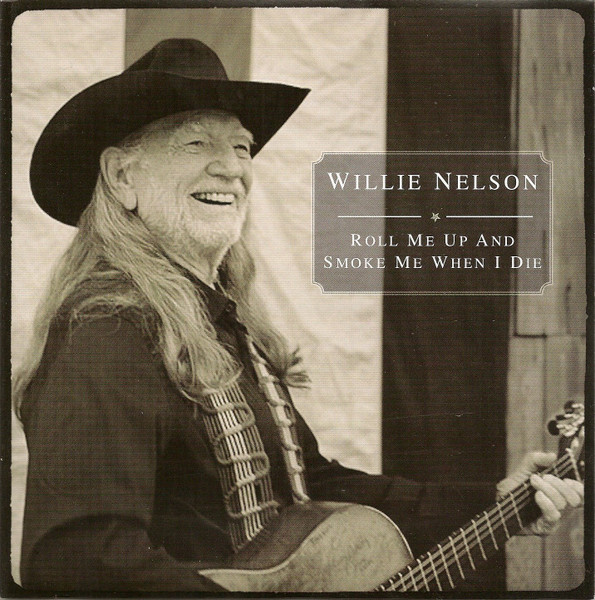
Willie Nelson – Roll Me Up and Smoke Me When I Die

Wanted to have a little fun today. What better way to celebrate July 4th than with Willie Nelson and my next American Artist? The Willie Nelson set I watched on June 25th was probably the first real country act I’ve seen in concert, other than in street fairs in Nashville. Willie has done what few others have: appealed to a vast array of genres like Johnny Cash and Dolly Parton. The man is 92 and still going out there every night. 

The couple in front of us took this picture. 

If there were a Mount Rushmore for country outlaws, Willie Nelson wouldn’t just be on it, he’d be carving the damn thing with a joint in one hand and Trigger (his guitar) slung over his back. And with this song, Willie laughs at his legend and turns it into a porch-sing-along for the afterlife.

Released in 2012 on his Heroes album, this track arrived with a puff of smoke, wrapped in that unmistakable red-headed goodness. It’s a song about death that somehow feels like a party. Leave it to Willie to make his own funeral plans sound like a tailgate party. Beneath the title and chorus is something far more poignant: a man looking mortality in the eye and saying, You’re not killing my vibe.

The lineup of guests: Snoop Dogg, Kris Kristofferson, and Jamey Johnson all pile in for the chorus like it’s some high-end dive bar jam session. The vibe is half gospel, half roadhouse. The songwriters are Willie Nelson, Buddy Cannon, Rich Alves, John Colgin, and Mike McQuerry.

Roll Me Up and Smoke Me When I Die

Roll me up and smoke me when I dieAnd if anyone don’t like it, just look ’em in the eyeI didn’t come here and I ain’t leaving, so don’t sit around and cryJust roll me up and smoke me when I die

Now you won’t see no sad and teary eyesWhen I get my wings and it’s my time to flyCall my friends and tell ’em there’s a party, come on byAnd just roll me up and smoke me when I die

Roll me up and smoke me when I dieAnd if anyone don’t like it, just look them in the eyeI didn’t come here and I ain’t leaving, so don’t sit around and cryBut just roll me up and smoke me when I die

And I’d go, I’ve been here long enoughSo sing and tell more jokes and dance stuffJust keep the music playing, that will be a good goodbyeRoll me up and smoke me when I die

Roll me up and smoke me when I dieAnd if anyone don’t like it, just look ’em in the eyeI didn’t come here and I ain’t leaving, so don’t sit around and cryJust roll me up and smoke me when I die

Hey, take me out and build a roaring fireRoll me in the flames for about an hourAnd take me out and twist me up and point me towards the skyAnd roll me up and smoke me when I die

Roll me up and smoke me when I dieAnd if anyone don’t like it, just look ’em in the eyeI didn’t come here and I ain’t leaving, so don’t sit around and cryJust roll me up and smoke me when I die

Just roll me up and smoke me when I die

Max’s Drive-In Movie – Pat Garrett and Billy The Kid

I saw this movie for the first time in the early nineties in my apartment, which I shared with a cousin. I watched it initially for Bob Dylan, but ended up loving the movie. This movie, above all else, treats silence better than any other movie I’ve seen. The characters get to breathe. No one is in a hurry, but when action happens, it makes it all the more dramatic. 

In Pat Garrett and Billy the Kid, director Sam Peckinpah trades the mythic grandeur of the Old West for something slower, lonelier, and far more tragic. This is a Western all about finality,  a farewell to freedom, friendship, and the open frontier. Pechinpah created a great movie out of this. 

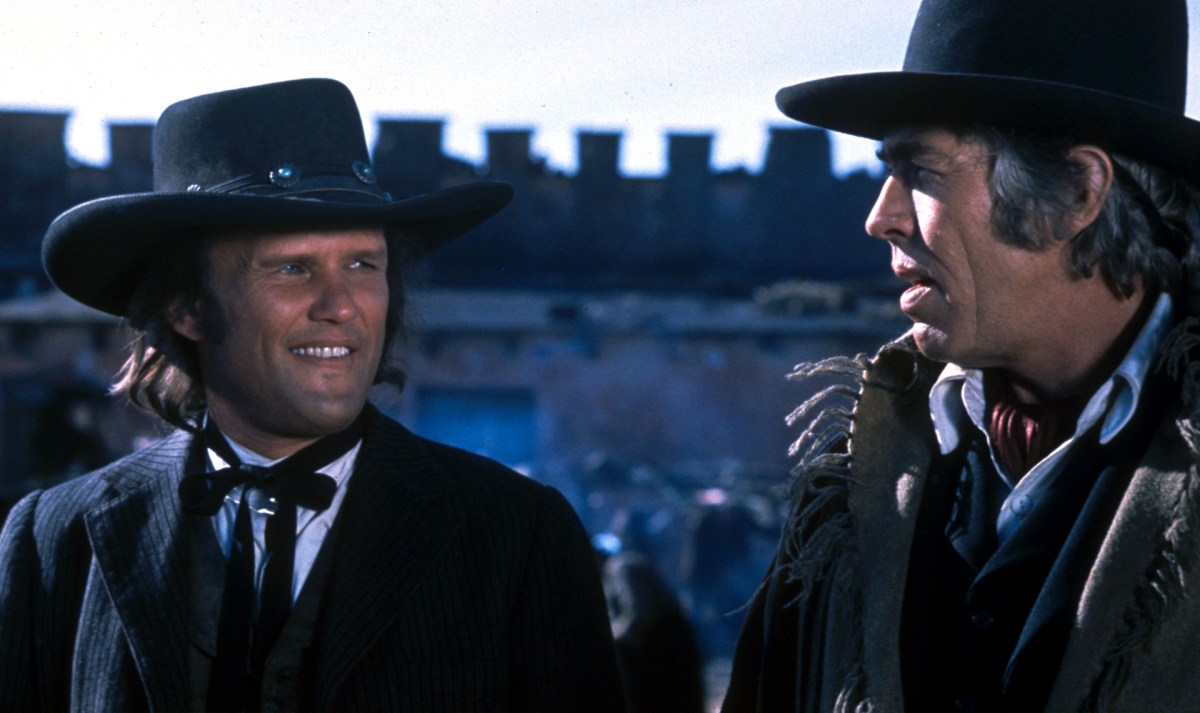
Set in 1881 New Mexico, the film dramatizes the final days of William Bonney,  better known as Billy the Kid (played by Kris Kristofferson)  as he’s hunted down by his former friend turned lawman, Pat Garrett (James Coburn). There’s no rush to the inevitable confrontation. Instead, the film moves slowly with purpose, soaking in the dusty landscapes, long silences, and uneasy glances between men who understand their roles in their vanishing world.

Coburn delivers a wonderful performance as Garrett, a man who’s made peace with compromise but not with himself. Kristofferson, younger and looser, plays Billy with charm and recklessness. Their scenes together are understated but filled with unspoken history and mutual resignation. It stands as one of the most introspective and mournful Westerns ever made. It’s not a shoot-’em-up spectacle; it’s a meditation on regret, inevitability, and the bitter cost of survival.

The studio clashed with Peckinpah and released a terrible version in 1973 that was a pale version of Peckinpah’s vision. It was jagged, choppy, and stripped of its emotional weight. Critics panned it. Audiences stayed away. Like many films ahead of their time, Pat Garrett and Billy the Kid didn’t stay buried. A bootlegged “preview print” started circulating in the 80s—rougher but far more coherent. It showed what Peckinpah had been aiming for: a slower, sadder, more deliberate tone piece about friendship, death, and the slow extinction of the outlaw soul. Critics and fans alike loved his original version.

In 2005, a “Special Edition” came out, restoring much of what had been lost (though not fully satisfying the purists). Still, it was enough to elevate the film from cult obscurity to a rightful classic. And make no mistake…it IS a classic!

I never thought about cinematography until recently, but John Coquillon did a hell of a job on this movie. It looks beautiful, and the landscapes jump out at you as you watch. 

Now let’s talk about the soundtrack by Bob Dylan. Bob Dylan was in the movie and did a good job, but it’s the soundtrack that will be remembered. This isn’t your typical Dylan record. It’s mostly instrumental, often minimalist, and was stitched together for the film. But what you get here is an eerie, atmospheric tone throughout the entire album. Let’s get this out of the way: Knockin’ on Heaven’s Door is the anchor, the standout, the one track that broke free and carved a permanent space in classic rock airwaves. It’s a song so simple it feels like it always existed. Unfortunately, it overshadows the other songs, which I like a lot. Billy 1, Turkey Chase, Bunkhouse Theme, and the rest. It’s an album I like to put on and just soak it in and relax. 

Kris Kristofferson – Sunday Mornin’ Comin’ Down

I first heard Kristofferson as a kid with Why Me on the radio during the seventies. I also remember him on SNL with his then-wife Rita Coolidge. You could tell Kris had been having some fun but it sounded good. Then I found Janis Joplin’s Me and Bobby McGee and I found out that Kris wrote that song…I became a fan. Plus he was one of the Outlaws in country music that I really liked. 

In the sixties, Kris was working as a janitor in Nashville while living in a run-down tenant house. He was also a janitor at Columbia Records at the same time. This might seem normal for a songwriter who was trying to make a mark but the man had something else as well. He was a Rhodes Scholar who studied at Oxford University earning a master’s degree in English language. He also served as a captain in the U.S. Army, where he became a helicopter pilot, in addition to having completed U.S. Army Ranger School. The guy was highly talented and very smart.

He befriended Johnny’s wife, June Carter. June liked Kristofferson, and would often sneak demo tapes of his songs in her purse to bring home to Johnny. At night, she’d play the tapes for him in their bedroom above Old Hickory Lake in Tennessee. Every night Cash would listen and throw them out the bedroom window into the lake below. 

There are many stories about how Johnny got the song…but this is the version that Johnny told. At the time, Kristofferson was also working part-time as a helicopter pilot for the Army Reserve. On a routine flight training mission, Kristofferson veered off his course and headed for Cash’s home. After landing the chopper on Cash’s lawn, he walked up to the home with the demo of “Sunday Morning Coming Down” in hand. Cash said he heard the chopper land and walked out to find Kristofferson walking up to him.

“As I approached, out stepped Kris Kristofferson, with a beer in one hand and a tape in the other,” Cash said. “I stopped, dumbfounded. He grabbed my hand, put the tape in it, grinned and got back into the helicopter and was gone, a bit wobbly, but almost straight up, then out high above the lake where all his songs lay on the bottom. He disappeared through the clouds. I looked at the tape of “Sunday Morning Coming Down” and “Me And Bobby McGee.”

The first version of this song was not by Johnny Cash. Ray Stevens did the first version of the song. Ray’s version peaked at #55 on the Country Charts in 1969. Johnny Cash did the most successful version releasing it in 1970. The song peaked at #1 on the Billboard Country Charts, #1 on the Canada Country Charts, and #30 in Canada on the RPM charts. 

Kris passed away on September 28, 2024. 

Sunday Mornin’ Comin’Down

Well I woke up Sunday morning,
With no way to hold my head, that didn’t hurt
And the beer I had for breakfast,
Wasn’t bad so I had one more, for dessert
Then I fumbled through my closet,
For my clothes and found my cleanest dirty shirt
And I shaved my face and combed my hair,
And stumbled down the stairs to meet the day

I’d smoked my brain the night before on cigarettes and songs
That I’d been pickin’
But I lit my first, and watched a small kid cussin’ at a can
That he was kickin’
Then I crossed the empty street and caught the Sunday smell
Of someone fryin’chickin
And it took me back to somethin’ that I had lost somehow,
Somewhere along the way

[Chorus]
On the Sunday morning sidewalk, wishin’ Lord that I was stoned
Cause there is something in a Sunday, makes a body feel alone
And there is nothing short of die’n, half a lonesome as the sound
On the sleepin’ city sidewalks, Sunday morning coming down

In the park I saw a daddy,
With ‘w(?)’ laughin’ little girl who he was swingin’
And I stopped beside a Sunday school,
And listened to a song that they were singin’
Then I headed back for home and somewhere far away
A lonely bell was ringin’
And it echoed through the canyons like the disappearing dreams
Of yesterday

[Chorus]
On the Sunday morning sidewalk, wishing Lord that I was stoned
Cause there is something in a Sunday, make a body feel alone
And there is nothing short of die’n, half a lonesome as the sound
On the sleepin’ city sidewalks, Sunday morning coming do

Kris Kristofferson – Why Me

Good morning to everyone on this fine Sunday morning! This was a song that I heard on my mom’s country stations along with the AM pop stations that my sister listened to. It crossed genres and was a massive hit.

It peaked at #1 on the Billboard Country Charts and Canada’s Country Charts, #16 on the Billboard 100, and #19 on Canada’s RPM Charts in 1973.

Kristofferson is an incredible songwriter but he gave up a lot to be one. He is very intelligent and he was a Rhodes Scholar at Oxford University.

Kristofferson came from a military family. Both of his grandfathers were military men, his dad was a general in the Air Force, and his brother was in the Navy. Kris himself had made a name for himself in the armed forces, achieving the rank of captain and being offered a teaching position at West Point.

Instead, he moved to Nashville and ended up working odd jobs to support his disabled son while trying to break into the music business. When his mother found out about the music business she wrote a letter to him that he was an embarrassment to the family and he was disowned. Someone showed the letter to Johnny Cash, who believed in Kristofferson, and Cash told him ‘Always nice to get a letter from home, isn’t it, Kris?’

I feel lazy doing this but Kristofferson tells the story of the song better than I can. He went to church with country music artist Connie Smith and this happened.

Kris Kristofferson: “The night before we’d been down in Cookeville with a bunch of people, doing a benefit for Dottie West’s High School band or something and then Connie took me over to church the next day to Jimmie Snow’s church. And I had a profound religious experience during the session, something that never had happened to me before. And ‘Why Me’ came out of it.

Everybody was kneeling down and Jimmie said something like if anybody’s lost, please raise their hand. And I was kneeling there. I don’t go to church a lot and the notion of raising my hand was out of the question and I thought, ‘I can’t imagine who’s doing this.’ And all of a sudden I felt my hand going up and I was hoping nobody else was looking because everybody had their head bent over praying.

And then he said, ‘If anybody is ready to accept Jesus, come down to the front of the church.’ I thought that would never happen and I found myself getting up and walking down with all these people and going down there. And I don’t really know what he said to me. He said something to me like, ‘Are you ready to accept Jesus Christ in your life?’ And I said: ‘I don’t know.’ I didn’t know what I was doing there. And he put me down, said, ‘Kneel down here.’ I can’t even remember what he was saying but, whatever it was, was such a release for me that I found myself weeping in public and I felt this forgiveness that I didn’t know I even needed.”

Why Me

Why me Lord, what have I ever done
To deserve even one
Of the pleasures I’ve known
Tell me Lord, what did I ever do
That was worth loving You
Or the kindness You’ve shown

Lord help me Jesus, I’ve wasted it
So help me Jesus, I know what I am
Now that I know that I’ve needed you
So Help me Jesus, my soul’s in Your hand

Tell me Lord, if you think there’s a way
I can try to repay
All I’ve taken from You
Maybe Lord, I can show someone else
What I’ve been through myself
On my way back to You

Lord, help me Jesus, I’ve wasted it
So Help me Jesus, I know what I am
Now that I know that I’ve needed you
So help me Jesus, my soul’s in Your hand

Lord, help me Jesus, I’ve wasted it
So Help me Jesus, I know what I am
Now that I know that I’ve needed you
So help me Jesus, my soul’s in Your hand

Jesus, my soul’s in Your hand

Johnny Cash – Folsom Prison Blues

But I shot a man in Reno, Just to watch him dieJohnny Cash

It doesn’t get much better than that.

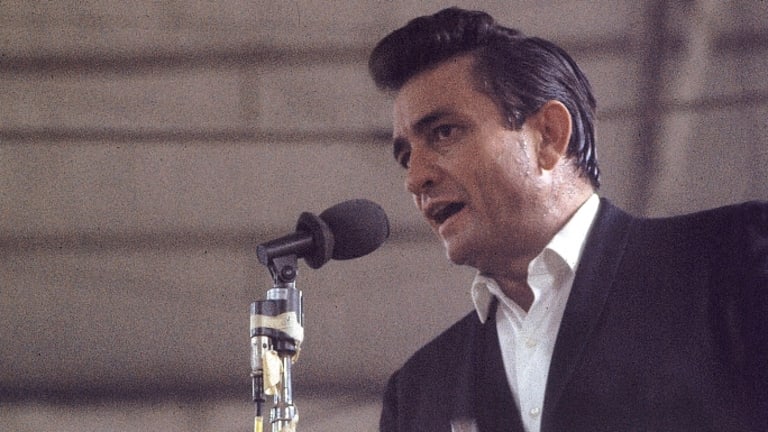
The man in black was The Man. Not many performers can cross genres like Johnny Cash did and still does. He first recorded this song in 1955 at Sun Records as the B side to “S3o Doggone Lonesome” but it was the live 1969 version that hit.

The At Folsom Prison album helped revitalize Cash’s career. Up to this point, his last Country top 40 entry was in 1964. This was recorded live at Folsom Prison in California on January 13, 1968, and that album came to define his outlaw image. The record company told him it wouldn’t work but Johnny recorded at the prison anyway.

Folsom Prison Blues peaked at #1 on the Billboard Country Charts, #1 on the Canadian Country Charts, #32 on the Billboard 100,  and #17 on the Canadian Pop Charts.  The song and album generated a lot of interest in the rebellious Johnny Cash, who made prison reform his political cause of choice. He started regularly performing in jails, doing about 12 shows a year for free mostly in Folsom and San Quentin.

The album peaked at #1 in the Billboard Country Charts, #13 in the Billboard Album Charts, and #27 in Canada.

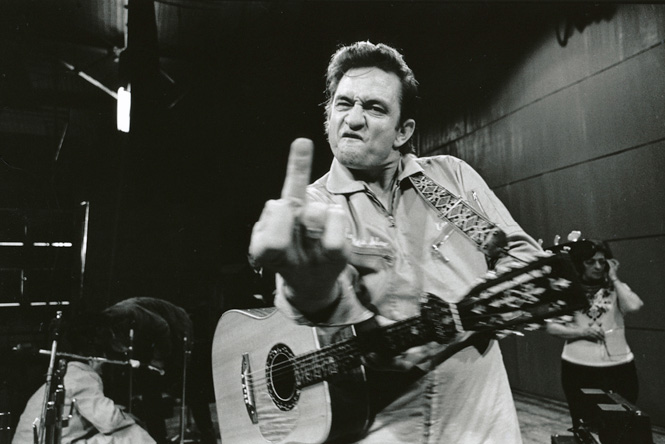
Johnny Cash Flipping Bird

This iconic picture came from Folsom Prison. According to photographer Jim Marshall…he asked Cash to express what he thought of the prison authorities when he played the show. Marshall told Cash “let’s do a shot for the warden” and the picture was born. 

Cash saw Crane Wilbur’s 90-minute film Inside the Walls of Folsom Prison while stationed in Germany. It left an impression on Cash, who emphasized the tale of the imprisoned men, and inspired him to write a song. Johnny Cash: “It was a violent movie, I just wanted to write a song that would tell what I thought it would be like in prison.”

Cash’s first prison performance occurred in 1957 when he performed for inmates at Huntsville State Prison. The favorable response inspired Cash to perform at more prisons through the years. His next hit, recorded in San Quentin Prison, was the humorous “A Boy Named Sue,” which proved that he could be clever and funny.

Cash came off as a champion for the oppressed.  He got his own national TV show in 1969 and became one of the most popular entertainers of his era. His guests included Derek and the Dominos,  Joni Mitchell, Bob Dylan, Linda Ronstadt, Kris Kristofferson, Mickey Newbury, Neil Young, Gordon Lightfoot, Merle Haggard, James Taylor, Tammy Wynette, and Roy Orbison.

Isn’t that list incredible? Cash was considered a Country-Folk artist but look at the range of performers. The late sixties and seventies were like this ….and it’s the reason I like them so much…all the generations intersected at that point in time. I mean you have Eric Clapton and then you have Tammy Wynette on the guest list.

The lyrics to this song were based on a 1953 recording called Crescent City Blues by a bandleader named Gordon Jenkins with Beverly Maher on vocals. After filing a lawsuit, Gordon Jenkins received an out-of-court settlement from Cash in 1969. I have to say it does sound really close.

Johnny Cash: “I don’t see anything good come out of prison. You put them in like animals and tear out the souls and guts of them, and let them out worse than they went in.”

Rosanne Cash: “He was a real man with great faults, and great genius and beauty in him, but he wasn’t this guy who could save you or anyone else.”

Folsom Prison Blues

(Hello, I’m Johnny Cash)

I hear the train a-comin’
It’s rollin’ ’round the bend
And I ain’t seen the sunshine
Since I don’t know when
I’m stuck in Folsom Prison
And time keeps draggin’ on
But that train keeps a-rollin’
On down to San Antone

When I was just a baby
My Mama told me, “son
Always be a good boy
Don’t ever play with guns”
But I shot a man in Reno
Just to watch him die
When I hear that whistle blowin’
I hang my head and cry (play it to the verse, yeah)
(Sue it)

I bet there’s rich folks eatin’
From a fancy dining car
They’re probably drinkin’ coffee
And smokin’ big cigars
Well, I know I had it comin’
I know I can’t be free
But those people keep a-movin’
And that’s what tortures me (hit it)

(Howdy-ho)

Well, if they freed me from this prison
If that railroad train was mine
I bet I’d move it on, a little
Farther down the line
Far from Folsom Prison
That’s where I want to stay
And I’d let that lonesome whistle
Blow my blues away

(yeah)