Terry Reid – Speak Now or Forever Hold Your Peace

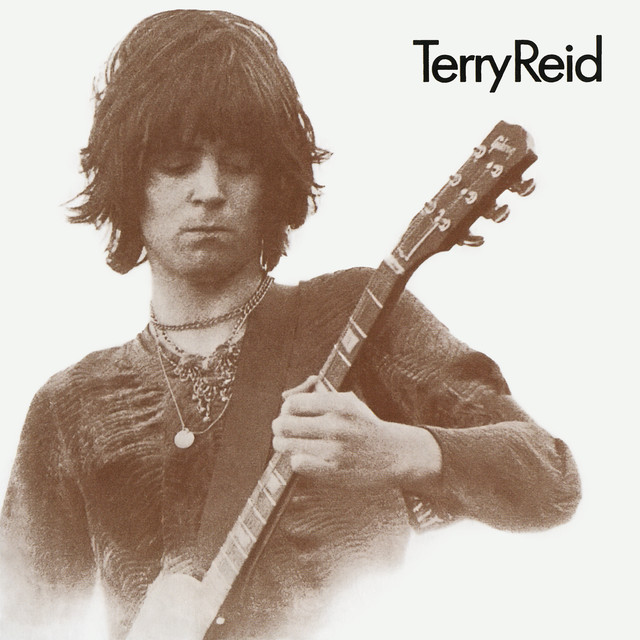
A blogger named Warren brought up this song and I want to thank him. This is a great song by a great singer/songwriter who turned down Jimmy Page to join Led Zeppelin. He is the one who recommended Robert Plant to Page. Some people may know this song from Cheap Trick as they covered it on their debut album in 1977. 

This was his self-titled second album released in 1969. I can see why Page wanted him…his voice was fantastic. His nickname was Superlungs for a good reason. He wasn’t a bad songwriter either…the artists that has covered his songs are many.  The Hollies, Crosby, Stills & Nash, Jackson Browne, Arrival, Marianne Faithfull, Cheap Trick, Jack White with The Raconteurs, Joe Perry, Rumer and Chris Cornell.

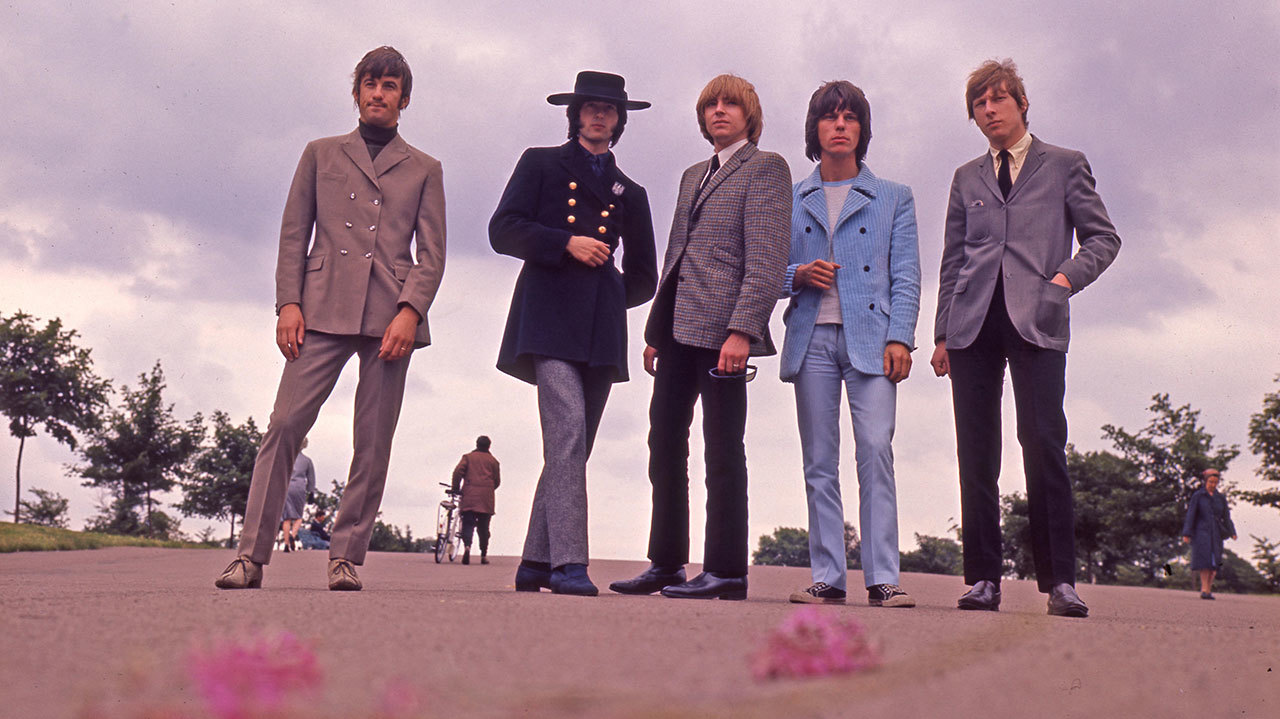
In around 1967 or 68 Jimmy Page was ending the Yardbirds or continuing a new version of them. He was looking for a singer and Terry Reid fit what he wanted. Reid told Page that he was already committed to two tours with The Stones and one with Cream at the time. He did tell Page that if he paid him the lost money and talked with the Stones to get him out of it he would join. It didn’t happen but Reid also told him of a lead singer he knew named Robert Plant from the Band of Joy that might fit what he was after. Oh, it most definitely did. 

Reid had a busy solo career as a songwriter and performer. He has some songs in movies and many artists as I’ve listed above have covered him. He also works with younger bands now and sometimes as a guest vocalist. Robert Plant called him the outstanding voice of his generation. 

He has released 7 studio albums, the last being in 2016. After hearing his voice and his songs…I am surprised he didn’t hit more. In the later half of the 20th Century he worked with the Eagles drummer, Jackson Browne, Bonnie Raitt, Marianne Faithfull, Joe Walsh, and many others.

Speak Now Or Forever Hold Your Piece

Yesterday feels like running awayFeels like givin’ the childGettin’ lost losin’ my mindI’m feelin’ low and I got no place to goGettin’ all tied upFeelin’ all tied up yeah yeah

Oh yesterday feels like running awayAnd I know, I’m givin’ up my timeTo still love still loveLove’s got me blind

My mind sees the things I don’t knowAnd I got no place to goGettin’ all tied upFeelin’ all tied up

Things I need to tell you loveYou’ll be true I knowThere’s still a chance for a better lifeYes, I know

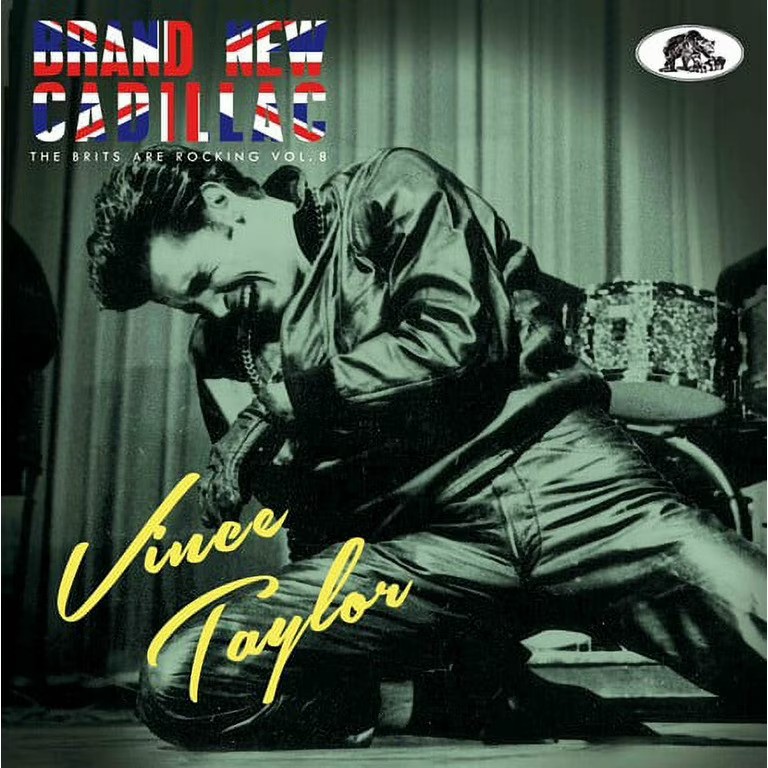
Vince Taylor – Brand New Cadillac

How you find new music can sometimes be surprising. I was looking for a guy with the nickname of Prince Stash, his name is Stanislaus Klossowski de Rola. He hung out with a lot of sixties rock stars and I found out he played in Vince Taylor’s band. I started to listen to Vince Taylor and his rockabilly is really good. I knew I heard his name before and it was when I covered the Clash’s version of this song. 

Vince was born in England but his family emigrated to the United States in the early 1950s, settling in New Jersey, where Taylor was exposed to the new rock and roll scene. While living here he became exposed to the greats like Presley, Little Richard, and Gene Vincent. In the late 1950s, Taylor returned to the UK, where he adopted the stage name Vince Taylor inspired by American culture. It was probably the smart thing to do at the time. The UK treated the 50s rock stars much better than America did. 

Brand New Cadillac was released in 1959. It was the B side to a song called Pledging My Love. Taylor wrote the song but Tony Sheridan is credited with the cool guitar riff running through the song. The song’s riff reminds me of the original Batman riff…or really the other way around.

In the mid-sixties, he and his band The Playboys co-headlined a tour with the Rolling Stones with “Prince Stash” Stanislaus Klossowski de Rola playing percussion. Jimmy Page and others were also at one time part of the Playboys. I’ve been reading about his live performances and watching some concert footage…and he was a hell of a performer. I can see why he built a following for his live performances. 

Bowie has said that Vince Taylor was a huge influence on Ziggy Stardust. He said in the early seventies his name was coming up again as in Golden Earring’s song “Just Like Vince Taylor.”

 Taylor had some problems with drugs in the sixties and his career started to go downhill as he became unstable. In the 1970s, he briefly attempted comebacks in Europe, but he could not recapture his earlier success. He lived a nomadic life, working odd jobs, including as a mechanic in Switzerland.

He passed away in 1991 from cancer. 

David Bowie: “I met him in Gioconda one day and the guy was right out of his tree. I mean, this guy was bonkers, absolutely the genuine article. I can’t remember if he said he was an alien or the Son of God but he might have been a bit of both. And then one time we were on Tottenham Court Road… He dragged out this world map and we were crouching on all fours outside Tottenham Court Road Tube Station and he was showing me where all the aliens had their bases throughout: under the Arctic and in this mountain… And business people stepping over our map. I think: what the hell am I doing in the middle of Russia with this bonkers American looking at the map of the world and I thought there’s something in this, I’m gonna remember this. This is just too good.”

Clips of Taylor live

Brand New Cadillac

Well my baby drove off in a brand new Cadillac
Ooh, my baby drove off in a brand new Cadillac
Well she looked at me, daddy, I ain’t never comin’ back

I said baby-baby-baby won’t you listen to me
Come on sugar, come on hear my plea
Well she looked at my Ford, we’ll never agree
Cadillac car! Oh yeah!

Well the Caddy’s rollin’ and going ’bout ninety-five
Well me and my Ford, we’re right by here side

I said baby-baby-baby won’t you listen to me
Come on baby, come on hear my plea
Turn that big car around, come on back to me
Hangin’ on Scotty, here we go!

Well my baby took off in a brand new Cadillac
Ooh, my baby took off in a brand new Cadillac
Well she looked at me, daddy, I ain’t never comin’ back

I ain’t never comin’ back


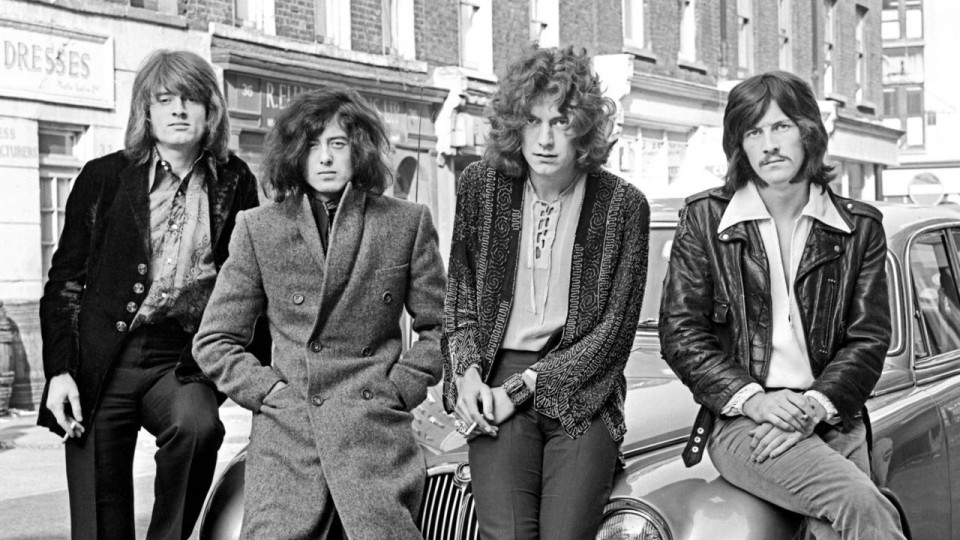
Led Zeppelin – Going To California

This song was included on possibly their best album…Led Zeppelin 4 or Zoso… whichever name you know it by. It was released in 1971, which I think was the best year for rock albums. A few weeks before this album, The Who released their huge album Who’s Next.

Led_Zeppelin 4

I liked that they switched gears in this song and kept it a ballad. Plant has often mentioned that part of the song was a tribute to Joni Mitchell, whom he and Page admired. Her song California also inspired this song.

Zeppelin recorded this album at Headley Grange. It is an old, remote mansion in Hampshire, England, and they recorded there frequently. The informal, relaxed atmosphere helped the band focus and be creative.

They used a mobile recording studio, the Rolling Stones Mobile Studio, which allowed them to record in various parts of the mansion, capturing different acoustics. Page has talked about recording Bonham underneath a staircase for the sound quality. For this song, however…it was recorded in Headley Grange’s lawn outside in the grass.

Bonham didn’t play on this one and Page played a 6-string and 12-string acoustic guitar. John Paul Jones plays the mandolin on it. Robert Plant and Jimmy Page wrote this song…it’s a great album track.

The album peaked at #1 in the Billboard 200, Canada, and the UK in 1971.

Going To California

Spent my days with a woman unkind
Smoked my stuff and drank all my wine
Made up my mind to make a new start
Going to California with an aching in my heart
Someone told me there’s a girl out there
With love in her eyes and flowers in her hair

Took my chances on a big jet plane
Never let ’em tell you that they’re all the same
Oh, the sea was red and the sky was grey
Wondered how tomorrow could ever follow today
The mountains and the canyons start to tremble and shake
As the children of the sun began to awake
Watch out

Seems that the wrath of the gods
Got a punch on the nose and it started to flow
I think I might be sinking
Throw me a line, if I reach it in time
I’ll meet you up there where the path runs straight and high

To find a queen without a king
They say she plays guitar and cries and sings
La la la la
Ride a white mare in the footsteps of dawn
Tryin’ to find a woman who’s never, never, never been born
Standing on a hill in my mountain of dreams
Telling myself it’s not as hard, hard, hard as it seems, mmm, ah

Yardbirds – Shapes of Things

This is the Yardbirds… Jeff Beck edition. Great song that peaked at #11 in the Billboard 100, #3 in the UK, and #7 in Canada in 1966. Beck’s guitar solo in this song is fantastic as he uses distortion, sustain, feedback, and some Eastern influence. This was shortly before Jimmy Page joined the group.

The band recorded this song at Chess Studio in Chicago, their first time there. Chris Dreja said it’s one of the best songs they ever made. Shapes of Things was about the state of the UK during the Vietnam War, so it was an anti-war song according to the band. The song was written by Jim McCarty, Keith Relf, and Paul Samwell-Smith.

The band is best known now because of the great guitarists that were in the band. Eric Clapton joined the band in 1963, but soon quit to concentrate on the blues with Cream.

Jeff Beck replaced him in 1965, and then Jimmy Page joined in 1966 on bass. He soon switched to guitar, and the band had Page and Beck together.

Later, Beck walked out of the band, leaving only Page. The Yardbirds broke up, but Jimmy Page kept the name and played under “The New Yardbirds” with his new bandmates Robert Plant, John Paul Jones, and drummer John Bonham, who would change their name to Led Zeppelin.

Jeff Beck liked the song so much that he used it on arguably his best album Truth. He was able to control feedback and use it to enhance the song. The song is often considered a precursor to the heavier, more experimental rock sound that would emerge in the late 1960s and early 1970s.

Jeff Beck: “The way they worked was completely off the cuff: We’d jam, Keith would rush off and write some lyrics in the toilet, it was exactly like that. After four verses, let’s go into this raga thing. I kept changing guitar sounds all the way through. So we did two or three takes of my guitars and blended them all together. But the solo on “Shapes Of Things” was pretty honest until that feedback note that comes in over it. If nothing else, that was the best single.”

Bassist Paul Samwell-Smith: I wrote it in a bar in Chicago. I just lifted part of a Dave Brubeck fugue to a marching beat. It’s a sort of protest song.

Jim McCarty: “With ‘The Shapes of Things’ I came up with a marching type of rhythm that I tried to make interesting. And at the end of each line we’d build up like we used to do with some of our stage stuff – the rave ups. And then the bass riff came on top of that. And the bass riff was loosely based on a Dave Brubeck song, sort of a jazz song, around a doo doo doo doo doo doo, and then the chords came over that. The chords were very basic, came between the two tones, I think G and F, and then resolving it in D, each verse. And then the tune came on top of that. In fact, I remember putting the backing track down, which sounded great. I wasn’t at the session where Keith made up the tune, and when I heard the tune, I thought, Oh, that’s great. It’s a real surprise. He made up the tune, and then we had this sort of ‘Come tomorrow,’ but that was part of the song, anyway, at the beginning. So it was an exciting song to be involved in.”

Jim McCarty: “That’s probably the hardest thing to try and do. Every time we tried to do that it never really succeeded. I suppose we were lucky in that when we did ‘Shapes of Things’ it was like a hit song, but we were really coming from not trying to create a sort of a 3-minute piece of music, it was just something that seemed natural to us. We started with the rhythm, we used a bass riff that came from a jazz record, got a groove going with that and then added a few other bits from elsewhere, other ideas that we’d had. And I think it was a great success for us, it was a good hit record that wasn’t really selling out. And it was original.”

Shapes of Things

Shapes of things before my eyes,
Just teach me to despise.
Will time make men more wise?
Here within my lonely frame,
my eyes just heard my brain.
But will it seem the same?

(Come Tomorrow) Will I be older?
(Come Tomorrow) May be a soldier.
(Come Tomorrow) May I be bolder than today?

Now the trees are almost green.
But will they still be seen?
When time and tide have been.
Fall into your passing hands.
Please don’t destroy these lands.
Don’t make them desert sands.

Chorus, Lead.

Soon I hope that I will find,
Thoughts deep within my mind.
That won’t displace my kind.

Led Zeppelin – Dancing Days

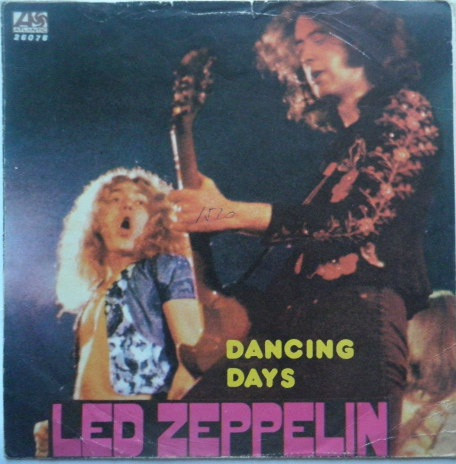
I like the strange riff that opens this one up. It sounds tonally off in some ways and that makes it appealing. While in Bombay, Page and Plant heard an Indian song that inspired this. The creative process for “Dancing Days” began with Jimmy Page’s guitar riff.  Robert Plant then added the lyrics, which they were inspired by a girl he met in Bombay.

The term “dancing days” is thought to refes to high school. On a bootleg recording of the song from a concert on Jan. 14th, 1973 Robert Plant sings “Let’s go back to high school” in the song.

The song was on the Houses of the Holy album released in 1973. The funny thing is that the song Houses of the Holy would be on the Physical Graffiti album, not its namesake. This song was the B side to Over The Hills And Far Away rare single released in 1973. The single peaked at #51 on the Billboard 100 and #63 in Canada.

The band was determined not to repeat themselves after the success of Led Zeppelin IV. This album is diverse with songs Over The Hills and Far Away, The Ocean, The Rain Song, and the funk of The Crunge. This album was a perfect gateway into their next album Physical Graffiti.

The album peaked at #1 in the Billboard Charts, #1 in the UK, and #1 in Canada.

Dancing Days

Dancing days are here again
As the summer evenings grow
I got my flower, I got my power
I got a woman who knows

I said it’s alright, You know it’s alright
I guess it’s all in my heart
You’ll be my only, my one and only
Is that the way it should start?
Crazy ways are evident
In the way that you’re wearing your clothes
Sippin’ booze is precedent
As the evening starts to glow

You know it’s alright, I said it’s alright
You know it’s all in my heart
You’ll be my only, my one and only
Is that the way it should start?

You told your mamma I’d get you home
But you didn’t say I had no car
I saw a lion he was standing alone
With a tadpole in a jar

You know it’s alright, I said it’s alright
I guess it’s all in my heart, my heart
You’ll be my only, my one and only
Is that the way it should start?

So dancing days are here again
As the summer evenings grow
You are my flower, you are my power
You are my woman who knows

I said it’s alright, You know it’s alright
You know it’s all in my heart
You’ll be my only, my one and only
Is that the way it should start?

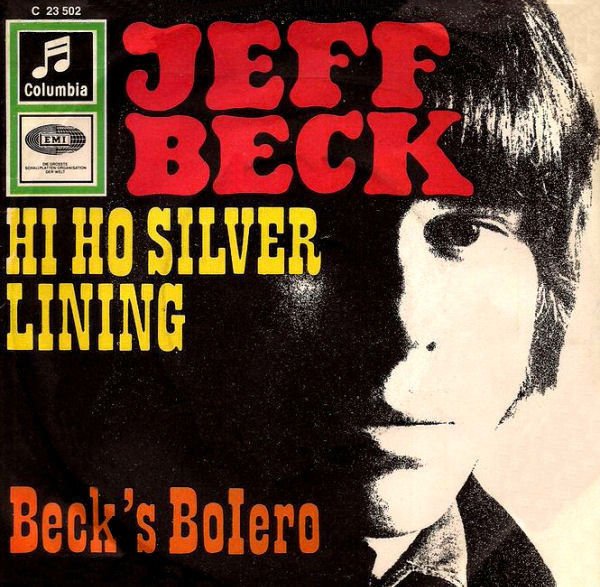
Jeff Beck – Beck’s Bolero

This song is for Song Lyric Sunday for Jim Adams’s blog. This week’s prompt is Gone But Not Forgotten. We lost Jeff Beck this year and he was a huge loss.

I hardly ever post instrumentals but this one is special. Keith Moon on drums, John Paul Jones on bass, Nicky Hopkins on keyboard, and Jimmy Page,  on 12-string guitar along with Jeff Beck on slide guitar. John Paul Jones said the group that played on Beck’s Bolero was kicking around the idea of touring. They also were thinking about trying to get the Small Faces singer Steve Marriott but his management would not go for that.

Beck’s Bolero was recorded over one day on May 16th, 1966. At this point, Moon was unhappy in The Who, and this impromptu band did initially plan to record and release a full album, but contractual obligations…amongst other things, prevented them from ever doing it.

John Entwistle, who originally agreed to play bass in the session, pulled out at the last minute and was replaced with session ace John Paul Jones. Personally, I’m glad this didn’t gel because The Who would have stopped dead most likely.

When you listen to the song…there isn’t a doubt who was playing drums. Jeff Beck later claimed that Pete Townshend “glared like daggers at me” after he found out about the recording sessions.

Jimmy Page is credited with writing the song but Jeff has said no… that he worked more of it out. Instead of me writing out the differences…I’ll let Beck and Page do it below.

Jimmy Page: “On the ‘Beck’s Bolero’ thing I was working with that, the track was done, and then the producer just disappeared. He was never seen again; he simply didn’t come back. Napier-Bell, he just sort of left me and Jeff to it. Jeff was playing and I was in the box (recording booth). And even though he says he wrote it, I wrote it. I’m playing the electric 12-string on it. Beck’s doing the slide bits, and I’m basically playing around the chords. The idea was built around (classical composer) Maurice Ravel’s ‘Bolero.’ It’s got a lot of drama to it; it came off right. It was a good lineup too, with Keith Moon, and everything.”

Jeff Beck: “No, Page didn’t write that song, we sat down in his front room once, this tiny, pokey room, and he was sitting on the arm of a chair and he started playing that Ravel rhythm. He had a 12-string, and it sounded so full, really fat and heavy. And I just played the melody. And I went home and worked out the other bit [the up-tempo section].”

This song was the B side to Hi Ho Silver Lining which peaked at #14 in the UK in 1967. The song was later on Jeff Beck’s Truth album.

Jeff Beck: Me and Jim Page arranged a session with Keith Moon in secret, just to see what would happen. But we had to have something to play in the studio because Keith only had a limited time — he could only give us like three hours before his roadies would start looking for him. So I went over to Jim’s house a few days before the session, and he was strumming away on this 12-string Fender electric that had a really big sound. It was the sound of that Fender 12-string that really inspired the melody. And I don’t care what he says, I invented that melody, such as it is. I know I’m going to get screamed at because in some articles he says he invented it, he wrote it. I say I invented it. This is what it was: He hit these Amaj7 chords and the Fm7 chords, and I just started playing over the top of it. We agreed that we would go in and get Moonie to play a bolero rhythm with it. That’s where it came from, and in three or four takes it was down. John Paul Jones on the bass. In fact, that group could have been a new Led Zeppelin.

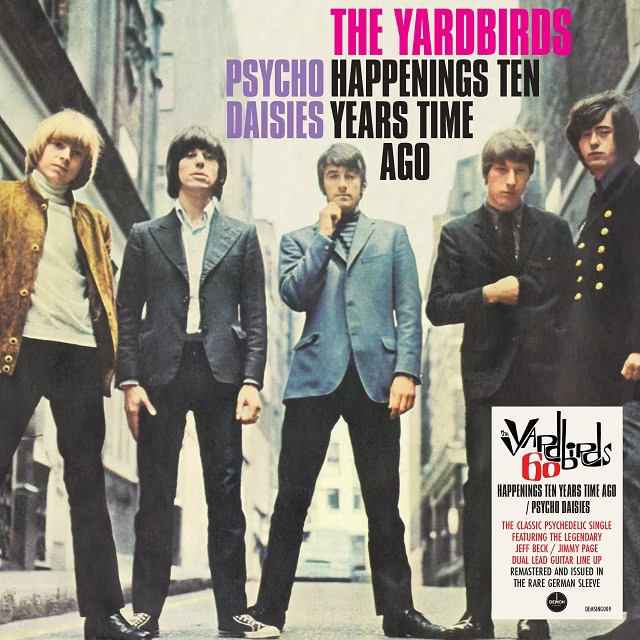
Yardbirds – Happenings Ten Years Time Ago

I remember this song on some Yardbirds album I had back in the day. The guitar riff is outstanding. This band had no shortage of guitarists. Eric Clapton, Jeff Beck, and then Jimmy Page.

This is the first Yardbirds song that Beck and Page played together. The bass player on this song, Led Zeppelin fans will know right away. John Paul Jones played bass on this song. Jones also played bass on the Yardbird’s tracks “No Excess Baggage” and “Goodnight Sweet Josephine.” The reason Jones, who was a studio musician at that point, played on these songs was that the regular bass player Paul Samwell-Smith was pursuing record production full-time.

Paul Samwell-Smith went on to be a successful producer with credits such Cat Stevens’ albums Tea for the TillermanTeaser and the Firecat, and Catch Bull at Four. He also produced Jethro Tull, Carly Simon, and others. A couple of years later…John Paul Jones would be part of the New Yardbirds before they morphed into Led Zeppelin. Page wisely kept the rights to the name and the band played their first shows under that name.

Fantastically flash, inscrutably cool: How the Yardbirds shaped rock'n'roll  | Louder

This song was released in 1966 as a single with the B-side Psycho Daisies. The song peaked at #43 in the UK. As the title of the B side suggests…music was going into a psychedelic period that would peak the following year with The Beatles Sgt Peppers album.

The song was credited to the band… Keith Relf, Jim McCarty, Jeff Beck, and Jimmy Page except for rhythm guitar player Chris Dreja and bass player Paul Samwell-Smith.

Jim McCarty:  “On ‘Happenings Ten Years Time Ago,’ Keith (Relf) and I were trying to write a song about reincarnation. We’d seen everything before, and it was all happening again. That was quite an interesting viewpoint, really. Meeting people along our way that we’d seen from another day. Sort of bringing in that situation that we’d been there before.”

Jimmy Page: We rehearsed hard on all sorts of riffs to things like “Over Under Sideways Down” which we were doing in harmonies and we worked out where we’d play rehearsed phrases together. It was the sort of thing that people like Wishbone Ash and Quiver [later] perfected, that dual-lead-guitar idea.

Happenings Ten Years Time Ago

Meeting people along my way
Seemingly I’ve known one day
Familiarity of things
That my dreaming always brings

Happenings ten years time ago
Situations we really know
But the knowing is in the mind
Sinking deep into the well of time

Walking in the room, I see
Things that mean a lot to me
Why they do I never know
Memories don’t strike me so

It seems to me I’ve been here before
The sounds I heard and the sights I saw
Was it real? Was it in my dreams?
I need to know what it all means

Happenings ten years time ago
Situations we really know
But the knowing is in the mind
Sinking deep into the well of time

Led Zeppelin – Hey Hey What Can I Do

Sometimes I am asked what is your favorite song by… Well for Led Zeppelin this is the one with Tangerine coming in second. Up until I heard this, I only knew Led Zeppelin from their first two bombastic albums. I thought…well there is more to this band than just loud guitars. This was the UK B side to the Immigrant Song by Led Zeppelin. This was not on any Zeppelin album until The Led Zeppelin Box Set in 1992.

The song was credited to the entire band… John Paul Jones, John Bonham, Jimmy Page, and Robert Plant. The song is very different than anything else they did. There is no building up to a heavy Page solo but it does sound like Zeppelin. The song would have fit nicely on Led Zeppelin III but they decided to not include it.

The original band never did perform this song live although Plant and Page played it on their tour. Page also played this one with the Black Crowes in 1999.

The Immigrant song charted (#16) but this one did not. They recorded this song around the same time as Led Zeppelin III. This album marked a change in the band’s musical direction as they started to incorporate more of a folk touch and light and heavy style. The album led to the peak of their career in Led Zeppelin IV.

Robert Plant said that at the time they wrote it…they thought it was too lightweight to put on an album.  I find it to be possibly the most commercial radio-friendly song they ever did. Maybe it was the correct decision at the time because 50 years later I’m writing about a Zeppelin song that never appeared on an album in the band’s lifetime…and it’s a hidden treasure.

Hey Hey What Can I Do

Wanna tell you about the girl, I love
My she looks so fine
She’s the only one that I been dreamin’ of
Maybe someday she will be all mine

I wanna tell her that I love her so
I thrill with her every touch
I need to tell her
She’s the only one I really love

I got a woman, wanna ball all day
I got a woman, she won’t be true, no
I got a woman, stay drunk all the time
I said, I got a little woman and she won’t be true

On Sunday morning when we go down to church
See the menfolk standin’ in line
Don’t say they come to pray to the Lord
When my little girl, looks so fine

And in the evening when the sun is sinkin’ low
Everybody’s with the one they love
I walk the town, keep a-searchin’ all around
Lookin’ for my street corner girl

I got a woman, wanna ball all day
I got a woman, she won’t be true, no no
I got a woman, stay drunk all the time
I said, I got a little woman and she won’t be true

In the bars, with the men who play guitars
Singin’, drinkin’ and rememberin’ the times
And my little lover does the midnight shift
She ball around all the time

I guess there’s just one thing a-left for me to do
So I pack my bags and move on my way
‘Cause I got a worried mind, sharin’ what I thought was mine
Gonna leave her where the guitars play

I got a woman, she won’t be true, no no
I got a woman, wanna ball all day, yeah yeah, no no
I got a woman, stay drunk all the time
I got a little woman and she won’t be true

Hey hey, what can I do?
Oh oh, what can I say?
Hey hey, what can I do?
Oh oh, what can I say?

Hey hey, what can I do?
Oh oh, what can I say?
Hey hey, what can I do?

Hey hey, what can I do?
I got a woman, she won’t be true
Lord, hear what I say
I got a woman, wanna ball all day

Oh oh, what can I say?
Hey hey, what can I do?

Honeydrippers – Sea of Love

I immediately liked this song when I heard it in 1984.  The song originally was by Phil Phillips with the Twilights and they took it to #2 in 1959. Phil Phillips and George Khoury wrote this song. I knew Robert Plant wanted to distance himself from the hard sounds of Led Zeppelin when I heard this. I went out and immediately bought the single.

This version of the Honeydrippers included Jimmy Page and Jeff Beck. I had forgotten that Brian Setzer was in it also but it makes complete sense.  The members were…

Robert Plant – vocals
Jimmy Page – guitars
Jeff Beck – guitars
Paul Shaffer – keyboard
Nile Rodgers – guitar, co-producer
Wayne Pedzwater – bass
Dave Weckl – drums
Brian Setzer – guitar
Keith “Bev” Smith – Drums

That is some kind of band… a lot of great players in famous bands in this group. The song peaked at #1 in Canada, #3 on the Billboard 100, #12 in New Zealand, and #56 in the UK.

Robert Plant was actually quite horrified with this song’s success for The Honeydrippers. The A-side was “Rockin’ At Midnight,” with “Sea of Love” as the B-side. But the single got flipped. Plant feared that this would destroy his reputation and he would be typecast as a crooner, so he deliberately cut off the career of the Honeydrippers.

He thought about bringing them back in the 21st century with Ahmet Ertegün, but at the latter’s passing Plant put the idea on permanent hold. Robert can really sing those 50s hits quite well. I remember seeing him on the broadcast of the Concert for Kampuchea playing with Rockpile.

“Sea Of Love”
Do you remember when we met?
That’s the day I knew you were my pet
I wanna tell you how much I love you

Come with me, my love, to the sea
The sea of love
I wanna tell you just how much I love you
Come with me to the sea of love

Do you remember when we met?
Oh, that’s the day I knew you were my pet
I wanna tell you, oh, how much I love you

Come with me to the sea of love
Come with me, my love, to the sea
The sea of love
I wanna tell you just how much I love you
I wanna tell you, oh, how much I love you

Led Zeppelin – Dazed And Confused

The writing credit on this song is Jimmy Page but is based on an acoustic song with the same title that Jimmy Page heard folk singer Jake Holmes perform. When Page was a member of The Yardbirds, they played on the same bill with Holmes at the Village Theatre in New York City. Holmes’ version is about an acid trip, but contains many of the same elements that made their way into the Led Zeppelin version: walking bass line, paranoid lyrics and an overall spooky sound.

Led Zeppelin’s version was not credited to Jake Holmes, as Page felt that he changed enough of the melody and added enough new lyrics to escape a plagiarism lawsuit. Well that didn’t work, many years later Jake Holmes sued Zeppelin in 2010 for the song. The suit was “dismissed with prejudice” on January 17, 2012, after an undisclosed settlement between Page and Holmes was reached out of court in the fall of 2011. After that the song was credited “By Page – Inspired by Jake Holmes.”

Jake Holmes was never successful commercially as a singer/songwriter…but you know his work. He wrote many famous jingles, including “Be a All That You Can Be” for the US Army and “Be A Pepper” for Dr. Pepper. He also wrote songs for Frank Sinatra and The Four Seasons.

The Yardbirds played the song in concert, but never recorded a studio version, although they did play it for a BBC taping in March 1968. This was one of the first songs Led Zeppelin recorded. It was released as a single in the US in January 1969, two weeks before the album was issued.

At live shows, Page played this using a violin bow on his guitar. He claimed that he got the idea from a session violinist he worked with who suggested it. Eddie Phillips of the UK band The Creation guitarist pioneered the use of the violin bow on guitar strings, predating Page doing it in The Yardbirds by two years.

The song didn’t chart but the self titled album peaked at #10 on the Billboard Album Charts, #11 in Canada and #6 in the UK in 1969.

Jake Holmes – “We were on the bill with The Yardbirds. We performed it there and blew the place apart with that song, and that’s when Jimmy Page saw it. From what I gather from The Yardbirds, Page sent somebody out to get my album. He did a great job, but he certainly ripped me off.”

Dazed And Confused

Been dazed and confused for so long, it’s not true
Wanted a woman, never bargained for you
Lots of people talk and few of them know
Soul of a woman was created below, yeah

You hurt and abuse, tellin’ all of your lies
Run ’round, sweet baby, Lord, how they hypnotize
Sweet little baby, I don’t know where you’ve been
Gonna love you, baby, here I come again

Every day I work so hard, bringin’ home my hard-earned pay
Try to love you, baby, but you push me away
Don’t know where you’re goin’, only know just where you’ve been
Sweet little baby, I want you again

Ah, ah, ah, ah
Ah, ah, ah, ah
Ahh, ah
Ahh, ah, ah, ah, ah
Ahh, ah

Oh yeah, alright, alright
Ah, ah, ah, ah, ah, ah, ah
Ah, ah, ah, ah
Ah, ah, ah, ah

I don’t like when you’re mystifyin’ me
Oh, don’t leave me so confused, now
Whoa, baby

Been dazed and confused for so long, it’s not true
Wanted a woman, never bargained for you
Take it easy, baby, let them say what they will
Tongue wag so much when I sent you the bill
Oh yeah, alright

Oh, oh, oh, oh, oh
Oh, oh, oh, oh
Oh, oh, oh, oh
Oh, oh, ah, ah, ah, ah

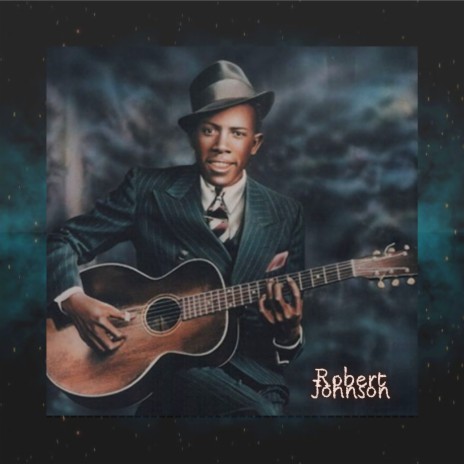
Robert Johnson – Come On In My Kitchen

This is an old Robert Johnson song that I’ve always liked. I learned about this song from a bootleg of Leon Russell, George Harrison, Ringo Starr, and Eric Clapton many years ago. Eric wasn’t in the best of shape when this was recorded during the Bangladesh rehearsals. George takes the solo in this blues song and makes it fit really well. I added this version along with Johnson at the bottom of the post.

Robert Johnson recorded it on November 23, 1936, at the Gunter Hotel in San Antonio, Texas and it was produced by Don Law. Johnson only recorded 29 songs in total with 13 surviving outtakes.  In one hotel room, Johnson performed and in a second adjoining room, the recording equipment was housed.

In 1990 the compilation album The Complete Recordings was released and peaked at #80 in the Billboard Album Charts. It also won a Grammy Award in 1991 for “Best Historical Album. This song has had over 100 known cover versions by other artists.

Robert Johnson was a huge influence on guitarists such as Eric Clapton, Jimi Page, Peter Green, Brian Jones, and many more. He sounded different than his peers at the time which could have contributed to him not being better known in the 1930s. His style was ahead of his time and it took til the 1960s for him to catch on. In 1961, King of the Delta Blues Singers was released with 16 of his songs on the album…a generation of musicians was influenced.

Johnson died in 1938 at the age of 27. Some say Johnson had been flirting with a married woman at a dance, and she gave him a bottle of whiskey poisoned by her husband…he died two days after drinking it. That is not known for sure but we will probably never know.

Eric Clapton – His music is like my oldest friend, always in the back of my head and on the horizon. It’s the finest music I’ve ever heard.  I’ve always trusted its purity. And I always will.’ I don’t know what more you could say….”

Bob Dylan: If I hadn’t heard the Robert Johnson record when I did, there probably would have been hundreds of lines of mine that would have been shut down—that I wouldn’t have felt free enough or upraised enough to write.

Come On In My Kitchen

You better come on in my kitchenWell, it’s goin’ to be rainin’ outdoorsAh, the woman I love, took from my best friendSome joker got lucky, stole her back againYou better come on in my kitchenIt’s goin’ to be rainin’ outdoors

Oh, she’s gone, I know she won’t come backI’ve taken the last nickel out of her nation sackYou better come on in my kitchenIt’s goin’ to be rainin’ outdoorsOh, can’t you hear that wind howl?Oh, can’t you hear that wind would howl?You better come on in my kitchenWell, it’s goin’ to be rainin’ outdoors

When a woman gets in trouble, everybody throws her down

Lookin’ for her good friend, none can be foundYou better come on in my kitchen

Babe, it’s goin’ to be rainin’ outdoorsWintertime’s comin’, it’s gon’ be slowYou can’t make the winter, babe, that’s dry, long, soYou better come on in my kitchen, ’cause it’s goin’ to be rainin’ outdoors

Led Zeppelin: The Biography …by Bob Spitz

This is the second Led Zeppelin book I’ve reviewed in a row…hope you are not getting too tired of it. I’m moving on to something else with my next book.

This is a good book about Led Zeppelin by Bob Spitz. This book surprised me when I read it. The reason is that Spitz wrote a biography of the Beatles that felt uninspired with no new info…I was thinking this one might be the same. Well, I was wrong…this book is the best book I’ve read on Led Zeppelin and that includes Hammer of the Gods and others.

The book uncovered things I didn’t know and gave a different point of view on instances that happened. There are constants about the band that run through every book about them. John Paul Jones was the constant professional and multi-instrumentalist of the band. John Bonham was an incredible drummer but could flash in a violent rage at any minute. Robert Plant the optimistic never say die singer who would change after his family’s bad car accident. Jimmy Page was the absolute leader of the band until he couldn’t function in that role because of the different chemicals he was taking.

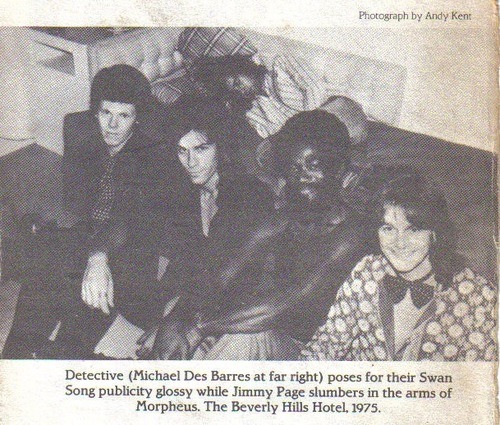
Below is a Swan Song band Detective with a weary Jimmy Page asleep on the couch behind them.

Detective Band
Detective… A Swan Song band with Jimmy Page fast asleep at the photo session.

One thing that was known about the band is that they had an inferiority complex about The Rolling Stones. This is explored more in this book. They couldn’t understand why the press and celebrities hung out and liked the Stones and not them… although Zeppelin outsold them. The answer to that was pretty obvious…other bands such as The Who could shrug off bad reviews and go on…Led Zeppelin would call the critics out from the stage. The press was also threatened by manager Peter Grant and touring manager Richard Cole to give good reviews. Zeppelin also barred the press for years…so it wasn’t a big mystery here except to them.

On the 1977 tour the press was given some rules by the band:

  1. Never talk to anyone in the band unless they first talk to you.
  2. Do not make any sort of eye contact with John Bonham. This is for your own safety.
  3. Do not talk to Peter Grant or Richard Cole – for any reason.
  4. Keep your cassette player turned off at all times unless conducting an interview.
  5. Never ask questions about anything other than music.
  6. Most importantly, understand this – the band will read what is written about them. The band does not like the press nor do they trust them.

Hmmm….wonder why they weren’t as liked as much as the Rolling Stones by the press and public? They also became more separated from their audience in the later 70s.

The book also focuses on their vanity label Swan Song. Drugs had taken over by that time and no artists were really cared for except Bad Company who was hot right out of the gate. Any questions from a Swan Song artist would fall on deaf ears because no one was really running the label. By this time, Grant carried a bag of cocaine and dipped it out with a bowie knife. He stayed secluded at his mansion surrounded by his security cameras… like in a scene out of Scarface.

The band was the top band in the world but in 1975 it all changed with Robert Plant’s car accident that left him recouping for months while his wife was hurt more seriously. In 1977 a guard that worked for Bill Graham stopped a kid from getting a Led Zeppelin sign off their door…all hell broke loose. That was Peter Grant’s son. Grant rounded up his “security” people and beat the guard and they almost popped his eye out.  After that happened they played what was to be their last show in America. A few days later Robert Plant’s son Karac died of a respiratory virus.

All in all, it was a good book and I would recommend it to any rock fan. I am a fan of the band, especially the albums between Led Zeppelin III and Physical Graffiti. I wasn’t a big fan of the bombastic blues songs as much as the light-heavy moments. The book tells you how management built walls around them while being surrounded by violence, threats, and later on drugs.

Beast: John Bonham and the Rise of Led Zeppelin… by C. M. Kushins

The book has a forward by Dave Grohl. I liked the book, it keeps you interested and doesn’t slow up. It’s a look at seventies rock and roll and it will make you realize how much has changed now…not only in music but in the real world.

I’ve always thought Led Zeppelin had a dark cloud that followed them..reading this book reaffirms that feeling. I always admired John Bonham as a drummer. I think Moon and Bonham were the best drummers of the seventies and I would pick them as my top two favorites of all time. They both were different from each but had a feel like no other. They didn’t have the precision of Ginger Baker or Neil Peart but they changed their band’s sound completely.

The book goes over Bonham’s early influences like Gene Krupa. One of his first rock drummer influences was Keith Moon because of how Keith pushed the drums to the forefront. Bonham also liked Ginger Baker and would go see him in his band Air Force.

The author does focus on Bonham but you get a Led Zeppelin bio with it also. It’s a good book and I did learn a lot about him and the band that I didn’t know. Plant and Bonham were from the rural  Midlands, a major difference from London studio pros like Page and Jones. It was an interesting mix.

It seems like Plant and John Paul Jones were a little more down to earth as people and didn’t get caught up long-term with drink and hard drugs that Bonham and Page did. This also states what other books say…Bonham didn’t like being away from his family and was two different people on tour. He would be fine until liquor was added…then he would turn into The Beast.

One reporter describing Bonzo said: “Loathsome…Keith Moon with all of the dynamite and none of the charm.” There are many stories about him but not many are too humorous. He once drank two bottles of champagne on a flight…went to sleep in first class. When the stewardess served dinner, the other passengers begged her not to wake John up. When John woke up…he realized he urinated on himself and called for his drum tech Mick Hinton who was in coach…Hinton gave him some more pants and Bonham then instructed Hinton to take his wet seat in first class while Bonham went to coach in Hinton’s dry seat.

Peter Grant and the rest of the band sometimes got two rooms each in hotels. One as a decoy so Bonham couldn’t find them at 3 in the morning in a drunken rage. He did seem to be a good father and husband though but just didn’t like being away from his home.

One funny story happened when John took his son Jason to see The Police. Stewart Copeland and Andy Summers were really polite and excited to meet Bonham…Sting, being cocky and pretentious was very distant and cool.  Bonham accidentally  stepped on Sting’s foot and Sting said “Hey man, don’t step on my blue suede shoes.” Bonham looked at him and said “I’ll step on your fu**ing head in a minute.”

I would recommend this book to any Led Zeppelin fan. The author does go into his drum technique for any drummers out there and what size kits he used. We all know how this story ends but it shouldn’t have ended that way. In 1980 Led Zeppelin was mounting a comeback and was rehearsing for their first American tour since 1977. Bonham arrived at the first rehearsal and had been on a drinking binge.

Bonham died after drinking what amounted to 40 shots of Vodka in a 24-hour period.

John Paul Jones:  “Benje and I found him. It was like,  let’s go up and look at Bonzo, see how he is. We tried to wake him up… It was terrible. Then I had to tell the other two… I had to break the news to Jimmy and Robert. It made me feel very angry – at the waste of him… I can’t say he was in good shape, because he wasn’t. There were some good moments during the last rehearsals … but then he started on the vodka.” 

Maggie Bell – Wishing Well

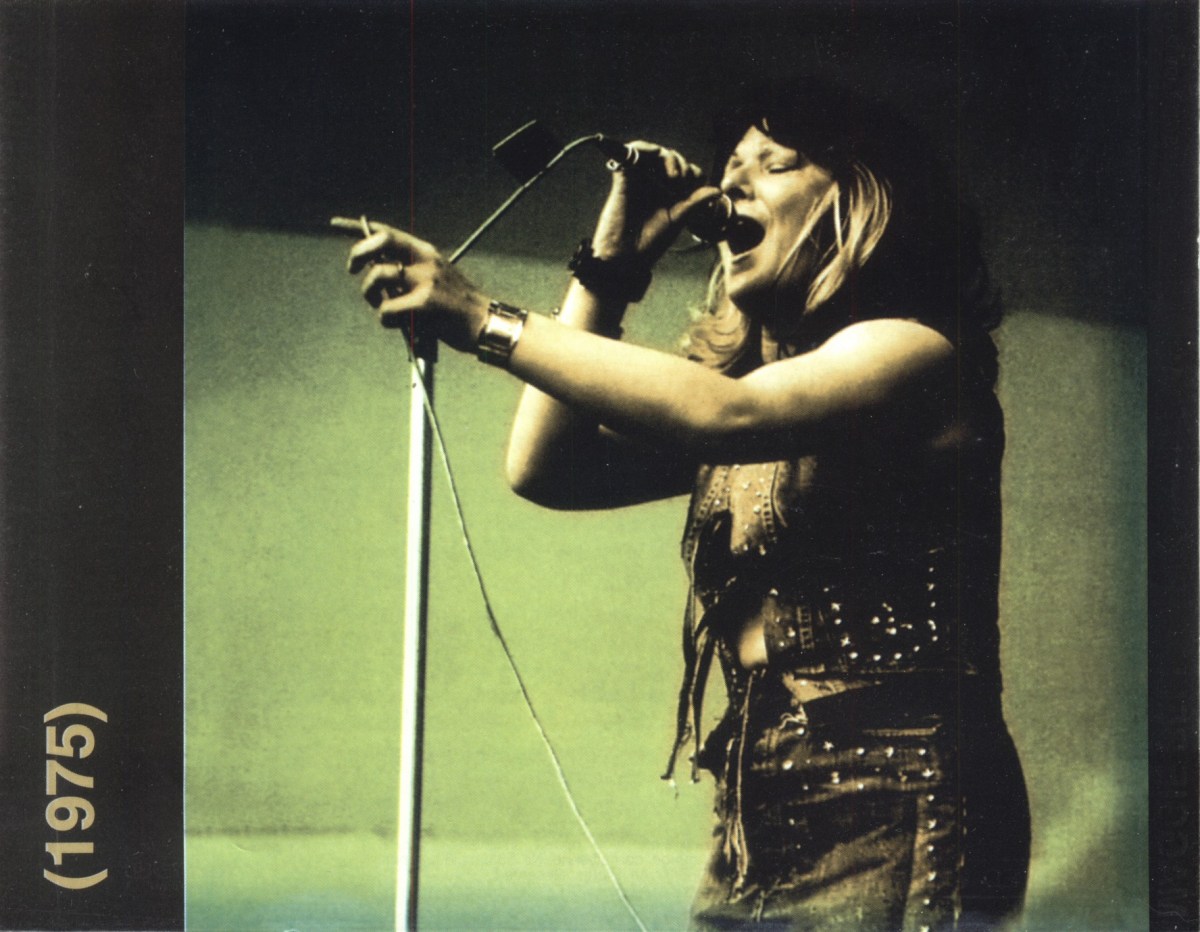
When I heard Maggie Bell a few years ago…the Scottish-born singer blew me away with her voice. A very big Janis vibe to her. I’ve read that she was called the UK’s Janis Joplin but she had her own style.

This song was on the album Suicide Sal released in 1975 on Led Zeppelin’s new record label Swan Song. The song was composed by John “Rabbit” Bundrick, Simon Kirke, Paul Kossoff, Paul Rodgers, and Tetsu Yamauchi. Wishing Well was a song by the band Free and it was originally released in 1972. Maggie puts her spin on it and I love it.

Jimmy Page played on this album and I love the funky bass groove that opens the song. The song didn’t chart but she would later have a top 40 song in the UK with the song Hazell.

Maggie Bell was the former lead singer of Stone The Crows. Peter Grant signed the band and had big plans for them. He was the most powerful manager in rock at that time because of Led Zeppelin. The band would come to a tragic end though. Guitarist Leslie Harvey was electrocuted and died on stage at the Top Rank in Swansea on May 3, 1972. He was the only one in position on the stage. Bell has said: “It was a fluke, we were standing at the side of the stage; we hadn’t even started yet. Leslie said to the audience: ‘There’s a technical hitch,’ and he touched the microphone and the guitar. And that was it.”  The road crew overlooked one loose ground wire.

Steve Howe of Yes helped fill in for some shows for the band after that. Jimmy McCulloch then joined them and they released an album with some songs by Harvey and a couple by McCulloch who would later join Paul McCartney and Wings. The band was over in 1973 but Peter Grant continued to manage Maggie til the early eighties.

Bell was in shock for years afterward but she said:  “I thought to myself: ‘Am I going to give all this up and go back up to Scotland and have two kids?’ I mean, this was a dream we’d planned. Peter said there would be no legal problems if I didn’t want to carry on. I said no, there was a plan. I was going to make sure that I finished the journey. I’m seventy-six years old, I’m still doing it. I mean, the body’s falling apart, but the voice is still fabulous!”

Pat Blythe: The Women of Blues Part Four – Maggie Bell | Segarini: Don't  Believe a Word I Say

You can hear Maggie Bell sing on Every Picture Tells Story by Rod Stewart. She was credited as having “vocal abrasives.” I don’t think I ever heard Maggie Bell on American radio which is a shame.

Wishing Well

Take off your hat, kick off your shoes
I know you ain’t goin’ anywhere
Run ’round the town singin’ your blues
I know you ain’t goin’ anywhere.

You’ve always been a good, good friend of mine,
But you’re always sayin’ “Farewell”
And the only time that you’re satisfied
Is when you dream from the wishing well.

Throw down your gun you might shoot yourself.
Or is that what you’re tryin’ to do?
Put up a fight you believe to be right
Someday the sun will shine through.

You’ve always been a good, good friend of mine,
But you’re always sayin’ “Farewell”
And the only time you’re satisfied
Is when you dream, dream from the wishing well.

And I know what you’re wishing for
Love in a peaceful world

You’ve always been a good, good, good friend of mine,
But you’re always sayin’ “Farewell”
And the only time that you’re satisfied
Is with your feet in the wishing well.

Led Zeppelin – Out On The Tiles

This one is a great deep cut by Led Zeppelin. It was on Led Zeppelin III and is looked over but it has a great riff by Jimmy Page. It’s nice to find a Zeppelin song that hasn’t been played to death…the guitar riff is killer on this song.

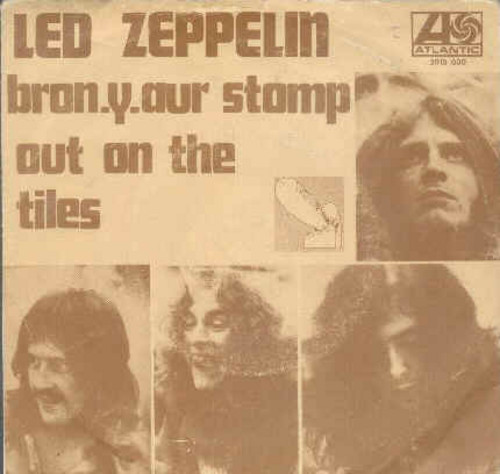
In Japan, this was mistakenly placed on the B-side of “Immigrant Song” rather than “Hey, Hey What Can I Do.” Those copies are rare collector’s items.

Robert Plant remembered an 18th-century cottage called Bron-Yr-Aur he had visited in his youth and felt it would be a great place to temporarily escape life in the fast lane and commune with nature. Plant invited his co-writer, guitarist Jimmy Page, and in the spring, the two men took their instruments and supplies to the retreat to recharge their batteries. The place had no running water or electricity at the time.

Robert Plant: “It was time to take stock, and not get lost in it all, and what better way to keep it real than at a place with no electricity, candles for light, water from a stream, and an outside toilet?”

Many fans didn’t embrace Led Zeppelin III like their first two albums. The band would routinely bludgeon their audiences with hard rock. This album had a lot of acoustic mixed in with rock guitar. I think it’s the most underrated album in their catalog. The next two albums would combine these two elements perfectly. Led Zeppelin III was the turning point of Led Zeppelin…after that album. To my ears…this is when Led Zeppelin grew up musically.

Led Zeppelin III peaked at #1 in the US, Canada, and UK in 1970-71.

Drummer John Bonham would talk about going “out on the tiles,” meaning to bars – the title is a British term for going out on the town. Jimmy Page wrote this song around the phrase. Bonham, along with Page and Robert Plant, got a writing credit on the track.

 Jimmy Page: “That’s ambient sound. Getting the distance of the time lag from one end of the room to the other and putting that in as well. The whole idea, the way I see recording, is to try and capture the sound of the room live and the emotion of the whole moment and try to convey that. That’s the very essence of it. And so, consequently, you’ve got to capture as much of the room sound as possible.”

Jimmy Page: “When Robert and I went to Bron-Yr-Aur we weren’t thinking: ‘Let’s go to Wales and write.. The original plan was to just go there, hang out and appreciate the countryside. The only song we really finished while we were there was That’s The Way, but being in the country established a standard of traveling for inspiration and set a tone for Led Zeppelin III.”

Below Jason Bonham tells the story of Out On The Tiles

Out On The Tiles

As I walk down the highway all I do is sing this song
And a train that’s passin’ my way helps the rhythm move along
There is no doubt about the words are clear
The voice is strong, is oh so strong

I’m just a simple guy, I live from day to day
A ray of sunshine melts my frown and blows my blues away
There’s nothing more that I can say but on a day like today
I pass the time away and walk a quiet mile with you

All I need from you is all your love
All you got to give to me is all your love
All I need from you is all your love
All you got to give to me is all your love
Oh yeah, oh yeah
Oh yeah, oh yeah

I’m so glad I’m living and gonna tell the world I am
I got me a fine woman and she says that I’m her man
One thing that I know for sure gonna give her all the loving
Like nobody, nobody, nobody, nobody can

Standing in the noonday sun trying to flag a ride
People go and people come, see my rider right by my side
It’s a total disgrace, they set the pace, it must be a race
And the best thing I can do is run

All I need from you is all your love
All you got to give to me is all your love
All I need from you is all your love
All you got to give to me is all your love
Oh yeah, oh yeah
Oh yeah, oh yeah
Oh yeah, oh yeah, oh yeah