


This song is a masterpiece from the intro rock guitar riff to the beautiful piano coda. The piano section would have made a great song itself.
This song was inspired by one of the most famous muses in rock and roll. Her name is Pattie Boyd and she was George Harrison’s wife at the time…but that didn’t stop Clapton who was and remained friends with George.
The lyrics are based on the book by Persian poet Nizami, Layla and Majnun, about a man in love with a woman who cannot have her because her parents object.
Pattie divorced Harrison in 1977 and married Clapton in 1979 during a concert stop in Tucson, Arizona. Harrison was not bitter about the divorce and attended Clapton’s wedding party months later with fellow Beatles Ringo Starr and Paul McCartney.
At the end of the song, Duane Allman produced the “crying bird” sound with his guitar while Clapton played acoustic. It was a tribute to Charlie Parker, a jazz legend known as “bird.” Duane also came up with the famous guitar riff and played lead with Clapton. The riff was based on one Albert King played on his song “As The Years Go Passing By,” but sped up.
An edited version was released as a single in 1971. it ran 2:43 and flopped on the charts. The full version was released a year later and became one of the most famous songs in rock history. Allman’s death in a motorcycle accident in October 1971 helped renew interest in the song.
Pattie Boyd: “We met secretly at a flat in South Kensington. Eric Clapton had asked me to come because he wanted me to listen to a new number he had written. He switched on the tape machine, turned up the volume and played me the most powerful, moving song I had ever heard. It was Layla, about a man who falls hopelessly in love with a woman who loves him but is unavailable. He played it to me two or three times, all the while watching my face intently for my reaction. My first thought was: ‘Oh God, everyone’s going to know this is about me.’
Bobby Whitlock: “I was there when they were supposedly sneaking around. You don’t sneak very well when you’re a world figure. He was all hot on Pattie and I was dating her sister. They had this thing going on that supposedly was behind George’s back. Well, George didn’t really care. He said, ‘You can have her.’ That kind of defuses it when Eric says, ‘I’m taking your wife’ and he says, ‘Take her.’ They got married and evidently, she wasn’t what he wanted after all. The hunt was better than the kill. That happens, but apparently Pattie is real happy now with some guy who’s not a guitar player. Good for her and good for Eric for moving on with his life. George got on with his life, that’s for sure.”
The song had an interesting chart history. It was released in 1970 and it peaked at #51 in the Billboard 100 in 1971… then in 1972 it peaked at #10 in the Billboard 100, #9 in Canada and #7 in the UK.
Clapton performed a slow, acoustic version for an MTV Unplugged concert in 1992. It was released as a single and made #12 in the US, getting lots of airplay radio stations. This version also won a Grammy for Best Rock Song.
From Songfacts
This song is about George Harrison’s wife, Pattie. She and Clapton began living together in 1974 and married in 1979. Clapton and Harrison remained good friends, with George playing at their wedding along with Paul McCartney and Ringo Starr. Clapton left her for actress Lory Del Santo (with whom he had his son, Conor) in 1985. In an article published in The Guardian December 13, 2008, Pattie said: “I wasn’t so happy when Eric wrote ‘Layla,’ while I was still married to George. I felt I was being exposed. I was amazed and thrilled at the song – it was so passionate and devastatingly dramatic – but I wanted to hang on to my marriage. Eric made this public declaration of love. I resisted his attentions for a long time – I didn’t want to leave my husband. But obviously when things got so excruciatingly bad for George and me it was the end of our relationship. We both had to move on. Layla was based on a book by a 12th-century Persian poet called Nizami about a man who is in love with an unobtainable woman. The song was fantastically painful and beautiful. After I married Eric we were invited out for an evening and he was sitting round playing his guitar while I was trying on dresses upstairs. I was taking so long and I was panicking about my hair, my clothes, everything, and I came downstairs expecting him to really berate me but he said, ‘Listen to this!’ In the time I had taken to get ready he had written “Wonderful Tonight.”
I was a bit more hurt when Eric wrote Old Love (1989). The end of a relationship is a sad enough thing, but to then have Eric writing about it as well. It makes me more sad, I think, because I can’t answer back.”
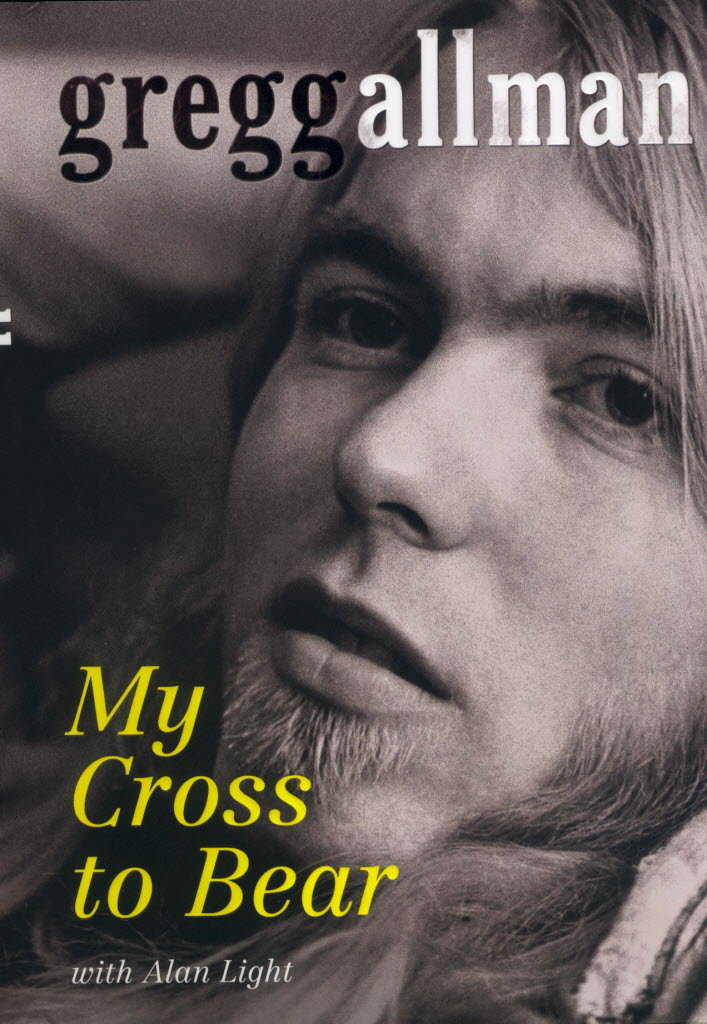
Allman ended up playing on the album through good timing and a mutual admiration between he and Clapton. Tom Dowd was producing the Allman Brothers’ album Idlewild South at Criteria Studios in Miami when he got the call that Clapton would like to book time with his new band. Duane was a huge fan of Clapton, and when the Allman Brothers played a show in Miami on August 26, 1970, it was when Derek and the Dominos were recording with Dowd at Criteria. Duane called to see if he could stop by after the gig, and Clapton decided to bring his band to the show. At the show, Duane froze up when he saw Clapton near the stage, but the admiration was mutual, and Clapton arranged for Duane to keep coming by and help with the album. Duane would fly in between Allman Brothers shows, and after recording a few songs with Derek and the Dominos, he worked with them on “Layla” the final day of the recording sessions: September 9th.
Clapton went into a drug-filled depression when the single tanked in 1971. He couldn’t understand why it wasn’t a hit. The record company did very little to advertise the album, figuring any project with Clapton would get plenty of publicity. It eventually did, and the record company made out very well.
Derek and the Dominos formed after Eric Clapton, Bobby Whitlock, Carl Radle and Jim Gordon worked on George Harrison’s first post-Beatles album, All Things Must Pass. They got together at Clapton’s house in England and started writing songs and playing small clubs. Bobby Whitlock explained in his Songfacts interview: “We toured all over England. We did a club tour, and no ticket was over a pound. It was all word of mouth. We played the Speakeasy in London and The Marquee Club, then we played some really funky places up in Nottingham and Plymouth and Bornmouth – we went all over Great Britain. Here we were, these so called “big rock stars,” and we were playing these funky places that would hold like 200 people. Of course, people were jam packed and spilling out on the streets and stuff. It was pretty wild, it was a great time. We did this one tour, we rode around in Eric’s Mercedes. We were all crammed in one car. The second time we went out in Great Britain, we upscaled it. We played small concert venues – Royal Albert Hall and places like that. We went down to Miami, recorded the Layla album and went on tour in the United States. We preceded the record for the most part. All Things Must Pass Came Out, it was a big record, “My Sweet Lord” was #1. We were on the road in the United States, George was playing all over. We were all over the radio with our playing with George, and the album Layla – nobody could get it.”
The group did a lot of drugs while they were recording the album – there’s even a picture as part of the album art of Duane making a phone call, which Whitlock says was to score drugs from Georgia. While drugs led to a lot of problems down the line for the band and most of their members, it didn’t hurt their performance on the album – Clapton even said that the drugs may have helped the recording process.
I was married to Eric’s close friend, George Harrison, but Eric had been making his desire for me clear for months. I felt uncomfortable that he was pushing me in a direction in which I wasn’t certain I wanted to go. But with the realization that I had inspired such passion and creativity, the song got the better of me. I could resist no longer.”
Clapton’s affair with Patti Harrison wasn’t a big concern with the band. Says Whitlock, “It was nobody’s business. They were adults making adult, life-altering decisions.”
The piano piece at the end was edited on a few weeks later. Drummer Jim Gordon came up with it as a solo project and had to be convinced to use it on “Layla.” Gordon was one of the most successful session drummers of the late 1960s and early 1970s, playing on many classic albums of the time. Sadly, in the mid 1970s, severe psychological problems began to manifest in Gordon’s behavior. He complained of hearing voices, especially the voice of his mother. By the late ’70s, Gordon’s mental difficulties – later diagnosed as acute paranoid schizophrenia – had ruined his musical career. In 1983, Gordon brutally murdered his own mother using a claw hammer. The insanity defense having been narrowed in California, Gordon was convicted of second-degree murder in 1984 and sentenced to 16 years to life. If he ever gets out of jail, Gordon will have lots of money waiting for him as a result of his songwriting credit on this track.
The piano at the end has become a cultural touchstone. It was used to great effect at the end of the movie Goodfellas, and radio stations almost always play the version with the piano. At the time, not everyone liked it. Whitlock told us, “I hated it. The original ‘Layla’ didn’t have a piano part. When we did the song, we didn’t have a piano part in mind. Jim was playing it, and Eric said, ‘What about that – that’s good.’ Jim’s not a piano player. He plays so straight – everything is right on the money. They wanted me to give it some feel, so Jim recorded it, I recorded it, Tom Dowd mixed them together. It’s two different takes.”
In 1985, Eric Clapton played this at Live Aid, a benefit concert for famine relief. Phil Collins played drums during his set.
Andy Summers from The Police named his daughter Layla.
Two years after Duane Allman died, Lynyrd Skynyrd released their debut album containing “Free Bird,” a song they often dedicated to Allman in concert. Like “Layla,” “Free Bird” is powered by a lengthy instrumental passage that evokes the bird flying free. That one was also truncated for single release in an edit that sucks the marrow from its bones.
The band broke up when they tried to record a second album. Clapton and Gordon had a falling out in the studio, which ended the sessions and marked the end of the band. Says Whitlock, “Eric says it was drugs and paranoia. It was just a lot of everything. We were road weary. We did 50-something dates in as many days in the United States. I would wake up and not even know where I was. They didn’t expect us to live very long anyway. We surprised them, at least a couple of us did – Eric and myself. That was it.” Carl Radle died of heroin-related kidney failure in 1980. (For more on Derek and the Dominos, check out our full Bobby Whitlock interview)
As a tribute to Jimi Hendrix, Derek and the Dominos recorded a version of his “Little Wing” the same day. Hendrix died nine days later.
Jim Gordon’s then-girlfriend Rita Coolidge claimed in her memoir Delta Lady, that she wrote the song’s piano coda. The singer-songwriter maintained that it came from a track called “Time (Don’t Get In Our Way)” written by her and Gordon. “We played the song for Eric Clapton in England. I remember sitting at the piano in Olympic Studios while Eric listened to me play it,” she recalled. “Jim and I left a cassette of the demo, hoping of course that he might cover it.”
A year later, having split up with Gordon, Coolidge heard “Layla” for the first time. “I was infuriated,” she remembered. “What they had clearly done was take the song Jim and I had written, jettisoned the lyrics and tacked it to the end of Eric’s song. It was almost the same.”
Layla
What’ll you do when you get lonely
And nobody’s waiting by your side?
You’ve been running and hiding much too long.
You know it’s just your foolish pride.
Layla, you’ve got me on my knees.
Layla, I’m begging, darling please.
Layla, darling won’t you ease my worried mind.
I tried to give you consolation
When your old man had let you down.
Like a fool, I fell in love with you,
Turned my whole world upside down.
Layla, you’ve got me on my knees.
Layla, I’m begging, darling please.
Layla, darling won’t you ease my worried mind.
Let’s make the best of the situation
Before I finally go insane.
Please don’t say I’ll never find a way
And tell me all my love’s in vain.
Layla, you’ve got me on my knees.
Layla, I’m begging, darling please.
Layla, darling won’t you ease my worried mind.
Layla, you’ve got me on my knees.
Layla, I’m begging, darling please.
Layla, darling won’t you ease my worried mind.


 PowerPop... An Eclectic Collection of Pop Culture