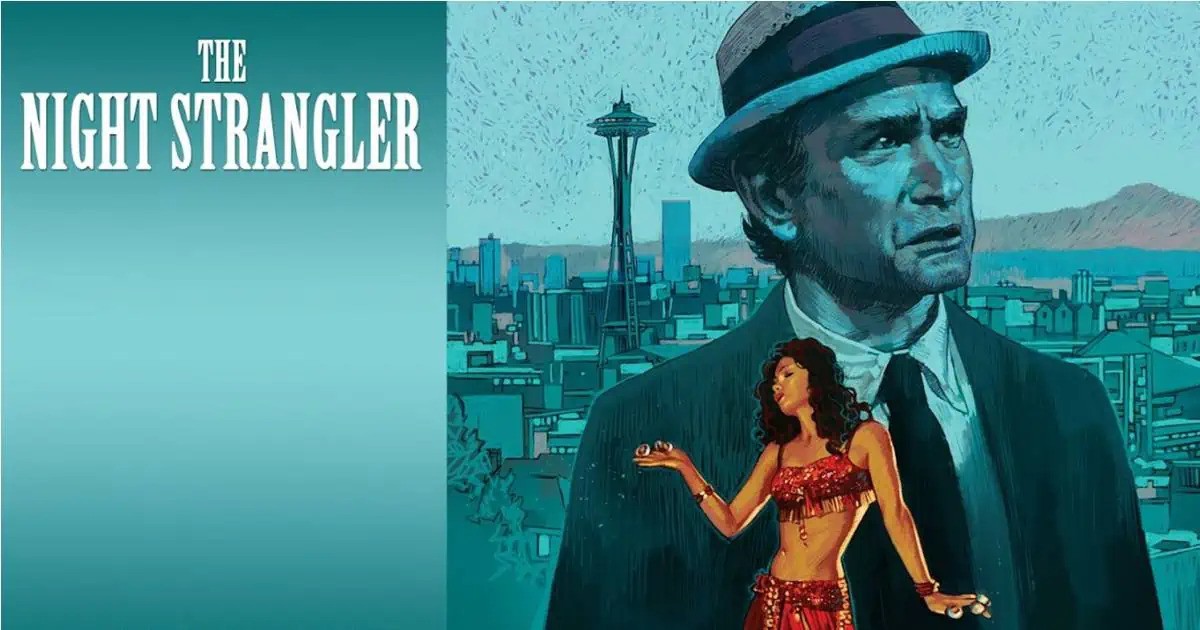
The Night Strangler …1973 film

This is the second TV movie about Kolchak. This time, Kolchak is run out of Vegas, still unemployed and in that beat-up suit and straw hat, and somehow still covering the weirdest stories on earth. He lands in Seattle, and right on cue, women start turning up strangled in the city’s underground ruins. Their corpses? Bone dry. No blood. No explanation. Déjà vu, but not quite. I’m not going to give away what it was, but it wasn’t what you expected. 

It’s a clever move, leaving Vegas and swapping it for Seattle’s underbelly. Parts of 19th-century buildings were left after the great Seattle fire of 1889. The movie makes excellent use of these underground tunnels, where Victorian storefronts and old streets sit buried beneath the modern city. The atmosphere here is claustrophobic and perfect for a monster that hides in plain sight.

The Night Strangler was the follow-up that proved Kolchak wasn’t a one-hit wonder. Dan Curtis, who had already scared TV audiences with Dark Shadows, stepped in to direct again, and Carl Kolchak had room to breathe and dig into another supernatural mystery. Also, the humor intertwined in this movie keeps it moving at a good pace. 

Darren McGavin is, once again, the glue that holds the whole thing together. His Kolchak is pushy, sloppy, and never takes “no comment” for an answer. Every scene is like a tennis match between his energy and Simon Oakland’s rage as editor Tony Vincenzo. Honestly, those two could’ve been dropped into a sitcom about running a failing Chicago newspaper, and it still would’ve been gold.

While The Night Strangler didn’t quite capture the lightning-in-a-bottle impact of the original Night Stalker, it proved there was more than enough life in this story to warrant more. The movie’s success led directly to the short-lived but cult-favorite TV series Kolchak: The Night Stalker in 1974. Looking back, The Night Strangler remains a strong second chapter anchored by McGavin’s great performance.

The Full Movie

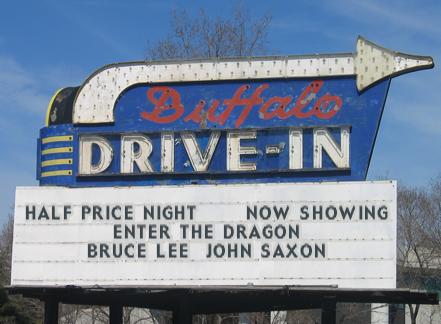
Max’s Drive-In Movie – Enter The Dragon

Enter The Dragon Final

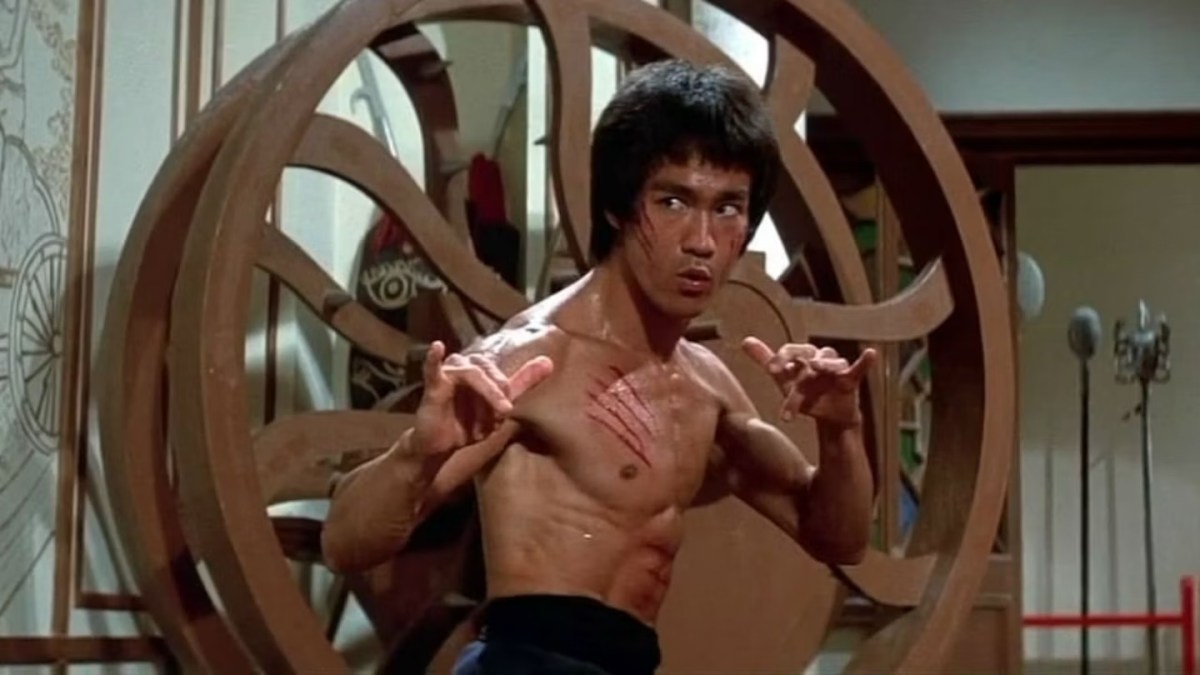
I remember black velvet paintings in the 1970s. Two of the biggest subjects of those paintings were Elvis Presley and Bruce Lee and at one time I had a Bruce Lee painting. Lee was one of my non-musical and non-baseball childhood heroes. This guy was the MAN. Bruce Lee was Rambo, Rocky, and the Terminator rolled into one…but with one difference…he was real. He also had a coolness about him.

After watching his movies when I was young I also purchased some nunchucks when I was a teenager and konked my noggin enough times to realize I was no Bruce Lee. Lee was the first actor to bridge East and West. He understood how to speak to both audiences no one else ever had. Enter the Dragon was the first film co-produced in Hong Kong and Hollywood. Bruce greatly influenced the action movie genre from the 70s to now.

Bruce would run into nut cases at times. Some person idiot would call him out and want to challenge him to a fight while he would be walking down the street and Bruce would have to defend himself while teaching the person a lesson. Imagine being the dolt who saw Bruce Lee and thought it would be a good idea to fight him. A boxer who sparred with him said “Body of a lightweight with a hit stronger than a heavyweight.”

Bob Wall who appeared in some of Bruce Lee’s movies said this.

One day, while filming Enter the Dragon, an extra taunted Bruce Lee and challenged him to fight. The extra told Bruce he was just an actor, not a martial arts expert… The whole thing went won like this. This kid was good. He was no punk. He was strong and fast, and he was really trying to punch Bruce’s brains in. But Bruce just methodically took him apart.

I mean Bruce kept moving so well, this kid couldn’t touch him…Then all of a sudden, Bruce got him and rammed his ass into the wall and swept him, he proceeded to drop his knee into his opponent’s chest, locked his arm out straight, and nailed him in the face repeatedly.

This 1973 movie was Bruce Lee’s final completed film before his death. The movie contributed to martial arts’s global popularity and helped make Bruce Lee’s legacy. I also want to include John Saxon in this. I’ve always been a fan of Saxon in whatever movie he was in. He plays a character named Roper in this flick. Saxon was also a student of Bruce Lee.

The movie’s plot is about a British intelligence agent named Braithwaite to participate in a martial arts tournament organized by the mysterious and reclusive crime lord named Han. Han is suspected of being involved in illegal activities such as prostitution, and human and drug trafficking, and the tournament is a cover for these operations. Lee’s mission is to gather evidence against Han and bring down his criminal empire.

It’s a good story movie with plenty of action scenes. I’ve seen some martial arts movies that dump the story and just go for action. This one is not like that…quality writing and acting throughout the film. It influenced many of the action films that came later. The film keeps the action, drama, and some comedy flowing. It’s worth it to see Bruce Lee with his almost balletic moves.

While filming Bruce in fight scenes Bruce had to slow down his movements so the camera would catch it. His training methods were legendary and some say he was the fastest human they had ever seen.

Before this, Bruce had problems finding acting jobs after the TV series The Green Hornet. He became a private instructor to the stars such as Steve McQueen, John Saxon, and more. He moved to Hong Kong in 1971 and made three Asian movies, Fists of Fury, The Chinese Connection, and Return the Dragon. 

The next movie was a joint production between Hong Kong and US production companies. The movie was Enter the Dragon and it was Bruce’s breakthrough movie. Unfortunately, Bruce Lee died six days before the film’s Hong Kong release.

Quotes:

  • Lee: Teacher?
  • Shaolin Abbott: I see your talents have gone beyond the mere physical level. Your skills are now at the point of spiritual insight. I have several questions. What is the highest technique you hope to achieve ?
  • Lee: To have no technique.
  • Shaolin Abbott: Very good. What are your thoughts when facing an opponent?
  • Lee: There is no opponent.
  • Shaolin Abbott: And why is that ?
  • Lee: Because the word “I” does not exist.
  • Shaolin Abbott: So, continue…
  • Lee: A good fight should be like a small play, but played seriously. A good martial artist does not become tense, but ready. Not thinking, yet not dreaming. Ready for whatever may come. When the opponent expands, I contract. When he contracts, I expand. And when there is an opportunity, I do not hit. It hits all by itself.

Kareem Abdul-Jabbar: Bruce created a jambalaya of martial arts, adding and discarding moves that were less effective. No wasted movements I took it to heart, I dedicated myself to preparation by maintaining complete focus during basketball practice and my training with Bruce. As a result, I became stronger, faster and a much more intense player. Bruce was an innovator and caused martial arts to move forward. … The skyhook is the embodiment of an efficient shot that requires minimal movement but sudden speed.

Max Picks …songs from 1973

1973

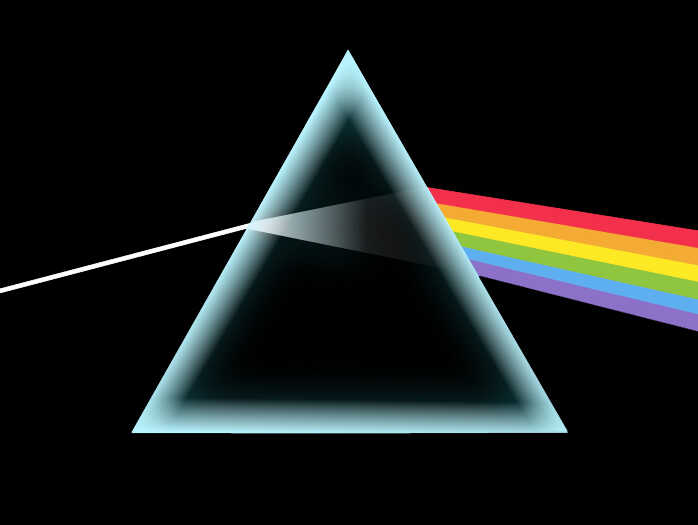
Pink Floyd released one of the biggest albums of all time…Dark Side of the Moon.

Roger Waters put together the cash register tape loop that plays throughout the song. It also contains the sounds of tearing paper and bags of coins being thrown into an industrial food-mixing bowl. The intro was recorded by capturing the sounds of an old cash register on tape and meticulously splicing and cutting the tape in a rhythmic pattern to make the “cash register loop” effect. Waters also wrote the song.

Like many of their songs, this was not released as a single in the UK, where singles were perceived as a sellout…but it was released as a single in America in 1973

Another positive song that was written by George Harrison. “Give Me Love (Give Me Peace on Earth)” replaced Wings’ “My Love” at number 1 on the Hot 100 singles chart…For the week ending 30 June that year, the Harrison and McCartney songs were ranked numbers 1 and 2 respectively.

This song was based on a true story that happened to the band. Smoke On The Water took inspiration from a fire in the Casino at Montreux, Switzerland on December 4, 1971. Deep Purple was going to start recording their Machine Head album there right after a Frank Zappa concert, but someone fired a flare gun at the ceiling during Zappa’s show, which set the place on fire when Deep Purple was watching. It was released in May of 1973.

Music stores would not be the same without this song. It was written by Ritchie Blackmore, Ian Gillan, Roger Glover, Jon Lord, and Ian Paice.

Allman Brothers released this song in August of 1973. It was the band’s biggest hit that almost didn’t get released. The band thought it was too country and almost didn’t release it. This one was written by Dickey Betts.

My sister had a Jim Croce greatest hits album and I played it non-stop. This one is easy for kids to remember. This song has been played to death but I still love it. This one remains one of the most remembered songs from the early seventies. Jim Croce wrote this one.

Sammy Johns – Chevy Van… 1970’s AM Radio Gold Week

To wrap 1970’s AM Radio Gold week up…I had to include this one….so I hope you have a happy Sunday…in your Chevy Van or whatever you drive. This song takes me back to being a kid hearing on a car radio at night. I try not to repeat songs on my blog…but with this theme…I just had to include this one. For me when I think of AM radio…this is the first one that comes to mind. I posted a small post about this song 4 years ago…hope you don’t mind.

Sammy Johns re- released Chevy Van back in 1975 and it peaked at #5 in the Billboard 100,#7 in Canada and #2 in New Zealand. It is pure AM 70’s pop and it caught my imagination as a youngster.

I remember vans in the seventies…painted with all kinds of designs until the minivan came and ruined the whole damn thing.  We went from this:

460 Vans of The 70's ideas | custom vans, vans, cool vans

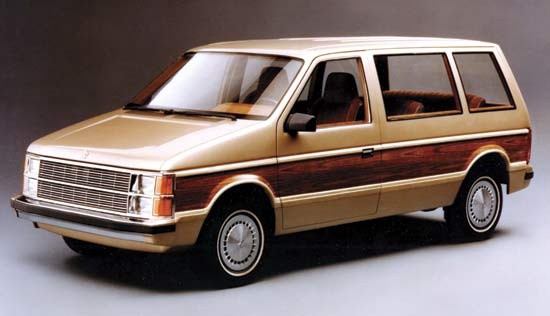
to this…in a blink of an eye. No place to hide in this one.

Minivans are Punk Rock. They're so uncool, they're freakishly… | by Bryan D  | Postmodern Motoring | Medium

The musicians that back Johns are the famous Wrecking Crew from Los Angeles. The song has been covered by many Country artists and most recently by Eric Church.

John’s compositions have also been recorded or covered by other artists such as Waylon Jennings, Sammy Kershaw, Conway Twitty. Jennings sang John’s composition “America” on a nationally broadcast ceremony to mark the restoration done on the Statue of Liberty. This led to the success of the single which went gold and was even nominated country song of the year.

Much more about the song at my friends Dave site.

Also this song was the theme song to the movie The Van (which yea…I have) released in 1977. It was the first movie Danny DeVito was in. I thought I would include a movie trailer to The Van. It won’t be confused with The Godfather at anytime but it’s a fun B 70s Movie.

Thank you for reading this week!

Chevy Van

I gave a girl a ride in my wagon
She rolled in and took control
She was tired and her mind was a-draggin’
I said get some sleep and dream of rock and roll

‘Cause like a picture she was layin’ there
Moonlight dancin’ off her hair
She woke up and took me by the hand
She’s gonna love me in my Chevy van
And that’s all right with me

Her young face was like that of an angel
Her long legs were tanned and brown
Better keep your eyes on the road, son
Better slow this vehicle down

‘Cause like a picture she was layin’ there
Moonlight dancin’ off her hair
She woke up and took me by the hand
She’s gonna love me in my Chevy van
And that’s all right with me

I put her out in a town that was so small
You could throw a rock from end to end
A dirt road Main Street, she walked off in bare feet
It’s a shame I won’t be passin’ through again

‘Cause like a picture she was layin’ there
Moonlight dancin’ off her hair
She woke up and took me by the hand
We made love in my Chevy van
And that’s all right with me

Rolling Stones – Criss Cross

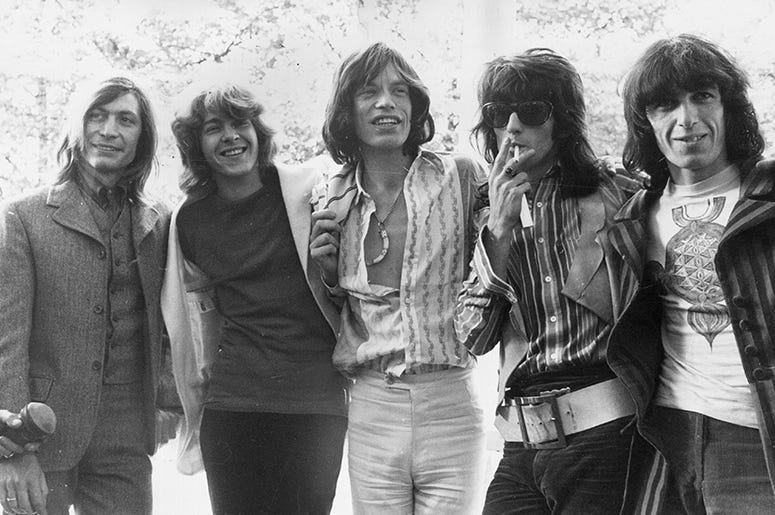
A new old song from the Stones. This song has been in the vault…it will be included with the reissued “Goats Head Soup,” out Sept. 4. Two more unheard tracks will be on the reissue. Thanks to Deke for pointing this song out last week.

It’s a cool funky track produced by Jimmy Miller.

“The remastered “Goats Head Soup” box set and deluxe editions will all feature 10 bonus tracks, including “Criss Cross,” the previously unheard “Scarlet,” featuring guitar by Jimmy Page, and a third newly unearthed song, “All The Rage.” All three songs were recorded more than 40 years ago but were never officially released until now.

https://www.loudersound.com/news/the-rolling-stones-launch-video-for-previously-unreleased-track-criss-cross

Criss Cross

Baby. Ooh!
Baby
Save me. Ooh!
Save me. Ah!
Yeah, here come a woman
Givin’ me a criss cross mind
Save me
Save me. Ooh!
Yeah, here come a woman
Giving me a criss cross mind
Oh I got a lotta knots in my hair
I can’t seem to straighten out
Ah, I think I need a blood transfusion
Yeah, here come a lady
Giving’me a criss cross mind

Darling
Darling
Ooh!
Touch me
Ooh, yeah!
Kiss me
Ooh, yeah! Ooh, yeah!
Lip to lip
Fingertip
Skin to skin
Ring to ring
Tongue to tongue
Thigh to thigh
Oh baby
Yeah
All the time
Baby
Save me
Yeah here come a lady
Giving’ me a criss cross mind
Mama walkin’ around in the rain
She want you every night
An’ think I need a blood transfusion
Yeah here come a woman
Givin’ me a criss cross mind
Yeah, yeah
Darling
Darling
Baby
Save me. Save me. Save me. Save me
And feed me, yeah
Baby. Baby. Baby
Save me
Cheek to cheek
Ohh yeah
Tounge to tounge

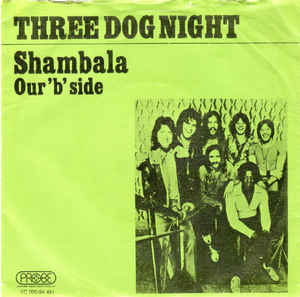
Three Dog Night – Shambala

I first heard this song in the seventies and liked it. I ordered Three Dog Night’s Greatest hits off of television. They were very successful in the late sixties and seventies…songs like  Joy To The World, Family of Man, Black and White, The Show Must Go On, etc… They racked up 11 top ten hits and 3 number 1’s… and 21 songs in the Billboard 100 altogether.

They were unusual because they had not one, not two…but three lead singers.

I always wondered what “Shambala” meant…now I know. The word ‘Shambala’ has a spiritual meaning in the Buddhist religion, and some Tibetan Buddhists believe that it is a mythical kingdom or a mystical land hidden somewhere in the Himalaya mountains…

The song’s writer, Daniel Moore, told this story. I remember getting excited about the sound of the word, ‘Shambala.’ Before I wrote the song, I called a friend, Eddie Zip, who I’d been working with and telling him, ‘That word Shambala has a magic sound to it, you ought to put together a band and call it Shambala, you couldn’t lose.’ We had just recorded one of his songs titled ‘Don’t Make God’s Children Cry.’ We were getting – ELEVATED!

I wrote the words and melody, a capella, driving on the Ventura Freeway in about 10 minutes. I got home, picked up my Martin guitar and had the music finished in 5 minutes; a pretty good 15 minutes.

The song peaked at #3 in the Billboard 100 and #4 in Canada in 1973.

This is the commercial I ordered it from back in 1970s.

From Songfacts.

This was written by the songwriter Daniel Moore, and first released by the Texas songwriter B.W. Stevenson. Moore told Songfacts: “Regarding the song, ‘Shambala,’ it was written entirely by myself, Daniel Moore, in the fall of 1972. It was recorded by Three Dog Night in December of 1972. It was recorded by B.W. Stevenson in Late February, 1973 and released two weeks before the Three Dog Night version was released. During those two weeks B.W.’s version sold 125,000 single 45s. Then Three Dog Night released their version and sold 1,250,000 single 45s.”

Later in 1973, with the Three Dog Night version of “Shambala” climbing the charts, Stevenson released a carbon copy single called “My Maria” (credited to Stevenson and Moore), which peaked at #9 US, two months after “Shambala” hit #3.

 ‘In 1972 my brother, Matthew, called me and informed me that he had received a letter from Dorothy Beg at Lake Pleasant, Massachusetts that told him where and who he had been in his past lives. He had sent a letter to her requesting this information. After recounting several past lives the letter ended with, ‘My messenger tells me to tell you, ‘Let your light shine in the halls of Shambala.” In the phone conversation at that point Matthew said, ‘Shambala, what the hell is that?’

So I did some research and found dozens of references to the word Shambala, the 5000-year-old word originating from Sanskrit. Some were weird, some were goofy but the one I liked was found in Alice Bailey’s Treatise On White Magic. It basically said that there was a gigantic cavern under the Gobi Desert that has a replica of every evolving human being. And when that replica begins to light up or glow (meaning you are cleaning up your act and becoming more spiritual minded or raising your consciousness to a higher level), there is point where your replica gets bright enough to warrant a spiritual teacher being sent to you.

The recording session of my demo in 1972 was with Dean Parks and Jim Varley. Dean (playing bass) was sitting with me (I was engineering, playing the acoustic guitar and singing live) in the control room. We were wearing earphones with the speakers turned off, and 50 feet away at the other end of the studio on the other side of the glass with earphones, was Jim Varley playing drums. Twenty-eight years later I had Greg Beck overdub an electric guitar and that is what you hear on this recording. That’s the only time Dean Parks and Greg Beck have played together, according to Greg.

Three Dog Night heard the song through a publisher, Lindy Blaskey, who was working at ABC Dunhill Publishing. He called me and was very excited because he had gotten such a positive reaction from Three Dog Night and their producer Richie Podler. Anyway, they cut it, it was their single and it was a hit. Bless all of their hearts.

Postscript:
In the Guinness Book of World Records, under Prophecies, there is a reference to Shambala where it says, ‘Any one who furthers the name, ‘Shambala’ shall be rewarded 100 times.’ And so it is.”

This was used in a commercial television advertisement campaign for Citgo Petroleum. 

Cory Wells, who along with Danny Hutton and Chuck Negron was one of three vocalists in the band, sang lead on this track. Wells died in 2015 at age 74.

Shambala

Wash away my troubles, wash away my pain
With the rain in Shambala
Wash away my sorrow, wash away my shame
With the rain in Shambala

[Chorus]
Ah, ooh, yeah, yeah, yeah, yeah, yeah

Everyone is helpful, everyone is kind
On the road to Shambala
Everyone is lucky, everyone is so kind
On the road to Shambala

[Chorus]

How does your light shine, in the halls of Shambala

I can tell my sister by the flowers in her eyes
On the road to Shambala
I can tell my brother by the flowers in her eyes
On the road to Shambala

[Chorus]

How does your light shine, in the halls of Shambala