In my first 6 years of blogging, I posted one Bill Haley song. Now in the past 5-6 months, this makes my 3rd. That’s what happens when Max reads books.
If there was ever a fifties phrase…this is it. This song was released in 1953…two years before the popularity of Rock Around The Clock. It was Haley’s first time in the top twenty. He said he got this phrase from a teenager when he asked her if she liked what she heard in rock and roll.
The song has that western swing/big band sound to it…but also had its toe in the rock and roll water. This song peaked at #12 on the Hot 100 and #66 on the R&B Charts in 1953.
Haley always dreamed of fame but he was extremely private. Those two things don’t go together well. He turned down opportunities to make himself more known time after time. He originally said no to having Rock Around The Clock in a movie. He had to be talked into it. Coke also offered him 250,000 dollars (2,667,967.13 now) to appear in a few advertisements when he and the Comets needed the money….he again said no. All in all, he was unable to capitalize on his popularity like his peers were able to do.
Things started to fall apart in the late ‘50s, mostly due to mismanagement and Bill’s loyalty to friends from the neighborhood who were way over their heads in business affairs.
He has a lot to be remembered for…he joined Country, Big Band, and R&B and called it “Country Jive.” He remained popular in the UK. His last tour there in 1979 included an appearance before the Queen on the Royal Variety Performance.
The B-Side… What’cha Gonna Do?
Crazy Man, Crazy
Crazy man crazy Crazy man crazy Crazy man crazy Oh, man, that music’s gone, gone Said crazy man crazy Crazy man crazy Crazy man crazy Oh, man, that music’s gone, gone
When I go out and I want a treat I find me a band with a solid beat Take my chick and we dance about When they start rockin’, boy, we start to shout, we shout
Crazy man crazy Crazy man crazy Crazy man crazy Man, that music’s gone, gone Go, go, go everybody Go, go, go everybody Go, go, go everybody Go, go, go, go, go, go, go
Crazy man crazy Crazy man crazy Crazy man crazy Man, that music’s gone, gone Said crazy man crazy Crazy man crazy Crazy man crazy Man, that music’s gone, gone
They play it soft, they play it strong They play it wild and they play it long They just keep playin’ ’til the break of day To keep them rockin’ all you gotta say is
Crazy man crazy Crazy man crazy Crazy man crazy Man, that music’s gone, gone Go, go, go everybody Go, go, go everybody Go, go, go everybody Go, go, go, go, go, go, go
My cousin had many of their albums including this one. He told me back in 1981 or so…hey you have to listen to this…he called it “science rock.” I thought how exciting can “science rock” be? This was one of the first songs he played for me by them. I was impressed…I was just beginning to play bass and I liked the song right off the bat.
When the track was finished, Geddy Lee didn’t like the track, he said: “I remember being disappointed in the studio, thinking we really didn’t capture the spirit of the song. We thought it was the worst song on the record at the time – but it all came together in the mix. Sometimes you don’t have the objectivity to know when you’re doing your best work.”
This was on their album Moving Pictures released in 1981. The band just got off a 10-month-long tour. They were going to release their second live album but Neil Peart was excited about the new ideas of songs developed at sound checks throughout the tour. They canceled plans for the live album and started to focus on making this one.
They were helping another Canadian band Max Webster by playing a song called Battlescar on their album Universal Juveniles. A lyricist named Pye Dubois was working with Max Webster on their songs and suggested some lyrics to Rush that were developed into Tom Sawyer. The track is credited to Rush and Pye Dubois.
Their intro to the song live on their 2007 tour was the animated South Park characters singing the song with Cartman making up words in their band Lil Rush. I’ll have the video above the studio version.
The song peaked at #24 in Canada, #44 on the Billboard 100, and #8 on the Billboard Mainstream Rock Charts in 1981. The album Moving Pictures peaked at #1 in Canada, #3 on the Billboard Charts, and #3 in the UK.
This song became one of Rush’s most popular songs and received a lot of radio play. Its success helped the Moving Pictures album achieve widespread acclaim and commercial success. This is about the time I found out about Rush.
Neil Peart: “Tom Sawyer was a collaboration between myself and Pye Dubois, an excellent lyricist who wrote the lyrics for Max Webster. His original lyrics were kind of a portrait of a modern day rebel, a free-spirited individualist striding through the world wide-eyed and purposeful. I added the themes of reconciling the boy and man in myself, and the difference between what people are and what others perceive them to be – namely me I guess.”
Geddy Lee: “The one song that we have to play for the rest of our lives. When we wrote it, we had no idea that it would touch such a nerve with people. In many ways, it’s the quintessential Rush song.”
Tom Sawyer
A modern-day warrior
Mean, mean stride
Today’s Tom Sawyer
Mean, mean pride
Though his mind is not for rent
Don’t put him down as arrogant
His reserve a quiet defense
Riding out the day’s events
The river
What you say about his company
Is what you say about society
Catch the mist
Catch the myth
Catch the mystery
Catch the drift
The world is, the world is
Love and life are deep
Maybe as his skies are wide
Today’s Tom Sawyer, he gets high on you
And the space he invades, he gets by on you
No, his mind is not for rent
To any god or government
Always hopeful, yet discontent
He knows changes aren’t permanent
But change is
And what you say about his company
Is what you say about society
Catch the witness
Catch the wit
Catch the spirit
Catch the spit
The world is, the world is
Love and life are deep
Maybe as his eyes are wide
Exit the warrior
Today’s Tom Sawyer
He gets high on you
And the energy you trade
He gets right on to
The friction of the day
Thanks to Dave for posting this song. It was a response to Dave asking us about songs that mention a city on Turntable Talk. This one and Nashville Cats came to mind…but I went with the Purple.
This song is all about the riff…it is a memorable riff… The song has drive and suspense. The dynamics are great after the middle section when the intro riff is reintroduced. What made Deep Purple different from other hard rock bands at the time was the Hammond C3 organ played by Jon Lord. In this song the Hammond sounds as mean as the guitar.
The song was inspired by Deep Purple’s first tour of Japan in 1972. The band was struck by the contrast between the crowded bustling, modern city of Tokyo and the traditional aspects of Japanese culture. Tokyo is personified as a woman.
Woman from Tokyo was on the album Who Do We Think We Are released in 1973. The band members were dealing with exhaustion from constant touring and the pressure to deliver another hit album. The album did quite well peaking at #4 in the UK, #15 on the Billboard Album Charts, and #11 in Canada.
Deep Purple wasn’t a singles band, but this one got a lot of airplay on radio. The song peaked at #60 on the Billboard 100 and #55 in Canada in 1973. That surprises me because I did hear this one a lot growing up.
The band never liked it very much. They didn’t start playing it live until they re-formed in 1984 after their 1976 split. Roger Glover insists that no real live versions of this song existed until the 80s despite being on live compilation albums from their 1970s period.
Because of endless touring and fatigue, Ian Gillan gave a six-month notice stating that he was leaving the band after fulfilling all his commitments in 1973. After lead singer Ian Gillian left Deep Purple in 1973, they had two other lead singers before reforming in 1984…and they were David Coverdale and Joe Lynn Turner. To me though…Ian Gillian is the singer I think of when I think of Deep Purple.
Ritchie Blackmore: “We were in Japan, and it was an incredible experience for us. The song came out of our admiration for the country and the fans there. Tokyo had a lasting impression on us.”
Ritchie Blackmore: “I wanted ‘Woman from Tokyo’ to have a strong, catchy riff that would stay with the listener. The middle section was intended to give it a different feel, almost like taking the listener on a journey.”
Ritchie Blackmore: “The recording sessions for ‘Who Do We Think We Are’ were tough. There was a lot of tension in the band, but ‘Woman from Tokyo’ was one of the moments where things came together well.”
Woman from Tokyo
Fly into the rising sun Faces, smiling everyone Yeah, she is a whole new tradition I feel it in my heart
My woman from Tokyo She makes me see My woman from Tokyo She’s so good to me
Talk about her like a Queen Dancing in a Eastern Dream Yeah, she makes me feel like a river That carries me away
My woman from Tokyo She makes me see My woman from Tokyo She’s so good to me
But I’m at home and I just don’t belong
So far away from the garden we love She is what moves in the soul of a dove Soon I shall see just how black was my night When we’re alone in Her City of light
Rising from the neon gloom Shining like a crazy moon Yeah, she turns me on like a fire I get high
My woman from Tokyo She makes me see My woman from Tokyo She’s so good to me
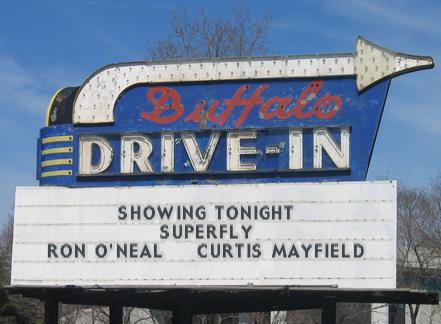
The movie is about what happened in McNairy County Tennessee with the big stick-carrying Sherriff named Buford Pusser. Don’t get this one mixed up with the modern version… you will not get the “Rock” in this one. It has more of a realistic feel than the latest remake. This movie is not slick or smooth…it was made on a small budget but it works well. I grew up hearing stories about Buford Pusser. A policeman friend of the family knew him well.
Before I get into the film. The movie stuck with me through the years and I have a personal story about ending up at his house.
My wife and I traveled to Memphis to visit Graceland in the late 90s. On the way back home we got lost (pre-GPS and I have no sense of direction) and ended up in McNairy County. I remembered the name and we looked saw Pusser’s old home which was turned into a museum. We walked in and the lady working there was super nice. We sat on his couch and looked at his car, badges, guns, and uniforms. Before I left I could not resist…I just had to buy one of those big sticks…which was just an ax handle with his name and also a VHS tape of the Sheriff’s story. I checked today…now they have his furniture behind glass.
It was pretty cool being able to touch and walk around freely after the “stay behind the rope!” mentality at Graceland…which I understand completely…Hey, it’s the home of the big E. If you ever go to Graceland and if you have a couple of hours to spare, drive to this museum it is interesting… it’s like going back in time to the mid-seventies…it was just a fluke that we found it but it was fun.
Ok back to the movie. It’s a vigilante drama and a revenge story that paces itself pretty well. Joe Don Baker is very believable in this movie. If you hate violence this is not for you because it’s loaded with it. The Sheriff almost single-handedly cleans up the town with the aid of a big stick and his loyal deputies. The film quality is cleaned up and not as grainy as I remembered. You will see the future 70s pinup singer Leif Garret as the Sheriff’s son…also future Rockford Files dad Noah Beery Jr. I watched the movie recently and it holds up very well.
A little about the history of Pusser. He was the son of Carl and Helen Pusser. His father was the police chief of Adamsville, Tennessee, which likely influenced Pusser’s future career in law enforcement. Before becoming a lawman, Pusser served in the United States Marine Corps and was also a professional wrestler.
He became the sheriff of McNairy County in 1964. The 26-year-old sheriff was fearless and wasted no time cracking down on mafia activity, concentrating on the state border between Tennessee and Mississippi, which was controlled by two separate gangs… the Dixie Mafia and the State Line Mob. The mob gangs made a lot of money off of moonshine, so Pusser’s crackdown was obviously not appreciated. His battle against all of this was intense and personal. His wife, Pauline, was killed in an ambush meant for him, which fueled his determination to clean up the county.
Did he bend the rules? Yes, sometimes into a pretzel but he was playing against a stacked deck. Despite his wife being killed, his family being terrorized, and numerous attempts on his life, he kept going. He was stabbed 7 times and shot 8 during his time as sheriff. I’m sure Hollywood massaged some truth, but it wasn’t cartoonish.
The movie grossed over $40 million at the box office and led to two sequels: Walking Tall Part 2 (1975) and Final Chapter: Walking Tall (1977), as well as a television series and a 2004 remake I told you about earlier starring The Rock (Dwayne Johnson).
Buford Pusser agreed to portray himself in Walking Tall Part II but, hours after signing the contract, he was killed when his car ran off the road near his home. Some believe his car was sabotaged in retribution for his stamping out the illegal activities of the Stateline mob on the Tennessee-Mississippi border.
Buford Pusser
Quotes:
Buford: There’s only two rules, and thats all… But don’t ever forget them. Number one we enforce the law equally. Number two, any man caught taking a bribe gets his head knocked off by me.
Plot from IMDB:
“Walking Tall” depicts Buford Pusser’s real-life crusade against the corruption that plagued his hometown. After being severely beaten by criminals, Pusser decides to run for sheriff and wins. He then begins a relentless campaign to rid the county of illegal activities, facing numerous threats and attempts on his life. His story is one of resilience, justice, and personal loss.
The cast included Joe Don Baker, Elizabeth Hartley, Leif Garrett, Dawn Lyn, and Noah Beery Jr.
I have a Jimmy Buffett and Buford Pusser story after the video. It’s well worth the read!
Off topic of the movie but Jimmy Buffet had a Buford Pusser story. I’ve heard this from different sources but this is from http://www.buffettworld.com… The movie was good but this would have been GREAT to see. Jimmy was on the wrong side of Pusser.
In 1974, Jimmy Buffett had a run-in with famed “Walking Tall” sheriff Buford Pusser. The story is referred to in “Presents To Send You” from the 1974 album A1A and also in “Semi-True Stories” from the 1999 album Beach House On The Moon. In both songs, few details are mentioned. But at a show in 1974 at the Exit Inn in Nashville, just a few months after the incident, Buffett took some time to tell the crowd about the altercation:
“There were a lot of rumors circling around that I had an encounter with this young man. Which are true. We finished doing our recording over at Woodland Studio, real happy that the album had come out so well. All the lightweights had went out to get a few bottles of champagne and celebrate. Sammy Creason and Chuck Nease and I decided to go out and get a bottle of Cuervo Gold Tequilla and 3 straws. We went at it and in 15 minutes we were just knee-crawlin’ drunk. So we proceeded to the flashiest night spot in town, the roof of the King of the Road Hotel.
We’re there dining and dancing. Ronnie Milsap was on vacation. Sammy Creason was with me, so we provided just a gala of entertainment. Me on acoustic guitar so drunk I couldn’t hit the chords and him just pounding the drums out in 3-quarter time. Ran everybody out. We got the screaming munchies and we were going to Charlie Nickens to eat. And I couldn’t find my rent-a-car, which was parked somewhere amidst thousands of cars in the parking lot of the fabulous, plush King of the Road hotel. It was a little bitty car. It was hiding among many big ones there. And there was a Tennessee Prosecutors convention going on there. If they had made it to room 819 they would’ve had a closed door case.
So I stood on the hood of this car with a pair of… actually, they were old Ra Ra’s that I bought in Miami for 2 bucks. They were white and brown old Ra Ra’s but they were golf shoes so I had to take the cleats out but they still had the posts in them so they clicked a lot. I was standing on the hood of this particular car and as fate would have it it belonged to a rather large man who came up behind me and threatened my life real quickly. And I hadn’t been in a fight since junior high school on the city bus in Mobile. He came up and said “Son you stay right there, you’re under arrest”. So I politely turned around and said “You kiss my ass”. He didn’t. Instead he followed me over to the car which Sammy had found. I got in the driver’s side and Sammy got in the passenger’s side. My window was up, his was down and this fellow poked his head in and said “Would you like for me to turn this car over?”.
I was not scared of this individual. I just thought he was some ex-football player turned counselor. And Sammy said “look whatever damage we did ABC will pay for everything” which was awfully generous of Sammy since he didn’t have the authority to say so. Being a good company man I took up for my company and said “No they won’t. I’m still gonna beat your ass if you don’t leave us alone”. With that he pulled up then stuck his big head and his hand in and grabbed me by my hair until it separated from my head. I had a big bald spot on the back of it and I looked like a monk for about 3 months. Then he punched Sammy right in the nose. We knew he wasn’t kidding. So Sammy defended himself bravely with a big pen. He starts stabbing at this man’s arm trying to get it out of the window because we couldn’t start the car because with the new modern features of ‘74 automobiles you can not start your car unless your seat belt’s buckled and we were too drunk to get ours hooked up.
So we sit there while this man pounded the hell out of both of us. I looked over at Creason and I said “Sammy I don’t wanna die in a Gremlin.” Eaten by a shark, killed in a plane crash, but what’s my mother gonna say? Smashed to death in a Gremlin in the parking lot of the plush King of the Road hotel. Nope. So I mustered all the courage and energy I had and all the coordination I had left in my poor body and got the seat belt buckled and went to Charlie Nickens. We ordered our barbecue and on the way back we hit the Jefferson St. Bridge. Luckily there was no one around so we just backed up and headed for the hotel.
Got back, and we decided that this man may be lurking in the bushes or else may have been snorkeling around in the pool trying to scoop up coins that people threw in. So we decided to defend ourselves with a classic southern weapon: a tire tool. So we destroyed the back end of the Gremlin looking for the tire tool, found it. Walked through the lobby of these prosecutors, and we had caused a turmoil by this time. And got up to the 8th floor where we were staying and figured we were all safe. But I had forgotten my key.
So I had to go back downstairs and Sammy said well you take this I’m not going back down there. And he gave me the weapon, which I stuck in my back pocket. Walked down into the plush lobby of the plush King of the Road hotel, walked up to the desk and asked for the key to my room. This man snuck up behind me and took the tire tool out of my back pocket. I whipped around and I said “look you, that was for my protection and you started this whole thing. I didn’t mean to get on your car and I’m still gonna beat your ass if you don’t quit bothering me.” At this point, two detectives seized me, drug me into the elevator and said “son, we would call the police and have you arrested. You’ve caused quite a disturbance here tonight. But we figure your just lucky to be alive because that was Buford Pusser.” And I went “Oh. 8th floor please.”
Randy from mostlymusiccovers.com and I teamed up to write about different brothers in rock and roll through the years. This is the first one of the series. I combined the introduction with this first post. I will post these on Sunday mornings.
We all know the great album Brothers in Arms from Dire Straits, but sometimes those brothers are “at arms” rather than in them. In a periodic mini-series Randy, from mostlymusiccovers.com, and I will explore some “Rock ‘Em Sock ‘Em” Siblings. As it happens the Knopfler brothers are among many sets and while we can’t talk about all of them, we will feature some of the better-known sibling rivalries. Two, three, and sometimes even more brothers in a band, well, stop being a band of brothers. How many more cheesy puns can we come up with? Just some of the names Randy and I discussed were; The Everly’s, The Fogerty’s, The Gibb’s, to the Gallagher’s, Allmans, and the Davies.
For those of you who have not checked out Randy and his blog, you really need to. He has been writing a blog about Cover Songs, music genres, and artists since early 2018. He gets in-depth with many artists You can read about the origins of Rock and Roll, Blues, R&B, and Country Music. There are Cover Song and Chart statistics as well, all with a focus on the 1950s, 60s, and 70s at MostlyMusicCovers.com. He has also helped me out with blues artists and Canadian Charts in general.
While we can’t get too in-depth as literally books have been written, we can give a good thumbnail sketch of the bash ups and the break ups. A few days ago Randy mentioned that brothers Doug and Rusty Kershaw had split, but I did not read about it being that acrimonious, more of a creative differences situation. Our brother stories have a bit more ‘punch’ to them.
This is the first post in a periodic mini-series where Randy from mostlymusiccovers.com and I will explore some “Rock ‘Em Sock ‘Em” Siblings. The original post is here. Randy tells us about Don and Phil Everly.
“Bye, Bye, Love” The Everly Brothers first big hit from 1957.
Don was born in 1937 (2021) and Phil in 1939 (2014), raised in Kentucky, the brothers would move to Nashville in 1955 to pursue a recording career. As in the above clip it was “Bye, Bye, Love” in 1957 that sent the brothers skyrocketing. Written by Felice and Boudleaux Bryant it was #1 on the Country chart, #2 in the US and Canada, #6 in the UK and 14 in Australia, and #14 on the R&B chart. Their next song “Wake Up Little Susie” was #1 in the US and Canada, #2 in the UK, and #3 in Australia.
They toured with Buddy Holly in 1957 and 1958 and became very close, Buddy’s death, Feb. 3, 1959 would have a devastating impact on the pair. Don wrote their next and last #1 hit “Cathy’s Clown” in 1960. This was after a dispute with the record/publishing company, leaving Acuff/Rose and unfortunately songwriters Felice and Boudleaux Bryant.
Still, they had a busy schedule, the demands of touring and the pressures of performing and recording, the inevitable happened. The use of amphetamines was rampant in the business and they both got hooked.
By the mid 1960’s they fought over just about everything and of the two it was Don that had the most severe drug problem. Chart success was eluding them and the brothers were not getting along, but it was kept a closely guarded secret that they were able to hold for several years. Don attempted to go solo in 1970 but had no success. Things finally came to a head and in 1973 they agreed their July 14/15 show would be the last one.
Don was drunk before the show started, part way into the show Phil smashed his guitar and walked off stage. Don would finish the show and perform solo the next night. They did not speak for nearly ten years. They would reunite in 1983, had a great reunion concert, and released an album EB84, produced and named in his style 1 by Dave Edmunds that charted #38 on Billboard and #24 on the Country Album chart. They continued to perform periodically, and in 2003 they toured with Paul Simon. They remained close until Phil’s death at age 74 in 2014. Don passed in 2021 at age 84.
“On the Wings of a Nightingale” written for The Everly Brothers by Paul McCartney
Despite the battles and the hardship, they gave us some of the most remarkable harmonies ever-ly recorded.
Dave Edmunds released his 7th Studio album called D.E. 7th in 1982.
This 1965 song still works…it can light up a party in a heartbeat. This is one of those songs that you can play without rehearsing if you are in a band. A fun rock and roll song that doesn’t take itself seriously.
The exact meaning of Wooly Bully is left ambiguous, fitting the song’s fun nature. Others must agree because according to secondhandsongs.com it has 190 cover versions. Those versions include Dave Edmunds, Lindisfarne, and of course…Billy Bacon and The Forbidden Pigs. I don’t know much about them but with that name…I had to include them.
The song peaked at #2 on the Billboard 100. They were kept out of the top spot by those two upstart bands…The Rolling Stones with Satisfaction and The Beatles with Help!. The song peaked at #2 in Canada as well in 1965 and #11 in the UK.
They were not a one-hit wonder though. They had one other top ten song (#2) with Li’l Red Riding Hood. They had 6 top-40 hits between 1965 and 1970. Look at the variety of the 1960s. Satisfaction, Help!, Like A Rolling Stone, and Wooly Bully all within a couple of years.
The band’s leader, Domingo “Sam” Samudio, was born in Dallas, Texas. He first started performing in the late 1950s. Sam joined various bands before forming The Pharaohs in 1961 and another version in 1963 and that time it stuck. Samudio wrote this song as well.
In 1970, Sam started a solo career and was awarded a Grammy in 1971 for Best Album Liner Notes to his record Sam, Hard and Heavy. He later started to cover gospel and country as well.
Wooly Bully
Uno dos, one two tres quatro
Ay, wooly bully Watch it now, watch it
Here he comes, here he comes Watch it now, he get ‘cha
Matty told Hatty About a thing she saw Had two big horns And a wooly jaw Wooly bully Wooly bully Yeah drive Wooly bully Wooly bully Wooly bully Hatty told Matty Let’s don’t take no chance Let’s not be L-seven Come and learn to dance Wooly bully Wooly bully Wooly bully Wooly bully Wooly bully Watch it now, watch it watch it watch it Ay… Ay, drive, drive, drive
Matty told Hatty That’s the thing to do Get you someone really Pull the wool with you Wooly bully Wooly bully Wooly bully Wooly bully Wooly bully Watch it now, watch it, here he comes You got it, you got it
This is my first King Crimson post. I’ve heard their debut album the most and I like it. I went exploring, found some others I liked, and wrote up one song (publishing later) but I decided to start with this. I have been a Robert Fripp fan from way back. This song is the opening track to their debut album In the Court of the Crimson King. I found out about this band through a big brother of a friend I have…the same one who introduced me to Big Star and The Grateful Dead.
The song was written by the original lineup of King Crimson, which included Robert Fripp (guitar), Greg Lake (bass and vocals), Ian McDonald (saxophone, flute, keyboards), Michael Giles (drums), and Peter Sinfield (lyrics). The debut album was called In The Court of the Crimson King. The album was a hit. It peaked at #5 in the UK, #27 in Canada, and #28 on the Billboard Album Charts in 1969.
For me to like progressive rock it has to have a good melody to it. King Crimson, ELP, and some of Yes do…, especially the live cuts. The musicianship on these albums is out of this world. I like this song’s changing time signatures and the rock, jazz, and classical feel.
This live cut is short but it’s the only thing I could find in this era. I always try to include a live version in the era it was released.
21st Century Schizoid Man
Cat’s foot iron claw Neuro-surgeons scream for more At paranoia’s poison door. Twenty first century schizoid man.
Blood rack barbed wire Polititians’ funeral pyre Innocents raped with napalm fire Twenty first century schizoid man.
Death seed blind man’s greed Poets’ starving children bleed Nothing he’s got he really needs Twenty first century schizoid man.
I didn’t think I would ever see an extensive book (nearly 600 pages) on Keith Moon. Tony Fletcher wrote this book and he thoroughly researched Keith and he had been a fan since his teenage years. As a teenager, he actually met Keith before he died.
Fletcher talks to everyone of importance in Keith’s life. The only disappointing thing for me and for Fletcher himself is he had to debunk some of the myths about Keith. The great story of him driving a car in the pool of a Flint Michigan Holiday Inn… didn’t happen… but the real story is just as interesting though.
The veil is drawn back on a lot of myths. It’s not a book full of Keith doing wild things like the book “Full Moon”. This one shows his ugly side also. Keith had one of the most dangerous traits you could have…the ability not to be embarrassed. Think about that…that keeps us in check at times. With Keith, anything could happen at any time.
Trouble Boys – Bob Mehr
One of the only books about The Replacements. After this book, I started to understand the reckless and sabotaging behavior of the band. It also goes through the tough decision of Bob Stinson leaving the band only to die a few years later.
It was interesting to see the relationship they had with other bands such as REM at the time. They would goad each other into making better albums. I was a fan before I read it but it increased my interest by a bunch afterwards.
Up and Down with the Rolling Stones – Tony Sanchez
This was the first book I read on the Rolling Stones when I was around 13. It’s an easy but dark read. It’s written by Tony Sanchez, Keith’s drug dealer and sometimes partner in crime. Tony was also a photographer who took photos of the Stones and the Moody Blues. Spanish Tony, as he was called hung around with the Stones, Moody Blues and also knew the Beatles.
It’s full of wrecked cars, heroin, dead friends, sleazy characters, and some eventful journeys. At first, I would take some of the stories with a grain of salt but most of the events were verified by Keith’s book “Life.”
Let The Good Times Roll – Kenney Jones
Kenney Jones was the drummer of three of England’s most influential bands – The Small Faces, The Faces and for a few years The Who. I was pleasantly surprised by this book. Kenney keeps the book interesting from his childhood, teen years, swinging London, the Swinging Seventies, up til now.
I never knew much about the Small Faces and Faces and this book answered some questions I had about both bands. He gave much more information than Roger Daltrey did in his book about Jone’s tenure as the drummer of the Who and their difficulties. Personally, I don’t think Kenney was the right drummer for the Who but then again…I don’t think anyone could have taken Moon’s place. He does give an interesting perspective on it though.
I didn’t’ realize that Keith Moon and Kenney were as close as they were. Kenney had played with the Who before in sound checks when the Small Faces and Who were touring with each other and Moon couldn’t be found. After Moon died a few strange things happened to Kenney right before Bill Curbishley (The Who’s Manager) called to see if he would join. The strange events helped him make the decision.
Living The Beatles Legend – Kenneth Womack
I did a review on this last year but I wanted to get it in here.
I’ve been waiting on this book since I read about the Beatles in the 70s as a kid. I knew the story…after a showdown with police Mal Evans was shot and killed on January 5, 1976. He was working on his autobiography at the time. Evans was the last person you would think would die that way…and in this case…he wanted it. Could the police have handled it better? Yes, but Mal had said that is how he wanted to go out. He forced the situation. He was only 40 years old.
Mal Evans along with Neil Aspinal were the roadies for the Beatles. Imagine that…2 roadies for the world’s biggest band. Mal worked at a telephone company in the early ’60s but he loved rock and roll…especially Elvis Presley. He would go see bands at the Cavern and struck up a friendship with George Harrison. George told him since he loved music…take a part-time job as a bouncer at The Cavern. The Beatles automatically liked him from the start. He was a big guy at 6’4″ but he never wanted to use violence. More times than not…he talked his way out of trouble. Aspinal was their only roadie and when Love Me Do and then Please Please Me came out…they needed another person because Aspinal was worn out.
I would highly recommend this book. Kenneth Womack had full access to his diaries and used many of the entries. This book turned up a lot of things about them that I had no clue about. It also gave a different look at their personalities on an everyday basis. Near the end, Mal went to the 2nd Beatles convention and spoke. He started to battle depression in the seventies after living in California and missing his wife and kids back in London. He picked up a girlfriend in California and that made his guilt worse. Drugs also affected him in the end.
I started to listen to The Beat Farmer’s debut album Tales of the New West a few months ago. I came across this song and liked it with the first listen…it took me a second but I realized it was an old Velvet Underground song.
I can’t recommend this album enough. I first heard of the band through a more of a novelty song called Happy Boy. I just recently started to listen to them and they are fantastic.
The Beat Farmers formed in San Diego California in 1983. They went to a studio with a $4000 budget, and they recorded Tales Of The New West. The album was released in 1985. The members were Country Dick Montana, Jerry Raney on guitar, Rolle Dexter on bass, Buddy Blue on guitar, and Joey Harris on guitar. They did a tour opening up for the Blasters and then signed a 7 Record Deal with CURB Records…which turned out to be a mistake…they fought for years to get away from them.
Together they released 6 albums and 15 singles + EPs. The band came to a halt on November 8, 1995, when Country Dick Montana died on stage. They have occasionally got together since then.
This song was on the Velvet Underground debut album The Velvet Underground & Nico and was released in 1967. Lou Reed wrote There She Goes Again. The lyrics to this song must have sounded outrageous to the listeners in 1967. The album only charted at #129 in the Billboard 100 and that would be the best charting LP of all of their 5 original albums.
There She Goes Again
There she goes again (There she goes) Yeah, I see her walkin’ on down the streets again (There she goes) Well, she’s down on her knees again (There she goes) But she’ll never ask you please again (There she goes)
Now take a look, there’s no tears in her eyes She won’t take it from just any guy. What can you do?
Yeah, when you see her walkin’ on down the streets (There she goes) Yeah, I see her lookin’ at all the boys that she’s gonna meet (There she goes) If I see her messin’ ’round, I don’t know what I’m gonna do
Well, there she goes again (There she goes) Yeah, I see her walkin’ on down the streets again (There she goes) Well, she’s down on her knees again (There she goes) Yeah, but she’ll never ask me please (There she goes) again
Now take a look, there’s no tears in her eyes She won’t take it from just any guy. What can you do?
Yeah, when you see her walkin’ on down the streets (There she goes) Yeah I see her lookin’ at all the pretty boys that she’s gonna meet (There she goes) Oh, when I see that stuff, I just don’t know
Now take a look, there’s no tears in her eyes Like a bird, she’s a-gonna fly. What can you do?
Yeah, when you see her walkin’ on down the streets (There she goes) Yeah, I see her lookin’ at al the boys that she’s gonna meet (There she goes) Yeah, I know that she isn’t down on her feet (There she goes) Yeah, but she’ll never ask you please (There she goes) Oh-ho!
You could blindfold me and I could tell you if Mick Taylor was playing with The Stones live. He had his own unique sound because of the Les Paul he played. He made those songs in the classic Stones period go.
Many people think that Mick Taylor went uncredited on this and many songs. The melody doesn’t sound like a Keith melody but in any case, Jagger/Richards get credited with this one. They rarely if ever play it live.
The solo in this song is great by Mick Taylor. It reminds me a little of Carlos Santana. He quit shortly after this album was released and it was the end of the classic Stones era. They would never sound the same again after this. The song was on It’s Only Rock and Roll which was a good album but not up to the level of the five preceding albums. A big reason was because of the absence of producer Jimmy Miller.
So why did Mick Taylor leave the band? I’ve read different things from him and others. Taylor felt underappreciated and frustrated that he didn’t receive proper credit for his contributions to the band’s music. He claimed to have co-written several songs, such as Sway and Moonlight Mile but Jagger and Richards would not give a songwriting credit to him. I do believe that because Brian Jones and Ronnie Wood also had the same problem.
His health and well-being were also factors in his decision to leave. The intense touring schedule and the pressures of being in The Stones took a toll on him. Besides pot…he said he didn’t take drugs when he joined the band but like others before and after him…he slowly started to do harder drugs while with the band. When he quit the band it took him a while to get off of heroin.
The song is a favorite among many Stones fans I know and it should be more well known.
Time Waits For No One
Yes, star-crossed in pleasure, the stream flows on by Yes, as we’re sated in leisure, we watch it fly, yes
And time waits for no one, and it won’t wait for me And time waits for no one, and it won’t wait for me
Time can tear down a building or destroy a woman’s face Hours are like diamonds, don’t let them waste
Time waits for no one, no favors has he Time waits for no one, and he won’t wait for me
Men, they build towers to their passing Yes, to their fame everlasting Here he comes, chopping and reaping Hear him laugh at their cheating
And time waits for no man, and it won’t wait for me Yes, time waits for no one, and it won’t wait for thee
Drink in your summer, gather your corn The dreams of the nighttime will vanish by dawn
And time waits for no one, and it won’t wait for me And time waits for no one, and it won’t wait for me No, no, no, not for me, no, not for me
Well we might as well close out July with this classic.
When I hear this song I automatically think of the 1950s. One problem with that thought…it was released in late 1961 but it doesn’t matter…it’s pretty damn awesome. This is one of the songs that I missed on my Max’s Picks. The song has a magical quality about it…I have to smile when I hear it.
The song originated from warm-up exercises by the doo-wop group The Dukays. The group’s members would sing “doo doo doo” to prepare their voices, which evolved into “duke duke duke.” The song was written by Gene Chandler, Earl Edwards, and Bernice Williams. The song was recorded in one take.
The song established Gene Chandler’s career and became his signature hit. He adopted the persona of the “Duke of Earl,” often appearing in a cape and top hat during performances. Chandler went on to have a long career. He released music until 1986. He had a lot of success on the Billboard R&B charts and had some more top 40 singles as well, but nothing as big as The Duke of Earl.
This song is just one of those songs that you know the instant it starts. It’s one of the most famous openings of any song from the rock ’n’ roll era. Chandler was inducted into the Grammy Hall of Fame in 2002 for “The Duke of Earl” and the Rhythm and Blues Music Hall of Fame in 2014.
The song peaked at #1 on the Billboard 100 and #1 in Canada (from all I’ve found) in 1962. There are 35 cover versions of this song but it would be impossible to wipe away the memory of the original.
Duke Of Earl
Duke, Duke, Duke, Duke of Earl
Duke, Duke, Duke of Earl
As I walk through this world
Nothing can stop the Duke of Earl
And-a you, you are my girl
And no one can hurt you, oh no
Yes-a, I, oh I’m gonna love you, oh oh
Come on let me hold you darlin’
‘Cause I’m the Duke of Earl
So hey yea yea yeah
And when I hold you
You’ll be my Duchess, Duchess of Earl
We’ll walk through my dukedom
And a paradise we will share
Yes-a, I, oh I’m gonna love you, oh oh
Nothing can stop me now
‘Cause I’m the Duke of Earl
So hey yeah yeah yeah
Well, I, oh I’m gonna love you, oh oh
Nothing can stop me now
‘Cause I’m the Duke of Earl
So hey yeah yeah yeah
This song was on the band’s debut album Picturesque Matchstickable Messages from the Status Quo. I’m just learning about them but they started off with a psychedelic phase with this album. I really admire their career…their discography reads like War and Peace. They released their last album Backbone in 2019. This album was before their shift to boogie music of the 1970s.
Ice in the Sun peaked at #8 in the UK, #29 in Canada, and #70 on the Billboard 100. It charted well in the rest of the world. The song was written by Marty Wilde (a popular British rock and roll singer in the 50s) and Ronnie Scott (a British pop promoter). It’s a cool blend of psychedelic pop and rock. I really love the 1965-1968 era in rock because you had psychedelic, pop, rock, hard rock, folk, Americana, country, and a little bit of everything.
When Pictures of Matchstick Men hit the American charts, the group made the decision to remain in Europe, focusing their efforts on the UK market…they would regret this later on. It paid off in the UK as Status Quo became one of the most popular bands in Britain, charting over 60 singles but they missed out in America. Their only other chart entry here was Ice In The Sun.
The album received positive, especially for its single Pictures of Matchstick Men, which peaked at #7 on the UK Singles Chart and #12 on the Billboard 100. Ice in the Sun has stuck in their live repertoire through the years.
Status Quo
I’m not a little boy I’ve lived alone and loved so many more But when she touches me I’m on the way I’m underneath the floor
Like ice in the sun I melt away Whenever she comes I melt away Like ice in the sun I melt away
I sit down in a chair and Read a book as if I couldn’t there But she is in a room and I must look I see her everywhere
Like ice in the sun I melt away Whenever she comes I melt away Like ice in the sun I melt away
She opens up her eyes as if to speak She looks at me and I am weak Her eyes they seem much bigger than before I cannot think anymore
Like ice in the sun I melt away Whenever she comes I melt away Like ice in the sun I melt away
Like ice in the sun I melt away Whenever she comes I melt away Like ice in the sun
I like movies that are directed and written by the same person. That is the reason I like Buster Keaton and Charlie Chaplin movies. You won’t find this much anymore unless it’s an indie movie. Movies that are written by a committee are sometimes slick and predictable. We need more movies and music like this. I talked about this last Friday in the comments with different people about The Texas Chainsaw Massacre and remembered I wrote it about this one as well.
You will hear one word in many of these reviews…and that word is gritty. The 1970s movies set in New York have grit, filth, and realism. The way these were made looks like they were made on the fly. I mean that in the best way. The characters look as if they were lifted off the streets and filmed. There is a good reason for that. It had a small budget so they couldn’t afford a union-shot movie. Many scenes were shot with natural lighting, and guerrilla filmmaking techniques were employed to save costs. They shot it in 26 days and made excellent use of a handheld camera.
This 1973 film opens with a famous monologue by Charlie, played by Keitel, which sets the tone for the character’s internal conflict. This introspective voice-over became a signature element of Scorsese’s storytelling style. Mean Streets is set in New York City’s Little Italy and follows Charlie (Harvey Keitel), a small-time hood trying to make his way in the local Mafia, and his reckless friend Johnny Boy (Robert De Niro), who owes money all over town. The film explores the struggling street life and the demands of mob life…along with a lot of guilt.
It’s directed by Martin Scorsese and I think this is one of the best movies of its kind. He would later make other mob movies that are more well-known such as Goodfellas, Casino, and The Irishman but none of them are as, here is that word again, gritty as this. Scorsese knew the vibe well, growing up in his New York City neighborhood and dealing with a formative period in his life during the early 60’s. He shot this movie with Roger Corman’s crew with 6 days of location in New York and with most of the interiors done in Los Angeles. Scorsese edited much of the movie in his bedroom. It was written by Scorsese and his childhood friend Mardik Martin. What lends to the atmosphere is many of the film’s scenes were improvised. Scorsese encouraged his actors to ad-lib their lines to create a more authentic and natural feel.
The actors were fantastic. Harvey Keitel, De Niro, Amy Robinson, Victor Argo, and many more. Keitel stands out to me in this like he does in most of the films he made. Here he balances out toughness with vulnerability. He got this part because Jon Voight had dropped out.
Let’s talk about the music a little bit here. Not many directors are as good as Scorsese at placing music in movies. In the first few minutes of this movie, you hear two Stones songs and Derek and the Dominos as he fits the scenes beautifully.
The movie is not action-packed…it’s almost like a day in the life of these characters. You can see parts of Scorsese’s later movies in this one as well. Much like you can see Pulp Fiction in Reservoir Dogs for Quentin Tarantino.
Quotes:
Voice in Charlie’s Mind: You don’t make up for your sins in church. You do it in the streets. You do it at home. The rest is bullshit, and you know it.
Charlie: You know what the Queen said? If I had balls, I’d be King.
Charlie: It’s all bullshit except the pain. The pain of hell. The burn from a lighted match increased a million times. Infinite. Now, ya don’t fuck around with the infinite. There’s no way you do that. The pain in hell has two sides. The kind you can touch with your hand; the kind you can feel in your heart… your soul, the spiritual side. And ya know… the worst of the two is the spiritual.
I saw this review about a book on mobster films that talks about this movie.
Over time, Scorsese would make “slicker, better-crafted movies,” according to authors George Anastasia and Glen Macnow in The Ultimate Book of Gangster Movies, “but the nuts and bolts of who he is and what he’s about are here.” The authors rank Mean Streets No. 14 of the Top 100 gangster movies, just behind Léon: The Professional and ahead of Reservoir Dogs. “On one level, watching Mean Streets is like finding some old film of Joe DiMaggio and Mickey Mantle and Willie Mays during their first seasons in the big leagues,” the authors wrote. “The raw talent is there. There are sparks and smoldering potential.”
The first time I heard this song I loved it. Many people have covered it but I know it primarily through CCR. Huddie Ledbetter, better known as Lead Belly, wrote this song and recorded it in 1940. Back when I was playing in a band…around one am, a couple of hours before closing we would do this song. People would be singing along with us.
Some bands and artists seem to cross genres and CCR is one of those bands. Yes, I’ve met people who didn’t love them but most like something they do. I’ve met metal heads, hard rock fans, country, bluegrass, pop, and rock fans who like them. Most can’t believe they came from California and not the swamps of Louisana. They looked like blue-collar workers going to work every day…and by their music…they were.
I visited secondhandsongs.com and found that this song has 187 versions of it. It’s been covered by Harry Belafonte, Odetta, Bill Monroe, Buck Owens, The Staple Singers, The Beach Boys, Van Morrison, and so many more.
Creedence covered it on the Willy and the Poor Boys album released in 1969. It was not released as a single in America but it peaked at #1 in Mexico in 1970. The album had the well-known hits Fortunate Son, Down On The Corner, The Midnight Special, and the fan favorite It Came Out of the Sky. The album peaked at #3 on the Billboard Album Charts, #2 in Canada, and #10 in the UK.
Creedence had 18 songs in the top 100 and 9 top 10 hits yet no number 1’s in the Billboard 100 until Have You Ever Seen The Rain in 2021!
Cotton Fields
When I was a little bitty baby My mama would rock me in the cradle In them old cotton fields back home
It was down in Louisiana Just about a mile from Texarkana In them old cotton fields back home
Oh, when them cotton bolls get rotten You can’t pick very much cotton In them old cotton fields back home
It was down in Louisiana Just about a mile from Texarkana In them old cotton fields back home
When I was a little bitty baby My mama would rock me in the cradle In them old cotton fields back home
It was down in Louisiana Just about a mile from Texarkana In them old cotton fields back home
Oh, when them cotton bolls get rotten You can’t pick very much cotton In them old cotton fields back home
It was down in Louisiana Just about a mile from Texarkana In them old cotton fields back home
When I was a little bitty baby My mama would rock me in the cradle In them old cotton fields back home
It was down in Louisiana Just about a mile from Texarkana In them old cotton fields back home
I would have loved to have gone to this concert. The Grateful Dead, The Band, and The Allman Brothers! How much more Americana could you get? Many people felt the same…I mean MANY. 51 years ago today this mammoth concert happened.
I would love to hear from you if you were at this concert. I have one person who did give me a comment.
I first read about this festival in a Grateful Dead biography… There is not much video footage from the concert. No professional film because The Dead didn’t want it to be a movie or soundtrack. I could never understand why this concert wasn’t as well known as The Atlanta Pop Festival and others. It drew more than any other festival including Woodstock with some others combined.
Fans who arrived early were treated to an impromptu soundcheck by the Grateful Dead on July 27, which essentially turned into an extra set…it lasted for hours. Despite the enormous crowd, the atmosphere was surprisingly peaceful and communal. Whether they knew it or not…they were part of something truly historic.
Some cars were abandoned and a few of them are still there! I have a video below that shows some of the rusted cars now that were left.
An estimated 600,000 people attended this concert on July 28, 1973, in Watkins Glen N.Y. 51 years ago. Below is a blogger who was there and a member from each band talking about the concert. I’ll let all of them do the talking.
Jim from Unique Title For Me wrote this about going to this concert. He was one of the lucky ones that got to see Summer Jam.
Jim: That was my favorite concert that I attended, and I have some great memories of being there. We drove into the concert with an ounce of pot on the dashboard and since it was sold out, they were no longer collecting tickets, so they just waved us through the gate. There was this spaced-out naked guy standing nearby Danny, Patty, Irene and I and Danny said that we had to move because he was ruining the show for us. He had a snake around his neck, and he kept drooling, but I liked the spot we had so I grabbed him by his arm and flung him into the mud pit in front of the stage where all the other naked weirdos were.
From the bands themselves, almost all agree the sound check on Friday was better than the concerts.
Perspective about the concert by a member from each band.
Robbie Robertson from his book Testimony
Then we got a request from Bill Graham, who was putting together a show “just up the highway from us” at the Watkins Glen Raceway. We’d be performing with the Allman Brothers and the Grateful Dead. Playing some gigs could help us get “back on the stick,” as they say. We went up to Watkins Glen the day before the show for the sound check. Bill Graham said that the Dead would go on first and play for three or four hours—that was part of their thing, giving the audience their money’s worth. “Until the drugs wear off,” said Bill, laughing. We’d go on in the late afternoon, and the Allmans would take over at sundown. As we were leaving the sound check, it looked like cars were heading toward the racetrack from every direction. Bill said he expected maybe a hundred thousand or more. When we came back the next day, we couldn’t believe our eyes. Hundreds of thousands of people had showed up, and more just kept coming and coming. The crowds mowed down the high chain-link fences around the racetrack and filled the area as far as the eye could see. Bill was running around trying to make people pay admission, but the mobs were out of control. When it came time for the Band to take the stage, it started pouring. As we waited, hoping it was going to let up, Bill came over. “They’ve determined there are 650,000 people here. It’s the biggest concert in history.” The news was somewhere between an incredible accomplishment and a huge disaster. The rain started letting up, and Garth played some churchy, rainy-day keyboard sounds out over the crowd. When it was safe to go on, we decided to start our set with Chuck Berry’s “Back to Memphis.” And wouldn’t you know, as Levon sang that baby, the sun came out.
Gregg Allman from My Cross to Bear
Right before Brothers and Sisters came out, we played the festival at Watkins Glen with the Band and the Grateful Dead, in front of six hundred thousand people—the biggest show in history to that point. People always talk about Woodstock. Watkins Glen was like three Woodstocks. I think actually it might’ve been a little too big. They should have had people all the way around the raceway, and maybe had the stage in the center revolving real slowly, do a revolution in a minute. That’s not that complicated. A show like Watkins Glen was uncomfortable, because you know that you’re getting the show across to this many people, but you still got two times that many behind them. You could finish a song, take your guitar off, put it in the case, and latch it up before the last guy heard the last note. Sound ain’t all that fast, not compared to light.
When you’re playing in that situation, you’re kind of thinking about the end. Not that you’re wishing it to be over, but you can’t even hear yourself—that was back before we had the in-ear monitors. Everything was so loud. You just walk out there and start to wince before you even start playing. It’s hard to get any kind of coziness, any kind of feel with the audience. I guess there’s something about that many people seeing you all at once that’s real nice, but it’s just too much. You’re just like a little squeak in the middle of a bomb going off. But it was interesting, and it was a pretty fun day. People were OD’ing all over the place. And of course, Uncle Bill was there, which cured everything. It was exciting to be there and see it—and to be able to make ’em stand up, now that was something else.
Bill Kreutzmann from Deal
We made some questionable business decisions and we couldn’t sell records, but we sure could sell tickets. We sold around 150,000 tickets for a single show at a racetrack in Watkins Glen, New York, on July, 28, 1973. Yes, and more than 600,000 people ended up coming out for it. The lineup was just us, the Allman Brothers, and the Band. That show, called the Summer Jam at Watkins Glen, made it into the Guinness Book of World Records for what, at the time, was the largest audience ever assembled at a rock concert. In fact, that record may still hold today, at least in the U.S., and some have even proposed that it was the largest gathering in American history. Originally, the bill was supposed to just be the Dead and the Allmans, but our respective camps fought with the promoter over which band would get headliner status. The solution was that both bands would co-headline and they’d add a third, “support” act. The friendly (“-ish”) competition between us and the Allman Brothers carried through to the event itself. And yet, the memory that I’m most fond of and hold most dear from that whole weekend was jamming backstage with Jaimoe, one of the Allman’s drummers. We were just sitting in the dressing room, banging out rhythms, and that was a lot of fun for me. Jaimoe backed Otis Redding and Sam & Dave before becoming a founding member of the Allman Brothers, where he remains to this day. He’s a soulful drummer and just an incredible guy who is impossible not to like. As for the show itself, it is a well-known fact that the Grateful Dead always blew the big ones. Watkins Glen was no exception. However, we still got a great night of music out of it—the night before. The show took place on a Saturday, but by Friday afternoon there were already about 90,000 people in front of the stage. I’ve heard others place that number closer to 200,000. Either way, the audience was already many times the size of any of our regular shows, and the show was still a full day away. The only duty we had on Friday was to do a soundcheck, and even that was somewhat optional. The Band soundchecked a couple of songs. The Allman Brothers soundchecked for a bit. Then, perhaps spurred on by our friendly rivalry, we decided to one-up both bands by turning our soundcheck into a full-on, two-set show. Naturally, without any of the pressure of the “official show” the next day, we really let loose and played a good one. There was an eighteen-minute free-form jam that eventually made it onto So Many Roads, one of our archival box sets. It’s good music, all right, and it still holds its own. On the day of the actual show, we had to fly into the venue via helicopter because the roads were all backed up, like what happened at Woodstock. People left their cars on the side of the road and walked for miles to the gig. I remember looking down from the helicopter and seeing the most incredible impressionist painting, a Monet of heads, shoulders, tie-dyes, baseball caps, and backpacks, packed front to back. You couldn’t see the ground for the crowd. To this day, I’ve never seen anything else like that. Nowadays at large music events and festivals, they have golf carts for artists and crews to get around, but back then they used little motor scooters. Early, during the day of our supposed “soundcheck,” I commandeered one of these scooters and, because the venue was an actual racetrack, I decided to do a lap. This was before the gates were opened. The scooter went maybe fifteen or eighteen miles an hour, something stupid like that, and it took forever just to do one lap. But I did it. And that’s when I first started to get a feel for the scale of the event and just how large it was. During the Summer Jam itself, I watched the other bands play and I honestly thought the Allman Brothers played better on the big day than we did. As for the Band, well, they always sounded great.