Around 1984 or so I really started to get into Ricky Nelson. Song after song of quality. At first, I only knew Garden Party but it’s his 50s catalog where many of his best songs are found…and I love Garden Party.
By 1957, Ricky Nelson was already a well-known actor from his role on “The Adventures of Ozzie and Harriet”, a TV show that starred his real-life family. His transition into music was initially seen as a part of his television character, but he quickly proved his talents as a serious musician. The show helped him of course but also hurt his credibility as a rock and roll artist.
Stood Up was part of a string of hits he was enjoying in the late 50s. The song was written by Dub Dickerson and Erma Herrold. The great James Burton, who would later lead Elvis’s TCB Band, played guitar on this song.
The song peaked at #2 on the Billboard 100 and #27 in the UK in 1957. Stood Up was his second #2 single and the next year he would have his first number one with Poor Little Fool. Poor Little Fool featured The Jordanaires, who were Elvis Presley’s backing singers.
Throughout the 1960s, Nelson continued to record rockabilly and evolve as an artist. He shifted to a more folk-rock sound and formed The Stone Canyon Band and in 1972 he had the hit Garden Party.
Stood Up
Well, I’ve been waitin’ ever since eight Guess my baby’s got another date Stood up, broken-hearted, again
I’ll bet she’s out havin’ a ball Not even thinkin’ of me at all Stood up, broken-hearted, again
Well, I know just what I oughta do I oughta find somebody new But, baby, I couldn’t forget about you Stood up, broken-hearted, again, mm
Why must I always be the one Left behind never havin’ any fun? Stood up, broken-hearted, again
But I guess I’ll go on bein’ a fool Sittin’ around just waitin’ for you Stood up, broken-hearted, again
Well, I know just what I oughta do I oughta find somebody new But, baby, I couldn’t forget about you Stood up, broken-hearted, again
Stood up, broken-hearted, again Stood up, broken-hearted, again
This movie changed me when I was a teenager. It made me realize the power that a movie can have. Just a few movies have moved me like that, and this was one of them. Platoon and Full Metal Jacket were two others. I had seen violence before on the screen but this was realistic and brutal…especially when you are a very young guy (too young to watch this) viewing it for the first time. I had to rethink many things after seeing it.
I love the soundtrack, especially the music performed on a Moog synthesizer, which set the tone for the film. I’m not giving a synopsis of the movie…there are plenty of books and internet sites doing that… but a movie that will change you does its job and more. This film was directed by the great Stanley Kubrick and you know it’s his movie within 30 seconds of the intro.
There is a story about a frog and a scorpion, which I relate to this movie. It goes like this. A scorpion asks a frog to carry it across a river. The frog hesitates, afraid of being stung, but the scorpion argues that if it did so, they would both drown. Considering this, the frog agrees, but midway across the river, the scorpion does indeed sting the frog, dooming them both. When the frog asks the scorpion why, the scorpion replies that it is in its nature to do so.
This movie runs the gamut…cruelty, horror, the absurd, violence, pity, and justice. In my opinion, this movie shows that evil exists in all of us and what happens if we let it take over. Also, I think the movie shows you that no one can change someone’s nature no matter what drugs or treatment you may give them outside of a lobotomy. Treatment and drugs may slow them down and help but their nature is not going to change. They will at least have to keep fighting it every day.
In the end, A Clockwork Orange challenges viewers to consider human freedom and the ethics of “curing” people against their will. This movie has been analyzed to death and rightly so. It could have only been made in the period it was made. I can’t imagine this movie coming out now…although I wish more modern filmmakers would take chances.
The scene that stick with me are the record shop scene, the Billy Boy gang fight, Singing in the Rain, and of course the eye scene… The record shop scene was filmed in the Chelsea Drugstore… I would love to have a room like that place. Very 60’s-70s futuristic…immortalized in the Stones’s “You Can’t Always Get What You Want”…The building is now sadly a McDonalds…modern progress?
Malcolm McDowell as Alex was excellent in this movie along with his droogs Pete (Michael Tarn), Georgie (James Marcus), and Dim (Warren Clarke).
Plot from IMDB
Alex DeLarge is an “ultraviolent” youth in futuristic Britain. As with all luck, his eventually runs out and he’s arrested and convicted of murder. While in prison, Alex learns of an experimental program in which convicts are programmed to detest violence. If he goes through the program, his sentence will be reduced and he will be back on the streets sooner than expected. But Alex’s ordeals are far from over once he hits the streets of Britain.
The cool car is an Adams Probe 16 AB/4 that was referred to as a Durango 95 in the film has been restored…
This is part 4 of this series and I thought it was about time to do another installment. I found some more rare songs this time except for Mr. Berry.
Kinks – Cadillac
I think all of these I do must have Cadillac in at least one song. This one was on their debut album and it was written and recorded by Bo Diddley in 1960. The Kinks debut album Kinks was released in 1964.
Gene Vincent – Pink Thunderbird
This song was written by Tex Davis and Paul Peek. It was released by Gene Vincent in 1957. Gene Vincent’s voice and slap back echo go together perfectly. Every rock artist after Gene Vincent has gone after that sound including Springsteen.
Cliff Gallup played some great guitar on this recording. He recorded 35 tracks with Vincent including Be-Bop-A-Lula.
Chuck Berry – Maybellene
Chuck Berry was THE first guitar hero in Rock and Roll. He was also rock’s first poet. This song evolved out of “Ida Red,” a hillbilly song by Bob Wills and The Texas Playboys from the early ’50s. Berry heard that song on the Country radio station KMOX in St. Louis but didn’t know who recorded it.
Not only is the music great with the steady beat… but those lyrics. The motor cooled down the heat went down, And that’s when I heard that highway sound, the Cadillac a-sittin’ like a ton of lead, a hundred and ten half a mile ahead, the Cadillac lookin’ like it’s sittin’ still, and I caught Mabellene at the top of the hill
You can see what is happening in the song in your head with no problem… no MTV story video needed. He was one of the best descriptive lyricist rock and roll has ever had.
The Three Milkshakes – Jaguar
They were a rockabilly band from the 1980s led by singer Mark Kermode, who is now well-known as a British film critic. The group specialized in vintage rock ‘n’ roll and rockabilly music, covering songs in a classic ’50s style. They were part of the vibrant rockabilly revival scene in the UK during that time.
Bob Dylan – From A Buick 6
This song is from Bob Dylan’s album Highway 61 Revisited released in 1965. This song was the B side to the single Positively 4th Street. It’s a cool bluesy song that has those Dylan lyrics going everywhere. It resembles Sleepy John Estes’ Milk Cow Blues.
CB recommended this band and it’s fresh sounding and I like their choice of covers. When I heard Imelda May sing…that was all I needed. I heard Hound Dog first and it sounds very 40s but yet modern. They now have a different singer but she is also great…Sophie Shaw. This is different for me and I like it…it’s nice to switch up occasionally. When I heard Hallelujah! I Love Him So it got me into them much more. I know this song very well…it was one of the first songs Quarrymen recorded and that led me to Ray Charles who wrote and recorded the song.
Blue Harlem has been one of the top swing/jump-blues bands on the London scene for over 25 years. They have become regular favorites at venues such as the world-famous Ronnie Scott’s, The 100 Club, The Hippodrome, Hideaway, Jitterbugs, and more. They have been invited on three occasions to perform at Highgrove House charity balls for the Prince’s Trust.
They are a British band formed in 1996 by tenor saxophonist and arranger Al Nicholls. Known for blending jazz and rhythm and blues, they take inspiration from the swing and jump blues styles of the 1940s and 1950s.
.They have also enjoyed international recognition, performing at festivals across Europe and the Middle East. Blue Harlem played a huge role in launching the career of vocalist Imelda May, who gained fame and success after performing with them. Sophie Shaw now serves as their lead singer, bringing a new feel to the band’s sound.
Imelda May left the group in the early 2000s. After leaving, May quickly rose to fame in her own right with the release of her debut solo album No Turning Back in 2003, followed by her breakthrough album Love Tattoo in 2008.
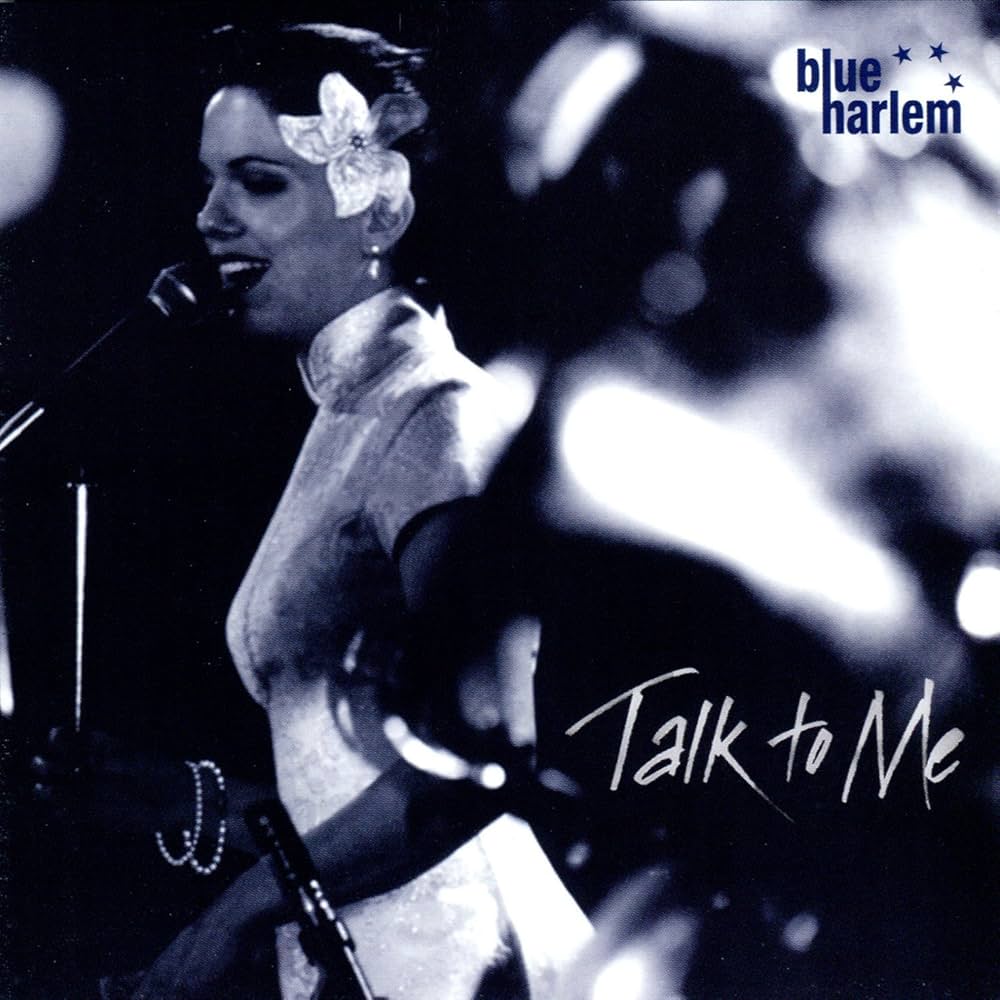
Hallelujah! I Love Him So was on the album Talk To Me released in 2005 with May lead singing. I added Hound Dog by Blue Harlem as well…it was on their Me And My Radio album released in 2011.
I have three songs. The bottom two feature Imelda May singing Hound Dog and Hallelujah! I Love Him So. Below is Sophia Shaw singing Swing Brother, Swing. She is a very good singer as well but I like May a little more.
Hallelujah! I Love Him So
Let me tell you ′bout a boy I know He is my baby and he lives next door Every morning before the sun comes up He brings my coffee in my favorite cup That’s why I know, yes I know Hallelujah I just love him so
When I′m in trouble and I have no friends I know he’ll go with me until the end Ev’rybody asks me how I know I smile and tell them he told me so That′s why I know, yes, I know Hallelujah I just love him so
Now if I call him on the telephone And tell him that I′m all alone By the time I count from one to four, I hear him on my door In the evening when the sun goes down When there is nobody else around He kisses me and he holds me tight He tells me “baby everything’s all alright” That′s why I know, yes I know Hallelujah I just love her so
Thank you Keith @ https://nostalgicitalian.com for inviting me to do this. Keith had bloggers over to his site to write about their favorite toys while growing up.
Whenever I see red, white, and blue not only do I think of the flag but I think of Evel Knievel. A hero to many in the 1970s… He is responsible for more broken arms, legs, bruises, bumps, and scrapes than anyone… Kids set up homemade ramps and then jumping them with their bicycles. I said kids…it wasn’t exclusive to boys because I remember some girls jumping also.
Riding down hills standing on your seat, popping wheelies, jumping ramps with your buddy stupidly laying in-between. We wanted to be Evel Knievel jumping over those cars or buses.
He was THE Daredevil… There are Daredevils around today but no one has reached the popularity that Knievel achieved. Not only did he jump and crash he looked cool jumping and crashing. He was like a cool Elvis in a jumpsuit jumping various objects.
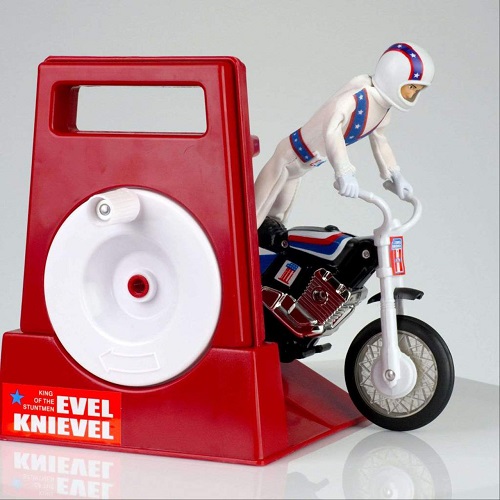
I got the Evel Knievel Stunt Cycle and Figure when I was 8 years old on Christmas Eve. I have a picture that I can see halfway unwrapped. I immediately started to play with it that night. Over the next couple of months, I would jump everything in sight.
I would make it jump on our porch, our outside dog, and finally, I got a great idea. It took me hours to set it up but I finally got it right. I had ramps going over my mom’s car. I never could get it to go completely over but I got it really close when it came down on the trunk…who needed the Snake Canyon? My mom wasn’t a big fan of the Stunt Cycle…when Evel missed and hit the flowers…some flowers would be missing. When I revved it up in the house…more than one glass shattered making mom shut down my jumping activities.
I wouldn’t mind getting one now to tell you the truth!
Another…well Keith could disqualify this but it was a toy to me…it was called Pong. Basically, it was magical! It would connect to your television, and you could play table tennis all day long. It was the forerunner of modern games that we have today. It was simple black and white, but I can’t tell you how it felt playing the thing.
I got it around 1977 and we just didn’t have things like this. There is one thing I remember well though…mom made me play it at night or on rainy days. The days were made for kids to go out and play baseball, play in the creek, or ride their bicycles for miles. What I wouldn’t give to relive one of those days being 11 again.
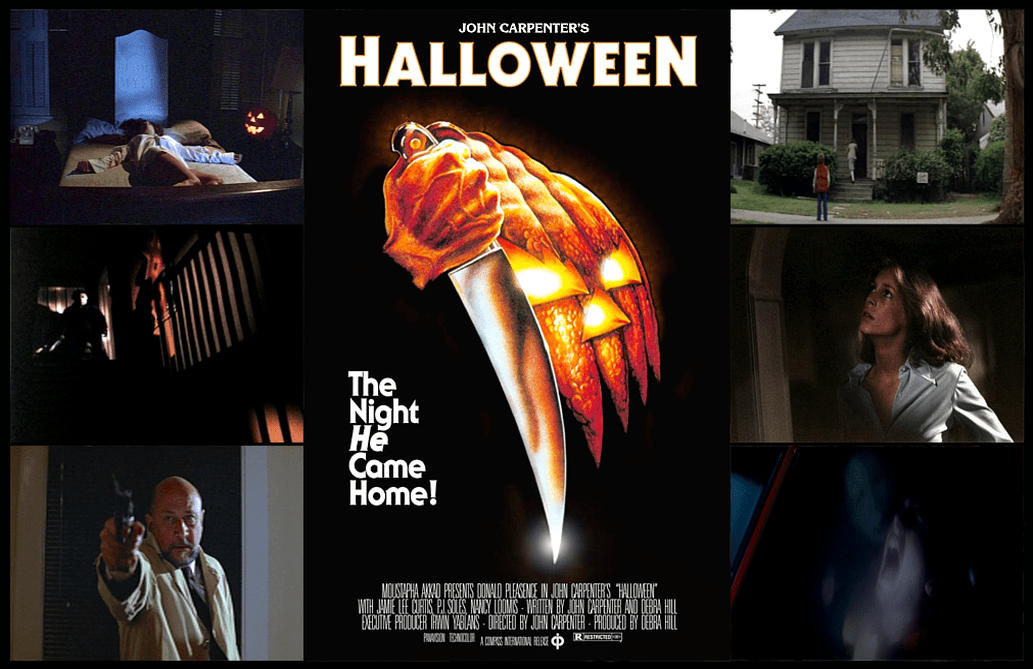
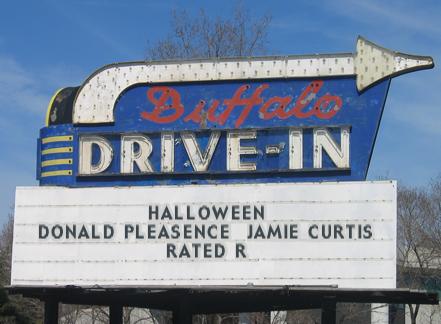
Que that spooky piano part now. This 1978 film is a horror classic that I still enjoy watching. While I’m at it…Happy Halloween Everyone! Sometimes, sequels can ruin a franchise and it gets silly. We sometimes forget how great the original is. I’m not a fan of the no-brain slasher movies that followed this.
From the very beginning, Halloween grabs your attention with its eerie, minimalist score—also composed by Carpenter himself. The haunting piano melody sets the tone for the entire film, creating a sense of dread even before it begins. It’s one of those soundtracks that sticks with you long after the credits roll. The two main leads…Jamie Lee Curtis and Donald Pleasence do an excellent job. I’ve liked Pleasence in anything he has done.
What’s surprising about Halloween after rewatching it, is how little blood and gore is actually shown. The movie relies more on atmosphere and suspense than graphic violence, which is why it remains such an effective horror film today. Carpenter’s use of shadows, lighting, and camera angles makes everything feel off-kilter. Halloween doesn’t go overboard with its horror… just enough to leave a sense of unease.
There are little things as well that this movie does well. Before it all starts Lauire (Jamie Lee Curtis) and Annie (Nancy Kyes) are smoking a joint in a car while Michael is following them. While this was going on…Don’t Fear The Reaper was playing on the radio faintly. Annie’s dad is the sheriff and his name is Brackett. Dr Loomis (Donald Pleasence) tells him that he and his town better be worried. Michael Myers escaped a facility and was headed toward the town where Myers lived when he killed his sister when he was a kid.
This is another movie that has been ingrained in pop culture. After this film, there was a part 2. John Carpenter did not want to make it but was sued to make it. He made sure to blow Myers up in the 2nd film and part 3 had nothing to do with Myers. Halloween II was written by Carpenter and Debra Lee…the two who wrote Halloween. He refused to direct it and he never liked it. “I had to come up with something. I think it was, perhaps, a late night fueled by alcoholic beverages, was that idea. A terrible, stupid idea! But that’s what we did.”
Rob Zombie remade the film in 2007 and a sequel with much more blood and gore. He traded mystic for the obvious, which didn’t work as well for me…but I’m glad he put a little more reason on why Michael did what he did.
Plot IMDB
The year is 1963, the night: of Halloween. Police are called to 43 Lampkin Ln. only to discover that 15-year-old Judith Myers has been stabbed to death by her 6-year-old brother, Michael. After being institutionalized for 15 years, Myers breaks out on the night before Halloween. No one knows, nor wants to find out, what will happen on October 31st, 1978, besides Myers’ psychiatrist, Dr. Loomis. He knows Michael is coming back to Haddonfield, but by the time the town realizes it, it’ll be too late for many people.
Quotes
Loomis: I met him, 15 years ago; I was told there was nothing left; no reason, no conscience, no understanding in even the most rudimentary sense of life or death, of good or evil, right or wrong. I met this… six-year-old child with this blank, pale, emotionless face, and… the blackest eyes – the Devil’s eyes. I spent eight years trying to reach him, and then another seven trying to keep him locked up, because I realized that what was living behind that boy’s eyes was purely and simply… evil.
_____________________________________
Brackett: I have a feeling that you’re way off on this.
Loomis: You have the wrong feeling.
Brackett: You’re not doing very much to prove me wrong!
Loomis: What more do you need?
Brackett: i going to take a lot more than fancy talk to keep me up all night crawling around these bushes.
Loomis: I-I-I watched him for fifteen years, sitting in a room, staring at a wall; not seeing the wall, looking past the wall; looking at this night, inhumanly patient, waiting for some secret, silent alarm to trigger him off. Death has come to your little town, Sheriff. Now, you can either ignore it, or you can help me to stop it.
It doesn’t get much more Halloween than this song. Black Sabbath was a hard rock band that gets credited a lot for influencing heavy metal. That is perplexing to me…what is heavy metal and what is hard rock? When I think of heavy metal I think of some of the many heavy 80s bands with a huge processed sound on guitar. That probably isn’t what others think of though.
The song was inspired by a series of ominous and eerie experiences. According to bassist Geezer Butler, the concept for the song emerged from a frightening incident he had after reading an occult book given to him by Ozzy Osbourne. Butler claims that after leaving the book on a shelf, he saw a dark figure standing at the foot of his bed that disappeared suddenly. This experience led him to write the lyrics. The song is credited to Ozzy Osbourne, Tony Iommi, Geezer Butler, and Bill Ward.
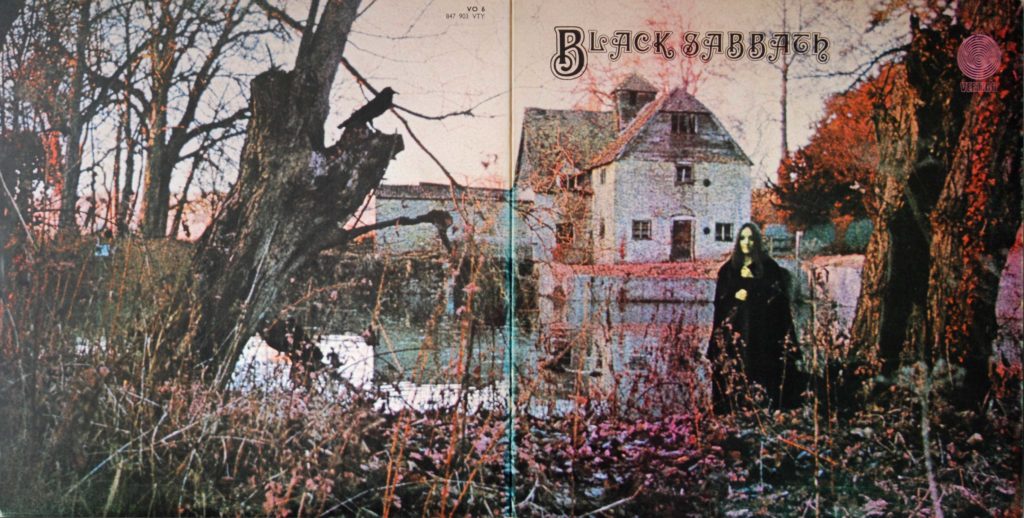
The album cover. It has to be the spookiest album cover ever. On one hand it looks real and on another it looks like a horror movie poster but better. At the center of the album cover is a mysterious, cloaked woman dressed in black. Her identity has been the subject of speculation for decades. Some have claimed she symbolizes a witch or an occult figure, which fits the band’s early associations with the dark arts. It’s one of rocks most iconic album covers.
Louisa Livingstone was a model that was hired for the cover. No one knew who she was until Rolling Stone tracked her down in 2020. Turns out Mrs. Livingstone is not much a fan of Black Sabbath after she finally listened to the album. It just wasn’t her type of music. She now records electronic music under the name of Indreba. Keith Macmillan is the photograhper who shot the album cover.
The album peaked at #23 on the Billboard 200, #29 in Canada, and #8 in the UK in 1970.
Keith Macmillan: “She was a fantastic model. She was quite petite, very, very cooperative. I wanted someone petite because it just gave the landscape a bit more grandeur. It made everything else look big. She wasn’t wearing any clothes under that cloak because we were doing things that were slightly more risqué, but we decided none of that worked. Any kind of sexuality took away from the more foreboding mood. But she was a terrific model. She had amazing courage and understanding of what I was trying to do.”
Louisa Livingstone: I had to get up at about four o’clock in the morning, or something as ridiculously early as that. It was absolutely freezing. I remember Keith rushing around with dry ice, throwing that into the pond nearby, and that didn’t seem to be working very well, so he was using a smoke machine. It was just, ‘Stand there and do that.’ I’m sure he said it was for Black Sabbath, but I don’t know if that meant anything much to me at the time.”
If you want to know about Black Sabbath’s album Black Sabbath VOL 4 cover… go to The Press Music Reviews.
Black Sabbath
What is this that stands before me?
Figure in black which points at me
Turn around quick, and start to run
Find out I’m the chosen one
Oh no
Big black shape with eyes of fire
Telling people their desire
Satan’s sitting there, he’s smiling
Watches those flames get higher and higher
Oh no, no, please God help me
Is it the end, my friend?
Satan’s coming ’round the bend
People running ’cause they’re scared
The people better go and beware
No, no, please God help me
Next to The Shining, this is my favorite King adaptation.
Carrie is a 1976 horror film directed by Brian De Palma, based on Stephen King’s 1974 debut novel of the same name. He used many techniques in this movie that put it over the top. Split screens, slow motion, and vivid color contrast just to name a few.
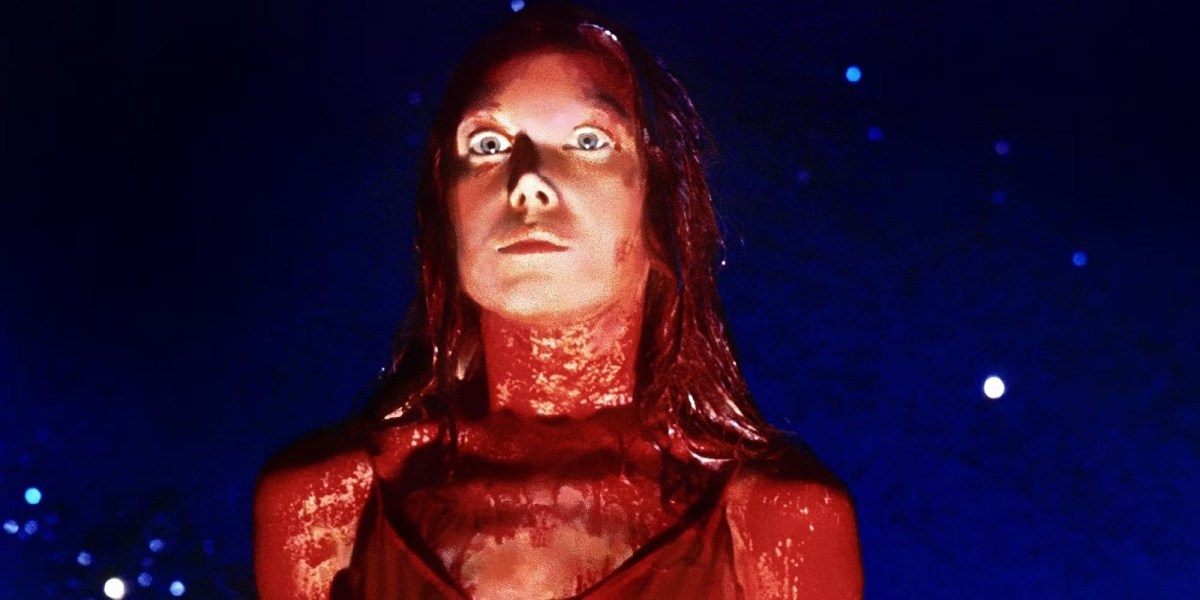
It is one of the most iconic films in the horror genre and focuses on subjects like bullying, supernatural powers, and revenge. It’s so easy to relate to because in high school we have all been through embarrassing things…getting pig blood dumped on you…probably not but we can relate with Carrie. We know the good people and we have known the bad people in this movie. We also know the popular cliques and the not-so-popular cliques. The girls that were out of reach and the ones that were.
The story revolves around Carrie White, a shy and socially awkward high school girl who is mercilessly bullied by her classmates. Raised by an overbearing, fanatically religious mother, Carrie leads a lonely and repressed life. After experiencing a traumatic event at school, she discovers that she has telekinetic powers. The situation escalates when her classmates cruelly prank her at the senior prom. In a moment of intense emotion, Carrie uses her powers to take a horrifying revenge on those who tormented her.
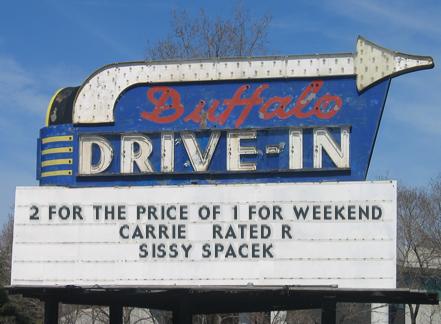
Sissy Spacek starred in this film and was perfect in the role. Piper Laurie portrayed her mother with an exaggerated, fanatically religious fervor. Laurie’s portrayal of a zealot was intentionally over-the-top, adding to the film’s tone. . The movie also launched the film careers of Nancy Allen and Amy Irving who both went on to star in many movies.
In 1976 my class went to see Charlotte’s Web at the theater. On the wall were movie posters of Carrie. Since then I’ve always associated them with each other. As a 9-year-old, seeing a teenager covered with blood with an evil look made me want to see it. I didn’t get to see it until almost a decade later. It was worth the wait!
Both Sissy Spacek and Piper Laurie received Academy Award nominations for their performances, a rarity for the horror genre.
This story has been remade in 3 different movies. This one in 1976, 2002, and a remake in 2013. I’ve watched all of them…trust me on this…this is the best version out there at least to me.
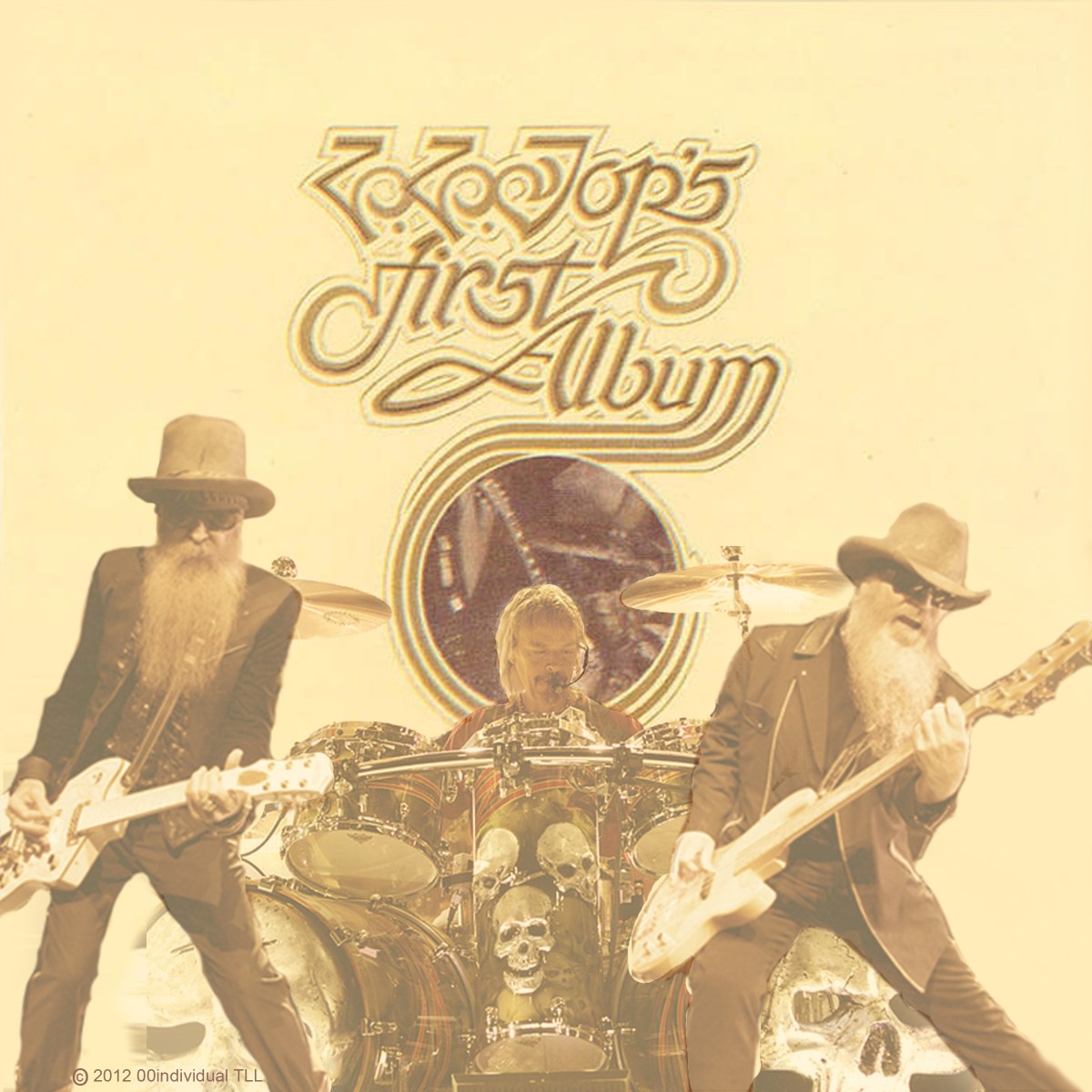
That Lil Ol’ Band from Texas. I loved it when Billy Gibbons had this tone on his guitar. This was pre-Eliminator and his tone was just perfect. They sound loose in this but the music is tight. It’s classic ZZ Top. A buddy of mine had most of their albums and played this one a lot and Fandango.
I saw them on the Eliminator tour and they were fantastic. They had Sammy Hagar opening up for them after he released Three Lock Box. ZZ Top had the best lighting show I’ve ever seen to this day.
This song has the entire band credited. Billy Gibbons, Dusty Hill, and Frank Beard. This song was on their debut album ZZ Top’s First Album released in 1970. That is an easy way of remembering it.
This album isn’t as polished as some of their others, but it previews exactly what sound you would get until Eliminator. ZZ Top was formed in 1969, with Billy Gibbons (guitar and vocals), Dusty Hill (bass), and Frank Beard (drums). Before forming ZZ Top, Billy Gibbons played in various bands, most notably The Moving Sidewalks, which opened for Jimi Hendrix during his 1968 tour.
The album didn’t make a huge splash commercially, but it helped establish the band as a powerful live act. The album was produced by Bill Ham, who became a key figure in shaping ZZ Top’s sound. He would go on to produce their subsequent albums and manage the band for decades. Ham produced or co-produced all of their albums up through 1996’s Rhythmeen as well as being their manager. They parted ways in 2006. He passed away in 2016 at 79.
Going Down to Mexico
I was on my way down to Mexico There was trouble on the rise It was nothin’ more than I’d left behind Which was much to my surprise I turned around and lit a cigarette Wiped the dust off of my boots When up ahead I saw the crowd I knew it was no use
It’s been the same way for oh so long It looks like I’m singin’ the same old song
A fine and fancy man was he Doin’ good things for the poor Givin’ rides in his rocket 88 for free They could not hope for more When it came my turn, he said to me “Have I seen your face before?” I said, “Oh no, you must be wrong I’m from a distant shore”
So if you don’t mind, I’ll just move along But it looks like I’m singin’ the same old song
A 1940 movie star With a long-forgotten name She was a sexy mess in her beaded dress Still hangin’ on to fame With forgotten lines, she missed her cue And left her glass of wine at home She was singin’ the same song that I was Could we both be wrong?
So hand in hand we walked along Each of us singin’ the same old song
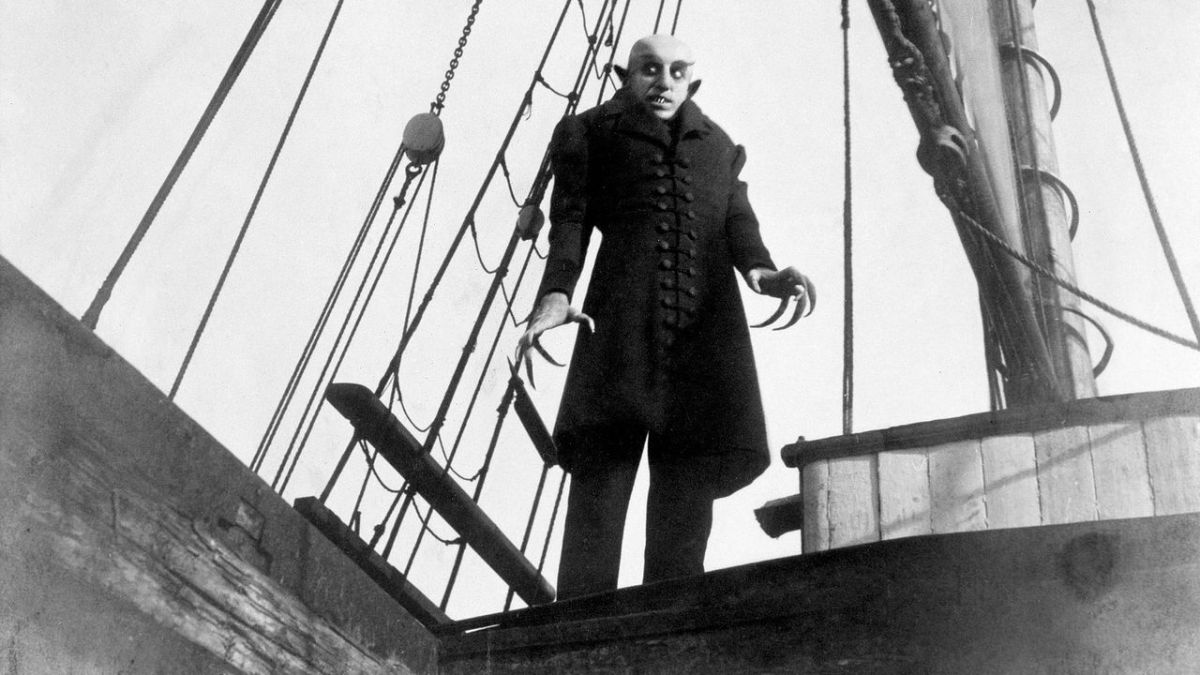
I love silent movies but I wasn’t prepared for this one. I’d heard it was scary but I thought…how scary could a 1922 film be? I think the comedy of Keaton and Chaplin is some of the best comedy to this day but horror?
It was a great surprise with this one. The one word I would use is shadows…they make great use of them in this one. With the film stock they use plus that grainy look…it does make this vampire frightening. Some prints are tinted blue and yellow in some scenes. Nosferatu himself works well as a different-looking Dracula.
The first time I saw it was with my son who found out about it in high school. I tracked it down and bought a copy around 2017 or so. We were both impressed by this movie and it’s just so creepy and disturbing. Yes, you have to follow the subtitles of course but it isn’t filled with them.
Some people avoid silent or foreign films but try this one out. It’s only an hour and twenty minutes. You can see it for free on YouTube. There is another adaptation coming out this Christmas.
It’s a wonder we have this film at all. This was an unauthorized adaptation of Dracula by Bram Stroker. Since the production company, Prana-Film did not secure rights from Stoker’s estate, they changed some elements—Count Dracula became Count Orlok, and the settings were shifted from England to Germany. However, the film’s narrative remained close to the novel.
After the film’s release, Florence Stoker, Bram Stoker’s widow, sued the producers for copyright infringement. The court ruled in her favor, ordering the destruction of all copies of the film. However, several prints survived, allowing the film to gain recognition over the years.
PLOT
Wisborg, Germany-based estate agent Knock dispatches his associate, Hutter, to Count Orlok’s castle in Transylvania as the Count wants to purchase an isolated house in Wisborg. They plan on selling him the one across the way from Hutter’s own home. Hutter leaves his innocent wife, Ellen, with some friends while he is away. Hutter’s trek is an unusual one, with many locals not wanting to take him near the castle where strange events have been occurring. Once at the castle, Hutter sells the house to Orlok, but he also notices and feels unusual occurrences, primarily feeling like there is a dark shadow hanging over him, even in the daytime when Orlok is usually asleep.
Hutter eventually sees the Count’s sleeping chamber in a crypt, and based on a book he has recently read, believes the Count is really a vampire or Nosferatu. While Hutter is trapped in the castle, the Count, hiding in a shipment of coffins, makes his way to Wisborg, causing death along his way, which most attribute to the plague. Hutter himself tries to rush home to save his town and most importantly save Ellen from Nosferatu’s imminent arrival. In Wisborg, Ellen can feel the impending darkness as Nosferatu gets closer. But she learns that a sinless woman can sacrifice herself to kill the vampire. Will Hutter be able to save Ellen, either from Nosferatu and/or her self-sacrifice?
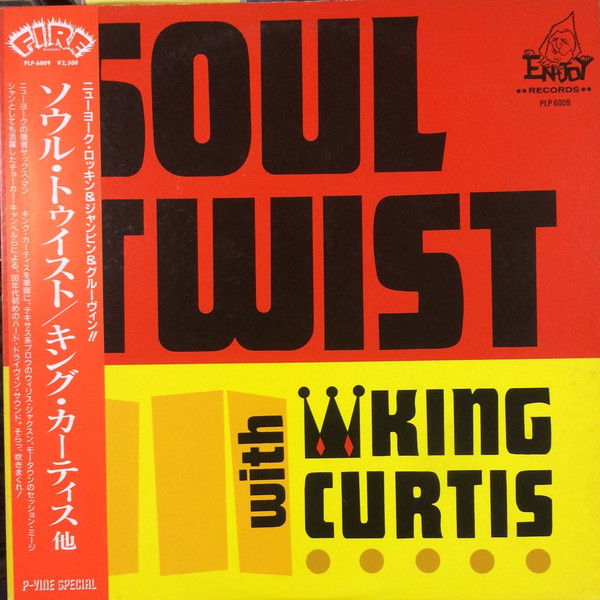
As I was searching for 50s and early 60s songs for my painting playlist…I ran across this cool instrumental. I love that guitar and Curtis’s sax is really cool. It has a dirty sound when it starts up and I find it quite infectious. The one guitar is playing that cool small riff and then the rhythm comes in to lift it up. Another new/old song to add to my playlist. John from https://thesoundofonehandtyping.com/ suggested it and I wanted to add to it anyway.
Curtis was a great saxophonist who worked with many artists. He was on the Coasters Yakety Yak and Aretha Franklin’s Respect. He also worked with Buddy Holly, Nat King Cole, and The Shirelles to mention a few.
He also worked with Duane Allman and they formed a friendship. They worked on a few songs together but the one I like the best is their version of The Weight. Curtis’s sax sounds so good and clear in this version along with Duane’s slide playing.
In 1965, Curtis and the Kingpins opened for The Beatles at Shea Stadium. On August 13, 1971, King Curtis was tragically killed at the age of 37. He was stabbed during an argument outside his apartment in New York City. His sudden death shocked the music world, and Aretha Franklin sang at his funeral, along with other artists like Stevie Wonder and Duane Allman.
The song was successful…it peaked at #1 on the Billboard R&B Charts and #17 on the Billboard 100 in 1962. I have a playlist at the bottom that I made of instrumentals during my break.
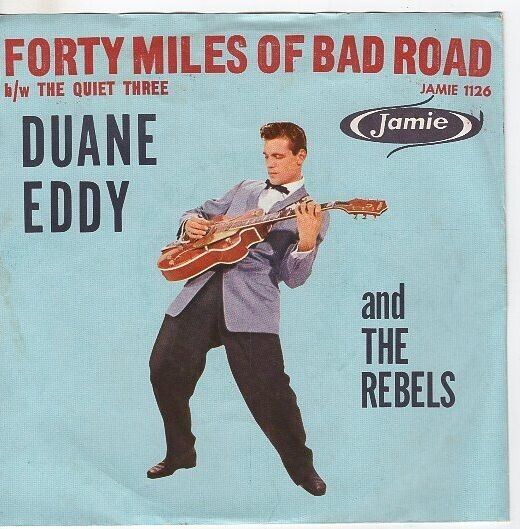
I made a playlist of instrumentals and took recommended ones from the 1950s. I think the heyday of instrumentals was the fifties and sixties. Here is one that caught my ear… Forty Miles Of Bad Road
I have a soft spot for that twangy reverb guitar. Eddy played a major role in shaping the surf rock genre and influenced many following guitarists. The song peaked at #11 in the UK, #4 in Canada, and #9 on the Billboard 100 in 1959. This song was written by Duane Eddy and Al Casey. The song was on the compilation album $1,000,000 Worth of Twang. Damn, that is a great name for an album! Not to mention the title of the song as well.
The phrase was apparently inspired by a comment overheard by Duane Eddy and his producer Lee Hazlewood while in line at a movie theater. They heard two guys talking about one of their blind dates. He said she looked like 40 miles of bad road. Of course, they looked at each other and said that has to be the title of our new song.
This (and many of his songs) was recorded in a Phoenix studio which had an echo chamber that was originally a large water tank. A single speaker was placed at one end of the tank, the microphone at the other, and the guitar was piped in there. The title was referenced in a REM song called Crush With Eyeliner…instead of 40 miles…”She’s Three Miles of Bad Road.”
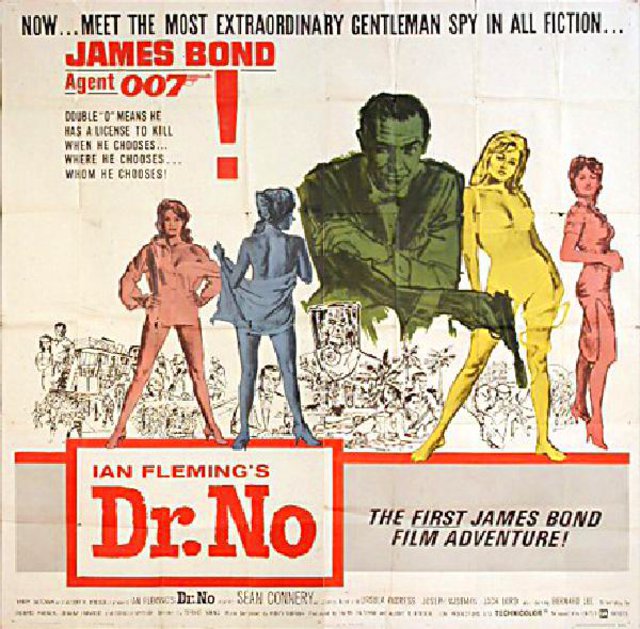
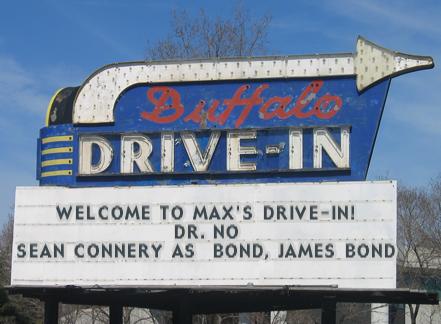
I have a different relationship with James Bond than some. I didn’t watch them as a kid but I started to watch them in my late 20s. I finally found out what all the fuss was about. I do remember seeing parts of Moonraker when it came out but it just didn’t pique my interest at 12. I recently read a review of From Russia With Love from princecranoir and would recommend everyone reading. That one may be my favorite James Bond film but this one holds a special place for me as well. My favorite always changes when I do a Bond marathon at home. I did a post a while back about my favorite Bond films…and Dr No was at the top…so it does change.
Dr. No was a commercial success, paving the way for numerous sequels and establishing the template for future Bond films. Sean Connery’s portrayal of Bond became iconic, and the film is credited with launching the spy genre in cinema. We will still be watching this in 2062.
Dr. No was the first Bond film I ever watched all the way through. Released in 1962, it introduced the world to James Bond, a suave, sophisticated British secret agent with a license to kill. Based on Ian Fleming’s novel of the same name, the film marked the first installment of one of the most successful and enduring franchises in cinematic history. Dr. No laid the foundation that would define Bond for decades—high-stakes espionage, glamorous locations, and, of course, iconic villains. There were really no gadgets in this one…that would come in the next film.
It was based on Ian Fleming’s 6th book about the Spy but the first one was adapted into a movie. Sean Connery is James Bond to me and there was no better way of kicking off a franchise than this. The film looks great in its vivid color and scenery. The bulk of the film was filmed in Jamaica in early 1962.
There is no better use of a Sunday afternoon than to spend it with James Bond and the absolutely stunning Ursula Andress. When she walked out of the water on Crab Key, it was close to everything magically turning to color in The Wizard of Oz… She was the first of many Bond girls to follow and you could not find a better first one. I was humming Under the Mango Tree for days after I saw it.
JFK, an avid Ian Fleming fan, even hosted a private screening of “Dr. No” at the White House. Legend has it he remarked, “I wish I had James Bond on my staff.” Who wouldn’t? If you haven’t seen this film, treat yourself and immerse yourself in Bond’s world; and for those who have, a rewatch is always a pleasure.
Plot (Spoilers)
The movie starts with Bond, played by Sean Connery, being sent to Jamaica to figure out why a fellow British agent went missing. Pretty mysterious, right?
When Bond gets to Jamaica, things get tense. He teams up with some local allies, like a fisherman named Quarrel and CIA agent Felix Leiter. They help him uncover clues, which eventually lead to a creepy, secretive island called Crab Key. This is where Dr. No, the villain, is hiding. He’s a super smart but evil scientist who works for a dangerous organization called SPECTRE. His plan? To mess with American space missions using some kind of high-tech radio beam. Bond realizes he needs to stop him before things get out of hand.
Bond’s adventure takes him into Dr. No’s hidden lair, where he also meets Honey Ryder (played by Ursula Andress), a woman who’s just out collecting shells but gets tangled in Bond’s mission. Together, they navigate the dangers of the island, avoiding Dr. No’s guards and traps.
In typical Bond fashion, he manages to outsmart Dr. No, destroy his base, and save the day. The movie ends with a big explosion as Bond and Honey escape. It’s classic spy action, with all the charm, gadgets, and danger you’d expect from a Bond film!
Quotes
Dr. No: The Americans are fools. I offered my services; they refused. So did the East. Now they can both pay for their mistake.
James Bond: World domination. The same old dream. Our asylums are full of people who think they’re Napoleon. Or God.
_______________________________________
[Honey describes how she killed the man who had hurt her]
Honey Ryder: I put a black widow spider underneath his mosquito net… a female, they’re the worst. It took him a whole week to die.
[Bond looks shocked]
Honey Ryder: Did I do wrong?
James Bond: Well, it wouldn’t do to make a habit of it.
_______________________________________
[explaining why she believes the legend about Crab Key’s fire-breathing dragon]
Honey Ryder: How well do you know about animals? Did you ever see amongoose dance? Or, a scorpion with sunstroke sting itself to death? Or, apraying mantis eat her husband after making love?
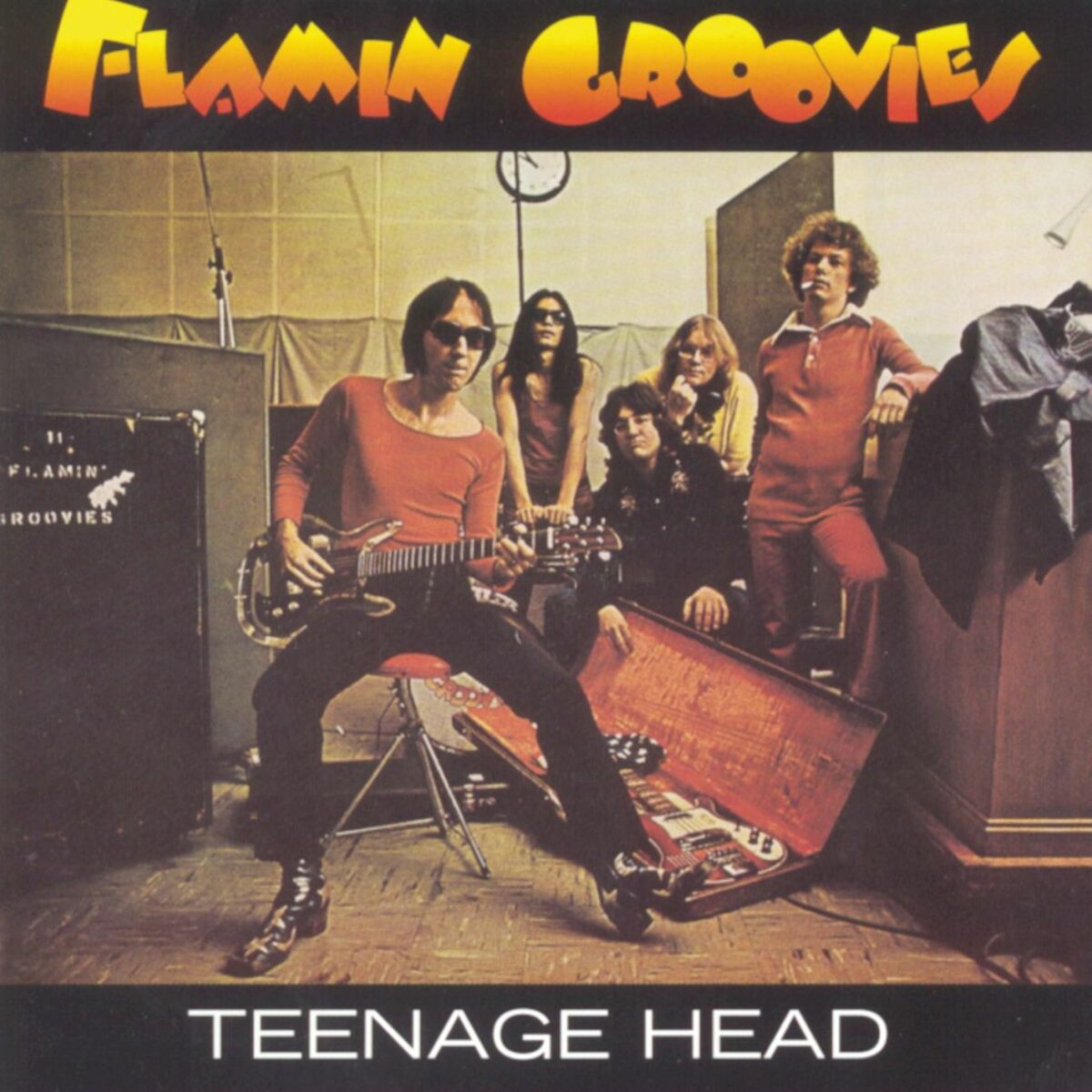
This band went through two distinct phases: an early rock/blues era followed by a shift to power pop. Their diverse catalog spans power pop gems, gritty blues-rock, and classic rock ‘n’ roll. In this song, we’re focusing on their rock/blues period from the early ’70s, hearing the raw Groovies.
I first heard this band with the song Shake Some Action. That song is probably their best-known, but the blues/rock period should be heard. This song was written by Cyril Jordan and Roy A. Loney.
Released the same year as the Rolling Stones album Sticky Fingers, Mick Jagger reportedly noticed the similarities between the Groovies Teenage Head album … and thought the Flamin’ Groovies did the better take on the theme of classic blues and rock ‘n roll. The band was started in 1965 by Roy Loney and Cyril Jordan. By the end of the sixties, they clashed over where to go. Loney was more Stones and Jordon leaned toward the Beatles. Loney left in 1971 and they got an 18-year-old lead singer named Chris Wilson.
They moved to London and started to work with Dave Edmunds. With Chris, they did more power pop and that is when Shake Some Action came about with Wilson and Jordon writing it. They would go on to be a great power pop band known as an early proto-punk band…they pretty much covered the gamut. This anti-drug song was written by Jordon and Loney before he left…Chris Wilson is singing it.
I’ve listened to this album and it does sound very Stonesy but not copying them at all. This album was released before the Stones Sticky Fingers.
There is a Canadian band with the same name as this album and song…Teenage Head. They took their name from this song title and album. They quickly gained a loyal following on the Ontario club circuit for their shows, highlighted by Gord Lewis’ guitar work and frontman Venom’s (Frankie Kerr) vocals and on-stage presence.
Their self-titled debut album was released in 1979 and distributed by Epic Records Canada. A year later, the group signed to Attic Records and released the Frantic City album, which put them on the international radar. The hit singles, “Something On My Mind” and “Let’s Shake” helped propel the album to platinum sales (100,000) in Canada.
I added another cool song off of the album called Yesterday’s Numbers.
Teenage Head
I’m a monster
got a revved up teenage head.
Teenage monster
California born and bred.
Half a boy and half a man
I’m half at sea and half on land, oh my
Bye-bye.
Got a woman,
she’s my hopped up high school queen.
She’s my woman,
she’s a teenage love machine.
She knows how to turn me on
and get me high and get it on and on,
yeah she does.
When ya’ see me,
better turn your tail and run,
’cause I’m angry
and I’ll mess you up for fun.
I’m a child of atom bombs
and rotten air and Vietnams; I am you,
you are me.
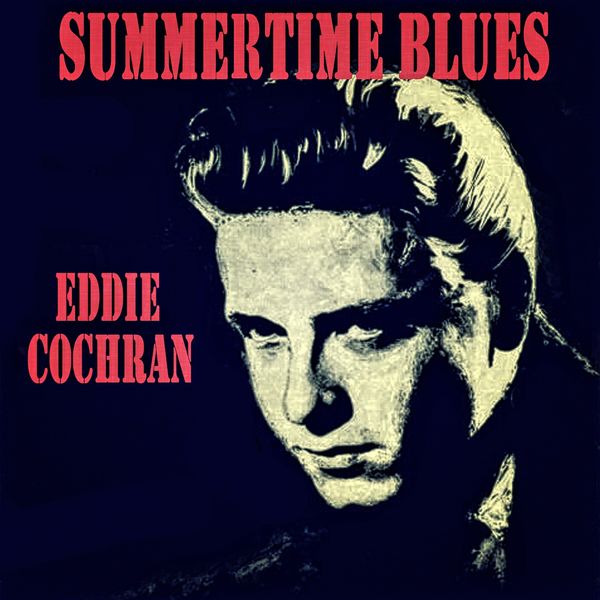
In my love for the Who, I never posted this version of this great song. I found out about Eddie Cochran through the movie The Buddy Holly Story where he was played by Jerry Zaremba. I then remember him in La Bamba when Brian Setzer played him to a tee.
After that, I heard The Who’s version of this song and our band played it that way. I then heard Cochran’s version and loved it just as well. The song that really made me connect to Cochran was Twenty Flight Rock when I heard the Stones do it.
Eddie Cochran was a huge influence on the up-and-coming British guitar players of the sixties. Jimmy Page, Jeff Beck, John Lennon, and Pete Townshend. He was huge in the UK. He was one of the big 50s guitar heroes. He broke through with this song Summertime Blues in 1958 peaked at #8 on the Billboard 100, #10 in Canada, and #18 in the UK. He also did well with C’mon Everybody. He was never really big in America… he was a bigger star in Europe.
He didn’t use his guitar as a prop like some did…he played it and played it well. He also worked as a session musician. He helped bring rock guitar along in more ways than just his playing. He was one of the first to modify his pickups and he did away with the wound G string on the guitar. He replaced it with an unwound string which made it easier to bend. Many future musicians were paying attention, sitting on the front row of his British tour.
In 1960, Cochran and Gene Vincent were in a hired car and it hit a lamp post and Eddie was thrown from the car and suffered a head injury and died in a hospital. He was only 21 years old. Gene Vincent received injuries to his already bad leg and walked with a limp after the crash. Eddie was the only one to die.
Eddie’s girlfriend Sharon Sheeley was a songwriter. She wrote Ricky Nelson’s first hit “Poor Little Fool” and a couple of songs (Love Again and Cherished Memories) for Cochran. She also got injured in the crash.
Summertime Blues
I’m a-gonna raise a fuss I’m a-gonna raise a holler About a-workin’ all summer Just to try to earn a dollar
Every time I call my baby Try to get a date My boss says, “No dice, son You gotta work late”
Sometimes I wonder What I’m a-gonna do But there ain’t no cure For the summertime blues
Oh, well, my mom and papa told me “Son, you gotta make some money And if you wanna use the car To go a-ridin’ next Sunday”
Well, I didn’t go to work Told the boss I was sick “Well, you can’t use the car ‘Cause you didn’t work a lick”
Sometimes I wonder What I’m a-gonna do But there ain’t no cure For the summertime blues
I’m gonna take two weeks Gonna have a fine vacation I’m gonna take my problem To the United Nations
Well, I called my congressman And he said, quote “I’d like to help you, son But you’re too young to vote”
Sometimes I wonder What I’m a-gonna do But there ain’t no cure For the summertime blues










 PowerPop... An Eclectic Collection of Pop Culture